Home Blog Page 1414

Indian Rupee stable while Chinese Yuan is falling: A feather in Modi government’s cap to keep currency stable in pre-election year

As India’s Prime Minister Narendra Damodardas Modi looks to secure a third term in 2024, most would agree that his strongest suits have been infrastructure push and last-mile delivery of welfare schemes. Now, PM Modi’s Bharatiya Janata Party (BJP) can add exchange rate management to the list.     

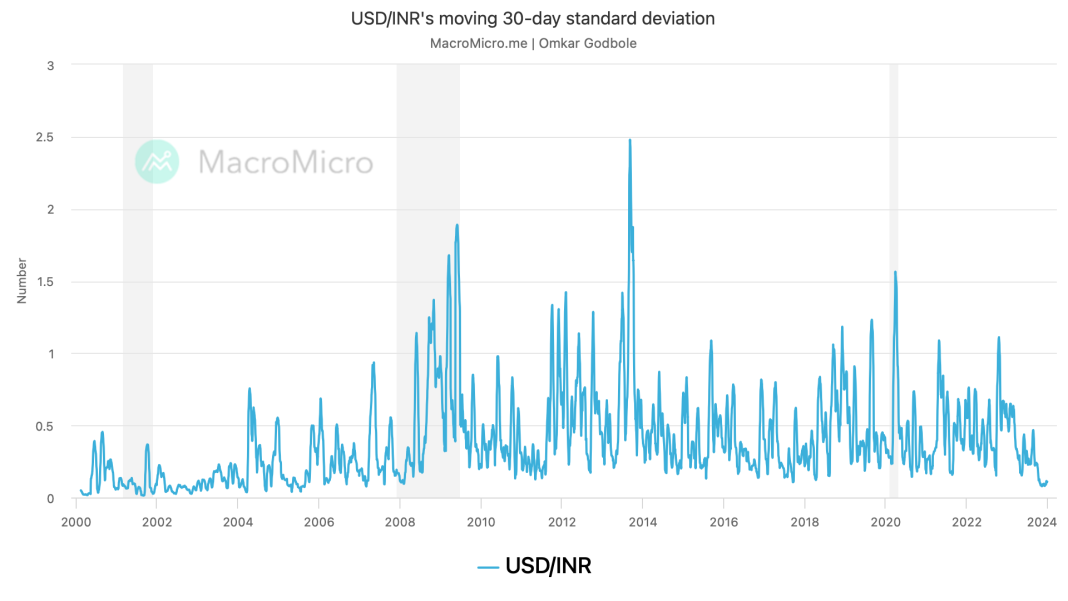
The Indian rupee (INR, ₹) held steady against the U.S. dollar in 2023, depreciating just 0.5% to end the year at 83.17 per USD. Notably, the Chinese yuan and the Korean won, currencies of current account surplus nations, depreciated by nearly 3%, under-performing the rupee. Such has been the rupee stability that at one point in November, the USD/INR’s 30-day moving standard deviation, a measure of realized volatility, dropped to 0.08, reaching the lowest since February 26, 2007, according to data sourced from Macromicro. 
While the rupee’s 2023 stability is consistent with other advanced nation currencies like the euro, it contradicts past data that shows the Indian unit tends to depreciate in the pre-general election year. Since 1984, India has held 10 Lok Sabha elections. Except for 2003, the rupee has depreciated in all pre-election years since 1984, falling over 5% against the U.S. dollar. On four occasions, the depreciation was in double digits, data from TradingView show. 

The latest stability is remarkable because the Federal Reserve (Fed) has raised interest rates from near zero to a 22-year high of 5.25% since kicking off the so-called tightening cycle in March 2022. The central bank has reduced its balance sheet size to $7.72 trillion from roughly $9 trillion in early 2022. 

Monetary tightening lifts bond yields and attracts capital and, absent sterilization, leads to an appreciation of home currency. The rupee tanked hard in 2013, depreciating from 55 per USD to 68 per USD between June and September, as the Fed hinted at tapering the liquidity-boosting balance sheet expansion program. Back then, interest rates in the U.S. were still at zero. Furthermore, the Russia-Ukraine conflict and tensions in the Middle East have accompanied the Fed’s latest tightening cycle, strengthening the case for holding dollar-denominated assets. The greenback, the global reserve backed by the world’s largest and most liquidity government bond market, has long been treated as a haven by investors. 

According to experts, the Modi government is at least partly responsible for INR’s envious stability.

“Stability in inflation rate via sound monetary policy and effective fiscal policy have been major contributors to low volatility. The clean up of the banking system and series of structural reforms has also played a positive role,” Anindya Banerjee, head of currency derivatives research at Mumbai-based Kotak Securities, said.

The credit also goes to the Reserve Bank of India’s strategy of actively targeting volatility and the relative rupee value.

“Over the past 10 years, the RBI has switched its exchange rate policy from intervention of last resort to low volatility through active management. They have built large reserves and expanded their footprints through exchanges, non-deliverable forwards and over-the-counter markets,” Banerjee said, adding, “They buy aggressively when the dollar is weak, like in 2020-21. They sell aggressively when the dollar is strong. I expect them to continue this policy over a long period.”

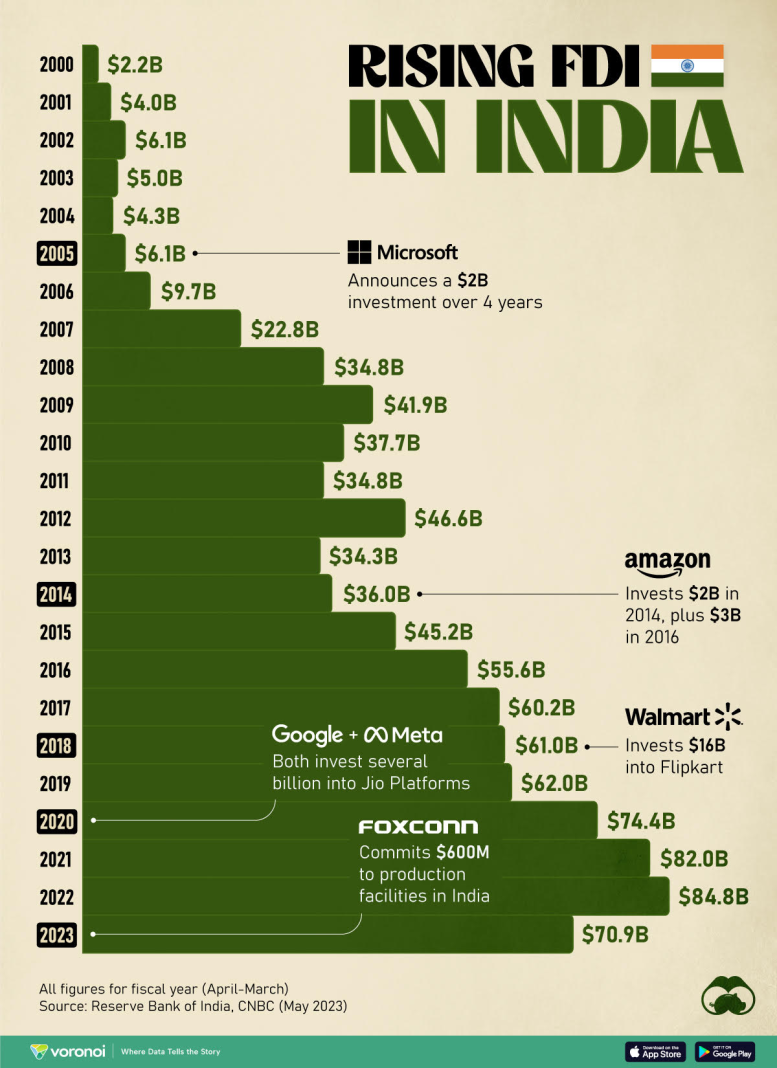
Speaking of global macroeconomic conditions, India has found itself in a sweet spot in the post-coronavirus world, attracting $237 billion in FDI inflows in the three fiscal years, thanks to its relatively better debt-to-GDP position. India’s government debt as a percentage of GDP is roughly 82%, significantly lower than the U.S. ‘s 126% and the global average of 93%, according to data tracked by VisualCapitalist, which makes it an attractive destination for global investors looking for havens in the post-covid age of financial repression in the advanced world. 
Voter illiteracy is an issue

PM Modi will likely struggle to draw political mileage from the rupee’s stability as most Indian voters are misinformed about determinants of exchange rates and their implications for the economy. 

Early this year, the National Centre for Financial Education (NCFE) report showed that over 73% of our adult population failed to understand basic financial concepts, according to Education Times. Most adults look at the USD/INR numbers going up and panic over the rupee’s drop, ignoring that India’s consumption-driven, energy-dependent economic model means the path of least resistance for the INR will always be on the downside. The rupee becomes a headache when it depreciates too quickly, as in 2013, providing negative feedback to the economy through higher import costs. Such episodes have been few and far between since then, with increasing FDI inflows supporting the rupee. 

However, to the general population, rupee depreciation, whether slow and steady or a rapid slide, is a national shame and a sign of ineffective government. A simple search query for “rupee falls” on social media platform X (formerly Twitter) will reveal the degree of fear, uncertainty, and doubt whenever the rupee depreciates. 

Indian politicians across the board, including BJP, are guilty of promoting this faux rupee nationalism over the years. 

For instance, a Congress article, dated Aug. 7, 2022, said the rupee has been falling drastically under Modi’s leadership, ignoring the mid-2013 slide from $55 per USD to 68 per USD and falsely claiming that the rupee held strong at around 58 per USD during Manmohan’s rule. The article conveniently ignores that much of the rupee’s late 2013 and early 2014 recovery to 58 per USD was driven by the Modi wave and the Fed delaying the eventual unwinding of stimulus.  

That said, Modi’s main rival, Rahul Gandhi, provided a glimmer of hope last year after he refused to criticize the government mindlessly for the rupee depreciation. 
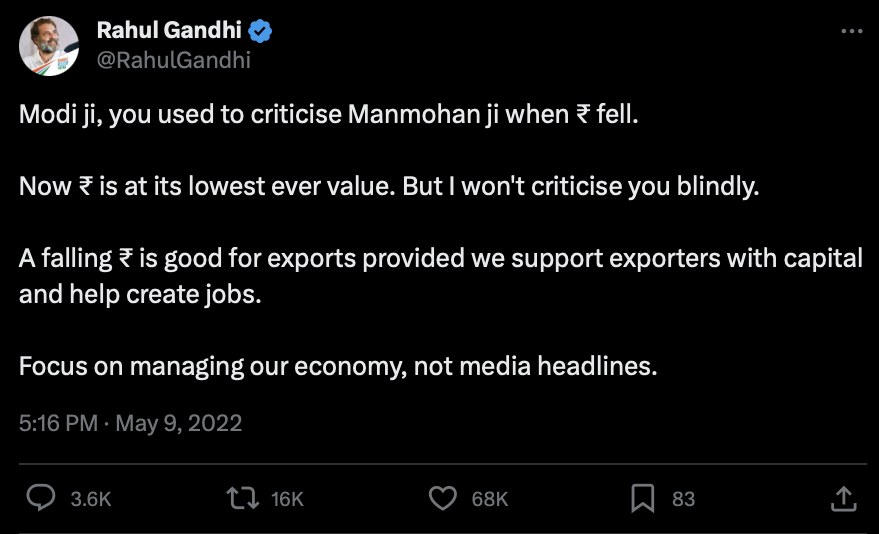
 Lets hope, the rest of the Congress party and other regional parties follow Gandhi’s lead.
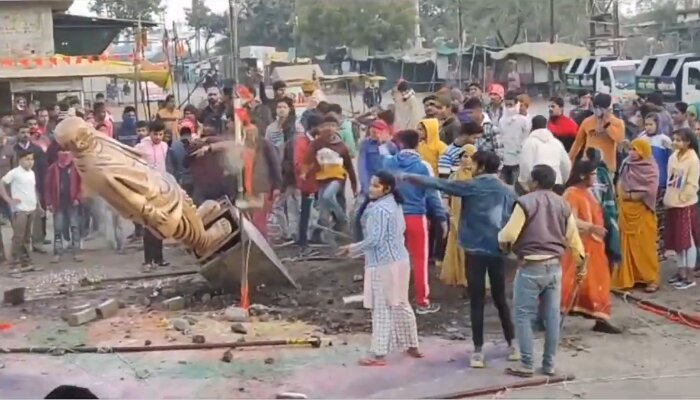
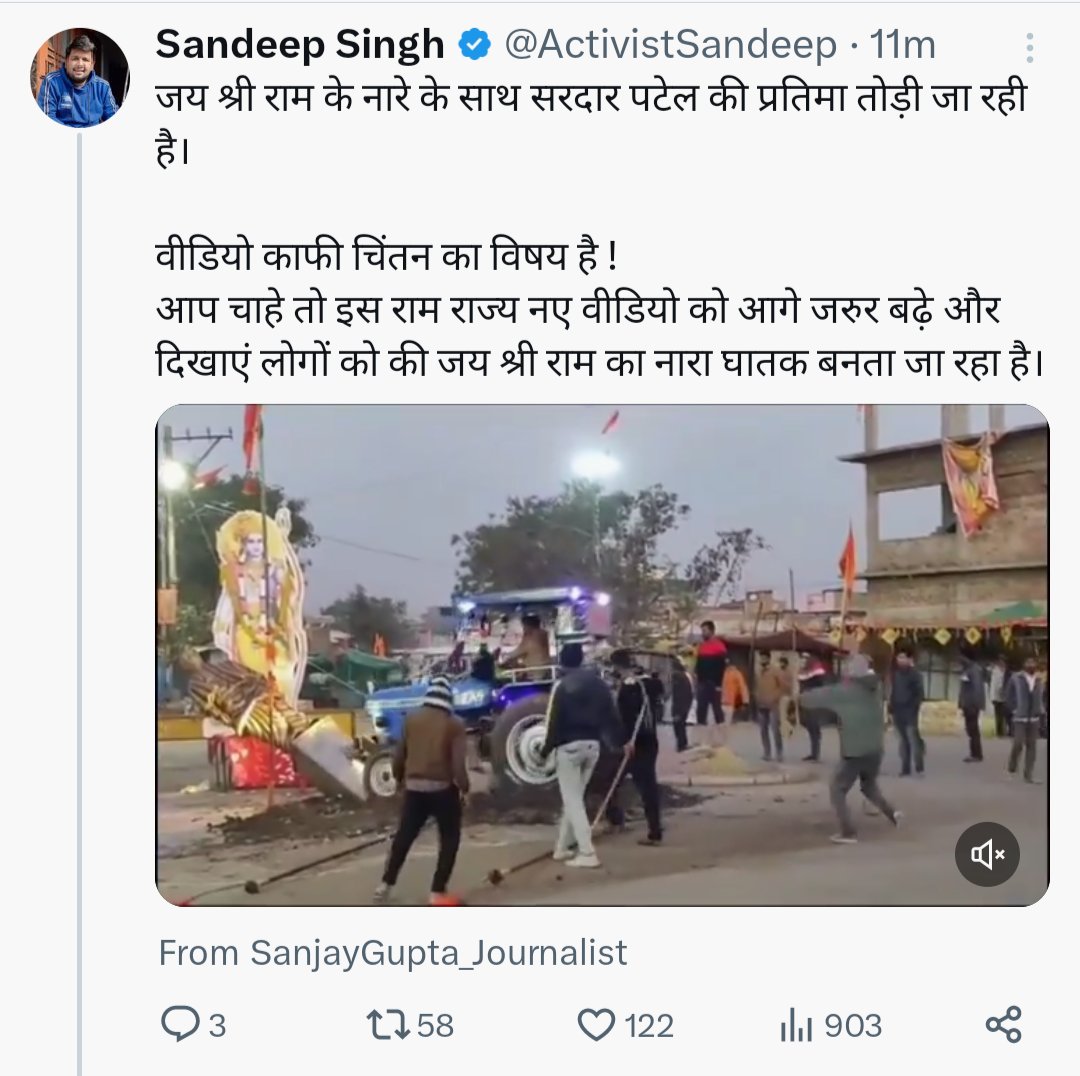
Ujjain: Bhim Army and Patidar community members clash after Vallabhbhai Patel’s statue was toppled, Congress supporters drag ‘Jai Shri Ram’ and spread fake news

A fight over the statues of two famous men has occurred at Madhya Pradesh’s Ujjain. A group of Bhim Army workers attacked and toppled a statue of Sardar Vallabhbhai Patel with the intention of erecting a statue of Dr. B. R. Ambedkar in its position. This led to a confrontation between the Bhim Army and Patidar Samaj (community) which later escalated to stone-pelting and arson.

The event transpired in the Makdone area which is roughly 50 miles from the district headquarters on 25th January, when members of Bhim Army and Patidar Samaj came face to face near the statue of Sardar Vallabhbhai Patel. The statue was placed close to the Makdone bus stand late on the night of 24th January. Bhim Army workers ran a tractor over the Patel statue, and toppled it. The statue was also attacked by stones, sticks and rods. The group who toppled the statue wanted to erect of statue of B. R. Ambedkar in its place.

This created a massive fight between the two sides, who attacked each other. Iron rods were used, stones were hurled and the furious mob also vandalised vehicles as well as shops. A few cars were burned by them. With the deteriorating situation, Ujjain Additional Superintendent of Police (rural) Nitesh Bhargava arrived at the scene accompanied by cops from Tarana, Makdone and Ujjain police stations. The matter was pacified after talking to both sides.

The police revealed that there is a plot of vacant land in the village between Mandi Gate and the bus stop where someone put an idol of Sardar Vallabhbhai Patel, which angered the members of the Bhim Army. The latter assembled on the 25th of January morning and used a tractor to remove the statue. As a result, the Patidar community’s members also descended at the location which led to the violence.

The official informed, “No one has reported to us about it so far. An additional police force has been deployed. The situation is completely under control. We have removed the stones that were hurled by (members of) the two communities from the spot in the Makdone area.” According to him, no prohibitory order barring the gathering of persons has been issued as of yet.

“A statue of a great personality installed near Krishi Upaj Mandi square under Makdone police station by people of a group was vandalised by the people of another group on Thursday morning. After which a clash broke out between the two groups on the spot,” disclosed Guru Prasad Parashar, Additional Superintendent of Police (ASP).

Makadon police station in-charge Bhim Singh Deora has been suspended for gross negligence in the matter. Sub Inspector Lalchand Sharma who was injured in the incident is undergoing treatment. The collector and Superintendent of Police also rushed to the spot after the instance. Things are under control at the moment.

Notably, there is reportedly an empty lot close to Krishi Upaj Mandi and members of both parties have been clamouring for the installation of statues honouring the two historical figures. Now, the Panchayat is deliberating over the issue.

After the police arrived, the calmed the situation and brought the situation under control. Now, police personnel have taken over the entire neighbourhood to maintain law and order.

Fake news peddled on the incident

Sandeep Singh, who is an ardent Congress supporter clad in the attire of a “Social Activist and Accidental Journalist,” tried to paint the incident with a communal colour. He alleged, “The statue of Sardar Patel is being removed amid the slogans of ‘Jai Shree Ram.’ This raises some serious concerns. If you want you can spread this video of ‘Ram Rajya’ and inform people that the slogan of ‘Jai Shri Ram’ is turning into a homicidal one.” Notably, he deleted the tweet after he was exposed for disseminating false news and creating trouble.

‘Hate Detector,’ a notoriously anti-Hindu and anti-Indian account known for spreading fake material, grabbed the opportunity to portray the issue as anti-Dalit and presented it through a caste lens. It claimed, “Patidars, associated with the ruling party, wanted to build a statue of Sardar Patel. On the other hand, Dalits want a statue of B R Ambedkar. When members of the Dalit community saw the statue of Sardar Patel on the disputed land, they tumbled it down. It was installed overnight on the alleged disputed land. Irked with it, both the communities confronted leading to stone pelting and arson.”

Another person latched onto the misinformation and commented, “Vandals defaced the Sardar Patel statue while chanting ‘Jai Shri Ram.’ Anybody from whom this Godse clan might gain an advantage in the elections will be exploited. The great men will experience the same fate after that.”

As a matter of fact, the event was not at all related to Lord Ram nor is there evidence of any Jai Shri Ram slogans being chanted during the incident. There was no religious component to it and it was just a disagreement between two communities that was exploited as a pretext to attack Hindus.

Furthermore, there is no proof of affiliation between Patidars and the ruling Bharatiya Janata Party. On the other hand, the group that was simply depicted as “Dalit” were in reality political workers of self-proclaimed Ambedkarite Chandra Shekhar Aazad’s Bhim Party. More importantly, there are no reports that the land is under dispute. An attempt was made to stoke the flames, increase hostilities and target Hindus by the fake news peddlers.

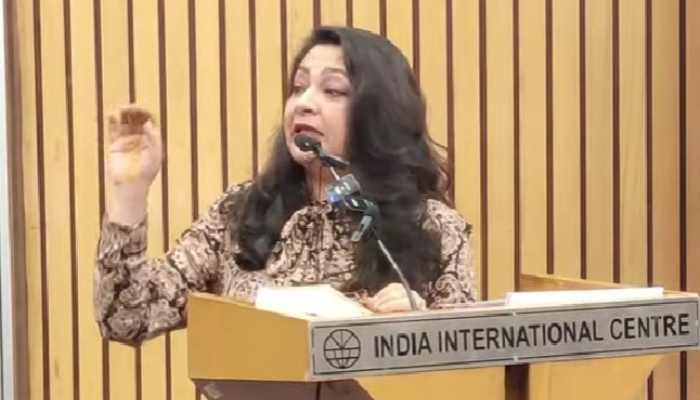
TheWire’s Arfa Khanum feels Hindus pressed saffron flags in her chest, confirms that she is a part of the legacy of Babur ki Aulaad: Here is her rant on Ram Mandir

On January 22, thousands of devotees including saints, seers and a host of distinguished guests, gathered in the holy town of Ayodhya to give a rousing welcome to their Ram Lalla on his homecoming after an exile of 500 years.

The excitement of Shri Ram Mandir’s Pran Pratishtha ceremony was palpable across the nation. Not only did Ayodhya experience a carnival-like atmosphere, but so did the tiniest town in the nation. Devotees lit diyas and lamps and decked up their houses with saffron flags of Bhagwan Ram and Bahwan Hanuman to commemorate this historic occasion. However, the level of passion and enthusiasm of these devotees caused considerable discomfort for some within the Islamist-leftist cabal, with Muslim ‘journalist’ Arfa Khanum Sherwani at the top of the list.

Speaking at a book launch event organised by India International Center on January 23, a day after the Ram Lalla Pran Pratishtha ceremony was completed with a lot of zeal and devotion, the senior editor of The Wire highlighted her frustration with the way the people in the society she lives in celebrated Ram Lalla’s homecoming by hoisting saffron flags.

She did not stop there; she also vented her hatred at the ruling dispensation for making the Ram Mandir possible and did everything in her power to incite people against Hindus and their beliefs.

Notably, the event took place on January 23 and Arfa Khanum Sherwani was invited to launch a book on Rahul Gandhi. The book written by Dayashankar Mishra is called, “Rahul Gandhi: Sampradayikta, Dushprachar, Tanashahi se Aitihasik Sangharsh”

“Felt like the Bhagwa flags were thrust into my chest’: The Wire’s Arfa Khanum Sherwani spews hate against devotees celebrating Ram Lalla’s homecoming

She began her provocative speech by comparing her society’s demographics to that of India. She bemoaned how although not only Hindus but also Sikhs, Muslims, and Christians reside there, her society was adorned with saffron flags on the occasion of the Ram Mandir Pran Pratishtha. She said she felt that those Bhagwa flags were not placed in her society but had been thrust into her heart.

Arfa claims her father, forefathers, even Babur ki aulaad would be upset over Ram Mandir in Ayodhya, confirming her family is a part of Babur’s legacy

It’s interesting to note that while spewing venom against the much-awaited Pran Pratishtha event Arfa Khanum Sherwani whined about how her father, forefathers and even Babur ki aulaad (Babur’s children) being upset with Ram Lalla’s Pran Pratishtha and in turn conceded that her family is a part of the Islamic tyrant Babur’s legacy.

In her eagerness to condemn Hindus for publicly expressing their love for their deity and criticising the BJP government for promoting Hindutva, she said, “This is the country where I, my father, his father…and if we go further then Babur’s son have been born and brought up. My father chose to stay back in MK Gandhi’s India rather than go to Jinnah’s Pakistan after partition, as he thought It would be safer but now he must be disheartened.”

The very same Babur who, in the middle of the 15th century, destroyed the Hindu temple at Ayodhya to construct a mosque. There, for nearly five centuries, was the contentious building. After the Supreme Court of India awarded Hindus ownership of the disputed site in November 2019, Hindus could recover it and erect the Bhavya Ram Mandir. After the 22nd January Ram Mandir Pran Pratishtha, the temple opened to the public in January 2024.

After centuries of sacrifice and suffering, the Hindus have finally succeeded in reclaiming the birthplace of their Bhagwan Ram, an emotion that apparently infuriated Sherwani. Utilising the Ram Mandir Pran Pratishtha event, she insidiously proceeded to instigate her viewers against the ruling dispensation, accusing it of being intolerant and prejudiced towards Muslims in the country.

‘Criminals are being called freedom fighters’: Arfa Khanum Sherwani insults thousands of Karsevaks who laid their lives for the Ram Janmabhoomi movement

Arfa not only accused the BJP government of promoting religious division and fanaticism amongst the citizens of India but audaciously went on to term the thousands of ‘Karsevaks’ who sacrificed their lives for the Ram Janmabhoomi movement as criminals. Taking a dig at the Modi government, Arfa said that the criminals who demolished the Babri masjid are now being hailed as freedom fighters.

The Wire ‘journalist’ went on to praise the event participants for not being part of the pro-Modi camp, lamenting the rise of Hindu fanaticism in the country under Modi’s reign.

In the video, Arfa further tried to generate unwarranted fear by expressing anxiety about a sort of impending threat to democracy and the Constitution, all while lamenting the rise of Hindutva in the country under Modi’s reign, an oft-repeated hyperbole that Modi detractors routinely resort to to reinforce their narrative against Hindus and Hindutva and characterise the Centre as inimical to Muslims and Christian.

While playing the victim card, Arfa conveniently omits to highlight the number of times Islamists have attacked Hindu religious processions. In fact, amidst the celebrations of Ram Mandir Pran Prathishtha in Ayodhya, as many as 18 processions Hindus carried out were attacked by an Islamist mob. Prior to this, a group of Islamists attacked the Hanuman Jayanti procession in Jahangirpuri, Delhi. Before it, Islamists attacked a Ram Navami procession in Khargone, Madhya Pradesh. Similar attacks were made on Hindu religious processions in various states of the nation. However, Arfa fails to mention these instances in his tirade against PM Modi and Hindus, lest it would undermine his propaganda.

Arfa’s angst against the Ram Mandir Pran Pratishtha was so intense that her rant against the BJP government did not stop at this. She employed every tactic the liberal-leftist coterie had ever employed to malign the Modi administration. She claimed that the Modi administration was unwavering in its efforts to mediate between Russia and Ukraine when the two countries were at war with each other but it did nothing to stop the carnage that was occurring in his own country in Manipur.

Ever since the Modi government came to power in 2014, Islamists and left-liberals have been spreading the propaganda that Muslims are being oppressed. Even reform measures, like the ban on triple talaq, are cited as attacks on Muslims. Citing a couple of random criminal incidents where the victims were Muslims, the Islamist-left-liberal ecosystem has been able to create the propaganda that Muslims are oppressed in India and people like Arfa Khanum Sherwani are the flag bearers of such misinformation campaign, which will only expected to increase, now, that the 2024 Lok Sabha elections are around the corner.

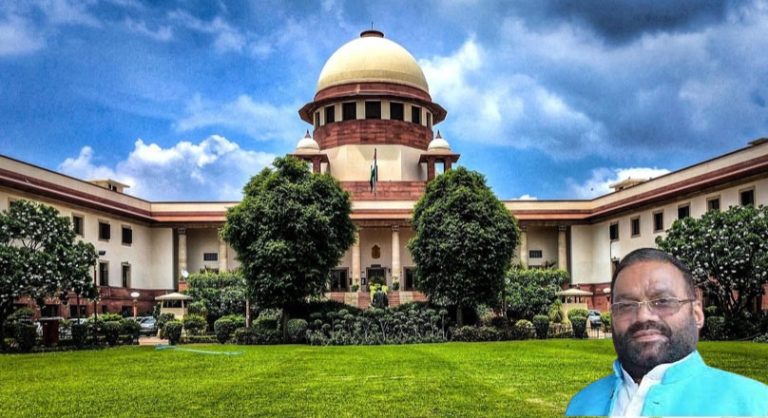
SC stays case against Swami Prasad Maurya over insult to Ramcharitmanas, calls UP police ‘touchy’: Where was this wisdom when Nupur Sharma quoted facts

On 25th January, the Supreme Court of India stayed criminal proceedings against Samajwadi Party leader Swami Prasad Maurya for his derogatory remarks about Ramcharitmanas. In its comments, the court stated what Maurya said was his opinion and questioned how it was considered criminal.

The apex court was hearing Maurya’s plea for quashing criminal proceedings against him over his derogatory remarks about Ramcharitmanas. Notably, the Lucknow Bench had dismissed his plea to quash legal proceedings against him at Pratapgarh district court.

Maurya was booked for hurting religious sentiments over his derogatory remarks about Ramcharitmanas. Maurya claimed in his plea that the case against him was politically motivated. Maurya has a habit of using derogatory language against Hindu deities and has made several controversial statements over the years. His followers even burnt copies of Ramcharitmanas in his support.

During the hearing, a two-judge bench comprised of Justice BR Gavai and Justice Sandeep Mehta stayed proceedings against Maurya. Justice Gavai questioned the UP government, “Why do you have to be so touchy?” Echoing his stand on the matter, Justice Mehta said, “It’s a matter of interpretation. Plain and simple. How is it an offence?” When a government law officer pointed out that copies of Ramcharitmanas were burnt, the court countered that Maurya could not be held responsible for that as it “was a line of thought”. The court issued notice returnable in four weeks and stayed the proceedings.

What did Maurya say?

On January 22, Maurya, while speaking to a news channel, said that Ramcharitamanas, written by Goswami Tulsidas in the 17th century, promoted social discrimination and spread hatred.

“Religion is meant for the welfare of humanity and for strengthening it. If there is any insult to a section of society due to certain lines in the Ramcharitamanas on the basis of ‘jaati’, ‘varn’ and ‘varg’, then it is certainly not ‘dharma’, it is ‘adharma’. There are certain lines in which names of castes such as ‘teli’ and ‘kumhaar’ are mentioned,” said the SP leader. He added that Tulsidas wrote the book for his own pleasure while demanding a ban on the “objectionable portions” of the Ramcharitmanas.

In his support, on January 29, Akhil Bharatiya OBC Mahasabha burnt the copies of Ramcharitmanas written by poet and saint Tulsidas in the Vrindavan Yojana of the PGI Kotwali area of Lucknow, Uttar Pradesh. The OBC Mahasabha members announced their support to Samajwadi Party leader Swami Prasad Maurya who recently stirred controversy by saying that the Ramcharitmanas should be banned. 

While he claims cases against him are politically motivated, he continued to mock the Hindu religion. In the most recent example, he termed the Ram Mandir Pran Pratishtha ceremony as hypocrisy and fraud and said that if a ‘stone’ can become alive by consecration, then why can’t the dead bodies walk? Maurya was addressing a gathering organized by the Karpuri Thakur Sena in Gazipur. He stated that people need to know the truth about the BJP and stay away from the party ideology.

“The BJP had organized the event just to distract the voters from the real problems. The party members are fake. This all is fake. Pran Pratishtha should be now done to the family members who have died. If a stone becomes alive by Pran Pratishtha, why can’t a dead person walk?” he said. “They don’t want people to discuss unemployment, inflation, and other social problems, so they are distracting the voters by making Ram Mandir. Lord Ram has been worshipped for thousands of years. What was the need to organize the Pran Pratishtha event? The people in the government want to hide their sins so they are organizing such religious events. They want themselves to be called Gods,” he added.

Bias at the highest level of the judiciary: If Hindus should not get ‘touchy’, why did SC get ‘touchy’ about Nupur Sharma quoting scriptures

When it comes to alleged derogatory remarks, the same apex court had held former Bharatiya Janata Party spokesperson Nupur Sharma responsible for unrest in the country after she countered Islamist panellist Taslim Ahmed Rehmani during a debate by merely quoting Islamic scriptures – something that had been repeated by several Maulvis, including a preacher like Zakir Naik. In May 2023, Rehmani and Sharma were in a debate about the disputed structure at Gyanvapi. During that debate, Rehmani used derogatory language against Bhagwan Shiv repeatedly, to which Sharma replied and questioned what would happen if she started using similar language for his religion – while she quoted certain facts mentioned in Islamic scriptures.

Sharma’s counter statement was cunningly trimmed from the complete conversation and shared online as “derogatory remarks against Islam” by Alt News co-founder Mohammed Zubair. As a result of the well-planned campaign against Sharma, the BJP suspended her from the party, and she had to stay away from public life out of fear for her life. She got death and rape threats from Muslims across the world. There were several rallies where Muslims chanted the murderous slogan “Sar Tan Se Juda” against her. Though she has made some public appearances in the last few months, she has to be surrounded by security personnel. On the other hand, Rehmani is living a happy and peaceful life without any consequences to his statements.

At the time, after Nupur Sharma was under threat by jihadis from across the world, multiple FIRs were filed against her in India, in various cities and towns. Sharma approached the court to club her FIRs so the investigation could take place against her in Delhi itself instead of her having to travel for different FIRs, which would endanger her life. It is to be kept in mind that Sharma approached the Supreme Court at a time when Jihadis had already beheaded Kanhaiya Lal in Udaipur for merely supporting Nupur Sharma. The Jihadis had filmed his beheading and then proudly made the video viral on social media. Besides the video of the murder itself, they had also uploaded a video where both of them were seen holding the blood-soaked knife used to behead Kanhaiya Lal and threatening Hindus.

Nupur Sharma’s plea in the Supreme Court was perfectly legal and legitimate. However, during the hearing, the Supreme Court, which is today asking why the Uttar Pradesh police are getting so ‘touchy’ about derogatory comments against Hinduism, blamed Nupur Sharma not just for her fate but even the beheading of Kanhaiya Lal. During the hearing of Sharma’s case, Justice Surya Kant stated, “The way she has ignited emotions across the country… This lady is single-handedly responsible for what is happening in the country.” Further, the Supreme Court called Nupur Sharma a woman with a ‘loose tongue’ and blamed her for the beheading of Kanhaiya Lal saying, “This is the outcome of what happened unfortunately at Udaipur“. Further, the bench also commented on her character saying, “This petition also shows her obstinate character and her arrogance that she thinks that the Courts of the Magistrate are too small for her”.

In other words, Justice Surya Kant made it clear that for him, it is Sharma’s fault that she spoke in a manner that ‘provoked’ the Islamists, not the Islamists’ fault, who have declared openly to behead anyone whom they deem as ‘blasphemous’. Further, the Supreme Court also declared Nupur Sharma, who merely quoted scriptures, as responsible for a brutal beheading that was carried out by Islamists.

Essentially, in the Nupur Sharma case, the Supreme Court legitimised the violent hurt of the Muslim community by alluding that they had an excuse to give rape threats, beheading threats, commit riots and even behead a man because they were hurt by Nupur Sharma quoting their scriptures. The apex court even stated that Nupur Sharma does not deserve the relief granted to the country’s common people (by transferring the FIRs to one jurisdiction). It declared that Nupur had no right to say the things she said in the first place, indirectly justifying the open calls for her murder and hanging.

In comparison, in the case of Swami Prasad Maurya, the court asked the Uttar Pradesh government in turn why they were being “touchy” (sensitive) for booking the politician for the vile and derogatory comments made by him, which were also patently false. Further, the court said that Maurya could not be held responsible for the burning of the Ramcharitmanas. When a government law officer pointed out that copies of Ramcharitmanas were burnt, the court countered that Maurya could not be held responsible for that as it “was a line of thought”.

If the court thinks that burning of a religious book should be considered a “line of thought” and false, derogatory comments can merely be “opinions” when it comes to Hinduism, one has to question why the same line of argument was not taken when scriptural facts were quoted by Nupur Sharma with regards to Islam and why she was blamed for not only the death threats she was getting, but also the beheading of a Hindu man by Jihadis.

The Indian State, including the Judiciary, often signals to Hindus that the Muslim community’s feelings are to be placated far more than the Hindu’s simply because the Muslim community has a propensity to take to the streets and commit violence every time their fragile feelings are hurt. The Hindu community, however, shoulders the burden of tolerance and secularism and clearly, does not even find recourse in the law when false and deliberately insulting statements are made against their faith. One has to wonder if the Judiciary will finally shed its double standards when it comes to issues of communal tension and religious matters to treat the intolerant minority in parity with the tolerant majority.

Jammu and Kashmir: More than 94,000 youths provided self-employment opportunities in a day

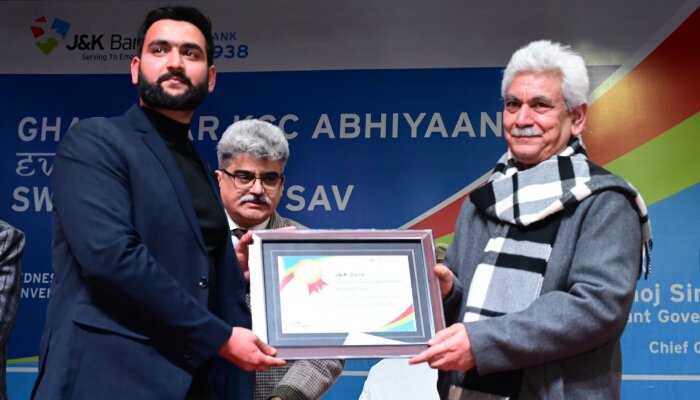
On 24th January, Jammu and Kashmir created history by giving entrepreneurship and self-employment opportunities to a staggering 94,680 young people, in a single day. According to an official release, the authorisation letters were handed out during an event headed by Lieutenant Governor Manoj Sinha two days prior to Republic Day.

LG Sinha announced, “Today, J&K creates a new record by distributing sanction letters to set up new units and startups that will fulfil dreams of youth and their aspiration of being a job creator and not a job seeker. This also marks a significant leap forward in transforming the Union Territory’s economic landscape.”

On this particular occasion, LG Sinha congratulated the Jammu & Kashmir Bank for their efforts to uplift the Ghar Ghar KCC (Kisan Credit Card) Abhiyaan and Swarojgar Utsav, two ongoing projects that aim to provide financial empowerment to youth and farmers. According to him, J&K Bank serves as the bank of the average person and plays a significant role in advancing the interests of the average person.

All of the panchayats in the J&K Union Territory are included in the Swarojgar Utsav which supports self-employment and entrepreneurship. The LG noted that J&K Bank has endorsed the initiative by providing Rs 1,384 crore to establish new units and startups. He further highlighted the successes in the Union Territory’s Kisan Credit Card saturation rate.

About two lakh farmers received Kisan Credit Cards as part of the Ghar Ghar KCC Abhiyaan to guarantee they have access to credit that is appropriate, dependable, and reasonably priced. LG Sinha remarked, “I see a new revolution is underway in the agriculture and allied sector that will construct new pathways for the prosperity of Jammu Kashmir.”

He praised the bank’s contribution to social development projects in the Union Territory as part of its corporate social responsibility (CSR) initiatives but stressed the potential for input credit in the MSME (Micro, Small & Medium Enterprises Development Institute) and agriculture sectors to assist youth and farmers in creating job opportunities in addition to achieving self-sufficiency.

The LG gave the J&K Bank instructions to reach saturation in Stand-Up India, Startups, and Ghar Ghar KCC Abhiyaan. “We have a lot of expectations from J&K Bank and I expect the bank to devise campaigns to take financial literacy programs to a vast portion of the population. Under ‘Back to Village’ and ‘My Town My Pride’ programs, the banks must strive to achieve the envisaged target for extension of financial assistance to enterprising youth.”

He urged the Union Territory’s banks, particularly the J&K Bank, to make sure that people-friendly programs that create job and livelihood opportunities “not only for the beneficiaries but those associated with them as well” are implemented in order to meet the needs of women, youth, and farmers.

During the event, the LG gave insurance claim settlement cheques to the surviving family members of the government workers who passed away and were insured by the bank’s Group Personal Accidental Insurance. He also congratulated farmers and successful business owners who had received bank financing. Furthermore, he introduced the Agriculture Production Department’s farmer-friendly AI-based Kisan Sathi Chatbot. An additional Rs 40.27 lakh was provided to the chatbot application by J&K Bank.

The representatives of Srinagar Smart City and Jammu Smart City, respectively, received two cheques totalling Rs 3.84 crore and Rs 3.35 crore from J&K Bank’s CSR (Corporate Social Responsibility) program for the construction of passenger sheds and e-bus bays.

On this occasion, two corporate films with the themes of “Ghar-Ghar KCC Abhiyaan” and “Swarojgar Utsav” as well as the bank’s CSR efforts were screened.

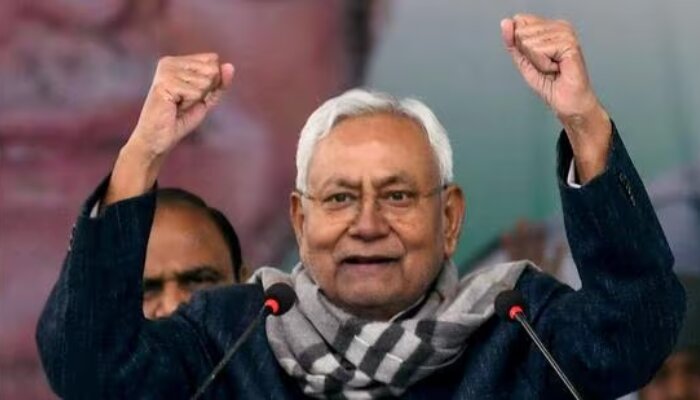
Amid the turmoil in I.N.D.I. bloc, Bihar CM Nitish Kumar, in power due to alliance with Lalu’s son, takes a dig at dynastic politics

On Wednesday, 24th January, Bihar Chief Minister and supremo of the Janata Dal (United) Nitish Kumar addressed a large audience at the Veterinary College Ground in Patna, a day after the central government announced Bharat Ratna for former Bihar Chief Minister Karpoori Thakur. However, he also utilised the opportunity to target his coalition allies.

“Karpoori Thakur was the biggest socialist leader of Bihar. You all should remember that among other things, Karpoori Thakur will be remembered for never using his clout to promote his family. He always thought about the common people of Bihar and the country, a marked contrast from many leaders today who promote only their family members,” he stated in a veiled attack against dynastic politics practised by many I.N.D.I. Alliance partners.

He added, “It was only after his death that we pressured his son Ramnath to join politics. He is now Rajya Sabha MP and we respect him very much.” Ramnath Thakur is also the party’s national general secretary. Nitish Kumar pointed out, “These days, people keep promoting their family members in politics. I have drawn inspiration from him. You all know that I have never sought to promote any of my family members. Make a note of this. I promoted other people. Always remember these things. I don’t care what others say.”

The chief minister remarked, “We had been demanding it (Bharat Ratna for Karpoori Thakur) for a long time. I have been making the demand for Bharat Ratna for Karpoori Thakur since 2007 from whichever government came to power at the Centre. Finally, this government gave him the honour. I thanked Prime Minister Narendra Modi for doing it. Probably, now they have realised that without honouring such leaders, there is no going forward in politics. We are very happy that our long-pending demand has been fulfilled.”

He claimed, “I was told by Ramnath Thakur (who shared the dais with Nitish Kumar) that the prime minister had called him up after the announcement (of Bharat Ratna). I got the news through Ramnathji. The PM did not call me. But I want to thank him through the press. Don’t say that he had given Bharat Ratna to Karpoori Thakur because of sustained demands from us. Let him take full credit. Nonetheless, I thank the PM and his government through the media persons for fulfilling a demand I have been raising since I assumed power in Bihar.”

The jibe at dynastic politics comes amid reports of growing fissures within the opposition bloc. Notably, West Bengal chief minister and Trinamool Congress (TMC) chief Mamata Banerjee as well as Aam Aadmi Party leader and Punjab Chief Minister Bhagwant Mann already announced that they are going to fight solo in the upcoming Lok Sabha poll. As per reports, Nitish Kumar was too upset with he Congress Party after I.N.D.I. Alliance meetings.

Madhya Pradesh: Wife demands divorce after husband takes her to Ayodhya in a family trip instead of planned honeymoon in Goa

0

A woman in Bhopal, Madhya Pradesh, sought divorce from her husband after he took her to Ayodhya despite promising her a honeymoon trip to Goa.

The woman’s divorce suit was brought forward in a family court, and the couple attended a counseling session. According to Shail Avasthi, the relationship counselor, the couple got married in August of last year.

The man is an IT engineer and was requested by his wife to take her to a foreign destination for their honeymoon; nevertheless, he insisted that they visit a domestic sacred site, as his elderly parents wanted to attend a temple.

The woman mentioned in her divorce petition that both she and her husband are employed and earn high wages. She stated that they could have easily financed a honeymoon abroad. However, her husband declined and proposed they go on a honeymoon in India, citing the necessity to care for his parents.

Both of them later decided to visit Goa. The woman claimed that a day before the trip, her husband informed her that they were going to Ayodhya and Varanasi at his mother’s request.

Despite going on the trip, the pair had a heated dispute when they returned, prompting the woman to file for divorce from her spouse. According to Avasthi, the woman claimed that her husband “broke her trust” and “prioritized his extended family over her” from the start of their marriage.

The couple’s counseling session was still underway. 

NCPCR chief Priyank Kanoongo busts propaganda by ‘The Hindu’ and ‘Times of India’ in reports on Rahul Gandhi naming a minor rape victim, shares facts

On Thursday (25th January), National Commission for Protection Of Child Rights (NCPCR) Chairperson Priyank Kanoongo took to social media platform X to bunk the propaganda by ‘The Hindu‘ and ‘Times of India‘ while reporting about the case of Rahul Gandhi naming a minor rape victim. He shared facts about the case which were not covered in the news and also posed screenshots of the particular news items. He said that these news reports should be included in the curriculum of journalism students as an example of setting a narrative by doing selective reporting.

The headlines by both The Hindu and Times of India said that the Delhi High Court has disposed of a plea against Rahul Gandhi for disclosing the identity of a minor victim. This gave the impression that Rahul Gandhi has got relief from the court in the case. But the fact is, the PIL disposed only because the prayers made in the plea have already been fulfilled, and it does not mean any relief for Rahul Gandhi. As requested in the plea, an FIR has been lodged against Gandhi, and the tweet has been deleted. It has been already explained how this dismissal of the plea does not meany any clean chit for Rahul Gandhi.

Priyank Kanoongo wrote in his post, “These news reports should be included in the curriculum of journalism students as an example of setting a narrative by doing selective reporting. Let us tell you what was not written in these news reports.”

He further said, “Rahul Gandhi tweeted revealing the identity of the 9-year-old Dalit girl who was gang-raped and murdered in Delhi and refused to delete it and refused to accept the law of the country. Two years later, due to court pressure in a PIL, he shamelessly deleted the tweet. The PIL demanded the registration of an FIR against Rahul Gandhi. Delhi Police informed that FIR number 240/2021 has been registered against Rahul Gandhi under the POCSO Act, Juvenile Justice Act, and IPC. NCPCR and the petitioners are satisfied and therefore, the petition is terminated on the fulfilment of its purpose.”

Priyank Kanoongo further said, “The Arvind Kejriwal government of Delhi said in the High Court that there was no evidence of gang rape and murder with the child, the child died due to electrocution. This was done so that the POCSO charges in the case would be eliminated, and the FIR registered against Rahul Gandhi would be terminated and Rahul Gandhi would be saved from punishment. While the fact is that in the charge sheet of Delhi Police and the supplementary charge sheet, the gang rape and murder of the child has also been confirmed.”

He added, “Politics has fallen so low that the Delhi government has rejected the rape and murder of an innocent rape victim to maintain the alliance of criminals. But these shameless things are not published in the English newspaper of civilised society. Rather, criminals are given relief. Selective reporting on crimes against children must be stopped.”

What is the case?

On 24th January (Wednesday), the Delhi High Court dismissed a petition that sought registration of an FIR against Congress leader Rahul Gandhi for revealing the identity of an alleged rape victim in 2021. The court rejected the plea after taking note of the submissions made by the Congress leader, the city police and social media platform X. The bench of Acting Chief Justice Manmohan and Justice Manmeet PS Arora were hearing a 2021 petition by social activist Makarand Suresh Mhadlekar. He had sought an FIR against Gandhi in his case. 

Taking into account the arguments presented by the parties, the high court observed that the requests in the petition had been already addressed and resolved, thereby disposing of the plea. There were three requests made in the plea, action by NCPCR, deletion of the tweet, and an FIR by the police. Now it has been confirmed that all three have already been done. NCPCR had complained against Rahul Gandhi, after which the Delhi Police registered an FIR in September 2021, which was confirmed by the police in the court.

The news published by The Hindu was titled ‘High Court closes plea against Rahul Gandhi’. The news published by the Times of India was titled, ‘Relief for Rahul Gandhi in case over naming minor rape victim’. Notably, Delhi HC dismissed the plea against Rahul Gandhi for revealing the identity of a minor rape victim, but it’s not a clean chit even after deleting the tweet as FIR was registered.

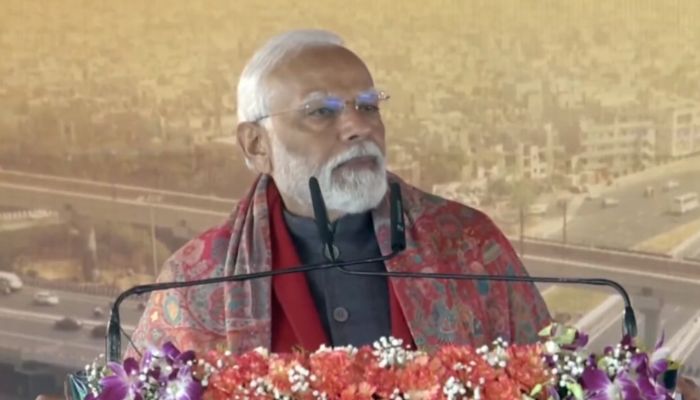
Uttar Pradesh: PM Modi inaugurates development projects worth over Rs 19,100 crore in Bulandshahar

Prime Minister Narendra Modi visited Bulandshahar in Uttar Pradesh on Thursday (25th January). The PM inaugurated several development projects during this visit. After the inauguration, the PM also addressed a public meeting. At the event, PM Modi inaugurated several development projects worth over Rs 19,100 crore, including railways, roads, oil and gas, and urban development and housing. PM Modi also mentioned the Ram Mandir and remembered former UP CM Kalyan Singh. There was great enthusiasm among the people at PM Modi’s first rally after the consecration of the Ram Mandir in Ayodhya.

Saluting people for their love and affection

In his speech, PM Narendra Modi said, “What can be a bigger privilege in life than your love and faith? I am overwhelmed by your love. This time in the day is the busiest time for mothers and women, but leaving everything behind, mothers and sisters came to give blessings, and kudos for this. On 22nd January, I had Darshan of Lord Shri Ram in Ayodhya Dham and now I am getting Darshan of the public here. Today, western UP has also received projects worth more than 19 thousand crores for development.”

Remembering Kalyan Singh

Remembering Uttar Pradesh’s former chief minister Kalyan Singh, PM Modi said, “I congratulate all my family members of western UP including Bulandshahar. Brothers and sisters, this region has given the country a son like Kalyan Singh, who dedicated his life to both the Ram cause and the national cause. Wherever he is today, he must be very happy to see Ayodhya Dham. It is our good fortune that the country has fulfilled the dreams of people like Kalyan Singh and many others like him, but we still have to increase our speed to fulfil his dream of building a strong nation and true social justice. For this, we have to work together.”

Resolve to build a strong nation

Prime Minister Narendra Modi added, “In Ayodhya, I had said that the work of consecration has been completed and now it is time to give new heights to the prestige of the nation. We have to pave the path from God to the country and from Ram to the nation. Our goal is to make India a developed nation by 2047 and if the goal is big, then every means have to be mobilised. Everyone has to try together. Building a developed India is also not possible without the rapid development of UP. For this, we have to awaken every force, from the farm barn to knowledge, science, industry and enterprise. Today’s event is another step in this direction.”

The ruling class ignored UP for decades after the independence

PM Modi further said, “For a long time in the decades after independence, development in India was limited to only a few areas, a large part of the country remained deprived of development. In this, Uttar Pradesh, where the country’s largest population resided, did not get much attention. This happened because those who ran the government here for a long time behaved like rulers. The way to keep the people in deprivation, to divide the society seemed to them the easiest means to retain power, for which many generations of Uttar Pradesh have suffered, but at the same time, the country has suffered a great loss. When the largest state of the country is weak then how can the country be strong?”

PM Modi also gave a detailed account of how Uttar Pradesh, and especially Western Uttar Pradesh, benefited from various schemes and infrastructure projects. He said, “Today work is going on on two big defense corridors in India. One of them is being built in western UP. Today the National Highways are developing rapidly in India. Many of these projects are being built in western UP. Today we are connecting every part of UP with modern expressways. India’s first NaMo Bharat train project has started in western UP. Many cities of UP are connecting with the metro facility. UP is becoming the hub of Eastern and Western Dedicated Freight Corridors. When Jewar International Airport is ready, this area is going to get a new strength.”

Uttar Pradesh should become a new employment hub: PM Modi

PM Narendra Modi said, “Due to the efforts of the government, today, Western Uttar Pradesh is becoming one of the major centres of employment. The central government is preparing to build four new industrial smart cities in the country. New cities that can compete with the world’s best manufacturing and investment destinations. One of these industrial smart cities is built in Greater Noida in western UP. Today I am privileged to inaugurate this important township. Here all the basic facilities have been developed, which are needed for business in everyday life. Now this city is ready for investors from all over the world. It will also benefit every small, medium and cottage industry of UP, especially western UP. The biggest beneficiaries will also be farmer families and farm labourers. There will be new possibilities for agro-based industries.”

PM Modi also informed about the Vehicle of Guarantee

PM Modi said, “Our effort is that no beneficiary should be deprived of the government’s scheme. For this, Modi’s Vehicle of Guarantee is coming to villages. Lakhs of people in UP are also connected to this Vehicle of Guarantee. Brothers and sisters, Modi guarantees that every citizen of the country will get the benefit of government schemes made for him as soon as possible. Today, the country considers Modi’s guarantee as a guarantee of completion of the promises because our government does what it says. Today it is our effort that the benefits of the government’s schemes reach every beneficiary. That is why Modi is giving a 100 per cent guarantee.”

He added, “When the government reaches 100 per cent beneficiaries, there is no scope for discrimination against anyone. When this happens, there is no scope for any kind of corruption. This is true secularism. This is true social justice. In any community, the poor have similar needs. The farmer belongs to any community, his needs and his dreams are the same. Women belong to any community, their needs and dreams are the same. The youth also belong to any community, their challenges and dreams are also the same. That is why Modi wants to reach out to every needy faster.”

Development projects inaugurated by Modi in Bulandshahar

During the event in Bulandshahar, the Prime Minister inaugurated the 173-km long double line between New Khurja-New Rewari on the Dedicated Freight Corridor (DFC), the fourth line connecting Mathura-Palwal section and Chipiyana Buzurg-Dadri section, Aligarh to Bhadwas four-lane Work Package-1 (part of Aligarh-Kanpur section of NH-34), widening of NH-709A, four-laning of Shamli-Muzaffarnagar section of NH-709AD package-II and other road projects.

The Prime Minister also inaugurated Indian Oil’s Tundla-Gawaria pipeline. The 255-km-long pipeline project, built at a cost of about Rs 700 crore, has been completed much ahead of schedule. The Prime Minister also inaugurated the Integrated Industrial Township Project spread over 747 acres in Greater Noida. The Rs 1,714-crore project connects the Eastern Peripheral Expressway in the south and the Delhi-Howrah broad gauge railway line in the east. He also inaugurated the Sewage Treatment Plant (STP), Mathura Sewerage Scheme, Moradabad (Ramganga) sewerage system and STP works built at a cost of around Rs 460 crore.

Karnataka: Priest of ‘low income’ temple asked to return salary of Rs 4.74 lakh, notice withdrawn after BJP calls Congress govt anti-Hindu

The Karnataka government was chastised for delivering a notice to Hiremagaluru Kannan, a priest at the Kodanda Ramachandra Swamy temple in Hiremagaluru, Chikkamagaluru, requesting him to refund an amount of Rs 4.74 lakh paid to his account as remuneration between 2013 and 2022. The Chikkamagaluru tahsildar sent the letter on 2nd December, but the issue was discovered only on Tuesday (23rd January) and got rid of within hours.

According to the notice, the government “inadvertently” paid Kannan Rs 8.1 lakh as tasdik or honorarium between 2013 and 2022, instead of the statutory Rs 3.36 lakh. Thus, the tehsildar requested that Kannan repay the excess money of Rs 4.74 lakh.

The notification also stated that the temple generated Rs 9.34 lakh in revenue between 2013 and 2022, but spent Rs 12.96 lakh. The amount includes Kannan’s monthly salary of Rs 7,500.

The notice also stated that the temple is classified as category C, a low-income religious establishment. Kannan told the media on Tuesday, “I’ve been asked to return the amount because the temple’s revenue is less than the expenses for the tasdik.”

“I was supposed to get an annual tasdik of Rs 24,000 between 2003 and 2017 but I was credited Rs 90,000 per year. Likewise, I was supposed to get Rs 45,000 per year between 2017 and 2022 but I received Rs 90,000 per year. I was paid an additional amount of Rs 4.74 lakh over 10 years and I was asked to return the money as the temple was not generating good revenue. However, I wish to mention that it is because of priests like me, that the government hundi collections have increased,” Kannan said.

As the matter gained traction, BJP state president B Y Vijayendra turned to social media to assert that the Congress-led government is “targeting Hindu religious sentiments”.

Later, Minister of Transport and Endowment Ramalinga Reddy stated that the notice handed to the priest would be canceled. “I have directed officers to hold an inquiry against the tahsildar and other officers responsible for wrong payment and recovery of excess amounts.”

On Wednesday, Karnataka Chief Minister Siddaramaiah stated that the excess money “will be collected from the tahsildar” because it was the tahsildar’s error.

However, reports mention that some government personnel implicated in erroneous payments have retired. Notably, payments to the priests were halted in March 2022, as the procedure of recovering excess amounts paid to them began.