Home Blog Page 1488

Shramjeevi Express blast: As Hilal and Nafikul are sentenced to death, read the experience of a person who was waiting to board the ill-fated coach

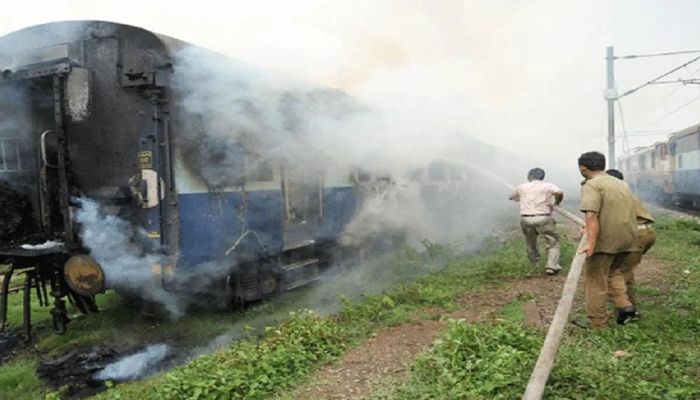
A court in Jaunpur district of Uttar Pradesh sentenced two terrorists to death in the case of RDX blast in the Shramjeevi Express train with RDX in 2005. In that blast, 14 people were killed, and 62 people were injured. The blast in the Shramjeevi Express took place around 5.15 pm on the evening of 28th July 2005.

The two terrorists who have been sentenced to death are Hilal alias Helaluddin, a Bangladeshi terrorist associated with Harkat-ul-Jihad-ul Islami (HUJI), and Nafikul Biswas of West Bengal. The case of these two has been argued for nearly six years, on which the verdict has now been pronounced. In the same case, in the year 2016, the court sentenced two other terrorists to death, whose hearing is pending in the High Court.

The blast incident took place on 28th July 2005, when the general coach of the Shramjeevi Superfast Express running between Rajgir and New Delhi was blown up. The blast took place near the Harpalganj railway crossing. It was revealed in the investigation that two terrorists kept a suitcase filled with RDX in the train and got down from the moving train. The explosion occurred shortly after both of them landed.

When this incident happened, the author of this article was only 14 years old and had entered the 15th year the evening before. In this article, we will know what was happening at the Sultanpur railway station when this incident took place.

28th July 2005, 5 p.m.

The Shramjeevi Express was scheduled to arrive a little late from its scheduled time. The train was a little late, but the weather was good. Since I had reached the platform of Sultanpur railway station barely 10 minutes earlier, I was okay with the train being late.

However, the restlessness was growing over the next 15 minutes. In those days, the train’s arrival time at Sultanpur was around 5:15 p.m. The Shramjeevi Express is famous for its punctuality except in winter. But the train did not arrive on time that day. It seemed that it would arrive on time. But for the next half an hour, there was no update about the train.

At 5:30 p.m.

People were annoyed due to the delay of the Shramjeevi Express. They started to gossip that some accident had happened with the train. In those days, not everyone would have a mobile phone like today. Even if someone had a mobile phone, it would have basic features. It was not an internet era. The facility of text messages were available in those days. Someone got information from a text message that there had been an accident with the train. But people did not have complete information about what had happened.

By 5:45 p.m., the situation was such that no one was visible on the platform. In these 30 minutes of my life, I have lived through the stress and seen the horror on people’s faces.

And the news of the blast appeared…

As soon as the blast was confirmed in the Shramjeevi Express, people at the Sultanpur railway station started running everywhere. Meanwhile, rumours spread that the blast was carried out to blow up Sultanpur railway station. Sultanpur where the RDX attack took place near Ayodhya a month before this incident had always been a high-profile area.

Rumours spread that the general coach of the Shramjeevi Express, which is the most crowded, had a time bomb in it. The bomb timings were the same as the arrival time of the train at Sultanpur railway station. The only thing discussed by the people was that Sultanpur had now come on the hit list of the terrorists.

All these things are also unforgettable for me because I was only 14 years old then. I thought of coming to Delhi by getting a general ticket. The explosion also happened in the general coach. In that coach, which would have stood in front of me if the train was on time. I would have been passing by those toilets in the coach to enter inside. Imagine how shaken I must have been to know that if the train had been on time, I might have died in the blast.

I left the station around 6 p.m. and was passing by the district hospital. Police had arrived and were deployed everywhere. Safe corridors were also being marked. Since both Jaunpur and Sultanpur were the nearest cities to Harpalganj, the injured were sent to Jaunpur, and the seriously injured to Varanasi.

Some people were also being brought by the locals to Sultanpur District Hospital on their own. Gradually panic spread in the city. People locked themselves in their homes. I somehow managed to catch a minibus from the Sultanpur bus stand to my village. Thursday, 28th July 2005. It’s a date that will always be remembered.

Detailed information was seen in the newspapers on the next day

It was Friday morning. Very few houses in the village used to get a newspaper till 8-9 o’clock. That too is often delayed in the village. In the morning, detailed news was received that the Shramjeevi Express had been blown up with RDX. In this blast, the coach was blown away. More than 5 dozen people were badly injured, while a dozen people were killed. If the accident had happened at Sultanpur railway station, where dozens of others like me were ready to board the coach that was blown up, the number of dead and injured would be multiple times higher than this.

RDX was a common explosive used in numerous terrorist attacks leading up to 2005. For the generation that has come of age in the past decade, the terror associated with RDX might be hard to comprehend. However, back then, reports of explosions were frequent across the country. The following year saw a series of bomb blasts in Mumbai trains. Since then, thankfully, such incidents have markedly decreased. But the 2005 terrorist attack still profoundly disturbed me during each attack, stirring memories of the fear and anxiety I experienced 18 years ago.

Now that the 4 terrorists associated with this terrorist attack have been sentenced to death, there is some peace in the mind. However, it took a long time to get justice. Nobody knows when these terrorists will be hanged. I do not even know the condition of those who were killed in that blast, or those who were badly injured, and their families. Hearing this news might have stirred deep emotions in them, rekindling the terror and distress they once endured.
Despite mounting proof, Kejriwal says no scam as he skips ED summons again, blames PM Modi for trying to stop his 1 Lok Sabha MP party from campaigning in 2024

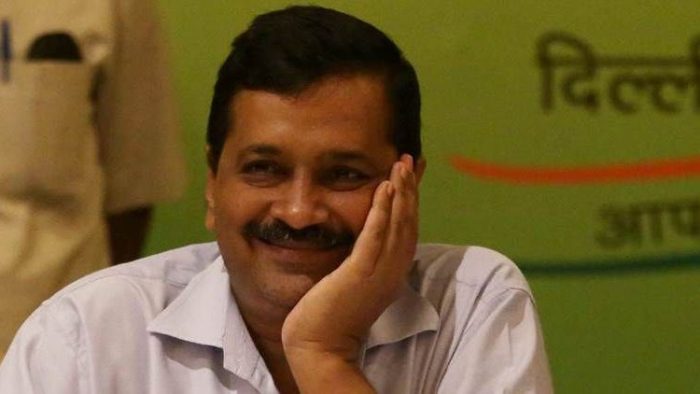
Delhi CM Arvind Kejriwal has skipped Enforcement Directorate’s summons for the 3rd time. ED plans to question the AAP supremo in the Delhi liquor scam, however, the Delhi CM has been evading the authorities. Sometimes, Kejriwal used the excuse of assembly elections, sometimes of Vipassana, and now of upcoming Rajya Sabha elections and Republic Day. While making time for all these things, Arvind Kejriwal has failed to make time for ED questioning.

Even though Kejriwal doesn’t have the time for ED, he obviously has time for the media. On Thursday, January 4, Arvind Kejriwal issued a statement saying, “”The truth is that there was no corruption. BJP wants to arrest me. My biggest asset is my honesty & they want to dent it. My lawyers have told me that summons sent to me are illegal.”

Arvind Kejriwal further said, “BJP’s aim is not to probe me, but not to let me campaign for Lok Sabha elections. They want to call me on the pretext of investigation and then arrest me.”

Notably, Arvind Kejriwal’s Aam Aadmi Party has 1 Lok Sabha MP and he says BJP is pulling out all the stops to stop this 1 MP party from campaigning for Lok Sabha elections in 2024.

Interestingly, while Kejriwal says there is no proof of corruption, his comrades, former Deputy CM of Delhi, Manish Sisodia (who was only removed from his post once arrested), and AAP’s Rajya Sabha member Sanjay Singh, have been languishing in jail for months under the same scam.

Despite several pleas for bail, neither Sisodia, nor Sanjay Singh have been entertained by any court. If there is no proof of corruption, maybe Kejriwal can go and explain that to the courts who are refusing to grant bail to his fellow AAP leaders, unless Kejriwal thinks BJP even runs the courts, which I doubt will go down well with the judiciary.

Notably, while denying bail to Manish Sisodia in October, the Supreme Court noted that a money trail of Rs 338 crore has been tentatively established in the case. Even though money trail has been established by Supreme Court, Arvind Kejriwal keeps on insisting that there in no corruption as he avoids investigation authorities.

Delhi Excise Policy

The liquor policy for 2021-22 was put into effect by the Delhi administration on 17th November 2021, however, it was cancelled at the end of September 2022 due to accusations of corruption. According to the agencies, the new regulation led to monopolisation and gave economic advantages to people who weren’t eligible for liquor licenses.

Interestingly, Kejriwal government scrapped the policy the moment an investigation started into the policy and its implementation.

Turkey: Man punches ‘protestor’ carrying a flag that reads ‘There is no God but Allah’, police start investigating a journalist who praised the act

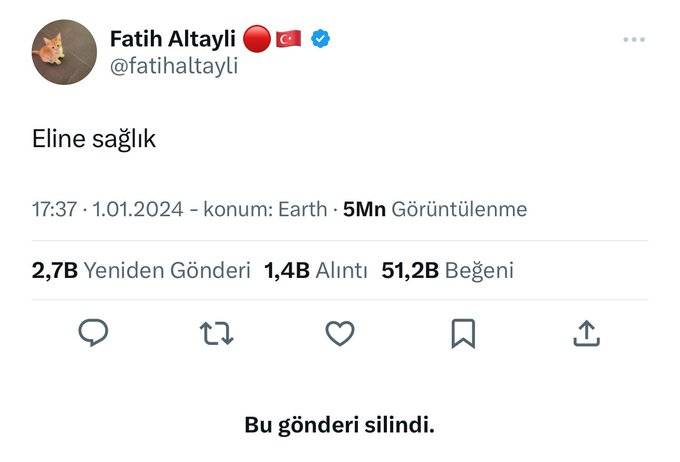
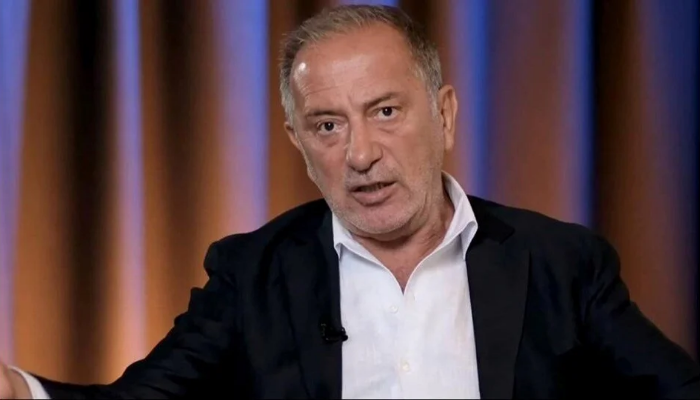
A prominent journalist in Turkey is the subject of an inquiry by Turkish prosecutors after he applauded an offender earlier this week. The journalist’s comments were in support of a university student who had assaulted a demonstrator waving an Islamic flag on 1st January. The journalist has been identified as Fatih Altyali. He has a massive following of over 2.6 million on X and more than 8 lakh subscribers on his official YouTube channel.

He responded to the incident in which university student Ege Akersoy punched İsmail Aydemir, a protestor for carrying a flag bearing the Islamic “word of Tawhid” (unity) that means “There is no god but Allah and Muhammad is His Messenger”. Responding to the assault, he had posted a message on his social media that read “Eline sağlık” which is translated to “Well done.” The occurrence transpired during an anti-Israel rally in İstanbul.

Source: Tele1

As part of an inquiry by the Istanbul Chief Public Prosecutor’s Office, Fatih Altyali is allegedly accused of “praising a crime and a criminal.” He is being probed for reportedly “fomenting hatred and enmity among the public” in connection with remarks he made regarding the attendees of a recent anti-Israel event in Ankara in a video that was posted on 24th December.

The journalist informed the T24 news website that he was called in by prosecutors on 3rd January and is going to the prosecutor’s office on 5th January with his attorney. He removed his statement on X and clarified in a video released to his YouTube channel that he had not intended to applaud the attack and had not made any personal reference to anyone when he wrote the contentious tweet.

After working for several news organisations in the past, Fatih Altyali now runs a YouTube channel where he posts his opinions on a variety of domestic and global topics and his videos draw millions of views.

Background of the instance

According to the Kronos news website, a pro-government foundation staged an anti-Israel protest in Istanbul on 1st January during which a university student was detained for hitting a protestor displaying an Islamic flag. Tens of thousands of people protested in Istanbul against Israel’s war in Gaza and the murder of Turkish soldiers in Iraq by prohibited Kurdish militants. The pro-government Turkey Youth Foundation (TÜGVA) whose members include President Recep Tayyip Erdoğan’s son Bilal arranged the protest.

Turkish media sources stated that Ege Akersoy, a fourth-year engineering student at Yıldız Technical University in İstanbul punched İsmail Aydemir, one of the protestors while he was holding an Islamic flag. The former was then taken into custody by law enforcement at Karaköy Police Station. Afterwards, a court ordered his arrest and transported him to Metris Prison.

Ege Akersoy is seen in a clip taken after the event asking İsmail Aydemir why he didn’t have the Turkish flag instead while a visibly wounded İsmail Aydemir questioned the former’s Muslim faith.

Many argued that the action was out of proportion to the conduct whereas others contended that İsmail Aydemir ought to have been punished for raising a “caliphate flag” in the first place. The people charged him with “revolting against the constitutional order” for proposing the restoration of the caliphate which Mustafa Kemal Atatürk, the man who founded modern Turkey had destroyed in 1924.

Saddam Sheikh writes ‘Jihad is in his blood’: UP ATS exposes ISIS-inspired group in Chhatrapati Sambhajinagar conspiring to attack Ayodhya

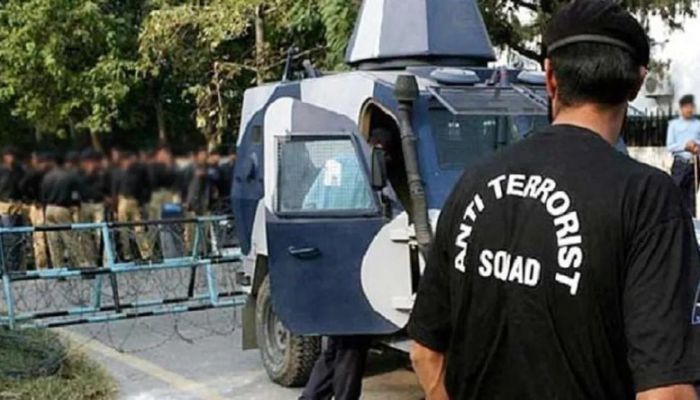
UP ATS has taken big action before the consecration of Ram temple in Ayodhya. The UP ATS intercepted provocative and misleading posts on social media amid the dreaded terrorist organisation Islamic State (ISIS) making strong efforts to set up its base in India. After this, the UP ATS raided 11 places in Maharashtra and recovered many objectionable materials.

UP STF (special task force) reached Chhatrapati Sambhajinagar in Maharashtra to investigate the case. They raided the hideouts of ISIS-linked suspects. During this time, phones and laptops, jihadi literature etc. were seized from the suspects’ hideouts. However, the 11 suspects have absconded. The UP STF issued a notice to the houses of those suspects in Chhatrapati Sambhajinagar and called them to the UP ATS office in Lucknow between 15th January to 18th January for interrogation.

The UP ATS spotted a post on social media by an ISIS supporter named Saddam Sheikh. Saddam Sheikh had written in his post, “Muslims will have to wake up when the Constitution is changed. Jihad is in my blood. We will not be afraid of sacrifice. The elected government oppresses Muslims. I am angry with the Babri Masjid verdict. Desire for revenge. Osama bin Laden and Burhan Wani are my role models.”

Sheikh was arrested by UP ATS in July 2023.

When Saddam’s post was investigated, at least 11 such suspects were identified in Chhatrapati Sambhajinagar by UP ATS. They were ideologically linked to the terrorist organisation ISIS. After this, the UP ATS raided Chhatrapati Sambhajinagar in Maharashtra on 30th December 2023. The families of all these accused have been summoned to the UP ATS office in Lucknow between the 15th and 18th of January.

The ATS has registered a case against 11 people including Mirza Saif Baig, Abdul Wahid, Yasir, Ziauddin Siddiqui, Thor Bhan, SK Khalid, Tahir alias Sir, and Sadiq Habib. On receiving information about the sudden disappearance of these suspects from their homes, the ATS went there and raided their houses. However, no one was arrested. The mobile phones of some suspects have been recovered.

The security agencies of Maharashtra have also become alert due to the raid of UP ATS. According to media reports, the UP ATS claimed that a meeting of these terrorists was held on 17th September 2023 in Chhatrapati Sambhajinagar. In this, they discussed the strategy of attack on major places in UP and other places. After this meeting, they started spreading provocative messages on social media.

Kuldeep Tiwari, CO of UP ATS, lodged an FIR in this regard in October 2023. The ATS had written in its complaint that a plan was being hatched to spread panic in UP under the leadership of a person working at a pharmacy store in Chhatrapati Sambhajinagar. UP ATS chief Mohit Agarwal said that information was received about some people engaged in anti-national activities, after which action was taken.

According to a report by the Times of India, Kuldeep Tiwari said, “Our team, with the help of our counterparts from the Maharashtra ATS, has issued notices to 11 out of the 14 suspects named in the FIR (registered on October 11, 2023, with ATS police station at Gomti Nagar in Lucknow).” The accused in this case are booked under section 153 (promoting disharmony, enmity or feelings of hatred between different communities) of the IPC and under sections 13 (unlawful activities) and 18 (conspiracy concerning terror act) of the UAPA.

The FIR filed by the UP Anti-Terrorism Squad reveals that a pharmacy store salesman, allegedly a supporter of the prohibited terrorist group ISIS, has been consistently posting extremist content on his social media account. According to the document, the suspects were covertly organising meetings to orchestrate a terrorist attack.

An officer involved in the investigation said, “The case relates to alleged statements made during a secret meeting held on 17th September 2023, in Chhatrapati Sambhajinagar to hatch a conspiracy to execute a sensational incident early in 2024.”

Maharashtra ATS officers reported that one such secret meeting, comprising around 15 men, mainly focused on the purported abuses during the 1948 Hyderabad Liberation Movement. An informant provided a video of this meeting first to the Telangana police, and then to the UP police. Notably, 17th September 2023 was the completion of the 75th year of the Hyderabad Liberation Day. Chhatrapati Sambhajinagar and the whole Marathwada region of Maharashtra was part of an Islamic state of the Nizam of Hyderabad before 17th September 1948.

Madhya Pradesh: Faizan Lala insults, uses derogatory language for Lord Rama on social media, arrested after outrage

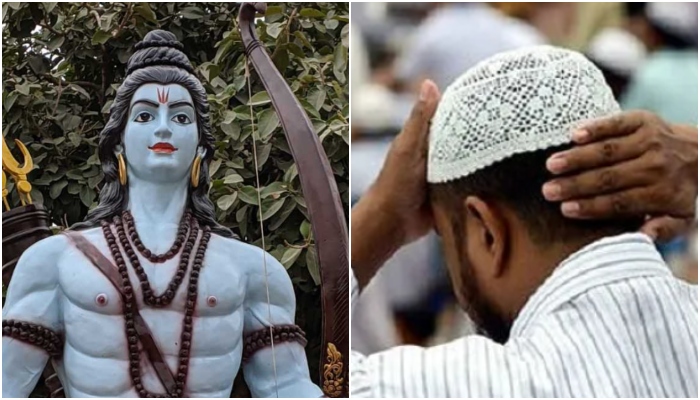
On Wednesday (3rd January), the Madhya Pradesh Police arrested a Muslim youth identified as Faizan Lala, son of Nizam Lala, for deliberately insulting Lord Rama on social media. The accused is said to have posted a derogatory photo of Lord Rama and abused the Hindu deity further in the comments section of the post. The Police booked and arrested the accused under section 295 of the Indian Penal Code, 1860.

According to the reports, the incident is said to have happened in the Keli village of Khargone district in Madhya Pradesh. Faizan posted a derogatory post about Lord Rama on Instagram on 2nd January. The post was seen by several as it instantly went viral. It hurt the religious sentiments of several Hindus. The police reportedly took action based on the complaint filed by one Ashwini Thakur.

The complainant stated that the accused in the comment section asked one of the Hindu girls on Instagram to leave Hinduism and follow Allah instead. The girl then slammed the accused and said that she was a Hindu. Following this, the accused used derogatory language for Lord Rama.

Thakur reportedly is the Sarpanch of Keli village who took objection to the anti-Hindu post. Several Hindu residents of the village also protested against the post claiming that their Hindu religious sentiments had been hurt.

People gathered at the local police station and demanded strict action against the accused. They said that the accused, especially when belonging to a specific community shouldn’t have posted something like this.

The Police reportedly filed a case based on the complaint by Sarpanch Ashwini Thakur. The accused has been arrested under section 295 of the IPC.

Court documents naming sex offender Jeffrey Epstein’s associates unsealed, list includes Bill Clinton, Britain’s Prince Andrew, Michael Jackson, and more

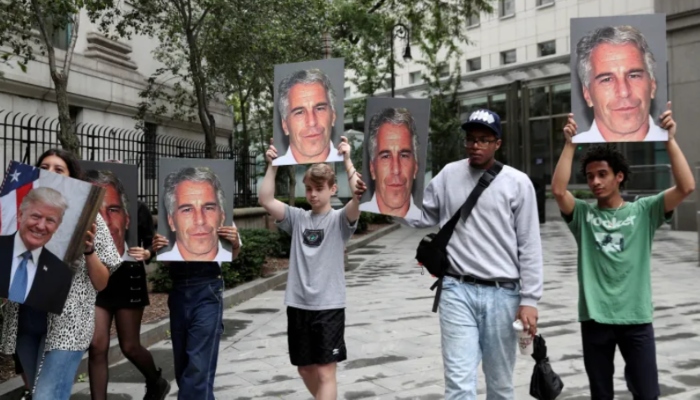
A 950-page court documentation containing the names of some of sex offender Jeffrey Epstein’s acquaintances was made public on Wednesday (3rd January). The documents were part of a case registered by one of Epstein’s victims, Virginia Giuffre, against Ghislaine Maxwell, Epstein’s former girlfriend and collaborator.

In December 2021, Maxwell was found guilty of sex trafficking and associated crimes for entrapping and supplying teenage girls for Epstein, a wealthy investor and convicted sex offender.

The court filings included passages from depositions and pleadings from Giuffre’s 2017 settlement with Maxwell. Maxwell was accused of defaming Giuffre by calling her a liar. Giuffre also claimed that when she was 17, Maxwell and Epstein pushed her into having sex with Prince Andrew of Britain. The woman said that Britain’s Prince Andrew put his hand on her breast at Epstein’s Manhattan townhouse in 2001.

Among the names revealed in the court filings were former US President Bill Clinton, pop icon Michael Jackson, Prince Andrew, and illusionist David Copperfield. These names have previously been redacted as J Doe versions in court files.

One of the documents included Maxwell’s testimony, in which she appeared to confirm that Prince Andrew had visited Epstein’s secret island in the US Virgin Islands, where Epstein had allegedly molested many girls. Maxwell confirmed that she was present on the island when Prince Andrew arrived and there were no women other than the staff working at the house.

In another document, Johanna Sjoberg said that Maxwell had recruited her to perform sexual acts on Epstein. In her deposition, Sjoberg stated that Epstein “said one time that Clinton likes them young, referring to girls.”

Sjoberg also claimed to have met Michael Jackson and David Copperfield at Epstein’s Palm Beach residence.

Several women have accused Epstein of forcing them to provide sexual services for him and his visitors at his own Caribbean island and mansions in New York, Florida, and New Mexico.

For years, the names of more than 150 people named in a lawsuit filed by Virginia Giuffre, one of Epstein’s most notable accusers, were held under wraps until a federal court declared last month that there was no legal need to do so.

Giuffre claims to have had sex with a number of politicians and business executives. Giuffre additionally stated in her deposition that she had sex with other important figures who have previously disputed her charges, such as hedge-fund owner Glenn Dubin, billionaire US businessman Tom Pritzker, and the late New Mexico Governor Bill Richardson. She said she also had sex with other political leaders whose names she could not remember.

In a second deposition, Epstein accuser Johanna Sjoberg stated that Prince Andrew placed his hand on her breast to pose for a photo with Epstein, Giuffre, and Epstein’s former girlfriend Ghislaine Maxwell. Due to his affiliation with Epstein, Andrew has lost most of his regal titles. In 2022, he resolved a civil dispute with Giuffre for an undisclosed fee, and he has denied any misconduct.

The list is based on a long-resolved defamation complaint Giuffre filed against Maxwell. Ghislaine Maxwell, the daughter of British media billionaire Robert Maxwell, is serving a 20-year prison sentence for assisting Epstein in recruiting and trafficking young girls. Her conviction is being challenged. Giuffre accused Maxwell of recruiting her when she was a minor to be abused by Epstein.

Epstein killed himself in 2019 as he awaited trial for sex crimes.

As per the reports, the records are one of numerous batches of files in Giuffre’s lawsuit that have been unsealed as a result of the Miami Herald’s relentless campaign to make them public.

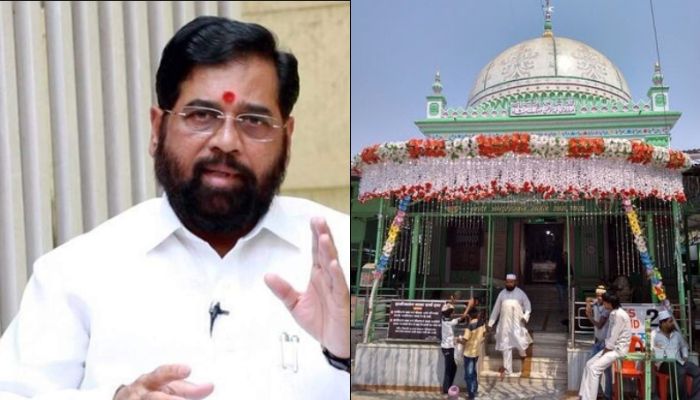
Thane: Maharashtra CM Eknath Shinde reiterates age-old commitment to liberate Haji Malang Dargah in Kalyan

Maharashtra Chief Minister Eknath Shinde on Wednesday (3rd January) while addressing a religious event in Thane district raked up the issue of Malanggad, or more popularly known as the Haji Malang Dargah.

Reiterating Shiv Sena’s commitment to liberate the structure, Shinde said that Anand Dighe had initiated the liberation movement of Malanggad which led to the chant “Jai Malang Shri Malang”.

He said, “Your sentiments towards Malanggad are well known to me. It was Anand Dighe who initiated the liberation movement of Malanggad, leading us to chant ‘Jay Malang Shri Malang’. However, I must tell you that there are certain matters that aren’t meant for public discussion. I’m aware of the deep-rooted beliefs you hold about Malanggad’s liberation. Let me say this that Eknath Shinde will not stay quiet till he fulfills your wishes.”

The dargah is situated 3000 feet above sea-level to the south of Kalyan in the Matheran hill ranges. On 20th February, devotees will mark the death anniversary of Haji Abd-ul-Rahman, a so-called Sufi saint of the 12th century.

In 1980s, prominent Shiv Sena leader Anand Dighe – who was Eknath Shinde’s political mentor – led the first agitation claiming that the structure was the location of an old Hindu shrine belonging to the Nath Panth.

Dighe began an agitation claiming that the shrine belonged to Hindus and that it was a site of a 700-year-old Machindranath temple. In 1996, he insisted on leading 20,000 Shiv Sainiks to the shrine to perform pooja.

It is since then that the structure has been called Shri Malanggad.

According to reports, the first signs of conflict began in the 18th century when local Muslims objected to the structure being managed by a Brahmin.

The conflict was brought before a local administrator who decided in 1817 that the will of the saint should be found by “casting lots”.

According to the Gazette, “Lots were cast and three times the lot fell on the representative of Kashinath Pant, who was proclaimed the guardian.”

The Ketkars have been the trustees of the Haji Malang Dargah Trust since then.

The dargah is maintained a three-member trust which reportedly includes a Hindu Brahmin family.

“Anyone claiming that the dargah is a temple is doing it for political mileage,” said Chandrahas Ketkar, whose family has been managing the dargah over 14 generations.

He said that in 1954, the Supreme Court had in a case related to the control of the dargah within the Ketkar family had observed that the dargah was a composite structure and cannot be governed by either Hindu or Muslim law but only by its own special custom or by general law of trusts.

Ketkar says that he issue is being politically raked up only to appeal to the vote bank.

The Gazetteers of Bombay Presidency published in 1882 mentions the dargah. It says that the shrine was built in honour of an Arab missionary, Haji Abd-ul-Rahman. He reportedly arrived with a bunch of followers from Yemen and settled on the lower plateau of the hill.

At the time, a local king named Nal Raja was in power. Local legend claims that Nal Raja married off his daughter to Haji Malang. The graves of both Haji Malang and “Maa Fatima” are located inside the dargah premises.

The structure and graves have reportedly existed since the 12th century and are considered holy.

Abhijit Ketkar, another member of the Ketkar family that manages the trust, said that thousands of devotees visit the shrine every year to fulfill their “mannat”.

According to The Gazetteers of Bombay Presidency, in the 18th century, the Maratha Confederecy sent offerings to the shrine as the departure of the British was “ascribed to the power of the saint”.

These offerings were sent under the charge of Kashinath Pant Khetkar, a Brahmind from Kalyan. Pant is reportedly said to have funded the repairs and taken over the management of the structure.

“The stewardship of the dargah rests with a local Brahmin family. It is a syncretic shrine and historically people who are distressed and marginalised irrespective of their faiths visit the shrine,” said Rama Shyam, who has written a thesis on the dargah.

In February 2023, Maharashtra CM Eknath Shinde performed aarti at the site and offered a saffron covering inside the dargah. Shinde has now raised the issue once more.

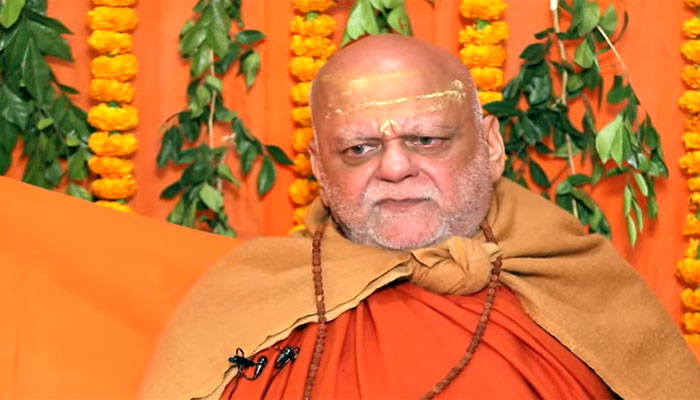
Societal order mentioned in Bhagwad Gita, Jaati-Varna often coincide: Puri Shankaracharya talks to News18 about Hinduism, Ram Mandir, and more

On 3rd December, CNN-News18 published an exclusive interview with Swami Nischalananda Saraswati Ji, the esteemed Shankaracharya of Govardhan Math in Puri. In the 30-minute interview with Anand Narasimhan, Shankaracharya talked in detail about different topics. The rare media interaction brought forth profound insights on Varna, Jaati and the broader aspects of Hindu philosophy.

Understanding Chaturvarnya and Jaati

The interview began with a discussion on the Chaturvarnya System. Shankaracharya explained that it is rooted in the teachings of Bhagwan Krishna from the Bhagavad Gita. It categorises society into four varnas based on qualities and actions. Shankaracharya emphasised that this system is not rigidly linked to birth but is more about the person’s nature and deeds.

Furthermore, he explained the concept of Jaati while emphasising its lasting and universal nature that goes beyond the limitations of the Varna system. His views and perspective shed light on the often misunderstood aspects of the caste system in Hinduism and highlighted its deeper and more inclusive nature.

The relevance of Varna in modern society

Explaining the practical aspects of the Varna system, Shankaracharya stated that its relevance persists in contemporary form in the global context. He pointed out that Western societies, including those of the USA and Europe, inherently follow a system to balance education, economy, defence and service sections, which is similar to the Varna system. He emphasised that the universality of such a system is essential to maintain societal harmony and balance.

Shankaracharya gave examples of different posts in modern society, like police officers or prime ministers, who perform duties as per their posts. Similarly, in the Varna system, the balance is maintained as per the position.

Transforming Varna through actions

One vital part of the discussion revealed whether one’s actions can lead to a change in Varna. Shankaracharya cited the story of Vidhur from the Mahabharata and argued that the conduct and qualities of a person can break the barriers of the limitations of birth-based Varna. Despite being a learned person, Vidhur did not gove “updesh” as he was a shudra. The idea challenges the conventional belief of an immutable caste system that is often highlighted as a black spot in Hindu society. His perspective suggested a dynamic aspect where personal virtues play a vital role in defining the position of a person in society.

The true essence of Brahmin-hood

During the conversation, Shankaracharya elaborated on the concept of Brahmin-hood. He stated that it is not limited to the birth. The true Brahmin is not just being born into a Brahmin family, but the nature and actions define it. He talked about different forms of Brahminhood based on the actions and nature of a person. For example, if a Brahmin indulges in business activities, he will be called a Vaishya Brahmin. Only a Brahmin who indulges in actions and natures defined for the Brahmins will be called a “Brahmin Brahmin”. His perspective resonates with ancient texts like Shiva Purana, where various Brahmins are recognised based on these criteria.

Equality and Justice in Sanatana Dharma

Addressing equality in Sanatana Dharma, Shankaracharya stated that everyone faces the consequences of their actions irrespective of their births. Citing examples from the Mahabharata, he illustrated how individuals born in different Varnas attained spiritual heights based on their actions during their lifetime. It reinforces the idea of justice based on the Karma of a person.

The multifaceted Hindu identity

Speaking about the word “Hindu”, Shankaracharya noted that Hindu identity is not limited to religion but has both geographical and spiritual dimensions. He explained how the term encompasses those who live in the Indian subcontinent and also those who strive against degradation and poverty.

Shankaracharya pointed out that the word ‘Hindu’ is present in several ancient texts like Puranas. He also cited examples of Hindukush Parvat and other geographical locations with the word ‘Hindu’ in their names to explain his perspective. He offered a comprehensive understanding of what it means to be a Hindu.

The consecration of Ramlala Virajman and Ram Rajya

The major highlight of the discussion was the upcoming ‘Pran Pratishtha’ (consecration) ceremony of Ramlala Virajman. Shankaracharya stressed the importance of the ceremony in re-establishing Ram Rajya in the country. Ram Rajya means the ideal state of governance and morality exemplified by Bhagwan Ram. He emphasised the importance of following the rituals for Pran Pratishta. He pointed out that the Murti of Bhagwan Ram is not similar to those of statues of leaders and needs ritual-based Pran Pratishta as without it, the essence of Bhagwan will leave the area, which may lead to bad omens. The ceremony has a profound spiritual and cultural significance in Sanatan Dharma.

Divergent Paths of Bhagwan Ram and Krishna in Establishing Dharma

The interview concluded by exploring how Bhagwan Ram and Bhagwan Krishna established Dharma in their own ways. Shankaracharya noted while Bhagwan Ram exemplified ‘Maryada Purushottam’ (the perfect man), Bhagwan Krishna was portrayed as ‘Lila Purushottam’ (the playful and divine). He explained how both deities established a higher order of divinity and righteousness in the world through their different approaches.

The interview offered a rare glimpse into the profound depths of Hindu philosophy and social structure. Shankaracharya’s insights bridged the ancient wisdom with contemporary issues and provided a deeper understanding of the Hindu way of life.

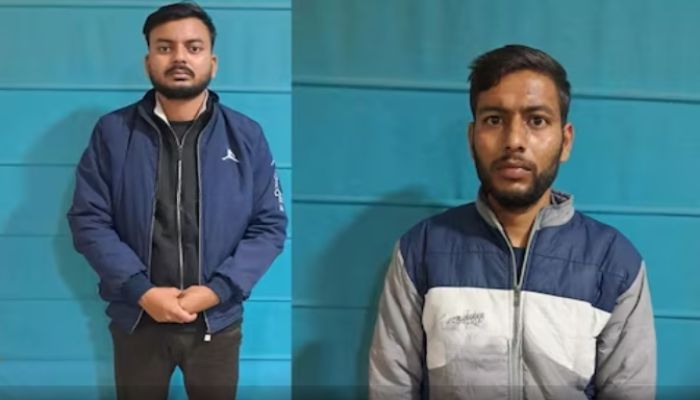
UP: STF arrests two for threatening bomb attack on Ram Mandir and CM Yogi, key conspirator sought political gains through fake threats

On Wednesday (3rd January), two individuals were apprehended for issuing bomb threats targeting the Shri Ram Temple, Chief Minister Yogi Adityanath, and the chief of the UP Police Special Task Force (STF). It was discovered that Devendra Tiwari, the head of NGOs named Bharatiya Kisan Manch and Bharatiya Gau Seva Parishad, masterminded the plot.

Tiwari allegedly orchestrated these threats to enhance his security and political stature. He reportedly directed his employees to send these menacing emails through fake IDs. The STF successfully detained the culprits, Tahar Singh and Om Prakash Mishra, while the man behind the conspiracy, Devendra Tiwari, remains at large.

According to a press release by the UP Police STF, on 27th December, information was given to the office of the Director-General of Police to the control room at the Special Task Force (STF) headquarters. The alert was regarding a tweet from the Twitter handle @iDevendraOffice, which disclosed that one alleged ISI agent Zubair Khan had sent an email to Devendra Tiwari. The content of this email was alarming, as it contained threats of bombing directed at Chief Minister Yogi Adityanath, STF Chief Amitabh Yash, Devendra Nath Tiwari, and the revered Shri Ram Temple in Ayodhya.

Following directives from higher authorities, Deputy Superintendent of Police Pramesh Kumar Shukla of the UP Special Task Force spearheaded the investigation. The probe soon uncovered that cases had been filed at the Alambagh and Sushant Golf City police stations in Lucknow. These cases were registered under severe sections of the Indian Penal Code (IPC) and Information Technology (IT) Act.

Further investigation brought to light that the email addresses [email protected] and [email protected] were used to convey the threats. Subsequently, two individuals were apprehended: Tahar Singh, son of Prithvi Raj Singh from Gonda, identified as the creator of one of the email IDs, and Om Prakash Mishra, son of Bharat Bhuwal Mishra from Gonda, who was responsible for sending the threatening email.

During interrogation, the apprehended suspects revealed key information about Devendra Tiwari. They disclosed that Tiwari resides in Lucknow. Tiwari is known for running NGOs like the Bharatiya Kisan Manch and Bharatiya Gau Sewa Parishad. Furthermore, he has been implicated in multiple cases at various police stations, including Manaknagar, Ashiyana, Banthra, Gautampalli, and Alambagh.

The suspects also informed that Devendra Tiwari owns the Indian Institute of Paramedical Sciences, located in Alambagh, where he has established his office. Tahar Singh, one of the arrested individuals, worked as the social media handler, while Om Prakash Mishra, the other detainee, served as Tiwari’s secretary in the same office. Additionally, Om Prakash is pursuing a 2-year Diploma in Optometry from the same institute.

Acting under Devendra Tiwari’s instructions, Tahar Singh created a bogus email ID specifically for sending the threats, as per the police statement. The details of this email ID and its password were then communicated to Omprakash Mishra via WhatsApp. Following Tiwari’s orders, two mobile phones were procured from Aman Mobile Center in Naka, Lucknow, which were then used for sending threatening emails.

The threat’s content was first scanned and then uploaded onto Devendra Tiwari’s mobile phone using Google Lens on the mobile phone designated for sending out the threats. These threatening emails were sent on two occasions, first on 19th November 2023, and later on 27th December 2023. The recipients of these emails were the same addresses that Devendra Tiwari had previously shared through his Twitter account.

After sending the emails, Devendra Tiwari eliminated evidence by burning and destroying the mobile phone used in the crime. The emails were sent using the internet connection provided by a WiFi router installed in his office. During the interrogation, the accused disclosed that Tiwari had convinced them of significant benefits from this scheme. He purported that such actions would not only garner substantial attention on social media but would also lead to enhanced security measures for them and yield considerable political advantages. The case against the accused is booked under sections 506, 507, 153A, 420, 468, 471, 201, and 120B of the IPC and section 66D of the IT Act.

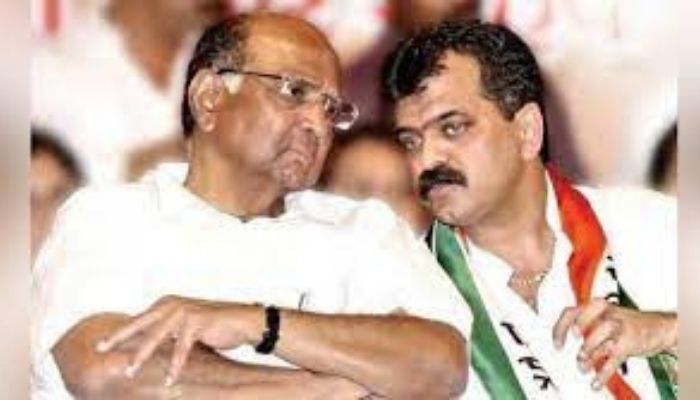
Lord Ram belonged to ‘Bahujans’, and he ate non-vegetarian food: NCP leader Jitendra Awhad tells in Shirdi

Nationalist Congress Party- Sharad Pawar faction leader Jitendra Awhad has sparked off a controversy with his statements on Lord Ram.

Awhad on Wednesday claimed that Lord Ram belonged to the ‘Bahujans’ (people in majority) and was a non-vegetarian, contrary to common belief.

This comes a day after BJP MLA Ram Kadam urged the Maharashtra government for a one-day ban on alcohol and meat on the Ayodhya consecration ceremony day on January 22.

“Ram is ours. Ram belongs to the Bahujans. Ram who hunts and eats is ours, we belong to the Bahujans. When you people go to make us all vegetarian, we follow the ideals of Ram and today we eat mutton. This is the ideal of Ram. Ram was not a vegetarian, he was a non-vegetarian,” Awhad said while addressing an event in Maharashtra’s Shirdi on Wednesday.

Kicking off a debate on the matter, Awhad asked, “Where would a person living in the forest for 14 years go to find vegetarian food? Is it correct or not (question to the public)? Tell me when I am telling the truth.”

Awhad further fueled the controversy as he said, “No matter what someone says, the truth is that we got independence only because of Gandhi and Nehru. Gandhiji was not assassinated in 1947, but the first attack on him took place in 1935, the second attack took place in 1938, the third attack took place in 1942.”

“After all, why did they attack him so many times? He didn’t care about time, he didn’t even care about the Constitution. But he was attacked because Gandhiji was a tradesman and an OBC. The fact that the leader (Gandhi) of such a big independence movement was an OBC was not acceptable to them (RSS),” he added.

The NCP leader went on to claim that Mahatma Gandhi’s assassination was rooted in casteism while criticising a lack of historical awareness among the public.

“The real reason behind Gandhiji’s assassination was casteism. You people do not read this history and do not keep it in your mind,” he said.

BJP MLA Ram Kadam hit back at Awhad over his controversial remarks claiming that the genuine concerns of Hindus and Marathi people are overlooked.

“If late Balasaheb were alive today, today’s Saamna newspaper would have spoken harshly to those who called Lord Ram a non-vegetarian,” Kadam said in a post on X.

“But what is the reality today, anyone can say anything about Lord Ram, anyone can make fun of Hindus. They don’t care. They are as cold as ice. But when the turn of elections comes, they will talk about Hindutva by gathering false power,” he said.

He further alleged that politicians are more interested in “cheap politics for vote”.

“The reality is this. no one cares about Hindus or Marathi people. They have no affection for anyone. They only want to do cheap politics of votes, that’s it,” the BJP MLA stated in his post. 

(This news report is published from a syndicated feed. Except for the headline, the content has not been written or edited by OpIndia staff)