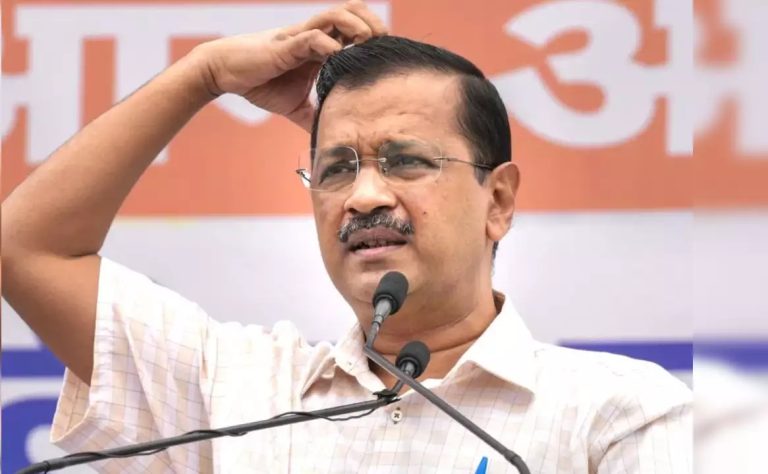
On Wednesday, 3rd January, several Aam Aadmi Party (AAP) leaders expressed apprehension that their supreme leader Arvind Kejriwal might get arrested and his house will be raided by the Enforcement Directorate (ED). This comes after the Delhi Chief Minister skipped ED summons for questioning in the Delhi Liquor Scam case for the third time on Wednesday.
Delhi CM Arvind Kejriwal will not go to the ED office today, CM wrote to ED.
"Ready to cooperate in ED investigation but the agency's notice is illegal. Their intention is to arrest Arvind Kejriwal. They want to stop him from election campaign: AAP https://t.co/Wh1GzkDAK4
While the AAP supremo is skipping ED summons repeatedly, and writing letters to ED questioning their “intent”, AAP leaders are huddling in fear that CM Kejriwal might be arrested.
Taking to X (formerly, Twitter) AAP leader Atishi wrote, “News coming in that ED is going to raid Arvind Kejriwal’s residence tomorrow morning. Arrest likely.”
News coming in that ED is going to raid @ArvindKejriwal’s residence tmrw morning. Arrest likely.
AAP’s ‘EVM expert’ Saurabh Bhardwaj wrote, “It is heard that tomorrow morning ED is going to reach the house of Chief Minister Kejriwal and arrest him.”
सुनने में आ रहा है कल सुबह मुख्यमंत्री केजरीवाल जी के घर ED पहुँच कर उन्हें गिरफ़्तार करने वाली है ।
The claims by Aam Aadmi Party leaders came right before the date of ED’s third summons. It is pertinent to note that ED issued a third summons to CM Kejriwal on December 22 last year, in connection with the Delhi liquor scam case, asking him to appear before the agency on 3rd January.
However, ED has rubbished the claims of AAP leaders that they are going to raid Arvind Kejriwal’s house.
Meanwhile, Indian Express reported citing Delhi Police sources that on account of the AAP leaders’ social media posts, they had made security arrangements outside the ED’s headquarters for Wednesday morning.
In a letter to ED, Delhi CM Arvind Kejriwal has sought a questionnaire from the agency and also questioned the intent of the summons served to him. He also mentions in the letter that the Rajya Sabha elections are to take place on January 19 and he also has to participate in the… pic.twitter.com/hT4epKJofk
Notably, in a letter dated 3rd January, Delhi CM Arvind Kejriwal sought a questionnaire from the Enforcement Directorate and also questioned the intent of the summons served to him. He also mentioned in the letter that the Rajya Sabha elections are to take place on January 19 and he also has to participate in the Republic Day programme on January 26 as Delhi CM.
Meanwhile, CNN-News18 is reporting that ED is now likely to issue a 4th summon to the Delhi Chief Minister.
Notably, Manish Sisodia, who was earlier serving as Arvind Kejriwal’s Deputy, and AAP’s Rajya Sabha MP Sanjay Singh are already in custody in cases linked to the Delhi liquor scam.
On Saturday (30th December), a team of Uttar Pradesh ATS (Anti-terrorism Squad) reached Chhatrapati Sambhajinagar in Maharashtra to raid multiple places and issue summons to 11 individuals in the city. Primary reports confirmed that this raid was assisted by Maharashtra police ATS and it was in connection with an arrest that took place in July 2023 wherein Saddam Sheikh was arrested by UP ATS for sharing hateful posts on social media.
When Saddam’s post was investigated, at least 11 such suspects were identified in Chhatrapati Sambhajinagar, who were ideologically associated with ISIS. Soon after, the UP ATS became active in this case.
When the UP ATS investigated deeper, they found that these youths from Chhatrapati Sambhajinagar in Maharashtra were involved in some allegedly anti-national conspiracy. The UP ATS, which reached Chhatrapati Sambhaji Nagar in Maharashtra, raided the places of suspects associated with ISIS, seized phones and laptops, seized some booklets and other literature and returned after handing them a notice to the UP ATS office in Lucknow. OpIndia contacted local sources and gathered some information concerning this case, Chhatrapati Sambhajinagar and Islamic fundamentalism rooted in the area surrounding the city.
The summoned people primarily live near the Kiradpura area of the old city area of Chhatrapati Sambhajinagar
According to our sources, the individuals summoned by UP ATS include youngsters as well as middle-aged men. All of them are actively involved in religious preaching. UP ATS took action against them because they received credible inputs that these people were also holding secret meetings to conspire about anti-national activities which they wanted to execute in Uttar Pradesh.
According to our sources, these individuals primarily reside in the Kiradpura area of the Chhatrapati Sambhajinagar city. Kiradpura is close to the old city area where Muslims form the majority population. The sources also revealed that there is a fairly high chance that being an agent propagating the Puritan Islamist ideology, many of the summoned individuals are members of some ‘Jamaat’ as they called it in local jargon. The locals also mentioned that they would not be surprised if further investigations of UP ATS find these individuals to be associated with activities like Tabligh, Ijtemas, etc.
CCTV footage of Islamist mob attacking & burning down police vehicle outside the only #RamMandir in a Muslim dominated area of Kiradpura, Ch. Sambhajinagar, Maharashtra. How come they were prepared with stones and other weapons on the night of Ramnavmi?#SambhajinagarTempleAttackpic.twitter.com/Sr7griFwbI
Notably, the Kiradpura area of Chhatrapati Sambhajinagar city made it to the news on the occasion of Ram Navami in the year 2023 when a Ram Mandir in this area was targeted by Islamists who pelted stones. A detailed report of this incident can be read here.
Are these radicals funded by local Muslim businessmen?
We also learned from our sources that there are multiple small and medium industrial units owned by Muslims in Chhatrapati Sambhajinagar. As a part of religious charity or donations, these business houses usually fund many activities from the backdoors. It is speculated that it is these businesses that also fund such anti-social activities and propagation of fundamentalism which encourages love jihad, forced conversion, etc. by providing monetary support to provoke the youths first and bear legal expenses in case of any action.
Notably, Deluxe Bakery (owned by Tasleem Khan, established in 2002) and Waterways Industries (established in 2012) are two big businesses in Chhatrapati Sambhajinagar. While Deluxe Bakery products are primarily sold pan Marathwada which was earlier a territory of Nizam of Hyderabad, ‘Hayat’ is a known brand of mineral water in this area. However, the Facebook page of this ‘Hayat’ water is full of Islamic religious content and video footage of events sympathising the disputed structure called Babri Masjid which once stood at Shri Ram Janmabhoomi in Ayodhya and was demolished on 6th December 1992.
Besides, Chhatrapati Sambhajinagar has had its underworld. Serial killer gangster Imran Mehdi remained a synonym of terror in the city for the first decade of this century. He was arrested, convicted and sentenced to life imprisonment in the murder case of Salim Quraishi. However, even after that he allegedly ran his gang from the Harsul Jail in Chhatrapati Sambhajinagar.
Repeated involvement of Chhatrapati Sambhajinagar in Islamic fundamentalism
OpIndia also contacted journalist Sushil Kulkarni. He lives in Chhatrapati Sambhajinagar and runs the YouTube channel Analyser News. He said, “UP ATS summoning local individuals of the city is indeed a piece of big news. However, it is not a new phenomenon in the city. If we recall the recent few decades, terror sympathising has been the tendency of the radicals in the city. In 2005-2006 we saw an arms haul case near Ellora in the district. Jabiuddin Ansari involved in that case was later known to the world as Abu Jundal who went to Karachi and was instructing terrorists involved in the 2008 Mumbai terror attacks from the control room in Karachi.”
Sushil Kulkarni added, “Faiyaz Kaghzi is another terrorist associated with this city. This ‘once B.Ed. student’ went on to join Lashkar-e-Taiba. It was this Faiyaz Kaghzi who helped Abu Jundal escape the country. Later, Kaghzi joined ISIS and became the first Indian to blow himself up in a terrorist attack by ISIS. Both these terrorists hailed from the adjoining Beed district and lived in Chhatrapati Sambhajinagar for a significant time radicalising other youths. Even the rioting modules and stone-pelting patterns in the city seen in 2018 were a corrupt third grade edition of that we would once see in Kashmir where adolescent minor boys would be kept at front as a shield.”
He said, “Another terrorist Sheikh Abrar was shot dead in a broad-day encounter by Maharashtra ATS in the old city in March 2012. He was accused of the Ahmedabad bomb blast case of 2008. Not only this, the city has become a ‘Deluxe Hub’ for such terrorists and their sympathisers. There have been many cases of forced circumcision, conversion, love jihad, and communal clashes in and around the city in the recent few years. A man from Sudan came here on a student visa. Did not attend even a single lecture. And was arrested because he was executing forced conversions to Islam. Changing the name of the city from Aurangabad to Chhatrapati Sambhajinagar has caused a yet bigger stir in these circles as the terrorists quite naturally idolise that Islamic tyrant and associate themselves with him.”
Sushil Kulkarni further said, “What is more worrisome in the recent case is that the UP Police ATS detects the anti-national activities in the state while Maharashtra police could have easily noticed and tracked these activities on their own. Residents of Chhatrapati Sambhajinagar need to be more vigilant as we have seen an ex-senior police officer Riyazuddin Ghiyasuddin Deshmukh sympathise with Aurangzeb. Babri mosque sympathisers appearing in the city and allegedly conspiring to execute some unsolicited troublesome tasks in UP weeks before the consecration of the Ram Temple should not be taken lightly. We expect to know more details of the conspiracy after the interrogations.”
On 2nd January, the information about the second complaint filed by Supreme Court lawyer Jai Anant Dehadrai against Trinamool Congress leader and expelled Lok Sabha MP, Mahua Moitra came to the fore. In his complaint, Dehadrai accused Moitra of snooping on him by misusing her position as an MP and using the Bengal police. His assertions that Moitra was snooping on him were based on the alleged history of TMC leader snooping on her ex-partner and a German national working with Chinese company Byte Dance (owner of TikTok app).
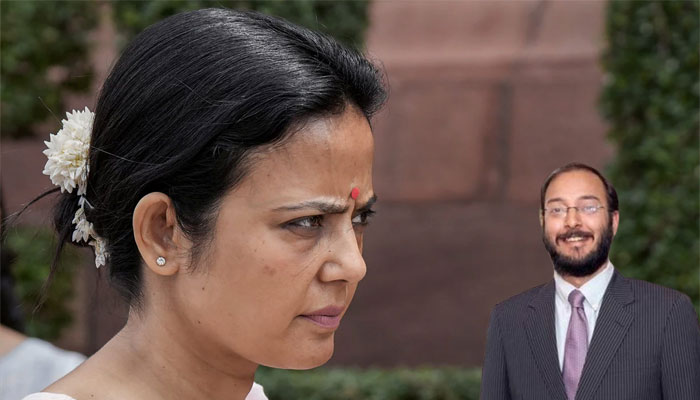
In the complaint, three names stood out: one was of Caravan Magazine’s editor and Editor’s Guild’s President Anant Nath, and the second was of top lawyer Suhaan Mukerji, apparently Moitra’s ex-partner. The third name was Helena Lersch, the German national working with Byte Dance. Details about Anant Nath can be read here.
Mahua Moitra, Suhaan Mukerji and German ‘woh’
In his complaint, Dehadrai alleged that Moitra used her MP status to snoop on her alleged ex-partner, Suhaan Mukerji. He claimed that Moitra utilised her connections with the senior officials in the West Bengal police to actively track Mukerji’s whereabouts in 2019. He further alleged that Moitra informed him about the snooping orally and via WhatsApp messages in September 2019. She claimed Mukerji was involved with a German woman identified as Helena Lersch.
Dehadrai alleged that Moitra accessed Mukerji’s phone’s complete call records. It included detailed information about everyone who had contacted Mukerji. Furthermore, Moitra allegedly had information on Mukerji’s precise physical locations all the time. In short, Moitra allegedly utilised her influence and connections to conduct surveillance on Mukerji and tracked his movements and communications.
Who is Suhaan Mukerji?
Suhaan Mukerji is the founding partner of PLR Chambers, a firm that specialises in India’s public policy and regulatory affairs. As per his profile in Law Asia, Suhaan has extensive experience in crisis management, policy formulation, drafting and monitoring legislative agendas. He has served as an advisor to the government on policy and legislative reforms at the federal and state levels.
Furthermore, Suhaan served on several government and industry committees and appeared as an expert witness for parliamentary standing committees. He was on Legislative drafting assignments, including Amendments to the IT Act, the Major Port Bill, the Ministry of Road Transport and Highways – Road Transport and Safety Bill, the Inland Waterways Authority – PPP framework, the Tourism Bill and more. Mukerji is well known in the political circle on both federal and state levels.
Timeline of Moitra-Mukerji connection
Mahua Moitra’s connection to Suhaan Mukerji indirectly came to the fore in May 2023 when a person named Shravan Kumar Yadav filed a complaint against Moitra with the Election Commission. In his complaint, Yadav accused Moitra of failing to disclose her 4,900 shares in Villerville Financial Advisors Ltd. in her election affidavit for 2019. As per reports, her declaration of nil in the section for details of investment in bonds, debentures, shares, and units in companies/mutual funds was in conflict, as stated in the complaint, with the business’s annual reports submitted from 2010 to 2022. There was a lengthy discussion on the connection between the two on the Legally India portal which can be seen here.
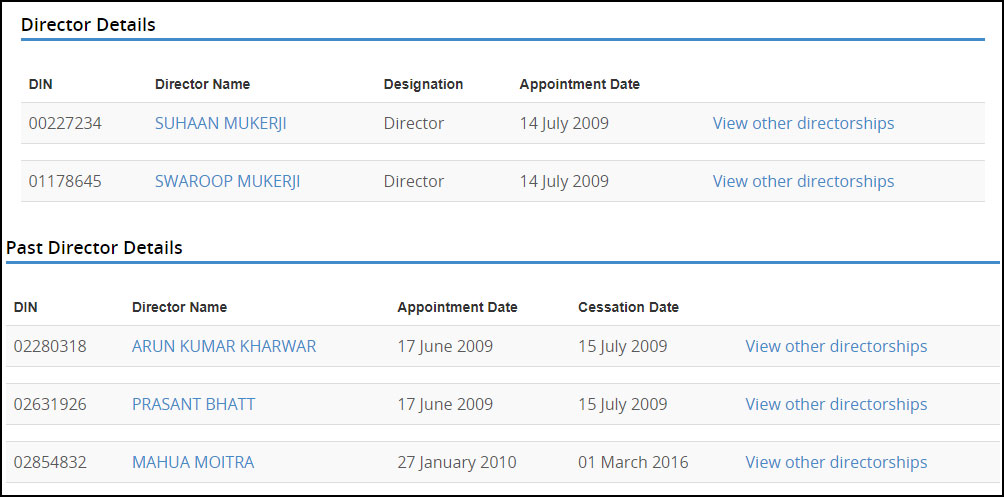
According to Villerville Financial Advisors Ltd data, she was the company’s director from January 2010 to March 2016. Interestingly. Suhaan Mukerji has been listed as a director of Villerville Financial Advisors Ltd since 14th July 2009. Apart from Suhaan, his father, Swaroop Mukerji, a well-known painter, is also a director at the company.
Source: Zaubacorp
Suhaan has also been associated with Amarchand & Mangaldas & Suresh A Shroff & Co (AMSS) since 2002. Before AMSS, he was an analyst with the World Bank. AMSS was dissolved in 2015, and Cyril Amarchand Mangaldas came into existence from it, founded by Cyril Shroff. AMSS was founded by Cyril’s grandfather, Amarchand Shroff, in 1917, and his father, Suresh Amarchand Shroff, was a managing partner in the company.
In 2010, two notable things happened. First, Mahua Moitra said goodbye to Congress that she had joined in 2009 to join Trinamool Congress. Second, she joined Villerville as director.
In May 2012, Suhaan was appointed as Adviser to Sam Pitroda, Office of Adviser to the Prime Minister of India on Public Information Infrastructure and Innovations (PIII). In June 2013, he left his position at AMSS to concentrate on his advisor’s post at the PMO. A few months later, in November 2013, he set up Policy, Law and Regulation Chambers or PLR Chambers and continued to be an expert advisor to Pitroda’s office at PMO. According to the Legally India report, PLR Chambers was established to offer clients and NGOs legal, public policy, and legitimate lobbying services. While serving as PMO, Suhaan started a firm to provide lobbying services to NGOs.
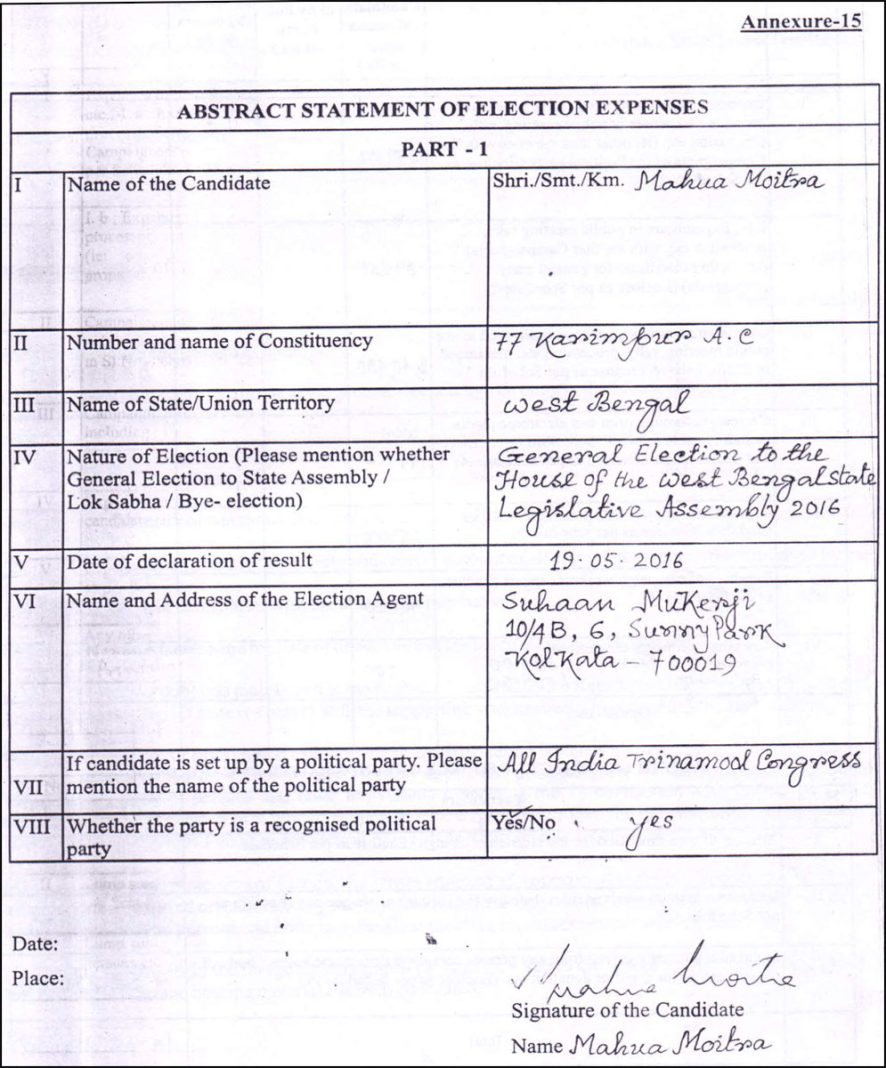
As mentioned before, Moitra served as director of Suhaan’s company till March 2016. In May 2016, she submitted an abstract statement of her election expenses in which Suhaan was mentioned as her election agent. As per the Election Commission of India, every candidate is entitled to appoint an election agent who plays a crucial role in the elections. They can attend nomination scrutiny, submit withdrawal notices, appoint polling and counting agents, and revoke these appointments. Furthermore, election agents maintain the election expense account. It is safe to say Suhaan was a trustworthy person for Moitra.
Source: ECI
Though there were differences between Moitra and Suhaan, as suggested in the complaint of Dehadrai, Suhaan continued to work for the West Bengal government under the Trinamool Congress. He served as the Standing Counsel of West Bengal and defended Abhishek Banerjee in Bengal Coal Scam.
Adv Suhaan Mukerji: I am the standing counsel for the state. the department of health is the custodian of all death records.
Justice Bose: we are not concerned with numbers but how the figures compare to other states. how you manage it through administration is not our concern
Lersch worked with tech giants such as Instagram and Google. She earned her BSc in Economics from the University of Hong Kong and BA in European Studies from Maastricht University, followed by an MSc in International Political Economy from the London School of Economics and Political Science.
Mahuagate: Dehadrai’s complaint against Mahua on ‘cash for query’
On 14th October, the Indian political scene experienced a major tremor as BJP MP Nishkant Dubey wrote to the ethics committee seeking an inquiry against TMC MP Mahua Moitra in the ‘Cash for Query’ matter. He based his complaint on the letter written by Supreme Court lawyer Anant Dehadrai, who alleged that most of the questions asked by the TMC MP in Lok Sabha directly or indirectly benefit businessman Darshan Hiranandani.
Notably, Moitra has accepted that she had shared credentials with Darshan Hiranandani. Following this development, it was recently reported that PAs of Lok Sabha MPs have lost access to Digital Sansad login.
Meanwhile, it was also reported earlier that Darshan Hiranandani, an accused in this alleged scam, turned approver and accepted the allegations. In his affidavit, he said that Moitra gave him her Parliament username and password so he could post questions on her behalf. As reported earlier, the IT ministry had stated that it had sent a report to the Lok Sabha Ethics Committee confirming that the TMC leader’s parliamentary ID was accessed 49 times from Dubai. As reported earlier, the Central Bureau of Investigation (CBI) initiated an inquiry against the TMC MP.
As a result of the allegations, Moitra was expelled from Lok Sabha on 8th December 2023.
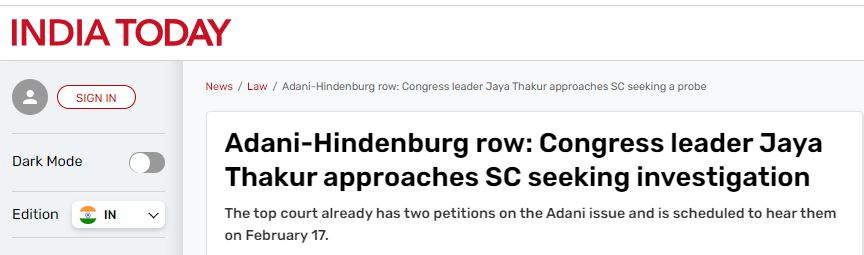
On 3rd January (Wednesday), the Supreme Court refused to order an SIT probe on the allegations made by short-selling firm Hindenburg Research against the Adani group. The Supreme Court in its order noted that third-party reports, without any verification, cannot be relied on as proof. The court observed that such reports can be treated as inputs but not conclusive evidence to doubt Indian authorities, in this case, it was the market regulator SEBI.
The opposition’s major ploy to corner the Adani group – and through him Prime Minister Narendra Modi as the so-called supporter of crony capitalists — based on reports of foreign entities – Hindenburg and OCCRP has fallen flat. The Supreme Court order also alludes to the fact that it was all bunkum from the outset as extensively reported and explained by OpIndia.
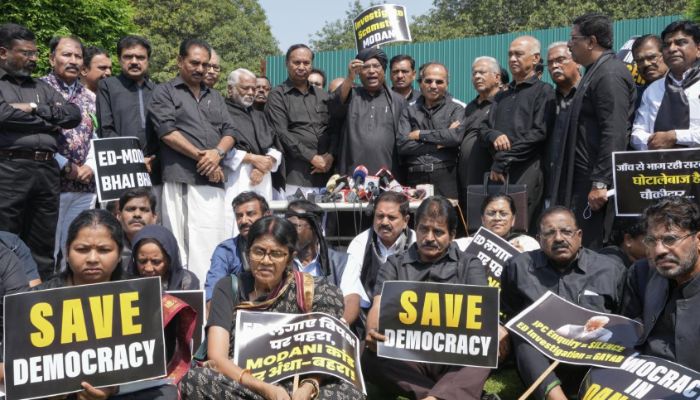
Conspicuously, this was yet another bogus issue that the opposition bloc had deployed to halt the proceedings of the parliament and leave the legislature paralysed. Over the years, there has been a striking pattern about opposition’s conduct.
First, a dubious or mystical foreign entity para drops a report/content that makes unsubstantiated allegations days or a week ahead of the Parliament session.
Despite the time zone difference, the foreign ‘media’ reports get amplified in the blink of an eye, overshadowing every real story of public concern for hours, days, and weeks at times.
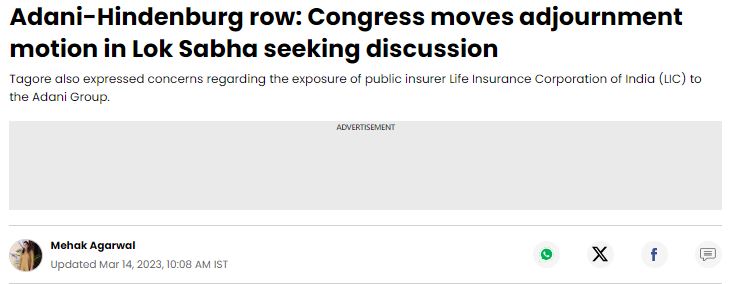
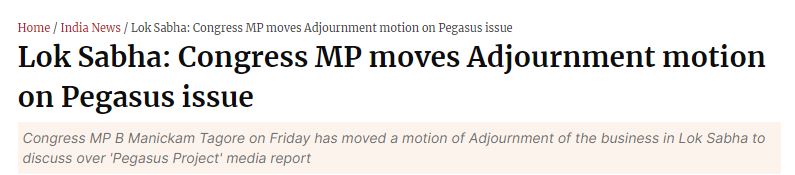
The bombardment of unsubstantiated allegations at the crucial juncture of the beginning of a new Parliamentary session then gets reinforced by the opposition by pulling the safety and emergency lever of Parliament, the ‘Adjournment motion’.
As the old adage goes, ‘while the truth begins to pull its socks, lie has already traveled around the world’. Despite being unsubstantiated and in most cases, the Joseph Gobbel-esque hitjob reports, it gives fodder to the opposition to buttress their cliched and baseless tropes – “Free Speech, Democracy, and Idea of India” getting “strangulated” and “the corrupt government is selling out the country to crony capitalist”, which can’t be further from the truth. With the opposition taking extreme measures and creating an unhinged ruckus, the Parliamentary proceedings and entire sessions get washed away in the pit of baseless foreign media reports.
Here are five major examples to back this glaring pattern of how the opposition uses baseless issues to stall legislative work and has been repeating it for years. But these same issues couldn’t stand the basic scrutiny of law when it reached the apex court. These bogus issues strategically timed and planted by foreign entities were bereft of merit. However, they did prove to be a successful tool to disrupt the Parliament and create a legislative impasse.
Hindenburg Research Report: Hitjob on Adani Group days ahead of Budget Session 2023
The Hindenburg Research, a short-selling firm, published a report, on 24th January 2023, accusing the Adani Group of fraud and stock price manipulation. The report came days ahead of the 2023 Budget Session of the Parliament which began on 31st January.
Following the publication of the report, the Adani Group trashed the Hindenburg Research report as a ‘malicious combination of selective misinformation and stale, baseless and discredited allegations’. However, the Hindenburg report eroded Rs 46,000 crores in Adani group’s market capitalisation.
The opposition disrupted the parliamentary proceedings and brought an Adjournment motion, as pointed out and explained earlier. They created a ruckus throughout the session demanding a Joint Parliamentary Committee (JPC) on the Adani-Hindenburg controversy, impeding the normal legislative functioning of the Parliament.
Primarily based on foreign media reports, the opposition bloc, particularly Rahul Gandhi, has been leading the charge against the Adani group arguing that from pin to pen, from electricity to farm, a penny spent on anything is going into Adani’s account.
Whenever poor people switch on fan or tubelight, money goes into Adani's Pocket. pic.twitter.com/ZX8n9pXu3v
From Parliament to any election rally in any part of the country irrespective of local issues, the Gandhi scion repeated the allegations against Gautam Adani like a stuck gramophone, although goofing up here and there about the quantum of the alleged scam varying from Rs 20,000 to Rs 20,000 crores to Rs 32,000 crore. Now what warrants him to come up with these numbers – dubious reports, often from mysterious foreign entities, and depth of merit in the allegations is “trust me, bro”, which over the course of time doesn’t get any corroboration.
The opposition’s allegations — derived from the unsubstantiated reports by a third-party organisation that has a well-established vested interest in the matter at hand and is based outside India – fall flat before the Supreme Court.
Rejecting the petitioner’s demand to conduct the SIT probe, the Supreme Court, on 3rd January 2024, noted that third-party reports without any verification cannot be relied on as proof. It observed that such reports can be treated as inputs but not conclusive evidence.
The opposition, rather than doing the hard yard itself to raise issues of public concern, went ahead callously with dubious reports of Hindenburg and OCCRP to beat the dead horse and ended up impeding important parliamentary work. Meanwhile, as stated above, despite the allegations being baseless, the short-selling firm Hindenburg and its ilks ended up benefiting from the controversy, an intended outcome for these firms that was always written on the wall.
Pegasus snooping allegation aired just a day before 2021 Monsoon session
On 18th July 2021, the left-wing portal ‘The Wire’ claimed that the names of 40 Indian journalists were present in a list that contained names of people who were spied upon using Israeli spyware Pegasus. The 40 Indians were apparently among the thousands of people mentioned in the so-called leaked list, which was earlier reported by The Guardian.
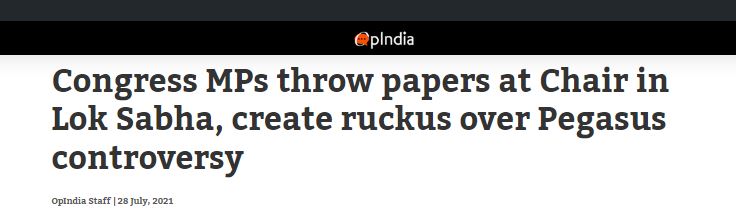
The pegasus snooping allegations were made a day before the 2021 Monsoon session of Parliament which began on 19th July. The opposition created a hue and cry hurling accusations left, right, and centre, and rendered both the houses of Parliament virtually dysfunctional with its pandemonium.
Why the ‘Pegasus snooping’ allegation was all bluff and bluster, no substance
Pegasus, a software that can infect iOS and Android devices remotely was developed by Israeli cyber arms firm NSO Group, and reportedly it is only sold to governments.
The Wire report insinuated that as only governments could use the software, it meant that the Modi govt was spying on Indian journalists including Siddharth Varadarajan, Paranjoy Guha Thakurta, M.K. Venu, Shishir Gupta, Rohini Singh, etc. The report included quotes from the allegedly targeted journalists who directly blamed the Modi government for ‘spying’ on them.
The government clarified both in RTI replies and in the Parliament that there had been no unauthorised interception by security agencies.
The NSO group had also refuted the claims by the Guardian report about the ‘leak’. Days later, Amnesty International stated in a statement that they had never claimed that the so-called list was that of people who were spied on, and asserted that their ‘list’ was merely a mention of people who may be “potential targets” of the clients of NSO.
It is important to note that the opposition picked the baseless issue which was dead on arrival.
The opposition has flogged this dead horse ever since without caring for the fact that this was yet another issue para-dropped to mar Parliamentary functioning and had its origin in dubious foreign sources.
Notably, the Wire and its partners were fed the information by two very dubious organisations – one was Amnesty International and the other was Forbidden Stories, click here, to read in detail about the report and these organisations’ controversial track records.
The vindication of the fact that there was no merit in the Pegasus snooping story and that it was all bunkum is that the Supreme Court on 25th August 2022, said that no conclusive proof had emerged to support the claim that the Indian govt was using the Pegasus spyware to snoop on people.
Rafale – The elaborate plan that set the tone for this pattern
The recurrent reports by dubious French portals like Media Part are another prominent example of how the baseless issue raised by the opposition subsumed the parliamentary proceedings and left Parliament, the decision-making body for the country, ineffective. Media part published unsubstantiated reports on multiple occasions, including in April, July, and November 2021.
The opposition created a ruckus demanding a Joint Parliamentary Committee probe against the Rafale deal which is an inter-governmental deal between the governments of India and France for 36 Rafale fighter jets in flyaway condition. The opposition hampered the functioning of the Parliamentary sessions in 2021 with the dubious media organisation fanning falsehoods within a fortnight gap with that year’s Parliamentary sessions.
Additionally, the NGO that filed a complaint against Rafale Deal is partners with George Soros’ Open Society, Misereor, and Oxfam among others.
Congress-friendly career PILists like Prashant Bhushan and others filed a PIL in the Supreme Court and asked the SC to intervene and order a court-monitored probe into the deal. Click here, to read How N Ram of The Hindu manufactured the Rafale scam through digitally cropped documents.
The opposition took voters and Parliament for a ride crying hoarse based on baseless allegations as vindicated by the SC verdict on the Rafale deal which dismissed petitions for inquiry. The court also later dismissed review petitions in this matter.
BBC documentary on PM Modi
The BBC released a propaganda documentary about PM Modi’s role during the 2002 Gujarat riots citing claims that were already termed as lies by courts in India including the Supreme Court of India. The BBC documentary ignored multiple court orders to push its agenda and was immediately banned by the Government of India.
The propaganda documentary was aired on 17th January 2023, just days ahead of the 2023 Budget session which began on 31st January.
The opposition created a ruckus and disrupted Parliament proceedings while raising the issue of the government banning the BBC documentary on PM Modi. The issue, however, got coupled with the Adani-Hindenburg row and the 2023 Budget session took a huge hit.
The opposition faced another humiliation and didn’t get relief from the Supreme Court in this matter and the ban was not lifted. Yet, the opposition parties and its ecosystem spent their energy screening the propaganda documentary by a foreign entity that challenged the sovereignty of Indian courts.
Apple threat notification fiasco dropped just before the 2023 Winter Session
On 31st October 2023, some iPhone-using Opposition leaders claimed that they received mysterious “threat alerts” from Apple. “ALERT: State-sponsored attackers may be targeting your iPhone,” the threat notification sent on iMessage and Apple Mail read.
It was quickly turned into a political outrage and the opposition blamed the ruling Bharatiya Janata Party for trying a so-called cyber attack on their Apple devices, including iPhones. It lead to a hue and cry to rekindle the dead hoarse – Pegasus snooping 2.0.
However, the ecosystem failed to drag the issue when things started to unravel and the issue died a premature death before the 2023 Winter Session could begin on 4th December.
Notably, Apple itself on its website stated that the so-called “state-sponsored threats” to their users’ devices are not reliable. Additionally, It came to light that the security threat messages were from a dubious Soros-linked NGO named Access Now, based out of India.
Conclusion
The opposition has failed to smell the coffee that their baseless allegations only get traction, praise, and amplification from its echo chamber of sycophants. These people have entrenched themselves deep in the digital world, and getting more likes is winning for them and a success/vindication of their allegations.
Click here, to read how the grand old party has been rejoicing in rehashing the same allegations with caricatures like MODANI, etc on key issues on which it had invested all its political capital rather than adding depth of merit to their case.
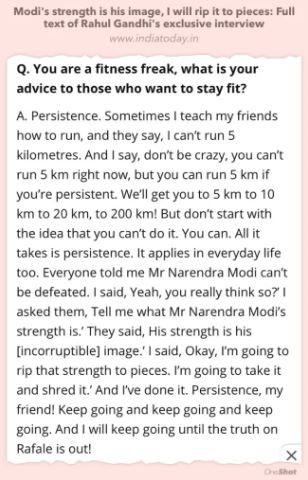
It is important to note that in all these baseless issues lies one underlying thing – to target the incorruptible image of Prime Minister Narendra Modi. Ironically, Rahul Gandhi had once admitted in an interview that his “persistent” efforts would be to destroy PM Modi’s image. He argued that he learned that PM Modi’s greatest strength is his incorruptible image and replied, “Okay, I’m going to rip that strength to pieces. I am going to take it and shred it”.
The least Indian voters can expect from the opposition is to exercise Atmanirbharta in picking and setting the agenda/narrative and rooting their claims, allegations from Indian sources, doing the hard mile on their own. Rather than outsourcing their job of finding issues to corner the ruling dispensation to dubious foreign entities, which by the way are doing a shoddy job, and making blatant, defamatory, and unsubstantiated allegations on their ‘opponents’. While they get away with it unharmed for their attempt to manipulate Indian democratic discourse, it leaves the grand old party, its alliance partners, and the ecosystem humiliated when the litany of lies and propaganda comes crashing down on its weight.
The notification of Citizenship (Amendment) Act of 2019 rules is expected to happen ‘well in advance’ before the Lok Sabha polls’ announcement, officials known to the development revealed.
A senior government official mentioned that the regulations for the CAA, introduced by the Narendra Modi government, aim to confer Indian citizenship to persecuted non-Muslim migrants – including Hindus, Sikhs, Jains, Buddhists, Parsis, and Christians – who migrated from Bangladesh, Pakistan, and Afghanistan and arrived in India before December 31, 2014.
Following the passage of the CAA by Parliament in December 2019 and its subsequent Presidential assent, significant protests erupted in various parts of the country.
“We plan to release the regulations for the CAA shortly. With the issuance of these rules, the law can be put into action, allowing eligible individuals to obtain Indian citizenship,” stated an official, requesting anonymity, indicating the plan of the Ministry of Home Affairs, which will notify the CAA rules.
The implementation of the CAA, which has been delayed for over four years, necessitates the formulation of its associated rules.
When queried about the likelihood of the CAA rules being notified before the anticipated April-May Lok Sabha elections, the official affirmed, “Indeed, well in advance of that.”
“The regulations are prepared, and an online portal is already set up for the entire process, which will be conducted digitally. Applicants will need to disclose the year of their entry into India without any travel documents. No additional documentation will be required from the applicants,” stated the official.
On December 27, Union Home Minister Amit Shah asserted that the implementation of the CAA cannot be halted as it stands as the law of the land. He had also accused West Bengal Chief Minister Mamata Banerjee of misleading the public regarding this matter.
Speaking at a party meeting in Kolkata, Shah emphasized that the BJP is committed to implementing the CAA.
The TMC, led by Mamata Banerjee, has been opposing the CAA.
The assurance of implementing the highly debated CAA was a significant electoral agenda for the BJP during the previous Lok Sabha and Assembly elections in West Bengal. Leaders of the saffron party view it as a credible factor contributing to the BJP’s ascent in the state.
As per the manual of parliamentary procedures, the guidelines for any legislation should have been formulated within six months of receiving the presidential assent, or the government should have sought an extension from the Committees on Subordinate Legislation in both the Lok Sabha and Rajya Sabha.
Since 2020, the Ministry of Home Affairs has been regularly seeking extensions from the parliamentary committees to continue the process of framing the rules associated with the legislation.
Over a hundred individuals lost their lives either during the protests or due to police action after the passage of the law in Parliament.
During the past two years, over 30 district magistrates and home secretaries across nine states have been authorized with the ability to confer Indian citizenship to Hindus, Sikhs, Buddhists, Jains, Parsis, and Christians arriving from Afghanistan, Bangladesh, and Pakistan under the Citizenship Act of 1955.
As per the Ministry of Home Affairs annual report for 2021-22, between April 1, 2021, and December 31, 2021, a cumulative count of 1,414 individuals from non-Muslim minority communities originating from Pakistan, Bangladesh, and Afghanistan were granted Indian citizenship through registration or naturalization under the Citizenship Act, 1955.
Under the Citizenship Act of 1955, Indian citizenship by registration or naturalization is granted to non-Muslim minorities from Pakistan, Bangladesh, and Afghanistan in nine states such as Gujarat, Rajasthan, Chhattisgarh, Haryana, Punjab, Madhya Pradesh, Uttar Pradesh, Delhi, and Maharashtra.
It’s notable that authorities in districts of Assam and West Bengal, both politically sensitive regions on this matter, have not been empowered with these citizenship-granting authorities thus far. (ANI)
(This news report is published from a syndicated feed. Except for the headline, the content has not been written or edited by OpIndia staff)
As per an India Today report, Trinamool Congress (TMC) has offered 2 Lok Sabha seats to its I.N.D.I.A. bloc ally Congress party in West Bengal. Notably, it will be a slight climb down from TMC side after earlier stating that they want to fight on all 42 seats in Bengal. Incidentally, Congress party won on 2 seats from Bengal during the 2019 Lok Sabha elections.
As per the news sources, since Mamata Banerjee-led TMC is the dominant player in West Bengal, they think they should be deciding which alliance partner gets how many seats to contest.
Meanwhile, TMC has also reportedly advocated for Congress president Mallikarjun Kharge to take the place of I.N.D.I.A. bloc’s convenor instead of Bihar CM and JDU supremo Nitish Kumar. While there is nothing against Nitish Kumar from TMC side, they feel that Mr. Kharge will make a better convenor. Notably, a few days ago, there were reports that I.N.D.I.A. block will make Mallikarjun Kharge their PM candidate. Interestingly, a few days back, some supporters of TMC’s Mamata Banerjee had started a website projecting her as the next PM.
I.N.D.I.A. bloc, cobbled together to beat Narendra Modi-led NDA during the Lok Sabha elections, wanted to finalise seat-sharing and PM face at the earliest. However, with elections set to start in April of this year, they have left these decisions to the very last stage.
It is not just Bengal where the opposition alliance is going to face problems with seat sharing. In Punjab, both Congress and AAP, I.N.D.I.A. bloc allies, have announced repeatedly that they will contest all the seats in the state, leaving the alliance in jeopardy. Meanwhile, in the key state Maharashtra, Shiv Sena (Uddhav Thackeray) and Congress are again miles apart when it comes to agreement on seat sharing.
There is added complication of states like Kerala, where Congress has been fighting CPM for a long time, but now that they are both part of the I.N.D.I.A. bloc, how will they resolve their long standing differences.
Another key ally, Samajwadi Party, and its supremo Akhilesh Yadav, are already upset with Congress over their treatment during the recently held Madhya Pradesh elections where Congress totally sidelined SP.
Among all these complications, it will be interesting to see how Congress manages to keep all these parties happy, and even its own cadre happy after accepting 2 seats in Bengal and 0 seats in Punjab and Delhi.
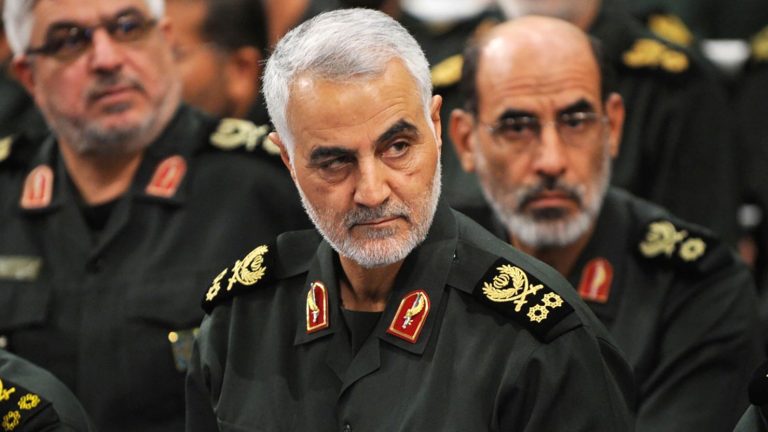
At least 95 people have been killed by two bomb explosions near the tomb of Iranian general Qasem Soleimani, on the fourth anniversary of his alleged assassination by the US, Iran’s state media report. Several others were wounded when the blasts hit a procession near the Saheb al-Zaman mosque in the city of Kerman.
People were caught in the explosions as they gathered to commemorate the fourth anniversary of the assassination of General Soleimani, head of the Revolutionary Guard’s elite Quds Force, who died in a US drone strike in Iraq in January 2020. The explosions took place near his grave site in Kerman, about 820 kilometres (510 miles) southeast of the Iranian capital, Tehran.
Kerman’s deputy governor, Rahman Jalali, called the attack “terroristic,” even though nobody has yet taken responsibility for the attack.
The death toll may rise further as several injured are in a critical situation. As per reports, the blasts took place 15 minutes apart.
As per reports, the Tasnim news agency, which is affiliated with the IRGC (Islamic Revolutionary Guard Cops), primary branch of Iranian Armed Forces, said the first explosion was 700 meters from a shrine for the assassinated leader Soleimani. The second explosion was 1 kilometer away from the shrine and was outside the pilgrims’ path and inspection gates.
Responding to the attack, Iranian Interior Minister Ahmad Vahidi said that most of the victims died in the second explosion and that authorities would react “quickly and forcefully” to the bombings. He also said, “Our police forces are vigilant and will bring those who committed this crime to justice”.
Notably, Qasem Soleimani was the commander of the Quds force, the Iranian division responsible for extraterritorial and clandestine military operations. He was assassinated in a drone strike on 3rd January 2020 by USA.
In light of the heightened tensions in the Middle-East due to Israel-Hamas war, and Red Sea attacks by the Houthis, this latest attack attracts special significance since both Hamas and Houthis are funded by Iran.
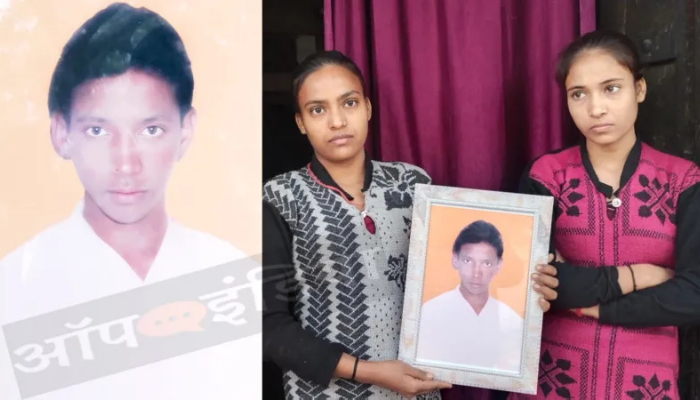
On 22nd January 2024 in Ayodhya, Lord Ram’s birthplace is scheduled to witness the consecration ceremony of his temple where the deity would reside in his childhood form. Prime Minister Narendra Modi will be among several prominent figures from around the globe in attendance at this particular event. The entire nation will celebrate Diwali once more on this day. Hindu society is commemorating all of the Kar Sevaks who sacrificed their life in the Ram Janmbhoomi movement on this auspicious occasion. Rajendra Dharkar was one of those many known and anonymous martyrs.
He was shot on 30th October 1990 when he was barely 16 years old on the orders of the then Mulayam government. OpIndia’s team arrived at Rajendra’s house and took stock of the current situation.
Poor financial condition of the family
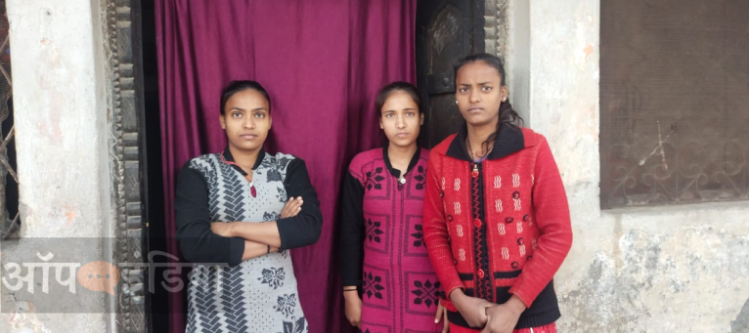
Rajendra Dharkar’s house is just half a kilometre away from Ramjanmbhoomi. The house stands next to a canal that can be crossed by a narrow and temporary cement road. Rajnedra’s three nieces were inside the house and informed us that people are being given residences, however, they haven’t been able to access a bathroom. Water periodically flows from a supply tap in front of their place. The one-story house appeared to have been unpainted for at least twenty years. The plaster is also crumbling. The house of Rajendra’s uncle (father’s brother) is nearby. It is constructed out of a tin shed that is devoid of even a suitable bed.
Rajendra Dharkar’s house and his nieces. (Source: OpIndia Hindi)
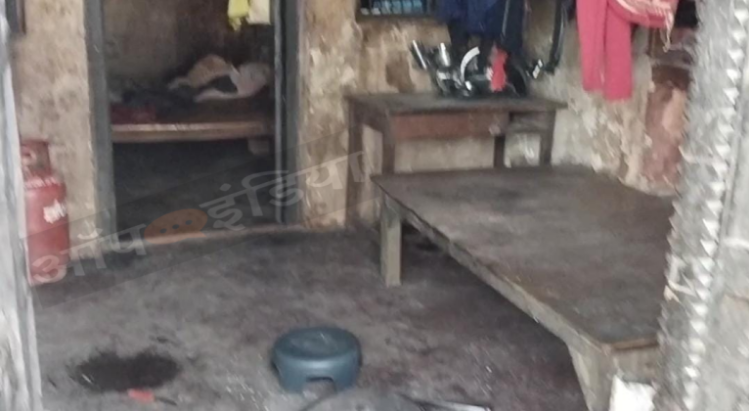
It was pitch black when we went inside Rajendra’s house. It turned out that the power had gone out. The electrical board was uprooted. There were two bulbs installed in the two-room dwelling which had no power because of the absence of an inverter. The utensils were strewn all over the place. The oldest niece is around 18 years old. She revealed that she had discontinued her studies because of a lack of funds. The older brother of Rajendra, Chaman Dharkar currently makes a living by crafting bamboo baskets and other items.
The interior of Rajendra’s home is in this state. (Source: Opindia Hindi)
Rajendra’s family came to Ayodhya many generations ago from Azamgarh district in search of work. His other brother Ravindra has three sons. The members of this family of 6 children are living hand and mouth. Meanwhile, Ravindra is also worried about the expenses that will be incurred in the weddings of his daughters. They have therefore hoped that the government will provide them with a permanent solution.
Poverty is not a hindrance to devotion
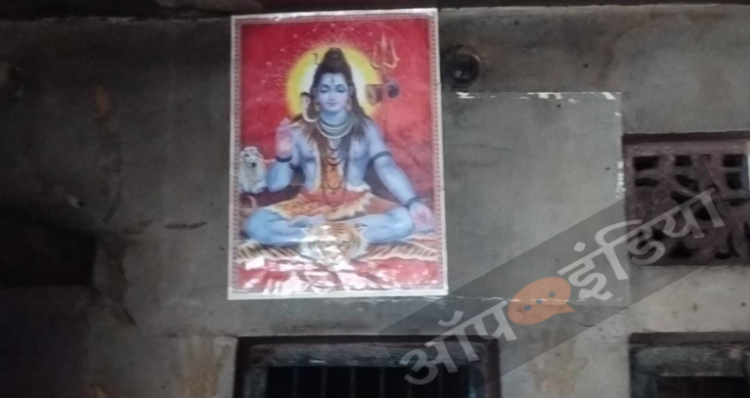
The family of Rajendra Dharkar may be living in extreme poverty, but the traces of adherence to God can be witnessed at every step of this house. Rajendra’s family worships a neem tree outside the house which they refer to as Goddess Sheetala. Posters of Lord Shiva were glued to the sooty walls when we entered the place. The pictures of God are routinely cleaned by them.
A picture of Lord Shiva on the dilapidated walls of the house. (Source: OpIndia Hindi)
Rajendra was married but lost his life before gauna ceremony
Rajendra Dharkar’s nieces unveiled to us that their father Chaman narrates the 1990 incident in front of them. He stated that their uncle Rajendra was a staunch devotee of Lord Ram and a frequent visitor to the Janmbhoomi. On 30th October 1990, when Rajendra saw a gathering of Kar Sevaks from across the country in front of his own house, he too joined them. He started to move towards the disputed structure in the crowd of Kar Sevaks. Meanwhile, bullets started firing and claimed his life.
The nieces of Rajendra additionally shared with us that their uncle was married but the ritual of gauna, the consummation of marriage, was pending. He died before it could happen and the bride’s family arranged her marriage somewhere else. Chaman, Rajendra’s brother was equally adamant about accompanying him to Kar Seva at the time. However, it was reported that Rajendra asked him to look after the family and departed. Rajendra’s deceased parents were still alive then. The family consists of Rajendra’s brother Chaman Dharkar, his wife and three daughters.
Gauna is a northern Indian Hindu custom and the ceremony is associated with the consummation of marriage which is prevalent in the states of Bihar, Uttar Pradesh and Rajasthan. It takes place several years after marriage and the bride stays at her natal home before the ceremony. Marriage is considered only as a ritual union and conjugal life begins only after gauna takes place.
Shri Ram Hospital was filled with blood
Rajendra Dharkarar’s aunt (uncle’s wife) Madhuri mentioned that she witnessed the instance with her nephew. She conveyed that they hurried to the scene as soon as they learned that Rajendra had been shot. They were stopped by the police and were not permitted to proceed any further. Madhuri Dharkar added that they managed to make it to Shri Ram Hospital somehow. She remembered that her feet were soaked from the amount of blood spilt at the hospital. The sounds of distant gunfire reached their ears. Rajendra was shot in the head and leg.
Rajendra’s aunt Madhuri narrated the occurrence. (Source: OpIndia Hindi)
The body was thrown to the ground
Madhuri Dharkar further told us that they eventually located Rajendra’s body lying on the ground after searching through the many corpses kept at the hospital. The administration barred Rajendra’s family from taking his remains to be cremated. The body was taken from the hospital for autopsy. A fight broke out between Rajendra’s family and the administration at the post-mortem facility after which the body was handed over to the former on the condition that they would not be allowed to take it home.
She divulged that in the end, Rajendra’s family was compelled to transport his body straight from the hospital to the cremation site. The body was also accompanied by police personnel to the crematorium. She charged that nobody cared about the family in the previous thirty years despite their sacrifices for God. The family, however, was ecstatic to see the Ram temple being constructed and described it as Rajendra’s dream come true. Rajendra Dharkar’s family is hoping that the present administration will pay attention to their house and help to improve their financial condition.
As the date for the opening ceremony of the Grand Ram Mandir in Ayodhya is nearing, people are recounting the sacrifices millions of Hindus made to make it possible. When the Ram Mandir movement was at its peak towards the end of the 1980s, the Mulayam Singh Yadav government in Uttar Pradesh was particularly brutal towards the Kar Sevaks. Thousands of Hindus demanding a Ram Mandir at Ayodhya were arrested and put in jails, apart from ordering to open fire on the Kar Sevaks.
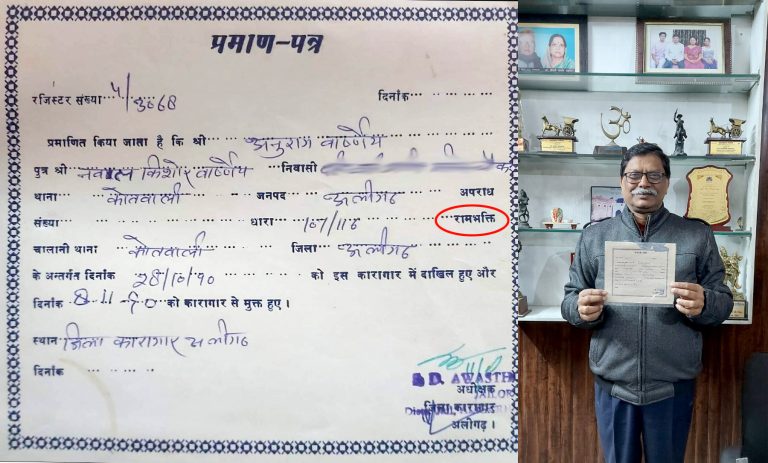
Now, a release certificate from 1990 has emerged that mentioned “Rambhakti” as a crime for which a person was jailed for almost two weeks. The certificate in Hindi issued by the jailer of Aligarh District Jail mentions that one Manoj Kumar was lodged in the jail from 28 October 1990 to 8 November 1990. However, the most striking aspect of the certificate is that it mentions that Manoj Kumar was lodged under sections “107/116 Rambhakti”.
वायरल पोस्ट.. नब्बे का दशक जब प्रदेश के सीएम कहते थे कि अयोध्या में परिन्दा भी पर नहीं मार सकता.उस समय सरकार की नजर में*रामभक्ति*अपराध था। जिला कारागार अलीगढ़ के प्रमाण पत्र में अपराध "रामभक्ति" स्पष्ट दर्ज है.. pic.twitter.com/rUGjuDevxg
More notably, the word Rambhakti, Hindi for devotion to Lord Ram, was pre-printed on the certificate, while the section numbers along with other details were filled in by handwriting. This suggests that there were so many people arrested for the Ram Mandir agitation that the UP government had printed a special jail certificate only for those detainees, and printed the word Rambhakti in the certificates. In this way, the Mulayam Singh Yadav govt had declared ‘Rambhakti’ a crime, as it was mentioned under the relevant section of the case.
Section 107 of CrPC empowers the administration to take preventive action against people to prevent possible unrest. It says that a magistrate can call any person, who is likely to commit a breach of the peace or disturb the public tranquillity etc, and issue a show cause notice to the person asking to explain why he should not be ordered to execute a bond. It does not empower police to arrest any person, even under preventive detention. On the other hand, Section 116 of CrPC empowers the police to summon a person, conduct searches and obtain evidence for conducting an enquiry.
It is notable as these were CrPC sections and no IPC sections were applied, there was no prosecution against the person named. It was just a preventive measure. However, the two clauses mentioned do not allow preventing detention. Police arrest a person only if such a person executes a bond as per section 107 promising to keep peace, and then is found to be violating that promise.
In a Facebook post, Manoj Kumar Agarwal posted an image of the certificate, saying that at that time, in the eyes of the government, Rambhakti was a crime. “The crime “Rambhakti” is clearly recorded in the certificate of District Jail Aligarh,” he added. He recalled how innumerable Ram devotees made sacrifices, were beaten by police, spent time in jails, while many others had to flee for a long time to avoid police action. He added that by Lord Ram’s grace they are seeing the opening the Ram Mandir, which makes them forget all the pain.
OpIndia talks to the person arrested for ‘Rambhakti’
After the certificate emerged, OpIndia contacted Manoj Kumar Agarwal to talk more about the document. He said that when he got the certificate, he didn’t notice the Rambhakti printed on it, and therefore didn’t inquire about it. He said that while hundreds of people were lodged in the jail, they were less scared in the jail compared to outside. He said that jail officials behaved well with them, opposite to terror of the state police outside the jail.
He said that those days were like the Mughal days, where openly displaying Hindu identity, like putting Tilak or having a saffron scarf could put one in trouble. He said that people were even scared of greeting each other with Ram Ram, fearing that police may hear them.
Manoj Kumar said that as per his information, such a certificate was made only in Aligarh, and was not made anywhere. He also added that jailer SD Awasthi, whose signature is seen on the certificate, had a soft corner towards the devotees, which is why they didn’t face any trouble in jail.
Manoj Kumar Agarwal also stated once Ram devotees were terrorised by the Uttar Pradesh government, and now the state’s chief minister is a Ram devotee. The veteran Kar Sevak also informed OpIndia that two police personnel visited him today, 3 January, to enquire about his well-being, and whether he is facing any threats from anyone.
Certificate is illegal, say experts
To learn more about the certificate calling ‘Rambhakti’ a crime, we talked to Moradabad Sessions Court Advocate Anuj Vishnoi, who said that it is an illegal document and a misuse of power, and there is no crime called Rambhakti in any law. He said that the govt misused its power to arrest people during that time. He said that the sections mentioned in the document 107 and 116 are CrPC sections, under which police can keep a person in jail for 14 days. He stated that instead of saying 107/116 CrPC, the document states 107/116 Rambhakti, it makes the act of putting the devotees in jail illegal, and it could have been challenged in court. He said that if the victim wants, he can approach the court even now.
OpIndia also talked to UP Police deputy SP Avinash Gautam, who said that there is no provision in police rules to make a challan mentioning Ram Bhakti as a crime. He said that if it was done, it was perhaps a personal decision of some official.
He also said that it is possible that as large number of people were arrested during that time for Kar Seva, several temporary jails were set up, and maybe the Kar Sevaks were kept in separate barracks in the regular jails, separate from regular inmates. And therefore this special certificate mentioning Rambhakti was created.
On Wednesday, a sessions court awarded death sentences to two individuals, one of whom hails from Bangladesh, convicted of orchestrating the 2005 Shramjivi Express train blast. The attack resulted in a tragic toll of at least 14 fatalities and over 62 people injured.
The convicts, found guilty on December 23, were also slapped with a fine of Rs 5 lakh each.
District government counsel Satish Pandey stated that additional sessions court judge Rajesh Kumar Rai has handed down death sentences to Hilal alias Hilaluddin and Nafikul Vishwas, who were convicted in the Shramjivi train blast case.
Hilaluddin, a Bangladeshi resident, stands accused of planting a bomb on the train, while Nafikul Biswas, hailing from West Bengal, has been charged with assisting him. In 2016, two additional individuals involved in the Shramjeevi train blast case were also sentenced to death.
Presently, the two convicts are incarcerated in Hyderabad jail for a separate case. The prolonged duration of their final hearings, spanning six years, was marked by numerous adjournments.
Stringent security measures were implemented by the local administration, and following the court’s pronouncement of the punishment, the convicts were transported to jail in a police vehicle.
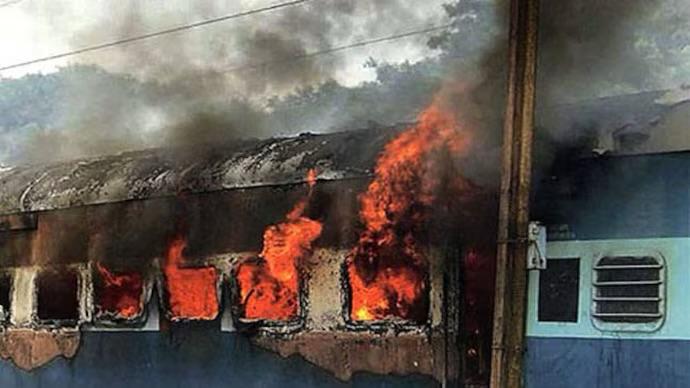
The detonation, which occurred around 5:00 pm on July 28, 2005, near Jaunpur station in Uttar Pradesh, destroyed a coach belonging to the Patna-New Delhi train.
As per the prosecution, the explosive material RDX was concealed in the coach’s toilet.
RDX has been employed in numerous terrorist attacks within the country, such as the Ayodhya train bombing in June 2000.
Eyewitnesses recounted that two young men, carrying a white suitcase, boarded the train at Jaunpur. Shortly thereafter, both individuals disembarked from the moving train without their suitcases, and a few minutes later, the explosion took place.