Home Blog Page 1513

Even as Congress loses 3 out of 4 states after Bharat Jodo Yatra, Rahul Gandhi to take on another march, this time, for ‘Nyay’: Details

0

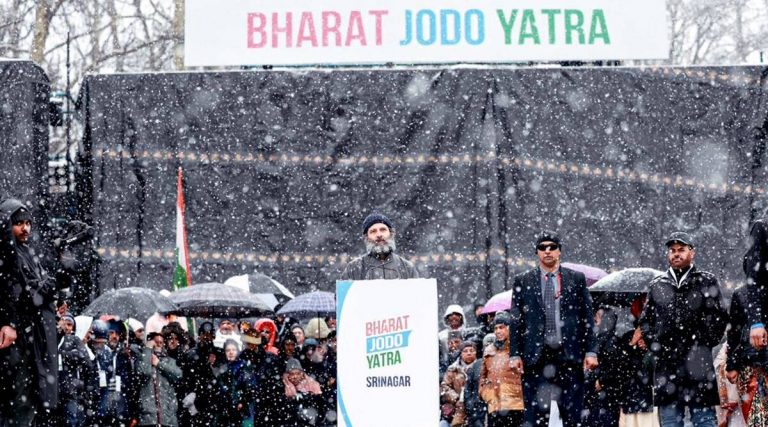
There’s no stopping the whims and fancies of the Congress even if they come at the most questionable times and in the most questionable situation. The party, after losing 3 out of 4 assembly elections, has announced Bharat Jodo Yatra 2.0.

Called the ‘Bharat Nyay Yatra’, it will commence from 14th January to 20th March 2024 across 14 states covering 6,200 kilometres and 85 zillas. The yatra will cover the East to West distance from Manipur to Mumbai.

The states through which the yatra will pass are Manipur, Nagaland, Assam, Meghalaya, West Bengal, Bihar, Jharkhand, Odisha, Chhattisgarh, UP, Madhya Pradesh, Rajasthan, Gujarat and Maharashtra.

The Bharat Nyay Yatra was announced by AICC General Secretary KC Venugopal. During the press briefing, the party said that the Congress Working Committee (CWC) on 21st December gave an opinion that Rahul Gandhi should start the yatra from east to west.

The way the Gandhi-Congress loyalists put it as was, “Rahul Gandhi ji has also agreed to fulfill the wish of the CWC.” Moreover, the mode of the yatra will be a “bus journey along with some short walks every now and then”.

The timing of the yatra couldn’t be worse given that the party has lost to the BJP in three states and 2024 Lok Sabha elections will be held in the next few months.

At the CWC meeting, the Gandhi-Congress lashed out on former Chhattisgarh CM Bhupesh Baghel, former Madhya Pradesh CM Kamal Nath and Digvijaya Singh for the electoral loss. However, no responsibility was taken by the so-called high command and their loyalists.

As per reports, Rahul Gandhi said that the party did not campaign properly in the three states and was all praises for efforts in Telangana, where it won. And now, he is embarking on Bharat Nyay Yatra.

Notably, at the CWC, Mukul Wasnik, Kerala MLA Ramesh Chennithala and Tripura legislator Sudeep Roy Barman were the only voice of reason saying that there was not enough time for the yatra.

At the press briefing on Wednesday, the Congress said that Rahul Gandhi is embarking on the new yatra from the experience that he has gathered in the previous Bharat Jodo Yatra.

The yatra is aimed at interacting with the youth, women and marginalised people. “This Bharat Nyay Yatra is going to be our most historic yatra,” said KC Venugopal.

It must be pointed out that the achievements and accomplishments of the Bharat Jodo Yatra remain to be unclear. The three issues that Congress claims Rahul Gandhi had raised have failed to materialise into any result. These so-called issues were economic disparity, social polarisation and political tyranny.

Jairam Ramesh said that the Bharat Nyay Yatra will call for ‘economic justice’, ‘social justice’ and ‘political justice’ for the people of India. This perhaps means that what the Congress and Rahul Gandhi could not achieve in the first round are attempting to achieve in the second.

Safe to say that Rahul Gandhi had raised imaginary issues in his mind that naturally failed to make any point. And a repeat of a similar pattern can be expected with the Bharat Nyay Yatra.

Whether the Bharat Nyay Yatra will spark a new set of controversies or repeat the same ones from the Bharat Jodo Yatra remains to be seen.
Uttar Pradesh: Naib Tehsildar Ashish Gupta who is already married with two kids converts to Islam to marry a Muslim woman in Maudaha, probe launched

0

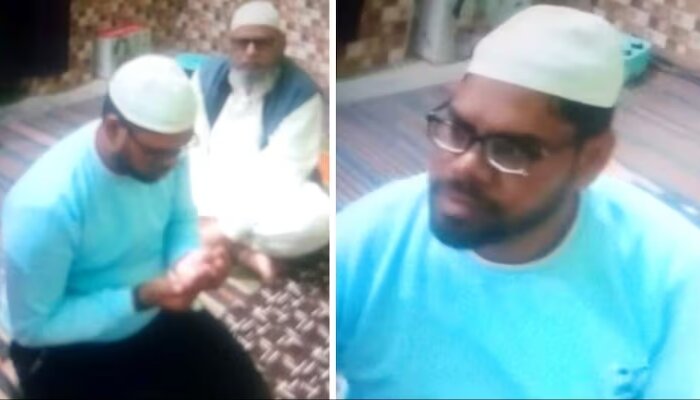
A picture of a Naib Tehsildar praying in a mosque went viral sparking controversy in the Hamirpur district of Uttar Pradesh. He is identified as Ashish Gupta who reportedly took a Muslim woman as his second wife after converting to Islam. The Tehsildar, Balram Gupta personally arrived at the location to look into the matter when the administration sensed something suspicious and afterwards learned of the development.

The incident transpired in the Maudaha Police Station area where the accused went to offer Namaz in a mosque regularly for two days. He tried to conceal his real identity and introduced himself as Mohammed Yusuf from Kanpur when questions were raised because he was a stranger there. People were surprised when he informed them that he was Naib Tehsildar of Maudha Tehsil. The mosque management then immediately notified the authorities and officials reached the spot to probe the issue on the night of 25h December where they recorded statements of those in attendance.

Muhammad Mushtaq, a cleric in the mosque stated that an unknown individual was coming to perform namaz repeatedly. He further disclosed, “We alerted the authorities after he claimed to be Mohammed Yusuf, a Kanpur resident and Naib Tehsildar of Maudaha. The Tehsildar arrived last night to inquire about the same. All of the witnesses’ statements have been documented and signed by the investigating officer.” The perpetrator has been posted in the region since 2nd September 2023 and hasn’t visited the religious place since the row erupted.

According to Bajrang Dal’s former District Coordinator Ashish Singh of Maudha town, the man is not Mohammad Yusuf but Nayab Tehsildar Ashish Gupta who is posted in Maudha Tehsil. He lives in Kanpur district and is already married with two children. However, he recently embraced Islam to tie the knot with a Muslim woman belonging to Maudha and has started praying in the Kachariya Baba mosque. Bajrang Dal has demanded strict action from the administration.

Ashish Gupta had been at the mosque for two days, per investigating officer Balram Gupta. The cop mentioned that he also discussed learning Urdu from someone but is unaware of the matter relating to Namaz. The officer did, however, ask the on-site religious scholars whether or not a follower of another faith is prohibited from performing namaz in a mosque to which they responded that there is no such objection, but they don’t want to be accused of anything in the instance.

Additional District Magistrate Arun Mishra said that a probe has been launched. Sub Divisional Magistrate (SDM) Rajesh Mishra remarked that a cleric from the mosque told them about the issue on the evening of 25th December following which a probe was conducted after the Tehsildar along with other cops arrived at the scene. The offender admitted that he had visited the mosque to study Urdu during the investigation which is currently ongoing and a report would be submitted to higher authorities.

Karnataka: RSS leader gets booked for speech against hijab in schools, Muslim ‘activist’ had claimed hate speech

0

The Srirangapatna police in Karnataka has filed a case against RSS leader Kalladka Prabhakar Bhat for allegedly making a provocative speech during the Sankeerthana Yatra, which was held on Sunday (24th December) to commemorate Hanuma Jayanti.

Bhat has become the target of a complaint filed by ‘activist’ Najma Nazeer Chikkanerale. The police have opened investigations under IPC Sections 294, 295, 298, 354 and 506.

In her complaint, Najma claims that Bhat has made disparaging remarks about Muslim women. “His speech was intended to incite unrest among people of various faiths. He has made fun of the legal system”, she claims.

“Bhat has issued such statements across Karnataka earlier. Several cases have been registered against him. Hence, the police should open a rowdy sheet against him,” Nazma mentioned in the complaint. 

Bhat had stated that if the girl (Bibi Muskan) had the courage, she should be allowed to attend college. He had said that she should chant Allah hu Akbar at her home or mosque, but Jai Shri Ram if she intends to go out. 

The RSS leader is alleged to have ‘spread religious hatred against Muslim women’ at a gathering during Sankeertana Yatra, which was organized by Hindu Jagrana Vedike as part of the Hanuma Jayanti celebrations, in Srirangapatna on 24th December.

Meanwhile, the district unit of the Women India Movement (WIM) has also filed a complaint against Bhat, seeking legal action against him for making derogatory remarks about Muslim women in Chamarajanagar on Tuesday (26th December). 

According to the complaint, Bhat made statements with the sole intention of abusing Muslim women. He has insulted Muslim women by claiming they are involved in ‘Love Jihad’ and allegedly linking Bibi Muskan to terrorists. The complaints demanded that the government take the matter seriously and arrest the RSS leader without succumbing to ‘political pressure’.

NCPCR visits Madrasa Arabia Faizul Islam in Chandigarh: No papers of recognition found, children have beating marks on body and all want to become ‘Muftis’

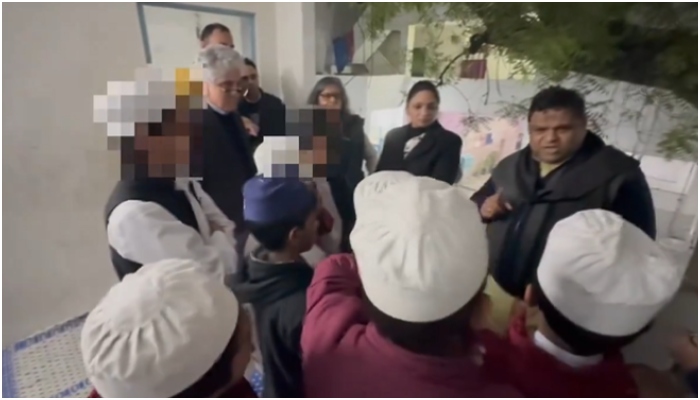
On 26th December, the National Commission for Protection of Child Rights (NCPCR) paid a visit to a Madarsa in Punjab’s Chandigarh and discovered that children there are being frequently beaten. The Madarsa visited by NCPCR Chairperson Priyank Kanoongo is Madrasa Arabia Faizul Islam in Chandigarh.

Kanoongo shared the video of the visit in which he could be seen inspecting the premises. He talked to the children residing in the Madarsa who revealed to him that 3 Hindu children also visit the Madarsa daily and are made to read Quran and Qaida. More than a dozen children residing in the Madarsa also revealed that around 300 children come to the Madarsa daily to learn Islamic books.

According to the NCPCR, minors who reside in the Madarsa, are also beaten by the authorities, marks of which could be seen on their fingers in the video shared by Kanoongo. “More than a dozen children living in the Madrasa are residents of Bihar, Uttar Pradesh, and Himachal. Children are beaten in Madrasa, all have marks of beating on their fingers. Children are being groomed and brainwashed in such a way that instead of becoming doctors or engineers, they want to become muftis,” he said.

Kanoongo, the chairperson of NCPCR also sought details about the education provided to the children at Madarsa but no details could be obtained. “some basic education is also given during the day, but the administration officials could not give any information about school-related recognition, affiliation, and government permission,” he added.

As per the NCPCR inspection, the children at the Madarsa are groomed to become Muftis and very few are interested in becoming doctors, engineers, or scientists. It could be seen in the video that one or two among a dozen raised their hands when asked who wanted to become doctors or engineers, but all of them raised their hands and affirmed when asked whether they wanted to become Muftis.

A mufti is an Islamic scholar who can legally rule on Islamic religious and personal matters. They are also authorized to make legal decisions or help judges in Islamic countries. Muftis are responsible for issuing a legal ruling or edict known as a fatwa. These rulings are non-binding and act as religious advice.

The school is believed to be located in an urban locality and has no library or computer-aided learning lab. The school provides only basic education to children from class 1 to 8. It was established in the year 1991 and is believed to have attained no government permission to run a school. “The administration officials could not give any information about school-related recognition, affiliation, and government permission,” Kanoongo affirmed.

The NCPCR visited the Madarsa on 26th December and sought relevant answers from the authority.

Delhi: Abdullah stabs Vinod to death for asking him to return his borrowed Rs 1,000, steals Rs 25,000 and two mobile phones; arrested

0

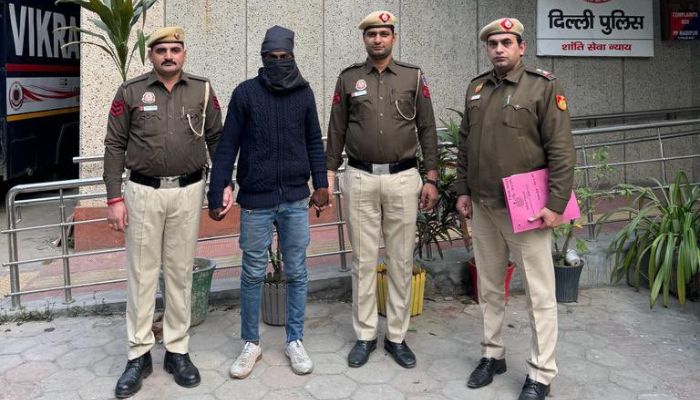
On Tuesday (26th December), Delhi Police arrested 29-year-old Mohammad Abdullah for stabbing Vinod (age 29) to death in his rented residence in Madipur in west Delhi’s Punjabi Bagh area. The arrested murder-accused Mohammad Abdullah is a drug addict. He used to work as an electrician. He would repair electronic gadgets at Vinod’s house. On 21st December, Vinod asked Abdullah to give back his Rs 1000. They had a minor verbal altercation also. On 22nd December, Abdullah killed Vinod.

Officers from the Punjabi Bagh police station were alerted to an incident around 3:10 pm on December 22. Upon arriving at the scene, they discovered Vinod’s body in a pool of blood on a mattress. The area was thoroughly examined by a crime and forensic team, who gathered evidence. Subsequently, a murder case investigation was initiated at the Punjabi Bagh police station.

The police analysed footage from multiple CCTV cameras in the surrounding area and utilised technical surveillance to identify the suspect as 29-year-old Mohammad Abdullah. After conducting a series of raids, Abdullah was apprehended in Mukundpur. Additionally, the police recovered the knife Abdullah used in the crime, along with the clothes and shoes he wore during the incident.

The police stated that Abdullah, known to be a drug addict, was employed to fix electronic devices at Vinod’s residence. Investigations revealed that the day before the incident, Abdullah and Vinod had a verbal fight over outstanding payments. Vinod asked Abdullah to return his Rs 1000.

According to a police officer, “Vinod had gone to Abdullah’s house to demand his dues, about Rs 1,000-1,500. He did not find Abdullah there, which made him angry and he shouted at his family members. When Abdullah came to know about the misbehaviour, it irked him. The following day, he went to Vinod’s place and an argument took place between them. Abdullah then stabbed Vinod multiple times, causing his death.” According to the police, Abdullah admitted to the crime, stating that he murdered Vinod because Vinod had insulted his family.

Vinod’s family members have accused Abdullah of stealing Rs 25000 and two mobile phones after he killed Vinod. In an interaction with the media, Vinod’s aunt Taravati said, “A day before the murder, Abdullah had come here in the night. Both were fighting with each other. Vinod was asking him to return his Rs 800. Vinod said to Abdullah, ‘Brother, you have taken money as a hand loan from me, please return it to me I need it’. He did not give the money back. Then they abused each other. Mohammad Abdullah went back to his home.”

She further said, “The next day, Vinod’s brother Lokesh (alias Lucky) woke up in the morning. He gave tea to Vinod at around 10:30 a.m. Vinod slept again. His brother went to job. Abdullah visited the locality thrice. After Lucky went out for his job, Abdulah came upstairs. He killed Vinod in 10 minutes and vanished. He stabbed Vinod 11 times in the abdomen. Vinod was stabbed in the liver and Vinod’s intestine was also torn in the attack.”

She added, “None of us relatives was here at that time. These two brothers – Vinod and Lucky – lived in this rented room. At 2 p.m., Vinod’s sister came here to meet her brother. She lives in a rented house nearby. She saw Vinod lying in a pool of blood. She also noticed that his body was cold. She then shouted and cried aloud to inform the others. Then everyone else including the police was called. Then police came and investigated this.”

Taravati said, “When Vinod’s sister came here, the cupboard was open. Abdullah stole Rs 25000 from the cupboard. It was the amount hard earned and saved by these two brothers. Abdullah also stole a wallet and two mobile phones including a new phone worth Rs 15000 to 20000. He also took one Samsung phone. Vinod was an earning hand in the family. His sister has lost vision in her one eye. Their parents passed away when these siblings were very young.”

Taravati did not confirm that Vinod visited Abdullah’s place and insulted his family. She said that the altercation between the two took place just outside Vinod’s residence. She said, “The fight took place just here only. Vinod asked him to return the money. Abdullah denied. As a result, they argued. The next day, Abdullah visited the locality three times. He was angry. Spotting Vinod alone at the house, he came upstairs and stabbed him 11 times until he died. He then puts his dead body upside down so that anyone who sees Vinod should feel that he is asleep. When Vinod’s sister came and turned him up, she saw that his intestine was lying outside.”

She further said, “Vinod was an earning member of the family. He helped his sister. His sister lives with her two kids. There is no one else with her. Who will support them now? Whatever amount he had saved, Abdullah took it away after the murder. What if the house owner asks his brother to leave this place? Where will he go?”

The police investigation has revealed that Mohammad Abdulla is a drug addict. Informing more about the drug addiction among youths in this area, Taravati said, “Even young kids in this area consume hukka. They get this addiction at the age of 16 or 17. Many families in this area are disturbed by this. They even get drug injections. They do all kinds of addictions.”

Madhya Pradesh: Muslim community objects to removal of loudspeakers from mosques in Chhattarpur, ADM says ‘go to court’

0

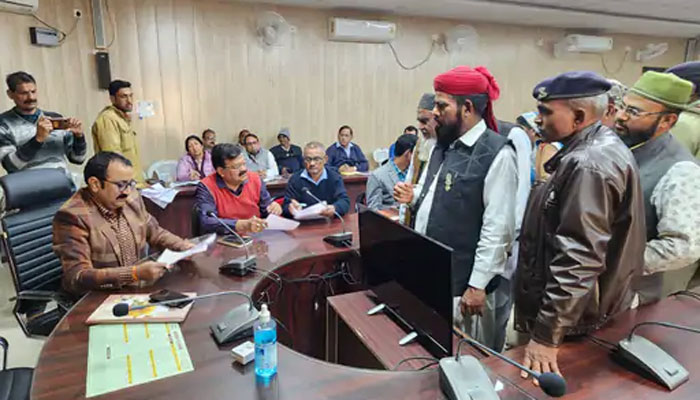
On 26th December, members of the Muslim community led by the Sadar of Tanjim Ata-e-Mustafa Committee, Hazi Shehzad Ali, submitted an application to the Superintendent of Police (SP) and Additional District Magistrate (ADM) of Chhattarpur against the removal of the loudspeakers from mosques by the police. The loudspeakers are being removed after the Chief Minister of Madhya Pradesh issued a directive against the use of loudspeakers in religious places.

In their application, Muslims sought to stay on the action against the loudspeakers. Shehzad Ali alleged in a statement that in the directive issued by the Chief Minister, it was only mentioned that the sound levels of loudspeakers should be within the permitted levels. He further claimed that there was no directive to remove the loudspeakers from the religious places.

However, ADM categorically said that the action was being taken per the orders of the Supreme Court and the State Government. ADM further added if the members of the Muslim community felt the administration was doing something wrong, they were free to approach the court.

On 13th December, the Chief Minister of Madhya Pradesh issued a directive to prohibit “unregulated use of loudspeakers in religious establishments and other public spaces.” The bans on loudspeakers at religious places and meat sales in the open were the first orders issued by Mr Mohan Yadav after assuming the office of Madhya Pradesh Chief Minister. Following the directives of the Supreme Court and the National Green Tribunal, the guidelines for the immediate implementation of loudspeaker usage were also issued.

‘Harappan civilisation is 7000 to 8000 years old’: Scientists studying DNA samples from Rakhigarhi site find

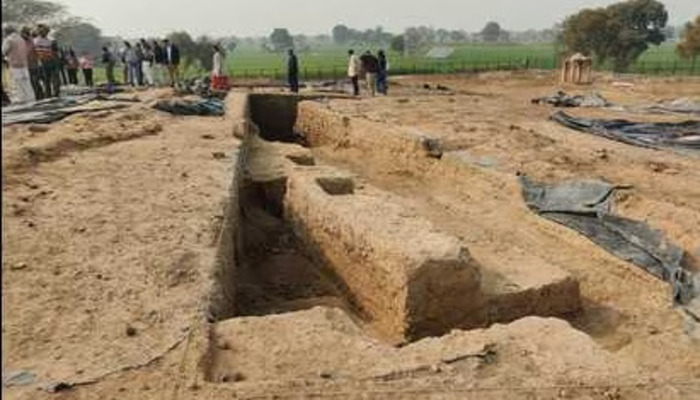
In a major development in the study of Harappan Civilisation, the researchers from Deccan College Pune and the Central Archaeological Survey of India (ASI) have found that human remains unearthed at an ancient site of Rakhigarhi – a village in the Hisar district of Haryana – date back roughly 8,000 years. The finding was made during the third round of excavations conducted by the ASI in collaboration with several teams from across the country, including Deccan College Pune researchers, Hindustan Times reported.

Dr. Amarendra Nath of the Indian Archaeology Department conducted the first phase of excavations at Rakhigarhi from 1997 to 2000, during which evidence of the North Harappan culture dating back to 2500 BC was discovered. Professor Vasant Shinde of Deccan College Pune led the second round of excavations at Rakhi Garhi from 2006 to 2013, collecting evidence and conducting DNA tests to establish that this culture was possibly over 4,000 years old. The ASI and Deccan College Pune have worked together over the past two years to complete the third phase of excavations at Rakhigarhi, led by ASI joint director Sanjay Kumar Manjul and Deccan College Pune assistant professor Prabhodh Shirwalkar.

Shirwalkar told HT that the Harappan culture is divided into three parts: East Harappan, Middle Harappan, and North Harappan (Modern). The previous two excavations discovered evidence of the Middle and Modern Harappan cultures stretching back about 4,000 years. However, evidence discovered during the third round of excavations indicates that the culture dates back 7,000 to 8,000 years. “The final report of the work is being prepared by our team,” Shirwalkar said adding that the research will continue for many more months.

Shirwalkar further elaborated, “Human ‘DNA’ has remained the same for 8,000 years which we have found during our research. When human traps were found here, they were thoroughly tested. Scientists have drawn conclusions based on this. A large burial ground was found here and it had human traps as well as animal traps.”

Shirwalkar revealed that clay pots, old silver and copper ornaments were discovered alongside utensils made of various metals, including gold and silver as well and a dinner set was discovered during the excavation. 

Large houses, drainage system, colourful clothes

During the excavations, a large settlement of the largest ancient houses ever was found underground. A courtyard along with a drainage system were also found in it. Moreover, there were two- to six-bedroom houses that were also available at that time. The clothing fashion of the people of that time is also known. The research team found a colourful worn piece of cloth, a shawl and a skirt.

“This research has found strong evidence that the Harappan civilisation is 7,000 to 8,000 years old. Scientists from the Department of Archaeology of India and Deccan College have worked together on the project. It is agreed that there was human habitation or civilisation in our country 8,000 years ago,” Shirwalkar asserted adding that the people back then were as advanced as they are in present times.

Back in 2019, it was reported citing a research study that the primary source of ancestry in modern South Indians is a prehistoric genetic gradient between people related to early hunter-gatherers of Iran and Southeast Asia. In a major blow to the Aryan Invasion Theory, the research found that the skeletal remains from the Rakhigarhi individual were from a population that is “the largest source of ancestry for South Asians”.

The study which involved the inspection of DNA samples of the skeletons found in Rakhigarhi, an Indus Valley Civilisation (IVC) site in Haryana, found no traces of the R1a1 gene or Central Asian ‘steppe’ genes, colloquially called the ‘Aryan gene’. In 2018 as well, OpIndia reported that researchers of the DNA study of Rakhigarhi skeletal remains have stated that they found no central Asian trace.

Christian institution found occupying 11 acres of Temple land in Tirunelveli, Madras HC orders eviction

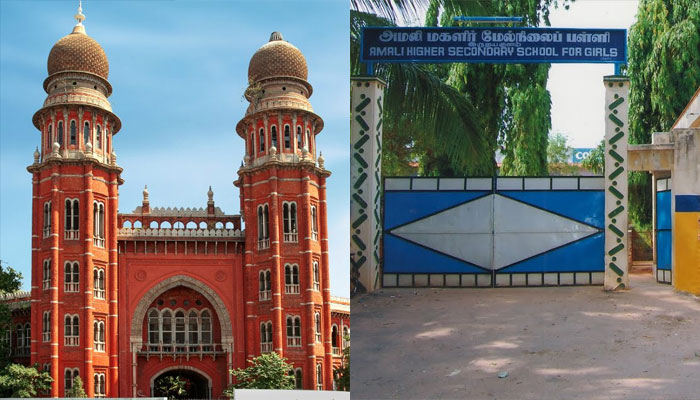
On 5th December, the Madurai Bench of the Madras High Court dismissed three writ petitions filed by the Mother Superior of Amali Girls’ Higher Secondary School and Amali Convent. In its order, the court upheld the eviction order, saying that the Amali Convent illegally occupied the property of Pillayan Arthasaam Kattalai that comes under Arulmigu Papanasaswamy Temple in district Tirunelveli. The court also criticised the petitioner for using children as a “smoke screen” to justify the illegal encroachment on temple land.

As per the court judgment accessed by OpIndia, Amali Convent challenged the eviction notice by the Hindu Religious and Charitable Endowments Department served back in 2013 for the 11 acres of land originally owned by Pillayan Arthasaam Kattalai in Papanasam of Ambasamudram Taluk under district Tirunelveli of Tamil Nadu. The court confirmed that the Joint Commissioner has jurisdiction over encroachment and eviction issues under the Hindu Religious and Charitable Endowments Act.

Encroachment by Amali Convent

The matter revolved around four pieces of land totalling 11 acres. As per the court records, petitioner Amali Convent originally possessed 44 acres of temple land that it took on lease. There was a dispute between the petitioner and the temple authorities, leading to a petition from the temple authorities to get the land back. The District Munsif Court at Ambasamudram dismissed the initial petition. An appeal was filed in the Sub Court at Tenkari in 1985.

During the first appeal, both parties came to a settlement under which the Amali Convent returned the land but kept 11 acres. As per the settlement between the two parties, Amali Convent would pay Rs 2,000 as the land’s rent per year and use it only for agriculture purposes.

Eviction notice served after illegal construction on agricultural land

However, in 2012, the temple authorities found that Amali Convent built superstructures on the land that went against the settlement conditions. The temple authorities sent an eviction notice on 22nd October 2012, which was received by the petitioner on 1st November 2012. When the petitioner did not return the land, the temple authorities filed a petition before the Joint Commissioner, Hindu Religious and Charitable Endowments Department, Tirunelveli. 

In its reply, petitioner Amali Convent admitted the land was on lease but claimed it was not only for agriculture purposes. The petitioner also contended that the temple authorities consented to build a school on the land. The petitioner gave an excuse that the school was built to uplift the women in the area and was not a commercial property. The petitioner also offered to purchase the land from the temple authorities. However, their reply did not stand in court, and an eviction notice was served under the Hindu Religious and Charitable Endowments Act.

Notably, according to the HR&CE Act, any temple land can be leased for a specified period. If the occupant wishes to continue to hold the land, they must apply for a lease extension. In this case, the petitioner continued to occupy the land without extending the lease agreement, making it an unauthorised occupation. Furthermore, while the temple authorities provided all supporting documents to claim ownership of the land, the petitioner failed to submit any document that supported the claims of permission from the temple authorities to construct buildings on the occupied land.

Amali Convent used children as a ‘smoke screen’

The court noted that as the petitioner offered to buy the land, it had enough resources to construct the building elsewhere. When the petitioner argued that evicting the land would hamper the education of the girls studying there, the court criticised the petitioner for using the children as a “smoke screen”. The court said that the petitioner was served an eviction notice in 2013. They had enough time to shift the school elsewhere but continued occupying the land. Hence, the argument that it would hamper the children’s education did not stand. The court specifically highlighted that the petitioner manipulated the “children’s welfare” argument to evade legal accountability.

Furthermore, the court acknowledged that there was a need to minimise the disruption to the students and allowed a grace period till 31st March 2024, the end of the semester, to vacate the land. Though the court provided the said concession, it was firmly held that there was a need to safeguard the properties of religious and charitable institutions from wrongful occupation. The court also asked Amali Convent to submit affidavit that it will handover the land to the temple authorities by the end of March 2024.

60,000 jobs in UP: Yogi govt responds after social media raises concerns about the 22-year age limit for general category aspirants, relaxes by 3 years

On Tuesday (26th December), Uttar Pradesh Chief Minister Yogi Adityanath announced from his X handle that the upper age limit for all categories of candidates appearing for the process of recruitment of the post of Reserve Civil Police in the state will be relaxed by three years.

This decision came after social media users raised concern over the age limits as this recruitment drive has come after 5 years. Those from the general category who were underage for the recruitment in 2018 were termed overage in 2023 without even getting an attempt. Now, they will get a chance to appear for the recruitment process with the new decision.

Yogi Adityanath posted on X, “The government is fully committed to the interests of the youth and their bright future. In this sequence, in the ongoing process for recruitment to the post of Reserve Civil Police in Uttar Pradesh Police, it has been decided to give relaxation of three years in the upper age limit for all categories of candidates.”

What was the exact problem with the police recruitment age limits?

Earlier, many popular social media handles had raised a concern over the prescribed age limits for the said posts in the police department for the general category aspirants.

X handle ‘The Skin Doctor’ posted, “The Uttar Pradesh Police has released over 60k constable vacancies, out of which 40k are reserved. Wait, there’s a reservation in age limits as well. A general male candidate must be between 18-22, while reserved candidates can be up to 31. This doesn’t make any logical sense. With most seats already reserved, why impose stringent age limits on general candidates? Will a general candidate suddenly become unfit after 22 while the reserved ones stay fit and active until 31?”

The Skin Doctor added, “The worst part is that these vacancies have been released after 5 years. This means that general males, who were underage during the last recruitment in 2018, will now become overage in this recruitment in 2023 without even having had one opportunity. This is extremely unfair Yogi Adityanath. The system is already skewed against them. Age relaxation should be provided, especially because many of them have become ineligible without getting even one chance for recruitment.”

Skin Doctor’s post went viral soon, with many users highlighting the unfairness of the age limit set for general category students.

Uttar Pradesh Police Recruitment and Promotion Board announced recruitment for 60244 posts

The Uttar Pradesh Police Recruitment and Promotion Board (UPPBPB) has initiated the application process for filling 60244 constable vacancies. Candidates who meet the eligibility criteria can apply for these positions online at uppbpb.gov.in, starting on 27th December 2023. The deadline for submitting the online application is 16th January 2024, while the final date for application fee payment is 18th January 2024.

Selection for these posts will be based on a candidate’s performance in a written examination. Successful candidates in the written test will then proceed to the Physical Standard Test/Document Verification and the Physical Efficiency Test as part of the further selection process.

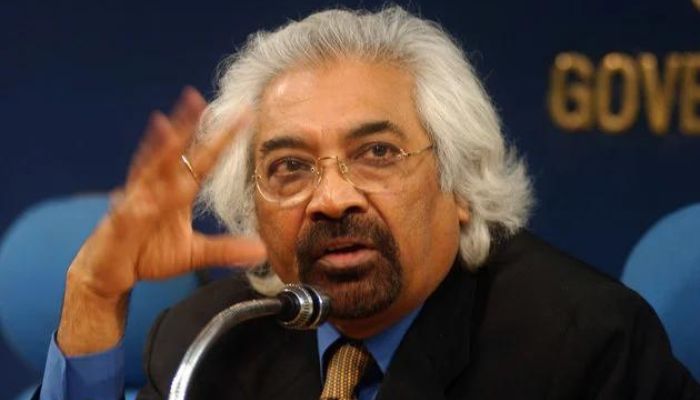
Congress leader Sam Pitroda ‘bothered’ that the nation is involved in Ram Mandir, says this is ‘not how modern nations are built’

In another display of hatred for the Hindu sentiment by the Congress, Chairman of Indian Overseas Congress Sam Pitroda has said that “too much importance is being given to religion through the Ram Mandir and that democracy is being undermined.

His statement comes just weeks before the country is due to celebrate the inauguration of and the consecration ceremony at the Ram Mandir at Shri Ram Janmabhoomi in Ayodhya, Uttar Pradesh. Sam Pitroda is one of Rahul Gandhi’s most trusted advisors and aides. His statement about Ram Mandir adds to a series of anti-temple jibes he has taken in the past.

Sam Pitroda added, “So there are signals I’m getting which says we are in the wrong direction. When a nation is involved in Ram Temple, that bothers me. To me, religion is a personal thing. Don’t confuse it with the national agenda. The national agenda should focus on education, employment, growth, economy, inflation, health, environment, and pollution. Nobody talks about that.”

In a direct attack on the people of India, Pitroda added, “Everyone is talking about a Hindu temple. Everyone talks about Lord Ram. This is not how you build a modern nation.”

Speaking to news agency ANI, he said, “We have seen that the nations built on religion, whether it is Israel or Pakistan, are very different from the nations built on democracy, freedom, human rights, diversity, and inclusion like America. That’s what we want. Our founding fathers very clearly articulated, understood, and put it in our constitution that everybody is equal.”

He added, “I don’t care what religion you practice. I have to respect you for who you are. And not what religion you follow. I’m not going to dictate what you eat, or what you pray for. That’s your personal freedom. And when the entire nation is hung up on Ram Temple and Ram Janmabhoomi, and all this stuff, it really upsets me and bothers me.”

Sam Pitroda then ‘clarified’ his stance on religion by saying, “I said my wife is very religious. I am not a religious person. She has a little temple at home. It’s fine. She is entitled to do that. But don’t get me involved. I am not a religious person. That doesn’t mean I don’t agree with what she does. That’s her privilege. I have said earlier that I have outsourced my religion to my mother and my wife. They are doing a great job. I don’t interfere.”

Sam Pitroda concluded by saying that PM is spending all the time in temples and that “bothers him”. “Religion is something very personal. Don’t nationalize it. Don’t use it for political gains. A Prime Minister is spending time in temples all the time. It bothers me. I would rather have him go to schools, libraries and scientific institutions and not visit lots of temples. But that’s my view. People have to decide how they feel about it.”

Moreover, Sam Pitroda was asked by the agency to clear his stand on the Electronic Voting Machine. In 2018, the plenary session of the Congress party had passed a political resolution demanding ballot papers to replace the EVMs. Sam Pitroda was asked this question because of his recognition as a person who has worked on promoting the use of technology.

He said, “I am talking as a citizen whose vote matters. That is the first thing. I am speaking for every citizen whose vote matters and is valuable. It should be handled properly and you should give me confidence and trust as an election commission because you are independent. And if you don’t do, the Supreme Court should intervene. That’s one thing.”

Pitroda also called on INDI Alliance members to to pay attention to this issue than it has been given. “As a political person, I request my party to take this very seriously. I would request all the alliance members to pay much more attention to this than you have paid. It is not a simple issue. Don’t overlook it. Because the 2024 election is going to decide the destiny of the nation. It is going to decide the path that India takes in the future. And I am worried about it,” he said.

Detailing his “worries” on the matter, the Rahul aide said, “I’m worried about it because too much importance is given to religion. I see that democracy is being undermined. When the Prime Minister of a country for 10 years does not give a press conference, that bothers me. When everyone thinks that everything good that happens in the country is only because of the Prime Minister, that bothers me. When the Prime Minister has no problem giving name to a national stadium in his own name while he’s alive, that bothers me.”

This is not the first time that Sam Pitroda has given statements against Hindu temples. In June 2023, he said that temples would not create jobs. He also said that those who go to temples believe in BJP and RSS and that these people are only 30 per cent in number.