Home Blog Page 1669

Explained: What is Electoral Bonds Scheme, how it works, and why govt says it is essential to ensure transparency & white money in political funding

On 2 November, the Supreme Court of India asked the Election Commission of India to submit details of electoral bonds received by political parties, giving the poll panel 2 weeks to furnish the data. The order came in the hearing of petitions challenging the validity of electoral bonds. The Supreme Court of India started hearing the petitions on 31st October and reserved its judgement.

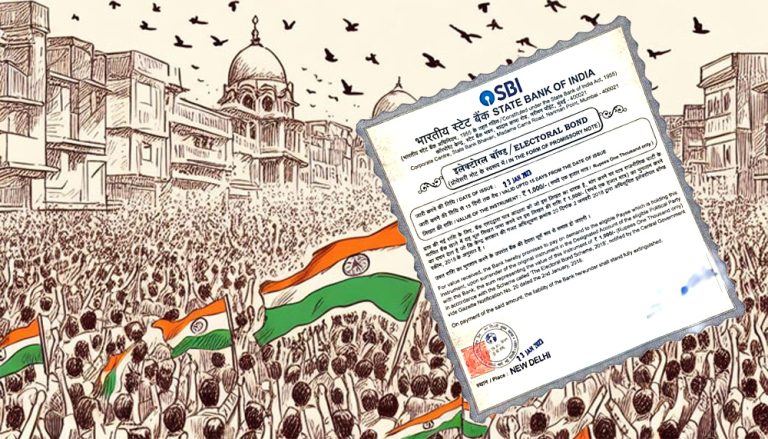
The electoral bonds are used by donors to make financial contributions to political parties. The government of India issued a notification in 2018 launching electoral bonds for donations to the political parties. These bonds provide anonymity to the donors. One of the main aims behind launching the bonds was to eradicate the black money infusion into politics.

The electoral bonds are issued by banks, which means the funds donated to political parties go through the banking system, even though the identity of the donor is not disclosed. Therefore, it ensures that only legitimate money is donated to parties. However, those who have filed petitions against such bonds claim that these bonds do not provide a level playing field to the political parties. It is claimed BJP corners the majority of bonds.

What are electoral bonds?

On 2nd January 2018, the government of India introduced the Electoral Bond Scheme. The idea was to enhance the transparency in political funding and stop using black money in politics. The Electoral Bonds are interest-free bearer instruments that are available in various denominations. Indian citizens and incorporated Indian entities can buy these bonds from specific State Bank of India branches.

As per the notification issued by the Government of India, one has to adhere to KYC norms to purchase Electoral Bonds. Once bought, these bonds have to be donated to registered political parties within a 15-day window. The purchase period for the bonds occurs in January, April, July and October. However, during General Elections, there is a provision for an additional 30-day extension period for purchasing and making donations to the political parties.

The eligible political parties that receive donations via such bonds can encash the bonds through designated bank accounts. The donations through Electoral Bonds promote a more transparent and accountable system for political contributions.

The name and other information of the donor are not men mentioned on the instrument and thus electoral bonds are said to be anonymous. But the party that receives the bonds knows who donated them, as they have to delivered physically.

Is there a cap on the number of electoral bonds that a person or a company can purchase?

As per the rules, there is no cap on the number of electoral bonds that a person or a company can purchase. These bonds are available in Rs 1,000, Rs 10,000, Rs 1 lakh, Rs 10 lakh, and Rs one crore denominations.

To make it possible to use electoral bonds for donations, the Government of India brought amendments to four Acts via the Finance Act of 2016 and 2017. These Acts were the Representation of the People Act of 1951 (RPA), and the Companies Act, of 2013. The Income Tax Act, 1961. And the Foreign Contributions Regulation Act, 2010 (FCRA), through the Finance Acts of 2016 and 2017.

Though there is no cap on the number of bonds someone can buy, no corporate company can make donations to more than 75 per cent of their total profit or 10 per cent of their total revenue in a single financial year.

Who can receive funding via electoral bonds?

As per the regulations, the political parties that have secured at least 1 per cent votes in the recent Lok Sabha or State Assembly elections and are registered under the Representation of People’s Act can get a designated account from the Election Commission of India (ECI) to get the donations via electoral bonds. Once received, the political party can encase the amount within 15 days from the day the bonds were bought. In case the party fails to encash the bonds within the timeline, the money will get deposited in the Prime Minister’s Relief Fund.

Arguments against Electoral Bonds

The Supreme Court has been hearing the arguments against the Electoral Bond Scheme. The pleas against the scheme have challenged its constitutionality. They have argued that this scheme is a potential threat to democracy in India. The key points in the arguments against the bonds included the violation of the right to information, the possibility of backdoor lobbying and the potential use of shell companies for donations to the political parties. Furthermore, the pleas raised concerns over the anonymity of the bonds and the promotion of corruption by protecting criminals from prosecution.

The scheme’s critics have also raised concerns over the name “electoral bonds” as they claimed the money could be used by the political parties for any purpose as there are no specific spending limits. Furthermore, they argued that although the government has reduced the disclosure threshold of the donations, that might not reduce the use of cash in politics. For those who are unaware, those who donate any amount under Rs 20,000 are not obliged to disclose that they have donated to a political party. There have been demands to reduce the threshold further to Rs 2,000 to give more transparency to the political donations by individuals and corporations.

One of the arguments that made headlines is the so-called uneven playing field. The critics have argued that since the scheme was launched, around 74 per cent of the donations via electoral bonds went to the ruling party, BJP. The other political parties, including Congress, Trinamool Congress and others, received only a small portion of the total amount. They argued that it led to an uneven playing field as the BJP will have more money to spend on political campaigns.

Additionally, as the scheme differentiates between corporate donors and individual citizens, the latter might have their voices overpowered by the former in democracy, which could be concerning.

Another point that was raised is that the scheme is “unfair” to the donors as the political parties are not bound to disclose where they spent the donations received by electoral bonds. During the arguments, the Supreme Court also raised apprehensions about the possibility of trading of electoral bonds, though it is not allowed.

In the end, it was contended that the main aim. However, the government suggested that to reduce the influence of black money was to “redirect non-anonymous funding from traditional banking channels to anonymous Electoral Bonds”, which essentially “created an alternative white money channel”, for the political funding. The critics claimed that these arguments collectively raised significant doubts about the impact of the scheme on political funding, transparency, and the integrity of the electoral process in India.

Arguments in favour of Electoral Bonds

The union government has rejected the arguments against the scheme, stressing that it is designed to bring transparency in funding of political parties. Solicitor General of India Tushar Mehta said that there are enough safeguards built into the scheme. He noted that as parties are getting funds through the banking system, it means only clean money is donated to them. He warned that if the scheme is scrapped, it will result in the return to days of funding of parties by cash, which makes preventing black money into the political system impossible.

He explained that the scheme has various measures to ensure transparency, such as the requirement for both donors and political parties to have designated accounts and branches. While the identity of the donors is not disclosed, he explained that it is known to the banking system, as there are KYC (Know Your Customer) requirements, which include providing Aadhar numbers and addresses.

The solicitor general justified the 1% vote threshold for political parties to receive funds through the bonds, stating that it is intended to prevent the formation of fake parties solely for the purpose of claiming exemptions.

Mehta highlighted another safety feature built into the scheme, the validity of only 15 days for the bonds. He asserted that the 15-day limit reduced the potential for quid pro quo deals as donors are required to give the bonds within this period. Moreover, to further minimize the risk, if the bonds are not encashed within the stipulated timeframe of 15 days from the date of issue, the amount goes to the PM Relief Fund, and the donor can’t recover it.

While opponents object to the confidentiality of donors in the electoral bond scheme, SG Mehta said that maintaining the secrecy of donors was essential and that the bonds were designed with stringent confidentiality measures. Breaching this confidentiality would leave digital footprints and result in criminal liability for those involved. He said that the investigative agencies could access the details only with a court order.

He said no transparent political donation scheme will work if there is no confidentiality. If it is publicly disclosed who donated to which party, it will result in retribution and victimisation of the donor from other political parties. And if therefore the confidentiality clause is removed, the donors will opt to donate through cash instead.

SG Mehta said that the Electoral Bonds Scheme had been framed in such a manner that it ensured the confidentiality of the donor entirely until the court ordered otherwise. Only the political party that receives the donation will know the identity of the donors, and others will not know it.

The court asked to know about the right of voters to know the donors of the parties, Tushar Mehta said it is not realistic to expect voters to make decisions based on campaign contributions from specific individuals or organizations. Instead, voters base their decisions on factors like ideology, principles, leadership, and the efficiency of a political party, he said. The SG added that businesses may support political parties that create a favourable environment for their operations, but this doesn’t necessarily involve a quid pro quo arrangement where financial contributions lead to political favours. 

He said, “Purity of election is supreme over the right to vote. Voter votes not based on which party is funded by whom, voter votes based on ideology, principle, leadership, efficiency of the party.”

Explaining further why the donor identity needs to be kept confidential, SG Mehta said that there are five crucial considerations in the realm of electoral financing. These considerations include the imperative to reduce the reliance on cash in the electoral process, the promotion of authorized banking channels for campaign contributions, the incentive of confidentiality for donors using these channels, the paramount need for transparency in electoral financing, and the prevention of any form of kickbacks or quid pro quo between those in power and financial benefactors. 

SG Mehta also invoked the right to privacy, which has been upheld by the apex court, to justify why the donors have the right to keep their identity undisclosed. He referred to the KS Puttaswamy judgment, in which the court had recognized the fundamental right to informational privacy. He emphasized the need to balance the right to know and the right to informational privacy, arguing that the right to informational privacy could be asserted against the general right to know. 

Mehta said that while the public had a right to know, it should be limited to cases of genuine public interest, and curious or prying inquiries should not infringe upon an individual’s privacy. He pointed out that information about which company had purchased how many bonds and which political party had received how many bonds was already in the public domain. Any additional disclosure beyond this might encourage a return to cash-based political funding, which would not be in the legitimate state’s interest.

Adding to the arguments, Attorney General for India R Venkatramani said that there should be specific and direct arguments against the scheme and not broad statements which may resemble a political debate.  Stating that the government was moving from an unregulated system to a regulated system, he added that one cannot say that they would look at each statute in isolation and call them into question. The AG further argued that the scheme doesn’t violate any existing right of any person. 

What the court said

While the Supreme Court has reserved its verdict, the court suggested that an alternative system could be devised for political donations to remove the “flaws” in the current system. However, the apex court made it clear that it would not suggest going back to the cash-only system, adding that the deficiencies in the existing system should be addressed.

“We do not want to go back to a cash-only system. We are saying do it in a proportionate, tailor-made system which overcomes the serious deficiencies of this electoral bond system,” the Court said. The Court also made it clear that only the legislature or the executive can undertake such an exercise and the Court will not step into that arena.

The court said, “You can still devise a system which balances out in a proportional way. How it is to be done is for you to decide. We will not step into that arena, that is not part of our function”. Responding to the five crucial considerations mentioned by SG Mehta, the CJI said, “The balance has to be drawn by the legislature and by the executive; not by us. We are quite conscious of that.”

Responding to the arguments by petitioners that the scheme has not stopped black money flowing into parties as cash donations are not banned, CJI said that the validity of the scheme was not necessarily linked to its success in reducing black money and that the main objective was to enhance transparency. He said, “On a constitutional level, this argument will not stand. The fact that they have been unable to or they did not dry all cash sources – is not a ground to challenge the validity of the scheme.”

Justice Khanna emphasized that the electoral bond system aimed to ensure money came through regular banking channels with Know Your Customer (KYC) requirements, which was not the case with cash donations. He also pointed out that the scheme aimed to protect the identity of donors for various reasons.

Electoral Bonds made significant changes in political donations

In 2018, the BJP-led government under Prime Minister Narendra Modi introduced the Electoral Bond Scheme to promote transparency and legitimacy in political party funding in India. The Ministry of Finance developed this scheme, which uses bearer instruments and strict Know Your Customer (KYC) norms, to create a robust and responsible framework for political contributions.

Political parties in India can effectively use funds during elections due to accessible and inclusive political contributions. The electoral bonds’ tax treatment promotes financial transparency, and their integrity is ensured by banning trading. Additionally, the scheme redirects unutilized funds to the Prime Minister Relief Fund, demonstrating responsible financial transactions and reducing the influence of black money in politics. This is a significant step towards strengthening India’s democratic foundation.
Pakistan: 14 soldiers killed by rebels in Gwadar on the same day as the Mianwali Air Force base attack

0

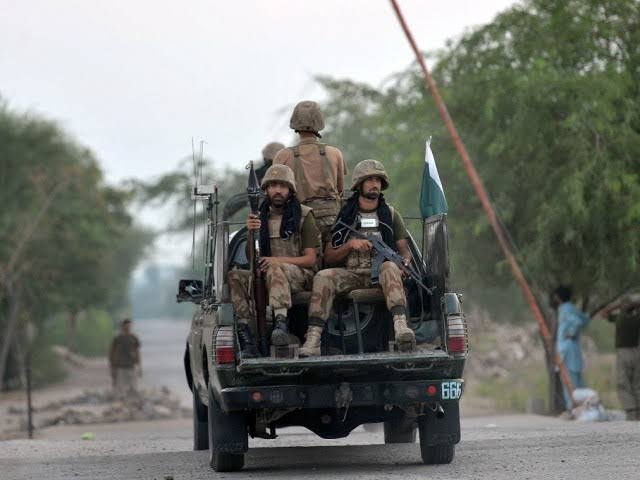
At least 14 Pakistani soldiers were killed when rebels attacked two vehicles carrying security forces in Pakistan’s Gwadar, Pakistan-based Geo News reported citing military’s media wing.

On Friday, Inter-Services Public Relations (ISPR) said that terrorists attacked the security convoy when it was moving from Pasni to Ormara in Gwadar district. The military wing said that the sanitization operation was being conducted and the perpetrators of “this heinous act will be hunted down [and] brought to justice,” Geo News reported.

According to ISPR, the security forces are determined to eliminate the n menace of terrorism from Pakistan, according to the report. Pakistan’s Interim Foreign Minister Jalil Abbas Jilani condemned the terrorist attack on security convoy.

Taking to X, Jilani stated, “Strongly condemn the cowardly terrorist attack on our soldiers which resulted in the martyrdom of 14 brave sons of the soil. Such acts are utterly reprehensible. Our thoughts and prayers are with families of the martyred and injured. Pakistan stands resolute against terrorists.”

“Such acts are utterly reprehensible. Our thoughts and prayers are with families of the martyred and injured. Pakistan stands resolute against terrorists,” he said in a post on X.

Earlier on October 29, two soldiers were killed during an exchange of fire with terrorists in the Awaran district of Pakistan’s Balochistan, Pakistan-based ARY News reported citing Inter-Services Public Relations (ISPR).

The soldiers who were killed in the exchange of fire were Naib Subedar Asif Irfan (37), a resident of District Okara and Sepoy Irfan Ali (22), a resident of district Sargodha, according to ARY News report.

According to the ISPR press release, the soldiers reached the terrorist’s location and killed them while two others got injured. During the exchange of fire, two soldiers were killed, according to ARY News report.

Pakistan has witnessed a rise in terrorist attacks in recent months as the Tehreek-e-Taliban (TTP) and other terror groups have intensified their attacks against security forces. The rise in TTP attacks has intensified its attacks against security forces after its ceasefire with the Pakistan government ended in November last year.

In a report released in October, Centre for Research and Security Studies (CRSS) said that 386 security personnel lost their lives in the first nine months of 2023, reaching an eight-year high, according to Geo News report.

In the third quarter of 2023, some 445 people were killed and 440 others were injured from 190 terror attacks and counter-terror operations, Geo News reported.

Khyber Pakhtunkhwa and Balochistan were the primary centres of violence, accounting for nearly 94 per cent of all fatalities and 89 per cent of attacks, including incidents of terrorism and security forces operations recorded during this time.

(This news report is published from a syndicated feed. Except for the headline, the content has not been written or edited by OpIndia staff)

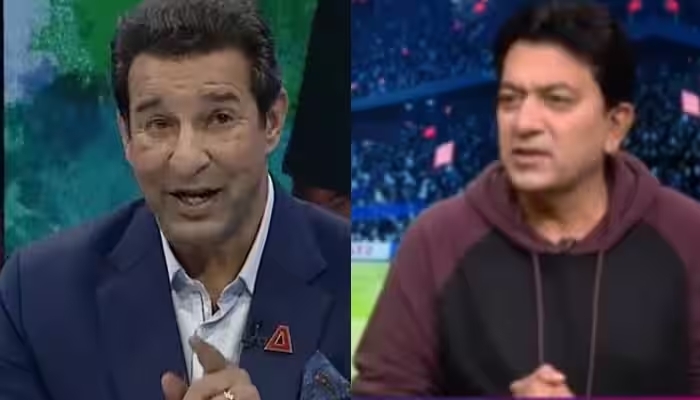
‘You are free to humiliate yourself, do not drag us along’: Wasim Akram slams Hasan Raza for claiming India is getting ‘special balls’ during World Cup

Former Pakistani cricketer Hasan Raza has been at the receiving end of criticism and trolling over his bizarre claim that ICC is giving “different and suspicious” balls to Indian bowlers in World Cup 2023. Reacting to Hasan Raza’s baseless and senseless assertion, former Pakistani cricketer Wasim Akram lambasted Hasan Raza saying that he too wants to try the same stuff these people (Hasan Raza) are smoking.

He further slammed Hasan Raza by saying that if Raza wants to get humiliated, he should not do the same to Pakistan in front of the entire world.

“I have been reading about it in the last couple of days. I want to have the same thing these guys are having. Sounds like fun. Because their mind is not there. Beizzati karani hi hai saddi bhi na karao duniya vich (If you want to get yourselves humiliated, don’t do the same to us in front of the entire world),” said Wasim in a program on a Pakistani sports channel.

He went on to describe how the balls are chosen before a cricket match. According to Akram, the side that bowls first selects two new balls and keeps two possibilities, while the umpires and match referees keep a watchful eye.

“It’s a very simple thing. The umpire goes to the team that is bowling first after the toss with a box filled with 12 balls. There would the four umpires and the referee and a few other people. If I am bowling first then I will pick one ball as my first option and the other as my second option. Both options the umpire keeps with himself, the second option is right there. He then takes the box to the other dressing room, with a lot of people with him. They also pick two balls. They go to the fourth umpire and in that same room the referee and a few other people also sit and show the two options. So who comes up with all this (the conspiracy theories)?” he said.

The former Pakistani pacer also opined that India’s pacers should be praised for their efforts. “The argument for the past few days, especially in our country, has been that none of the bowlers can get a swing like this. But why not understand that these Indian bowlers have learned something more and maybe they are better right now?” he remarked.

Furthermore, Akram asserted that there is no device in the ball and that it cannot be swung with a device inserted in it. “There is no device in the ball. You can’t swing the ball with a device. For argument’s sake if you are trying to swing the ball we can say one is a heavy side, while the other is light side, but you can’t swing the ball with a device,” Akram said.

Other than Wasim Akram, former India opener Aakash Chopra also questioned the credibility of the TV news show in which Hasan Raza made the controversial comments.

“Is it a serious cricket show? If not, please mention ‘satire’ ‘comedy’ in English somewhere. I mean…it might be written in Urdu already but unfortunately, I can’t read/understand it,” Chopra posted on X.

Amusingly, Hasan Raza responded to Chopra’s reaction on the same show continuing to brazen it out saying that it was his “opinion” and he went on to boast his cricket records, however, he did not mention about being notorious for his involvement in spot fixing.

The controversy erupted after Hasan Raza while appearing on a Pakistani news channel on Thursday said that ICC or BCCI is providing some special kind of balls only to Indian bowlers due to which Indian bowlers like Shami and Siraj are getting swing even on batting pitches. Hasan Raza also asserted that there should be an ‘inspection’ of balls provided by the ICC. Hasan Raza also alleged that decisions are being made in favour of India in the matter of DRS.

Infighting continues in MP Congress unit: 39 leaders expelled for contesting against party’s official candidates

On 4th November (Saturday), the Madhya Pradesh Congress functionary announced that the state unit has expelled 39 leaders from the party’s primary membership for six years. According to the party functionary, they have been expelled for contesting the upcoming state assembly elections against the party’s official candidates. 

According to a release issued by the party’s state vice-president Rajiv Singh, these 39 leaders were expelled from the Congress on the directives of the party’ state unit chief Kamal Nath.

The release added that these expelled leaders are contesting elections either as independent candidates or on the ticket of the Bahujan Samaj Party (BSP), the Samajwadi Party (SP) and the Aam Aadmi Party (AAP).

A few of the prominent names expelled from the Congress party’s primary membership include former MP Premchand Guddu (Alot), former MLA Antar Singh Darbar (Mhow), former MLA Yadvendra Singh (Nagod), state party spokesman Ajay Singh Yadav (Khargapur), Nasir Islam (Bhopal North) and Amir Aqueel (Bhopal North).

The development comes at a time when Congress is at loggerheads with one of its major alliance partners in the I.N.D.I. bloc. The discord which has only worsened with each passing day erupted after disputes arose over the seat-sharing formula in the poll-bound state. Initially, Congress and its I.N.D.I. alliance partner Samajwadi Party were reportedly in talks that the latter could be given six seats to contest in the state elections. However, when Congress announced candidates on assembly constituencies of sitting SP MLAs in MP, a war of words erupted with SP Chief Akhilesh Yadav accusing Congress of ‘betrayal’. 

Targeting the Congress party, Former UP CM Yadav asserted that Congress is demanding a nationwide caste census only for political benefit. He remarked that the fact that Congress is now requesting a caste census is a ‘miracle.’ The former Uttar Pradesh Chief Minister emphasised that the grand old party has come to the realisation that voters in backward areas do not support them.

Apart from verbal exchanges and jibes, SP also fielded its candidates on 31 assembly seats in Madhya Pradesh adding woes to its “alliance” partner Congress. 

Voting in Madhya Pradesh will take place a fortnight later on 17th November for the 230-seat Madhya Pradesh assembly while the result will be announced on 3rd December. 

Over 30 phones stolen outside Mannat during Shah Rukh Khan’s birthday celebrations; Imran and Mohammed Ali among 3 arrested

0

Three persons named Imran, Mohammed Ali and Shubham Jamnaprasad have been apprehended by Bandra Police in connection with the theft of mobile phones that were gathered outside Bollywood actor Shah Rukh Khan’s residence, Mannat, on the occasion of his birthday, per a report in ANI. Police have found nine devices from the accused after reviewing CCTV footage from the area and surrounding locations.

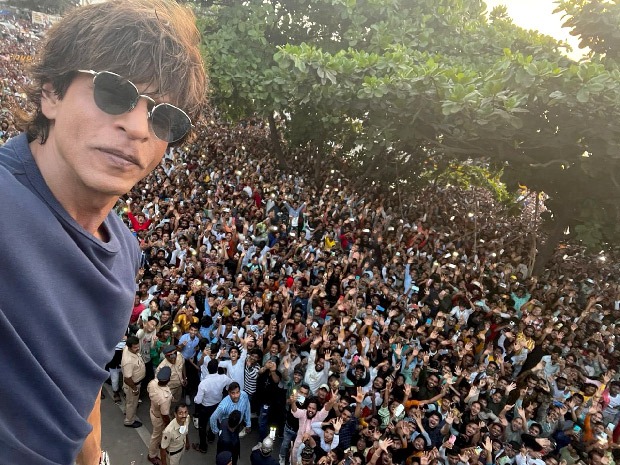
Shah Rukh Khan celebrated his birthday on 2nd November (Thursday) and each year he extends greetings to his adoring audience who assemble in large numbers outside his Mumbai home. This year was no exception, however, upon discovering that their phones had been stolen on Thursday night, at least thirty of his fans lined up at the Mumbai police station to register a complaint.

In the meantime, the ‘Badshah of Bollywood’ took to social media to express gratitude for the kind birthday messages.

The superstar stepped out onto the balcony of his mansion and waved to his cheering admirers who were mesmerised by his presence. He also celebrated the event by striking his famous arms position in front of the crowd. He was wearing camouflage pants, a basic black T-shirt and a black cap to complete his nice outfit.

Source: The Indian Express

Fans lined up from different cities since early in the morning to wish the ‘Chak De! India’s actor in their own unique ways. Many brought large posters of him, candies and t-shirts with them. They congregate outside his house in significant numbers each year in hopes of catching sight of the ‘King Khan’ of Bollywood and it was the same this year.

Shah Rukh Khan is known for starring in movies like Baazigar, Kabhi Haan Kabhi Na, Dilwale Dulhania Le Jayenge, Kuch Kuch Hota Hai, Kal Ho Naa Ho, Veer Zara and many more. Basking in the glory of two massive blockbusters, Pathaan and Jawan, he is now getting ready for the release of his next project which is Rajkumar Hirani’s Dunki and is slated for release in December.

It is the first collaboration between Shah Rukh Khan and Rajkumar Hirani. The movie also features actor Vicky Kaushal. According to the teaser, SRK appears to be paired opposite Tapsee Pannu in the movie.

What is the Mahadev Betting App, whose founders are accused of giving Chhattisgarh CM Baghel Rs 508 cores, and how such betting companies are evading taxes

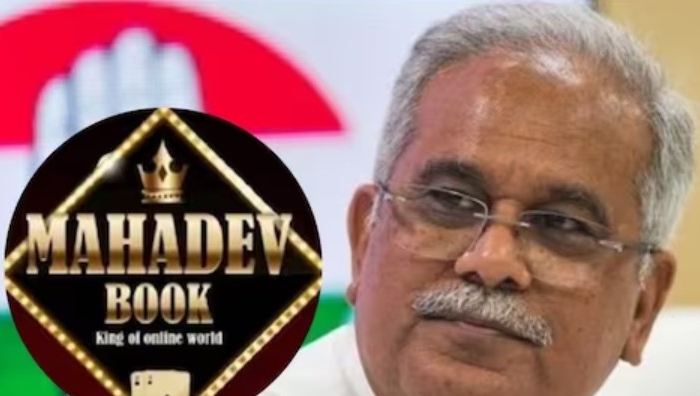
On November 3, the Enforcement Directorate, probing the Mahadev app for alleged money laundering activities, said that according to fresh evidence following a search operation on November 2, it came to light that regular payments were made in the past and so far around Rs 508 crore has been paid by Mahadev App Promoters to Chhattisgarh Chief Minister Bhupesh Baghel.

The ED received credible inputs and conducted successful search operations on November 2 in Chhattisgarh in which Rs 5.39 crore in cash was intercepted in the poll-bound state.

Notably, under the Constitution of India, betting and gambling are under the purview of state governments.

The ED is investigating the Mahadev Book Online Betting App syndicate in which the promoters of this betting syndicate are based abroad and remotely running thousands of panels across India with the help of their friends and associates who are mainly from Chhattisgarh and have earned thousands of crore of proceeds of crime.

The ED has already arrested four accused persons and seized proceeds of crime worth more than Rs 450 crore. The federal agency has also filed a prosecution complaint against 14 accused persons.

What is the Mahadev App and the money laundering scandal associated with it

The Mahadev app is an online betting platform that operates illegally and launders the money it receives from users who are not located in India. The Mahadev betting application was created by four people including key accused Saurabh Chandrakar and Ravi Uppal from Madhya Pradesh and it gradually replaced at least 10 similar illicit betting apps that were being used all over the country. Lotus 365 and ReddyAnna are a couple of the applications that were once part of the Mahadev betting fold.

Mahadev Online Book (MOB) has networked from its UAE headquarters to India, Sri Lanka, Nepal and Pakistan.

According to the ED, the app makes money by franchising “Panel/Branches” to its known associates at a profit margin of 70-30 per cent. It allegedly creates IDs, enrols new users, and launders money through a tiered network of Benami bank accounts utilizing the online book betting program.

The Mahadev App scam is thought to have involved a huge sum of money, estimated to be approximately Rs 5,000 crore. The ED during the probe revealed that Saurabh Chandrakar and Ravi Uppal established around 4,000-panel operators in India for betting, with each panel having 200 customers who place bets. With this, Chandrakar and Uppal had been making Rs 200 crore daily.

Some major participants in the money laundering operations have been identified by the ED, most notably Kolkata-based Vikash Chhaparia.

The Mahadev app grabbed headlines after the ED summoned Bollywood A-listers like Ranbir Kapoor, Shraddha Kapoor, Huma Qureshi, and Hina Khan, who along with several Bollywood personalities attended and performed at the wedding ceremony of Saurabh Chandrakar, one of the founders of the Mahadev Betting app.

According to sources, the agency learnt about many celebrities endorsing these betting entities and doing promotional work in return for hefty fees.

As of now, as many as 34 Bollywood celebrities including actors, singers, dancers etc. have come under the Enforcement Directorate ED scanner in connection with the scam. Raftaar, Sonu Sood, Hardy Sandhu, Sonakshi Sinha, Malaika Arora and Amit Trivedi some of the names.

Rapper Badshah quizzed for promoting ‘Fairplay’ betting app, a subsidiary app of D-company linked Mahadev App 

On 30th October, the Cyber Cell of Maharashtra Police called rapper Badshah for interrogation in connection with the illegal screening of the Indian Premier League (IPL) cricket tournament on an online betting app named ‘FairPlay’ he promoted. Subsequently, he appeared at the Maharashtra Cyber office in Mumbai. 

Notably, the Fairplay app which has come under the scanner is a subsidiary app of the Mahadev app, promoters of which have links with Dawood Ibrahim’s D-company and are being probed in a money laundering case by the Enforcement Directorate.

The recent investigation into the Mahadev Betting app and its subsidiary apps for alleged money laundering activities has opened up Pandora’s box and brought attention to how, over the years, many such offshore gaming and betting businesses have profited millions of rupees through money laundering and tax law violations.

How do these offshore apps function

The investigation into the Mahadev Betting App scam once again brought tax evasion by offshore betting and gambling platforms under the scrutiny of the watchdogs.

Broadly, these illegal offshore gambling companies, use three methods to interact with potential customers:

  • 1. They draw the attention of unsuspecting consumers through advertisements.
  • 2. They use dubious financial channels to huge illicit sums of money from consumers.
  • 3. Finally, they circumvent government monitoring through a huge number of mirror websites.

How do these offshore gambling platforms evade taxes

According to the source, there are many offshore entities providing platforms for online betting and gambling in the country but are not GST-registered and hence are not paying the required GST.

Let us understand how these offshore gambling companies have been evading paying taxes and its impact on the Indian economy.

Majorly, the platforms evading GST are offshore and not registered under GST law. Despite not being registered under the relevant legislation, the gambling apps are available for free download to customers on Google Play and App Store.

Since these offshore betting and gambling platforms are operating illegally, none of the powerful platforms, that receive thousands of crores of rupees in deposits each month from Indian citizens, pay taxes.

This obviously, has a severe adverse impact on the Indian economy.

How is the government losing money?

The online gaming industry across India was valued at around 135 billion Indian rupees in the year 2022, however, it is estimated that offshore gambling sites such as Dafabet, Betway, Bet365, Parimatch, Fairplay and 1xbet are making the Indian online gaming industry poorer by at least $25-30 billion.

According to a written reply given by the Finance Ministry in Parliament in December last year, GST officers are investigating tax evasion of about Rs 23,000 crore by gaming companies between April 2019 and November 2022.

Notably, right now, there are significant differences between the GST laws for “games of skill” and “games of chance” (betting or gambling). While games of chance are subject to a 28 per cent GST on the contest entry fee, games of skill are subject to an 18 per cent GST on the platform cost.

This means such apps are expected to generate revenue to the tune of $400-500 million, but a significant portion of this amount never lands in the public exchequer’s account.

According to the Tax Department, while these companies are required to pay GST for their domestic operations and transactions, it is difficult to issue notices to them because they lack an established presence or physical footprint in India.

The majority of offshore betting companies are based in tax havens like Gibraltar, Belize, Curacao, Malta, and the Isle of Man. Despite having ties to India, the owners are based there.

Furthermore, it has been observed that many of these organisations frequently change their offshore bank accounts, making it difficult to track and identify them.

Offshore gambling giants lure celebrities by offering huge compensation

Even though fake marketing for these offshore gambling organizations has previously been outlawed by the Indian government, these companies nevertheless exploit sports and entertainment media to advertise their brands.

According to some media sources, these websites bring in around Rs 5,000 crore or 50 billion each month in India. With that kind of money, they can easily court larger broadcasters and reserve their spots on TV, digital, and over-the-top (OTT) platforms—albeit through proxy means. It is even easier to rope in celebrities, actors and social media influencers to endorse their brands,

These offshore gambling platforms have, reportedly, launched ‘news’ websites, partnered with organizations as sponsors, resulting in the placement of their insignia on team jerseys, and deluged popular websites with clickable banners.

In fact, due to their continued appearance in advertising for betting websites and apps, as well as their surrogate news sites, over a dozen celebrities, including top actors, cricket players, and other macro and mid-tier influencers, may be in breach of a government recommendation.

In October 2022, the Ministry of Information and Broadcasting forbade the use of surrogates and online betting advertisements on television and internet platforms. Despite the ministry’s advisory naming Fairplay, PariMatch, Betway, Wolf 777 and 1xBet, many popular influencers, actors and celebrities continued appearing in online gambling ad campaigns for Parimatch News and Betway.

In fact, in a video posted on Instagram on November 9, 2022, online betting site Fairplay continued with its ads featuring Ranbir Kapoor, Kiara Advani, Sunil Narine, Mithali Raj, Saina Nehwal, Mary Kom and Eoin Morgan.

Rannvijay Singh Singha and Kevin Pietersen are advertising on Betway’s homepage.

Actor Esha Gupta was signed on as the online betting app Khelraja’s brand ambassador in January this year.

100 online gaming apps on DGGI radar for Rs 1 lakh-crore tax evasion

In 2017-18, after the change in the tax regime and introduction of GST, the investigation into offshore gaming platforms regained steam, redirecting the government’s attention to the massive tax fraud being carried out with impunity by several such offshore betting apps.

In October this year, as many as 100 online gaming applications operating in India have been under the scanner of the Directorate General of Goods and Services Tax Intelligence (DGGI) for alleged tax evasion to the tune of around Rs 1 lakh crore.

Dream11, the unicorn fantasy sports app, has been issued two show cause notices for alleged tax evasion amounting to Rs 28,000 crore, the highest indirect tax demand notice to date. The notices were served in September – one each by the state and Central GST departments.

Similarly, in April, the Directorate General of GST Intelligence (DGGI) sent notices to as many as 38 such platforms for allegedly laundering money and syphoning off taxes.

These sites have been investigated several times for tax evasion. The Enforcement Directorate (ED) also recovered Rs 212.91 crore in connection with money laundering investigations involving online gaming platforms through December 2022.

The government, on its part, is trying to detect and plug tax evasion by offshore entities providing online betting and gambling, costing the exchequer crores of rupees. However, if broadcasters and product advertisers refrain from taking part in these campaigns and cease providing such offshore illicit websites with any advertising real estate, at the very least, the attempts to entice customers by these offshore betting giants can be put an end to.

Chhattisgarh: PM Narendra Modi addresses an election rally in Durg, makes ’30 per cent commission’ jibe at CM Bhupesh Baghel

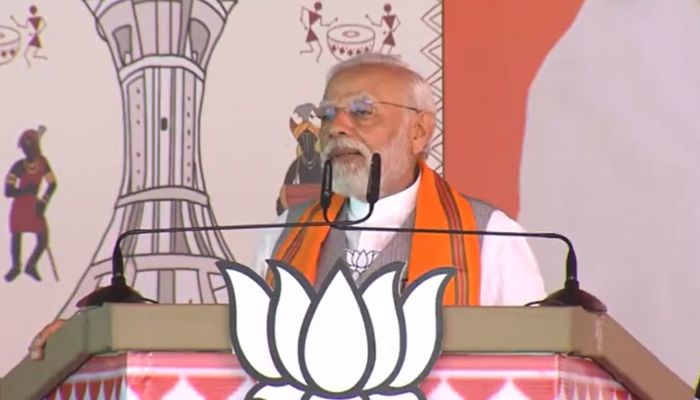
On Saturday (4th November), PM Narendra Modi addressed an election rally at Pandit Ravi Shankar Shukla Stadium in Durg, Chhattisgarh. In this rally, he accused the Congress government in the state of corruption. He called it a government of 30 per cent commission. This is PM Narendra Modi’s second visit to Chhattisgarh in two days. The first phase of polling for the state assembly elections will be held on 7th November.

PM Narendra Modi said in Durg, “The BJP has a track record of fulfilling the promises. Chhattisgarh was created by the BJP and I guarantee you that the BJP will develop Chhattisgarh. The Congress party’s ‘bundle of lies’ is standing in front of BJP’s ‘Sankalp Patra’. The Congress party’s priority is to fill its coffers through corruption.”

Talking more about the election manifesto published by the Chhattisgarh state BJP, PM Narendra Modi said, “I would like to congratulate the entire team of Chhattisgarh BJP for releasing the Sankalp Patra yesterday. This manifesto is made in order to make your dreams come true. In this manifesto, the biggest priority has been given to the mothers and sisters of Chhattisgarh, the youth here and the farmers here.”

Attacking the Congress government in the state, PM Narendra Modi said, “Congress’ priority is to distribute jobs to the loved ones of its leaders, and to throw your children out of jobs. When you go to government offices here, you say the same thing – “30 taka Kakka, Aap ka Kaam Pakka” (which means your task is ensured if you pay a commission of 30 per cent). In every announcement of the Congress, there is a 30 per cent game. Chhattisgarh wants to get rid of this government, which is why Chhattisgarh is saying – ‘We won’t tolerate anymore, we will change the government now’.”

PM Narendra Modi slammed the state government while referring to the Mahadev online betting app. He said, “The Congress government in Chhattisgarh has not even spared Mahadev’s name. Two days ago, a big action was taken in Raipur, and a huge amount of money was received. People are saying that this money belongs to the bookies, those who play the game of gambling and that they have collected this money by looting the poor and youths of Chhattisgarh. Congress leaders are filling their houses with this looted money. It is being reported in the media that the connections of this money are linked to Chhattisgarh.”

Criticising Chhattisgarh’s chief minister Bhupesh Baghel on the issue of corruption, he said, “The government and the Chief Minister of the state should tell the people of Chhattisgarh what is their relationship with the accused of this scam who is sitting in Dubai. After all, why is the Chief Minister of the state irritated after this money is caught?”

Lamenting the Congress government on other alleged corruption scandals, PM Narendra Modi said, “The poor people of Chhattisgarh have been looted, and strict action will be taken against those who did this. The corrupt government of Chhattisgarh has broken your trust by committing one scam after another. The PSC and Mahadev app scam is in the discussion, but there is no shortage of scams in the report card of the Congress government.”

Enlisting other scams, he added, “Rs 2,000 crore liquor scam, Rs 500 crore cement scam, Rs 5,000 crore rice scam, Rs 1,300 crore Gauthan (grazing land for cows) scam, Rs 700 crore DMF scam. Congress has not missed any opportunity to loot Chhattisgarh, but I assure you that after the formation of the BJP government in the state, such scams will be strictly investigated, and those who loot your money will be sent to jail.”

Legislature can enact fresh law to cure the deficiency in judgement, cannot directly overrule it: CJI DY Chandrachud 

0

On 4th November (Saturday), Chief Justice of India DY Chandrachud opined that there should be a dividing line between what the legislature can and can’t do when there is a judgment of the court. He argued that if a judgment points out a deficiency in law, it is always open for the legislature to enact a fresh law to cure the said deficiency. He, however, stressed that in that case the legislature can’t term the judgement as ‘wrong’ and ‘overrule’ it. 

In a conversation with Utkarsh Anand, national legal editor of Hindustan Times, the CJI further argued that while pronouncing judgements, the Justices are guided by constitutional morality rather than public morality. He emphasised that judges decide cases, they don’t think about how the society would respond. According to him, that is the difference between the elected arm of the government and the judiciary.

At the Hindustan Times Leaders Summit, the CJI Chandrachud said, “There is a dividing line between what the legislature can do, and what the legislature can’t do when there is a judgment of the court. If a judgment decides a particular issue and it points out a deficiency in law, it is always open for the legislature to enact a fresh law to cure the deficiency.” 

The CJI added, “What the legislature cannot do is to say that we think the judgment is wrong and therefore we overrule the judgment. The judgment of a court cannot be directly overruled by the legislature.” 

He also said judges are guided by constitutional morality and not public morality while adjudicating cases. “We have disposed of at least 72,000 cases this year and there’s still a month and a half to go,” the CJI noted.

Regarding the retirement age of judges, CJI said that it is for Parliament to decide, however, he maintained that it is important that judges must retire. He highlighted the difference in the Indian judicial system vis-a-vis the American Supreme Court. Notably, unlike India, the American judicial system has no age of retirement for judges. 

CJI Chandrachud said, “The retirement age of judges is for Parliament to decide. American Supreme Court provides judges have no age of retirement. We follow a different model. It is important that judges must retire. It is too much of a responsibility for human beings. Judges are human beings…you must pass on the mantle to succeeding generations as issues change. Source of change and transformation of legal principles develops that way.”

Explaining the challenges faced by judges, the CJI said, “Judges of the Supreme Court here decide 200 cases in a week. The real challenge of a judge is to balance competing requirements. On one hand huge inflow of work and the need to create mental space to decide seminal issues. That’s the challenge before a contemporary judge.”

Redefine ‘merit’ in an inclusive way, asserts CJI DY Chandrachud

Regarding participation of women in the judicial system, CJI asserted that more women will enter into judiciary if there is a level playing field. He emphasised that there is need to redefine “merit” in a more inclusive sense and ensuring opportunities for the marginalised.

CJI said, “We need to redefine merit in an inclusive sense… If you open a level playing field for entry, you will have more women in the judiciary. Unless we start increasing the inflow of marginalised persons at the entry level, we cannot achieve their fair share.”

Speaking on barriers for LGBTQI and women, CJI noted, “We recently prepared two handbooks – one for LGBTQI…barriers they experience in courts. Second, a handbook on the language we employ against women… This handbook is on gender stereotypes to ensure there is some form of discourse that is just not acceptable in our judicial system.”

During the conversation the Chief Justice also highlighted the push for the usage of regional langauges and technology in the justice delivery system.

Meanwhile, he also extended best wishes to the Indian men’s cricket team for the World Cup and said that they inspire him.

Hamas put their terrorists on the list of ‘wounded’ Palestinians to be evacuated from Gaza: Reports

Amid the ongoing Israel-Hamas war, it has now come to light that the Palestine-based Islamist outfit tried to put their injured terrorists on departure lists meant for the evacuation of US nationals through the Rafah gate crossing into Egypt.

As per a report by The New York Times, an official of the Biden administration informed on Friday (3rd November) that the evaluation of US nationals was delayed due to Hamas and its nefarious attempt.

The evacuation process was delayed by several weeks and finally commenced on Wednesday (1st November). The Rafah crossing remained closed for a long time since October 7 when Hamas launched an unprovoked attack on Israel, killing 1400 people in the process.

“For most of that time, American officials said only that Hamas was preventing the departure of foreign nationals, and that the group was making unreasonable demands,” the NYT report noted.

Hamas reportedly provided a list of ‘wounded’ Palestinians to Egypt, Israel and the United States, reiterating that they should be evacuated along with US nationals and others. However, almost 1/3rd individuals on the list included injured Hamas terrorists.

The matter came to light only during the vetting process. When Israel, Egypt and the US turned down the list, Hamas kept providing new lists of ‘wounded’ Palestinians (that included its terrorists).

Egypt concerned about possible flow of Hamas terrorists into the country

According to The New York Times, the negotiations between the United States and Hamas took place through representatives of the Qatar government.

“The official who spoke to reporters on Friday said that Hamas eventually relented in its demands for the passage of its fighters. The prospect of Hamas fighters leaving Gaza was especially troubling for Egypt, which remains concerned about the possibility of terrorists flowing into its country,” the report added.

Later, Hamas provided a list of injured Palestinians that did not include Hamas terrorists. As such, the evacuation process was delayed by several weeks

Mukesh Ambani receives two new threat emails for ignoring extortion demand of ₹400 crores, sender introduces himself as ‘Shadab Khan’

Reliance Industries chairman Mukesh Ambani received fresh threat emails, warning him of serious consequences for ignoring previous messages of Rs 400 crore as extortion demand, Mumbai police said on Saturday.

As per police, two threatening emails were received between October 31 and November and the sender introduced himself as Shadab Khan.

“Industrialist Mukesh Ambani received two threat emails once again between October 31 and November 1, warning him of serious consequences for ignoring previous emails wherein the person (sender of the mail) had demanded Rs 400 crore,” police said.

Earlier Ambani received death threats via email threatening to shoot him if he failed to pay Rs 20 crore. The ransom subsequently kept increasing to Rs 200 crore and Rs 400 crore each time a fresh email was sent.

“The sender cites a lack of response to the previous email and increases the ransom, Mumbai police had said, adding that the first such threatening mail was sent on October 28.

After receiving the email, based on the complaint of Mukesh Ambani’s security in-charge, the Gamdevi Police of Mumbai registered a case against an unknown person under section 387 (putting a person in fear of death or of grievous hurt in order to commit extortion) and 506 (2) (criminal intimidation) of the Indian Penal Code (IPC).

(This news report is published from a syndicated feed. Except for the headline, the content has not been written or edited by OpIndia staff)