Home Blog Page 1840

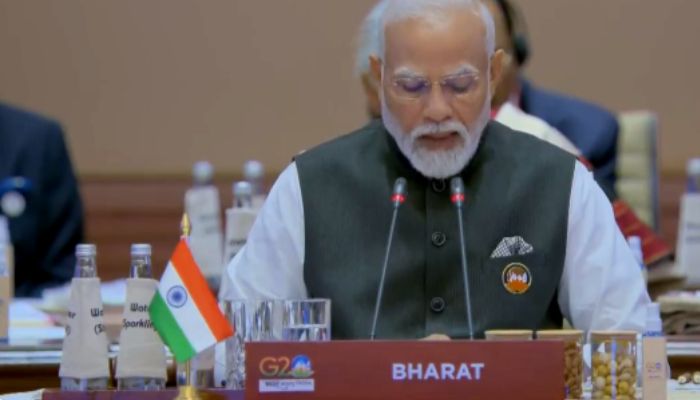
Bharat invites you to mitigate the ‘global trust deficit’, and find solutions to challenges: PM Modi during the G20 Summit

On Saturday (September 9), Prime Minister Narendra Modi called for global cooperation to fight the ‘trust deficit’ in the world and find solutions to issues such as terrorism, and food and water security for the betterment of present and future generations.

He made the remarks during the opening day of the G20 summit, held in New Delhi. The intergovernmental forum for economic cooperation consists of 19 largest economies, the European Union (EU) and the African Union (AU).

PM Modi said, “As the President of G20, Bharat invites member nations to help turn the ‘global trust deficit’ into one based on trust and resilience. This is a time for us to work together.”

“As such, the mantra of ‘Sabka Saath, Sabka Vikas, Sabka Vishwas, Sabka Prayas’ will act as the path-finder for all of us,” he pointed out.

“Economic instability, the divide between the North and South, the distance between the East and West, management of food and fuel, terrorism, cyber security, health, energy or water security, we need to find concrete solutions to these problems for our present and future generations,” PM Modi emphasised.

What is the G20

The G20 was founded in 1999 after the Asian financial crisis as a forum for Finance Ministers and Central Bank Governors to discuss global economic and financial issues.

In 2008, it was upgraded to the level of Head of State/Government in the wake of the global economic and financial crisis of 2007. In 2009, it was designated the “premier forum for international economic cooperation”.

The G20 Summit is held annually, under the leadership of a rotating Presidency. It consists of two parallel tracks: the Finance Track and the Sherpa Track. Finance Ministers and Central Bank Governors lead the Finance Track while Sherpas lead the Sherpa Track after Finance Track.

Wanted Lashkar terrorist Riyaz Ahmed shot dead in a mosque in Pakistan-Occupied Kashmir

0

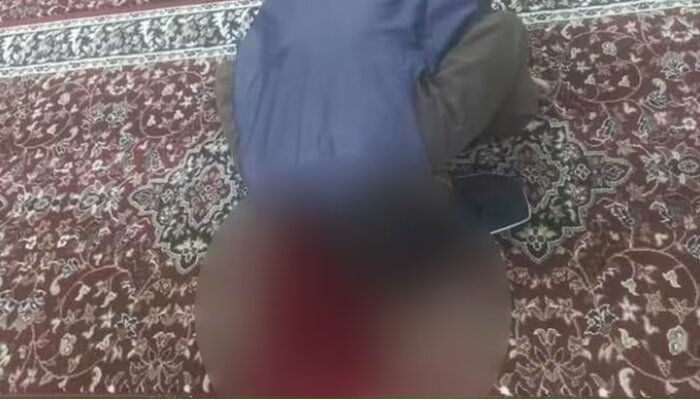
On September 8, some unidentified gunmen opened fire inside the Al-Qudus mosque in Rawalkot, Pakistan-occupied Kashmir and killed a top terrorist leader of the Lashkar-e-Taiba (LeT). The terrorist Riyaz Ahmad alias Abu Qasim was going for Fajr prayers at the mosque..

Riyaz Ahmed was one of the main architects of the terror incident in Rajouri district’s Dhangri on January 1 that killed seven people and left 13 more injured. The village was attacked by terrorists who opened fire indiscriminately. Furthermore, they had placed an improvised explosive device (IED) which detonated the following morning.

The authorities stated that the terrorist was from the Jammu region and reached Pakistan in 1999. They disclosed that he was responsible for the resurgence of terrorism in the border areas of Poonch and Rajouri. He operated from the Lashkar-e-Taiba base camp in Muridke but had recently shifted to Rawalakot.

The officials mentioned that Riyaz Ahmad was shot dead by unidentified shooters inside the Al-Qudus mosque in the Rawalakot region during pre-dawn prayers, citing reports from Pakistan-Occupied Kashmir (POK).

They further added, “Ahmad mostly operated from the Lashkar-e-Taiba base camp in Muridke but had recently shifted to Rawalakot. He was a close associate of Sajjad Jaat, the Lashkar-e-Taiba’s chief commander, and also looked after the outfit’s finances.”

The terrorist’s murder made him the fourth commander of a dreaded terror organisation functioning out of Pakistan to be assassinated this year. Earlier, some unknown perpetrators shot and killed a senior commander of the outlawed Hizbul Mujahideen in Rawalpindi, Pakistan in March. Bashir Ahmad Peer, also known as Imtiyaz Alam, was a Pakistani national who had lived in Jammu and Kashmir’s Kupwara area for more than 15 years.

Syed Khalid Raza, former Al-Badr Mujahideen commander was shot dead by unidentified gunmen in the port city of Karachi in February.

Aijaz Ahmad Ahangar, a Kashmiri terrorist who served as a high commander of the international terrorist organisation Islamic State was discovered dead earlier this year in Afghanistan’s Kunar Province. He was reportedly executed by the Taliban.

G20 Summit in New Delhi admits African Union as permanent member

0

The African Union has been made a permanent member of the Group of 20 countries, Prime Minister Narendra Modi said on Saturday.

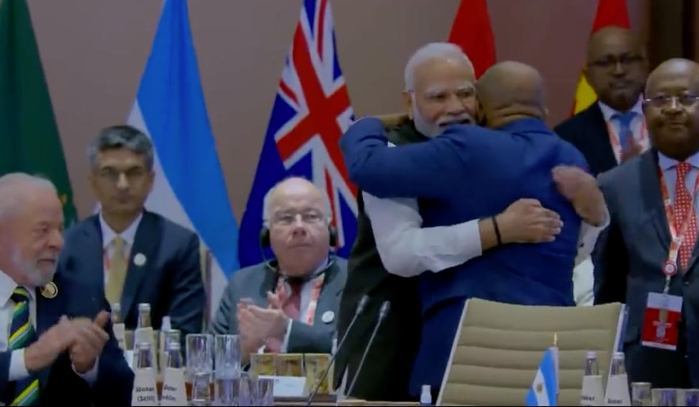
In his opening remarks at the 18th G20 Leaders’ Summit, PM Modi invited the AU, represented by Chairperson Azali Assoumani, to take a seat at the table of G20 leaders as a permanent member.

“With everyone’s approval, I request the AU head to take his seat as a permanent G20 member,” Modi said in his address.

External Affairs Minister S Jaishankar accosted President of the Union of Comoros and Chairperson of the African Union (AU), Azali Assoumani as he took his seat among world leaders.

Adding the African Union as a member of G20 was among India’s key aims to achieve during the ongoing G20 summit. The move to include the African Union into the G20 grouping was proposed by PM Modi earlier this June.

“Before we start the proceedings of G20, I want to express my condolences over the loss of lives due to an earthquake in Morocco. We pray that all injured recover at the earliest. India is ready to offer all possible assistance to Morocco in this difficult time, PM Modi said in his inaugural address.

Chairperson of AU Assoumani had arrived in the national capital on Friday. He was received by the Minister of State in the Ministry of Railways, Raosaheb Danve at the New Delhi airport.

In June 2023, Prime Minister Modi said that he had written to G20 counterparts to provide the African Union with full membership at this G20 Summit.

PM Modi had proposed that AU, a bloc of 55 countries from the African continent that was launched in 2002, be given full membership on their request.

In a recent editorial that has been published across newspapers, PM Modi wrote “The voice of Global South Summit, which witnessed participation from 125 countries, was one of the foremost initiatives under our Presidency. It was an important exercise to gather inputs and ideas from the Global South. 

Further, our Presidency has not only seen the largest-ever participation from African countries but has also pushed for the inclusion of the African Union as a permanent member of the G20.”

(This news report is published from a syndicated feed. Except for the headline, the content has not been written or edited by OpIndia staff)

Uttar Pradesh: CCTV footage from Amroha city shows toddler running for his life after being attacked by stray dogs

0

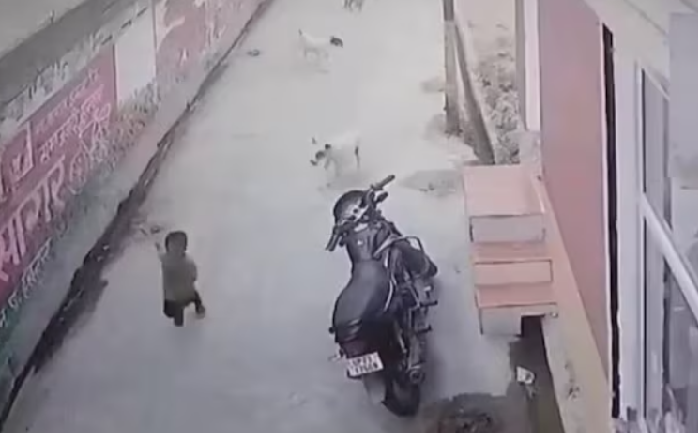
In the latest episode of dog attack, on September 9, CCTV footage showed a toddler running for his life in Uttar Pradesh’s Amroha as the stray dogs launched an attack on him.

Several incidents of stray dogs attacking passersby, including children, have been reported in the city. Locals claim that children have been leaving their homes with a stick in hand, fearful of dog attacks.

In a video obtained by India Today, the small boy can be seen fleeing away from the dog as the canine hurries up to capture and attack the boy.

This is one of several reports of stray dog attacks reported from Uttar Pradesh.

Residents say they are afraid to let their children out since the administration claims to be studying animal birth control systems in the area. Attacks by stray dogs have allegedly caused panic in the area, and roughly a dozen such occurrences have been reported in recent months.

On September 5, a 5-year-old girl was dragged from her home by the dogs and was brutally attacked. The minor was rescued only after the mother of the girl screamed for help gathering the neighbors. The girl was then shifted to a hospital for treatment but no anti-rabies vaccine was available. The girl was then provided with the vaccine by one of the neighbors who had got the vaccine for himself after he was attacked by a dog.

Further, it was reported on the same day that a 14-year-old boy from Ghaziabad had lost his life one and a half months after he was bitten by a dog. The boy didn’t inform about the dog bite at home and failed to take the anti-rabies vaccine, as a result of which his health deteriorated and he died. The boy was also taken to around 3-4 hospitals for treatment but he could not be saved.

A 70-year-old retired doctor was bitten to death by a pack of dogs while out on a morning walk on the Aligarh Muslim University (AMU) campus in April of this year. Last year, strays killed a five-year-old girl in Agra, while dogs killed a 12-year-old boy in Bareilly in May.

According to the World Health Organization (WHO), every year, more than 55,000 individuals die as a result of a dog bites due to a lack of awareness about the importance of seeking medical attention after a dog bite. The majority of these deaths occur in Asia and Africa. India is a rabies-endemic country, accounting for 36% of global rabies deaths.

Notably, a report by Times of India from July 2023 stated that around 307 persons died of rabies in India in the year 2022.

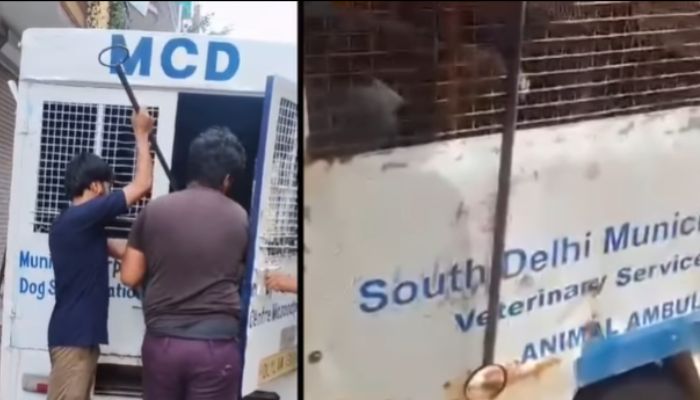
Congress blames the Modi government for MCD’s action against stray dogs ahead of G20 summit, omits context of the original video

On Friday (September 8), the Congress party shared a disturbing video of authorities, belonging to the Municipal Corporation of Delhi (MCD), rounding up stray dogs and relocating them to different areas within the National Capital.

Although MCD is controlled and run by the Aam Aadmi Party, a partner of the Congress in the I.N.D.I.A. alliance, the grand-old party accused the BJP government at the Centre of animal cruelty.

While taking to X (formerly Twitter), the Congress party claimed (archive), “Watch this video to witness the shocking cruelty inflicted upon innocent street dogs by the Modi government in preparation for the G20 summit. Dogs are being dragged by their necks, beaten with sticks and thrown into cages.”

“They are being denied food and water, and they are being subjected to extreme stress & fear. It is imperative that we raise our voices against such appalling acts and demand justice for these voiceless victims,” it claimed.

The contentious tweet was accompanied by a video, which bore the logo of ‘People for Animals (PFA).’ Founded in 1992, the NGO is run by BJP leader and former Minister Maneka Gandhi.

Opindia found the original video, which was uploaded by PFA on its official Instagram page on Tuesday (September 5). In the caption, the NGO squarely blamed the AAP-led Municipal Corporation of Delhi for harassing street dogs.

“MCD’s actions raise several important questions: The G20 summit is mainly centred in the New Delhi zone so why is MCD clearing areas as far out as East and West Delhi? By law, sterilised dogs may not be removed.” it said.

The NGO further questioned, ” The Hon SC has directed all municipal agencies to strictly adhere to these rules under AWBI guidance. In the absence of any written orders, is MCD staff authorised to collect any dogs from anywhere? How does a short 2-day event justify the enormous cruelty and expense of such an action?”

It further added, “Why is MCD still using wire catchers in spite of its written commitment to only use nets? How is MCD going to ensure the health and safe return of so many dogs from so many different areas? Instead of working steadily over the years to sterilise and vaccinate dogs whereby the population would have been negligible, this sham overdrive to ‘hide’ away our dogs is both unnecessary and illegal. It must be stopped.”

Netizens question Congress party for sharing fake claims

The Congress party shrewdly ignored the context of the original video and the role of the MCD in relocating stray dogs. Instead, the grand-old party sought to exploit the opportunity to target the Modi government.

“If that’s the case, AAP should be removed from I.N.D.I alliance as MCD is controlled by AAP,” wrote Tanmay Shankar.

“MCD is run by the Kejriwal government. Ask them,” remarked another user.

One Sukhwinder Singh Parmar said, “This (animal cruelty) is the handiwork of I.N.D.I.A. alliance #MCD”

Congress spreads fake news about BJP insulting world leaders at G20 Summit

This is not the first time that the Congress party has chosen to mislead the public, ahead of the G20 summit.

On Thursday (September 7), Congress leaders such as Pawan Khera and Sashi Tharoor falsely claimed that hoardings were erected in the National Capital, which supposedly showed that PM Modi was ranked ahead in popularity compared to other global leaders.

The hoarding has the image of PM Modi along with the images of the heads of Mexico, Switzerland, Australia, Italy, Brazil and the USA, showing the popularity of each leader. PM Modi’s image is the largest is size, as his popularity is highest with 78%.

Screengrab of the now-deleted tweet by Pawan Khera

Shashi Tharoor had also posted the image on X, claiming that the BJP was indulging in sycophancy instead of the Indian philosophy of Atithi Devo Bhava. Later, Tharoor and Khera both deleted their tweet.

In reality, the image of the hoarding is old. It was put up by Vijay Goel after a ‘Morning Consult’ survey had found that PM Modi was the most popular leader with 78% votes.

report from 6 April carried the Associated Press photograph, thus making it clear that the image was at least 5 months old. A Navbharat Times report from April 12 also carried a different photo of the same hoarding.

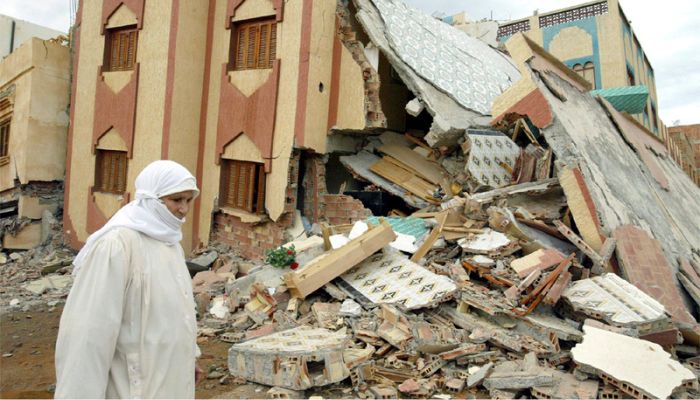
Morocco: Over 600 dead after an earthquake measuring 6.8 on Richter Scale hit the country, many others missing

On the night of Friday, September 8, 2023, a powerful earthquake struck Morocco, registering 6.8 on the Richter Scale. Tragically, the Interior Ministry of the North African country reported that the earthquake had claimed the lives of at least 600 individuals, with an additional 153 sustaining injuries.

According to media reports, the death toll resulting from the earthquake may rise significantly. According to data from the US Geological Survey, the earthquake’s epicentre was situated 71 kilometres southwest of the renowned tourist destination Marrakesh, at a depth of 18.5 kilometres. The tremors were experienced at around 11:11 PM local time, followed by subsequent aftershocks measuring 4.9 in magnitude in the affected regions.

The earthquake’s most severe impact, as reported by the Interior Ministry of Morocco, has been on older settlements located beyond the city limits. Numerous Moroccan citizens have shared videos and photos on social media depicting buildings disintegrating into clouds of dust as a result of the earthquake, with particular devastation witnessed in Marrakesh, a UNESCO World Heritage Site. Tourists in the area have also shared videos capturing people fleeing and shouting in a bid to safeguard their lives in the aftermath of the quake.

Variations in initial measurements of the earthquake intensity are typical, but both readings would still mark one of Morocco’s most powerful earthquakes in recent years. Earthquakes are infrequent in North Africa, with a notable exception being the 1960 tremor near Agadir, which registered a magnitude of 5.8 and resulted in the tragic loss of thousands of lives.

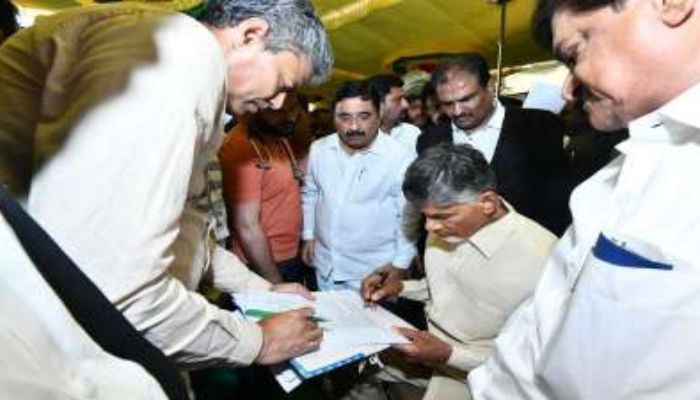
Andhra Pradesh: Former Chief Minister and TDP leader N Chandrababu Naidu arrested in the AP State Skill Development Corporation scam case

On Saturday, September 9, 2023, Nandyal Police arrested former Andhra Pradesh Chief Minister and Telugu Desam Party President, N Chandrababu Naidu, during the early morning hours. N Chandrababu Naidu’s arrest pertains to his alleged involvement in the Andhra Pradesh Skill Development Corporation scam, where he holds the position of ‘Accused No. 1’. He was officially served a notice regarding this matter.

In the early hours of Saturday, around 3 AM, a significant police force led by Nandyal range DIG Raghurami Reddy and the Crime Investigation Department (CID) descended upon Naidu’s camp, situated at the RK Function Hall in the town. Naidu was resting inside his caravan at that moment.

The police encountered strong opposition from many TDP supporters who had assembled there. Even the SPG forces responsible for Naidu’s security prevented the police from accessing him, citing regulations that restricted access to Naidu until 5:30 AM.

Ultimately, at approximately 6 AM, the police approached Naidu’s vehicle, asked him to step out, and placed him under arrest. DIG Raghurami Reddy informed Naidu about the arrest and served a notice before taking him into custody. Following some initial resistance, Naidu was successfully taken into custody and transferred to Vijayawada.

According to the notice issued under Section 50(1)(2) of the Criminal Procedure Code, the police officially notified Naidu of his arrest under multiple sections of the Indian Penal Code (IPC), including 120(8), 166, 167, 418, 420, 465, 468, 471, 409, 201, 109 read with 34 & 37, as well as other sections of the Prevention of Corruption Act, 1988.

The notice, underscoring the non-bailable nature of the offence, explicitly stated that Naidu would not be eligible for bail and must apply for bail exclusively through the court. CID Deputy Superintendent of Police M Dhanunjayudu signed it.

Upon his arrest, Chandrababu Naidu asserted that he had committed no wrongdoing. He said, “I’m requesting both the people and the cadres, I haven’t done anything wrong today. But officials came last night and without even showing any proof, they arrested me. I asked them the basis for my arrest and demanded proof of concept. Now they are here with an FIR which doesn’t have any mention of my role in it, or any more details. This is very sad and wrong.”

In March 2023, the Andhra Pradesh police’s Crime Investigation Department launched an investigation into an alleged ₹3,300 crore scam within the AP State Skill Development Corporation (APSSDC) during the previous Telugu Desam Party government.

In 2016, the Telugu Desam Party government in Andhra Pradesh established the Andhra Pradesh State Skill Development Corporation (APSSDC) to provide training and employment opportunities for the unemployed youth.

The CID’s preliminary investigation unveiled a ₹3,300 crore project signed under the APSSDC with Siemens Industry Software India Ltd and Design Tech Systems Pvt Ltd consortium. Siemens was supposed to establish six skill development centres, with the state contributing about 10% of the project cost.

Allegedly, Siemens Industry Software India failed to invest any of its resources and diverted approximately ₹371 crores, allocated by the state, to shell companies like Allied Computers, Skillers India Pvt Ltd, Knowledge Podium, Cadence Partners, and ETA Greens. Former Chief Minister N Chandrababu Naidu, who allegedly held a key role in this case, has now been arrested as the primary accused.

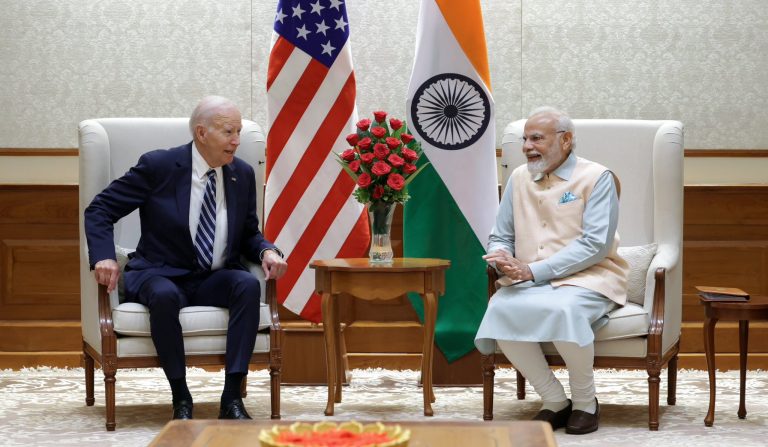
India and US issue joint statement covering a wide range of topics after bilateral meeting between PM Modi and President Biden: Read details

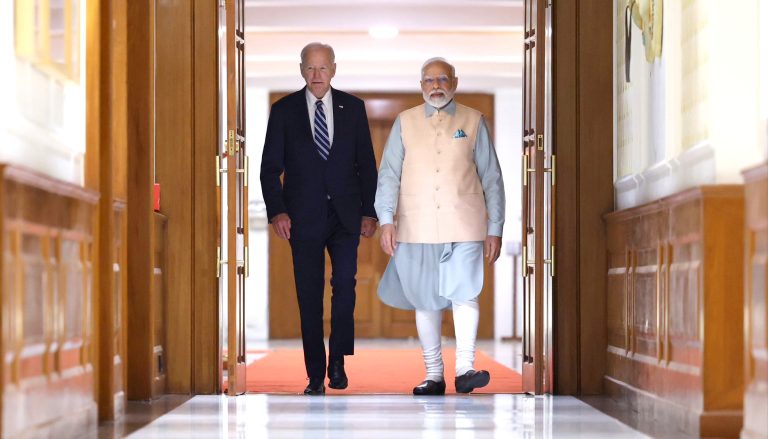
Prime Minister Narendra Modi held a bilateral meeting with US President Joe Biden at his official residence at 7, Lok Kalyan Marg in Delhi on Friday evening, 8 September, ahead of the G20 Summit on Saturday and Sunday. PM Modi tweeted about the meeting after it was concluded, saying that they were able to discuss on numerous topics.

Now a joint statement has issued by both countries after the meeting. The 29-para statement published by the White House covers a large number of issues, showing that both the leaders had a rather comprehensive talk, which was attended by US Treasury Secretary Janet Yellen, Secretary of State Anthony Blinken, US NSA Jake Sullivan, External Affairs Minister S Jaishankar and NSA Ajit Doval, among others.

The statement says that the leaders re-emphasized that the shared values of freedom, democracy, human rights, inclusion, pluralism, and equal opportunities for all citizens are critical to the success the countries enjoy and that these values strengthen the relationship.

President Biden lauded India’s G20 Presidency for further demonstrating how the G20 as a forum is delivering important outcomes. He also congratulated PM Modi and ISRO scientists for the successful Chandrayaan-3 mission.

PM Modi and President Biden reaffirmed the importance of the Quad, a strategic security dialogue between Australia, India, Japan and the USA, in supporting a free, open, inclusive, and resilient Indo-Pacific. Significantly, the US president has reaffirmed his support for a reformed UN Security Council with India as a permanent member.

The joint statement touches on collaborations on technology, space program, the semiconductor industry, telecommunication, Quantum science, Biotechnology, next generation communication systems, cyber-security, sustainability and green technologies, intelligent transportation systems, defence, education, gender issues, nuclear energy, renewable energy   and many other topics.

The deal between GE Aerospace and Hindustan Aeronautical Limited to manufacture the GE F-414 jet engines in India found a special mention in the statement. US president also welcomed India’s order for MQ-9B drones.

The full joint statement is reproduced below:

1. Prime Minister Narendra Modi welcomed United States President Joseph R. Biden, Jr., to India today, reaffirming the close and enduring partnership between India and the United States. The leaders expressed their appreciation for the substantial progress underway to implement the ground breaking achievements of Prime Minister Modi’s historic, June 2023, visit to Washington.

2. The leaders called on their governments to continue the work of transforming the India-U.S. Strategic Partnership across all dimensions of our multifaceted global agenda, based on trust and mutual understanding. The leaders re-emphasized that the shared values of freedom, democracy, human rights, inclusion, pluralism, and equal opportunities for all citizens are critical to the success our countries enjoy and that these values strengthen our relationship.

3. President Biden lauded India’s G20 Presidency for further demonstrating how the G20 as a forum is delivering important outcomes. The leaders reaffirmed their commitment to the G20 and expressed confidence that the outcomes of the G20 Leaders’ Summit in New Delhi will advance the shared goals of accelerating sustainable development, bolstering multilateral cooperation, and building global consensus around inclusive economic policies to address our greatest common challenges, including fundamentally reshaping and scaling up multilateral development banks.

4. Prime Minister Modi and President Biden reaffirmed the importance of the Quad in supporting a free, open, inclusive, and resilient Indo-Pacific. Prime Minister Modi looked forward to welcoming President Biden to the next Quad Leaders’ Summit to be hosted by India in 2024. India welcomed the U.S. decision to co-lead the Indo-Pacific Oceans Initiative Pillar on Trade Connectivity and Maritime Transport, further to the U.S. decision to join IPOI in June 2023.

5. Continuing to share the view that global governance must be more inclusive and representative, President Biden reaffirmed his support for a reformed UN Security Council with India as a permanent member, and, in this context, welcomed once again India’s candidature for the UNSC non-permanent seat in 2028-29. The leaders once again underscored the need to strengthen and reform the multilateral system so it may better reflect contemporary realities and remain committed to a comprehensive UN reform agenda, including through expansion in permanent and non-permanent categories of membership of the UN Security Council.

6. Prime Minister Modi and President Biden reaffirmed technology’s defining role in deepening our strategic partnership and lauded ongoing efforts through the India-U.S. Initiative on Critical and Emerging Technology (iCET) to build open, accessible, secure, and resilient technology ecosystems and value chains, based on mutual confidence and trust, which reinforce our shared values and democratic institutions. The United States and India intend to undertake a midterm review of iCET in September 2023 to continue to drive momentum toward the next annual iCET review, co-led by the National Security Advisors of both countries, in early 2024.

7. President Biden congratulated Prime Minister Modi and the scientists and engineers of the Indian Space Research Organisation (ISRO) on Chandrayaan-3’s historic landing at the south polar region of the Moon, as well as the successful launch of India’s first solar mission, Aditya-L1. Having set a course to reach new frontiers across all sectors of space cooperation, the leaders welcomed efforts towards establishment of a Working Group for commercial space collaboration under the existing India-U.S. Civil Space Joint Working Group. Determined to deepen our partnership in outer space exploration, ISRO and the National Aeronautics and Space Administration (NASA) have commenced discussions on modalities, capacity building, and training for mounting a joint effort to the International Space Station in 2024, and are continuing efforts to finalise a strategic framework for human space flight cooperation by the end of 2023. India and the United States also intend to increase coordination on planetary defence to protect planet Earth and space assets from the impact of asteroids and near-Earth objects, including U.S. support for India’s participation in asteroid detection and tracking via the Minor Planet Center.

8. The leaders reiterated their support for building resilient global semiconductor supply chains, noting in this respect a multi-year initiative of Microchip Technology, Inc., to invest approximately US$300 million in expanding its research and development presence in India and Advanced Micro Device’s announcement to invest US$400 million in India over the next five years to expand research, development, and engineering operations in India. The leaders expressed satisfaction at the ongoing implementation of announcements made in June 2023 by U.S. companies, Micron, LAM Research, and Applied Materials.

9. Sharing a vision of secure and trusted telecommunications, resilient supply chains, and global digital inclusion, Prime Minister Modi and President Biden welcomed the signing of a Memorandum of Understanding (MoU) between Bharat 6G Alliance and Next G Alliance, operated by Alliance for Telecommunications Industry Solutions, as a first step towards deepening public-private cooperation between vendors and operators. They further acknowledged the setting-up of two Joint Task Forces focused on collaboration in the field of Open RAN and research and development in 5G/6G technologies. A 5G Open RAN pilot in a leading Indian telecom operator will be undertaken by a U.S. Open RAN manufacturer before field deployment. The leaders continue to look forward to the participation of Indian companies in the U.S. Rip and Replace Program; President Biden also welcomed India’s support for a Rip and Replace pilot in the United States.

10. The United States reiterated its commitment to working together with India in the quantum domain, both bilaterally and through the Quantum Entanglement Exchange, a platform to facilitate international quantum exchange opportunities; and welcomed the participation of India’s S.N. Bose National Centre for Basic Sciences, Kolkata, as a member of the Quantum Economic Development Consortium. It was also recognized that the Indian Institute of Technology (IIT) Bombay joined the Chicago Quantum Exchange as an international partner.

11. The leaders hailed the signing of an Implementation Arrangement between the U.S. National Science Foundation (NSF) and India’s Department of Biotechnology to enable scientific and technological research collaborations in biotechnology and biomanufacturing innovations. They welcomed the call for proposals released by NSF and India’s Ministry of Electronics and Information Technology to foster academic and industrial collaboration in semiconductor research, next generation communication systems, cyber-security, sustainability and green technologies, and intelligent transportation systems.

12. Reaffirming their commitment to building resilient technology value chains and linking defence industrial ecosystems, the leaders recommitted their administrations to promoting policies and adapting regulations that facilitate greater technology sharing, co-development, and co-production opportunities between Indian and U.S. industry, government and academic institutions. They also welcomed continued engagement through an inter-agency monitoring mechanism under the auspices of the bilateral Strategic Trade Dialogue, launched in June 2023.

13. The leaders welcomed the signing of an MoU between Indian universities, represented by the Council of Indian Institutes of Technology (IIT Council), and the Association of American Universities (AAU) to establish the India-U.S. Global Challenges Institute, with a combined initial commitment of at least US$10 million. The Global Challenges Institute will bring together leading research and higher-education institutions from across our two nations, including beyond AAU and IIT membership, to advance new frontiers in science and technology, spanning collaboration in sustainable energy and agriculture, health and pandemic preparedness, semiconductor technology and manufacturing, advanced materials, telecommunications, artificial intelligence, and quantum science.

14. The leaders also welcomed the growing number of multi-institutional collaborative education partnerships, such as those between New York University-Tandon and IIT Kanpur Advanced Research Center, and the Joint Research Centers of the State University of New York at Buffalo and IIT Delhi, Kanpur, Jodhpur, and BHU, in the areas of critical and emerging technologies.

15. The leaders affirmed the importance of efforts to close the gender digital divide in the digital economy, noting a G20 commitment to halve the digital gender gap by 2030 and expressed support for the Women in the Digital Economy Initiative, which brings together governments, private sector companies, foundations civil society and multilateral organizations to accelerate progress toward the closure of the digital gender divide.

16. Prime Minister Modi and President Biden reaffirmed their commitment to deepen and diversify the India-U.S. Major Defence Partnership through expanded cooperation in new and emerging domains such as space and AI, and accelerated defence industrial collaboration.

17. The leaders welcomed completion of the Congressional Notification process on 29 August 2023 and the commencement of negotiations for a commercial agreement between GE Aerospace and Hindustan Aeronautical Limited (HAL) to manufacture GE F-414 jet engines in India, and recommitted to work collaboratively and expeditiously to support the advancement of this unprecedented co-production and technology transfer proposal.

18. The leaders applauded the conclusion of a second Master Ship Repair Agreement, with the most recent agreement signed by the U.S. Navy and Mazgaon Dock Shipbuilders, Ltd., in August 2023. Both sides recommitted to advancing India’s emergence as a hub for the maintenance and repair of forward-deployed U.S. Navy assets and other aircraft and vessels. The leaders also welcomed further commitments from U.S. industry to invest more in India’s maintenance, repair, and overhaul capabilities and facilities for aircraft.

19. The leaders commended the India-U.S. Defence Acceleration Ecosystem (INDUS-X) team for establishing a robust collaboration agenda to harness the innovative work of the U.S. and Indian defence sectors to address shared security challenges. INDUS-X convened the inaugural Academia Start-up Partnership at IIT Kanpur, with the participation of Penn State University, and initiated the Joint Accelerator Program for Indian Startups, through a workshop led by U.S. accelerator M/s Hacking 4 Allies (H4x) and IIT Hyderabad in August 2023. Both sides also welcomed the announcement by the Indian Ministry of Defence’s Innovations for Defence Excellence and the U.S. Department of Defense’s Defense Innovation Unit to launch two joint challenges, which will invite start-ups to develop solutions to shared defence technology challenges.

20. President Biden welcomed the issuance of a Letter of Request from the Ministry of Defence of India to procure 31 General Atomics MQ-9B (16 Sky Guardian and 15 Sea Guardian) remotely piloted aircraft and their associated equipment, which will enhance the intelligence, surveillance and reconnaissance (ISR) capabilities of India’s armed forces across all domains.

21. Reiterating the importance of nuclear energy as a necessary resource to meet our nations’ climate, energy transition, and energy security needs, Prime Minister Modi and President Biden welcomed intensified consultations between the relevant entities on both sides to expand opportunities for facilitating India-U.S. collaboration in nuclear energy, including in development of next generation small modular reactor technologies in a collaborative mode. The United States reaffirmed its support for India’s membership in the Nuclear Suppliers Group and committed to continue engagement with like-minded partners to advance this goal.

22. The leaders welcomed the inaugural meeting of the India-U.S. Renewable Energy Technologies Action Platform [RE-TAP], in August 2023, under which the two countries will engage in lab-to-lab collaboration, piloting, and testing of innovative technologies; collaboration on policy and planning to advance renewable energy and enabling technologies; investment, incubation and outreach programmes; and training and skill development to accelerate the uptake and adoption of new and emerging renewable technologies and energy systems.

23. Reiterating the importance of decarbonizing the transport sector, the leaders welcomed progress to expand electric mobility in India, including joint support for a payment security mechanism financed through both public and private funds. This will accelerate the procurement of 10,000 made-in India electric buses including those for the Indian PM e-Bus Sewa program that will include the associated charging infrastructure. The two countries are committed to working together to help diversify the global supply chain for e-mobility.

24. India and the United States are also advancing the creation of investment platforms to lower the cost of capital and accelerate the deployment of greenfield renewable energy, battery storage and emerging green technology projects in India. Towards this end, India’s National Investment and Infrastructure Fund and the U.S. Development Finance Corporation exchanged letters of intent to each provide up to US$500 million to anchor a renewable infrastructure investment fund.

25. The leaders lauded the settlement of the seventh and last outstanding World Trade Organisation (WTO) dispute between India and the United States. This follows the unprecedented settlement of six outstanding bilateral trade disputes in the WTO in June 2023.

26. The leaders welcomed efforts to develop an ambitious “Innovation Handshake” agenda under the India-U.S. Commercial Dialogue, to include two anchor events in the fall (one in India and one in the United States), in which our two sides will collaborate to bring together start-ups, private equity and venture capital firms, corporate investment departments, and government officials to forge connections between the two countries’ innovation ecosystems.

27. The leaders welcomed our growing bilateral cooperation in cancer research, prevention, control, and management, and looked forward to the launch of the India-U.S. Cancer Dialogue in November 2023. This dialogue will focus on advancing knowledge in cancer genomics, developing new diagnostics and therapeutics to enhance and strengthen cancer care including for underserved urban and rural communities. The leaders also highlighted the upcoming U.S.-India Health Dialogue, taking place in October 2023 in Washington, D.C., underscoring their joint commitment to strengthening and facilitating scientific, regulatory, and health cooperation between our two nations.

28. The leaders welcomed the renewal of a Memorandum of Arrangement between the U.S. Department of Defense POW/MIA Accounting Agency and the Anthropological Survey of India (AnSI) to facilitate recovery from India of the remains of fallen U.S. service members who served in World War II.

29. Prime Minister Modi and President Biden pledged to sustain the high-level of engagement between our governments, industries, and academic institutions and realize their ambitious vision for an enduring India-U.S. partnership that advances the aspirations of our people for a bright and prosperous future, serves the global good, and contributes to a free, open, inclusive, and resilient Indo-Pacific.


PM Modi holds bilateral talks with US President Joe Biden ahead of G20 Summit, to hold around 15 bilateral meetings in 3 days

0

Leaders of G20 member nations along with heads of several other countries and international bodies arrived in Delhi to attend the G20 Summit on 9 and 10 September. US President Joe Biden’s Air Force One also landed in Delhi today for his 3-day India visit.

The US President headed to 7, Lok Kalyan Marga, the official residence of the Indian Prime Minister, on Friday evening for a bilateral talk with PM Modi soon after arriving. US Treasury Secretary Janet Yellen, Secretary of State Anthony Blinken and US NSA Jake Sullivan were also present in the meeting. The Indian delegation included External Affairs Minister S Jaishankar and NSA Ajit Doval.

PM Modi tweeted about the meeting after it was concluded, saying that they were able to discuss numerous topics.

“Happy to have welcomed @POTUS @JoeBiden to 7, Lok Kalyan Marg. Our meeting was very productive. We were able to discuss numerous topics which will further economic and people-to-people linkages between India and USA. The friendship between our nations will continue to play a great role in furthering global good,” PM Modi tweeted.

He also posted several photographs of the meeting.

Before meeting the US president, PM Modi also held bilateral talks with Bangladesh Prime Minister Sheikh Hasina. “The progress in India-Bangladesh relations in the last 9 years has been very gladdening. Our talks covered areas like connectivity, commercial linkage and more,” he said after the meeting.

The PM also met Mauritius Prime Minister Pravind Jugnauth, where they discussed cooperation in sectors like infrastructure, FinTech, culture and many other subjects.

Prime Minister Narendra Modi will hold around 15 bilateral meetings with world leaders on the sidelines of the G20 Summit, and therefore 12 more bilateral meetings will take place in the next 2 days. On Saturday, PM Modi will hold bilateral meetings with leaders of the UK, Japan, Germany and Italy besides attending the G20 events. He will have a working lunch meeting with French President Emmanuel Macron on Sunday.

Earlier in the day, he had posted on X that he would be holding bilateral meetings with several leaders and Heads of Delegation to further deepen the bonds of friendship and cooperation. “I am confident that our guests will enjoy the warmth of the Indian hospitality,” he added.

The PM said that G20 Leaders will share their collective vision for a sustainable and equitable ‘One Future’, together like ‘One Family’, for a healthier ‘One Earth’ at the closing ceremony on Sunday.

Heads of all G20 member nations except China and Russia are arriving in India for the Summit Meeting. Apart from them, heads of several other nations like Bangladesh, UAE, Egypt, Mauritius, Singapore etc have also arrived to take part in the talks. Apart from them, heads of international organisations like World Bank, IMF etc will also be attending the summit.

ThePrint ‘journalist’ Jyoti Malhotra claims people in non-BJP states can walk and talk freely vis à vis a BJP-ruled state: Here is how she’s lying blatantly

0

With the 2024 Lok Sabha elections nearing, the entire secular-liberal ecosystem has started working overtime to demonise the Modi government. In their eagerness to do so, they regularly end up stating things that are devoid of the slightest of truth. In fact, this elite gang of leftist intelligentsia skillfully concocts lies and twists facts to peddle the fake narrative of how India has been suffering under Modi’s ‘fascist’ regime.

Similar is the case with Jyoti Malhotra, a senior journalist with Shekhar Gupta’s ThePrint. The ‘journalist’ recently spoke to the French media outlet France 24. During her chat, she lamented how in non-BJP-ruled states a person can walk and talk freely vis à vis a BJP-governed state in India. Jyoti Malhotra was basically repeating the same myth that this cabal has been peddling since PM Modi took office in 2014, namely that freedom of expression and speech is under threat in Modi’s India.

In a snippet of the interview doing the rounds on social media, the columnist with the ultra-leftist portal ThePrint is heard saying, “I agree that the freedom of speech and dissent is being clamped down because the fear that you have in the streets of Delhi and elsewhere in the country, by the way in BJP ruled states. If you’re in a non-BJP-ruled state you can really speak much more freely, walk about the streets much more freely.

Jyoti Malhotra basically implied that the BJP is hell-bent on weakening the fourth pillar of democracy. As proven by several incidences recorded from various states, incidentally which are not under BJP, over the previous few years, the allegation made by ThePrint columnist was nothing more than a vile attempt to disparage the Modi government.

Jyoti Malhotra, however, is a speck in the huge ocean of this secular-leftist cabal, which has frequently peddled the lie about the lack of press freedom in Modi’s regime. Despite their wailing and crying, the truth is that several non-BJP-ruled states are at the top of the list when it comes to restricting free speech and dissenting voices.

Here is a list of non-BJP states where the administration has rarely allowed for dissent and has acted with an iron grip against the press whenever they have raised fingers against its transgressions. Please keep in mind that this is only an indicative list; the actual number of instances in which ordinary citizens and members of the media in these states have been harassed and chastised for expressing their opposition to the state establishment is undoubtedly higher.

West Bengal: Kolkata-based journalist arrested for shedding light on anti-Hindu violence

In October 2022, a Kolkata-based Manab Guha was arrested and framed in non-bailable sections for sharing the ground reality of the anti-Hindu Mominpur Violence. The photojournalist’s alleged “crime” was that he dared to post footage and images of anti-Hindu violence on social media.

The West Bengal police justified the arbitrary action by claiming that such recordings could have generated additional hostility in society.

In another case of ‘witch hunt’ against media voices, the Kolkata Police, on 9 January, registered an FIR against 10 journalists and BJP state president Dr Sukanta Majumdar for allegedly ‘misreporting’ the stone pelting incidents on the Vande Bharat Express.

They were booked under specific sections of the Information Technology Act for giving the state a ‘bad name’. The arbitrary action was a follow-up of Mamata Banerjee’s earlier threat to media outlets that legal action would be taken against journalists for spreading ‘fake news’ about the stone pelting incident on Vande Bharat Express trains in West Bengal.

In 2019, Mamata Banerjee, who is known to be unsparing towards dissenting opinions, once again got a 28-year-old youth arrested for allegedly posting a derogatory remark against her on social media. Chandan Bhattacharya was arrested on the basis of a complaint lodged by Trinamool Youth Congress district president Shantanu Banerjee.

Similarly, Priyanka Sharma, BJP youth leader had been arrested for posting a meme mocking Banerjee on her Facebook Timeline on May 9. The MET Gala 2019-themed meme superimposed Mamata’s face on Priyanka Chopra’s body. She was arrested and produced in Howrah Court.

OpIndia targeted by West Bengal government

Earlier, in 2021, the West Bengal government had singled out OpIndia and filed as many as four cases for reports – highlighting the Covid handling in Bengal; Azan being played in Durga Pandal – the video of it had gone viral back then and was widely reported by many media houses. However, in a major relief to media freedom and free speech, in December 2021, the Supreme Court quashed all these FIRs. 

The apex court raised concerns about how journalists are having to bear the repercussions of publicly available information.

The bench had observed, “State force should never be used to either browbeat a political opinion or the journalists suffer the consequences of what is already in the public domain.” 

Chhattisgarh: How dissenting voices are stifled in a state where Congress is at the helm of affairs

In March 2022, the Chhattisgarh Police arrested Raipur-based journalist Nilesh Sharma who is an Editor of the web portal indiawriters.co.in and print magazine ‘India Writers’. He was accused of spreading ‘fake news’ against the ruling Congress leaders in the state of Chattisgarh. According to reports, Sharma runs a popular series based on political satire, ‘Ghurva Ke Mati’.

The series uses fictional characters resonating with the Congress leaders and Chattisgarh MLAs. 

Karnataka: How state machinery has been misused to silence dissenting voices under Congress regime

On 24 July, a coordinated campaign was launched to intimidate popular Hindu Human Rights activist and Former Oxford Student Union President Rashmi Samant. Several social media handles which were spearheaded by Alt News Co-founder Muhammad Zubair, engaged her in a Twitter spate and hurled accusations, and name-calling. Zubair also issued a veiled threat of legal action under the pretext of spreading false information. 

After Alt News’ Zubair ‘flagged’ her tweet for allegedly spreading false information, Karnataka’s Udupi police also launched a campaign to locate Samant. 

Tamil Nadu

Earlier this year, on 18 March, the Police arrested YouTuber Manish Kashyap aka Tripurari Kumar Tiwari from Bihar in connection with the alleged attacks on migrant workers in Tamil Nadu. A special team of the Tamil Nadu police brought him to the southern state on transit remand after the Madurai Crime Branch police registered a case against him.

Later, the Tamil Nadu police slapped stringent NSA on him. He has been in jail since then despite moving bail petitions multiple times. 

Similarly, many more journalists were also booked for sharing the concerns of the migrant workers from Bihar, which, however, were reportedly found to have relied on some fake videos. In connection with this ‘fake news’ of Bihar migrant workers assaulted in Tamil Nadu, the state police had also filed FIRs against OpIndia CEO Rahul Roushan and Editor-in-Chief Nupur Sharma, for publishing articles based on claims made in a Bhaskar report – which also explicitly and prominently added the police version.

Additionally, Tamil Nadu BJP president K Annamalai, the Twitter handle of the BJP’s Bihar unit – BJP4Bihar, BJP spokesperson Prashant Umrao and Dainik Bhaskar newspaper’s editor, Mohammed Tanveer, were also booked for sharing the news of the ordeal Bihar migrant workers.

Actor Ketaki Chitale arrested for sharing Facebook post criticising Sharad Pawar

Another example of stifling dissent and free speech was the case of Marathi actor Ketaki Chitale. She was booked and arrested for sharing a Facebook post that was alleged to be directed at Sharad Pawar even though there was no explicit reference to the NCP patriarch. She was merely arrested for sharing a critical post written by Advocate Nitin Bhave. Yet, she was booked under sections 500, 501, 505 (2), and 153 A of the Indian Penal Code. 

Above are only a few of the many incidents that were reported from non-BJP states like Bengal, Bihar, Tamil Nadu, and Karnataka where administrations have been inclined to use state machinery with an iron fist and cage dissenting voices so that it has a “chilling effect” on journalists and common people and discourages them from raising voices on stories that are either brushed under the carpet or grotesquely misrepresented. Despite the information being readily available on public platforms the likes of ‘journalist’ Jyoti Malhotra have the audacity to say that free speech and dissent are being curbed in states where BJP is at the helm of affairs.

Who is Jyoti Malhotra

Jyoti Malhotra, as per her bio on ThePrint website, is the National and Strategic Affairs Editor. She has been a journalist for more than three decades covering foreign affairs, politics and national affairs at some of the top publications in the country.

The ‘senior’ journalist who appeared all informed and scholarly in the interview with the French media outlet is the same ‘senior’ journalist who had recently advised the Indian External Affairs Minister S Jaishankar to watch Pathaan, the Bollywood movie with Shah Rukh Khan in the lead, to navigate the complexities of geopolitics and managing relationships with neighbours known for harbouring chronic ill-will towards India and for unabashedly sponsoring terror attacks in the country. 

Ms Malhotra had gone on to explain that ‘Pathaan’ had been an AfPak movie, an abbreviation for Afghanistan and Pakistan. She went into raptures about the movie, emphasising how Afghans helped SRK, the good guy, in his mission to defeat the bad ones. She also gushed over the role of Deepika Padukone, who played the character of an ISI agent who shifted her loyalty at the right time to join Pathaan aka SRK.