Home Blog Page 1934

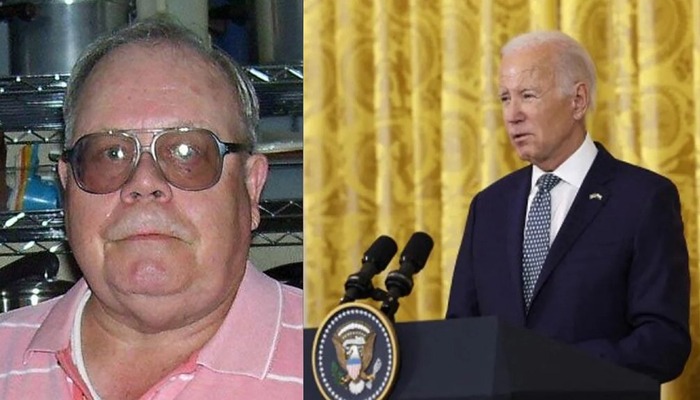
USA: 76-year-old man, who allegedly threatened Joe Biden and Kamala Harris, killed in an FBI raid

On Wednesday, August 9, a 76-year-old man named Craig Robertson was shot dead by the Federal Bureau of Investigation (FBI) agents in Utah, USA. His killing came just hours before US President Joe Biden’s visit to the state. The special agents of the FBI conducted a raid on Wednesday to nab the man for making alleged threats against President Joe Biden, Vice-President Kamala Harris and others. 

Reportedly, the slain man was a supporter of former US President Donald Trump and called himself a “MAGA Trumper”. 

According to US media reports, the incident occurred early Wednesday as investigators attempted to serve arrest and search warrants at a property in Provo, south of Salt Lake City.

According to the complaint, Robertson was charged with three counts, interstate threats, threats against the president, and influencing, impeding, and retaliating against federal law enforcement authorities by threat.

Reportedly, Craig Robertson wrote several social media posts threatening President Biden and Vice President Kamala Harris, in addition to several officials who were involved in the prosecution of former President Donald Trump.

According to the complaint, one of the posts allegedly made by Robertson was published on August 6, three days before Biden’s scheduled visit. “I hear Biden is coming to Utah. Digging out my old ghillie suit and cleaning the dust off the M24 sniper rifle. Welcome, buffoon-in-chief! ,” the post added, according to the complaint, which described the post as a “willful true threat to kill or injure President Biden.”

Alongside Biden, the complaint claimed that Robertson threatened Vice President Kamala Harris and US Attorney General Merrick Garland.

“The time is right for a presidential assassination or two,” one of the posts by Robertson posted, “First Joe then Kamala!!!”

He also threatened to shoot Manhattan District Attorney Alvin Bragg, who is investigating former President Donald Trump for allegedly paying a porn star hush money.

The accusation also contained images from Robertson’s social media postings of his large weapons collection, including a semi-automatic rifle he referred to as a “Democrat eradicator.”

A representative for the United States Secret Service said the agency is aware of the FBI investigation “involving an individual in Utah who has exhibited threats towards a Secret Service protectee” and forwarded any concerns to the FBI.

When an Indian-origin man was sentenced 5 years in prison for threatening George W Bush

The killing of Craig Robertson reminds one of another incident involving online threats to a US President from 2009. An Indian-origin man named Vikram Buddhi was sentenced in 2009 to four years and nine months in jail for his alleged hate messages sent in 2006 against former US president George W Bush.  Buddhi was arrested for making derogatory remarks about then-US President George Bush at the time of a burgeoning protest against the US invasion of Iraq.

Buddhi was arrested in 2006 for making threats to Bush, then Vice President Dick Cheney and their wives, and calling for bombings of US infrastructure on Yahoo message boards. He was convicted in 2007 but sentenced only in 2009.

Madhya Pradesh: Murderous ‘Sar tan se juda’ slogans in Ratlam after a post on Islam offends Muslim mob, unidentified female Instagram user booked

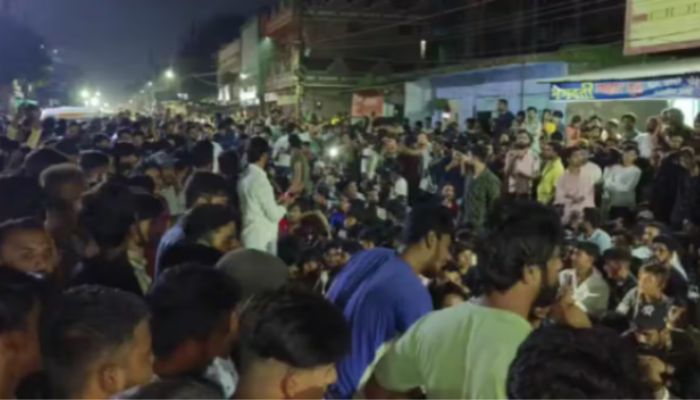
On Wednesday, August 9th, 2023, a mob of Islamists raised murderous slogans in front of the police post in Ratlam, Madhya Pradesh, during the night. This followed after a social media post about Islam offended the members of the Muslim community. The situation escalated rapidly, with a mob converging at the police post to raise ‘sar tan see juda’ slogans, which have earlier led Islamists to murder several non-Muslims on allegations of ‘blasphemy’.

The mob swelled in size within a short span, as Muslims demanded stringent action against the individual behind the post allegedly against Islam. As tensions heightened, the scene drew the attention of the police station in charge, along with officers from two police stations, and the CSP.

The commotion subsided following interventions by social workers and law enforcement authorities. Police said, “An investigation has been initiated against an unidentified female, and efforts are underway to locate her. The objective now is to ascertain the actual operator behind the Instagram account.”

Additional Superintendent of Police Rakesh Kumar Khaka, CSP Abhinav Kumar Wareng, and Industrial Police Station In-charge Rajendra Verma were also manhandled at night. City Qazi Ahmed Ali who went there to pacify the situation was also sent back.

The Muslims gathered there also called for the demolition of the residence belonging to the individual responsible for the offensive post. At one point, there was even an endeavour to enter the police post by the mob. However, through collaborative interventions by CSP Warange, TI Anurag Yadav, and City Qazi Ali, the young protestors eventually acquiesced to staging their protest on the road.

Subsequently, the police lodged an FIR. Following that, social activist Imran Khokar and councillor Waseem Ali took to the police vehicle to address the crowd, successfully urging them to conclude the traffic disruption.

Additional SP Rakesh Khakha said, “Someone had posted an objectionable post on social media, following which, people of one community came to lodge a complaint as they got angry. We assured the people and have registered a case against the person who posted the controversial post. The entire matter is being investigated.”

Bulldozers run over illegal encroachment near Sri Krishna Janmbhoomi in Mathura, over 100 houses of Nayi Basti cleared from Railways land

0

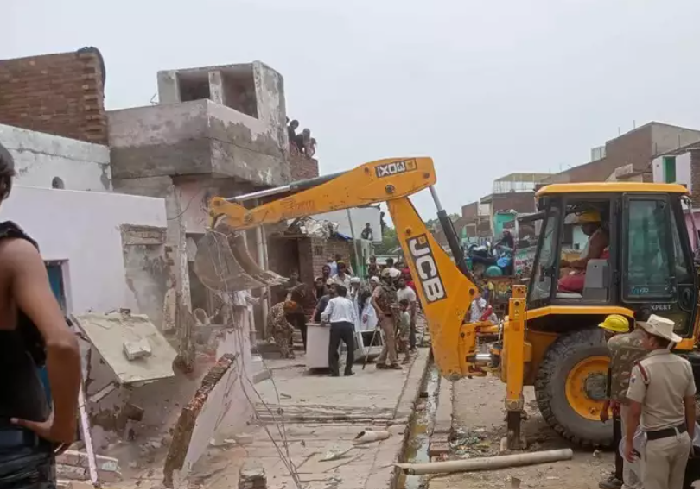
On Wednesday, Agra Railways authorities, in coordination with local police and administration, conducted a massive demolition operation to eliminate illegal encroachments in the backyard of Sri Krishna Janmbhoomi in Mathura. This is a month after the Railway administration issued a notice to the residents of the Nayi Basti area to vacate the government land.

The Railways stated that the land on which houses of Nayi Basti have been illegally constructed belongs to the railway’s board and that the land needs to be vacated now for the construction of a special rail line between Mathura and Vrindavan.

“These encroachments, primarily residential structures, were destroyed as part of an endeavor to convert the existing meter gauge railway track into a broad gauge track, allowing a connection between Mathura and Vrindavan,” stated the Railways Board.

While the administration has stated that the illegal encroachment removal was executed after a notice regarding the same was sent a month ago, some Nayi Basti residents claim that the measure is an attempt to cause ‘panic and fear’. The residents claim that they have purchased the residences and that they are being removed from their own lands.

One of the residents who own a home on the railway land talked to the media to confirm that the notice had been issued regarding the demolition drive a month ago. However, he said that legal proceedings against the notice were sought which is still pending in the court of law.

“In response to the notices issued by the railways in June, we initiated legal proceedings. A case remains pending in the Court of Civil Judge (Senior Division) Mathura, with a reply due from the railways by August 21, the next date for hearing. However, even before that, this demolition initiative has been undertaken, seemingly, to instill fear and panic,” the resident was quoted as saying by Hindustan Times.

Meanwhile, members of Sri Krishna Janmbhoomi Seva Sansthan have welcomed the demolition drive and said that the illegal encroachments along the railway track have been removed legally.

“The Shahi Eidgah mosque stands as another encroachment, with about 15 ongoing petitions before the Allahabad High Court seeking its removal from the land where a temple once stood. Today, these encroachments alongside the railway track have been removed through due legal process. In the future, we may witness the removal of the Shahi Eidgah mosque as well,” said Gopeshwar Chaturvedi of the Sri Krishna Janmbhoomi Seva Sansthan.

According to Chaturvedi further, the railway track was previously located within the Sri Krishna Janmbhoomi complex. When the railroad route was built in 1888 to carry massive red sandstone pieces for a temple in Vrindavan, compensation was paid to the family of Raja Patnimal, the previous landowner of the Sri Krishna Janmbhoomi site.

Bulldozers swarmed near Sri Krishna Janmbhoomi in Mathura on Wednesday morning. As the demolition effort began in this largely minority-populated region along the railway track linking Sri Krishna Janmbhoomi and Vrindavan, railway officials, local administration members, and security forces marched toward Nai Basti.

Prashasti Srivastava, PRO for the North Central Railways’ Agra Division, stated that advance notices had been issued to encroachers residing illegally alongside the railway route. The demolition work, which began on Wednesday, will be resumed in a few days.

Eviction notifications were issued to 135 unauthorized occupiers in total. Many of them requested time to relocate to other locations, and the government granted their requests. However, no valid reason was offered to stop the demolition. As a result, 60 structures were demolished on Wednesday. After a few days, the remaining unauthorized structures will be dismantled.

“Sufficient time was afforded to the encroachers, who even pursued legal action. The estate officer held hearings for them, yet the encroachers could not substantiate ownership claims over the occupied land. Thus, the demolition drive was eventually initiated on Wednesday,” the Railways’ PRO affirmed.

Meanwhile, municipal magistrate Saurabh Dubey, who was present at the scene of encroachments extending for half a kilometer alongside the train track, stated, “The operation on Wednesday, targeting encroachments on railway-owned land, adhered to the legal process mandated by law.” Police, Government Railway Police (GRP), and the Railway Protection Force were stationed to guarantee the orderly conduct of the demolition, which might resume in a few days. There has been no resistance, and those in illegal possession are actively collaborating in the removal of encroachments.”

Did the USA orchestrate a regime change because Imran Khan visited Moscow? Secret Pakistan cables reveal Americans wanted him removed

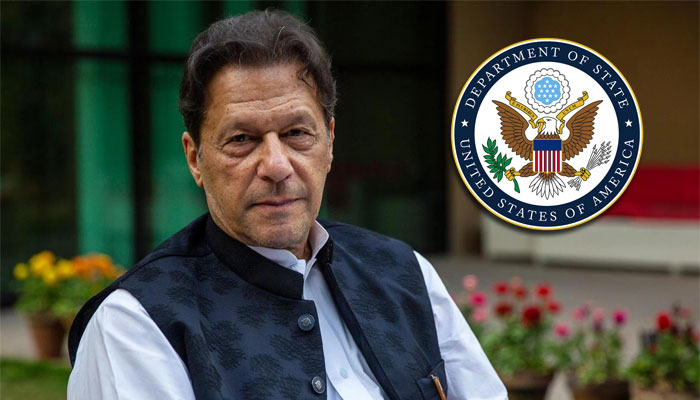
On 9th August (local time), classified Pakistani government documents accessed by news portal The Intercept revealed the US State Department “encouraged” the Pakistani government in a March 2022 meeting to remove Imran Khan as PM. The steps taken by the US state department came in light of Khan’s neutral stand on Russia’s military action against Ukraine.

The cable named “cypher” was not in the public domain. An anonymous source in the Pakistani military leaked it to the intercept. Intercept mentioned that the “source” claimed they had no tie to Khan or his party.

Notably, when Khan was removed from his post after a no-confidence vote in Pakistan’s Parliament, he alleged the US was behind his removal. The no-confidence motion was moved only a month after the said meeting between the Pakistani ambassador to the United States and two State Department officials on 7th March 2022.

As per the cable, the US State Department used all tactics to encourage Pakistani lawmakers to remove Khan. It included an account of the meeting between State Department officials, including Assistant Secretary of State for the Bureau of South and Central Asian Affairs Donald Lu and then-Pakistan’s ambassador to the US Asad Majeed Khan.

Cypher was a topic of discussion in the Pakistani media for over a year

Notably, In April 2022, the Pakistani newspaper Dawn published a report claiming farewell lunch between State Department officials, and the then-ambassador triggered the regime change. The report was extensively based on sources from Dawn that provided the details of the lunch-turned-meeting. The report mentioned that the US officials expressed their dismay as Imran Khan did not postpone his Russia visit soon after the military action against Ukraine.

Reportedly, the ambassador pointed out that the invitation to Khan was extended after years of trying to visit Moscow, and the Pakistani government couldn’t deny or postpone the visit. Furthermore, the sources revealed though the State Department officials’ remarks raised concerns, they did not directly threaten a regime change.

Though US State Department did not directly seek the removal of Khan from the post of Prime Minister of Pakistan, its remarks did start a chain reaction in the neighboring country, leading to a no-confidence vote followed by Imran Khan’s conviction in a corruption case.

Interestingly, in October 2022, after the cabinet approved an inquiry into the audio leaks featuring Khan and his party leaders, the ‘cypher’ was deemed a reality in the Pakistani political circle. Khan is currently facing a total of 37 cases filed against him in different parts of the country.

During a Senate Foreign Relations Committee hearing [PDF of the transcript], in response to a question about Pakistan’s stand on Ukraine, Lu had said, “Prime Minister Khan has recently visited Moscow, and so I think we are trying to figure out how to engage specifically with the Prime Minister following that decision.”

According to the leaked document, Lu expressed displeasure over Pakistan’s stance in the conflict. He said, “People here and in Europe are quite concerned about why Pakistan is taking such an aggressively neutral position (on Ukraine) if such a position is even possible. It does not seem such a neutral stand to us.”

Furthermore, he bluntly talked about the no-confidence vote. He said, “I think if the no-confidence vote against the Prime Minister succeeds, all will be forgiven in Washington because the Russia visit is being looked at as a decision by the Prime Minister.” He added if it did not happen, the road ahead for Pakistan in terms of relations with the US would be tough. He also warned about similar reactions from European countries.

The no-confidence motion

Just a day after the meeting, Khan’s opponents moved the first step towards a no-confidence vote. In April 2022, Khan alleged there was a cable about the US’s interference in Pakistan’s political structure. However, the US denied any involvement. On 22nd March, Khan waived a set of papers, allegedly copies of cypher, at a rally and claimed the US was meddling with Pakistan’s internal affairs.

In September last year, when audio clips were leaked where Khan and his party’s leaders talked about cypher, Khan categorically said he was not interested in doing anything about it but is using it for political gains. Speaking to Azam Khan, he said, “We only have to play it up. We don’t have to name America. We only have to play with this, that this date [of the no-trust vote] was [decided] before.”

US State Department refused to comment

US State Department spokesperson Matthew Miller refused to comment on the cable leaked to the Intercept. He said the comments in the documents did not reflect the US took any position on who should be the leader of Pakistan.

He said, “Yes, it’s a report – reported to be a Pakistani document. I can’t speak to whether it is an actual Pakistani document or not; just simply don’t know. With respect to the comments that were reported, I’m not going to speak to private diplomatic exchanges other than to say that, even if those comments were accurate as reported, they in no way show the United States taking a position on who the leader of Pakistan ought to be. We express concern privately to the Government of Pakistan, as we express concern publicly, about the visit of then-Prime Minister Khan to Moscow on the very day of Russia’s invasion of Ukraine. We made that concern quite clear.”

“But as the former Pakistani ambassador to the United States himself has stated, the allegations that the United States has interfered in internal decisions about the leadership of Pakistan are false. As we’ve stated, they’re false. They’ve always been false, and they remain false,” he added.

Lu had raised an objection to India’s stand in a committee hearing

During the committee hearing, which the Intercept mentioned, Lu had raised objections over India’s stand towards Russia’s military action. He said, “Many of my colleagues and I are puzzled by India’s equivocation in the face of the biggest threat to democracy since World War II. At a time when democracies are closing ranks to condemn Russia’s invasion, it is troubling, to say the least, to see India, the world’s largest democracy, sitting on the sidelines.”

“I understand India has a history of nonalignment in foreign policy matters, but this is a unique moment that demands clear-eyed conviction about right and wrong, sovereignty, and democracy. I note India abstained on today’s vote before the UN while, at the same time, many countries that had previously declared neutrality voted with us. We hope that India soon will get on the right side of history,” he added.

Though the overall stand towards India was positive during the hearing, one may wonder what would have been the US’s stand if India’s foreign policy was not as strong as it is today under PM Modi. The way Pakistan and Sri Lanka were talked about during the hearing and how strong objections were raised over their stand towards Russia was in sharp contrast to the US’s views on India. In fact, the US saw India as a way to curb China’s dominance in the region in the future.

While the US and other Western countries have tried extensively to change India’s stance on the Russia-Ukraine conflict, India has held its position to stay neutral.


‘Ek Samvidhan’: There can only be one constitution in the country, Supreme Court says during Article 370 hearing 

0

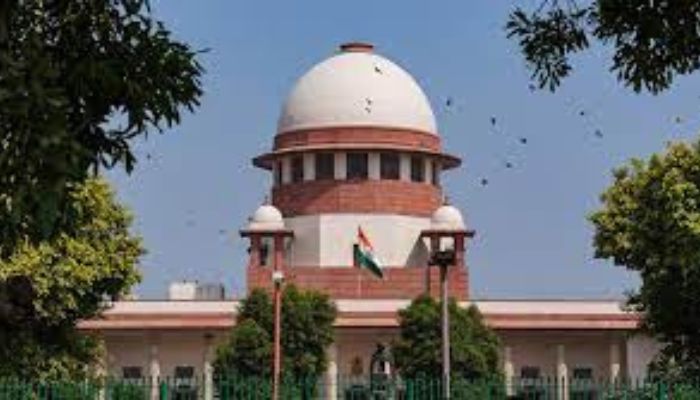
On Wednesday, August 10, Supreme Court said that there is only one constitution applicable in the country, including Jammu and Kashmir. The five-judge constitutional bench headed by CJI DY Chandrachud stated that although the Indian constitution does speak of Jammu and Kashmir’s constituent assembly, there is no mention of Jammu and Kashmir’s constitution. 

“We should note that, while the Indian constitution mentions the Constituent Assembly of Jammu and Kashmir, it makes no mention of the Jammu and Kashmir constitution. No one ever considered amending the Indian Constitution to include the Jammu & Kashmir Constitution explicitly. The J&K constitution limits the union’s powers and the application of the Indian Constitution. However, there is no such constraint in the Indian Constitution. Assume Article 356 is in effect, and if an ordinance is required, can the president not issue an ordinance then?” CJI remarked.

The constitutional bench comprised of justices Sanjay Kishan Kaul, Sanjiv Khanna, BR Gavai, Surya Kant, and CJI DY Chandrachud noted that back in 1957, the constitution that the Jammu and Kashmir constituent assembly accepted was the Indian constitution with certain modifications and exceptions. 

Notably, counsel Gopal Subramaniam appearing for petitioner Muzaffar Iqbal Khan argued that Article 370 was a provision through which the constitutions of Jammu and Kashmir and India ‘spoke’ to each other. 

Senior advocate Subramanium argued that the third clause of Article 370 could not have been invoked to repeal the provision because Article 356 (imposition of President’s Rule) never intended that Parliament could substitute itself for the J&K assembly and grant its agreement to end the state’s special status. “Article 370 cannot be used for self-destruction,” Subramaniam said.

The bench, on the other hand, stated that if the central government can demonstrate in law that no such restraint could be put on it while President’s Rule is in effect, they will be well within their jurisdiction to do what they did in repealing Article 370.

Moreover, Justice Sanjiv Khanna opined that Article 370 is flexible in nature and allows its amendment to make Indian Constitution applicable just as it is made functional in other states. 

During the day, Subramanium finished his arguments, and senior lawyer Zafar Shah began his remarks on behalf of the Srinagar Bar Association. Shah contended that the Instrument of Accession signed by the Maharaja of J&K with India in October 1947 amounted to the state shaking hands but not completely surrendering before India. On Thursday, Shah will resume his submissions.

While Shah argued that De jure sovereignty was not transferred to India. CJI Chandrachud said that what has happened is that sovereignty transferred to the dominion of India but the power of legislation on some subjects was retained. Meanwhile, Justice Sanjiv Khanna noted that Jammu and Kashmir had acceded to the Union of India.

Soon after the presidential order in August 2019, a slew of petitions were submitted by legislators from the National Conference party, Kashmiri people, ex-bureaucrats, and several organizations challenging the repeal of Article 370.

Cracks in I.N.D.I.A. alliance appear within weeks of its formation, Punjab Congress leader rules out alliance with Aam Aadmi Party in the state

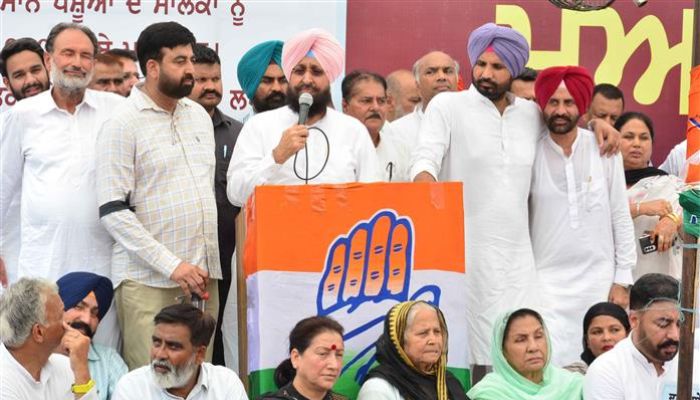
Partap Singh Bajwa, the Leader of the Opposition in Punjab, has affirmed that the Congress party is set to independently contest all 13 Lok Sabha seats in the forthcoming Lok Sabha elections. Notably, Bajwa highlighted that there won’t be any collaboration with the ruling Aam Aadmi Party (AAP). Interestingly, Bajwa’s statement comes amid the joint efforts by both parties to counter the ruling BJP and its NDA coalition in the Parliament. It is worth mentioning that Congress and AAP are two constituents of the newly formed opposition alliance named I.N.D.I.A.

Speaking at a gathering in Patiala, where protests were underway to demand compensation for farmers affected by floods, Bajwa stated that the Congress’ collaboration with the AAP at the national level, in opposition to the BJP, was confined to offering support on matters concerning governors and lieutenant governors across different states.

In the face of resistance from multiple state units, particularly the Punjab and Delhi Congress factions, the Congress made a strategic choice to back the AAP on the matter of the Delhi Service Bill on a national scale. This decision was aimed at preventing a division within the unity of the opposition. Nevertheless, Bajwa’s declaration underscores the existence of underlying dissatisfaction within the grassroots ranks among the various parties within the I.N.D.I.A. coalition.

Earlier, a war of words had erupted between Congress leader Sandeep Dikshit and AAP leaders over the support to the Delhi ordinance bill in the parliament. While AAP minister Saurabh Bhardwaj had dismissed Sandeep Dikshit’s comments on the issue as insignificant, Dikshit had said the same about AAP MP Sushil Gupta.

While the opposition coalition advocates the concept of one seat, one candidate on the national stage and endeavours to establish a comprehensive nationwide alliance, the reality in the states portrays a contrasting picture. Within these states, the very same parties find themselves engaged in intra-alliance conflicts and disagreements.

This week, the Congress extended its support to the Aam Aadmi Party by voicing opposition to the Delhi Service Bill during parliamentary proceedings. Despite these efforts, the bill successfully secured passage in Parliament. The disagreement between the Congress and AAP in Punjab represents the second instance of friction within the I.N.D.I.A. coalition. The first instance arose when the CPM declared its unwavering stance of not making any concessions to the TMC in West Bengal.

Ecuadorean presidential candidate Fernando Villavicencio shot dead at a political rally

0

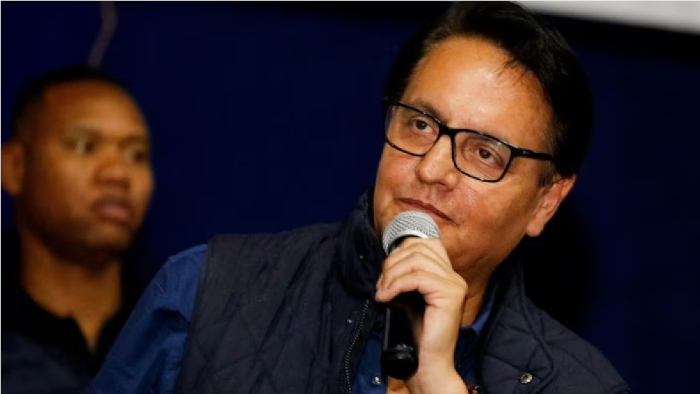
Ecuadorean presidential candidate Fernando Villavicencio has been shot dead at a political rally in Quito Wednesday night, The Washington Post reported.

He was shot to death by gunmen at a political rally in Quito, less than two weeks prior to the Ecuador elections, according to police. 

Fernando Villavicencio, aged 59, was shot several times as he left the rally at a high school in Quito, General Manuel Iniguez, a deputy commander of the Ecuadorean national police said, according to The Washington Post. He was taken to a nearby clinic, where he was pronounced dead. 

A police officer was also injured in the attack, General Manuel Iniguez said. The gunmen also launched a grenade towards Villavicencio’s group. However, the grenade did not explode, The Washington Post reported.

Villavicencio was a member of Ecuador’s National Assembly before it was dissolved in May. He was one of the leading candidates in the first round of voting set to be conducted on August 20 to succeed Ecuador President Guillermo Lasso.

Ecuador is facing record levels of gang violence, with drug trafficking getting out of control, as people prepare to vote for the polls, The Washington Post reported.

During the election campaign, the candidates focused on rising violence in Ecuador. Guillermo Lasso called the snap elections after dissolving the National Assembly and avoiding impeachment.

(This news report is published from a syndicated feed. Except for the headline, the content has not been written or edited by OpIndia staff)

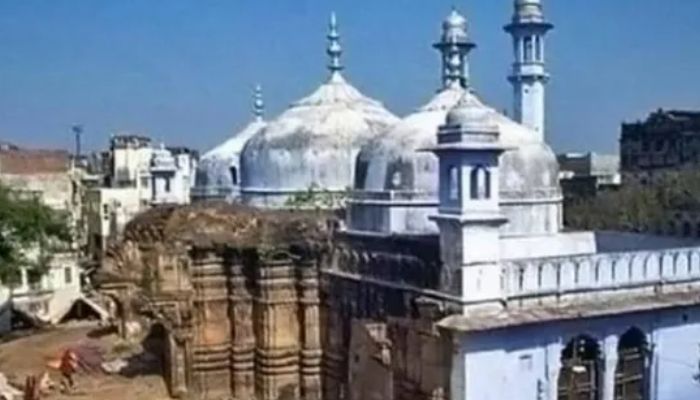
Gyanvapi: Anjuman Intezamia Masjid Committee files a fresh plea to ‘immediately stop’ the ASI Survey, court bans media coverage of the survey

On Wednesday (9 August), the Anjuman Intezamia Masjid Committee filed a fresh application before the Court of District Judge to ‘immediately stop‘ the ongoing ASI Survey of the Gyanvapi premises. Notably, it is the same committee that manages the disputed mosque at the Gyanvapi site in Varanasi. 

In its application, the committee has stated that the Varanasi Court’s order dated 21 July for the ASI Survey was given in the suit filed by 4 plaintiffs to worship Shringar Gauri at the disputed site. The committee has claimed that the plaintiffs failed to deposit the money to bear the expenses incurred during the ASI survey as per Rule 70 of the General Civil Rule. Subsequently, they sought directions from the court to immediately stop the ASI survey.

In their application, the Anjuman Intezamia Masjid Committee has further claimed that the authority has given no written or oral information about the survey and they haven’t fixed any time for the same. As per the application, the ASI has been conducting the survey without proper procedure and hence, it prays that the survey be stopped.

The Hindu side arguing in the case has to file their reply/objection to this application by the 17th of August. 

Today (9 August), the ASI conducted a scientific survey of the Gyanvapi premises for the sixth consecutive day. The ASI has been conducting the survey as per the order of the Varanasi District Judge dated the 21st of July, after the Allahabad High Court and Supreme Court rejected the masjid committee’s plea against the order. The ASI is entrusted to determine if the disputed structure claimed as a ‘Mosque’ was constructed over a pre-existing structure of a Hindu temple. 

During the ongoing ASI Survey, the Hindu side has been claiming that the survey teams have recovered more symbols related to temple architecture than they have imagined. According to the claims of the Hindu side, the ASI team found artifacts like a 2 feet Trishul (trident), 5 Kalash, and 4 feet long fragmented idol among others on the 5th of August.

Media banned from covering Gyanvapi survey

Meanwhile, on the same day, 9 August, the Varanasi court passed an order banning the media from covering the ongoing ASI survey of the Gyanvapi premises from the spot. The court has also directed members of the survey team to not give comments to any media outlet.

District Judge A K Vishvesh’s court issued this ruling in response to the plea filed by the Gyanvapi management committee, seeking a ban on the media coverage of the ASI survey.

“The court has ordered the media to not report the event from the spot. The members of the survey team should also not give comments in the media. The court further advised that such reports on the issue that could lead to a breach of peace should not be put on social media”, said Madan Mohan Yadav, a lawyer of the Hindu side who was present during the hearing.  

Rajya Sabha passes Digital Personal Data Protection Bill, minister says it gives 4 rights to citizens over their data

On Wednesday (9 August), the Rajya Sabha passed the Digital Personal Data Protection Bill (DPDPB) 2023 with a voice vote. The opposition had staged a walk over the Manipur issue. Passed by the Lok Sabha on 7 August, it will become a law after getting assent from President Droupadi Murmu.

The bill sets out requirements for firms collecting data online, with exceptions for the government and law enforcement agencies. It also lays down the obligations of entities handling and processing data, as well as the rights of individuals.

Speaking in the Rajya Sabha, Union Minister of Electronics and Information Technology (Meity) Ashwini Vaishnaw stated that the bill gives more power to individuals using digital services. He added that the bill has laid down several obligations on private as well as government entities in relation to collecting and processing the data of every citizen.

The Minister highlighted that the bill will grant four rights to Indian citizens and said, “Four rights have been given to the country’s citizens – Right to access information, Right to correction of personal data and right to eraser, Right to grievance redressal, and Right to nominate in case of death.”

Minister Vaishav also stated that the language of the bill has been kept simple so that even a common person can understand it and it was brought in the House after extensive public consultation.

The bill will protect the privacy of Indian citizens as there are provisions for imposing penalties of up to Rs 250 crore on entities that misuse or fail to protect the digital data of individuals. It applies to the processing of digital personal data within India where such data is collected online, or collected offline and is digitised.  It will also apply to such processing outside India, if it is for offering goods or services in India.

As per the bill, fines will be imposed for a range of offences, including up to Rs 200 crore for failing to meet obligations related to children and up to Rs 250 crore for neglecting security measures to prevent data breaches.

The underlying principles of this bill share similarities with those data protection laws enforced in other jurisdictions including the European Union’s regulation ‘General Data Protection Regulation’ (GDPR). These include lawfulness, fairness and transparency, purpose limitation, data minimisation, accuracy, storage limitation, integrity, confidentiality, and accountability. 

As per the requirement of the bill, the central government will establish a Data Protection Board of India. This board will monitor compliance and imposition of penalties. It will direct data fiduciaries to take necessary measures in the event of a data breach, and hear grievances made by affected persons.

The Bill will be applied within as well as outside the territory of India. It will be applied to the processing of digital personal data within the territory of India, irrespective of whether the personal data is collected in digital form or in non-digital form and digitised subsequently.

Similarly, it will be applied in case the digital personal data is processed outside the territory of India. This will happen if the processing of data is connected with any activity related to the offering of goods or services “to Data Principals within the territory of India.” Here, the Bill defines “Data Principal” as the individual to whom the personal data relates. 

As per the bill, a company can only process the personal data of a user only for certain “legitimate uses” and they will have to take consent for it. Here, “Personal data” is defined as “any data about an individual who is identifiable by or in relation to such data.”

Further, according to the bill, the central government can exempt government agencies from the application of provisions of the Bill. However, this can be done only on specified grounds such as the security of the state, public order, and prevention of offences.

Additionally, the Bill amends the Right to Information Act, of 2005 (RTI). It will remove the public interest exemptions on disclosing any personal information. 

Currently, the RTI Act allows all public authorities to disclose personal information, including officials’ salaries, only when it is in the public interest. But this bill will completely disallow disclosing any personal information.

Six years ago, the Supreme Court declared the ‘Right to Privacy’ as a fundamental right. Now, this bill has incorporated all the measures to prevent the misuse of users’ personal information by online platforms, marking a huge milestone for digital India.

‘Manipur violence shameful, politics over it even more shameful’: Amit Shah explains measures taken by Centre after violence erupted in Manipur

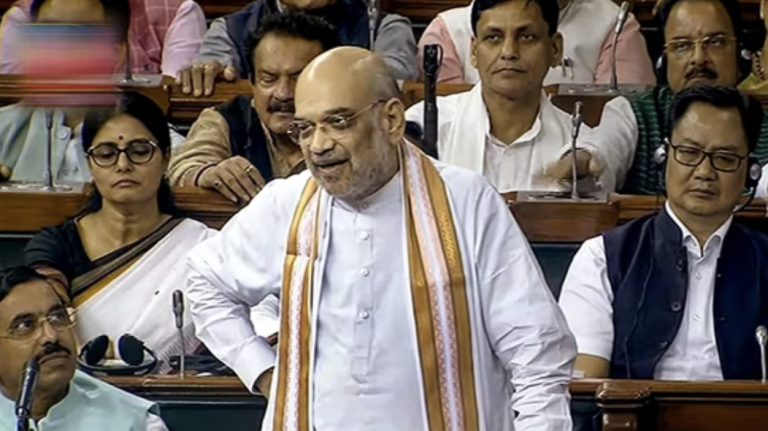
On Wednesday, Union Home Minister Amit Shah condemned Manipur violence and urged Meitie and Kuki communities to engage in dialogue. Shah also slammed the opposition parties for politicising the Manipur violence.

“I agree with the Opposition’s claim that ethnic clashes have taken place in Manipur. Manipur violence is shameful, politicising it is even more shameful,” Amit Shah said while speaking about Manipur clashes in Lok Sabha.

Shah provided a comprehensive explanation of the reasons behind the clashes in Manipur and explained the measures undertaken by the central government to manage the situation in the northeastern state. The region had witnessed an outbreak of violence between two communities, namely the Meitie and Kukis, which began on May 3.

While addressing the no-confidence motion in the Lok Sabha, Shah highlighted that up until May 3, Manipur had experienced a peaceful environment over the past six years without the need for imposing a curfew. The state had been free from bandhs and blockades, and insurgent violence had significantly diminished.

However, the scenario took a turn for worse when Myanmar, the neighbouring nation, underwent a leadership transition marked by the emergence of the Kuki Democratic Front party within the military. This alteration, coupled with the lack of adequate border fencing along the Myanmar border, facilitated the entry of Kuki individuals from Myanmar into the areas of Mizoram and Manipur. The resulting surge in the Kuki population sparked a sense of insecurity within the Meitie community.

During his speech in the Lok Sabha, Shah underscored these occurrences as he delved into the subject, illuminating the series of events that played a role in the conflict and highlighting the government’s reaction to the situation.

Providing further detail about the factors that played a role in the clashes, Shah elaborated on how the unrest originated when rumours began circulating on April 29. These rumours suggested that specific refugee settlements in wooded regions were being categorized as villages. Despite the government’s declaration refuting the existence of any such village designations, the rumours endured due to a prevailing lack of trust. The Home Minister also highlighted the situation’s escalation, attributing it to a directive from the Manipur High Court. This directive required the state government to contemplate conferring Tribal status upon the Meities. Regrettably, this particular directive culminated in a clash on May 3.

Addressing the allegations from the opposition that PM Modi showed apathy towards Manipur, Amit Shah informed the parliamentary assembly that the Prime Minister had contacted him at both 4:00 am and 6:30 am following the outbreak of violence. Shah further revealed that the central government closely monitored the situation on May 3, 4, and 5. He emphasized that a total of 16 video conferences were conducted, 36,000 personnel from the Central Armed Police Forces (CAPF) were deployed, Air Force planes were utilized, the chief secretary and Director General of Police (DGP) were replaced, and a security advisor was dispatched. All of these measures were put into effect by the evening of May 4, just a day after the violence had erupted, as recounted by the Home Minister.

Shah also addressed the question of why the Central government did not resort to invoking Article 356 for imposing the President’s rule in Manipur. He clarified that Article 356 is typically utilized when the state government fails to collaborate with the Central government during times of unrest. Furthermore, he provided the reasoning behind the decision to retain Chief Minister Biren Singh, explaining that changing a state chief minister is warranted when there is a lack of cooperation, but in this case, Chief Minister Biren Singh has shown a willingness to work closely with the Centre.

In addition, the Home Minister also spoke on the distressing video wherein two women were publicly humiliated and paraded naked. Shah condemned the incident as deeply shameful and unacceptable. He, however, pointed out that the video emerged just a day prior to the commencement of the parliamentary session. He expressed scepticism about the timing of the video release, suggesting that if the video had been in someone’s possession for a month, it should have been made public earlier.