Home Blog Page 1978

15 years since the Ahmedabad blasts of 2008 when 21 explosions rocked the peaceful city killing 56 people: Read account of a victim’s family

July 26, 2008, marked a fateful and unforgettable day in the history of Ahmedabad, marred by tragic bloodshed that shattered the city’s tranquillity. The echoes of laughter and contentment that once filled the air, as residents prepared to enjoy a peaceful evening, were abruptly replaced by harrowing screams. Within just 70 minutes, 21 serial bomb blasts shook Ahmedabad to its core, leaving the city in shock and disbelief.

Only a day before, Ahmedabad residents were discussing the devastating 7 blasts that had struck Bengaluru, never imagining that their city would become the next target, despite being 1500 kilometres away. The toll was heart-wrenching, with 56 lives lost in the blasts. 15 years have passed since that dreadful day, yet the memories remain painfully vivid, etched into the hearts and minds of the city’s inhabitants. The wounds are deep, and the people of Ahmedabad continue to grapple with the lasting impact of this horrifying event.

On the seemingly ordinary Saturday of July 26, 2008, Ahmedabad began its day like any other, with no inkling of the horrors that lay ahead. However, as the evening descended, the tranquillity was shattered by the sudden onslaught of 21 serial bomb blasts. The first explosion reverberated at approximately 6.45 pm, followed by the sounds of several devastating blasts that sent shockwaves through the city.
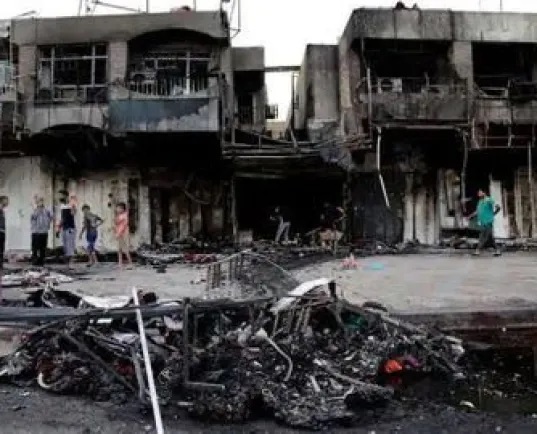
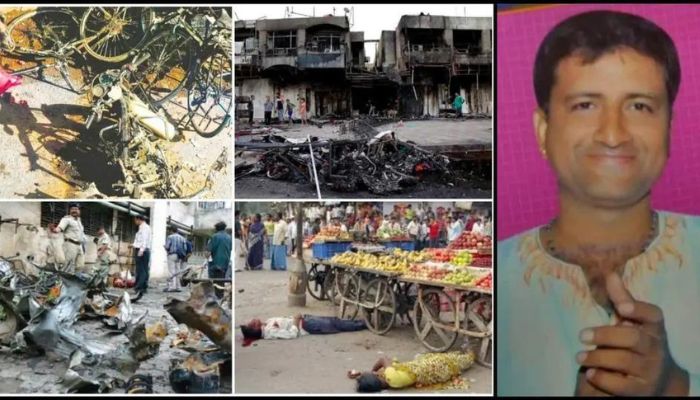
Ahmedabad blast site scene. Image Source: Divya Bhaskar

A horrifying sequence of events unfolded as a total of 21 blasts ripped through various locations in Ahmedabad, including Khadia, Bapunagar, Ramol, Amraiwadi, Vatva, Danilimda, Isanpur, Odhav, Kalupur, Naroda, Thakkarnagar, Sarkhej, Nikol, Ahmedabad Civil Hospital, and LG Hospital. The Islamist terrorists deliberately targeted areas with high footfall, strategically aiming for places bustling with people. The choice of these locations showcased a sinister intent to maximize casualties and instil a deep sense of fear and vulnerability in the hearts of the innocent citizens.

Blast at the hospital planned to kill the injured and the blood donors and hospital staff

The terrorists cunningly timed the bomb blasts at the Civil Trauma Centre and LG Hospital, ensuring that those seeking medical aid for their injuries from earlier bomb blasts would be caught in a deadly second explosion, leaving little chance of survival. As Ahmedabad reverberated with explosions, the air was filled with the cacophony of countless ringing phones, echoing the desperate attempts of people trying to reach their loved ones. Fathers, sons, brothers – families were torn apart, and numerous individuals struggled anxiously to establish contact with their dear ones amidst the chaos and fear that engulfed the city.
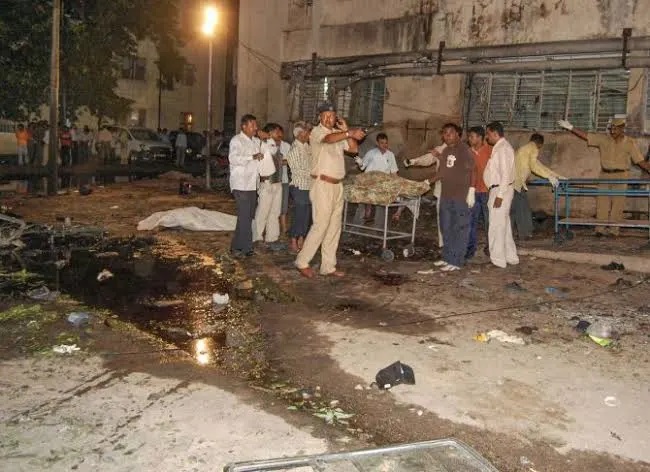
A blast took place at the Trauma Center of the Civil Hospital. Image Source: Divya bhaskar

The devastating aftermath claimed the lives of 56 innocent people, leaving over 200 others injured. Among the deceased were a compassionate doctor couple, dedicated to healing and treating patients at the Ahmedabad Civil Hospital. The loss of lives, including those of individuals committed to saving others, added a profound sense of sorrow to the already grief-stricken city.

Ahmedabad Police solved the case within 19 days

The Ahmedabad Police was confronted with an unprecedented situation, with phone lines incessantly ringing across every police station in the city. The gravity of the unfolding events was evident to law enforcement, as Ahmedabad faced a crisis unlike anything in its history.

Taking charge of the investigation was IPS officer Ashish Bhatia, who led a determined team, including Abhay Chudasama, the DCP of the crime branch at that time. Their relentless efforts focused on apprehending not only the terrorists responsible for the blasts but also those involved in plotting against the nation, threatening its integrity from within.
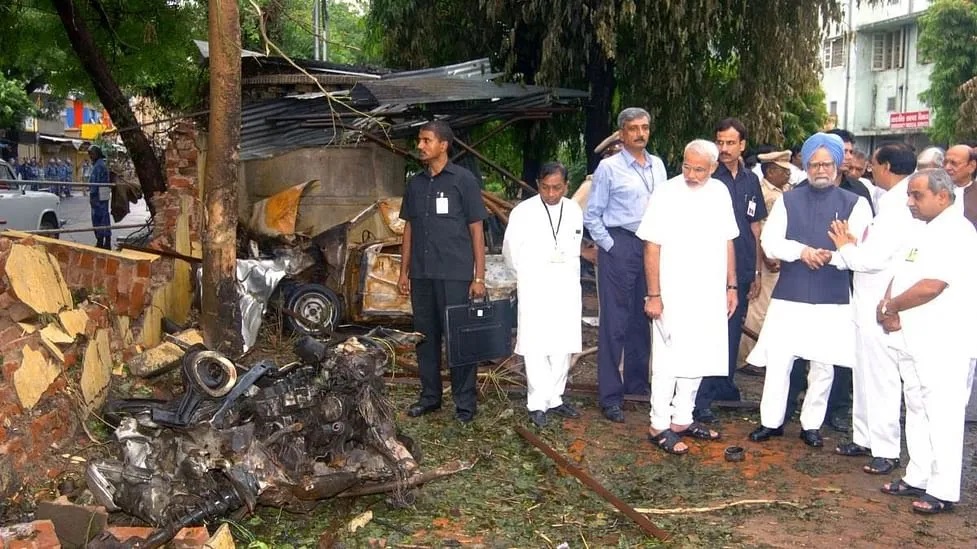
Narendra Modi and Manmohan Singh visited the blast sites. Image Source: OpIndia

During this critical period, the Chief Minister of Gujarat was Narendra Modi, who later became the Prime Minister of India, and the current Union Home Minister, Amit Shah, served as the Home Minister of Gujarat. In a remarkable display of efficiency and determination, the Ahmedabad Police managed to crack the entire case in a mere 19 days, leading to the arrest of 30 suspects involved in the blasts.

Not only the Gujarat Police but also law enforcement agencies from Ujjain in Madhya Pradesh, Delhi, Mumbai, Karnataka, Kerala, and Rajasthan joined forces in apprehending the terrorists responsible for the heinous attack. These suspects were then handed over to the Gujarat Police for further investigation and legal proceedings.

Indian Mujahideen claimed responsibility for this attack and Yasin Bhatkal was the main conspirator

The responsibility for the serial bomb blasts in Ahmedabad was claimed by the Islamist terror outfits Indian Mujahideen and Harkat-ul-Jihad-al-Islami, who referred to the incident as revenge for the riots after the Godhra carnage. A staggering total of 99 terrorists were identified as accused in connection with the case, out of which 82 were successfully nabbed by the authorities. The Gujarat Police registered approximately 15 complaints in Surat and around 20 complaints in Ahmedabad, highlighting the extensive impact of the attacks on multiple locations. As the legal proceedings unfolded, 78 accused were brought to trial in the court, while the police remain in relentless pursuit of the remaining eight individuals involved in the heinous act.
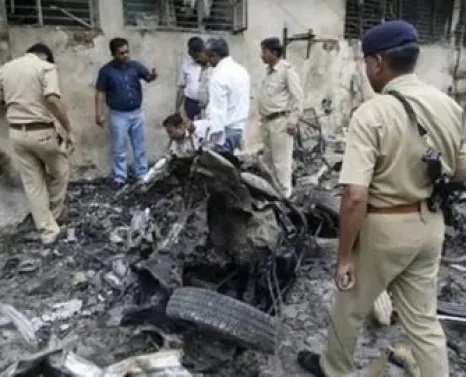
The Ahmedabad police solved the case in 19 days. Image Source: File Photos

Ayaz Sayyed, one of the terrorists involved in the Ahmedabad serial blasts, managed to secure a reprieve from punishment by cooperating as a government witness. However, some of the other accused found themselves incarcerated in Sabarmati Jail, Ahmedabad, where they attempted a daring escape by digging a tunnel. The jail administration, however, thwarted their plan, catching them in the act. The key mastermind behind the Ahmedabad serial blasts, Yasin Bhatkal, a known Islamist terrorist, is currently incarcerated in a jail in Delhi, while Abdul Subhan alias Tauqeer is being held in a prison in Cochin.

38 terrorists sentenced to death

The exhaustive legal proceedings surrounding the Ahmedabad serial blasts spanned nearly 14 years, culminating in a landmark verdict last year from the court of Special Judge AR Patel. In this historic judgment, 38 of the total terrorists were handed the death penalty, signifying the gravity of their actions. Additionally, 11 convicts received life imprisonment, ensuring they will remain behind bars until the end of their days. The charges brought against them included Sections for murder, sedition, and the Unlawful Activities (Prevention) Act (UAPA).

The individuals sentenced to death for orchestrating the entire terrorist incident and causing the tragic loss of 56 innocent lives include Zahid Sheikh, Imran Ibrahim, Iqbal Qasam, Shamsuddin Sheikh, Gayasuddin Ansari, Mohammad Kagzi, Mohammad Usman, Kamruddin Nagori, Amil Parwaj, Karim Sibley, Safdar Nagori, Amil Parwaj, Karim Sibley, Qaimuddin Kapadia, Mohammad Saif Sheikh, Zeeshan Ahmed, Ziaur Rahman, Mohammad Shakeel Rahman, Mohammad Akbar, Fazle Rehman, Ahmed Bawa Barelvi, Sarfuddin Saleem, Saduli Karim, Mohammad Tanvir, Amin Sheikh, and Mohammad Mobin.

Dad said he was coming home and…

Today, 15 years after the Ahmedabad blasts, OpIndia contacted the Panchal family of the victims of this incident who shared their grief. In a telephonic conversation, Swapnil, son of Paresh Karsandas (Gopi Bhai) Panchal who died in the Ahmedabad blast, said, “I was 12 years old at the time, I remember just before the blast, Mom called dad and asked him where he was. Then Dad said I am with friends, I will be home in just a few minutes. The explosions took place shortly after the phone call was over. Dad saw the news on TV and we also came to know at home that something like this had happened. My grandfather immediately called Dad and asked him to come home. But my father, who has a serviceable nature, called each of his acquaintances and gave the news of the serial blasts.”
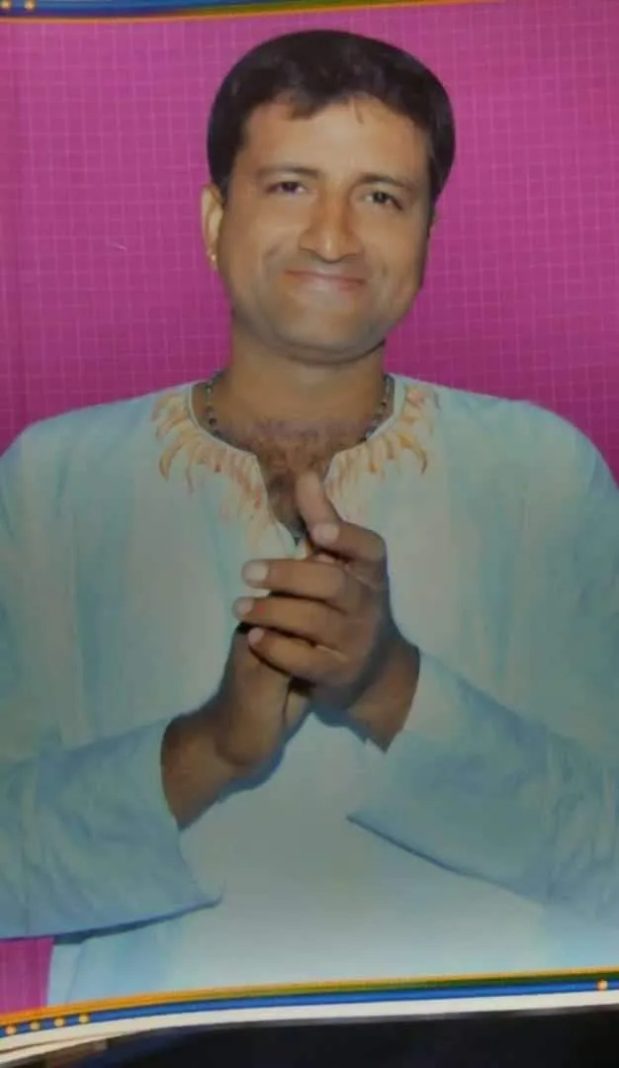
Deceased bomb blast victim Paresh Panchal. Image Source: Swapnil Panchal

Swapnil said, “My father was very emotional and helpful in nature. As soon as he got the news that blood was needed for the treatment of the injured people, he immediately reached the Trauma Center of the Civil Hospital. Papa had also given blood, but while coming out, seeing some injured people in an ambulance, Papa ran there too to help them. At the same time, there was a bomb blast and Dad’s whole body was pierced with sharp-edged objects. Some of the pellets caused serious injuries to his intestines, liver and he…”

While saying this, Swapnil became silent for a while and after recovering a bit, continued, “Later, we tried our best to contact him but we could not reach his phone. Our family searched for Papa all night and the next day, he was found dead in the civil hospital.”

According to Swapnil, his father was very emotional in nature and people used to call him ‘Gopi Bhai’. He believed in keeping a group of people and taking them along. Anyone who needed help would rush immediately. Because of his nature, he was very much loved by people around and in society.
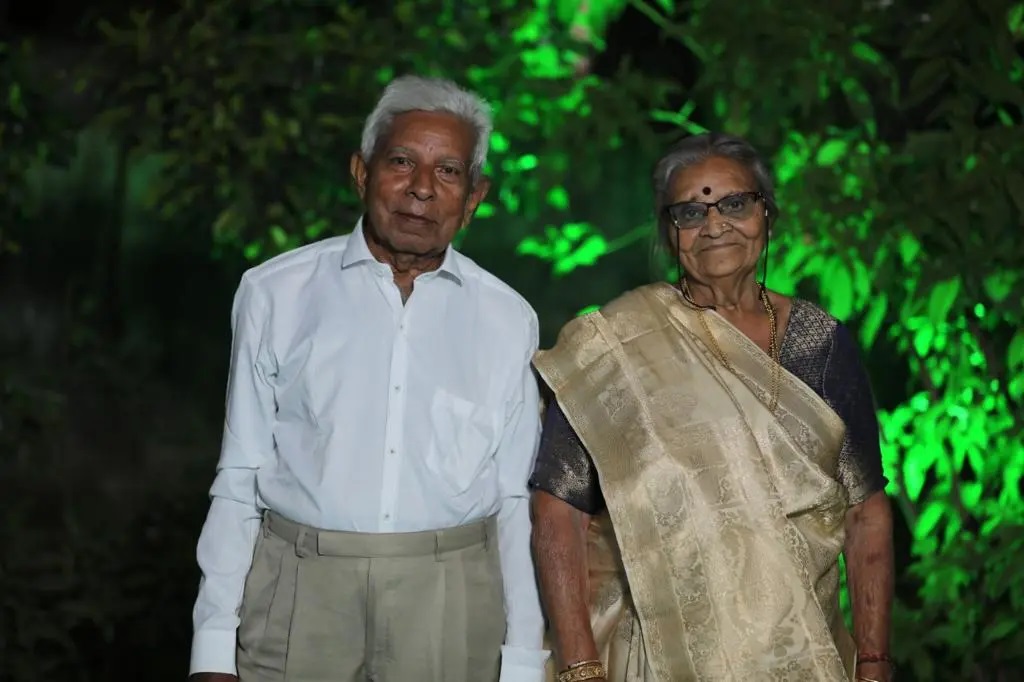
Paresh Panchal’s parents. Image Source: Swapnil Panchal

Swapnil further said, “Many things with Dad are still remembered today. Playing with him, going out for a walk, everything still comes before our eyes. The bomb blast took away the support of our family. I am 26 years old today. But I still follow the things my father taught me. My father’s departure shocked not only my family but all my acquaintances. My grandfather is 85 years old today, my mother and grandfather raised us after my father passed away. People have been calling my grandfather ‘Gopi Kaka’ since that time because of Papa’s good deeds. The Ahmedabad blast incident has changed our lives.”

Even after 15 long years, the memory of that sorrowful day remains etched in Ahmedabad’s collective consciousness.

The government, the police, and the judiciary all played their roles responsibly, taking appropriate actions and decisions to ensure the guilty were brought to justice. Yet, despite their efforts, the void left by those who perished can never truly be filled. The losses endured by the affected families are beyond any compensation.

As we reflect on this heartbreaking chapter, our fervent prayer is that no such incident ever befalls India in the future. May the nation strive for a safer, more peaceful tomorrow, where every citizen can live without fear and sorrow, and where the memory of this tragedy serves as a constant reminder of the importance of unity, compassion, and vigilance in preserving the well-being of our communities.
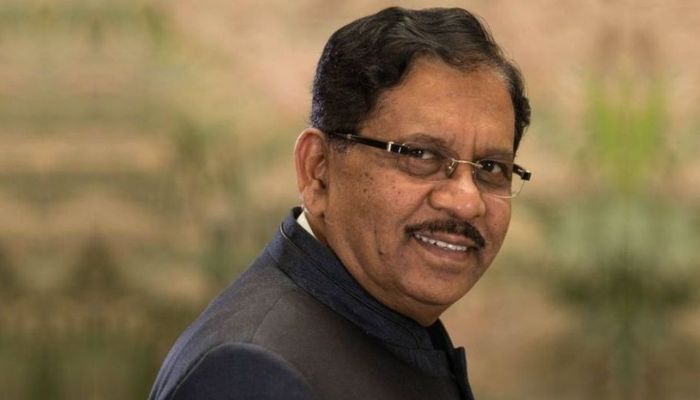
Karnataka: Home Minister G Parameshwar calls restroom video shooting in Udupi College a ‘minor issue between friends’, says BJP politicising it

On Wednesday, 26th July 2023, Karnataka’s Home Minister G Parameshwar said that the shameful case from a college in Udupi where videos of Hindu girl students were shot in a restroom by Muslim girl students is a ‘small incident’. He said that the Bharatiya Janata Party (BJP) is politicising this issue.

G Parameshwar said, “The incident in Udupi is very minor and there is no need to give political colour. Also, when all this is happening in colleges, they are doing politics on such small issues, BJP should stop this.”

G Parameshwar also said, “It is not a ‘serious issue’. It has happened within the college premises and between friends. Why the BJP is trying to add political colour to this incident by blowing it out of proportion? All colleges are bound by the University Grant Commission (UGC) rules which mandate a committee to look into such cases. There is a college principal and a committee to investigate the incident. No complaint has been received in this regard. There is no complaint registered and how can the police act on this? BJP should first stop playing politics on this issue. Wasn’t this happening in colleges earlier? BJP should stop doing such petty politics.”

Notably, in Udupi, videos of Hindu girls were recorded in the women’s washroom of Netrajyoti College in Udupi by 3 Muslim women. The college management supposedly conducted an inquiry into the matter and concluded that the video had been deleted, closing the case. However, the case assumed massive proportions after several social media users, including Rashmi Samant and Shefali Vaidya, raised the matter and demanded an impartial inquiry into the matter. Following the public outrage, two suo moto cases have been registered at the Malpe Police Station in the Udupi district. The FIR was registered against the 3 Muslim women and the college administration also for the destruction of evidence and for not providing information to the police.

Meerut: Minor girl drugged and raped, her nude video recorded; main accused Shakir and his 2 accomplices arrested

A horrific case of a crime against a woman has come to light from Meerut in Uttar Pradesh. 22-year-old Shakir reportedly drugged the minor girl, and took her to a jungle where he raped her. After that, 4 of Shakir’s accomplices including Shoaib, Gulzar and Pappu joined him where they beat up the girl, forcibly removed her clothes and then recorded her video to blackmail her further.

A video of the incident has since gone viral on social media where one could hear the girl pleading that they should at least leave her clothes but to no avail. The video was reportedly made viral by Shoaib.

Reportedly, the video is few months old and has only surfaced now. The mother of the minor filed a complaint at the local police station, and following that, 3 of the accused have been arrested including Shakir. They were booked under POCSO and other relevant sections of the IPC.

The victim’s family said that Shakir trapped the minor girl and kept exploiting her for 2 years while promising to marry her. As per the family, Shakir took her to the jungle a few months back, where he drugged her and then proceeded to rape her. Soon, his accomplices joined him there and they beat up the girl while removing her clothes and recorded her video.

Superintendent of Police (Rural) Kamlesh Thakur said that the arrests were made on the complaint of a woman, who alleged that a 22-year-old youth named Shakir sexually exploited her 17-year-old daughter on the pretext of marriage for two years.

The girl has been sent for a medical examination and further investigation in the case is underway.

Indian Men and Women Football teams to participate in Asian Games this year after getting exemptions from the Sports Ministry: Details

On the 26th of July, the Ministry of Youth Affairs and Sports gave exemptions to Indian men’s and women’s football teams allowing them to participate in the upcoming Asian Games in China later this year. Union Sports Minister Anurag Thakur took to Twitter to announce this great news. 

Confirming that both national teams will participate in the continental event, he wrote, “Our national football teams, both Men’s and Women’s, are set to participate in the upcoming Asian Games.”  

Thakur highlighted that the Ministry took into consideration the splendid performances of both the national teams in recent times and decided to give exemptions. Notably, the Ministry has relaxed the existing criteria which was hindering both the squads from qualifying for the major event. 

According to the earlier qualification criteria, the Ministry only allowed those teams which ranked among the top-8 in the Asian pool. Despite, both teams falling short of this criteria, the Sports Ministry decided to relax the rules and trust the winning streak of both teams. 

The Sports Minister said, “Keeping in mind their latest performances in recent times, the Ministry decided to grant the relaxation. I am sure they will put their best foot forward in the Asian Games and make our country proud.”

With this, the Indian football teams will be participating in the Asian Games for the first time, since 2014. Apparently, last time in 2018, the same qualification criteria had barred both national sides from participating in the major continental event.

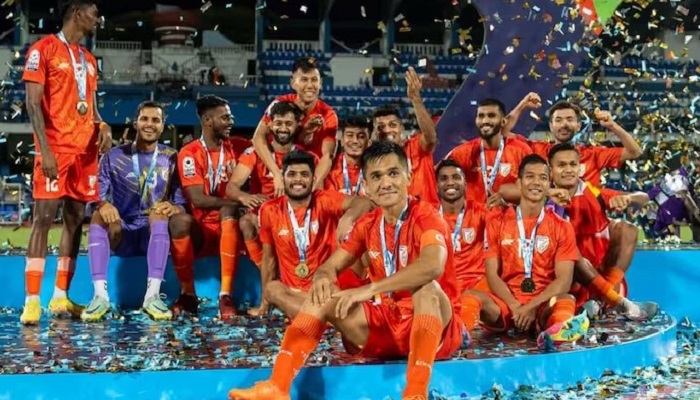
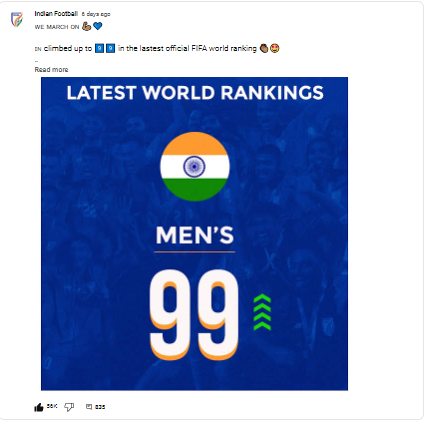
Under the Captionship of Sunil Chettri and the Croatian coach Igor Stimac, the Men’s team lifted the Intercontinental Cup and the SAFF Cup in short succession. The Blue Tigers have been improving their overall ranking (99th) and recently entered under 100. In the home circuit, the Indian men’s side was unbeaten for 15 matches straight and the above community post by Indian Football’s youtube channel displays the score lines of those games.  

Similarly, the women’s team defeated Kyrgyzstan over two legs to win their first round of Olympic qualifiers in April.

Despite their winning run, there were question marks over their participation in the Asian Games. The uncertainty gained strength when the Sports Ministry wrote a letter to the Indian Olympic Association (IOA) and all the National Sports Federations (NSFs). In its letter, dated July 10, the Ministry asked the sporting bodies to clear only those teams who are in the top-8 rankings among the participating Asian teams. 

The letter read, “For team events, only those sports which have achieved a ranking up to eighth among participating countries of Asia in the last year should be considered for participation in Asian Games.”

This was seen as a major setback to both the men’s and women’s national football teams as they were ranked 18th and 11th respectively in the Asian pool. Following the letter and uncertainty revolving around the teams’ participation in the Asian Games, the coach of the Indian Men’s Football team, Igor Stimac requested the Prime Minister and Sports Minister to allow the Indian side to participate in the Asian Games.  

But now that the Ministry has granted exemptions, both teams will like to continue their good run and lift the spirit of the game in the country to new highs.  

It is important to note that the league in the Asian Games will be a U-23 tournament. As per the rules, only three players above the cut-off age (23 years) are permitted to play in a team. However, the core lineup of the Indian senior team may remain virtually unaffected. There are seven players in the main squad who were under 23 years of age. 

According to insiders, it is being claimed that India may be inclined to send skipper Sunil Chhetri, goalkeeper Gurpreet Singh Sandhu and defender Sandesh Jhingan with the side participating in the U-23 tournament at the Asian Games, scheduled to begin in September in China’s Hangzhou. 

In fact, the All India Football Federation (AIFF) has compiled a roster of 50 under-23 players and shared it with the respective clubs. The purpose behind this is to create an additional group of under-23 players who could be considered for participation in the AFC under-23 Asian Cup qualifiers and the King’s Cup in Thailand.

The Football growth story

While it may be premature to say that Indian football is at its highest, it has been registering an uptick in the country. The men’s team lifting back-to-back championships – SAFF and the Intercontinental Cup, is its testimony. This reflects that many positive changes in the sporting arena have started to bear fruit for the nation. 

Firstly, the franchise-based sports league, Hero Indian Super League (ISL), has provided Indian players with valuable exposure, allowing them to compete alongside renowned players from the past. While many of these veteran players may have surpassed their prime, they still have a wealth of skills and knowledge to share with the younger talents. This reflects in their recent performances where they have matched the performances of higher-seeded teams in the recently concluded tournaments. 

Secondly, the addition of better coaches, particularly the Croatian coach Igor Stimac has lifted the spirit of the side coming with a killer attitude to win each game. This aspect is reflected in the fact that the super animated, skin-in-the-game-kind coach Igor had picked red cards at least a couple of games for himself getting into the ‘act’ while standing on the sideline guiding the team to victory.    

Thirdly, the constant appeal by the legend of the game Sunil Chettri is slowly paying dividends and more fans are lining up to the match venues or keeping a close track of the Blue Tigers’ performance and cheering them. As stated many times by the skipper, the fans getting behind the players motivates them to breach their best – the motivation factor. This is also coupled with the increasing efforts of the Indian playing side, federation, and other staff to promote their successes and not let it die down at the sidelines. An unspoken reality is that fans tend to distance themselves from games in which teams consistently deliver dismal performances.

Fourthly, the nation is slowly getting rid of politics in sports federations trampling talent at the nascent stage or letting regionalism or other biased factors come into play while selecting or promoting sportspersons. 

Last but not least, the Khelo India youth games and the government’s initiatives dedicated to sportspersons, such as the Target Olympics Podium Scheme (TOPS) by the Union Sports Ministry, or States like Odisha elevating hockey to new heights, have played a significant role in promoting a sporting culture and nurturing young sports talent. This has resulted in widespread benefits for all sports, fostering talent development from a young age.

From a hill tribe in India to a lost tribe in Israel: Did you know Kukis from Manipur had demanded a right to return to Israel

From ethnicity, and religion to history and geography, the Kukis have long associated themselves with a variety of identities. Known to have migrated over centuries to India from the Chin State at the Myanmar border, the Chin-Kuki-Mizo (CHIKUMI) tribes largely follow Christianity. But did you know that one of the theories on their ancestry is rooted in the land of Israel?

The Kukis of Manipur drew global attention including from the Israeli media following reports of some Kuki homes that were torched in a two-way violence between Kukis and Meiteis in Manipur. The purported Israeli roots of Kukis came to light once again as they demanded help from the Jewish state. Here’s a look at the so-called link between Kukis and Israel.

Who are the present-day Kukis?

The Chin-Kuki-Mizo tribes (CHIKUMI), also known as Kukis, are situated largely in the northeast Indian states of Manipur, Mizoram, Nagaland, Assam, Meghalaya, and Tripura, and also in the border areas of Myanmar, and Bangladesh. They are considered a sub-family of the Tibeto-Burman language group which is also related to Mizos of Mizoram and Chins in Myanmar.

The Kukis, comprising more than 20 sub-tribes, mostly follow Christianity. Their migratory patterns divided them into two groups namely “Old Kukis” and “New Kukis”. To put it plainly, Old Kukis comprise tribes that migrated into the northeastern states of India around 1600 AD or even before.

New Kukis, on the other hand, are considered those who migrated more recently, in the 18th and 19th centuries. It is safe to say that almost all literature documenting the CHIKUMI tribes points to several waves of migration, and whether or not they are the original inhabitants of present-day northeast Indian states cannot be said with certainty. Moreover, not much is known about the tribes beyond that they have come from the Chin State at the Myanmar border.

So how are Kukis, Israelites?

As per Jewish belief, around 3000 years ago, ten tribes of the Northern Kingdom in Israel were forced into exile following an attack by Assyrians. They are believed to have disappeared ever since. The Jewish faith says that the gradual return of the Israelites to their “promised land” will mark the return of the Messiah, an expected descendent of King David.

The lost tribes are said to have assimilated into the cultures of the land they migrated to. The Kukis are considered one such tribe, better known as Bnei Menashe, meaning the Children of the biblical Manasseh, the son of the prophet Joseph.

Roughly about 10,000 Kukis from both, Mizoram and Manipur embraced Judaism from Christianity after they learned of their so-called identity in the 1950s. How the community has come to unearth its “hidden” identity is a story in itself.

It was in the 1950s that the Kukis are believed to have first learned of their Israeli identity when a religious minister named Mei Chalah from Buallawn in Mizoram dreamt that his community belonged to the Zion faith and that they should “return to the land of their forefathers”.

Historically, Kukis are known to have practiced animism and worshipped their progenitor called Manmasi or Manasia. This was until the British and American missionaries began conversion campaigns following which many tribes, particularly Kukis, converted to Christianity. The Bnei Menashe community (comprising the Kuki-Chin-Hmar-Mizo tribes) claims that during the conversion campaigns, they found a resemblance between the Testaments and their pre-Christian tribal traditions.

It is believed that the tribals converted without much effort due to the similarities they found in the biblical stories told to them by the missionaries. The British missionaries too reportedly noticed the similarities with the Bnei Menashe’s stories. For example, it is claimed that some of the ancient tribal songs of the Kukis, passed from generation to generation through oral tradition, include words from the Bible.

Bnei Menashe of Mizoram. (Source: Timeline YouTube)

One such song is “Sikpui Hla” which is sung by the Bnei Menashe for centuries celebrating the traditional Hmar (Kuki subtribe) harvest festival “Sikpuiroui”. The song narrates the exodus of Israelites from Egypt and how the Red Sea comes to their rescue. Other songs are “Litenten Zion” meaning “Lets go to Zion”, and “Tuipi Sankan la” which means “The song of crossing the Red Sea” or “Dried up of Red Sea”. How a tribe residing in the hills of northeast India, and Myanmar knows of the Israeli folklore is a mystery.

Words like ‘Selah’, ‘Aboriza’, and ‘Elo’ are words found reportedly only in the Bible. While ‘selah’ is found in the book of Psalm meaning to repeat, the word ‘aboriza’ is a Hebrew word used to praise God. The Kuki script called ‘Bulpijem’ which has 32 alphabets is said to have a Jewish connection. The Scroll is believed to have gotten lost during the reign of Chinese king Shih Hungtai, allegedly dating back to 214 BC.

Besides some similarities in language, some tribal customs have also matched that of biblical Israelites. Interestingly, the puan (a shawl worn by the Bnei Menashe) has a stark resemblance to the Tallit, the Jewish prayer shawl; the Bible commands attaching a blue thread to the corners of the shawl, a design stitched into the puan too.

A Bnei Menashe wearing a puan, a shawl that resembles the Tallit, Jewish religious shawl (Source: Timeline YouTube)

Notably, the so-called “flag of Zalengam”, a proposed “Kuki nation”, bears a star symbol considered to be the star of David.

The star of David on the purported flag of Zalengam, meaning land of Freedom, a proposed land of the Kuki tribe.

Going by the research available on the web, a whopping three million Kukis are believed to be Bnei Menashe who were exiled from Nothern Israel and they eventually took upon a journey over centuries across Central Asia, into China, and Burma, and finally settled in India. The community is known to have derived its popular name ‘Shinlung’ in India from their migration from Chhinlungsan located on the banks of the river Yalung in China.

Where is the evidence?

There is no documented proof of the link between the Kukis and the biblical tribe of Manasseh except for word of mouth, and the similarities as mentioned above. In 2003, a DNA test conducted on Kuki subtribes namely Hmar, Kom, Lenthang, Changsan, Lunkim, and Hualngo turned out negative.

But another DNA test in 2005 remotely suggests a distant link. DNA studies at the Central Forensic Institute, Calcutta suggested that “while the masculine side of the tribes bears no links to Israel, the feminine side suggests a genetic profile with Middle Eastern people.” A research scholar at the institute who was involved in the study reportedly remarked, “It is scientifically impossible to have the same genetic sequence in two populations living so far apart if they did not originate from a common stock who historically inhabited a common space.”

Another scientific finding based on medical tests suggests that a disease, Tay-Sachs and Saitika-Zenghit, a genetic bone disease, which is inherited by the Semitic Jews, is found in the CHIKIMZO tribes. The disease is normally found absent in other racial groups.

However, the 2005 test too is not quite reliable. Israeli professor Skorecki pointed out that the geneticists “did not do a complete genetic sequencing of all the DNA and therefore it is difficult to rely on the conclusions derived from a partial sequencing”. He added that “after thousands of years it is difficult to identify the traces of the common genetic origin”.

Return to the “promised land”

In the 1970s, a group of Bnei Menashe embarked on a journey to Israel where they met Rabbi Eliyahu Avichayil. Avichayil, who is known to have given the community its name, ran a non-profit organization named Amishav (meaning ‘my people return’) which worked towards finding the descendants of the lost tribes reinstating them back to Israel, and converting them as required by Jewish law. The same year, Avichayil visit the Bnei Menashe in India and played a key role in bringing them to Israel and also officiated the conversion of the community in Imphal and Aizawl.

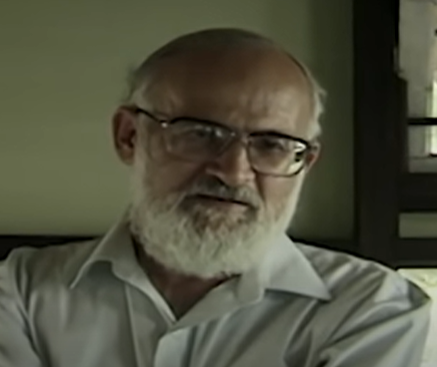
Rabbi Eliyahu Avichayil (Source: Timeline YouTube)

Avichayil visited India to learn more about the Bnei Menashe and study the authenticity of their claims of being the descendants of the lost tribe of Manasseh. The Rabbi from Jerusalem opened the Amishav house in Imphal, which consisted of a synagogue, two guest rooms, a mikvah (ritual bath), a classroom, and quarters for the centre’s staff. However, his efforts to initiate the community’s aliyah, meaning immigration to Israel, did not find support from the Israeli government.

By the 1990s, several Bnei Menashe had travelled to Israel as tourists and settled there to get legal Jewish status. They were finally admitted by the state of Israel. In 1997, Michael Freund, the then deputy communications director for Prime Minister Benjamin Netanyahu, found a letter from the Bnei Menashe community and decided to visit them.

“Something pulled me there. And when I met them and saw the similarities between their customs and beliefs and the biblical Israelites, I was convinced that these are indeed descendants of the lost tribes,” he reportedly said. He worked extensively in raising funds to sponsor the community’s aliyah. In 2000, Freund’s extensive lobbying led the interior ministry of Israel to allow the return of 100 Bnei Menashe every year which was followed by conversion.

Michael Freund also founded Shavei Israel, a non-profit organization dedicated to “assisting descendants of Jews and the Lost Tribes of Israel to reclaim their roots”. By 2003, about 1,000 Bnei Menashe were settled in Israel. In the same year, the Interior Minister Avraham Poraz revoked the agreement thereby halting the aliyah of Bnei Menashe owing to political and some religious disagreements.

However, Freund’s continued efforts in 2005 led to a ruling by the then-Sephardi Chief Rabbi Shlomo Amar that the Bnei Menashe should indeed be considered descendants of the Children of Israel. However, in order to be considered Jews today, they would still have to undergo full conversion (including circumcision for the males).

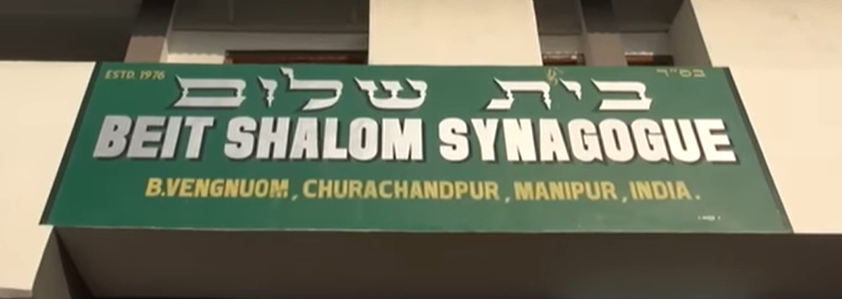
A synagogue in Manipur (Source: France 24)

The ruling encouraged Freund and his supporters to establish Jewish education and conversion services in Mizoram and Manipur, under the auspices of the prime minister’s office. Once recognized as Jews, the Bnei Menashe would be entitled to immigrate to Israel under the law of return and to receive benefits of absorption from the ministry.

In 2006, Freund’s group was ready to bring 218 converted Bnei Menashe Jews to Israel. But the same was halted after the government of India protested against the conversions. The group came, but further organized immigration came to a halt. Of the nearly 10,000 Bnei Menashe, some 5,000 are said to have moved to Israel while the remaining are still waiting in anticipation. Here’s a timeline of the recorded aliyah of Bnei Menashe.

2012
Around 50 Bnei Menashe arrive in Tel Aviv

2017
102 community members return to Israel

2018
More than 430 Bnei Menashe move to Israel

2020
A group of 250 Bnei Menashe migrates to Israel

2021
235 people from the community land in Israel

Have the Kukis or Bnei Menashe found their “Promised Land” then?

The theory of the Kukis being Bnei Menashe has been equally contested by Jewish experts and religious leaders, and even the Indian and Israeli governments in the past. Some Israeli politicians and rabbis too do not consider the Bnei Menashe as Israelites. Israeli critics have suggested that the Bnei Menashe have been brought to live in the settlements in the West Bank and Gaza strip with political motives. The Netanyahu government’s pro-immigration policy for the Bnei Menashe has brought him to the centre of political controversies at home.

Much has been reported about the community’s struggle in the process of being authorised as “pure Jews”. From the standard of living to economic conditions, the community hasn’t always had much luck, at least not in the initial years after migrating. However, some of those who have migrated and attained citizenship are also serving in the Israeli military.

Moreover, the newly-discovered identity of the community has reignited the debate on conversion too. The Indian government in 2005/06 halted the immigration process of Bnei Menashe to Israel in objection to the conversion campaigns held by Jewish missionaries. Notably, for Bnei Menashe to be accepted as Jews in Israel, they must undergo Orthodox conversion ceremonies.

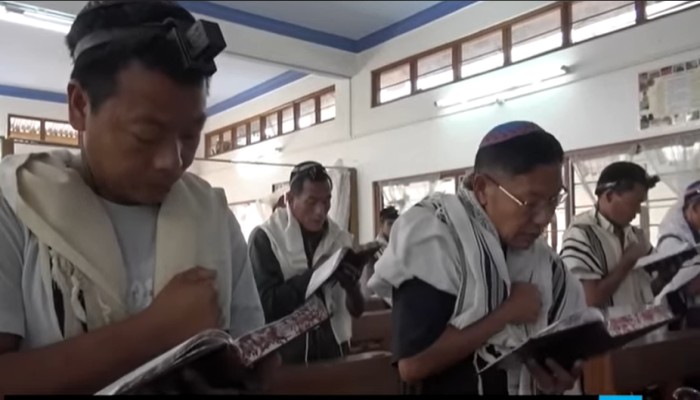
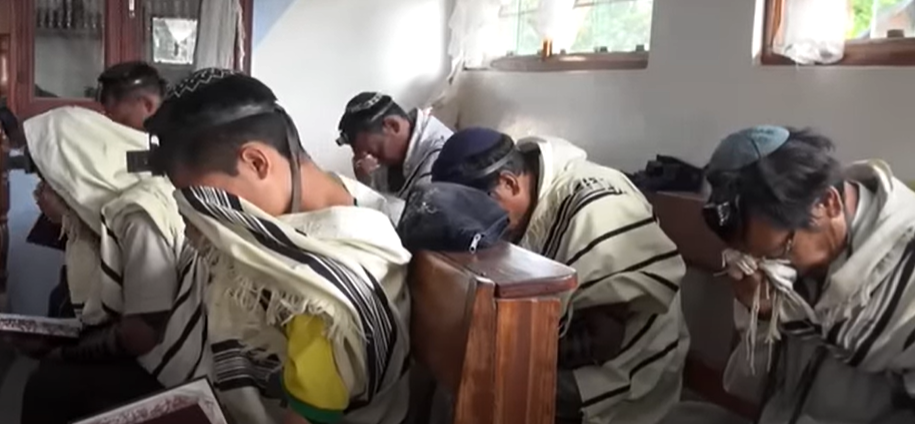
The Bnei Menashe offering prayers (Source: France 24)

The Kuki population in India is largely migrant and their settlement has been opposed from time to time by native tribes. Some experts also view their aliyah as an escape from this ongoing conflict in yet another search for their identity. This has only deepened the doubts among critics of the community.

That is not all. The contradictory claims and demands within the Kuki community in regard to their identity also raise important questions. While the remaining Bnei Menashe in Manipur and Mizoram are living in anticipation to return to Israel, those like PS Haokip, leader of the separatist Kuki National Organisation (KNO), are leading operations demanding to bring Kuki-populated areas under one administrative unit called Zalengam, the “land of freedom” even as they identify as Jews.

PS Haokip and his KNO are on a dual and contradictory quest for identity. Haokip has his army of insurgents fighting a battle in Manipur for Zalengam even as he has written to Israeli Prime Minister Benjamin Netanyahu for the recognition of Bnei Menashe in northeast India. Amid the ongoing violence between the Kukis and Meiteis in Manipur, the World Kuki-Zo Intellectual Council (WKZIC) wrote to Israeli Prime Minister Benjamin Netanyahu seeking his urgent “personal intervention” to carve out a state of Kuki community.

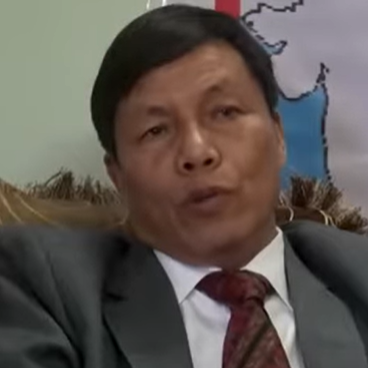
PS Haokip, leader of Kuki National Organisation (Source: France 24)

A tribe in India, now a tribe in Israel; the Kuki community’s many identities mirror their quest for belongingness amid added layers of confusion. One had hoped that venturing far and wide in order to dig deeper into their history would help locate the Kukis to their rightful land but their new-found “Jewish” identity has only added one more dimension waiting to be explored.

What is certain, however, is that be it Bnei Menashe or Kukis, Mizos, Chins, Hmars, and Lushais; they have covered quite a distance in the hopes of tracing their origins and there is still a long way to go.

As Conjunctivitis cases spread in the country, read why it is called ‘Jai Bangla’ in some regions

The cases of Conjunctivitis, the infection that affects the eyes, are rising at an alarming rate across the country. Several regions in the country like Delhi-NCR, Gujarat, Maharashtra etc have reported mass spreading of the disease, which coincided with the floods during the ongoing monsoon session.

Conjunctivitis is mostly caused by viruses, and it is a seasonal disease like flu and is seen spread during the monsoon. It causes the eye to turn red along with itching, and discharge. Although the disease is not sight-threatening, it is a painful condition. The disease is highly contagious.

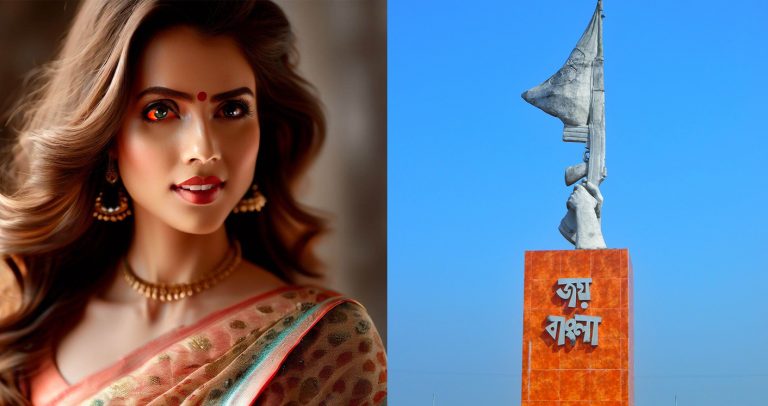
Conjunctivitis is generally known as the pink-eye disease, but in various regions of the world, it is known by various names. Some of such names are highly unusual, and one such name is, ‘Jay Bangla’. Yes, in West Bengal and Assam in India, the disease is generally known as ‘Jai Bangla’, the slogan hailing Bengal.

There is an interesting history of why and how the disease got this peculiar name, and it is linked to the Bangladesh liberation war of 1971 when the ‘Jai Bangla’ slogan was widely used.

In 1971, the Conjunctivitis disease widely spread in West Bengal including Calcutta (now Kolkata). At that time, the Bangladesh liberation war was going on, and it caused a mass immigration of Bangladeshis from Bangladesh into India through the porous border. Many such Bangladeshis were infected with Conjunctivitis, and from them the disease spread quickly in India, turning into an epidemic.

While West Bengal was affected the most, the disease spread to several states in India and is recorded as one of the major epidemics of the disease.

As the slogan ‘Jai Bangla’ was very popular at that time due to the war, people started to use the term to refer to this eye disease.

From then, the name got stuck, and Conjunctivitis is still called Jai Bangla in West Bengal and Assam.

Apollo 11 to Haj pilgrims in Bombay

Another interesting name given to the disease is Apollo 11. In 1969, there was a major outbreak of acute haemorrhagic conjunctivitis, a more severe form of the disease, in West Africa. When the disease first appeared in Ghana, it coincided with the first moon landing under the Apollo 11 mission of NASA. Therefore, the disease was called Apollo 11 disease, and this name is still used in the region to refer to the disease.

Next year, there were two outbreaks of the disease in Java and Indonesia, and the disease appeared in 1971 first in Bombay before the outbreak in Calcutta. Incidentally, the disease came to Bombay with Haj Pilgrims, who had returned from Mecca and had mingled with the infected Indonesians during the Haj.

Later that year, the Conjunctivitis disease entered India with East Pakistanis escaping the war, and became ‘Jai Bangla’. From West Bengal, the disease spread all over India.

How to prevent getting infected

As Conjunctivitis is an infectious disease, it can be prevented with precautions. And several precautions are similar to the familiar precautions taken to prevent Covid-19 infection. Frequent hand washing and avoiding touching the eyes are key to prevention. Avoiding contact with people with the disease, avoiding crowded places and avoiding touching common objects like railings or handles are also important.

People who have been infected are advised to use dark goggles, avoid swimming, avoid close contact with others, and not touch their eyes.

Manipur Violence: Armed groups from Myanmar join Kuki militants in gun battle with security forces in Moreh, over 30 houses torched

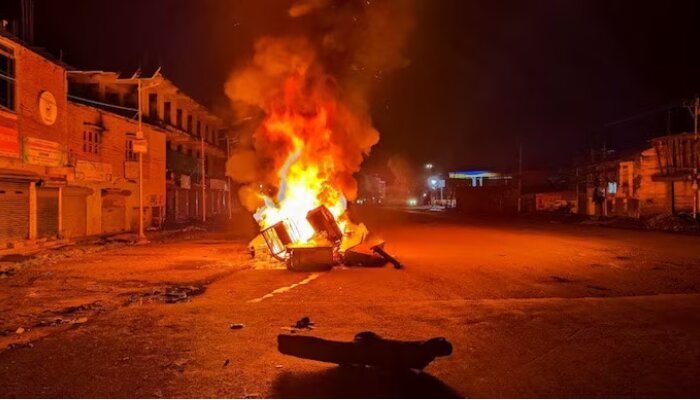
The border town of Moreh in Manipur’s Tengnoupal district witnessed fresh tensions early on 26 July when heavily armed militants protected by a mob, started setting buildings on fire, making way for another clash between Kukis and Meiteis. The throng was dispersed by the state police force stationed there, however, after the people were cleared, Kuki militants arrived and opened fire.

Gunfire started between armed Kuki militants, reportedly comprising of the Kuki National Army (KNA) and People’s Defence Force (PDF) of Mynamar and security personnel, including paramilitary units, Assam Rifles, and Border Security Force at 9:30 am.

Furthermore, there has been extensive looting and arson and many private dwellings, including that of a journalist, have been set on fire. Reportedly at least 30 houses were burnt down. According to senior police authorities, the structures and locations targeted today were those that have previously been struck in other attacks. It included the houses of the Meitei community people who had fled the area during previous violence.

The forest office building, which was partially burned down, was the only new facility to have been assaulted today. The crowd was driven out of Moreh after it went on the rampage, destroying and torching stores and houses. Fortunately, the security forces have not yet suffered any casualties.

Mynamar militants involved in the attack

Security authorities in Manipur have launched a probe to determine whether the heavily armed offenders who attacked security officers today in Moreh with sniper rifles and cutting-edge weapons were foreign terrorists. However, based on sources, some of them could be from the neighbouring country, Myanmar, formerly known as Burma. The former informed that four or five individuals have been held for interrogation.

Notably, the situation is extremely tumultuous in the town, which is located near the Indo-Myanmar border after the miscreants went into a frenzy and the security forces brought the situation under control.

After the mob was removed, the security forces launched a search operation to neutralise the armed men who were firing at them with snipers and other weapons from secure locations. Security officials revealed that a sniper strike occurred on a temporary BSF camp at Moreh College.

According to Tengnoupal Superintendent of Police Luikham Lanmeo, the shootout came to an end at around 3:30 pm. He conveyed that there were no casualties today and the security personnel saved lives. However, a number of government infrastructures have been burned down, including the office of the Moreh Wildlife Sanctuary and the forest and electricity guest houses.

Illegal migrants entered from Myanmar

In a startling development, more than 700 illegal immigrants have reportedly entered from Myanmar on the Indian side and orders have been given to deport them. “Now, there are illegal migrants from Myanmar. 718 of them that the Assam Rifles are intimated the Chandel Police and the Manipur Police. They have said that 718 fresh illegal migrants from Myanmar have come. The Manipur government has asked the Assam Rifles to deport them. This is a separate development,” unveiled Wasbir Hussain, a senior journalist.

He further continued, “On the other side of Moreh is the Burmese town of Tamu that is connected by an India-Myanmar friendship bridge and where Indians and Myanmarese can come and go within a distance of about 10 to 20 kilometres. There are no real documents necessary. Just an entry at the gate. You are allowed to go inside Tamu and come back. This is the situation in the border town.”

“There are a lot of Tamils in Moreh. There are a lot of Kukis. There are a lot of Meiteis of course. The Meities were attacked during the first wave of violence and they fled the town. They are in the relief camps in the Imphal Valley,” he mentioned.

Background of the violence

The ethnic conflict between the Meitei and Kuki communities in the northeastern state of Manipur has already resulted in more than 100 fatalities and thousands of displaced residents.

The first clashes occurred on 3 May following a “Tribal Solidarity March” organised by the All Tribal Students Union of Manipur (ATSUM) in the hill areas to oppose the Meitei community’s demand for Scheduled Tribe (ST) status. Tensions rose in April as a result of a Manipur High Court decision ordering the state administration to make a decision regarding the Scheduled Tribe status issue.

BBC forced to issue apology after its reporter asks Morocco women’s football team captain if there are lesbians in the team

The British Broadcasting Corporation (BBC) was forced to issue an apology after one of its reporters asked a highly objectionable and inappropriate question to the captain of the Moroccan women’s football team during the ongoing FIFA 2023 Women’s World Cup.

The Moroccan women’s World Cup team captainGhizlane Chebbak was questioned by a BBC reporter on Tuesday about whether any of her football teammates were lesbians, which invited a massive outrage against the channel, after which the British channel issued an apology.

At a press conference on Sunday before the Moroccan team’s match against Germany, a BBC reporter questioned captain Ghizlane Chebbak if there are any lesbian players in the team, given that gay relationship is banned in Morocco. The reporter asked, “In Morocco, it’s illegal to have a gay relationship. Do you have any gay players in your squad and what’s life like for them in Morocco?”

Ghizlane Chebbak and the Moroccan coach were visibly uncomfortable at the question. In answer to the question, Chebbak frowned and took off her earphones before turning to her coach and laughing. Before Chebbak could react, a FIFA representative intervened, claiming the question was “political” and directing the media to stick to questions relating to football.

The press conference moderator said, “Sorry, this is a very political question, so we’ll just stick to questions relating to football.” However, the BBC reporter insisted that the Moroccan football team captain answer the question.

“No,” the reporter said, “it’s not political.” “It’s about people. It’s got nothing to do with politics. Please let her answer the question.” The moderator then disregarded the reporter’s comments and continued with the press conference by allowing one more question from another reporter.

Apart from being inappropriate, the question was also a safety risk for the players. Because, any revelation of same-sex relationships in the team could result in serious reputations, as gay relationship s are banned in Morocco. According to Human Rights Watch, Morocco is one of at least 67 nations that have made same-sex intimacy a criminal offence. Further, according to the international advocacy group, Moroccans who break the law might spend six months to three years in jail.

After a massive outrage from all sections, the BBC issued an apology on Tuesday. A BBC spokesperson said: “We recognise that the question was inappropriate. We had no intention to cause any harm or distress.”

A BBC representative considered the question “inappropriate” on Tuesday and claimed the news outlet “had no intention to cause any harm or distress.” Also, other reporters who were there in the room criticized the question on social media. 

CBS Sports reporter Shireen Ahmed tweeted saying, “The reporter was completely out of line. Harm reduction matters and posing the question to the captain or coach was unnecessary. The question was waved off by a FIFA media officer moderating but it shouldn’t have been asked.”

“This isn’t an issue of journalistic freedom. You can inquire about social laws in different places without endangering people. Journalists have an obligation to be fair, accurate and practise with care. If reporting harms someone, it is not only unethical but dangerous,” said Ahmed.

The event wasn’t the first time in recent years that the BBC has faced criticism for its treatment of LGBTQ people.

In 2021, the BBC came under fire from LGBTQ activists for publishing a report titled “We’re being pressured into sex by some trans women,” which detractors claimed portrayed all trans persons as sexual predators. And just last month, it came under fire from some activists when it revised policies that forbade its reporters from covering LGBTQ Pride celebrations that can be construed as “overt” protests in order to avoid charges of bias.

On Monday, July  24, Morocco played in the Women’s World Cup’s inaugural game, becoming the first team from an Arab or North African country to o qualify for the Women’s World Cup. Germany defeated the team 6-0.

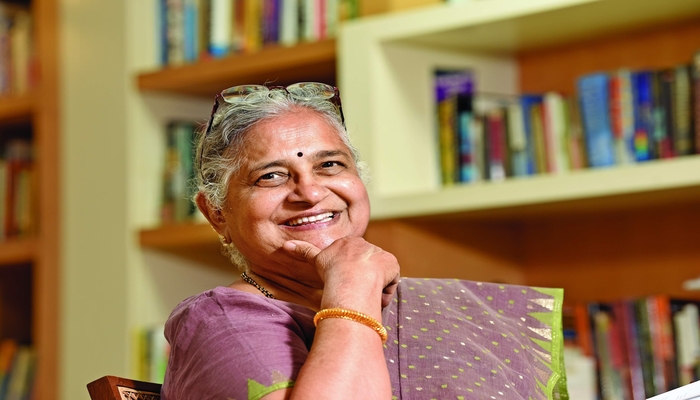
Sudha Murthy gets branded as ‘casteist’ by left-liberals for calling herself a “pure vegetarian”  

Hating on Brahmins has become the new cool in otherwise secular and ‘diverse’ India, as evidenced by the recent online criticism of Sudha Murthy, the former chairperson of Infosys Foundation, writer, and philanthropist after she revealed that she carries her own bag of food and cooking items when travelling abroad because she is a pure vegetarian.

Sudha Murthy, known for her candour, opened up about her love of vegetarian food and her cooking habits in one of the episodes of the ‘Khane Mein Kya Hai?’ show. Murthy stated that as a strict vegetarian, one of her biggest concerns is the prospect of the same spoon being used for both vegetarian and non-vegetarian food items.

“I am adventurous in my work, not in my food. I am in fact scared. I am a pure vegetarian, I don’t even eat eggs or garlic. What I am scared of is, is that the same spoon might be used for both, vegetarian and non-vegetarian food. It weighs heavily mind a lot! So whenever we go out, I only search for vegetarian restaurants. Or, I carry one bag full of food items. I carry ready-to-eat food items, that you have to just heat in water, I fry semolina and make it ready-to-eat, I also carry poha,” Murthy said. 

Sudha Murty also stated that she has a kitchen bag that has a “small cooker” that she uses to cook food. Ironically, she would frequently chastise her grandmother for never eating outside or travelling with food, both of which she has begun to do herself.

“When my Nani (grandmother) would travel 60 years ago, I used to joke with her that why do you bring food with you, why can’t you eat outside?” She would say she was used to it! Now I act like her! “I don’t care where I go; I always bring my own food,” she continued.

Left-liberals brand Sudha Murthy ‘casteist’ for being a “pure vegetarian”

Sudha Murthy’s remarks during the show soon sparked a discussion online with usual self-proclaimed flag bearers of equality and feminism trolling and criticising Murthy over her choice of being a “pure vegetarian” as they connected it with her caste. The usual Brahmin-hating left-liberals unleashed their hatred for a Brahmin woman proudly owning up to her food preferences.

Asia Editor at The Independent, Rituparna Chatterjee in her tweet claimed that the couple—Sudha Murthy and her husband Narayan Murthy sound more weird and casteist as they speak more, insinuating that Sudha Murthy is casteist since she prefers to be a vegetarian, that too, “pure”.

“They say if you want to know about a person, let them speak. The more this couple speaks, the more weird and casteist they sound,” Chatterjee tweeted.

Reacting to Chatterjee’s tweet, noted storyteller and journalist Neelesh Misra wondered how being vegetarian or carrying their own cutlery makes one casteist. 

“Um, how is this casteist? I am vegetarian. When I dine my friends ensure that the serving spoon used for my food isn’t used for non-veg food. Non-vegetarians might not understand this but it is so. If she wants to take her own cutlery as well, fair enough, what’s wrong in that?” Misra tweeted.

One ‘Opinionated Bong’ Arpan resorted to abusing Misra for merely expressing his thoughts as he blatantly termed “vegetarianism as casteism.”

One ‘Grouchy Maxx’ shared a picture of the Prime Minister of Britain and Sudha Murthy’s son-in-law holding some non-veg food items as she wrote, “Someone tell Sudha Murthy not to touch her son-in-law, daughter and their kids.”

The reluctance to respect Murthy’s choice of being a pure vegetarian and her food hygiene preferences as well as connecting it with so-called discrimination adds to the insinuation that pure vegetarians consider non-vegetarians as ‘untouchable’ or inferior, even though Sudha Murthy did not mention any such practice on her part. It is, however, impossible for the liberals to comprehend that being a vegetarian is a choice just like being a non-vegetarian and has little to do with caste(ism).

One Ruchika Sharma shared an image of a news article about Sudha Murthy’s said interview and ‘fixed’ its headline as she wrote, “She carries her casteism from India when travelling abroad: What if non-veg spoon pollutes the “pure” Murthy name?”

Another one wrote, “My suggestion is that Sudha Murthy should travel solely in a pure veg plane that only uses rasam or sambar for fuel. Fossil fuels are derived from decomposing animals after all.”

For some, vegetarianism is simply a food preference; for others, it is associated with the Hindu belief of Ahinsa (nonviolence); and many Jains practice vegetarianism in accordance with their religious beliefs; this, however, does not imply that they discriminate against nonvegetarians or impose their beliefs on them. People who choose not to slaughter an animal to quell their hunger understand how to respect other people’s eating choices and coexist peacefully.

In fact, reports suggest that contrary to common perception, vegetarianism has gained prominence among non-Brahmin castes as well. 

Vegetarianism is casteism, Halal is religious freedom: The Liberal hypocrisy

The same people going mad over Sudha Murthy being a “pure vegetarian” often support Halal certification of food items, which is actually a practice discriminating against non-Muslims as it involves the imposition of their religious connotations on the ‘non-believers’. 

Even with non-meat items, Halal certification is solely religious since it evaluates if the products include any components that are forbidden in Islam. The concept itself is discriminatory because the basis of the certification is a religious belief, whether a particular substance is ‘approved’ or not in the Islamic faith. However, liberals see nothing discriminatory in it; rather, they see a vegetarian woman who does not impose her beliefs and habits on others as discriminating. It’s also possible that these ever-outraged liberals bash vegetarianism yet defend or remain silent on Halal certification, knowing that the former will garner them validation from their ecosystem while the latter may have dire consequences.

Bihar: 1 killed, 2 injured in Katihar after police open fire on villagers protesting against power cuts

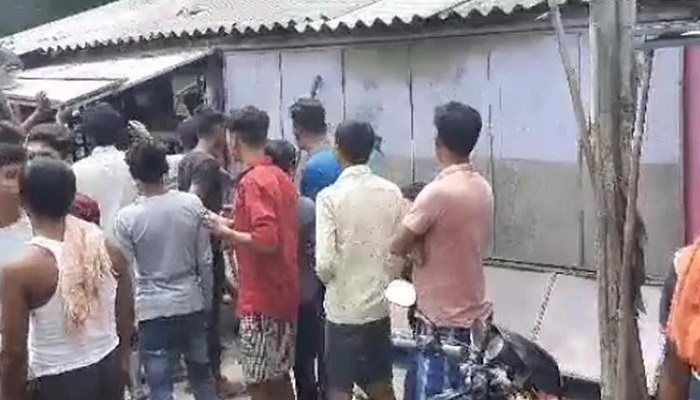
On the 26th of July, 1 person died in police firing at Barsoi in Bihar’s Katihar when the villagers gathered outside the office of the Electricity Department. They have been protesting against the irregular supply of electricity and higher power tariffs. However, in a shocking turn of events, the power outage protest turned deadly. Reportedly, at least one person died and two others sustained serious injuries in police firing.

According to a report in India Today, the person killed in police firing has been identified as Mohammad Khurshid (35). One of the injured persons is undergoing treatment at Sadar Hospital in Katihar. Reports claim that the second injured has been referred to Siliguri in West Bengal.  

As per the information received, Police officials tried to control the protestors and resorted to lathi charges and aerial firing. However, things went out of hand and the police opened fire. 

The Police officials stated that the mob carried primitive weapons including sticks and boulders. The mob got violent and pelted stones at the government office. Around 12 officials of the electricity department were injured in the attack. The officials claim that the violent mob and stone pelting prompted them to open fire. 

The principal opposition party, BJP criticised the Bihar government and demanded a judicial inquiry into the firing incident. 

Bihar BJP chief Samrat Choudhary targeted the Chief Minister. He said that on the one hand, CM Nitish Kumar claimed to provide 24-hour electricity to the people, however, his police has opened fire on villagers protesting against frequent power outages. 

Taking to Twitter, he wrote, “First job, now the government is shooting those who ask for electricity. In Bihar, the police of the Nitish government, which is claiming to provide 24-hour electricity to the people, has opened fire on the people protesting for the demand for electricity, which is extremely unfortunate. There must be a judicial inquiry into this firing.”

BJP National Spokesperson condemned the incident and likened Nitish Kumar to General Dyer, the British officer responsible for the 1919 Jallianwala Bagh massacre. He also mentioned the recent death of a BJP leader in police lathicharge to highlight that this was not an isolated incident. He tweeted, “General Dyer of Bihar opens fire on protestors demanding electricity supply in Katihar. One killed,2 grievously injured In Bihar anyone who demands their rights- youth, kisan, teachers, common man – get lathis or goli Recently a BJP leader was also beaten & died ! This is he true face of Gen Nitish Dyer & his tanashahi govt Is this SAVING DEMOCRACY? Or killing democracy?? Is this I.N.D.I.A’s idea of democracy? From Bengal to Bihar – bullet, bomb, blast?”

Former Bihar Deputy CM, Tarkishore Prasad attacked the Bihar government and claimed that it has failed on all accounts. 

Speaking to media personnel on police firing in Katihar, he said, “Bihar government has failed in every aspect. People were protesting over power cuts, but the police opened fire that led to the death of one person.”

Earlier, on the 13th of July, Patna police used lathi charges to disperse protestors and BJP workers protesting against the Bihar govt on the issue of the posting of teachers and the employment issue in the state. Bihar BJP leader Vijay Kumar Singh died due to a lathi charge conducted by the Bihar police. Later, a complaint was lodged against Chief Minister Nitish Kumar, Deputy Chief Minister Tejashwi Yadav, a senior police officer, and Patna’s district magistrate in this matter. The complaint was lodged by BJP worker Krishna Singh in Patna civil court.