Home Blog Page 2005

Kota reports 17th suicide by a student in 2023 as NEET aspirant hangs himself: Here’s what is leading to soaring student suicides in the city

On Monday, July 17, a 17-year-old NEET aspirant who had just arrived in Kota to study for the medical entrance exam committed suicide, bringing the total number of student suicides in Kota this year to 17.

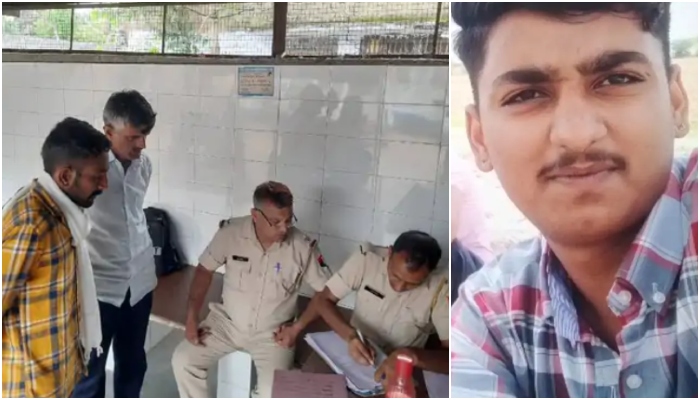
The victim has been identified as Pushpendra Singh, a native of Jalore, a city in the Indian state of Rajasthan. He had only recently arrived in Kota and had signed up with a coaching facility to get prepped for the NEET exam. However, on July 17, he was discovered dead at his hostel. No suicide notes have yet been found by police. The police stated that they are looking into the situation.

Pushpendra and his cousin Lalu Singh, who was also studying for the NEET-UG, shared a hostel room in the Jawahar Nagar area. On Sunday at noon, Pushpendra sent his cousin to make arrangements for dinner. After around 20 minutes, Lalu came back and discovered the door locked from the inside. He noticed Pushpendra’s body hanging from the ceiling fan after peeking through the window. The boy was taken to a hospital by the police as soon as they arrived, but the doctors declared him already dead. 

The deceased’s relatives came to the town to pick up his remains and requested the authorities to take action to curb the soaring suicide rate. “Why is this happening in Kota? Our child was fine when he left home and when he last spoke to his parents. Why did he do this? He was in Class 11, he came here 7 days ago, there was no stress,” said the teenager’s uncle Indra Singh.
Uncle of deceased teenager (Daini Bhasker)

Earlier this month, the Kota police had registered a case of abetment against a coaching centre while investigating the suicide case of Bahadur Singh, 17, from Rampur district of Uttar Pradesh. The student’s brother had alleged that the coaching institute harassed the teenage boy and suspended him from the institute. “It led to depression and distress, pushing the boy to die by suicide,” the family alleged.

Meanwhile, the recent occurrence has once more drawn attention to Kota’s troubling record of student suicides. Every year, thousands of students from all over the nation come to this educational hub in Rajasthan to study for competitive tests to enter the best engineering and medical schools in the nation.

Over the past few years, there have been a number of student suicides at Kota, with many placing the blame on the stress of studying and students’ dread of failing. Last year, Kota had a total of 15 student suicides. But this year, the death toll has already reached 17.

In May this year around 5 suicide deaths of students from the city of Kota in Rajasthan were reported. Later the number continued to rise and to date around 17 students have committed suicide, possibly out of exam pressure. Some students happened to hang themselves while others are said to have jumped off the tall buildings.

What possibly is leading to an increase in students’ stress?

The Police, taking cognisance of the suicides, had earlier noted that no suicide notes were found in several of the cases. However, it is clear that these students could not cope with the examination pressure and thought of ending their lives.

“If we look at the pattern, the suicides are reported mostly in April, May, and June. Most of the fresh students arrive in the city around that time. Many of them fail to cope. The results of exams also come in the same period…which increases the number of suicides due to failures,” Assistant police superintendent (Kota) Chandrasheel Thakur was quoted as saying.

It is clearly possible to imagine the stress to which these students have succumbed. Many young lives have been affected over the years by the 14-hour days, tests held even on Sundays, relentless pressure to ace a challenging curriculum, shame and guilt associated with needing a break, fierce competition, and the fear of failing. Adding to this is the loneliness associated with being far from home and family.

The combination of a sizable population of young people with rising aspirations and an economy with demanding competitive potential has created a public health crisis that urgently calls for attention.

NCRB data reads 8% of suicide deaths comprised student victims

As per the Accidental Deaths and Suicides report released by the National Crime Records Bureau (NCRB) in the year 2021, around 8 percent of the total suicide cases from 1,64,033 deaths by suicide comprised of students. Of these, 14 percent were reported from Maharashtra (1,834 suicides out of 13,089), followed by 10 percent from Madhya Pradesh, 9.5 percent from Tamil Nadu and 6.5 percent from Karnataka.
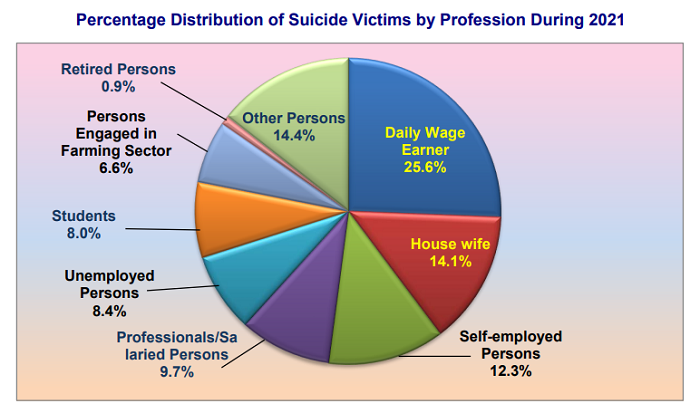
Image source- ncrb.gov.in

National Education Policy’s complete implementation needed

Several proposals have been pushed to curb the rising suicide rates of students, some of which seem absurd. The Indian Institute of Science had proposed to install wall-mounted fans in hostel rooms last year and remove the ceiling fans. Others meanwhile have only partially addressed the issue, such as the recommendations made by the Board of Intermediate Education in Andhra Pradesh in 2017 to reduce student stress, which included offering yoga and physical education programmes and keeping a healthy student-teacher ratio.

It is tragically obvious that the bigger problem, that of the punitive educational system which is just not meant to support young intellects or equip them for today’s economic realities is still not being addressed. It seems that it will take time for the New Education Policy 2020’s vision which offers more academic flexibility to lessen the strain on students to be completely implemented.

Conclusion: What can help students?

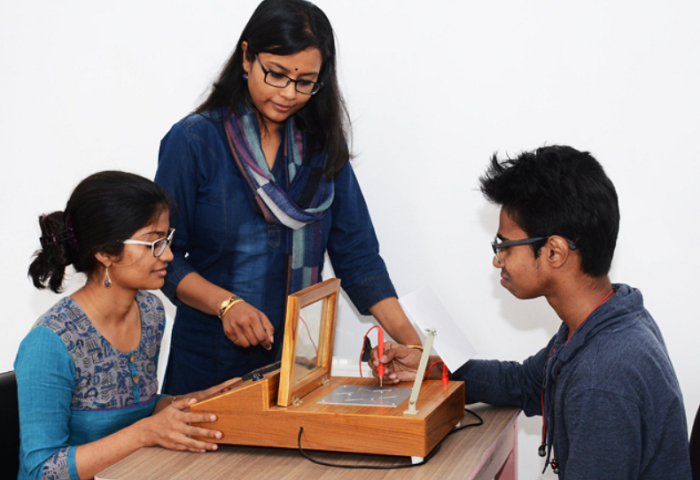
At present to confront this growing issue, it is important that all-  students, parents, teachers, institutes, and policymakers run in coordination and learn from their past failures. It is also important for the stakeholders to establish a smooth and open communication system which might help and encourage the students to cope with the pressure. For this, the option of establishing and promoting student counselling centres or career counselling centres at the institutes can be considered.
Counselling sessions (Representative Image; Source- Adamas University)

Students also at their level need to understand the importance of mental peace and balance it with their student lifestyle. They need to give balanced or subjectively proportionate importance to education and their careers and need to adopt the culture of demanding guilt-free breaks whenever needed.

Further, now is also high time for the coaching centres and institutes to stop building pressure environments within the premises to keep the students prepped for their future. The constantly furthered pressure environment does nothing but increase the anxiety and depression level of the students leading to soaring deaths by suicide.
‘Do you want to promote p*rnographic books for children’? Barack Obama faces backlash over letter against book banning in USA

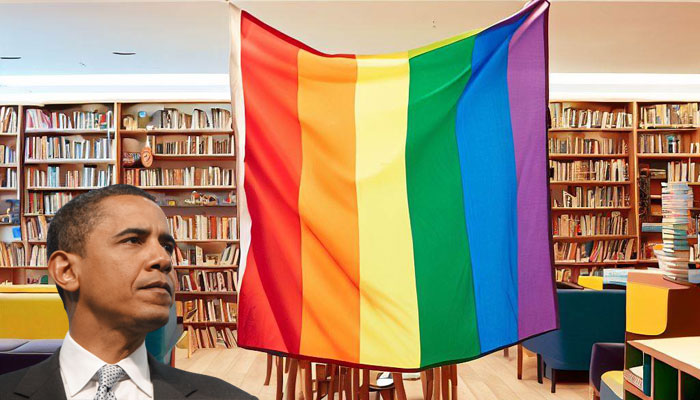
On 16th July (local time), former US President Barack Obama came in support of the librarians against the banned books. In a letter addressed to the librarians of America, Obama said that the free exchange of ideas is an important part of making sure that the citizens are informed, engaged, and feel like their perspectives matter.

Citing the First Amendment of the American Constitution that states freedom begins with the capacity to share and access ideas, he pointed out that some of these ideas often find space in the books. Remembering how writers including Mark Twain and Toni Morrison, Walt Whitman and James Baldwin taught him about America’s character, he said reading about people whose lives were different from his showed him how to step into someone else shoes.

Criticising the call for bans on books, he said, “Today, some of the books that shaped my life — and the lives of so many others — are being challenged by people who disagree with certain ideas or perspectives. It’s no coincidence that these “banned books” are often written by or feature people of colour, indigenous people, and members of the LGBTQ+ community — though there have also been unfortunate instances in which books by conservative authors or books containing “triggering” words or scenes have been targets for removal. Either way, the impulse seems to be to silence rather than engage, rebut, learn from or seek to understand views that don’t fit our own.”

He called such an approach “profoundly misguided” and “contrary to what has made this country great”. He said, “I believe such an approach is profoundly misguided and contrary to what has made this country great. As I’ve said before, not only is it important for young people from all walks of life to see themselves represented in the pages of books, but it’s also important for all of us to engage with different ideas and points of view.”

“It’s also important to understand that the world is watching. If America — a nation built on freedom of expression — allows certain voices and ideas to be silenced, why should other countries go out of their way to protect them? Ironically, it is Christian and other religious texts — the sacred texts that some calling for book bannings in this country claim to want to defend — that have often been the first target of censorship and book banning efforts in authoritarian countries,” he added.

The letter was issued in sync with a video posted by Kankakee Public Library in which Obama made a cameo appearance. As per Washington Post’s report, it is the first in a series of TikTok videos that the former President filmed with libraries across America to promote book access.

This is not the first time Obama has come out in support of the banned books. In 2022, calling books written by members of the LGBTQ community, he said, “Today, books that shaped my life — and many others — are being challenged in schools, bookstores, and libraries by people who disagree with certain ideas or perspectives. Often, these “banned books” are written by or feature people of color and members of LGBTQ communities. This is a mistake. Not only is it important for young people to see themselves represented in the pages of books, but it’s also important for all of us to engage with different ideas and points of view.”

Obama faced criticism for supporting banned books

Obama’s letter received sharp criticism on social media. Author Matt Walsh said, “Was your life shaped by pornographic books about gay s*x? Because those are the books that we are “challenging”.”

Founder of Libsoftiktok Chaya Raichik said, “Obama admits his life was shaped by gay p*rn.”

Director-Producer Robby Starbuck said, “If you’ll sit down and read Gender Queer, then defend making it available to kids, I’ll do you the favor of running ads all over the country to let people know. You’ll never do it because you know it would disgust normal people that your party wants kids to read it.”

Gays Against Groomers said, “These books are not representative of who we are as gays and lesbians. It is demeaning and damaging to us. We want them banned because they are smut and sexualize children. Why don’t you?”

Call for bans on books in the US

As per reports, in 2022 alone, around 2,200 book titles were challenged. American Library Association (ALA) pointed out that such calls for a book ban have doubled in 2022 compared to 2021. In the past two years, 19 US States passed or considered bills that would punish those who provide minors with obscene or sexually explicit books, something that parents have been demanding in the US.

While the call for a ban on books is a matter of debate, it must be noted that most of the demands raised in recent years were directly linked to books containing sexually explicit content. Parents have demanded to ban such books, especially in school libraries. To understand the reason behind it, examining the link shared by Obama in the tweet thread where he shared the letter is necessary.

Sharing a link to the website of the association ‘United Against Book Bans, he wrote, “To learn how you can support librarians and defend the right to read, join the Unite Against Book Bans campaign led by the American Library Association at uniteagainstbookbans[dot]org.”

At first glance, the website may look fine, but the problem starts when it promotes books that contain sexually explicit content. Such books have been found in school libraries, creating concern among parents. There is a section named “Right to Read Day” that talks about the “13 most challenged books of 2022”. It read, “The American Library Association released its list of the Top 13 Most Challenged Books of 2022, which put on display what we already knew – that the books being most targeted for censorship are those written by or about LGBTQIA+ people and people of colour.”

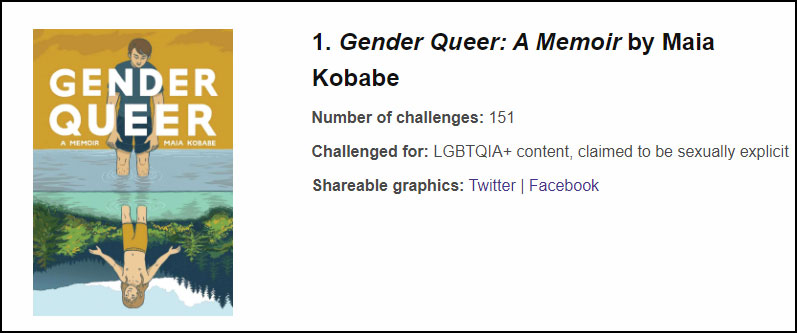
OpIndia examined a few titles mentioned in the books to understand the content. The first book or graphic novel on the list is “Gender Queer: A Memoir by Maia Kobabe“. It was challenged 151 times for having LGBTQIA+ content.

Gender Queer is the most challenged book because of its sexually explicit content. Source: ALA

In 2022, famous Twitter user Libsoftiktok raised the issue with the book several times and mentioned how the book was being promoted in schools. The book that contains pornographic content was found in a 7th-grade classroom in Hollidaysburg Area, SD, PA. Libsoftiktok mentioned that the book was not available in any library in the district, and the teacher brought it into the classroom on her own. “This is how desperate they are to give your kids porn.”

It was found to be available in NJ High School as well. Several librarians were found promoting the book, as per Libsoftiktok. While the book is said to be suited for adults (Amazon has listed it for 18 years and above), parents were furious when they learned about the book’s availability in the school libraries and classes.

In November 2021, OpIndia reported how NPR was criticised for supporting the book. It was reported that a controversy swept across various school districts in the United States after parents and guardians strongly disapproved of the graphic novel Gender Queer being available in school libraries. Recently, some schools in South Carolina pulled the book off the shelves after parents objected to explicit drawings in the book.

South Carolina Governor Henry McMaster has also ordered an investigation into how “Gender Queer: A Memoir,” by Maia Kobabe, which has explicit drawings of sexual acts, was found in the Fort Mill School District. “These things are dangerous, destructive, harmful, and against the law in South Carolina,” McMaster said at a press conference.

The second book that OpIndia examined was “This Book is Gay” which is targeted at children. It teaches kids how to have sex and use sex apps. On page no 156, it gives instructions on how to use sex apps where it tells to upload photos on the app and find the nearest “homosexuals” to chat and meet.

In chapter 9, the author speaks about how it was okay to talk about sex and homosexuality to kids because children are informed about “straight sex” at five. Interestingly, in chapter 9, the author says she was not a gay woman but kept teaching children about homosexuality, how to find “partners”, and people with similar sexual orientation, along with other stuff across the book.

Ram Navami violence in Bengal: NIA yet to get access to records pertaining to 6 FIRs

The Supreme Court on July 16, directed the West Bengal state and LoP Suvendu Adhikari to sit with Solicitor General Tushar Mehta and conducted the exercise to establish whether all six FIRs pertaining to the Ram Navami violence in Bengal are related to the same incident or not. The apex court was hearing a plea filed by the TMC government challenging Calcutta High Court’s order transferring the probe to NIA.

The NIA had filed six FIRs more than a month ago in connection with the Ram Navami violence in the TMC-ruled state. An NIA official reportedly confirmed to a media house that case diaries are yet to be handed over to the agency despite SC’s refusal to stay the HC order to transfer the probe to NIA.

The SC, while issuing the direction, noted that it will have to look at the heart of the incidents. It said that the question is whether the High Court has made any error. The bench headed by CJI DY Chandrachud was quoted by Bar and Bench as saying, “HC has directed to hand over all materials immediately to …here there was a direction to the central govt to act in accordance with section 6(5) NIA…Show us prima facie.. that this case dealt with explosives..”

Representing Adhikari, senior advocate PS Patwalia argued that “the government can on its own or by recommendation by state, transfer probe to NIA as per Section 6 of NIA Act.” Patwalia argued that the Bengal government is sitting over the case records which were to be transferred to the NIA.

He further argued that the state has not mentioned anything about explosives in the FIR even as patients suffered “serious injuries from glass bottles, crude bombs.” He noted that the HC had found that there was a deliberate attempt by the state police to not invoke the explosive substances act.

Senior advocate Abhishek Manu Singhvi and Gopal Sankaranarayanan appearing for the state argued that PILs are being filed one after another by political opponents, adding that not every case can be transferred in this manner as it “demoralises the state police force.”

Patwalia responded that only one petition is by a BJP leader and the rest are by lawyers related to the Ram Navami procession. While the state continued to argue that the allegations of explosives being thrown have to be established still, the court said that such information must be forwarded to the Centre and cannot be stalled.

The state is making its case that only one FIR be transferred to the NIA but the remaining five have no grounds for transfer. While Patwari has submitted that all FIRs are pertaining to the same procession, the state has argued that all are different with different accused.

The CJI has now directed to check if the FIRs in the Ram Navami violence case overlap and to prepare a short notice on the same. The case has been scheduled for hearing on Friday, 21st July.

NIA attaches poultry farm used by ISIS-inspired terror group SUFA, owner Imran Khan and others were planning attacks in Rajasthan

0

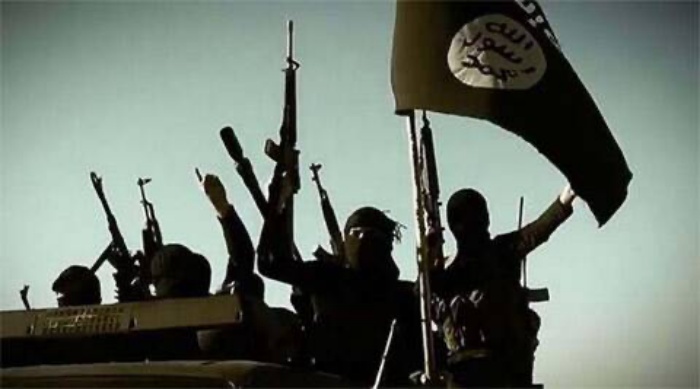
 The National Investigation Agency (NIA) has attached a poultry farm in Madhya Pradesh, which was used by members of an ISIS-inspired terror group ‘Sufa’ in connection with a conspiracy to perpetrate acts of terror in Rajasthan, the agency said on Tuesday.

The anti-terror agency attached the property on Monday under the Unlawful Activities (Prevention) Act 1967. The property is located in village Julwaniya, Viryakhedi Road, Ratlam, Madhya Pradesh.

As per the NIA, the property was owned by accused Imran Khan and was used by ‘Sufa’ members for radicalizing new cadres and training them in making Improvised Explosive Devices (IEDs).

The NIA had filed a chargesheet against Imran Khan and 10 other accused persons on September 22 last year, and it had recovered explosives and components used in the fabrication of IEDs, etc from the possession of the accused persons.

The NIA had earlier registered a case against ‘Sufa’, a newly formed local terror group, in April 2022, in connection with ‘Sufa’s criminal conspiracy to plan and carry out terrorist acts in Rajasthan.

The NIA investigations have revealed that ‘Sufa’ was deeply inspired by the activities of ISIS and was inclined toward the Jihadi ideology.

“Members of ‘Sufa’ had motivated other youth of the area also to join this group for carrying out terror acts. Investigations in the case are continuing,” said the NIA. 

(This news report is published from a syndicated feed. Except for the headline, the content has not been written or edited by OpIndia staff)

Vested interests exploited claims made by short-seller: Gautam Adani lambasts Hindenburg Research report

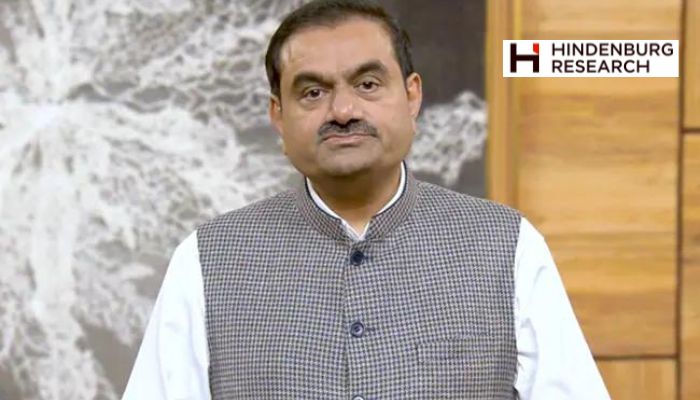
On Tuesday (July 18), billionaire businessman Gautam Adani hit out at US-based short-seller ‘Hindenburg Research’ at the annual general meeting (AGM ) of Adani Enterprises.

“While we promptly issued a comprehensive rebuttal, various vested interests tried to exploit the claims made by the short seller. These entities encouraged and promoted a false narrative across various news and social media platforms,” he emphasised.

The businessman added, “Consequently, the honourable Supreme Court of India constituted an expert committee to look into the matter…The committee included individuals, known for their independence and integrity. The report of the expert committee was made public in May 2023,”

“The expert committee did not find any regulatory failure…The committee’s report not only observed that the mitigating measures undertaken by your company helped re-build confidence but only cited that there were credible charges of targetted destabilisation of the Indian market,” Gautam Adani concluded.

Hindenburg Research report accuses Adani Group of fraud and stock price manipulation

Hindenburg Research, which claimed of having conducted an investigation for the past two years, said Gautam Adani, the founder and chairman of the Adani Group, has a net worth of approximately $120 billion, mainly due to an 819% average stock price growth in the group’s seven most significant publicly traded companies over the last three years.

The research involved interviewing multiple individuals, including former senior executives of the Adani Group, examining thousands of documents, and conducting due diligence site visits in nearly a dozen countries, Hindenburg Research said.

“Even if you ignore the findings of our investigation and take the financials of Adani Group at face value, its seven key listed companies have 85% downside purely on a fundamental basis owing to sky-high valuations,” said the forensic financial research company in its report.

US-based investment research firm Hindenburg Research published a 32,000-word report, accusing the Adani Group of stock manipulation and use of tax havens.

The Adani Group trashed the Hindenburg Research report as a “malicious combination of selective misinformation and stale, baseless and discredited allegations”. On January 29, the Indian conglomerate slammed Hindenburg Research with a 413-page report, dismissing allegations levelled by the latter

Kerala Congress MLAs break into Kalady police station, open lock up and release two Kerala Students Union workers, booked

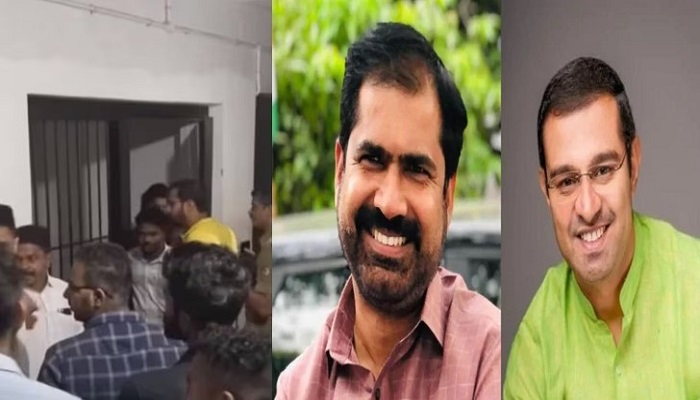
On the 17th of July, two Kerala Congress MLAs were booked in connection with the siege of Kalady police station. The Congress leaders are accused of trespassing into the police station and then forcibly opening the station lock-up to free two Kerala Students’ Union (KSU) activists. Notably, KSU is a student wing of the Congress party. 

According to the police, Angamaly Congress MLA Roji M John and Chalakudy MLA Saneesh Kumar were accompanied by 13 others.

On Sunday, July 16, the Congress leaders reached the Kalady police station and staged a sit-in protest in front of it, alleging that police illegally took into custody a few leaders of the KSU Sree Sankara College unit. On Monday, July 17, they trespassed into the Kalady police station and freed the two KSU student activists who were lodged in the cell on Sunday morning, 16 July. 

As per the information received, a case has been registered under various sections, including assault or criminal force to prevent a public servant from discharging their duty (IPC 353), criminal intimidation (IPC 506), and resistance or obstruction to lawful apprehension (IPC 225B).

Congress MLA Roji M John, who led the protest told Republic TV that any self-respecting Congress member would not remain a mute spectator to police excesses against supporters of the party. 

He said, “A KSU leader, whose name was not even in the FIR filed was taken into custody, handcuffed in the dead of the night, and kept in a lock-up without even being given a glass of water.” 

Congress accuses Kerala Police of working as ‘hitman’ at the behest of the ruling CPI(M) government

The Congress leader alleged that the students were treated like rape or murder accused. He said, “The students were handcuffed and treated like accused in murder and rape cases. They are student union functionaries and not criminals. The present Kerala Police have no courage to handcuff rape and murder case accused.” 

He accused the Kerala Police of working as a hitman for the ruling CPI(M). He added, “We respect the police if they follow the due procedure of law. If they try to take action on the behest of CPI(M) leaders, we will not tolerate it.” 

Congress’ state unit posted a tweet alleging the Kerala police of partiality against the KSU activists and going soft on other outfits.

Earlier, on 14 July, the KSU activists were detained after clashes broke out at the Sree Sankara College campus in Kalady. Police took two student union members into custody, however, they were later released on bail. 

Congress leaders claimed that the KSU unit president was detained and taken into custody on 15 July. 

Afterwards, KSU workers besieged the police station to protest against the filing of a case against the activists. Congress’ student wing registered a case in connection to the clashes at the Sree Sankara college campus. 

The party workers protested when the local police took Unit President and Union Magazine Editor Rajeev Valappan and Visual Media student Dijon P. Jeeb in custody. They protested that their names were not even mentioned in the FIR. 

Afterwards, Chalakudy MLA Saneesh Kumar Joseph and Chalakudy Municipal Corporation Chairman AB George held discussions with fellow leaders and staged a protest in front of the police station. MLA Roji M. John protested in front of the lockup.

However, the protest was later withdrawn following an assurance from Perumbavoor ASP that the KSU workers will be released on bail.

According to the media reports, the Police have decided to take strict action in relation to the clashes at the Sree Sankara College campus. Reportedly, the police will not issue clearance certificates to those students who were allegedly involved in the clashes at the college campus. Apparently, this will hamper their higher studies, and employment opportunities, and limit them from travelling abroad. 

Maharashtra: Maulana Shoaib Noori who converted a 20-year-old Hindu girl, forced her to marry rapist Sayam Qureshi, arrested from Indore

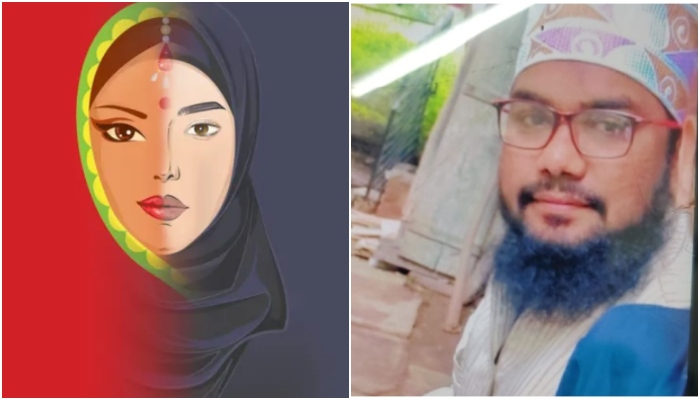
In an update to the recent case of Love Jihad reported from the Kopargaon region of Maharashtra’s Ahmednagar district, the fifth accused Maulana who converted a 20-year-old Hindu girl in Indore, Madhya Pradesh has been arrested by the Police. The arrested Maulana has been identified as Maulana Shoaib Noori and has been charged for pressuring the victim woman for conversion to Islam and ‘nikah’ with the primary accused, Sayam Qureshi.

The case comes from the Ahmednagar district of Maharashtra. Accused Sayam Qureshi along with his associates Imran Sheikh, Chotu alias Kaleem, Faiyyaz, and Maulana Noori, trapped a Hindu woman in a love affair through the Instagram app and then forced her to convert her religion to Islam. Sayam Qureshi also intoxicated, raped, and assaulted the woman.

OpIndia has obtained the FIR copy of the case to learn that the accused had also threatened the woman and had taken her derogatory photos and videos which he used to blackmail her. “Now you are alone here. No one is going to come to save you,” they said before forcefully intoxicating her. Sayam then raped her while the other accused persons shot derogatory videos and photos of the event, as per the complaint.

The woman was reportedly converted to Islam by the now-arrested Maulvi in Indore, Madhya Pradesh. Sayam who is a resident of Indore had the victim woman to the city after which he took her to Maulvi Shoaib Noori. Noori then allegedly pressurised the woman to get married to Sayam and convert her religion to Islam. Sayam also blackmailed her against the videos and forced her to read Namaz.

The Police earlier had arrested Sayam, Imran Sheikh, Chotu alias Kaleem, and Faiyyaz and were on a lookout for the Maulana. However, the Maulana was identified and arrested by the Police on July 16. The sections imposed by the police in the case are 376 (rape), 363 (kidnapping), 354 (outraging woman’s modesty), 328 (Causing hurt by means of poison), 295, 295A (hurting religious sentiments), 298, 504 (insult, provoking), 506 (criminal intimidation) and 34 of the Indian Penal Code, 1860.

‘A sense of alienation looms in Bengal, need a strong Nationalist movement to counter it’: BJP leader Swapan Das Gupta on political violence, corruption, and social issues

The Bharatiya Janata Party won more than 10,000 seats and registered a vote share of 22.88% in the recently concluded Panchayat elections in West Bengal. The saffron party improved its tally despite reports of wide-scale political violence, arson, and recorded incidents of ballot box tampering and destruction. In a disgrace to the democratic setup in the Eastern state, there were reports of rampant attacks on candidates and even incidents of destruction of ballot boxes.   

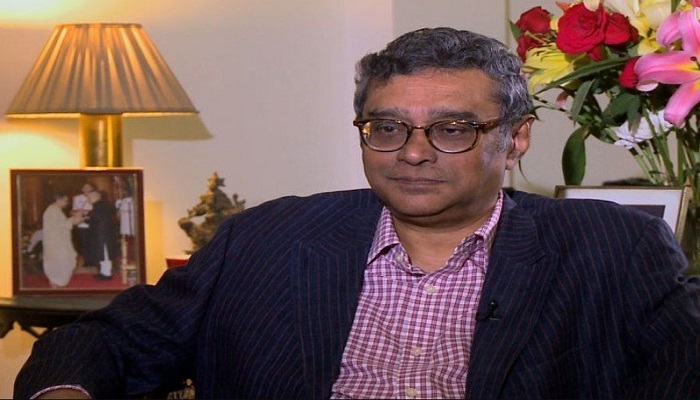
Amid all of this, OpIndia spoke to the two-time Rajya Sabha MP Swapan Dasgupta. 

Dasgupta obtained his bachelor’s degree in 1975 from St. Stephen’s College, University of Delhi. He completed his Ph.D. at SOAS University, London. In that era, he wrote a thesis after deeply studying the politics of division and discrimination in the Midnapore district of West Bengal. He has also been a Visiting Honorary Professor at JNU. 

He was bestowed with the prestigious Padma Bhushan award for his contribution to the field of education and literature. He has also been a Post Graduate Fellow at Nuffield College, University of Oxford. During his long-stint in journalism, he held editorial responsibilities in leading media organizations like ‘The Indian Express’, ‘Times of India’, ‘India Today’ and ‘The Statesman’. Since 1990, he has been associated with the Bhartiya Janata Party. He has also written a book titled ‘Awakening Bharat Mata: The Political Beliefs of the Indian Right’.

Here are the excerpts from the Interview

Question: More than 40 people died during the Panchayat elections. It is also claimed that several leaders who won on a non-TMC ticket have fled the state to Assam fearing for their life. In this climate of fear, what is your take on the democratic structure in the state? And is democracy only limited to elections?    

Answer: It is a concerning issue that during this year’s panchayat elections, violence was witnessed not only during the voting phase but it started from the nomination day itself and it has not seized even after counting was over. Around 50 people have died which include people from all parties – TMC, BJP, Left, and ISF (Indian Secular Front).

Most of the violent incidents took place in the Muslim-dominated areas. The reason behind this is that in the 2021 assembly elections, the Trinamool Congress captured all the votes of the Muslims. Around 90-95% of the voters from the Muslim community went to them. Total polarisation among the Muslim community was one of the prominent reasons for the defeat of the BJP in the assembly election. However, in this election, there has been a split in the Muslim votes which has resulted in these violent incidents. 

Most of the violence took place in Murshidabad and Malda districts. There is a silent intimidation going on. An anti-democratic culture of ‘Jiski lathi, usi bhains’ (might is right) and ‘Winner Takes All’ has been prevailing in the state. This was started by the Left and TMC has copied it, TMC is a carbon copy of the Left. 

The cadre of Marxists and Trinamool is different, but both are similar with only one difference. Corruption during CPM’s regime was limited and it was the party that indulged in corruption. But in Trinamool’s case, corruption is all-pervasive from the top leadership to the lower rungs. From the state government to the panchayat level, everyone is in cohorts with each other and everyone’s share has been fixed in all of this. 

On account of rampant corruption, the funds allocated for Central Government’s schemes (MNREGA, Awas Yojana, Har Ghar Jal, etc.) have been usurped. This has ruined the economy of West Bengal and corruption has been institutionalised as a source of income. They are desperate to win because they all want is to be assured of their source of income for the next five years. Now, for all these reasons, there is an urgent need for major reforms in the state. 

Question: The Lok Sabha tally of Trinamool Congress declined from 34 seats in 2014 to 22 seats in the 2019 general elections. Is it possible that the spate of violence during Panchayat elections can be a strategy to wipe out BJP and the entire opposition from the state especially before the 2024 Lok Sabha polls?  

Answer: It is difficult to gauge what will be public opinion in 2024 based on the result of this panchayat election. The widespread loot and voter fraud – is a matter of concern. The State Election Commission conducted the panchayat elections through ballot boxes. Fake votes were cast on an alarming level, there were widespread attacks and voters were under constant threat, so it is difficult to estimate but it is certain that this will have a bearing on the Lok Sabha elections. 

During the earlier elections, TMC’s corruption didn’t become a deciding factor because it is perceived that MPs have limited power in the state’s affairs. But when voting pertains to the Central level, the voters are flexible. They see Lok Sabha and assembly elections differently. It happens that those who voted for Trinamool Congress in the assembly elections may end up voting for the BJP in the Lok Sabha elections.

At the state level, the organizational structure of the BJP is still a cause of worry. It is still not that strong and has many shortcomings or bottlenecks. However, to instill confidence in voters, central forces can be deployed 3 months prior to the elections and if the Election Commission conducts voting in 8 to 10 phases with sufficient presence of central forces, then you will see a completely different picture in Lok Sabha elections as compared to the Panchayat elections. 

Question: Apart from Mamata Banerjee’s politics, what is your opinion on the society of Bengal? With the Left rule persisting for a long time, has the prevalence of political violence or the saying ‘Political power grows out of the barrel of a gun’ become a norm in the general society?

Answer: There are 2 things. First, is political influence. There has been a culture of violence in the Leftist struggles. It pervades the society as well. TMC defeated the Left by using their own technique. This side effect unfortunately has persisted within society.

West Bengal was once among the top-performing states in the country, around the time of Independence. Now, the same Bengal which was the number one or two state, has slipped to 17 or 18th place. Odisha is ahead and soon, Assam is expected to overtake the state. 

Bengal is now lagging behind in terms of development and job creation, with no development taking place under the current dispensation. Businessmen are sick and tired of tollabaazi which is nothing but extortion. And corruption has become so rampant that large sums of money have been unearthed from the beds of TMC leaders

What this means is that since the economy of the state is in the doldrums, corruption has become a dominating factor in virtually everything. Everyone is trying to loot as much as they can, from wherever they can. To add insult to injury, violence has become an integral part of this. The social system is such that educated and talented people are fleeing to other metropolitan cities of the country or abroad. They don’t want to stay here anymore and take a one-way ticket to safety. 

On account of this looming migration crisis, the average age in Kolkata has shot up and it is higher as compared to other prominent cities of the country. Only the older generation, those who have either retired or have reached retirement age, have stayed back in Bengal. The productive generation, the youth, and the workforce do not want to stay in the state any longer. That’s why, nowadays West Bengal is performing worst in terms of migrant labour and is on top of the list in this matrix. 

Question: Bihar earlier used to witness political violence of terrifying proportions. There were clashes on caste lines, forward-backward, between landlords and laborers. Thankfully, all of that is a thing of the past. So, what do you think are the social causes of political violence in Bengal? And why is it not ending?

Answer: Earlier when violent incidents unfolded, it was claimed that its roots lie in Bihar. At that time, Bihar had become the epitome of every major problem in the country. Back in those times, there were frequent reports of groups like MCC and Ranveer Sena perpetrating violence. However, this was the case around 15 years back. Now except for the minor clashes here and there, Bihar has gotten rid of large-scale political violence.

Bihar has seen some changes and is moving towards economic recovery. There is a lot left to be done there but nonetheless, it is making progress. Whereas Bengal is only traversing backward. The education system is in complete shambles and the left has to share the blame for this. They started ruining the education system and the situation has worsened thereafter. 

There is another major factor for the social degradation of Bengal. Here the mentality of regionalism has crept in. Some have started to feel isolated and consider Bengal as different from the rest of the country. This means that there is a feeling of emotional secessionism. This is why those coming from other states are called ‘outsiders’ (bohiragato). Previously, Bengal welcomed individuals from UP-Bihar, integrating them into the fabric of life here and many of them speak the Bengali language. 

Thousands of laborers, workers, small and large businessmen used to come here from Bihar. However, this trend is gradually diminishing. Despite maintaining old contacts, the influence of Bengal on the entire state of Jharkhand, particularly in regions like Madhupur, Deoghar, or Bhagalpur, is also diminishing.

The people of West Bengal have to accept the reality. They are going downhill – culturally, politically, and economically. West Bengal’s political influence has waned substantially and it virtually has no influence left. Back then, there was Pranab Mukherjee but he too had more sway in the National politics than in Bengal. For a long time now, the state has kept itself separate from the mainstream and its side effect are glaring in the eye. 

Question: Other than society, now let’s talk about the system, government, and policing. There have been news reports like ‘explosion inside the house while making bombs’ and ‘crude bomb found in bags’ coming to the fore from Bengal at regular intervals. If these things are becoming a norm, isn’t there an urgent need for Police reforms in the state?   

Answer: Before implementing police reforms, it is crucial to address the recruitment system within the police force. Currently, there is an imbalance. More individuals have been recruited into the civic police rather than the professional police. The kind of professional police that was needed has not been recruited. While, they have cited lack of funds as a reason for this, in reality, the police system has become highly politicized.

During the recent Panchayat elections, the Police helped the miscreants in tampering, destroying, and looting the polling booths. Apparently, most of the complaints in the courts are against the police. The police personnel played an active role in the violence. 

More than police reform, they (the entire police department) need to be reconstructed in West Bengal.

Previously, there was a well-functioning police force, but it has been utterly destroyed. Even today, the Kolkata police are better than the rest of the Bengal police. The governance system of West Bengal has collapsed and the culture of governance has been ruined.

I think a different kind of revolution is needed to save Bengal – not the Red Revolution or Trinamool Revolution. We need a Nationalist Revolution. Everyone respects Bengali culture, but it is not different from India. The Bengali culture enriches India. If you go on shouting ‘Ours is ours’ then nothing will happen.

Question: The last question is about the workers of the party irrespective of the party they belong to. They are the first ones to face the major brunt of political violence. On account of the long reign of leftist rule and the idea that “party is everything” and “kill or die for the party”, has this psyche kicked in other parties as well? Has the culture of political violence percolated in other parties too? As we have not seen a visible change in the pattern of election violence in Bengal even after the change of government in the state. 

Answer: If you go to the Hindi belt, it is stated that the political workers engage in ‘politics’. Whereas, in West Bengal, it is said that ‘Party kore chhi.’ Which party? It doesn’t matter to which party he belongs, what matters more in Bengal is the party. 

CPM started a trend of separating ‘party’ from ‘politics’ and now TMC is doing the same. The situation is such that whatever you do, you have to join the party. In recent times, Trinamool has been promoting this party culture.

Earlier, there was a centralized system in Trinamool and only a single window for clearance. But now many groups have cropped up within Trinamool itself at different levels. The party is everything now and it is also the guardian. This mentality has pervaded all the parties.

Delhi: Salman stabbed to death by the family of his Muslim girlfriend in Jaffrabad

On Monday (July 17), a 25-year-old man named Salman was stabbed to death by the family of his lover in the Jaffrabad area of Northeast Delhi.

As per reports, the victim was attacked in the neck and chest. On being informed about the stabbing case around 5:15 pm on Monday, the local police rushed to the spot and found Salman lying dead on the ground.

The deceased was attacked by his beloved’s father, Manzoor, elder brother Mohsin and her minor brother. Salman, a resident of Braahmpuri, was threatened several times by the girl’s family several times over the past 2 years.

Deputy Commissioner of Police (northeast Delhi) Joy Tirkey confirmed that Salman died on the spot after succumbing to his stab injuries.

The police have registered a case against the trio and initiated a probe into the matter. Manzoor, Mohsin and his minor son are on the run since the gruesome murder.

Parvez beaten to death at his girlfriend’s house in UP

On June 29 this year, a man named Parvez entered a girl’s house and was beaten to death. The incident took place in Vandana Vihar in Ghaziabad district of Uttar Pradesh.

At around 7 o’clock, he reached the girl’s residence. However, her parents arrived in the meantime and saw them together. They began assaulting him and were joined by the girl’s cousin and another local resident.

Parvez sustained injuries on his head after being hit with an iron rod. The police also rushed to the spot after learning about the occurrence. The victim was taken to the hospital for treatment where he was declared dead on arrival. The girl is said to be a student of Class 10.

Trailer of Ajmer 92 released, reflects a story of the serial gangrape of at least 250 girls, movie set to release on 21st July

The extent of crime against women, how far a journalist would go to cover it, that initial shadow of doubt cast on the victim, that lackluster administrative reaction guided by the fear of offending a community, what it means to parent a girl child, what it means to be a woman, and what it meant to be a woman in 1992 in Ajmer, these are some of the pertinent aspects highlighted in the newly-released Ajmer 92 trailer.

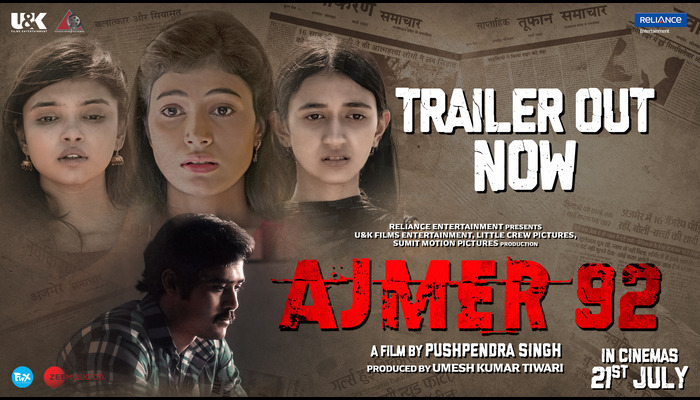
Three days after its teaser release, a compelling trailer of Ajmer 92 was released on 17th July, the movie is directed by Pushpendra Singh and produced by Reliance Entertainment in collaboration with U&K Films Entertainment, Sumit Motion Pictures, and Little Crew Pictures.

It will be released on 21st July, Friday.

Based on true events, Ajmer 92 tells the story of the grim plight of as many as 250 girls who were trapped, sexually exploited, and blackmailed for years by many influential men, including Congress leaders and the caretakers of Ajmer Dargah, in the city of Ajmer in Rajasthan in 1992.

The trailer opens with a birds-eye view of the city of Ajmer. A couple approaches a local journalist with a photo of their daughter-in-law to-be asking him to find out whether she was raped. The trailer showcases the journey of a local reporter as he unearths the spine-chilling scale of serial gang rape cases across the city.

From the gut-wrenching nature of the crimes and their aftermath to the ethical dilemma which stares at a small-time reporter in his quest for truth, the trailer has set high expectations amongst netizens.

The trailer shows a politician, played by veteran actor Manoj Joshi, telling the cops, “Make that journalist understand not to disrupt peace in the city.” Another scene shows a cop telling the journalist that it is not as easy to bring this case to the fore as you think.

The cop further says that it is a matter of dignity for so many girls. “It will become difficult for them to step out of their homes, it will become difficult for them to live,” the cops cautions the scribe who replies by saying that it is already difficult for them (the girls) to live given how they are still being blackmailed and raped.

Twitterati has largely lauded the makers for bringing forth an untold story that was brushed under the carpet.

The plot of the film uncovers one of the largest rape scandals India has ever witnessed, in which hundreds of girls were blackmailed into being violently raped by influential people with political connections. Many of the girls were from affluent homes, even the daughters of government officers, but the perpetrators kept escaping justice for years.

The film stars Karan Verma, Sumit Singh, Sayaji Shinde, Manoj Joshi, Shalini Kapoor Sagar, Brijendra Kalra, and Zarina Wahab, among others. The 2-minute 45 seconds long trailer of Ajmer 92 appears promising as it sheds light on a very key question: Should the life, and dignity of women allowed to be endangered, and should truth and justice be ignored for the fear of communal riots? This reflects towards the end of the trailer as the reporter says, “Sir the issue is not that of Hindu-Muslim riots, the issue is that of the rape of those 250 girls.”

Here is the detailed report on the years-long crime against women that thrived in Ajmer in 1992.