Home Blog Page 2034

ISI’s hate toolkit unveiled: Twitter trends, protest rallies, and posters planned to disrupt PM Modi’s US visit

Prime Minister Narendra Modi is scheduled to embark on a three-day tour to the United States starting Tuesday. During his visit, PM Modi will participate in numerous programs. However, recent reports have revealed significant news concerning the PM’s trip. Pakistan’s intelligence agency, ISI, has reportedly conducted a meeting with several pro-Khalistan organisations operating in America, as well as various groups working against India, with the intention of plotting a significant conspiracy during PM Modi’s visit to the United States.

Intelligence sources indicate that the ISI has been operating actively in America over the past few days with the aim of thwarting Prime Minister Modi’s visit. Furthermore, the ISI has allegedly provided financial support to numerous organizations to carry out a conspiracy against India. Pakistan is concerned about the elaborate preparations made to welcome Prime Minister Narendra Modi during his visit to the United States, as it is apprehensive about India’s increasing global stature and reputation.

As part of Pakistan’s efforts to oppose Prime Minister Modi, a toolkit has been reportedly prepared. The toolkit outlines strategies and plans on how to protest against India and specifies the locations where these protests are intended to take place. Additionally, preparations have been made regarding the selection of posters to be used during the protests. Furthermore, a dedicated website has been created to facilitate the execution of the alleged conspiracy against India. The website encourages individuals to register themselves, presumably to participate in carrying out the planned activities against India.

Posters containing false propaganda regarding human rights violations by the Indian Army have allegedly been prepared, aiming to discredit their reputation. Additionally, hashtags such as #ModiNotWelcome have been generated to further the opposition against Prime Minister Modi. These actions bear resemblance to past instances where the ISI has orchestrated conspiracies to undermine India’s rising global standing. Previously, after Nupur Sharma made a controversial statement, several anti-India hashtags were promoted on social media platforms from Pakistan.

It was already reported earlier that Several Islamist and anti-India groups have planned protests during Prime Minister Narendra Modi’s upcoming USA visit. Several organisations including the Indian American Muslim Council (IAMC), Peace Action, Veterans for Peace, and Bethesda African Cemetery Coalition have planned to orchestrate a protest outside the White House on the 22nd of June.  PM Modi is scheduled to meet President Biden on that day in Washington DC on that day.

They have assembled banners saying “Modi Not Welcome,” “Save India from Hindu Supremacy,” etc. In New York, they have planned a protest named “Howdy Democracy,” a take on “Howdy Modi” event in 2019 attended by PM Modi and President Trump. Amnesty International and Human Rights Watch have announced that they will screen the highly controversial BBC documentary on 2002 Gujarat riots.

Human Rights Watch’s Asia Division director Elaine Pearson wrote a letter to Biden urging the White House to raise concerns, both publicly and privately, about these so-called Human Rights issues in India during Modi’s visit.

The upcoming visit of Prime Minister Narendra Modi is scheduled to commence on June 21st. As part of his itinerary, PM Modi will visit the esteemed White House during this period. US President Joe Biden and First Lady Jill Biden have made arrangements for a state banquet in honour of Prime Minister Modi, scheduled for June 22nd. Furthermore, during his visit, PM Modi is slated to address a joint session of the US Congress on the same day, providing an opportunity for him to share his perspectives and engage with the American legislative body.

In recent times, key members of President Joe Biden’s administration have engaged in discussions with India, demonstrating clarity and enthusiasm in their approach. These conversations have placed significant emphasis on the need to overcome outdated perceptions and address any lingering reservations regarding India within the American bureaucracy.

The White House is positioning Prime Minister Modi’s visit as a catalyst that will strengthen the bond between the two nations and propel their relationship to new heights. Kurt Campbell, the White House Coordinator for the Indo-Pacific, expressed that the bilateral relationship is experiencing a period of significant transformation. Notably, Campbell himself had undertaken a visit to India earlier this month, underscoring the importance placed on fostering closer ties between the two countries.

Setback for Uddhav Thackeray as Shiv Sena leader and ex-MLA Shishir Shinde resigns, had dug cricket pitch to stop Indo-Pak match in 1991

Former Shiv Sena MLA, Shishir Shinde, dealt a blow to Uddhav Thackeray’s faction on Saturday 18th June 2023, by submitting his resignation from the party. In his resignation letter addressed to the party chief, Shinde expressed disappointment over being assigned no significant responsibilities despite serving as the deputy leader of the party for a year.

Shinde further noted that he had not had any meetings with Uddhav Thackeray in the past six months, despite making several attempts to schedule one. He expressed his frustration at wasting four years within the Shiv Sena, claiming that he had been given only a nominal position without any substantial roles or responsibilities.

The prominent incident that brought Shishir Shinde into the limelight occurred thirty-two years ago, in 1991 when he and a group of party workers dug up the pitch at Mumbai’s Wankhede Stadium to disrupt an India-Pakistan cricket match. This incident sparked discussions nationwide and garnered significant attention.

Shishir Shinde had previously left the Shiv Sena in 2005 to support Raj Thackeray when the latter parted ways with the party. He rejoined Shiv Sena in 2018, but until 2022, he was not entrusted with any significant responsibilities. When Eknath Shinde rebelled within the Shiv Sena, Uddhav Thackeray appointed Shishir Shinde as the deputy leader of the party. However, feeling marginalized by not being given any notable responsibilities during his one-year tenure, he has chosen to leave the party.

The resignation of Shishir Shinde from Shiv Sena occurred on Saturday, June 18, 2023, adding another twist to the political landscape.

New diversity rules for Best Picture at the Oscars termed totally ridiculous by Academy voters

The Academy of Motion Picture Arts and Science is going to follow new inclusivity standards while considering the Best Picture nomination. Notably, a movie will be considered for the Best Picture nomination only if a lead or significant supporting character in the film is from an “underrepresented racial or ethnic group”; the main storyline of the film has to focus on an underrepresented group or at least 30 per cent of the cast is from two or more underrepresented group. By definition, a person from an underrepresented group will be a woman, a member of an ethnic minority, LGBTQ or disabled.

The online form required to be filled out to submit a movie for Oscar consideration now requires information about race, gender and sexual orientations of the cast and crew members. Additionally, filmmakers also have to answer questions about their health, like whether they had autism, or dealt with chronic pain or mental illness, etc. These questions are part of the Academy’s new representation and inclusion standards for Oscar eligibility (RAISE), announced in 2021.

The Oscar voters are not happy with the inclusivity standards. A director, speaking to The Post, expressed his displeasure over it. Notably, the director is also from a diverse group. “I am for diversity, but to make you cast certain types of people if you want to get nominated? That makes the whole process contrived. The person who is right for the part should get the part. Why should you be limited in your choices? But it’s the world we’re in. This is crazy”, said the director.

During an interview, Jaws fame Richard Dreyfuss expressed his displeasure during an interview in May 2023. He said on PBS, “They make me vomit”. He called movies an art form and a form of commerce. He said, “No one should be telling me as an artist that I have to give in to the latest, most current idea of morality.”

While quoting an unnamed but apparently relevant producer from Hollywood, The Post noted that only a handful of people are in favour of the new rules. However, unlike Dreyfuss, people are not speaking up out of fear of cancel culture. “Everyone thinks the Academy went too far. It’s ridiculous to tell us we have to regulate our work. We talk about it amongst ourselves, but it’s not worth speaking up publicly,” he said while speaking to The Post.

If looking at the winners from the past few years, the criteria have already been met. For example, in 2023, ‘Everything Everywhere All at Once’ had Michelle Yeoh as the lead, and most of the cast was Asian. In 2022, the story of ‘CODA’ revolved around a deaf family. In 2021, ‘Nomandland’ was based on a widowed character that travelled to the US in a van. In 2020, ‘Parasite’ was based on the story of two South Korean families.

Notably, the 2019 academy award ‘Green Book winner was circled by controversies as it was accused of “spoon-feeding racism to white people”.

The other movies from the list of nominations this year had several films that would have failed to meet the criteria. For example, All Quiet on the Western Front had a historically accurate white male cast as it was a World War I period film.

From ‘Elvis’ to ‘Schindler’s List’, ‘Gladiator’, ‘All the President’s Men’ and several other movies from the past would have failed to qualify for the Oscars if the new standards were in place.

“Imagine if great films were not made because of studio or corporate mandates that every film has to conform to the [inclusionary] standard for the Best Picture nomination?” the director said while speaking to The Post.

If not the cast, a film can, however, meet the criteria by hiring people from underrepresented ethnic or racial groups in the making of the film, providing training opportunities, working on publicity, paid internships, marketing or distribution.

A film critic and historian who was a member of the Academy said in a statement to The Post, “I’ve never witnessed such a thing happening in the world of the arts. I’ve never seen restrictions on what you can do to receive a certain recognition [for one’s art].” Calling the new guidelines “bold and audacious”, he said it would be groundbreaking in a way that can be tough to navigate. He added that some of the most talented people in the industry may even forgo Oscars recognition. He said, “If a truly outstanding film comes along that does not meet those requirements for a best picture nomination, then the producers will have accepted that.”

A veteran Hollywood executive said it is essential to make the best movie. He said, “I want to be inclusive, but I don’t want to put in a person from a certain ethnic group who doesn’t belong there because of the story being told. And I don’t want to make a movie with an LGBT character who does not make sense of the narrative. You can’t do this without hurting the movie. It’s ridiculous to be told what to do at the expense of getting people into movie theatres.”

Suggesting the Academy has gone overboard, a top studio executive said, “I knew this was coming, obviously. But they’ve been going overboard on this, in my opinion, for quite some time. Casting is getting less organic and more about checking [the diversity] boxes. It’s hurting the product, not helping, and I don’t think it’ll be good for anyone in the long run.” “I think the Academy got itself into a corner with inclusivity, and now it can’t get out,” he added.

Notably, the inclusion standards were introduced by the Academy back in September 2020 as part of its Academy Aperture 2025 initiative. As per the press release by the Academy, while 2022 and 2023 nominations were required to submit a confidential academy inclusion standards form for the best picture consideration, meeting those thresholds was not required. In 2024 nominations, a film must meet two out of four of the standards listed by the Academy.

However, the Academy president Janet Yang has dismissed the criticism of the new rules. According to her, not a single movie will be disqualified due to the rule, and even all the past movies nominated for the award would qualify.

Is Bhagwant Mann a CM or Arvind Kejriwal’s pilot: Home Minister Amit Shah asks in Punjab

On Sunday, June 18, while addressing a rally in Gurdaspur, Punjab, Home Minister Amit Shah called out Punjab Chief Minister Bhagwant Mann for working as ‘Pilot of Arvind Kejriwal’. HM Shah accused CM Mann of not having time for Punjab’s issues.

Addressing a rally to mark the completion of nine years of the Narendra Modi-led Union government, HM Shah said Mann should tour India, but not as the pilot of the Aam Aadmi Party chief and Delhi chief minister.

In his address, HM Shah said, “I have never seen a government like the Aam Aadmi Party’s, which makes shallow promises. Punjab CM Bhagwant Mann has only one job, if Kejriwal has to go to Chennai, then the Punjab CM takes a plane to Delhi and accompanies Kejriwal to Chennai. If Kejriwal has to go to Kolkata, the Punjab CM takes a plane to Delhi and accompanies Kejriwal to Kolkata. Punjab CM is arranging Kejriwal’s India tour. Sometimes, I fail to distinguish if Bhagwant Mann is the CM or the pilot. His time is entirely devoted to Kejriwal’s tours.”

The Home Minister added, “But it has worsened Punjab’s law and order situation. People are not safe here. Drug smuggling is increasing. The problems of farmers are being ignored. However, the chief minister has no time for these issues. The oppression of Dalits has also increased. A Punjab cabinet minister has been involved in the sexual exploitation of a Dalit, yet no action has been taken.”

HM Shah also questioned why the AAP-led Punjab government did not fulfill the promise of Rs 1,000 to all women in the state every month. “Punjab’s mothers and sisters are waiting for it,” he added.

He said, “AAP claimed it would earn Rs 20,000 crore by cracking down on illegal mafias. However, the revenue has decreased to Rs 125 crore, even lower than previous governments. The promise of Rs 51,000 for the marriage of poor girls is nowhere to be seen. There are 15,000 pending applications.”

Accusing Mann’s government of using public money for full-page advertisements, Home Minister Amit Shah said, “Bhagwant Mann only knows how to issue full-page advertisements. I understand advertisements of the Punjab government in Punjab, but the full-page advertisements in other states deplete Punjab’s treasury, and voters will take note of it during elections.”

About 298 Pakistanis dead after boat carrying illegal immigrants capsizes off the coast of Greece: Details

On Wednesday (June 14), an estimated 298 Pakistanis died after a fishing boat carrying illegal immigrants met with an accident about 80 km from the coastal town of Pylos in Greece.

As per reports, the ship was carrying 310 Pakistani nationals along with migrants from other countries. Meanwhile, the Pakistani embassy in Greece has confirmed that 12 of them were successfully rescued.

The local authorities have been able to recover the dead bodies of 78 Pakistanis. Reportedly, 130 illegal immigrants were from the Pakistan-Occupied Kashmir (PoK) region.

The matter came to light after a coast guard vessel rescued 104 victims of the shipwreck and sailed into the city of Kalamata. At this point, it remains unclear as to how many people were aboard the fishing boat.

While speaking about the matter, coast guard spokesperson Nikos Alexiou said, “It was a fishing boat packed with people who refused our assistance because they wanted to go to Italy…We stayed beside it in case it needed our assistance which they had refused.”

According to Greek officials, the illegal immigrants sailed off from Tobruk in Libya, which has become one of the launching points for those planning to enter Europe illegally by sea. Reportedly, Greece has become one of the primary routes for migrants from Asia, Africa and the Middle East to enter the European Union.

In a tweet, Pakistani Prime Minister Shehbaz Sharif said, “My thoughts and prayers are with the bereaved families who lost their loved ones in the unfortunate ferry disaster in the Mediterranean Sea off the coast of Greece.”

He added, “Our Embassy in Athens has identified 12 Pakistanis rescued by Hellenic Coast Guard. The Embassy is in contact with the Greek authorities for further updates.”

It has now come to light that Pakistani nationals were forced to travel below the deck of the fishing boat, which worsened their chances of survival in the event of a capsize. They were also maltreated by the crew members of the vessel.

Eight Pakistani nationals arrested in Greece for plotting terror attacks

Eight Pakistan nationals have been arrested in Greece for plotting terror attacks, according to unconfirmed reports, Greek City Times reported. The arrests have once again brought the spotlight back on Pakistan which has been the main spreader of jihadist terrorism across the globe.

According to, Greek City Times, Pakistan-origin terrorists have been at the forefront of executing this form of terrorism. In another incident of Pakistan-origin terrorists planning a terror attack on European soil, Greek police arrested two Pakistani nationals in March 2023 who were allegedly planning mass-casualty terrorist attacks against Israeli and Jewish targets in the country. 

Another mass shooting in USA: Shots fired at a large gathering during an illegal street takeover in Illinois, at least 29 injured

In yet another mass shooting in the United States of America, several people were shot in Willowbrook, Illinois, near Chicago on Sunday, June 18. Reportedly, the incident took place during an unlawful street takeover. According to local reports, a notable police presence was reported at Burr Ridge along Route 83, where rounds were fired into a crowd of roughly 200 or 300 persons.

Emergency services, including fire officials and ambulances, responded to a ‘mass casualty’ event at Willowbrook Shopping Mall in Illinois after gunfire erupted and ‘multiple people’ were shot, reports said.

As per the latest reports, 29 people have been shot. However, there is no reports of any fatalities so far. At least two of them are said to be in critical condition. The precise number of victims has yet to be confirmed by police.

Battalion Chief Joe Ostrander with the Tri-State Fire Protection District said the shooting took place about 12:30 a.m. on Route 83 near Honey Suckle Lane. According to witnesses, the shooting occurred during an illegal street takeover outside a small shopping centre. A crowd of 200 to 300 people, mostly teens and young adults, had assembled for a Juneteenth celebration in a parking lot, but it turned violent.

“It was supposed to be like a Juneteenth celebration; we just started hearing shooting, so we dropped down until they stopped. They just kept going. After that, we literally scattered away,” witness Markeshia Avery said.

Another woman said, “I got kids to come back home to. I’m not used to this. I wasn’t expecting it, but you just never know. Anything can happen anywhere.”

This comes just days after a mass shooting in San Francisco left nine injured in a “targeted and isolated incident” as stated by the police. The shooting took place at around 9 pm during a party hosted by a clothing store Dying Breed near the intersection of 24th Street and Treat Avenue in the Mission district.

Gets under my skin when India is demeaned or attacked: Dr S Jaishankar opens up on violence outside Indian high commission in London

External affairs minister Dr S Jaishankar recently addressed the March 19 violence at the Indian High Commission in London in ‘The Ranveer Show’ hosted by Ranveer Allahbadia on YouTube. He also discussed a number of subjects pertaining to the difficulties faced while handling the foreign policy of the country.

In the podcast, Dr Jaishankar stated, “I had actually landed from a plane when I saw the picture of this man climbing up the Indian High Commission in London and was trying to pull down the flag. It got under my skin. When people try to score points, personal points, I just shrug it off. But if the collective ‘I’ that is not me but India is demeaned or attacked, then yes it does get under my skin. That sense that you are not given respect and people are condescending, sometimes ambush you.”

On March 19, pro-Khalistan elements staged demonstrations outside the Indian High Commission building in London and attempted to vandalise it and tear down the national flag. The incident took place the day after Punjab Police launched a crackdown against radical Sikh preacher and Waris Punjab De chief Amritpal Singh who was nabbed on the 23rd of April after being on the run for over a month.

“Diplomacy is an art of detail. There are a lot of nuances like body language, dressing, how you hold your hand, etc. It depends on the person and national relationship. It depends on the situation of how we react with other diplomats,” he remarked while offering a brief note on diplomacy. In reference to the current difficulties the nation is facing, he observed that “the world is a tough place.”

The External Affairs Minister added, “The young people need to know it is all about making India. Our infrastructure needs to be strong for people to set up work here. At the end of the day, it is about creating new job opportunities. Our job is to market India. To make India a magnet for people to do business with us.”

“When we get up, the first thing we do is reach out to our phone. It has completely connected us to the world. Once you start getting used to global content and comparisons. What you eat, what you read and everything becomes global. That is why we call it globalisation,” he highlighted while responding about the growing popularity of foreign politics.

The union minister earlier declared that India will not accept different security standards. Additionally, he charged that the United Kingdom had failed to uphold its duty to guarantee the protection of the mission’s diplomats.

Watch the entire interview below.

Gujarat emerges victorious against Cyclone Biparjoy, timely planning and swift action lead to minimal damage

Gujarat, once again, showcased its resilience and disaster management capabilities as it bravely faced Cyclone Biparjoy. Despite the severe storm originating in the Arabian Sea and making landfall in the coastal districts of Kutch and Saurashtra, Gujarat’s advanced planning and proactive measures ensured minimal damage and, most importantly, zero loss of life.

Home Minister Amit Shah’s visit

On Saturday, June 17, 2023, Union Home Minister Amit Shah, accompanied by Gujarat Chief Minister Bhupendra Patel, conducted an extensive aerial survey of the areas impacted by Cyclone Biporjoy in Kutch. The visit was aimed at assessing the situation and evaluating the extent of the damage caused by the cyclone.

During his visit, Home Minister Amit Shah paid a visit to Mandvi Civil Hospital, where he met with the individuals who had been admitted there. Additionally, he held a meeting with Chief Minister Bhupendra Patel and other senior officials to discuss the response efforts and necessary measures to support the affected areas.

The purpose of Shah’s visit to Kutch was to review the conditions in the regions affected by the cyclone, as stated by a home ministry official. Following the aerial survey, Shah proceeded to Jakhau port in Kutch and Mandvi to gain a firsthand understanding of the impact on these areas.

Moreover, Amit Shah took the time to visit shelter homes and personally interact with the affected individuals. He also visited the Swami Narayan Temple in Bhuj, where he reviewed the distribution of food and other essential supplies to those affected by the cyclone. The visit by Union Home Minister Amit Shah showcased the union government’s commitment to addressing the aftermath of Cyclone Biporjoy and ensuring that necessary support reaches the affected communities.

How Gujarat combated this calamity?

Gujarat successfully combated this calamity thanks to the key strategies employed by the state government, the involvement of various ministries, support from charitable and Hindu organizations, successful evacuation efforts, the preparedness of the medical and energy departments, and the restoration work that followed.

Gujarat’s government exhibited a steadfast commitment to proactive disaster planning, leaving no room for negligence or shortcomings. Every department, agency, district guardian minister, and Chief Minister Bhupendra Patel himself worked in unison, dedicating their full efforts to combat the storm. As a result, Gujarat successfully withstood the impact of a significant natural disaster, minimizing damage and protecting its inhabitants from harm.

Chief Minister Entrusted Responsibilities to Ministers

In response to Cyclone Biparjoy’s shift towards Gujarat, the government swiftly activated its disaster management protocols. On June 11, 2023, Chief Minister Bhupendra Patel convened a meeting and assigned senior ministers the responsibility of guiding planning and disaster management efforts in the coastal districts.

These ministers, including Rishikesh Patel, Praful Panseria, Kanu Desai, Harsh Sanghvi, Raghavji Patel, Kunvarji Bavaliya, Mulubhai Bera, Jagdish Vishwakarma, and Parshottam Solanki, promptly mobilized to their designated districts. Their unwavering commitment was evident as they remained on-site throughout the ordeal.

Minister of State for Home Harsh Sanghvi actively engaged with the affected population, constantly assessing the situation, maintaining communication with authorities, and persisting with work even in the face of heavy winds and rain. Minister of State for Education Praful Panseria independently contributed to the relief efforts. Rishikesh Patel demonstrated commendable leadership and coordination in overseeing the district of Kutch. Together, these ministers demonstrated their utmost dedication and spared no effort in fulfilling their responsibilities.

Charitable and Hindu Organisations extended support

During this critical period, charitable institutions and Hindu temples extended their support. Organisations such as the Rashtriya Swayamsevak Sangh and the Vishwa Hindu Parishad-Bajrang Dal have consistently demonstrated their unwavering commitment during times of disaster, selflessly serving the community.

This time was no exception as they continued their dedicated service. The BAPS and other Hindu religious institutions also remained actively involved, providing assistance in various areas, including arranging provisions of food and water for migrants and participating in advance preparations. Collaboration and unity were evident as everyone worked together, leaving no aspect unaddressed.

Evacuation efforts safeguarded 1 lakh people

Following Chief Minister Bhupendra Patel’s meeting, a remarkable evacuation effort took place, relocating over 108,000 individuals residing in high-risk areas. This mass migration in such a short span of time is an impressive feat. During the evacuation process, special attention was given to the well-being of pregnant women, ensuring they faced no hardships through organised initiatives. Additionally, in cases where people became trapped despite evacuation, they were promptly rescued through airlift operations.

To effectively address the storm’s impact, a total of 19 National Disaster Response Force (NDRF) teams were deployed across nine coastal districts of Gujarat, namely Kutch, Devbhoomi Dwarka, Jamnagar, Morbi, Porbandar, Gir Somnath, Junagadh, Rajkot, and Valsad. Furthermore, 12 State Disaster Response Force (SDRF) teams were assigned to seven coastal districts, including Kutch, Devbhoomi Dwarka, Jamnagar, Morbi, Porbandar, Gir Somnath, Junagadh, as well as Patan-Banaskantha, with an additional SDRF team stationed in Surat.

Vigilant Medical Department

Before the cyclone struck, a comprehensive medical infrastructure was established in the potentially affected regions, with a total of 1,005 medical teams actively operating. The allocation included 504 ambulances, consisting of 202 ‘108 ambulances’ and 302 government ambulances, to cater to the needs of the affected population. Additionally, to ensure adequate healthcare facilities, a substantial number of 3,851 critical beds were arranged in the areas at risk. Furthermore, a total of 197 DG sets were assigned to these regions, enabling the provision of an uninterrupted power supply.

The health department took meticulous measures to secure an ample supply of medicines and logistics in the potentially affected areas. In all the hospitals across the impacted districts, diesel generators were installed to ensure uninterrupted functioning. Moreover, the Health Department compiled a list of pregnant women residing in the vulnerable zones, including their estimated delivery dates, and successfully relocated 1,152 pregnant women to safer locations, prioritizing their well-being and safety during the cyclone’s potential impact.

Ensuring animal welfare while saving people

To address the significant impact on the power supply caused by the cyclone, the energy department proactively took action. A notable total of 1,127 teams were deployed across 3,751 villages in 8 districts, with an additional 889 teams on standby, ready to address any power-related issues that may arise. Simultaneously, the forest department efficiently responded to fallen trees in the affected districts, deploying a comprehensive fleet of 237 teams for their removal.

Furthermore, comprehensive measures were taken not only to ensure the safety of the people but also to safeguard the well-being of wildlife, including the revered lions of Gir and other animals in sanctuary areas. A strategic deployment of 184 teams was carried out in the Lions Zone, focusing on rescue operations, swift response, and the clearing of fallen trees. Moreover, in the sanctuary area of Kutch, 13 operational teams and six special wildlife rescue teams equipped with necessary equipment were deployed.

Recognizing the importance of infrastructure restoration, the Roads and Constructions Department had readied 132 teams, equipped with essential machinery and equipment. This included 328 JCB machines, 276 dumpers, 204 tractors, 60 loaders, and 234 other necessary tools. These teams remained on standby in the potentially affected areas, prepared to promptly restore roads and buildings in the aftermath of the cyclone.

Constant oversight by Prime Minister Modi

Over the past three days, Chief Minister Bhupendra Patel has demonstrated unwavering dedication by consistently overseeing operations from the State Emergency Operation Center. With a vigilant eye on all situations, he has provided instructions to effectively manage the crisis. Additionally, Prime Minister Narendra Modi held a meeting and personally engaged with Chief Minister Bhupendra Patel to gather updates on the preparedness as the storm approached the coast. Home Minister Amit Shah remained actively involved, closely monitoring the situation alongside the central agencies, which also played an instrumental role.

The Government of Gujarat adhered to the principle of ‘Zero Casualty’ and achieved remarkable success. Despite the severity of the storm, with its powerful winds and heavy rainfall, there was no reported loss of lives. The government’s prompt actions and efficient rescue efforts ensured the safety and well-being of the people affected by the cyclone.

Swift restoration work

Immediately after the cyclone’s intensity diminished, the restoration efforts commenced with full force. Within a few hours, a significant number of roads were reopened, and electricity was reinstated in numerous villages where the power supply had been disrupted. Despite the challenging weather conditions, repair work persisted, ensuring Gujarat swiftly resumed its normal functioning.

Gujarat has demonstrated resilience and resilience in the face of previous natural calamities. Once again, through meticulous planning, proactive preparations, and decisive actions by the government, the state effectively confronted Cyclone Biparjoy and successfully emerged from yet another disaster.

The cyclone moved ahead to Rajasthan

Following the impact of cyclone Biparjoy, the western districts of Barmer, Sirohi, Udaipur, Jalore, and Jodhpur in Rajasthan witnessed heavy rainfall on Saturday morning accompanied by winds blowing at speeds of 50 to 60 kph. Jalore, Sirohi, and Barmer experienced the most significant effects of the cyclone, with heavy rainfall reported in these areas. The Meteorological Department issued an ‘orange’ alert for Barmer, Jalore, Sirohi, and Pali on Saturday. Fourteen trains passing through Barmer were cancelled, and two flights from Udaipur to Delhi and Mumbai were also affected.

More than 5,000 individuals from five villages near the Pakistan border in Barmer were evacuated to safer locations. The entire state was covered in clouds due to the impact of Biparjoy. Churu’s Bidasar recorded three inches of rainfall on Friday night, and strong winds of 62 kph were observed in many areas of Sirohi. Over the past 24 hours, Sedwa in Barmer and Mount Abu in Sirohi received the highest rainfall, measuring five inches each. Intermittent rain persisted in Sanchore, Jalore district since Friday night, leading to power outages in several villages. Bus and rail services have been completely suspended due to the cyclone.

Cyclone Biparjoy reached Rajasthan on Friday night, although its speed has decreased. The impact of the cyclone is expected to continue in the state until Sunday. Prior to its arrival, heavy rain caused flooding in low-lying areas of Jalore, Barmer, and Jodhpur, resulting in uprooted trees and electric poles in various locations. Factories in Pali have been closed for two days, and an orange alert for heavy rain remains in effect in Jodhpur on Saturday. In response, district collector Himanshu Gupta has instructed the closure of all educational institutions, coaching centres, gyms, tourist places, and summer camps in the district. Some areas in Jodhpur are expected to receive approximately 100 mm of rain on Saturday.

Existence of Hindu on Hindu crimes can not be an excuse for justifying hate crimes like Love Jihad

“But Hindu men also commit crimes against Hindu women.”

This is the argument many people put forward when the issue of Love Jihad comes up.

On the face of it, it is true. Of course, Hindu men commit crimes against Hindu women, just like Muslim men commit crimes against Muslim women, Sikh men against Sikh women, Christian men against Christian women and so on. These crimes are of diverse nature, some very serious. (For that matter women also commit crimes against men but let us keep that out of scope for the sake of clarity). As a society, we have acknowledged the seriousness of these crimes and made laws, often very strict, to prevent them. Often these crimes have a prominent social dimension, hence only law is not sufficient to deal with them. We also teach our young the rights and wrongs and try to mould society in the desired manner to supplement the law.

Having acknowledged these crimes exist, let us now see why these crimes are different from what is popularly called “Love Jihad”.

“Love Jihad” or “Grooming Jihad” cases often exhibit the following traits.

1. Hate crime: A crime is considered a hate crime if the victim was targeted based on their identity. For example, muggings happen in the New York subway, but if someone mugs only Jewish people, then it is not just a mugging, it is a hate crime and the criminal is charged with stricter laws. The same applies to Love Jihad cases where Hindu women are specifically targeted. In the Ajmer sex scandal, out of the hundreds of victims, how many were Muslim? It was a hate crime, not a social crime. Clubbing them with regular crimes is deliberate obfuscation to lower the seriousness of these crimes.

2. Genesis in Islamic doctrine: Islam treats Kafir and Muslim women differently in every aspect. For example, Kafir women can be kept as slaves but cannot be married. On the other hand, you cannot enslave a Muslim woman. These attitudes are extremely misogynistic and kafir-phobic which, it would be fair to assume lead to at least some of these crimes. When your ideology dehumanizes an entire group of people, your ideology is encouraging crimes against that group. Hence some criminals feel no shame in hiding their identity or in forcing Hindu women to convert and worse. Add to this the Islamic obsession with converting others to Islam and it becomes a deadly combination where Kafir women are seen as a legitimate target. These are not regular crimes, this is religious.

3. Backed by the wider society: As seen in the recent case in Pune, where a Hindu underage girl was abducted, it is observed that Muslim society often seems to hush it up. The mother of the accused, the Maulvi who converts and marries the underage girl, the family, and even the first wife or wives often support these criminal acts. Ever heard of a whistle-blower saving a Hindu girl? This points to a very unhealthy mindset that is different from regular crimes. This makes saving these girls far far more difficult.

4. Repeating modus operandi: Many patterns repeat in these cases. It may appear simplistic, but faking identity, use of force and intimidation, targeting underage girls, conversion, involvement of more than just one person, violence etc are seen in many cases. Not to deny other complexities, but this obvious presence of recurring patterns itself makes these crimes different from other crimes. The reason we are discussing crime is to prevent it right? Then failing to identify patterns will only lead to failure to prevent such crimes.

5. Organized apologia: A tell-tale clue is the existence of an organized intellectual class that keeps denying the existence of Love Jihad. No such gangs exist to deny regular crimes. On the other hand, popular media keeps glorifying relations between Hindu girls and Muslim men, but not the other way around. How many Feminism and Youth forums on Instagram have covered the 100s of attacks on Hindu men for talking to Muslim women? None. The very existence of such people in media, academia, entertainment etc reveals that the nature of these crimes is indeed different.

6. Disturbing no of underage cases: A truly disgusting but common aspect is the shocking no of underage girls being groomed by older men. If you look at the recent cases from Delhi, Uttarakhand, Pune etc, ALL of them involve underage girls incapable of consent. This phenomenon is the clearest evidence of organised grooming. Islamic doctrine permits relations with underage girls as long as they have hit puberty, but very young girls are also easy to brainwash and turn against their families and society. Anyone calling this organized paedophilia “just interfaith love” is part of this paedophilia grooming gang, nothing less.

These aspects clearly bring out that Hindu-on-Hindu crimes are different than Muslim on Hindu crimes. In Muslim on Hindu crimes, bias may exist. Research in the West has shown that bias-motivated crimes are more likely to involve violence, injury and psychological trauma (Commentary: Why hate crimes are different – CNN.com). This is reason enough to treat Love Jihad as a hate crime in law and in public discourse.

Going back to those who say ‘but Hindu men also commit crimes against Hindu women’, understand these people are not denying the existence of Love Jihad crimes. They are merely saying ‘Love Jihad crimes should not be treated as more serious than normal crimes’. They say this knowing well that bias-motivated crimes do more damage. This makes no sense, and one wonders what is the real motivation of those who provide cover for hate crimes. In every ethical sense, those who make such whataboutism arguments are unwitting enablers of hate crimes against Hindu women.

The least we can do, is not be that person.

Why I oppose the premise that offending dialogues in Adipurush were meant to educate our children about Prabhu Shri Ram: This is not what we can settle for

Recently, I had an interaction with a friend of mine who is from the movie industry. His views came from a content creation and creative freedom point of view and mine, out of personal interest in the production process of audio-visual content. 

Bharat, Hindus, are the oldest cultural civilisation that has stood proud over thousands of years despite the repeated onslaught of invaders and colonisers. A civilisation that our forefathers fought and laid their lives down for. We owe it to our ancestors to conserve the glory of our civilisational ethos and uphold its pride and sanctity. 

Cinema is a great medium to break down our complex culture and carry out a message to the world. Hindus hoped Adipurush would do just that. I have not seen the movie but I see that we as Hindus face a double-edged sword.

Should we appreciate the effort and output while evaluating it on the basis of global standards so much that the criticism-based factual inaccuracies take a back seat? Should we recognise the efforts of hundreds of people and thousands of man-hours of work? Or, express our dismay when our expectations as consumers and as culturally rooted Hindus were not treated adequately with respect to the sensitivity, respect and accuracy that one should approach Hindu epics with. 

I have met daily wagers who cut corners out of their minuscule earnings so that they could watch their favourite stars and be in awe of the story he tells. Use cinematic grandeur to escape the mundane and insurmountable odds of his life. In the recent past, some movies and celebrities were criticised for their work. Some of them were questioned on social media too. Boycott calls were made. However, instead of carefully understanding the moot point, these drunk-on-money-power celebrities mocked the public sentiment. It was appalling that some of them even challenged the very audience that they hope to serve and tell them not to watch their movies as they only want their movies to be consumed by people who can appreciate their ‘creativity’. From star kids like Kareena Kapoor asking people to not watch them if they don’t like them, to Arjun Kapoor threatening viewers and Alia Bhatt mocking people for calling out rampant nepotism in the industry with bereft of talent star kids getting a free run. 

Commercial “masala movies” which are purely aimed at entertainment can be taken with a pinch of salt but even they have caused considerable damage towards subverting our general view towards our history, culture and social outlook in a self derogating direction. Loose cultural references and foul depictions of our rituals have already been normalised. We as Hindus have let it pass as an artistic representation or creative freedom and made our peace with it. We don’t see the same level of tolerance reciprocated by the so-called minorities. In fact, even their inhuman actions are glorified and presented as some kind of a struggle for survival and acts of revolution. Amidst all of this the only hope that we as Hindus have is that when movies which are attempted with elements of our history, culture, dharma and civilisational pride should be treated with utmost respect and attention to detail to ensure that the sanctity of the messaging is preserved.

Movies have a considerable contribution to shaping our society. They influence the evolution of our society at both, the individual level as well at the regional or global level. The success of movies at the regional level indirectly becomes a testimony of cultural and civilisational acceptance. Therefore, it’s essential that the movie industry recognises its responsibility. The industry cannot afford to turn a blind eye or have its way in the name of creative freedom without considering the demographic fabric of our civilisation.

Our epics are not just mythical stories or fairytales which should be appropriated at the whims and fancies of anyone. They must be respected and they must be approached sensitively in the creative processes. 

One example of such a movie is “Jai Santoshi Maa” – 1975. It changed the public discourse like few movies in the cultural space. It mainstreamed Santoshi Maa in every household. There was nothing dramatic about the movie even for its time. A movie like Mughal-E-Azam (1960) had more production richness and aesthetic appeal than Jai Santoshi Maa which was released a whole 15 years later. Yet checked all the boxes. The visuals had the audience teary and in awe of Santoshi Maa. The background score invoked a sense of Bhakti in the audience. The music of this movie is considered one of the most popular spiritual hymns and most people today do not even consider it as a mere original soundtrack. It is now played as devotional music at Jagran and religious festivities. In fact, the entire concept of ‘Maata ki Chowki’ and ‘Jagraataa’ became part of mainstream culture. It made such an impact that no one needs to make a Santoshi Maa movie with the same depiction again. That’s the power of cinema and that’s called making the most of the opportunity. 

It clearly shows that one doesn’t need a fat budget, popular star cast, or social media noise (paid or otherwise) if the subject is approached ethically and mindfully. The audience would reward a sincere effort at the box office and be happy about their culture and reverence being showcased with due respect. 

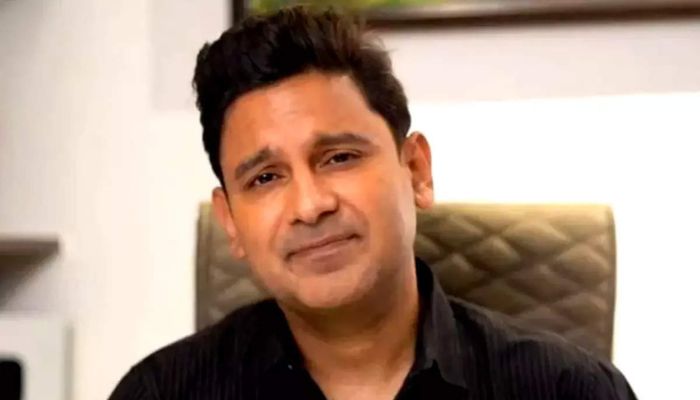
Defending the plethora of criticism, which ranged from trashy dialogues being attributed to Hanuman and Bhagwan Ram, to the misrepresentation of Ramayan itself, Manoj Muntashir only yesterday essentially said that anyone criticising the plebeian dialogues attributed to our Gods was those who had a problem with the chants of Jai Shree Ram. 

He very ‘eloquently’ narrated some other dialogues he had written for the character of Prabhu Shri Ram. Then quickly cried a victim of being targeted by some people on social media for specific dialogues he had written for Hanuman’s character. 

He went on to admit that it was a creative decision that came out of careful deliberation. The reason cited was – children of today do not know anything about Maryaada Purushottam Prabhu Shri Ram beyond him supposedly being a God whose picture is hung on the wall in their homes. The crux of Muntashir’s argument was that for our children to understand the glory of Maryada Purushottam Ram, all Maryana has to be broken. 

Today, he took to Twitter and yet again, said he was being victimised. However, to his credit, he did say that the team of Adipurush had decided to change the offending dialogues with immediate effect.

While the audience backlash resulted in the team of Adipurush retracting the dialogues, it is important this notion that those offending dialogues somehow taught Ramayan to our kids has to be addressed.

As a father, he should speak for himself. And I, as a father, refuse to submit to his justification for using crass, pedestrian language which was then delivered by the actor who characterised Hanuman. 

I refuse to let my children get the impression that Bhagwan Hanuman was a cocky strong-man who lit Ravan’s gothic charcoal black kingdom on fire at the wag of his tail. 

Our kids know the kind of language they can use when they are amongst their peers and at the same time maintain dignity, love and respect in their behaviour. And so, I refuse to accept using pedestrian language to depict the messaging of our Gods for the sake of mass appeal and providing a ‘simpler’ understanding to our kids.

The unintended (or perhaps intended, we would never know) consequence of this debauchery would be a mainstreaming of a mauled version of Ramayan and a deracinated version of our Gods. This results in a great disservice to us as Hindus who wish to take pride in our history, culture and civilizational richness. 

We missed the bus this time because the makers of Adipurush have managed to destroy the content streams by misrepresenting the relevant elements of our Gods. They now hide under the garb of creative freedom after turning our revered Gods into shallow, ranting war creatures. What kind of creativity are we talking about here?

When movie makers approach messaging and fail to create an impact for such a significant and prime subject like Ramayan, it closes the door for all cultural movies for a long time. Every cultural subject will now be analysed for things which may or may not be relevant. All upcoming movies will lose the opportunity to be evaluated in the fair spirit. It doesn’t seem that our so-called stars realise the disservice they do not only to society but to their own industry. 

In the meantime, we as the audience are left with some questions, to which, given Muntashir and Om Raut’s arrogance, I do not expect answers.

What do we settle for? What do we do?

Yes, a cultural movie was attempted and its commercial success should be celebrated along with appreciation that it has brought a fraction of the youth to recognize at least some part of our roots. But, are we supposed to accept the inaccuracies and push them under the carpet in the name of artistic freedom? Is our cultural pride so cheap and can be taken for granted or loosely handled?

Should we call out this misadventure and recognise all the inaccuracies? 

Should we hold the movie makers responsible for the compounding impact on our future generations because of their little creative debacle?

Should we allow this disinformation to be mainstreamed over a period of time and find its place in being recognised as another credible version of our history? This will not only impact our social discourse but will be seen as an element of our identity globally.  

And given that this debacle, over a period of time, might become acceptable as another version of our history, just like the Jodha-Akbar debauchery was, should we be far more infuriated at the sleight of hand by the makers of Adipurush. 

Should literature be created to document the inaccuracies so that it stays on record that the movie had these deficiencies and they should be treated as such, thus, not allowing it to have any association with our history at all? 

I would want my teenage children to think of Lord Ram as the ideal King and ideal leader. I would want them to learn that Dharma must be fulfilled no matter what the cost is. I would want my children to learn unbridled bhakti from Hanuman – that even Arjun won because he decided to mount his rath. I would want my daughter to learn pride, dignity and duty from Maa Sita. I would want my children to grow up with gratitude for the Dharma they were fortunate enough to be born in. Turning our Gods into cheap rip-offs of some lifeless Marvel characters is not what my children need to learn about their roots. Adipurush is not for my children and will never be.