Home Blog Page 2140

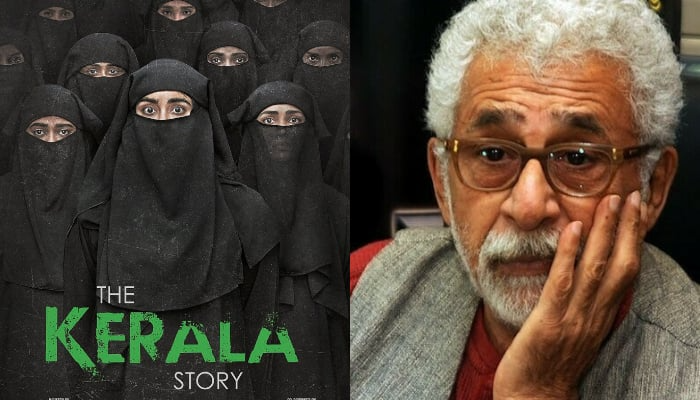
Naseeruddin Shah whines about dull performance of movies made by liberal filmmakers, rants against The Kerala Story with a bizarre comment about Nazi Germany

The Kerala Story, which has drawn criticism from Muslims, liberals, and ‘secular’ political parties ever since its trailer was released, has garnered an enthusiastic reception from the general public, evidenced by its impressive performance at the box office. Notwithstanding fierce criticism, the film has made over 200 crores and has become a national sensation.

However, the immense popularity of the movie has further antagonised its detractors. The multilingual project has been denigrated by veteran actor Naseeruddin Shah who has dubbed it propaganda. It is pertinent to mention that Naseeruddin Shah has a history of making anti-Hindu, pro-Islamist comments. He has also denigrated India on several occasions.

“Worthwhile films like Bheed, Afwaah, Faraaz, all three collapsed. Nobody went to see them, but they are flocking to see The Kerala Story which I have not seen, and I don’t intend to see because I have read enough about it,” he stated in an exclusive interview with IndiaToday. He was responding to the massive success of The Kerala Story.

The seasoned actor was so incensed by the warm response of the audience to the movie that he called it a “dangerous trend” and compared it to Nazi Germany. “On one hand, it is a dangerous trend, no doubt. We seem to be heading the way of Nazi Germany where in Hitler’s time, the filmmakers were co-opted, attempted to be co-opted, by the supreme leader to make films praising him and what he has done for the countrymen, and running down the Jewish community.”

He further charged, “So many master filmmakers in Germany left the place, came to Hollywood, and made movies there. The same thing seems to be happening here. Either stay on the right side, be neutral or pro-establishment.” He was taking a swipe at the ruling Bharatiya Janata Party, Rashtriya Swayamsevak Sangh and Prime Minister Narendra Modi who along with other BJP leaders has come in support of the film.

He did, however, opine that he is optimistic that things will ultimately change for the ‘better’. “But on the flip side, I have hope that this atmosphere of hate gets fatiguing. How long can you go on spreading hate? I think and I hope that the way it has suddenly engulfed us all, it will also disappear. But it won’t be soon.”

It is pertinent to note here that Naseeruddin Shah is essentially “optimistic” that people will stop talking about the rampant indoctrination and radicalisation in the Muslim community and the atrocities that are heaped against non-Muslims. Given that The Kerala Story is based on ISIS and its nefarious designs to push non-Muslim women into sex slavery, prostitution, terrorism and more, one has to wonder what Shah is hoping for, exactly and how talking about terrorism activity makes one a “Nazi”.

Notably, Naseeruddin Shah’s reputation for contentious remarks rivals that of his acting prowess. He recently said that hatred of Muslims is being “cleverly tapped” into people’s minds and accused the ruling BJP government of doing the same. He added that it has become “fashionable” and called it “worrying times.”

“Oh sure, these are worrying times absolutely. The kind of stuff that’s pure, undisguised propaganda is being lapped up and it’s a reflection of the zeitgeist of the times. Muslim hating is fashionable these days, even among educated people. It’s what the ruling party has very cleverly tapped into this nerve. We talk about secular this, democracy that, so why are you introducing religion into everything,” he questioned.

In February, talking about the Mughals, he remarked, “If everything they did was horrible, then knock down the Taj Mahal, knock down the Red Fort, knock down Qutub Minar. Why do we consider the Red Fort sacred, it was built by a Mughal. We need not glorify them, but there is no need to vilify them either.”

He argued that the Mughals did not come to India in order to pillage and plunder the country but rather to make her their home, ignoring the atrocities they committed against the native Hindu population. “Who can deny their contribution,” he posed.
‘Sexual assault on a dead body not rape’: Karnataka HC rules, also recommends govt to amend the law to criminalise necrophilia. Read details

The Karnataka High Court has ruled that sexual assault on a woman’s corpse does not constitute rape under Section 376 of the Indian Penal Code (IPC). The High Court acquitted a man of rape charges for sexually assaulting a 21-year-old girl’s dead body after murdering her by slitting her throat in the Tumkuru district in June 2015.

The High Court bench comprising Justice B Veerappa and Justice Venkatesh Naik T opined that sexual assault with a dead body is tantamount to sadism and necrophilia but it does not come under the scope of Section 375 and 377 adding that there is no offence made under section 376 of the IPC.

“A careful reading of Sections 375 and 377 of IPC makes it clear that a dead body cannot be called a human or person. Therefore, the provisions of Sections 375 or 377 would not be applicable,” the High Court bench stated.

The bench went on to say, “It is the prosecution’s specific case that the accused first murdered the victim and then had sexual intercourse with the dead body. Thereby, it cannot be considered a sexual or unnatural offence under Sections 375 and 377 of the Indian Penal Code. It is considered as sadism or necrophilia, and there is no offence to prosecute under Section 376 of the Indian Penal Code.”

The bench stated that rape must be committed on a living person, not a dead body. “It must be accomplished against a person’s will. A dead body cannot consent to or protest a rape, nor can it be in fear of immediate and unlawful bodily injury. The essential of guilt of rape consists in the outrage to the person and feelings of outrage,” the court said.

Karnataka High Court recommends the central government to bring law against Necrophilia

The court, however, noted that there is a need for a provision to punish such offences and recommended that the central government makes amendments to the Indian Penal Code and criminalise necrophilia. 

“The Central Government is hereby recommended to amend the provisions of the IPC as stated supra in order to protect the dignity of the deceased’s body in order to ensure to protect person’s right of life includes right of his dead body as contemplated under Article 21 of the Constitution of India within a period of 6 (six) months from the date of receipt of certified copy of this order,” the Court said.

In addition, the Court ordered the State government to install CCTV cameras in every government-run mortuaries and private hospitals to prevent crimes against a woman’s dead body.

The State was additionally tasked to maintain mortuary hygiene, ensure confidentiality and privacy at mortuaries, remove infrastructural barriers and sensitise mortuary staff.

Necrophilia

Necrophilia is a paraphilia in which the perpetrator derives pleasure from having sex with the dead. Necrophilia is a “psychosexual disorder” classified as a “paraphilia” by the DSM-IV (Diagnostic and Statistical Manual of Mental Disorders), which includes paedophilia, exhibitionism, and sexual masochism.

Conviction of the accused on murder charges

However, the appellant was found guilty of murder based on the finding of a blood-stained weapon and clothes from his home, as well as a failure to explain incriminating circumstances.

“The evidence on record clearly establishes that, based on the aforesaid circumstances, the prosecution has proven beyond reasonable doubt that the accused is guilty of homicidal death of deceased,” the Court decided.

Rahul Gandhi once again claims his phone is being ‘tapped’: Here’s how he used debunked Pegasus story to make similar false claims in the past

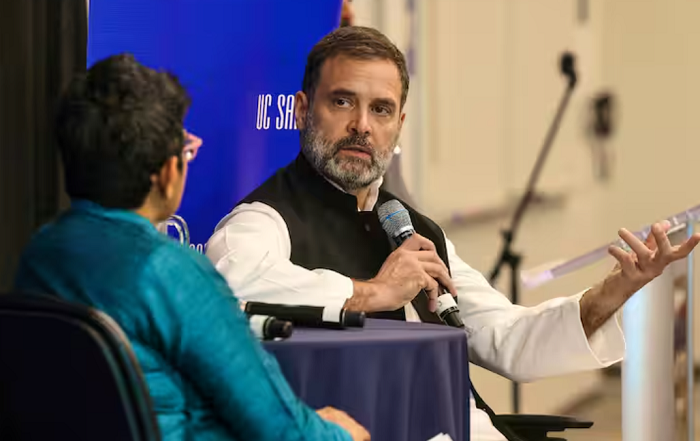
Congress leader Rahul Gandhi on Wednesday, May 31, while interacting with entrepreneurs in Washington, claimed that his phone was being tapped by the Narendra Modi-led government. He also blatantly greeted his iPhone saying, “Hello, Modi ji,” as he assumed PM Modi was listening to his conversation.

“I presume my iPhone is being tapped. You need to establish rules with regard to the privacy of data information as a nation and also as an individual. If a nation-state decides that they want to tap your phone, no one can stop you. This is my sense,” said Rahul Gandhi who spent the first half of his day yesterday with Silicon Valley-based startup entrepreneurs

While speaking in an ongoing panel discussion on AI, Big Data, Machine Learning, and their implications on mankind and on issues like governance, social welfare, disinformation, and misinformation, Gandhi further said, “If the nation is interested in tapping the phone, then this is not a battle worth fighting. I think whatever I do and work, is available to the government.”

Gandhi, who is on a 10-day visit to the United States also tried to understand how these technologies actually work.

Rahul Gandhi claimed in 2021 that his phone was being tapped

This is not the first time that Gandhi has claimed that his phone is being tapped by the Indian government. In the year 2021, Rahul Gandhi made some grave allegations on the back of the debunked Pegasus ‘snoopgate’ story and claimed that all of his cell phones were being targeted and tapped by the Narendra Modi-led government.

He also claimed that Intelligence Bureau officers had called him back then to inform him that his phone was being tapped and therefore, he should be careful about what he says.

At Cambridge University, Rahul Gandhi claimed Israeli spyware Pegasus was being used to monitor his phone

Recently, on March 3, 2023, Gandhi launched one of his usual attacks on the Modi government and said that it was undermining the democracy of India. While delivering a presentation at Cambridge University, he also claimed that the Israeli spyware Pegasus was being used to monitor his phone.

“I myself had Pegasus on my phone. A large number of politicians had Pegasus on their phones. I have been called by intelligence officers who told me, ‘Please be careful about what you are saying on the phone because we are sort of recording the stuff’. So this is the constant pressure that we feel. Cases are registered on the Opposition. I have got a number of criminal liable cases for things that should under no circumstances be criminal liable cases. That’s what we are trying to defend,” the Congress leader was quoted as saying.

Congress leader used debunked Pegasus story to further his claims

In July 2021, a global collaborative investigative report declared that Pegasus, a powerful spyware developed by the Israeli cyber security company NSO Group, might have been used to target the mobile phones of individuals in several countries, including India. The report leaked around 300 numbers of Indian individuals being allegedly tapped by the software. The numbers included at least two ministers in the central government, three leaders from the opposition, a constitutional authority, and several journalists, civil society leaders, and business persons.

The opposition then accused the government as the Israeli company stated that a powerful tool such as Pegasus is sold only to governments or government agencies, and not to individuals. However, the Indian government on several occasions denied the allegations made by the opposition parties. The matter then reached the Supreme Court which appointed a committee to conclude that there was no evidence that the spyware application Pegasus was used to eavesdrop on the phones under examination.

Rahul Gandhi had refused to give his phone for the examination

Rahul Gandhi, who claimed that his phone is being tapped, forgot to mention that his phone was actually never tapped and that he was on the list of ‘potential targets’ of the Pegasus “expose”, which has now been thoroughly debunked. Though he claimed back in the year 2021 that ‘all his phones and electronic gadgets’ were tapped by the software, he had refused to give his phone for the examination to the committee appointed by the SC, ‘fearing’ data tampering.

It is pertinent to note that in India, set guidelines are prescribed for the tapping of phones. Under Section 5(2) of the Indian Telegraphic Act, 1885, state and central governments can tape phones, however, the guidelines and permissions required are extensive. No phone tapping is authorised without permission from the various departments involved and all departments have to fill out forms to justify the need for such tapping.

It is a bit fantastical for Rahul Gandhi to make allegations that he cannot substantiate since it is easier to make unverifiable statements that create an atmosphere of doubt. However, as of now, there is no proof that any of his phones were or are being tapped. While Rahul Gandhi speaks to friendly media and makes unsubstantiated claims, it must be remembered that he has provided no proof of his allegations other than his words which are not exactly reliable.

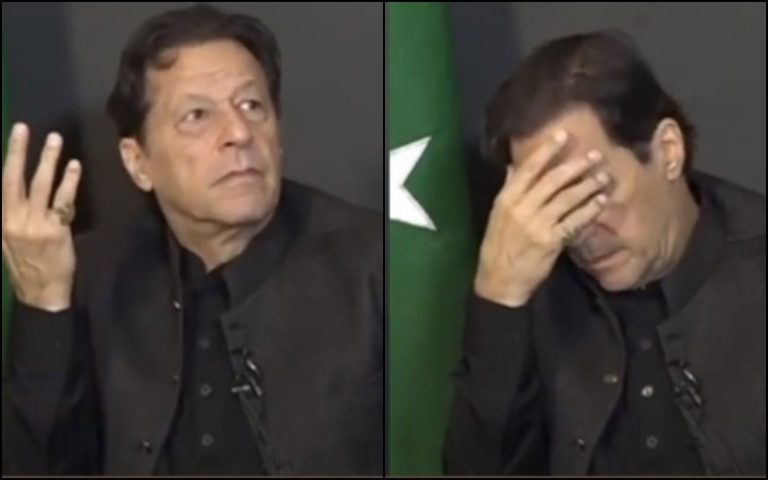
Pakistan govt may negotiate with former PM Imran Khan but has set this condition: What the Pak Finance Minister said

0

Pakistan Finance Minister Ishaq Dar on Wednesday said that the talks with Pakistan Tehreek-e-Insaf (PTI) chairman Imran Khan were only possible if the latter “apologise to the nation for the May 9 riots,” Pakistan-based ARY News reported. 

Speaking to a private news channel, Ishaq Dar said that the talks with Imran will only take place when the PTI chairman “admits to his mistakes and vows not to repeat them.” He stated that Pakistan Muslim League – Nawaz (PML-N) supremo Nawaz Sharif will have to be persuaded for talks with Imran Khan. He said that

Nawaz Sharif is of the opinion that talks cannot be held with perpetrators of violence. Ishaq Dar said, “Nawaz Sharif says talks cannot be held with preparators of violence.” He stressed that the investigation is being made into May 9 incident and the elements involved in the incident that took place on May 9 will be brought to justice, ARY News reported. 

Dar noted that examples should be made so that incidents like May 9 do not take place again. He added that evidence has revealed that Imran Khan was involved in planning the riots, ARY News reported. Dar, however, said that the government does not believe in political victimisation. 

Responding to a question, he said that if Nawaz Sharif’s daughter can be arrested then anyone’s wife as “no one is above the law.” Ishaq Dar further said, “Women involved in May 9 incidents cannot get relief.” He stated that PTI chairman Imran Khan during his tenure did not play any role for the betterment of Pakistan, as per the news report. 

Ishaq Dar said that Pakistan had to face economic difficulties due to the wrong decisions of the PTI chairman. He said that International Monetary Fund has raised questions over political instability in Pakistan. He added that international financial institutions were keeping an eye on Pakistan politics. 

Earlier this week, the Pakistan Tehreek-e-Insaf (PTI) on instructions of party chief Imran Khan, constituted a seven-member negotiation committee for talks with the incumbent government over elections, Pakistan-based ARY News reported. 

Pakistan Tehreek-e-Insaf while taking to Twitter, said that the seven-member committee, which will be headed by Shah Mahmood Qureshi, will decide the plan of action with the government regarding the elections, as per the news report. The committee comprises party vice chairman Shah Mahmood Qureshi, Pervez Khattak, Asad Qaiser, Hammad Azhar, Haleem Adil Sheikh, Murad Saeed and Aon Abbas Buppi.

(This news report is published from a syndicated feed. Except for the headline, the content has not been written or edited by OpIndia staff)

Kerala: FIR registered in Alappuzha-Kannur Express train fire, arson suspected

0

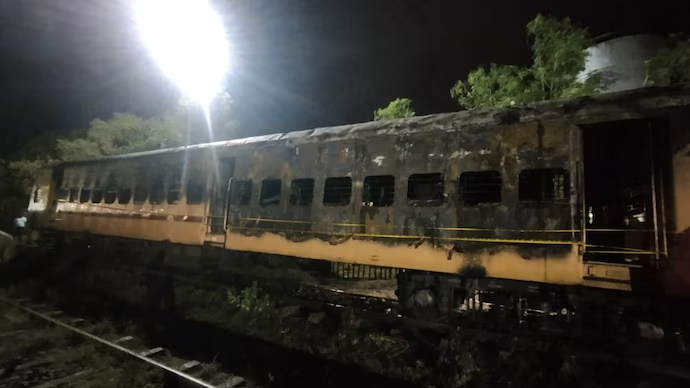
A case has been registered by Government Railway Police (GRP) following after a fire broke out in a coach of the Alappuzha-Kannur Executive Express train at Kannur railway station on the intervening night of Wednesday and Thursday, said, railway officials.

A miscreant activity is suspected behind the incident and a forensic team has also reached the spot to investigate the incident. “Officials are suspecting a miscreant activity behind the fire, based on a complaint given by the on-duty Station Master a case has been registered by GRP. A forensic team has also reached the incident site,” said Railways in a statement.

The incident occurred at 1:25 am on Thursday when the Alappuzha-Kannur Executive Express train (16307) was stationed at Kannur railway station. Three fire department teams worked for hours to extinguish the fire, however, the coach was completely destroyed in the blaze.

It is to be noted that it’s the second fire incident reported in Alappuzha-Kannur Executive Express. On April 2, a fire broke out in the same train in which Shahrukh Saifi (27), a resident of Delhi’s Shaheen Bagh, had set ablaze by pouring flammable fuel on the passengers when it reached Korapuzha bridge near Elathur in Kozhikode. In the incident, three people died and nine suffered burn injuries.

Later, Saifi was arrested by the Anti-Terrorism Squad (ATS) of Maharashtra police and Central Intelligence agencies.

(This news report is published from a syndicated feed. Except for the headline, the content has not been written or edited by OpIndia staff)

Parbhani lynching case: Police says accused mistook Sikh minors as thieves, 7 arrested, 3 teams deployed to nab 2 more booked

In an update to the Parbhani lynching case, the Maharashtra Police on Thursday disclosed that 7 accused who had been booked for brutally beating three minors belonging to the Sikkalkari Sikh community leading to the death of one of them have been arrested by the police. The police also said that three special teams have been deployed to search for and nab 2 more accused booked in the case.

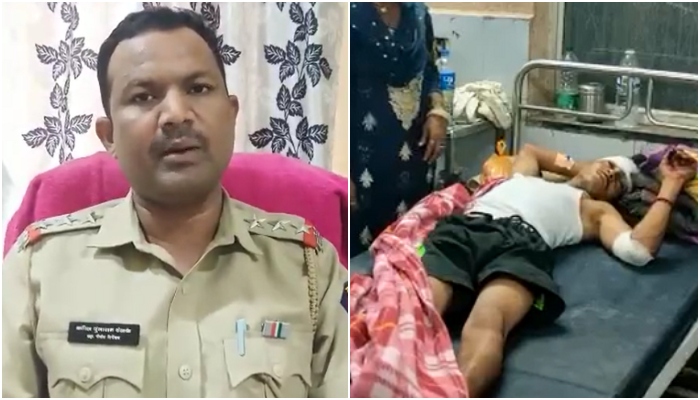
Police official Kapil Shelke from Tadkalas Police Station of Parbhani district stated that the police identified 9 accused in the case and had taken a few of them into custody. Later 7 of them had been arrested.

Releasing a video statement around 4 days after the dreadful incident, Shelke confirmed the incident and said that three Sikkalkari youngsters were beaten by the accused who mistook them as ‘thieves’. “The three were caught by the accused of the village and were brutally beaten by them. They accused the minors of being theft. One of the minors died on the spot while the other two are out of danger and are still at the hospital. Based on the complaint filed by one of the minors, we filed an FIR under section 302 of the IPC and began the investigation,” he said.

The FIR in the case has been filed under sections 302, 307, 341, 143, 147, 148, and 149 of the Indian Penal Code and section 135 of the Maharashtra Police Act, 1951.

The officer also meanwhile added that ‘rumours’ were being spread that people from a specific community had launched an attack on the minors which is untrue. “It is being spread that people from a specific community hit the minors. But during the investigation, we found that all the accused are not from the specific community. The accused hit them because they thought the minors were thieves. This was not a deliberate attack by people of a specific community towards the Sikkalkari youths,” he added.

Earlier, Parbhani SP Ragsudha had revealed that the police were informed about the incident at around 3:15 am on May 27. The police were informed saying that three ‘thieves’ were caught by locals in the Ukhalad village of Parbhani district. “We reached the spot to see that the three Sikkalkari minors were beaten and had sustained severe injuries. The Police admitted the victims to the government hospital where the doctors declared one of them dead. The other two are injured and serious. They are being treated,” SP was quoted as saying.

Parbhani SP Ragsudha R conforming police action in Parbhani lynching case from OpIndia Videos on Vimeo.

Victim says incident happened in Muslim dominated area, near Idgah

It however remains worth noting that relatives of one of the victims have informed OpIndia that the incident happened in the Muslim-dominated area near the Idgah in the village. The relative also said that all the accused who hit the minor boys belonged to the specific community and was leading the mob.

“The accused persons made an announcement from a speaker and gathered the crowd before assaulting the minors. They (Muslims) made an announcement claiming that the minors were thieves. ‘Chor aye chor aye,’ someone from the speaker yelled. The announcement was made from the speaker from atop the Masjid or some nearby playground and not from any other religious place,” the relative confirmed.

Also, the FIR copy obtained by OpIndia states that one of the accused who led the assault has been identified as Akram Patel. The victim in the FIR mentioned, “They poured spicy chutney into our eyes. They also broke our left arm and left leg. Later, one of them asked Akram regarding action to be taken against us. Akram then ordered saying- Maro salon ko (kill them).”

Therefore, while the police say the accused are from all communities, it is pertinent to note that according to the victim’s family and the FIR, the mob was initiated and led by one Akram Patel.

What is the case?

On May 27, three minors belonging to the Sikkalkari Sikh community had gone to catch the pigs. While on their return at 3 am, they were blocked by Akram Patel and 5-6 other men from the Ukhalad village of Parbhani district. The locals thought that these minors were thieves and so they brutally assaulted the minors. The minor victims in the case were identified as Arunsingh, Gorasingh and Kripalsingh.

The accused used iron rods and sharp weapons to attack the minors. They hit on their heads resulting in severe injuries to Arunsingh and Gorasingh. Kirpalsingh however fell unconscious after being attacked by the accused and was later declared dead by doctors at the government hospital. The other two are serious at the Parbhani government hospital and are being treated well.

The FIR has been filed under sections 302, 307, 341, 143, 147, 148, and 149 of the Indian Penal Code and section 135 of the Maharashtra Police Act, 1951. Further investigations into the case are underway.

The youth union of the Marxist-Leninist Communist party in Nepal protests against the ‘Citizenship Amendment Bill’ in Nepal: What happened

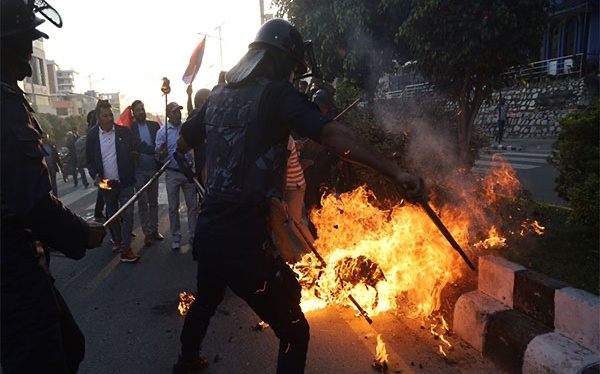
The youth union of opposition CPN-UML (Communist Party of Nepal- Unified Marxist Leninist) on Wednesday burnt the effigy of the Nepal President and Prime Minister protesting ratification of the Citizenship Amendment Bill. 

Members of Youth Federation Nepal burnt the effigy of President Ram Chandra Paudel and Prime Minister Pushpa Kamal Dahal and marched towards the Parliament in the capital Kathmandu. Bearing live torches, the youth wing of Nepal’s opposition chanted slogans against President and Prime Minister demanding their resignation. Earlier on Wednesday morning, President Ram Chandra Paudel authenticated the bill to amend the Citizenship Act. 

According to a statement issued by the President’s Office, the President authenticated the bill as per Article 61 (2) (3) (4) and Article 66 of the Constitution of Nepal and in accordance with the principle propounded by the Supreme Court after receiving a letter from the Office of the Prime Minister and Council of Ministers requesting the authentication of the amendment bill. 

The government following a Cabinet meeting on May 26 had requested President Paudel to authenticate the bill which former President Bidya Devi Bhandari had repeatedly refused to endorse. 

A case filed against then President Bhandari’s refusal to authenticate the bill twice sent to her by the federal parliament is currently sub-judice at the Supreme Court. As per Article 113 (3) of the Constitution, the president can send back a bill passed by the federal parliament for reconsideration once. 

“In case the President is of the opinion that any Bill, except a Money Bill, presented for authentication needs reconsideration, he or she may, within fifty days from the date of submission of such Bill, send back the Bill along with his or her message to the House in which the Bill originated,” it says about an exception to mandatory certification of bills sent to the president. 

However, Article 113 (4) requires the president to authenticate any bill sent for a second time after being passed by both Houses of Parliament. 
“In case any Bill is sent back along with a message by the President, and both Houses reconsider and adopt such Bill as it was or with amendments and present it again, the President shall authenticate that Bill within fifteen days of such presentation,” it states. 

The then President Bhandari refused to authenticate the bill violating that provision. 

On August 14, Bhandari returned the Citizenship Bill sent to her for authentication after being passed by both the House of Representatives (HoR) and the National Assembly. She had sent a seven-point message to inform the federal parliament and for deliberation, and another eight-point message for drawing attention. 

Bhandari had mainly raised two issues while sending the bill back. She had mentioned that the bill was silent about the provision of naturalized citizenship through marriage as per Article 11 (6) of the Constitution. 

“If a foreign woman married to a Nepali citizen so wishes, she may acquire naturalized citizenship of Nepal as provided for in a Federal law,” states Article 11(6) of the Constitution. 

President Bhandari pointed out that the Constitution clearly says federal law but the bill passed by the federal parliament did not have that provision. 
She had also raised questions about the provision requiring self-declaration by a woman to provide citizenship to her children. Bhandari also drew the House’s attention to other issues but mainly asked the House to reconsider the two issues. 

The bill does not propose any restrictions on foreigners marrying Nepali citizens while acquiring naturalized citizenship. The main opposition CPN-UML, to which Bhandari was affiliated before becoming president, has been protesting the removal of the provision in the report submitted by the State Affairs and Good Governance Committee of the HoR that required foreigners marrying Nepali citizens to wait for seven years to get naturalized citizenship. 

The bill passed by the federal parliament also has a provision to grant citizenship by descent to the children of those who received citizenship by birth through a one-time arrangement after the People’s Movement II in 2006. 

Citizenship by birth was granted to persons born in Nepal before mid-April 1990, having permanent domicile and being continuously resident in Nepal throughout their life through the one-time arrangement. 

The passed bill also allows citizenship to a person only through the name of a mother but has put four conditions for that. The child should be born in Nepal, should be residing in Nepal, the father should be unidentified and the person should make a self-declaration that the father has not been identified for that. 

The person taking the citizenship certificate can choose to take the surname and address of either the father or mother. The bill has also paved the way for non-resident citizenship to anyone living outside the SAARC countries if there is proof that the person’s father/mother or grandfather/grandmother is/was a Nepali citizen. 

Bhandari had earlier authenticated an ordinance, sent by the then prime minister KP Sharma Oli after dissolving the House, that included similar provisions. 
The bill’s passage has cleared the way to citizenship for up to 400,000 people who have been deprived of their constitutional rights and remain stateless in their own country. 

(This news report is published from a syndicated feed. Except for the headline, the content has not been written or edited by OpIndia staff)

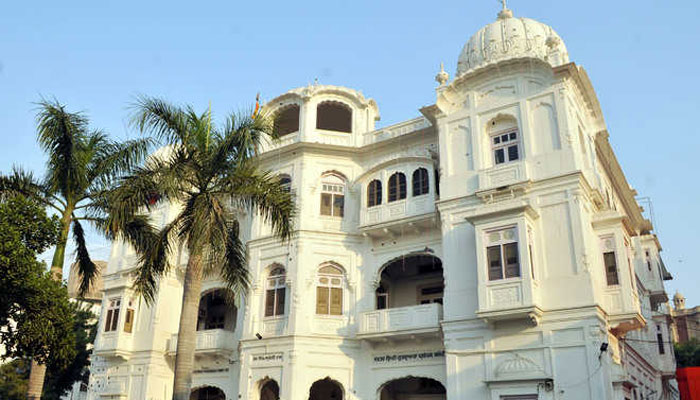
SGPC Elections: Gurdwara Election Commission asks Punjab Govt to prepare voter list, Sehajdhari Sikh Party seeks clarification on who can vote

On May 27, Gurdwara Election Commission wrote to the Punjab Government asking them to prepare a list of voters for the Shri Gurdwara Prabandhak Committee (SGPC) elections. Notable, the last SGPC elections took place in 2011. For twelve years, the elections could not take place due to the legal battle over the voting rights of Sehajdhari Sikhs.

Who can register as a voter for SGPC elections?

As per the latest letter by the commission, only Sikhs who have attained the age of 21 are eligible to register as a voter for the upcoming SGPC elections. However, if the person cuts his or her hair, smokes, or drinks alcohol, that person is not eligible to register as a voter. At the time of registration, the person has to declare that he or she fulfills the requirement.

There is slight confusion over the matter for which Sehajdhari Sikh Party’s chief Paramjit Singh Ranu has sought clarification. He said, “It is unclear whether the Sikh women who remove their hair, including facial hair, can be registered as voters or not…” During a debate on News18 Punjabi, Ranu said he welcomes the notification as it would allow the majority of the Sikhs who are not Amritdhari (Baptised) but maintain unshorn hair and do not smoke or drink to register as a voter. However, SGPC needs to clarify its stand on Sikh women who get beauty services as it includes trimming hair and maintaining eyebrows.

Speaking to OpIndia, Paramjit Singh clarified that the question was raised by him only in the media. So far his party has not sought the clarification in writing. Furthermore, Paramjit Singh added that with the recent notification, Sehajdhari Sikhs have won 50 percent of the battle.

On examining Sections 49 and 92 of the Sikh Gurdwara Act, 1925, it has been well established by the Ministry of Home Affairs, Government of India that every person shall be entitled to have his or her name registered on the electors provided he is more than 21 years of age. Furthermore, it notes the same guidelines such as the person should not trim or shave his beard or Keshas, the person should not smoke and the person should not take alcoholic drinks.

Who can contest elections?

As per Sections 48 and 91 of the Sikh Gurdwara Act, 1925, while a person registering to vote is not bound to be an Amritdhari Sikh, the conditions to contest the election are different. The person has to be an Amritdhari Sikh above the age of 25. Being just Keshdhari will not be enough to contest the elections. Furthermore, the person has to be able to read Gurmukhi. That means he should be able to read and recite Shri Guru Granth Sahib in Gurmukhi.

Also, he should be able to fill out the nomination paper for the election to the Board in Gurmukhi in his own handwriting. If a person gets elected as a Board Member but is later found to be a ‘patit’ (a person who does not follow religion’s precepts), his election will stand void. Detailed guidelines for filing nominations for the elections will be issued later by the Gurdwara Election Commission.

The legal battle of Sehajdhari Sikhs’ voting rights

On October 8, 2003, the Government of India issued a notification and amended Sections 49 and 92 of the Sikh Gurdwara Act. As per the notification, Sehajdhari Sikhs were not allowed to register as voters for the SGPC elections. The notification by the then-BJP government was brought on the behest of Akali Dal leaders Prakash Singh Badal and Balwant Singh Ramoowalia. The notification was for five years and was challenged by the Sehajdhari Sikh Federation in the same year in the Punjab and Haryana High Court.

While the matter was in court, SGPC elections were held in 2011 and 57 lakh voters participated. A few days after the elections, in December 2011, a three-judge bench of the Punjab and Haryana High Court quashed the 2003 notification saying that the legal right of the Sikh voters cannot be taken away except by a competent legislature. The orders were challenged by SGPC in the Supreme Court.

In March 2013, the Supreme Court of India asked the Executive Committee headed by Sardar Avtar Singh Makkar to manage the institutions under SGPC. In 2016, the NDA-I-led Government of India amended the Sikh Gurdwara Act and added Sections 49 and 92 imposing restrictions on Sikhs to register as a voter if they shave a beard, shorn hair or consume alcohol and/or smoke.

During the debate on News18, when SGPC President Harjinder Singh Dhami said Sikhs should not shave beard or shorn hair, Paramjit Singh said he agree to it but they should at least have the right to vote. He said that it has been made clear that only Amritdhari Sikhs can contest elections and Sehajdhari Sikhs do not have any problem with it. However, voting rights should be extended to every Sikh, irrespective of the fact if he is Sehajdhari or Amritdhari.

OpIndia Ground Report: Shahbad Dairy area of Delhi where Sakshi was killed by Sahil is a hub of illegal drugs and crimes by illegal Bangladeshis

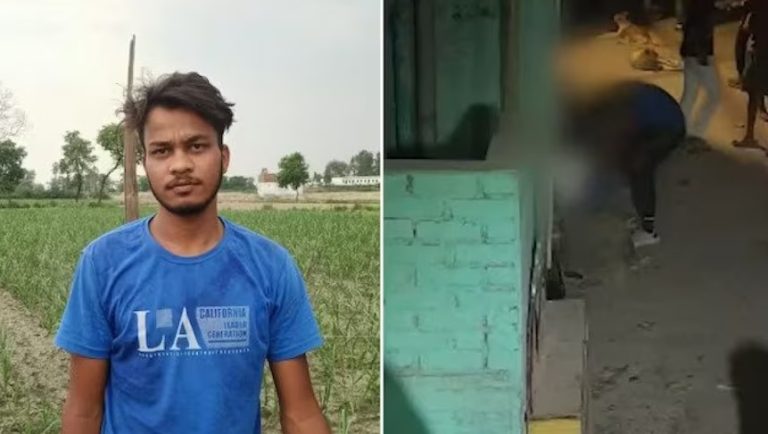
The nation has been deeply disturbed by the Sakshi murder case, which took place in Delhi and has garnered significant attention as the video of the crime went viral. The Delhi Police apprehended Sahil Sarfarraz Khan, the accused, in Bulandshahr, Uttar Pradesh. The arrest took place one day after he committed the heinous act of murdering Sakshi in Delhi’s Shahbad Dairy area on May 28. In a gruesome manner, he inflicted more than 20 stab wounds on the girl before brutally crushing her head with a stone.

During the ongoing investigation into the Sakshi murder case, the police are exploring the possibility of a love jihad angle. In line with this, OpIndia visited the Shahbad Dairy area to investigate further. Apart from closely examining the post-crime scenes at the location, the team uncovered additional startling facts and information about the area.

OpIndia was told that in the Shahbad Dairy area, illegal drugs are traded with impunity, with the police being complicit, and there is an influx of Bangladeshi Muslims settling in the area. Furthermore, the team came to know about a lack of well-maintained public spaces, encroachment on designated public areas, a rise in the crime rate, unsafe social conditions, and the mushrooming of unauthorized Mazars in the locality.

The post-crime scene on the spot

Dev Singh, one of the local journalists working for TezT24 news stays at a distance of two kilometres from the murder spot and was the first person to report the murder. OpIndia met him to know more about the post-crime situation on the spot. He said, “The incident took place between 8:45 pm to 9:00 pm. I received a call informing me about this crime and I reached there within 15-20 minutes. I saw that the Delhi police were there and they had kept the public at a distance. The dead body was half in the gutter and half outside that. The police had marked the dead body with the bricks lying nearby. The Delhi police noticed and identified me. They immediately started putting pressure on me. They told me not to cover this and leave the spot. They kept me at a distance. But somehow I managed to do the coverage. I left the spot at around 12 at night after the dead body was taken from here at 11:30 pm.”

Nobody on the spot spoke much about the crime

He further said, “About half an hour after I reached the spot, an ambulance was called. They kept the ambulance waiting for some time. The forensic team came after the ambulance. The team collected evidence like blood and other things. Around 4 to 5 friends of the victim were present there at that time. These friends included Neetu, Jhabru, Bhavna, and others. Jhabru helped lift the body and put it in the ambulance. This happened at around 11:30 pm. I somehow finished my reporting and left.”

Dev Singh said, “Nobody talked much during my coverage that day. It is quite obvious as every one of them was afraid that they may get into some trouble if they speak anything about the crime. Sakshi’s friends also did not say anything.”

Why did the police not allow journalists to report that day

Dev Singh said, “The police in this area create hindrance every time I report any crime. There is a reason behind that too. They don’t want the area to get defamed. They feel if crimes in the area and the illegal drug business gets covered in the media, then their police station unit or district will be defamed. This is why they don’t allow us to report. We usually don’t visit the spot unless Forensic Team arrives. We usually stand at a distance and report. But after the Forensic Team gets hold of the spot, then also, the police don’t allow us to report from the visible ranges of the crime spot.”

Illegal drugs and liquor businesses in the area

He said, “Illegal drugs, illegal liquor, and marijuana business is spread everywhere in this area. The police have failed to stop this menace and nor do they let us report properly when something is exposed or some crime happens. Suppose if something is published in the media, they do a raid or two for the namesake. no further action takes place. All these illegal businesses are mostly done by illegal Bangladeshi migrants most of whom are Muslims.”

Illegal Bangladeshi Muslims

Dev Singh informed, “There are many such slums in sectors 26, 27, and 28. These Bangladeshis live in these areas. Take the example of the Shahbad Dairy area. Every lane here is facing two to three problems. Be it illegal liquor, drugs, marijuana, betting, gambling, etc. Illegal Bangladeshis are involved in this. Recently, the Narcotic Control Bureau – a special team – raided this area of Swati Chowk to seize drugs worth Rs 35 lakh. These people sell illegal liquor and drugs in their houses. Some reports said that Sahil was either under the influence of drugs or drunk before committing the crime because it is so commonly available in this area. This is the failure of the administration in the narcotics front.”

Encroachments on public spaces

Dev Singh underlined the severe problem of encroachments in the area. He said, “You see the MCD parks? All of them are full of illegal encroachments. Where will the local public go for refreshing themselves? Where will they go? Are there some lawns to sit on? Can the family go there? Can the senior citizens go there for morning walks or evening walks? No. All the parks in the Shahbad Dairy area are filled with illegal settlers. We cannot say that this consists of one particular community. All types of people live there. They have encroached on it in their own style. There is not a single place here, where a family can together go, sit, talk, have fun and refreshments, and do a morning walk or evening walk. Everything is encroached upon. All public spaces are gone. In such a situation, if a girl goes at some distance away from home then there is a risk that she may get raped.”

Crime rates in AAP and Congress governments are the same

When asked if there is any difference in the crime rate after the AAP came to power in Delhi with a promise of good governance, Dev Singh said, “There is no change in the crime rates. It was the same in the Sheela Dixit government as it is now in the AAP government. Yesterday only an incident of cow slaughter took place not so far from here. It is a crime that takes place every day. Some days ago it happened in Rohini. Before that, it took place in Kanjhawala. Now, in sector 28. So no change in crime scenes. And in this country, we need a Yogi government then only it may stop. Otherwise, there are these Bangladeshi people and god knows what different communities are there which kill cows. Such crimes are constantly increasing and there is no change. That cow slaughter took place around 5 kilometres from here. And who kills cows? We Hindus worship cows like a mother. Can we kill our mother?”

Union Cabinet approves ₹1 lakh crore for “world’s largest grain storage plan in cooperative sector” to create decentralised storage capacity

The Union Cabinet on Wednesday approved a Rs 1 lakh crore plan for “World’s Largest Grain Storage Plan in Cooperative Sector” by the convergence of various schemes of the Ministry of Agriculture and Farmers Welfare, Ministry of Consumer Affairs, Food and Public Distribution and Ministry of Food Processing Industries. This will create the world’s largest grain storage capacity in India in the cooperative sector.

In order to ensure a time-bound and uniform implementation of the plan in a professional manner, the Ministry of Cooperation will implement a pilot project in at least 10 selected Districts of different States/ UTs in the country. The Pilot would provide valuable insights into the various regional requirements of the project, the learnings from which will be suitably incorporated for the country-wide implementation of the Plan, according to a statement issued by the cabinet.

The move will help reduce crop damage and prevent distress sales by farmers. This will also help in strengthening the country’s food security and creating job opportunities in rural India.

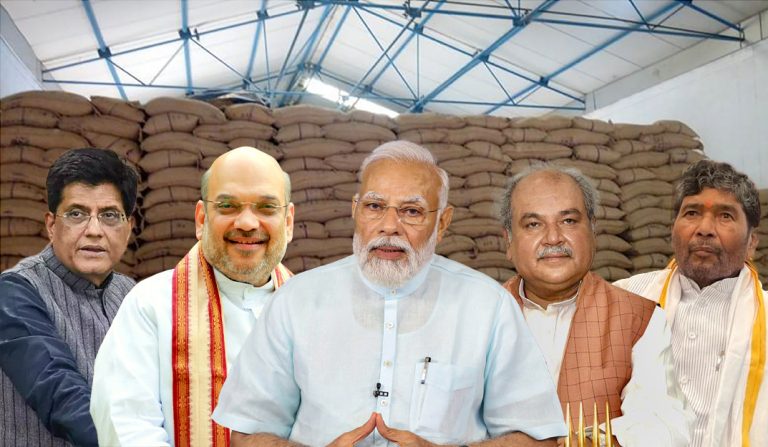
Under the plan, an Inter-Ministerial Committee (IMC) will be constituted under the Chairmanship of Amit Shah, the Minister of Cooperation and Home, with Agriculture and Farmers Welfare Minister Narendra Singh Tomar, Consumer Affairs, Food and Public Distribution Minister Piyush Goyal, Food Processing Industries Minister Pashupati Kumar Paras and Secretaries concerned as members. The IMC will modify guidelines/ implementation methodologies of the schemes of the respective Ministries as and when need arises, within the approved outlays and prescribed goals.

Several schemes under the concerned ministries have been selected for convergence under the Plan. The Plan would be implemented by utilizing the available outlays provided under the identified schemes of the respective Ministries. Under it, the government will create 700 lakh tonnes of grain storage capacity in the cooperative sector over the next five years.

The IMC will work towards the facilitation of the ‘World’s Largest Grain Storage Plan in Cooperative Sector’ by the creation of infrastructure such as godowns, etc. for Agriculture and Allied purposes, at selected ‘viable’ Primary Agricultural Credit Societies (PACS).

According to the government, the plan is multi-pronged – it aims to address not just the shortage of agricultural storage infrastructure in the country by facilitating the establishment of godowns at the level of the Primary Agricultural Credit Societies (PACS), but would also enable PACS to undertake various other activities.

The PACS will be enabled to function as procurement centres for State Agencies/ Food Corporation of India (FCI), serving as Fair Price Shops (FPS), setting up custom hiring centres, setting up common processing units, including assaying, sorting, grading units for agricultural produce, etc.

The creation of decentralized storage capacity at the local level would reduce food grain wastage and strengthen the food security of the country. Providing various options to the farmers, it would prevent the distressed sale of crops, thus enabling the farmers to realise better prices for their produce.

It would hugely reduce the cost incurred in the transportation of food grains to procurement centres and again transporting the stocks back from warehouses to FPS. Through a ‘whole-of-Government’ approach, the Plan would strengthen PACS by enabling them to diversify their business activities, thus enhancing the incomes of the farmer members as well.

Calling it a “visionary decision” which will lay the foundation of a prosperous, self-reliant and food grains-rich India, Union Home and Cooperation Minister Amit Shah said that lack of agricultural storage capacity leads to wastage of food grains and farmers are forced to sell their crops at low prices. With this decision, farmers will now get modern grain storage facilities in their blocks through Primary Agricultural Credit Societies (PACS), so that they will be able to get fair prices for their grains, he added.

Background of the scheme

Prime Minister Narendra Modi has observed that all out efforts should be made to leverage the strength of the cooperatives and transform them into successful and vibrant business enterprises to realize the vision of “Sahakar-se-Samriddhi”. To take this vision forward, the Ministry of Cooperation has brought out the ‘World’s Largest Grain Storage Plan in Cooperative Sector’.

The plan entails setting up various types of agri-infrastructure, including warehouses, custom hiring centres, processing units, etc. at the level of PACS, thus transforming them into multipurpose societies. Creation and modernization of infrastructure at the level of PACS will reduce food grain wastage by creating sufficient storage capacity, strengthening the food security of the country and enabling farmers to realise better prices for their crops.

There are more than 1,00,000 Primary Agricultural Credit Societies (PACS) in the country with a huge member base of more than 13 crore farmers. In view of the important role played by PACS at the grass root level in transforming the agricultural and rural landscape of the Indian economy and leveraging their deep reach up to the last mile, this initiative has been undertaken to set up decentralized storage capacity at the level of PACS along with other agri infrastructure, which would not only strengthen the food security of the country but would also enable PACS to transform themselves into vibrant economic entities.