Home Blog Page 2464

Editors Guild of India expresses ‘deep concern’ over IT survey at Delhi office of UK’s national broadcaster BBC

0

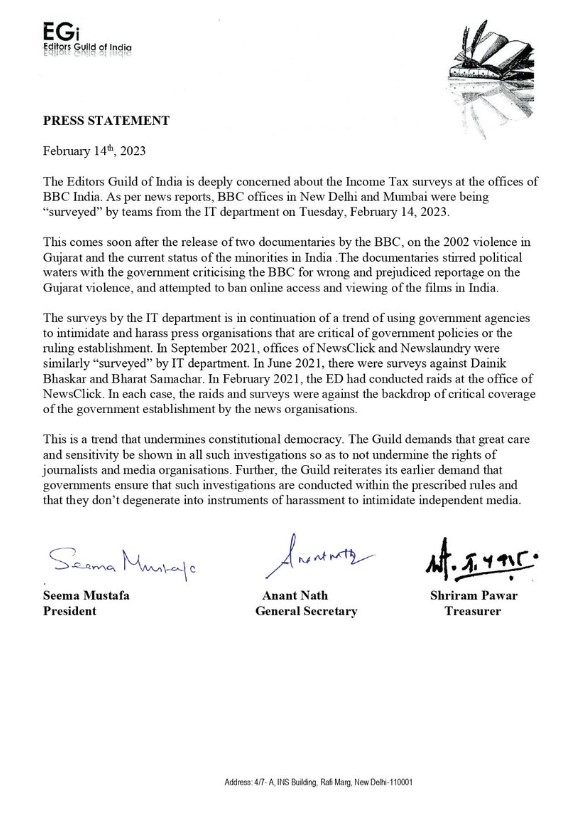
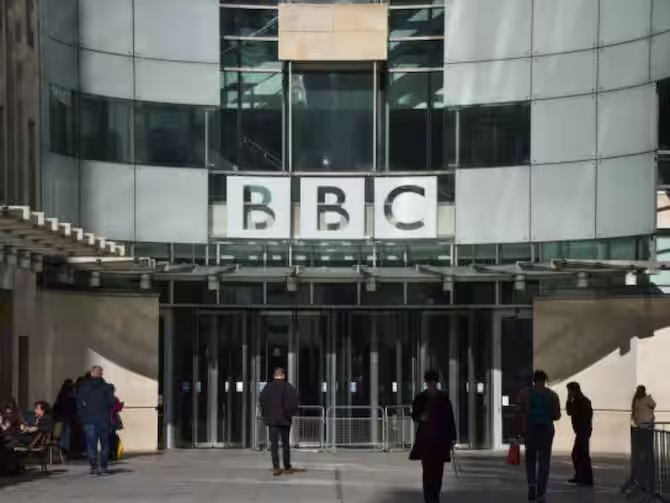
On Tuesday, hours after the news surfaced that the Income Tax Department was conducting a survey at the Delhi headquarters of BBC (British Broadcasting Corporation), the state-sponsored media of the United Kingdom, the Editors Guild of India issued a press release expressing “deep concerns” over it.

While the editors’ body has condemned the survey, calling it a political witch hunt against the media outlet, it is worth noting that the survey was conducted on BBC premises in light of BBC’s deliberate non-compliance with the Transfer Pricing Rules and its massive profit diversion.

“EGI is deeply concerned about the IT “surveys” being carried out at the offices of BBC India. Is distressed by the continuing trend of government agencies being used to intimidate and harass news organizations that are critical of the ruling establishment,” read the Tweet posted by the organization supposedly representing the ‘editors’.

The Editors’ Guild stated in its press release on Tuesday that the IT department’s surveys are part of a trend of utilizing government institutions to intimidate and harass media organizations that are critical of government policies or the ruling establishment.

Statement by Editor’s Guild of India (Source: Official Twitter handle of EGI)

The Editors Guild went on to say that the action taken against the foreign media channel was the consequence of the BJP’s vendetta following the release of the BBC documentary on the 2002 violence in Gujarat and the contemporary plight of minorities in India.

The Income Tax Dept carries out a survey at BBC office in Delhi

The IT survey was carried out at the BBC premises in view of the BBC’s deliberate non-compliance with the Transfer Pricing Rules and its vast diversion of profits. Transfer Pricing essentially ensures that the transaction between ‘related’ parties is at a price that would be comparable if the transaction was occurring between unrelated parties.

The key focus of these surveys is to look into the manipulation of prices for unauthorized benefits, including tax advantages. These surveys have been undertaken due to BBC’s persistent non-compliance with the norms, making it a repeat offender.

Rich Pakistanis line up for Canadian coffee, giving record opening to Tim Hortons, while the poor struggle for wheat and fuel

0

Pakistan’s inflation has reached a 45-year high, putting the nation on the verge of bankruptcy. While most people are struggling to pay for the basic ration there, the majority of the youngsters this weekend utilized their money to indulge themselves in the pricey Tim Hortons coffee on its opening day. 

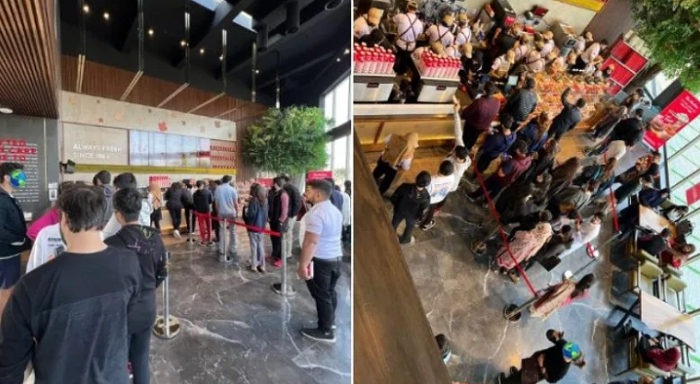
Tim Hortons, the Canadian restaurant chain launched its first store in Phase 6, DHA Lahore over the weekend. Pakistani people maintained queues outside the store to pay a hefty amount for one cup of coffee, the videos and photos of which went viral over social media. 

As of February 9th, Pakistan’s foreign exchange reserves are all below $3 billion, which is a nine-year low. The Pakistani rupee (PKR), the currency of the nation, hit a record low, and petrol expenses are exorbitant.

The South Asian country has struggled to meet the needs of its people on a fundamental level. Despite this, Tim Hortons in Pakistan reported the biggest opening sales in history since it started in 1964, setting a new record for the world. The Canadian coffee company’s Pakistani franchise outsold its 5,352 other stores globally for the opening day.

Sharing photos and videos of the long queue at the Tim Horton’s store, one of the users wrote, “Two Nation theory of Jinnah. The reality! It was not about Hindus and Muslims but the Elite and Poor, Fauj and Awam, Rulers and Subjects, Kings and Paupers. India got rid of feudalism and Pakistan, has 1000 lives and million of faces. The poor lineup for Flour, Elite for Tim Hortons,” he tweeted.

A Pakistani singer and actor Farhan Saeed also expressed his concern and tweeted, “There are 2 Pakistans, one that is in the queue of utility stores for aata and ghee, and the other is at Tim Hortons. It scares me, that there is nothing in the middle scares me.”

Many meanwhile expressed their concerns over the price of the coffee. “Tim Hortons opened their first store in Lahore today. The small coffee cup will cost you Rs. 650 ($2.40) and check out the lines outside of the store. Yet we say there is no money and we beg the world to give us money. Shame on the inept government and its establishment. So sad,” one of the users commented.

The economic condition of Pakistan is concerning. According to the reports, the fifth-most populated country in the world appears to be creeping closer to a financial default. The State Bank of Pakistan’s (SBP) foreign exchange reserves have decreased to $2.917 billion. The country is having trouble getting an IMF rescue package at the same time.

Inflation in the nation is at a 48-year high. While the Wholesale Price Index has increased to 28.5% over the same period, the Consumer Price Index has jumped by 27.6%. Prices for basic goods like wheat, onions, and gas cylinders have reached a record high. A 20 kg bag of wheat flour typically costs Pakistani Rupee (PKR) 1,164.8 (as on January 2022), but that price skyrocketed to PKR 1,736.5 in January 2023, a 50% increase. Due to the country’s economic problems and currency depreciation, the oil corporations of Pakistan are on the verge of collapsing.

Notably, Tim Hortons’ second and third stores are slated to open on the 18th and 25th of February, in Gulberg, Lahore.

Media headlines create confusion about Uttarakhand anti-copying law: Here is what it actually says

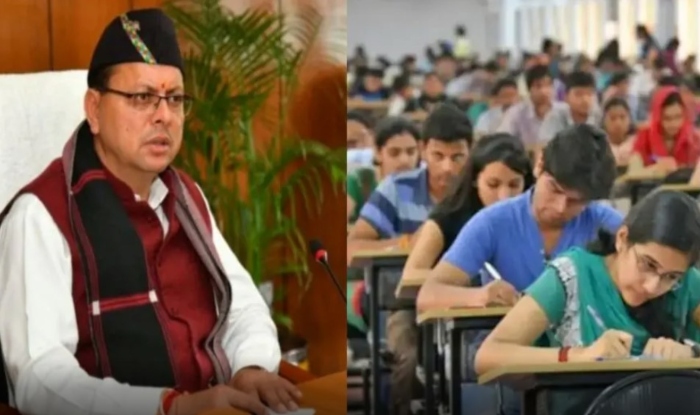
The Uttarakhand Competitive Examination (Measures for Prevention and Redressal of Unfair Means in Recruitment) Ordinance (now law), popularly known as the anti-copying Ordinance, which prevents the use of unfair means and cheating during state recruitment exams, came into force after Governor Lt Gurmit Singh have his consent on Friday.

Many media houses reported about the purported ordinance brought by the BJP government in the state that would tighten the noose around the neck of the cheating mafia in the state. However, the headlines of a few such reports were quite misleading creating confusion in the mind of the readers about the provisions specified in the ordinance.

At first glance, the headline gives the impression that the Ordinance entails life imprisonment for any student caught cheating in exams in Uttarakhand, even for the first time. However, that is not the case. Life imprisonment is the maximum punishment an individual or an organization found involved in unfair means could be subjected to, not the only punishment, as specified in Uttarakhand’s anti-copying Ordinance.

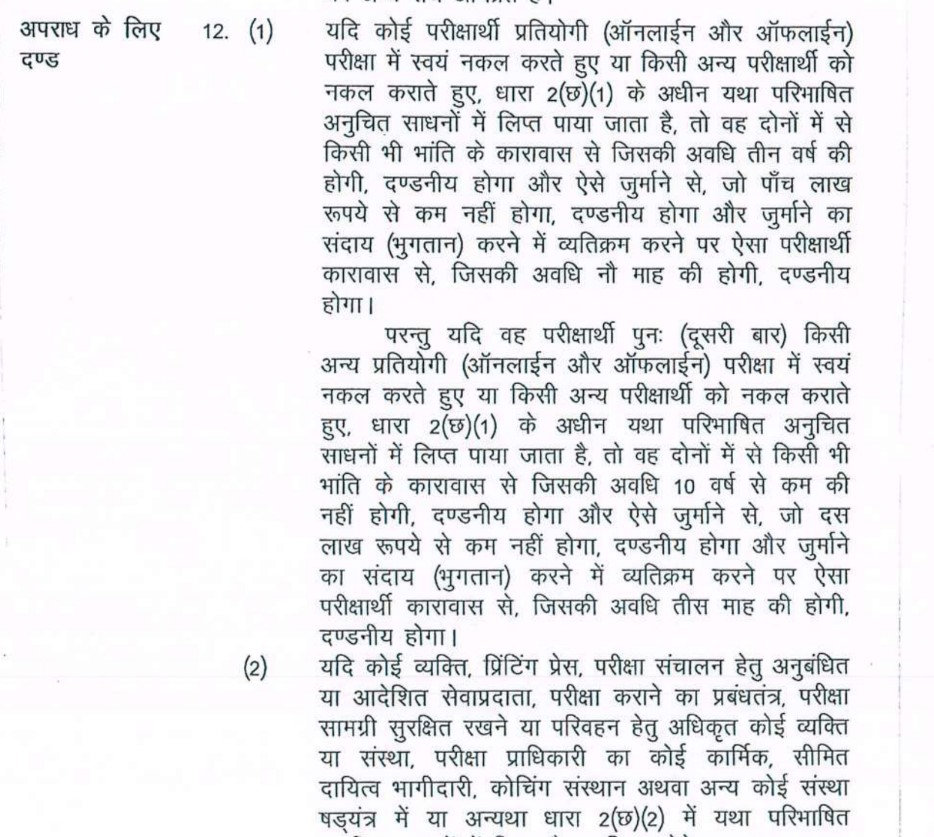
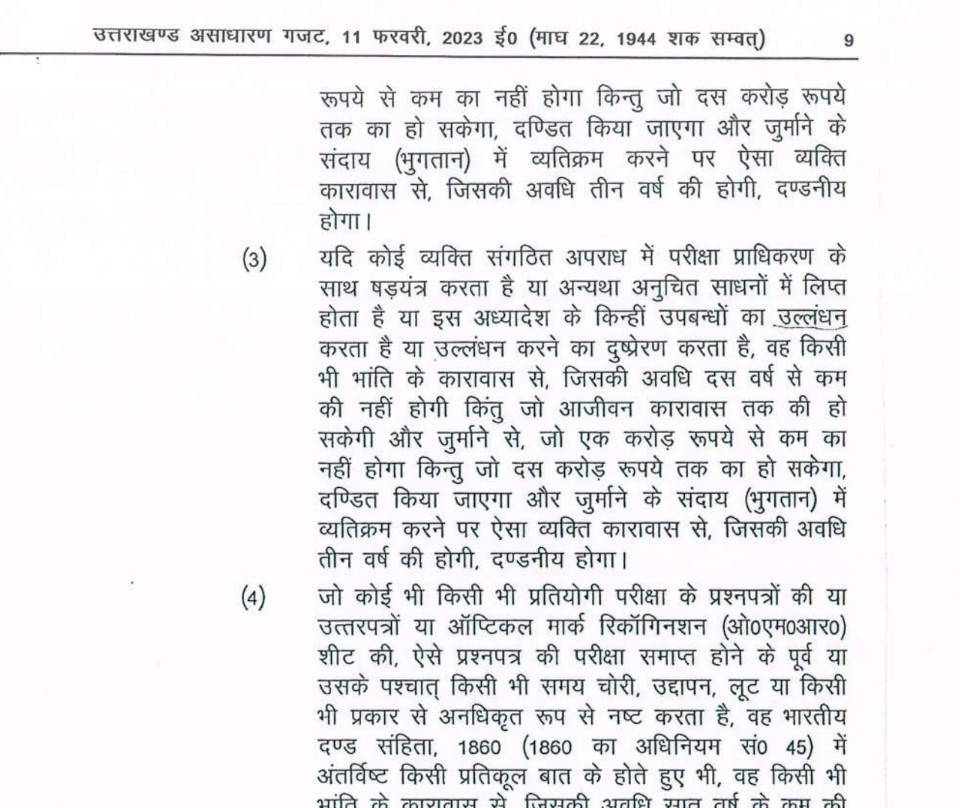
According to the provisions specified in the Ordinance, any student caught cheating for the first time will be subjected to three year jail term and a fine of Rs 5 lakhs. For any individual caught doing the same for the second time, the punishment will not be less than 10 years and a Rs 10 lakh fine.

Screenshot from the Uttarakhand Competitive Examination (Measures for Prevention and Redressal of Unfair Means in Recruitment) Ordinance

If any person, printing press, service provider organization, management system, or coaching institute is found involved in unfair means, then provision has been made for a maximum punishment of life imprisonment and a fine of up to 10 crore rupees for those indulging in or facilitating the use of unfair means in recruitment examinations.

Along with these provisions, the ordinance also states that the assets of these candidates who use unfair means will be seized.

Additionally, Clause 11 (2) of the new anti-copying law, which came into force in the state on the night of February 10, has a provision for strict action against those who spread rumors.

Notably, the anti-copying law came into being after Uttarakhand faced two major paper leaks. 

As per reports, this anti-copying law – Uttarakhand Competitive Examination (Measures for Prevention and Prevention of Unfair Means in Recruitment) Ordinance 2023 – would be enforced for every recruitment exam that the state would conduct from now on.

Earlier, CM Dhami himself announced that he had approved the Ordinance following students’ protest against the paper leak cases in the State. Following the Governor’s assent, the Ordinance has now become a law.

First case lodged under Uttarakhand anti-copying law

On Monday, only two days after the Ordinance came into effect, the first case under Uttarakhand’s new anti-copying statute was filed in the Uttarkashi district. According to a senior police officer, the case named a man, some anonymous applicants, and a news outlet for “spreading misinformation” regarding the revenue sub-inspector (Patwari/Lekhpal) test question paper.

“We have filed the FIR under the new anti-copying ordinance at Kotwali police station against an identified candidate (Arun Kumar) and others appearing in the Patwari/Lekhpal (exam) at a polytechnic college and a news portal for spreading misinformation that seal of the question papers was opened before it was distributed among candidates,” said Uttarkashi superintendent of police (SP) Arpan Yaduvanshi. “A video (made by the accused) in this regard has gone viral on social media.”

The curious case of Baharul Islam – From lawyer to Congress MP, then judge and then Congress MP again

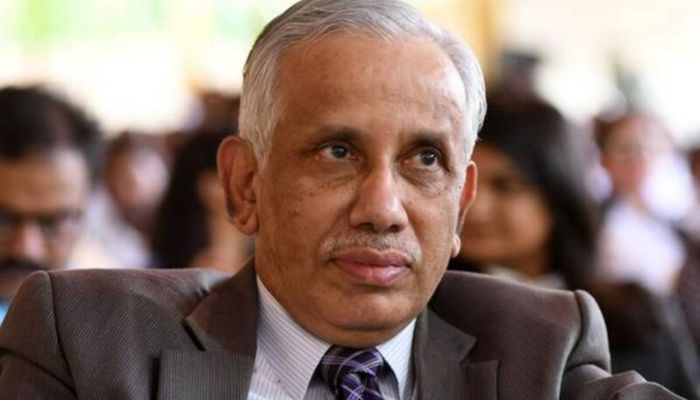
As Abdul Nazeer – a retired judge of the Supreme Court of India – has recently been appointed as the governor of Andhra Pradesh, a controversy has started around retired judges being appointed to constitutional posts like the governor, etc. It is therefore necessary to take an account of a Congress leader who was sent to Rajya Sabha as an MP, after which he was appointed as a judge. As he retired from his tenure of judgeship, he was given a ticket to Lok Sabha by the Congress party. This is the curious case of former Supreme Court justice Baharul Islam.

Baharul Islam was a lawyer before joining politics

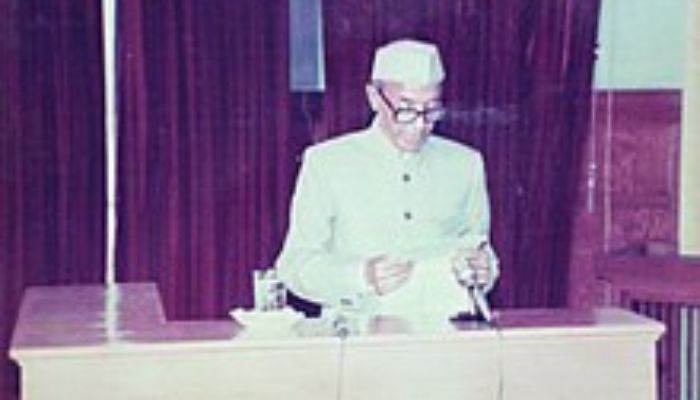
Baharul Islam was born on 1st March 1918 in the Kamroop district of Assam. His primary education was completed in a local school and he attended Cotton College in Guwahati. After this, he went to Aligarh Muslim University for his law studies. He started working as an advocate at the Assam High Court in 1951 while his practice as a Supreme Court Lawyer started in 1958. Meanwhile, in 1956, Baharul Islam joined the Indian National Congress which marked the onset of his political career.

Baharul Islam was sent to Rajya Sabha

In 1962, Congress sent Baharul Islam as an MP in Rajya Sabha. He completed his first term as a lawmaker in 1968 after which the grand old party reelected him as a Rajya Sabha member. He continued to work as an MP till 1972. In 1972, he jumped from the legislative arm to the judicial arm of the Indian republic. But later developments suggest that it was not Baharul Islam who jumped. It was rather the Congress ecosystem that made him move from one office to the other, with added rewards in later stages for being loyal in earlier stages.

Baharul Islam worked as a judge for a decade

On 20th January 1972, Baharul Islam was appointed as the judge of the Assam and Nagaland High Court which is now known as the Gauhati High Court. On 11th March 1979, he became the acting chief justice of this High Court and continued as the chief justice of the High Court from 7th July 1979 until he retired on 1st March 1980.

On December 4th, 1980, he was appointed to the Supreme Court of India, which was unusual because a retired judge is not often elevated to the Supreme court. The convenient utilization of the systems did not stop here. He resigned as the judge of the Supreme Court of India on 12th January 1983. What followed was his second innings as a politician.

Baharul Islam in parliament again

Congress wanted to field Baharul Islam who was now the former justice of the Supreme Court of India from the Barpeta constituency of Assam. But later he was sent to Rajya Sabha again. This marked the second political innings of the lawyer-cum-politician-turned-judge. His is a must-read chapter when it comes to a discussion about ruling parties picking former judges for various constitutional posts. He has set a rare example in which a Rajya Sabha MP went on to become a judge in the Supreme Court and then come back as an MP in the upper house.

As ‘liberals’ cry foul over Justice Nazeer’s appointment as Governor, here are other Judges who took post-retirement jobs

0

Hours after former Supreme Court Judge S Abdul Nazeer was appointed as the Governor of Andhra Pradesh, left-liberals took to social media to cast aspersions on the integrity of the Judiciary.

Leading the pack of wolves was none other than ‘journalist’ Rajdeep Sardesai. “Sunday musing: A month after Justice Abdul Nazeer retires, the SC judge is made Andhra governor. Shouldn’t there be a minimum cooling off period of at least a year before a retired judge gets a constitutional sinecure?” he wrote.

By citing the fact that S Abdul Nazeer was a part of the constitutional bench that delivered the Ayodhya verdict in 2019, the liberal ecosystem is suggesting a collusion between the Judiciary and the Legislature.

“Willing to twist your arms? Reward guaranteed…” wrote one ‘wannabe journalist’ Nagendar Sharma. Despite the best attempts by the ecosystem to suggest a nefarious agenda, it must be mentioned that India has a long history of judges taking up post-retirement jobs.

The Case of Koka Subba Rao and Mohammed Hidayatullah

The 9th Chief Justice of India Koka Subba Rao, who was at the helm of safeguarding the Fundamental Rights of citizens from the Legislature in the infamous Golaknath Vs State of Punjab case, resigned 3 months before his scheduled retirement on July 14, 1967, to contest for the post of President. 

He was backed by the leader of the Opposition, Minoo Masani and secured 44% votes against Congress’ Presidential candidate Dr Zakir Hussain.

Mohammed Hidayatullah, the 11th Chief Justice of India, served as the Acting President from 20 July 1969 to 24 August 1969 and from 6 October 1982 to 31 October 1982.

He also served as the Vice President of India between 1979 to 1984, despite having turned down requests for Presidential candidacy on three occasions.

Justice Hegde and his switches between Legislature and Judiciary

Justice Kawdoor Sadananda Hegde served as a member of the Rajya Sabha before his stint at the Mysore High Court. He was a Judge at the court for 9 years before being appointed the first Chief Justice of the Delhi and Himachal Pradesh High Court in 1966.

A year later, Justice Hegde was sworn into the Supreme Court. He became a part of the majority judgement that laid down the “basic structure doctrine” in the Kesavananda Bharati vs the State Of Kerala case.

The judgement in the case asserted that any amendment that is directed to alter the basic structure of the Constitution can be nullified by the apex court. An agitated Indira Gandhi thus superseded him to make AN Ray the Chief Justice.

Justice Hegde resigned during the Emergency and contested from a Janata Party ticket to defeat the Congress candidate from South Bangalore in the 1977 Lok Sabha elections. He even went on to become the Speaker of the Lok Sabha.

The curious cases of Rangnath Mishra and Baharul Islam

Rangnath Misra, the 21st Chief Justice of India, who gave a clean chit to the Congress party in the 1984 Anti-Sikh riots served as a Member of Parliament in the Rajya Sabha from the Congress Party between 1998 and 2004.

Justice Baharul Islam was a member of the Rajya Sabha from the Congress Party between 1962 to 1972. Following his resignation, he became a judge in the Guwahati High Court.

After he retired from the High Court, he was appointed to the Supreme Court by Indira Gandhi in 1980. He then resigned in 1983 to become a Rajya Sabha member again from the Congress party.

Justice Abhay Thipsay, who heard cases such as Sohrabuddin fake encounter case and retired in 2017, announced his decision to join the Congress party in 2018. Justice Thipsay was the same judge who convicted 9 out of the 17 accused in the Best Bakery case

Other instances that set the precedent of post-retirement jobs

Justice (retd) Fatima Beevi served as the Governor of Tamil Nadu from 1997 to 2001, after retiring from the apex court in 1992. She was the first woman justice on the Supreme Court.

Justice (retd) Saiyid Fazl Ali was appointed as the governor of Odisha on June 1952, just a month after his tenure ended as a judge in the Supreme Court. He also worked as the governor of Assam between 1956 and 1959.

Vijay Bahuguna, who became the 6th Chief Minister of Uttarakhand from a BJP ticket, also served as a Judge in Allahabad High Court and Bombay High Court. Palanisamy Sathasivam, the 40th Chief Justice of India, was appointed the Governor of Kerala by the BJP Government in September 2014.

When Congress made a hullabaloo over the issue, Manish Tewari publicly acknowledged that there was “no constitutional or legal bar” on a former Chief Justice of India to accept the position of a governor.

Retired Judges do not require a cooling period

While the Indian Constitution (Article 220) restricts a retired Judge from practising law in the same Court in which he was a judge, there are no restrictions that bar him from seeking employment, joining a political party or getting elected/nominated to the Indian Parliament.

It is important to mention that there is no minimum time limit (commonly referred to as the “cooling period”) before a Judge can ride the political bandwagon, following his retirement.

While there is no legal hurdle in the appointment of Justice (retd.) Nazeer as Governor of Andhra Pradesh, will not deter the Opposition from building a fake narrative of ‘quid pro quo’ as they did in the case of Ranjan Gogoi 3 years ago.


All India Bar Association congratulates IT department for conducting survey on BBC

0

The All India Bar Association (AIBA) on Tuesday congratulated the Income Tax Department for conducting surveys of BBC’s documents to check irregularities relating to international taxation and Tax Deducted at Source (TDS) transactions.

Senior Advocate and Chairman of AIBA, Dr Adish C Aggarwala, in a statement, has welcomed the action of the Income Tax Department as earlier the All India Bar Association (AIBA) has requested Union Home Minister Amit Shah to order a 360-degree probe into the “international conspiracy” angle in BBC’s documentary on Prime Minister Narendra Modi. 

On January 22, amidst the row over British national broadcaster, BBC’s documentary on Prime Minister Narendra Modi, the All India Bar Association (AIBA) demanded the Union Home Ministry initiate a special investigation into the “international conspiracy” angle.

The chairman of All India Bar Association had written a letter to Union Home Minister Amit Shah requesting him to order a 360-degree probe into an international conspiracy angle in BBC’s Documentary ‘India: The Modi Question’ by constituting a special investigation team comprising of a retired supreme court judge, jurist and investigators.

Income Tax officials on Tuesday conducted a survey on the Indian offices of the British public broadcaster BBC.

The exact contour of the survey is unknown yet. Further details are awaited.

The searches came weeks after the BBC released a documentary on Prime Minister Narendra Modi -‘India: The Modi Question,” which caused controversy.

Meanwhile, earlier today Congress leader Jairam Ramesh said the government is after the BBC instead of accepting an Opposition demand on a Joint Parliamentary Committee on the Adani-Hindenburg matter.

“We are demanding Joint Parliamentary Committee on the Adani matter and the government is behind BBC,” said Jairam Ramesh.

(This news report is published from a syndicated feed. Except for the headline, the content has not been written or edited by OpIndia staff)

USA: Massive chemical spill after train derailment in Ohio, toxic vinyl chloride and other carcinogens trigger fears of large environmental disaster

0

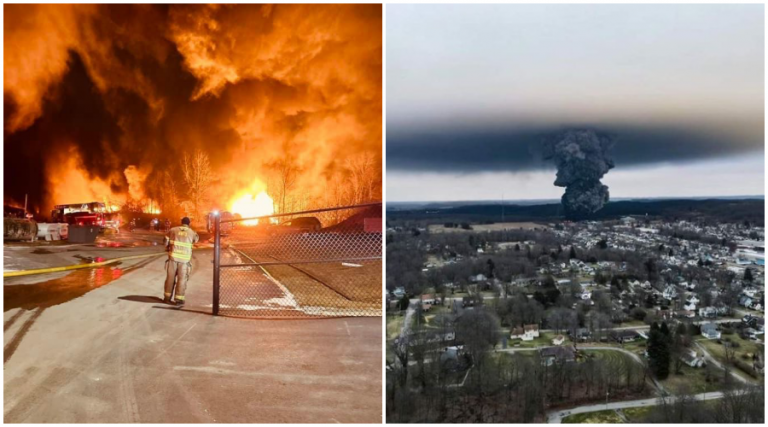
In East Palestine, Ohio State, a train derailment on February 3 caused a massive chemical spill of toxic substances including vinyl chloride. About 50 cars of a Norfolk Southern train derailed near East Palestine, triggering a massive fire and chemical spill in the area. Now, after the local authorities declared to residents that it is “safe” for them to go back to their homes, the toxic chemicals released into the atmosphere have sparked fears.

Some people are already calling it the largest environmental disaster in the USA in recent times.

As per reports, the burning of vinyl chloride and other chemicals has released toxic hydrogen chloride and phosgene into the air. The chemical spill occurred near the Ohio river which is a major tributary of the Mississippi river, causing concerns about water poisoning on a wider scale. The train cars were reportedly carrying thousands of gallons of vinyl chloride.

As the cars were at risk of explosion, the authorities pierced the containers, thinking of carrying out a ‘controlled release’ of the chemical. But the chemical started burning, releasing toxic fumes into the air and into a town that has a population of 5000 people.

Phosgene was used as a chemical weapon in World War 1.

As per reports, the US Environmental Protection Agency has sent a letter to the railway company telling them that ethylene glycol monobutyl ether, ethylhexyl acrylate and isobutylene were also in the rail cars that were derailed and breached on February 3. Ethylhexyl acrylate reportedly is a carcinogen that can further complicate the situation for thousands of local residents and nearby farms.

The EPA has also stated that they are still estimating the level of impact.

In the videos from East Palestine, toxic fume clouds can be seen stretching for miles.

CBS News has reported that there are hundreds of dead fish floating in the river water even 5 miles away. A lot of people have reported burning skin, burning eyes and farm animals dropping dead. Locals have started filing lawsuits against the Norfolk Southern company demanding compensation and medical expenses for the resulting health hazards.

US companies the Vanguard Group, JP Morgan and Blackrock are the top shareholders of Norfolk Southern. The government and EPA have been criticised for not being honest about the incident and trying to downplay the issue.

Why is Congress using Adani for ‘corruption charge’ against Modi, after massive failure of ‘Rafale scam’? Understanding how a Congressi mind works

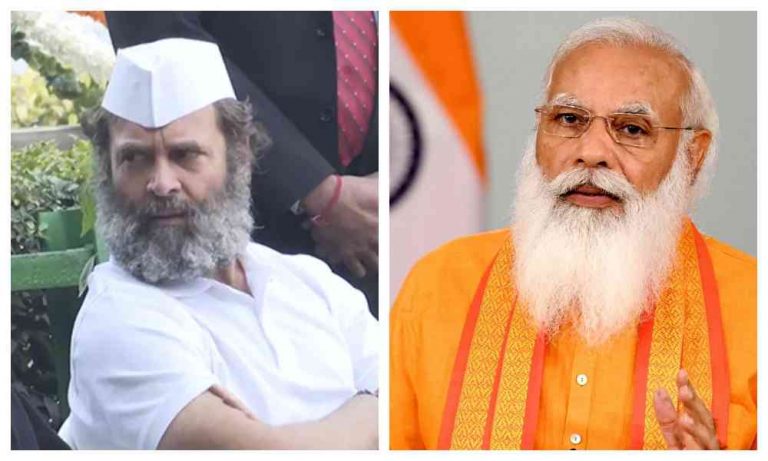
The thing about Congress is that its workers truly believe Rahul Gandhi is intelligent and a force to be reckoned with. They genuinely think he is Prime Minister material. They also think that every time he ‘attacks’ the BJP with these buzzwords, he is ‘scaring’ PM Modi. Here are some of the recent social media posts from Congress’ official handle:

Earlier today morning, Congress shared a digitally modified image where the faces of PM Modi and Gautam Adani were merged with the caption ‘MODANI’, a wordplay of Modi + Adani.

On Monday, February 13, Congress tweeted an image of PM Modi with a shadow that resembles a silhouette of Gautam Adani.

A post on Sunday showed a picture of PM Modi with Gautam Adani which insinuates government may be bending rules for Adani.

There are other such tweets along similar lines casting aspersions between the corporate giant and Prime Minister. During the recent Budget session in the Parliament, Congress leaders, along with other opposition leaders, were demanding a Joint Parliamentary Committee on the Adani-Hindenburg controversy. During the Prime Minister’s reply to the Motion of Thanks on the President’s address, Congress leaders created a ruckus. During Lok Sabha proceedings, Congress first staged a walkout before returning to create a ruckus, while during the entire 1 hour 30 minute address in Rajya Sabha, the elected public representatives continued to heckle the Prime Minister on the Adani issue.

Except, there is nothing new in this. Let’s go down memory lane a little, back to the 2019 general elections.

Congress was making memes, caricatures on the Rafale deal, and insinuating kickbacks from Anil Ambani’s Reliance. Congress leaders cried themselves hoarse that the Modi govt ‘took away the contract’ from HAL and ‘gave it to Ambani’. Except it was not true. The 36 jets that India purchased from France, will be 100% manufactured in France. India bought them off the shelf. Not a single one of them was being built in India so the question of HAL or Reliance manufacturing them would not arise. If India decides to buy any more Rafale fighters, they may be made in India in the future, but that will be under a separate agreement.

The Joint Parliamentary Committee was demanded back then as well. They continued to do so till 2021, then quite likely gave up after realizing they only sound stupider with every passing day. The JPC is now demanded in Adani’s case as well. It is like clockwork. A set pattern.

Find a business house as a target (Ambani, Adani), then accuse the PM of being ‘close’ to them, bring in ‘crony capitalism’, create a ruckus in Parliament, demand JPC, and fight elections on agenda that ‘businessmen are rich and hence, by default evil’. In a country where the middle class and poor form the majority of the population, it is easy to paint the ‘rich men’ as evil. Because the great Jawaharlal Nehru, Rahul Gandhi’s great-grandfather, had said that ‘profit is a dirty word’.

Indians are hardwired, thanks to our school education prepared by Leftist academics, to have socialist views where privileged and rich people must be made to feel guilty for being so. That ‘profit is evil’ is so deeply entrenched that even if someone makes money with hard work and perseverance, he would be looked at with suspicion of ‘must have exploited the poor’. We have been trained to think that profit is the same as profiteering and hence Congress gets away with it. This, despite their own party leaders coming from extremely privileged backgrounds, owning assets worth thousands of crores by just being politicians.

Nehru followed the Soviet model of economic policies where the state ran businesses such as industries to hotels. Taxes were kept high to ensure that regular citizens had minimal wealth and were dependent on the state. The spirit of entrepreneurship was discouraged. Nehru, as PM made some devastating decisions. JRD Tata, the longest-serving chairman of Tata Group founded India’s first international Airline in 1932. One of the biggest blunders in economic policy decision-making Nehru did was to nationalize the Tata owned Air India.

“I have often thought that if fate had decreed that Vallabhbhai Patel instead of Jawaharlal, would he be the younger of the two, India would have followed a very different path and would be in better economic shape than it is today”, JRD Tata said in a rare interview in the 80s. He believed that Jawaharlal Nehru knew very little about economics and socialism and he was simply not even open to ideas. “Socialism could be established without the loss of the economic freedom of the majority of the people, but Jawahar was not even interested in listening,” he had said.

Nehru, in his self-image, wanted to be seen among artists, intellectuals, and such while giving cold shoulder to even Tata (even though his party continued to receive patronship from rich industrial houses and families) while Modi is someone who doesn’t think being seen with businessmen is some crime. Modi would smile and hug a businessman as much as he would smile and pose for a selfie pic with actors.

For a country like India, it has to be a mixture of government-controlled enterprises plus private players who work in tandem to strengthen our economy. India, with a population of 1.4 billion, cannot rely only on government jobs. Private companies and also public-private partnerships can only lead to a healthy and sustainable economy. The government will need to create a cohesive environment for private companies and startups to thrive so that they can also become job creators. Such kind of constant and mindless attacks on corporates only hinders our progress.

This is why it appears like Congress will make Adani-Hindenburg controversy their main issue during the election campaign for 2024, much like the Rafale controversy in 2019. And if things go as they went in 2019, this will likely fail as well and Modi will return to power again. The Nehruvian mindset of socialism has to end and pave way for the Modi model of governance.

No arrests for SHUATS VC Prof RB Lal in 2022 religious conversion case, Allahabad HC directs police

0

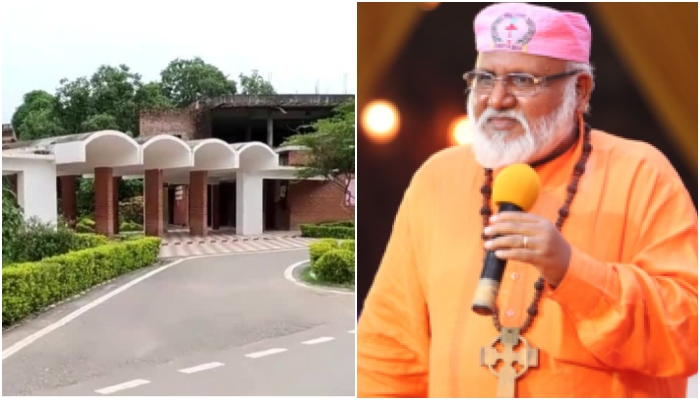
The Vice Chancellor of Sam Higginbottom University of Agriculture, Technology and Sciences (SHUATS, previously Allahabad Agricultural Institute), (Dr.) Rajendra Bihari Lal was last week awarded temporary protection from coercive action by the Allahabad High Court in connection with a case involving widespread religious conversion.

The decision was made by Justice Manju Rani Chauhan’s panel in response to a request for anticipatory bail made by Lal. “If the applicant appears before the investigating officer (10) on February 13 and 15, 2023, and files an undertaking to that effect before the 10 on February 13, 2023, itself surrendering his passport if any, to further the investigation, the 10 shall ensure that neither the applicant be arrested nor any coercive action is taken in the present case till February 15, 2023,” the Court order read.

According to the reports, the FIR, in this case, was filed last year in April in response to a complaint made by a person named Himanshu Dixit alleging that about 90 people of the Hindu religion had gathered at the Evangelical Church of India in Hariharganj, Fatehpur, with the intention of converting them to Christianity through coercion, undue influence, and the promise of easy money, among other tactics.

The government officials arrived at the scene after receiving this information and questioned the pastor, Vijay Massiah, who allegedly admitted that the conversion process had been ongoing for 34 days and was expected to be finished in 40 days.

Earlier, it was reported that another FIR was filed against eight officials of SHUATS including vice-chancellor and two pro-vice-chancellors for allegedly luring Hindus and forcing them to convert their religion to Christianity. The officials were booked under the UP Prohibition of Unlawful Conversion of Religion Ordinance 2020. RB Lal had pled that he was not named in the FIR. However, he was later implicated in subsequent stage on basis of statement given by two witnesses whom he alleged were ‘biased’ against him.

The FIR was filed based on the complaint registered by a University’s former student named Savendra Vikram Singh on January 20 this year. The complainant stated that he was told that in exchange for converting to Christianity, he can have a job, Rs 15 thousand in cash, and ‘marriage to a beautiful girl’ in Fatehpur.

This is after the Uttar Pradesh Police had sent notices to the chancellor, vice-chancellor, and an administrative official of the university in connection with a case of illegal conversion filed in April 2022. The notices back then were issued to Chancellor Dr Jetti Oliver, Vice-Chancellor Bishop Rajendra B Lal and administrative official Vinod B Lal of Sam Higginbottom University of Agriculture Technology and Science (SHUATS), an agriculture university in Uttar Pradesh that was set up more than a century ago.

The FIR was filed in accordance with Sections 153A, 506, 420, 467, and 468 of the IPC and Section 3/5(1) of the Uttar Pradesh Prohibition of Unlawful Conversion of Religion Act. The current applicant was not named in the FIR, but he was afterward accused of being biased towards the applicant based on allegations made by two witnesses who were interested in the case and the investigating officer.

How Bangladesh, with the active help of the Biden admin, is heading towards chaos with a greater risk of Islamist attacks against Hindus

Before Awami League under the leadership of Prime Minister Sheikh Hasina came to power in 2009, Islamists were seen holding rallies on the streets of Dhaka waving weapons, burning American and Indian flags, and chanting the “Allahu Akbar” slogan. During the past fourteen years, Sheikh Hasina has been committedly confronting Islamists and jihadists thus forcing Islamists on run. But, despite his disastrous retreat from Afghanistan and pushing the country to the mercy of Taliban mullahs, it seems US President Joe Biden did not learn any lesson. He is now repeating the same blunder in Bangladesh by extending patronization to Islamist forces in Bangladesh, especially Jamaat-e-Islami and their ideological partner Bangladesh Nationalist Party (BNP).

As Bangladesh is expected to hold its next general election in January 2024, Islamist forces, including Jamaat-e-Islami and BNP are making frantic bids in returning to power with the help of Western governments, particularly the Biden administration. As a result of the desperate pursuit and lobbying of these Islamists, the Biden administration is in the process of imposing sanctions on a large number of ruling party leaders as well as members of civil and military administrations using the Global Magnitsky Act on allegations of corruption and money-laundering. Such actions will directly benefit those Islamist forces in the country as they can be used as an excuse of attaining bigger support from the locals.

It may be mentioned here that in December 2021, the US Department of Treasury imposed sanctions on a number of officers of the Rapid Action Battalion (RAB) the elite force of Bangladesh Police that combats terrorism and militancy. During his recent visit to Bangladesh, Donald Lu, Assistant Secretary of State for South and Central Asian Affairs in the State Department said, Washington was considering imposing more sanctions on RAB in December 2022, but such actions were not taken as RAB has already shown significant progress in fighting terrorism and militancy and it has not shown signs of violating human rights. What Donald Lu did not say is his government’s ongoing plan of bringing a large number of Bangladesh nationals under fresher sanctions using the Global Magnitsky Act on allegations of corruption and money laundering.

Meanwhile, Islamists in Bangladesh are seeking Washington, London, and other Western capital’s blessings and direct intervention in Bangladesh’s next general election. They demand holding the election under an un-elected “caretaker government” or “government of national consensus”, comprising individuals of their choice. They even are openly giving instigation to the members of the Bangladesh Armed Forces in staging a coup to unseat Sheikh Hasina from power. Meaning, a deep-rooted Islamist conspiracy is continuing against Bangladesh and the ruling Awami League.

It may be recalled here that in 2013, a few months away from the 2014 general elections, while pro-Caliphate Hefazat-e-Islam had gathered hundreds and thousands of madrassa teachers and students, including dozens of individuals who had fought in Afghanistan against the Soviet Union and Palestine against Israel as “mujahedeen” had also joined these gatherings thus demanding enforcement of caliphate in Bangladesh with HeI chief as “Ameer” of the caliphate. Bangladesh Nationalist Party and Jamaat-e-Islami had openly declared solidarity with Hefazat’s dangerous bids.

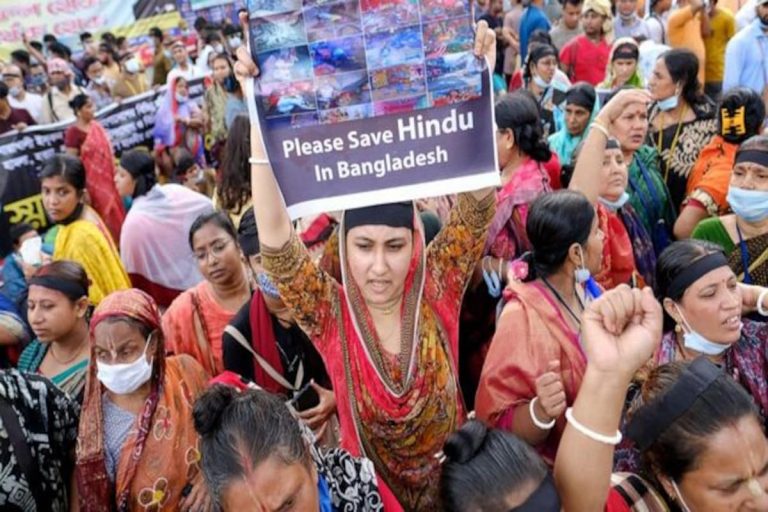
Subsequently, in 2014, Islamists carried out systematic bombings and arson attacks on religious minorities, singling out the minority Hindu community, for the “crimes” of voting for the Awami League. While Hefazat was demanding turning Bangladesh into a Caliphate, BNP, and Jamaat demanded the appointment of a “caretaker government” system to oversee election – a practice Bangladesh’s Jatiya Sangshad (National Parliament) had abolished. Violence continued unabated, while dozens of Hindu homes and temples came under arson and bombing attacks. Hindu religious scriptures were burned to ashes while deities were demolished by the members of BNP, Jamaat, Hefazat, and their Islamist cohorts. Hindu girls and women were raped by these Islamist thugs thus establishing a total reign of terror on Hindus in Bangladesh.