Home Blog Page 329

Congress leaders attack Shashi Tharoor for highlighting India’s change in approach in tackling Pakistan-sponsored cross-border terrorism, Tharoor hits back

Congress leader Shashi Tharoor is leading a multi-party delegation on a global outreach programme to various countries regarding the Pakistan-backed Pahalgam terror attack and India’s Operation Sindoor. While Congress has, over the years, been sidelining and insulting Shashi Tharoor for exercising intellectual freedom and not essentially being a Gandhi family Darbari, he has once again become a target of his own party leaders, even while he is on a national duty.

The row erupted after Congress leader Udit Raj questioned Tharoor’s loyalty towards the party on Wednesday (28th May 2025) and accused him of functioning as a “super spokesperson” of the Bhartiya Janata Party by echoing the BJP’s narrative in Panama.

Taking to X, Udit Raj said, “My dear @ShashiTharoor Alas ! I could prevail upon PM Modi to declare you as super spokesperson of BJP , even declaring as foreign minister before landing in India  . How could you denigrate the golden history of Congress by saying that before PM Modi , India never crossed LOC and International border . In 1965 Indian Army entered Pakistan at multiple points, which completely surprised the Pakistanis in the Lahore sector. In 1971 , India tore Pakistan in two pieces and during UPA Govt several surgical strikes were unleashed but drum beating was not done to encash politically . How could you be so dishonest to the party which gave you so much?”

Speaking to ANI, Udit Raj doubled down his attack on Tharoor and said, “Congress MP Shashi Tharoor is the super spokesperson of the BJP, and what the BJP leaders are not saying, speaking in favour of PM Modi and the government, Shashi Tharoor is doing… Does he (Shashi Tharoor) even know what the earlier governments used to do? … They (the Central government) are taking credit for the Indian Armed Forces. Shashi Tharoor has become the spokesperson for the publicity stunts of the BJP.”

Further escalating his attacks on Tharoor, Udit Raj claimed that the 2016 surgical strikes against terror establishments in Pakistan were ‘fake’ and said, “He [Shashi Tharoor] is trying to malign Congress by saying the party has done nothing. You are glorifying PM Modi’s fake surgical strikes. Defending, saying that security lapses happen everywhere, is a crime… The credit that the Army deserves should only go to the Army.”

Notably, Congress MP Shashi Tharoor, who is leading a multi-party delegation in a global outreach programme, recently said in Panama that India has changed its approach in recent years, and terrorists have also realised they will have to pay a price.

What Shashi Tharoor said in Panama

Referring to 2016’s Surgical strike and 2019’s Balakot airstrike in his address, the Congress MP said, “What has changed in recent years is that the terrorists have also realised they will have a price to pay; on that, let there be no doubt. When, for the first time, India breached the Line of Control between India and Pakistan to conduct a surgical strike on a terror base, a launch pad – the Uri strike in September 2015. That was already something we had not done before. Even during the Kargil War, we had not crossed the Line of Control; in Uri, we did, and then came the attack in Pulwama in January 2019.”

“This time, we crossed not only the Line of Control but also the international border, and we struck the terrorist headquarters in Balakot. This time, we have gone beyond both of those. We have not only gone beyond the Line of Control and the international border. We have struck at the Punjabi heartland of Pakistan by hitting terror bases, training centres, and terror headquarters in nine places,” Tharoor added.

Congress continues prioritising party narrative over nation by turning against Shashi Tharoor while he presents India’s narrative on foreign soil

Instead of reining Udit Raj since Tharoor is still on a national duty, Congress leadership decided to join him in attacking their own party colleague for not toeing Congress’s narrative on foreign soil.

In this vein, Congress leader Pawan Khera took to X to ‘refute’ Tharoor’s remarks in Panama where he had stated India crossed the Line of Control for the first time in September 2015. Khera refuted Tharoor’s claims, citing former Prime Minister Manmohan Singh’s statement that many surgical strikes were conducted under the UPA government. Khera shared a video clip of Singh’s statement on social media, emphasizing that surgical strikes were not new to the current government.

Khera shared a link to the video and captioned it, “Former PM Manmohan Singh: Many Surgical Strikes Conducted Under UPA….”

In another post, the Congress leader wrote, “Professionally done, target-specific, limited-calibre counter-terrorist operations have been carried out across the LoC in the past too, but this is for the first time that the government has made it public,” Jaishankar said this to the Parliamentary Committee on External Affairs in October 2016.”

Khera also shared the image of a page from Tharoor’s book “The Paradoxical Prime Minister”, in which, Tharoor being someone ideologically opposed to Prime Minister Narendra Modi had sharply criticised the public announcement of the 2016 Surgical Strikes along the LoC in Pakistan, however, unlike Udit Raj, who mindlessly declared the strike as “fake” and yet enjoy his party’s backing, Tharoor never raised such outrageous questions.

Meanwhile, reports say that Congress would be demanding an explanation from Shashi Tharoor on why he allegedly ‘contradicted’ party’s stand.

The public fallout not only highlights serious internal tensions within the Congress party amid its international outreach efforts but also shows that the Congress party would not shy away from attacking its own party leader for voicing his fact-based opinion while on national duty. Congress’s jibes against Shashi Tharoor, however, are not shocking given the party did not even submit his name for the multi-party delegation, disregarding the fact that the Thiruvananthapuram MP is not only a legislator with expertise in foreign affairs but also the chairman of the Parliamentary Standing Committee on External Affairs.

Shashi Tharoor responds to “zealots” attacking him for his remarks in Panama

Taking to X, Shashi Tharoor has strongly reacted to the unwarranted criticism directed his way for his statement in Panama regarding the shift in India’s approach in responding to Pakistan-sponsored cross-border terrorism. Tharoor said that he was explicitly speaking only about reprisals for terrorist attacks and not about previous wars, and that his remarks were preceded by a reference to the several attacks that have taken place in recent years alone.

“After a long and successful day in Panama, i have to wind up at midnight vhere with departure for Bogota, Colombia in six hours, so I don’t really have time for this — but anyway: For those zealots fulminating about my supposed ignorance of Indian valour across the LoC: in the past. 1. I was clearly and explicitly speaking only about reprisals for terrorist attacks and not about previous wars; & 2. My remarks were preceded by a reference to the several attacks that have taken place in recent years alone, during which previous Indian responses were both restrained and constrained by our responsible respect for the LoC and the IB. But as usual, critics and trolls are welcome to distort my views and words as they see fit. I genuinely have better things to do. Goodnight,” Tharoor said.

Shashi Tharoor paying the price of not being a Gandhi family sycophant

From Centre picking Shashi Tharoor over Congress-recommended MPs considering his strong diplomatic credentials, Tharoor accepting centre’s decision and joining the delegation going against Congress’s decision, to now fiercely presenting India’s perspective on counter-terrorism, the Congress party has continuously been targeting Shashi Tharoor.

In fact, the Thiruvananthapuram MP has constantly been attacked by his party colleagues over the past few years. In April 2024, a group of Congress workers stopped party MP Shashi Tharoor during an election campaign in Balaramapuram in Thiruvananthapuram city of Kerala. They raised ‘go back’ and ‘no vote for you’ slogans against Tharoor.

In 2019, senior Congress leader K Muraleedharan mocked Shashi Tharoor and said that it is not “Oxford English” but “anti-Modi” stand that had helped the party-led front win the Thiruvananthapuram seat from which Tharoor contested.  This verbal attack by Muraleedharan on his party colleague came days after Tharoor had said that he has always been a proponent of praising PM Modi for his right policy decisions. Tharoor had stated that lauding PM Modi for correct decisions will also add to the credibility of the opposition.

In February this year, Shashi Tharoor expressed dissatisfaction over his role in the party. He met Rahul Gandhi to express discontent over being sidelined in the party and not being given opportunities to participate in major debates inside the Parliament. However, Tharoor was left disgruntled after Gandhi failed to address his concerns. Tharoor’s dissatisfaction also arose from his removal from the charge of the All India Professional Congress (AIPC), a body which he had established.

OpIndia’s detailed report on how Congress has been continuously cornering and humiliating Shashi Tharoor for not blindly following the Gandhi family’s diktats and how this approach of Congress has forced many of its leaders to quit the party can be read here.

Bengaluru: 35-year-old Babajan, with 3 wives and 9 children, started burglaries to maintain his ever-growing family, used his minor son as accomplice

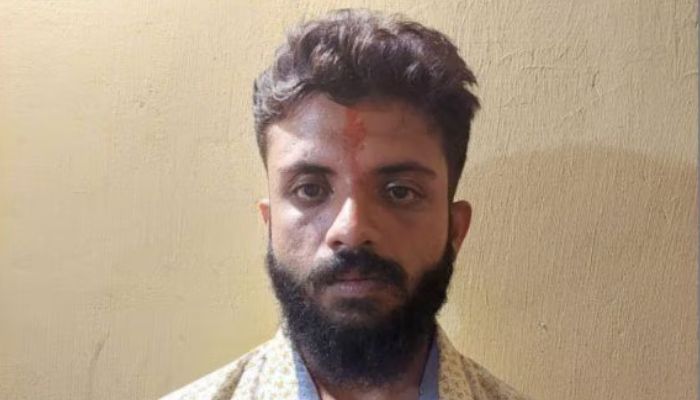
A bizarre case of a burglary has come to light from Bengaluru, Karnataka where police caught a burglar who trained his own son to help him commit thefts.

As per reports, a 35-year-old burglar identified as Babajan, having three wives and nine children (eight daughters and a son) had committed a series of thefts in Bengaluru. His three wives live separately in Srirangapatna, Anekal, and Chikkaballapura respectively. To maintain his large family, Babajan started committing thefts.

Babajan constantly looked out for unlocked doors and houses left open to target. However, with the police actively watching against incidents of burglary, Babajan came up with the idea of using his minor son for burglaries. He was aware of the fact that being a minor, his son would not face harsh punishment, in case he was caught. Hence, Babajan trained his son as well in burglaries. He used to drop his son at target locations, where upon getting a chance, the minor would sneak in, steal stuff, and then slip away with his father.

However, their partnership came to end after they were caught by the police during one of their heists. The father-son duo committed burglary in the house of a 56-year old woman named Rojamma in Bettadasanapura on 7th May when she went up to the terrace to dry clothes. They stole gold jewellery, silverware, and cash worth ₹4.6 lakh from her house. The police identified them from the CCTV footage.

The father-son duo was caught by police inspector Naveen GM on 13th May from Mylasandra in Bengaluru. During interrogation, Babajan told the police how he trained his son and committed burglaries with his assistance. The police recovered 180 grams of gold, 550 grams of silver along with a two-wheeler from him. The items were stolen in 9 different incidents of theft.

DRDO Chairman says can’t fight future wars with past technologies, urges Indian industry to boost research and developments in indigenous defence capabilities

0

DRDO Chairman Samir V Kamat on Thursday called on the Indian industry to significantly increase its investments in research and development to strengthen India’s indigenous defence capabilities.

“We need to invest more in research and development. Today, we spend 5 per cent of our Defence budget on R&D. The Raksha Mantri has promised us that in the next five years, this will increase gradually to 10% of the Defence budget,” Samir V Kamat said at the CII Annual Business Summit 2025.

“You can’t afford to fight future wars with past technologies. If you have to win future battles, you have to invest in R&D within the country,” he added.

He congratulated the armed forces for the success of Operation Sindoor.

“Let me place on record the DRDO appreciation of the armed forces’ efforts in conducting operations very successfully. I would also like to congratulate the Indian industry for helping us and producing the equipment they (Armed Forces) could use successfully during this operation,” he said.

“I would like to congratulate the Indian industry for contributing significantly to making India the fourth largest economy in the world,” he added.

He highlighted the importance of working towards advanced technologies for cutting-edge systems.

“Technological changes are galloping. Although manufacturing is required, without the ability to design and develop your systems, you will always have systems that are not the cutting-edge systems. We are not the leading R&D nation in the world at the moment. So we will have to catch up, which can be done by using the new emerging technologies,” Kamat noted.

He said India’s progress in Research and Development will not only strengthen its defence ecosystem but also expand defence exports. “We will work with you closely to make India a leading R&D country where people look to us for new innovations in defence technologies. If that happens, our exports will also increase.”

“We will be at a position where our enemies would not want to deal with us in any form of war, and we can then grow economically at a much faster rate with our focus on lifting the country to become a developed country, which is the vision of our Prime Minister by 2047,” he said.


(This news report is published from a syndicated feed. Except for the headline, the content has not been written or edited by OpIndia staff)

‘Troublemakers’, ‘Radical elements’: Inside Donald Trump’s war on foreign students in the US, and how it will adversely affect thousands of Indian youngsters

Since his return to White House in January 2025, US President Donald Trump has spearheaded a series of aggressive policy reforms, including those regarding immigration policies targeting foreign students. The Trump administration is projecting its crusade against foreign students enrolling in US universities as a measure to uphold national security, curb anti-semitism and weed out “troublemakers”.

During a media interaction on 29th May, President Trump termed international students as “troublemakers” and proposed a 15 per cent cap on enrolling foreign students at the Harvard University and other higher education institutions in the United States.

“We don’t want to see shopping centres explode. We don’t want to see the kind of riots that you had, and I’ll tell you what, many of those students didn’t go anywhere, many of those students were troublemakers caused by the radical left,” Trump said.

 “Harvard has to show us their lists. They have foreign students – almost 31 per cent of their students. We want to know where those students come from, whether they are troublemakers, and what countries they come from….These countries aren’t helping us. They’re not investing in Harvard … we are. So why would 31 per cent – why would a number so big…I think they should have a cap of maybe around 15 per cent, not 31 per cent,” he added.

The US President further asserted that foreign students capture most of the student body and block the way for local American students to have better education.

“We have people [who] want to go to Harvard and other schools, [but] they can’t get in because we have foreign students there. But I want to make sure that the foreign students are people who can love our country,” Trump said.

Further escalating his attack on Harvard, the US President called the Ivy league institution as “disaster” and “totally anti-semitic”.

“Harvard has been a disaster. They’ve taken $ 5 billion+… And by the way, they’re totally anti-semitic at Harvard, and some other colleges too. It’s been exposed, very exposed, and I think they’re dealing very badly. Every time they fight, they lose another 250 million dollars… I think this is what everyone’s coming up to me saying, we love the idea of trade schools with that kind of money and money from others, but money from them. You can have the best trade schools anywhere in the world… They can only be used for trade schools, and they’ll teach people how to build AI,” Trump said.

Just days back, Homeland Security Secretary Kristi Noem notified Harvard that its Student and Exchange Visitor Program certification was “revoked effective immediately.” The administration accused the university of “fostering violence, antisemitism, and coordinating with the Chinese Communist Party.”

Harvard’s legal battle against Trump

Amid escalating tensions between academia and the White House, Harvard University filed a lawsuit against the Trump administration. The lawsuit, filed in Boston federal court, paints a dire picture: more than 7,000 international students at Harvard now face an uncertain future, with the university warning of “immediate and devastating” consequences.

“With the stroke of a pen,” Harvard declared in its fiery complaint, “the government has sought to erase a quarter of Harvard’s student body — international students who are vital to our mission and our nation’s future.

This marked Harvard’s second lawsuit in just a month against the Trump administration — the first being over alleged federal interference in its curriculum, admissions, and hiring practices.

Earlier, the Trump administration had terminated significant federal funding to Harvard, including $60 million in grants, $450 million in additional funding and $2.2 billion in research grants over the varsity’s alleged failure to curb antisemitism and comply with federal demands. In April this year, Trump also called for the revocation of Harvard’s tax-exempt status and said that it should be “taxed as a political entity if it keeps pushing political, ideological, and terrorist inspired/supporting “Sickness?”

Amusingly, during his electoral campaign last year, Donald Trump had softened his stance on foreign students studying in the US varsities and proposed granting an automatic Green Card to foreign students who graduate from US colleges. However, after coming to power, Trump has gone back to old ways and launched a crackdown on foreign students while outrightly declaring them “troublemakers”.

Trump’s second term has witnessed a renewed focus on immigration restrictions resembling policies from his first term. The Trump administration has targeted Harvard and other prestigious institutions, accusing them of fostering “anti-American” ideologies, anti-semitism as well as affiliations with foreign entities like the Chinese Communist Party (CCP). Foreign students have come under the Trump administration’s radar as the government is prioritising compliance with federal regulations, bolstering national security through stricter vetting, and addressing campus protests, especially those pertaining to pro-Palestine activism.

On 27th May, the Secretary of State Marco Rubio ordered US embassies and consular offices to stop scheduling new visa interviews for student applicants as Donald Trump  administration is considering strict vetting of applicants’ social media profiles.

This directive would mark a broader application of existing vetting procedures to restrict foreign students’ entry to American schools and colleges.

“Effective immediately, in preparation for an expansion of required social media screening and vetting, consular sections should not add any additional student or exchange visitor (F, M, and J) visa appointment capacity until further guidance is issued septel, which we anticipate in the coming days,” the cable states. (“Septel” is State Department shorthand for “separate telegram.”)

While the cable accessed by Politico, does not detail what social media activity will be reviewed, it refers to executive orders focused on counterterrorism and antisemitism, Politico reported.

Previous guidance from administration included social media checks for returning students who had participated in protests related to Gaza. Many State Department officials have complained privately for months that past guidance, for, say, vetting students who may have participated in campus protests, has been vague. Officials remain uncertain whether specific online content, such as displaying a Palestinian flag, would trigger further review.

Thousands of foreign students face uncertain future in the US

In April this year, the Trump administration attempted to revoke student visas, particularly targeting students involved in pro-Palestine protests. The records of over 4700 students were removed from the Student and Exchange Visitor Information System, placing them in risk of deportation. While the legal challenges compelled the administration to restore legal status of many students, the administration expanded grounds for future terminations by deeming minor offenses or social media activity as problematic.

Meanwhile, on 29th May, Marco Rubio said that US will start aggressively revoking the visas of Chinese students in the country. Among the students likely to be affected are the ones with connections to the Chinese Communist Party (CCP) or studying in critical fields. This comes as China is said to have established an effective spying network at the top US universities, including the Ivy League universities like Harvard and Stanford, which also receive massive funds from the CCP. A detailed OpIndia report on how China is running a spying network in the US academic institutions can be read here.

Predictably, the Trump administration’s decision to halt visa interviews which will impact aspiring students globally, has sparked outrage and criticism. US Congressman Raja Krishnamoorthi opposed the Donald Trump administration for freezing student visa interviews amid reports of bringing severe social media vetting, calling it “a reckless decision”.

In a statement, Raja Krishnamoorthi emphasised that international students are vital to America’s economic strength and national security.

“I strongly oppose the Trump Administration’s reckless decision to freeze new student visa interviews and consider sweeping, undefined social media vetting for international students. International students help drive cutting-edge research, fuel our universities, and build the industries of tomorrow. These young people are not only scholars and innovators — they are vital to America’s economic strength and national security. By developing the next generation of technologies and the good-paying jobs that come with them, they help ensure the United States remains a global leader.” Krishnamoorthi said.

Krishnamoorthi said that shutting international students out is a “strategic blunder” and weakens US global competitiveness.

Notably, the halt on student visa interviews is temporary and is reported to have been imposed to the handle the existing backlog of applications. The pause will be in place until existing applications are not perused and the applicant’s background checks, including online activity, is not conducted.

Will Donald Trump’s crusade against foreign students trump the aspirations of Indian students?

There are over 11 lakh foreign students in the US, of which, 3 lakh are Indian students and are among those affected the most with Trump administration’s ongoing crackdown. In the academic year 2023-2024, foreign students contributed $44 billion to the US economy, with Indian students playing a key role due to their significant numbers and enrolment in high-tuition programs like STEM fields. The year-on-year increase in Indian student enrollment in the US was recorded 23.3 per cent in 2023-24, with Indian students alone making up for around 30 per cent of all foreign students that year. These students mostly pursue Math and Computer Science (42.9 percent), engineering. (24.5 percent), followed by the fields of Business and Management, Physical and Life Sciences, and Health Professions saw 11.2 per cent, 5.4 per cent, and 2.7 per cent of Indian students.

Last year, around 1,96,567 Indian students enrolled in graduate level programs, 36,053 at undergraduate level, students in Optional Practical Training or OPT made up 97,556 of the Indian applicants. Meanwhile, the tally of non-degree Indian students stood at 1,426, as per the Open Doors report. As per the SEVIS data, Indian students count saw a sharp decline from 3,48,446 in July 2024 to 2,55,447 in August 2024.

Talking about the academic year 2025, after a bill to terminate Optional Practical Training was introduced in the US Congress, there has been a 28 per cent drop year-on-year. However, many Indian students, especially at elite institutions like, Harvard, have already completed their visa applications, secured loans and also made financial commitments like tuition deposits. With an indefinite halt on new visa interviews, uncertainty around Harvard’s Student and Exchange Visitor Program (SEVP) status, Indian students face risk of not being able to enrol on time. This uncertainty and delays in visa processing could compel them to defer admission, look for alternative institutions or even abandon their US study plans altogether.

Besides, the expansion of social media vetting could prove to be a hurdle for Indian applicants as the US authorities may scrutinise content they deem anti-US or antisemitic leading to visa denials. This will particularly affect those who have either indulged in antisemitic on-campus activism or expressed such views on social media.

A broader impact of the hostile narrative against foreign students may also worsen the already existing negative stereotypes and racism that Indian students face in the USA.

The Trump administration’s crusade against foreign students is facing significant backlash from not only international students but also from educators, immigration advocates and political leaders, with many arguing that under the pretext of ensuring national security, the US government is unfairly targeting foreign students who significantly contribute to the US economy. For Indian students, they are caught in the crosshairs of a broader ideological conflict brewing in the US. The Trump administration’s policy shift is exacerbating existing challenges like high tuition costs and complex visa processes while putting up new obstructions to accessing education in the United States.  

‘Bengal me machi cheekh pukaar, nahi chahiye nirmam sarkar’: PM Modi attacks TMC govt for politics of violence, appeasement and corruption

0

Prime Minister Narendra Modi launched a scathing attack on Mamata Banerjee government on Thursday and said West Bengal needs freedom from “politics of violence, appeasement, riots and corruption” and that the people are looking towards “BJP’s development model”.

Addressing a rally here, PM Modi took several jibes at the Trinamool Congress government, and said West Bengal is surrounded by many crises simultaneously.

“First is the crisis of violence and anarchy spreading in the society. Second is the unsafety of our mothers and sisters who are being subjected to heinous crimes. The third crisis is of the extreme despair and rampant unemployment spreading among the youth. The fourth crisis is of the continuously declining trust in the system. The fifth crisis is of the selfish politics of the ruling party, that steals the rights of the poor,” he said.

PM Modi said the youth and poor families suffer the worst consequences of corruption. He alleged that the education system of West Bengal is being ruined.

“We saw how corruption ruins everything in the teacher recruitment scam. The TMC government in their tenure destroyed the future and families of thousands of teachers and left their children helpless. The whole education system of West Bengal is being ruined. The absence of teachers has put the futures of lakhs of students at risk. The TMC leaders have committed such a huge sin. The limit is that even today these people are not ready to accept their mistake. Instead, they blame the courts,” he said.

PM Modi attacked the TMC government over violence in Murshidabad and Malda.

“Whatever happened in Murshidabad and Malda was an example of the government’s ruthlessness here… In the name of appeasement, hooliganism was given a free hand. Imagine the horrific situation when the people of a party running the government identify and burn people’s houses, and the police act as mere spectators. I ask the poor people of Bengal, is this how a government runs?… Here, the court has to intervene on every issue. Otherwise, nothing gets resolved. The people of Bengal do not trust the TMC government anymore… ‘Bengal mein machi cheekh pukaar, nahi chahiye nirmam sarkar’,” he added.

PM Modi accused TMC government of hostility towards the tribals, poor, Dalits, backward classes and women.

“The TMC government is stalling the development of the poor tribal communities… TMC doesn’t care about the tribal community’s respect. When the NDA government made a tribal woman a Presidential candidate for the first time, TMC was the first party to oppose that,” he said.

“Why is TMC being hostile towards the poor, Dalits, the backward classes, women, and tribals?… Unfortuantely, the people of West Bengal are not getting the benefits of the Ayushman scheme… The ruthless government didn’t let the people of West Bengal get Ayushman cards… Many poor people are not able to get permanent houses because of the TMC government, because their leaders are demanding cut and commission from the poor,” he added.

PM Modi accused the TMC of being interested only in playing politics.

“The West Bengal government was absent from the NITI Aayog Governing Council’s meeting in Delhi. TMC only wants to play politics 24 hours. They do not prioritise West Bengal’s development or the country’s progress. The Central Government policies that have been implemented here in West Bengal are not being fulfilled… The TMC government has stalled 16 major infrastructure projects in West Bengal,” he said.

Earlier, Prime Minister Narendra Modi laid foundation stone of City Gas Distribution project in Alipurduar and Cooch Behar districts in Alipurduar at West Bengal. 

(This news report is published from a syndicated feed. Except for the headline, the content has not been written or edited by OpIndia staff)

Supreme Court says relationship turning sour cannot be a ground for filing rape case, cautions against misuse of the law

The Supreme Court quashed criminal proceedings against a 23-year old rape accused saying that a consensual relationship turning sour cannot be a ground for filing a rape case. A bench of justices BV Nagarathna and Satish Chandra Sharma said in its judgment dated May 26, 2025 that such cases burden the court and bring disrepute to the person accused.

The Supreme Court cautioned the courts against treating every breach of promise to marry as a false promise and then prosecuting the accused for rape. “A consensual relationship turning sour or partners becoming distant cannot be a ground for invoking criminal machinery of the State. Such conduct not only burdens the Courts, but blots the identity of an individual accused of such a heinous offence. This Court has time and again warned against the misuse of the provisions, and has termed it a folly to treat each breach of promise to marry as a false promise and prosecute a person for an offence under section 376 IPC,” the Court said.

The Apex Court was hearing a plea challenging an order of the Bombay High Court which declined to quash proceedings against the accused under sections 376 (rape), 376(2)(n) (repeated rape on the same woman), 377 (unnatural offences), 504 (intentional insult to provoke breach of peace), and 506 (criminal intimidation) of the IPC.

What was the case?

The complainant, a previously married woman with a 4-year old son, accused the appellant , a graduation student, of raping her between June 2022 and July 2023 on the false promise of marriage. The complainant had obtained a Khulanama (agreement for divorce by mutual consent) from her former husband and had been living with her son at her parents house since 2021.

She alleged that in July 2022, the accused entered her house at night and had sexual intercourse with her after promising to marry her once she obtained formal divorce from her husband. The accused allegedly had sexual intercourse with her later on several occasions on the same promise.

Subsequently, when the accused reduced interactions with her, she visited his home and met his parents. She said that his parents denied any possibility of marriage between the two because they belonged to different religions.

After this, she registered an FIR against the accused who filed an application before the Additional Sessions Judge at Karad seeking anticipatory bail which was granted. The man then moved the Bombay Hight Court seeking quashing of proceedings against him but the court denied him relief. The accused then approached the Supreme Court against the Bombay High Court order contending that the High Court erred in dismissing his plea. He highlighted the lack of evidence against him and the fact that the FIR was filed after a delay of 13 months.

The Supreme Court quashed the proceedings

The Supreme Court said that even if the allegations in the FIR are considered to be true, there was nothing to prove that the sexual intercourse happened against the will of the complainant and merely on the promise of marriage. “The appellant and the complainant were acquainted since 08.06.2022, and she herself admits that they interacted frequently and fell in love. The complainant engaged in a physical relationship alleging that the appellant had done so without her consent, however she not only sustained her relationship for over 12 months, but continued to visit him in lodges on two separate occasions. The narrative of the complainant does not corroborate with her conduct,” the Court observed. The court noted that there was no evidence coercion or threat of injury to the complainant to attract an offence under section 506 IPC.

The court said that there was probably an underlying motive behind the complainant action as she was probably upset because the accused had reduced interactions with her. Considering the age of the accused, the court quashed the criminal proceedings against him.

With the rise in cases of false rape cases being filed due to failed relationships or the breach of promise of marriage, the Indian courts are now exercising caution in entertaining such cases.

Fatehpur: Kuldeep’s Muslim in-laws forced him to convert, renamed him Rashid, got him circumcised and removed Om tattoo, still keeping him away from his wife and child

Kuldeep who lives in Fatehpur, Uttar Pradesh, fell in love with Alfia. They eloped and got married, however their family members did not agree to their union. After a while, his in-laws started to pressure him to embrace Islam. They even took away his wife even after he converted and got circumcised for her. He has now lodged a complaint with the police.

The victim who is from Abunagar area of Fatehpur fell in love with Alfia who used to live in Syedwada locality. They got married on 6th April 2023. After the marriage, he moved to Musepur, distancing himself from his family. However, Alfia’s family and some relatives collectively pressured him to convert to Islam. According to media reports, shortly after the wedding, his mother-in-law Farida told Kuldeep to undergo circumcision.

Deeply in love with his wife, Kuldeep complied and underwent the procedure. Subsequently, he was also instructed to change his name. Kuldeep stated that he had a tattoo of Om (Hindu religious symbol) on his hand which his in-laws tried to remove by pouring acid on it. Afterward, some individuals from Alfia’s family forcibly took him to a cleric where he was converted to Islam and renamed Rashid. His Nikah (Islamic wedding ceremony) was then organised.

Meanwhile, on 2nd April, Alfia welcomed a new child into the world. Her family members visited her at the hospital and Alfia’s mother declared that they would bring her home for a few days. On the other hand, she and her son Sufiyan prevented Kuldeep from seeing Alfia and the newborn.

When Kuldeep became aware that the process of converting his child to Islam was underway, he went to the police to report the issue. He stated in his complaint that he wished to remain a Hindu. The matter has infuriated Hindu organizations and they have affirmed their commitment to support the victim. Hindu leader Dharmendra Singh has said this is a carefully planned conspiracy.

He conveyed that Hindu groups will back Kuldeep. The police are currently investigating the matter. According to officials, further measures will be taken based on the victim’s account.

As US Trade Court blocks most of Trump tariffs, here is how the US president lied about using tariffs to broker India-Pakistan ceasefire to avoid adverse court ruling

On 28th May, a federal court in the United States halted President Donald Trump’s extensive “Liberation Day” tariffs, delivering a significant setback to a crucial aspect of his economic strategies. The International Trade Court determined that an emergency law enacted by the White House does not grant him the sole authority to impose tariffs on almost all nations. Notably, during the hearing, the Trump administration claimed that preventing the imposition of tariffs will result in escalation of India-Pakistan conflict. However, the court didn’t accept that argument.

The Manhattan-based court ruled that the president’s mandate to safeguard the economy does not outweigh exclusive authority of Congress under the country’s Constitution to regulate trade with other countries. Trump exceeded his authority when he used the 1977 International Emergency Economic Powers Act to declare a national emergency and defend the sweeping tariffs, according to the three-judge panel.

They unanimously declared that the White House had acted “contrary to law.” The bench pointed out, “The Worldwide and Retaliatory Tariff Orders exceed any authority granted to the President by IEEPA to regulate importation by means of tariffs. The Trafficking Tariffs fail because they do not deal with the threats set forth in those orders.”

“The court does not pass upon the wisdom or likely effectiveness of the president’s use of tariffs as leverage,” the bench declared and added, “That use is impermissible not because it is unwise or ineffective, but because (federal law) does not allow it,” as it imposed a permanent injunction on the comprehensive tariff orders enacted by Trump since January.

Additionally, the justices mandated that the Trump administration issue fresh directives within ten days that reflected the permanent injunction. The Trump administration filed a notice of appeal shortly after the decision was pronounced and challenged the court’s jurisdiction.

The Trump administration claimed that only Congress, not the courts, has the power to determine whether a president’s declaration of emergency satisfies legal requirements and even cited the upholding of then-President Richard Nixon’s use of emergency tariffs in 1971.

All of Trump’s tariff orders since January that were based on the International Emergency Economic Powers Act, a measure designed to handle “unusual and extraordinary” threats during a national emergency were deemed unconstitutional by the court with immediate effect.

The court also blocked another series of tariffs that the Trump administration had slapped on China, Mexico and Canada upon its return to the White House, citing the intolerable influx of drugs and undocumented immigrants into the United States.

Decades of US trade policy were overturned by the tariffs which also shook financial markets, interrupted international trade and increased the possibility of price hikes and a global recession. The case constitutes one of seven legal challenges directed at the administration’s trade policies together with lawsuits from 13 US states and additional groups of small businesses.

The decision was made following lawsuits initiated by five small import businesses in the United States and a coalition of 13 states spearheaded by Oregon Attorney General Dan Rayfield, who described the tariffs as “unlawful, reckless, and economically devastating.”

No takers for Trump’s India-Pakistan ceasefire lie

Top US officials who were tasked with defending Trump’s trade policies claimed that any effort to limit his authority to use trade and impose tariffs could cause another conflict between India and Pakistan and put millions of lives in jeopardy, among other things. The legal defeat could also shift the direction of a “asymmetric” trade truce with China, per the Trump administration which urged the court to uphold the tariff power.

Government lawyers contended that the tariff policy has sparked international negotiations and any legal restriction would severely diminish US influence on the world stage. Justice Department lawyer Brett Shumate implored, “An injunction would completely kneecap the president,” to which Judge Jane Restani retorted, “The court cannot for political reasons allow the president to do something he’s not allowed to do by statute.”

They reiterated Trump’s statement, which India has consistently denied, that he acted as a mediator between India and Pakistan. They further alleged that only after the president intervened and provided both nations with trading access to the US did a “tenuous” truce was reached.

Four important members of the president’s cabinet, Secretary of State Marco Rubio, Secretary of Treasury Scott Bessent, Secretary of Commerce Howard Lutnick and US Trade Representative Jamieson Lee Greer, signed declarations in the US Court of International Trade and supported the flimsy claim of the president regarding the fresh India-Pakistan dispute.

Lutnick argued against any erosion of the presidential power to invoke US laws to levy tariffs on foreign nations and the potential consequences for utilizing economic tools for strategic purposes. He invoked the military conflict between “nuclear powers” India and Pakistan and the subsequent ceasefire to make his point.

“For example, India and Pakistan, two nuclear powers engaged in combat operations just 13 days ago reached a tenuous ceasefire on 10th May 2025. This ceasefire was only achieved after President Trump interceded and offered both nations trading access with the United States to avert a full-scale war,” he stressed.

Lutnick expressed, “This ceasefire was only achieved after President Trump interceded and offered both nations trading access with the United States to avert a full-scale war. An adverse ruling that constrains presidential power in this case could lead India and Pakistan to question the validity of President Trump’s offer, threatening the security of an entire region and the lives of millions.”

A negative decision, he continued, will also put important trade agreements at risk and permit Chinese aggressiveness during a period of geopolitical rivalry. Lutnick also emphasized that Trump’s use of higher tariffs had allowed the US to secure a 90-day deal with Beijing for a reduction in Chinese duties on US exports.

“The increased tariff rate against China applied additional pressure to achieve the foreign policy objective of bringing China, the greatest contributor to the national emergency and a well-known strategic adversary, to the negotiating table,” he mentioned.

India is presently engaged in negotiations with the United States regarding a bilateral trade agreement aimed at addressing the trade deficit of the US, with Trump asserting that India proposed a deal involving essentially zero tariffs.

According to Rubio’s declaration, any unfavorable decision could undermine US strategic interests across the world as well as gravely and irrevocably impair the nation’s foreign policy and national security. He added that any weakening of the president’s authority to apply tariffs under the International Emergency Economic Powers Act could incite other countries to impose retaliation tariffs on the United States.

He insisted that nations were holding off because they were wary of higher tariffs introduced by the Trump administration under the IEEPA. The officials informed the court that tariff-related trade talks were in progress with a number of nations and that the matter was still in a “delicate state,” with the trade agreements set to be finalized by 7th July.

Trump’s terryfing tariffs

On 2nd April, the American commander-in-chief placed import levies on the majority of the country’s trading partners, revealing an unprecedented global tariff regime. Most countries were subject to a 10% baseline tariff with higher rates imposed on nations that maintain significant trade surpluses with the United States. Dozens of countries and blocs, including the European Union, the United Kingdom, Canada, Mexico and China were targeted with harsher retaliatory duties.

Trump maintained that the comprehensive economic plan would save employment and strengthen American industry. Since the announcement and Trump’s several reversals and halting of duties as foreign countries approached the bargaining table, the world’s markets have been in a state of chaos.

A protracted trade war with China added to the unrest as the two economic titans raised tariffs back and forth, culminating in a 125% Chinese tax on US imports and a 145% US tax on Chinese goods. With the US lowering its levies on China to 30% and the latter dropping its tariffs on certain US imports to 10%, the two largest economies in the world have since reached a truce.

Moreover, a deal on reduced tariffs between the US and UK governments has been announced. However, Trump recently threatened to impose a 50% tariff on all EU-sourced goods. Afterward, he agreed to a more than one-month extension of the deadline for trade negotiations with the bloc.

During the ongoing trade deal negotiations, Trump had earlier declared a reciprocal tariff of 26% on Indian items and attempted to open politically sensitive industries, such as agriculture. Concerns regarding India’s willingness to liberalize certain industries to prevent retaliatory tariffs had been voiced by representatives of the Indian Ministry of Commerce and Industry.

New Delhi responded by approving multiple tariff reductions in the Union Budget presentation, including those on motorbikes and bourbon whiskey. Given that India had consented to terms of reference (ToR) to begin negotiations shortly before reciprocal tariffs went into effect, there was a lot of pressure to strike a trade agreement with the US.

Trump’s claims of mediation between India-Pakistan and New Delhi’s rejection

On 7th May India initiated “Operation Sindoor” following the Pakistan-sponsored 22nd April Pahalgam terror attack. India not only dismantled key terror infrastructure at nine locations in Pakistan but also destroyed its airbases, jets and an AWACS (Airborne Warning and Control System) aircraft when the latter sought to attack civilian areas in the border region.

Pakistan requested a halt in hostilities from India twice, including on the evening of 7th May when the Director General of Military Operations (DGMO) sent an official message, reported India Today. On 10th May at 3:35 pm, following three more days of fierce cross-border military operations, India and Pakistan held a DGMO-level discussion to negotiate a ceasefire agreement, which was also initiated by the Islamic Republic.

The goal of the truce was to reduce tensions between the two neighbors and it was mediated by existing military channels. Nonetheless, Trump asserted that the United States facilitated a ceasefire between India and Pakistan and that the agreement was reached due to his proposal of potential trade concessions.

“After a long night of talks mediated by the United States, I am pleased to announce that India and Pakistan have agreed to a full and immediate ceasefire. Congratulations to both countries on using common sense and great intelligence. Thank you for your attention to this matter,” he announced on Truth Social on 10th May.

“I said, come on, we’re going to do a lot of trade with you guys. Let’s stop it. If you stop it, we’ll do a trade. If you don’t stop it, we’re not going to do any trade. And all of a sudden, they said, I think we’re going to stop. For a lot of reasons, but trade is a big one,” he then claimed while addressing media on 12th May.

Trump portrayed himself as a peacemaker and emphasized that his administration had played a crucial role in brokering peace to avert a “potential nuclear war” between India and Pakistan, which he stated could have led to the loss of millions of lives. “I think they’re actually getting along. Maybe we can even get them together a little bit, Marco, where they go out and have a nice dinner together. Wouldn’t that be nice,” he stated in Riyadh, during his three-nation Middle East visit.

While Islamabad expressed gratitude towards him, India categorically dismissed his assertions. According to India’s foreign ministry spokesperson Randhir Jaiswal, top leaders in Washington and New Delhi spoke after the Indian military’s heated standoff with Pakistan but they did not discuss trade. He firmly asserted that it was the strength of Indian weaponry that compelled Pakistan to halt hostilities and pursue dialogue, rather than any external mediation.

Trump’s claims stand exposed

While Trump consistently boasted about his role and depicted himself as the one who brought rival nations to peace negotiations, the current ruling from the US court has laid bare the truth of his assertions. India has already dismissed his statement, yet his exploitation of the India-Pakistan conflict to maintain tariff power clearly indicates that he fabricated the same for his own benefit in the court of law.

However, the bench appears to have called his bluff. The Trump administration can no longer utilize the sword of tariffs against trading partners or purport to settle conflicts between two adversaries.

India shakes up CCTV industry by mandating scrutiny of China-made CCTVs’ hardware and software, changes enforced to counter Chinese spying through these cameras

India has mandated the manufacturers of the surveillance gear to submit hardware, software, and source code of CCTV cameras for security assessment in Indian government labs before selling their products in the country. This stems from India’s concerns regarding the possible threat of Chinese surveillance through the CCTV cameras and their parts supplied by Chinese manufacturers.

The new rules apply to all internet-connected CCTV cameras manufactured or imported after 9th April, as reported by Reuters. The decision will mostly impact Chinese manufacturers such as Hikvision, Xiaomi, and Dahua, which dominate the Indian surveillance market.

In 2021, the then Minister of State for Communications and IT, Sanjay Dhotre flagged the danger of Chinese surveillance through CCTV cameras. Dhotre said in the Parliament that around 10 lakh CCTV cameras in various government institutions were from Chinese manufacturers and therefore posed a risk of data being passed on to Chinese servers.

Gulshan Rai, who was India’s cybersecurity chief between 2015 and 2019 told Reuters, “There is always an espionage risk. Anyone can operate and control internet-connected CCTV cameras sitting in an adverse location. They need to be robust and secure”.

CCTV manufacturers voice their reservations about the new policy

On 13th April, Indian officials reportedly met with the executives of 17 foreign and domestic manufacturers of surveillance gear, including Hanwha, Motorola, Bosch, Honeywell and Xiaomi. In the meeting, the manufacturers conveyed their reservations regarding the new certification rules and requested the government to delay the implementation of the rules. However, the government rejected their request citing that the policy “addresses a genuine security issue” and therefore it must be enforced. The government clarified that the rules do not single out any country and intend to improve the quality of cybersecurity of surveillance systems in the country.

The CCTV manufacturers raised several issues, including delayed approvals, and disruptions in infrastructure and commercial projects. They mentioned insufficient testing capacity, prolonged factory inspections and government scrutiny of sensitive source code. “Millions of dollars will be lost from the industry, sending tremors through the market,” Ajay Dubey, Hanwha’s director for South Asia, reportedly told the IT ministry.

Millions of CCTV cameras have been installed across Indian cities with Delhi alone having over 250,000 cameras. Counterpoint Research analyst Varun Gupta told Reuters that India’s surveillance market is set to be worth $7 billion by 2030, compared to $3.5 billion last year. He said that China’s Hikvision and Dahua account for 30% of the market while India’s CP Plus has a 48% share in the market. About 27% of the CCTV demand in the country comes from the public sector while the remaining 73% demand comes from enterprise clients, industry, hospitality firms and domestic users.

New rules empower officials to inspect facilities

CCTV equipment supplied to the Indian government have been undergoing security assessment since 2024, but under the new rules, all devices have been covered. The new rules require the CCTV cameras to have tamper-proof enclosures, strong malware detection and encryption. The companies will have to run software tools to test source code and provide reports to government labs. If companies are using proprietary communication protocols in devices, rather than standard ones like Wi-Fi, then, as per the new rules, the labs can ask for source code. The rules also empower Indian officials to visit device makers abroad and inspect facilities for cyber vulnerabilities.

Five prototype 5th generation fighter jets will be developed under AMCA Programme Execution Model, private sector to participate in the mega defence project: Rajnath Singh

“Make-in-India is an essential component in our national security and it played a key role in India’s effective action against terrorism during Operation Sindoor,” Raksha Mantri Rajnath Singh has told industry captains, emphasising that through the Advanced Medium Combat Aircraft (AMCA) programme Execution Model, the private sector will get an opportunity to participate in a mega defence project along with public sector companies for the first time, further bolstering indigenous defence capabilities. He was addressing the Inaugural Plenary of Confederation of Indian Industry (CII) Annual Business Summit in New Delhi on May 29, 2025.

Raksha Mantri termed the Execution Model for AMCA programme to build 5th generation fighter aircraft in India as a bold and decisive step, which will take the domestic aerospace sector to greater heights. “Under the AMCA project, the plan is to develop five prototypes, which will be followed by series production. It is a key milepost in the history of the Make-in-India programme,” he said.

Highlighting the success of Make-in-India during Operation Sindoor, Rajnath Singh stated that the Indian Armed Forces would not have been able to take effective action against terrorism in Pakistan and PoK if the nation had not strengthened its indigenous defence capabilities. He described Make-in-India as crucial for security and prosperity, stating that the use of indigenous systems during Operation Sindoor has proved that India has the power to penetrate any armour of the enemy. “We destroyed the terrorist hideouts and then the military bases. We could have done a lot more, but we presented a great example of coordination of power and restraint,” he said.

Raksha Mantri asserted that India has redesigned and redefined its strategy & response against terrorism, and Pakistan has realised that running the business of terrorism is not cost-effective, rather it may have to pay a heavy price. He added that India has recalibrated its engagement and scope of dialogue with Pakistan, and now talks will only be held on terrorism and PoK.

Minister Rajnath Singh again made it clear that PoK is a part of India and the people who got geographically and politically separated will, sooner or later, voluntarily return to India. “Prime Minister Shri Narendra Modi-led Government is committed to its resolve of Ek Bharat Shreshtha Bharat. Most of the people in PoK have a deep connection with India. There are only a few who have been misled,” he said.

Raksha Mantri emphasised that the Government has given priority to policy clarity, indigenisation, economic resilience and strategic autonomy, and the success of these efforts can be ensured only when all the stakeholders, including innovators, entrepreneurs & manufacturers become strong partners in this national mission. He exhorted the Indian industry to focus on national interests, more than company interests. “If securing company interests is your karma, safeguarding national interests is your dharma,” he said.

Sharing his views on the theme of the summit ‘Building Trust & India First’, Shri Rajnath Singh stated that it is a matter of great pride that under the leadership of Prime Minister Shri Narendra Modi, India has become the fourth largest economy. “It is not just a matter of the economy growing in size; it is also about the world’s ever-increasing trust in India and its trust in itself. Today, India is not just a consumer of defence technology, but has also become a producer and exporter. When the world approaches us for high-end defence systems, it is not just a market indication, it is a respect for our capability,” he said.

Raksha Mantri highlighted the important role being played by the defence sector in India’s growth journey by enumerating the feats achieved due to the initiatives taken by the Government in the last decade. “10-11 years ago, our defence production was approx. Rs 43,000 crore. Today, it has crossed the record figure of Rs 1,46,000 crore, with a contribution of over Rs 32,000 crore by the private sector. Our defence exports, which were around Rs 600-700 crore 10 years ago, have surpassed a record figure of Rs 24,000 crore today. Our weapons, systems, sub-systems, components, and services are reaching around 100 countries. Over 16,000 MSMEs, associated with the defence sector, have become the backbone of the supply chain. These companies are not only strengthening our self-reliance journey, but are also providing employment to lakhs of people,” he said.

Rajnath Singh added that, today, India is not only producing fighter aircraft and missile systems, it is also getting ready for New Age Warfare Technology. “We are continuously making headway even in frontier technologies. Our progress in the field of Artificial Intelligence, Cyber Defence, Unmanned Systems, and Space-Based Security is being recognised on the global stage. India has the potential to become a development hub for engineering, high precision manufacturing and future technologies,” he said.

Dubbing the Indian industry as the carrier of the collective aspirations of the nation, Raksha Mantri said that only the common efforts & synergy of the Government and the Industry can make India a developed nation by 2047. He stressed that, in today’s times, the strength of a nation is not evaluated just by its economic index like GDP, foreign investment or export figures, it also depends on the confidence a country can inspire in its citizens and the global community. “Trust lasts only when a country has the confidence that it can protect its geopolitical interests, ensure the safety of its citizens, and remain stable in the face of future uncertainties. The morale of the nation remains high only when it knows that its today is secure, and tomorrow is safe,” he added.

Chief of the Naval Staff Admiral Dinesh K Tripathi, Chief of the Air Staff Air Chief Marshal AP Singh, Defence Secretary Shri Rajesh Kumar Singh, Secretary, Department of Defence R&D and Chairman DRDO Dr Samir V Kamat, Vice Chief of the Army Staff Lt Gen NS Raja Subramani, CII President Shri Sanjiv Puri and industry leaders were among those who attended the event.