In an interview with ETimes, Indian television actor Urfi Javed discussed being labelled an ‘Anti-Muslim’ because of her bold fashion sense, claiming that she never understood why she was labelled as such.
“Mujhe kaha jaa raha hai Islam ka naam Barbaad kar rahi hai… but tumko kisne bola Islam ka bhaar mere shoulders par daalo? (I am being told that I am ruining the name of Islam, who has asked people to put Islam’s burden on my shoulders?), I’ve not taken the responsibility to promote Islam”, said the Big Boss fame actress.
Javed further went on to slam people who criticise her in the name of Islam. “Ajmal Kasab killed so many people he did not ruin the name of Islam but just because I am wearing short clothes I am ruining the image of Islam”, Urfi Javed said.
Javed is the same actress who had in December, last year, confessed why she doesn’t believe in Islam and will never marry a Muslim man.
Speaking to ETimes, the actress reiterated that she does not believe in Islam or any other religion and slammed those who typecast her for her fashion choices. “I’ve openly said that I don’t follow any religion. I don’t believe in any religion. I don’t understand why people call me anti-national, anti-Muslim. I’ve become anti-everything. What logic is this? Women are born with some instruction manual and once you stop following those manuals, you become a bi**h. That is what is happening to me. I don’t follow Islam, the religion, I was born with. I don’t believe in it and I feel it should come from the heart. You should not be forced to follow a religion. I feel nowadays people are taking religion to such an extreme situation that they are creating poison amongst themselves and on social media”, said Urfi Javed.
The actress went on to discuss how a casting director she met recently asked her to do adult web series, concluding that her image has been spoilt in the industry. The Bigg Boss OTT fame said, “Industry is not ready to accept me at all. They are not ready to accept the change. Recently, I met a casting director who told me it is so difficult for you now to get work, especially in television because your image is so bad. “Aap ko television mein toh ab kaam nahi milega aap ki image itni gandi horakhi hai”. (you will not get any work, at least on television because your image has been so bad) What do you mean by Gandi, excuse me? I asked him. He told me to go for adult web series as I won’t get good work.”
Most hate I receive is from Muslims: Big Boss fame actress Urfi Javed
It may be recalled that Urfi Javed had in an interview in the month of December 2021, spoken at length about her take on Islam. Speaking to the media, the Bigg Boss OTT fame actress said that she does not believe in Islam and will never marry a Muslim man.
“I am a Muslim girl. Most of the hate comments I receive are from Muslim people. They say that I am tarnishing the image of Islam. They hate me because Muslim men want their women to behave in a certain way. They want to control all the women in the community. I don’t believe in Islam because of this. The reason why they troll me is that I don’t behave the way they expect me to as per their religion.”
Javed added, “I will never marry a Muslim guy. I don’t believe in Islam and I don’t follow any religion, so I don’t care who I fall in love with. We should marry whoever we want.”
Calling Islam regressive the actress scoffed at the idea of Muslim men forcing their women to wear burqas. She claimed that she is trolled predominantly by members of her own community because she does not act in the way her religion expects her to.
It is pertinent to mention here that the Indian television actress Urfi Javed is often in the news for her bold outfits and sensuous images on social media. In September 2021, the actress was brutally trolled after she was spotted wearing a backless top with a veil partly covering her hair.
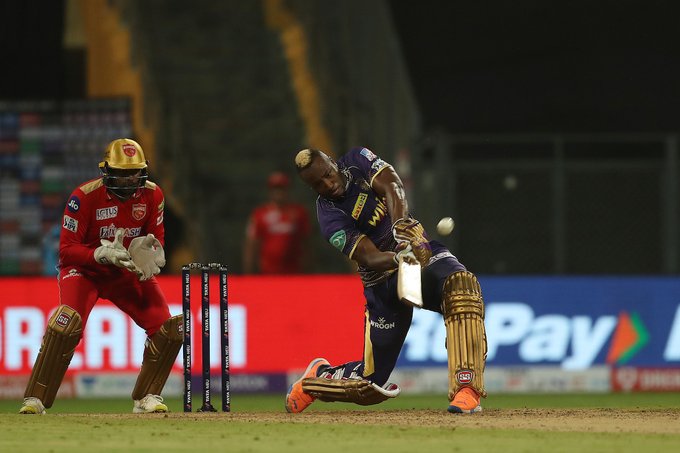
Kolkata Knight Riders (KKR) ended up with a comfortable win over Punjab Kings in the IPL thanks to the contributions from their star Jamaican Andre Russell and Indian international Umesh Yadav. Set a target of 138 by Punjab, KKR reached the target in just 14.3 overs for the loss of 4 wickets.
Put into bat by KKR, Punjab got off to a terrible start losing captain Mayank Agarwal to Umesh Yadav in the first over. However, a stirring cameo from Sri Lankan pro Bhanuka Rajapaksa gave them hope of getting away to a big total. However, once Shivam Mavi managed to get Rajapaksa after conceding 22 in his first over, Punjab innings just fell apart.
Reduced to 102 for 8, vital 25 runs from Kagiso Rabada managed to push Punjab to some respectability. However, they ended up well short of par score getting bowled out with 10 balls to spare, and big hitter Odean Smith was left stranded.
Umesh Yadav was the star of the show for Kolkata as he ended up with 4 for 23 from his 4 overs, including the key wickets of Mayank Agarwal and Liam Livingstone.
In response, KKR looked in trouble at one stage having been reduced to 51 for 4 at the end of the 7th over. However, that 4th wicket of Nitish Rana brought Andre Russell to the crease, and in the company of Sam Billings, he made short work of the target.
Russell, who started cautiously ended up with 70 off 31 balls with 2 fours and 8 monstrous sixes. At the other end, Billings kept things ticking throughout and contributed with some crucial boundaries of his own.
Punjab now go on to play defending champions Chennai Super Kings on Sunday, while KKR gets a few days’ rest before playing Mumbai on Wednesday.
The National Democratic Alliance (NDA) led by the BJP managed to win the two Rajya Sabha seats from Assam, which were up for polls on Thursday (March 31). The elected MPs were Pabitra Margherita of the BJP and Rwngra Narzary of the United People’s Party Liberal (UPPL), an alliance partner in the NDA government of Assam.
Until 2015, Congress held power in the North-Eastern State of Assam. In fact, Prime Minister Manmohan Singh represented Assam in the Rajya Sabha as a Congress MP from the State between 1991 and 2019.
After being decimated in the recently concluded Vidhan Sabha elections in the 5 States of Goa, Punjab, Manipur, Uttarakhand and Uttar Pradesh, the Congress party was eyeing to win one of the two seats of the Rajya Sabha.
We won both the Rajya Sabha seats from Assam (one by the BJP and other by UPPL,our partner ) by a huge margin of 11 and 9 votes respectively @AmitShah@JPNadda@blsanthosh
However, to its dismay, Congress’ outgoing Rajya Sabha MP Ripun Bora was able to manage only 35 votes, falling short of 8 votes. BJP’s Pabitra Margherita won 46 votes while UPPL’s Rwngra Narzary secured a total of 44 votes.
The current composition of the Assam State Legislature
The BJP has a strength of 63 MLAs while its alliance partners, United People’s Party Liberal (UPPL) and Asom Gana Parishad (AGP) have 7 and 9 MLAs respectively. In total, NDA has a total of 79 seats in the Assam Legislative Assembly.
The Bodoland People’s Front (BPF) with three of its MLAs had also extended support to the Himanta Biswa government. On the contrary, Congress has 27 MLAs, All India United Democratic Front (AIUDF) has 15 MLAs, and the Communist Party of India (Marxist) has one MLA. The Assembly also has one MLA from Raijor Dal.
Cross voting by Opposition for NDA candidates
Himanta Biswa Sarma, a firebrand BJP leader and the Chief Minister of Assam, had appealed to the Opposition parties, except AIUDF, to vote for the NDA candidates during the Assam Rajya Sabha elections. As per a report in The Financial Express, Sarma worked behind the scenes to ensure the victory of the UPPL candidate as the Rajya Sabha MP.
Although the victory of BJP candidate Pabitra Margherita was certain on one seat, the Opposition parties had vowed to support Congress candidate Ripun Bora for the 2nd seat against Rwngra Narzary.
However, the NDA received a total of 90 votes, which is 11 higher than their current strength of 79. A large number of ‘Opposition members’ voted in support of the UPPL candidate Rwngra Narzary. It must be mentioned that 3 MLAs from the Bodoland People’s Front had extended their support to the BJP. It implied that the saffron party had the backing of 8 Opposition MLAs.
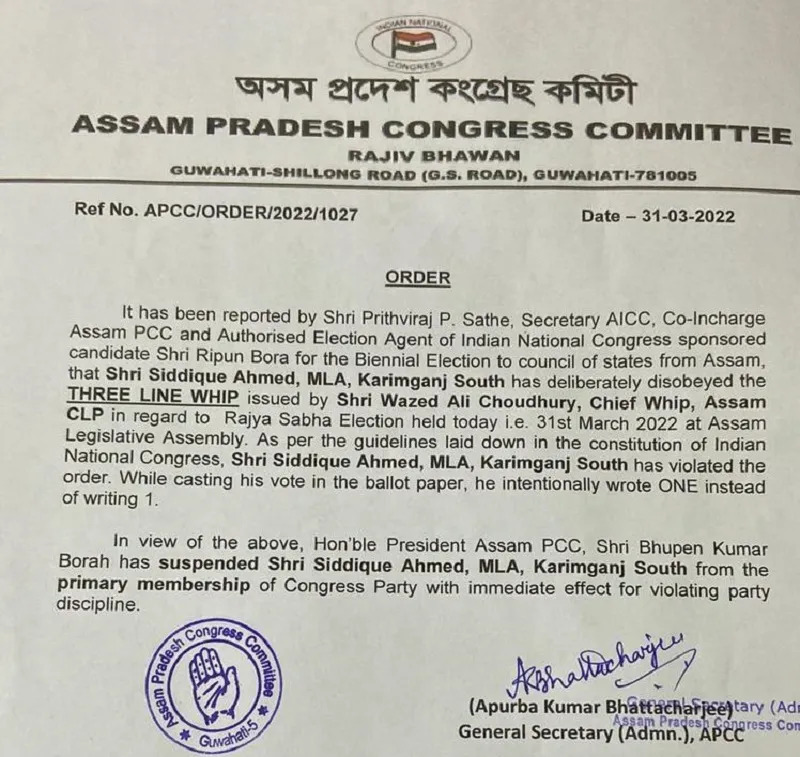
Screengrab of the order issued by the Assam Pradesh Congress Committee.
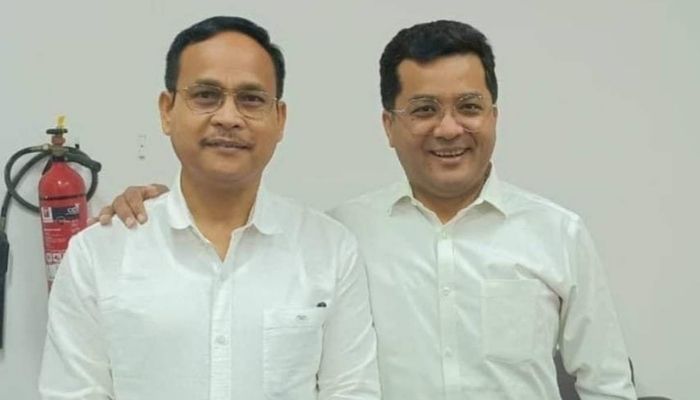
Although all 126 members of the Assam Vidhan Sabha had voted for the Rajya Sabha elections, only one vote belonging to that of South Karimganj MLA Siddique Ahmed was found to be invalid.
In a letter dated March 31, 2022, the Assam Pradesh Congress Committee announced that Ahmed would be removed from the primary membership of the Congress party for disobeying the three-line whip as issued by Wazed Ali Chowdhury.
The order claimed that the South Karimganj MLA ‘intentionally’ violated party order by writing ‘One’ instead of ‘1’ on the ballot paper. Siddique Ahmed dismissed the allegations and vowed to take up the matter with the party’s high command.
The grand old party had also suspended Raha MLA Shashi Kanta Das for openly supporting and voting for the NDA candidate. In October last year, Congress had suspended Baghbor MLA Sherman Ali Ahmed for repeatedly violating party discipline. It is believed that he too had voted in support of the BJP.
On Thursday (March 31), the counting of votes was initially delayed after Congress had lodged a complaint with the Chief Election Commissioner against 3 BJP MLAs, 1 MLA from the Bodoland People’s Front (BPF) and 1 MLA from its own party.
Reportedly, the counting began at 10:30 pm and continued until late at night. Chief Minister Himanta Biswa Sarma had hailed the cross-party voting as the result of ‘conscience votes.’
Assam has reposed its faith in PM Sri @narendramodi ji by electing two NDA candidates to the Rajya Sabha by huge margins – BJP’s Sri Pabitra Margherita (won by 11 votes) & UPPL’s Sri Rwngwra Narzary (won by 9 votes).
In a tweet, he remarked, “Assam has reposed its faith in PM Sri Narendra Modi ji by electing two NDA candidates to the Rajya Sabha by huge margins – BJP’s Sri Pabitra Margherita (won by 11 votes) & UPPL’s Sri Rwngwra Narzary (won by 9 votes). My compliments to winners.”
War-of-words ensures between Opposition over cross voting
A day before Congress’ outgoing Rajya Sabha MP Ripun Bora was defeated, Assam Pradesh Congress Committee President Bhupen Kumar Bora had accused Badruddin Ajmal-led-AIUDF of ‘dhokebaazi’ (betrayal) and selling his 5 MLAs to the BJP. He had said, “AIUDF has sold five of its MLAs to the BJP. Therefore, the AIUDF can be called Agar Industries Undemocratic Dhokahaa Front.”
On Friday (April 1), Congress spokesperson Manjit Mahanta had accused 5 MLAs of AIUDF, namely, Karimuddin Barbhuiya, Abdul Aziz, Ashraful Hussain, Hafiz Rafikul Islam and Aminul Islam of visiting Assam CM Himanta Biswa Sarma’s house at 6 am and leaving 2.5 hours later after conducting meetings.
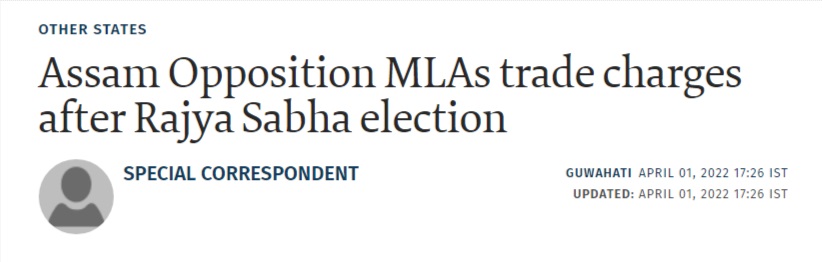
Screengrab of the news report by The Hindu
Speculations have been rife in the Opposition camp about the ‘identity’ of the MLAs who voted against the party line in support of the NDA. The Congress and the AIUDF have begun trading charges, with each accusing the other of treachery, reportedThe Hindu.
“The voting made it clear that the Congress could not keep its flock together. All of our 15 MLAs voted for the Congress candidate, as was decided, but they are trying to put the blame on us,” remarked Aminul Islam of AIUDF.
In its defence, APCC President Bhupen Kumar Borah said that barring 2 suspended MLAs and one whose vote was disqualified, all other MLAs voted for the Congress candidate.
Assuming that 5 AIUDF MLAs and 2 suspended Congress MLAs voted in favour of the BJP, it still does not explain the extra vote that was polled for the saffron party. It must be mentioned that the Opposition also includes a CPI (M) MLA named Manoranjan Talukdar and a Raijor Dal MLA named Akhil Gogoi.
AIUDF has hit out at Gogoi and accused him of ‘horse trading’ in exchange for a large sum of money. Karimuddin Barbhuiya had even claimed that he has video evidence to prove allegations against the Raijor Dal MLA.
While labelling the AIUDF MLA as a ‘broker’, Akhil Gogoi had remarked, “I do not need a certificate from such people. People know who I am and what I think of the BJP.”
The voting mechanism in Rajya Sabha
Elections to the Upper House of the Parliament are conducted through a system of indirect voting. Unlike the Lok Sabha, the Rajya Sabha MPs are elected by members of the State Legislative Assembly (aka MLAs) through proportional representation using the single transferable vote (STV) system.
Under the system, a vote of an MLA is counted only once and he cannot vote for each seat. By doing so, our Constitution makers ensured that representatives of parties, other than the ruling party, get fair representation in the Upper House of the Parliament.
“The MLAs are given a paper with the names of all candidates. They have to give their order of preference for each candidate, marking 1,2,3… against their names. If 10 or more members choose a candidate as their first choice, he/she gets elected. The political party that has a majority in the state Assembly normally gets to send the maximum number of MPs to the Rajya Sabha,” a report by Debayan Roy in News18 stated.
The formula used for the calculation of minimum votes to secure a Rajya Sabha seat is given as: [(Number of MLAs X 100) / (Vacancies + 1)] + 1.
For instance, Assam has a total strength of 126 MLAs in its State Assembly. When multiplied by 100, we get a total of 12,600. Given that there were only 2 vacancies, the same formula can be rearranged as:
By adhering to the BODMAS rule, we will add the 1 after obtaining the result of division aka 4200. Given that every MLA has 100 votes, each candidate who contested the Assam Rajya Sabha election on Thursday needed 4201 votes or the support of 43 MLAs to win.
Given that BJP’s Pabitra Margherita and UPPL’s Rwngra Narzary had the backing of 46 and 44 MLAs respectively, they were elected as the representatives from Assam to the Upper House of the Parliament.
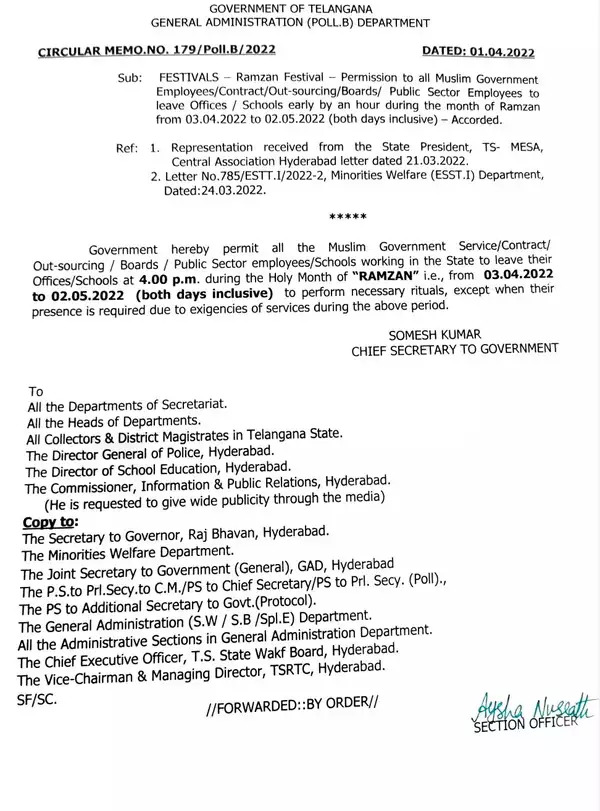
On Friday (April 1), the K Chandrashekar Rao-led Telangana government announced that all Muslim employees will be allowed to leave offices an hour early during the Islamic month of Ramzan, reportedThe Times of India. The notification was issued by Chief Secretary Somesh Kumar.
“Permission to all Muslim Government Employees/ Contract/ Out-sourcing/ Boards/ Public Sector Employees to leave Offices / Schools early by an hour during the month of Ramzan from 03.04.2022 to 02.05.2022 (both days inclusive) – Accorded,” the circular read.
The notification further added that all Muslim government employees could leave at 4 pm between April 3 and May 2 this year to perform necessary rituals, except when their presence is required due to exigencies of services during the same period.
Screengrab of the circular issued by the Telangana government
A copy of the government circular was sent to all Heads of Departments, all Departments of the Secretariat, DGP Hyderabad, the Director of School Education in Hyderabad, and other concerned departments.
Past accusations of minority appeasement against KCR government
This is not the first time KCR government has been accused of promoting minority appeasement. Earlier in 2020, KCR government was reported to have spent a whopping Rs 5,639.44 crore in its 6 years towards minorities-centric benefits in the state.
Whether it is education or scholarships, financial assistance for marriage or development of religious places, employment or subsidies, the K Chandrashekhar Rao government in Telangana has been too generous to dole out a panoply of benefits for the state minorities, a report published in the Telangana Today said.
The Telangana government had gone out of the way to dispense benefits based on one’s religious identity. Residents belonging to minority communities such as Muslims, Sikhs, Christians have been at the receiving end of the state’s largesse. Whereas Hindus, the majority in the state, have been deemed ineligible on account of their faith to qualify for these welfare benefits.
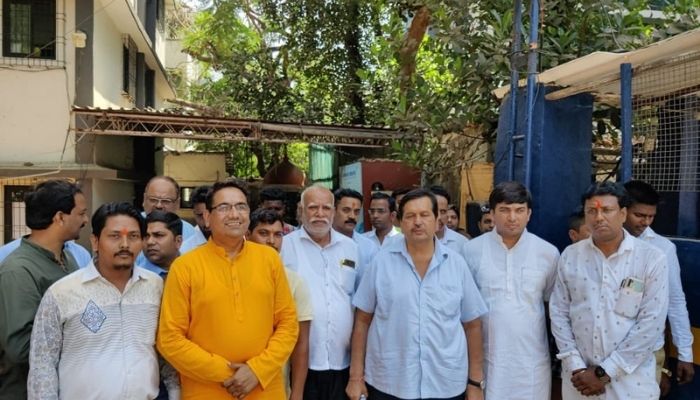
Bharatiya Janata Party’s Mumbai city unit’s president, and MLA Mangal Prabhat Lodha, launched an agitation against religious conversions in Mumbai’s Chandivali area. He accused the local administration of facilitating these religious conversions by working with the missionaries.
On 1st of April 2022, Mangal Prabhat Lodha posted on his Twitter handle, “Visited Sangharsh Nagar, Chandivali & surprise to know that conversion activities are going on openly with the blessings of local Administration. Visited DCP office, got no support hence we will be the part of agitation till this conversion activities stopped.”
Visited Sangharsh Nagar, Chandivali & surprise to know that conversion activities are going on openly with the blessings of local Administration. Visited DCP office, got no support hence we will be the part of agitation till this conversion activities stopped. pic.twitter.com/sjbpwobp45
Mangal Prabhat Lodha informed in a subsequent tweet that he was accompanied by many party workers and the Vice-President of BJP’s Mumbai unit Pawan Tripathi along with Sandip Bhagat, who is the head of the Mumbai unit of the Bajrang Dal.
Pawan Tripathi also expressed concern about the conversion program. He demanded the safety of Hindus addressing the government of Maharashtra in his tweet. He tweeted, “Today, I visited Sangharsh Nagar in the Chandivali area of Mumbai with Shri Mangal Prabhat Lodha. The manner in which the conversion work is going on in association with the local administration in Sangharsh Nagar is very worrying and frightening. The Government of Maharashtra should ensure the safety of Hindus.”
आज मुंबई भाजपा अध्यक्ष श्री मंगल प्रभात लोढ़ा जी के साथ संघर्ष नगर , चाँदीवली जाना हुआ । संघर्ष नगर में जिस तरह स्थानीय प्रशासन के सहयोग से धर्मांतरण का कार्य चल रहा है , वह अत्यंत चिंताजनक एवं भयावह है । महाराष्ट्र सरकार को हिंदुओं की सुरक्षा सुनिश्चित करनी चाहिए । pic.twitter.com/rBemCZ8ZGN
Last week, Legal Rights Observatory alleged that 3000 people including dozens of kids in Chandivali Mumbai were forcibly converted to Christianity. Ishwar Tawade, the local Shiv Sena corporator in Chandivali (ward number 157 of the Municipal Corporation of Greater Mumbai), forced Mumbai police to lodge an FIR against Rohan Thakur of Vishwa Hindu Parishad who opposed these conversions.
— Legal Rights Observatory- LRO (@LegalLro) March 25, 2022
Legal Rights Observatory also urged the National Commission for Protection of Child Rights to book the offenders under sections of the Juvenile Justice Act. NCPCR chairperson Priyank Kanoonga took cognisance of the tweet about the rampant conversions taking place in Mumbai as alleged by the Legal Rights Observatory.
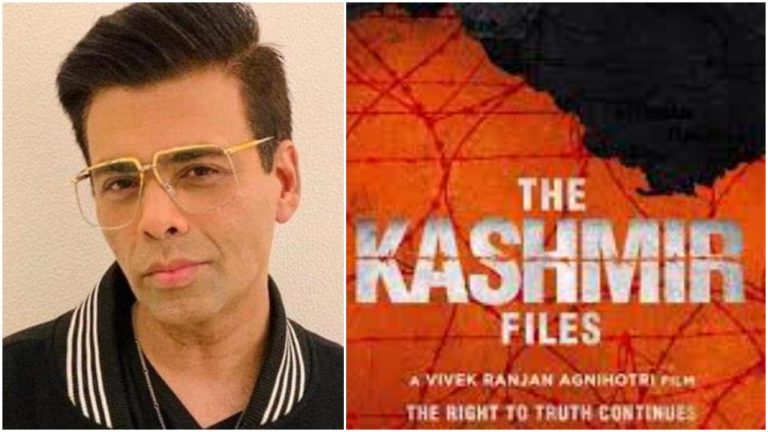
Vivek Agnihotri’s ‘The Kashmir Files’ has been breaking records after records at the box office ever since it hit the theatres on March 11, 2022. Many Bollywood celebrities have come forward to praise the movie, which is inspired by the true stories of Kashmiri Pandits. The latest to join the list is filmmaker Karan Johar who has gone on to call the movie ‘a movement’.
In an interview with Galatta Plus, Karan Johar heaped praises on Vivek Agnihotri’s directorial venture saying that the film should be a lesson for aspiring filmmakers on how to handle the content.
At around 10.55 minutes into the interview, Karan Johar said, “The Kashmir Files is not made on the budget like a lot of other movies. But it is probably going to be cost-to-profit the biggest hit of Indian cinema. I read on Box Office India and they said that such a movement hasn’t happened since Jai Santoshi Maa, since 1975,” said Karan.
Karan Johar went on to praise the makers for connecting with the masses. He added, “You have got to acknowledge there is something that is connecting with this nation and academically, you have to watch it. You have to watch it to absorb, to learn from it that look, there is this movement that has happened. It’s no longer a film, it’s a movement.”
‘The Kashmir Files’ is based on video interviews with first-generation Kashmiri Pandit victims of the Kashmir Genocide. It takes viewers back to 1989, when conflict erupted in Kashmir due to rising Islamic Jihad, forcing the great majority of Hindus to flee the valley. According to estimates, roughly 100,000 of the valley’s total 140,000 Kashmiri Pandit inhabitants migrated between February and March 1990. More of them fled in the years that followed until just about 3,000 families remained in the valley by 2011.
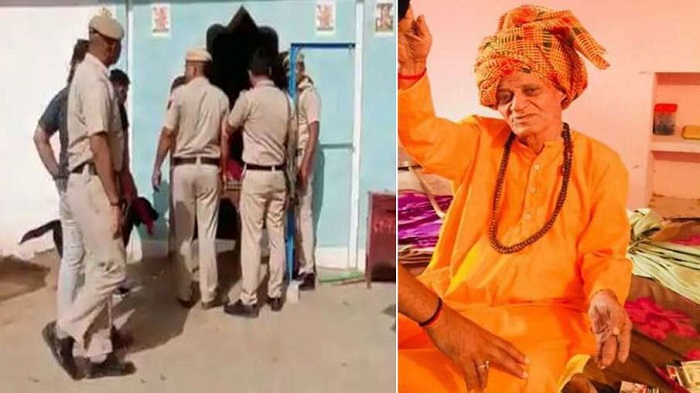
On Wednesday, a 90-year-old priest named Gobind Das was murdered inside a temple at Kadarpur village in Gurugram. The priest was cut into two by unknown persons who covered the body with a blanket and fled from the spot. The police have registered a case against the unidentified persons and are searching for the accused.
According to the reports, Das was bedridden and was suffering from paralysis for the past four years. He was given a small room behind the Baba Mohanram temple in Kadarpur to stay in and was taken care of by the sevadar of the temple. The sevadar reportedly travelled to his native place on Tuesday. The accused killed Das on Tuesday night as they learned that Das was alone in the room.
The incident came to light when one of the villagers named Ajay visited the temple to see Das in absence of the sevadar. He saw Das was sleeping with the blanket covered on his head. Ajay tried to wake him up but he didn’t respond. Ajay then removed the blanket from Das’s body only to see him cut into two parts.
Ajay immediately informed the Police and called the villagers for help. The Police team along with the forensic experts reached the spot and began an investigation into the case. They also recovered packets of marijuana from the spot and have suspected the role of drug addicts behind the murder.
Reports mention that the deceased, Gobind Das, was a resident of Uttarakhand and had been a priest at the temple for over three decades. According to the police, the incident was reported at around 6 am. The police have, so far, registered cases against unidentified persons based on the complaint filed by Ajay. The accused, who are on the run, have been charged under section 302 of IPC (murder). The investigation is underway.
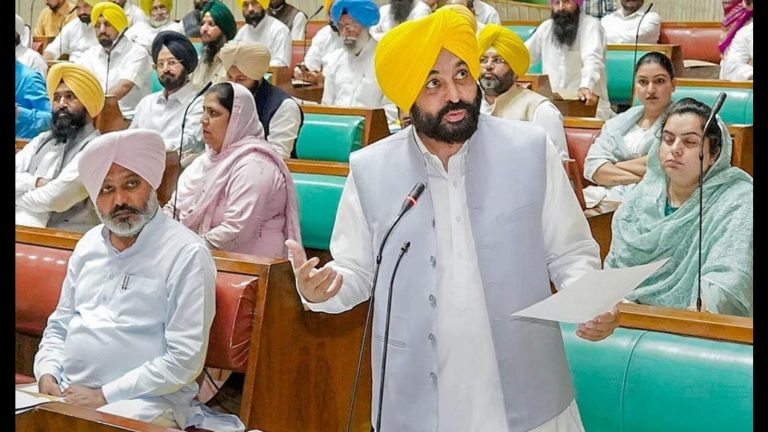
In a recent statement before the Punjab Legislative Assembly, Chief Minister Bhagwant Mann made a claim that following the attack on the Pathankot Airbase, he got a letter from the central government asking for reimbursement worth Rs. 7.5 crores for the ‘military’s expenditures for the length of the operation.
Mann stated that following the letter, he went to meet cabinet minister Rajnath Singh and conveyed his concerns. Mann said, “I told Rajnath Jee to deduct the bill from my MPLADS fund but give me in writing that you have rented military to Punjab and the state is not a part of the country.”
During Pathankot attack,military came.Later I received letter that Punjab should pay Rs 7.5 Cr as military was sent.Sadhu Singh&I went to Rajnath Singh.Told him to deduct from my MPLAD but give in writing that Punjab isn’t country’s part&took military from India on rent:Punjab CM pic.twitter.com/Gbg7yIJTRj
CM Mann’s claims, interestingly, appear to be factually inconsistent. The first point to note is that Bhagwant Mann was only a Member of Parliament from the Sangrur constituency, and any correspondence from the central government would be sent to the Punjab government, not any MP.
The second thing is that Rajnath Singh was the Home Minister then and the military comes under the Defence Ministry. So, meeting him would be to no avail in the case of the military.
The third point pertains to the fact that the central government charges the state for any deployment of the paramilitary forces in their territory. The charges are to be borne by the states for the various kinds of duties that central armed forces perform and Punjab is no exception. Currently, the Home Ministry levies roughly Rs 13 crore per year from states where the Central Armed Police Force (CAPF) is deployed. It charges roughly Rs 34 crore per year for CAPF deployment in ‘high risk’ and ‘hardship’ regions.
Social media users slam AAP and Bhagwant Mann, claim such speeches betray their separatist inclinations
Several social media users responded to the statement with their comments. A Twitter user pointed up the statement’s separatist remarks, writing, “Now I realised why some Twitter users of Jammu are supporting this party. Of course, this type of behaviour aligns with what their supporters’ intentions are.”
AAM AADMI PARTY guys!
Now i realised why some twitter users of Jammu are supporting this party. Of course this type of behaviour aligns with what their supporters intentions are. https://t.co/jRAakiSEPz
A popular Twitter user, @theskindoctor13, said what is right or wrong could be debated over, adding that like Punjab many other states were billed for the deployment of CAPF within their geographical jurisdiction. He further noted that such speeches evoke separatist sentiments.
Right or wrong is debatable but deployment of CAPF (not military as he is claiming) is chargeable since many decades. The rule is same for all states. Punjab wasn't specifically sent the bill, all states get it wherever CAPF is deployed. Such speeches evoke separatist sentiments.
Another user wrote, “AAP’s agenda has come to the fore. Kejriwal has made a complete plan to separate Punjab from India. It’s started.” (Machine translated from Hindi)
AAP का एजेंडा सामने आ ही गया । पंजाब को भारत से अलग करने का पूरा प्लान बना रखा है केजरीवाल ने । शुरुआत हो चुकी है ।
A user expressed his anger writing, “As I said earlier, AAP forming govt in Punjab is a victory of ISI. It will take the KhaIstan-separation movement to a different level. These clowns didn’t even wait for a month before showing their true intentions.”
As I said earlier, AAP forming govt in Punjab is a victory of ISI. It will take KhaIstan-separation movement on a different level.
These clowns didn’t even wait for a month before showing their true intentions.
The statement made by CM Mann is inconsistent with the factual findings. To note, a bill was issued to the Punjab government, requesting payment for the deployment of 20 companies of paramilitary personnel in Pathankot and surrounding areas between January 2 and January 27. Eleven companies of the Central Reserve Police Force (CRPF) and nine companies of Border Security Force (BSF) were deployed to fortify the airbase during the terror attack. The bill requested a payment of Rs. 6,35,94,337 from the Punjab government which it refused to pay.
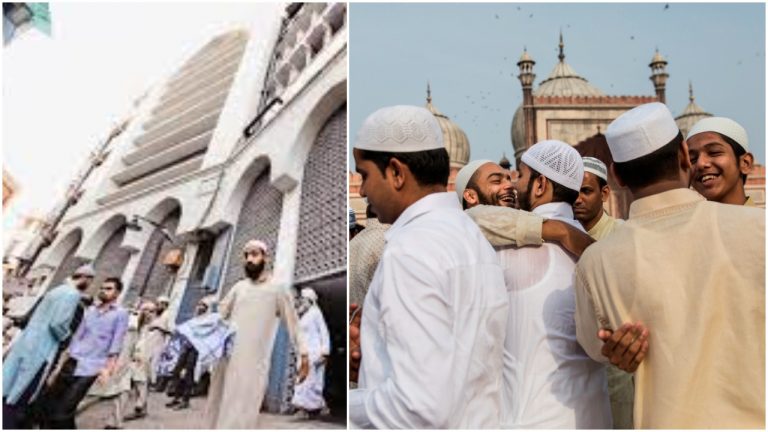
The Delhi High Court Friday (April 1), granted permission for the reopening of the mosque at Delhi’s Nizamuddin Markaz for the month of Ramzan. According to reports, the court has allowed the reopening of five floors, including the Ground floor as well as four floors, of the masjid premises.
Delhi’s Nizamuddin Markaz, which has been shut since March 2020, was the same location where the Tablighi Jamaat congregation was held, which resulted in a massive spread of the Covid-19 virus in India, with attendees hiding from authorities and spreading the infection to almost all states.
Notably, the Markaz had in between reopened for a day on the occasion of Shab-e-Barat under the direction of the Delhi HC. The bench of Justice Jasmeet Singh, while granting permission to reopen it in the month of Ramzan said that the order was in continuation of the March 16 order which imposed various conditions for the reopening of the premises for the occasion of Shab-e-Bharat.
No Tablighi activities only prayers can be offered clarifies Delhi HC while allowing reopening of Markaz in Ramzan
Justice Jasmeet Singh clarified that no Tablighi activities and lectures can take place on the premises and only prayers can be offered.
The court also ordered the installation of CCTV cameras at the entry, exit, and stairs of each floor of the premises, and stated that it is the Markaz management’s responsibility to ensure that the cameras are fully operational during the entire month of Ramzan.
The order was issued in response to a request from the Delhi Waqf Board for the full reopening of the mosque at Nizamuddin Markaz. The Court was told that because the latest order of the Delhi Disaster Management Authority (DDMA) removed all restrictions on religious places, people should be allowed to pray at the Markaz mosque as well.
Notably, on Shab-e-Bharat, the Single-member bench of Justice Manoj Kumar Ohri had given a nod to reopen the Nizamuddin Markaz. He had removed the restriction for a congregation liming only 100 people on one floor and has agreed to open the three floors at the Markaz. The Court has ordered the management to look after the strict obeyance of Covid-19 protocols and social distancing to be followed when devotees offer namaz on the campus.
Nizamuddin Markaz and coronavirus outbreak in 2020
In last week of March 2020, hundreds of Tablighi Jamaat attendees were found living inside the markaz, many of which were in violation of their visa rules. Many of the attendees were found to be covid-19 positive and despite showing symptoms had continued to stay there or move to interiors of country without getting themselves tested. Subsequently many were moved to quarantine centres to ensure treatment and arrest the spread of virus. However, even then, many Tablighi Jamaat attendees had attacked healthcare workers and even created ruckus at quarantine centres.
Pharmaceutical company Himalaya found itself at the centre of a social media storm with the #BoycottHimalayaProducts hashtag trending on the microblogging app Twitter. This came after a social media post went viral with the ‘Halal policy’ of Himalaya.
As per the company’s policy, their products comply with Islamic law/Shariah and are produced using only halal products.
After the boycott campaign on social media, Himalaya issued a statement trying to clarify its position. The company stated, “In certain countries, halal certification is mandatory. Hence the halal certification is obtained as per the respective regulations for such countries only.”
While Himalaya is forced to get this halal certification to run their business in several countries, just like many other Indian companies that manufacture FMCG products, and is not limited to the meat industry, this imposition of halal products on non-Muslims has to be resisted in the larger interest of the Indian society due to the various problems it ends up creating. Here are the main issues.
Halal is discriminatory
For a meat product to be halal, the animal must be slaughtered only by a Muslim. In order to achieve economies of scale, the meat industry ends up operating large-scale abattoirs to produce all their meat. They end up using only Muslims at these abattoirs as it has simply become cheaper to produce all their meat together, instead of running separate abattoirs for halal and non-halal meat. In such a scenario, many Hindu communities, especially some Dalits, who were traditionally butchers, miss out on employment opportunities in the sector. Considering the meat industry is worth several Billion dollars, this is a huge sector where only people from one religion are finding jobs because of halal policies.
Halal restricts other people’s choices and beliefs
Most businesses have started serving only halal meat now to save the cost of maintaining 2 supply chains, for halal and non-halal meat. People who may not be comfortable with halal meat, or for people with religions where only jhatka meat is allowed, no longer have any choice in the matter. If they are ordering meat at a restaurant, they get halal only by default.
Halal’s widening scope creating a parallel economy
As we can see with the case of Himalaya, halal economy is not just restricted to meat products now. Pharmaceutical products, personal care products, cosmetics, and even flour, all come with halal certification now. With its ever-growing scope, it is creating the grounds for restricting the job prospects in these sectors to people from only one religion. Further, this parallel system of certification runs without any checks and balances from the government.
Questionable activities run by Halal certifying authorities
An organization like Jamiat Ulema-e-Hind (JUH), one of the oldest halal certifying trusts in India, is constantly in the news for their legal support to the accused in terror-related cases. Even in murder cases, like in the case of Kamlesh Tiwari, bomb blasts and terror funding cases, the organization extended legal support to the accused. A large part of these funds, come from the fees they charge for halal certification. So unknowingly, everyone in India ends up finding the legal fees of terrorists and criminals by consuming halal products even though there is no religious requirement for them to do so.
Imposition of one’s religious beliefs over all communities is ‘non-secular’
While we keep going on about the word secular in our constitution, imposing one religion’s beliefs on everyone can hardly be called secular. Indirectly, with businesses shifting to halal only products to cut their costs, this belief to consume only halal products has been imposed on everyone. The businesses have to be asked by the consumers to make it clear if they use only halal products or not so that as consumers, we can make an informed decision. People who want to consume halal products can continue to do so, but the rest of the people need to know if they are subtly being forced towards it or not.