Home Blog Page 3418

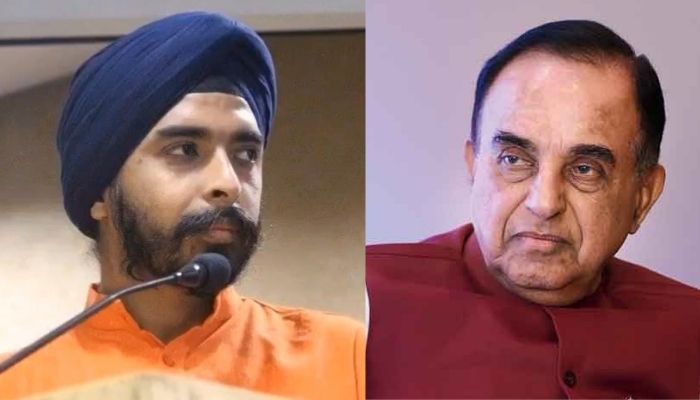
‘Prima facie sufficient ground for summons’: Subramanian Swamy summoned by court in defamation suit filed by BJP spokesperson Tajinder Pal Singh Bagga

Rajya Sabha MP Subramanian Swamy has been summoned by a court in a defamation suit filed against him by BJP spokesperson Tajinder Pal Singh Bagga.

In a tweet, the BJP spokesperson informed, “Rouse Avenue Court issues summon to Subramanian Swamy on defamation case filed by me.”

“This court is of the considered view that in the present case there are sufficient grounds for proceedings against (the) respondent. In view of allegations made in the complaint, testimonies of (4 witnesses) and material brought on record by them, this court are prima facie satisfied that there are sufficient grounds for the summoning of the respondent as accused qua offence punishable u/s 500 IPC,” the Rouse Avenue Court had held.

The Background of the Defamation Suit

In September last year, Subramanian Swamy stoked a controversy by claiming that Bagga had been jailed many times for committing petty crimes by New Delhi’s Mandir Marg Police.

He had claimed, “Delhi journalists inform me that before joining BJP, Tajinder Bagga had been jailed many times for petty crimes by the New Delhi Mandir Marg Police Station. True? If so Nadda should know.”

The BJP spokesperson had hit back at Swamy and asked him to prove the allegations within 48 hours of his tweet. He even mocked the Rajya Sabha MP as ‘James Bond ke Chacha (uncle of James Bond).

When Subramanian Swamy failed to provide any evidence for his outrageous claims, Tajinder Bagga sent a legal notice to him on October 1, 2021. The notice said that the tweet by Swamy was posted with clear intentions to damage and harm Bagga’s reputation, despite being fully aware that the allegations made were incorrect.

The notice further asked Subramanian Swamy to justify his allegations furnishing details like serial numbers of FIRs registered against Bagga at Mandir Marg police station in Delhi, DD numbers of complaints registered or lodged against Bagga, dates when Bagga was allegedly arrested and jailed, and names of journalists who had reported about the alleged arrest or detention of Bagga in newspapers and news channels.

The defamation notice stated that if Subramanian Swamy failed to provide the sought details within 7 days of receiving the notice, he would submit a written apology to Tajinder Bagga for circulating a false, frivolous and defamatory tweet. The notice warned that if Swamy did not apologise, Bagga would legally proceed against him.

In December last year, it was reported that a defamation case was filed by Bagga and that the Rouse Avenue court took cognisance of the offence which is punishable under IPC section 500 (Defamation).

Tajinder Bagga had examined four witnesses including himself in pre­summoning evidence. The other witnesses involved BJP spokesperson Praveen Shankar Kapoor, BJYM Vice-President Shashi Yadav and Sub Inspector (Mandir Marg Police station) Sandeep Kumar.

“After pre­summoning evidence, arguments were advanced on behalf of complainant,” the court had observed on March 22.

‘Almost went into depression on the set, took time to recover after hearing the true story of Kashmiri Pandits’: The Kashmir Files actor Darshan Kumar reveals

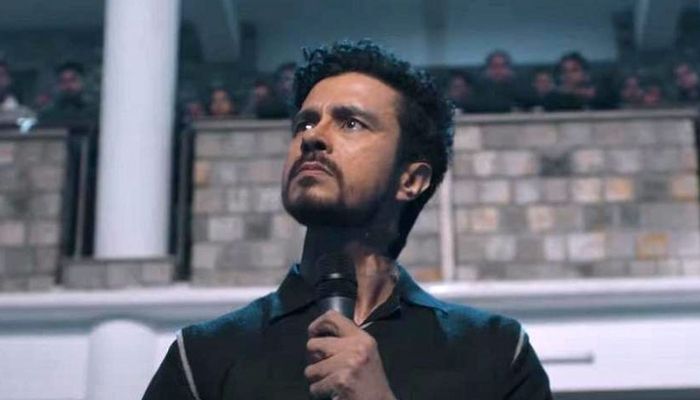
The Kashmir Files, with its phenomenal success at the box office, is being hailed worldwide for its truthful depiction of the Kashmiri Hindu genocide perpetrated by Islamic militancy in the 1990s. Darshan Kumar, who plays the role of Krishna Pandit in the film, has talked in length about the impact left by the film on him in an interview.

Darshan Kumar has revealed that he was flabbergasted after hearing the story of a Kashmiri Pandit woman being fed rice soaked in her husband’s blood. Being utterly disturbed, Darshan confessed that he didn’t have a sound sleep for nights after hearing the story. Here, he was referring to an actual incident showcased in the film which happened in 1990, when terrorists in the search of BK Ganjoo, a telecom engineer residing in the valley, shot him dead while he was hiding inside a rice drum at his home. After killing him, the terrorists reportedly forced his wife to eat the blood-soaked rice.

Darshan Kumar said that the role of Krishna Pandit was the most difficult role played by him on-screen by far. While portraying his character in the film, he mentioned how he almost went into depression during the shoot days. Talking about the profound impact the scenes had left on him, Darshan Kumar said, “Many times it happened that I started murmuring to myself. I thought I was going into depression. I used to get irritated over small things.”

When asked how he bagged the role, Darshan said that director Vivek Agnihotri asked him to watch an hour-long video on the tragedy of Hindus in the valley before reading the script. “I was stunned to see the video, I could not say anything,” Darshan added. Talking to Dainik Bhaskar, about the film’s climax scene which has won many hearts, Darshan said “When I read the script, I was very excited and even more nervous about the concluding monologue scene. While Agnihotri had decided to do the monologue in the climax in parts, I insisted to do the 13-page scene in a single take,”

Darshan said that he lived every moment in the film while being on the set. He talked about the difficulty he faced while getting out of the character after the shooting. After the success of the film, Darshan talked about how his life has changed. “I am getting calls from big producers afront. While things should now change for good, I should hopefully be able to play my characters the way I want,” he added.

Darshan Kumar made his silver-screen debut with the 2014 film Mary Kom opposite Priyanka Chopra. He is known for his roles in movies like NH10 and web series including The Family Man and Aashram.

World Water Day: 6 crore households provided with drinking water in 2.5 years, 183 projects of ‘Namami Gange’ completed

0

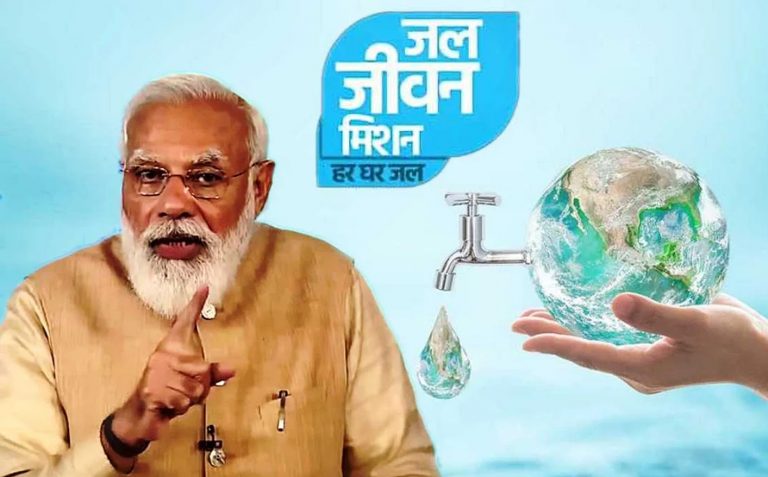
The 22nd of March is recognized as ‘World Water Day’ across the world. In India, Prime Minister Narendra Modi reiterated on this occasion that the ‘Jal Jeevan Mission‘ is proving to be highly efficient in making people’s lives better and that the resolve of providing drinking water from door to door is being realized with the cooperation of the people.

It is worth noting that in the previous 2.5 years, ‘Nal Jal Connection’ has been made available to 6 crore families across the country.

However, even after 70 years of independence, only 3.23 crore of 19 crore rural families have access to clean drinking water. The Modi government’s ‘Agriculture Irrigation Scheme,’ ‘Har Khet Ko Pani,’ ‘More Crop Per Drop’ campaign, ‘Namami Gange Mission,’ ‘Jal Jeevan Mission,’ ‘Atal Bhujal Yojana,’ ‘Catch The Rain,’ and river interlinking is just a few of the initiatives that are helping to increase the availability of water for drinking and farming.

Modi government’s projects have gone so far that ladies in rural Leh’s Skumphuk Nubra village say that they used to trek several kilometres to fetch water, but now they have access to safe drinking water at their doorstep. Until 2018, the sole supply of drinking water in Madhuramba, Gajapati, Odisha, was four hand pumps, but ‘Har Ghar Jal’ made things simpler. Rainwater harvesting is practised in 100 schools in Vadodara, Gujarat, saving 10 crore gallons of water every day.

A number of ‘Water Warriors’ have also been observed throughout the nation. Swami Krishnanand, a native of Pachkhura in Hamirpur, Uttar Pradesh, for example, maintained a 250-year-old 2.7-acre pond that is 8 feet deep. This project took a whole two years to complete. Six ponds and 30 wells were resurrected in Jakhani, Banda. These are significant accomplishments in parched Bundelkhand. Today, 1.36 lakh villages have access to safe drinking water via taps, and 9 crore homes utilize this service.

The potable water network has so far touched 8.50 lakh schools and 8.70 lakh Anganwadi centres. These programs also provide jobs in a variety of industries, including pipeline installation, maintenance, and power. So far, the Ministry of Jal Shakti has created 3.82 lakh ‘Village Action Programs (VAPs),’ and 4.69 lakh ‘Pani Samitis’ are operational. Clean drinking water has reached 90 per cent of homes in Punjab, Gujarat, Bihar, and Himachal Pradesh.

There are 4378 cities where all families have access to safe drinking water. Technology is being employed in a variety of ways, ranging from sensor-based systems to identification via Aadhar cards. Women’s involvement in water committees has been guaranteed at 50%. Groundwater levels in low-lying areas will be raised as part of the ‘Atal Bhujal Yojana.’ The proposal to connect five rivers will irrigate 11 million hectares of agriculture, supply clean water to 62 million people, and create 103 megawatts of power.

So far, 183 projects have been completed and 150 are in progress to save the Ganga under ‘Namami Gange,’ including 28 riverfront development, construction of 182 ghats and 112 crematoriums, several cleaning projects, dolphin conservation project, and forest expansion along the banks of the Ganga at a cost of Rs 2,300 crore. The public’s engagement, particularly that of women, is being encouraged. The Modi government is also concerned about delivering agricultural irrigation water.

Vikramaditya Singh, descendent of J&K Royal family, resigns, says Congress unable to realize sentiments of people of Jammu & Kashmir

Vikramaditya Singh, the son of Senior Congress politician Karan Singh and a descendant of the Royal family of Jammu and Kashmir has resigned from the Congress Party.

Singh indicated in a letter to Congress President Sonia Gandhi that he is resigning from the Congress party’s primary membership with immediate effect. “I hereby tender my resignation from the primary membership of the Indian National Congress [INC] with immediate effect,” he wrote.

Further on the cause of his resignation, he stated, “It is my belief that the INC is unable to realize and reflect the sentiments and aspirations of the people of Jammu & Kashmir.”

In a tweet, he went on to add, “I hereby tender my resignation from the Indian National Congress. My position on critical issues vis-à-vis Jammu & Kashmir which reflect national interests do not align with that of the Congress Party. @INCIndia remains disconnected with ground realities.”

It should be noted that CM Ibrahim, a prominent Congress leader from Karnataka and a member of the Karnataka Legislative Council, recently resigned from the party. He quit for a similar reason, citing a lack of responsiveness from higher leadership.

For a long time, Congress’s performance has been deteriorating. The party did not fare well in the recent assembly elections in five states. Notably, the Congress party won only two seats in Uttar Pradesh and got only 2.3 percent of the vote. Even worse, the party has forfeited deposits on 97 percent of the state seats it has run for.

The Trinamool Congress (TMC), attacking the Congress, had recently claimed that its nationwide campaign against the Bharatiya Janata Party (BJP) has failed miserably (BJP). TMC leaders went on to advise that Congress join the TMC and that its leaders unite under Mamata Banerjee’s leadership since she is the only one capable of fighting the BJP.

‘Appoint a commission to know the truth’: Farooq Abdullah loses his cool when questioned about the Kashmiri Hindu exodus

0

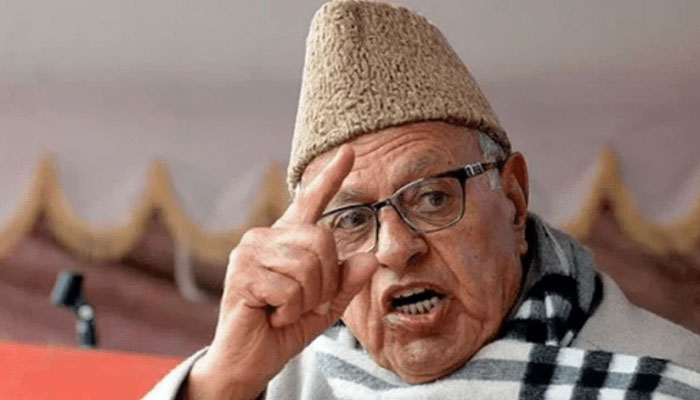
On March 22, former Chief Minister of Jammu & Kashmir and Lok Sabha member from Srinagar Farooq Abdullah lost his cool when he was questioned over the exodus of Kashmiri Hindus from the valley. He said, “I think they (BJP-led central government) should appoint a commission, and that will tell them who is responsible.”

When he was further questioned about the documents that allegedly put him in the position where he was responsible for the exodus to some extent, he got angry and said, “I have told you. If you want another truth, you should appoint the commission.”

A reporter asked about the allegations raised by BJP, he said, “Allegations are part of life.” On the question if a commission gets appointed, did he believe the truth would come out, he said, “Yes, the truth will come out,” and refused to say anything further.  

‘Kashmiri Pandits should come back’

Earlier, Abdullah, while talking to Aaj Tak, said whatever happened to Kashmiri Pandits breaks his heart. He added Kashmir would be complete only if Pandits came back to the valley. During the interview, he had insisted on forming a commission to examine the exodus of Kashmiri Pandits from the valley.

Speaking about the film ‘The Kashmir Files’, Abdullah said the film is dividing people instead of bringing them together. He said, “It is burning the whole nation. If it is not stopped, the country will burn to ashes.” He added Jagmohan was Governor of the state when the exodus happened. “He was behind the migration of Kashmiri Pandits. He had sent vehicles to the houses of Pandits and asked police to take them out of the valley.”

Abdullah claimed there were 800 families of Kashmiri Pandits living peacefully in the valley, and nobody had touched them. He challenged to ask A S Dulat (then-RAW chief), Arif Mohammad Khan, Mohsar Raza (then-Chief Secretary), who was responsible for the exodus. He said, “If any of them say I am responsible, hang me anywhere.” Notably, Dulat has already deemed The Kashmir Files as propaganda film.

‘Give J&K status of a state’

Abdullah demanded the central government should give back the status of a state to Jammu and Kashmir. He further asked the government to hold elections. He said, “The government must work on removing obstacles in Hindu-Muslim relationships. Then it must hold peaceful elections. Also, it should stop messing with the EVM machines and should not indulge in activities like bogus voting.”

Abdullah said if a Hindu becomes Chief Minister of the state with honesty, he would be welcomed by the people of Jammu and Kashmir, but if he became CM by cheating, they would not accept him.

The Kashmir Files

Since the launch of the film, ‘The Kashmir Files‘, untold stories of atrocities faced by Kashmiri Pandits are coming to light. The Kashmiri Pandits who kept silent for 30+ years are talking about experiences. Those who died during the exodus and in the aftermath are being talked about in the mainstream for the first time. While people are demanding to reopen the cases and investigate the incidents that led to the exodus, the left-liberal and Islamist section of the society is irked by the chain of events. They are trying to discredit the genocide of Kashmiri Pandits and claiming the film, which is based on true incidents, is being deemed as fake propaganda.

‘Yes we are slaves of Nehru-Gandhi family and we will remain their slaves till our last breath’: Watch Congress MLA’s confession in Rajasthan Assembly

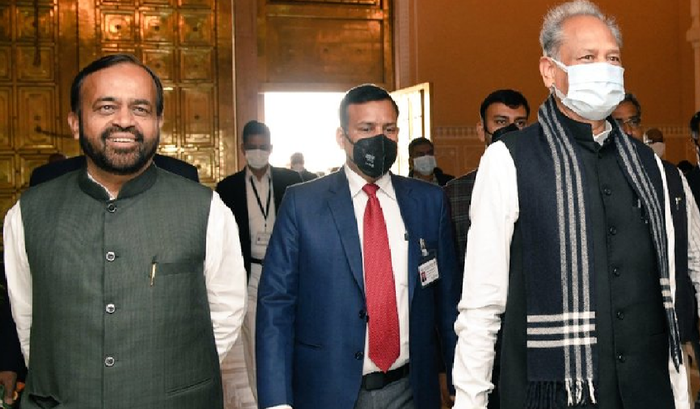
Sirohi MLA, Sanyam Lodha, has proudly announced in the Rajasthan assembly that they are slaves of the Nehru-Gandhi family, and will remain their slaves till the last breath. Lodha, who serves as Rajasthan Chief Minister Ashok Gehlot’s adviser, was speaking during the ongoing budget session in the Rajasthan assembly.

Speaking on the Haridev Joshi University of journalism and mass communication amendment bill, Lodha said, “Yes we are slaves of the Nehru-Gandhi family and we will remain their slaves till our last breath.”

Further, he went on to add that the country was built by the Nehru-Gandhi family, therefore they will remain their slaves. His statement led to a sharp reaction from the opposition benches occupied by Bharatiya Janta Party (BJP).

Deputy leader of the opposition, Rajendra Rathore said, “This is a new culture that has arrived. Congratulations to you for the slavery. These are slaves, what message will they send to society. Slaves can’t speak their mind, they have admitted it themselves.”

The exchange of jibes between treasury & opposition benches led to chaos in the Assembly. As both sides raised hue & cry over ‘trading of barbs’, the Speaker tried to intervene and settle the matter peacefully.

While the first family of Congress is facing dissent within the party after the recent assembly elections loss, they will be delighted to know that some people will stick with them to the very end.

Halting celebratory procession, pelting stones on Hindus and more: 6 incidents when Islamists displayed Hinduphobia during the festival of Holi

The festival of Holi in many parts of India turned violent following the communal ferocity exhibited by the Islamists, who harbour deep contempt for the Indic faiths and believe in the supremacy of Islam. Several incidents of attack on Hindus were reported amid the joyous festival of colours, manifesting their clear hate against the Hindu community.

Reportedly, the festival of Holi this year appeared on Friday and happened to coincide with the Muslim festival Shab-e-Barat. While a few people belonging to the Hindu community celebrated Holi, the Muslims were seen visiting the nearby Mosques to offer Namaz. With loud DJ music being played in the background, the Namazis who usually make use of loudspeakers in the Mosques daily happened to object to the once-in-a-year celebrations of Holi.

Here are the recent six major episodes of attack on Hindus during the festival of Holi.

Uttarakhand: Muslims arrived to offer Namaz, attacked Hindus

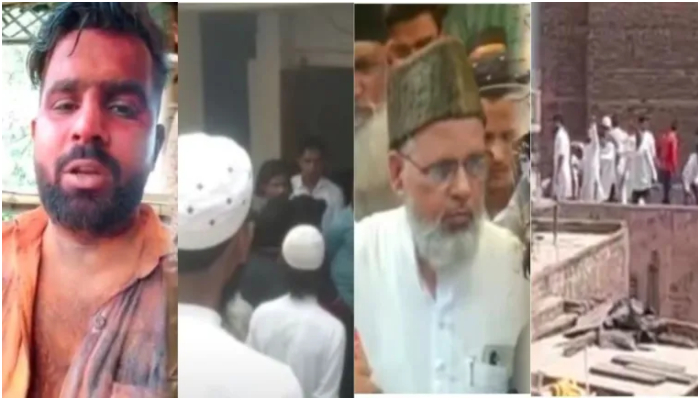
The Uttarakhand Police on March 19 registered an FIR against Najar Hasan Ansari, Arbaz Ansari, and Mustakim for attacking a group of Hindus while they were playing Holi in the Laldhang area of Shyampura. According to the reports, the people from the Muslim community had arrived on the spot to offer Namaz and brutally attacked the Hindus with bricks. Laldhang’s BJP chief Alok Dwivedi lodged an official complaint against the Muslims and said that Hindus were attacked with stones and bricks while peacefully playing with the colours on the occasion of Holi.

The Muslim community has however blatantly lodged a cross-complaint saying that the Hindus allegedly attacked them while they were returning to their home after offering Namaz. The police have registered both the FIRs and are investigating the case.

Noida- Celebration of Holi interrupted, DJ ceased for Namaz

On Sunday (March 20), the people of the Hindu community were forcefully asked to stop the celebration of Holi by the Muslims who wanted to offer Namaz at the due hours. The Muslims accused the Hindu people of deliberately playing with colours during the Namaz hours and asked them to call off the Holi celebrations. As reported, the Hindu people refused to conclude the celebration following which the Muslims registered an official complaint to the Police.

Based on the complaint of the Muslim community, the Police ceased the DJ sound and directed the Hindus to discontinue the event. Reports mention that the DJ sound was returned to Hindus at night only after the Muslims finished observing the Shab-e-Barat. Vishwa Hindu Parishad’s Vinod Bansal tweeted the video of the incident and said that the Hindus were suppressed and Muslims were given priority by the Police. “The festival of Holi is being celebrated by suppressing the Hindus. Jihadis are given shelter, priority, and encouragement!! Are Hindus second class citizens for UP Police?”, he tweeted.

The UP Police however clarified that the Hindus were not stopped from playing Holi. “We had received complaints that people (Hindus) were forcefully throwing colours at the locals. We reached the spot and tried to pacify the matter. Later at 9 pm, we again received a complaint that they (Hindus) were playing heavy sounds on the DJ system and the locals were getting disturbed”, the Police said post action.

Bareilly, Uttar Pradesh: Hindus attacked for playing Holi in the areas surrounding a mosque

On Friday, the people from the Muslim community attacked two persons who were playing with the colours in the areas surrounding a mosque. The people from the community in Behari claimed that the two had allegedly thrown colors at the mosque in the city. The youths were allegedly dragged by the mob and were kicked, beaten with sticks while they were on their bike, heading home after playing Holi. The youths somehow saved their lives.

Himanshu Patel, Bareilly chief of the ‘Rashtriya Yogi Sena’ tweeted the video to Bareilly Police and said, “Muslim people surrounded and attacked two bike-riding Hindu brothers passing through the road, badly hit them. Police must take cognizance of the matter and take action against the culprits”

Tensions aroused further as more people from the Muslim community joined the argument and blocked the streets and the Nanital Highway. The video of the incident went viral over social media where people from the community could be seen pelting stones and disrupting the law and order of the city. The Police, further trying to control the situation carried out a baton charge and dispersed the crowd.

Amroha, Uttar Pradesh: Namazis pelt stones because Hindus were playing music

In the Amroha on March 18, the celebration of Holi was disrupted as the members of the Muslim community took offense to the DJ music being played by Hindus as a part of the Holi festival. They pelted stones at the Hindus dancing to the song made on CM Yogi Adityanath while celebrating Holi, in Mohalla Chhanga Darwaza of Amroha UP. Two Hindus- Adesh and Bunty were reportedly injured in the stone-pelting incident.

The video of the incident had gone viral over social media. In the video, many Muslims could be seen pelting stones from the roofs of two adjacent buildings. The stones were aimed at a building in the opposite direction which could not be seen in the video.

The Amroha Police later stated that they had identified the accused from the viral videos and had arrested 3 persons under relevant sections of the IPC.

Begusarai, Bihar: 300 Muslims united to attack Hindus with swords-

The Muslim community in Begusarai’s Rajour attacked the Hindu community with sharp swords and knives, severely injuring more than 20 Hindus. According to the reports, a petty fight between small children of the two communities led more than 300 Muslims to unite and attack the Hindus on the occasion of Holi. The Hindu organisation in Rajour revealed that the area is considered to be sensitive and now Hindus are feeling unsafe. “The Police also didn’t take action against them”, the organisation had said. The injured are reported serious and are being treated in the hospital.

Jharkhand: Islamists halt celebratory procession, pelt stones at Hindus

On March 18, the people of the Muslim community pelted stones at the Hindus during the celebration of Holi in Topchanchi, Dhanbad district of Jharkhand. According to the reports, the Islamists first disallowed Hindus celebrating Holi to pass through ‘their’ area and then resorted to stone-pelting when the latter resented. Police vehicles were also damaged by the stone-pelters. The police resorted to lathi-charge to bring the situation under control.

Though peace prevailed after police intervention, a large police contingent had been deployed to avoid any further untoward incidents. Reports mention that the vehicles of CO Vikas Kumar Trivedi and Baghmara’s SDPO Nisha Murmu were damaged by the stone-pelters. The SDPO was also hurt in the incident.

Eight men, including two DMK workers and 4 juveniles, arrested in Tamil Nadu for raping a Dalit woman, had filmed the act and blackmailed her with the tape

In the Virudhunagar district of Tamil Nadu, a 22-year-old Dalit woman was gang-raped by eight men, including two DMK workers and four juveniles. On Monday, March 21, all eight were detained based on a complaint filed by the victim.

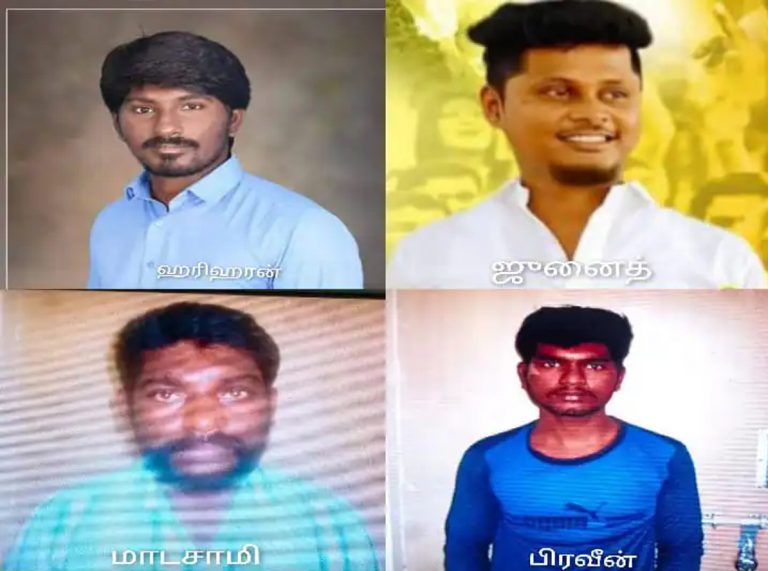
According to reports, the arrested were Hariharan (27), Junaith Ahamed (27), Praveen (21), Madasamy (37), and four other minor boys from Virudhunagar studying in Classes X, XI, and XII.

Hariharan, a DMK worker, made friends with the 22-year-old Dalit lady in Virudhunagar a few months ago. Hariharan later brought the woman to a remote location and raped her. The man allegedly then videotaped the act and shared it with his companions.

Following this, Hariharan and his associates blackmailed the survivor by threatening to leak the recording on social media if she did not comply with the sex in exchange, as they asked. 

Thereafter, they exploited the video as a ruse and began sexually assaulting her on many occasions over the previous two months.

The victim, who works for a private firm, contacted Madasamy, a driver with whom she was familiar. Madasamy received the tapes from the males under the guise of warning them. He then threatened and raped the victim using the videos. On Sunday, the victim filed a complaint with the women’s helpline (number 181), prompting the police to launch an investigation.

Based on the victim’s statement, the police filed a rape case against all eight persons under the Scheduled Caste and Scheduled Tribe (Prevention of Atrocities) Act.

Hariharan, Junaith Ahamed, Praveen, and Madasamy were taken before the Special Court judge and remanded in judicial custody for cases registered under the SC/ST (Prevention of Atrocities) Act. The other four juvenile boys were produced before a magistrate and sent to a correction home in Madurai. More information is anticipated as the investigation continues.

Besides all, DMK MP Kanimozhi expressed her sympathies for the incident stating, “Strict action must be taken irrespective of who has committed the heinous crime.” She noted that the only relief is that all of the suspects have been detained.

Inside Ericsson’s bribery and corruption network in war-torn Iraq, which includes its deals with ISIS terrorists: A comprehensive explainer

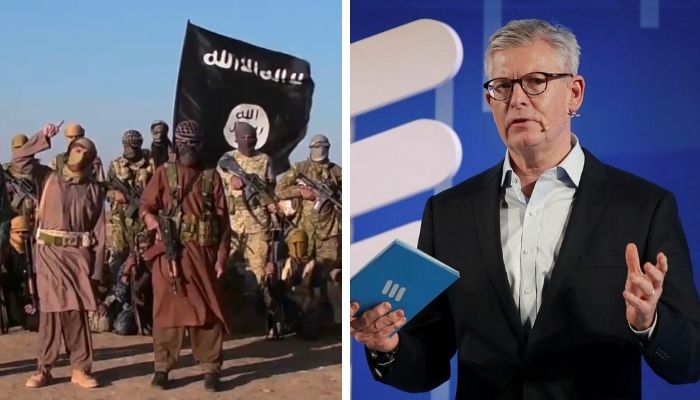
A storm has rocked the fate of Swedish Telecom giant Ericsson after an investigation revealed its deals with the terrorist group ISIS when it had gained control of Iraq in 2014. The company’s internal investigation has revealed that the company sought permission from ISIS to smuggle its equipment from alternative routes in Iraq and has also thrown light on corrupt deals of its subcontractors with Islamic State terrorists.

An investigation led by the International Consortium of Investigative Journalists (ICIJ) exposes Ericsson’s internal probe report in the company which talks in detail about its sustained role in Iraq despite the take over of ISIS. The report reveals that the tech giant minted ‘tens of millions of dollars’ through questionable payments in order to sustain its operations in the war-torn country. The internal investigation done by Ericsson documents its suspicious dealing through slush funds, corrupt dealings of its local subcontractors with terrorists and payoffs to independent executives who wielded its network in Iraq.

Ericsson’s global Corruption racket

In 2013, Ericsson, which is one of key players supported by the US in countering China’s globalist digital expansion dream, admitted that is undergoing an investigation led by the US Department of Justice over allegations of bribery and corruption in many parts of the world. The investigation revealed that Ericsson officials were involved in Bribery in over 5 countries including China, Kuwait, Vietnam, Indonesia and Djbouti which took place over a 17-year period. Another internal investigation in the company revealed that in 2019, the company examined the corruption practices of its employees in over 15 other countries. In the same year, the company entered in a USD 1 billion bribery settlement with the US Department of Justice and the Securities and Exchange Commission.

While Ericsson washed away its sins while signing the settlement with the US, the world was still unaware of its deeds in Iraq. The internal investigation by the company, which was recently exposed by ICIJ was not part of its settlement with the US in 2019. Reportedly, Simpson Thacher & Bartlett, a high-powered New York law firm that defended Ericsson in the US probe, was tasked to prepare its controversial dealings with suspected terrorists in Iraq.

The Internal probe on Iraq

The leaked documents procured by ICIJ contain 73 pages from a 79-page report on Ericsson’s dealings in Iraq with summaries of 28 witness interviews and 22.5 million emails from 2011 to 2019. The report records how the company spread its cellular network in one of the most corrupt countries in the world unhinged by the ISIS takeover. The pattern of bribery and corruption rackets were so intertwined that the report could not conclude the beneficiaries of most payments worth millions of dollars.

Ericsson’s business in Iraq was based upon feeding local fixers who connected them to politicians in turn. The company also heavily relied on self-appointed subcontractors whose dealings with possible terrorists has seen the light of the day. The ICIJ report states that Ericsson’s operations in Iraq were marked by “sham contracts, inflated invoices, falsified financial statements and payments to “consultants” with nebulous job descriptions.” For example, Ericsson paid $1.2 million to a member of the powerful Barzani family for facilitation to the chairman of a mobile phone operator who also happened to be from the same family.

The ICIJ has pointed out that the internal review fails to pinpoint the actors involved in the payments made to terrorists, as alleged earlier. No interviews of officials responsible for moving Ericsson equipment through ISIS territory or those of subcontractors involved in direct operations in the ISIS-held city of Mosul were recorded. However, Ericsson’s payments in Iraq were also tied to business in Lebanon and Portugal, the documents have revealed.

While the report alleges ten of its former and current employees for violating the company’s code of conduct by indulging in bribery, fraud, money laundering and obstruction of the investigation, the company itself ‘gifted’ its clients with expensive artwork, clothes, iPads, watches, etc. Among the tainted employees, Ericsson’s account manager for Korek Telecom, Elie Moubarak reportedly asked for a donation of USD 50,000 from the militant Kurdistani Peshmerga forces for ‘fighting the ISIS’. Ericsson’s company executive in charge of the Middle East and Africa also endorsed the donation justifying it as getting mileage from Sirwan Barzani, leader of the Kurdish forces and also the then chairman of Korek Telecom.

Both Ibrahim and Moubarak were later promoted by the company to higher positions later in time. In conclusion, the report says that Ericsson’s sales in Iraq totaled about $1.9 billion from 2011 to 2018.

Operations in 2014 Iraq

In 2014, when the terrorist outfit Islamic State of Iraq and Syria started occupying parts of Iraq, it became a challenge for multinational companies like Ericsson to sustain their operations in the country. Amidst the war when ISIS was pillaging homes and beheading civilian hostages, two Ericsson employees from Iraq’s Mosul requested the company to stop operations. However, the senior regional executives rejected the plea since halting operations would mean losses in millions.

A month after the ISIS takeover, Ericsson asked its local telecom partner Asiacell to seek permission from ISIS for continuing its operations in the Mosul region for a collaborated project called Peroza. This led to the kidnapping of a crew chief and a subcontractor by gun-toting ISIS terrorists. The internal investigation did not rule out the possibility of the company financing terrorism through its subcontractors, although no company employee was found directly involved.

To continue its operations in Iraq, Ericsson continued rolling out money to local sales agents, contractors and middlemen, while distancing itself from the dirty business of securing contracts and doing business in developing countries, the ICIJ report suggests.

The company’s sales agent Jawhar Surchi, through his company Al-Awsat Telecommunication Services, secured contacts for Ericsson in the country and became a channel for its suspicious payments between local beneficiaries. Among the fictitious payments included USD 10.5 million to an Al-Awsat-linked company and USD 27 million for consultancy services. To win the Peroza project which involved upgrading local network systems, Ericsson gave a ‘commission’ of USD 500,000 to telecom company Asiacell through Al-Aswat.

In a Washington Post Interview, Surchi confessed that he told internal investigators of Ericsson that his close contacts to people in power, including Prime Ministers allowed him to pull strings for Ericsson. He said that he did many favours for Ericsson by helping it win contracts in extreme times.

Direct connections with ISIS

Affan, an engineer conducting tests of cell towers at Ericsson-Asiacell joint Peroza Project delivered a letter on behalf of the company to an office where ISIS had set up operations. In an interview with the ICIJ, Affan has detailed how the company sustained itself in Iraq under the observation of ISIS. According to Affan, the letter sought permission from the terrorist group to continue its operations in the Mosul region.

While Affan worked for Ericsson’s local subcontractor called Orbitel Telecommunications, he confessed that he was asked to deliver the letter in person. He reported that three companies in the region including Ericsson continued to work under the ISIS regime, even after several of his colleagues were detained. Later, Affan was called by an ISIS terrorist for a meet at a bridge overpass and was kidnapped by some men in scarves hiding their identity. While One assailant forced him to call a senior Ericsson manager in the northern city of Sulaymaniyah, he then threatened to blow up Ericsson’s offices while demanding millions of dollars.

The kidnapping of Affan and the demand for money by ISIS has been confirmed in the internal investigation of Ericsson. He informed that when he was kidnapped Ericsson abandoned him and stopped answering his calls. Reportedly, an Ericsson manager said Asiacell that “arrangements should be made to obtain the release of the hostage and to let Ericsson continue the work in Mosul.” When asked about the continued sustenance of such companies in Iraq, employers like Affan have said in multiple interviews that before ISIS, companies paid protection money to terrorists to prevent attacks on their equipment and to allow workers to do their jobs.

The Speedway

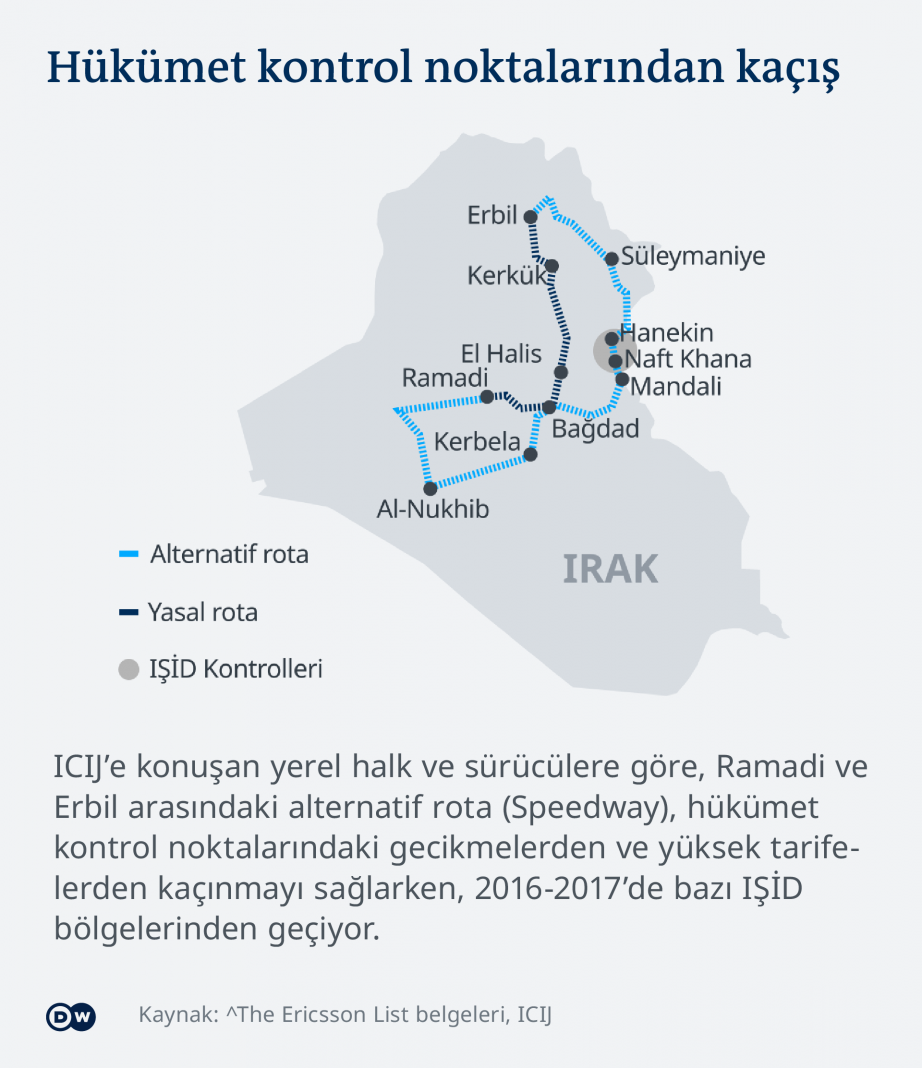
For the expansion of the Peroza network, Ericsson and Aircell needed to construct cell towers and transport their equipment from areas in northern Iraq to the central region of the country. By taking an alternative longer route called the ‘Speedway’ in the report, Ericsson avoided Iraqi customs checkpoints. However, through the ‘perilous’ Speedway, ISIS terrorists had set up checkpoints for attacking and kidnapping travellers. The report states that by transporting through areas controlled by militias, including ISIS, “it cannot be excluded” that Cargo Iraq – the transportation company hired by Ericsson “engaged in facilitation payments (to official Customs officers), bribery and potential illicit financing of terrorism to carry out its transportation operations.”

Light Blue depicts the alternative route ‘Speedway’ used by Ericsson despite ISIS threat for transportation. Dark Blue line depects normal route lined with government customs checkpoints. Credits: AWOWM

Reportedly, Ericsson paid USD 22,000 per truck to carry three loads on a single day through the Speedway. While the owner of Cargo Iraq denied paying to ISIS, the internal investigation suspects that Asiacell has engaged in smuggling and potential illegitimate payments directly and through Ericsson.

What lies ahead

After the expose of its suspicious tradings with ISIS by the ICIJ and other media, Ericsson Iraq issued a statement on February 15 stating that it remains committed to transparency. “Ericsson takes any allegation of impropriety extremely seriously and welcomes any new facts brought to light as a result. We reiterate our commitment to investigate and take action as appropriate to address any new information, in line with our Code of Business Ethics and under the terms of our 2019 Deferred Prosecution Agreement (DPA), with US authorities,” the statement said.

After the leak of its internal investigation related to Iraq, The U.S. Department of Justice, on March 2, held the company guilty of failing to disclose its wrongdoings in Iraq before the 2019 criminal settlement on its global-level briberies was signed. It was the US, in its rivalry over telecom networks with Chinese company Huawei, that it favoured western companies like Ericsson to spread their wings and penetrate the developing nations.

Investor shares of Ericsson fell about 9% in Nasdaq Stock Market while CEO Börje Ekholm tried to calm the storm by admitting the embarrassment during a conference call with investors, financial analysts and journalists. The day after Ekholm’s admission that the company might have paid ISIS, Ericsson’s share value dropped to $4.4 billion. However, he maintained that the investigation could not identify any Ericsson employee who was directly involved in financing the terrorists in Iraq.

Since the disclosure, the company is making heavy losses in the market. New York investor David Nyy has filed a lawsuit against the company’s top officials in the New York Federal Court over the company’s potential deals with ISIS. On March 21, Ericsson’s chairman revealed that a “comprehensive review was underway following the company’s potential payments to the Islamic State in Iraq.”

With doubtful dealings with ISIS in war-torn Iraq, Continuing sustenance in the developing country through bribery and corruption, and while all of this being done by putting its employees at risk, Ericsson’s Iraq innings is the darkest chapter in its global shenanigans.

Is Rahul Gandhi a conspiracy against Congress or is he just truly gifted: Here are some facts from all the states in India

The dust finally settles on all the five states’ elections with a terrible Congress beating in all five. The fraudsters masquerading as intellectuals are done with weaving fake narratives. One more time they have been checkmated by the sheer brilliance of their beloved leader. 

The call for ‘Congress-Mukt-Bharat’ could have been given by Narendra Modi, but it is Rahul Gandhi who took it to heart. Who is Modi to have any say about Congress? If somebody must achieve a ‘Congress-Mukt-Bharat’, it must be Rahul Gandhi himself. And so, election after elections, this brave warrior marches on his political conquest with his single-minded pursuit of annihilating the party he leads, Congress. Even his worst critics admire his uncanny ability to snatch defeat from the jaws of victory. 

It was December 2017 when Rahul Gandhi was elevated as Congress President. The fraudsters told us that Congress took this gamble expecting electoral triumph in Gujarat and being able to retain Himachal. They had no clue what was to hit them in the coming years. Most stunning of Congress leadership years was about to commence.

2017 Gujrat election was a tough one for BJP for a multitude of reasons – over 20 years of anti-incumbency, Patidar agitation, and the biggest was disruptive reforms of Demonetization and GST, that were not taken too kindly by huge business communities of Gujarat. Once the results were out, BJP easily retained Gujarat and Himachal gave BJP a two-thirds majority. 

Prince had opened his account of the most charismatic political innings with two boundaries off first two balls. He was just getting warmed up.

He did resign the post of party president after the 2019 debacle but has kept the reign of the party in his hand and is all set to take the formal charge whenever he feels like it, no matter what happens in CWC.

To be able to truly appreciate the grandeur of his sparkling performances, let’s take a tour of the pan-Indian political landscape to examine the accelerated evaporation of Congress from the electoral matrix.

NORTHEAST

The ever-so beautiful area of ‘Seven Sisters’ has always been Congress’s political citadel. The contest in this area has typically been between a dominant Congress and a host of regional parties in different states. It needed some exceptional effort to wipe itself out and that’s what Rahul Gandhi could achieve within a remarkably short period of time. 

It all started with Rahul Gandhi managing to force the party’s man Friday in Assam, Himanta Biswa Sharma out of the party to archrival BJP. And he achieves it through very personal humiliation to Himanta. This was the same Himanta Biswa Sharma who was instrumental in pulling the 2006 and 2011 elections in favour of Congress against all odds. The rest is history, as they say. Congress not only managed to lose Assam, Himanta vowed to defeat Congress from the entirety of the North-East. 

Manipur has been Congress’s citadel till 2017. In 2017, Congress once again emerged as the single largest party, just two short of the majority. But such was Rahul’s masterly manoeuvres that BJP managed to form the government. In five years, BJP managed a clean sweep, and Rahul’s Congress managed to gift away even the opposition space to regional parties. 

In Tripura, Congress with almost 40% vote share was always in neck and neck fight with the Left, till Rahul Gandhi took the control of the party and led it to open in-fighting within the state unit. As a result, in 2018, the Left was finally decimated by BJP and Congress managed to bring its vote share down to below 2% without opening its account. The same performance was repeated in Nagaland, where Congress managed to draw a blank down from the second position in the previous election. The same story Meghalaya. These were performances that left both supporters and critics gasping for breath. 

Congress always ruled Arunachal Pradesh till 2019, always winning most decisively in all assembly elections. And yet, under Rahul Gandhi, it was routed so badly by rival BJP that it landed in 4th place. The story of Rahul’s spark is no different in Mizoram.

Congress’s quick and complete degeneration under the regenerative leadership of Rahul Gandhi from the North-East is perhaps the most underrated and untold political story of recent years. 

NORTH

Nowhere the leadership of Rahul Gandhi has been proven as intuitive and decisive as in the state of Punjab. This was one state that was supposed to be a cakewalk for Congress till a few months back. Chief Minister Captain Amrinder Singh seemed in complete control of the state politically reaping benefits from Farmers’ agitation. That was till Rahul intervened with one of the most bizarre interventions by openly backing his archrival, a political joker and turncoat Navjot Singh Sidhu for the post of PCC chief. Sidhu continued to embarrass Captain politically, forcing Captain to resign and quit the party. Rahul could not even muster up the courage to make Sidhu the Chief Minister, who was questioned for his shenanigans vis-a-vis Pakistan. Rahul then went on to appoint a most corrupt guy, Channi as CM just months before the elections. The results, were a complete route for ruling Congress, with both Channi and Sidhu losing elections and a landslide for AAP. Rarely has one witnessed such comical handover of the elections ever.

Congress’s extinction from Uttar Pradesh is a long story and Congress was already in a bad shape when Rahul took reigns. Even in UP, under Priyanka Gandhi, who is proving to be even more inspirational than her brother, Congress could manage to completely wipe itself out of political considerations bring its seat down to 2 and vote share down to 2%. In their traditional bastions, Amethi and Rae Bareli, Congress could not open its account. Rahul himself has moved to Kerala, even Sonia Gandhi won’t dare to contest Raebareli.  

Anti-incumbency was palpable in Uttarakhand with BJP changing three CMs in five years. This was one state, where no incumbent government has ever come back to power since its inception. Yet, Rahul could manage just that. Here Rahul Gandhi engaged his CM candidate Harish Rawat more for creating chaos in neighbouring Punjab. Rather than addressing issues of the Garhwal region, where the Party flunked badly. Rawat also ludicrously promised a Muslim University in a state that is known as ‘Devbhoomi’. All these tomfooleries fell flat on its face giving Rahul Gandhi another feather in his cap.

State leadership in Haryana has desisted Congress’s collapse. However, with the ageing Hooda and the imbecilic elevation of electorally inutile Surjewala, Rahul should achieve the goal by the next election. In Delhi, in a tacit understanding with AAP, Congress decided to shift its votes to AAP and stop BJP. That happened but then this shift is now permanent. How enigmatic for a party that ruled Delhi for 15 years on a trot. Only a leader with a vision as bright as Rahul Gandhi could have achieved this.

WEST

Under Rahul Gandhi, Congress has been able to push itself to fourth position electorally in Maharashtra becoming a junior partner to its own offspring NCP. And post 2019 in a most sacrilegious post-poll alliance, it did manage to be part of a Maha-corrupt Maha-Aghadi government, which is always in limelight for only bad reasons. Congress remains trivial in running affairs of the state but an equal party to share the blame for its antics. It may very well find itself to be politically inconsequential in a very short time.

Congress emerged as the single largest party in Goa in 2017, yet BJP manoeuvred to form the Govt after a hilarious set of events. Under Rahul, Congress received a serious drubbing against all odds and by next election should concede its political space to AAP.

EAST

In BiharCongress was already reduced to a small player for decades with less than 10% vote share, being a junior partner to RJD. Rahul displayed his innovative leadership by appointing Alpesh Thakor and Shaktisinh Gohil of Gujarat in important political positions related to Bihar. These leaders then started a campaign against North Indians in Gujarat, which was played by RJD to fuel sentiments against PM Modi. As a result, while RJD could win a high percentage of seats, Congress performed so poorly that it gave BJP-JDU the lead to form the government. In coming elections, RJD might even ditch Congress that could find itself being reduced to rubbles like in UP.

In Jharkhand, though the party continue to be on the downside, it could piggyback on JMM for some more time. One of the rare instances when Rahul phenomenon could not obliterate its ally. 

In Bengal, Rahul Gandhi with a stroke of political genius formed an unthinkable alliance with the Communists, while fighting them in Kerala simultaneously. Congress achieved absolutely cypher in Bengal, yes, they most unexpectedly lost even in Kerala. Congress’s extinction from West Bengal is now complete, kudos to Rahul. In Odisha, Congress doesn’t have any MP since 2009 and under Rahul, it has even ceded the main opposition space to BJP.

SOUTH

Since the 70s, between Communists-led LDF and Congress-led UDF, Kerala had always voted the incumbent out. Till 2021, when Rahul did the impossible by forging an alliance with the Left in WB and letting LDF come back. With Rahul himself coming to Muslim majority Waynad, now Congress is set to become the junior partner of the Indian Muslim League in UDF. The non-communist Hindus will have no choice to embrace BJP, completing Congress’s extinction from Kerala.

2018 Karnataka election followed a year of flirtations between Congress and JDS to keep BJP out of power. After an emotional and tearful breakup, BJP resumed its duty of power and sanity prevailed. With a waning JDS, Rahul could still make Congress weaker by fueling the rift between PCC chief Sivakumar and Legislative Party leader Siddaramaiah. 

Since Congress engineered a bitter division of the State of Andhra Pradesh in 2013, creating the state of TelanganaCongress has handed over both the states to TDP and TRS respectively. The Congress Party’s exit as a political force in Tamil Nadu was completed in the late 60s, with K Kamraj exiting Indira-led Congress. Poor Rahul has nothing left to do. But yes, one must never forget, how magnificently he managed an exit from Puducherry against all odds.

However, the real trouble Rahul Gandhi is facing are the states of Madhya Pradesh, Rajasthan, and Chhattisgarh, which has no regional parties to replace Congress. Yet, one can’t blame Rahul for his lack of effort.

In Madhya Pradesh, Digvijay Singh and Kamalnath are becoming inconsequential with age. The only hope for the Party was Jyotiraditya Scindhia, who has already crossed over to BJP after being snubbed by Rahul. In Rajasthan and Chhattisgarh, Chief Ministers Ashok Gehlot and Bhupesh Baghel face challengers within the Party. With elections due in these two states next year, Rahul Gandhi is certain to weave his magic to ensure defeat. Complete decimation of the party is still unlikely without the absence of other regional parties, but who knows, he might even have a few more hidden tricks up his sleeve.

In the days to come, we expect him to continue his glorious political path of shoot and scoot, venomous muckraking and spouting innuendos against the PM and philosophical gibberish suitable only for political memes. He would continue to sideline any leader with substance, elevating sycophants and demotivating the rank and file of party cadre. He knows that the compliant cabal would continue to cheer for his coming of age despite Congress continuing to degenerate, losing state after state.

Is there a method in this madness? Is Rahul truly gifted or there is a concerted effort to destroy Congress from the political landscape? It appears if everything happens as per plan, he might retire to some seaside villa in Italy or Bangkok. The question is what happens to all the real estate belonging to Congress?

This article has been co-authored by Rajneesh (@rajneeshisback)