Home Blog Page 3541

From Quranic verses to pigs: Here are the arguments made in Karnataka High Court in the burqa row

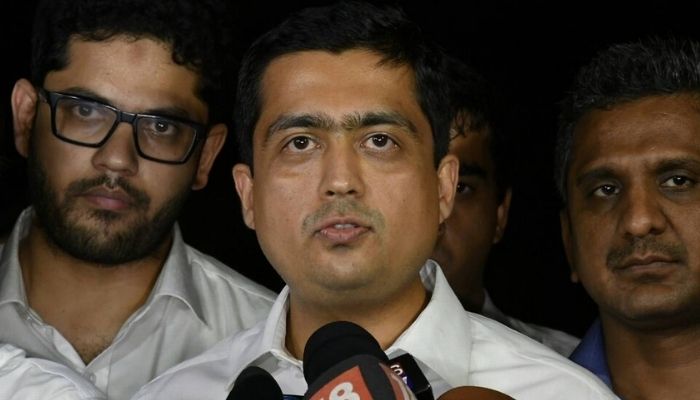
The Karnataka High Court today began hearing in Resham Farooq’s plea seeking relief from the Government PU college’s claimed refusal of admission to eight female students for wearing the hijab. The petitioner is represented by senior Advocate Devdatt Kamat. Advocate General of the State Prabhuling K Navadgi appeared from the side of the State.

The case was heard before Justice Krishna S Dixit’s bench. Before the hearing began, he emphasized that the court will follow the constitution, which he said is superior to the Bhagavad Gita.

The advocate general began by emphasizing that the state had not intervened in the situation and that the college’s development committee was allowed to make its own decisions. Adv. Kamat protested, claiming that there was a recent government directive on the subject.

Only the petitioner’s side made the submission today. According to Adv. Kamat, wearing a hijab is a fundamental Islamic practice mandated by the Quran. Kamat then proceeded to read a few verses from the Quran. Meanwhile, the court asked for a genuine and reliable copy of the Quran to be made accessible to the court.

Furthermore, Kamat asserted that wearing a hijab is a basic right guaranteed by the constitution and that the state has no authority to determine vital religious practices. He also cited several judgments to support the idea that religious behaviour cannot be assessed on secular ideas outside of religious authority.

“It is not correct for a woman after she starts menstruating to show her hands and face to strangers” Kamat quoted referring to Hadith mentioned in a Kerala HC judgment.

Since Kamat stressed a lot about laws from Kerala, the court pointed out this obsession. After which he went on to state that Hijab cannot be banned stating public order. “If it is a public order issue, how is it that when Muslim women wear #hijab outside, it is not a public order issue and it becomes a public order issue when they enter college? When they go to market, not issue but in college, there is a public order issue!” said Adv. Kamat to which the court responded by saying “Is there a uniform test for public order? That if it is not public order issue outside, it cannot be a public order issue inside.”

“If I carry a baby of a swine and go to Connaught Place, nobody will create an issue except saying this man has gone crazy. But if I go like that to a mosque or a temple or a church, it might create an issue.” the court added.

Kamat submitted that the girls wearing Hijab made to sit in separate classes is a kind of “religious apartheid.” This got a strict objection from the AG that such assertions can instigate sentiments and the case should be kept away from making it a religious one.

Following some more arguments, the case proceeded to end for the day. In the last, the AG requested injunctions in order to maintain law-and-order in the state.

The court was adjourned with an interim order requesting students and the public to maintain peace and tranquillity. The hearing will commence again tomorrow at 02:30 PM.

Pro-AAP blog refers to Hindu students chanting Jai Shri Ram slogans in Karnataka College as ‘terrorists’

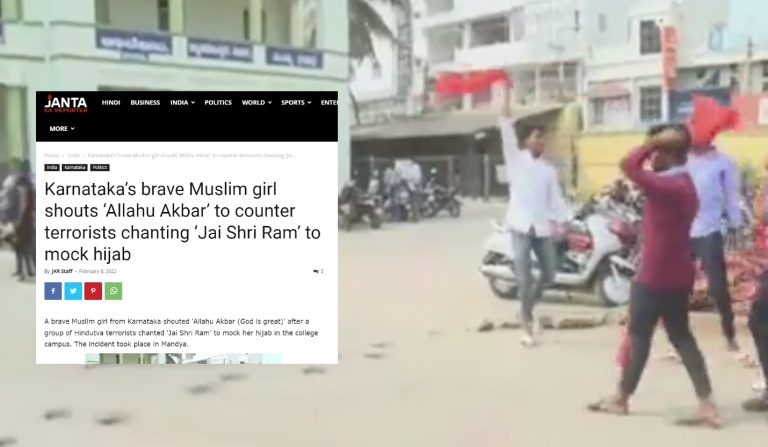
The hijab controversy in Karnataka has triggered controversy across the country. Muslim students in Karnataka have been demanding to be allowed to wear burqa inside colleges while colleges say that the burqas or hijabs are not part of uniform and hence should not be allowed. Amid all this, a video went viral today where a burqa clad person was seen being heckled by some men as that person tried to enter the college. Responding, she yelled ‘Allahu Akbar’ to the people who were chanting Jai Shri Ram.

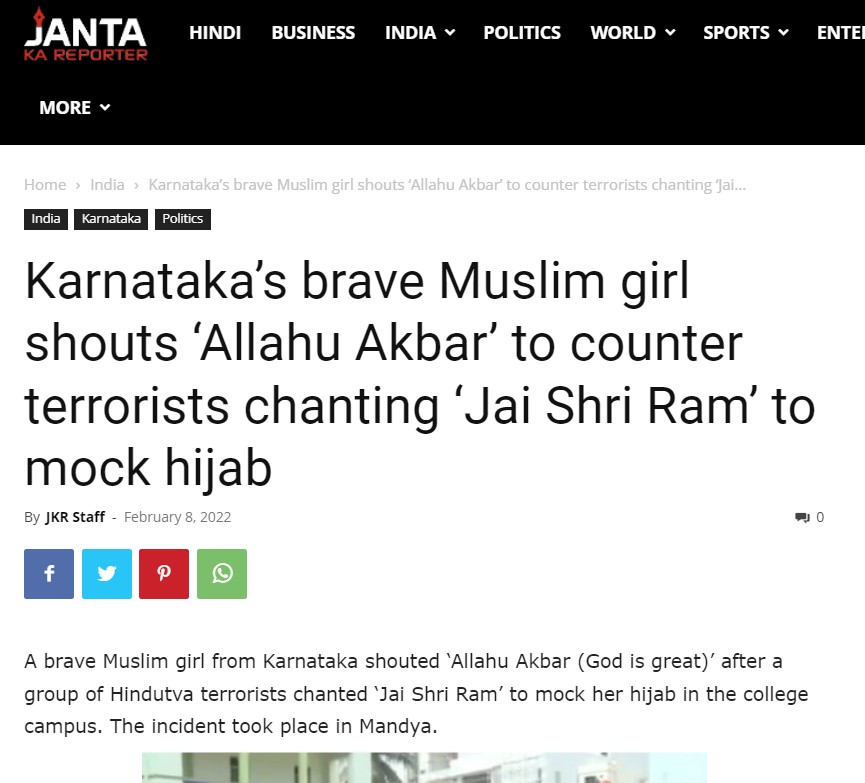
In this, pro-AAP blog Janta Ka Reporter referred to the students protesting against the burqa and chanting Jai Shri Ram as ‘terrorists’.

A Twitter user named INFERNO (@TheAngryLord) pointed this out via a tweet stating “Hi @ianuragthakur, how can we tolerate such media outlets calling ppl chanting ‘Jai Shree Ram’ as terr0rists? This piece of crap is owned by @RifatJawaid”

Here is a screenshot of the article as it was published for the first time.

Screenshot of Janta Ka Reporter website

You can view the archived article here.

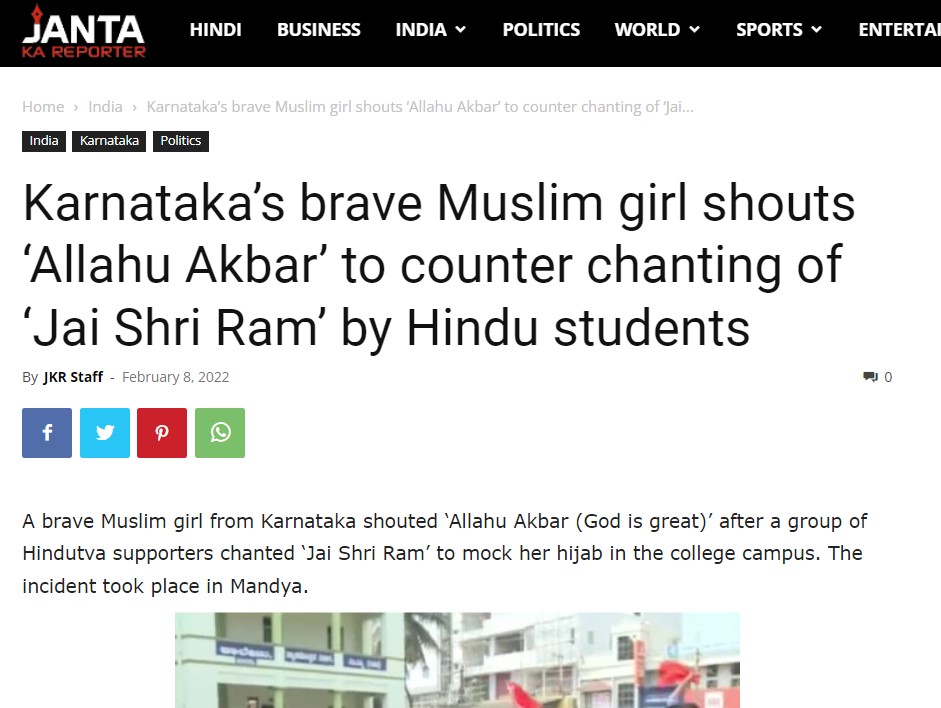
However, soon after this thing gained attention, the portal changed the headline of the article from the previous one and made it “Hindu students.”

Janta Ka Reporter article now

The current version of the article is the edited one.

There has been a concentrated effort to defame Jai Shri Ram chant and many a times Islamists have referred to it as a ‘war cry’ of ‘Hindutva terrorists’. Many a times many Islamists have also claimed that they were ‘beaten up’ by ‘Hindu mobs’ and ‘forced to chant Jai Shri Ram’. However, many of these incidents have turned out of be false. Here is a list of 20 such incidents in a short span of time where Islamists and ‘liberals’ tried to defame Jai Shri Ram chant.

Pro-AAP blog Janta Ka Reporter’s Editor is Rifat Jawaid and website has been accused of using soft porn to drive traffic.

Meet Advocate Devadatt Kamat who cited Islamic scriptures to defend Hijab in schools and colleges

On Tuesday (February 8), the Karnataka High Court began hearing four petitions filed in connection to the ongoing Hijab row at a pre-University College (PUC) in Udupi. The controversy began on January 1 this year when 6 female Muslim students tried to enter their classes with a Hijab but were denied permission by the school principal.

As per reports, senior advocate Devadatt Kamat appeared on behalf of the Muslim petitioners and argued in favour of wearing hijab in schools. He claimed that the headscarf is an integral part of the Islamic dress code. Kamat also quoted authentic Hadiths while reiterating his claims.

“Wearing of hijab is protected by the right to expression under Article 19(1)(a) and can be restricted only on grounds under Article 19(6),” he further argued.

The senior advocate claimed that wearing hijab fell under the right to privacy as recognised under Article 21 of the Indian Constitution. Kamat said that recent order by the Karnataka government, regarding dress codes at schools, is outside the scope of Karnataka Education Rules and that the State has no jurisdiction to issue the same.

Kamat and his association with the Congress party

It must be mentioned that Devadatt Kamat was appointed as the Chairman of the legal coordination committee of the Congress party in the run-up to the Uttar Pradesh elections. The committee was formed to coordinate with the Election Commission of India (ECI) in light of the Assembly elections. His appointment was made by the Central Committee of the Congress.

Kamat is a native of Karwar, which is located in the Uttar Kannada district of Karnataka. He was earlier appointed as the Additional Advocate General to the Government of Karnataka during the Congress-JDS reign in the State. In 2019, he was elevated to the status of ‘senior advocate’ in the Supreme Court of India.

Investigative journalist Vijay Patel pointed out that Devdatt Kamat had fought several cases on the behest of the Congress party and its allies. Kamat was the advocate for the Mumbai police in the fake TRP scam case against Republic TV and its Editor-in-Chief Arnab Goswami.

Kamat was also part of the legal team for the Maha Vikas Aghadi government after Shiv Sena ditched its ally BJP to side with the Congress and the Nationalist Congress Party (NCP). Vijay Patel also pointed out that the Supreme Court advocate represented the Mumbai police in the media trial in Sushant Singh Rajput Case. In visuals shared by the investigative journalist, Kamat was seen handing out masks, oximeters during the second wave of Covid-19 along with other Congress workers

Advocate Devadatt Kamat also peddled fake news

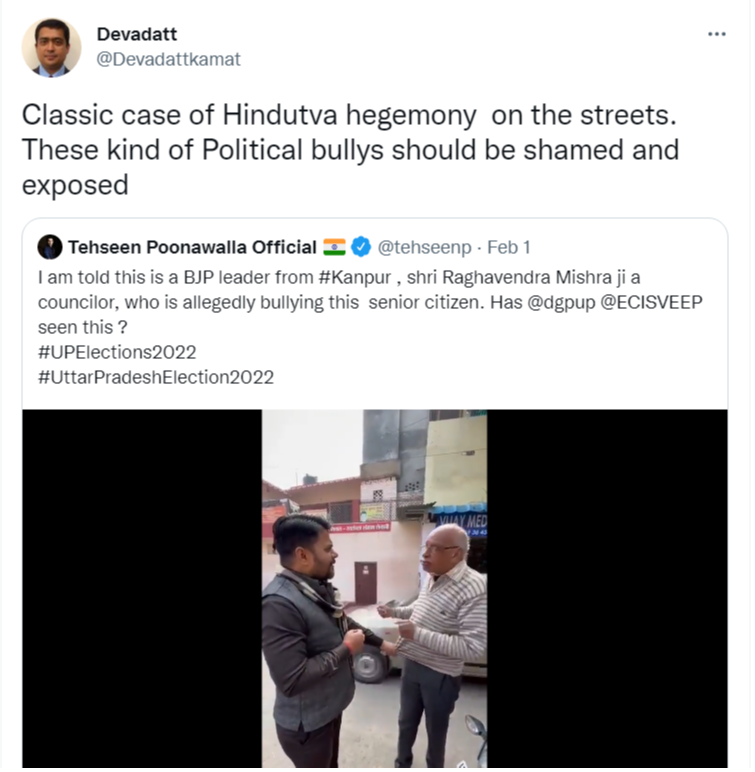
Following the footsteps of Congress scion Rahul Gandhi, Devadatt Kamat had also peddled fake news on social media. Recently, he dubbed a video of a family banter between an uncle-nephew duo as ‘Hindutva hegemony on the streets’.

He tweeted,” Classic case of Hindutva hegemony on the streets. These kinds of political bullies should be shamed and exposed.” Kamat was responding to a video posted by Tehseen Poonawalla, wherein he alleged that a BJP councillor from Govind Nagar(Kanpur) had threatened a senior citizen who favours voting against the saffron party.

In the video shared by Arvind, BJP councillor Raghavendra Mishra could be seen accosting and asking the senior citizen to support the BJP. The old man, on the other hand, who appeared to be against the BJP, fiercely stood his ground, asking Mishra as to why he should support the saffron party. Later, it was revealed that it was friendly banter between the two and the senior citizen is Mishra’s uncle.

“The video that had gone viral was an internal matter of our family. I am related to his(Raghavendra Mishra) father. We may be supporters of different parties but we share an affectionate bond with each other. The video of fighting between us was all in fun. He was trying to persuade me to support BJP and I was countering him why should I support the saffron party,” Mishra’s uncle said.

Despite this, Devadatt Kamat did not correct his tweet or issue a clarification to let the fake narrative of ‘Hindutva hegemony’ go unabated.

The Karnataka Burqa row is not about education, it’s Islamism stamping its foot and liberals dutifully massaging it

0

The Karnataka burqa row took an unprecedented turn on Tuesday, February 8, after chief minister Bommai announced the closure of all schools and colleges in the state for the next 3 days, a move that underscores the gravity of the raging controversy that first erupted last month when burqa-clad female students of a Udupi college were denied entry into classes because they were not complying with the college’s uniform dress code.

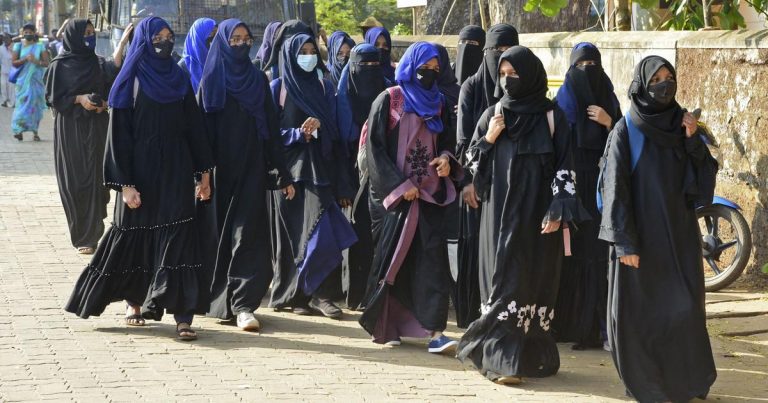
Before long, the controversy spread to other educational institutes across the state, where Muslim students were engaged in a standoff with college authorities for not allowing them to attend classes in burqas. As Muslim students demanded they be allowed to attend schools and colleges wearing burqas, Hindu students organised a protest against burqas in educational institutes. Scores of Hindu students from colleges across Karnataka wore saffron shawls and scarves in opposition to burqas.

A petition was also filed in Karnataka High Court arguing that Muslim girls wearing Hijab/Burqa should be permitted to attend classes. The petition was filed by a Muslim student, asking the High Court for a direction to allow wearing a hijab in college, stating that it is her “Fundamental Right” granted under Article 14 and 25 of the Indian Constitution and “integral practise of Islam”.

On Tuesday, the Karnataka High Court heard the matter and advised students to maintain peace & tranquillity so that people are not inconvenienced. Justice Dixit said that the court has full faith in the wisdom and virtue of the public at large and it hopes that the same would be practised. The hearing will continue on Wednesday.

Karnataka burqa row: A controversy that is emblematic of growing Islamism

Nevertheless, the Burqa row has snowballed into a major controversy, largely due to the perennial efforts of the left-liberal intelligentsia to create a fear psychosis in the minds of Muslims, painting a dystopian picture about the current state of affairs and painting the centre as working against the Muslims. Instead of holding recalcitrant Muslim girls who are bent on visiting colleges and schools in burqas, in violation of established rules and regulations, the liberals have blamed college authorities and administration for the current imbroglio, alleging that Muslim girls being denied entry to institutions is a part of a sinister plan of the government to target Muslims.

For years now, being denied entry into educational institutes because of the inappropriate uniform was never a controversy. Instead, schools, colleges, and universities were encouraged to have uniforms so that the importance of discipline is inculcated among the students. Similarly, for years now, Muslim girls did not insist on wearing burqas to their schools and colleges, keeping their religious assertiveness strictly confined to their homes and treating educational institutes as nothing more than centres of learning.

However, that behaviour has changed dramatically of late, as Muslim girls showed eager alacrity to wear their religion on their sleeves, even if that violates the pre-established rules of uniform dress code formulated by educational institutes. This change could be said to have been triggered by the growing awareness among Hindus, who have come to realise that secularism is a one-way street, where the burden of securing the pluralistic ethos of the country rests solely on the burden of the majority community while others are not constrained by any such moral obligation.

Liberals and Islamists make common cause amidst growing awareness among Hindus

As Hindu consciousness has grown, sections of radical Muslims have sought to counter it by doubling down on their exclusivist identity politics than taking efforts to transform secularism into a mutual affair or a two-way street. Rather than adopting contemporary and modern practices, such Muslims have leaned on medieval era customs, including the insistence of wearing burqas for women. Consequently, this radicalism has seeped into younger minds, with minor and teenage Muslim girls considering it their religious duty to wear burqas in public.

Although radicalism among Muslims was growing apace, the first signs of it were visible during the first tenure of the Modi government, when Islamists and left-liberals joined forces to counter the increasing assertiveness of Hindus. Controversies like the beef ban were deliberately stoked where a section of vocal Muslims virtually insisted that they won’t stop eating one dish just to respect Hindus. They demanded the right to kill and eat an animal that millions of Hindus consider holy and sacred.

Liberals, however, played along even then, concealing Islamists’ disdain for Hindu sentiments by using specious reasoning to justify their demands. They cited individual rights and food choice to justify the validity of the demands made by Islamists while it was clear that Muslim parties were not furthering their arguments based on vaulted liberal principles but because they wanted to stamp their identity.

Several other controversies during the first tenure of the Modi government proved that Islamists were bent on asserting their religious identity rather than upholding the principles of secularism and syncretism. The controversies surrounding the chanting of Vande Mataram slogans, Bharat Mata Ki Jai, standing up for the national anthem in theatres,, cattle smuggling—and many other issues illustrated that Muslim parties were driven by their uncompromising and fundamentalist stand that was rooted in strict and puritanical interpretation of Islam. Even then, liberals extended unwavering support to them, citing freedom of expression, liberty as enshrined in the Constitution.

But in the second tenure of the Modi government, India saw this Islamist supremacist identity politics exerting itself violently and in the streets. Be it the riots that swept the country over the Citizenship Amendment Act or the row over offering namaz in public space, or even the ‘sar tan se juda’ rallies carried out by Islamists, and recently, the raging burqa controversy—all these incidents are motivated by the desire to follow a pure version of Islam and exert their Islamic culture on the beliefs of the ‘Kafir Land’, a term Islamists use to refer to Hindu-majority India.

Though there is no liberalism exhibited by the Muslim groups who have taken to the streets, creating ruckus and indulging in violence, liberals have still fallen over themselves to defend their actions, referring to obscure liberal principles to make a case for the Islamists.

However, Islamists don’t really need liberals to defend them. They have already captured ‘intellectual’ space too, with people like Sharjeel Imam, Sharjeel Usmani and others writing articles about absolving Jinnah, downplaying the menace of radicalism among Muslims, branding every attempt to expose the murderous ideology harboured by Islamists as “Islamophobic”, and supporting every Islamist demand by citing the Constitution of India.

How liberals who champ at the bit of defending Islamists are failing liberalism

Furthermore, Islamists have also demonstrated that they can survive, perhaps even thrive, without the help of their ideological brethren from the left intelligentsia. This is why Islamists do not flinch from targeting liberals who do not toe their line. For example, actor Naseeruddin Shah was cancelled by Islamists for criticising them for expressing glee over the Taliban takeover of Afghanistan. Shah, who is usually a favourite of Indian Islamists was described as ‘not Muslim enough’ for asking Muslims to introspect whether they want a “reformed, modern Islam” or the “barbaric values” of past centuries.

Just like Naseeruddin Shah, Swara Bhaskar, one of the luminaries of the left-liberal intelligentsia in India was also cancelled because she was seen following the Hindu rituals of Grih Pravesh. Following rituals and customs of other religions is strictly prohibited under Islam and Islamists felt no compunction in attacking one of their most staunch supporters when she was found indulging in a practice that was inherently Hindu.

Making common cause with Islamists is akin to going on a wild goose chase, a foolish pursuit of something unattainable, especially when those being defended care little about the efforts put in by their ideological supporters, and waste no time in attacking those very supporters who oppose them or indulge in activities that run counter to their supremacist beliefs. Yet, the liberals continue to be drawn towards Islamists, showing little respect for their ideals and principles and their own self-esteem.

These incidents nonetheless prove that liberals are failing liberalism yet again, perhaps one billionth time. One of the most famous failures of liberals was the Shah Bano case, in which the Supreme Court delivered a judgement favouring the maintenance given to an aggrieved divorced Muslim woman, but the Rajiv Gandhi government at the Centre caved in to the demands of the Islamists and passed a law that diluted the top court’s judgment and restricted the right of Muslim divorcees to alimony from their former husbands for only 90 days after the divorce.

Karnataka hijab row is not about education but about opposition to exclusivist identity politics practiced by Islamists

The Karnataka burqa row is yet another example of how not only liberals but even the judiciary is failing liberalism. During the hearing on the petition filed in the hijab controversy, Congress leader Devadatt Kamat, who appeared in court in support of hijab, argued that not covering the head is considered as “haram” as per the Islamic Sharia.

The incidents of the last few months indicate that, unfortunately, India is on a collision course as Islamists have decided to stamp their authority without fear, liberals have decided to be their toilet cleaners, while Hindus too have decided that they are not going to take this attempt of subjugating them lying down, and fight fiercely to oppose this exclusivist identity politics. Thus, the Karnataka burqa row has nothing to do with education as being bandied about, rather it is Islamism stamping its identity and liberals dutifully massaging it, while Hindus buckle down to preserve the secular fabric of India and its pluralistic ethos.


In secular India, Opposition parties stage walkout for Sharia rules in Temple of Democracy over burqa row

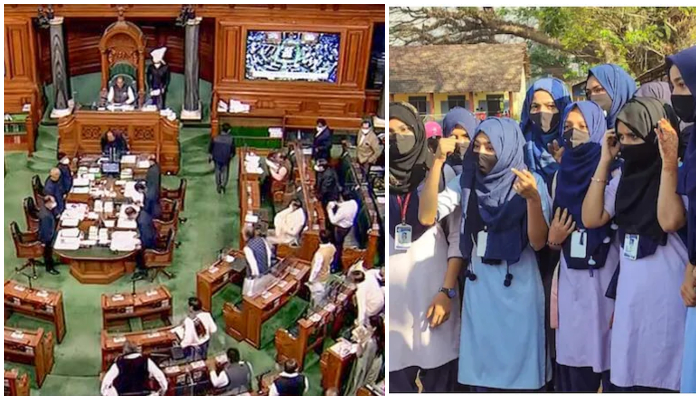
On Tuesday, as the Budget session of the Parliament continued, the opposition parties in the Lok Sabha created ruckus on the hijab row in Karnataka. The leaders from the Congress, DMK, Indian Union Muslim League, CPM, CPI, Viduthalai Chiruthaigal Katchi, Marumalarchi Dravida Munnetra Kazhagam and Jharkhand Mukti Morcha staged protest and walked out the lower house during the session.

According to the reports, Adhir Ranjan Chaudhary, Congress’s Leader of Opposition in Lok Sabha raised the hijab row issue during the zero hour session. “Some people are trying to divide the society in the name of religion”, he said demanding government’s statement on hijab controversy in Karnataka schools and colleges.

Congress Lok Sabha MP from Kerala Hibi Eden also gave adjournment motion notice in the lower house over the issue. However, BJP MP from Haveri addressed the house and said that the matter was a state subject and not the one that could be discussed in the parliament.

Earlier Congress MP TN Prathapan had requested the Education Minister to look into the matter and had asked to ensure the constitutional rights of the students. Indian Union Muslim League leaders also had demanded discussion on the Udupi Hijab row in the parliament yesterday.

The hijab controversy in Karnataka has gained national attention since the first week of January after several Muslim students were denied entry to classes in a Udupi college because they were wearing hijab. The college authorities had informed that the hijab was not a part of the uniform dress code suggested to the students.

Management under the new state guidelines had asked girl students to skip wearing hijab while in college. Eight girl students have constantly refused to follow the guideline as they claimed it prevented them from practicing their faith. Subsequently, several other colleges also started denying entry to students who did not conform to their respective dress codes. Soon, the Muslim women students who were demanding right to wear hijab (head scarf), started wearing burqas (full veil) instead.

Meanwhile, a petition arguing that Muslim women wearing Hijab should be permitted to attend classes was accepted by the Karnataka High Court. The petition was filed by a Muslim student, asking the High Court for a direction to allow wearing a hijab in college, stating that it is her ‘fundamental right’ granted under Article 14 and 25 of the Indian Constitution and ‘integral practise of Islam’.

As the hijab row continues to rage on, Hindu students, too, registered their protests against the Muslim students wearing hijab by donning saffron scarves. In a Government Junior College in Kunadapur, around 100 Hindu students came to the college with saffron scarves around their necks to protest against Muslim girls continuing to wear Hijab to the college.

On Tuesday, tensions prevailed at some educational institutions in Karnataka’s Udupi, Shivamogga, Bagalkote and other parts as incidents of stone-pelting and violence were reported from various parts of the state. Police reportedly resorted to lathi-charge to quell up the mob, which began pelting stones at Pre-University Colleges in various districts of the state.

In Islamic countries like Afghanistan, where Sharia is the law of land, hijab, burqa are mandatory and not wearing one is punishable. Women in Afghanistan have been killed for not wearing burqa as per Sharia.

50 years apart Pakistan still uses companies to run propaganda and call for ‘Jihad’

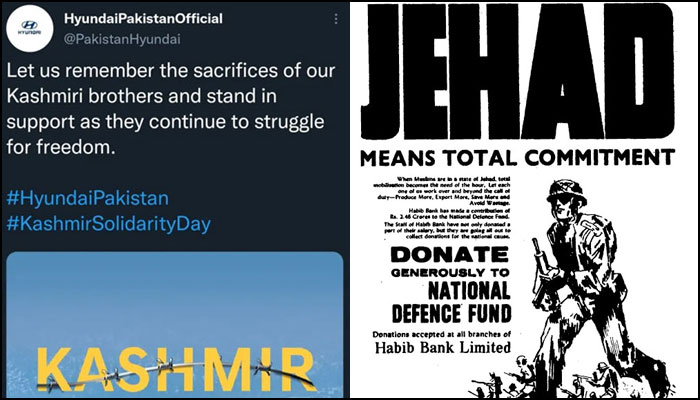
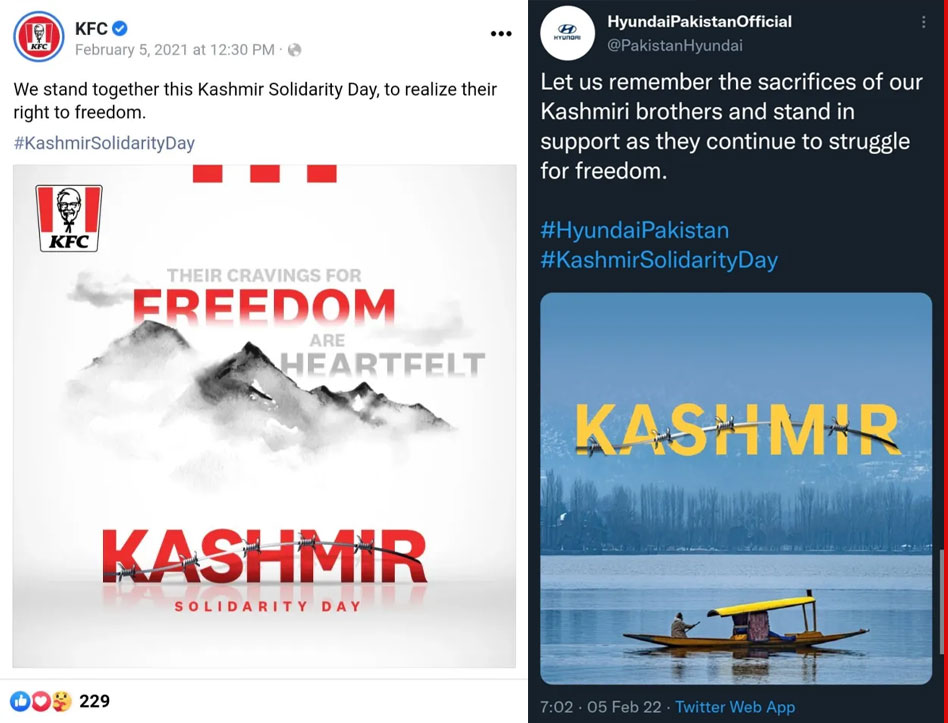
Since the abrogation of Article 370 in Kashmir, the social media accounts of multinational companies with branches in Pakistan are being used to propagate Pakistan’s agenda on Kashmir. In recent times several such posts came to light, including that of Hyundai, KFC, Dominos and many others. It is noteworthy that the Indian branches of these companies are well established and make much more money compared to Pakistan’s branches.

Social media posts by KFC and Hyundai Pakistan. Source: Twitter.

Despite the fact India is a far more important market, the global headquarters of these companies did not take any action until Indians marked their protest against these companies and started campaigns to boycott them. KFC and Hyundai have already issued statements, but netizens are yet not pleased with the statements as they fail to call Kashmir an integral part of India.

Pakistan celebrates 5th February every year as ‘Kashmir Solidarity Day’ to extend support to the Kashmiri separatist movement which is funded and supported by the Pakistan state. It was launched by Nawaz Sharif as the Pakistani Prime Minister in 1991. Since then, anti-India groups and individuals and Pakistani dispensation have used the day to convince Kashmiris to incite violence. So-called solidarity ‘rallies’ are held in Kashmir illegally occupied by Pakistan. In fact, in 2007, terror organisation Lashker e Toiba chief Hafiz Saeed had also addressed one such ‘Kashmir solidarity rally’ on February 5.

Interestingly, a lot of these commercial companies in Pakistan are owned and controlled by members of the Pakistan’s armed forces. A November 2020 report by news agency ANI stated that since its independence in 1947, Pakistani armed force personnel have very successfully rooted themselves in the commercial establishments. The three foundations in Pakistan, Fauji, Shaheen and Bahria, controlled by Army, Air Force and Navy respectively control over 100 commercial establishments. Hence, it is not surprising some commercial establishments in Pakistan would work as Pakistani armed forces propaganda outlets.

It is also not something new. It is old trick in new bottle.

Pakistan’s dirty old tricks

This is not the first time Pakistan is using companies and brands to spread propaganda. In 1971, during Bangladesh (then-East Pakistan) Liberation War, several small and large companies in Pakistan published ads in the newspapers urging people to support the regime and army in war. Pakistani Daily The Dawn was one of the newspapers that extensively published such ads for five straight days from December 14 to December 18.

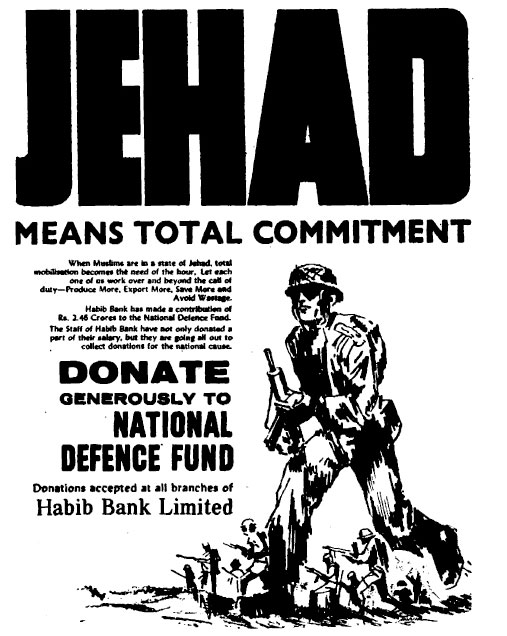
In an ad, Habib Bank Limited published an ad urging people to donate to National Defence Fund. The ad read, “Jehad means total commitment.”

Source: Dawn

It further read, “When Muslims are in a state of Jehad, total mobilization becomes the need of the hour. Let each one of us work over and beyond the call of duty – produce more, export more, save more and avoid wastage.” It added that its employees donated part of the salary to the fund and urged everyone to contribute.

Habib Bank, founded by Habib Esmail, had a close connection to Mohammad Ali Jinnah. When Pakistan was created, Jinnah personally requested Habib Bank to shift from Bombay to Karachi.

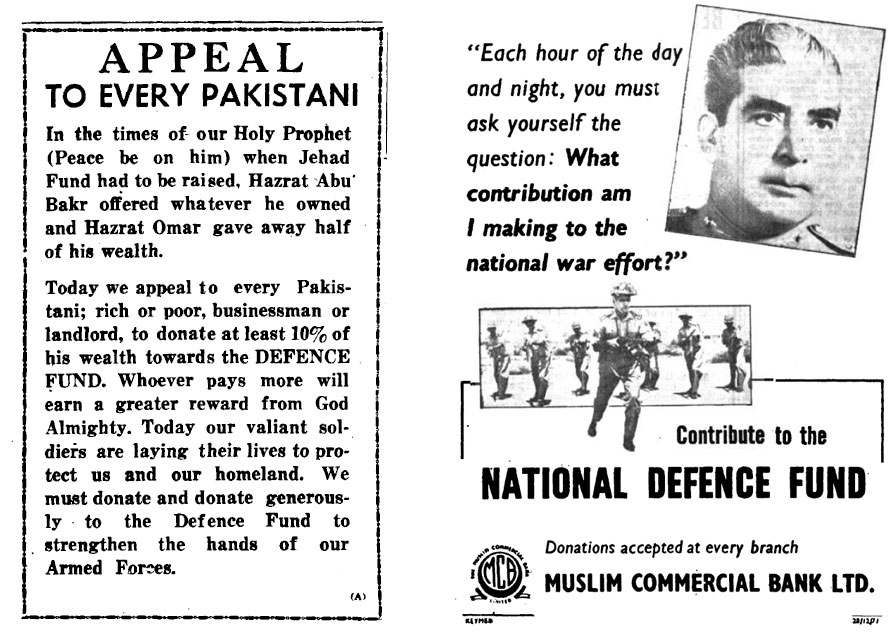
Another ad was published by Muslim Commercial Bank. The ad, with the title “Appeal to every Pakistani”, urged everyone to donate 10 per cent of their wealth to the fund in the name of the Holy Prophet. It read, “When Jihad Fund had to be raised, Hazrat Abu Bakr offered whatever he owned, and Hazrat Omar gave away half of his wealth.”

Source: Dawn

In an ad by Rizvi Brothers (P) Ltd, the text read, “While our gallant forces are engaged in crushing the enemy in her territory, the entire nation has stood by them like a solid rock. We have resolved, and it is our firm belief that Insha-Allah, with the help of Almighty, we will give a crushing defeat to the coward enemy.” On the contrary, it was Pakistan’s army that turned coward and surrendered on December 16, 1971.

Source: Dawn

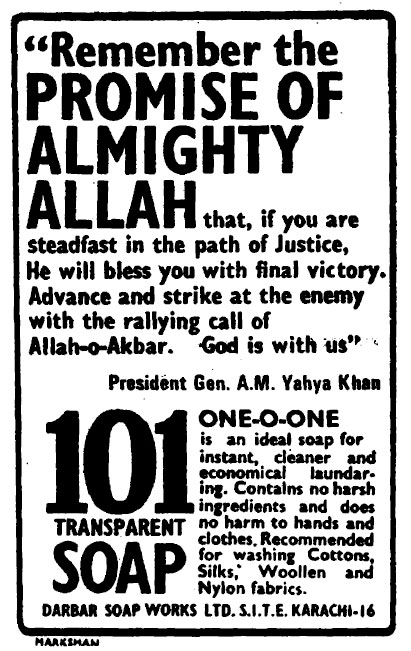
In another ad by Darbar Soap Works Ltd, then-President AM Yahya Khan was quoted where he said, “Remember the promise of Almighty Allah that, if you are steadfast in the path of Justice, he will bless you with final victory. Advance and strike at the enemy with the rallying call of Allah-o-Akbar. God is with us.” Apparently, it is evident God was, in fact, not with them.

Source: Dawn

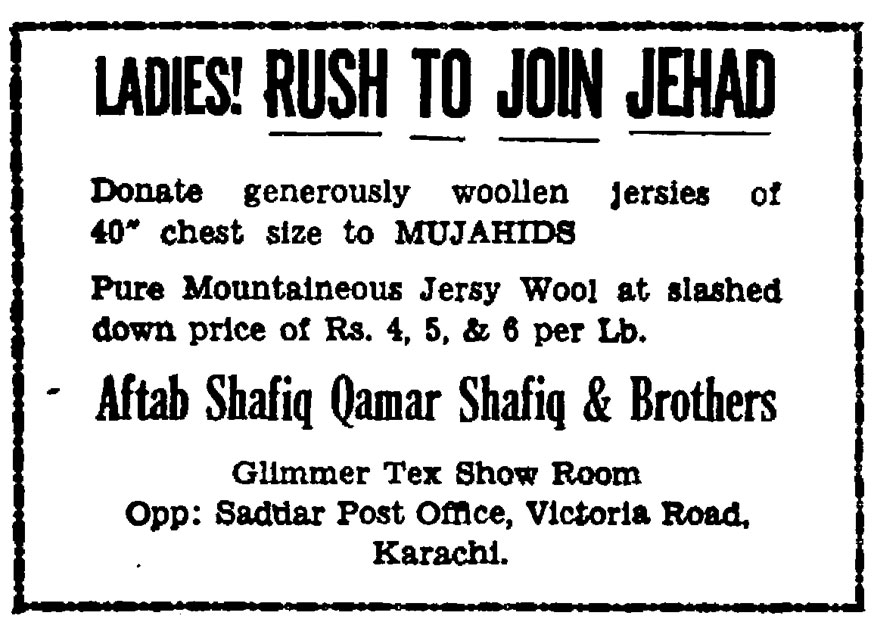
In an ad by Aftab Shafiq Qamar Shafiq & Brothers, the owner of the store urged the women to donate woollen jerseys of 40-inch chest size to “Mujahids”. They had also slashed the price of wool. It seems the store wanted the women to weave jerseys for the soldiers for free. Which is why they asked women to rush to join jehad.

Source: Dawn

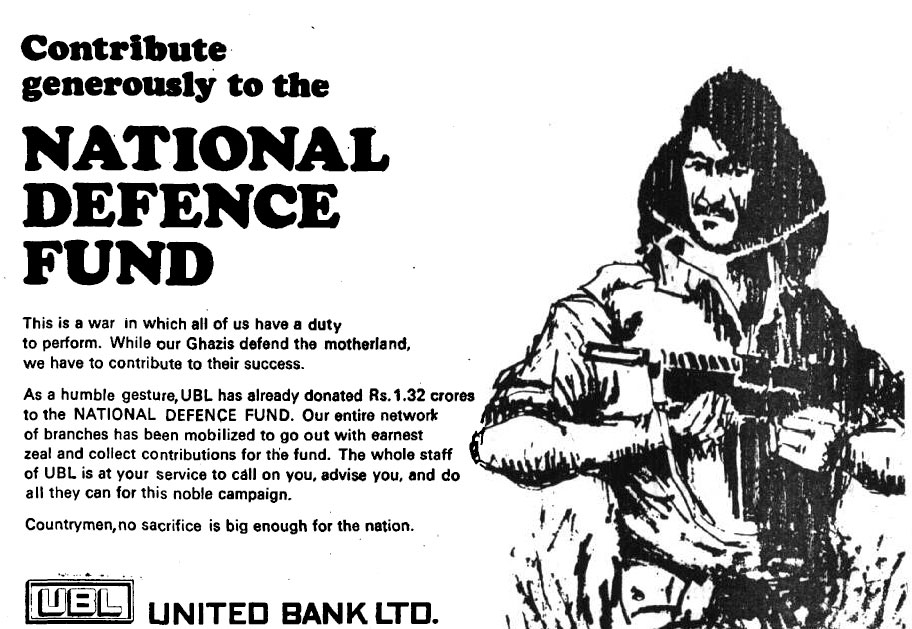
Other ads by banks also urged Pakistanis to donate generously to the Defence Fund.

Source: Dawn
Source: Dawn

50 years down the line, the method of spreading propaganda remains the same. Pakistan is still using corporates and businesses to spread propaganda.

Times have changed, ‘jehad’ cause may have changed, modus operandi remains the same.

Karnataka CM orders closure of schools and colleges for 3 days after burqa row turns uglier, stone-pelting and clashes reported in several areas

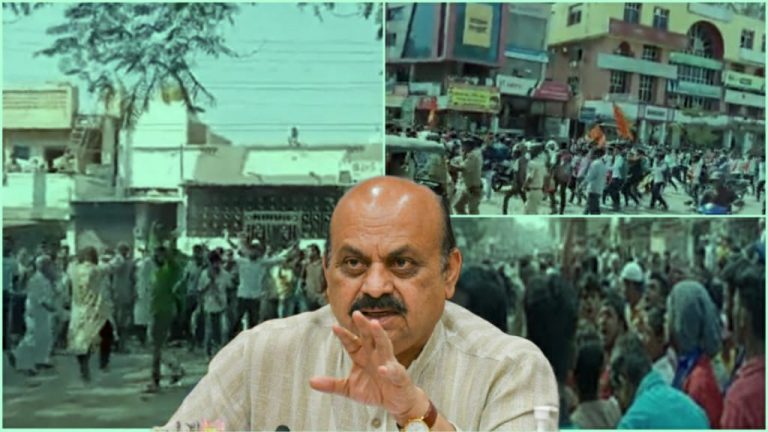
After the burqa row in Karnataka took an ugly turn on Tuesday, chief minister Basavaraj Bommai ordered the closure of all high schools and colleges in the state for the next three days.

“I appeal to all the students, teachers and management of schools and colleges as well as people of Karnataka to maintain peace and harmony. I have ordered closure of all high schools and colleges for next three days. All concerned are requested to cooperate,” Bommai tweeted.

On Tuesday, tension prevailed at some educational institutions in Karnataka’s Udupi, Shivamogga, Bagalkote and other parts over the Hijab row. Incidents of stone-pelting and violence were reported from various parts of the state. Police reportedly resorted to lathi-charge to quell up the mob, which began pelting stones at Pre-University Colleges in various districts of the state.

According to sources, many students were injured in the stone-pelting incidents. Additional police forces have been deployed and section 144 has been imposed in various places in Karnataka to avoid any untoward incidents.

Social media is awash with videos of incidents of stone-pelting and violence carried off at Pre-University Colleges in Shivamogga, Bagalkot, Udupi, and other parts of Karnataka.

The video shared above is from the Government Pre-University College of Rabakavibanahatti in Banhatti town in the Bagalkot district in Karnataka where reportedly a group of Muslim men pelted stones on college after students clad with saffron stoles didn’t allow Muslim girls to enter college with hijabs as they have maintained that it was a violation of the uniform rules.

It is being reported that the incident took place in the presence of policemen, who later resorted to canning to bring the situation in control and disperse the crowd. As the situation turned violent, the college management declared a holiday for the college.

Sharing another video, Twitter user @AkshayKatariyaa claimed that the mob tried to threaten Hindu students who were going to college with saffron shawls. The situation was brought under control after the police intervened.

A similar situation was reported from the surrounding areas of the Bapujinagar Government Pre-University College in Shivamogga. According to reports, police have resorted to lathicharge as pro-Hijab groups pelted stones at private buses near the Junior college. The police reportedly caned the students and protesters to quell the mob. Some students were detained and section 144 was imposed in the area to bring the situation under control. 

Meanwhile, two groups of students at Karnataka’s Udupi MGM College were also reportedly spotted engaging in a verbal spat over wearing hijab and saffron shawls. Seeing the situation deteriorate, the college reportedly turned out all the students and declared a holiday for an indefinite duration. The police arrived immediately and took control of the situation.

At the entrance of Shanteshwar Pre University College in Indi town, Vijayapura district, students wearing hijab and saffron shawls were stopped. Students gathered in front of the campus after being turned out and shouted slogans. Meanwhile, another group emerged with blue shawls in support of Muslim students wearing hijab. As a result, there was mayhem, and police had to rush in to calm things down.

In Karnataka, uniform requirements in educational institutions have turned into a political controversy after a few Muslim students refused to observe the rules and insisted on wearing hijabs inside educational institutions.

In response, non-Muslim students had decided to wear the saffron shawls prompting the authorities to ban both outfits. Despite the college authorities trying to convince the students to obey uniform rules and attend classes, the Muslim girls have been adamant, insisting that they would rather sit and protest outside.

On February 5, in solidarity with their classmates, girl students also hit the streets by wearing saffron shawls to protest against the attempts of Muslim students to vilify the secular atmosphere in the college by deliberately violating the rules and regulations.

Several videos had earlier gone viral in which girl students adorning saffron shawls took a march to protest against hijabs. In addition, they chanted Jai Shri Ram slogans to show support to their fellow students who were not allowed to enter campus for wearing saffron shawls on Friday.

The recent Hijab Controversy in Karnataka

The Hijab controversy, which started at a school in Udupi, Karnataka, has now spread across the state. On the morning of February 3, more than 20 hijab-wearing female students were prohibited from entering Bhandarkar College in Kundapur, Karnataka’s Udupi district. The PU College problem first came to light on January 2, 2022, when six Muslim female students insisted on wearing hijab in the classroom, in violation of the uniform rule.

Because the girls refused to remove their Hijabs, openly flouting the uniform mandate, numerous boys preferred to go around campus wearing saffron scarves in order to protest this. They were all denied entry because their clothes differed from the standard uniform permitted at the institution.

Since early January, the state has convened a committee to evaluate the matter and make a judgment on pre-university college uniforms across the state.

The High Court of Karnataka is currently hearing that Muslim students’ case challenging the Hijab ban in colleges. Justice Krishna S Dixit is hearing the petitions.

Ahead of the High Court hearing on the row, Chief Minister Basavraj Bommai appealed to everyone to maintain peace. “The matter is before the High Court and it will be decided there… I appeal to everyone to maintain peace… All should follow the state’s order (on uniform) until the court decides,” he said.

Karnataka Burqa row: Congress, media lie about Tricolour being removed from college, Pakistan picks up propaganda

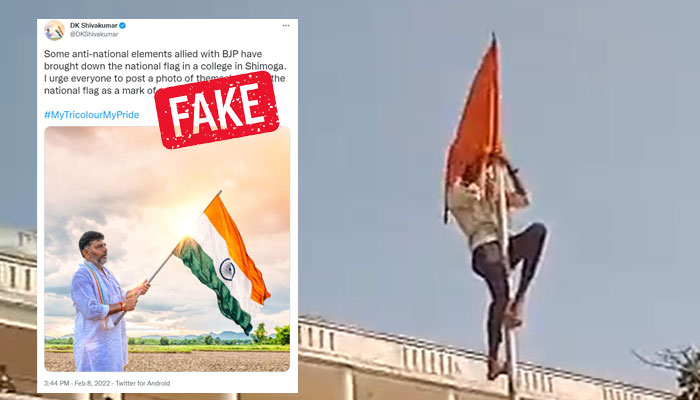
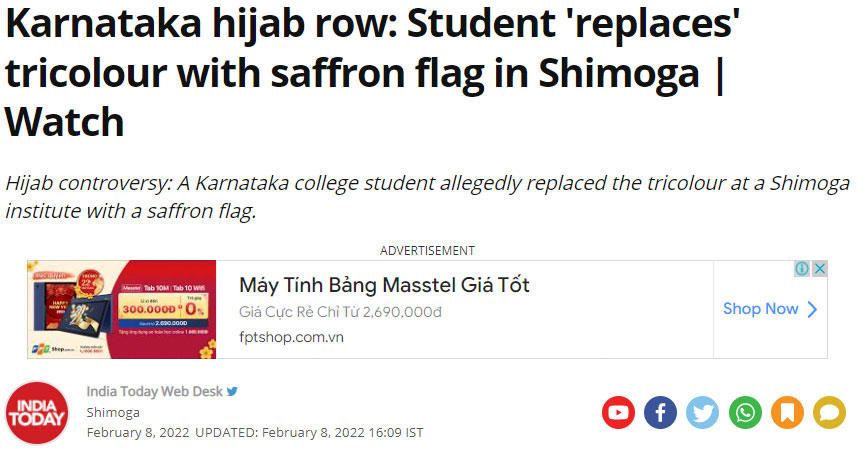
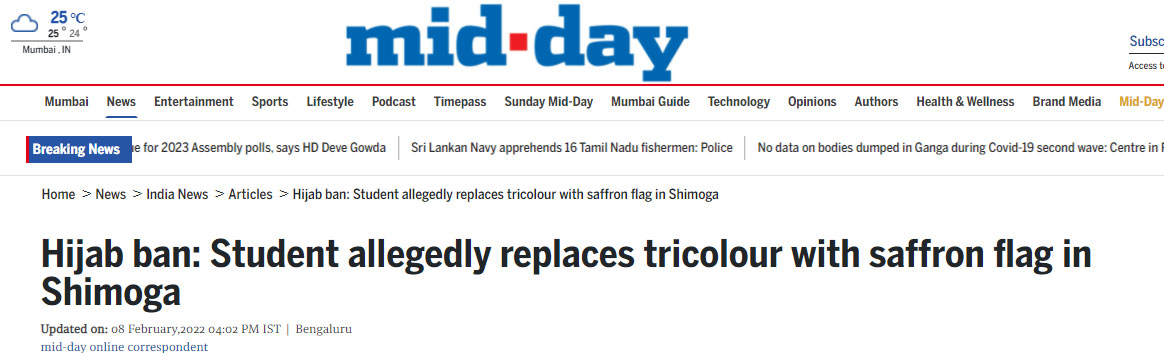
On February 8, Congress leader DK Shivakumar and multiple media houses and journalists claimed that the Tricolour was removed in at a college in Shimoga and replaced with a saffron flag.

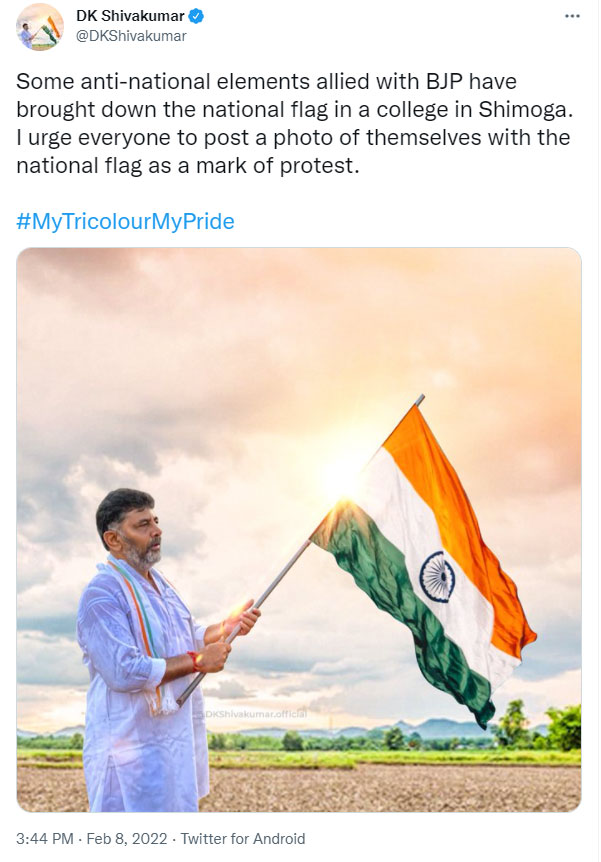
In a tweet, Congress leader DK Shivakumar alleged, “Some anti-national elements allied with BJP have brought down the national flag in a college in Shimoga. I urge everyone to post a photo of themselves with the national flag as a mark of protest.”

Source: Twitter

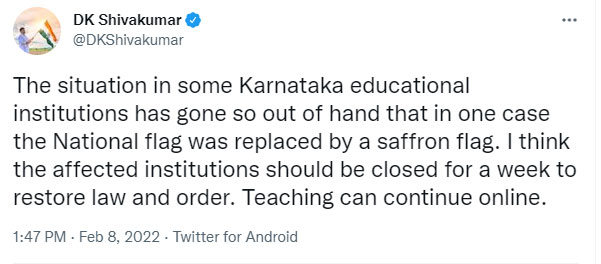
In an earlier tweet, he had said, “The situation in some Karnataka educational institutions has gone so out of hand that in one case, the National flag was replaced by a saffron flag. I think the affected institutions should be closed for a week to restore law and order. Teaching can continue online.”

Source: Twitter

The video of a boy putting up a saffron flag goes viral

A video of a boy putting up a saffron flag went viral on social media. In the video, the majority of the students that were filmed were waving saffron flags and stoles. Times Now’s Special Correspondent Imran Khan shared the video with a misleading caption. He claimed, “Karnataka Congress president DK Shivakumar has tweeted saying replacing National flag with Saffron flag at #Shimoga is a breakdown of law and order. And the college should be closed for a week.”

Interestingly, earlier, Khan had tweeted another video of the college in which an empty pole was clearly visible. Twitter user BefittingFacts shared the video Imran Khan had uploaded and called him out for peddling Congress’s lies on social media. He said, “You urself tweeted this video, there was no national flag, and now you are peddling lies of Congress?”

Khan had earlier spread misinformation about Hindu activist Pramod Muthalik where he claimed the latter was starting a new campaign to demolish Gadag Jama Masjid. However, he had wrongly translated Muthalik’s speech in Kannada. Based on his tweet, several media houses spread same misinformation that could have lead to communal tension.

Media houses published misleading reports

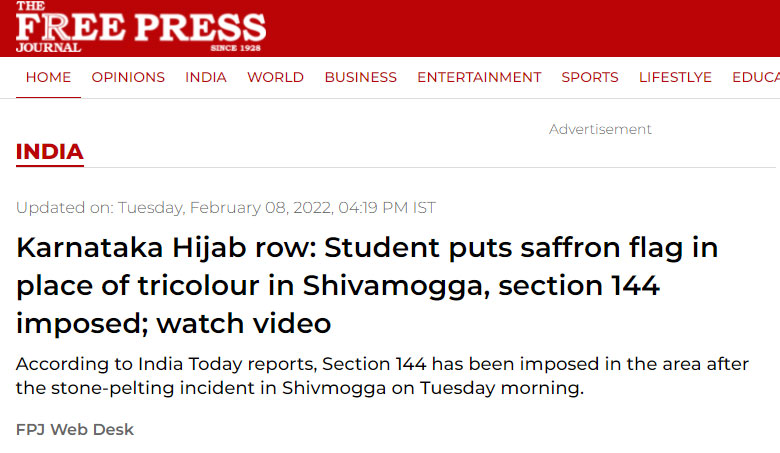
Several media houses including India Today, Mid Day and Free Press Journal published misleading reports about the incident. All three had used tweets by Congress leader DKS in the reports.

Misleading report by Free press Journal
Misleading report by India Today
Misleading report by Mid Day

Subsequently, the same was picked up by Pakistani journalist Hamza Azhar Salam where he also claimed that ‘Hindutva mob’ replaced the tricolour with saffron flag.

However, there was no tricolour flying on the flag post when the saffron flag was hoisted. Speaking to OpIndia, the college authorities and students have confirmed that the pole was empty and the Tricolour was not removed by anyone. The local students said the pole was empty; hence they hoisted the flag. The Tricolour is hoisted and unfurled only on Independence Day and Republic Day, confirmed the college authorities to OpIndia.

What Congress does, Pakistan follows

Earlier, many times Pakistan has amplified Congress propaganda. In October 2021, Dr Omar Ali, a Pakistani origin blogger revealed that Pakistan actually takes clues from the ‘Liberal’ Indian establishment to attack India and create anti-India, anti-Hindu narratives. It is not too surprising either.

Like, recently, after Rahul Gandhi raised the so-called Hindu vs Hindutva narrative, Pakistan has also toed similar line. So much that Pakistan PM Imran Khan spoke similar language at the UNGA last year. “The hate-filled ‘Hindutva’ ideology, propagated by the fascist RSS-BJP regime, has unleashed a reign of fear and violence against India’s 200 million-strong Muslim community,” Imran Khan had said. However, this sounds like something very similar Rahul Gandhi keeps talking about.

Not just this, on matters of abrogation of Article 370, the Citizenship Amendment Act and the NRC and many other causes, Imran Khan has often taken inspiration from Rahul Gandhi. You could read more on this here.

Pakistan: 2 years after being attacked over a false allegation of ‘blasphemy’, Hindu teacher awarded life imprisonment

0

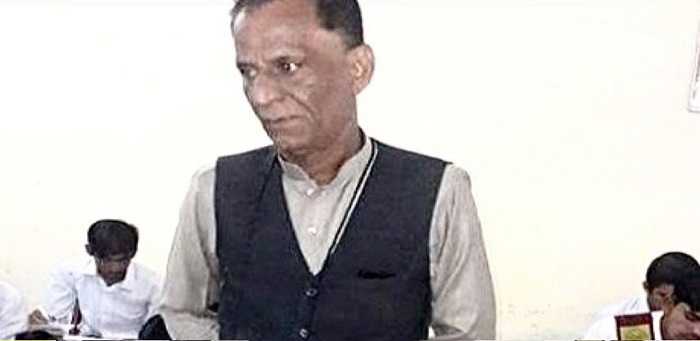
A Pakistan court on Tuesday sentenced Notan Lal, a Hindu teacher, to life imprisonment on the charges of blasphemy. Lal, owner and principal of a private school was accused of ‘insulting’ Prophet Muhammad during a Urdu class as accused by a student named Muhammad Ihtisham who later said he had lied.

Journalist Aditya Raj Kaul said that the Pakistan Courts failed to consider Muhammad Ihtisham’s confession and convicted Notan Lal under pressure.

A copy of court order shared by Pakistan-based journalist Naila Inayat mentioned that he has been sentenced to life imprisonment.

A fine of Rs 50,000 has also been imposed on him.

In September 2019, an FIR had been filed against a Hindu principal of the Sindh Public School for allegedly passing derogatory remarks against Prophet Muhammad.

After the false accusation by the student, violence and vandalism was unleashed by residents of Ghotki protested on the streets, damaging the school and also a Hindu temple in the area. The Police in order to control the situation and avoid further damage had detained Lal under Article 295 (c) of the Pakistan Penal Code.

The demonstrators had already vandalized three temples, a private school and multiple houses belonging to the Hindu community posing threat to the minority community in Pakistan. The Human Rights Commission of Pakistan had also reported mob violence after accusations of blasphemy in Ghotki. “Hindu community is in danger”, it had quoted a tweet.

According to the reports, Lal was taken into the custody and was questioned about the incident. Also the child Muhammad Ihtisham was interrogated. Ibtisam had then confirmed the allegations that Lal ‘insulted’ the prophet during a lesson on his life and travel between two holy cities.

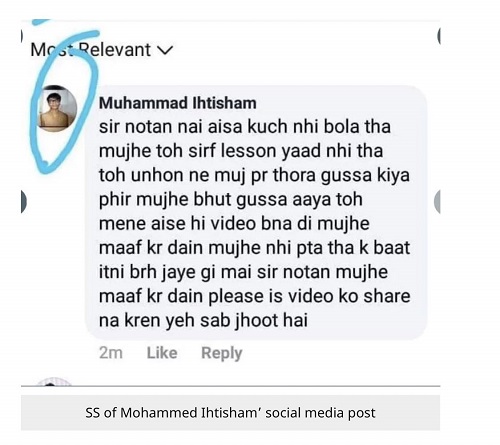
But as the matter erupted on larger scale on social media and other parts of Pakistan, Muhammad Ihtisham confessed that he had lied. “Notan Sir never said anything like that. He had scolded me for not being able to remember the lesson. So I got furious and posted the video. I didn’t know this would take such a massive turn”, he had posted on social media.

Image Source- Twitter post of Journalist Aditya Raj Kaul

It is notable here that it is rather common in Pakistan to attack, jail and even kill members of the minority Christian and Hindu community over frivolous charges of ‘blasphemy’. In 2021, a Sri Lankan man was brutally lynched to death by a violent mob in Pakistan over an allegation of ‘insult’ to Prophet Muhammad.

According to the United States Commission for International Religious Freedom (USCIRF), more than 75 people have been put to death since 1990 in connection with allegations of the crime and more than 40 are either serving lifetime imprisonment or are on a death row for blasphemy in Pakistan.

Dangers of ‘instant feminism’ and the burqa row: How it creates unsafe space for non-Hijabi women

Instant gratification, on the spot judgment, 30 second reels. This is our life now.

We have accepted it.

Yet I find it extremely hard to accept the simplistic virtue signalling around the issue of Hijab. What started as ‘right to wear head covering Hijab’ in college has now turned into right to wearing full body veil of burqa.

I’m not against Hijab on religious grounds. Not at all. Religion is a source of great succour tomany. I do not advocate militant atheism or anti-theism either. I’m also of the view that women should be able to decide what they want, without being judged. This is what women have fought for over a hundred years now, these are freedoms worth fighting for.

But the devil, as they say, is in the details.

I am summarising them in five points below.

Women’s safety is more important than any religion

Hijab is mandatory in Islam. You can keep saying it is a choice all you want, but every religious scholar will tell you it is mandatory, on the pain of punishment. Add to this the attitude this invariably leads to – that only women in Hijab are virtuous and this quickly escalates into a society where non Hijabi women, Muslim or otherwise, are dehumanised. And we have soul crushing examples of this too. At least 5000 very young women, raped, sold into prostitution, and exploited in UK grooming gangs, all belonged to this dehumanised class of women. Harmless? NO!

Even if women preach misogyny, it is still wrong

Just because some, mostly high caste Muslim women, are advocating for Hijab, does not make it a voice of feminism. They are only voicing Islamic patriarchy for religious reasons. A valid comparison would be the role some women played in opposing first and second wave feminism. Patriarchy supported by women is still patriarchy.

You do not have to support Hijab just because your political opponents oppose it

This much intellectual honesty and courage is expected from educated people. On one hand, educated, privileged Muslim women, who themselves do not wear hijabs or burqas and identify themselves as ‘feminists’ are batting for a symbol of oppression of women since decades. On other hand, there are Muslim women in country like Afghanistan under rule of Islamist group such as Taliban where they are killed for fighting for their right to NOT wear a Hijab. Because if Hijab is a choice, not wearing one should be a choice too, right? Your activism cannot be based on convenience.

All clothes are not the same

It is simplistic, nay, dishonest to say all clothes are the same. A girl wearing modern clothes is actually challenging societal rules of what is acceptable behaviour that guarantees safety. Anyone who advocates for Hijab is doing the exact opposite. Many Muslim men view only Hijabi women worthy of respect. Islamists believe a women covered only is a virtuous woman.

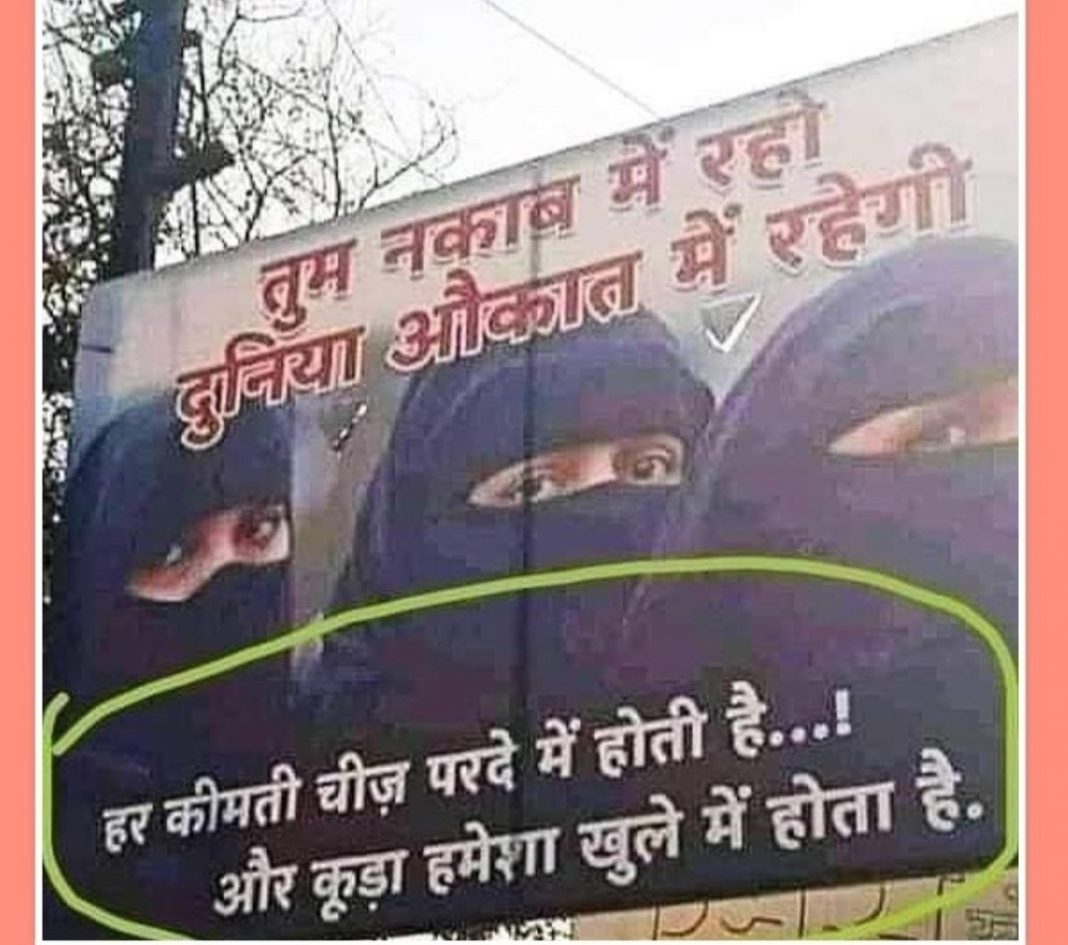
Poster from India on virtues of burqa

A poster in India recently showed women covered in burqa which read ‘every precious thing is always in a pardah and garbage is always open’. This kind of ideology dehumanises non-Hijabi women and paints them as a target. This makes public spaces unsafe for non-Hijabi women.

Sacrificing feminism at the altar of allyship

Let us stop pretending anything I have said above is new. This is the basics of what we have fought for over a hundred years. Social media feminists pretending they don’t know these fundamentals; their refusal to analyse the social impact of the views they are supporting; defeats the basics of feminism.

Sure, allyship with any group, particularly one that they see as oppressed, is fine, but it is NOT fine when that allyship is at the cost of feminism itself. Let us not forget, in Jammu and Kashmir, in 2002, four young women were beheaded by militants because they failed to wear burqa.

Choice? I dare say not.

It is time to move beyond simplistic virtue signalling on the issue of Hijab and analyse the issue without bias. We owe it to the pioneers of feminism.