Home Blog Page 3540

BJP MLA Nitesh Rane’s anticipatory bail plea in attempt-to-murder case rejected by Bombay High Court

The anticipatory bail plea filed by Union Minister Narayan Rane’s son Nitesh Rane was dismissed by the Bombay High Court on Monday. Rane had filed a pre-arrest bail application in seeking relief from coercive action against him in an attempt-to-murder complaint filed against him in Kankavli.

Nitesh Rane, who remains in the news for his strong stances against the MVA government, was accused as the main conspirator behind an alleged attempt-to-murder incident against a Shiv Sena party member which reportedly took place in December 2021. According to the complaint filed, Santosh Parab (44) was travelling on a bike when an Innova car without a number plate hit him. According to Parab, a person came out of the car and stabbed him. He also heard one of the conspirators saying. “Should inform Gotya Sawant and Nitesh Rane.”

However, Rane in his bail plea has pointed that he has been falsely implicated in the case stating a political intent behind the complaint. A sessions court in Sindhudurg had earlier rejected Rane’s anticipatory bail plea, after which he approached the Bombay High Court. According to Rane, a political conspiracy is being hatched against him for his alleged mocking of Environment Minister Aditya Thackrey during the Winter Assembly session.

Advocate Niteen Pradhan argued before the Judge that the FIR registered against Rane was with the aim of preventing his participation in the Sindhudurg Co-operative Bank district elections that were to be held on December 30, 2021. He added that Rane had been cooperating with the ongoing investigation and had appeared before the police for recording his statements.

Opposing the plea, special counsel Sudeep Pasbola informed that Rane had met with his associate Sachin Satpute to show a photo of Sachin Parab, the victim in the case. Parab, the Shiv Sena member from Kankavli had been allegedly badmouthing Rane and his family. Following this, Rane had allegedly asked Satpute to assault Parab so as to terrorise him from speaking against his family. According to Pasbola, Nitesh Rane along with his associate Satpute tried to threaten Parab to refrain him from speaking against his family.

Pasbola further informed that the phones of Satpute, the alleged co-accused who earlier was arrested by the Delhi Police have been seized and he is waiting for the forensic report. He argued that there was enough evidence against Rane to substantiate the case and requested Rane’s custody to complete the investigation. He concluded by saying, ”Such kinds of persons who have repeatedly indulged in these kinds of crime to create terror in the mind of people, do not deserve indulgence and discretion of the court.”

Nitesh Rane is a BJP MLA from Kankavli, Sindhudurg.

Gopipura in Surat and Soni Faliya in Bharuch: How Jains and Hindus are leaving their homes as the localities shift demography

In 2014, a Jain Sadhvi who stayed in Surat’s Gopipura area wrote a letter to President of India, Governor of Gujarat, Prime Minister Modi, the then Chief Minister of Gujarat, Anandiben Patel and other leaders about the harassment she was facing in Gopipura, a traditionally Jain locality in Surat, which has slowly turned into a Muslim majority area.

Letter by a Jain Sadhvi

In the letter, the Sadhvi had written how near the Upashrays where Jain Sadhvis stay in Gopipura, there are around 25 Jain temples and 35 Upashrays within a 1 km radius. About 70-80 Jain Sadhvis were staying in this place. The Sadhvi pointed out that slowly the area has seen more and more Muslim residents come and live there. “Especially near the Nanand Bhojai Upashray and Shri Sulasa Shravika Aaradhna Bhawan, apartments like Parag Apartments, Ganesh Society, Smita Apartment no. 3 – all residents here are now Muslims. Further, Navpad 5-7, Yash Apartments and other apartments like Meghganga, Navkar, Akash Diamond all now have Muslim residents. About 50% residents in the area are now Muslims,” the letter stated.

The Sadhvi in her letter had stated that God has made all living beings the same but Muslims have very ‘tamsic and janooni‘ (aggressive, to put it mildly) and the Sadhu-Mahatma are facing difficulties. “Some Muslim families keep 4-5 cats and goats. Near Sulasa Shravika Aaradhana Bhawan, a Muslim family that has come to stay has tied two goats. These goats can be heard crying in middle of the night because of cold. This pains me too much. I have grown up being kind to animals and this kind of suffering of theirs is very painful for me,” she said.

She further added that some Muslim kids would run behind the stray dogs and beat them up with belts and would often leave waste of onion and garlic peels outside their homes. Practising Jains do not consume root vegetables like onion, garlic, potatoes.

Part 2 of the letter by Jain Sadhvi

She further wrote that in 2013 during the Bakri Eid, the Muslim families had tied goats in their houses. “One house even tied a baby buffalo. Before Eid, the Muslim kids would come and take the goat for a walk and would deliberately pass them through my Upashray to tease me,” she wrote.

She further narrated an incident involving one Mehboob bhai who got two huge goats and slaughtered one of them in the house right at the time they were sitting down for lunch. The goat cried out very loudly. The other goat was slaughtered the next day at 4 AM. “This is Brahma Muhurat for us and I was reciting my Navkar mantra. That is when I heard the cry of the goat being slaughtered. I started chanting the Navkar mantra very loudly,” she wrote in the letter.

She also talked about another incident from 2013 where she saw bloodied water flowing near the Rashmi Apartment after the slaughter of the goats. “When I was going to a Jain Shravika’s place for lunch, never did I ever think that this red water would be the blood of the slaughtered goat. I thought that water was mixed with kumkum. But people around warned me and told me that it was goat blood. I fainted. I could not get the visuals out of my mind. I feel extremely nauseated. How can I live like this?” she said.

She appealed to PM Modi to bring in strong laws so that those who sell their homes to Muslims for Rs 2-3 lakhs more do not do so to prevent such demographic change.

Many such letters, appeals were sent to the state and central administration by people from various pockets of the state which eventually culminated in the Disturbed Areas Act. The Sadhvi who wrote the above letter tried to commit suicide, but was thankfully saved.

It is notable here that there are laws regarding the slaughter and proper disposal of animals. The open slaughter of animals in residential areas, especially during Bakri Eid has been a contentious issue in many parts of the country.

Disturbed Areas Act

Gujarat Prohibition of Transfer of Immovable Property and Provisions of Tenants from Eviction from Premises in Disturbed Areas Act, 1991, or Disturbed Areas Act as it is popularly known as was passed in the Gujarat state assembly in 2019 and the President of India gave his assent in October 2020. The Act was initially introduced in Ahmedabad in 1986 after the communal riots under the Congress-ruled Madhavsinh Solanki government. There was large-scale distress sale of immovable properties in parts of the city.

Disturbed Areas Act is implemented in a particular police station area. The District Collector calls upon the Police Commissioner to inquire about communal harmony and if there are any complaints of polarization of communities. The Police Commissioner then will inquire about the same to all police stations under his jurisdiction. Upon receiving information, he notifies the District Collector, who will then declare a particular area (area under particular police station’s jurisdiction) as a Disturbed Area for a period of five years which can later be renewed.

Gopipura ‘is this house for sale?’ viral video

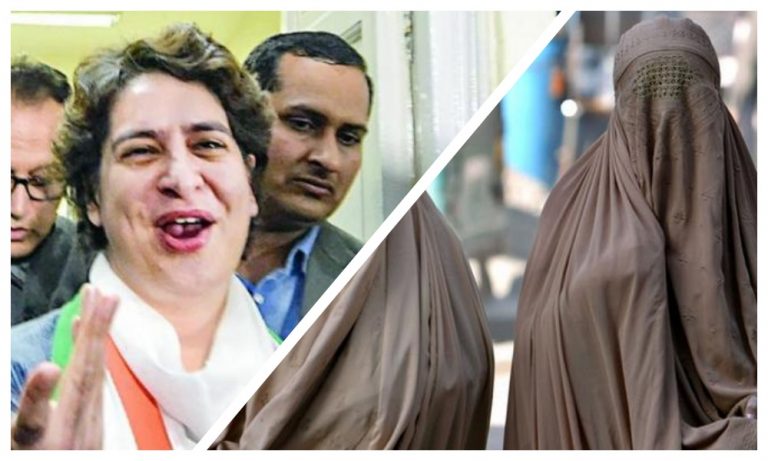
Sometime back a video had gone viral on social media where a burqa-clad woman can be seen knocking on doors and asking the resident if the house he is living in was up for sale.

The woman was reprimanded by the resident who denied any reports of having put his house up for sale.

Sunish Apartments, Gopipura

The above video was recorded on the CCTV camera of one of the residents of Sunish Apartments. There is a Jain Derasar right across the flats. In about a 1 km radius, there are at least 30 such Jain temples and places of worship. However, in past few years, the area, which was predominantly a Jain locality has seen a drastic demography change. Many apartments which were owned by Jains were purchased by Muslims and residents now say that about 50% population in the area is now Muslims.

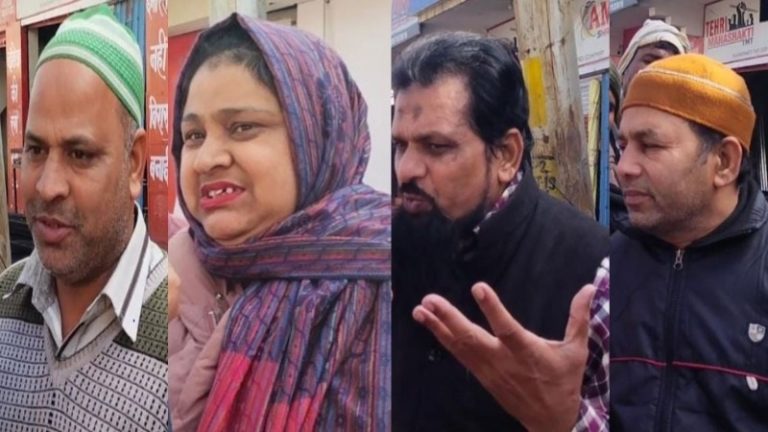
One of the residents of Sunish Apartment, on condition of anonymity, said that things started changing about 15-20 years back. “Mahavir, Pinal, Navkar, Ganesh, Nirav, Pancharatna, Rangkala, Swati apartments, they were all owned by Jain families. But now all these flats are having Muslim residents. We are Jains. Neighbours cook nonvegetarian food and the smell is so overpowering that we cannot go inside the kitchen after 6 PM,” she said.

Jainism objects to the consumption of non-vegetarian food as the faith propagates not injuring any living being, knowingly or unknowingly. Eating non-vegetarian food is an act of himsa (violence) as per Jain philosophy.

The Sunish resident further talked about the harassment faced by them, especially women and young girls in the neighbourhood. “Some three years back, one of the girls who lived here was harassed. The family left the house within a week. Six months back, my own daughter faced harassment outside the temple. We are tired of this. There is a school right across this apartment, Shri Ratnasagar School. Now, most of the students studying there are Muslims,” she said.

School across Sunish Apartment in Gopipura

“There has been a steady growth of Muslim population nearby and hence we want to go from here,” she said. About 12 of these 14 flats in Sunish Apartment are now sold off, most of them are sold to Muslim buyers. However, sources said that the sale deal circumvented the Disturbed Areas Act provisions and hence the deal may likely be cancelled.

Back in 2014, multiple media reports had highlighted the challenges faced by residents of Gopipura.

Divya Bhaskar news clipping from 2014

As per a 2014 report in Gujarati daily Divya Bhaskar, a Jain girl was lured into a relationship and then a video clip in a compromising position was made viral. Another woman had said that her viral video had reached relatives in Mumbai and her engagement broke because of it. Such threats of making videos viral had made the lives of women living there difficult. One prominent resident of the area had then alleged that these kinds of things were done to harass the Jains living in the locality so that they leave their homes.

Another resident of Gopipura spoke about a dargah nearby (which is quite popular and pegged as the epitome of harmony amongst Hindus and Muslims in many mainstream media reports), where most of the people in surrounding areas are illegal Bangladeshi immigrants. He said that many people around the dargah who roam around with dhoop are all illegal Bangladeshi immigrants. The dargah there gives shelter to these men, he said. “Administration is aware, but ignores,” he said.

Soni Faliya in Bharuch

Similar has been the case of Soni Faliya in Bharuch. OpIndia had earlier reported that Hindus in the locality had put up ‘for sale’ banners in Soni Faliya in Bharuch.

Public toilet outside Soni Faliya

Local residents point out the absolute indifference towards the rich heritage of the ancient cities of Gujarat. Bharuch is one of the ancient cities of Gujarat which has also found mention in the Skanda Purana. However, it is in a deteriorating state now. Above is an image of a public toilet right outside Soni Faliya in the old city of Bharuch. If you look closely you could see carvings on the stones that form the base of the toilet. These huge slabs of stones with carvings, instead of being preserved as ancient heritage, are left to rot.

“Archeological Survey of India should carry out survey and excavations of this city and make an effort to preserve the ancient city,” said a source who has been involved in various cases of forced religious conversion.

When you enter the lane across the public toilet, it takes you back in times when people lived in ‘walled cities’.

Locked house in Soni Faliya

But some of the houses in this locality are locked and deserted.

There is a Sai Jalaram temple just a few metres away from here. When some Muslims purchased the houses surrounding the temple, they started opposing the evening Aartis in the temple, the local residents allege. They were told that Bhajan is haram and hence must be stopped.

Right next to it is a Shiva temple, which is at least 150 years old.

All the houses around this temple now belong to Muslim residents.

Residents of Soni Faliya have insisted that despite Disturbed Areas Act being in place, it is not implemented in spirit. The sources in the know of the matter say that when the residents protested against such taking over of property by exploiting loopholes, police and administration instead threatened to file cases against them accusing them of disturbing the peace.

One of the residents, Gaurang Rana showed me around the lane which now has quite a deserted look. He said that the Muslim families in the neighbourhood have exploited loopholes in the transfer of property rules. He said that in some cases, a Hindu buys property from a Hindu seller and within just months, sometimes as less as two months, the same has been sold to Muslim buyers.

Alleging conspiracy, the residents say that at first one or two Muslims would buy property at a high rate. Then the Hindus in the area get influenced and sell their homes. Later, when the demography changes, the remaining Hindus end up having to sell their property at lower rates because of the change in demography. 

One Shaukat Ali, who has purchased the house next to the Shiva temple, has now got more of his relatives to live in the locality. Recently, Rana and two other residents of Soni Faliya got threatening calls and messages from foreign numbers, where a person identifying himself as a Muslim had offered to purchase their homes.

“The area was always peaceful, like any other part of the city. I have grown up here. In the nearby area, I have many Muslim friends I grew up with and went to school with. But in 1992, the same people I called friends, attacked me from this masjid right here and left me to die,” said a former resident of Soni Faliya on condition of anonymity. He said that he was attacked and stabbed 17 times and now consider his survival as ‘second life’.

House of Morarji Desai now in ruins

He, however, laments that the place he grew up is in ruins. “This what you are looking at was once the house of Morarji Desai when he was the Prant Adhikari. The city administration has no interest in upkeeping and preservation of our heritage. So much that this very area has some houses which are considered safe havens during riots,” he said while pointing to a house in the neighbourhood.

There has been an increase in masjids and dargahs in the neighbourhood, where he alleges various anti-social activities, including forced religious conversions are carried out.

“You should go to the Kankaria village in Amod Taluka of Bharuch where people of the tribal community were converted to Islam by luring them. All the support comes from here. Government should trace their funding too,” he said.

An hour later, I was on my way to Kankaria village in Amod.

To be continued…

Note: This is a part of a series of ground reports on forced religious conversion, grooming jihad, ‘land jihad’ and possible nexus with terror funding taking place in Gujarat. You could read previous parts here and here.

Election Commission re-schedules Vidhan Sabha polls in Punjab to February 20: Details

On Monday (January 17), the Election Commission of India (ECI) informed that the Vidhan Sabha elections for the State of Punjab have been re-scheduled from February 14 to February 20 this year.

In a tweet, ECI spokesperson informed, “After consideration of all facts made available, Election Commission has announced 2022 General Elections to the Legislative Assembly of State of Punjab on 8th January 2022 under which notification for the election is to be issued on 21st January 2022 and poll is to take place on 14th February 2022.”

The nodal Election body stated that it had received representation from the Punjab government and several political parties about the movement of devotees in Punjab to Varanasi for Sri Guru Ravidas Ji Jayanti celebrations (February 16, 2022).

“They have also brought to the notice that a large number of devotees start moving for Varanasi around a week before the day of celebration and keeping the poll day on 14th February 2022 will deprive large number of electors from voting,” ECI emphasised. As such, elections in Punjab have been shifted beyond February 16 to February 20, 2022.

Elections in the State will now coincide with the 3rd phase of polling in Uttar Pradesh. The decision by the ECI was taken in consultation with the Chief Electoral Officer (ECI) and the Punjab government. Votes in the poll-bound State will be conducted on March 10, 2022.

Other important dates include:

Date of Notification: 25th January

Last date of Nomination: 1st February

Date of Scrutiny: 2nd February

Date of Withdrawal: 4th February

On January 8, the Election Commission of India (ECI) announced the dates for the Vidhan Sabha elections in 5 States, namely, Goa, Punjab, Manipur, Uttar Pradesh and Uttarakhand. While briefing the media, Chief Election Commissioner Sushil Chandra informed that the elections in the poll-bound States will commence from February 10, 2022, to March 7, 2022.

Elections in the State of Uttar Pradesh will be conducted in 7 phases, followed by Manipur with 2 phases. Elections in Goa, Uttarkhand and Punjab will be conducted in a single phase. According to the Election Commission of India, the votes will be counted on March 10, 2022. ECI informed that all physical campaigning will be ceased until January 22, 2022, in light of the rising cases of Coronavirus.

‘Will have to keep his ego aside’, Kapil Dev weighs in on Virat Kohli’s decision to step down as Test captain, says was probably ‘not enjoying’

Former Indian captain Kapil Dev has welcomed the decision of Virat Kohli to resign from the post of India’s Test captain. Kapil Dev felt that Virat did the right thing by stepping aside, as he didn’t appear to be “enjoying” captaincy anymore. Kapil Dev said that Kohli was indeed looking “tense” in the aftermath of the uproar over his decision to quit the T20I captaincy last year.

Speaking to Mid-day, Kapil Dev, who served as a former coach of the Indian cricket team as well, said on January 16, “I welcome Virat’s decision to quit the Test captaincy. He was going through a rough time ever since he gave up the T20 captaincy. He has looked tense in recent times, appeared to be under a lot of pressure. So giving up the captaincy was an option in order to play freely. He opted for that.”

While he respected Kohli’s decision to step down as India Test captain, the legendary cricketer also shared a piece of advice for Virat Kohli, who holds the record for being the most successful Test captain with 40 wins under his belt.

Citing his own example, Kapil Dev opined that Virat would have to do away with his ego and like a true sportsman, play under his juniors now. “Even Sunil Gavaskar played under me. I played under K Srikkanth and Azharuddin. I had no ego. Virat will have to give up his ego and play under a young cricketer. This will help him and Indian cricket. Virat should guide the new captain, new players. We cannot lose Virat, the batsman…no way,” Kapil said.

In addition, the former World Cup winner stated: “He (Kohli) is a mature man. I am sure he must have thought hard before taking this important decision. Maybe, he wasn’t enjoying the captaincy. We have to support him and wish him luck.”

Kapil Dev criticizes Kohli for post-match comments after defeat versus New Zealand

When India suffered two consecutive losses at the T20 World Cup in the UAE in November last year and the cricket fans in India were indeed shocked and disappointed with Virat Kohli and his team, Kapil Dev had justified the criticism faced by the Indian cricket team and castigated Kohli for demotivating his team with his weak statement.

“For a big player like him, it is a very weak statement. If that is the kind of body language the team has and if that is kind of thought process the captain has, it is really tough to lift the team. I felt a little strange hearing those words. He isn’t that kind of a player,” and added, “He is a fighter. I think he got lost in the moment or something. A captain should not say words like ‘we were not brave enough’. You are playing for your country and he has the passion. But when you say such words, fingers will definitely be pointed,” the legendary spinner had said.

Virat Kohli no longer captain of the Indian cricket team in any format

On Thursday, January 12, Kohli announced his resignation from the post of India’s Test captain. This means that he is no longer captain of the team in any format, having resigned from T20 captain and being replaced as the ODI captain last year. On Saturday, Kohli tweeted a goodbye note to apprise his fans about his decision.

Thanking BCCI, former head coach Ravi Shastri and his predecessor MS Dhoni for their support, Kohli wrote as he stepped down as the Test captain: “I have always believed in giving my 120 per cent in everything I do, and if I can’t do that, I know it’s not the right thing to do. I have absolute clarity in my heart and I cannot be dishonest to my team”.

In September last year, Kohli had relinquished T20 captaincy citing workload. Later, in December, BCCI sacked Virat Kohli as ODI captain. The BCCI’s decision to replace Kohli as India’s ODI captain, despite the latter indicating his intention to continue in the role while retiring as T20I captain, sparked a flurry of rumours about his relationship with the board and Ganguly. While Ganguly claimed in a later interview that he had requested Kohli to stay in the T20I captaincy until the 2021 T20 World Cup, Kohli refuted this claim, claiming that no one had asked him to do so.

Supreme Court Lawyers receive 5th threat call from SFJ reiterating warning of blocking PM Modi from hoisting tricolour on Republic Day

Khalistani Organization ‘Sikhs for Justice'(SFJ), which had earlier claimed the responsibility for blocking PM convoy leading to Punjab, has threatened Supreme Court Lawyers yet again, stating that they would not let the PM Modi hoist the National Flag on upcoming Republic Day. This is the fifth such threat call by the Khalistani organisation after PM Modi’s security breach matter was taken to the court.

Maharashtra’s former Chief Standing Counsel Nishant Katneshwarkar and lawyer Apoorv Shukla received threat calls on Monday morning wherein the terror outfit said it would not allow Justice Indu Malhotra to proceed with the investigation regarding PM’s Security Breach. According to Shukla, who spoke to Republic TV, an automated message in the voice of SFJ founder Gurpatwant Singh Pannu played from a UK number. The call said that SFJ would not allow Justice Indu Malhotra to proceed further with the inquiry committee.

In a provocation to disrupt the Republic Day proceedings, it also threatened to not let the Prime Minister hoist the National Flag on Republic Day. In the call, according to advocate Katneshwarkar, Pannu was heard saying, “You have filed a complaint against SFJ and put yourself in a dangerous position. Now we will hold anti-Sikh, anti-Muslim advocates accountable. While we will block Modi on January 26 and raise Khalistan flags, we will not allow Indu Malhotra to investigate the PM security breach matter. We are preparing a list of advocates who visit foreign nations and you will hear from us peacefully, democratically and loudly.”

With the call, Pannu tried to insinuate that lawyers visiting foreign countries might face attacks from those belonging to the SFJ. Earlier on January 10, the SC lawyers had said that they got calls from the Khalistani Organisation Sikhs for Justice (SFJ) threatening them with consequences if they appeared before the court. The Khalistani organisation SFJ, which is banned in India, threatened Supreme Court lawyers over pre-recorded messages on calls claiming responsibility for blocking the PM’s convoy on January 4th.

Later on January 12, the lawyers received a similar threat call from Canada that said the SFJ would “block” Prime Minister Narendra Modi and remove the tricolour from Delhi on January 26. After receiving the call, SC lawyer Vineet Jindal had filed a complaint against the SFJ founder with the Delhi Police.

The outfit has been continuously threatening lawyers since the Supreme Court has taken cognizance of the blocking of PM’s convoy in Punjab. The Khalistani terror organisation had also warned the Supreme Court judges against hearing the case regarding PM Narendra Modi’s security breach.

IED recovered in Delhi part of consignment smuggled into India from Pakistan, linked to Dawood Ibrahim’s terror module: Details

Delhi Police, which has been probing into the improvised explosive device (IED) recovered from the Ghazipur flower market on Friday, January 14 revealed that the explosive was part of the 24 bombs shipment that was sent to Pakistan backed terrorist sleeper cells or criminal gangs by the terror state of Pakistan. The cache was sent either through land or via a sea route, said a Delhi police officer.

The police are further anticipating that the other devices discovered recently in Jammu and Kashmir and Punjab must be a part of the same shipment. It is also believed that some devices may have been smuggled into Gujarat and Uttar Pradesh.

According to a report by Live Hindustan, these IEDs were smuggled across the border to Indian sleeper modules and criminal gangs. This IED recovery has been linked to a terror module that had connections with Dawood Ibrahim and was busted by Delhi Police in September 2021, with arrests in Mumbai, Lucknow, Allahabad, and Delhi.

Officers with the Delhi Police believe the IED shipment arrived in India around last Independence. While the Delhi Security agencies are working to recover further IEDs from the same shipment, HT has learned that a number of these explosives have also made their way into Gujarat via the water route and into UP via the land route.

“It appears that radicalized elements in India are being tasked from across the borders to plant devices at pre-fixed targets or use local criminal elements to do the job; a nationwide alert has been issued so that a terror strike is averted,” said a senior security official on condition of anonymity.

One of the top officials of Delhi Police, who asked not to be named, also revealed the Ghazipur device was a tiffin bomb with three kilogrammes of RDX and a secondary charge of ammonium nitrate. The weapon was concealed in a steel tiffin filled with nails and ball bearings and could be detonated remotely.

Cache of explosives including Tiffin bombs, IED, recovered from Delhi, Srinagar, Punjab and Odisha

On Friday, January 14, OpIndia reported that the Police in the states of Punjab, Jammu and Kashmir and New Delhi recovered explosives that were about to explode and cause huge damage from their respective states. The security establishment in New Delhi had discovered 3 kg of explosives, including RDX and ammonium nitrate, a timer device, an electric detonator and some shrapnel from an unattended bag at East Delhi’s Ghazipur flower market. The NSG conducted a controlled explosion to neutralise the IED. Around 1.5 kg of explosive material was found, a sizeable quantity capable of dealing heavy damage.

On the same day, the Malkangiri police in Odisha had also detected a huge cache of explosives in the erstwhile cut-off area near the Andhra Pradesh – Odisha border. 

The Amritsar Police also on Friday seized IED weighing about 5 kgs from a village near the Wagha-Attari border. 

Delhi police busts multi-state Pakistan-organised terror module linked to Dawood Ibrahim

The police have now revealed that the caches of explosives might be connected to the multi-state Pakistan-organised terror module that was busted by Delhi Police in September 2021. The terror module was reportedly linked to dreaded gangster Dawood Ibrahim, who is accused of carrying out the 1993 bombs blasts in Mumbai and is reportedly living in Pakistan.

The Delhi police had then arrested 6 terrorists from Delhi, Uttar Pradesh and Rajasthan, 2 of whom had received training in Pakistan. Explosives and firearms had also been recovered from the terrorists in the multi-state operation.

The terrorists had formed 2 teams, one of them being coordinated by Dawood Ibrahim’s brother, Anees Ibrahim, the Delhi Police Special Cell said in the press conference. The responsibility of this group was to get the arms and ammunition into India from across the border and conceal it here. The other team was tasked to facilitate funding through Hawala.

Let’s not get ‘Musked’: Elon Musk and Tesla’s self-serving game, how India may have seen through it and why we need to be careful

Recently Elon Musk, in a tweet let it be known that Tesla’s India business is “still working through a lot of challenges with the government”. While he did not appear to directly blame the government, the subtext was clear. The government has been smart and has seen through the self-serving game. As Business Today reports, it will not bow to pressure. But there are a lot of useful innocents and starry-eyed green warriors, not to speak of corrupt media ecosystem looking for anti-Modi sound bites who will use it to bash Modi for “making things difficult for Electric Vehicles (EVs)”. To keep ourselves informed, and not be fooled, let us look at the background of Elon Musk.

First fact that may surprise you is that Musk did not start Tesla. That was done by two other real heroes who were eased out. 

Elon Musk has always been living off the fat of the land, milking subsidies. His middle name could easily be “Gimmedollah”. While the woke ecosystem led by the Pelosis are waking up to this reality slowly until Q2 2021 Tesla’s GAAP profits in its entire history were all thanks to regulatory credits! In other words, each of those “profits” would have been losses without Uncle Sam and other Uncles handing out your dollars. Although recently real profits are inching up, taxpayer handouts are still very much part of Musk’s business model. It is little wonder he wants more of that from the Modi government. And special treatment too.

While no one can deny EVs are less polluting, the very act of handing out subsidies to rich buyers of fancy cars that cost $50-150,000 and can very well afford them, has been questioned. To give you some perspective, a new Honda Civic in the USA costs less than $25,000. Even a Prius hybrid is not that much higher. These subsidies are morally troubling, especially considering how far that money can go fighting damage from the smoke of the chulhas, polluted drinking water, kids without schools and other pressing issues in Africa and elsewhere.

Be that as it may, there is NO real need to give anything special to Tesla/Musk that we don’t give to others because their so-called technical lead in EV is a mirage. Let’s dig in.

Take the biggest of them first. Tesla’s so-called autopilot or “full self-driving” is still in beta, five years after Musk said, “3 months maybe, 6 months definitely”. It has been dismissed as outright fraud and lampooned by many experts. One user said he wouldn’t trust the “smart summon” in an empty parking lot! Tesla cars, many of them in auto mode, are ramming into pedestrians, parked trucks and roadside trees etc., killing people. YouTube has many videos of wonky driving and near-death experiences by users of so-called autopilot. US regulators like NTSB and NHTSA are slowly waking up and the media is calling on them to end what LA times called “madness”. Even in this arena, others are miles ahead. Cruise owned by General Motors often dismissed as a dinosaur waiting to go extinct, is running self-driving taxis!

Little do people know that Musk’s cars use batteries made by a China company – CATL who is a market and technology leader. There are others too like LG Chem. In any case, Tesla’s batteries are made and technology owned by Panasonic who have made clear they can supply to other carmakers subject only to capacity constraints.

Even in semis (In India we would call them trucks or lorries), the much-hyped Tesla semi is nowhere in sight while Volvo is blazing ahead. Mercedes has started production already.

In the pickup trucks segment (these are Isuzu D-MAX type of vehicles that are practically non-existent in India but constitute a huge and highly profitable segment in the USA), Telsa’s overhyped “cybertruck” has been delayed further to 2023 while Ford is announcing record bookings, doubling of its F-150 truck production, and deliveries start this spring! Rivian and GM Silverado are not too far behind. Musk’s hilarious stunt on “armour glass” window breaking during the demo is the stuff of internet memes now but is an apt metaphor for his overall character.

VW Is actually selling more EVs in Europe than Tesla and soon that will be the reality in the USA and other places too. China has many companies making great-looking EVs and Tesla’s growth there is slowing. Just ask IBM, Compaq and others how their story went on PCs.

So the writing is on the wall. Big auto, far from becoming another Kodak, is very much catching up, even overtaking and will end up eating Musk’s lunch.

As if all that were not enough, Tesla work culture is toxicsexist (Any wonder left ecosystem loves him?) and Musk goes after anyone including students, whistleblowers and journalists that dare to criticize him and try to destroy their lives and careers. Read about Hothi and Cristina Balan and many others. As WSJ has revealed, Tesla even tried to get their law firm to sack a former SEC employee that was simply doing her job in her former employment! Thankfully unlike left academia and media ecosystem, which will gladly purge anyone on orders from Politburo or Palazzo, the law firm refused to buckle.

China has seen through Tesla gimmicks and its empty IP cupboard and has been squeezing Musks’ vulnerable parts of late. Having achieved its initial objective of using the media hype that follows Musk to push its own carmakers and their EV efforts. Tesla has been forced to open a showroom in Xinjiang and give it much hype. Recalls ordered by China have been much more aggressive too. It has also started making noises about Starlink satellites, yet another of Musk’s much-hyped ventures that make huge losses all directly and indirectly funded by EV hype and taxpayer dollars.

Musk’s biggest and unquestionable success is blowing up Tesla stock into a 21st century Tulip bulb, with a market cap bigger than the next 12 big automakers combined. That is quite an achievement, and a testimony to the gullibility of the average investor regardless of where he lives or his skin colour. But that sort of ticking timebomb is something India can do without. We have enough of that nonsense.

Bottomline

Yes, EVs are good, Yes EVs are the future. But we will get there with, or more likely, without Musk.

But let us not be fooled into parting with hard-earned taxpayer money from millions of hard earning Indians to a white Mehta. It is however sad to see many states even some BJP ruled, bending over backwards to “invite” him to continue with his ways and suck our money.

Kerala trial Court junked victim’s testimony and established principles of law to acquit Bishop Franco Mulakkal: Read details

On Friday (January 14), the Additional Sessions Court at Kottayam acquitted Bishop Franco Mulakkal of the Catholic Church in the infamous nun rape case. The verdict was delivered by Justice G Gopakumar in the presence of Bishop, who was accused of raping a 44-year-old nun several times at her convent.

According to an article by Manu Sebastian in Live Law, the trial Court discarded the testimony of the victim completely in contravention with the well-settled principles of law. Reportedly, the Court relied on the principle of ‘falsus in uno, falsus in omnibus (false in one thing, false in everything)’, despite the norm against rejection of victim’s testimony in entirety even if parts of it are exaggerated or inaccurate.

The Additional Sessions Court at Kottayam contended that the victim did not mention ‘rape’ or ‘penile penetration’ in her initial complaint and only alleged that Bishop Franco Mulakkal forced her to ‘share the bed with him.’ The Court observed, “…She did not disclose about penile penetration. Her version was that the accused inserted his fingers into her vagina and that he attempted to thrust his sexual organ into her mouth and that she was forced to hold his sexual organ….”

It further added, “In her additional statement and Sec.164 statement her version was that she was subjected to forcible sexual intercourse including penile penetration on 12 occasions and that there was only fingering on the first occasion”. Although the nun informed that she was not comfortable sharing details of the case in an unsecured environment with a Woman police officer, the trial court did not pay heed to her statement.

Screengrab of the article by Manu Sebastian in Live Law

Trial Court dismissed victim testimony, despite initial allegations pointing towards rape

Manu Sebastian argued that it was a well-established principle that a First Information Statement(FIS) only have corroborative value and that an FIR need not be an encyclopedia of facts. “A Court cannot reject the prosecution case as given in the FIR merely because of some omissions(see: Motiram Padu Joshi v State of Maharashtra (2018),” he pointed out.

Furthermore, Section 375 of the Indian Penal Code includes forced non-penile penetrations under the ambit of rape. “The striking point here is that even going by her First Information Statement, which alleged insertion of fingers into private parts, the ingredients of the offence of rape has been made out,” Sebastian added.

The Court lay emphasis on the fact that the victim did not explicitly mention about ‘rape’ in her confessions to the witnesses without considering the societal stigma attached to it. “…The Court has taken the words “sharing bed” quite literally without understanding the intent with which the words have been used. The Court appears to be adopting a highly unrealistic standard, which is totally out of tune with normal human conduct,” the article in Live Law read.

The trial Court also dismissed the testimony of a prosecution witness named Sister Lizzy Vadakkel, whom the victim considered as her ‘spiritual mother’. The victim had opened up about two incidents of sexual assault allegedly committed by Bishop Franco Mulakkal on May 5- 6 in 2014. However, the Court questioned the victim for not disclosing the subsequent instances of assaults in 2015 and 2016 to her ‘spiritual mother’.

“If PW2 (Sister Lizzy) was in fact acting like a spiritual mother of PW1 (victim), she would have definitely disclosed these incidents to PW2 regularly. PW2’s version before this court and the Magistrate will not prove that PW1 disclosed to her about any of the incidents after 2015,” the Court observed. The decision of the victim to not ‘disclose’ about the alleged rape in 2015 and 2016 to Sister Lizzy was considered a valid ground by the trial Court to disbelieve the victim.

Unrealistic expectation of the trial Court from the victim

The nun had spoken about the actions of Bishop Franco Mulakkal to Sister Anupama and Sister Neena Rose in September 2016. “If the Bishop comes, I will have to share the bed with him. I did not tell them that I have slept with him,” the victim confided in them. When the two nuns testified before the Court that the victim had informed them about ‘rape’, the Court questioned the duo about the inference drawn from the statement of the victim.

Manu Sebastian pointed out, “When a person says with despair that she will “have to share the bed” with another (a person in authority), it is implicit in that statement that the person has been subjected to forcible sexual acts in the past and that the person apprehends the recurrence of such acts in the future. That is the common sensical understanding. From a lay perspective, it is unrealistic to expect a person to use the technical definition of rape in such a conversation.”

Although Section 56A of the Indian Evidence Act states that a woman’s past sexual experience is irrelevant to a rape case, the trial Court discussed the ‘character intent’ of the victim to discredit her claims. The trial Court discussed in detail the relationship of the nun with her cousin’s husband to judge the character of the victim. “It seems both the character and body of the victim were put on trial!” wrote Manu Sebastian.

Kerala Court relied on judicial stereotypes to define relationship between accused and rape victim

The Additional Sessions Court at Kottayam also took into consideration the ’email exchanges’ between Bishop Father Franco Mulakkal and the nun to suggest that they were on ‘friendly terms.’ The article in Live Law questioned the Court’s move to use ‘judicial stereotype’ to define the victim-accused relationship in the context of a rape case, despite clear directions by the Supreme Court of India against the same.

The Supreme Court had observed in Aparna Case, “The stereotype of the ideal sexual assault victim disqualifies several accounts of lived experiences of sexual assault. Rape myths undermine the credibility of those women who are seen to deviate too far from stereotyped notions of chastity, resistance to rape, having visible physical injuries, behaving a certain way, reporting the offence immediately, etc.”

The trial Court failed to take into account the power hierarchy between the nun and Bishop Franco Mulakkal. “There are several precedents that hold that consent obtained by abusing authority or fiduciary position is not valid consent. Section 114A of the Evidence Act presumes the absence of consent in rape cases. There is no meaningful discussion in the judgment on these aspects,” Manu Sebastian concluded.

Mumbai: Aslam Qureshi, Salim Qureshi among 7 arrested for attacking animal activists, 5-7 tonnes of suspected beef seized

0

Aslam Abdul Mulla Qureshi and Salim Qureshi were among the seven arrested by the Mumbai Police on charges of attempt to murder and rioting after two animal activists and police personnel were attacked by a mob of over 40 men at Kasaiwadi in Chunabhatti where they had gone to raid a truck carrying illegal beef, a report published in Times of India said.

As per the report, the police have recovered 5 to 7 tonnes of suspected beef, which has been sent to forensics for verification to ascertain if the meat was indeed beef or not.

Animal welfare officer Ashish Kamlakar Barik suffered serious head injuries after the bloodthirsty mob pounded him with rods. He was immediately rushed to a nearby hospital. Another activist, Pratik Nanavare, was also hit with sticks on his back. Besides, two police officers were also manhandled by the mob which vehemently protested against the raid carried out on a truck suspected of carrying illegal beef.

“We had a tip-off that a truck (MH03-CV7665) was to head towards Kasaiwada with beef around 6 AM on Sunday. We called up the police for help to raid the truck and seize the beef. Two unarmed police officials accompanied us,” Nanavare was quoted as saying by the Times of India.

Nanavare claims when they reached Kasaiwada, a frenzied mob of over 40 men mercilessly attacked them with sticks and rods. He said Barik was especially targeted and he started bleeding from the head. Nanavare says the bloodthirsty mob also attacked him with sticks and that he is soon going to file a statement with the police.

Bhavin Gathani, another animal activist belonging to Karuna Parivar Trust, a group that works for the welfare of animals, described the attack to be “very serious” in nature. He said the fact that Animal welfare activists were attacked in front of police personnel illustrated the temerity of the smugglers and underscored the menace facing the city.

The rising instances of beef smuggling incidents reported in and around Mumbai

The incident highlights the rampancy of beef smuggling into Maharashtra, especially in Mumbai. In December 2021, two people, including the brother of a Shiv Sena leader, were arrested by Navi Mumbai police for transporting over 40 kgs of beef.

The police were acting on a tip-off about some people bringing cow meat from Karjat to be sold in Navi Mumbai. The police laid a trap and arrested two individuals who were carrying 40 kgs of beef in a rickshaw for sale.

Earlier in the same month, Police had seized 21,018 KG beef worth Rs. 20.6 lakh in Palghar, a district located 100 KM away from Mumbai. The Police had then said it was being transported from Tamil Nadu in a container truck. Two people identified as 37-year-old Kolinchinath Rajendra Vaniar and 36-year-old Ranjit Kumar Ganeshan, from Ariyalur, Tamil Nadu, were arrested in the case.

Three months before this incident, in September 2021, close to 100 tonnes of illegal beef and buffalo meat was recovered from two places in Gulbarga after a Mumbai-based NGO filed a complaint to the Karnataka state authorities about illegal cattle slaughters taking place along the Maharashtra-Karnataka border, and the illegal beef and buffalo meat being smuggled into Mumbai and Navi Mumbai areas by road. 

ISI trying to sabotage Punjab elections, thinks it is ‘now or never’ for Khalistan terrorism: Intelligence agencies warn

Intelligence agencies have issued a warning that Pakistan’s Inter-Services Intelligence (ISI) has activated its terror outfits to detail the election process in Punjab, as per an IANS report. As per the inputs, ISI thinks the current assembly elections are ‘now or never’ for the uprising of Khalistan extremism once again in Punjab. ISI has aimed to increase the Khalistani footprint in Punjab using its terror modules in Punjab and some parts of another poll-bound state Uttar Pradesh.

The IANS report suggests that the Sikh terror outfits might target election rallies and attempt to assassinate important leaders of VVIPs during the election process in Punjab, parts of UP and Uttarakhand. It is notable that the Sikh terror organization Sikhs For Justice has recently claimed responsibility for the blockade of PM Modi’s convoy in Ferozepur, Punjab.

ISI sees assembly elections as an opportunity to reactive Khalistani movement

As per the intelligence inputs, ISI is eyeing Punjab’s Assembly Elections as an opportunity to reactivate the Khalistani movement in the state. Apart from Punjab, ISI is targeting poll-bound states where Sikh voters are in large number. According to the sources IANS quotes, ISI has activated multiple terror groups to derail the election process.

The intelligence agencies have shared the inputs with Punjab, UP and Uttarakhand governments. The terror outfits are trying to gain the support of the Sikh population in these states. The Intelligence agencies have asked the state governments to stay alert and keep an eye on possible terror activities. They have also suggested the administration stay in touch with the Sikh religious leaders and prominent persons.

Sikh terror organizations, including International Sikh Youth Federation (ISYF), Babbar Khalsa International (BKI), Khalistan Commando Force (KCF) and Sikhs For Justice (SFJ), are on security agencies’ radar. As per reports, ISI has instructed these organizations to provide a route of the supply of weapons and explosives in Punjab via their Pakistani handlers.

Sikh terrorist Wadhava Singh Babbar of BKI, Ranjeet Singh Neeta of Khalistan Zindabad Force, Parmjit Singh Panjawar of Khalistan Commando Force and Gurpatwant Singh Pannu of SFJ are in constant touch with ISI. They are providing all possible support to their men in Punjab, as per the report.

Others named by intelligence agencies are Jagdish Singh Bhura of Khalistani Zindabad Force, its deputy chief and SFJ associate Gurmeet Singh, Ranjeet Singh Pakhoke, Paramjit Singh Pamma, Sukhdev Singh Heran and Hardeep Singh Nijjar of Babbar Khalsa international. Excluding Bhura, Pakhoke and Heran, the rest are designated terrorists under UAPA.

Intelligence agencies also named Lakhveer Singh’s ISYF as one of the organizations involved in the terror plans. ISYF has a strong influence in the villages across the international border between Punjab and Pakistan. Reports suggest many henchmen linked to ISYF are trained in making bombs and explosive devices.

In recent times, the use of drones to drop weapons and explosives has become a major challenge for security agencies. So far, 60 reported incidents have come to light where drones were used on the Indo-Pakistan border in Punjab. Several of them were shot down by Border Security Force. Notably, the centre has increased BSF jurisdiction to 50 KM to combat infiltration across Punjab, West Bengal and other states from the previous 15 KM. WB and Punjab had opposed the notification.

Old terror groups including Lashkar-e-Taiba, Jaish-e Mohammed, Indian Mujahideen and Hizbul Mujahideen are also being used to recreate sleeper cell networks in Punjab and UP, as per the report. Since the Taliban took over Afghanistan, these outfits based in the Pakistan Occupied Kashmir have increased their activities in Jammu and Kashmir.

Ludhiana Blast Investigation revealed plans of Sikh Terrorist Groups

According to a report in Economic Times, the National Investigation Agency (NIA) has identified over a dozen suspects linked to Jaswinder Singh Multani of Sikhs For Justice. Multani was arrested by German Police at the request of the Indian government.

During the investigation, it was revealed Multani has links with the smuggling syndicate backed by ISI. Based on the information, the German Police initiated an independent probe into Multani and his associates. NIA claimed that Multani was behind arranging funds, weapons and explosives via a smuggling network in Punjab. He was also using social media platforms like Twitter, Facebook and YouTube to propagate SFJ’s ideology for the uprising of the Khalistani movement in Punjab.

NIA further claimed that Rana Taseem’s ISI-backed smuggling syndicate is behind SJF’s attempt to revive the Khalistani movement in Punjab. An NIA official told ET, “Banned under the Unlawful Activities (Prevention) Act, 1967, in India, the SFJ is trying to muster support from gangsters and radicals in Punjab. It points to an emerging trend of gangster-terrorist groups link. The gangsters are involved in smuggling arms and operating with drug cartels.”

Hardeep Singh Nijjar of BKI has been actively arranging funds for Khalistani activities in India via various money transfer schemes and hawala channels. The funds are allegedly for undertaking targeted killings in Punjab.