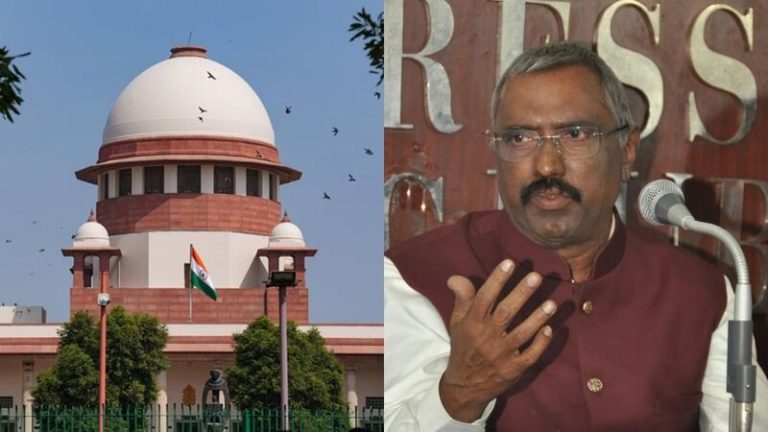
The Supreme Court granted bail to journalist Kommineni Srinivasa Rao on Friday (13th June), who was arrested by Andhra Pradesh Police for some derogatory remarks made by a panellist during his talk show aired on Sakshi TV. Rao was arrested from Hyderabad on June 9 and was remanded to judicial custody.
A Bench of Justices PK Mishra and Manmohan granted him relief citing that he did not himself make the statement and that his right to speech needs to be protected. “Considering that petitioner himself has not made the statement and his journalistic participation in a live TV show needs to be protected and his freedom of speech is also to be protected, petitioner is to be released on bail,” the court said allowing Rao’s writ petition.
The journalist was arrested on 9th June after a panelist on his show allegedly described Amaravati as the ‘capital of prostitutes’ where ‘only AIDS patients live’. A complaint was filed against the incident claiming that sentiments of women were hurt. The complaint alleged that Rao did not object to the remark and instead laughed over it.
Senior Advocate Siddharth Dave, who was appearing for the petitioner, submitted before the apex court that Rao could not be held accountable for the panelist’s remarks. Senior Advocate Mukul Rohatgi, representing the State, countered Dave saying that Rao was abetting the man who made the remarks. “He was laughing,” said Rohatgi.
However, the court was not staisfied with the State’s argument. It questioned how could the petitioner be arrested because of someone’s else’s statements. “Someone else is making the statement. How can this be?” Justice Manmohan asked Rohatgi, who responded, “He was goading and abetting the man who was making the statement. He was laughing.”
The Supreme Court said that the petitioner cannot be treated like a co-conspirators for merely laughing at an outrageous statement. “When someone makes an outrageous statement, we laugh it off. They can’t be termed co-conspirators. Everyday this is happening,” the court said.
After hearing the arguments of both sides, the Supreme Court granted bail to the petitioner citing his age and the reason that he did not make the statement. However, the court warned Rao not to involve himself in any defamatory statement or allow anyone to make such statements on his show.
“Considering that the petitioner himself has not made any such statement and his journalistic participation in a live TV show deserves to be protected so that the freedom of speech is also protected in the process, we direct that the petitioner shall be released in relation to the FIR…subject to the conditions to be imposed by the trial court. It is made clear that the petitioner shall not involve himself in any defamatory statement either by himself or by allowing others to make such statements in his presence in the show which the petitioner is anchoring or hosting,” the court ordered.
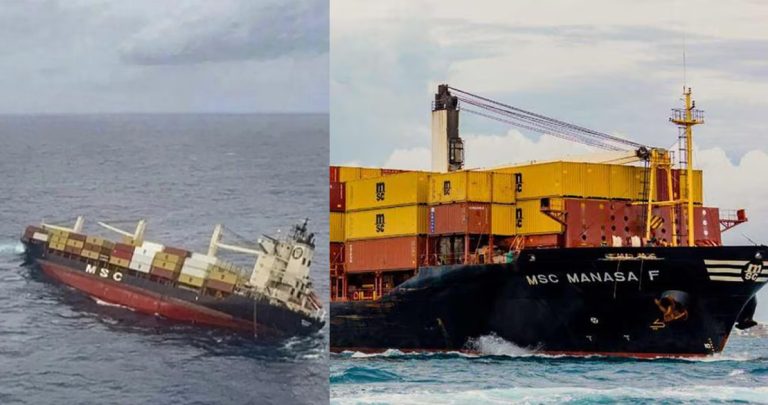
The Kerala High Court on Thursday ordered the arrest of a container ship to recover to cost cargo carried by MSC Elsa-3 ship which sank near Kerala coast recently. The court ordered that MSC Manasa-F, owned by the same company, should be arrested till the company makes payment to the petitioners to compensate for their loss.
Justice MA Abdul Hakhim issued the order after considering five suits filed by five different buyers of raw cashew nuts which were being transported by the sunken ship. The court ordered seizure of a ship of the company because it has no asset in India that can be seized.
The court ordered, “The vessel of the 1st respondent by name “M.V. MSC MANASA F” (IMO 9238882), Flying Flag of Liberia, along with her hull, tackle, engine, machinery spares, gear, apparel, paraphernalia, furniture, etc., presently anchored in the Vizhinjam Port is ordered to be arrested until INR.1,54,71,443/- is deposited by the 1st respondent in this Court or until security for the said amount is furnished by the 1st respondent to the satisfaction of this Court.”
The court clarified that arrest order will be withdrawn automatically after the amount is deposited or security is furnished.
The petitioners have claimed that MSC Elsa-3 carrying containers filled with their raw cashew nuts sank because of technical problems, poor maintenance, and wrong loading of cargo. They also alleged that the crew members were careless.
They therefore prayed that the company’s sister ship, currently in India, should be seized till payment to them are made. The five petitioners have a claim of around ₹6 crore as compensation.
While the court order on 12 June states that the ship is anchored in the Vizhinjam Port and it should be arrested there, actually the vessel left the port on that day itself. As per ship tracking site vesselfinder, MSC Manasa-F departed from the port at 11:21 on 12th June, and is heading to Haldia port. The ship is scheduled to reach Haldia in West Bengal on 17th June. At present the ship can be spotted on southern coast of Sri Lanka.
MSC ELSA 3 carrying 640 containers capsized near Alappuzha off Kerala coast in the early hours of 25th May. Its crew members were rescued by the Indian Coast Guard.
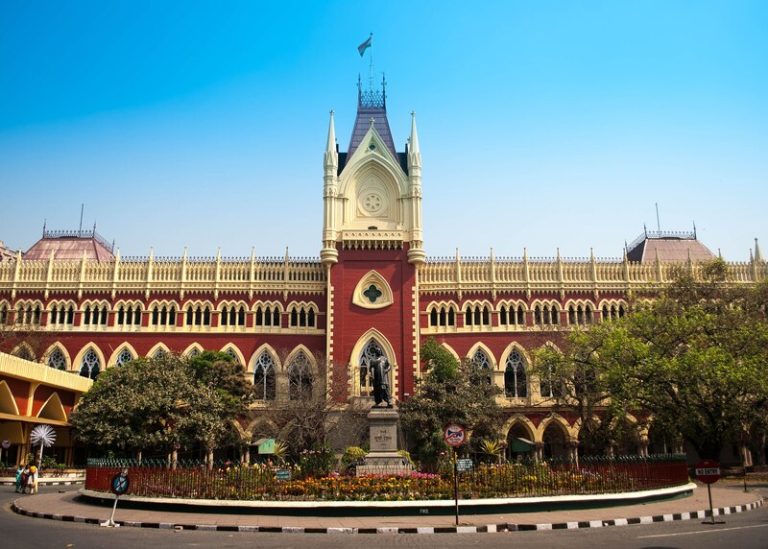
On 11th June, the Calcutta High Court commuted the death sentence of a man, convicted of killing his former girlfriend by stabbing her 45 times, to life imprisonment. While passing the order, the High Court noted that the case did not fall in the category of the ‘rarest of the rare’ cases.
A bench of Justices Debangsu Basak and Md Shabbar Rashidi converted the death penalty of convict Susanta Chowdhury into a life sentence observing that there was a possibility of reformation in him.
“Taking into consideration the entire facts and circumstances of the present case including the ratio of the authorities relating to death penalty as also sentence of life imprisonment without remission, in our view, interest of justice would be subserved by commuting the death penalty to one of life imprisonment without the possibility of remission for another 40 years from the date of arrest of the appellant,” the bench said in its judgment dated 11th June.
The Background of the Case
Chowdhary had appealed before the High Court against his conviction and death sentence. He was arrested in May 2022 in for killing his 21-year-old former girlfriend when she was returning from a movie.
Disgruntled over his failed relationship with her, he killed her in an extremely brutal manner by stabbing her 45 times.
When examining the witness statments, the court noted that the crime was committed because of animosity between the accused and the victim. He had been threatening the victim as she had entered into a new relationship.
The court further noted that the convict did not release the victim as she was trying to defend herself. She fell to the ground after suffering wounds. Eyewitnesses unsuccessfully tried to save the victim from Chowdhary.
However, the High Court reduced his punishment after considering his appeal observing that he did not have any prior criminal record and that the prosecution could not establish that the murder was committed with the intention of creating a fear psychosis in the public.
Other instances of courts commuting death sentences
This is not the only case where the death sentence of a convict has been commuted by a court. In several other cases, courts have commuted the death sentences of convicts for the crimes committed by them not fitting the ‘rarest of the rare’ category.
In April this year, the Supreme Court commuted the death penalty of a man convicted of brutally murdering his entire family, including his wife and 4 children, in Kerala and raping his own daughter.
The top court reduced his penalty to life imprisonment on the grounds, including ‘significant improvement’ in his conduct during his imprisonment, his childhood trauma due to neglect and family instability, and lack of any criminal history.
Similarly, in December 2024, the Chhattisgarh High Court commuted the death sentence of a 34-year-old man to a life sentence. The man was convicted of killing his wife and three children. The High Court cited the same reason of the case not fitting in the ‘rarest of the rare’ category.
In another case, in April 2023, the Supreme Court converted the capital punishment of a 31-year-old man into life sentence for murdering his sister and her lover. At the time of the murders, the convict was 25 years old. The Supreme Court noted that the convict was “well-behaved” and without a criminal mindset.
The problematic implications of such verdicts
Cases like these, where courts show the convicts of brutal crimes leniency, often leave an impression on the minds of people that perhaps the ‘reformation’ or the ‘future prospects’ of convicts weigh more in the minds of judges than the rights of innocent victims.
Often times, the courts’ opinion of whether a crime was shocking or brutal enough to attract capital punishment does not seem to concur with collective feeling of the society.
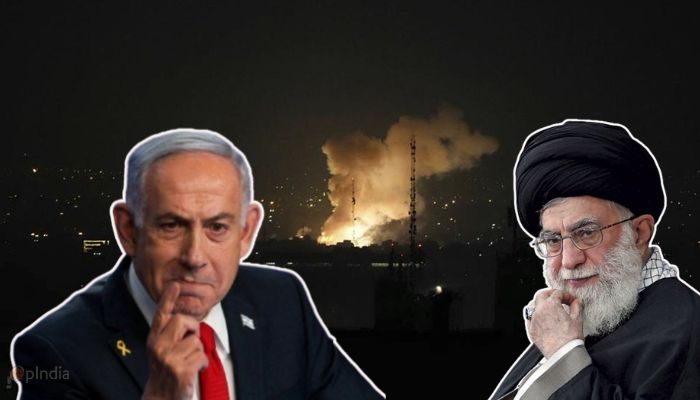
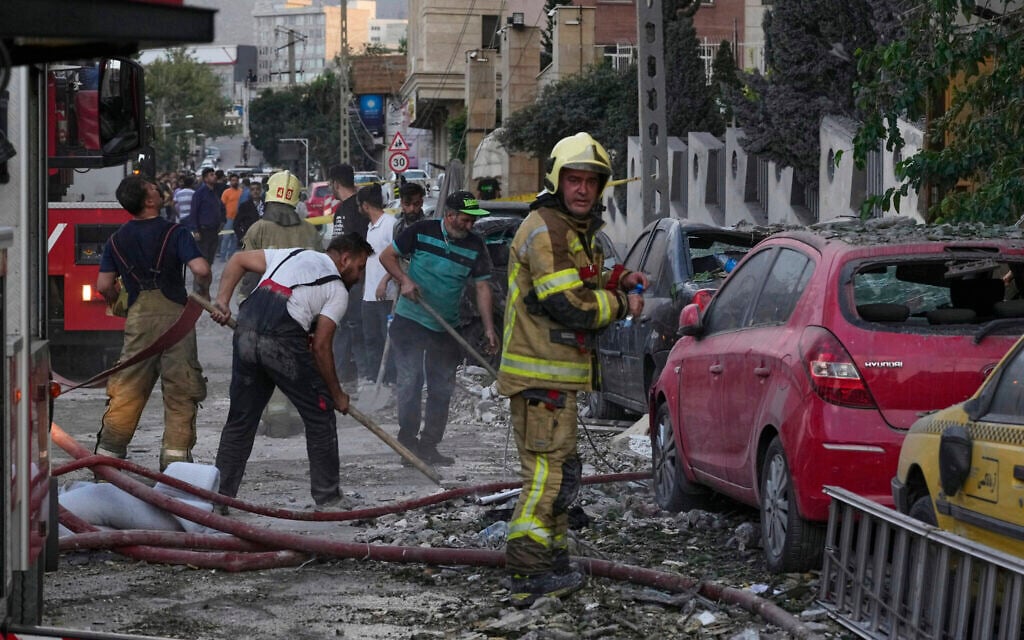
On 12th June this year, Israel launched massive strikes against Iran, targeting its nuclear facilities, military commanders and ballistic missile facilities under ‘Operation Rising Lion’.
Israel attacked Iran, given the existential threat posed by Iran’s nuclear and ballistic missile programmes. Iranian media reported that loud explosions were heard at the country’s main uranium enrichment facility at Natanz.
Image via AP
In the Israeli attacks, the top commander of Iran’s Revolutionary Guards, Hossein Salami was killed and unit’s headquarters in Tehran had been hit. Senior Revolutionary Guards commander Gholam Ali Rashid and top nuclear scientists were also killed in the Israeli strikes.
Israel also targeted the city of Khondab, where a heavy water nuclear reactor is located, and Khoramabad, the site of a ballistic missile base.
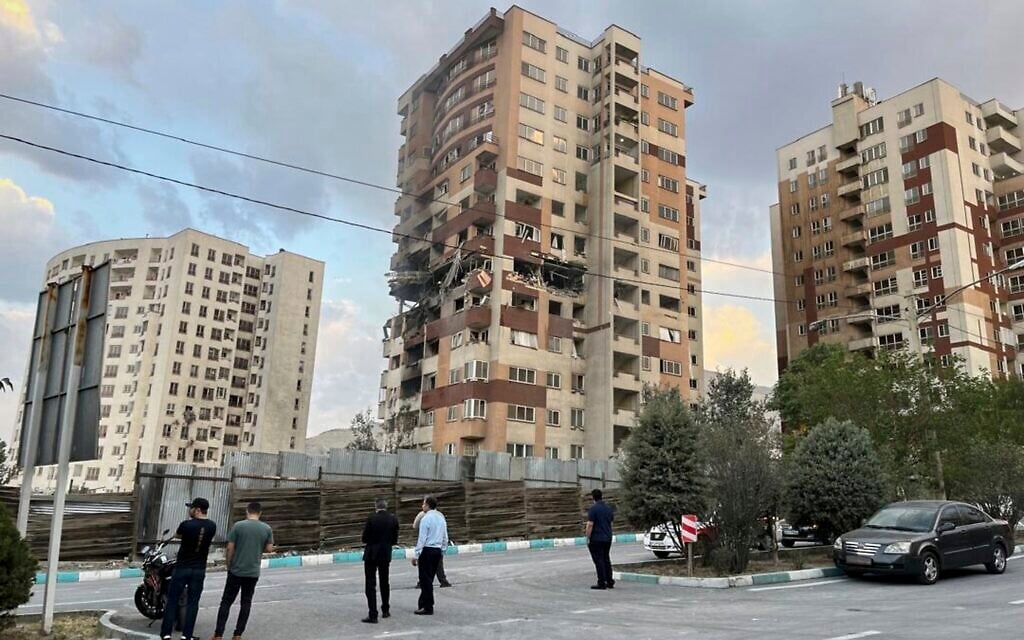
Building in Tehran damaged in Israeli strikes (Image via AP)
Israel calls attack on Iran ‘pre-emptive strike’ to damage Iran’s nuclear program
In a statement, a spokesperson of the Israeli Defence Forces (IDF) said that Israel launched a “precise, pre-emptive strike”.
The spokesperson BG Effie Defrin said on Friday the strikes aimed at damaging Iran’s nuclear program and in response to the Iranian regime’s ongoing aggression against Israel.
“For years, the Iranian regime has called for the destruction of the State of Israel, planning and advancing concrete military plans to do so. Over the past few months, intelligence has shown that Iran is closer than ever to obtaining a nuclear weapon. This morning, the IDF began pre-emptive and precise strikes targeting the Iranian nuclear program in order to prevent the Iranian regime’s ability to build a nuclear bomb in the immediate timeframe,” he said.
A statement from IDF Spokesperson BG Effie Defrin on the preemptive Israeli strike on Iranian nuclear targets pic.twitter.com/IJNT5LXz6o
He said the airstrikes were aimed at protecting Israel’s right to exist and for their future. “We have no choice. We are operating against an imminent and existential threat. We cannot allow the Iranian regime to obtain a nuclear weapon that would be a danger to Israel and the entire world. This operation is for our right to exist here, for our future and for our children’s future. The State of Israel has the right and the obligation to operate in order to protect its people and will continue to do so,” he said.
Defrin said that Israel is prepared in both- offensive as well as defensive way to defend itself. “The IDF conducted significant preparations for this operation. We are well prepared both in defence and offense to defend ourselves. The IDF will continue to defend the State of Israel,” he said.
Meanwhile, as per The Times of Israel, blasts were heard in Natanz city in Iran’s central province of Isfahan, where a key nuclear site is located, Iranian state TV reported.
“Loud explosions were heard in Natanz,” which hosts one of the main uranium enrichment facilities, Times of Israel quoted state TV reports. Iran has two underground nuclear sites, at Fordo and Natanz, and has been building tunnels in the mountains near Natanz since suspected Israeli sabotage attacks targeted that facility.
A complex at the heart of Iran’s enrichment program on a plain abutting mountains outside the Shi’ite Muslim holy city of Qom, south of Tehran. Natanz houses facilities including two enrichment plants: the vast, underground Fuel Enrichment Plant (FEP) and the above-ground Pilot Fuel Enrichment Plant (PFEP), as per The Times of Israel.
“Never again is now”: Israeli Prime Minister says offensive against Iran will continue until the nuclear threat is removed
Israel Prime Minister Benjamin Netanyahu on Friday announced the launch of a large-scale military campaign, Operation Rising Lion , aimed at dismantling what he described as an existential threat posed by Iran’s nuclear and ballistic missile programmes.
The main known facilities of Iran’s nuclear programme (Image via Reuters)
Netanyahu said Israel had struck multiple high-value Iranian targets in a decisive first strike. “Moments ago, Israel launched Operation Rising Lion, a targeted military operation to roll back the Iranian threat to Israel ‘s very survival,” he said, adding that the mission would continue “for as many days as it takes to remove this threat.”
The Prime Minister of Israel accused Iran of pursuing a nuclear weapons programme in defiance of global warnings, pointing to enriched uranium stockpiles capable of producing multiple nuclear bombs.
“In recent years, Iran has produced enough highly enriched uranium for nine atom bombs. Nine,” he noted, warning that Tehran had taken “steps to weaponise this enriched uranium” and could develop a nuclear weapon within months.
Netanyahu likened the current moment to the prelude to World War II, referencing the Holocaust and past global inaction in the face of rising threats. “Eighty years ago, the Jewish people were the victims of a holocaust perpetrated by the Nazi regime. Today, the Jewish state refuses to be a victim of a nuclear holocaust perpetrated by the Iranian regime,” he said.
Iran vows revenge
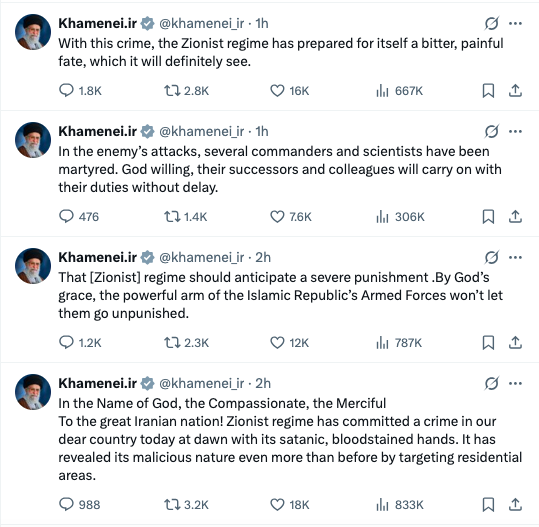
Meanwhile, Iran is expected to launch a massive retaliatory attack on Israel. In a statement, Iran’s Supreme leader Ayatollah Ali Khamenei said that Israel has “unleashed its wicked and bloody” hand in a crime against Iran and that it would receive “a bitter fate for itself”.
“With this crime, the Zionist regime has brought a bitter and painful fate upon itself, and it will certainly face it,” Khamenei said.
“By God’s grace, the powerful arm of the Islamic Republic’s Armed Forces won’t let them go unpunished,” he added.
US denies involvement, oil prices surge as another war looms over the Middle East
Predictably, just as it denied involvement in Ukraine’s recent massive drone strikes on Russia destroying its 40 warplanes, the United States has denied having information of Israel’s strikes against Iran.
US Secretary of State Marco Rubio on Friday said that the strikes undertaken by Israel were “unilateral” and that US’ priority is now to protect the American forces in the region. Rubio said that Israel said that the strikes were done in the spirit of self-defence. He said that Iran must not harm US interests or personnel.
In a statement, Rubio said, “Tonight, Israel took unilateral action against Iran. We are not involved in strikes against Iran and our top priority is protecting American forces in the region. Israel advised us that they believe this action was necessary for its self-defense. President Trump and the Administration have taken all necessary steps to protect our forces and remain in close contact with our regional partners. Let me be clear: Iran should not target US interests or personnel.”
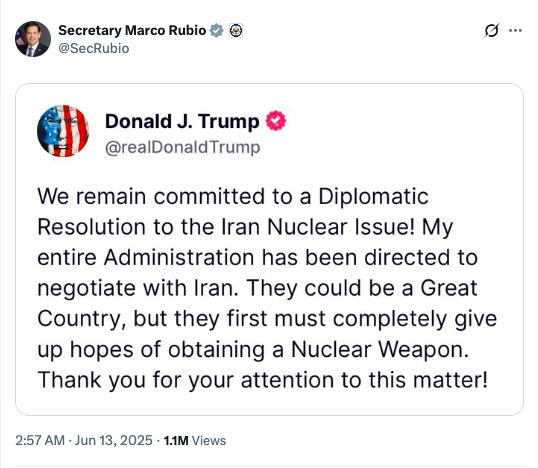
Earlier in the day, US President Donald Trump said that the US remained committed to a diplomatic resolution to the Iran issue. In a post on Truth Social, he said, “We remain committed to a Diplomatic Resolution to the Iran Nuclear Issue! My entire Administration has been directed to negotiate with Iran. They could be a Great Country, but they first must completely give up hopes of obtaining a Nuclear Weapon. Thank you for your attention to this matter!”
Meanwhile, oil prices skyrocketed by 9 per cent, highest in five months, after Israel attacked Iran. With Iran and Israel heading towards full-fledged war, the Middle East is set to witness another round of unrest and the world might grapple with disrupted oil supplies.
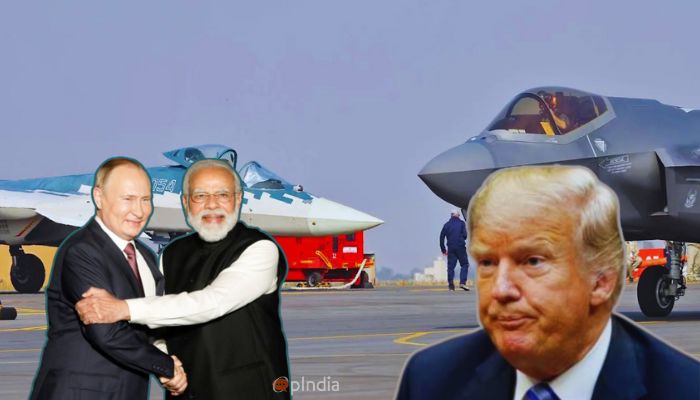
In a high-stake chess game of military modernisation and geopolitics, India is reportedly actively considering Russia’s proposal of supplying the Sukhoi Su-57E fifth generation aircraft and make the same in India. While India is reported not be heeding American offer to buy the F-35 jets, a question arises that why India is not showing interest in acquiring F-35, which is touted as the crown jewel of Western defence.
India’s tilt towards acquiring Russian Su-57E over American F-35, is not a matter of mere procurement choice, rather, it is shaped by decades of trust in Moscow’s defence partnership and key offer of technology transfer against the US delivery delays and disregard for strategic defence autonomy of the importer nation.
As Pakistan and its foster father China are deepening defence ties, especially in context of advanced stealth fighters after India’s successful Operation Sindoor, India’s pivot towards Russian Su-57E comes across as a mover towards securing its skies while also asserting its quest for self-reliance in a globally volatile global order.
Russian Su-57
However, before delving into whether India should go for Su-57 or F-35, it is essential to understand why India needs to immediately modernize its Air Force.
Why India must modernise its Air Force
While India Air Force (IAF) successfully carried out anti-terror Operation Sindoor in Pakistan, demonstrating sheer tactical brilliance, the IAF is grappling with a shortfall in its fighter jet capabilities. Currently, the operates 31 squadrons, which is significantly below the sanctioned strength of 42, at a time when India’s cash-strapped neighbour Pakistan is in panic mode and set to acquire Chinese J-35 stealth fighters.
Besides, India is also phasing out its ageing fleet including MiG-21, Jaguar and Mirage 2000 fighters, and India needs to diversify its fleet by not relying only on French Rafales. The delays in indigenous programs like the Tejas and the Advanced Medium Combat Aircraft (AMCA), exacerbate the urgency to purchase fifth-generation fighter to bridge the capability gap.
Notably, DRDO is developing the fifth generation AMCA fighter jet, but this project is not expected to be completed before 2035. With Pakistan set to start receiving China’s J-35A 5th-Gen multirole stealth fighter this year itself, 10 years will be a too long wait for Indian Air Force for its own 5th generation stealth fighter jet.
Since Pakistan’s de facto ruler—the Pakistan Army—has increased defence budget by 18 to 20 per cent even as the hostile neighbour is dependent on IMF loans for sustaining it’s dwindling economy and balance-of-payments, it is evident that they are preparing for another round of conflict with India in the near future.
Notably, while DRDO has started developing the AMCA, the first jets are not expected before 2035. After completing the order of Tejas LCA Mark-1 aircraft, HAL will start making the Tejas LCA Mark-1 aircraft from around 2028-29, and the first generation of AMCA will take more than 10 years to reach the production stage. This is because, any fighter jet takes around 10-15 years to develop, and the AMCA was approved just last year.
Why purchasing American F-35 makes no sense for India
India is among the major countries which procure defence items from both Russia and the United States. While Moscow has been India’s most trusted defence partner, the US uses defence deals as means to arm twist India into aligning to its interests. India has faced significant delays in the delivery of US-made defence equipments, especially the General Electric (GE) F404 engines for the indigenously developed Tejas Mk-1A light combat aircraft.
The deal for GE F414 engines for Tejas Mk-2 fighters is also not progressing, even though the MoU was signed two years ago. The deal is set to include technology transfer and manufacturing in India. With president Trump’s insistence on manufacturing in USA, it is not sure whether he will allow these provisions to be implmented. He has already asked Apple to not phones in India, therefore, the possibility of him allowing making GE engines in India may not be very high.
Moreover, the US has also been delaying the delivery of Boeing-made Apache attack helicopters meant for the Indian Army. In March 2024, the Indian Army raised a squadron 451 Army Aviation Squadron at Nagtalao near Jodhpur, in anticipation of the delivery of Apache helicopters, however, the US delayed it citing supply-chain disruption and technical issues. The delivery was expected in May-June 2024 but it was delayed to December 2024 and even that deadline was missed by the United States.
This $600 million deal was signed in 2020 for six Apache helicopters, while two deadlines have been missed for the delivery of the first batch of three helicopters, the US has not given any clear indication regarding when will these heicopters delivered and the reason behind this disproportionate delay.
While the US gives ‘supply chain disruption’ and ‘technical issues’ as the excuse behind the delay in delivery, it is their typical arm-twisting tactic. These delays are caused deliberately to exert pressure on India. The delay comes at a time when the Indian Army Aviation Corps is rapidly modernising its aerial assets. With heightened military tensions post Operation Sindoor, India is focusing on combat readiness, and for that, Apache helicopters are crucial since these are equipped with advanced weapon targeting mechanisms and heavy weaponry. However, the US is not prioritising its delivery to India and is missing deadlines one after the other.
Russia, in contrast, has quite a punctual track record of delivering critical defence equipment to India even in the face of geopolitical challenges, making Su-57 a more predictable option for timely induction.
The US causing deliberate delays, however, is not surprising since its foreign policy has been to bomb, threaten, sanction, and bully nations, trigger conflicts, and conduct regime change operations when things do not go their way. No wonder Henry Kissinger once said, “It may be dangerous to be America’s enemy, but to be America’s friend is fatal.”
Interestingly, while Donald Trump may have unleashed ‘trade deal’ as his magic wand of settling conflicts, considering its failure in the Ukraine-Russia war and the India-Pakistan conflict, it is as effective as UN has been in ending the Israel-Palestine war.
Besides the continued trust and mutual respect between India and Russia as defence partners, one of the most compelling aspects of Russia’s Su-57 offer is its alignment with India’s Make in India and Atmanirbhar Bharat intiatives, which prioritises indigenous defence manufacturing. Moscow is reported to have offered deep localization of Su-57, including co-production at Hindustan Aeronautical Limited’s manufacturing facilities, especially where Su-30MKI is already manufactured.
In addition, Russia has also offered full technology transfer, allowing India the integration of its own systems like GaN-based AESA radars, Indian-developed mission computers as well as native weapons like the Astra missile and Rudram anti-radiation missiles. Not only that, Russia has also offered full access to the source code of the Su-57, which can tilt Indian decision in its favour. On 4th June, Russian state-owned United Aircraft Corporation announced that the proposal to build the Su-57 in India includes an unprecedented full access to the aircraft’s source code.
However, if we look at the USA’s approach, it has a history of restricting technology transfer for the F-35 to even its allies like Israel, Japan, Australia and Italy among others. The proprietary systems of F-35, including its software and hardware, are strictly controlled. Moreover, the United States does not allow buyers to manufacture the jet or integrate non-NATO weapons without explicit approval. This apparent inflexibility limits India’s ability to adapt the F-35 to its unique operational requirements and induct indigenous technologies, even as it is an unavoidable concern for India since it is seeking to curb reliance foreign suppliers or at least limit it only reliable partners. Under Trump, it is highly unlikely that US would agree for a technology transfer arguing that it would compromise America’s tech superiority.
Notably, the American F-35A costs around $80-$110 million per unit, while, the Su-57 costs around $35-$40 million. In addition, the maintenance cost of the Russian stealth fighter jet is comparatively lower than that of F-35.
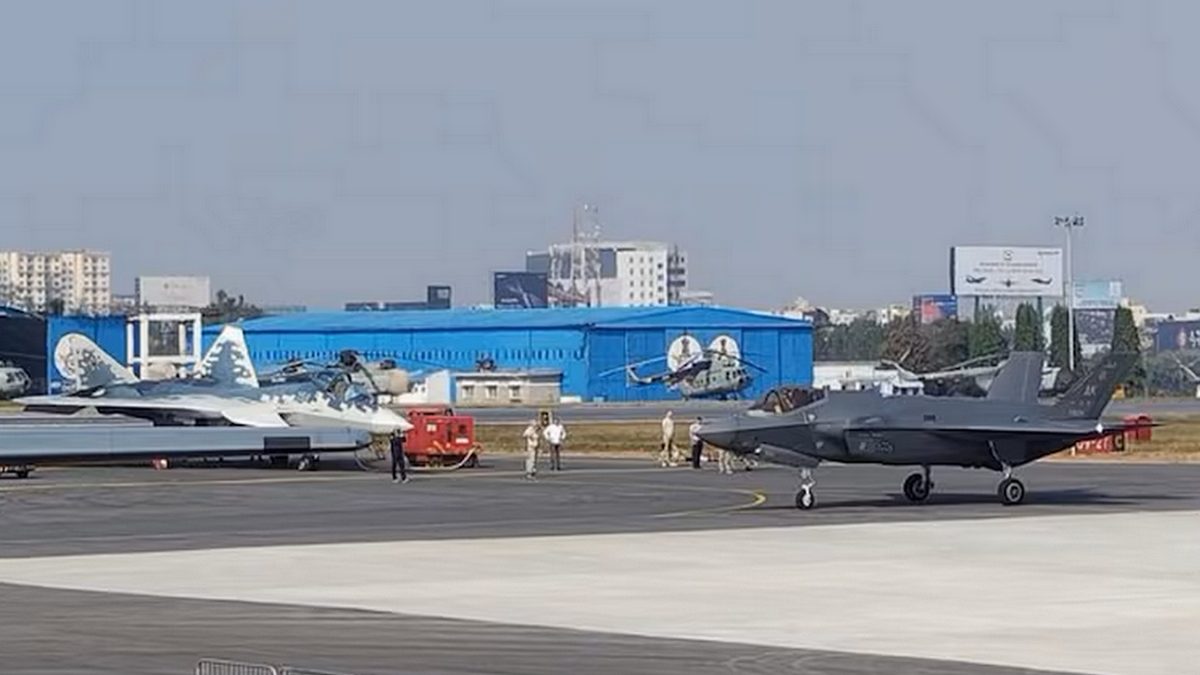
Russia’s Su-57 and USA’s F-35 – two fifth-generation fighter aircrafts (Source: Reuters)
Besides, reports suggest that F-35 also has certain technical issues. “Stealth coating, sustained supersonic flight, helmet-mounted display, excessive vibration from its cannon and even vulnerability to being hit by lightning,” a Business Insider report from 2023 states.
The American F-35 are also reported to be vulnerable to hacking. In 2015, a German magazine reported that the NSA intelligence contractor and whistleblower Edward Snowden’s leaked documents stated that the Chinese hackers stole around 50 terabytes data of Australia’s US-made F-35. The hackers accessed F-35’s radar systems, engine schematics and methods to track targets. Perhaps that’s why Chinese J-35A and American F-35 have uncanny resemblance.
To deploy the F-35, India will need to purchase the AIM-120 advanced medium-range AAM since it will require US approval to modify the aircraft to carry indigenous and non-NATO missiles. Additionally, the IAF already has seven different combat jets: the Tejas, Rafale, MiG-21, MiG-29M, Sukhoi Su-30MKI, Mirage 2000-5, and SEPECAT Jaguar. The cost of maintaining seven different sorts of jets is way too high. Investing in an expensive fifth-generation American fighter will be a logistical headache, adding to the IAF’s problems with overhaul, maintenance, and repairs. While Su-57 is also a different jet, given that it is a Sukhoi variant, maintanence is expected to be cheaper and adaptibility will be easier.
Besides the technical aspects, it is important to understand that India’s defence procurement-related decisions are influenced by geopolitical considerations, especially the risk of US sanctions through the Countering America’s Adversaries Through Sanctions Act (CAATSA). Not to forget, India had upset American in 2021 with the purchase of Russia’s S-400 air defence system. India, however, navigated its way out of USA’s sanction threats as well as threats of deliberate delays in future arms transfers, and purchased Russian S-400s.
US also objected to India buying Russian oil after the Russia-Ukraine war, and had again threatened sanctions.
The United States has a history of imposing export controls, and embargoes to protect its defence technologies, this would obviously complicate India’s access to F-35 spares and maintenance support, particularly in crisis. Previously, the US has delayed or withheld defence supplies to countries it believed as misaligned with its strategic priorities.
As mentioned earlier, the United States uses these delay tactics to arm-twist buyers into falling in line with US’s interests. The US’s reliability as a defence partner also becomes questionable when on one hand it arrests Pakistani nationals for plotting terror attacks on American soil, on the other, lauds the same country as ‘phenomenal partner’ in countering terrorism, refuses to relinquish its relations with Pakistan even at the cost of upsetting India. Since India emphasizes its strategic autonomy and unlike Pakistan, refuses to be anyone’s puppet, it cannot rely on any single supplier, thus, Russia’s Su-57 is a better option with fewer geopolitical strings attached.
There is no doubt that India needs to curb its foreign dependence for defence requirements, however, India’s partnership with Russia has been time tested. Around 60 per cent of India’s military hardware, including BrahMos missiles, Su-30MKI, S-400, T-72 tanks are of Russian origin. Russia has been quite flexible when it comes to critical support, technology transfer and co-production, something the US refuses citing ‘security concerns’.
The Su-30MKI, a customized version of Russian Su-30, is literally the backbone of the Indian Air Force, with more than 260 units in service. Its successful production at HAL’s Nashik facility demonstrates the strength of Indo-Russia defence partnership. Russia’s offer to leverage existing infrastructure in India, ensures a smoother transition and lesser logistical challenges when compared to inducting American F-35, which would require entirely new training and maintenance ecosystems.
As discussed above, Russia’s reliability during critical times even if we go as back as 1971 Indo-Pak war, contrasts with the US’s tendency to play ball India. The US has supplied India with C-17 Globemaster and Apache helicopters earlier, however, deliberate delays in critical components and strict export controls create obvious trust issues.
The Russian fifth generation stealth fighter jet is not only cheaper than F-35, but also aligns better with India’s defence budget constraints and would allow larger fleet acquisitions. In addition, Su-57’s design emphasizes high manueverability, supercruise, and multi-role capabilities which are more suited to India’s requirements for tackling diverse threat scenarios such as high-altitude operations along the China border. The F-35 on the contrary, is more optimized for network centric warfare, thus it may not entirely meet India’s need for standalone operations.
Also, with fast changing global alliances and loyalties, India would not want appear too closely aligned with NATO, especially at a time when Russia is at war with a NATO-backed Ukraine. Moreover, since Russia offers co-production of the Su-57, this could position India as a regional exporter of advanced fighters, giving a massive boost to Indian defence industry, especially when the world is increasingly taking interest in buying India’s battle-tested weaponry. The F-35, on the contrary, would offer no such scope due to export restrictions by the US.
Conclusion
Until indigenous defence programs like the AMCA come to fruition, India would want to go for a foreign alternative for its requirement of fifth generation fighter aircrafts. However, India should focus on cost-effectiveness, operational compatibility and timely acquisition, all of which are better offered by India’s most trusted defence ally Russia. The existing infrastructure, Russia’s willingness for technology transfer and continued respect for India’s strategic autonomy make Su-57 a better option against America F-35.
In defence sector, imports should be an exception and not a norm; however, to bridge the fifth generation gap until indigenous AMCA is ready, India should rely on traditional defence partners like Russia instead of the US. This becomes crucial especially because of US President Donald Trump’s tilt towards Pakistan for his self-interests including his cryptocurrency-related ambitions and to evade USA’s arm-twisting tactics. After all, how long will India carry the burden of the US’s ego and interests at the cost of its own strategic and defence autonomy?
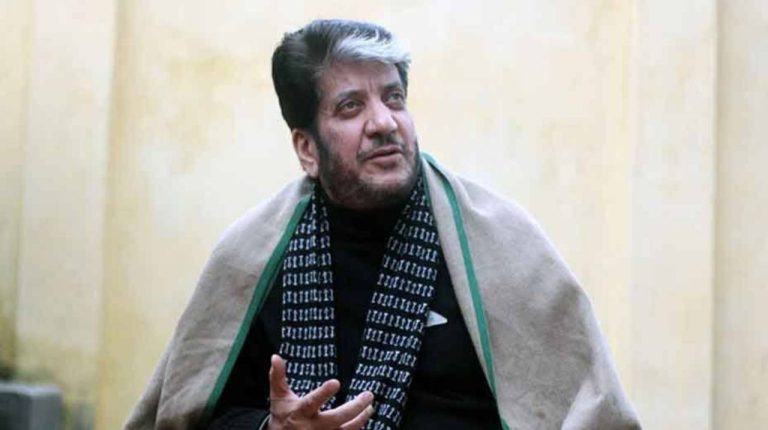
The Delhi High Court took a serious view while rejecting Kashmiri Separatist leader Shabir Ahmad Shah’s bail plea. The Court said there is overwhelming evidence, and the allegations against him appear prima facie to be true.
The Court also said there are 24 FIRs against Shah of a similar nature. As JKDFP’s chairman, indulgence in unlawful activities can’t be ruled out.
Shabir Ahmad Shah has been in judicial custody since 2019. He was arrested in June 2019 in a terror funding case lodged by the NIA in 2017 against other Kashmiri separatists.
The division bench of Justices Navin Chawla and Shalinder Kaur dismissed the regular bail and other applications moved on behalf of Shah.
The division bench said, “Needless to state, the Charges have been framed by the learned Trial Court, and for the purpose of adjudicating the plea of Regular Bail, there are reasonable grounds to believe that the accusations against the Appellant (Shabir Ahmad Shah) appear prima facie to be true.”
The Appellant has not been able to discharge the burden upon him to secure Bail, the division bench added.
Shah had moved against the trial court order denying him bail in July 2023. The High Court also noted overwhelming evidence while deciding the appeal.
The High Court also considered that Shah is chairman of the unlawful organisation JKDFP and said he may influence the witnesses.
“Also, the Appellant’s involvement in many cases of a similar nature, thus, the possibility cannot be ruled out that being a Chairman of the unlawful organization Jammu Kashmir Democratic Freedom Party (JKDFP), he would not indulge in similar unlawful activities and may attempt to tamper with evidence as well as influence witnesses who are yet to be examined.”
The High Court said that, in view of the overwhelming evidence, it is premature to evaluate the veracity of the material available on record at this stage.
“However, it cannot be brushed aside or said to fall short of proof in any manner, the learned Trial Court shall consider such assessment at an appropriate stage of the trial,” the High Court said in the judgement passed on June 12.
The High Court further said that it is well-settled law that at the stage of Bail, the court is concerned with the existence of the material against the accused and not whether those materials are credible or not.
“Therefore, considering the entire gamut of facts and circumstances, the present case is not a fit case to extend the benefit of the grant of Bail to the Appellant,” the high court held.
The High Court also dismissed the application for the grant of house arrest. The High Court said that consequently, there is no question of entertaining the alternative prayer made by the Appellant seeking House Arrest, given the serious allegations against the Appellant and the sensitivity and gravity of the issues involved.
The Prosecution’s case is premised on an alleged Conspiracy hatched among several accused persons who were purportedly engaged in secessionist activities in the erstwhile State of Jammu and Kashmir (J&K) through various terrorist activities, such as organization of violent protests, instigating the general public to commit violence, pelting of stones at the Security Forces, burning of Schools, damaging public property, etc and waging war against the Union of India. Their ultimate aim and objective were to seek the secession of J&K from the Union of India, all in the garb of ‘Freedom’.
The allegations against Shah, as per the Prosecution, is that he has played a substantial role in facilitating a separatist/militant movement in the J&K by inciting and instigating the general public to chant slogans in support of the secession of the J&K, paying tribute to the family of slain terrorists/militants by eulogizing them as ‘martyrs’.
Senior Counsel Colin Gonsalves for Shabir Ahmad Shah submitted that the videos recovered by the Prosecution to implicate the Appellant in the present NIA case belong to the years 1996 and prior, with the most recent being over 25 years old.
He also submitted that the same videos have been used by the Prosecution in as many as 24 FIRs against the Appellant, to keep him incarcerated for a prolonged period, based on the same allegations of delivering ‘inflammatory speeches’ and inciting violence in J&K, thereby creating a ‘surcharged atmosphere’.
(This news report is published from a syndicated feed. Except for the headline, the content has not been written or edited by OpIndia staff)
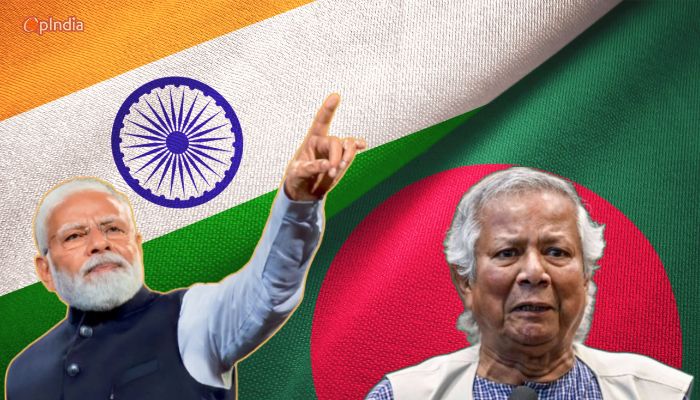
Ever since the ouster of former Prime Minister of Bangladesh Sheikh Hasina in August 2024, India-Bangladesh bilateral relations have strained as power fell in the hands of Islamists. Now, Muhammad Yunus, the chief advisor to the interim government, has made an audacious attempt to shift blame onto New Delhi for Indo-Bangladesh ties turning bitter.
Speaking at the Chatham House in London, Yunus also dared to villainise Prime Minister Narendra Modi for not heeding his request to stop Sheikh Hasina from making online speeches and comments, as she resides in India.
When asked about Bangladesh’s appeals to India to extradite Sheikh Hasina to face the court, Yunus said that these efforts will continue. He added that Bangladesh wants best relations with India, however, it is the Indian media backed by the Modi government that runs fake news about Bangladesh which makes matters worse.
“This will continue…we want the whole process to be very legal, very proper…We want to build the best of relationship with India. It’s our neighbour, we don’t want to have any kind of basic problem with them. But somehow things go wrong every time because of all the fake news coming from the Indian press…and many people say it has connections with policymakers on the top,” Muhammad Yunus claimed.
He further harangued that somehow the Indian media’s reportage and Indian social media outrage over the anti-Hindu attacks in Bangladesh makes them angry. “So, this is what makes Bangladesh very jittery, very, very angry. We try to get over this anger but a whole barrage of things keeps happening in cyberspace. We can’t just get away from that…suddenly they say something, do something, anger comes back. This is our big task, to make sure we can have at least a peaceful life to go on with our life. To create the life we are dreaming of,” he said.
Yunus also asserted that the anti-India sentiments in Bangladesh surged because India gave refuge to Sheikh Hasina after her unceremonious ouster in August last year. “All the anger (against Hasina) has now transferred to India because she went there,” he said.
After claiming that the Indian media peddles fake news about Bangladesh unrest at the behest of the Indian government, Muhammad Yunus went on to claim that Prime Minister Narendra Modi dismissed his appeal to deter Sheikh Hasina from speaking about the Bangladesh unrest online saying that social media cannot be controlled.
“When I had the chance to talk to Prime Minister Modi, I simply said you want to host her, I cannot force you to abandon that policy but please help us in making sure that she doesn’t speak to Bangladeshi people the way she’s doing. She announces on such and such date, such and such hour, she will speak and the whole (of) Bangladesh gets very angry.”
Responding to Yunus’s request to stop Sheikh Hasina from talking to Bangladeshi people, the Indian Prime Minister replied, “It’s social media, you cannot control it.”
“It’s (an) explosive situation, you can’t just walk away by saying it’s the social media,” Yunus said.
It requires a different level of shamelessness to blame India for the strained Indo-Bangladesh ties while continuously ignoring India’s legitimate concerns over the safety of Hindus and other religious minorities who even to this day continue to face attacks from Islamists belonging Jamat-e-Islami and other Islamist outfits for simply being existing. Yunus’s comments accusing India of exacerbating tensions by allowing ex-PM Sheikh Hasina to make online statements from Indian soil is not only hypocritical but comes across as the shrewd attempt at deflecting attention from the Islamist onslaught against Hindus which continues to this day although the scale may have reduced.
Sheikh Hasina is a democratically elected leader but was forced out of power and her motherland by BNP and Jamat members who hijacked the student’s movement for their own political agenda. The Indian Prime Minister is neither legally nor morally bound to heed desperate calls by the Bangladeshi chief advisor-cum-puppet-without-power, to silence Sheikh Hasina. Even in exile, she has the right to express herself and India as world’s largest democracy values her freedom of speech, and thus, is under no obligation to suppress her voice just because the same Islamist lot that ransacked Hasina’s residence and flashed her undergarments on 5th august 2024 cannot stand the fact that the former Prime Minister is alive and safe.
Had Muhammad Yunus expressed even half of the frustration he expressed over Indian media reporting on anti-Hindu violence in Bangladesh and Islamification of the erstwhile secular nation, over the Islamist mobs raping Hindu women, killing Hindu men, vandalizing temples and torching their houses, India would have gone out of its way to support Yunus-led government. However, it was under his leadership that the interim government handed clean chit to Jamat-e-Islami and lifted the ban on it even as it was evident that JeI Islamists were indeed involved in violent activities during the protests before Sheikh Hasina’s ouster and also involved in anti-Hindu violence that continued for months afterwards.
Muhammad Yunus’s audacity to seek India’s support in suppressing Sheikh Hasina’s voice exemplifies how deep the Islamist regime’s hatred is for the Awami League leader and how Yunus wants India to heed all his appeals and demands but conveniently overlooks India’s concerns.
Not to forget, Muhammad Yunus has constantly been downplaying attacks on Hindus by Islamist mobs as ‘political retribution’ for supporting Awami League and not attacks driven by religious hatred.
OpIndia has reported numerous verified incidents of target attacks by Muslim mobs on Hindu temples and Hindu houses. While there were incidents where the mob targeted Hindu and Muslim leaders of the Awami League, the attacks are not confined to political rivalries or revenge. While attacks on Hindu temples itself made it evident since temples don’t have any political affiliation but are simply the abode of Hindu deities, Hindus regardless of their political leanings were singled out and attacked by Islamic fanatics affiliated with BNP and Jamat, who also deem Bangladeshi Hindus as ‘Dalals’ of India.
While Yunus regime continues to blame India for spreading fake news about anti-Hindu violence in Bangladesh and passes off the whitewashed version of such incidernts in BBC, NYT, Al-Jazeera reports as ‘universal truth’, the Office of the United Nations High Commissioner for Human Rights (OHCHR) published in February this year exposed his lies.
Even recently, Muhammad Yunus was upset with OpIndia for not downplaying and whitewashing Islamist violence against Hindus by coming up with ‘Muslim human-chain protecting Hindu temples’ sort of falsehoods, reporting facts. On 22nd May, another violent act was perpetrated against the marginalized community when a Muslim crowd executed arson attacks on Hindu residences in Dahar Mashihati village, located in the Abhaynagar upazila of Jessore district in Bangladesh. Predictably, the regime of Muhammad Yunus published a long post on X to downplay the communal nature of the crime. However, having realised that his post aimed at negating OpIndia report exposed his own Islamist nature, the ‘chief advisor’ to the interim government of Bangladesh deleted his controversial tweet.
Amusingly, while Muhammad Yunus claims that he wants good relations with India, he leave no opportunity to villainise India and the Modi government. In May this year, Muhammad Yunus attempted to whip up anti-India sentiments in the country so as to distract the public from his incompetency and failure to restore democracy and electoral reforms in Bangladesh.
Through one of his stooges, Mahmudur Rahman Manna (Nagorik Oikya party President), Yunus sent out a message that Bangladesh was faced with a ‘major crisis due to Indian hegemony’.
“The chief adviser stated that the country is in a major crisis due to Indian hegemony. He believes that the entire nation needs to remain united in response. He (Yunus) started the discussion by saying that we are in a deep crisis. By crisis, he meant the conspiracy of Indian hegemony,” Manna remarked.
Is this the way of having good bilateral relations with India, the country literally helped Bengalis of East Pakistan in attaining freedom from the same Islamist elements that now have found their ideological descendants in BNP and Jamatis? India asked Yunus-led government to ensure safety of Bangladeshi Hindus and other religious minorities, and in return, all Muhammad Yunus did was blame Indian media, dismiss well-documented cases of attacks on Hindus and their temples as mere social media fabiricatins downplay communal drivers of the anti-Hindu violence and whitewash Islamists. Peak shamelessness!
Since India is a perceived as a ‘Hindu nation’ by Bangladeshi Muslims, Yunus set out to antagonise the neighbouring country as well and capitalise on his growing anti-Indian sentiment in the country. He first attempted to ban the export of Hilsa fish to India but it was in vain. He then strategically downplayed the crucial role played by India in the 1971 Bangladesh Liberation War by distorting textbooks.
Yunus remained tight-lipped when officials, appointed by him, issued threats to India. In October 2024, Law adviser Asif Nazrul in Bangladesh’s interim government warned that if India tried to refuse the extradition of Sheikh Hasina, the country would launch a “strong protest.”
Sarjis Alam, a so-called ‘student activist’, issued veiled threats to Indian Prime Minsiter Modi. And yet again, Yunus maintained strategic silence. His own ‘adviser’ Mahfuz Alam threatened to annex parts of India.
Former Director General of the Border Guard Bangladesh had also threatened to occupy the 7 States of North-East India in case of war with Pakistan. He is a close aide of Muhammad Yunus.
Not to forget, Yunus himself in April this year claimed that Bangladesh is the guardian of ocean access for these states, and these states, landlocked and with limited connectivity, should be used as an extension of China’s economy. Following the undemocratic ouster of Sheikh Hasina, he made similar controversial claims about India’s seven sisters (Tripura, Assam, Arunachal Pradesh, Mizoram, Manipur, Nagaland and Meghalaya). “If you destabilise Bangladesh, it will spill over all around Bangladesh, including Myanmar and seven sisters in West Bengal everywhere,” he claimed in August 2024.
After creating such a disgraceful track record of making anti-India statements, Muhammad Yunus and the Bangladeshi interim government has the audacity to blame India for the strained ties. From dismissing India’s decisive role in liberating Bangladesh, threatening India, villiainsing Modi government and blaming Indian media for Bangladeshi Islamist crimes to eyeing Indian seven-sister states, Bangladesh under Yunus’s leadership has done everything it can to destroy any hope for Indo-Bangladesh ties regain normalcy and yet Muhammad Yunus shamelessly blames India, Indian media and Prime Minister Modi for the bilateral ties turning soar.
It, however, seems like just as in Pakistan, the more you hate India, the better political clout you get, Yunus is also trying play the same game, perhaps, to hold on to power for as long as he can. Till then, he will continue to mindlessly blame India to coverup his own administrative failures.
Since the very creation of Bangladesh, India as a major regional player has consistently supported Bangladesh’s development and yet Yunus projects India as an aggressor and enemy before domestic audience and on foreign soil claims he wants best of relationship with India. However, someone needs to ‘advise’ the ‘chief advisor’ that you cannot villainise India and its Prime Minister then also claim that you want good relations with India. You cannot expect PM Modi to muzzle Sheikh Hasina’s voice while you discard India’s concerns as ‘fabrications’, ‘exaggerations’ and whatnot. You cannot expect India to shower rose petals on you while you threaten India and challenge India’s territorial integrity. If there was a Nobel prize for being a top order hypocrite, Muhammad Yunus would become a two-time Nobel laureate.
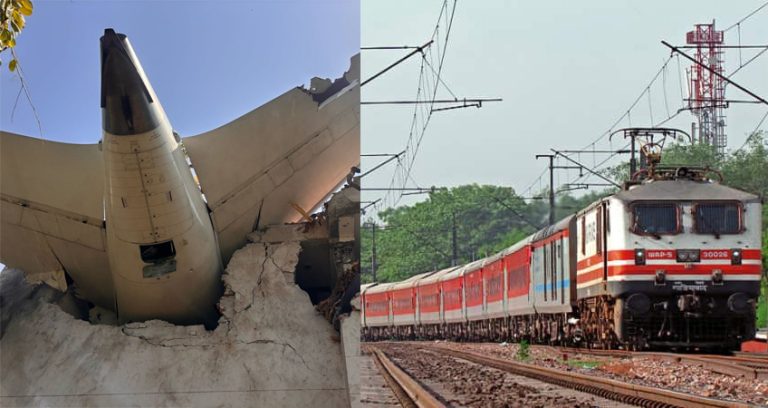
Western Railway will run two Superfast Special trains from Ahmedabad to Delhi and Mumbai to ease the passenger traffic after an Air India plane crashed shortly after taking off from Sardar Vallabhbhai International Airport on Thursday afternoon.
According to a notification from Western Railway, Train No. 09497 will depart from Ahmedabad Junction at 11:45 pm on Thursday and reach Delhi Junction at 2:45 pm the next day. The train (train no. 09498) will then complete a return trip to Ahmedabad from Delhi on Friday.
The other superfast special train with train number 09494 will depart for Mumbai Central from Ahmedabad Junction at 11:55 pm on Thursday. The same train (Train no. 09493) will return to Ahmedabad from Mumbai on Friday, Western Railway notified.
Western Railway has also dispatched its Disaster Management Team, along with medical personnel and RPF staff, to assist the Gujarat government and other agencies involved in relief and rescue efforts.
The Boeing 787-8 Dreamliner, carrying 242 people, including 12 crew members, crashed shortly after take-off from Sardar Vallabhbhai Patel International Airport on Thursday afternoon.
Meanwhile, the Gujarat government has mobilised three teams from the National Disaster Response Force (NDRF), comprising 90 personnel, from Gandhinagar to the crash site to aid rescue operations.
According to senior police officials, the aircraft crashed into a doctor’s hostel located just outside the airport perimeter. “After the takeoff, the plane crashed here and after a preliminary enquiry, we got to know that the … plane crashed into a building, which is a doctors’ hostel,” Jaipal Singh Rathore, Joint Commissioner of Police, Ahmedabad, told reporters.
The Ahmedabad City Police has released an emergency helpline number for assistance and information related to the crash. “Ahmedabad City Police Emergency Number for Police Emergency Services and necessary information related to the Ahmedabad Plane Crash 07925620359,” Ahmedabad Police stated in a post on X.
(This news report is published from a syndicated feed. Except for the headline, the content has not been written or edited by OpIndia staff)
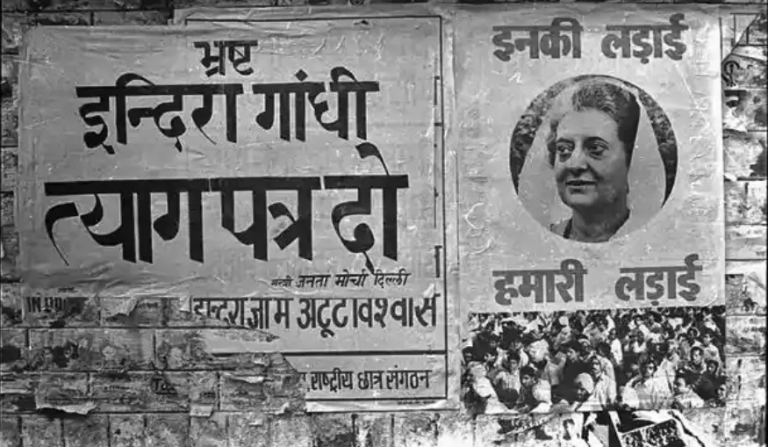
Murder of democracy, fascism, misuse of institutions…these are some of the chosen words that have become the favourite slogans of Congress since 2014. But where did the Congress learn all these words from? For this, it is necessary to know the history of 12th June.
It is obvious that the country’s first Prime Minister Jawaharlal Nehru and his daughter Indira Gandhi have left so much for today’s Congress that even if this political party never returns to power, it will hardly face any problem in sustaining its political ideology.
Today is a witness to the historic moment when fascist, dictator and autocrat Indira Gandhi was convicted in the Allahabad court. On the morning of June 12, 1975, the courtroom of Allahabad High Court was completely packed with the crowd.
On this day, Justice Jagmohan Lal Sinha (Justice JML Sinha) was going to deliver the final verdict in the case of ‘Raj Narain vs Indira Gandhi’. This was a rare occasion when a political battle was being fought in the courts.
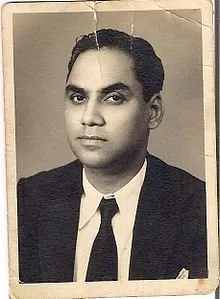
Justice Jagmohan Lal Sinha
Today, the Congress would hardly remember what all circumstances Justice Jagmohan Sinha had to go through before this decision and what all tactics were adopted by Indira Gandhi to influence his decision.
Actually, the reason behind making Indira Gandhi stand in this courtroom was her victory in the Lok Sabha elections of Rae Bareli in 1971. In this Lok Sabha election, Indira Gandhi got tremendous success and she won from the Rae Bareli seat.
In this election, Indira Gandhi defeated the candidate of the United Socialist Party, Raj Narain, by a surprisingly large margin. This was surprising for the reason that Raj Narain, the socialist who made arena politics a part of Indian politics, was so sure about his victory in this election that he had already celebrated his victory and taken out a victory procession.
Despite being related to the royal family of Banaras, Raj Narayan decided to start his political battle in Raebareli. But the story was completely reversed when the results were declared. Raj Narayan lost the election. Only one-fourth of the total votes were in his favour, while Indira Gandhi defeated him by almost two-thirds of the votes.
This defeat in the Lok Sabha elections prompted Raj Narain to approach the High Court and pray for the cancellation for Indira Gandhi’s election for misusing government machinery and resources to win the election. This was going to prove to be a unique case in independent India.
After all, for the first time, a Prime Minister of India was ordered to appear before the court. Famous lawyer Shanti Bhushan (father of Prashant Bhushan), who was fighting this case on behalf of Raj Narayan, had said –
“Before Indira Gandhi entered the court, Justice Sinha said – People stand in the court only when the judge comes, so no one should stand when Indira Gandhi arrives, passes were distributed to the people for entry.”
Shortly thereafter, on March 18, 1975, Indira Gandhi reached the court and answered questions related to the elections, including her election for about five hours.
Shanti Bhushan, who argued the case against Indira Gandhi, has written in his autobiography ‘Courting Destiny’ –
“When I started arguing, I felt the judge was not giving much importance to the case. But after the third day, I noticed that my arguments were influencing him and he started taking notes.”
The autobiography mentions how Justice Sinha was successful in keeping his decision confidential and for this he was even forced to ‘disappear’ by the Indira Gandhi government. Justice Jaganmohan Sinha used to receive telephone calls from Dehradun from certain specific people and they used to force him to give a decision in their favour.
The person who called Justice Sinha from Dehradun was none other than Chief Justice Mathur who told him that Joint Secretary of the Home Ministry PP Nair had met him and requested that the decision be postponed till July. Justice Sinha was so disappointed and saddened by this that he immediately went to the High Court and ordered the Registrar to inform both the parties that the decision would be announced on June 12.
“Sinha wanted to write his decision in a peaceful environment. But as soon as the court closed, a Congress Member of Parliament from Allahabad started visiting him daily. This annoyed Justice Sinha and he had to tell him not to come to his place. But when he did not agree to this, Sinha asked his neighbour Justice Parikh to explain to that gentleman that he should not disturb him.”
Justice Sinha was so fed up with the pressure being exerted on him regarding the verdict that he had to spread the false news of him being in Ujjain. He was even offered the post of a judge of the Supreme Court. However, when the verdict did not turn out to be in favour of Indira Gandhi, Justice Sinha was never appointed as a judge of the Supreme Court. This is a very small example of the Congress’s system of governance.
On the morning of June 12, Justice Sinha had a 255-page document containing his decision in front of him. Starting the court proceedings at 10 am, Justice Sinha said, “I will read out the conclusions I have reached on all the issues related to this case.”
After a pause, Justice Sinha said, “The petition is allowed.”
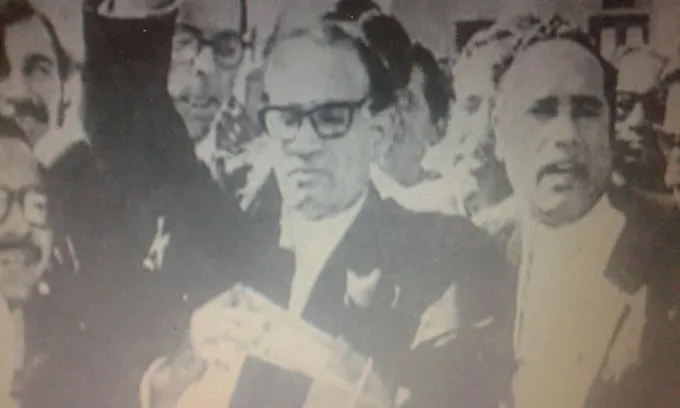
Justice Jagmohan Lal Sinha after delivering the verdict on the election of Indira Gandhi on June 12, 1975
‘Indira Gandhi dethroned’
Justice Sinha wrote in his order that Indira Gandhi used the officials and machinery of the Government of India in her election. Justice Sinha held Indira Gandhi guilty of receiving assistance from gazetted government officials, including Yashpal Kapoor, who was working as an officer on special duty with the PM’s secretariat. Also, the court ordered Indira Gandhi to pay legal costs to the petitioner, Raj Narain.
Justice Sinha wrote in his order that Indira Gandhi used the officials and government machinery of the Government of India in her election. Using them for election work was also illegal under the Representation of the People Act. On the basis of these two issues, Justice Sinha cancelled the election of the then Prime Minister Indira Gandhi from Rae Bareli to the Lok Sabha.
On June 12, 1975, Justice Jagmohan Lal Sinha of the Allahabad High Court declared the Rae Bareli election ‘null and void’ due to electoral malpractices. Along with this, Justice Sinha gave a stay order of twenty days on his decision. That is, the ruling party was given 20 days to find an alternative to Indira Gandhi.
On this decision of Justice Sinha, London’s ‘The Times’ newspaper wrote that this decision was like removing the Prime Minister from hER post for violating traffic rules.
The court had given relief to Indira Gandhi on 5 out of the 7 issues included against her in Raj Narain’s petition, but Indira Gandhi was found guilty on two issues. According to the verdict given by Justice Sinha, Indira Gandhi was disqualified from contesting elections for the next 6 years under the Representation of the People Act.
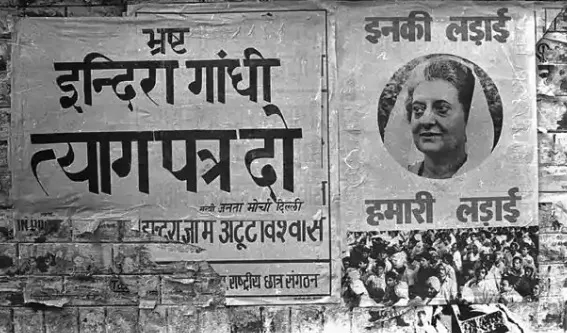
After the court’s decision, voices of protest against Indira started rising
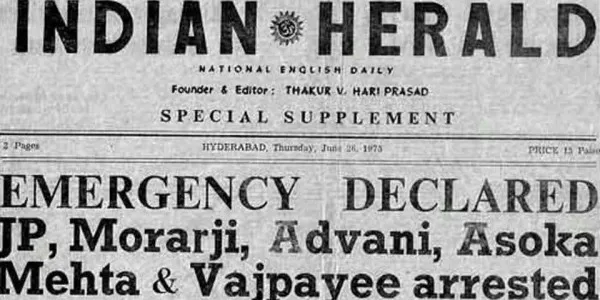
This was the decision that threw the country into the fire of emergency on Indira Gandhi’s insistence. To cover up one crime, Indira Gandhi considered it better and necessary to commit another crime which was even bigger than the previous one. After this decision of Allahabad High Court on June 12, 1975, the emergency imposed on June 25, 1975 lasted for 21 months, i.e. till March 21, 1977.
Declaration of emergency in newspapers
The single judgement against Indira Gandhi made her do what is called fascism, dictatorship and murder of democracy . This was the same Indira Gandhi who thought of crippling the judiciary to make herself legally immune and started making all kinds of undemocratic amendments in the Constitution.
By the time the monsoon session began on 21 July, all the MPs were in jail and those who remained boycotted the Parliament. This step made Indira Gandhi even more autocratic. This tainted chapter in the history of democracy was written with the blood of social activists and the arrest of journalists.
This was the time when Indira Gandhi banned even the newspapers that published quotes of Nehru and Gandhi, many films were banned and the fate of Delhi and political prisoners began to be decided by Sanjay Gandhi.
Today’s so-called intellectuals and internet-liberals must remember the day of 12th June. So that they can know the exact details of the murder of democracy and its real culprits.
This is an English translation of an article published on OpIndia Hindi
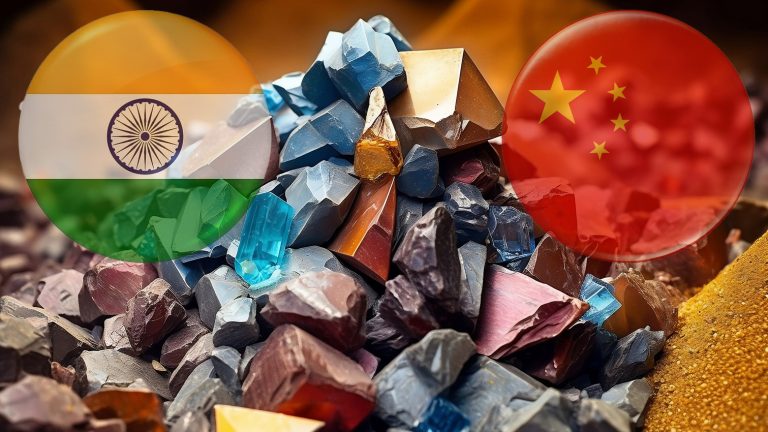
India on Thursday said it is in touch with the Chinese side, seeking predictability in the supply of rare earth metals — which had been put under the export controls regime by the Xi administration.
“We are in touch with the Chinese side, both here in Delhi as also in Beijing to bring predictability in supply chain for trade, consistent with international practices,” Ministry of External Affairs Spokesperson Randhir Jaiswal told reporters in the weekly briefing.
The MEA spokesperson was asked about India’s engagement with China on rare earth, given that it is to an extent impacting the auto industry, among others in India.
“We have been in touch with the Chinese side. The Chinese ministry of commerce and general administration of customs in early April…had announced a decision to implement export controls on certain rare earth related items,” the MEA spokesperson said.
Amidst this key supply chain issue, US President Donald Trump on Wednesday confirmed that the US reached a “deal” with China following intense trade negotiations. As part of the deal, the US, according to Trump, will get rare earth supplies from China.
Commerce and Industry Minister Piyush Goyal described China’s rare earth export restrictions as a global “wake-up call” on Monday, emphasising that India is actively building alternative supply chains while positioning itself as a trusted partner for international businesses seeking to reduce their dependence on Chinese suppliers.
Speaking to reporters during his official visit to Switzerland, where he met with Swiss government officials and business leaders, Goyal acknowledged that China’s export curbs will create short-term challenges for India’s automotive and white goods sectors.
However, he expressed confidence that collaborative efforts between government, industry, and innovators will transform these challenges into long-term opportunities.
China’s overwhelming control of global rare earth processing – commanding over 90 per cent of the world’s magnet production capacity – has created significant vulnerabilities for industries worldwide. These materials are critical across multiple sectors, including automobiles, home appliances, and clean energy systems.
Beyond China, there are only a few alternative suppliers.
The new Chinese restrictions, effective from April 4, require special export licenses for certain specific rare earth elements and their related magnetic products.
Separately, India and Central Asian countries have recently expressed interest in joint exploration of rare earth and critical minerals at the recently held India-Central Asia Dialogue.
The renewed expression of interest in collaboration in rare earths and critical minerals comes as China has restricted its exports of some key industrial inputs.
According to a joint statement by India and Central Asian countries — Kazakhstan, Kyrgyzstan, Tajikistan, Turkmenistan and, Uzbekistan -they appreciated the outcomes of the first India-Central Asia Rare Earth Forum held in September 2024 in New Delhi, as they called upon the relevant authorities to hold the second India-Central Asia Rare Earth Forum meeting at the earliest convenience.
(This news report is published from a syndicated feed. Except for the headline, the content has not been written or edited by OpIndia staff)




)