Home Blog Page 3759

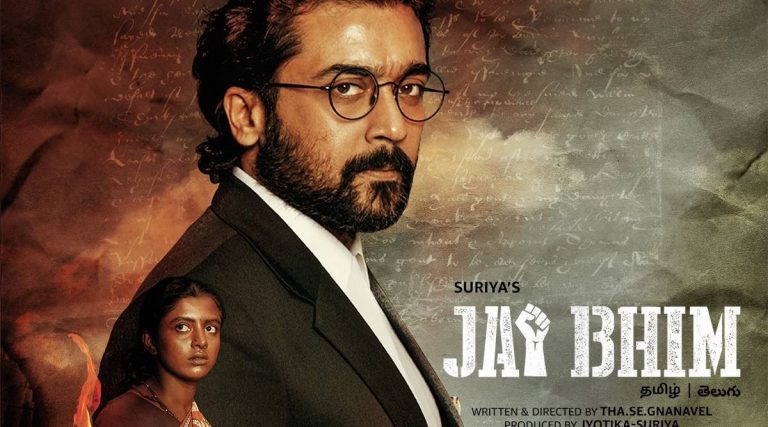
Jai Bhim: Vanniyar Sangam issues defamation notice to actor Suriya, producers for false blame, seeks Rs 5 crores in compensation

A defamation notice has been sent by the Tamil Nadu president of Vanniyar Sangam to actor Suriya and makers of the movie Jai Bhim, alleging that defamatory scenes tarnishing the reputation of the Vanniyar Community have been intentionally included in the film.

The legal notice asked the filmmakers to “cease and desist from making or publishing any false, malicious and defamatory remarks against (the Vanniyar) community and its people.” It has sought an unconditional apology from the makers of the movie and has asked them to delete the scenes that portray the Vanniyar Community in negative light and references to the Vanniyar Sangam, which includes the ‘Agni Kundam’ motif that represents the community.

Besides, the notice also sought Rs 5 crores in damages, which have to be paid “within a period of seven days from the time and date of receipt of this notice.”

The notice warns the directors, producers, production company, and the OTT platform Amazon of criminal action under Section 499, 500, and 505 of the IPC if they fail to comply with the terms of the notice, along with other civil proceedings to claim damages.

The notice says though the incidents picturised in the movie are touted to be based on real-life incidents, the character of the policeman responsible for custodial death is deliberately depicted as belonging to the Vanniyar caste. “Our client states that you have retained the real names of the real characters in the real incident in the movie, but deliberately you have changed the name of the sub-inspector,” the notice reads.

In real life, the sub-inspector who is involved in the custodial death of the undertrial was one Anthonysamy, a Christian, and not a Hindu Vanniyar as shown in the movie, the notice observes.

The notice further notes that the makers of the movie had intentionally showed a calendar with the “Agni Kundam” motif in one of the scenes that is representative of the Vanniyar Sangam, in order to show that the sub-inspector belongs to the Vanniyar community. The notice alleges that it was done with “malafide intention of defaming the members of the Vanniyar Sangam and damaging the image and reputation of the entire Vanniyar community.”

Actor Suriya responds to criticism, says neither him, nor his film unit of Jai Bhim harboured any intention of insulting any particular community

Earlier last week, actor Suriya came out defending himself and the movie Jai Bhim after PMK leader and former Union Health Minister Dr Anbumani Ramadoss slammed the film for its unwarranted denigration of the Vanniyar community. In response to Ramadoss’ trenchant criticism of the movie, Suriya issued a statement saying, “The core concept of Jai Bhim is how, in a case argued by the retired Justice Chandru, a legal struggle was waged against the authorities to help establish justice. We have attempted to talk about the problems that indigenous people face in their everyday lives.”

Suriya had refuted the allegations that some scenes in Jai Bhim were a deliberate attempt to insult a particular community, stating that neither him, nor his team had harboured any intention at any point in time to insult any individual or community as mentioned by the PMK leader. “I hope you are aware that corrections were carried out as soon as some people pointed out mistakes,” Suriya had said.

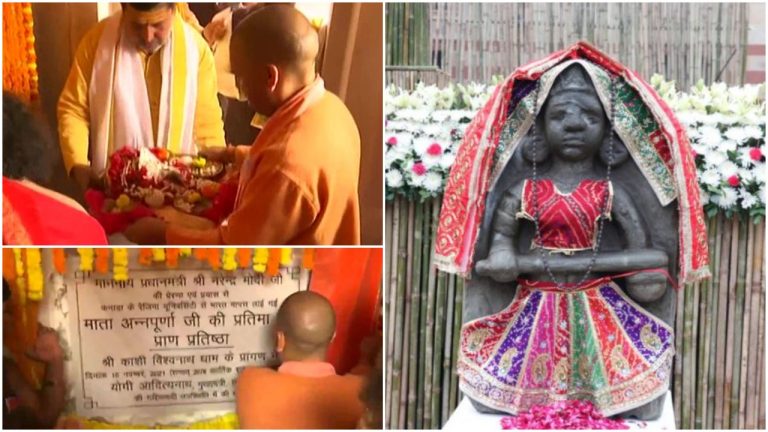
18-century Maa Annapurna idol installed at Kashi Vishwanath temple, CM Yogi Adityanath performs the rituals

The 18th-century idol of Maa Annapurna, which had embarked on a journey back home to Kashi from Delhi on November 11, was installed at the newly-constructed Annapurna temple inside the Kashi Vishwanath temple corridor today (November 15, Monday). Chief Minister Yogi Adityanath attended the pran pratistha (consecration) of the deity. 

The idol, which was transported across the state on a lavish chariot, passed through 18 districts over four days, before arriving in Varanasi shortly after midnight on Sunday, November 14.

After 108 years, Maa Annapurna’s idol has returned to Kashi once again. The credit goes to the MP from Kashi and Prime Minister Narendra Modi. I express heartfelt gratitude to him on behalf of everyone in Kashi and the state, said CM Yogi Adityanath following the consecration ceremony of the deity.

The Pran Pratistha ritual typically involves a puja, chanting of Sanskrit mantras and shlokas, bathing and cleansing the idol of the deity whose feet may be washed just like a revered guest arriving after a long journey. After that dressing the idol and seating in a place of comfort by placing the idol face towards the east (marking sunrise).

Ganesh Sthapana, Kalash Sthapana with the invocation of all Gods and Goddesses, ritual Abhishek of the Idols, Chal (movable) Pranprathistha puja and mantra, 11,000 chants of mantra for the particular deity Idols are all part of Shaligram Shala Puja and Yagna Services’ ritual Pran Pratistha of idols or murtis.

Yogi Adityanath had arrived here in Varanasi on a two-day visit on Sunday night. After paying obeisance at the temple, Adityanath also inspected the progress of the reconstruction work of the Kashi Vishwanath temple corridor.

Speaking about the ceremony held today, Divisional Commissioner Deepak Agrawal said: “A temple has been constructed in ‘ishan kon’ (north-east corner) as per vastu shashtra and the shrine is adjacent to the northern entry gate of Kashi Vishwanath Dham (corridor) area.”

Along with the Maa Annapurna idol, the five other idols, which were removed for the reconstruction work in the temple premises, were also installed today.

The 18th-century Maa Annapurna idol that was installed today was stolen from Varanasi more than 100 years ago and later found in a museum in Canada.

The idol was handed over to the Uttar Pradesh Government on Thursday at the national capital at a colourful event amid a cheering crowd of devotees. Union Minister for Culture and Tourism G Kishan Reddy presented the idol to Suresh Rana, minister in the Yogi Adityanath government. Minister of Women and Child Development Smriti Irani and Minister of State for External Affairs Meenakshi in the union cabinet were also present at the event.

Customs officials seize two luxury watches worth Rs 5 crores from cricketer Hardik Pandya at airport

The customs officials impounded two luxury watches worth Rs 5 crores from cricketer Hardik Pandya on his arrival after the Indian cricket team returned to the country following a disappointing performance at the T20 World Cup that was held in the United Arab Emirates, news reports claimed.

As per ABP Live, the Indian Cricket team returned home late last night after being knocked out of the ICC tournament following ignominious defeats against Pakistan and New Zealand on the league stage. However, after arriving at the airport, the customs officials found Hardik Pandya in possession of two luxury watches worth Rs 5 crores. The cricketer did not have invoices for the watches, nor had he declared these watches as customs items. As a consequence, the customs officials confiscated his watches.

Hardik Pandya’s fascination with luxury watches

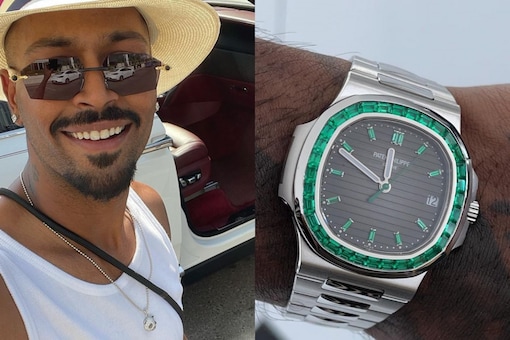
Earlier in August, a month before the second leg of the IPL 2021, Hardik had taken to Instagram to post a series of photos of himself in a foreign location in a Rolls Royce. The cricketer was seen wearing a tank top along with a hat and sunglasses. The cricketer is used to sharing pictures of his lavish lifestyle but what caught the attention of his followers was one of the images shared by him. It was of a Patek Phillippe Nautilus Platinum 5711, a luxury watch that costs upwards of Rs 5 crores.

According to GQ India, the watch sports 32 baguette-cut emeralds and is entirely forged in platinum. The 5711 has emeralds serving as hour markers and gets a self-winding automatic movement. While 5711 is a rare range, this particular emerald model is even rarer. Pandya joins the club of celebrities like actor-comedian Kevin Hart and rapper Drake who own the super expensive watch.

However, this was not the first time that the all-rounder had flaunted his love for luxury watches. Back in 2019, when he was injured and had undergone surgery, Pandya had shared an image of himself on a hospital bed sporting a shiny watch. One of the social media users claimed the watch was a Patek Philippe Nautilus watch in gold.

Reports claimed the model was the self-winding Rose Gold Nautilus (in 18K rose gold case) with a reference number 5980/1R and Caliber CH 28‑520 C.

Andhra Pradesh: NCPCR’s intervention leads to Pastor’s arrest for sexually harassing minor SC girls in Church

0

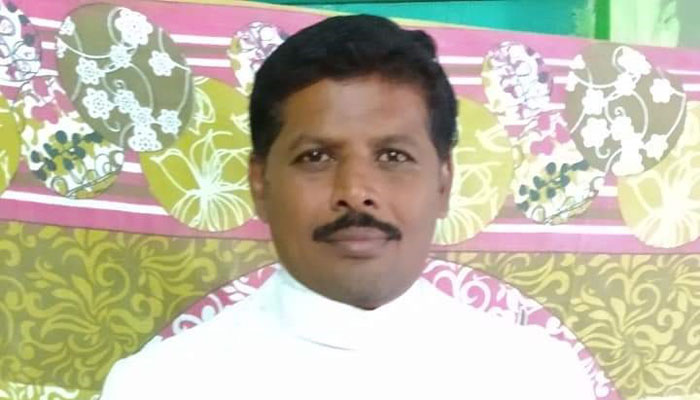
On the intervening night of November 12 and November 13, Kurnool Police arrested Pastor Father Uppalapati Ravindra Prasanna Kumar of Chatthiveedu Gramam Chagallamarri Mandal, District Kurnool, Andhra Pradesh, for allegedly sexually harassing two minor SC girls in the Church premises.

The incident took place on October 6, but the complaint was registered by the Police on November 12 only after the intervention by National Commission for Protection of Child Rights (NCPCR).

The Pastor has been booked under POCSO Act.

OpIndia reached out to Prerna Thiruvaipati, SC-ST Women & Child Rights Activist and Dalit Researcher for details about the case. Thiruvaipati had approached NCPCR as Police was not registering the case and allegedly trying to get the matter settled outside the court of Law.

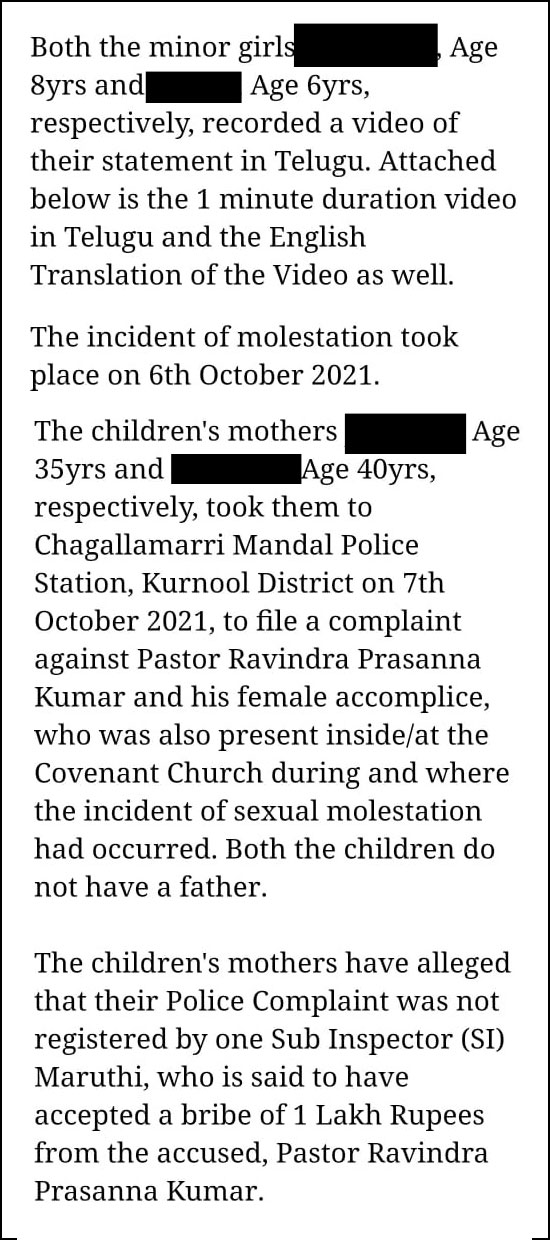
Prerna said that the incident took place on October 6, 2021, in the Church premises. On October 7, the mothers of the two minor girls, who are 8-year-old and 6-year-old respectively, approached Police to file a complaint against Pastor Ravindra Prasanna Kumar and his female accomplice, who was present inside the Covenant Church at the time of the incident of sexual molestation occurred. Notably, both girls do not have a father.

She added that the Sub-Inspector Maruthi of Chagallamarri Mandal Police Station allegedly refused to file a complaint in the matter. The mothers further alleged that the SI had accepted a bribe of Rs. 1 lakh from the accused. He also tried to pursue the mothers to resolve the matter outside the court of Law.

Prerna came to know about the case on November 12 after they received a video statement of the girls explaining the incident in Telugu. After getting it translated and collecting all the information about the case, Prerna approached NCPCR via email. NCPCR took cognizance of the matter on November 12 itself and directed Kurnool Police to arrest the Pastor immediately. The Kurnool Police arrested the Pastor on the intervening night of November 12 and November 13 at around 1:30 AM from his residence near Settiveedu Bus Stand.

A snippet of the complaint sent by Prerna Thiruvaipati to NCPCR. Source: Prerna Thiruvaipati

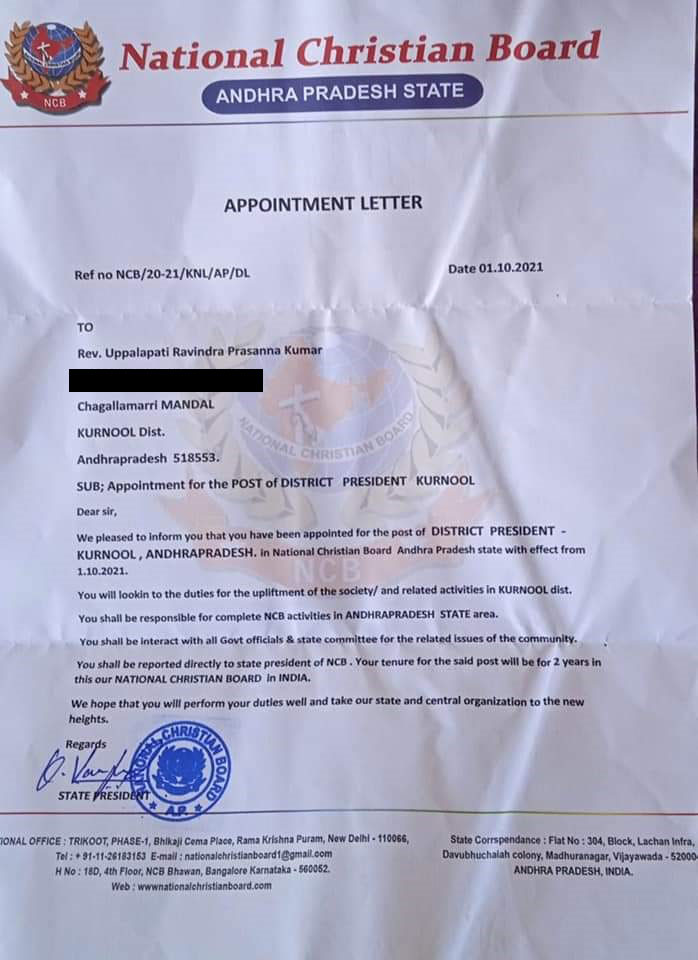
Notably, Pastor Uppalapati Ravindra Prasanna Kumar was recently appointed as the District President of Kurnool, Andhra Pradesh, to the National Christian Board Andhra Pradesh State.

Pastor Uppalapati Ravindra Prasanna Kumar was appointed as District President to the National Christian Board Andhra Pradesh State on October 1 this year.

Legal Rights Protection Forum and SC-ST Rights Forum had worked closely in the backdrop on the case. In a tweet quoting SC-ST Rights Forum, LRPF said, “Pastor Uppalapati Ravindra Prasanna Kumar was arrested u/s of POCSO Act for sexually harassing innocent minor SC girls in his Church.”

SI Maruthi had a history of unruly behaviour

This is not the first time SI Maruthi is making headlines for the wrong reasons. In April 2020, just a few days after the nationwide lockdown was imposed due to Covid-19, SI Maruthi allegedly beat up an Army personnel for ‘violating lockdown’. According to a report in Hans India, Army personnel Lakshman explained the reason for being out, but instead of listening to him, SI Maruthi and constable Ashok trashed him. A video of the incident had gone viral on social media at that time.

Woke group accuses Virat Kohli’s restaurant chain of discriminating against LGBT community: Details

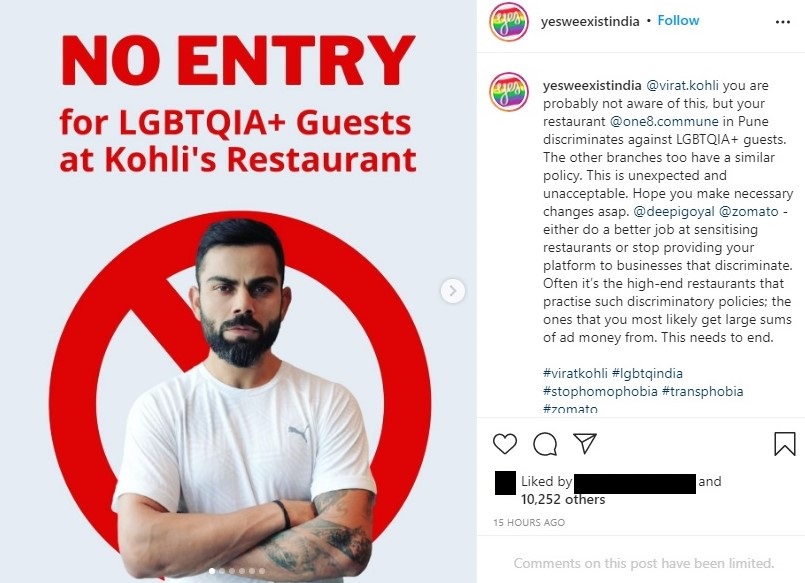
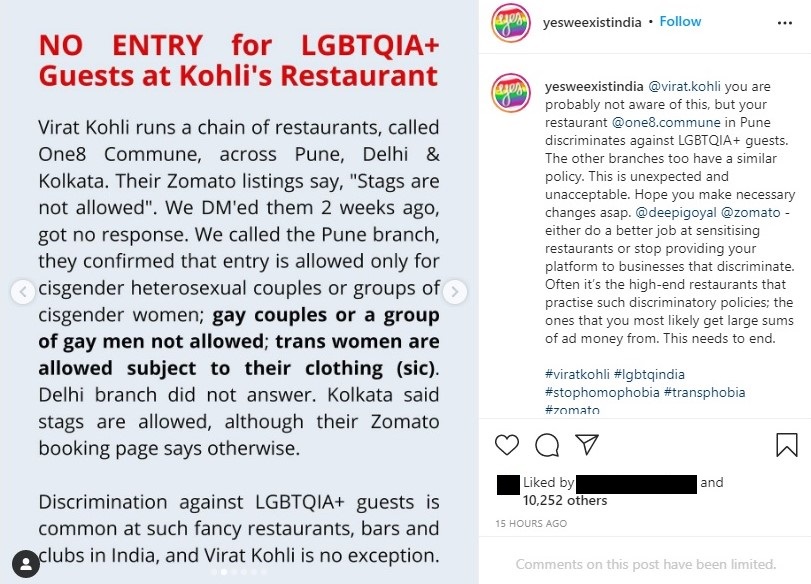
Virat Kohli has been accused of discriminating against the LGBT community over entry into his restaurants. The Indian branch of the LGBT rights group ‘Yes, we exist’ has claimed that the cricketer’s chain of restaurants, One8 Commune, does not allow ‘Stag entry’.

Source: Yes, we exist/Instagram

It means that One8 Commune does not allow single men, or a group of men, to enter the restaurants. ‘Yes, we exist’ said, “We called the Pune branch, they confirmed that entry is allowed only for cisgender heterosexual couples or groups of cisgender women; gay couples or a group of gay men not allowed; trans women are allowed subject to their clothing. Delhi branch did not answer. Kolkata said stags are allowed, although their Zomato booking page says otherwise.”

Source: Yes, we exist/Instagram

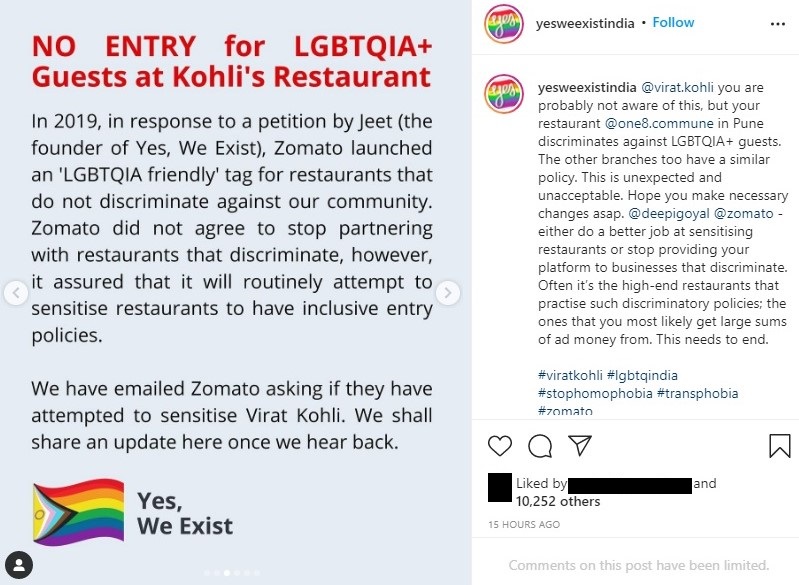
It added, “Discrimination against LGBTQIA+ guests is common at such fancy restaurants, bars and clubs in India, and Virat Kohli is no exception.” The group also said that they have contacted Zomato to enquire whether they have ‘sensitised’ Virat Kohli, which the food delivery platform had earlier assured it will do to ensure “inclusive entry policies”.

Source: Yes, we exist/Instagram

‘Yes, we exist’ told Virat Kohli, “You are probably not aware of this, but your restaurant One8 Commune in Pune discriminates against LGBTQIA+ guests. The other branches too have a similar policy. This is unexpected and unacceptable. Hope you make necessary changes asap.”

They told Zomato, “Either do a better job at sensitising restaurants or stop providing your platform to businesses that discriminate. Often it’s the high-end restaurants that practise such discriminatory policies; the ones that you most likely get large sums of ad money from. This needs to end.”

The policy at the One8 Commune restaurant chain is not explicitly against homosexual couples as their policies allow entry for lesbian women. They entry is barred for single men as well as gay men.

Virat Kohli has also received criticism recently for going ‘Woke’ but it appears the Woke camp is not pleased with the cricketer either.

NCERT transfers two senior faculty members who were part of the Transgender Inclusion panel

0

National Council of Educational Research and Training (NCERT) has transferred two senior faculty members who developed the teachers’ manual on inclusion of transgender children in schools from the Department of Gender Studies, according to reports.

As per reports, Prof Mona Yadav, department head of the Gender Studies and former HOD, Prof Poonam Agrawal (2015-2018) were transferred to the Department of Education of Groups with Special Needs and the Central Institute of Educational Technology respectively. 

On November 2, the National Commission for Protection of Child Rights (NCPCR) had taken cognizance of the NCERT manual aimed at ‘gender sensitization’ in schools. The NCPCR had taken cognizance of the matter under section 13 (I) of CPCR Act, 2005 on the basis of a complaint filed by Vinay Joshi from Maharashtra.

NCPCR chairperson Priyank Kanoongo in the letter to Major Harsh Kumar, Secretary, NCERT had inquired about the manual titled ‘Inclusion of Transgender Children in School Education: Concerns and Road Map’ published by the Department of Gender Studies at NCERT that “deprive and violated child rights”.

NCPCR noted that the complainant highlighted several points that were in violation of Child Rights. It said, “The text of the manual suggests gender-neutral infrastructure for children that does not commensurate with their gender realities and basic needs. Also, the idea of creating removing binaries shall deny them equal rights of children of diverse biological needs.”

NCPCR had asked NCERT to reply with comments and take appropriate action to remove the anomalies in the document published on the NCERT website. It also urged NCERT to verify the anecdotes of the members of the drafting committee. NCERT has been asked to reply within seven days.

The Department of Gender Studies at NCERT had earlier published a document titled ‘Inclusion of Transgender Children in School Education: Concerns and Roadmap’ where it said that toilets were used to brainwash children into believing that there were only two sexes, men and women. Besides that, the training manual appeared to give its support for puberty blockers, medication that has gained widespread notoriety in recent times. The medicines were used to block the development of puberty in children which permanently alters their natural course of development.

Following public outrage over the manual, NCERT had removed the document from the public access.

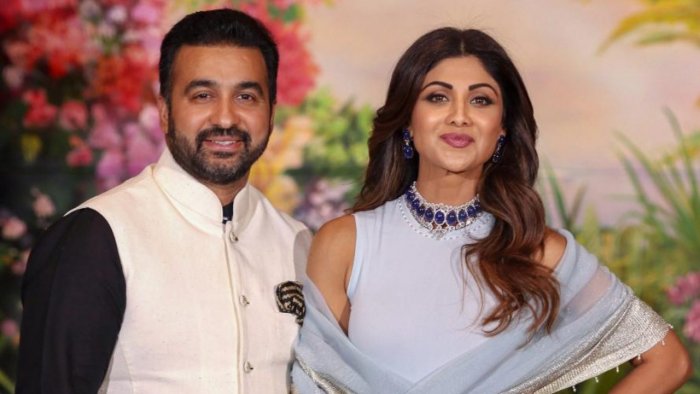
Actor Shilpa Shetty releases statement after FIR is filed against her and husband Raj Kundra in cheating case: Details

Actor Shilpa Shetty Kundra has released a statement following a cheating complaint filed against her and her husband, Raj Kundra, by a businessman who had accused the duo and SFL Fitness PVT ltd director Kashiff Khan of cheating and criminal intimidation. The businessman demanded Rs 1.51 crore in reparations.

The actor released her statement on Twitter and presented her side of the story. “Woke up to an FIR registered in Raj and my name! Shocked! To set the record straight, SFL Fitness is a venture run by Kashiff Khan. He had taken naming rights of brand SFL to open SFL gyms around the country. All deals were struck by him and he was a signatory in banking and day to day affairs. We are not aware of any of his transactions and nor have we received a rupee from him for the same. All franchisees dealt directly with Kashiff,” the actor said.

She further added that the company was shuttered in 2014 and was entirely handled by Kashiff Khan. Shilpa said she had worked very hard over the past 24 years and it pains her to see her name and reputation being dragged and tarnished to get “eyeballs”. Lamenting that she is just being unfairly targeted, Shilpa appealed that her rights as a law-abiding citizen in India should be protected. 

According to the reports, a businessman named Nitin Barai had alleged that in July 2014, Kashiff Khan, Shilpa Shetty, and Raj Kundra, along with a few others, asked him to invest Rs 1.51 crores into SFL Fitness company to earn a profit.

He claimed that he was assured that the SFL Fitness company will provide him with a franchise to open a gym and spa centre in Pune but things did not materialise. Later, when the complaint sought his money back, he was allegedly threatened, the complaint says. 

Based on the complaint, the Bandra police registered the FIR under various Indian Penal Code Sections, including 420 (cheating), 120-B (criminal conspiracy), 506 (criminal intimidation), and 34 (common intention), he said, adding that an investigation into the case was underway.

This is not the first time that Shilpa Shetty and Raj Kundra have found themselves in hot water. Earlier this year, in July 2021, Raj Kundra was arrested in connection with a case related to the creation and publishing of pornographic material over mobile apps. He was released on bail in September 2021. 

Purvanchal Expressway by Yogi government: Here are 10 lies by Akhilesh Yadav and the truth that the media won’t tell you

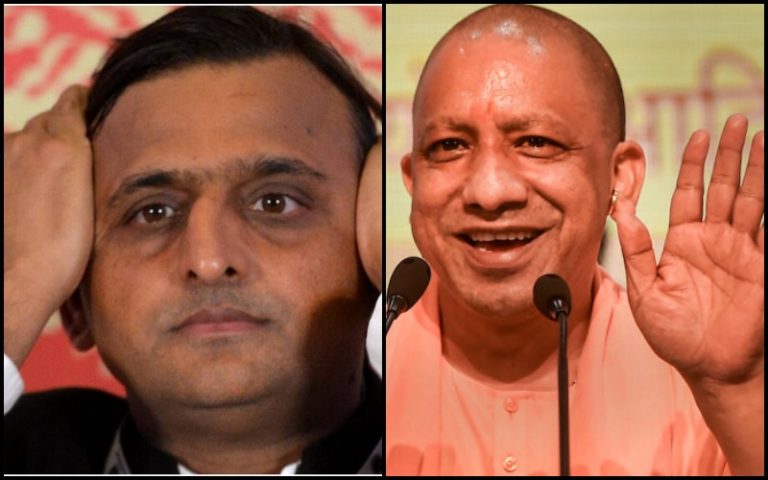
Akhilesh Yadav seems quite perturbed by the upcoming inauguration of Purvanchal Expressway by PM Narendra Modi. 341 km of Purvanchal Expressway will connect nine districts of UP – Lucknow, Barabanki, Amethi, Sultanpur, Ayodhya, Ambedkarnagar, Azamgarh, Mau and Ghazipur. With 36% attendance in the 17th Loksabha, Akhilesh Yadav is the worst performing MP from Uttar Pradesh. He rarely visits his constituency – Azamgarh – and what’s making Akhilesh Yadav nervous is the fact that it is the Yogi Adityanath government that is connecting his constituency with a high-speed expressway. 

Recently in an interview with a leading Hindi channel, Akhilesh travelled on the Expressway and made multiple contradictory and false claims. Akhilesh Yadav seemed to have memorised some road specifications, terms and jargon before the interview but used the terms interchangeably, passed off misinformation as facts and gathered a handful of Samajwadi Party supporters to shout vehemently to validate his assertions. The media, as usual, broadcasted his lies without doing their own fact-check or telling people what the truth is. Let me expose Akhilesh Yadav’s lies on Purvanchal Expressway

Akhilesh’s Lie # 1: Purvanchal Expressway is Samajwadi Party’s Project and Yogi Government is taking its credit

Fact: The Expressway was mere an idea on paper during the Akhilesh regime, which saw the light of day under the Yogi Adityanath government. In fact, the detailed project report (DPR) of the Purvanchal Express of Akhilesh Yadav’s time was faulty and was completely re-worked upon by the Yogi government. The route alignment was optimized saving almost Rs 3,000 crore of taxpayers’ money in the process. On one hand, Akhilesh Yadav claims that Purvanchal Expressway is his project and the Samajwadi Party government made the Purvanchal Expressway and in the same sentence he contradicts himself by saying that Yogi Government has compromised with the quality of the Purvanchal expressway. The irony is that in 2021 Akhilesh Yadav drove on the Purvanchal Expressway first time in life, which he claims to be his project from 2012-2017.

Akhilesh’s Lie # 2: Akhilesh Yadav issued the tender for Purvanchal Expressway during his tenure, which Yogi government cancelled later.

Fact: Akhilesh Yadav issued a tender for the Purvanchal Expressway when even 25% of the land was not acquired. Even to issue a tender for such a large EPC contract, the government has to acquire at least 90% of the land before issuing a tender. Alignment was faulty and overlapped with the central government’s national highway projects. And so, it was cancelled by the Yogi government and fresh DPR was worked upon.

Akhilesh’s Lie # 3: As per Indian Road Congress (IRC), median for such highways should be 12 to 14 meters.

Fact: As per guidelines of Indian Road Congress (IRC) minimum desirable width of the median of the road in rural highways should be 3-5m and urban highways be 2.5m. But in his over-enthusiasm to impress the journalists in his interviews Akhilesh Yadav is misquoting these days that the Indian Road Congress (IRC) recommends a median of 12-14 meters. 

Let’s compare the median of Agra-Lucknow Expressway of Akhilesh Yadav’s time and Purvanchal Expressway of Yogi Adityanath’s rule. The median width of the Agra-Lucknow Expressway is 4.5 m and the soft shoulder width is 1.5 m on both sides of the route, whereas in Purvanchal Expressway this width is 5.5 m and 2.0 m respectively. So, the embankment of Purvanchal Expressway is 2m wider than that of Agra-Lucknow Expressway.

Median of Purvanchal Expressway has a provision of a W-beam crash barrier for the safety of vehicles on both sides and the anti-glare screen has also been made for the turns of radius less than 4,000 meters. For the construction of the Purvanchal Expressway, 120 m width of land has been purchased. Whereas only 110 m wide ‘Right of Way’ (ROW) was purchased for Agra-Lucknow Expressway

Akhilesh’s Lie # 4: Riding quality of Purvanchal Expressway is not good

Fact: The standards of riding quality maintained for Purvanchal Expressway is 1800 mm per km per lane as per the norms of the Indian Road Congress (IRC). This is already been tested extensively by the third-party technical evaluators using laser profile meters. 

Akhilesh’s Lie # 5: Silicone Sheets were not used while making the Purvanchal Expressway to check Soil erosion 

Fact: Purvanchal Expressway used an advanced technology of Geocell to check soil erosion. In this technique, Geocells are laid on the slopes of embankments, the soil is filled over it and then plantation is done on the soil bed. This technique adds to the aesthetics and is environment friendly.

Akhilesh’s Lie # 6: There is no service lane on the Purvanchal Expressway to connect the nearby towns and villages

Fact: Across the 341 km length of Purvanchal Expressway, there is a provision of 397Kms of service lanes – Someplace on one side in staggered form and at some places both the sides, based on the requirement.  

Akhilesh’s Lie # 7: There is no provision of amenities like toilets etc along with Purvanchal Expressway

Fact: Agra-Lucknow Expressway half-built by Akhilesh Yadav’s government has only 4 amenity centres with toilet blocks across the length of 300kms. These 4 blocks also got active only in 2018, whereas Akhilesh Yadav launched the expressway in 2016. Purvanchal Expressway has the provision for 16 amenity centres across the length of 341 kms – 8 large public convenience centres, with refreshment centres and toilet blocks and 8 smaller ones. Agra-Lucknow Expressway was started in hurry without any fuel station. In Purvanchal Expressway fuel stations at 8 places are already being allocated to oil companies. 

Akhilesh’s Lie # 8: The quality of lighting is not good at the Purvanchal Expressway, which may cause problems in driving at night.

Fact: Agra-Lucknow Expressway half-built by Akhilesh Yadav’s government has the provision of lights at public convenience centres, interchange spots, on larges bridges and toll plazas.  

In Purvanchal Expressway along with these spots provision of lights are also there on all the small bridges and underpasses also. Standard reflectors are mounted as per the road norms across the entire length of the highway. 

Akhilesh’s Lie # 9: BJP government selected inexperience players to build the Purvanchal Expressway.

Fact: The work of different segments (packages) of Purvanchal Expressway is allocated to well-reputed contractors based on the fair and transparent e-tendering process. These are – Gayatri Projects, APCO Infratech, GR Infra Projects, PNC Infratech and Oriental Structural Engineers. All of these are very reputed infrastructure companies of India and executed multiple high-value, high-quality projects across the nation. In fact, some of these contractors executed projects for some projects in the Akhilesh government also.

Akhilesh’s Lie # 10: BJP government has used different standards than those proposed by the Akhilesh government

Fact: In fact, this charge is right. Let’s analyze the intricate details. The series of expressways made or under-construction in Yogi’s regime are marked with superior engineering design standards. If we do an engineering comparison of Agra-Lucknow Expressway of Akhilesh Yadav’s time and Purvanchal Expressway of Yogi Adityanath’s rule – the difference is clear. I am repeating what I wrote in point number 3# that  – The median width of Agra-Lucknow Expressway is 4.5 m & the soft shoulder width is 1.5 m on both sides of the route, whereas in Purvanchal Expressway this width is 5.5 m and 2.0 m respectively. So, the embankment of Purvanchal Expressway is 2 m wider than that of Agra-Lucknow Expressway. Median of Purvanchal Expressway has a provision of a W-beam crash barrier for the safety of vehicles on both sides and the anti-glare screen has also been made for the turns of radius less than 4,000 meters. For the construction of Purvanchal Expressway, 120 m width of land has been purchased. Whereas only 110 m wide ‘Right of Way’ (ROW) was purchased for Agra-Lucknow Expressway. 

Akhilesh Yadav inaugurated the Agra-Lucknow Expressway hurriedly in 2016 when it was only 80% complete. It’s evident that the Agra-Lucknow expressway was made in haste, compromising the construction quality by the Akhilesh government. Within just one year of its hasty inauguration, an SUV Car plunged 15-20 feet after road caved on a crack in the Agra-Lucknow expressway. Many incomplete works of Agra-Lucknow Expressway were completed after the Yogi govt took charge in March 2017. List of unfinished works on Agra-Lucknow Expressway is long, which were completed by the Yogi government – 800 m long Bituminous Concrete, one long bridge, four Interchange bridges, 22.2 km long crash barrier, 37.5 Kms of road marking, 200 Kms of road signage, 289 Kms of medium fencing and 178 Kms of ROW. 

In any TV debate on UP infrastructure, Bahujan Samaj Party (BSP) spokespersons talk about 165 Km Greater Noida-Agra Expressway built in their times and any Samajwadi Party (SP) spokesperson flaunts 302 Kms of Agra-Lucknow expressways built in their times. In the last 15 years of SP+BSP rule, the people of Uttar Pradesh built only 467 kms of expressways, that too limited only to western UP. In contrast, with Purvanchal Expressway and Bundelkhand Expressway – the Yogi government is adding a whopping 641 Kms to the expressways’ road infrastructure in the state of Uttar Pradesh. And this 641 Kms will be achieved by the Yogi government in five years vs the 467 Kms of SP+BSP governments in 15 years. And with 91 Kms Gorakhpur Link Expressway and 600 Kms Ganga Expressway, Uttar Pradesh will enter a different league of high-quality road networks across the state. That’s why in 2020, even PM Narendra Modi praised Yogi Adityanath that Uttar Pradesh is becoming an ‘Express State’ under Yogi Adityanath’s leadership. 

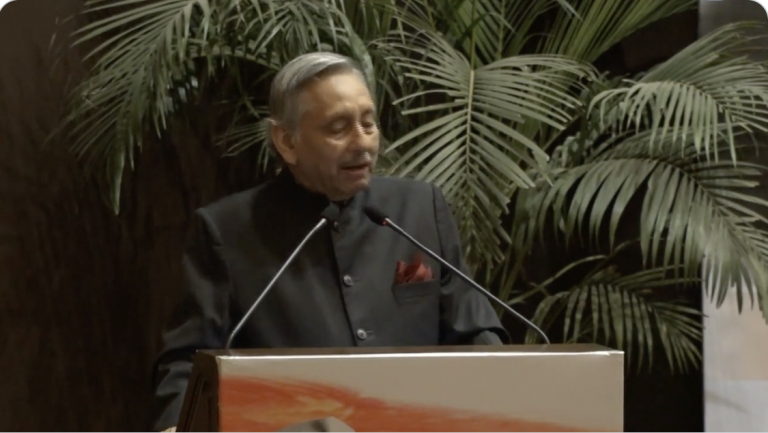
Mani Shankar Aiyar heaps praises on Mughals during Nehru Jayanti celebrations, says Babar and Humayun were patriots

Senior Congress leader Mani Shankar Aiyar on Sunday heaped praises on the Mughal rulers and claimed that they did not indulge in religious persecution or forced conversions but instead were patriots. Aiyar was speaking at a function to celebrate birth anniversary of Jawaharlal Nehru, former Indian Prime Minister and great grandfather of senior Congress leader Rahul Gandhi.

He even claimed that Mughals never carried out persecution of Hindus or indulged in forced religious conversions even though there is historical evidence of the same including accounts of beheadings carried on by or on behest of various Mughal rulers. While eulogising Mughals, Aiyar also claimed that the BJP does not consider non-Hindus as Indians.

“Muslim sultans, kings and emperors occupied the Delhi throne for 666 years. After that, how many Muslims and Hindus were left in this country? The numbers are very clear in the last 100-125 years. The British conducted the first census in 1872. After ruling for 666 years. the proportion of Muslims in the country was about 24% while Hindus constituted 72%. And these people say that there was violence, all girls were raped and they converted everyone to Islam. If this was true, 72% should have been Muslim and 24% Hindus,” Aiyar said while defending and downplaying the barbarity of Mughal rule.

Aiyar can be heard speaking at the event from 1 hour 1 minute mark onward.

He further said, “That’s why Jinnah had only one demand before demanding partition and give 30% reservation to Muslims in the Central Assembly. He did not say that give us 80 or 90 percent (reservation). This was rejected as they were only 26%. India is the only country in the world where the country did not become an Islamic nation despite Muslims coming here.”

At around 1 hour 30 minutes into the video, Aiyar further claimed that those outsiders who attacked India did not go back and became part of India. “This was the difference between Mughals and British. British did not consider India and were here to rule their country whereas Babar, BJP often refers to me as Babar’s son, came to India in 1526 and he died in 1530. Hence he was here in India for just 4 years. And he did not like India as there was no watermelon here,” he said.

“He knew he was ill. So he wrote a letter to his eldest son, Humayun and told him that if he wants to run the country then do not interfere in the religion of the people here. Because they are nice people and so do not interfere. You may succeed slightly but eventually you’ll have to go. If you want to run the country, respect all,” he claimed.

Heaping praises on Akbar, he said, “Our Congress office is also on Akbar Road, we have no issues. We are not saying ‘We are Congress, how can we stay on Akbar Road, change it to Maharana Pratap Road’. We never say that. Because we consider Akbar our own. We don’t consider him an outsider. Because he followed the instructions by his grandfather. They married Rajput women and hence they were part Hindus.”

He even said there were no incidents of beheading. To put things in perspective, Guru Tegh Bahadur, nine of the ten Sikh Gurus, was beheaded on instructions of Aurangzeb, for refusing to convert to Islam. Gurudwara Sis Ganj Sahib in Delhi marks the place of his execution.

OpIndia Explains: The virtual world of cryptocurrency and the challenges it poses for Indian govt

PM Modi on Saturday chaired a meeting on the path ahead for managing the cryptocurrency sector where a consensus was reached on the Centre needing to take “progressive and forward-looking” steps while ensuring that an unregulated crypto market does not lead to “money laundering and terror financing”.

The government will keep a close watch on cryptocurrency as this is an evolving technology and will take proactive steps, multiple reports about PM Modi’s meeting on Saturday said.

The meeting was an outcome of a “consultative process as RBI, finance ministry, the home ministry had done an elaborate exercise on it as well as consulted experts from across the country and the world,” reports said. India is also going through the global examples and the best practices regarding crypto.

The meeting came on the heels of the Reserve Bank of India governor Shaktikanta Das cautioning investors about the digital currency. RBI Governor Shaktikanta Das expressed serious concerns over the credibility of cryptocurrencies. Speaking at Business Standard’s BFSI Summit, he said that it was similar to a marketing strategy to attract more public interest in cryptocurrencies. He was referring to a recent report of a research firm that claimed that at least 7.9 per cent of Indians have invested $10 billion dollars in virtual currencies, adding that the numbers were highly exaggerated.

With the interest in cryptocurrencies peaking, there is a newfound urgency by the Centre to formulate laws and policies to govern the virtual currency market. On Monday, a parliamentary committee on finance is likely to hold a meeting of top stakeholders of the crypto industry, according to multiple reports. The meeting, which is reportedly going to take place behind closed doors, will have participants from top crypto exchanges, members of the Blockchain and Crypto Assets Council (BACC) among others.

This haste in tackling the issue of cryptocurrency is because Indians are flocking to the virtual currency market like never before. As per reports, Indians had parked nearly $6.6 billion in cryptocurrencies until May this year, as compared to around $923 million until April 2020. India ranks second on the Global Crypto Adoption Index in terms of cryptocurrency adoption. The total investment were reportedly going to cross the $ 10 billion mark in the first week of November.

As Indians are increasingly warming up to the idea of investing in virtual currency markets, it is imperative to understand what cryptocurrency means and the challenges it poses.

What is cryptocurrency? 

Cryptocurrency is a form of payment that can be exchanged online for goods and services. At its core, it is a decentralised digital money designed to be used over the internet. They are usually not issued or controlled by any government or other central authority. Instead, they are managed by peer-to-peer networks of computers running free, open-source software.

For example, just like the US Dollar is managed by the American Reserve Bank and the Euro by the European Central Bank, there is no central authority that manages and maintains the value of a cryptocurrency. Instead, these tasks are broadly distributed among a cryptocurrency’s users via the Internet. 

One of the biggest advantages of using cryptocurrencies is that it makes transfer value online without the need for a middleman like a bank or payment processor, enabling value to transfer globally, almost instantly, with low fees. The technology allows individuals to take full control of their assets, without being dependent on external factors such as banks, regulatory bodies, middlemen etc. 

Besides, as is the case with conventional currencies, there is usually only one currency that each country’s government allows to be used for trade within its sovereign limits. However, in the case of cryptocurrency, there is no such barrier. Everyone who intends to participate in cryptocurrency can have his/her own digital currency. Many companies have issued their own currencies, often called tokens or coins, and these can be traded specifically for the goods or services that the company provides. 

Think of these tokens or coins as arcade tokens and chips we buy at casinos in exchange for real currency. Not real currency, but these tokens and chips are accepted inside casinos for various games and other services. Similarly, cryptocurrency coins are used to avail services offered by companies that accept certain digital currencies. However, a majority of the users invest in cryptocurrencies purely as an investment and when their value increases, they exit the currencies by selling them on the secondary market. 

The most famous cryptocurrency is Bitcoin, which was launched more than a decade ago, in 2008. The digital currency first outlined by Satoshi Nakamoto in a paper titled “Bitcoin: A Peer-to-Peer Electronic Cash System”, described the project as “an electronic payment system based on cryptographic proof instead of trust.”

By market capitalisation, the most famous cryptocurrencies are Bitcoin, Ethereum, Bitcoin Cash and Litecoin. Other well-known cryptocurrencies include Tezos, EOS, and ZCash. Some are similar to Bitcoin. Others are based on different technologies, or have new features that allow them to do more than transfer value.

Cryptocurrencies work using a technology called blockchain, a breakthrough technology only recently made possible through decades of computer science and mathematical innovations. Blockchain is a decentralized technology spread across many computers that manage and records transactions. Part of the appeal of this technology is its security. The system is highly secure and encrypted. A cryptocurrency blockchain is akin to a bank’s balance sheet or ledger. Each currency has its own blockchain, which is a continuous and ongoing, constantly re-verified record of every single transaction ever made using that currency. 

Unlike a bank’s ledger, which is limited to the user alone, a crypto blockchain is distributed across participants of the digital currency’s entire network. No company, country or third party is in control of the ledger and everyone can participate in it. 

Challenges posed by cryptocurrencies

The advent of cryptocurrency has brought with it a unique set of challenges. The most potent of them is the dilemma surrounding the legality of these digital currencies. 

Banks have been reluctant to let their customers deal with cryptocurrencies due to the uncertainty regarding the legitimacy of the virtual currency market. That concern among banks was somewhat assuaged after the RBI asked banks not to cite its 2018 order as a reason to deny banking services to customers who dealt in cryptocurrencies. RBI had stated that their 2018 order had been set aside by the Supreme Court of India.

In its April 2018 order, RBI had directed banks to make sure customers dealing in cryptocurrencies were not allowed access to banking services.

However, despite the apex court’s softened stance on cryptocurrencies, challenges still exist. One of the major concerns that have a significant impact legitimising the digital currency system is the volatility in several cryptocurrencies. Over the past several months, cryptocurrencies have proven to be extremely volatile, engendering concerns of wealth erosion and other risks involved in the trading of digital currencies. 

The illicit use of cryptocurrencies by criminals, most notably hackers and extortionists, have also sparked concerns among Indian authorities regarding its exploitation by offenders. The inherently decentralised nature that makes it difficult for government authorities to regulate has also added to the concern about cryptocurrencies. 

Cryptocurrency transactions are normally irreversible. In many of the transactions after a number of blocks, the transaction is confirmed. Therefore, if fraud is committed, it would be practically impossible to reverse the transaction. The lack of control over cryptocurrencies would mean the government will not be able to address the grievances of victims.

Traditional financial products usually have strong consumer protections. However, if any cryptocurrency is lost or stolen there is no intermediary with the power to limit consumer losses.

This is one of the reasons why not just the Indian government but governments of other countries have also taken a cautious approach towards cryptocurrencies, fearing their lack of central control and the ramifications they could have on the financial security of the country.

Other arguments that challenge the viability of cryptos include the security risk they entail, along with the lack of solution when it comes to ensuring its effective inheritance. There are also misgivings about possible asset bubbles around such currencies due to over-leveraging with possible newer types of derived products.

From a governance perspective, the ambiguity over the legal status of cryptocurrencies is posing headaches for various government departments. For instance, even though if there is no order or guidelines on disclosing the capital gains made from cryptocurrency, the tax department is asking questions and sending notices about the crypto-transactions and the gains from them.