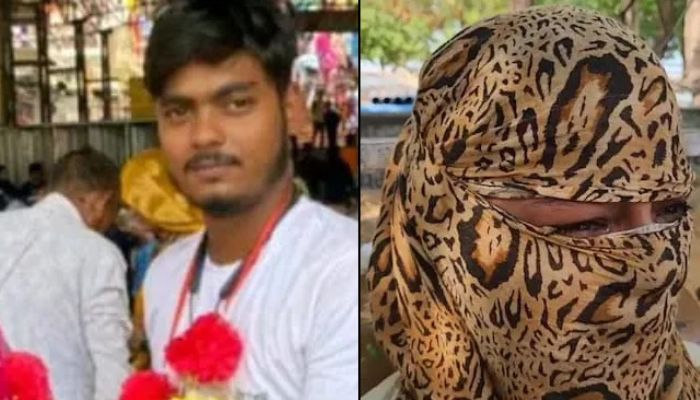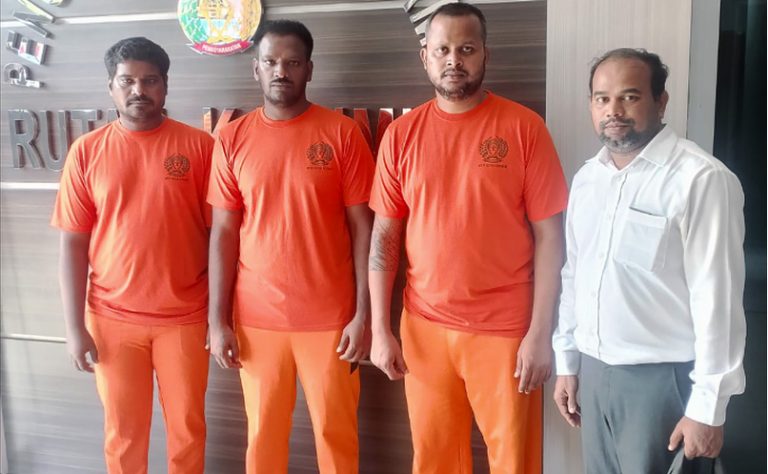
A shocking case of fraud has come to light in Pali of Rajasthan. ₹7 crore were taken from “Pradhan Mantri Kisan Samman Nidhi” by creating fake accounts in the name of Muslims in Hindu villages. Notably, there isn’t a single Muslim in these hamlets. The money was transferred into accounts that were set up in the names of individuals from West Bengal, Uttar Pradesh and Bihar. Around 29 thousand such fake accounts have been found in the Pali district.
20,000 bogus accounts were uncovered in Desuri, 9,004 in Rani and 62 in Marwar Junction during the investigation after which a case had been filed. It is pertinent to note that in 2020, Congress was in power in the state and the Chief Minister of the state was Ashok Gehlot. This scam, according to reports, took place while Congress was in power.
The scam transpired in 2020 but the authorities tried to cover up the news. They did not even register an FIR (First Information Report) in the matter.
Nevertheless, the officials prevented the money from reaching the phony accounts and froze them.
An exclusive investigation by Dainik Bhaskar unveiled that applications for Pradhan Mantri (PM) Samman Nidhi were submitted under the names of fake farmers using e-mitra and CSC (Common Service Centers) between 2019 and August 2020. After confirming the application, the Patwari forwarded it to the Tehsildar. Additionally, the latter delivered the application forms to the collector after verifying them. The list reached the central government in this manner.
Image via Dainik Bhaskar
The centre then began transferring Kisan Nidhi funds to these accounts. It is now suspected that the government ID was hacked to approve these applications. However, the matter is currently under inquiry. It is being determined if these applications were authorized using multiple government IDs or the same ones. According to the administration, a significant number of applications were submitted for the PM Kisan Samman Nidhi in Desuri in 2020. This resulted in a sharp rise in the quantity of pending applications.
On 5th November of that year, there were 265 outstanding applications, by 21st December the number had unexpectedly risen to 19,331. These accounts were discovered to be fraudulent when the officials conducted a probe. These accounts were made in the names of individuals from Bihar, Uttar Pradesh and West Bengal. Ninety-five per cent of them were in Muslim names. An investigation showed that the community of Desuri doesn’t have any Muslims.
Kisan Samman Nidhi funds totaling ₹1 crore 51 lakh 24 thousand were moved to 4,793 bank accounts located outside of Rajasthan in similar manner. These accounts were frozen afterward. The same has been the case with Varkana village in Rani block. There is not a single Muslim in the village, but 9,004 fake accounts were opened there in the name of Muslims. All these were registered on the same day. What’s striking is that all of these accounts were opened in a branch of a bank located in Rani. Three installments of Kisan Samman Nidhi had also been deposited in these accounts under Muslim names.
All of these accounts were opened in the names of individuals from West Bengal, Uttar Pradesh, and Bihar according to the investigation. There are 90% Muslim names among these. All these were registered at the simultaneously and the applications were also approved on the government portal on different dates at the same time. 62 fake accounts have been found in Marwar Junction of the state.
According to officials, there are a lot of these gangs operating in Bihar and Uttar Pradesh that steal funds from Kisan Samman Nidhi by making phony identification documents. While the applications of the actual farmers in that village were denied, these bogus requests were accepted on the portal without an OTP. This resulted in the submission of 32,000 fictitious applications.
The case that has come to light in Rajasthan seems to be the work of a large gang as a similar case had also come to light in Chhattisgarh in March 2024. The money of Kisan Samman Nidhi was reportedly transferred to the accounts of 856 phony farmers in a village in the Bemetara district. 198 of these accounts were from West Bengal. The district collector had ordered an investigation once the issue was made public.
The proceeds of this initiative was sent in the accounts which were in the names of 656 Muslims in the district’s Berla block’s Bargaon. There are just 19 Muslim farmers in this village, according to the inquiry. Not one of them resided in the village. During this entire process, a swindle totaling approximately ₹3 crore was uncovered.
In what could result in the restoration of the Hindu names of several localities in Varanasi named after Mughal tyrants, a proposal regarding this is to be discussed on 27th March in the Municipal Corporation.
Several Hindu rights organizations have been demanding a change in the name of such ‘Muslim’ localities. There is a proposal to change the name of the Aurangabad locality to Laxminagar or Narayani Dham Nagar. However, any decision regarding the same will be taken in the Municipal Corporation Executive Meeting.
This comes days after Jagatguru Rambhadracharya came to Varanasi and supported changing the names of Muslim localities.
On 20th March, Vishwa Vedic Sanatan Nyas had written a letter to the Municipal Commissioner demanding that the name of the Aurangabad area named after the 17th century Hindu-hating Mughal despot Aurangzeb, be changed. A program regarding the same was also organised at the Banaras Hindu University on 24th March. During the program, Jagatguru Rambhadracharya asserted that all the names associated with Islamic fanatics and invaders need to be changed. The Hindu saint added that Prime Minister Narendra Modi is his friend and he would talk to the Prime Minister regarding this matter.
Meanwhile, the State President of Sanatan Rakshak Dal, Ajay Sharma, has suggested changing the names of some more localities. He said that Madanpura Gol Chabutra should be named Siddha Peeth/ Siddha Mahal. Khalispura should be renamed Brahmeshwar Mahal or Brahma Tirtha. Similarly, Golgadda should be renamed Vishwakarma Nagar or Vishwakarma Tirtha, Peelikothi should be renamed Swarn Tirtha, Kajjakpura/Saraiya should be renamed Anaras Tirtha, Ambia Mandi should be renamed Amareshwar Tirtha and Chaukhamba. Ambia Mandi is known by the Muslim name Amirchand in the documents.
Sharma added that there are more than 50 localities in Varanasi which are named after Muslim names. The Hindu activist emphasized that these names should be changed and that he has also submitted a letter to the Mayor of Varanasi Municipal Corporation. The Mayor has requested the scholars of Kashi to present historical evidence. Meanwhile, Municipal Corporation’s Public Information Officer Sandeep Srivastava said that some organizations had applied for changing the names of the localities and this will be discussed in the executive meeting.
The Swaminarayan sect in Gujarat is embroiled in a controversy over its books, which have content that insults Hindu deities and tries to prove the supremacy of its revered Swamis. The controversy over the insult of Jalaram Bapa had barely subsided when another controversy over the insult of Dwarkadhish Bhagwan (Dwarka) of the Swaminarayan sect came to the fore. The sect is facing strong protests from the Hindu community. The situation in Dwarka is deteriorating, and the entire Hindu community, along with the Brahmo Samaj, has given the Swaminarayan sect an ultimatum to apologize within 48 hours.
The reason behind the start of the controversy is a book of the Swaminarayan sect named ‘Shriji Sankalpamurti Sadguru Shri Gopalanand Swamiini Vaat’. There are allegations that derogatory writings have been written in this book about Lord Dwarkadhish and the holy pilgrimage site of Dwarka. When OpIndia studied this book, many revelations were made. Not only Lord Krishna, but the book also contains derogatory statements about Lord Ram, Lord Shankar, Lord Hanuman and Ganapatiji. Besides, the book has derogatory statements about Goddess Chamunda, who is worshipped as an incarnation of Mother Parvati.
This article discusses, in detail, the derogatory statements written about Hindu gods and goddesses in that book of the Swaminarayan sect and the controversy regarding the derogatory writings about Lord Dwarkadhish. At one place in the book, it is said that there is no God in Dwarka. The book attempts to prove that ‘Swaminarayan’ is supreme by belittling the glory of Lord Krishna. Let us understand in detail what the controversy is and what is said in that controversial book.
What is the controversy?
Recently, a Swami of the Swaminarayan sect made derogatory remarks about Jalaram Bapa. Following massive protests across Gujarat, he went to Virpur and apologized. However, controversy erupted regarding a book of the Swaminarayan sect, which allegedly insulted Lord Krishna. People on social media are alleging that Swamis of the Swaminarayan sect are repeatedly insulting Hindu gods and goddesses to prove their Maharaj and ‘saints’ as supreme.
The name of the controversial book is -‘Shriji Sankalpamurti Sadguru Shri Gopalanand Swami’s Stories’. In story number 33 of this book, there is a comment which says, ‘Where will God be in Dwarka? If you want to have darshan of God, go to Vadtal’. Along with this, there is also a comment about the Gugali Brahmin community. Due to which the Brahmo Samaj and Hindu Samaj jointly protested in Dwarka and gave an ultimatum to the Swamis of the sect to come to Dwarka and apologize to God within 48 hours.
What is the story in that book?
While investigating the controversial book, OpIndia found that in story number 33, a devotee of the Swaminarayan sect, ‘Abasaheb’, is mentioned. The book says that he was a man of character and used to go for Gopalanand Swami’s darshan. According to the book, once he asked the Swami that his family members are ‘Kusangi’ (filthy), since they want to go to Dwarka, what should he do? In response, Gopalanand Swami says, “Where is God in Dwarka? If you want to have direct darshan of God, then go to Vadtal. There, Swaminarayan Bhagwan will fulfill your wishes.”
Photo of the book
The book further states, “With the permission of the Swami, Abasaheb set out. But his relatives were hostile, and he insisted on going to Dwarka. Finally, he set off towards Dwarka and went to the seashore and boarded a ship, when a fierce storm arose in the sea.” According to the book, the ship sank in the blink of an eye. Abasaheb thought that it happened because he did not listen to Gopalanand Swami.
Further, the story says that while drowning, Abasaheb started chanting ‘Swaminarayan-Swaminarayan’. Regarding this incident, it is mentioned that Gopalanand Swami gave Abasaheb ‘darshan’ and asked him to take a piece of wood in his hand, and Abasaheb crossed the sea holding that piece in his hand! In the book, Gopalanand tells Abasaheb, “Your family members are your enemies from your previous birth, so they led you astray, but because you are our devotee, I protected you.”
In this story, devotees going to or wanting to go to Dwarka have been called ‘Kusangi’ (filthy) and going to Dwarka has been called ‘a false path’. Moreover, the book portrays the Swami as supreme by claiming ‘there is no God in Dwarka’. This has outraged the Hindu society in Dwarka, which has come together and given a 48-hour ultimatum to the Swaminarayan sect.
Other controversial texts in the same book
Upon further investigation of the same book, OpIndia came to know that in story number 25, on page number 44, there is also a mention of a person named Narupant Nana. According to the story, he once visits Gopalanand, who, seeing the horizontal tilak on Narupant’s forehead, smilingly asks him, ‘Which god are you a worshipper of?’ In response, Narupant says that he is a worshipper of Devi and says that Mother Chamunda is his family goddess.
Photo of the book
After this, Gopalanand says, “Why do you worship a ‘tiny’ goddess instead of worshipping God?” Later in the same story, on page number 45, Gopalanand says, “Worship of gods and goddesses ultimately leads to the worst hell and suffering, but does not lead to welfare. Therefore, if you want to achieve the meaning of this birth, and if you abandon the worship of gods and goddesses and worship our Guru Shri Swaminarayan Bhagwan, who is the ‘Sovereign’, the incarnation of all incarnations, the cause of all causes, the one and only, then you will definitely attain unwavering happiness.”
Photo of the book
In the story, on page number 46, it is said that Mother Chamunda appeared to Narupant in a dream and said, “Hey Narupant, look, both Hanumanji and Ganapati are chanting the name of Swaminarayan, our friend (in front of Mother Chamunda) is saying to Gada Ugami that Narupant has become a satsangi, so now you should leave from here. Actually, Swaminarayan is God, now you should worship Him. We will also go there from now on.” Here, a clear insult to the Hindu goddess Mother Chamunda can be seen to show the supremacy of ‘Swaminarayan’.
Photo of the bookPhoto of the book
Apart from that, in the same book, on page number 103, a controversial text appears that says, “Hanumanji was trembling while holding a mace in front of Gopalanand”. On page number 44, Ranchhodraiji of Dakor has also been insulted. Moreover, on page number 49, Lord Shankar has also been shown worshipping Swaminarayan and Gopalanand. Also, on page number 134, it is said that Lord Shri Krishna and Lord Shri Ram also lived in the service of ‘Maharaj’ and used to serve him.
A new controversy has emerged amidst the controversy
While the controversy over derogatory comments made about Lord Krishna in a book by the Swaminarayan sect has not subsided, a Swami has stirred another controversy by claiming that Lord Dwarkapati had prayed to Maharaj to build a temple for his residence.
In a 59-second video that surfaced on social media, Swami Neelkanth Charan of Swaminarayan Gurukul in Ved Road, Surat, is seen talking about Lord Krishna. He says in the video, “Maharaj says that when we went to Dwarka, the Dwarkapati prayed to Maharaj that if you build a big temple, a big temple, then I want to come and live there.”
Further, Swami says that after years of this, Swami Sachchidanand builds a temple at Vadtal. It is also said that after the temple is built, Dwarkapati arrives at Vadtal with Swami Sachchidanand. This video, which is going viral, has added fuel to the fire in the ongoing controversy.
Many other books also insult Hindu gods and goddesses, even Swamis do it
In the above book alone, many Hindu gods have been insulted. Apart from that, there are many books in the Swaminarayan sect, in which several vain attempts have been made to insult Hindu gods and goddesses. Apart from this, the so-called saints of the Swaminarayan sect have also repeatedly made fun of Lord Shiva, Ram and Krishna and called them part and parcel of ‘Swaminarayan’.
Recently, many such cases have come to light, in which Swamis of the Swaminarayan sect have insulted Hindu gods and goddesses and have given rise to controversy by making slanderous remarks. Recently, a Swami had also insulted the Hindu festival ‘Navratri’ by calling it ‘Love Ratri’. Now, due to all these controversies, there is anger in the Hindu society, and the Swaminarayan sect is facing the heat.
What do the priest-Brahmin community of Dwarka say?
There is a lot of anger in the Gugali Brahmin community of Dwarka regarding this entire controversy. Talking to OpIndia, Gugali Brahmin Samaj President Yagneshbhai Upadhyay has said that he, his community and the entire Hindu community will not tolerate the repeated insults to Lord Shri Dwarkadhish. He has said that along with his community, the entire Hindu community has submitted a complaint to the authorities, demanding strict action in this matter. He has also said that if any other derogatory content is found in the controversial book of the Swaminarayan sect, action will be taken against it.
He said that a Swami of the Swaminarayan sect had also commented on the Gugali Brahmins of Dwarka and called them ‘money grabbers’. He alleged that the Swami had said that the Googli Brahmins in Dwarka rob people. He further said that the saints of the Swaminarayan sect make baseless statements without any proof. Upadhyay added that insults to the Brahmo Samaj may be tolerated, but insults to the Dwarkadhish cannot be tolerated at all. He said, “Insulting the Dwarkadhish is an insult to the entire Gugali Brahmins. Both are the same thing.”
Swami Avimukteshwarananda Saraswati calls for action against insults to Hindu gods
Swami Avimukteshwarananda Saraswati, the Shankaracharya of the Jyotir Math, condemned the portrayal of Hindu gods and goddesses by the Swaminarayan sect as inferior or subservient to the Gurus of the sect. He urged the entire Sanatan community to take stringent action against such portrayals. The Shankaracharya referred to a Swaminarayan temple in Ahmedabad, Gujarat, where an idol of Lord Hanuman is seen wearing a Tilak of the Swaminarayan sect, and Lord Hanuman has been portrayed as serving Swaminarayan and joining hands before him. Expressing strong disapproval of the portrayal of Lord Hanuman wearing the Tilak of the sect, Shankaracharya called for the removal of the Tilak from the idol and the images. He pointed out that Lord Hanuman had existed much before the Swaminarayan sect was created and therefore it does not make sense to portray him as a member of the sect.
स्वामीनारायण संप्रदाय #Swaminarayan का सनातन धर्म और वैदिक ईश्वरों को लुप्त करने का षडयंत्रकारी आक्रमण क्या है? जानिए जोशीमठ के शंकराचार्यजी से। इस भीतरी आक्रमण की आधिकारिक और प्रमाणित जानकारी साक्ष्यों के सहित पढ़ने के लिए यह pdf ? कौन है स्वामिनारायण?https://t.co/3faGpJXzQ9pic.twitter.com/y2DxvssDtI
— Dr.Kaushik Chaudhary (@ChaudhryKaushik) March 24, 2025
He said that such a false and disrespectful portrayal of Hindu gods by the Swaminarayan sect has hurt the sentiments of the Hindu community. He compared the disrespect of Hindu gods by the sect with the disrespect of Hindu gods by Muslims.
The Delhi Branch of the National Standards Body of India, Bureau of Indian Standards (BIS) have seized over 3,500 products, both without an ISI mark and marked with fake ISI labels, from warehouses of Amazon Sellers located in Mohan Cooperative Industrial Area Delhi.
These products were found to be substandard and in violation of quality control orders of BIS
According to the press information bureau (PIB) release the 15-hour search and seizure operations were conducted on March 19th. The total estimated value of the seized products like geysers, food mixers and other electrical appliances is around Rs. 70 lakhs.
In another raid conducted at Instakart Services, a Flipkart subsidiary located in Trinagar, Delhi, a stock of sports footwear was unearthed which were packaged for dispatch without the necessary ISI mark and date of manufacture. About 590 pairs of sports footwear, worth around Rs. 6 lakhs, were seized during this operation.
In the last one month, the BIS team has conducted similar operations in different parts of the country and seized various substandard items in Delhi, Gurgaon, Faridabad, Lucknow, and Sriperumbudur.
These raids are part of the Bureau of Indian Standards’ ongoing efforts to enforce compliance with quality standards for consumer protection.
Currently, there are 769 notified products for compulsory certification by various regulators and line ministries of the Government of India for BIS standardisation.
It is prohibited to manufacture, import, distribute, sell, hire, lease, store, or exhibit (for sale) these products without a valid license or Certificate of Compliance (CoC) from BIS.
Any person who contravenes the provisions of this Order shall be punishable under sub-section (3) of section 29 of the BIS Act, 2016, with imprisonment, a fine, or both.
(This news report is published from a syndicated feed. Except for the headline, the content has not been written or edited by OpIndia staff)
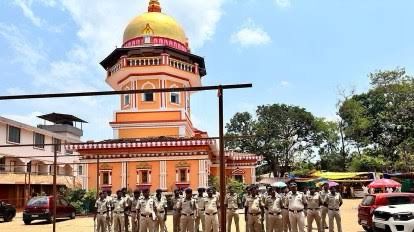
The committee for the Sri Mridanga Shaileshwari Temple decided to withdraw its plans to hold an “Iftar Sangam” on the temple grounds on 26th March. A writ petition against the “Samooha Nombuthura” and “Sneha Sangamam” as part of the event in the Sree Mrudanga Saileswari Temple auditorium was submitted to the Kerala High Court. OpIndia has a copy of the judgement. Sree Porkali, the ancestral deity of Kerala king Varma Pazhassi Raja, resides in the temple.
The petition was filed by members of Hindu Seva Kendram and the Bajrang Dal. They also requested a writ of mandamus to prevent non-Hindus from entering the Malabar Devaswom Board-controlled Murdanga Saileswari Temple and to strictly adhere to the provisions of the Hindu Places of Public Worship (Authorization of Entry) Act, 1965, and the rules made thereunder. However, the Malabar Devaswom Board told the court that the event will not happen before the petition’s scheduled review date on 26th March.
"Running with your Iftar plate… The High Court has arrived."
It is with great joy that we inform all believers that the Iftar gathering, which comrades had planned to hold at the Mridangashaileshwari Temple, has been completely scrapped.
The state government, the Malabar Devaswom, the temple’s trustee board and the Porkali Kalasha, the temple committee that announced the Iftar were among the six respondents in the petition. The executive officer of the temple’s attorney told the court that no authorization had been given to hold such a feast. The court was also informed that the Porkali Kalasha Committee, which made the announcement, was solely given the responsibility of erecting the flagpole and restoring the “Sreekovil (sanctum sanctorum) of Porkali Bhagavathi.”
The order read, “The learned Standing Counsel for Malabar Devaswom Board and also the learned counsel for the 4th respondent Executive Officer would point out the provisions in Circular No.HRH5/8246/2006 dated 15.06.2007 issued by the Commissioner of the erstwhile Hindu Religious and Charitable Endowments (Administration) Department and the learned counsel for the petitioners would point out the decision of this court in Hindu Seva Kendram v. State of Kerala [2023 (3) KHC 258 (DB)] as per which the constitution of committees in temples, which are controlled institutions under the Malabar Devaswom Board, should be for a specified purpose of conducting annual festival for the year, to undertake renovation work, etc. Therefore, the activities of the 6th respondent Kalasa Committee has to be confined to the works relating to installation of golden flag mast and renovation of the Sreekovil of Porkkali Bhagavathi. Such a committee cannot conduct ‘Samooha Nombuthura’ and ‘Sneha Sangamam’ in the temple auditorium.”
Additionally, the petitioner’s attorney cited the Kerala Hindu Places of Public Worship (Authorization of Entry) Act, 1965 and its implementing rules. The court then concluded, “In such circumstances, this writ petition is disposed of recording the aforesaid stand taken by the 4th respondent Executive Officer. It is for the 2nd respondent Malabar Devaswom Board and the 4th respondent Executive Officer to take necessary steps to ensure that the activities of the 6th respondent Kalasa Committee are confined to the installation of golden flag mast and renovation of Sreekovil of Porkkali Bhagavathi, in view of the provisions contained in Circular No.HRH5/8246/2006 dated 15.06.2007.”
A committee connected to the Marxist Communist Party of India (CPIM) oversees the temple. Temple festivals and other rites are managed by the local CPIM leadership and the party’s members are given both temporary and permanent roles within the temple.
Goddess Durga is the ruling deity at the famed Mridanga Shaileshwari Temple, which is located in Muzhukkunnu Grama Panchayat. Deities including Saraswati, Lakshmi, Kali (Porkali), Ganapati, Dakshinamurthy, Shasta and Naga are also housed at the sacred site. The temple, which is considered to be more than 2,000 years old, is one of 108 Durga temples that Lord Parashurama is credited with founding.
A new book, “The Hindu Manifesto,” is going to be released on April 26, 2025, offering a vision for a just, prosperous, and harmonious society based on Hindu philosophy. Written by Swami Vigyananand, a renowned scholar and strategist, the book presents a framework rooted in ancient Hindu texts such as the Vedas, Ramayana, Mahabharata, Arthashastra, and Shukranitisar.
As per the publishers, The Hindu Manifesto is a blueprint for a civilisational renaissance, urging individuals and nations to adopt Hindu principles for a just, prosperous, and harmonious world.
The manifesto highlights eight key principles (Sutras) that form the foundation of a strong and ethical society. These principles focus on prosperity, national security, education, responsible democracy, respect for women, social harmony, environmental care, and respect for motherland.
The first four focuses on building a strong and resilient nation. They are foundational principles upon which any society, nation, or civilisation firmly stands, sustains itself, and progresses. On the other hand, the last four Sutras are important for sustaining cultural values.
The book advocates for economic growth, military strength, quality education, and ethical governance, inspired by the ideals of Ram Rajya.
It also emphasizes women’s dignity, equality, and protection, while promoting a non-discriminatory society. The book calls for environmental conservation and urges people to honor nature as sacred. Additionally, it seeks to correct misconceptions about social structures like Varna and Jati to promote unity.
Author of the book Swami Vigyananand, a monk, scholar, and global Hindu leader, has been actively involved in promoting Hindu resurgence through platforms like the World Hindu Congress and the World Hindu Economic Forum. His book encourages individuals and nations to adopt Hindu principles for a better and more ethical world.
With a blend of ancient wisdom and modern governance principles, The Hindu Manifesto serves as a guide for those who wish to contribute to a civilizational renaissance.
Clearing the air regarding the Waqf Amendment Bill 2024, which is facing resistance from the opposition, the Delhi Hajj Committee Chief Kausar Jahan said that the Bill will bring accountability and transparency in the Waqf Boards. She added that the Bill will benefit the Muslim community, particularly Muslim women. Speaking to the media on Wednesday (26th March), Jahan dismissed the protests against the Bill as politically motivated. “This Bill is for the benefit of the Muslim community. This is a significant step in the direction of fairness and transparency. This will empower Muslim women as well, ” said the Delhi Hajj Committee Chair.
Delhi: On the Waqf Amendment Bill protest, Chairperson of the Delhi State Haj Committee, Kausar Jahan says, "The protest is politically motivated, but the bill is for the betterment of the Muslim community. It is a significant step towards fairness and transparency, empowering… pic.twitter.com/cEicu4p95C
Jahan refuted the allegations against the Bill that it would violate the rights of Muslims. Questioning the opposition parties protesting against the Bill, Jahan asked, “The people protesting against the Bill, why don’t they present their opinion in the Parliament? They should present their views appropriately. Protesting is not going to yield any result”. She said that protests by the opposition do not make sense as Parliament is in session, and they should present their views there. Supporting the Bill, Jahan said that the Bill will ensure that the underprivileged sections of the Muslim community, including women, receive the benefits of the Waqf properties. She said that the Bill should have been introduced a long time ago.
#WATCH | Delhi | On the protest organised by All India Muslim Personal Law Board (AIMPLB) against the Waqf (Amendment) Bill, Chairperson of Delhi State Haj Committee, Kausar Jahan says, "There is no point in protesting…They should put forth their views in Parliament. Everything… pic.twitter.com/TWlWEc0oVR
Jahan lashed out at the opposition and accused them of misleading the Muslim community and misusing religious sentiments for their political agenda. “Some people believe that there is no need for these amendments, and propaganda is being spread about the intentions of the government, but these changes are needed to fully realise, with accountability and transparency, the intentions behind setting up the Waqf Board,” Jahan said. “It is important that underprivileged sections of the Muslim community receive the benefits from the waqf properties,” she added.
Jahan accused AAP MLA Amanatullah Khan of not paying salaries to Imams
Jahan launched a scathing attack on AAP MLA and Chief of Delhi Waqf Board, Amanatullah Khan, accusing him of not paying salaries to Imams. “The Waqf Board had been set up to assist underprivileged Muslims, but instead, the Board is being misused to fill the pockets of a few people. For example, in Delhi, the former chief Amanatullah Khan did not pay salaries to Imams, which finally Delhi’s Lt Governor V.K. Saxena made sure to allocate. Widow pensions were held back, and issues related to the transparency of how money was spent also came up. Even appointments were also done of friends and relatives of the chief, ” Jahan was quoted as saying by the Hindu.
“There are many who feel that the Waqf Board was being run by a club of like-minded people. The specific role of the Collector as surveyor of Waqf property is needed to ensure proper identification with proper documentation. With the administration involved, a proper procedure will be followed, and documents maintained,” she added. Notably, Amanatullah Khan is facing an Enforcement Directorate (ED) investigation in a money laundering case related to the alleged wrongful appointment of employees and leasing of assets of the Delhi Waqf Board during the tenure of Amanatullah Khan as its head.
The Waqf Amendment Bill 2024 was introduced last year and was referred to a Joint Parliamentary Committee (JPC), which held discussions with various stakeholders and received various suggestions. However, the Bill has been facing protests from political parties. A protest rally was organised by several Muslim organisations under the umbrella of the All India Muslim Personal Law Board in Patna, Bihar, on 26th March. The protest was supported by the Rashtriya Janata Dal (RJD).
There was “no firing from the police side” during the violence that erupted in Sambhal on 24th November of last year after a legal survey of the Shahi Jama Masjid and illegal weapons were used in the incident, reported The Indian Express which cited sources. These alarming disclosures and many others have been made in ballistics assessment of the empty shells and the weapons recovered from the site following the unrest. The findings have been forwarded to the Sambhal police.
However, the account is ambiguous on the four fatalities caused by the bullets because they “passed through,” or left, the bodies after being shot. Empty shells were discovered at the scene of the violence and the employed weapons were confiscated from the accused’s seized possession. According to an officer, weapons were sent for forensic analysis, along with live and empty cartridges that were collected on the scene and from the perpetrators who were arrested in the case.
No ammunition was discovered in the corpses of the four victims of the assault, a top official noted. “More findings about matching of the firearms and the cartridges are awaited for final confirmation,” he added. The police sources unveield that raids are underway to track down about 70 people “whose involvement surfaced during the probe.” A Muslim mob gathered near the Shahi Jama Masjid in Sambhal on 24th November and attacked the police after the court ordered a survey of the mosque, which dates back to the 16th century. According to an officer, weapons were sent for forensic analysis, along with live and empty cartridges found on the scene and from the individuals who were taken into custody in the case.
On 3rd December, in a significant breakthrough, the forensic team even located cartridges made in Pakistan and the USA from the violence-hit area in Sambhal, Uttar Pradesh. According to media reports, police uncovered Sambhal violence’s link to Pakistan after discovering an empty cartridge manufactured in the Pakistan Ordnance Factory. The cartridge was recovered alongside five others from a drain at the site of the 24th November violence.
The Delhi High Court has allowed Baramulla MP Abdul Rashid Sheikh to attend Parliament sessions in custody. He has been allowed to attend the session from March 26 to April 4, 2024.
He will be sent in custody from Tihar Jail to Parliament House on each of the dates on which the Lok Sabha is in session between March 26 and April 4, during the hours the Lok Sabha is in session on those days. Thereafter, he will be taken back to prison.
He is in judicial custody in a terror funding case lodged by the NIA. The Division bench of Justices Chandra Dhari Singh and Anup Jairam Bhambhani allowed the petition subject to certain conditions.
He sought permission to attend the Parliament Session in custody. He has been allowed subject to certain conditions. Senior advocate N Hariharan alongwith advocate Vikhyat Oberoi appeared for Engineer Rashid.
” As a sequitur to the foregoing and in light of the undertaking given by the learned senior counsel for the appellant, on instructions, this court is persuaded to accept the limited prayer pressed in the present matter, by directing that the appellant – Abdul Rashid Sheikh alias Rashid Engineer – is permitted to attend the Second Part of the 4th Session of the 18th Lok Sabha Parliament, scheduled between 26.03.2025 and 04.04.2025, ‘in-custody’, the bench ordered.
The High court has directed the Director General (Prisons) to send him “in-custody” under police escort from prison to the Parliament House on each of the dates on which the Lok Sabha is in session between 26.03.2025 and 04.04.2025, during the hours that the Lok Sabha is in session on those days.
The High Court has further directed that at the Parliament House, the appellant shall be handed over to the custody of Parliament security/marshals, who shall allow the appellant to attend the proceedings of the Lok Sabha and to avail of other facilities and amenities within the Parliament House during the hours that the Lok Sabha is in session. Thereafter, the appellant shall hand back custody to the prison escort, who will bring him back to prison straight from the Parliament House on the same day without any delay.
The High court has restrained him to use mobile phone. The high court said, ” While out to attend the Parliament Session, the appellant shall not be entitled to use any cellular or landline phone or other communication device; nor shall he be entitled to have access to the internet by any mode.”
The appellant shall not interact with any other person, at any time while he is outside the premises of the jail, except within the premises of the Lok Sabha House and concerning the performance of his role as a Member of Parliament as per the requisite discipline permitted by the Lok Sabha Rules, the bench has directed. It is also directed that he will not interact with the media.
The appellant shall not engage with or address the Media (electronic/print), neither within the premises of the Parliament nor outside, in any manner whatsoever, including about the pendency of the criminal proceedings against him, the High Court.
The High Court said that the expense for the aforesaid travel and other arrangements shall be borne by the appellant.
The High court has requested the Secretary General of the Lok Sabha to ensure compliance of the foregoing conditions by taking requisite steps as may be required, as per Parliament rules, to ensure that his judicial custody is not compromised.
The High Court made it clear that in the event of a violation of any of the terms and conditions as well as the undertaking noted hereinabove by the appellant, the NIA shall be at liberty to apply for cancellation/withdrawal of the permission granted.
Engineer Rashid had moved a petition seeking permission to attend the Parliament Session. His earlier plea was dismissed by the trial court on March 10. However, he was earlier allowed to attend the Parliament Session in the first session for two days in February.
(This news report is published from a syndicated feed. Except for the headline, the content has not been written or edited by OpIndia staff)
Praveen Khandelwal, the BJP MP from Delhi and National Secretary General of the Confederation of All India Traders (CAIT), has urged the central government to exempt small merchants and consumers from paying Merchant Discount Rate (MDR) on digital transactions.
“In my opinion, at least the small merchants or the small users those who are using digital payment for making payments to their respective sellers and all that they should be kept absorbed from the liability of paying the MDR. But yes, the large houses, those who use digital payments on a greater landscape, they may be charged with a nominal MDR. Because we have seen over the period that digital payment has been helpful for converting the informal economy into the formal economy. Therefore, if any charges are to be levied, the charges should be nominal,” Khandelwal said.
Union Finance Minister Nirmala Sitharaman in December 2019 announced that no MDR charges would be applicable on transactions through RuPay and UPI platforms beginning January 1, 2020, a move that promotes digital payments.
On March 24, The Payments Council of India (PCI), an industry body representing a diverse range of non-banking payment industry players, with 180 members, has submitted a formal letter to the Prime Minister Narendra Modi, seeking urgent reconsideration of the Zero Merchant Discount Rate (MDR) policy for Unified Payments Interface (UPI) and RuPay debit card transactions.
The letter acknowledges the government’s visionary leadership in promoting digital payments and financial inclusion, making India a global leader in digital transactions.
It highlights the pressing financial sustainability concerns facing the digital payments ecosystem due to the continued Zero MDR policy, which has been in effect since January 2020, the payments industry body added.
The industry body highlights that approximately six crore merchants in India accept digital payments, out of which 90 per cent are categorised as Small Merchants as per the definition of RBI (turn over Rs 20 L and below per annum), with around 50 lakh merchants categorized as large enterprises.
Enabling MDR for Rupay Debit and UPI large merchants will ensure sustainable monetization for service providers without disrupting digital payment adoption at the grassroots level as the merchants already pay MDR for different payment systems, the industry body added.
(This news report is published from a syndicated feed. Except for the headline, the content has not been written or edited by OpIndia staff)