Home Blog Page 563

Bangladesh: Muslim mob abducts and tortures Hindu man over allegations of ‘blasphemy’, atrocities in the name of Islam continue

On Wednesday (1st January) night, a Hindu man named Pranta Talukder was abducted by a Muslim mob from his residence in the Patenga Kathgarh area in Chittagong city of Bangladesh.

According to reports, the extremists tortured and thrashed him mercilessly. The young Hindu man was severely injured. The Muslim mob accused Talukder of committing ‘blasphemy.’

The local police were informed that a man was being beaten in the parking lot of Lalkhan Bazar Amin Center. On learning about the matter, the cops reached the spot and rescued the Hindu man.

Pranta Talkuder was thereafter admitted to the Chittagong Medical College and Hospital. A video of the Hindu man being carried on all fours by a violent Muslim mob is doing the rounds of the internet.

The matter is currently being investigated by the police.

Muslims attack Hindu minorities in Bangladesh under pretext of blasphemy

In December last year, Muslims carried out arson attack on 130 Hindu houses and 20 temples after accusing a young boy named Akash Das of making blasphemous comments on Facebook.

In October 2024, a frenzied Muslim mob laid siege to the Kadirdi Degree College in Boalmari in the Faridpur district of Bangladesh after accusing a Hindu boy named Hridoy Pal of ‘insulting’ Prophet Muhammad.

In September last year, a Hindu boy named Utsab Mandal was almost lynched by a Muslim mob on accusations of ‘blasphemy’ in the Sonadanga residential area of Khulna city.

Later that month, another frenzied Muslim mob laid siege to the Patiya police station in Chittagong district of Bangladesh, demanding that the cops hand over a Hindu boy accused of ‘insulting’ Prophet Muhammad.

The mob, comprising mostly local madrassa students, also attacked an army vehicle after seeing a young boy in civilian clothes and mistaking him for the Hindu victim. A 22-year-old Hindu youth named Partha Biswas Pintu was arrested on charges of committing ‘blasphemy’.

In May 2024, a Hindu student named Utsab Kumar Gian, studying at the Bangabandhu Sheikh Mujibur Rahman Science and Technology University in Bangladesh, was thrashed by a Muslim mob on accusations of blasphemy.

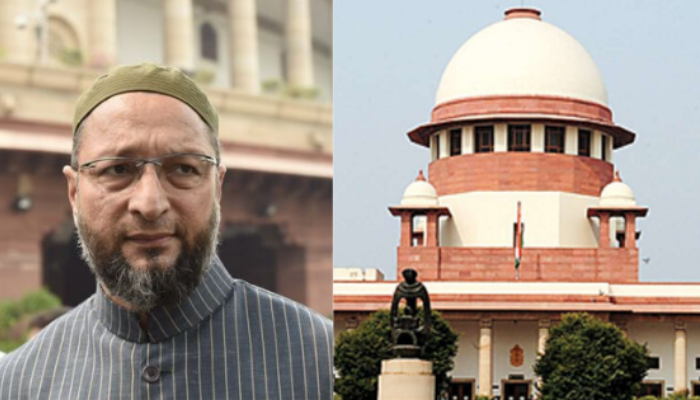
Owaisi’s PIL in SC for enforcement of 1991 Places of Worship Act accepted with ongoing cases while Central govt has sought extension 8 times already

The debate on the Places of Worship Act 1991 has resurfaced, as the Supreme Court is set to hear a petition filed by Asaduddin Owaisi, the supremo of the All India Majlis-e-Ittehadul Muslimeen (AIMIM), seeking directions for the central government to strictly enforce the provisions of the act. On 2nd January the bench gave its nod and the matter will be taken up for hearing on 17th February.

On 17th December 2024, Owaisi submitted the plea with the assistance of advocate Fuzail Ahmad Ayyubi who requested the court to instruct the centre to guarantee the effective implementation of the law. The 1991 Places of Worship Act mandates maintaining the religious character of a place as it existed on 15th August 1947.

The law provided an exception for the Ram Janmabhoomi site, which served as the basis for the 2019 ruling in the Ayodhya case, awarding the contested land to the deity Ram Lalla and adds that no legal action might be initiated in any court concerning the alteration of the religious nature of a place of worship as it was on that date.

The bench, headed by Chief Justice Sanjiv Khanna and including Justice Sanjay Kumar, instructed that Asaduddin Owaisi’s recent application be consolidated with the existing cases related to the issue. At the outset, lawyer Nizam Pasha, appearing for the politician informed that multiple petitions related to the matter are in the court and the fresh one could be tagged with them as well. “We will tag this,” CJI Sanjiv Khanna replied.

On 12th December, the Chief Justice of India presided over a bench that addressed a collection of petitions concerning the 1991 law. The bench ordered all courts to refrain from accepting new cases and from making any interim or final decisions in existing cases related to the reclamation of religious sites, particularly mosques and dargahs. “As the matter is sub-judice in this court, we deem it appropriate that no fresh suit would be registered and proceedings are undertaken till further orders of this court,” the Supreme Court pronounced.

The Lok Sabha MP, in his legal appeal, pointed to instances where courts have mandated the surveying of mosques following petitions lodged by Hindu plaintiffs, as articulated by his counsel. With several associated petitions already pending before the apex court, it is expected that the appeal will be grouped with the earlier pleas, including that of lawyer and Bharatiya Janata Party (BJP) leader Ashwini Kumar Upadhyay, during the court’s hearing.

Modi govt has sought and received 8 extensions to submit its counter affidavit in the case

Meanwhile, the Modi government has already sought and received eight extensions in less than three years from the highest court to file its counter affidavit in response to the collection of petitions that challenge the Places of Worship Act, 1991. The eighth extension was granted in July 2023. A three-judge panel led by then Chief Justice of India DY Chandrachud clarified that the ongoing status of the case before them does not imply that the act has been stayed.

During the concise hearing, Solicitor General Tushar Mehta conveyed to the bench that the government was reviewing the situation and requested further time to provide its response. The bench readily accepted this request, granting the centre until 31st October to submit the counter-affidavit. However, former Rajya Sabha MP Subramanian Swamy, one of the petitioners, opposed the extension, arguing that the government was simply stalling the process. “Mr Swamy, that is why we are giving time till October 31, let’s see what they respond,” the court responded.

The Supreme Court first told the Union government in September 2022 to submit its stance on the issue via an affidavit within a two-week timeframe. Despite several extensions granted in October and November of the same year, as well as in January, April, and July of the last year, the govt did not present the required affidavit. At the latest hearing on 12th December, the court granted the government an additional four weeks to provide its reply.

The Muslim side has approached the highest court, advocating for the stringent application of the 1991 act under the guise of ensuring communal harmony and protecting the existing status of mosques. They contend that these “mosques are being claimed by Hindus,” who maintain that temples were situated at these sites before being demolished by invaders.

On the other hand, Hindu petitioners assert that the religious places associated with Sanatan Dharma existed prior to their destruction by Muslim tyrants who installed Islamic structures on their ruins and even provide supporting evidence for this claim.

They highlight that the Places of Worship (Special Provisions) Act was implemented in an arbitrary manner, charging that: a) There is no legitimate reason for designating 15th August 1947, as the cut-off date and b) A logical connection cannot be established between India’s political independence, the creation of the Republic, and the resolution of the civilizational conflict that arose from the colonial subjugation of Hindu identity and the cultural dominance enforced by Islamic invaders.

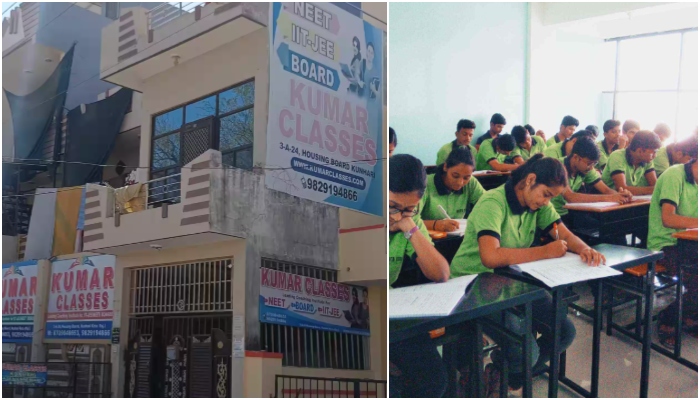
Kota Factory in decline: India’s coaching city stares at economic collapse as student enrollments drop drastically following multiple suicides

Last year, the city of Kota in the state of Rajasthan was in the news constantly after several students committed suicide in the city due to unbearable pressure. Around 17 students preparing for the competitive exams in the city ended their lives in 2024 as compared to 26 in the year 2023.

The administration, taking cognizance of it, undertook several measures like installing anti-suicide devices in the hostel rooms, removing ceiling fans, and issuing preventive directives to the hostel owners and students facing pressure, etc. As a result of this, it has come to the fore that the city is now seeing a 50% decline in suicides.

As stated by Kota Magistrate Dr Ravindra Goswami Ravindra Goswami, the suicide rates have decreased by 50% in the year 2024 as compared to the year 2023. “In comparison to last year, the suicide rate among coaching students has decreased by 50% this year, which is a significant figure in terms of the efforts yielding results. We expect this trend to continue in the future,” he said expressing satisfaction over the administrative efforts to result in a reduction of suicide cases.

While talking to the media, Goswami lauded administrative initiatives such as gate-keeper training for hostel wardens, the launch of SOS Help services, and regular interactive sessions with students through events like ‘Dinner with Collector’ and ‘Samwad’. “These events have helped foster a safer environment among the students. I personally have interacted with over 25,000 students this year to address their concerns,” he said.

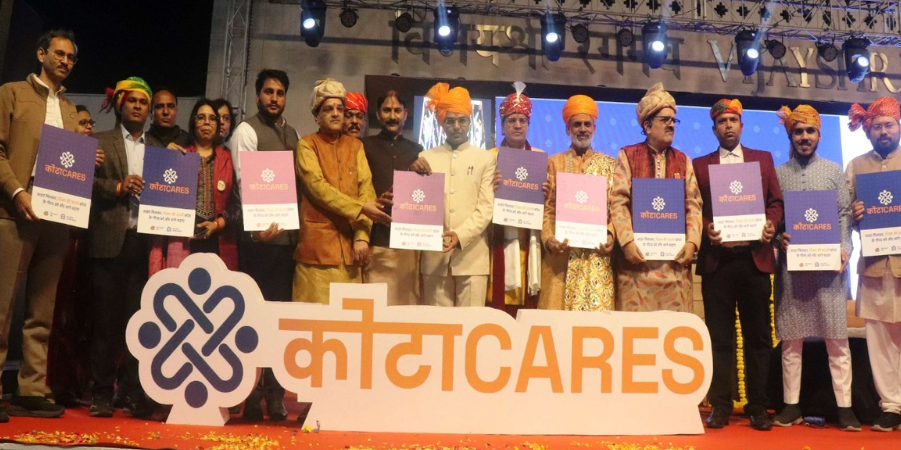
‘Kota Cares’ launched for students

Meanwhile, the pressure on the students preparing for competitive exams in Kota continues to rise. A number of students still succumb to the said pressure. Taking note of this, the district administration has launched a new program named ‘Kota Cares’ that works to ensure the safety and well-being of the students staying at the hostels. As per the reports, this initiative was recently launched at Kota Mohotsav and is the brainchild of Lok Sabha speaker Om Birla.

The program aims at making Kota a model city for holistic student well-being and their overall development. It seeks to create an inclusive, safe, and supportive environment for the students who come to Kota from different parts of the country annually. Every year, over 2 lakh students arrive in the city to pursue their academic dreams. The initiative includes bringing together a coalition of local police, government departments, coaching institutes, educators, hostel owners, and residents to make a healthier environment for students to study. It also includes inviting the alumni and furthering their interaction with the students.

The program was launched last week by the Kota District Administration in collaboration with the Kota Students Welfare Society (KSWS) during the Kota Mahotsav. Notably, District Magistrate Dr Ravindra Goswami was also present at the event.

On 31st December, Om Birla asked the parents to send their students to Kota assuring better education and cultural upbringing. Extending wishes on the occasion of New Year, he addressed the parents and said that students who come to Kota from all over the country for education would be treated as the sons and daughters of the district. “Some misunderstandings might have spoiled the environment but Kota provides a safe environment for the students,” he said.

40% drop in student enrollment in Kota

The number of suicides has been increasing despite all such administrative measures forcing a drop in enrollments in the city. A report recently revealed that the city which has been famous for its extensive coaching facilities is now experiencing a drop in student enrollment. Every year, the number of enrollments crossed the mark of 2 lakhs which has drastically come down to 1.2 lakhs- a 40% drop.

As a result of this, the city is also facing an economic crisis as many of the hostels and private properties have started displaying ‘To Let’ and ‘To Sale’ boards. A ground report by the BBC mentioned that the hostel owners and the managing authorities have reduced the rent amounts offering the hostels at lower prices to the new students.

“Earlier we used to charge Rs 16000 per month for rental rooms. Then after the news of suicides began spreading, parents began calling their children and stopped sending them here. We then reduced the rates to Rs 5000, and Rs 3000, and now we have come to a point where we offer rooms to students at Rs 2500,” said Sandeep Kohli, one of the hostel owners.

Kota Hostel Association President Naveen Mittal added that Kota was earlier a coaching industry however, “this is the first time in the last two decades that the number of students coming to Kota has decreased by 25 to 30%.”

Hostel accommodations for students attending coaching classes are abundant across Kota, particularly in areas like Vigyan Nagar in South Kota, Mahavir Nagar, Indira Colony, Rajiv Nagar, Talwandi, and Coral City in North Kota. These neighborhoods have long been hubs for students. However, signs reading ‘To Let’ are now frequently seen outside hostels and houses in these areas. Many buildings that appear well-maintained on the outside have vacant locked rooms that were once rented by the students. While some face this issue others have been shut down due to declining rental income.

Naveen Mittal remarks, “With about a 30 percent drop in the number of students, our industry has shrunk from Rs 6,000 crore to Rs 3,000 crore.”

Hostels and other businesses in Kota suffering due to this drop

Deepak Kohli, a long-time resident of Kota who has been involved in the hostel industry for 25 years operates a 50-room hostel in Rajiv Nagar, a 20-room PG in Vigyan Nagar, and another 50-room hostel in Coral City.

“A year ago, we charged Rs 15,000 per room in Rajiv Nagar. Today, the rent has dropped to Rs 8,000. Similarly, in Vigyan Nagar, the rent for a PG room, which was Rs 5,000, is now just Rs 3,000. All our hostels are more than half empty,” Kohli says. Mukul Sharma, who runs a 75-room hostel in Coral City, is also concerned. Having been in the industry since 2009, Sharma explains, “Our location was ideal, and we anticipated full occupancy. However, more than half of the rooms are vacant. The hostel costs Rs 4 crore to build, and we expected to save Rs 4 lakh per month. But now, we’re struggling to save even a fraction of that.”

“With fewer students coming in, rents have decreased significantly. We used to charge Rs 15,000 per student for a room with facilities, but now we can only charge Rs 8,000. Meanwhile, the cost of living continues to rise, and repaying loan installments has become increasingly difficult,” he adds.

Not only the hostel owners but also cycle owners, hotels, and food stations are suffering due to the decreased enrollment of the students. There are several reasons for this. In the past year, more than 17 students committed suicide in the city causing concern among the community. Before that, in the year 2023, more than 20 students had ended their lives.

Student’s deteriorating mental health

One of the students, while talking to BBC, stated that after learning about the suicides, other students and their parents start feeling concerned about the mental health of their children and the environment in the district.

“In 2024, many of us students returned home. The frequent reports of suicides left us deeply concerned. Moreover, students are segregated after tests, and those in the lower batches often receive less attention which further builds pressure,” shared one Aditya from Bihar. Saket, a fellow student from Begusarai, said, “It’s heartbreaking to see when someone you share meals with daily ends life. In such an environment, it becomes difficult to focus on studies.”

In September 2024, a student who was preparing for the medical entrance exam was found hanging inside his rented apartment in Rajasthan’s Kota. According to officials, the deceased had been identified as Parshuram, a resident of Uttar Pradesh’s Mathura. He had come to Kota a week before his death to prepare for the medical entrance exam. However, the student was found hanging from the ceiling of his rented accommodation.

In February 2024, Kota authorities reported that a student pursuing the final year of an online BTech course in Chennai was found deceased in an apparent suicide in a rented room located in the town’s Vigyan Nagar area. The police mentioned that no suicide note was discovered at the scene.

Another student in February 2024 studying for the Joint Entrance Examination (JEE) committed suicide in the educational hub of Kota, Rajasthan. An 18-year-old girl was discovered hanging at her home. Although her family acted quickly and admitted the girl to the hospital, healthcare professionals declared her dead.

A 21-year-old girl committed suicide by hanging in Rajasthan’s Kota. Nisha Singh, a NEET aspirant from Uttar Pradesh’s Auraiya was found dead at her hostel room in Mahavir Nagar 1 in Kota. A NEET student from Uttar Pradesh’s Maharajganj district committed suicide by hanging himself in his room.

The episodes of suicide did not end sending shock across the state and the country. Later the district administration had issued an order requiring all hostels and paying guest (PG) accommodations to install spring-loaded ceiling fans in every room. Several other measures were also taken by the authorities to prevent such incidents. However, the enrollments continued to drop disturbing even the economic condition of the region.

National Education Policy’s complete implementation needed

Several proposals have been pushed to curb the rising suicide rates of students, some of which seemed absurd. The Indian Institute of Science had proposed to install wall-mounted fans in hostel rooms last year and remove the ceiling fans. Others meanwhile had only partially addressed the issue, such as the recommendations made by the Board of Intermediate Education in Andhra Pradesh in 2017 to reduce student stress, which included offering yoga and physical education programs and keeping a healthy student-teacher ratio.

It is tragically obvious that the bigger problem, that of the punitive educational system which is just not meant to support young intellects or equip them for today’s economic realities is still not being addressed. It seems that it will take time for the New Education Policy 2020’s vision which offers more academic flexibility to lessen the strain on students to be completely implemented.

Decline of Kota

Kota emerged as a hub for education in the 1990s. Students from various parts of the country started coming to the place for quality coaching for competitive exams. However, in the last decade, the students allegedly started feeling and expressing pressures to raise concerns.

Several students committing suicide, facing depression, and also engaging in inferior activities. A well-known series named ‘Kota Factory’ on OTT platforms very well describes the pressure faced by the students. It shows how the confidence level of the students is shattered following the educational and also peer pressure. And this somehow stays with the students for their entire life.

Several coaching institutes in Kota have now started online training and believe that the education of the students is important, be it physically from Kota or online. “They must feel safe and secure the deteriorating economy of the district also does not matter,” said one of the coaching professors while talking to BBC.

The excessive glorification and indoctrination surrounding the importance of IITs often overshadows their lives. This binary portrayal of success or failure, based solely on whether one gets selected for IITs, places undue emphasis on this single goal. It creates a central focus in a child’s life, where failure feels like staring into a boundless abyss with no foreseeable end.

At present to confront this growing issue, all- students, parents, teachers, institutes, and policymakers must work in coordination and learn from their past failures. It is also important for the stakeholders to establish a smooth and open communication system which might help and encourage the students to cope with the pressure. For this, the option of establishing and promoting student counseling centers or career counseling centers at the institutes can also be considered, in addition to the ‘Kota Cares’ initiative recently launched by the administration.

Students also at their level need to understand the importance of mental peace and balance it with their student lifestyle. During physical training at Kota, they need to give balanced or subjectively proportionate importance to education and their careers and need to adopt the culture of demanding guilt-free breaks whenever needed. The coaching institutes as a part of preventing such mishaps have begun online partial training today, but during direct coaching at centers, they must stop building pressure environments to ensure the mental stability of the students.


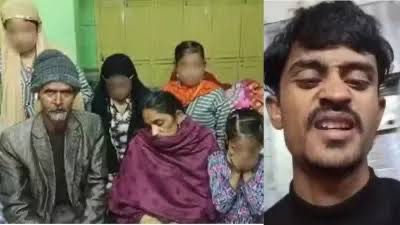
Agra Murder Case: Arshad and his father always ill-treated family, killed them after constant harassment for land grab from Muslim neighbours

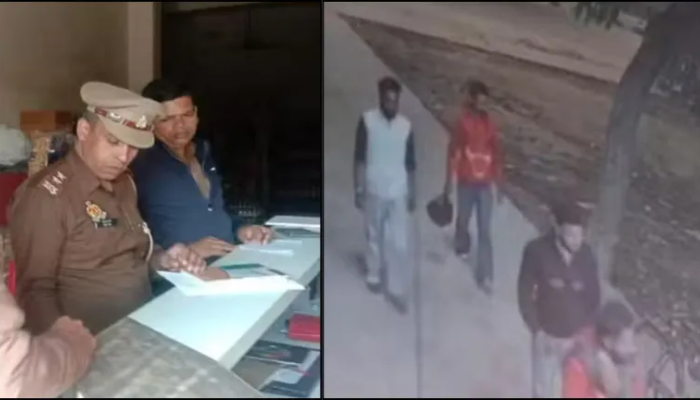
In the horrific Agra family murder case wherein five women of their own family were murdered by Arshad and his father Mohammad Badar, neighbours of the family have revealed details of the family’s behaviour. All the females of the family were found dead by police in a hotel in Lucknow on Wednesday, January 1.

The victims were identified as Asma, the mother, and her daughters Aliya (9), Aksa (16), Raheeman (18), and Alishiya (19).

The family lived in Islam Nagar, Tehri Baghia area of Kuberapur in Agra. As per their neighbours, the family was mostly secluded and was also facing some financial difficulties.

Their neighbours mentioned that all the members of the family kept to themselves and did not interact much with others. The entire neighbourhood is in shock after hearing about the cold-blooded murder of the women of the family including the mother and four daughters by the son Arshad and the father Mohammad Badar.

According to the neighbours, the entire family including the son and his father had left their house on 30th December. Babu Masum Khan, a neighbour of the family, said that Arshad, a street vendor, had mentioned to him about leaving for Ajmer. Khan said that Arshad had an aggressive nature and used to engage in frequent quarrels with neighbours. “ I loaned them some money earlier to construct part of their house, and that’s when they moved in. But after that they kept to themselves”, Khan added.

Another neighbour of Arshad, Mohammad Islam said that Arshad never maintained good relations with neighbours. Fatima Begum, another neighbour, mentioned that the father and the son used to abuse and ill-treat the daughters.

The family had reportedly traveled to Lucknow to celebrate new year. On Wednesday, five females of the family were found dead by the police in hotel Sharanjeet in Lucknow. Upon questioning, the son Arshad admitted to killing the women. He had also recorded a video in which he confessed to having killed his mother and four sisters. He claimed that they were being harassed by their neighbours and that he killed the women fearing for their safety in case something happened to him. The police are searching for the father who is on the run.

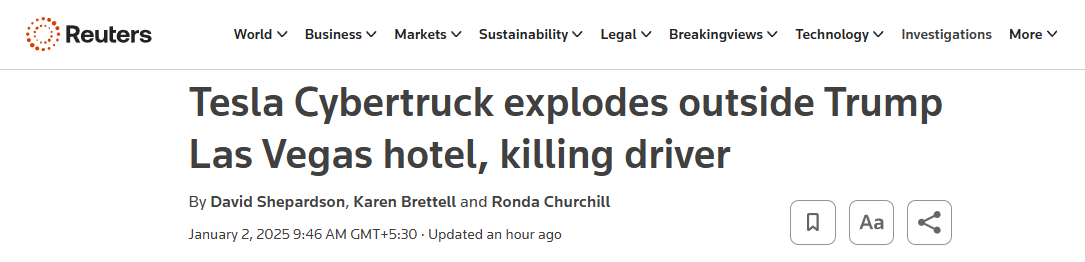
Las Vegas, USA: Man blows himself up inside a Tesla Cybertruck outside Trump Hotel, media misleads calling it ‘Cybertruck Explosion’

Seven bystanders were left wounded when a Tesla Cybertruck loaded with fuel canisters and firework mortars exploded at the porte cochère of the Trump International Hotel in Las Vegas. The terrorist who was driving the vehicle was also found dead inside it. The instance transpired outside the president-elect’s property near the iconic Las Vegas Strip.

An electric vehicle arrived at the glass entrance of the building prior to a massive blast, as reported by Las Vegas Sheriff Kevin McMahill. He confirmed that there was “one deceased individual inside the Cybertruck,” while seven individuals sustained “minor” injuries. Video evidence depicted the stainless steel truck stationed at the hotel entrance before it erupted in flames, accompanied by smaller explosions resembling fireworks.

Meanhwile, Elon Musk, CEO of Tesla informed that the perpetrators made an erroneous choice in selecting the vehicle to implement their sinister scheme. “Cybertruck actually contained the explosion and directed the blast upwards. Not even the glass doors of the lobby were broken,” he added.

Previously, Elon Musk stated that the entire senior team at Tesla is conducting an inquiry into the occurrence, remarking, “We have never encountered anything of this nature before.”

Police thank Musk for providing crucial information, aiding in the investigation

Notably, authorities in Las Vegas expressed gratitude to Elon Musk for his support in the investigation surrounding the explosion. According to Metropolitan Police Department Sheriff Kevin McMahill, Tesla contributed vital security footage of the vehicle from various charging stations and additional relevant data during the initial stages of the probe.

“I have to thank Elon Musk specifically. He gave us quite a bit of additional information in regards to how the vehicle was locked after it exploded, due to the nature of the force from the explosion as well as being able to capture all the video from the Tesla charging stations across the country. He sent that truck directly to us, so I appreciate his help on that,” the senior official stated in a press briefing held on the evening of 1st January.

According to police reports, the truck, which was rented in Colorado, reached the city on the morning of 1st January, arriving less than two hours prior to the blast. The assailant positioned the vehicle in front of the hotel, next to a glass entrance, at which point it started to release smoke before eventually blasting due to the explosives contained within. However, law enforcement officials declared that they are still in the process of identifying the cause of the explosion.

During an evening address, President Joe Biden indicated that the White House was keeping a close watch on the incident, and law enforcement was examining “whether there is any possible connection to the attack in New Orleans,” which claimed 15 lives on New Year’s Day.

Media calls it ‘Cybertruck explosion’, Elon Musk threatens lawsuit

On the other hand, media particularly in the United States and West, characterized the event as a ‘cybertruck explosion,’ implying that the vehicle had exploded and inflicted damage.

After some X users highlighted how US media is using the term ‘Cybertruck exploded’ in reporting the news where explosives were kept and possibly detonated inside a Cybertruck, Tesla boss Elon Musk posted that he should be suing the media outlets for their deliberate defamation of the Cybertruck of his company.

Sheriff Kevin McMahill presented striking video evidence of the explosion, accompanied by images depicting the aftermath, which included numerous fuel canisters and large fireworks packed in the truck bed. The footage revealed the truck positioned directly at the hotel entrance. It remained stationary for several seconds before the explosion, resulting in a display of multi-colored fireworks shooting out in various directions.

A separate video depicted investigators employing a black fire-retardant tarp to extinguish the flames and examine the scorched remnants of the truck bed. Numerous gas and fuel canisters were abandoned at the scene, alongside the debris from over a dozen firework mortars. The incident took place at approximately 08:40 PT (15:40 GMT), only hours after Shamsud Din Jabbar  drove a truck displaying an Islamic State (IS) group flag into a crowd in New Orleans and took multiple lives as well as dozens were injured.

According to Kevin McMahill, authorities are assessing whether there is a relationship between this incident and the one in New Orleans, where improvised explosive devices were located near the site. He stated that they were also examining the possibility of a connection to Donald Trump, the proprietor of the hotel, or Elon Musk, the owner of Tesla. The FBI has announced that it is probing whether the incident could be classified as an act of terrorism.

As per initial reports, the driver of the Cybertruck has been identified as 37-year-old Matthew Livelsberger from Colorado Springs. More details about his motive and affiliations are awaited.

Bangladesh: Chinmoy Krishna Das’ bail hearing today, 11 Supreme Court lawyers led by Apurba Bhattacharjee to represent

0

Eleven Supreme Court lawyers are set to participate in the bail hearing on Thursday of former ISKCON priest Chinmoy Krishna Das, The Daily Star reported.

Led by advocate Apurba Kumar Bhattacharjee, the legal team will defend Chinmoy, in a sedition case resulting from allegations of disrespecting Bangladesh’s national flag.

While speaking to The Daily Star, lawyer Apurba Kumar Bhattacharjee said, “We have come to Chattogram under the banner of Ainjibi Oikya Parishad, and we will move for Chinmoy in the court for his bail. I already got the Vakalatnama from Chinmoy. I’m a member of both the Supreme Court and Chattogram Bar associations, so I don’t need authorisation from any local lawyer to move the case.”

Earlier on December 3, 2024, Chittagong court had fixed January 2 for bail hearing as the prosecution submitted a time petition and there was no lawyer to represent Chinmoy.

The unrest in Bangladesh stems from the sedition charges filed against Chinmoy Krishna Das for allegedly raising a saffron flag above Bangladesh’s national flag in Chittagong on October 25. His arrest on November 25 sparked protests, culminating in violent clashes between his followers and law enforcement outside the Chattogram Court Building on November 27, which resulted in the death of a lawyer.

The situation worsened following additional arrests. According to ISKCON Kolkata, two monks, Adipurush Shyam Das and Ranganath Das Brahmachari, were detained on November 29 after visiting Chinmoy Krishna Das in custody. The organisation’s Vice President, Radha Raman, also claimed that rioters vandalised an ISKCON centre in Bangladesh during the unrest.

The Ministry of External Affairs (MEA) had also voiced concern over escalating violence and extremist rhetoric in Bangladesh, emphasising that it has consistently raised the issue of targeted attacks on minorities with Dhaka.

In December 2024, Veena Sikri, former High Commissioner of India to Bangladesh, in an open letter wrote about Chinmoy Krishna Das. The letter said, “Chinmoy Krishna Das, formerly with the globally renowned ISKCON, together with his colleagues in the Sanatani Jagran Jote put forward an 8-point demand on behalf of the religious minorities of Bangladesh, seeking the enactment of a minority protection law in Bangladesh, with a ministry for the protection of minorities, a special tribunal for trial of cases of minority persecution, including compensation and rehabilitation of victims, a law to recover and protect temples (Debottar), proper enforcement of the Vested Property Return Act, and upgradation of the existing (separate) Hindu, Buddhist and Christian Welfare Trusts to Foundations.”


(This news report is published from a syndicated feed. Except for the headline, the content has not been written or edited by OpIndia staff)

Indian Express publishes FM Sitharaman’s comments on tax relief for middle class in old interview as recent, retracts story without apology: Here’s what happened

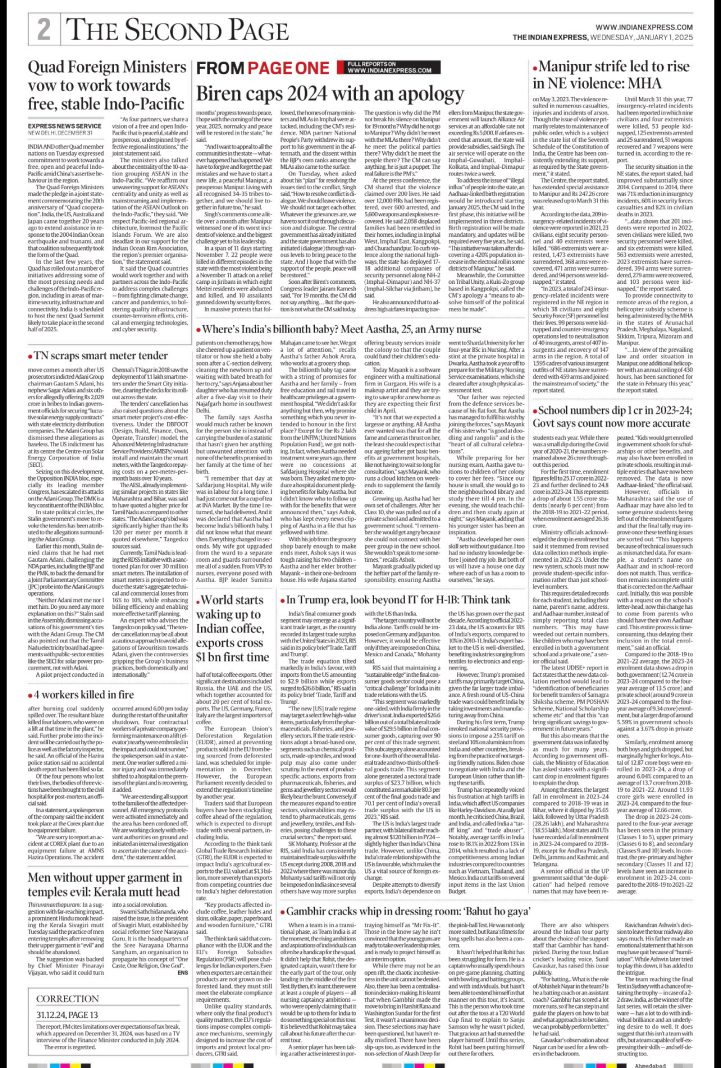
On the 31st of December, The Indian Express published a story based on Finance Minister Nirmala Sitharaman’s interview wherein she said that there are limitations in providing relief to the middle class through tax tweaks. It, however, turned out that Indian Express passed off Sitharaman’s old interview with Times Now as recent to spread propaganda against the Finance Minister ahead of the Union Budget 2025-26.

In the report headlined “FM cites limitations over expectations of tax break”, Indian Express reported that on “Monday” Finance Minister said that “she wishes to ‘do more’ for the middle class, but highlighted that there are ‘limitations’ in providing relief through tax tweaks.”

The report further reads, “The statement comes ahead of the Union Budget 2025-26, which, given the slow- down in consumption demand, has raised expectations of significant tax concessions for the middle class, and support for the low-income population.”

The Indian Express article also quoted a statement Sitharaman made during the said Times Now interview wherein she said, “I respect the issue of giving relief to the middle class. I wish to do more, but there are limitations in taxation. To make a difference for salaried people, the standard deduction was in CC. I respect the issue of giving relief to the middle class. I wish to do more, but there are limitations in taxation. To make a difference for salaried people, the standard deduction was increased from Rs 50,000 to Rs 75,000 (in the last Budget).”

While the FM Nirmala Sitharaman indeed made this statement, it was not during any recent interview but on a Times Now interview on July 2024.

The Indian Express report was published on the 13th Page of its newspaper. On the 1st of January, the news publication retracted its propaganda story and published a “correction” instead of apology. Even the ‘correction’ was buried in the smallest bottom-left corner the newspaper’s second page, evidently to escape accountability.

“The report FM cites limitations over expectations of tax break which appeared on December 31, 2004, was based on a TV interview of the Finance Minister conducted in July 2024. The error is regretted,” the Indian Express said.

ISIS terrorist Shamsud Din Jabbar behind New Orleans attack, was part of US army, sold firearms online: What we know so far

On Wednesday (1st January) morning, a terrorist identified as Shamsud Din Jabbar deliberately ran his pickup truck over a crowd, killing at least 15 people and injuring 30 others.

The incident occurred in the French Quarter neighbourhood in New Orleans city of the United States. Jabbar was 42 years old and a US Army veteran.

Jabbar was neutralised by the police in a gunfight. The Ford pickup truck, used by him to orchestrate the terror attack, was equipped with an ISIS flag.

According to the Federal Bureau of Investigation, Shamsud Din Jabbar did not act alone. The authorities have recovered a handgun, AR-style rifle guns and multiple Improvised Explosive Devices (IEDs) including pipe bombs from his vehicle.

They have also seized similar explosives from other parts of the neighbourhood. Reportedly, three men and a woman were spotted in surveillance footage planting those IEDs.

Shamsud Din Jabbar was wearing a ballistic vest and helmet when he stepped out of his pickup truck and fired at the law enforcement authorities.

While speaking about the incident, New Orleans Police Superintendent Anne Kirkpatrick stated, “This is not just an act of terrorism. This is evil.”

The FBI also found videos uploaded by Jabbar on social media, wherein he expressed his allegiance to ISIS and desire to kill people. Although the said videos were uploaded several hours before the attack, no action was taken to stop him.

According to journalist Andy Ngo, Shamsud-Din Jabbar worked as an information technology specialist at one point in time. He used to sell firearms online from Houston city in Texas.

The ISIS terrorist joined the US army in 2007. He served in Human Resources and IT Department and was deployed to Afghanistan between 2009-2010. He left the US Army with the rank of staff sergeant in 2020.

According to reports, Shamsud Din Jabbar was arrested for theft in 2002. He was re-arrested in 2005 for driving with an invalid licence. Both those offences were classified as ‘misdemeanours’ and he was fined only $100.

It had only come to light that he was married twice. His second wife had even filed a motion for a restraining order against him.

In the aftermath of the terror attack, a college football game that was scheduled to be played at the nearby Superdome was postponed till Thursday (2nd January).

Khalistani terrorists killed in Pilibhit encounter were trained by Pakistan’s ISI, terror attack in Gurdaspur planned in Canada and the US

0

Three Khalistani terrorists killed in Pilibhit’s Puranpur are discovered to have links to Pakistan. The leader of their group, Khalistan Zindabad Force (KZF), is based in the country. The perpetrators fled to Uttar Pradesh after throwing a grenade at a checkpoint in Punjab. Such attacks are reportedly being carried out by Pakistan’s intelligence agency, Inter-Services Intelligence (ISI) in exchange for Rs 2,000 to Rs 3,000. Similar to the slain drug-addicted terrorists, other young people are also falling victim to this growing problem. Moreover, the ISI and Pakistan are actively supplying weapons to the Punjab area.

According to a report by Dainik Bhaskar, the terrorist attack on a checkpoint in Punjab’s Gurdaspur is part of a larger plan orchestrated in Canada and the United States. The report stated that three meetings were held in the two countries in 2023 to plan attacks on Indian police, supply weapons and train terrorists. Since these meetings, there has been a surge in attacks on checkpoints and police stations. Over the last two years, around 20 similar incidents have taken place in Punjab.

The Superintendent of Police (SP) Pilibhit disclosed that the KZF recruited these culprits to execute the assault for a mere Rs 2,000 to Rs 3,000. He noted that this terrorist organization functions directly from Pakistan, where its leader, Ranjit Neeta, is broadening his operations. Besides providing weaponry, the ISI is also offering terrorist training to Sikh youth at various locations within the country. Reports suggest that numerous training camps have been set up in Pakistan for this purpose. Furthermore, the ISI is even assisting Khalistani factions in their fundraising initiatives.

The acquisition of these funds is facilitated through activities such as extortion, ransom and drug trafficking. The ISI and multiple Pakistani agencies are actively involved in the distribution of drugs and weapons into Punjab. In the last two years, drones have been observed flying over the Punjab border on more than 200 occasions. Although the Border Security Force (BSF) frequently intercepts and destroys these drones, some manage to escape. These unmanned aerial vehicles are known to transport drugs and firearms. The weapons recovered from terrorists neutralized in Pilibhit are of foreign manufacture, raising suspicions that they were transported through the same route.

The ISI has broadened its operations to encompass seven states and 30 cities across India. This network not only covers Punjab but also includes districts with a notable Sikh demographic in Haryana, Uttar Pradesh, and Uttarakhand. Funds are dispatched directly via hawala networks for actions that cannot be achieved through cross-border smuggling. Terrorists like Wadhwa Singh Babbar and Neeta are involved in these activities with the support of ISI. Several Khalistanis have also been killed in Pakistan. Punjab Police, Uttar Pradesh Police and intelligence agencies are on high alert regarding these developments.

Meanwhile, in the Pilibhit case, the local police are leaving no stone unturned in their investigation. The police have recently taken into custody a man named Sunny, who helped the terrorists in renting a room in Puranpur. Several other individuals have also been detained for questioning in connection with this case. It has come to the attention of the authorities that the three terrorists who were killed were drug addicts and had procured intoxicating capsules from a pharmacy in Puranpur. The police have visited the facility to conduct further inquiries.

On 23rd December 2024, three terrorists of the Khalistan Zindabad Force were eliminated in a police encounter. They had been involved in a grenade attack on a police checkpoint in Gurdaspur, Punjab, a few months earlier. The operation was carried out by a joint team of Uttar Pradesh and Punjab Police. The terrorists were identified as Gurvinder Singh, Virendra Singh also known as Ravi and Jaspreet Singh alias Pratap Singh.

Maharashtra: 11 Naxals surrender before CM Devendra Fadnavis at Gadchiroli police station, receive monetary aid for rehabilitation

0

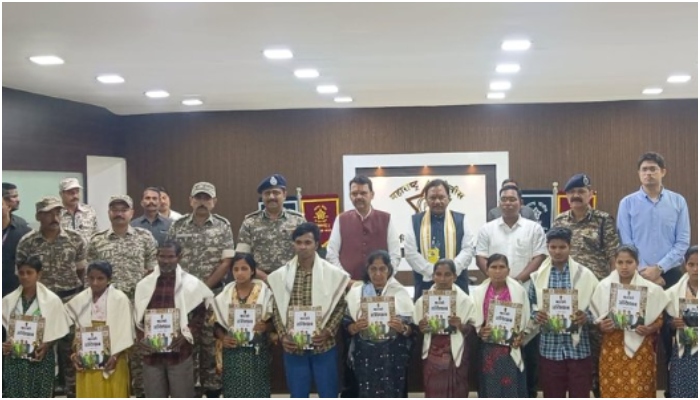
In a major victory, on Wednesday, 1st January, a total of 11 naxals including Tarakka Sidam surrendered before Maharashtra Chief Minister Devendra Fadnavis at Gadchiroli Police headquarters. This happened during Fadnavis’ visit to the district. “This is a very important police station because Maoists dominated this area. Our police have established their outpost by demolishing the Maoist dominance. The area is being developed, a road is being developed which will connect us with Chhattisgarh. Mobile towers are also being installed,” he said.

While addressing the issue of Maoism last month, the CM had taken cognizance of the 33 Naxals that had been killed in the last year and said that the North Part of Gadchiroli district had become completely ‘Naxal-free’. Fadnavis also said that as many as 55 Naxals have been arrested and 33 have surrendered in the same period.

Speaking during the winter session in the state assembly earlier he said, “North Part of Gadchiroli district is completely Naxal-free. 33 Maoists have been killed, 55 Maoists have been arrested, 33 Maoists have surrendered, in the last year”. He further said that the government would continue its fight against Naxalism and fix a timeline of three years to crush the left-wing extremism.

“1500 youths of Gadchiroli have joined the police force, out of which 33 youths are Naxal victims, the main leader of Maoists Giridhar, and his wife have surrendered, Giridhar had recruited the cadre of South Gadchiroli, the government’s goal is to eliminate Naxalism in the coming 3 years,” he was quoted as saying.

“The threat of Naxalism is not limited to remote areas only. Many front organizations have been formed. They are trying to shake the faith in the Constitution through an ecosystem. Many of these organizations try to rescue the arrested Naxalites. They create a safe haunt for them,” he added.

In the given case, it is said that the 11 Naxals who have surrendered before Maharashtra CM will be offered monetary assistance from the state for rehabilitation. These were carrying a collective bounty of Rs 1.03 crore and were involved in attacking security personnel.

Notably, the most prominent among the surrendered Maoists was Dandkaranya Zonal Committee Member Vimla Chandra Sidam alias Tarakka. Tarakka had been involved in the Naxalism movement for the past 38 years. Maharashtra CM meanwhile also felicitated C-60 commandos and officers for bravery in anti-Naxal operations.

“Maharashtra will soon become free of Naxal menace given the rise in the number of Maoists laying down their arms and the movement failing to attract recruits,” he noted.