Home Blog Page 581

Will buying second-hand cars now cost more? Read what the recent changes in GST on used cars mean for buyers

On Saturday, the Goods and Services Tax Council decided to make the GST on used cars uniform for businesses. As per the new rule, the GST payable for the purchase and sale of all kinds of used cars will be 18%, which was earlier 12% for some categories of cars. Moreover, the GST for used Electric Vehicles has also been raised to 18%.

However, the individuals buying or selling used vehicles will need to pay GST at the existing rate of 12%.

The GST on used cars has attracted strong opposition from opposition parties, with AAP chief Arvind Kejriwal alleging that govt is breaking the dreams of the middle class by increasing taxes on old vehicles. He alleged that “BJP government at the center is working only for the rich and industrialists.”

It is notable that the GST Council is comprised of finance ministers from all the states, apart from the union govt’s representatives. For voting in the Council, the centre’s vote weightage is 33.33%, while the rest 66.67% comes from the states, including opposition-ruled states. All decisions of the GST council must be approved by a minimum of three-fourths of weighted votes (75%) of the members present and voting.

Therefore, it is wrong to blame only the central govt or the union finance minister for the decision. It was approved through voting by states and the centre.

Now coming to the GST on used cars, it is important to note that this is not a new provision, the tax was already there on buying and selling of used cars. This GST is payable by used car dealers, and the tax is calculated only on the margin the used car dealer makes, not the total price of the car.

For example, if a used car dealer buys an old car for ₹5 lakh and sells it for ₹5.5 lakh, the GST payable will be 18% of the margin ₹50,000, which will be ₹9,000. But if such a transaction is done by an individual and not by a business establishment like a dealer, the GST rate will be 12%.

Earlier, the GST on used ‘small vehicles’, which is vehicles below the length of 4000 mm and engine capacity below 1200cc, was 12%, while the vehicles with above this numbers were already taxed 18%. For diesel vehicles and SUVs the engine size limit was 1500cc. This means, now the 12% slab for used cars has been removed, and all used cars will attract 18% GST.

Therefore, if we take the above example, the earlier GST for a car below 1200cc bought from a dealer was 12% or ₹6,000, and now it will be 18% or ₹9,000, representing a hike of ₹3,000. Although any hike in price is not desirable from the consumer’s point of view, the hike for most cars bought by middle-class individuals will not be prohibitive.

Most people in India buy entry to mid-level cars, costing below ₹10 lakh. As the price for used cars will be much less, the additional GST for the purchase of such used cars will also not be much.

It is notable that the 18% GST on used cars remains lower than the GST on new fuel-powered cars, which is 28%. Larger cars also attract additional cess at various rates based on size and engine capacity, and total tax on a new vehicle can go up to 50% for diesel SUVs above 1500cc and longer than 4 metres.

However, the inclusion of used electric vehicles in the 18% bracket is surprising, as at present the GST on new EVs is 5%. This represents an anomaly as the tax is now much higher on used electric vehicles compared to new EVs, which is not the case with fossil fuel vehicles.
Delhi Police step up efforts to identify, deport illegal Bangladeshi immigrants

0

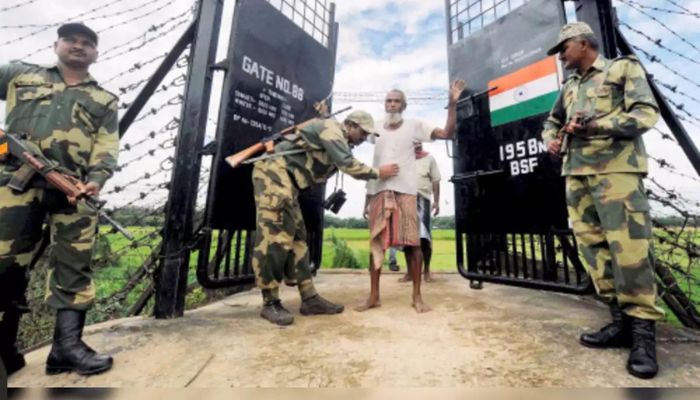
Delhi Police has stepped up efforts to identify, detain and repatriate Bangladeshi immigrants living in the National Capital, without valid documentation.

“In response to growing concerns about the illegal stay of Bangladeshi immigrants residing in the country without any valid Indian document, the Outer District Police has stepped up efforts to identify, detain and repatriate individuals living in National Capital, Delhi without valid documentation,” as per an official release.

A series of operations/joint checking have recently been conducted in the jurisdiction of the Outer District.

“Dedicated teams from Police Stations and Special Units including District Foreigner Cell officials were formed to carry out intensive searches and gather information to trace illegal Bangladeshi Immigrants across the district,” the release read.

During these operations/joint checkings, door-to-door checkings have been conducted.

175 individuals have been found to be under suspicion residing in the jurisdiction of Outer District. Thorough interrogations have been conducted and their documents have also been carefully checked and verified. Teams were sent to their native places to authenticate their identities in coordination with the local police in their respective areas, the release read.

This comes amid claim over illegal Bangladeshi immigrants in the national capital.

On December 15, Delhi Chief Minister Atishi wrote to Union Home Minister Amit Shah, accusing the BJP-led Central government of settling a “large number” of “illegal Rohingya migrants” in Delhi without consulting the state government.

Atishi claimed the issue has persisted for years and called on the BJP-led central government to provide the Delhi government with a complete list of Rohingyas and their addresses.

Additionally, she also demanded that no further rehabilitation of Rohingyas in Delhi should take place without consulting the Delhi government and its residents.

In a counter-allegation, Delhi Bharatiya Janata Party (BJP) President Virendra Sachdeva accused the Aam Aadmi Party (AAP) of settling illegal Rohingya migrants in Delhi to secure their vote bank.

Speaking to ANI, Delhi BJP President Sachdeva said, “Rohingyas and Bangladeshis are taking away the rights of Delhi’s citizens. These illegal immigrants must be removed, and we have made repeated demands to this effect. Delhi belongs to its residents and the people of India. The AAP is settling foreigners in Delhi and must answer for this… Hardeep Puri ji has already clarified the matter. We have not allocated any housing to Bangladeshis or Rohingyas. AAP is doing so for their vote bank politics.”

Kerala: CPI(M) leader says ‘communal Muslim alliance’ behind Rahul and Priyanka Gandhi’s poll victory in Wayanad

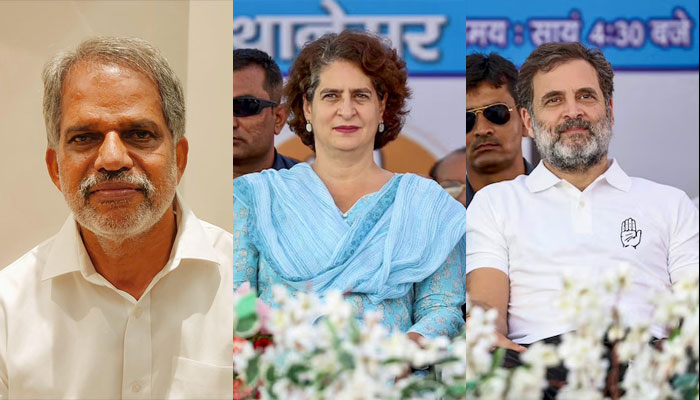
On 21st December, Communist Party of India (Marxist) politburo leader A Vijayaraghavan said that the reason behind the poll victory of Congress leaders Rahul Gandhi and Priyanka Gandhi from the Wayanad Lok Sabha seat was because of a “communal Muslim alliance.” Vijayaraghavan’s remarks came during the district conference of the Left party at Sultan Bathery.

Vijayaraghavan said, “Two persons have gone from Wayanad (Rahul Gandhi and Priyanka Gandhi). With whose support? With the strong support of the communal Muslim alliance. Without their support, was it possible for Rahul Gandhi to reach Delhi? He is the Opposition leader. Who were in the front and back rows of the processions of Priyanka Gandhi? The worst extremist elements in the minorities were in them. They were with the Congress leadership. Without the support of the communal Muslim alliance, was it possible for Rahul Gandhi to reach Delhi?”

According to Vijayaraghavan, Suresh Gopi was able to win Lok Sabha seat and reach Delhi only because Congress did not handle the elections carefully. He accused the opposition alliance in Kerala of not taking the correct stand at the centre. He said, “Their main enemy is the Left. They do not mind even if Kerala is destroyed”.

Notably, during the Lok Sabha elections held in early 2024, CPI(M) strategised to lure Muslim voters in Kerala by highlighting issues that were popular among the community, including the Citizenship Amendment Act and the Gaza war. However, the party failed to gain the trust of Muslim voters and lost the Hindu voters for the CPI(M)-led LDF as well.

Vijayaraghavan’s attack on Congress, claiming the grand old party got support from Muslim organisations, is in fact in line with the strategy the party had adopted after the Lok Sabha elections in 2014. Following the realisation that CPI(M) lost its Hindu vote bank, the party has been trying to win back Hindu votes.

In the recently held by-elections for the Palakkad and Chelakkara assembly seats in Kerala, and the Wayanad Lok Sabha seat, CPI(M) was seen trying to approach Hindu voters. Interestingly, CPI(M) was also seen attacking Muslim political parties in the region. In a statement, Chief Minister of Kerala, Pinarayi Vijayan, called the state president of IUML, Sadiq Ali Shihab Thangal, an “activist of the Jamaat-e-Islami.”

He said Jamaat-e-Islami stood for an “Islamic regime” and added that the “extremist section” was trying to “gain influence in the Indian Union Muslim League.” IUML is part of the Congress-led United Democratic Front in Kerala. It is also a part of the I.N.D.I. Alliance at the national level.

Working along the lines of wooing Hindu voters, CM Vijayan also attempted to link Jamaat-e-Islami with the Congress Party just a month before the by-elections for the Wayanad Lok Sabha seat. He stated that now-MP Priyanka Gandhi was contesting the elections with the support of JeI, which, according to him, was not in favour of the democratic system.

Taliban-style treatment becoming common place in Bengal? Woman stripped and assaulted by Muslim mob, Suvendu Adhikari demands justice

On Saturday (21st December), West Bengal BJP MLA Suvendu Adhikari highlighted the case of a female Trinamool Congress (TMC) leader, who was attacked and stripped by a Muslim mob.

In a tweet, he said the incident occurred in Shyamsundarpur village in Purba Medinipur district of West Bengal. The area falls under the jurisdiction of the Nandakumar police station.

According to Suvendu Adhikari, a Muslim mob attacked the family of the victim and stripped her naked. They then proceeded to assault her and loot her belongings.

He informed that the police did not take action against the accused because they constituted the core vote bank of Mamata Banerjee’s party.

“Under Mamata Banerjee’s rule, they can do whatever they want by pointing their thumb at the law. The administration cannot do anything. It does not matter whether the victim is a Hindu leader of the Trinamool party. Because if the victim is a Hindu and the attacker is a Jihadi, it is clear as day which side the police administration will lean on,” he emphasised.

Suvendu Adhikari said that the BJP and Vishwa Hindu Parishad (VHP) are providing the necessary assistance to the family of the victim. He also appealed to the Hindu supporters of the TMC and pointed out that only the BJP can protect them.

Taliban-style justice in West Bengal

In June this year, a woman was subjected to Taliban-style public flogging in West Bengal’s Uttar Dinajpur district by a TMC leader’s close aide.

A video of the incident was shared by CPI(M) leader Mohammed Salim, in which a local Bahubali leader Tajemul was seen assaulting a married woman and a man lying helplessly on the road in the name of ‘summary Justice’.

Sharing the video of the assault, CPI(M) leader and former Rajya Sabha MP Salim stated that the main accused seen in the video was a local TMC goon nicknamed ‘JCB’.

A similar case was reported from the Phulbari area of West Bengal’s Jalpaiguri district. A woman reportedly died by suicide after she was beaten up by a group of people from her village panchayat.

The woman’s husband said, “My wife ended her life by drinking some poisonous substance after some women from the village beat her up in front of the panchayat. I complained to the police that my wife died because of these women as she could not bear the humiliation of being summoned to the kangaroo court and being beaten up publicly.”

‘Attempt to start a civil war in India’: Petition filed in Bareilly over Rahul Gandhi’s caste census remark; Court issues notice to the Congress leader

0

The Bareilly District Court has issued a notice to Lok Sabha Leader of Opposition and Congress MP Rahul Gandhi regarding his comments on the caste census during campaigning for parliamentary elections. The court issued a notice to Gandhi, directing him to appear on January 7.

The notice comes in response to a petition filed by Pankaj Pathak, who alleged that the remarks were like an “attempt to start a civil war in the country.”

“We felt that the statement given by Rahul Gandhi during the elections on caste census was like an attempt to start a civil war in the country”.

Initially, the petition was filed in the MP-MLA court, where it was dismissed. However, the petitioner pursued the matter by appealing to the District Judge Court. “Our appeal was accepted there, and a notice was issued to Rahul Gandhi,” Pathak said.

The petitioner emphasized that the statement by Gandhi had the potential to incite division and unrest within the country, necessitating judicial intervention.

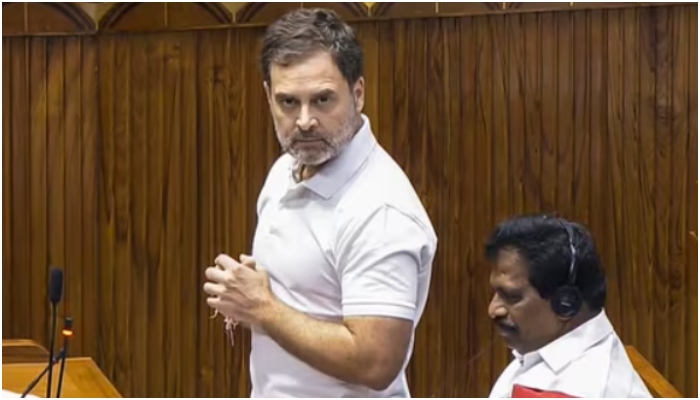
Meanwhile, Rahul Gandhi continued to demand the resignation of Union Home Minister Amit Shah on Friday, claiming that there has been an “Akraman on Samvidhan” (Full attack on Constitution) and that that the Bharatiya Janata Party, PM Modi and Union Home Minister Amit Shah did a grave mistake insulting B R Ambedkar.

Posting about the remarks in his accounts on his social media accounts (Facebook and Instagram), Gandhi said, “BJP, Narendra Modi and Amit Shah have committed the biggest mistake of their lives by attacking the Constitution and insulting Baba Saheb. India will not forgive this mistake. The Home Minister should apologize and resign.”

He posted a montage of the multiple protests, marches and speeches Congress has taken out since the remarks of Amit Shah on Ambedkar.

Gandhi also highlighted a speech of his parliament, comparing it as a fight between Manusmriti and the Constitution, saying that one side defends the constitution

“It is written in the Constitution, prohibition of discrimination on grounds of race, caste, religion and place of birth…There is a battle taking place today in India. This side (pointing to his MPs) are the defenders of the idea of the Constitution,” he had said in his speech in Parliament. 

(This news report is published from a syndicated feed. Except for the headline, the content has not been written or edited by OpIndia staff)

Uttar Pradesh: Akeel poses as a Hindu to trap a divorced Hindu woman in Kanpur, rapes her, pressurises her for conversion

On 20th December, a divorced Hindu woman filed a complaint at Naubasta Police Station, Kanpur, Uttar Pradesh, accusing a man named Akeel of raping her and pressurising her to convert to Islam. She also accused him of attempting to extort Rs 5 lakh from her using obscene videos.

Initially, the police facilitated a compromise between the victim and Akeel. However, when the harassment did not stop, the woman approached the Additional Deputy Commissioner of Police (ADCP), who ordered an investigation into the matter.

Background of the case

According to media reports, the incident took place in the Dada Nagar area of Kanpur. The victim in this case is a divorced Hindu woman from Barra who works in a factory where the accused, Akeel, was employed as a contractor. When Akeel approached the victim, he claimed that he was single. However, it was later revealed that he was already married.

Furthermore, Akeel hid his true identity and posed as “Baua” to befriend the victim. He promised to marry her and coerced her into a physical relationship multiple times. The victim said in her complaint that she resisted a physical relationship with Akeel, but he did not pay heed to her.

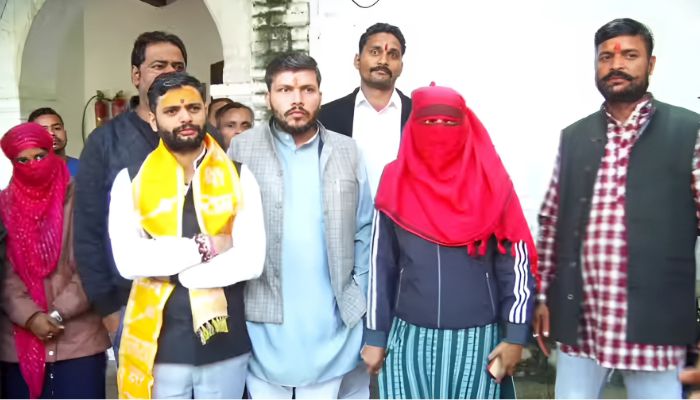
Hindu organisations came in support of the Hindu woman. Image: abplive

The victim told the police that Akeel took her to several hotels and recorded obscene photos and videos of her. During that time, the victim became pregnant. When Akeel came to know about the pregnancy, he forced the victim to undergo an abortion. Eventually, the victim discovered his real identity, that he was a Muslim man, and also came to know that he was already married.

When the victim confronted him, Akeel started pressurising her to convert to Islam. The victim categorically refused to convert, after which Akeel resorted to blackmailing her using the explicit photos and videos. The victim alleged that Akeel attempted to extort Rs 5 lakh from her.

When she was left with no options, the victim approached Akeel’s wife. When she told his wife about her ordeal, instead of helping her, Akeel’s wife and his three brothers-in-law brutally assaulted the victim. Following the incident, the woman approached the police to file a complaint. However, no substantial action was taken by the police at that time. On 5th December, the police facilitated a compromise between the victim and Akeel’s family.

Following the compromise, Akeel did not stop pressurising the victim to give him Rs 5 lakh and convert to Islam. On 20th December, the victim finally decided to approach the ADCP and told him her ordeal. The ADCP took cognisance of the matter and directed the Naubasta police station to investigate the matter. Hindu organisations have come forward in support of the victim. They have expressed concerns over increasing instances of love jihad in Kanpur and demanded strict action against Akeel.

Mohali building collapse: Rescue operations enter second day, FIR registered against owners

0

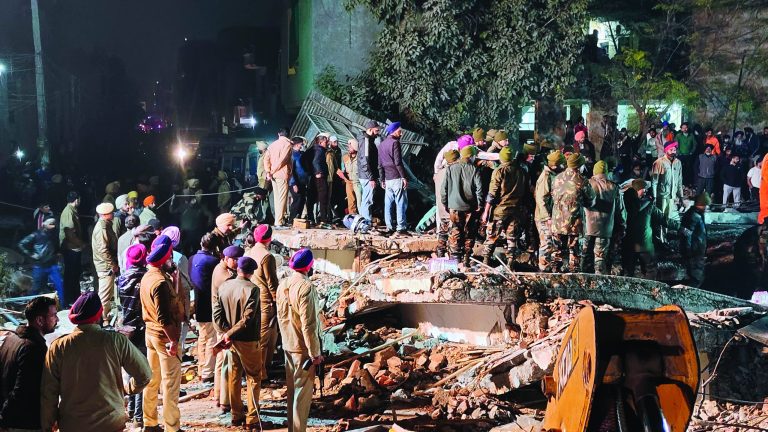
Rescue operations by the personnel of the Indian Army and NDRF continued on Sunday a day after a multi-storey under-construction building collapsed in Punjab’s Mohali.

Speaking to ANI, DSP Harsimran Singh Bal said, “The clearance operations are ongoing. We have registered the FIR against the owners of the building.”

A victim of the incident, Drishti Verma succumbed to injuries. “She was rescued from the debris by the National Disaster Management Force in critical condition. She was rushed to Sohana Hospital,” said Viraj S Tidke, officiating Deputy Commissioner.

On Saturday, Punjab Chief Minister Bhagwant Mann said that action will be taken against the culprits behind the collapse of the under-construction building.

In a post on X, CM Mann said, “Received sad news of an accident of a multi-storey building near Sohana in Sahibzada Ajit Singh Nagar (Mohali). Full administration and other rescue operations teams are deployed at the spot. I am in constant touch with the administration. We pray that there is no loss of life and property, action will be taken against the culprits. People are requested to cooperate with the administration.”

Indian Army along with NDRF and State rescue teams have been relentlessly working to address the crisis.

In a post on X, the Indian Army said, “Indian Army reacted swiftly for the rescue. In a remarkable display of coordinated efforts, Indian Army Columns along with NDRF and State rescue teams have been relentlessly working to address the crisis. Engineer Task Force with debris clearance machine & JCBs are operational at the site. Top debris removed & efforts being done to reach the basement.” 

(This news report is published from a syndicated feed. Except for the headline, the content has not been written or edited by OpIndia staff)

American woman dies in Assam after speeding truck hits her motorcycle in Lumding

0

A lady rider from the USA died in a road mishap at the Lumding area in Assam’s Hojai district on Saturday, police said.

According to police, the lady identified as Elaine Berry Thompson, a USA national was coming from Silchar towards Dhemaji riding a motorcycle when a speeding truck hit her bike in the Lumding area.

Rupam Bordoloi, Additional Superintendent of Police of Hojai district told ANI that, police have seized the truck.

“At around 12-45 pm, we received information about an accident. When our police team reached the spot they came to know that a USA national was involved in that accident and that lady was identified as Elaine Berry Thompson. She was rushed to the hospital, but doctors declared her brought dead. The victim might be involved in some social work. She was coming from Silchar towards Dhemaji. We have seized the vehicle (truck),” Rupam Bordoloi said. Further investigation is underway.


(This news report is published from a syndicated feed. Except for the headline, the content has not been written or edited by OpIndia staff)

As locals demand reopening of Sterlite Copper plant in Tamil Nadu, here is how the closure is harming Indian economy and posing challenges for future

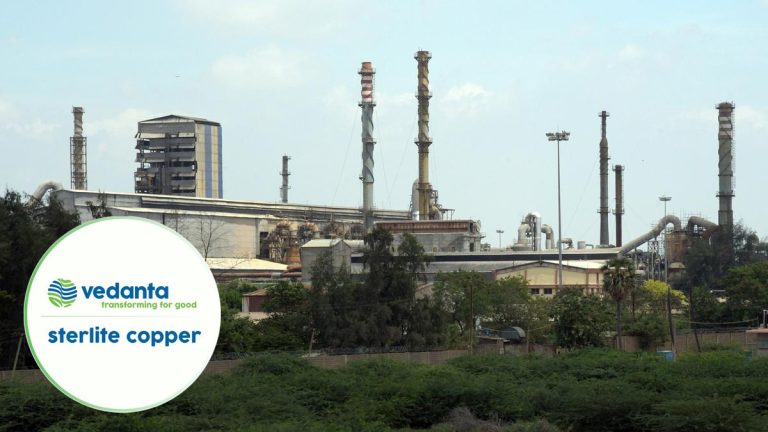
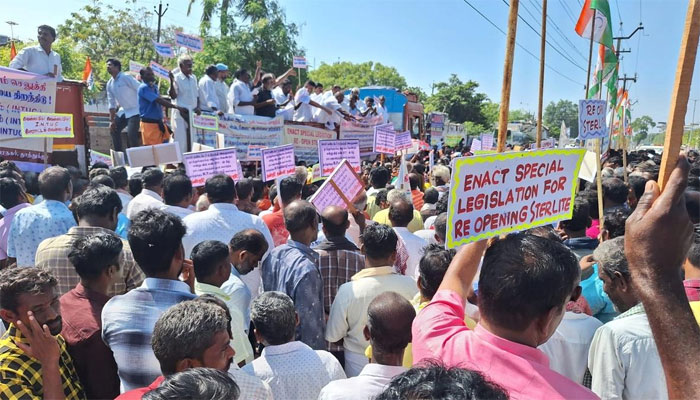
On 20 December, protests erupted at Thoothukudi in Tamil Nadu, demanding the reopening of the Vedanta’s Sterlite Copper Plant which was closed on the Tamil Nadu government’s order, which was supported by courts. Indian National Trade Union Congress (INTUC) staged the protest demanding to revive the copper plant along with other closed industries and provide relief from the widespread joblessness in the area.

While the closure of the copper plant has resulted in the loss of over 1500 direct jobs and over 40,000 jobs, the impact of the shutdown over alleged pollution is much bigger on the Indian economy. Notably, in just one stroke of a court order, India became a net importer of copper while it was a net exporter of the vital metal before the shutdown of the Sterlite Copper plant in 2018.

The closure of the Sterlite Copper plant had such widespread ramifications on the country’s copper trade that from being one of the top five exporters of copper cathodes in 2017-2018, India became a net importer beginning 2018-2019. Sterlite Copper accounted for roughly 38% of the country’s copper needs as the smelter produced nearly 4 lakh tonnes every year.

One of the most concerning developments as a result of the closure is that China has become a major beneficiary of the decision, as it is a major producer and exporter of copper. This has put a major blow on India’s Atmanirbhar Bharat campaign, as copper is a vital metal used everywhere like automobiles, electricals, and electronics.

The situation is expected to worsen in future, as demand for copper is set to rise due to rapid growth in several industries that use copper. As per estimates, copper demand will rise by over 9.3% annually to reach around 2.5 – 3.5 million metric tons by 2030. This demand is going to be fuelled by several industries, including renewable energy, electric vehicles, power grid expansion, rabid urbanisation etc.

As part of the Modi government’s push for solar energy, India will need around 1.5 million tonnes of copper by 2030 for solar and wind energy. Copper is essential in the production and transmission of electricity as it is used in equipment like alternators and transformers. It is also an essential metal used on solar photovoltaic panels.

There is no doubt that the world is moving towards an era of Electric Vehicles, and India will not be an exception. Electric motors require large quantities of copper, and therefore, the sector will account for huge copper demand. On average, an EV car has 83 kg of copper, while EV buses use, 224 kg of the metal. With the govt’s target of 30% EVs by the year 2030, the copper demand is set to soar.

Additionally, with the rapid urbanisation in the country along with initiatives like the Smart City project, copper demand will increase due to the increased use of electricity and various equipment. India plans to increase its power grid by 20% by 2030, and copper’s role in high-efficiency transmission is crucial. It is estimated that demand for copper in electrical infrastructure to hit 1.8–2 million tonnes by 2030.

As a whole, India’s per capita copper consumption is 1 kg now, which will reach 3.2 kg per capita by 2047. As per estimates, India needs 1 new copper smelter every 4 years, and reviving facilities like the Sterlite plant is important.

The shutdown of the plant created a vacuum in India’s copper production and transformed the nation from a net exporter to a net importer of copper. Before the plant’s closure, India exported around 50% of its copper output. With the Sterlite plant offline, India’s copper exports fell by 70%. For instance, exports dropped by 90% in 2018–2019, from 378,000 tonnes in the previous year to just 48,000 tonnes.

According to a report by CUTS International, the closure of the Sterlite plant cost India ₹14,749 crore, affecting the economy and copper supply.

Copper production is a high-return investment, with almost 400% return on investment. Therefore, domestic copper production can be a massive boost for the economy. On the other hand, importing copper means enriching other countries that export copper to India to fill the gap created by the Vedanta plant shutdown.

India’s loss is a gain for China, Pakistan and others

To meet domestic copper demand, India’s copper import increased by a huge margin, with the majority of imports coming from China. As a result, China’s copper exports to India have doubled, which was worth $340.12 million in 2023. India imported over 300 thousand tonnes of copper in 2023-24, with 363,000 tonnes of refined copper. Imports grew by 13% in just 2 years.

With India out of the picture as a major copper exporter, the global copper supply has become tighter. This allowed Chinese companies, with their robust manufacturing and smelting infrastructure, to secure better prices and terms.

China remains a major consumer of copper due to its dominance in the manufacturing sector, and other countries have benefited by taking India’s place in exports to China. This includes Pakistan, which took India’s place and its copper export to China was valued at approximately $752 million in 2023.

Another major beneficiary is Saudi Arabia, as Vedanta group has signed a MOU to invest $2 billion in major copper projects in the country. The company took the decision after the Supreme Court repeatedly rejected its pleas to reopen the Thoothukudi plant. The company plans to open a 400 KTPA greenfield copper smelter and refinery and a 300 KTPA copper rod project. Vedanta’s investment is expected to contribute $19 billion to Saudi Arabia’s GDP.

This shift of investment from India to Saudi Arabia is a significant setback for Tuticorin and India. Continuing the plant with adequate pollution control measures would have boosted the local economy, creating jobs and driving infrastructure development in Tamil Nadu.

Foreign hand

It has been alleged since the beginning that the anti-plant protest was foreign-funded, which was also alleged by Tamil Nadu Governor R N Ravi last year. Strikingly, it has also been alleged that Chinese companies which had an economic interest in Indian copper import were behind the protests that led to the closure of the plant. Vedanta Limited had told the Madras High Court that the Chinese companies promoted and funded the agitations and protests against Sterlite.

It has been alleged that the NGOs that led the protests against the Sterlite Copper Plant violated the Foreign Contribution Regulation Act (FCRA) by continuing to accept foreign funds even after the cancellation of their FCRA registrations. This includes Church groups Tuticorin Diocesan Association, Tuticorin Multipurpose Social Service Society, and preacher activists Mohan C. Lazarus and Henri Tiphagne.

The FCRA registrations were cancelled in 2015 based on adverse reports received from the intelligence agencies. Their bank accounts were also frozen. However it was alleged that they continued to receive foreign donations, violating the law.

Sterlite Copper Plant closure – Protests erupt in Tamil Nadu as locals regret shutdown’s impact on employment, govt urged to reopen the plant

On 20th December, members of the Indian National Trade Union Congress (INTUC) staged a protest demanding immediate action from the government to revive local industries and provide relief from the widespread joblessness in Thoothukudi, Tamil Nadu. Notably, Thoothukudi was once a thriving industrial hub. However, following the closure of key industries, including the Sterlite Copper Plant, the region has been grappling with a severe unemployment crisis.

When the Sterlite Plant was shut down following environmental concerns and violent protests, more than 1,500 workers were displaced. The closure indirectly impacted the livelihoods of around 40,000 individuals. Following the Sterlite shutdown, several other industries, such as textile mills, thermal power plants, Food Corporation of India warehouses, salt pans, and other small- and large-scale businesses, were shut down in the region. Many families were forced to leave the district in search of better opportunities so that they could have a sustainable livelihood.

Impact on the local economy

Every sector in the region has been affected by the downfall of the industrial hub. Truck owners, who previously relied on transporting materials for Sterlite, were forced to sell their vehicles as they were unable to pay their loans. Around a million daily wage workers have been left unemployed. Many businesses in the region that relied on industrial demand have now been forced to shut their shutters.

General Secretary of INTUC, P. Kathirvel, stated that factors such as the automation of Thoothukudi port, modernisation of the traditional spinning mills, and urban expansion have further deepened the economic challenges in the area.

Calls to reopen Sterlite

Interestingly, INTUC has highlighted that if the Sterlite Copper Plant reopens in the area, it could create jobs for around 3,000 truck operators, 4,000 daily wage workers per shift, and hundreds of port workers. Furthermore, around 400 downstream industries that relied on Sterlite could be restarted. INTUC General Secretary P Kathirvel said that many truck owners were forced to sell their trucks for being unable to repay the loans following the closure of the plant.

The protesters emphasised that the plant played a crucial role in generating around Rs 5,000 crore in annual revenue for the state and union governments. It used to contribute 40% to the nation’s copper production.

Government urged to act

The Sterlite Copper Plant was closed down following sustained opposition citing environmental concerns. However, many locals now believe that the decision was not justifiable, as it was influenced by external pressures. INTUC has accused the government of neglecting its responsibility to revive the local economy. Kathirvel said, “The Sterlite plant’s closure has crippled Thoothukudi’s economy, and the government must prioritise its reopening to restore livelihoods and economic stability.”

With the unemployment crisis worsening in the region, the demand to reconsider industrial shutdowns has resonated strongly among local communities. It has marked a substantial shift in public sentiment towards prioritising economic revival over the ideological resistance that played a vital role during the protests against the Sterlite Copper Plant.

The closure of the plant

The locals and environmental activists had been protesting against the plant for a long. In March 2018 massive protests started against the plant. The Police had opened fire at the protesters outside the plant leading to the death of 13 people. The protesters had claimed the plant was causing pollution in the area. Following the closure, Vedanta moved to National Green Tribunal (NGT) to get permission to reopen the plant. NGT granted permission, but the Tamil Nadu government moved to Supreme Court. The apex court stayed the NGT order and allowed Vedanta to approach High Court for reopening of the plant. The High Court refused to allow Vedanta to reopen the plant, after which the company moved to Supreme Court, where the case is pending.

Notably, in 2021, Vedanta Group got permission to reopen the plant to provide medical oxygen during the Covid pandemic. TN government had appealed to the apex court that the plant should provide oxygen only to the state but the court rejected it. It operated for three months and then the premises were again shut once the second wave was subsidised. In December 2021, there were reports that the locals had claimed they were cheated in the name of the protests and wanted it to reopen.