Home Blog Page 5901

Maharashtra: Governor invites NCP to stake claim for government after declining to extend time for Shiv Sena to gather support

Just moments after Shiv Sena leaders led by Aditya Thackeray met the Maharashtra governor to inform that it is willing to form the government, both NCP and Congress clarified that they have not sent any letter of support for Shiv Sena. The governor had given a deadline of 7.30 PM today to Shiv Sena to inform its willingness and ability to form the government. Accordingly, Sena leaders met governor Bhagat Singh Koshyari and informed that they are willing to form the government, but needed two more days to show its ability to do so.


Although media was reporting that NCP has decided to form an alliance with Shiv Sena and Congress was giving outside support, actually Shiv Sena is yet to receive any formal support from both the parties. Just after Sena leaders met the governor, a press release issued by Congress party said that they are yet to make a decision. The statement said that Sonia Gandhi has spoken to Sharad Pawar, and will hold further discussions with NCP. Most importantly, the statement was silent on any communication with Shiv Sena or support for the party.


The Congress statement makes it clear that they had not extended their support to Shiv Sena yet. Similarly, NCP also has not sent any letter of support to the Governor. Congress leader Manikrao Thackeray told the media that neither Congress nor NCP has sent any letter to the governor.


As the governor declined to extend the time given to Shiv Sena to stake a claim, the time given to it has expired, which means Shiv Sena can’t form the government now.

And in latest development, the governor has invited the leaders of NCP, the third-largest party, to meet him. According to reports, NCP had been given 24 hours to stake a claim to form the government. As Congress has already informed that it is in talks with NCP, it is likely that they will extend their support to NCP. But they still do not have enough numbers, and NCP-Congress alliance will need Shiv Sena’s support.


Addressing media, NCP leader Ajit Pawar said that governor called him and asked to meet him. He said that he has no idea why the governor invited him, and added that he will be meeting the governor along with Chhagan Bhujbal, Jayant Patil and others. He is meeting the governor today itself.

NCP leader Nawab Malik said that the party will take a final decision tomorrow after discussions with Congress. He said that NCP has been called by the governor to form the govt, and they have been given 24 hours to stake a claim for the government.

It will be interesting to see whether Shiv Sena will support NCP after they were unable to procure a support letter from them in time. They broke the alliance with BJP for their demand of CM post, and has been saying that there will be a Shiv Sena chief minister in the state, therefore it is unlikely that they will be supporting a NCP led government.

BJP had emerged as the single largest party by winning 105 seats and Shiv Sena 56, in the 288-member Maharashtra Assembly. On the other hand, the NCP and its ally, the Congress, won 54 and 44 seats, respectively.

Kalyan Singh, Class of 92: 6th December, 1992 a matter of National Pride, No Regret, No Repentance, No Grief

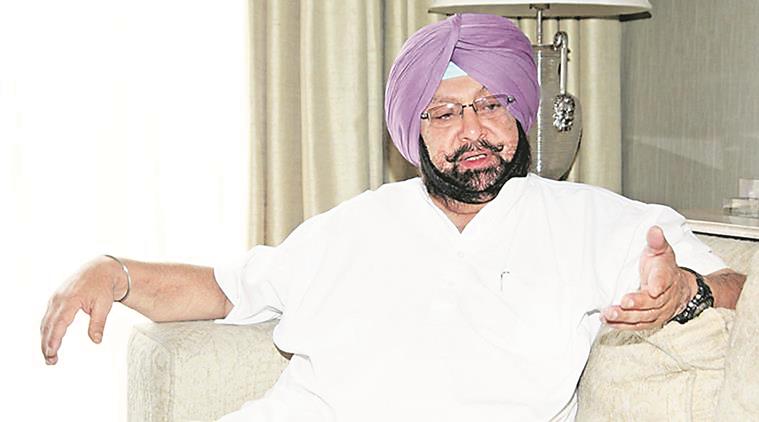
After centuries of struggle, a Bhavya Ram Mandir at Ayodhya will soon be constructed at Ram Janmabhoomi. In a historic verdict, the Supreme Court of India handed over the sacred site to Hindus while Muslims were allotted five acres of land as an alternative. Over the years, there have been numerous people who have made an immense contribution to the movement to ensure the construction of the Temple at the sacred site. One of the key figures of the Ram Janambhoomi Movement under whose watch the Babri Masjid was demolished was then Chief Minister of Uttar Pradesh, Kalyan Singh.

As Chief Minister of the state, it was his responsibility to maintain the law and order around the disputed structure.

In the aftermath of the demolition, Kalyan Singh resigned from his position the same evening taking moral responsibility for the events that transpired. Earlier, he had submitted an affidavit in the Court that he will not permit any damage to the mosque.

Read: Hindus have been demanding restitution since 1528 for the Ram Temple destroyed by Islamist barbarians, Rajeev Dhavan

In the CBI chargesheet that was filed following the investigation, charges of criminal conspiracy were filed against him and other top leaders of the BJP. The chargesheet alleges that Kalyan Singh at his swearing-in-ceremony as Chief Minister, along with veteran Murli Manohar Joshi and others, visited Ayodhya where they allegedly swore a sacred vow to construct the Temple. Singh is alleged to have said that “in his tenure as Chief Minister, UP, a temple of Shri Ram will inevitably be constructed.” In addition to that, it is claimed that a few days prior to the incident, he said, “Rok construction per lagi hai, destruction par nahi (‘the stay is on construction, not on destruction’).”

The CBI also alleged that consistent with the conspiracy to demolish the disputed structure, the state government acquired 2.77 acres of land in October 1991 “under the pretext of developing the same for tourism purposes.” It further states, “it is further evident from the investigation that Kalyan Singh in order to achieve the objectives of the criminal conspiracy as aforesaid not only failed to live up to its promises to protect the disputed structure but continued to aid and abet the criminal conspiracy to ensure its destruction.”

According to the CBI, Kalyan Singh said in a public address at Lucknow in 1993, “Vivadith dhanche ki suraksha na kar pane ka unhe koye afsos nahi hai, kyonki ve 464 saal purana gulami ka chinh tha (They don’t regret not being able to protect the controversial structure because it was a 464-year-old symbol of slavery).”

Kalyan Singh, throughout the course of his political career. has refused to express any regret for what happened in 1992. In an interview to NDTV in 2009, Singh again reiterated his stance and declared when pressed on the issue, “No regret. No repentance. No sorrow. No grief.”
[youtube https://www.youtube.com/watch?v=1D9Vnza-Lt4]

During the interview, Kalyan Singh said, “I had made all the necessary security arrangements. I instructed the authorities to take all measures necessary to protect the structure but there was one thing more that I said. Lakhs of Kar Sevaks were present but no bullets will be fired. This was my order.” He continued, “And it is not of the fault of any authority, they followed my orders. If I had allowed it to happen, thousands of people would have died, from bullets and stampede, and the structure still wouldn’t have survived.

The journalist was as obtuse and as insensitive towards Hindus that only an NDTV journalist could be. He said, “You decided to divide crores of people to save the lives of a hundred.” In an astonishing advertisement of unveiled bigotry, the interviewer said, “A thousand Kar Sevaks would have died if you had fired bullets as per your own estimation. To save yourself from that sin, you committed the sin of dividing crores of people.”

Kalyan Singh, during the interview, proudly said that he did not commit the sin of murdering Kar Sevaks. He also said, “Many people say that the events of 6th of December, 1992 are a matter of national shame. I say that the 6th of December, 1992 is not a matter of national shame but of national pride.”

The former Chief Minister of Uttar Pradesh also said that what happened on that fateful day was only a culmination of events that started long ago. Kalyan Singh said that indications that the structure was about to go down started when Murthis were placed inside the Masjid during the Congress regime. The incident he was referring to occurred in 1949 when Murthis ‘magically appeared’ inside the Babri. The chief architect of that endeavour is said to be Mahant Digvijay Nath of the Gorakhnath Muth, the same Muth whose current Mahant is the Chief Minister of Uttar Pradesh, Yogi Adityanath.

Read: Three Generations, One Dream: Here’s why Yogi Adityanath considered the Ram Mandir his life’s mission

Kalyan Singh continued, “Then, the locks were opened for Ram Lalla’s worship, not Khuda ki Ibadat, whose government was it in the Centre and State? Congress. After that, the Shilanyas happened there, Shilanyas did not happen for a Masjid, Shilanyas happened for the Temple, under whose rule did that happen? Congress.”

The Liberhan Commission, which was constituted by Indian government ten days after the incident, to investigate the destruction of the disputed structure claimed that Kalyan Singh maintained a “studied silence” even at the height of the crisis in December 1992 and “refused to allow even a single measure which might impede the Ayodhya campaign or prevent the assault on the disputed structures, the journalists or the innocent people”.

About the actions of the state government, it said, “The very fact that the Chief Minister of the state of Uttar Pradesh, its ministers and its mandarins supported the destruction with tacit, open, active and material support at every step, but did not make it part of the officially stated agenda lends overwhelming credence to the fact that they were aware of the gross illegality and impropriety they were guilty of. It would be reasonable to conclude that they were conscious of their acts and conduct ensuring the achievement of their concealed intent to demolish the disputed structure.”

It continues, “Kalyan Singh, his ministers and his handpicked bureaucrats created man-made and cataclysmic circumstances which could result in no consequences other than the demolition of the disputed structure and broadened the cleavage between the two religious communities resulting in massacres all over the country. They denuded the state of every legal, moral and statutory restraint and willfully enabled and facilitated the wanton destruction and ensuing anarchy.”

The report further stated, “Chief Minister Kalyan Singh stood on guard against the possibility of any pre-emptive or preventive action by the Central Government or the Supreme Court of India or the other courts or any other institution. He and his trusted lieutenants spared no lies before the highest authorities of the land to befool them and to tie their hands with the niceties of our constitutional democracy.”

For his part, Kalyan Singh rubbished the contents of the Liberhan Commission report in the aforementioned NDTV interview. It is also pertinent to mention that the report was submitted seventeen years after the incident after being given 48 extensions on the 30th of June, 2009 when the Home Minister was P. Chidambaram, who is now imprisoned for his alleged involvement in high-profile scams.

Kalyan Singh has earned immense respect for his conduct during the Ram Janmabhoomi Movement. At no point of time has he expressed any regret over what happened on that fateful day. He did not open fire at the Kar Sevaks and he sacrificed his position as the Chief Minister for it. For that, he remains one of the icons of the Hindutva Movement.

Maharashtra: Shiv Sena stakes claim to form government without enough numbers as Congress yet to decide on supporting them

The political imbroglio in Maharashtra may finally come to an end as Sena leaders including Aditya Thackeray today visited Raj Bhavan to meet the Governor and informed that they will be forming the government in Maharashtra. Although Shiv Sena didn’t make a formal claim to form government, only informed the government that it is willing to form the government, but said that it needs more time to show that it is able to do so.


Yesterday, the governor had asked Shiv Sena, the single largest party, to explore the possibility of forming government, and had asked to indicate its willingness and ability to do so. Governor had approached after BJP had replied with no to a similar query. Governor had given time till 7.30 PM today for Shiv Sena to respond, and accordingly, Shiv Sena met the governor within the deadline and informed him that they are willing and able to form the government. Talking to reporters after meeting the governor, Aditya Thackeray said that they have sought 2 more days to come up with support from other parties, but that request was denied. He said that the claim to form the government was not denied, but only the request for two more days was declined.


Although several media houses had reported that Congress has faxed/sent its letter of outside support to Sena led government to the governor, a press release issued by Congress party said that they are yet to make a decision. The statement said that Sonia Gandhi has spoken to Sharad Pawar, and will hold further discussions with NCP. The statement was silent on any communication with Shiv Sena or support for the party.

Earlier it was reported that that NCP will be an alliance partner of Shiv Sena while the Congress party may provide outside support to the alliance for the formation of the government in the state. Three other independent MLAs including Bacchu Kadu also reached Raj Bhavan to show their support to Shiv Sena led government.

According to the sources, if Shiv Sena is able to form a government, party chief Uddhav Thackeray will be the chief minister of the state, while NCP’s Ajit Pawar, who once mocked farmers’ plight drought by saying if he should pee in the dams to end their irrigation woes, will be deputy CM.


The Shiv Sena had consultations with Sharad Pawar’s NCP and Congress party for the formation of government in the state. According to reports, Uddhav Thackeray talked to Sonia Gandhi over the issue. The Congress Working Committee met this morning to discussed the matter.

As governor has refused to grant more time to Shiv Sena, and the party has not been able to gather the required numbers to form the governor, it is up to the governor to take the next decision on the matter. If Congress party does not support Shiv Sena, probably president’s rule will be the only option.

Shiv Sena shunned its alliance partner BJP over the disagreement over the post of the chief minister. Sena had contended that they had a “pre-poll agreement” over what it calls 50-50 formula in which the state will have rotational chief ministers. However, BJP led by Devendra Fadnavis outrightly denied having any discussions with Sena regarding the same.

The disagreement soon escalated with Shiv Sena supremo Uddhav Thackeray pulling the plug on the deliberations with the BJP and declaring in a press conference that he does not need Amit Shah and Devendra Fadnavis to form government in the state. When questioned if he is contemplating on joining hands with Sharad Pawar’s NCP, he had then proclaimed that Shiv Sena is exploring all the options available in front of it for forming its government in the state with its chief minister.

Financial Times publishes a shredded Indian Tricolour in its anti-Modi article, netizens enraged

Western media is in the habit of disrespecting Indian customs, rituals, and even achievements. Of late, they have been trying to insult just about anything Indian. Financial Times has just published an article where they have shown the Indian national flag in tatters.

Article in FT disrespects Indian flag, via Twitter

In the Article titled “Narendra Modi has had a free pass from the west for too long”, the Financial Times displays a featured image that has the Indian Tricolour in tatters. The Ashok Chakra in the middle of the flag has been depicted as broken into pieces.

Read: Dear New York Times, India has chosen Modi 2.0, deal with it

The disrespectful image that undermines a sovereign nation’s dignity and symbols has been drawing a lot of ire from social media users.


Via Twitter


Written by one Gideon Rachman, the said article criticises the Modi government over decisions of the Article 370 abrogation, Assam NRC and such and calls it anti-Muslim. However, it neglects to mention the issue of illegal immigration and Islamic terrorism.

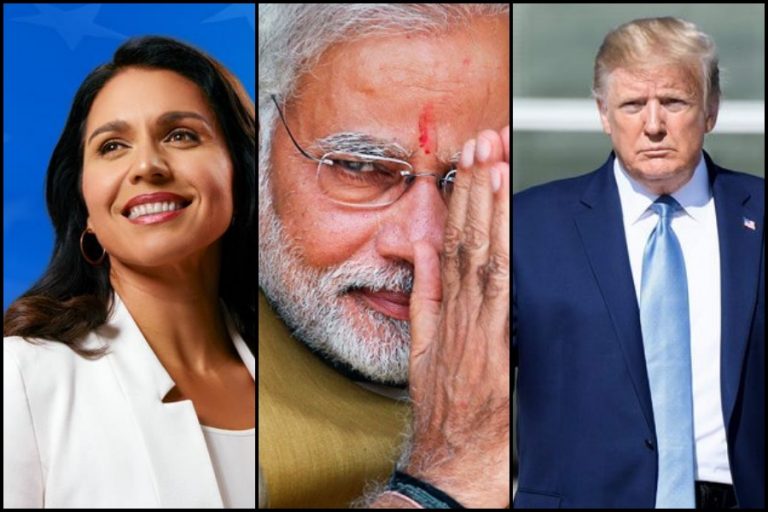
Interestingly, it also quotes constant fear-mongers likes Amartya Sen and Pratap Bhanu Mehta to validate the points. The author of the article calls US President Donald Trump and PM Narendra Modi as ‘ideological soulmates’ and tries to peddle the colonial narrative that the ‘West’ somehow should get to decide who should rule India.

Read: New York Times asks America and China to come together to stop “India’s Folly” on Jammu and Kashmir

Though many social media users also seem to be mistaking the publication as a part of the Times of India group, even for a foreign publication, such blatant disrespect for a sovereign nation’s national flag has alarmed many Indians.

Six things that follow from the new Shiv Sena-NCP-Congress govt and what the Hindus of India should learn from this

Who could have imagined that this would one day come to pass? A Shiv Sena government in Maharashtra, facilitated by the Congress and the NCP! On the other hand, who is surprised? With the ever-growing dominance of the BJP, it is natural for other parties to band together in “creative” ways, to secure themselves from being destroyed root and branch.

First of all, will this Maharashtra experiment last?

Of course not. How could it? In the last few years, we have seen multiple such arrangements cooked up to stop the BJP in its tracks. The latest was Karnataka, where Congress and JDS were left holding just 1 seat each out of 28 in the state. There was Bihar, where the RJD has now been wiped out completely. And the lesser said about the fate of the Mahagathbandhan in Uttar Pradesh, the better.

The evidence leaves no room for doubt. These desperate arrangements are bad form and people know it. The BJP sitting in opposition in Maharashtra, having won 105 out of 152 seats it contested. Meanwhile, parties that either performed quite poorly (like Shiv Sena) or were rejected outright by people (Cong and NCP) will be in charge of the state.

A government that will be universally mocked, enjoy little legitimacy in the eyes of people and will be struggling under too many contradictions to deliver. Collapse is in order, likely followed by-elections where people will not forgive them for stealing a mandate.

As Atalji had said, antarvirodhon si ghiri hui sarkar…

Importance of getting 272+

The situation in Maharashtra underlines why the single-party majority for BJP at the Center was so crucial. Imagine if the Central government could be held to ransom on a day to day basis like what is happening at the moment.

If BJP had got 271 seats, we could even have ended up with Rahul Gandhi as Prime Minister and Narendra Modi as leader of the opposition. People of the country realized this possibility, shuddered at it and voted decisively to make sure it would never happen.

Where does BJP in Maharashtra go from here?

Not very far, actually. They are in a very comfortable position, at the receiving end of universal sympathy across the state. The job of the opposition here is almost too easy because people will give this new government no leeway from Day 1.

And as and when this government falls, the electorate will be extremely severe with all three parties.

Yes, the arithmetic of elections is weighted in favour of Shiv Sena + NCP + Congress. But betrayal is not taken lightly by the voters. If you want to see, look no further than Karnataka. I am not even talking about 2019. I am talking about 2008. The BJP faced much deeper “structural problems” with its geographic footprint in Karnataka. But the JDS betraying the BJP in 2008 changed everything and brought the BJP 110 seats (majority mark = 113/224) in the election. The second round of Congress and JDS betraying mandates in 2018 gave the BJP entry into parts of Karnataka it had never penetrated before.

So this is betrayal is really a chance for BJP to get the quantum jump it needed to reach a majority of its own in Maharashtra.

This also shows the power of 272+. With its comfortable majority at the Center, the BJP has the risk appetite to wait a year or two in hope of a bigger harvest later on. Instead of falling for short term blackmailing by allies. The Congress situation is just the opposite: devoid of all kinds of power, they have to do accept whatever terms anybody is willing to offer.

So who are the real losers here?

BJP will be back and in better shape. The other parties get a bite at power. The real losers here are the people of Maharashtra and the people of India.

India’s most economically significant state will now be in the hands of a short term, stumbling government that will just be marking time in office. The only achievements this new government aspires to and possibly could achieve are: completing 100 days in office; completing 200 days in office and so on until somebody falls over and pulls the plug. That does nothing for the people.

What happens to Indian liberalism from here?

Indian liberalism is in for exciting times, with the Shiv Sena as their new champions. But if you think you can embarrass Indian liberals now that they are with Shiv Sena, think again. The ‘liberals’ that we see are almost universally stool pigeons, happy to burst into song in support of anyone with the backing of Sonia Gandhi’s court.

So expect to hear a lot about a new youth icon, with much potential on Youtube and beyond. Even Achche ladke, perhaps. You might hear anecdotes about their soft side, their modern and progressive outlook and everything beyond. The last young sensation was celebrated even for getting into a TV serial style family fight with his uncle.

The show will go on. Until the time voters get to have their say.

And finally, what does Hindu right in India learn from this?

The Maharashtra experience has a valuable lesson for the Hindu right, both on and off social media. You may not like everything BJP does. You might complain about the speed of delivery.

But the fact is that BJP remains the best bet and only bet if you care about Hindutva issues. Nobody else will even humour that line of thinking.

Ayodhya makeover: Ram Mandir-style railway station, Lord Ram’s statue on the banks of Saryu, airport and much more

A day after the verdict ruled in favour of building a grand Ram Temple at the disputed site in Ayodhya, the mayor of the town, Rishikesh Upadhyay has revealed majestic plans for the beautification of the city. In an exclusive interview with Zee Media, Upadhyay has unveiled a detailed roadmap for the beautification of the town.

“The ancient city of Ayodhya will be transformed into a major pilgrimage centre. An Ayodhya Pilgrimage Development Council will be established that will be responsible for developing the city with the state-of-the-art modern infrastructure to promote tourism and connectivity,” Upadhyay said.

Divulging the details of the modernisation plans envisaged, Upadhyay said that a 151-metre tall statue of Lord Ram will be installed on the banks of river Saryu river in Ayodhya. In addition, a Ram Museum in the city is also envisioned where house artefacts and antiquities that were found by the ASI in their excavations will be kept for display.

Recently, the Yogi Adityanath government in Uttar Pradesh had released funds worth Rs 441 crores for the construction of the Ram statue, which is slated to be the world’s tallest.

Read: Yogi Adityanath government allocates Rs 447 crores for 221-metre tall Ram statue in Ayodhya

With the Supreme Court verdict paving the way for the construction of a magnificent Ram Temple, the government is planning to develop the city of Ayodhya as a major cultural and religious centre that will attract tourists from all over the world.

Besides, the railway station of Ayodhya will be beautified on the lines of the Ram Temple with the investment of Rs 100 crores. An airport in the ancient town of Ayodhya is also envisioned by the government. They have homed in on May 2020 as the deadline for starting first flight to and from Ayodhya. The Bus stand in Ayodhya will be built according to the international standards with state-of-art facilities.

The Yogi government has indeed been focusing on Ayodhya as a major hub for religious pilgrimage, and culture. Since 2017, the UP government has been organising grand Diwali celebrations in the city.

Read: Ayodhya’s grand Deepotsav finds spot in the Guinness Book of World Records

Ten 5-star hotels will be coming up in Ayodhya, whose construction will commence in December. Proposal for construction of 5 world-class resorts in Ayodhya is also floated with the concerned authorities. All major public-spots and parks in Ayodhya will be gentrified to boost tourism. A proposal for medical college, provision for under-ground cabling is also conceived.

The government plans to come up with a ”Raen Basera” which can accommodate 10,000 people. Connecting India with Ramayan circuit, a 4-lane road between Ayodhya to Chitrakoot, Installing ten gates dedicated to Lord Ram in Ayodhya, Setting up of Ayodhya Pilgrimage Development Council and the construction of a 5-km long flyover connecting Ayodhya with Faizabad are some of the important points of the development roadmap shared by the Ayodhya Mayor.

Read: Indian Railways to introduce Shri Ramayana Express, tracing Lord Ram’s epic journey

The Supreme Court pronounced the much-awaited verdict in the protracted Ram Janmabhoomi-Babri Masjid dispute case, handing over the disputed land to the central government for the development of a grand temple dedicated to Lord Ram. The Hindus have maintained that the disputed land in Ayodhya was the birthplace of Lord Ram, on which Mughal general Mir Baqi built a mosque in consonance with Babur. The apex court had granted 5-acres of land elsewhere to the Sunni Waqf Board on which they can build a mosque.

The Hindu history and heritage of Kerala: The land of the Chera kingdom associated with Lord Parashurama

Kerala, in its present-day form, is claimed to be a shining example of multi-religious hotpot, where all the religions and communities claim to have a larger influence on the region’s history than their actual historical presence allowed. Here’s a critical look at the various myths that float around pretending to be real history.

Kerala: The land of the Cheras

Kerala as the land of Chera kingdom existed as early as 5-4th centuries BCE during the early Tamil Sangam age. The Chera dynasty finds mention in Mauryan Ashokan edicts (3rd century BCE) and also in the Hindu epics Ramayana and Mahabharata. It was the prominent ruling power of Kerala then. The Chera dynasty appears in Ashokan edicts as Ketalaputo or Keralaputra in Sanskrit. Greco-Roman sources of that era called Cheras as Kerobothra and Kelebothra. This means apart from the Tamil title ‘Cheraman’, the Chera kings also had Keralaputra as their Sanskritic title. The capital of Sangam age Chera kings was at modern Karur region in Tamil Nadu.

Contrary to the claims of Leftists, Dravidianists, and Christian missionaries, Chera kings were staunch followers of Vedic culture. Sangam age text named Pathitrupathu poem 21 (a work praising Sangam age Chera kings) explicitly mentions that the Chera kings performed Vedic Yajnas by offering oblations into the sacred fire. An epilogue from Pathitrupathu also narrates about how a Chera king washed the Idol of Goddess Kannagi (from the epic Silappathikaram) in holy waters of Ganga in the North implying that the people of Kerala back then viewed the waters of Ganga as sacred, just like the modern Hindus.

After the 4th century CE, the Sangam age came to an end and the situation of the Cheras and the other chieftains of Kerala after the 4th century till around 8th century remains unknown. During this era, many other kingdoms like Kadambas, Chalukyas, Kalabhras etc might have invaded Kerala and claimed supremacy over the Cheras and the other chieftains of Kerala.

The Cheras re-appear in Kerala history around 8th-9th centuries CE. This time, their rule was based at Mahodayapuram or present-day Kodungallur region in central Kerala. These second Chera kings were also known as Perumals. The kings of the second Chera kingdom included Kulashekhara Azhavar, one of the 12 Azhvars or Vaishnava saints and Cheraman Perumal Nayanar or Rajashekhara Varma who was one of  63 Nayanmars or Shaivite saints. During this period the Chera kingdom under the central rule of Perumals was divided into various regional states known as nadus. Hindu temples played a great role in the culture of Kerala during the era of Chera Perumals. The great sage Adi Shankara Bhagavatpada also lived during the period of Perumals.

The myth of St. Thomas

There is a myth floating around that St Thomas, one of the disciples of Jesus Christ, visited ancient Sangam age Chera kingdom and managed to convert people, especially the Brahmins, into Christianity. But Sangam age inscriptions or literature doesn’t contain any such reference for the presence of Christians during such an early period in Kerala. In all likelihood, it is a myth propagated in the later period by Syrian Christians who came to Kerala after Sangam age to legitimize their ‘nativeness’.

The myth of the Muslim Chera king

Like the Christian myth of St Thomas. there is also a myth surrounding the conversion of Last Chera Perumal into Islam and that he met the Islamic prophet Muhammad in Arabia after going on a pilgrimage there. Further, the myth goes that one of world’s oldest mosque was built in Chera capital at Kodungallur on the order of converted Perumal. In reality, the second Chera kingdom ruled by the Chera Perumals was established only during 8-9th centuries CE and the last Perumal reigned during 11-12th centuries CE, which is centuries after the time of Muhammad, making this too absurd a claim to even seek evidence. 

The seeds of modern Kerala

The rule of the Chera Perumals declined around 11-12th centuries CE. The Cheras during this time fought battles with invading Chola forces. After the 12th century CE, Kerala was divided into various small kingdoms or Natturajyangal. Kolathu Nadu, Kozhikode or Calicut, Cochin and Venad (later Travancore) were the 4 most prominent kingdoms during post Perumal period. Most of the rulers and nobles of these small kingdoms were drawn from Nambuthiri Brahmin and Nair community.

During this era of Nambuthiri and Nair leadership, the culture and political condition of Kerala went on a rapid change. This period witnessed an unstable, chaotic political condition and also saw the rise of rigid social systems. Although this period is viewed by many as a ‘dark age’ in Kerala history, it was certainly not the case since literature, art forms, temples, mathematics, astronomy, external trade etc flourished during this period. The modern culture of Kerala as we know it can also be traced to this era.

A language entwined with the Hindu tradition

Malayalam as a distinct language from Tamil as we know it today also evolved during this period. Malayalam authors like Ezhuthachan, Cherussery, Poonthanam, Kunjan Nambiyar, Unnayi Variyar, Kottayathu Thampuran, Venmani Nambuthiris, Pandalam Kerala Varma, Raja Raja Varma, Kottarathil Shankunni, Kunjikuttan Thampuran, Valiya Koil Thampuran, Ramapurattu Variyar, Ravi Varman Thampi etc made the bulk of contribution to the growth of mainstream Malayalam. These authors were all devout Hindus living in post Perumal era kingdoms. Also, the earliest known works in Malayalam, Thirunizhalmala and Ramacharitam, are about Aranumala Shri Krishna and Shri Rama, making Malayalam a ‘Hindu’ language developed through works of Hindu authors.

The invasions

The most powerful kings of Kerala after the period of Chera Perumals (after 12th century CE) were the Samuthiris or Zamorins of Calicut. Zamorins eventually became the Rakshapurushas or supreme overlords of Kerala. The Zamorins were able to thwart the efforts of Portuguese to colonize Malabar by defeating them in Chaliyam battle. However, the supremacy of Zamorins ended during the 18th century when Hyder Ali of Mysore invaded Malabar with the help of treacherous local Muslims of Malabar & Raja of Palghat (he paid the price for it since his kingdom too was later annexed by the Muslims). The Zamorin of that time committed suicide without submitting to Hyder, after burning the entire palace. He had sent his family members to the safety of southern Travancore. In meantime, Travancore was unified as a strong kingdom by the 18th century King Anizham Thirunal Marthanda Varma, who along with his Nair forces had defeated the Dutch at the battle of Colachel.

Read: The recurring myth of breast tax doesn’t seem to die down, this time propagated by ‘Scroll’

After Hyder, his son Tipu also invaded Malabar and thousands of Hindus were killed and temples destroyed during his jihad against the infidels. Many Hindus also fled to southern parts like Travancore to seek asylum from the jihad of Tipu. However, Tipu and his forces suffered a horrible defeat at the hands of the Nairs in Travancore during the battle of Nedumkotta. Tipu broke his leg and ran away, while the Nairs were able to recover his sword and ring from the battleground. He, however, came back a second time. But this time the region was flooded due to the opening of a dam in Travancore region by a Nair soldier named Kunjikutty Pillai. Tipu had to abandon his plan to invade Travancore because many of his soldiers along with armoury were washed away in the floods. Soon after this retreat, Tipu was killed by the British during the battle at Mysore. Malabar was annexed into British Raj while Cochin and Travancore remained as princely states until they both (unified as Thiru-Kochi) joined India during 1956 to form the modern state of Kerala.

As a whole, the land of Kerala was ruled by Dharmic Hindu kings throughout since its recorded history from early Sangam age. Kerala has no other ancient heritage other than the Hindu heritage.

Modern myths about Kerala Hindus

One of the stereotypes about Kerala Hindus is that beef is a normal part of their cuisine. Historically this was not the case in Hindu kingdoms of Kerala. In the old days, warriors of Kerala who were mostly from the Nair community, once trained in Kalaris, the schools of martial arts, took an oath to protect Brahmins and cows, as part of service to the king. This is recorded by Duarte Barbosa, a 16th-century Portuguese writer:

“The King then asks him if he will maintain the customs and rules of the other Nayres (Nairs), and he and his kinsmen respond ‘ Yes.’ Then the King commands him to gird on his right side a sword with a red sheath, and when it is girt on he causes him to approach near to himself and la, his right hand on his head, saying therewith certain words which none may hear, seemingly a prayer, and then embraces him saying ‘ Paje Gubrantarca, that is to say ‘ Protect cows and Bramenes (Brahmins)”

(The Book of Duarte Barbosa: An Account of the Countries bordering on the Indian Ocean, Volume 2)

A similar oath was made by the most powerful Nair kings of Kerala, the Samuthiris or Zamorins of Calicut before their royal coronation

 “At Yagneswaram he is met by Vemaneheri Namputiri, a descendant of Melattur Agnihotri. The Eralped (Zamorin) gives him an ola (text), promising to protect Brahmins, temples and cows.”

(The Zamorins of Calicut by K.V. Krishna Ayyar)

16-17th-century French traveller Pyrard de Laval also writes about reverence to cows given by people of Kerala.

” I must not forget to mention, in passing, and as the opportunity arises, the great honour rendered by these people to cows, however low-bred, filthy, and all covered with dirt and dung they may be. They are allowed to enter the king’s palace, and whithersoever their way leads, without anyone disputing their passage; even the king himself, and all the greatest lords, give place to them with the utmost respect and reverence, and the same with bulls and oxen.”

(The Voyage of Francois Pyrard of Laval, Volume 1)

Aithihyamala, a Malayalam work which is a compilation of various historical legends and folklore of Kerala by 19th-century author Kottarathil Shankunni, also mentions how the famous King of Cochin, Rama Varma Shaktan Thampuran, sentenced the culprit, a Moplah Muslim to death for killing a cow on the auspicious day of Shivaratri. In fact, the kingdom of Cochin itself was named after cows, as Gau-Shree Rajya.

What changed

Cows were sacred animals in Kerala as long as Dharmic Hindu kings ruled the lands. The sudden surge in beef consumption in Kerala is a recent phenomenon post-independence, with the abolishment of the monarchies and the honour codes they helped establish. Many traditional Hindus in Kerala abstain from beef even today and they are not any ‘lesser Hindus’. Those who do are sworn Leftists who do not identify as Hindu while propounding their political ideology but take on the Hindu identity only to legitimise beef as Hindu cuisine. What with the Dharmic code against cow slaughter gone with the Hindu kings’ political power, it’s a free run for the Abrahamic-Left conglomerate to paint their own canvas of fake history and folklore.

As stated in the beginning, Kerala is the land of Chera kingdom associated with Lord Parashurama, which produced Saint-Kings like Kulashekhara Azhvar, Cheraman Perumal Nayanar, Sages like Adi Shankaracharya, Intellectuals like Melpathur Narayana Bhattathiri, Sangamagrama Madhava, Nilakantha Somayaji etc and great Hindu warriors & rulers  like Vaikom Padmanabha Pillai, Raja Keshavadas, Kunjikutty Pillai, Kottayam Kerala Varma, Pazhassi Raja, Shaktan Thampuran, Marthanda Varma etc. No matter what the leftists and secularists claim, Kerala’s heritage is purely Hindu and no one can deny this fact.

Welcome to Lemurverse: Satirical world of ‘Dravidian’ politics where Lemurs and Red Pandas are locked in heated battle

An Aariyan Red Panda Kshatriya, ‘Kraken’ Bhattacharjee recently wrote about the churn in Indian Right Wing and about Raytas and Trads in form of two articles that were published on OpIndia. As the ‘Crown Prince of Red Pandas’, both of them left me a little disappointed as they focused on one part of political social media and their petty differences and had no mention of the part of Right Wing that is actually fun to be in and free from all forms of vicious toxicity that any conversation between Raytas and Trads often displays.

Thus, this is an attempt to introduce the participants, the backstory and terminologies of the twitter “Lemurverse” comprehensively. You may have likely come across people responding to each others with memes, pictures and gifs of Red Pandas, Raccoons, Monkeys, Lemurs and Squirrels with English written with gibberish spellings.

Read: ‘Rayta’, ‘Trad’ and everything in between: A gentle introduction to the Indian non-Left

You may have ignored them because they may not have made much sense to you at the time. This is the Lemurverse. The meme’s origins are unknown as the original participants who started the meme discourse are either not active on social media anymore or do not want to identify themselves as the progenitors.

Lemurverse is a satirical parody response to the ‘Dravidian’ politics of South India, especially Tamil Nadu. In Tamil Nadu a popular political discourse, which is inconceivably mainstream, is that ‘Dravidians’ of South India are an ethnically separate people, completely different from Aryans of North India. This is based on the popular theory of existence of a land called Lemuria. And although this theory is false, it gets official recognition from Tamil Nadu government, the political parties of Tamil Nadu and is even taught in schools! Much in the same way the Aryan Invasion Theory, Greatness of Sufi Islam, Evils of Hindu Society, etc. are widely accepted and constantly repeated without much demonstration of proofs.

The ‘Dravidian’ narrative combines several theories and myths. Firstly, the theory that there was a land mass joining Madagascar with India and Australia. This theory was first given by Philip Sclater, in 1864 to explain findings of bones from lemurs and related animals in South India and western coast of Australia when these animals are indigenous to Madagascar. When Continental Drift theory and Plate Tectonics theory emerged, this was discredited.

However, Dravidianists continue to promulgate this theory while associating Lemuria with Kumari Kandam, a mythical land in Tamil & Sanskrit literature. Secondly, the now discredited Aryan Invasion Theory is collated in the narrative. Along with the AIT, the work of 19th century Evangelist and Missionary of the Angelical Church, Bishop Robert Caldwell, is also used significantly to establish a separation identity between ‘Aryans’ & ‘Dravidians’ and to disassociate Tamil culture and Literature from its Hinduness while associating it with Christian underpinnings. Caldwell in his works disassociated and separated ‘Dravidian’ languages and Sanskritic languages.

When a separation of ethnic and linguistic identity is thus achieved, imagined victimhood begins. All sorts of things are blamed on Aryans, Dwija Varna Hindus- especially Brahmins, to justify toxic hatred of Hindu dharma. Myths like ‘Dalit women not being allowed to cover their breasts’ are often repeated and atrocity literature is manufactured. Words like Manuvaad, Brahmanvad, Brahminical tyranny get thrown around. The result is visible in the absolutely toxic nature of political discourse in Tamil Nadu, attacks on Brahmins where their Janeu/Yajnopavit/Poonal are cut. The Church nexus uses and promotes this narrative heavily in a bid to proselytize more and more Hindus.

Since, the narrative is based on finding ancient skeletons of Lemurs in southern India and the non existent land is called Lemuria, the participants of Lemurverse who masquerade as Dravidian moolnivasis take on the moniker of Lemurs. Consequently, people masquerading as the Aryan oppressors (Oppressors as per the Dravidian political narrative) take up the moniker ‘Aariyans’ and are Red Pandas.

You may have noticed that the narrative of hate for ‘Aryan oppressors of moolnivasis/dalits’ is not unique to Dravidian politics. And although, it is present throughout India, in Maharashtra it is especially pronounced and as such it gave many “Moolnivasi” icons such as Ambedkar and Phule. Thus, participants masquerading as moolnivasi of Maharashtra take on the moniker of ‘Shekru’, which is an indigenous species of Giant Squirrels found in Maharashtra.

The participants of Lemurverse also use many a words and phrases apart from deliberate misspellings of english words that an unaware reader may not understand such as Sarakku/Sarraku, tr00 laard/lawd, benchpressed, veeran, vandheris etc. Some of these words are from Tamil, others are misspellings and some others are misspellings of “code words” of sorts, to differentiate between a serious discussion and a satirical one, to avoid offending the uninitiated people and to hide twitter suspension. These can be daunting to decode for someone unaware of their meaning. So, here are a few of them explained.

Sarraku/Sarakku means alcohol and is often used while alluding to the free alcohol distributed by Dravidian political parties. Sarakku is often accompanied with “kauvva piryani” or simply “piryani”, a misspelling of Biryani. Kauvva or crow emphasizes the often questionable nature of the meat used in this free biryani, which can be anything from chicken to goats to beef to dogs.

Tr00 laard/lawd is a misspelling of True Lord, a reference to Christ. Another word used for tr00 lawd is hebooze, a play on the pronunciation of Jesus as hesus and turning water to booze. Other references to people include, Appa for Bishop Robert Caldwell who has become revered by Dravianists. Beam kaka & Flower kaka are Ambedkar & Phule, Thanthai is ‘Periyar’ E. V. Ramasamy. Veeran means brother and is used by Lemurs to refer to other Lemurs politely. Vandheris means outsider/invader and is used by Lemurs & Shekrus to refer to Red Pandas.

Armed with funny misspellings, unique sentence structure, onomatopoeia, and pictures of endangered animals, this meme discusses extremely serious issues like the nefarious network of the Church and its conversion activity or ‘soul harvesting’ through actively sowing such difference and animosity between people groups- the theory of Lemuria was popularized as a means to increase proselytization in Tamil Nadu; The Church’s interference in India’s politics through pastors guiding the vote of their parish; The ridiculousness of the Moolnivasi vs Aryan narrative; The stupidity of the apparent Dalit-Muslim socio-political alliance achieved through a false victimhood narrative and hiding or twisting of any news stories of conflict between them; And the use of alcohol addiction by the Church to manipulate people.

Here endeth the lesson.

Shiv Sena’s Sanjay Raut invokes fictional Dawood in current Maharashtra crisis

In an inferior rip-off of Emraan Hashmi’s Dawood character in the movie ‘Once Upon a Time in Mumbai’, Shiv Sena spokesperson Sanjay Raut today tweeted a famous dialogue from the movie- “Agar raaste ki parvah karunga toh manzil bura maan jaegi(If I care about the path, the destination will be offended)”


In the movie ‘Once Upon a Time in Mumbai’, a delinquent Emraan Hashmi playing the character of Dawood Ibrahim smugly responds back to the Police officer’s apprehensions about his chosen path. He says, “Agar raaste ki parvah karunga toh manzil bura maan jaegi” to assert that for him the end goal is more important than the chosen path.

[youtube https://www.youtube.com/watch?v=634318VlaQY]

The tweet from Raut came amidst the reports of Shiv Sena betraying its alliance partner BJP and forming the government in Maharashtra by aligning with their ideological opponents- NCP and the Congress party. Sena had already made it clear that it can go to any extent to fulfil its singular goal of installing a Shiv Sena chief minister in the state if that even means forming an alliance with NCP chief Sharad Pawar, who allegedly had dubious links with dreaded gangster Dawood Ibrahim.

Raut, known for shooting from his hips, cited gangster Dawood Ibrahim’s character’s dialogue from the movie to convey that he and his party do not care about the path so long as their aim of installing a Shiv Sena chief minister is accomplished. In the aftermath of the Babri Masjid demolition in December 1992, with communal tempers flying at an all-time high, Dawood and his dastardly men executed multiple bomb blasts across the city of Mumbai, killing several hundreds of innocent people, mostly Hindus.

Read: Prakash Ambedkar reminds how Sharad Pawar failed to get Dawood Ibrahim surrender

NCP chief Sharad Pawar was the chief minister of the state then who deliberately lied to the people of the state saying that there were 13 bombs blasts in Mumbai, one of the additional ones, which he conjured up supposedly happened in a Muslim dominated locality, thereby trying to portray that both Hindu and Muslim majority areas were attacked indiscriminately.

In addition to this, Ex R&AW officer NK Sood had alleged that Sharad Pawar had financial links with the D-company, especially Dawood Ibrahim and he played a pivotal role in stonewalling security agencies from nabbing the Mumbai blasts mastermind and facilitating him in his escape from the country. Furthermore, in the light of the recent documents that have come to the fore, it has been revealed that even senior NCP leader, Praful Patel had close ties with gangster Dawood Ibrahim.

To know Aaditya Thackeray’s ‘potential’, watch YouTube, says Shiv Sena leader Arvind Sawant

As the conundrum over government formation in Maharashtra continues, the political scenario in the state is becoming more comic by the passing hour.

Initially, it was just Shiv Sena’s Sanjay Raut using everything from poetry, movie dialogues and sly-commentary on the BJP to coerce it into agreeing for a Sena CM. Now other leaders also seem to have joined the melodrama.

Read: Maharashtra conundrum: Sanjay Raut desperate to form government, Sanjay Nirupam apprehensive over alliance with Sena

Shiv Sena MP Arvind Sawant, who had resigned from the post of a Union Minister in the NDA government earlier today, stated to the media that Aaditya Thackeray has a lot of potential and vision to become a true leader.


Speaking to ANI, Swant stated that Aaditya Should not be underestimated. If someone wants to witness the potential of Aaditya Thackeray, they should go and watch YouTube. “What a potential that young boy is having, There is true leadership. He is a visionary leader of the country.”

It is notable here that making Aaditya Thackeray the CM was the demand of the Shiv Sena that caused the crumbling of the pre-poll alliance in Maharashtra between BJP and the Sena.

After weeks of political tussle, BJP stood on its statement that no 50-50 formula was agreed upon and they had never agreed over Aaditya becoming CM.

Yesterday, the BJP, which is the single largest party in the elections, declared that it does not have the numbers to form a government and Shiv Sena should go ahead and stake a claim if they can.

A curious search to witness Aaditya Thackeray’s ‘potential’ on YouTube showed us that the top two search results with Aaditya Thackeray’s videos have less than 60,000 views combined. Aaditya, however, is the first Thackeray to contest and win an election. He was dedicatedly vocal against their alliance partner BJP’s government in Maharashtra during the Aarey colony protests. He has also hogged the limelight in media for his appearances with Bollywood stars.