Home Blog Page 6110

Congress leaders go against party stand and bat for India while ‘Kashmiri’ Rahul Gandhi and Priyanka Gandhi maintain stunned silence on dilution of Article 370

The BJD and BSP extended their support to the stripping down of Article 370 in the Parliament yesterday when Home Minister Amit Shah put up a proposal to dilute the discriminatory provision in the state of Jammu and Kashmir. However, now support seems to be trickling down from unexpected quarters.

Senior Congress leader Deepender Hooda extended his support to stripping down of Article 370 saying that Jammu and Kashmir is an integral part of India and such a move will be beneficial to Kashmiris.


Of course, his support came with riders that such a move should have been made by taking other political parties into confidence.

Congress’ chief whip Bhubaneswar Kalita resigned from Rajya Sabha yesterday because he was upset over Congress’ stand to oppose Centre’s move to dilute Article 370. He stated that Congress’ stand on this issue was “against the people’s feelings” and that the party seemed “ hell-bent on political suicide.”

Another senior Congress leader Janardan Dwivedi, a close aide of former Congress President and currently UPA chairperson Sonia Gandhi, too went against the party’s stand and welcomed the move.


“This is an old provision and many freedom fighters did not want this article to stay. On a personal level, my political mentor Ram Manohar Lohia was always against Article 370. Hence, as far as my personal views go, this is a matter of national satisfaction. A mistake which happened during the partition, that has been corrected, even if it took time. I welcome this,” said Dwivedi.

Congress’ Rae Bareli MLA Aditi Singh, too, welcomed the move.


When a Twitter user pointed out that she is a Congress leader, she responded by saying that she is an Indian.


Another Congress leader Milind Deora, while didn’t give explicit support to stripping down of Article 370, he got a lot of flak for saying that the does hope that diluting Article 370 plays out more favourably for Jammu & Kashmir.


Apparently, asking for a debate on the issue and hoping that the government’s move works out in favour of people of Jammu and Kashmir is ‘abandoning liberalism’.


Amidst all this, there has been a stunned silence from former Congress President Rahul Gandhi and his sister and Congress General Secretary Priyanka Gandhi Vadra. The brother-sister duo which is quite quick with using memes and Snapchat-generation inspired sarcasm, have oddly remained silent when India corrected a historical wrong. This, when they claim to be proud Kashmiris. This, especially when stripping down the Article 370 rectifies the Himalayan blunder their own great grandfather and former Prime Minister Jawaharlal Nehru had committed.

Former Pakistan High Commissioner to India Abdul Basit casts gloom over future, says Modi might ask Trump to mediate over PoK

0

Narendra Modi-led BJP government’s audacious decision of scrapping Article 370 and bifurcating Jammu and Kashmir into two Union territories have set Pakistanis on their heels as they cannot bring themselves to the fact that India has proceeded towards complete integration of Jammu and Kashmir in its union. Many Pakistanis, including former Pakistan high commissioner to India, Abdul Basit raised their concern over the future of Jammu of Kashmir conflict as he expressed his apprehension in an interview on a Pakistani news channel.


Basit mentioned that he met senior BJP member Ram Madhav in 2014 and had a good 1-1.5 hours chat with him to understand BJP’s stand on Kashmir. According to Basit, Madhav made himself amply clear that the BJP will move towards abrogating Articles 370 and 35A and that Pakistan should not be wasting its time on Kashmir. Basit further added saying that Madhav issued a threat to Pakistan saying it should be more concerned about Pakistan occupied Kashmir as his government might even move to stake its claim over the disputed territory under Pakistan’s control.

“In which world are you living? Do you want to progress? If you want your country’s development then forget about the issue of Jammu and Kashmir,” Ram Madhav said as claimed by Abdul Basit.

Basit also expressed his anxiety saying that India might now press the US President to settle the unresolved issue of Pakistan occupied Kashmir. Expressing his misgivings about PM Modi’s impending meet with President Trump, Basit said, “PM Modi might tell the US president that Jammu and Kashmir has been integrated with India and now he may ask President Trump to mediate on Pakistan occupied Kashmir which is still with Pakistan.”

Senior Pakistani Journalist Kamran Khan has also theorised that the Donanld Trump offereing to mediate betweetn India and Pakistan refers to a situation after abolision of Article 370. He speculated that after Jammu and Kashmir has been made an integral part of India by removing the special status, now Trump will have a role in the disputes in the region. He also hoped that the situation is moving towards lasting peace, not war.


Earlier today, the BJP government at the centre moved a resolution abolishing Article 370 and moving a bill in the Rajya Sabha aimed to bifurcate the vexed state of Jammu and Kashmir into two Union territories-Jammu and Kashmir with legislature and Ladakh without legislature.

Former Jammu and Kashmir CMs Mehbooba Mufti and Omar Abdullah detained by police to prevent law and order situation

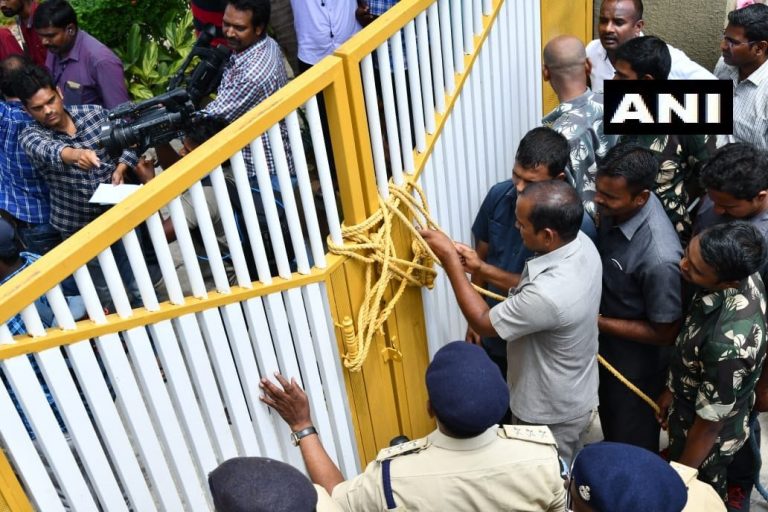
Former Jammu and Kashmir chief ministers Mehbooba Mufti and Omar Abdullah have been detained by the Jammu and Kashmir police as a preventive measure. They, along with several political leaders of the state were already under house arrest since last night. The government is taking these precautionary measures to prevent any law and order situation as the special status enjoyed by Jammu and Kashmir was withdrawn by diluting Article 370 and abolishing Article 35A today. The government also bifurcated the state into two union territories, Jammu and Kashmir, and Ladakh.


After the presidential order changing the state’s status tabled by Home Minister in Rajya Sabha, Mehbooba Mufti had posted a series of tweets strongly opposing the move. She had claimed with the articles gone, the accession of Jammu and Kashmir had become null and void. Omar Abdullah had also issued similar statements in media.


An order addressed to Mehbooba Mufti by the executive magistrate of Srinagar says that activities of Mehbooba Mufti are likely to cause serious law and order situation and breach of peace of tranquillity of the state. The order also says it appears that the former CM and others are about to meet and proceed in a procession, which will create further law and order problems. It is speculated that she was trying to leave her residence to arrange a protest.

Therefore, keeping the present situation in Jammu and Kashmir into consideration, the magistrate ordered the detention of Mehbooba Mufti to prevent law and order situation. The order states that the PDP chief will be shifted to Hari Niwas Palace till further orders.

After Article 370 being stripped, Ram Mandir decision next? Hearing commences tomorrow, day-to-day proceedings to be held

After Article 370 and Article 35A were stripped and the declaration of Jammu and Kashmir, and Ladakh Union Territories it seems like the nation is poised to solve yet another long-standing conflict that has distressed the country. The hearing in the Ram Mandir case is poised to be taken up by the Constitutional Bench from 6th August 2019 on a day to day basis.


The Ram Mandir issue is one of great importance to the Hindu population of the country. And India Today survey had shown that 69% of Indians want Ram Mandir constructed on Ram Janmabhoomi.

Prime Minister Modi in an interview to the news agency ANI, at the beginning of this year,  said that the decision on an ordinance on the Ram temple will only be considered after the judicial procedure is concluded. He added that the judicial procedure for the temple is being stalled in the Supreme Court since Congress lawyers are ‘slowing down the process’.

OpIndia, in December last year, had surveyed the Ayodhya region to ascertain about the people’s wish regarding the construction of mandor. We had found that the residents of Ayodhya overwhelmingly support the construction of the Ram Mandir. While they want other facilities such as hospitals and playgrounds to be built at Ayodhya, they are of the opinion all of it can proceed simultaneously with the temple construction.

“A Ram Mandir did exist there, the Babri Masjid was constructed after demolishing the Temple. And a Ram Mandir definitely should be built there.” One person had told Opindia, “Not 100%, the Ram Mandir should be constructed 110%.” The person had added.

With the Kashmir Reorganisation Bill 2019 righting a historic wrong, it would seem like the day-to-day hearings of the Ram Mandir case could settle another long-pending conflict in the foreseeable future.

Here is what the President means by ‘concurrence of Jammu and Kashmir Government’ in the order abolishing special status of the state

The government of India issued a Presidential order in the Gazette of India, which has effectively abolished the Article 370 and Article 35A of the Constitution of India which had given special status to the state Jammu and Kashmir. The order reads that it has been issued by exercising the powers conferred by clause 1 of Article 370, with the concurrence of Government of Jammu and Kashmir.

Now, many people are asking, what is the meaning of this concurrence of J&K government, when there is no government in the state at present, as the state is under the Presidents rule. The answer to this lies in two documents, Article 370 itself, and the Constitution of Jammu and Kashmir.

Section b(ii) of Article 370 contains this explanation: For the purposes of this article, the Government of the State means the person for the time being recognised by the President as the Maharaja of Jammu and Kashmir acting on the advice of the Council of Ministers for the time being in office under the Maharajas Proclamation dated the fifth day of March 1948. At that time the Maharaja was the government of the state, who acted on the advice of the council of ministers.

This provision was amended by a presidential order in 1952, which had said that Government of the State means the Sadar-i-Riyasat of Jammu and Kashmir, acting on the advice of the Council of Ministers of the State. During that time, the governor and the chief minister of Jammu and Kashmir was known as Sadar-i-Riyasat and Prime Minister. Hence, this means that the Government of the State meant the Governor, known as Sadar-i-Riyasat. This was changed in 1965, via another Presidential order, which had said that reference of Sadar-i-Riyasat will mean reference of the governor. And it also specified that Government of the said State shall be construed as including references to the Governor of Jammu and Kashmir acting on the advice of his Council of Ministers.

Therefore, Article 370 and the subsequent amendments mean that the term Government of Jammu and Kashmir refers to the Governor of the state acting on behalf of the council of ministers.

This means, the president has issued the order, replacing the 1954 order, in concurrence of the governor, who represents the government of the state.

Now, the Article 370 also says that the governor acts on the advice of the council of ministers, but as there is no government in the state at present, can the governor act without the advice of state government?

The answer to this lies in the Jammu and Kashmir Constitution. It may be noted that the president’s rule in the state is imposed as per provisions of the Constitution of Jammu and Kashmir, not Constitution of India. Article 92(1)(a) of the state’s constitution says that in case the government of the state can’t be carried on, the governor will “assume to himself all or any of the functions of the Government of the State and all or any of the powers vested in or exercisable by anybody or authority in the State”.

In the case of Mohd. Maqbool Damnoo vs State of Jammu And Kashmir, the Supreme Court of India had deliberated on the meaning of Government of Jammu and Kashmir. Going by all the provisions of Constitution, the apex court had come to the conclusion that “it is quite clear that the Governor is competent to give the concurrence stipulated in article 370 and perform other functions laid down by the Jammu and Kashmir Constitution. The court had clarified that the Governor is the successor of Sadar-i-Riyasat, and retained all the powers of the Sadar-i-Riyasat, even if the mode of appointment was changed from election to appointment by the president. Therefore, if the current order of the president is challenged in the Supreme Court, the court will most probably uphold it.

So, in summary, the Government of Jammu and Kashmir refers to the Governor of the state, and as there is no state government at present, the Governor assumes the role of the state government in advising the governor.

Army, Air Force and Navy kept on high alert, NSA Ajit Doval to visit Jammu and Kashmir to take stock of the situation

0

The National Security Advisor, Ajit Doval along with other senior security officials is expected to visit Kashmir valley today to review the on-ground situation.

This decision came even while the Army, Air Force and Navy kept have been kept on high alert to deal with any fallout of the bifurcation of Jammu and Kashmir into two Union Territories and stripping of Article 370.

The Indian Armed forces, though are of the view that the repealing of Article 370 and what is preceding in Jammu and Kashmir is India’s internal matter, but are still keeping a hawk’s eyes on any reaction regarding this decision from Pakistan’s side and the responses of its Army on the Line of Control (LoC) and other areas.

As a precautionary measure, more troops have been sent to Kashmir. Close to 8,000 paramilitary troops were airlifted and moved in from Uttar Pradesh, Odisha, Assam and other parts of the country to the Kashmir valley. Troops induction still going on.

Ajit Doval had previously visited Srinagar in the last week of July, in the run-up to the decision to evoke Article 370 from the Valley.

After reviewing the situation, Doval had ordered to deploy over 25,000 security personnel in Jammu and Kashmir.

Hours before the announcement, section 144 CrPc was imposed in Srinagar with effect from 1200 Hrs on 5th August 2019 which shall remain in force till further orders.

It is notable here that the LoC between India and Pakistan Occupied Kashmir has been tensed since days as Pakistan has reportedly been attempting to send BAT personnel with Islamist terrorists into the valley. There have been reports of continuous shelling at the LoC.

Previously, the Amarnath Yatra had been cancelled following the discovery of American M-24 sniper and Pakistan made mine in a terrorist cache.

Mobile internet has been suspended in the Valley. As a preemptive measure, several political leaders, including Mehbooba Mufti, Omar Abdullah and Sajad Lone, have been put under house arrest while Army personnel have taken to the streets of Kashmir.

Schools and colleges in Jammu, Kishtwar, Resai, Doda and Udhampur districts were also ordered to remain closed on Monday.

Today, the Modi government came up with a historic move to change Kashmir’s destiny by revoking Article 370 in Jammu and Kashmir.

Apart from this, the govt has announced to bifurcate the border state into two separate Union Territories – one for Ladakh without a Legislative Assembly, and another for Jammu and Kashmir with a legislative assembly with curtailed powers.

Home Minister Amit Shah is also likely to tour the Valley after the end of the Parliament session.

Amit Shah’s thundering speech in the Rajya Sabha: Article 370 has been the root cause of terrorism and poverty in J and K

Union Home Minister addressed the Rajya Sabha today after the central government’s historic decision to strip Article 370 and bifurcate the former Jammu and Kashmir into two separate Union Territories.

Addressing the upper house, Amit Shah stated that by stripping the Article 370, the long age of violence and bloodshed in the valley will now come to an end. He added that the resolution for bifurcation and the scrapping of Article 370 will bring a new era of development in the valley.

Shah added that Article 370 was a temporary provision and it was bound to be removed one day but the previous governments never dared to touch it due to fear of losing their vote banks.

Amit Shah added that Article 370 was the reason democracy never bloomed in Jammu and Kashmir while some people with their vested interests kept misusing it to further their own interests. He added that due to Article 37 and section 35A, corruption has been propagating and now it has reached its zenith. These provisions have made poverty and lawlessness take root in the land.


The Home Minister stated that certain politicians of Kashmir had made the environment such that no local body elections were being held in the state and government’s money meant to be spent in villages and towns for developmental works never reached there.

He stated that Article 370 had snatched the democratic rights of 40 thousand sarpanch and panchayat members in the state for all these years.

Also read: Jammu and Kashmir Panchayat elections: The mark of a new dawn and perhaps, a new destiny

Amit Shah highlighted the fact that due to the provisions in section 35A, quality educational institutions have not been able to open their schools and colleges in the state and the children in the state had been forced to go far away from their home to receive an education.

He added that over the decades, the government of India has sent thousands of crores of money to Jammu and Kashmir but instead of helping the people in the state, the money has been gulped down by corrupt politicians and bureaucrats. Article 370 is the reason behind it because it never allowed national anti-corruption laws to be applicable in the state.


Shah slammed the Congress saying that when the Allahabad HC brought judgement against Indira Gandhi, the then Congress government had brought a proposal and passed it the same day to force the emergency on the nation. But the same party is today opposing the NDA government for the resolution.

Shah stated that the entire Jammu and Kashmir has tremendous potential for tourism. But Article 370 has been stopping tourism and hospitality companies from opening their business in the state, thus keeping its population poor and in the mercy of a handful of politicians and their family members who monopolise all the business in the state.


Shah also stated that the government of India has brought Ayushman Bharat Yojna to benefit Indians but the Artcielc 370 deprives the people in the state of enjoying its benefits because no healthcare professional wants to go and live there. When a doctor cannot vote, buy a property or own a business in a state why would he want to work there, Shah asked.


Shah also slammed the opposition leaders who claim that the scrapping of the article is a threat to the identity, language and culture of Jammu and Kashmir. He asked that all other states in India obey one constitution and one law, which state has lost its own language and culture by opening its doors to business and development?

He further stated that the people who are opposing the government’s proposal send their own children abroad to study and live while encouraging the poor youth from J and K to pick up arms and stone-pelting.

Shah stated that Article 370 has withheld Jammu and Kashmir from enjoying the developments that a modern, inclusive and advanced India has achieved.

Pakistanis go completely mental as India strips Article 370 and proceeds to bifurcate Jammu and Kashmir state

Following India’s historic move to strip Article Article 370, which granted a special status to Jammu and Kashmir and a subsequent bill aimed to bifurcate the state into two Union Territories, Pakistanis on Twitter couldn’t stop themselves from expressing the devastation that swept them following India’s audacious move.

A large number of Pakistanis, who had no idea what was transpiring back in India were taken aback by the government’s decision to do away with the partition relic of Article 370 and proceed in the direction of greater assimilation of the state with the Indian Union. Dejected Pakistanis took to Twitter to lament about India’s dare-devilry vis-a-vis Kashmir.

Ghazwa-e-Hind proponent, Zaid Hamid, who was in the news for receiving lashes from Saudi Arabia regime had a meltdown on Twitter as he questioned Pakistan’s inability of having no intel input about the abolition and Modi government’s utter secrecy in doing away with Article 370.


He lost his mind so much that in a series of tweets in Urdu he asked the Prime Minister of Pakistan Imran Khan to resign over India’s revocation of Article 370 in Jammu and Kashmir.

Pakistan’s foreign minister too took to Twitter to announce that Pakistan ‘condemns and rejects’ India’s proposals.


Seems like Pakistan has forgotten that it really doesn’t have a say in internal matters of India.

Pakistani senior journalist Hamid Mir was also gobsmacked by India’s move to scrap Article 370. Trotting out the age-old accusation that India acted in contravention to the United Nations, Mir proceeded to equate Prime Minister Modi with General Dyer who ordered the massacre of thousands of innocents in Jallianwala Bagh in 1919.


And there were still Pakistanis who were hoping against hopes that Kashmir will someday merge with Pakistan.


There has been quite a meltdown on the Indian side too, who perhaps never wanted peace to return to the valley. PDPD chief Mehbooba Mufti and the last chief minister of the state of Jammu and Kashmir said that today was the darkest day in the history of democracy. This, surprisingly, wasn’t in reference to the fact that MPs of her party tore the Constitution in the Parliament and later, when asked to leave, tore their own clothes as a mark of protest against the revocation of special status granted to Jammu and Kashmir.

BJD, BSP, AAP, YSRCP, TDP and AIADMK extend their support to stripping of Article 370 and bifurcation of Jammu and Kashmir

Many political parties have extended their support and expressed euphoria over the centre’s resolution to effectively scrap Article 370 that granted a special status to the state of Jammu and Kashmir and the introduction of a bill to bifurcate the state into two Union Territories- Jammu and Kashmir with legislature and Ladakh region without a legislature.

The ruling party in the state of Tamil Nadu, AIADMK has extended their support to the government’s decision to repeal the temporary Article 370 and divide the state into 2 Union Territories. Similarly, BJD too has backed the Central Government’s bill on Kashmir.

AIADMK, an NDA ally has 1 seat in the Lok Sabha and 11 seats in the Rajya Sabha. Naveen Patnaik led BJD has 12 seats in the Lok Sabha and 7 seats in the Rajya Sabha.


Mayawati-led Bahujan Samaj Party(BSP) also seemed to be in concurrence with the BJP stance on Jammu and Kashmir. They too have sided with the government on the Kashmir sought to turn the state into two Union Territories. BSP has 10 MPs in the Lok Sabha and 4 in the Rajya Sabha.


BSP MP in Rajya Sabha, Satish Chandra Mishra declared in the Rajya Sabha that his party has no objection to the Article 370 resolution and the Jammu and Kashmir bifurcation bill.


Senior Shiv Sena leader Aditya Thackeray too tweeted the jubilation expressed by the Shiv Seniks outside his party office after Amit Shah made the declaration of doing away with Article 370. Shiv Sena, another NDA ally, has 18 MPs in the Lok Sabha and 3 in the Rajya Sabha.

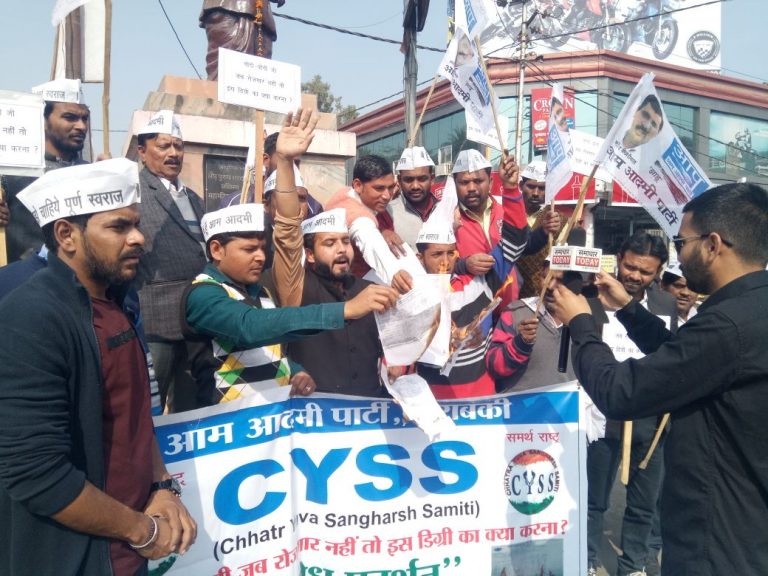
Surprisingly, Aam Aadmi Party Chief Arvind Kejriwal too expressed his support for the government’s resolution to dispense with Article 370. Tweeting his support, Kejriwal hoped that the decision will bring peace and development in the state. AAP has 1 MP in the Lok Sabha and 3 in the Rajya Sabha.


YSRCP has also sided with the BJP government at the centre to do away with Article 370, holding back the complete integration of the state of Jammu and Kashmir with India. Rallying behind the central government, Vijay Sai Reddy of YSRCP announced his party’s support to the government decision concerning Jammu and Kashmir.

Jagan Mohan Reddy led YSRCP has 22 members in the Lok Sabha and 2 members in the Rajya Sabha.

Chandrababu Naidu’s Telegu Desam Party too endorsed the Union government’s step to annul Article 370. TDP has 3 members in the Lok Sabha and 2 in the Rajya Sabha.


The BJP has an absolute majority in the Lok Sabha with 303 seats on its own. In the Rajya Sabha, however, the NDA is just short of the majority mark. However, with the support of parties outside NDA, notably BJD and YSRCP, the bill is expected to be passed without a hindrance.

As the day progresses, more parties are expected to support the government’s stand on Article 370.

Congress’ Chief whip resigns from RS calling decision to oppose the effective scrapping of Article 370 as ‘political suicide’

In a massive blow to the Congress Party, its Chief Whip, Bhubaneshwar Kalita in the Rajya Sabha (RS) tendered his resignation today, which was accepted by RS chairman Venkaiah Naidu.


Reportedly, the senior Assam Congress leader was upset over Congress’ stand to oppose the Centre’s decision on Jammu and Kashmir. He stated that Congress’ stand on this issue was “against the people’s feelings” and that the party seemed “ hell-bent on political suicide.”


In his letter, Kalita states that Congress had asked him to issue a whip on the Centre’s decision on Jammu and Kashmir but the fact is that the entire country’s sentiments were changing and this whip will be “against the people’s sentiments.”

He furthers that even Jawaharlal Nehru had once said that Article 370 will seize to exist one day. He went on to say that by opposing this decision, Congress is ‘hell-bent on political suicide’ and I refuse to be a part of this, which is why I tendered my resignation.

“Congress will be ruined under its present leadership and I firmly believe that nobody can save the grand old party from getting totally destroyed and wiped out,” wrote the former Assam Congress president.

With Kalita’s resignation, the rift within the Congress party becomes evident. Previously too, when the Triple Talaq Bill was presented in Rajya Sabha, 5 of its members had abstained despite Congress issuing a whip to ensure the presence of all its members during the voting on the bill.

Even then, despite severe objections from the Congress party and others, BJP had managed to get the contentious Triple Talaq Bill passed in the Rajya Sabha. Subsequently, with the presidential nod, the bill became law.

Going by its penchant, Congress heavily opposed the Centre’s move to repeal Article 370 today. Voting on the Bill in Rajya Sabha is set to take place today. It would be interesting to watch the BJP government recreate history like it recently did during the Triple Talaq bill.