Home Blog Page 6564

Sunanda Pushkar death case: Subramanian Swamy claims Delhi police tampered with evidence

Senior BJP leader Subramanian Swamy has stirred a furore by claiming that Delhi Police had fiddled with the evidence in the high-profile case of Sunanda Pushkar death. Sunanda was found dead under mysterious circumstances in The Leela Palace hotel in New Delhi.


Citing the Delhi Police’s vigilance report, Subramanian Swamy has filed a petition in Patiala House Court claiming that the Delhi Police’s report itself states that there was tampering with evidence. Earlier too, Swamy had filed a plea in the court but the court had rejected it deeming it third-party intervention in the proceedings of a criminal case.

However, Subramanian Swamy had filed a plea yet again asserting that he was one of the earliest ones to file a PIL in the Sunanda Pushkar death case and that it was because of his PIL that the case is being investigated into.

Vikas Pahwa, the counsel of Shashi Tharoor, who is the principal accused in the case for abetment of suicide, has called Swamy’s intervention as ‘uncalled for’. Tharoor’s counsel has maintained that Swamy is neither the complainant nor the victim in the case. The judge has listed the case for arguments on April 26. He has also permitted Tharoor to file his response to Swamy’s application under Section 301, CrPC.

On 17 January 2014, a day after the Twitter controversy, Sunanda was found dead in room number 345 of the Leela Palace hotel in Chanakyapuri, New Delhi, where she and her husband Shashi Tharoor had moved to, as their house was being renovated and painted. There were also speculations of a rift between Tharoor and Sunanda after controversial tweets were put out from Tharoor’s Twitter account regarding his alleged relationship with one Pakistani journalist Mehr Tarar.

Once upon a Time in 2002: A public denouncement of his father by Robert Vadra and 2 mysterious deaths

The year 2002 is etched into public memory due to the riots that occurred in Gujarat following the Godhra Train massacre which laid the foundations for the rise of Narendra Modi in national politics. But the year was significant for other reasons as well. It was in early 2002 that allegations of misconduct against the Vadra family surfaced and Robert Vadra denounced his own family in public.

In January 2002, Robert Vadra issued a public statement denouncing his father, Rajinder Vadra, and brother, Richard Vadra, for misusing the Gandhi name “allegedly promising jobs and other favours in return for money”. Members of the Congress admitted that they had been approached by the Vadras for various favours. The Vadras were allegedly promising people election tickets and jobs to flats and admission into schools in return for money.

The notice, from Robert Vadra’s advocate, read, “It has been brought to the notice of my client that some persons, including Rajinder Vadra, resident of C-7, Amar Colony and Richard Vadra, resident of Basant Vihar Colony, Civil Lines, Moradabad, UP are misrepresenting to the public that they are working for on behalf of my client and allegedly promising jobs and other favours in return for money. Even though Rajinder Vadra and Richard Vadra are relatives of my client but they have no access to my client. The public at large is hereby put to notice that my client has not authorised Rajinder Vadra and Richard Vadra and anybody else to work for him or to use his name in any manner and make such misrepresentation to anybody. Such misrepresentations are without the knowledge and consent of my client.”

Soon after, Sonia Gandhi ordered people in her party to have nothing to do with the Vadras. While some viewed it as Sonia’s efforts to protect her party from disgrace, others were not so convinced of her good intentions. “Disowning first the spouse’s family and then the spouse runs in the Nehru-Gandhi family right from the days of Indira Gandhi. Maneka’s parents had to face the same treatment and then Maneka herself. Now it is Robert and his family which have become a victim of the family trait,” said Chhedi Ram Maurya, an advocate.

The reason for Robert’s public denouncement could only be speculated. While some said that it was a consequence of the Vadra family’s alleged ‘RSS links’ while others claimed it could have been motivated by speculations of a scandal involving Richard Vadra breaking out into the public.

Rajinder Vadra, for his part, never denied asking for favours on behalf of people he was acquainted with. However, he denied ever asking or tickets. In an interview with the Outlook, he said, “I voted for the Congress. Where’s the problem with that? He (Robert) makes certain calls for his friends. Why can’t I make a call for a friend who can’t afford to pay lakhs in a donation for a school admission? I also called the Maharashtra CM for jobs for my friends. I never asked for tickets.”

On being asked whether it was unfair for him to use his son’s name, Rajinder said, “He is still my son, even if he is not talking to me. I didn’t say ‘Robert sent me’. I just said ‘I am his father’. I’ve never asked for favours for my business. People approach me. I make one call. If it’s done, it’s good. Otherwise, it’s okay.” He also said that he didn’t blame Robert considering what he had heard about Richard but that he should have been consulted first.

Rajinder was particularly aggressive towards the Nehru-Gandhi Parivar. He asserted repeatedly in public that he did not want his son to marry into the family. “My son is talking about disowning me now, but I disowned him when he married into that family,” he said once. Taking a jibe at the Parivar, he had said, “I’m not afraid of anybody, Kashmiri militants or Italian militants.” Most conspicuously, however, Rajinder had once claimed that if he is murdered, the Parivar will be responsible for it. He had said, “If I am killed, three people will be responsible: Sonia Gandhi, Robert Vadra and Priyanka Gandhi.”

Seven years later, in 2009, Rajinder Vadra was found dead at a guest house in New Delhi. He underwent treatment for cirrhosis in Max Hospital in New Delhi and was discharged 12 days previously, a Max Hospital official told PTI.

“Rajinder used the wire of a clothes iron to hang himself from the ceiling fan in a guest house, City Inn, in Hauz Khas area. A room attendant found the body around 9.30 a.m.,” a police officer had stated. “The guest house employees rushed him to a private hospital in Saket where he was declared brought dead. The body was shifted to Safdarjung Hospital for post-mortem,” the official added.

News reports from previous years claim that Rajinder’s death was shrouded in mystery. A Jagran report from April 2012, states, “Rajinder’s death in 2009 was shrouded in mystery while Robert’s sister, Michelle, died in a car accident in 2001. Later his older brother, Richard, was found dead at his home in 2003.”

A TOI report from April 2009, stated, “Police officials, off the record, initially said the death was caused by a heart attack, but later clammed up.” It added, “Sources within the hospital claimed that there were injury marks around the neck, but declined to be quoted. Neither the Police nor hospital authorities divulged any details about the cause of death.”

Further down the line, the same report said, Robert’s brother, Richard was also found dead in mysterious circumstances in September 2003 at his Vasant Vihar residence, and his sister Michelle died in a car accident in 2001.”

Robert Vadra has come a long way since those unfortunate events in the past. While his fortune appears to have blossomed during the initial UPA years, the wheels of fortune appear to have turned his back on him during the later years when the erstwhile government was riddled with multiple scams and his land deals became the source of a political slugfest.

Under the NDA government, Robert has been the focus of multiple investigations with his links to arms dealer Sanjay Bhandari becoming an area of interest. While earlier, he could only be spotted at high profile places, now he can often be seen at Enforcement Directorate offices as well.

India raises strong objection to Pakistan’s inclusion of Khalistanis in Kartarpur corridor committee, talks put on hold

0

In a recent development, the Ministry of External Affairs has raised concerns and sought clarifications on the reports of inclusion of Hafiz Saeed’s close aide and Khalistan exponent Gopal Singh Chawla’s name in a panel associated with the Kartarpur corridor project.


India also called the Pakistan envoy and registered its objection on the inclusion of controversial names in the 10 member committee on Kartarpur project set up by Pakistan cabinet. The government has objected to the inclusion of Gopal Singh Chawla and Bishen Singh in the committee, both are Khalistani extremists and Chawla is also known to be close with LeT chief Hafiz Saeed.


As per sources quoted by ANI, MEA has conveyed to the Pakistani authorities that the meeting on the modalities can be scheduled after India receives Pakistan’s response on the concerns raised by it. India has proposed to hold another meeting of technical experts in mid-April to resolve outstanding issues at the zero point agreed to at the last meeting. But now that meeting has been put on hold till a satisfactory response is received from the Pakistani government.


Taking a firm stand against security lapses, India has resolutely conveyed to Pakistan that Kartarpur corridor project cannot be used to propagate anti-India activities including secessionist tendencies. India has expressed that once the security issues are addressed, meaningful discussion on the Kartarpur project can be taken forward.


Yesterday, Sikh bodies had also condemned inclusion of Gopal Singh Chawla in the list of Kartarpur committee provided by Pakistan. Shiromani Gurdwara Parbandhak Committee(SGPC) and Delhi Sikh Gurdwara Management Committee (DSGMC) said that Pakistan should have avoided including known anti-Indian persons in cahoots with Islamist extremists in the 10 member committee on Kartarpur corridor project.

After Mission Shakti, Russia asks India to join the efforts of ‘like-minded nations’ to prevent weaponisation of outer space

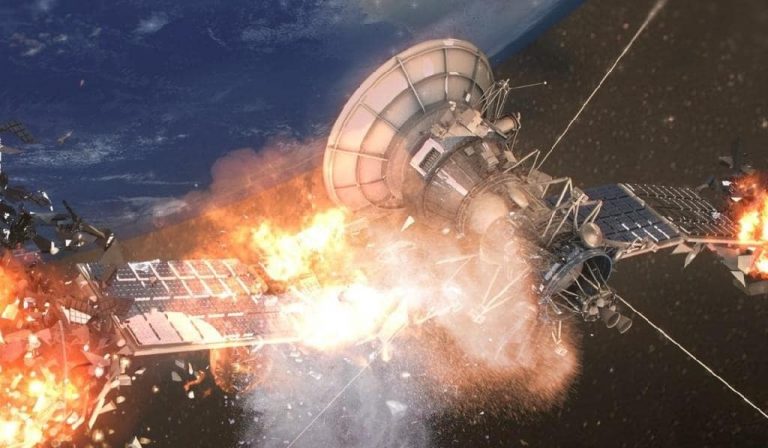
Two days after India’s Prime Minister, Narendra Modi announced that India had successfully tested its indigenously developed ASAT missiles making it the fourth country after the USA, Russia, and China to be a space superpower, Russia has asked New Delhi to join international efforts to join efforts against arms race in space.

As per reports, referring to a Russian-Chinese draft treaty that is aimed at preventing the weaponisation of outer space, Russia offered India to join the efforts of “like-minded nations”.

In response to the successful test of an anti-satellite missile by India on Wednesday, a statement was issued by Russia which read, “Russia intends to continue to make necessary effort to prevent an arms race in outer space.”

The statement furthered, “The idea of developing a multilateral legally binding instrument for keeping outer space peaceful based on the Russian-Chinese draft treaty with support of a group of like-minded nations to prevent weaponization of outer space, the use or threat of force against space objects as well as multilateral initiative – political obligations not to be first to place weapons in space are becoming particularly important”.

“We offer our Indian partners to actively join these joint efforts of the international community,” Russia said in the statement, according to ANI.

As a matter of great pride, PM Modi on March 27, announced that India has successfully entered the elite club of nations to possess the capability to hit a target in space. India had shot down a live satellite in the Low Earth Orbit (LEO).

Meanwhile, Russia, while welcoming India’s right to Anti-Satellite Missile Test has put the onus on the USA on framing rules at the earliest to prevent the weaponisation of outer space.

Russia, stating that the action taken by India is largely the result of the substantially degraded situation in the field of arms control, warned the USA, “The destructive actions of the United States to undermine the entire architecture of international security and strategic stability, including unilateral and unlimited development of the US global anti-missile defense systems, as well as the reluctance to abandon plans for the weaponization of outer space, make other states think about improving their own equal potentials in the interests of strengthening their national security”.

Russia urged the USA to take a responsible stand, come to senses and drop the insane, and most importantly, an ‘absolutely unrealizable’ idea of universal military domination.

The statement added that it is still possible to stop the arms race unfolding in various regions of the world. It is important to assist the responsible states in maintaining an adequate level of international security and stability.”

Earlier, the US had expressed concern about space debris following the anti-satellite (ASAT) test carried out by India and said it expected that it does not endanger others’ equipment.

Former ISRO chief who called UPA govt a disaster received death threat from JeM for supporting PM Modi

0

Former Indian Space Research Organisation chairman G. Madhavan Nair has been threatened by Jaish-e-Mohammed warning him not to support Prime Minister Narendra Modi.

According to reports, a letter was received at Nair’s residence in Thiruvananthapuram two days ago by security officials of CISF. The letter, which mentions the name of Jaish-e-Mohammed, was received on the same day PM Modi had announced that India has successfully tested an anti-satellite missile developed by DRDO. The letter was handed over to police for further investigation.

According to police sources, the letter warns that G Madhavan Nair will be killed by the terrorists if he does not stop supporting Narendra Modi. The former ISRO chief confirmed the receipt of the letter in the mailbox at his residence. “I have not read the letter but the investigation officers contacted me and divulged about the content of the letter,” he said.

The letter has been sent for a high-profile forensic examination and the test results are awaited. The Kerala police have already registered a case in the matter and detailed investigations are going on by multiple probe teams of the Kerala Police, said an intelligence official. Central investigating agencies also have been informed about the incident.

Nair had praised PM Modi on Wednesday for the successful launch of the A-SAT missile, saying, “Modiji has taken the initiative and he had the political will and courage to say that we will do this. We have now demonstrated this to whole world.”

Madhavan Nair retired as chairman of the ISRO in 2009 and is a Padma Bhushan and Padma Vibhushan awardee. He played a crucial role in the design and development of the cryogenic engine for the Geosynchronous Satellite Launch Vehicle (GSLV). Nair had joined the BJP in October last year.

How the Congress party and its allies supported terrorism in the 1998 Coimbatore blasts case

There was a trend on Twitter “#RahulLovesTerrorists” after Rahul Gandhi referred to Masood Azhar as “Masood Azhar ji”. However, the actual pro-terrorist policies of the Congress have been far more dangerous and serious than a mere mention of ‘Ji’. Sam Pitroda’s statement trivializing the Pulwama attack and disapproving the airstrikes too appears to be nothing as compared to other dangerous actions and statements of the Congress Party, its leaders and its allies like the DMK.

There were devastating bomb blasts in Coimbatore on 14 February 1998 which killed 58 people and nearly killed L K Advani, who had a miraculous escape as his flight was delayed by over 90 minutes. The then Congress President Sitaram Kesri made a ridiculous and bizarre allegation at that sensitive time, blaming RSS for the blasts.

After this, the RSS sued Sitaram Kesri and there were reports that he denied having made the allegation. But he then denied having denied the allegation and stuck to his charge. An incident like the deadly Coimbatore blasts nearly killing Advani and killing 58 people, many of whom were BJP workers also was not enough to infuse humanity and the Congress made such a reckless, insensitive and inhumane statement. Not just that, the party fully backed this charge. The Tamil Nadu unit president of the party said: “If the bomb was planted by somebody other than the BJP, they would definitely have killed Advani. Because it was planted by them, they purposely delayed Advani’s meetings.”

That’s not all. The Islamic radicals who carried out these bomb blasts belonged to the Al-Umma and the TNMMK. After these blasts, the Congress actually allied with Tamil Nadu Muslim Munnetra Kazhagham (pronounced ‘Kalagham’, ‘la’ like in Tamil) – a party involved in these Coimbatore blasts after the blasts- in 2004, 2006 etc. The TNMMK used to contest polls directly earlier. In Feb 2009 it formed a separate political wing called Manithaneya Makkal Katchi (MMK).

Those 1998 Coimbatore blasts occurred due to pro-terrorist policies of the DMK Government. Before those blasts, there were clashes in November 1997 there. A police constable named Selvaraj was killed by Muslim fanatics first, and in the riots which erupted later, 18 Muslims were killed. Even Communist magazine Frontline reported:

   “The killing of Selvaraj was one singular incident that led to the polarisation of Coimbatore on communal lines. Al Umma cadres stabbed Selvaraj on the night of November 29 when he was regulating traffic at Kottaimedu, a Muslim-majority area…Earlier that day, Sub-Inspector M. Chandrasekaran of Bazaar police station near Kottaimedu detained Jehangir, an Al Umma office-bearer, and two other Muslim youth for riding on a motorcycle without a driving licence. Mohammed Ansari, who was then Al Umma State secretary, went to the police station and demanded their release. A row broke out between the S.I. and Ansari, with the latter threatening to “break Coimbatore in two”.

About an hour later, four Muslim youth stabbed 31-year-old Selvaraj, who was totally unconnected with the earlier incident. Al Umma men wanted to target a policeman because its members had been detained at the police station and Ansari was “humiliated” at the police station. Ironically, Selvaraj had stepped in to relieve another traffic constable.

The death of Selvaraj infuriated the police force. They struck work the following day and demanded the arrest of the assailants. They alleged that the Dravida Munnetra Kazhagam (DMK) government did not allow them to take action against Al Umma. They were also infuriated by the fact that four policemen and prison officers had been stabbed or murdered in Coimbatore and Madurai by Muslim extremists in the 18 months preceding the murder of Selvaraj.The policemen’s families also staged dharnas, demanding security for the law-enforcers. The situation was so grave that the government called out the Army and the Rapid Action Force to bring back normalcy to the city (Frontline, December 26, 1997).”

Thus, the DMK interfered in the working of the police and prevented them from acting tough against Al-Umma, which was not even banned by the DMK Govt till the 14 Feb 1998 blasts. The DMK Government banned Al-Umma only after the blasts. There was a Gokulakrishnan Commission appointed to probe the Coimbatore clashes of Nov 1997 and the blasts. Even Frontline magazine of June 2000 said after it gave its report:

   “The Gokulakrishnan Commission of Inquiry blames security lapses for the explosions.

The report comes down heavily on the police for their failure to search the Babulal Complex building on Tirumal Street before the blasts even though they had information about the clandestine movement and storing of bombs by “terrorist groups” at an abandoned building near Saravana Metal Mart. If they had searched and combed the nearby area, they would have unearthed the plot by Al-Umma men, arrested the terrorists and seized the bombs prior to February 14. This would have aborted the conspiracy, the report says.

Swift action by the police in the early hours of February 15 led to the unearthing of the plot to create terror in Coimbatore, the arrests of Al-Umma cadres and the seizure of detonators and lethal weapons. “The major part played in this storming operation” by Sub-Inspector M. Chandrasekaran “at the risk of his life” not only saved the lives of police personnel and the public but became “an eye-opener to the Special Investigation Team to nab the terrorists and unearth the concealed bombs”, the report says. “

The Police, of course, wanted to take action but were prevented by the DMK Government from doing so, before the blasts. Even Frontline blamed the DMK Government for not preventing the Coimbatore blasts. It said: “The crackdown initiated by the Tamil Nadu Government following the blasts was doubtless effective, but it could not absolve it of the criticism that it had failed to prevent the terrorist attack by acting on intelligence reports and following up on earlier seizures of explosives. It seems fair to state that the DMK Government failed to differentiate between the large mass of innocent Muslims and the small number of fundamentalist Muslim leaders who have exploited and preyed on the feelings of insecurity among innocent Muslims. It should have shown a greater sense of urgency in isolating the hardcore of Muslim fundamentalists and taking action against them.”

India Today reported soon after those blasts in an article by l. R. Jagadheesan and K.M. Thomas:

   “The Opposition has accused the Government of failure to anticipate the violence and the blasts and take preventive steps…Stung by criticism, the Government took some decisive, though belated, action against those suspected to be behind the blasts. It ordered a ban on two Muslim fundamentalist organisations, Al Umma and the Jehad Committee. Some of their leaders, including Al Umma President S.A. Basha were detained.The chief minister’s (Karunanidhi’s) stern warnings to them were followed by raids on several extremist hideouts on February 15. Eight people arrested in the raid were later identified as Al Umma activists. Post-blast violence too was swiftly contained with the deployment of the Army and paramilitary forces.

Intensified patrolling proved fruitful on February 16, when the police found 60 kg of explosives in a car in a residential area. It took two days to defuse the bombs…The extremists’ menace had been looming large for quite some time in the state, but political compulsions prevented the state Government from taking decisive action. Police sources in Coimbatore say the Government was well aware of the movement of Muslim fundamentalists, but fearing a minority community backlash during the polls, it delayed action against them.

The charges seem to have rattled the ruling combine in the state, and fearing electoral repercussions, it has roped in actor Rajnikanth for damage control. In repeated telecasts on the DMK-owned Sun TV, the celluloid superstar has blamed the BJP and Jayalalitha for fomenting trouble. He said the blasts were the handiwork of those interested in an AIADMK-BJP government at the Centre. Congress President Sitaram Kesri has squarely blamed the RSS for the blasts. Denying the charge, however, the RSS has filed a defamation suit against Kesri.”

The timeline of the Coimbatore blasts and the belated action taken by the police and recovery of huge quantity of arms and explosives and arrests of Islamic radicals can be seen here. It shows that the DMK government could have easily done that much before the blasts, but it allowed terrorist organizations like Al-Umma to function due to its pro-Muslim policies.

However, the DMK Government at least banned the Al-Umma and took action after the blasts, but the Congress continued to defend the terrorists even after the blasts and instead accused RSS of carrying out the blasts.

Most political leaders and parties expressed shock and revulsion over the blasts. The then President K.R. Narayanan and Prime Minister I.K. Gujral expressed shock over the bombings, DMK president and TN Chief Minister M. Karunanidhi said the blasts were part of a conspiracy by foreign forces to disrupt the electoral process. The then Union Home Minister Indrajit Gupta and CPI(M) general secretary Harkishan Singh Surjeet too said that they suspected a foreign hand behind the blasts. Gupta blamed the ISI for attempting to disrupt the election process in India. But the Congress stooped to an unimaginably low level even in this case.

The DMK came to power in Tamil Nadu in May 1996. Towards the end of 1996, G. Bhoopalan, a warder in the Coimbatore Central Prison, was killed by Muslim militants, in a petrol bomb attack in the prison. The RSS office bomb blast in Chennai in August 1993 during AIADMK rule which killed 14 people including 6 high-level pracharaks, resulted in a crackdown on fundamentalist organizations, especially the Al-Umma by the AIADMK Government. But under the DMK rule. 16 Al-Umma men who had been detained under TADA for their alleged involvement in this RSS office blast of August 1993 and for possession of weapons were released on bail in January 1997 when the DMK Government prosecutor did not oppose their bail.

The complacent policy continued even after Tamil Nadu police commandos, following a tipoff, seized a huge cache of explosives (gelatin sticks), detonators, iron pipes, PVC pipes, alarm clocks, cables, wires, soldering equipment, saws and testers, all of which are used in the making of bombs. The seizure took place from a house at Kodungaiyur, a suburb of Chennai, on March 11, 1997. The police arrested two fundamentalists belonging to the Al-Umma group: Mohammed Khan alias Sirajuddin (26) and Shahul Hameed alias Aftar (22). Mohammed Khan is the brother of S.A. Basha, one of the founders of Al-Umma.

A series of bomb explosions had convulsed Tamil Nadu in November-December 1997, just two months before the Coimbatore blasts. Blasts shook the Cheran Express, the Pandyan Express and the Alleppey Express trains on December 6, 1997, the anniversary of the Babri Masjid demolition. The police said that the Islamic Defence Force of Kerala, a shadowy outfit, was behind these explosions, which killed nine persons.

On January 10, 1998, a blast occurred under the Anna flyover in the heart of Chennai, and the Islamic Defence Force claimed responsibility for this. This was followed by a powerful blast in a rice mill at Saliyamangalam, near Thanjavur, on February 8. The police seized a big cache of explosives and detonators from the mill. Police investigation revealed that Abdul Khader, son of the mill owner, Abdul Hameed, was connected to Muslim fundamentalist organisations. Both the owner of the mill and his son were arrested. Abdul Khader was seriously injured in the blast. Then came the seizure of hundreds of detonators from Vepery and Tambaram in Chennai, from two Muslims connected with militant organisations. Here, the police seized about 84 gelatin sticks, 50 kg of sulphur, 11.5 kg of ammonium nitrate, 100 detonators, two country pistols, and bottles containing nitric and sulphuric acid.

There was no crackdown, let alone ban, on Al-Umma even after all these blasts and acts, not even after the 8 February blast. These indications and warnings of big trouble failed to make the State Government act firmly. It was a significant failure of preventive action.

Banned fundamentalist outfit Al-Umma president SA Basha openly threatened to kill the then Gujarat Chief Minister Narendra Modi if he visited Coimbatore in July 2003. The open warning was given by Basha and 8 others while talking to journalists in the Coimbatore court premises after they were convicted and sentenced to life imprisonment in a case relating to the murder of a Hindu Munnani leader. Such a man with his organization Al Umma was allowed to function openly by the DMK Government till the 14 February 1998 blasts.

Diehard anti-RSS magazines like Outlook and Frontline too accepted the role of the Tamil Nadu Muslim Munnetra Kazhagam (TNMMK) in these blasts. Frontline reported in March 1998: “Within hours of the blasts, the Tamil Nadu Government banned Al-Umma and the Jihad Committee. Al-Umma founder-president S.A. Basha and 12 other members of the organisation were arrested in Chennai; explosive materials and weapons were seized from his house in Triplicane, Chennai. Leaders of the Jihad Committee and the Tamil Nadu Muslim Munnetra Kazhagam (TMMK) were arrested in a State-wide crackdown. Among those arrested were Jihad Committee president R.M. Haniffa, general secretary Mohammed Haniffa, student wing secretary Akram Khan, TMMK president and college lecturer M.H. Jawahirulla and treasurer G.M. Pakkar. Over the next few days, over 100 activists of the three organisations were arrested at Keezhakkarai, Devakottai, Dindigul, Nagapattinam, Thanjavur, Nagercoil, Melapalayam and Udumalpet. About 1,000 others were detained as a precautionary measure…”

Even Outlook accepted TNMMK’s involvement in the Coimbatore blasts. It said:

 “As the crackdown following the February Coimbatore blasts continues, it is disturbingly clear that the ordinary Muslim is becoming increasingly alienated. Every day the police recover quintals after quintals of explosives hidden by the ‘fringe’ Islamic fundamentalist group, Al Umma—which, as it now turns out, is in fact a rather well connected terrorist outfit…

Initially the Muslim groups were splintered into as many as 10 major outfits. However, after the November riots in Coimbatore most of them started working in tandem. The most significant groups are: the Tamil Nadu Muslim Munnetra Kazhagam, All India Jihad Committee, Al Umma, Tamil Islamic Peravai, Sunnath Al Jammath Youth Front, SIMI (Students Islamic Movement of India), Students Organisation of Islam, Muslim Protection Force and the JAQH (Jamiathul Ahle Quaran Wal Hadis).

…According to arrested members of the Al Umma, the ISI had suggested the elimination of the Hindu Munnani leader, Rajagopal, in Madurai in 1994. And the RDX used to blast the RSS office (August 1993) and the Hindu Munnani office (1995) was supplied by the ISI.

…By December 15, they (Al Umma men) also managed to get the support of the People’s Democratic Party chairman Abdul Nasser Madani—a radical Islamic figure of Kerala—in mobilising additional explosives. According to police sources, explosives weighing nearly 1,000 kg were accumulated in four weeks.”

This is enough to know the involvement of the TNMMK and Abdul Madani in those blasts. We must now see the pro-Madani and pro-TNMMK acts of the Congress, Left and DMK.

DMK returned to power in Tamil Nadu in May 2006 after a 5-year rule of AIADMK from 2001-06. The Indian Express reported on 24 July 2006 in a report titled: “DMK turns the jail into a spa for Coimbatore terror accused”-

“Introduction: Ayurvedic massages for Abdul Nasser Mahdani paid for by taxpayer, wife facing arrest warrant has free access, no checks

One man has reason to laugh at all the tough talk on the need to crack down on terror: Abdul Nasser Mahdani, key accused in the 1998 Coimbatore serial blasts that targeted BJP leader L K Advani and killed 58 people and left several more injured.

For, ever since he (Karunanidhi) was sworn in as Chief Minister, the atmosphere has been upbeat in the high-security prison here, housing Mahdani and 166 Al Umma prisoners, mostly arrested for the Coimbatore blasts. Thanks to Karunanidhi, a team of 10 masseurs and four senior Ayurvedic doctors began their “high quality treatment” on Mahdani, who has been housed in the prison’s hospital wing since 2001…

While the prison manual says that a prisoner pays for the cost of any private medical treatment he avails, the Tamil Nadu government is using taxpayers’ money to pick up the bill for Mahdani’s “dhara” and “pizhichil” (the ayurvedic massages)…

But what has infuriated investigating officers in the blast case is the move by the Chief Minister’s Office to quietly lift the ban under Section 268 CrPC, restricting Mahdani’s movements within the prison.

“Soon after the DMK came to power, there were attempts to move him out of the prison and get him treatment outside, preferably in Kerala. We strongly resisted such a move. With a friendly government in Kerala, we can never hope of seeing him again, particularly when the trial (in a special court) is likely to end in three months’ time and a verdict is expected soon,” pointed out a senior police officer on the condition that he be not named…In fact, in the pre-blast days, the DMK, then ruling Tamil Nadu (1996-2001), was accused of flirting with Muslim militancy and turning a blind eye to the activities of Jehadi groups like the Al Umma.”

Though the DMK was forced to act against Islamic radicals after the Coimbatore blasts, and it did not follow an openly pro-terrorist policy from 1999 to 2003 during the period of its alliance with the BJP at the Centre, it went back to its true nature 2004 onwards. It again got the support of TNMMK for 2004 Lok Sabha polls and also for the 2006 Assembly polls in Tamil Nadu, which it won. Barely two weeks after it was sworn in in May 2006, Tamil Nadu’s DMK government ordered that cases be dropped against 12 Muslim fundamentalists, all followers of Kichaan Buhari, an Al-Umma sympathizer and key accused in the Coimbatore serial blasts. The Indian Express of 8 August 2006 reported:

“…Senior Policemen in Thirunelveli were shocked by what they termed the DMK Government’s ‘blatant sympathy’ for the Muslim fundamentalists. Obviously, the accused committed the offence with the grave intention to create law and order problems and disrupt peace in Tirunelveli district, known to be communally sensitive. Also, all of them have links with Muslim fundamentalist outfits. The government should have allowed the law to take its natural course. For a new government to resort to such a move is rather demoralising for the police force,” said a senior police officer in Tirunelveli.

Police officials say that in one of the cases, Crime No. 15 of 2001 registered at the Melapalayam police station, while two of the five accused were juveniles and let off given their age, the other three, including M S Syed Mohammed Buhari, Sheik Hyed and Jafer Ali had “admitted to the offence”. “Despite this, the government ordered the withdrawal of cases against them,” an officer said… There are also allegations that the ruling DMK was bending backwards to appease its electoral ally, the Tamil Nadu Muslim Munnetra Kazhagam (TMMK). A section of the police believe that the dropping of the six cases by the DMK government could be part of a pre-poll deal with the TMMK.”

The TNMMK was not just the DMK’s alliance partner, it was also of the Congress. The Congress too was a part of the Democratic Progressive Alliance (DPA) alliance in Tamil Nadu with DMK and hence TNMMK was its partner too. It is one thing to ally with a mainstream party whose ‘some members’ may have been guilty of involvement in terrorism in the past while the party, on the whole, is sensible, but it is quite another to ally with a radical pro-terrorist party & release terrorists and withdraw cases against them due to pressure of that party. [At that time, DMK had 97 MLAs out of 234 in the Tamil Nadu Assembly with the Congress having 33. DMK-Congress had a comfortable majority without needing the support of any other allies, and TNMMK did not have a single MLA, though it supported the DMK-led Congress allied DPA.]

This misplaced sympathy for the sake of vote banks was the reason behind the DMK government’s refusal to appeal against the acquittal of Abdul Nazar Madani in the 1998 Coimbatore blasts case.

The Congress Legislature Party passed a resolution in the Kerala Assembly in 2006 demanding release of Abdul Madani who was in a Coimbatore jail from 1999 onwards. This was also supported by the Left, the Kerala Legislative Assembly passed this resolution unanimously on 16 March 2006 with not a single MLA opposing it. Madani was later also the accused in the bomb blasts in Bangalore in 2008 at the time of an IPL game. After a resolution demanding his release in March 2006 [The resolution was before his acquittal] and his subsequent release on 1 August 2007 after his acquittal in the Coimbatore blasts case, he again was involved in another attack in 2008.

The Indian Express reported on 25 July 2006: “If the DMK government in Tamil Nadu is arranging for 1998 Coimbatore blast accused Abdul Nasser Mahdani’s Ayurvedic massages, the Left and the Congress in Kerala have been doing the stretching-prostrate at his feet.”

Later the DMK-Congress Government released Coimbatore blast convicts pre-maturely in 2009 for which they were slammed by the BJP.

In September 2005, TNMMK had openly demanded the lifting of the ban on SIMI despite the fact that at that time SIMI was proven to be involved in bomb blasts in various parts of the country. And this party TNMMK was an ally of the Congress in Tamil Nadu. A Times of India report of May 2006 said:

“Terming the AIADMK as a “proxy” to the BJP, Tamil Nadu Muslim Munnetra Kazhagam (TMMK) on Monday said it has decided to extend its support to the DMK-led Democratic Progressive Alliance (DPA) in the May 8, 2006 assembly polls. TMMK activists would work in all the 234 constituencies in the state to ensure the victory of the DPA, TMMK President M H Jawahirullah and its General Secretary S Haider Ali, told reporters in Chennai.”

This party announced a boycott of the 1998 Lok Sabha polls in Tamil Nadu on 4 Feb 1998, a few days before the Coimbatore blasts due to the ‘communal riots of 1997 in Coimbatore’. In the 1999 Lok Sabha, 2001 Assembly and 2004 Lok Sabha poll too, TNMMK was with the Congress alliance. In 2001 AIADMK was with the Congress.  After the deadly bomb blasts in Mumbai on 11 July, 2006 which killed 187 people, the then BJP President Rajnath Singh attacked the Congress and DMK for their ties with the TNMMK.

Even today, after so many years, the Congress has never apologized for its false and shameless allegation that the RSS carried out the 1998 Coimbatore blasts, nor has it ever condemned the TNMMK or explained its alliance with the party or even its precise connection to it.

Rahul Gandhi and the Congress need to be pin-pointedly asked to apologize for their false charges on RSS or at least clarify their position on the 1998 Coimbatore blasts’ perpetrators. More than using words like ‘Ji’ for terrorists, such acts of the Congress and its allies like the DMK need to be exposed more comprehensively.

(The writer is the author of book “Gujarat Riots: The True Story” which gives all details about the 2002 riots- Godhra and after, one of the admins of www.gujaratriots.com and one of the admins of the Twitter handle @gujaratriotscom)


‘Neutral’ journalist Supriya Shrinate replaces existing Congress candidate two days after favouring Rahul Gandhi in her shows

‘Neutral’ journalist Supriya Shrinate, Executive Editor of ET Now, on Friday joined Congress party after the party leadership announced her candidacy for the upcoming Lok Sabha elections from Maharajaganj, Uttar Pradesh. Supriya Shrinate replaced Tanushree Tripathi, whose name was initially announced as the candidate from Maharajganj.

Interestingly, Supriya Shrinate, who joined Congress party was working as an Editor at ET Now till this week raising questions about the ‘neutrality’ and integrity of journalists. Recently, Supriya Shrinate had carried out an interview with former RBI chief Raghuram Rajan and had also endorsed Rahul Gandhi’s NYAY programme on her show.


It is not unsurprising today to acknowledge that there are several journalists in the country who are sympathetic to the cause of the Gandhi Parivar but somehow pretend to be ‘neutral’ in the public. Supriya Shrinate’s transition from being a ‘neutral’ journalist to a Congress candidate may not have happened in few days and certainly, not after her recent news shows and interviews endorsing Congress President Rahul Gandhi.

Supriya Shrinate must have taken a sufficient time to lobby for her ticket or at least to comprehend the ideologies of any political party before being made a candidate for Lok Sabha elections. If at all Supriya Shrinate was lobbying for a ticket or contemplating on joining the Congress party from a long time, does that not amount to a conflict of interest or a clear case of bias in terms of her conduct as a journalist?

The integrity of Supriya Shrinate as a journalist is clearly questionable as her plans to join Congress may not be instinctive but carefully planned from a long time with utilising her privilege of being a ‘neutral’ journalist. It also raises questions not only on the credibility of the debates she carried out till recently and but also on the authenticity of the interview she did with Raghuram Rajan to endorse Rahul Gandhi’s policies.

Meanwhile, it is also intriguing to know whether ET Now was aware of the fact that Supriya Shrinate had inclinations towards the Congress party. If at all ET Now knew about her Congress links, why did the media organisation not disclose it in the public or at least try to keep her away from doing the Congress propaganda from ET Now studios under the garb of journalism?

Neutrality in the field of journalism is a facade. While every journalist is entitled to have their own political views, their bias often creeps into their profession, while the entire time, they pretend to be politically neutral. The likes of Supriya Shrinate lobbying for a Congress ticket despite being part of a media organisation is yet another low in Indian journalism and casts a shadow on the uprightness of the so-called independent ‘Lutyens’ journalists of the country.

Two cow smugglers arrested, two escaped after they try to run over the cops who were chasing them

In Nanauta, Saharanpur, one constable and two cow smugglers were injured in a firing which took place on Thursday early morning. As per reports, the police have recovered two country pistols, cartridges and some cartons.

According to station in-charge Manoj Kumar Chaudhary, at around 4 am on Thursday, SI Saiyed Munajir Hussain, Head Constable Rajiv and other four police officers stopped a suspicious pickup truck for checking. However, the driver pushed the pedal and increased speed. Not just that, during the chase when the police team closed in on them, the driver of the pick-up truck tried to run over the policemen.

Then, four of the men occupying the pick-up truck jumped out and went near a lake from where they opened fire at the police. Head Constable Rajiv got injured in cross-firing but thankfully station in-charge Chaudhary was saved owing to the bulletproof jacket. In return firing by the police, two cow smugglers were injured whereas two managed to escape.

In reference to the case, one Kala, s/o Chhota and one Rahman s/o Rizwan who had opened fire on the police were injured. Nikim s/o Riyasat and Fana s/o Arshad managed to escape. Six calves, who were drugged with tranquilisers, were also rescued from the pick-up van.

The police have undertaken further investigation.

Punjab: AAP candidate contesting from Christian dominated Gurdaspur says nun rape case won’t have impact on voting

Peter Masih Cheeda, the Aam Aadmi Party nominee from Gurdaspur constituency in Punjab for the upcoming Lok Sabha elections, has stirred controversy while answering about the impact of the nun rape case on the voting in the Christian dominated Gurdaspur. He said that “There is no question that case will have any impact on voting pattern. The accusations have not been proved and were more in media.”

The AAP has fielded Peter Masih as its candidate from Gurdaspur Lok Sabha constituency, which has sizeable Christian population.

During 2017 Gurdaspur byelections, which was necessitated by BJP MP from the constituency, actor-turned-politician, Vinod Khanna’s death, AAP candidate Maj Gen Suresh Khajuria (retd) had faced a major defeat. The AAP candidate had lost despite the fact that then Catholic Church Bishop of Punjab and spokesperson of Masih Maha Sabha, Bishop Franco Mulakkal had announced to extend community’s support to Khajuria,

Mulakkal is the accused in Kerala nun rape case. He is also the first bishop in Indian Catholic history to be arrested in a rape case.

Surprisingly, this time too, AAP is counting on the Christian votes in the constituency, but the fact that Franco Mulakkal’s announcement in the last election did not help the party does not seem to bother Pater.

He remains unruffled at the fact that Mulakkal is a rape accused and feels that the accusation would have no impact on the voting pattern in Gurudaspur though it’s a Christian dominated constituency.

Talking to TOI, Masih said, “The government figures put Christians votes at around 7%, but I believe it is double the figure,” furthering that “Things have significantly changed now, I am going to give a tough fight to my opponents”.

He said that lack of development, poor education and health services were the main issues in the constituency, besides he intended to seek more funds for Christians. About the rape case, Masih said, “There is no question that the case will have any impact on the voting pattern”.

Meanwhile, Gurudaspur had significantly been a stronghold of Congress until BJP fielded Vinod Khanna in 1998. Since then Vinod Khanna had won the Gurudaspur seat 4 times, losing it once to the Congress in 2009, only to regain it in 2014 general elections.

Gurdaspur, which falls in the Manjha area, has never been considered to be AAP’s stronghold. In the 2014 parliamentary election, AAP candidate, Suchcha Singh Chhotepur had come on the third position after BJP and Congress.

In the 2017 byelections, the Congress won the Gurdaspur Lok Sabha seat which had fallen vacant following the death of Vinod Khanna of the BJP. Congress’ Sunil Jakhar defeated BJP’s Swaran Salaria with a huge margin of 1.93 lakh votes.

While Jakhar polled 4,99,752 votes, Salaria polled 3,06,533. AAP nominee Major General (Retd) Suresh Khajuria polled just 23,579 votes and forfeited his deposit.

This was, however, followed by the resignation of Khajuria from the party’s primary membership in November 2018.

Meanwhile, with the party faring badly in Gurdaspur in the last two polls, the hopes for AAP in the 2019 Lok Sabha elections also appear to be bleak.

As AAP disintegrates, senior leader says AAP ready to dissolve and merge with Congress

As Aam Aadmi Party is losing relevance and facing an existential crisis in the Indian political scene, the leadership of the party seems to be desperate as senior AAP leader and Punjab unit President Bhagwant Mann has indicated that the party is willing to dissolve and merge with Congress party, reported The Tribune.

According to reports, AAP senior leader Bhagwant Mann on Thursday said that his party was ready to be dissolved if it saved the country from the “unholy nexus of PM Modi and Amit Shah”. Responding to a question regarding AAP’s attempts to join hands with Congress, Mann claimed that both Modi and Shah were pursuing ‘politics of hatred’, which he said was extremely dangerous to the federal structure.

“We were earlier part of the Mahagathbandhan of 23 parties at the national level to trounce Modi. If need be, we are even ready to dissolve our party. After all, we all came from various fields, including theatre and journalism. We all formed Aam Aadmi Party for course correction in Indian politics,” said AAP Punjab President Bhagawat Mann.

Meanwhile, Shiromani Akali President and Former Deputy Chief Minister of Punjab, Sukhbir Singh Badal has reacted strongly, while stating that masks of Aam Aadmi Party were finally off and accused Mann of spreading hatred himself. He referred AAP as the B team of the Congress.


Aam Aadmi Party is in disarray as the party has lost its charm it had enjoyed five years ago. With Chief Minister Arvind Kejriwal taking massive U-turns, corruption charges and lack of performance in Delhi, the party is facing an unprecedented backlash.

Delhi Chief Minister Kejriwal has been literally pleading with Congress to form an alliance in the Delhi, as he is aware of the fact that he alone can not defeat the BJP in the Lok Sabha elections, which had won all the seven seats in 2014.

Recently, Fatehgarh Sahib MP Harinder Singh Khalsa, who was suspended from the Aam Aadmi Party (AAP) in 2015, joined the BJP in New Delhi. Khalsa a former IFS officer had called Delhi Chief Minister Arvind Kejriwal a ‘dictator’ for extreme interference in state affairs. Another suspended MP Dharamvir Gandhi, who was elected from Patiala has started his new outfit Nawan Punjab Party.

AAP Punajb has been in disarray after chief Kejriwal ‘abandoned’ the state unit. After the Punjab assembly elections, the party has faced major backlashes, defection, and other allegations. Recently, an AAP MLA had accused the party of arrogance, sexual exploitation of women and corruption. Several MLAs, including Sukhpal Khaira and HS Phoolka, have quit the party in recent months.

AAP Punjab was also widely criticised for its alleged association with Khalistani elements.

Another controversy has erupted in the name of Aam Aadmi Party after many voters in Delhi alleged that they have been receiving phone calls from the AAP to inform that their named have deleted by the BJP only to be saved by Delhi CM Kejriwal, who had restored their names back to the list.

This mysterious phone calls to the voters of Delhi alleged to be from the AAP did not even leave senior BJP leaders as senior BJP leader Vijay Goel also received a similar call stating that his party has ‘removed his name’ from the voters’ list.