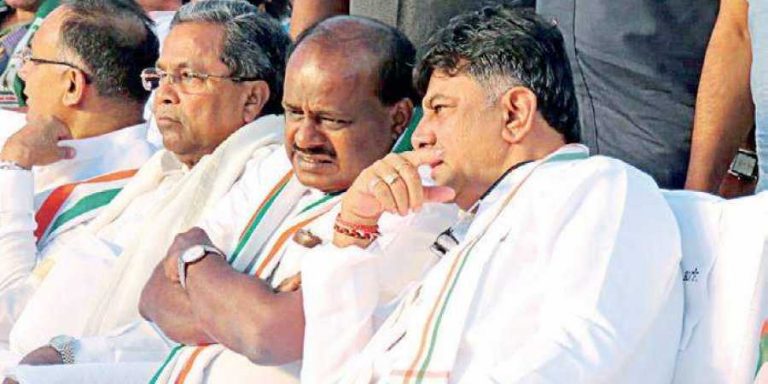
The Congress-JDS coalition is the state is reportedly set to face fresh troubles after the recent cabinet expansion. As per reports, several senior Congress leaders are unhappy over being denied a cabinet berth.
A day after senior Congress leader Ramesh Jarkiholi was axed from the HD Kumaraswamy cabinet, speculations of the Congress strongman quitting the party and joining hands with BJP has been gaining severe traction across the state. Ramesh Jarkiholi who is believed to have considerable support from fellow Congress MLAs may play spoilsport for the Congress-JDS coalition if he quits the party to join the BJP.
Interestingly, an audio clip of an alleged conversation between Ramesh and another person, reportedly a TV reporter, has surfaced triggering speculations about their defection to the BJP. In the audio, which has gone viral now, one person is heard asking a person claimed to Ramesh Jarakilholi whether he would resign as an MLA. The second person says it is confirmed and will resign in a week. He further added that he will not reveal the number of other disgruntled MLAs.
Meanwhile, senior Congress leader and seven-time MLA Ramalinga Reddy and his daughter Sowmya Reddy, MLA from Jayanagar are also reportedly unhappy after they failed to make the final list of newly inducted ministers. The father-daughter duo was expecting to be inducted into the cabinet, but both have been overlooked by the HD Kumaraswamy government. While expressing disappointment against their non-inclusion into the cabinet, Ramalinga Reddy said that forces within party scuttled his bid to become a minister in the government.
Soumya Reddy, the MLA from Jayanagar, also expressed her displeasure over her father’s exclusion from the cabinet. Soumya’s name was dropped from the final list of parliamentary secretaries. She had shared on Twitter that her father, a seven-time MLA and four-time minister, deserved a cabinet berth. She had also added that there are 15 Congress MLAs in Bengaluru today because of her father.
There were speculations of possible tussle and discontent among leaders of both Congress and JDS over cabinet berths as JDS, despite having only 17 MLAs became a part of the government and got the CM’s post.
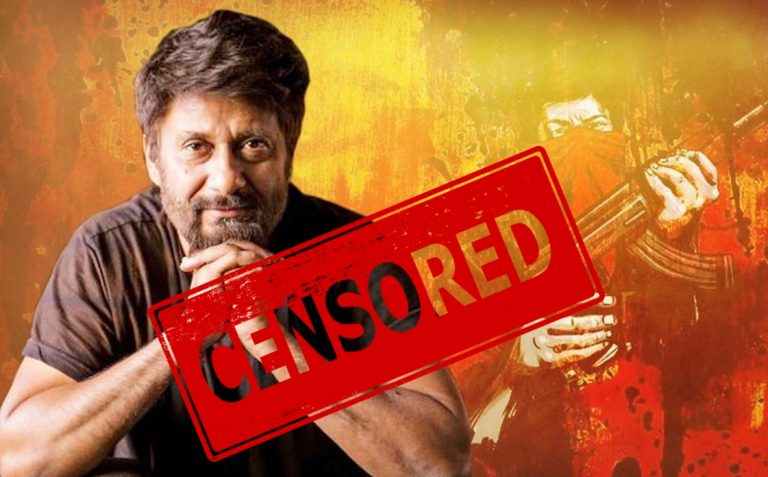
Vivek Agnihotri, the author cum filmmaker has been rather vocal about the Urban Naxal phenomena that have come to the fore recently. In his book, Urban Naxals, Vivek talks extensively about how the Naxals have an entire urban network that often goes unnoticed because they are disguised as activists, lawyers, etc.
With the recent arrest of several urban Naxals who were working actively as conduits for the Naxal terrorists, his book gained even more popularity and relevance.
Recently, Agnihotri was approached for an interview by Times of India but for some reason, the interview was never published. Vivek says he never got a forthcoming answer and he was just told it was against ‘policies’ of Times of India, which he found rather strange.
Following is the interview that Times of India considers against its policies.
1. What is urban Naxalism and how does it spread its wings?
Urban Naxalism is the fourth generation (4G) war. It is complex and long-term. In 2004, Communist Party of India (Marxist–Leninist) People’s War, usually called People’s War Group (PWG), merged the Maoist Communist Centre of India (MCC) and formed Communist Party of India (Maoist) pledging to the ideology of Marxism-Leninism-Maoism. The party became a member of the Coordination Committee of Maoist Parties and Organizations of South Asia (CCOMPOSA).
This new entity drafted five vision and strategic documents under an urban perspective plan — a blueprint for their urban movement/activities. It is believed that Kobad Ghandy alias Rajan, who was arrested in September 2009 in New Delhi, played a major role in the preparation of this urban perspective plan.
These five, ‘Strategy and Tactics’ document and ‘Urban Perspective Document’ admits that enemy (Indian State) is very strong in urban areas and therefore never to engage with the enemy until the conditions are favourable. And to make them favourable, it suggests, exploring and the opening of opportunities, organize people through frontal organizations (FOs). Target the ‘vulnerable group’ of minorities, women, Dalits, labours and students through influencers who work as under-covers for a long time and accumulate strength. The document stresses uniting industrial proletariats, weak and students and uses them as vanguards who can play a direct role in the revolution.
The strategy is to make a direct attack on the enemy’s (Indian State) culture, including genocidal acts against civilians and wage a highly sophisticated psychological and cultural warfare, especially through media manipulation and lawfare. To create a state of unrest chaos and conflict leading to a civil war. For this purpose, legal professionals are required, media professionals are required, creative people, varied intellectuals and academicians are required, and civil society leaders are required, especially those who are connected with NGOs for smooth transaction of funds and to hide behind compassionate human rights causes. It begins with low-intensity conflicts where all the actors attack from different platforms.
So, an invisible Naxal-intelligentsia-lawyers-media-academia-NGO-Activist nexus works as strategic fortification with the ultimate aim of taking over Indian State to achieve Maoist rule. They have identified Pune-Mumbai-Ahmadabad as Golden Corridor. Delhi-Kanpur-Patna-Kolkata as Ganga Corridor. And KKT’s (Kerala, Karnataka & Tamilnadu) Chennai-Coimbatore-Bengaluru as Tri-junction. The key universities like JNU, JU, Osmania, HCU, Tiss etc work as R&D of Urban Naxalism.
Anyone who directly or indirectly works to accomplish these objectives is an Urban Naxal. Anyone who sympathizes with them is a potential Urban Naxal. But I always insist that the critics of the government, anti-establishment activists or dissenters of the system must not be confused with the real enemies – Urban Naxals.
The following chart illustrates the Urban Naxalism network.
Urban Naxal Network
2. According to your experience, how do urban Naxalites communicate and remain in touch with the Naxalites on the field in forest areas?
This is a very well-structured operation. You can blame them for anything but never for their organizational abilities. While the Naxals in jungles engage the security forces, the Urban Naxals engage the government and legal system. They infiltrate into the enemy camp (Indian state) in critical departments like finance, military, police, power, IT, defence production and disrupt the activities from within by gaining control over the workers. Slowly, passive protests and continuous grievances lead to a domino effect in an already disgruntled nation.
They create a network of doctors and hospital attendants sympathetic to their cause who shall treat their injured cadres with utmost secrecy.
They create cadres in urban areas who are technically qualified to handle the modern communication with their cadre spread in jungles. They possess drones, satellite phones. There are technical teams which handle latest arms and ammunition.
They have formed groups of highly motivated individuals who constitute what the Maoists call as ‘City Action Teams’. These members are entrusted with the destruction of high-value targets or the annihilation of individuals of importance. The identity of such members is unknown even to the local urban party structure.
Their most critical arm deals with the collection of centralised intelligence and cyber-warfare. The party tries to use modern electronic means to infiltrate into the enemy’s networks and collect vital information. For this, they need to have individuals with requisite skills, who can only be found in urban areas and who, because of the nature of their job, need to be based therein. Such persons are under the direct control of the highest party echelons.
Then they use various FOs like Kabir Kala Manch which travel all across for propaganda and in the garb of events they communicate between the cadre and Urban Naxals.
3. Why does Naxalism spread – is it because of the ideology or due to something else?
When the armed Naxal movement began, the gun became a symbol for land redistribution and the end of an oppressive and corrupt system. A lot of young tribals were fascinated by this quick form of justice and they also picked up guns. They attacked the policemen who always sided with the influential and powerful. They used violence to demand better wages and rates for their produce. And they got it. Insurgency spread and soon the area became the theatre of a new kind of warfare. A parallel government started taking shape. Personal justice became the order of the day.
‘Apni Satta, Apna Kanoon’(Our governance, our laws) became the motto. Kangaroo courts got set up. Naxalism became the new establishment.
The establishment has to survive. Survival requires funding and an ecosystem. Therefore, it becomes a compulsion to form a nexus with the politicians, police, and the middlemen. They also started looting contractors, trucks, and godowns.
Today Naxalism is a big enterprise. People have to be fed. Arms to be procured. Ammunition to be replenished. And above all, the terror to be maintained so that the government officials don’t dare enter the area and therefore they block all kinds of developments. Terror has a quality –its virality can’t be controlled. Naxals become service providers for interpersonal rivalries and start facilitating revenge on the condition that the person will join them and become a Naxal. Kangaroo courts are used for this purpose. ‘Adha foot kam kar do(Shorten the man by six inches)’ means ‘Behead him’. Extortion is used to feed this mafia. They kill those who don’t subscribe to their ideology. They kill to create a power and governance vacuum and soon they fill up this space. They attack schools because education promotes awareness and empowers youth with skills for a livelihood other than farming and forest-related jobs. This is how they keep the population in their area of influence out of the mainstream milieu and spread their terror and grow from localized movement to a pan-Indian shape, in the form of urban Naxalism to accomplish its real goal– to wage a full-fledged war against the Indian State.
3. According to your research, how long do you think will Naxal movement last in India?
This is not a 100-metre race. It’s a marathon. Naxal movement in jungles is already on the decline. I think post-2019 elections it will further get diluted. But the Urban Naxalism is on the rise. A lot of funding from vested agencies is being pumped into the system. Sometimes even actors don’t know that they are part of this ant-state theatre. There was a time in Bollywood when the producers weren’t aware of the mafia money being pumped through legal routes. For example, you have a digital media platform and you need funding, you start publishing articles which promote Naxal objectives, the funding will present itself to you through the legal route. As long as we have competitive democracy with identity groups, vote banks and ambiguous laws on such activities, it is very difficult to eliminate them. The nexus will be formed by the vested interests. It’s a money-making enterprise with powerful middlemen.
4. It is believed urban Naxalites undertake detailed planning and strategizing of many Naxal activities an also raise funds for their cause, is it true and how can this menace be controlled?
A wrong narrative has been created that Naxals extort big business houses to help the poor tribals. In fact, Naxals extort poor adivasis. This movement survives on terror funding which is being used to buy arms & ammunition, intelligence devices, drones, training, infrastructure etc. This terror funding comes from Communist terror organisations from the east and from Islamic terror organisations in the west.
Then a huge amount of money is collected through extortion of the poor. You will be surprised to know that they extort poor Tendu leaves sellers to the tune of 60 cr in one season. There was a case in Maharashtra last April/May when tendu leaves contractors were arrested with crores of cash. Any major construction like roads in the area is charged at 15%. Minor construction and other works at Panchayat level -10 to 15%. Levy on vehicles and any business based on four wheelers or passenger bus etc at 5-10% of earnings. Salary of one month of Govt servants like teachers, ashram staff, hostel staff etc. is taken as extortion. Operators of tractors and machinery in agriculture – usually one month’s earnings or 10%. Commission from all funds granted to panchayats in the affected area is extorted. Mining is charged at 10-15%.
On an average 1 km road in Bastar is built at around 2 to 2.5 cr if it’s NH and 1 to 1.5 in other cases. In 2016, more than 230 km of roads were completed in Bastar. So estimated extortion is around 65-70 cr on roads.
It is estimated that 1100cr-1500cr is extorted every year from the affected area and most of it is used for the Urban Naxal activities.
5. What are the top steps that the law enforcement agencies have to take to eradicate Naxalism from India?
Fast-tracking building infrastructure, with a focus on solar lights, mobile towers with 3G connectivity, and road-rail connectivity.
Cut their lifeline completely, i.e funding. Prevention of Money Laundering Act (PMLA) must be reviewed to ensure effective choking of fund flow to LWE groups. NGOs must be vetted and thorough scrutiny of foreign funding,
A complete overhauling of our education system with a focus on meritocracy aimed at a positive and constructive approach to nation-building. Zero tolerance approach to ‘Naxal sympathisers’ in academia. Direct legal action against anyone who is directly or indirectly connected with Naxalism like the USA did with communism.
Ban political party/politicians which even remotely work with Naxals or Urban Naxals.
Is Naxalism a sign of a failed government?
When India found freedom, many fundamental issues remained unaddressed. Naxalism grew because of social disparity, oppression and the state’s indifference to certain sections of the society and certain regions. This has caused wide disparity in society. Naxals take advantage of this. The only way to defeat them is to fill this disparity. Sadly, no government in the past focused on development. In a democracy of India’s size, there are huge groups of alienated and angered people with no real idea of the perceived sense of injustice, oppression, and loss of dignity. Naxals are cleverly exploiting this sentiment to their advantage – caste conflicts in Bihar, resentment against landlords in Andhra, discontent against forest laws in tribal areas, unemployment amongst youth and radicalism among Muslims are all given the prescription of capture of power through violence as the ultimate solution of all their problems. While the local grievances need to be effectively addressed through improved governance and ruthless accountability, there is also a need for creating mass awareness of the ultimate designs and consequences of what the extremists stand for.
Good news is that in the last few years due to the increased pace of development in Bastar, Naxalism is getting diluted.
6. Or is it driven by political goons or terrorists?
Today, Naxalism is well connected with international terror organisations. They have the common enemy – Indian State. Recent studies say that the Naxals have well-established linkages with other insurgent groups and a few Muslim Fundamentalist Organizations (MFOs). These links provide the movement not only with psychological support but also material support in the form of money and weapons. If police and other sources are to be believed, the Naxalites, with the help of Dalit youths and the Islamist terrorist group Indian Mujahideen (IM), want to have their own government in the country. The revolution is believed to emerge from the conflict of Hindus on one side and Dalits and Muslims on another. Two consolidated rebellious, energetic forces pumped with raw adrenaline, will go for each other’s blood. And then it will be opportune to hijack and change the narrative to oppressed, the proletariat, and marginalized vs bourgeoisie, elites, and Brahmins. This attracts poor and intellectuals both. In this case, the Adivasi, Dalits, Muslims, and other “forgotten people”, united under one common red flag, will demolish the State. That’s the ambition. And they also have a plan.
Australian Cricketer Mitchell Johnson has expressed surprise over his ‘interview’ published in the Times of India Sports section on 22 December. Johnson has claimed that he is not in Melbourne and he has never given an interview to the media house.
Mitchell Johnson’s tweet
The concerned article, published by TOI Sports on December 22, claims a personal interview with Johnson and describes his attire and personality in the beginning. The ‘interview’ goes on asking Johnson questions about his sporting career, his post-retirement plans and his views about current Indian pace bowlers. The article even quoted him praising Jaspreet Bumrah.
The TOI Sports article was further shared by the official Twitter handle of ICC, attributing the same quote of praising Bumrah to Johnson. Mitchell Johnson had tweeted that he does not agree with parts of the ‘interview’ and he does not recall ever giving that ‘interview’.
Where has this come from? I don’t recall this. Who wrote this? I do agree with parts of it but I never sat down with anyone from memory https://t.co/mlqSWdFuFS
Times of India accused Johnson of having ‘faint memory’ and said that the journalist spoke to Johnson during the perth test. TOI has asserted that the “interview” was carried out during several “informal sessions” and that it wasn’t a sit down interview.
While TOI has denied Johnson’s charges, it does seem dubious that an informal chat was passed off as a formal interview by TOI. This practise, though popular among conventional journalists, is debatable.
Note: This article has been updated to reflect Times of India’s official clarification
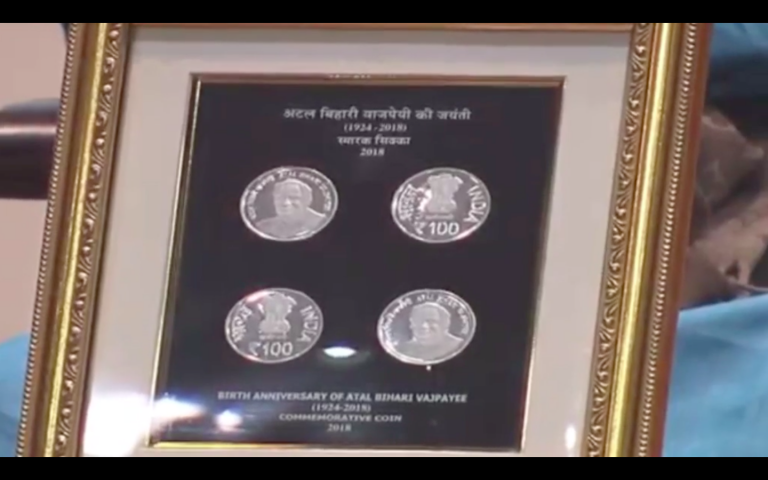
On the eve of former Prime Minister Atal Bihari Vajpayee’s birthday, which is also celebrated as Good Governance Day, Prime Minister Narendra Modi released a Rs. 100 commemorative coin in his memory.
Speaking at the event, Prime Minister Modi said that the party built by Vajpayee has become one of the largest political parties. “For some people, power is oxygen… they can’t live without it. A major part of Atal Ji’s career was spent in the opposition benches but he spoke about national interest and never compromised on the ideology of the party,” PM Modi said.
Adding that Vajpayee thought democracy was supreme, he said, “He built the Jana Sangh but when the time came to rescue our democracy he and others went to Janata Party. Likewise, when the choice was between remaining in power or comprising on ideology, he left Janata Party and formed the BJP.”
In a display of massive hypocrisy, Congress had opposed the recent GST tax rate cuts of several times that would benefit the middle-class during the recently concluded GST council meet. On 22nd December 2018, the Modi government had slashed the GST tax rate for several items with only 28 sin goods remaining in the high 28% category, and surprisingly, it face stiff opposition from Congress, whose President Rahul Gandhi has been calling GST ‘Gabbar Singh Tax’ and demanding rate cuts during his election speeches.
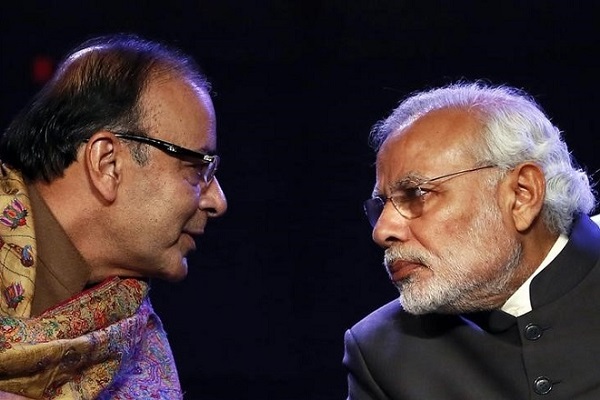
On December 18th, during his keynote speech at Republic Summit, the Prime Minister had asserted that soon, 99% items would be clubbed in the 18% or lower GST tax slab and the Finance Minister, Arun Jaitley had delivered on that promise promptly, within 4 days of that announcement.
However, the passage of the tax cut was not without opposition from the strangest quarters. According to our sources, at the GST council meeting, all three Congress-ruled states namely Rajasthan, Chhattisgarh and Madhya Pradesh opposed the rate cut.
Our sources have confirmed that Congress opposed the rate cuts in general, but on certain items, their opposition was most vehement. Here are the specific items that met the stiffest opposition from the Congress.
1. Cinema Tickets: GST for cinema tickets less than Rs 100 reduced from 18% to 12%, for tickets above than Rs 100, GST reduced from 28% to 18%.
2. Monitor and TV up to 32 inches: Rate cut from 28% to 18%
3. Music Books and vegetables (uncooked or cooked by boiling in water): Music books and vegetables (uncooked or cooked by steaming or boiling in water), frozen, branded and put in a unit container and vegetables provisionally preserved but unsuitable in that state for immediate consumption have been exempted from GST. Music Books went from 12% to be exempt, and vegetables went from 5% to be exempt.
4. Fly Ash blocks: GST reduced from 12% to 5%
5. Video games: Video game consoles and other games and sports requisites falling under HS code 9504 went from 28% to 18%.
6. Digital cameras: Digital cameras and video camera recorders went from the 28% slab to 18% GST slab.
7. Jan Dhan: Services supplied by banks to Basic Saving Bank Deposit (BSBD) account holders under Pradhan Mantri Jan Dhan Yojana (PMJDY) shall be exempted.
The above listed 7 items’ GST rate reduction met with the stiffest opposition from specifically Congress. Most of these items would benefit the middle-class especially the reduction of GST on Cinema tickets, Monitors and TVs up to 32 inch, video games, digital cameras and even vegetables.
Congress opposing items that can benefit the middle class is a classic case of Congress trying to stymie benefit to the people of the country for petty political gains. Congress led by Rahul Gandhi also perhaps opposed the rate cut because the party’s prevalent narrative is that the Modi government has not done much for the middle-class, which is also considered BJP’s core vote bank.
With these rate cuts, the Modi government has taken a giant leap in assuaging the anger of the middle class, and it is no surprise that Rahul Gandhi and his motley party would do everything in their power to hinder that process for electoral gains.
National Conference seems to be troubled after the recent success of the security forces in eliminating several Pakistani terrorists in Jammu and Kashmir. The politics of undermining India’s integrity for votes has once again come to the fore as party’s senior leader Bashir Ahmed Veeri said that if National Conference comes to power in the state, it will not allow Armed forces to conduct operations, reported Times Now.
Bashir Ahmed Veeri speaking to the media said that if the Omar Abdullah led National Conference is voted to power in Jammu and Kashmir, then it will stop all the operations conducted by the Army in the state. Shockingly, Bashir Ahmed Veeri termed the anti-terrorist operations conducted by the Indian Army against Pakistan backed terrorists as a ‘genocide.
“On one hand, you call them misguided children, then your army murders them in broad daylight. You have deployed a brigade of an army to slaughter our children,” said NC leader.
Bashir Ahmed Veeri said that his party National Conference has always spoken of only one ideology and policy of respecting the rights and dignity of the people. Condemning the anti-terrorist operations being carried by the Indian Army, he said that the party will stand against any operations be it ‘all-out’ or ‘out-and-out’ carried out against the people of the state.
Earlier in August, Veeri had also branded Kashmiri terrorists as ‘Martyrs’.
It is notable here that after countless attacks on security personnel by vicious stone pelters in Kashmir, who not only target them with stones and Molotov cocktails but also use children as human shields, Army Chief General Bipin Rawat had announced last year that the anybody interfering in an anti-terrorist operation will be treated as a terrorist.
Mobs of stone pelting jihadis are often mobilized in the state to provide cover for hiding terrorists and help them escape. Recently in Pulwama, a mob had gathered and pelted stones at soldiers engaged in a fierce gun battle with three terrorists of Hizbul Mujahideen. In the altercations that followed, eight of the stone pelters were killed in retaliatory action. Leaders of National Conference, PDP have expressed shock over it and have been portraying such incidents as Indian Army’s action against Kashmiri people.
Undercover operations by the media have also revealed in the past that stone pelting and then claiming victimhood is a part of the ecosystem in the state that fans pro-Pakistan and separatist narrative. Many stones pelters had admitted that they are paid anything between Rs 5000 to 7000 a month and given shoes and clothes to throw stones at Indian security personnel.
The state of Jammu and Kashmir is under the President’s rule following the fall of the government and state assembly elections are to be held soon.
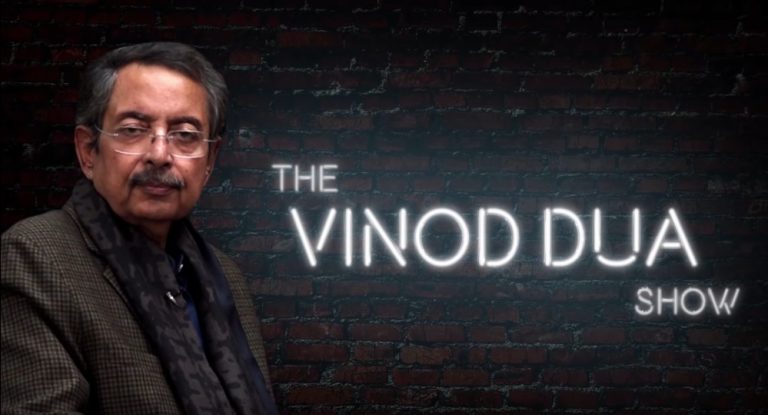
Earlier today we had reported that in a show titled The Vinod Dua Show, journalist Vinod Dua had defamed union minister Nitin Gadkari by accusing that the minister was revolting against Modi government. As proof of this grave allegation, Dua had used a cleverly edited portion of an interview Gadkari had given to HW News, where Dua has recently joined. In episode 7 of the program, the veteran journalist had made a lengthy commentary on how dissidence in BJP is growing, and advised BJP not to project Modi as the face of its campaign in the coming elections. In the clip of Gadkari’s interview used by Dua, Gadkari is seen saying that the government is responsible for more than 400 stalled projects in his ministry.
After publication of the show, Nitin Gadkari strongly refuted the claims made by Dua, saying that he was talking about UPA government, not his own government. The Facebook page of Gadkari’s office had posted the full portion of the relevant part of the interview, where it is clear that Gadkari was talking about previous UPA government. Moreover, the entire interview is still available on HW News website, which also clearly indicate that Vinod Dua was lying, and he trying to create a fictitious rift in top leadership in BJP, which Gadkari claimed is part of propaganda. The clip used in Dua’s show clearly showed that Gadkari’s reply was abruptly cut, and he had not finished speaking. In the full interview, Gadkari names UPA government in the very next sentence.
After the rebuttal by Gadkari, episode 7 of the show was taken down from HW News website and Youtube. Vinod Dua was clearly lying that Gadkari was blaming his own government, and he should have tendered an apology for that. But they just quietly removed the episode. And now, after the heat it faced on social media, the website has come out with a bizarre ‘clarification’. In a post published on the website, it says that the ‘clip was erroneously sent incomplete to Mr Dua’. And based on that incomplete clip, Dua made an entire episode of his show, they suggest.
The Clarification issued by HW News
This is both hilarious and definitely dishonest clarification. In the clip, it is evident that Gadkari has not stopped speaking, because in the very next sentence he says that he is talking about UPA government. And the HW News had the full video on its website, it was their exclusive interview. It is very difficult to believe that a veteran journalist like Vinod Dua made an assumption that a senior minister like Gadkari is speaking against Modi based on an ‘incomplete’ clip. If it was true, it would be big news. Anybody would like to see the whole interview before making a show on the basis of just 2-3 sentences seen in the incomplete clip. In the 49:42 minute long video of the interview, Nitin Gadkari talked about stalled projects within the first 3:20 minutes, the clip was cut just after that. This means someone from HW News sent just a 3:20 minute long clip, most of which included introductory remarks by interviewer Akhilesh Bhargava, and now they are saying that Dua thought this is enough material to make such a sweeping comment.
More importantly, in the short clip that was used by Vinod Dua, Bharagava asks the first question on stalled road projects. Replying to this, Nitin Gadkari starts by saying ‘when I took over the ministry’. This clearly indicates that Gadkari was talking about the beginning of the NDA government, therefore he can’t blame the new government for the stalled projects. This means, even if Dua actually received a 3:20 minute of the interview, and he didn’t see the full interview, even that short portion included enough evidence that Gadkari was not talking about his own government.
This implies that HW News and Vinod Dua are now lying to hide deliberate propaganda they tried to peddle using a selected portion of Gadkari’s interview, and they are not ready to apologise for that act despite been caught red-handed.
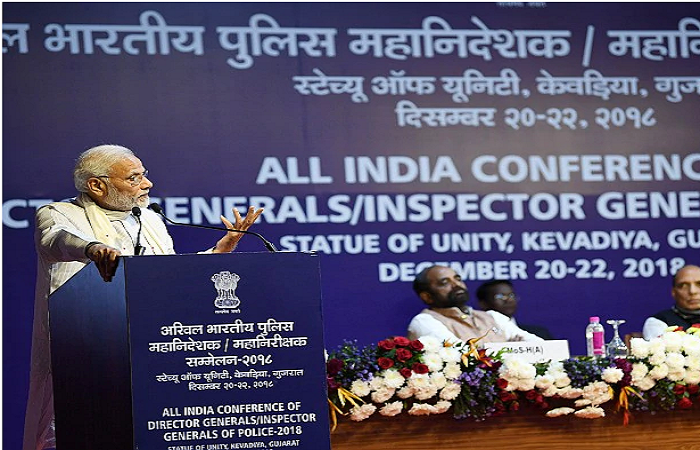
On 22 December, Prime Minister Narendra Modi announced a new award named after Sardar Vallabhabhai Patel. He announced the annual Sardar Patel Award for National Integration was announced at the Conference of Director Generals and Inspector Generals of Police at Kevadiya in Gujarat.
Yesterday, at the DGPs/IGPs Conference in Kevadia, announced an annual Sardar Patel Award for National Integration. This award would be given for outstanding efforts to further national integration.
Speaking about the award, PM Modi said, “Sardar Patel devoted his life towards unifying India. The Sardar Patel Award for National Integration would be a fitting tribute to him and will inspire more people to work towards furthering India’s unity and national integration.” The award will be every year for outstanding efforts in the field of furthering national integration.
Sardar Patel devoted his life towards unifying India. The Sardar Patel Award for National Integration will be a fitting tribute to him and will inspire more people to work towards furthering India’s unity and national integration.
PM Modi also released a commemorative stamp of National Police Memorial and launched the portal of the Cyber Coordination Centre which will help Law Enforcement Agencies coordinate their efforts to solve all cyber crimes and incidents.
PM Modi acknowledged the contribution of our police forces in India, and their counter-terrorism efforts and initiatives. He also thanked Jammu and Kashmir police, who play a pivotal in combating terrorism and radicalisation menace.
He also asked Police forces to be more vigilant about such forces, who are creating and deepening caste-fault lines in India for short-term goals.
He praised the police forces for their success in countering terrorism and limiting it to a small geographic area of the country. He said the people of India are, in particular, proud of the police force in Jammu and Kashmir, for their role in countering terrorists, and successfully engaging them. Along with this, PM also announced an annual Sardar Patel award for contribution towards national integration which will be open to all Indians.
PM Modi also conferred President’s Police Medals for Distinguished Service to Intelligence Bureau (IB) officers.
PM Modi was received by Gujarat CM Vijay Rupani at Vadaora airport. He then left for Kevadia and also visited world’s tallest statue of Sardar Patel, Statue Of Unity and paid floral tributes.
The event was also attended by Home Minister Raj Nath Singh and Union Ministers of State for Home, Hansraj Ahir and Kiren Rijiju.
The Chhattisgarh police have made yet another major breakthrough in cracking the Urban Naxal network. Just a few months ago, a hardened Naxalite of 18 years, Pahad Singh had surrendered and blown the lid off their operations. In an exclusive interview to OpIndia, Pahad Singh had also revealed that Arun Ferreira, one of the Urban Naxals arrested was a member of the Maoist party and had attended several central committee meetings of CPI (Maoists), a banned terror outfit.
Now, speaking exclusively to OpIndia, IG GP Singh of Durg has revealed that Pahad Singh has given the Chhattisgarh Police another breakthrough. Singh revealed that one Narayan Venkat Rao alias Narayan Murthy, a highly placed government functionary has been arrested for his connection to the Naxals. Murthy was working as a conduit between the Maoists and the urban network and has been doing so for many years. His name was revealed by Pahad Singh during his interrogation.
In conversation with OpIndia, Singh revealed that Narayan Murthy, alias N Venkat Rao Murthy was working as a government official and a senior technical assistant in the National Geophysical Research Institute of Government of India since 1980. A resident of Hyderabad, he had intimate connections with the Naxal network. He is also a competent authority to issue explosives under PESO (Petroleum and Explosives Safety Organisations).
G P Singh reveals that Murthy was in touch with the urban Naxals who have been arrested including Varavara Rao and has connections with the entire Urban Naxal network. He said that Murthy has got links to the Koregaon-Bhima violence as well. And that everywhere in the country, where such displacement was taking place, Murthy has in all probability played the conduit.
He also reveals that Murthy had attended several central committee meetings of the Maoists and had met Teltumbde several times. He also met Chief of Central Military Commission of the Maoists. GP Singh says that he met these highly placed Maoists at least in 2016 and 2017. He started his career from radical student wings in Andhra Pradesh and later graduated.
IG GP Singh said that a lot of material has been recovered from him including letters, literature and communication. Initially, Murthy was not opening up about his connection with the Naxalites, but because of the proof with the police, he could not deny his connections for long.
GP Singh says that his arrest is a major setback to the Naxal network and he holds many secrets that would be revealed over the course of his interrogation. He said that the penetration of Naxalites in important government is a cause for concern and will be further investigated. Singh also revealed that Murthy was an elusive character so far. None of the police departments had any idea of Murthy’s true designs and what he did for the Naxalites. His role was only revealed after Pahad Singh, the surrendered Naxal, started talking to the police. In fact, even the Andhra Pradesh and Maharashtra police were not aware of his designs.
Narayan Murthy, alias Venkatrao Murthy’s brother is the President of PUCL, Hyderabad. OpIndia has been tracking organisations like CDRO and PUCL for the past few months. All the arrested Urban Naxals have links to these institutions and the details can be read here.
With the major breakthrough by the Chhattisgarh police, it remains to be seen if more names of Naxals who have penetrated important government institutions tumble out. It seems like the network is just starting to be uncovered and thus far, only the tip of the iceberg has been exposed.
Controversial scribe Barkha Dutt, back in her new avatar, has been busy publishing new propaganda videos for Shekhar Gupta’s news outlet ‘The Print‘. Dutt has recently come out with another video to deliver her verdict on former Prime Minister Manmohan Singh and his relationship with the media.
In her latest video, Barkha Dutt discusses the relationship between former Prime Minister Manmohan Singh and the media during his tenure from 2004-2014 and delivers her judgement by saying that Singh was one of the most liberal Prime Minister of the country. She claims that he never tried to silence the media. Barkha Dutt goes on to say that Manmohan Singh during his tenure never tried to shut down channels of communication or access to government sources while subtly hinting that the present government has tried to keep media away from scrutinising the government.
She hails Manmohan Singh for upholding the civility by regularly meeting journalists and interacting with the press as against PM Modi, who is yet to speak to the media in an open press conference. In the video, Barkha Dutt has delivered her verdict that Manmohan Singh was a true liberal and proclaims that one does not have to wait for history to judge him.
However, Barkha Dutt forgets the fact that it was Prime Minister Manmohan Singh was no less intolerant towards the press contrary to what Barkha Dutt claims. In fact, Singh had tried harshly to silence NDTV, where Dutt had spent most of her journalistic career. In her urgency to issue a certificate to Manmohan Singh for being ‘liberal with the media, she deliberately chooses to let go of the fact that former PM Singh indeed had strict control over the media narratives.
Recently, we had reported on how Manmohan Singh during his tenure as the Prime Minister had pressurised Barkha Dutt’s former employers NDTV to pull of a story which could have shown the UPA government in a bad light.
A former journalist with NDTV, Samarendra Singh had revealed how back in 2005, a year after Dr Manmohan Singh became the Prime Minister, he was forced to pull down an NDTV story which was based on ‘report card’ of the ministers of the UPA. The incident has also been discussed in Sanjaya Baru’s book ‘The Accidental Prime Minister’, where it has been clearly stated that how Prannoy Roy, the promoter of the NDTV was schooled by the then Prime Minister Manmohan Singh for doing a story on evaluating the performance of few cabinet ministers who had received a negative review.
In May 2005, when the UPA-1 was reaching its first anniversary, reports had started appearing in the media that Dr Singh was reviewing the performance of his ministers and NDTV had ran a story that Minister of External Affairs, Natwar Singh, a Gandhi Parivar loyalist had secured a ‘low score’ on the PM’s report card and was likely to be dropped from the cabinet. Reportedly Manmohan Singh had burst into anger against Prannoy Roy and made sure that the story was dropped.
If the act of bullying a media organisation and directing them not to pursue a story that shows the government in a bad light is not considered an act of violation of freedom of press then Barkha Dutt should not claim any moral high ground in judging the present NDA government which has been far more liberal in terms of engaging with the media. This, despite the fact that left-wing dominated media has always spewed venom against Prime Minister Narendra Modi.
Barkha Dutt also overplays the fact of Manmohan Singh being liberal to the media during his tenure as Prime Minister. A notable incident when Arnab Goswami was stopped by the PMO officials from questioning the Prime Minister Manmohan Singh proves the fact that Manmohan Singh had no less contempt for the media.
In her attempt to glorify Manmohan Singh, Barkha Dutt may also have liberally interpreted the ‘openness’ of the UPA government as it had allowed the likes of Barkha Dutt and others to play a larger role in deciding the selection of cabinet ministers during the UPA government, as opposed to the present government who has ignored and shown the door to several journalists-lobbyists of the Congress era.
Barkha Dutt, a quintessential clickbait journalist, has often resorted to such shoddy journalism to stay in relevance despite the fact that her credibility as a journalist has taken a deep dive. As there are only a few months left to the crucial general elections, Barkha Dutt has arrived on the scene to pursue what she does the best- the propaganda.