Home Blog Page 6809

Aligarh: BJP youth wing files complaint against AMU students for supporting ‘stone pelters’, says it shows their ‘terrorist mentality’

0

Aligarh’s BJP Yuva Morcha president, Mukesh Singh Lodhi had filed a complaint with the police against the students of AMU, who took out a protest march in support of “stone pelters” who were killed in a security operation in Pulwama, Jammu and Kashmir on Saturday.

On December 16, it was reported that an Army officer and three terrorists were killed in a fierce gunbattle. Seven stone pelters were also killed in the crossfire while they were trying to protect the terrorists, trying to give them a safe passage by pelting stones at the security personnel during the encounter in Pulwama district in Jammu and Kashmir.

Several media houses had referred to these dangerous ‘stone pelters’ as ‘civilians’, reflecting the Indian Army in a bad light. So much so that after the incident, the National Conference (NC) president Farooq Abdullah had commented that the Army should have used water cannons or tear gas instead of bullets, hinting that the army was responsible for the killing of seven innocent ‘civilians’, whereas later videos emerged on social media, showing that it was the soldiers who were actually attacked by ‘stone pelters’ and the army retaliated in self-defence.

On December 15, students of the Aligarh Muslim University took out a protest march on the university campus to condemn the killing of the seven stone pelters.

In his complaint filed with the district SSP Ajay K Sahni, Lodhi demanded that an FIR is lodged against the students, who were led by the President of AMU Students’ Union Salman Imtiaz and their Secretary, Huzaifa Aamir. He further demanded the arrest of all the students involved in the act.

The BJP youth wing president lambasted at the AMU students by saying that their support for the ‘stone pelters’ only displayed their ‘terrorist mentality’.

Aligarh SSP Ajay K Sahni said that he has written a letter to AMU vice-chancellor and requested him to through light on the particular incident.

The Aligarh Muslim University, one of the oldest institutions in the country, has many times in the past spearheaded several controversies. Earlier this year the university was in the news for hanging partition architect Muhammad Ali Jinnah’s portrait in the students’ union office.

Lately, the AMU had again stirred controversy with its administration being accused of showing insensitivity towards the Hindu students on its campus. They allegedly used the same oil for cooking vegetarian food in which non-vegetarian food was being made.

Similarly, the University had again hogged the limelight when one of its students was found to have joined the terror organisation Hizb-ul-Mujahideen.

The AMU students’ union had in the past grabbed public attention when they had objected to the University Administration’s invite to President Ramnath Kovind for the convocation ceremony.
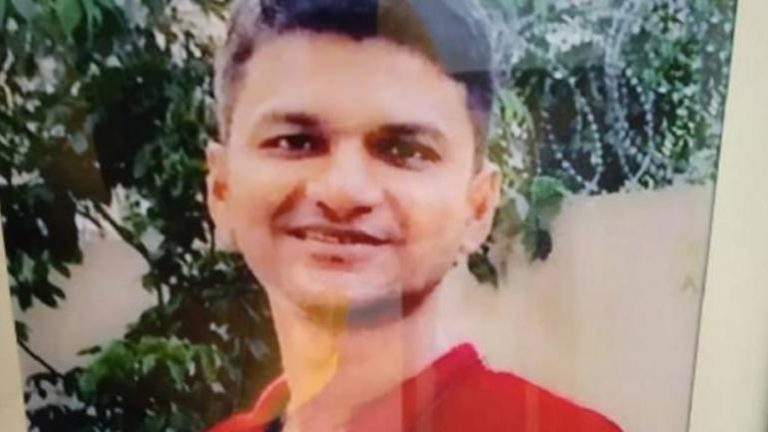
Genpact executive leaves suicide note pleading innocence in sexual harassment charges, FIR filed against company management

0

Two days after Swaroop Raj, Genpact India’s Assistant Vice-President committed suicide in his apartment in Noida over allegations of sexual harassment, his wife has lodged an FIR against the company management and seven of its employees, accusing them of abetment to suicide.

Kirti, Swaroop’s wife, who happens to be a management trainee in the same organization, has filed the FIR against five male employees apart from the two women who accused her husband of harassing them sexually.

Kirti claims that her husband was suspended without any investigation. Her complaint states, “He was declared guilty without being given any opportunities to be heard and (they) penalised him by barring him from coming to work. He was not allowed to work from home and made to leave behind his identity card and laptop, thereby brandished as a sexual offender and stripped off his dignity without any investigation.”

The Police has said that they will look into the matter and if necessary, the people mentioned in the FIR could be called for questioning. The members of Genpact’s Internal Complaints Committee (ICC) have also been booked under the same charge, the Police have said.

Swaroop’s suicide note had called the allegations “baseless”. His suicide note read, “Today I want to let you know how much I love you. I have an allegation by two of the employees of sexual harassment and trust me I did not do anything. I know the world will understand it but you and our families should trust me. The allegations are baseless. But the entire Genpact will know about it, hence I do not have the courage to face anyone. I want you to be strong and live life with whole respect as your husband has not done anything.”

Swaroop had committed suicide on December 18, on the same day that Genpact suspended him after two female employees had levelled allegations of sexual harassment on him.

Genpact confirmed that he was suspended to have a “fair, uninfluenced inquiry”. “The complaint made serious allegations of sexual harassment which are being duly investigated by the internal complaints committee. To have a fair, uninfluenced inquiry, he was placed under temporary suspension pending the closure of the inquiry in line with the legal requirement and company policy so that ICC could carry out a reasonable investigation into the allegations received from two female employees,” a spokesperson for the company said in a statement.

The suicide of Swaroop reveals the problematic nature of the ‘Me Too’ movement. While sexual harassment at workplace remains a serious issue, the “Believe All Women” rhetoric aggressively furthered by the ‘Me Too’ feminists is extremely problematic at many levels.

1995 Tandoor Murder Case: Delhi HC orders release of convict Sushil Sharma

0

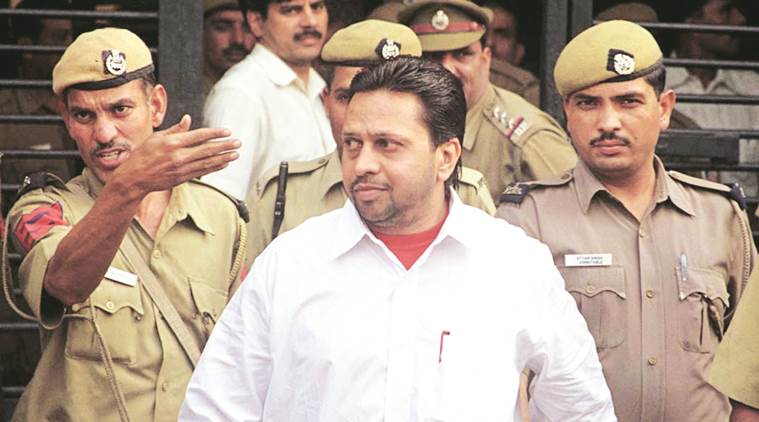
The Delhi High Court on Friday ordered the release of Congress leader and former MLA Sushil Sharma, who was convicted for killing and burning wife Naina Sahni in a ‘tandoor’ in 1995.

According to the reports, the court was hearing a habeas corpus plea filed by Sushil Sharma on Tuesday seeking release after spending 29 years in prison. The lawyers had argued that Sharma had no criminal antecedents and is soon going to attain the age of 60. He had also asserted that Sharma had already reformed himself should be released under the guidelines laid by the Sentence Review Board (SRB).

The court had expressed displeasure over Sharma’s stay in jail and had questioned authorities on why Sharma was allowed to be kept in jail indefinitely for the offence of murder, even after serving the sentence.

The Delhi High Court sought to know why the sentence review board (SRB) had rejected Sharma’s premature release on grounds of “brutality”, despite the Supreme Court ruling there was no evidence that he had chopped his wife’s body.

Sushil Sharma, a Congress leader and former MLA, had killed his wife Naina Sahni over suspicion of having an extramarital affair, and later had cut the body into pieces and burnt it inside a ‘tandoor’. The murder case later was referred to as ‘Tandoor Murder Case’.

Sharma had shot Naina twice after he had caught her talking over the phone with Khan on the night of 2 July 1995. Soon, he took the body to a local restaurant called ‘Bagiya’ owned by a friend and had tried to dispose of the body with the help of restaurant manager, Keshav Kumar.

The police had arrested Keshav Kumar but Sharma managed to flee initially but he had surrendered on 10 July 1995. The Delhi Police had investigated the case and filed a charge sheet on 27 July 1995 in a Sessions Court. In 2003, a city court had awarded Sushil Sharma death sentence which was later upheld by the Delhi High Court in 2007.

A three-judge bench on 8 October 2013 Chief Justice P. Sathasivam and Justices Ranjana Desai and Ranjan Gogoi of the Supreme Court had upheld Sharma’s conviction but it commuted his death sentence to life imprisonment.

Division bench of Calcutta HC overturns the decision of allowing BJP to hold rallies in WB

0

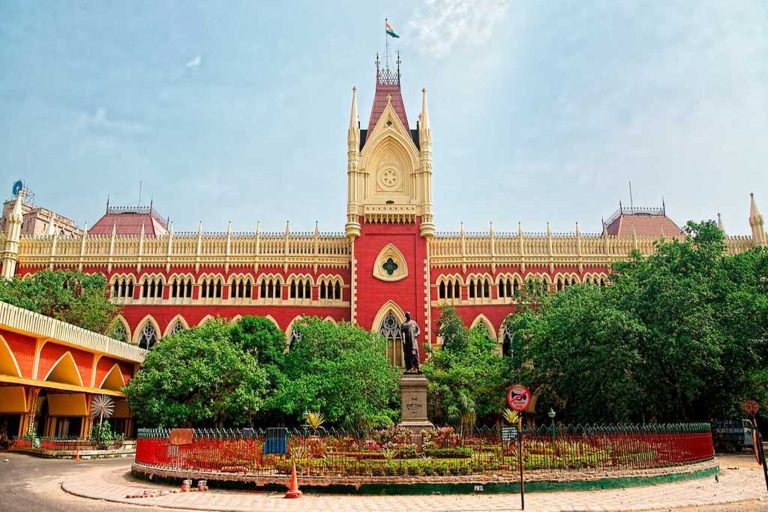
In a major setback for the BJP, the Calcutta HC’s Division Bench headed by the Chief Justice of Calcutta HC has set aside the single bench order of granting BJP permission to organise Rath Yatras in the state. The bench had sent the case back to the Single Bench and asked it to consider all the relevant details before arriving at the judgment.


Yesterday, a Single Bench of Calcutta HC had passed an order approving BJP’s plea for organising Yatras in West Bengal. It directed the police machinery in the state to ensure smooth carrying out of yatras without any breach in law and order. The Division Bench, however, today quashed the verdict and sent the case back to the single bench to reconsider.

While the fundamental rights of a political party to take out rally in any part of the country was argued and debated upon by the BJP counsel, the Division Bench, however, pointed out the non-consideration by the single bench of the 36 ‘Intelligence Reports’ foreboding communal tensions in the state if BJP is allowed to hold yatras. The Division Bench questioned the merit of the judgment highlighting the non-consideration of the ‘intelligence reports’.

The division bench comprising the Chief Justice Debasish Kargupta and Justice Shampa Sarkar decreed the BJP not to hold any rath yatra as of now.

The BJP counsel also raised reservations about the validity of the ‘intelligence reports’ as they were not being shared with the BJP. Representing the state government, senior Congress leader and lawyer Dr. Abhishek Manu Singhvi stated that it was the jurisprudence of the Division Bench to allow sharing of such sensitive information with the petitioners i.e BJP.

Defending police’s decision of not allowing the BJP to hold yatras in the state, Singhvi drew the court’s attention to the 3 intelligence reports raising apprehensions of communal tensions if yatras are allowed.

The latest decision by the Calcutta HC can be described as a victory for the Mamata government who had filed an appeal and asked for an urgent hearing following the Single Bench’s order yesterday.

A note to Virat Kohli’s critics: A Lion need not concern himself with the opinions of sheep

0

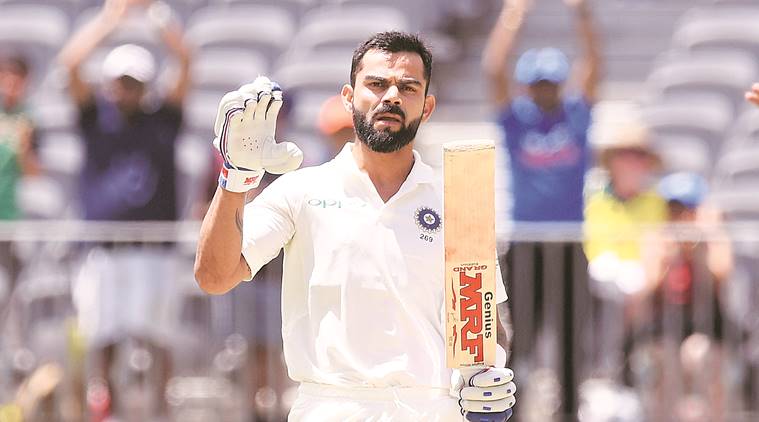
Virat Kohli has come under some criticism recently for his antics on the field. Apart from Naseeruddin Shah’s tirade against him, the discussion following the second test match of the series at Perth has revolved around Kohli’s on-field behaviour.

It’s unfortunate because Virat Kohli played one of the best test match innings ever played during that match and certainly the best in his test match career so far. Instead of appreciation for his brilliant batting on an extremely difficult pitch, he has received far more criticism for his celebrations during the match in return.

Former fast bowler in the Australian team, Mitchell Johnson, said Kohli looked “silly” and “disrespectful”. “At the end of the match, you should be able to look each other in the eyes, shake hands and say ‘great contest’,” he wrote in a column for Fox Sports. “Virat Kohli could not do that with Tim Paine, shaking the Australian captain’s hand but barely making eye contact with him. To me, that is disrespectful.” He added, “Kohli gets away with more than most cricketers simply because he is Virat Kohli and he gets placed on a pedestal but this Test left the Indian captain looking silly.”

Former cricketing greats have come to his defence. Most have justly pointed out that aggression is an intrinsic part of competitive sports and Kohli hasn’t really crossed any boundaries. Former Pakistani bowler and a legend of the game, Shoaib Akhtar, told people to “cut him some slack” on social media.


Darren Lehmann, former Australian Cricketer and coach, said it was “good banter” as well. “Neither Kohli nor Tim Paine crossed the line. It was good banter, and it came across as a bit of fun on the stump mics,” he said. “You have to show passion when you are playing for your country and I don’t have any issue with what happened. There shouldn’t be any drama about what happened in Perth.

Akash Chopra, who has been an opener for India in the past, went after the Australian media for vilifying Kohli. “The Australian media is rallying behind their cricket team and, in fact, making India and Virat Kohli as the villains of world cricket. I am very, very surprised. It’s the classic case of the pot calling the kettle black. Perhaps, it’s time for them to look inwards and just ask themselves the question, regards to how they have behaved in the past,” he said.

Sourav Ganguly, one of the greatest captains India has ever had, had a word of caution for the Australian media as well.


The treatment that Kohli has received over the years is in stark contrast to that which foreign players have received. Ricky Ponting and members of the Australian cricket team who cheated to win a test match against India in Sydney have hardly received the criticism for their despicable on-field behaviour that Kohli has. Yes, they were criticized but it never became the defining aspect of their personality. Contrast that with how Kohli has been treated, he just played one of the greatest test match innings and all people can talk about is his aggression.

It is even more despicable for Indians such as Shah to attack Kohli. Bollywood stars hating on Kohli is especially amusing considering the industry glorifies crickets who have indulged in match-fixing. Let’s face it, Kohli is indisputably the greatest batsman of his generation. And what has he really done to receive such criticism? He is aggressive, he is passionate, he has an unquenchable thirst to win, he celebrates unabashedly on the cricket field. These are supposed to be crimes? Steve Smith and David Warner who conspired to cheat, now that is illegal and a disgrace to cricket.

Another controversy Kohli was mired in recently were his remarks on an Indian who called him “overrated” and that he enjoyed watching English and Australian cricketers more than Kohli. Kohli replied, “I don’t think you should live in India, go and live somewhere else.” What’s so wrong with what he said? He was obviously angry and displeased and gave the person a piece of his mind. It should have been the end of the story. You cannot expect a cricketer who has worked so hard to become the greatest of his generation to be kind to someone who just called him overrated. But, considering the political climate of our country right now, it was blown all out of proportion.

Scroll even published an article with the headline, “Dear Virat Kohli, hyper-nationalism and sport don’t go well together”. I do not know what the author ate for breakfast that day but surely, it wasn’t something that helps with thinking rationally. Hyper-nationalism is the bread and butter for sports. It is what makes sports so great. It is why India-Pakistan cricket matches are always a hyped affair, it is what motivates players to greatness. That glory, that hunger for success, that thirst to have an entire nation cheering your name, that is what sports are all about.

It is most natural for Kohli to have deluded detractors. He is the greatest batsman of this era. His records are astonishing, the talent that he possesses is mind-boggling. Greatness attracts criticism from the mediocre. The mediocre hate greatness even while they are feeding off it. Australian cricketers hate him because he is better than them and is the greatest threat in the batting line-up. The Australian media hates him because he does not shy away from a battle. They are enraged because someone’s treating them in the same manner their team has treated others for years. And good for Kohli, he is unlikely to change himself one bit. And why should he? He has reached the pinnacle of success by marching forward on this path. And more importantly, as Tywin Lannister said, “A Lion doesn’t concern himself with the opinions of a sheep.”

Years down the line, when all of this is over and his hair has turned grey, hardly anyone will remember Kohli’s critics. But they will remember his centuries, his sixes and fours, his cover drives. Even Scroll might join the bandwagon in criticizing him now but unfortunately for them, history will only remember Kohli and his spectacular achievements on the field. And they will applaud the passionate cricketer who gave it his all for the country he represented.

AugustaWestland: Court allows ED’s plea, Christian Michel to be produced tomorrow

0

The Patiala House Court in Delhi has allowed the Enforcement Directorate’s petition seeking the production of AgustaWestland middleman Christian Michel. Michel is currently in Tihar after his CBI custody ended on Wednesday.


The Patiala House Court allowing the ED’s plea issued a production warrant against Michel. He will be produced by the jail authorities in the court tomorrow. If the court decides in favour of the ED, he might be arrested tomorrow by the investigative agency.


Michel was in CBI custody which ended on Wednesday. On the same day, he was sent on 10-day judicial custody by the court which ends on Dec 28. Michel had filed an application in the Patiala House Court seeking a direction to the Jail Superintendent to allow him a special cell in the Tihar Jail.


The court has sought the reply of DG Prison and the Tihar Jail Authority on the application of Michel.

Michel features in ED’s charge sheet in the 3600 crore AgustaWestland scam.

Flurry of setbacks for Gandhis in National Herald and why, despite a pliant media, this could prove historic

Another day, another big setback to Congress and the Gandhis in the National Herald Case.

Untitled.png

There is an increasing amount of evidence that things haven’t exactly gone the way the Dynasty would have liked in cases relating to the National Herald.

Back when the allegations of corruption were first made by Dr Swamy during the UPA years, few believed they were credible. Or perhaps, few had the courage to believe that they were credible. Rajdeep Sardesai famously stood in front of a giant screen with the words “Where is the fraud?” almost as if defending the Dynasty in the “people’s court”.

Untitled.png

At the time, many people suggested that the ‘fraud’ here was standing towards the right of the screen, wearing a suit and a pink coloured tie.

But anyway, let’s not get into that.

The matter did keep dragging on and bit by bit, things have consistently gone south for the Gandhis. In 2015, Swamy got his moment in court face to face with the Gandhis and the Gandhis had to seek bail. Shortly before that, sycophants in the pliant media put out “news stories” like this.

Untitled.png

Ha!

Then, the day in court came and the Gandhis did like a short walk on the ground or something. The usual sycophants saw this as a great show of defiance and above all a case of the divine Gandhis making a show of being like ordinary human beings … which would lead to a wave of sympathy that would sweep Modi right out of his chair.

That didn’t happen, but the case kept going on. And so did the setbacks to the Gandhis. The Income Tax Department began proceedings against the company Young Indian and various appeals were filed to halt the process. However, the courts have so far given very little relief to the accused.

In May 2017, Delhi High Court refused to stop proceedings against Young Indian by the Income Tax Department.

Untitled.png

Accordingly, the Income Tax Department reassessed and issued a tax demand of Rs 249 crore for the Financial Year 2011-12. Not only did the Courts refuse to halt these proceedings, but ordered Young Indian to deposit Rs 10 crore.

Untitled.png

Not surprisingly, these events from March 2018 received the minimum possible news coverage. If anyone was expecting the Indian media to follow up and find out if Young Indian actually deposited 10 crores, they would have been sorely disappointed.

But things kept trending downwards for the Gandhis. In August of this year, the Delhi High Court issued another scathing judgement.

Untitled.png

Funnily enough, it turned out that the Gandhis, who have been built up by the liberal ecosystem as heroes of free speech, had wished for the court to issue a gag order on media reports about this case. And the Delhi High Court would have none of that either.

Untitled.png

In my humble opinion, the Gandhis need not have bothered to ask the court to issue a gag order on the media. Our “neutral patrakars” have done a good job of gagging themselves in the case already.

Only two weeks ago, the Supreme Court did much the same, refusing to stop tax reassessment proceedings against Sonia and Rahul Gandhi.

Untitled.png

This leads up to today’s judgement, with National Herald asked to vacate its premises within 2 weeks. Apparently, the desperate last-ditch attempt to suddenly revive the long dead newspaper could not convince the High Court.

Despite the sparse and overly cautious media reporting, there is no doubt that a clear pattern is emerging. In the last five years, there has hardly been any good news for the Gandhis from the courts in the National Herald matter.

Could we be witnessing history in the making?

In India, we the people are given to a kind of cynicism, a sense that our legal system can never catch up with the high and mighty. But in this case, the wheels have been turning. Ever so slowly, but there is no doubt that the wheels are turning in one direction only.

Decades ago, a case filed by one nearly unknown politician by the name Raj Narain changed the course of Indian political history. Indira Gandhi had to impose the Emergency, India nearly lost its democracy and then the Congress was ousted from power for the first time ever in the General Elections of 1977.

At the moment, there is a (literal?) ‘gold rush’ among members of India’s liberal ecosystem to discover the electoral genius of Rahul Gandhi, after the Congress swept one state and crawled close to a majority in two others. The going assumption in Lutyens Delhi is that ‘Achche Din’ is coming. I hope they are also keeping an eye on the National Herald case, where the wheel seems to be turning in quite the opposite direction. And above all, I hope that India’s democracy will not come to the brink as it did in 1975 when the Gandhis lost a court case.

Congress is lying about Home Ministry order on intercepting computer data allowing snooping on general public

On December 20, government India issued a notification in the Gazette of India, which seems to give various investigating agencies sweeping powers to snoop on any computer device. The order issued by Ministry of Home Affairs authorises ten listed Security and Intelligence Agencies to intercept, monitor and decrypt any information generated, transmitted, received or stored in any computer resource under the Information Technology Act, 2000.

The order issued by MHA

Expectedly, this caused massive outrage on social media and even in the parliament. This was termed as a violation of the privacy of citizens by Modi government. Congress party alleged that police have been given sweeping power to tape any phone and intercept any computer communication. They said that India is being turned into a police state by this order.

If we look into the MHA order carefully, we can see that there is no basis to these allegations. The government has not issued any new order, rather they have reiterated an order which is already there in the law books. The order cites that is has been issued under sub-section (1) of section 69 of the Information Technology Act, 2000, and Information Technology (Procedure and Safeguards for Interception, Monitoring and Decryption of Information) Rules, 2009.

It is important to note that the Information Technology Act, 2000 was passed by the parliament without any discussion or opposition in the parliament. This is what section 69 of the said act says:

Section 69 of Information Technology Act, 2000

The sub-section 1 of section 69 makes it very clear that authorities will be allowed intercept any information transmitted through any computer device only in cases of threat to integrity and security of the country, a threat to law and order and incitement to any cognizable offence. This is not a general snooping on all citizens as Congress party and others are alleging.

Speaking in Rajya Sabha, finance minister Arun Jaitley also said that this power has been given only for specific cases as mentioned in the IT Act. It is important to note that the order clarifies powers to investigating agencies under the IT Act, it does not amend the Act. This means the provisions of section 69(1) of the Information Technology act will continue to prevail.

Now if we see the Information Technology Rules, 2009 issued by the then Congress government, which has also been cited in the MHA order, we can see that the current order is nothing new. The provision in the order already exists for last one decade. Section 4(1) of the Rules say:

(1) The competent authority may authorise any agency of the government for monitoring and collection of traffic data or information generated, transmitted, received or stored in any computer resource.

This is the same language used in the MHA order, the only difference is that instead of saying ‘authorise any agency’, it now specifies which agencies are authorised to use this power. The 10 agencies mentioned in the order are the usual agencies that carry out investigations in the country. Now the government has made the rule clearer by specifying which agencies can intercept computer-based communications on specific incidents of threats to national security and law and order.

Talking to media, law minister Ravi Shankar Prasad clarified that this order is fully constitutional, and said it does not allow snooping on the general public. He also said that under the provisions of IT act, necessary approvals will have to be obtained from Home Secretary before any interception is done. He also said that as ten agencies are mentioned in the order, other agencies are now not authorised to intercept computer-based communications unless they are authorised to do so on a case by case basis.

Tukde Tukde slogans: Delhi Police ready with draft charge sheet, Kanhaiya, Umar Khalid named as main accused

0

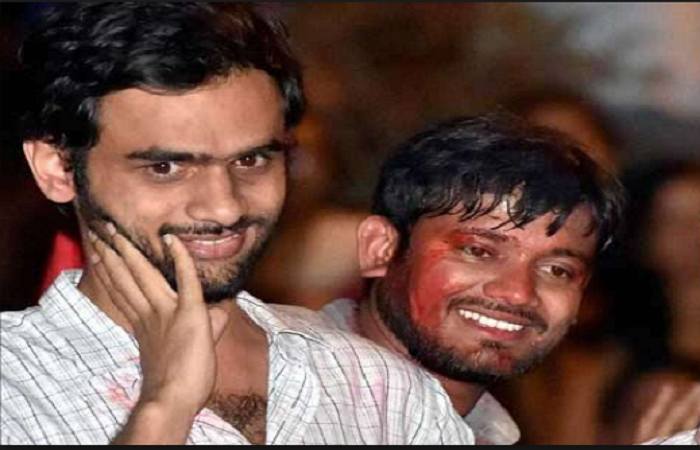
After almost three years of the February 2016 event at JNU for the commemoration of terrorist Afzal Guru, Delhi Police’s special cell is going to submit the charge sheet at Patiala House Court shortly. As per a report in The Indian Express, Kanhiaya Kumar, who was the JNUSU president at that time, Umar Khalid and Anirban Bhattacharya have been reportedly named as the main accused in the draft charge sheet.

The row which dates back to February 2016, hit the national headlines when videos of students raising anti-India and pro-Afzal Guru slogans came to surface. The slogans were allegedly raised by students of JNU and other Kashmiri students. At that time, Delhi police had nabbed student union AISF member and JNU Student Union President Kanhiya Kumar, Umar Khalid and Anirban Bhattacharya after the case was filed against them under Sections 124-A for sedition and 120-B for criminal conspiracy. They were later released on bail.

The charge sheet along with these three, also mention other 8 Kashmiri Students, including some students of Aligarh Muslim University and Jamia Millia Islamia. According to reports, the police have gathered evidence against these persons. They also said that evidence is also backed by data collected from accused’s Facebook profiles. The raw footages of the event with Delhi Police also came out as undoctored by Central Forensic Science Laboratory. This is also going to be submitted as evidence.

Along with these students, the name of other 32 also appears in the charge sheet, including the name of Former vice-president of Student Union Shela Rashid. But, according to police, they don’t have enough evidence to substantiate charges against them.

The row had gained momentum after Congress President Rahul Gandhi and AAP leader Arvind Kejriwal along with communist leaders openly supported the accused students and had condemned the arrests. Kanhiaya Kumar and even many leftist media outlets have time and again challenged the government to come out with the charge sheet and prove that charges against students.

Kanhiya Kumar is also reportedly going to contest 2019 Lok Sabha elections, on a CPM ticket from Begusarai of Bihar. Recently, an FIR was lodged against him by the hospital administration of Patna’s AIIMS following an altercation with junior doctors. He was also accused of being involved in a violent clash with the organisers of a Durga Puja committee in Begusarai.

The other accused, Umar Khalid is a son of a SIMI terrorist and had also openly condemned the killing of terrorist Burhan Wani in Kashmir and fanned anti-India sentiments.

Vrinda Grover, Kanhaiya Kumar’s lawyer, said that she was not aware of the status of the charge sheet and asserted that the case against Kanhaiya is politically motivated as he is set to contest 2019 Lok Sabha elections.

The charge sheet comprises of around 100 pages and reportedly contains forensic reports and technical evidence. As per reports, the charge sheet has been sent to the public prosecutor for vetting and will soon be filed in the Patiala House Court.

Economists give a thumbs down to ‘farm loan waivers’, call it a threat for bankers

The latest enticement in the form of ‘loan waiver’ the Congress party is endowing on farmers to garner votes has been evaluated by many economists and bankers as a dangerous choice if implemented.

According to a report in the Economic Times, many economists fear that writing off loans in several states, including Madhya Pradesh, Rajasthan and Chhattisgarh, is likely to create a lending freeze for agriculture in the coming quarter as the public sector banks could anticipate a rise in non-performing assets (NPAs). Further, they feel that this may discourage banks from forwarding long-term loans to farmers.

The three states of Madhya Pradesh, Rajasthan and Chhattisgarh, where Congress has recently announced the ‘loan waiver’, has already an outstanding of almost Rs 1.47 lakh crore of agricultural loans. “If banks don’t get repayment of loans, where will fund to lend for the next cycle come from?” a banking executive, not wanting to be named, told the Economic Times. He reiterated that the states which go for loan write-offs not make an upfront payment of the total loans due to the banks.

With states like Uttar Pradesh, Maharashtra and Punjab announcing loan waiver in 2017 and the Congress-Janta Dal (Secular) coalition government in Karnataka following the same earlier this year, the total loan write off amount added up to Rs 80,000 crore so far. Now with these three states, joining the unprecedented move to underwrite a farm loan waiver, the write-off amount could rise to Rs 1.5 lakh crore, said the bank official.

Opinionating on this latest trend that is being popularized by the opposition, the United Bank of India’s managing director, Ashok Kumar Pradhan said “It is a deadly poison. It’s a wrong way of addressing the real issue.”

The possibility of many more state governments announcing such waivers is scaring bankers, who believe that even those who pay on time would be tempted to delay payments in the hope of such waivers.

“Undoubtedly, farmers’ expectations of loan waivers are going up,” said Mrutyunjay Mahapatra, managing director at Syndicate Bank. “It is not good for the country’s credit culture.”

With the suspected non-performing loans increasing sharply, soon after any debt waiver scheme for farmers is announced, as the farmers obviously, stop repayments and the delay from the state government to replenish the banks with the same, creates pressure on the lenders and tighten the flow of money.

The state government generally delays in paying the banks, as framing and processing the schemes take a lot of time and the banks generally receive fund from the government after a gap of more than four to five years. This creates pressure on the public sector banks which start feeling the cash crunch.

Further, bankers believe that if default becomes a norm, fresh lending to these farmers would be stalled because banking regulations do not allow disbursement of fresh loans to defaulters unless the loan is restructured.

The report also feared that there are threats of a rise in loan defaults spreading to other states as expectations increase for such debt waiver there, too. “This has a spiral impact on credit repayment culture. Repayments will halt these states with rising in defaults,” the official told the publication.

According to the report the ongoing farm loan waivers are likely to cost Rs 18,000 crore to the Rajasthan government and approximately Rs 35,000 crore to the Madhya Pradesh government. However, there is no unanimity in the banking industry on the amount.

HR Khan, former deputy governor of RBI and now the chairman at Bandhan Bank said, “There should be both political and technical solutions to this farm loan problem. “Farm loan waivers are only curing the symptoms. But there are structural issues. Production has increased but marketing has not. Moreover, Pradhan Mantri Fasal Bima Yojana (PMFBY) needs to be implemented in right earnest. Post-harvesting financing should be provided,” said Khan.

The NITI Aayog, too, has rejected farm loan waiver since it neither helps the state’s finances nor does it provide a long-term, sustainable solution to farmers’ distress. Such populist ‘solutions’ do not really address the fundamental issues and hurdles faced by the farmers.

The recent tactics being endorsed by the opposition, to captivate the poor farmers to garner their votes, is doing them more harm than good.