Home Blog Page 6895

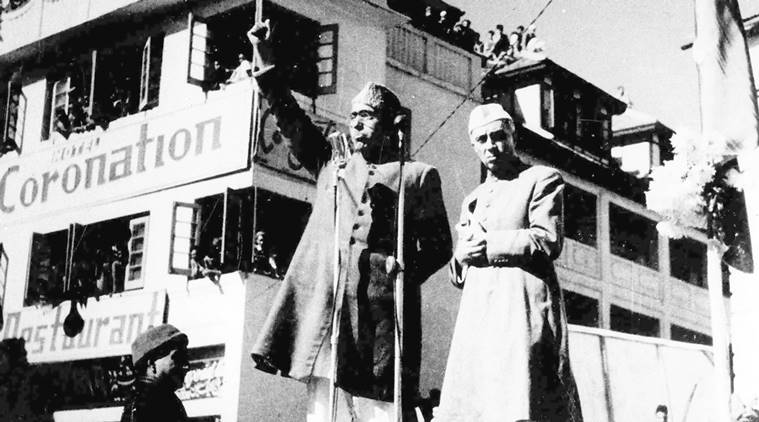
Can we ask what was the entire cost of Nehru’s 1948 Kashmir blunder?

Growing up in India means that we all know Kashmir to be a dangerous place where precious Indian lives are lost on a daily basis. This has always been the norm, as far back as we can remember. I think that every child knows the expression ‘Line of Control’ or ‘LoC’ by the age of five. Indian soldiers posted in harsh conditions, both civilians and security forces getting killed in the enemy fire and terrorist attacks. The only Indians who might remember a time when Kashmir was not like this would probably be well over 70 years old.

But the fact is that it didn’t have to be so. It is true that there was an orgy of violence at the time of Partition. But eventually the horrors came to an end and people began to rebuild their lives with whatever they had left.

There were other princely states besides Kashmir where things did not go smoothly after the British left. Such as Junagadh or Hyderabad. In fact, Goa was incorporated into the nation only in 1961, after a brief flashpoint with the Portuguese.

But in each of these cases, the problems went away quickly after accession. None of them turned into the living horror that India has been suffering in Kashmir for the last 70 years.

When Pakistan first invaded the then independent princely state of Kashmir in Oct 1947, the Maharaja Hari Singh signed the instrument of accession to India in return for help from the Indian Army. The Indian Army quickly recovered two-thirds of Kashmir. One wonders how history would have turned out if the Army had been allowed to recapture the whole of Kashmir instead of Nehru making the blunder of taking the matter to the UN.

In fact, India requested UN intervention to broker a peace as early as Jan 1, 1948, when the Army was still in the thick of operations. One wonders what kind of impact this would have had on the morale of the Indian soldier still fighting on the frontier when he heard that his government was already pleading for peace.

The UN brokered a ‘ceasefire’. Since that day, Kashmir has remained an open wound.

Suppose one were to sit down and count the total cost since that blunder in 1948. All the lives that have been lost. All the sufferings that have been visited upon the lives of soldiers and civilians. And all the money that has been spent by the state on preventing disturbances in Kashmir. Don’t forget to count the opportunity cost as well, i.e., what would Kashmir have become today had it been as peaceful as Hyderabad or Goa? Think of the tourist potential of Kashmir. They call it ‘Heaven on Earth’ for a reason.

So what is the total cost? What astronomical sum does it come to?

These days everyone wants to count every paisa and keep the government accountable. Which is fundamentally a good thing. People want to know the “cost” of the 50-day demonetization experiment. They want to ensure that the 3000 crores spent on the Statue of Unity are recovered fully and quickly through stimulus to the local economy. And any loss to the economy, real or perceived, is examined with a fine-toothed comb. Even when it comes to GST, which is an obvious investment in India’s future.

Even economists who advocated for GST on numerous public platforms are quick to distance themselves from any perceived slowdown in the economy, no matter how temporary.


In our current public discourse, it does not matter that India overhauled its entire taxation system in 6 months and came out roaring as the fastest growing economy in the world. Compare this, for instance, to the experience that developed countries like Canada and Australia had with GST.

Untitled.png


Untitled.png

These were highly developed countries with 2-3 crore people with almost fully formalized economies.

But who cares if India implemented GST faster and better than most developed countries? Like the quintessential Indian parent, our intellectuals will be happy with nothing less than 100% perfection. Even if India actually did do better than everyone else in the class, i.e., better than the proverbial Sharma ji ka beta.

Curiously, the only thing our zealous media and intellectuals don’t want to tally up and count is the entire cost of Nehru’s blunder in Kashmir.

This must be what makes Nehru great. Indian intelligentsia refuses to evaluate Nehru by an objective standard, or for that matter, any standard whatsoever.

What was the cost of Nehru’s blunder in Kashmir? Nobody knows and nobody wants to find out.

What was the entire opportunity cost of 40 years of Nehruvian Communism in India? Nobody knows and nobody wants to find out.

What was the entire cost of the ‘visionary’ Nehru positioning India on the wrong side of history, believing that the future is full of hope due to the Soviet Union and what it has done?

It doesn’t matter. He was a visionary no matter what. We don’t measure Nehru. We just worship him. Three generations of intellectuals and their students have been paid to believe and propagate that.

In essence, Nehru was a Bharat Ratna because he went where no Indian kid has ever gone before. He was free from comparisons with the proverbial Sharmaji ka beta.
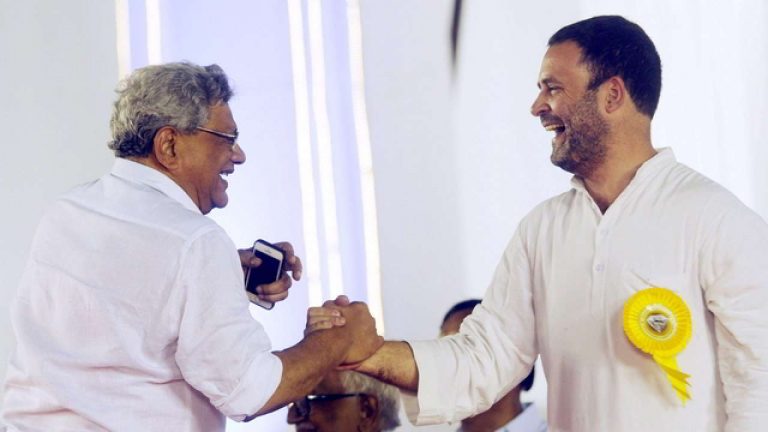
Sitaram Yechury rejects Rahul Gandhi as Prime Ministerial candidate from opposition

Sitaram Yechury, General Secretary of CPI(M), on Tuesday rejected the idea of projecting anyone as the Prime Minister in the upcoming Lok Sabha elections.

Yechury was attending a meeting with DMK president M.K. Stalin at the latter’s Alwarpet residence in Chennai. Yechury addressed journalists after the meeting. Responding to a question about projecting Rahul Gandhi as the opposition’s Prime Ministerial candidate, Yechury said, “India is a Parliamentary democracy and not a Presidential form.”

“Our Constitution is Parliamentary democracy and only elected members of Parliament can elect the Prime Minister. Not you and me,” he added.

After discussing with Stalin the need to have a secular front, Yechury said, “more than the attitude of the leaders, it is people from the ground who will push all the leaders to come together to save India, and it will happen.”

Responding to a query whether the CPI(M) would be part of an alliance in which the Congress and the Trinamool Congress were members, he said alliances in India would take place at the state level first. “Then, on that basis, the national alliance will emerge. In Tamil Nadu, we have decided that we will be with the DMK-led front in the forthcoming elections,” he said.

Yechury is not the only one to reject the idea of projecting Rahul Gandhi as Prime Ministerial candidate. BSP had earlier made it clear that Rahul Gandhi cannot aspire to become the Prime Minister of the country because of his mother’s foreign origin. A similar view was expressed by Telugu Desam Party’s (TDP) minister Kalava Srinivasulu, who said that if the party goes for pre-poll alliance then the party will not accept Congress President Rahul Gandhi as the prime ministerial candidate for the 2019 elections.

Becoming the Prime Ministerial candidate from a grand alliance in the upcoming 2019 elections seems not just a just a distant but an impossible dream for Rahul Gandhi.

Fact-Check: Two opposite headlines in two weeks, is The Print’s criticism of Statue of Unity valid?

The ‘liberal’ cabal has proved that other than the Nehru-Gandhi dynasty, any honour bestowed to any other great leader will cause them to almost self-combust. They talk tall about how the Modi government is trying to ‘erase the memory of Nehru’ by simply turning the Nehru Museum into a tribute for all our past Prime Ministers, and also, write outlandish and idiotic op-eds trashing the Statue of Unity which is a tribute to the Iron Man of India, Sardar Vallabhai Patel. This crusade has almost been led by Shekhar Gupta and his website, The Print.

In the quest to somehow belittle the tallest statue in the world dedicated to one of the tallest leaders in the world, Shekhar Gupta’s The Print went completely off the handle.

They published an asinine article by a YouTube blogger, Dhruv Rathee that peddled a fallacious narrative of how it would take 200 years to recover the cost of the statue via the tickets it sold. That calculation itself was debunked considering ticket sales amounted to Rs.  2.1 crores in just the first 10 days. Even so, his argument was based on a false hypothesis and we had debunked that lie earlier.

Shekhar Gupta’s The Print then upped the ante by publishing another ridiculous article. The article was written by one Soniya Agarwal.

The article basically hypothesised that since the Statue of Unity has been constructed in such a “remote location” that it can’t be considered a tourist spot. The author said that it cannot be considered a tourist spot because there are no direct flights and the closest airport is a 100 kms away. Because, of course, tourism is only for the perfumed elite who would want to be airdropped in direct flights and not for average joes who don’t mind taking the bus or the train.

Either way, the author concluded that owing to the distance, the Statue of Unity will not become a tourist spot at all.

This article was published on 31st October. This was the very day the statue was inaugurated by Prime Minister Modi.

As already mentioned, following the ridiculous assumptions by The Print led by Shekhar Gupta the Statue of Unity ended up attracting 1 lakh visitors in just 10 days.

With their initial hypothesis being proven as nonsense, The Print decided that it just had to come out with another idiotic article that trumped the idiocy of the previous articles and in the process, debunked their own previous idiocy.

The same author, Soniya Agarwal wrote another article published in Shekhar Gupta’s The Print today that in essence debunked her previous article where she said that the Statue of Unity can never turn into a tourist spot owing to its location.

The article by Soniya in The Print now talks about how the management at Statue of Unity is overwhelmed by the sheer number of tourists.

She writes, “According to officials, 27,000 tourists visited the statue of Sardar Vallabhbhai Patel, deemed the ‘Iron Man of India’, Saturday, with the footfall dipping slightly to 24,000 Sunday”.

She writes about how the queues are extremely long and how this has led to many arguments between the tourists and management.

She then writes, “The condition of the site has deteriorated within two weeks of its inauguration due to a lack of amenities. At the entry of the ground, which houses the statue, visitors were greeted by drying shrubs and plastic bottles”.

She has, of course, not provided any proof, whether photographs or otherwise for this assertion other than one statement from one supposed tourist.

Soniya Agarwal’s second article in The Print, which debunks her own earlier article in the same publication, is again a litany of assertions that have no proof to back it up. It also goes to prove that The Print has absolutely no editorial standards. The previous article where Soniya claimed that the Statue of Unity can never become a tourist spot has no update telling its readers that their assertions have been proven wrong by the revenue, tourist visit numbers and their latest article.

The Print, essentially, instead of accepting their mistake have published another article that only trashes the Statue of Unity by hook or by crook.

This simply exposes the kind of adulation that The Print harbours for their own propaganda and the terrible lack of editorial standards of a portal that is run by the Chief of the Editor’s Guild of India.

In the Asia Model, India will prevail over China, no equivalence between India and ‘puppet Pakistan’: Security Expert

0

North America’s leading event on geo-strategic matters commences on Friday. The President of the event believes that India, which is the Asian model symbolizing democracy, will ultimately prevail over China, reports Hindustan Times.

Peter Van Praagh, the president spoke in an interview before the Halifax International Security Forum, and said, places such as India have complaints about the lack of “efficiency” when compared to what has been achieved by China, Peter said in his interview. But he described this as a “superficial benefit”.

He said, “It goes a little more slowly in a democracy because you have to build consensus, but fundamentally, I think, India is going to end up being the model in Asia, not China.”

Given China’s current role in global affairs, it’s hardly surprising the Forum in Halifax city in Nova Scotia province has several sessions dedicated to Beijing and its ambitions. But it does not separately look at South Asia in the context of the equation between subcontinental rivals India and Pakistan.

Van Praagh furthered, “I don’t think there’s an India-Pakistan paradigm. It’s a false paradigm. It’s very clear now that Pakistan is a puppet state of the Communist Party of China.”

He added that “there’s no equivalence between India and Pakistan”, and “really, the conversation is not between India and Pakistan, the conversation is India-China relations”.

“Democracies like India, Japan, Korea can offer a better model than what China is offering up,” he said.

Forum in Halifax city does have a few sessions reflecting this angle as they include agendas such as;

  • Asia Values: A Free and Open Indo-Pacific, Beijing’s Cravings.
  • Kremlin’s Gremlins: Freedom’s Foes.
  • Indo-Pacific Security: Battle of the Billions.
  • The Quad Squad: Asia’s Democracy Defenders.

Former minister of state for external affairs MJ Akbar was originally scheduled to represent India at the Forum. His visit was cancelled after he faced multiple allegations of sexual harassment and resigned from his post.

Minister of state, VK Singh would replace Akbar and Indian envoy Vikas Swarup will accompany him to the event.

Admiral Philip S Davidson, commander of the US Indo-Pacific Command, will be at the Forum for the first time.

The three-day global event, celebrating its 10th anniversary this year, begins on Friday. The Halifax International Security Forum, formally hosted by Canada’s national defence minister, will be currently hosted by Indo-Canadian Harjit Sajjan. It will feature nearly 300 participants spanning government, military, think tanks, business and the media from 70 countries.

Rajasthan: Even as war between Gehlot and Pilot camps continue, two Congress leaders file nominations even before candidates are finalised

In poll-bound Rajasthan, as the suspected infighting between Ashok Gehlot camp versus Sachin Pilot camp leads to delay in declaration of nomination list of candidates, two leaders from Congress have decided to have it their way. They have gone ahead and filed their nomination papers without really waiting for the green signal from ‘high command’.

Former Jaisalmer-Barmer Lok Sabha member Harish Chaudhary filed his nominations from Baytoo seat in Barmer. Congress leader Hemaram Chaudhary filed from Gudamalani seat from Barmer. Harish Chaudhary even took out a road show followed by addressing a mass rally claiming his candidature from Congress party. Whereas Hemaram earlier served as revenue minister in the last Ashok Gehlot government in Rajasthan.

Ashok Gehlot vs. Sachin Pilot

Speculations have been rife that the Rajasthan Congress is divided between the former Rajasthan chief minister and senior leader Ashok Gehlot and son of late Congress leader Rajesh Pilot, Sachin Pilot. However, Pilot had refuted the claims as ‘rumours’ planted by the BJP.

Both leaders are widely believed to be frontrunners in the race of yet to be announced the chief ministerial candidate for Congress. However, until now Congress has dodged the question.

Senior Congress leader Abhishek Manu Singhvi had said that if Congress comes to power, either Gehlot or Pilot would be the chief minister in Rajasthan. Other names in the running were CP Joshi and Rameshwar Dudi, but Singhvi’s statement rules out their possibility. However, it is widely believed that Congress is not zeroing in on either of the two to avoid tensions within the party as a run-up to the elections.

Madhya Pradesh internal war

Rajasthan is not the only place where Congress is making news more for the infighting. In Madhya Pradesh, too, swords were drawn between veteran Congress leader and former chief minister of Madhya Pradesh Digvijaya Singh and Jyotiraditya Scindia over candidate selection. Reportedly matters reached to such level that a committee of Ashok Gehlot, Veerappa Moily and Ahmed Patel has been constituted to resolve the matter.

Earlier, a poster war had emerged between Scindia and Kamal Nath, another prospective Congress Chief Ministerial candidate in the state. Congress had blamed the BJP for their internal squabble then as well. That time, too, Congress had blamed the BJP for their internal squabble.

Rajasthan and Madhya Pradesh are two of the five states which are going to elections in coming weeks. Rajasthan will vote on 7th December while Madhya Pradesh votes on 28th November. The results for all five states will be declared on 11th December.

Fact Check: Did India start celebrating Children’s Day after Jawaharlal Nehru’s death to pay the first Prime Minister a tribute on his birthday?

It is often assumed that Children’s day, which is celebrated on 14th November every year, is a tribute to our first Prime Minister Jawaharlal Nehru. The popular narrative is that Children’s Day started being celebrated on his birthday day after Nehru’s death to honour him because he loved children.

The same story is repeated by several media houses without a basic fact-check. During Jawaharlal Nehru’s birth anniversary and ‘Bal Diwas’, several media houses have repeated this lie ad-nauseum.

NDTV had published an article headlined, “Why Is Children’s Day Celebrated On November 14?” The subtitle of the article read, “Prior to Pandit Nehru’s death in 1964, India celebrated Children’s Day on 20 November, which was observed as the Universal Children’s Day by the United Nations”.

The article went on to say (emphasis added), “But after his death in 1964, it was unanimously decided to celebrate his birthday as Bal Diwas in the country due to his love and affection towards children” and then sprinkles it with some other platitudes.

Financial Express too, in an article about Children’s Day, said (emphasis added), “As per facts, Children’s Day was celebrated on 20 November, which was observed as the Universal Children’s Day by the United Nations. But, after Pandit Nehru’s death in 1964, it was decided to celebrate his birthday as Children’s Day“.

This year too has been no different. News channel Times Now has today published an article on their website that repeats the exact same lie. Indian Express too has published an article that re-enforces the same narrative.

In their report, Indian Express writes (emphasis added), “In India, November 14 started being celebrated as Children’s Day only after Nehru’s demise in 1964. Prior to this, much like other countries, Children’s Day was celebrated on November 20, that is the Universal Children’s Day as declared by the United Nations”.

However, this claim that it was only after Nehru’s death that it was decided unanimously to observe Nehru’s birthday as Children’s Day is patently false.

The real story of Children’s Day is far from what most of the media would have people believe. The story dates back to one VM Kulkarni who was a United Nations Social Welfare Fellow who was carrying out a study on the rehabilitation of children who had been victims of crimes in the UK. He realised that India has no such mechanism to take of underprivileged children.

He got inspired by the fact that in England, June 19, Queen Elizabeth II’s birthday, is observed as Flag Day to raise money for Save the Child Fund and suggested that Jawaharlal Nehru’s birthday too, be observed as Flag Day to raise money.

This report by The Tribune states that his proposal to the UN was accepted, and though Jawaharlal Nehru was ’embarrassed at first’, he accepted it too when his permission was sought.

An international fair was organised by the Indian Council for Child Welfare (ICCW) in 1951 and it was in 1951 that the day started being observed as Children’s Day.

So not only the first Children’s Day was celebrated on 14th November when Pandit Nehru was alive, it was celebrated after he agreed to the idea.

ICCW was not an independent body as one might believe, either. It was inextricably linked to the political dispensation and the Nehru-Gandhi family.

The first President of ICCW, from 1952 to 1958 was Rajkumari Amrit Kaur. Amrit Kaur became part of Jawaharlal Nehru’s first Cabinet and was the first woman to hold Cabinet rank. She was also a strong moving force behind the establishment of the All India Institute of Medical Sciences in New Delhi and became its first president.

The next President of ICCW, from 1958 to 1964 was former Prime Minister Indira Gandhi herself.

Not just historical accounts, there are stamps commemorating ‘Children’s Day’ that were issued as early as 1957, which go on to prove beyond doubt that Children’s Day was celebrated while Pandit Nehru was alive.


The next stamp on Children’s Day was from 1961, while Indira Gandhi was the President of ICCW and Jawaharlal Nehru was the Prime Minister of India.

source: Here

Therefore it is also wrong to claim that prior to the death of Pandit Nehru, Children’s Day was celebrated on 20th November in India – a lie that various media houses have repeated.

It is evident that what started off as a movement for the children by VM Kulkarni, who himself was underprivileged growing up, was morphed into a debacle of political sycophancy, and former PM Jawaharlal Nehru using it for self-glorification just like he didn’t have any problems when awarded Bharat Ratna while being the Prime Minister.

It is said that by 1954, children were asked to raise slogans like ‘Nehru chacha ki jai’ while the Children’s Day celebrations were on.

The celebration of Children’s Day as a means to glorify Pandit Nehru is nothing but a persona created by Nehru courtiers and the Dynasty. VM Kulkarni wanted the day to be celebrated as Flag Day so that funds could be raised for the less privileged. What happened eventually, was ‘Children’s Day’ being celebrated to sing songs about how Nehru loved children and was a paternal figure of Indian politics.

And in the race to glorify the dynasty through ‘Children’s Day’, VM Kulkarni and his legacy was lost.

Viral: Irish lady demands extra wine as she ‘worked for Human Rights of f**king Asians’, refers to Air India crew as ‘f**king, stupid, c*nts

0

A human rights lawyer was caught on camera abusing the Air India crew after the crew refused to give her extra drinks.


In the video, the unidentified Irish lady is seen talking aggressively to the Air India crew. She identifies herself as an international criminal lawyer and says, “I am working for all your people, the f**king Rohingyas, the f**king people of Asia for four years as international criminal lawyer, didn’t take any money for it, by the way, but you won’t give me a f**king glass of wine. Is that correct?”

Call to boycott Air India

She then goes on to threaten that she will call to boycott Air India for not giving her a bottle of wine. She again asserts that she is a “f**king international criminal lawyer” and refers to the Air India crew as “f**king, stupid c**nts”. She then again demands a bottle of wine “and get it over”. When someone threatened that a legal action could be taken against her, she lost her cool again.


“I am a human rights lawyer. I am an international criminal lawyer to the f**king Palestinian people. You think I am scared? Are you threatening me?” she said, followed by another barrage of abuses before settling back in her business class seat.

The incident took place on 10th November on an Air India flight AI 131 from Mumbai and she was reportedly arrested on landing at Heathrow.

As per reports, the woman was already in an inebriated state after having consumed four quarter bottles of red wine. She increasingly turned unruly and when she demanded more wine, she was declined. She then threatened to push over the dessert trolley and took an open bottle of wine without permission.

Despite warnings, she did not behave herself. In fact, as per the Times of India report, she came and spat on the Air India crew member before twisting her arm and injuring her.

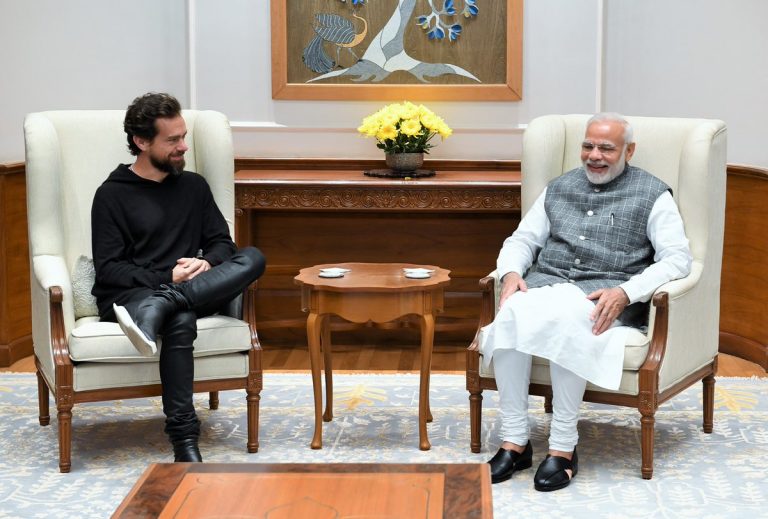
Twitter CEO Jack Dorsey meets PM Narendra Modi, people call him out for his posture, dress, colleague

Twitter CEO Jack Dorsey is on a visit to India, his first visit to the country. After arriving on 10th November, he has been several people in the country. On 10th, he met Dalai Lama, whom Jack described as an amazing teacher. On 12th, the Twitter boss met Rahul Gandhi, where Jack was seen showing his tattoos to the Congress president.

On 13th, Jack met prime minister Narendra Modi and posted pictures of the meet on Twitter.


This pictures drew sharp reactions from tweeple in India, who didn’t approve of several things seen in the pictures.

First, Jack was seen sitting cross-legged in front of the Prime Minister, and many people didn’t like it. People pointed to Jack that it is considered rude to sit cross-legged in front of a head of government/state. Many thought that while meeting someone like a Prime minister a more formal sitting posture should be adopted.


The second point some people noted is the attire of Jack. He was wearing a black hoodie, a pair of black casual trouser which seemed to be leather, and black casual shoes. It was a rather unusual choice of dress, as most people prefer standard formal attire or traditional dress while meeting heads of governments.


The third point which attracted most outrage was the presence of Mahima Kaul in the meeting, who is Director of Policy for Twitter India and South Asia. Several people pointed out the fact that Kaul is a known Modi hater, and they objected to her accompanying Jack while meeting PM Modi.


Many Twitter users sent screenshots of Mahima’s past tweets as replies to Jack, which show how she used to abuse Modi earlier. The screenshots also show how she used to praise Rahul Gandhi.


We had reported last month that after a popular right-leaning spoof maker @Spook_Junkie was suspended by Twitter for unknown reasons, people started to search for political bias in Twitter India. In the process, several anti-Modi, pro-Rahul Gandhi tweets of Mahima Kaul was discovered by many people. Later, Mahima deleted many of such tweets. These tweets show deep-rooted hatred Mahima has for prime minister Modi. It was also discovered that she follows several left-leaning hate-mongering handles, including @AmbedkarCaravan that regularly spews venom against Hindus.

People also called Jack out for Twitter’s self-admitted left-leaning bias and complained about suspending right-wing users while taking no action against abuses by left-wing users. Some people also complained about ‘shadow banning’ right-wing users, which means a user is not banned by Twitter, but their tweets don’t appear in the timeline of their followers. Such shadow-banned users also don’t appear in search results and auto-complete suggestions.


Even US president Donald Trump had attacked Twitter for this practice, and Twitter had admitted that it does filter users but blamed an algorithm for the same.

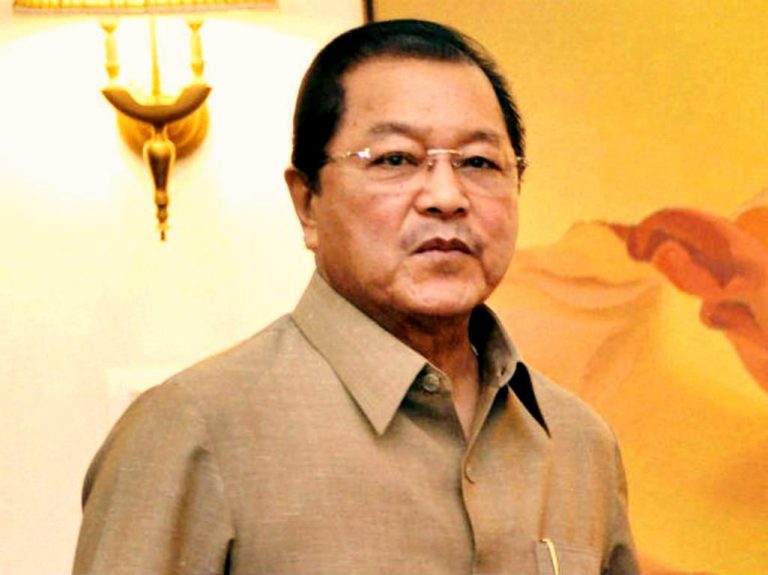
Mizoram CM Lal Thanhawla declares movable assets over Rs 1 crore

Mizoram Chief Minister Lal Thanhawla declared his assets while filing nominations for the Assembly polls scheduled to take place on November 28.

According to the affidavit submitted by Thanhawla, he has moveable properties worth Rs. 1,28,06,007, Rs. 2.80 crore worth of agricultural land and Rs. 20 lakh worth of non-agricultural land. Apart from this, Thanhawla has Rs. 5 lakh in cash, a plot of land on which he has constructed a building at New Town, Kolkata, worth around Rs. 3.10 crore, and a residential house at Zarkawt in Aizawl, the value of which he has not declared.

Mr Thanhawla’s wife, Lal Riliani, has Rs. 3 lakh in cash, movable properties worth Rs.92,13,740.47 and agricultural land worth Rs. 25 lakh. She also has non-agricultural land worth Rs. 15 lakh.

People’s Representation for Identity and Status of Mizoram (PRISM) president Vanlalruata also filed his affidavit, according to which he owns agricultural land worth around Rs 7.50 lakh and has Rs. 30,000 cash in hand, while his wife has Rs 539 in her bank account and Rs. 5,000 in cash. Vanlalruata has two bank accounts and the total money in these accounts amounts to only Rs 2,175. He is also his party’s chief ministerial candidate.

According to the affidavit filed by former two-time Chief Minister and Mizo National Front (MNF) president Zoramthanga, he has Rs 10 lakh in cash. He also has immoveable properties, including cars and bank accounts, worth Rs 57.22 lakh. He owns agricultural land worth Rs 20 lakh and a plot of land and a building at Chaltlang locality in Aizawl worth Rs 1.25 crore.

Zoramthanga’s wife Roneihsangi has Rs 7 in cash and Rs 43,756 in her bank accounts. She also owns moveable properties and a plot of land and a building worth Rs 1.5 crore at Ramhlun Venglai locality in Aizawl. Zoramthanga’s son and daughter have Rs 28,398 each in their bank accounts.

State Bharatiya Janata Party (BJP) president John V Hluna declared movable assets, including bank accounts, worth Rs 20,05,147, in the affidavit filed by him. He also owns agricultural and non-agricultural lands worth Rs 1.30 crore.

The chief ministerial candidate of Zoram People’s Movement’s (ZPM), Lalduhoma declared Rs 70,000 cash in hand and movable properties, including bank accounts, worth Rs 18.34 lakh. Lalduhoma’s total properties are worth Rs 1.9 crore.

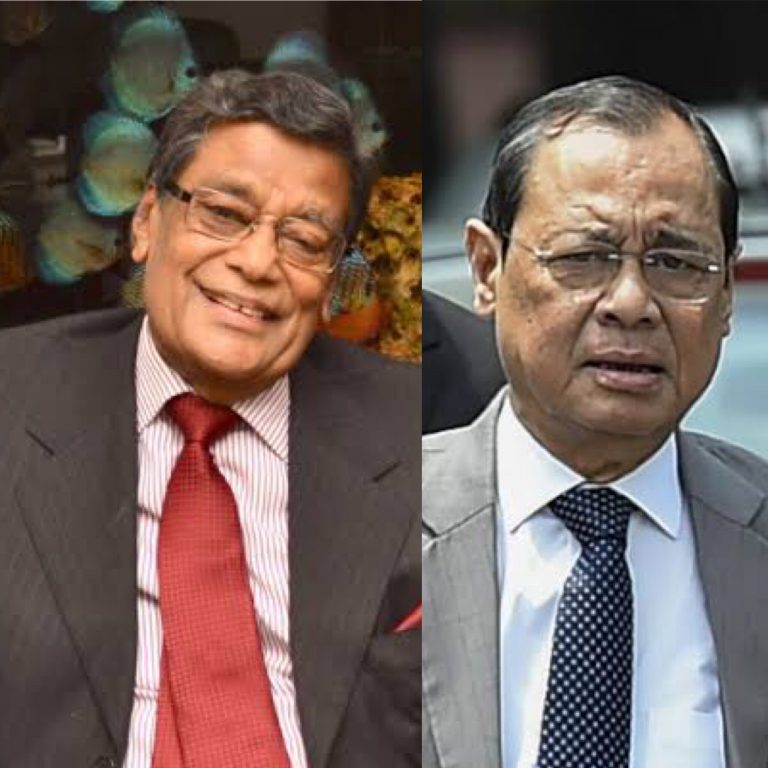
AG KK Venugopal expresses his displeasure on CJI Gogoi’s refusal to hear petitions

0

Attorney General KK Venugopal on Monday strongly objected on CJI’s methods to deal with cases. According to him, Justice Gogoi is hastily doing away with the cases without hearing out the arguments.

In a hearing of a case on Monday involving AG Venugopal, Justice Gogoi was predisposed to quash it. However, miffed AG Venugopal sternly argued with Justice Gogoi forcing him to reverse his decision.

Venugopal was arguing in behalf of Rajasthan government. The case was about payment of interest in case of delay in depositing entry tax by a company.

AG Venugopal argued, “My clients have come from far away parts of the country but Your Lordships don’t even hear their arguments and dismiss cases saying you have read it. This is not the way, at least at the admission stage they should be heard.”

Heeding to AG’s outburst, CJI Gogoi reversed his decision and acceded to hear the matter after pending cases were dealt with. CJI Gogoi said, “Alright Mr. Venugopal. We take your statement in the right spirit. You may now argue.”

After Justice Gogoi assumed the charge of the apex court, he has been steadfast in his approach to decline mentioning and reject the dilatory tactics of adjournments. However, this alacrity wasn’t displayed in the hearing of the Ram Janam Bhoomi case whose verdict was moved to January 2019. In fact, the SC, yesterday, declined early hearing of pleas in Ram Janmabhoomi-Babri Masjid title dispute case. One wonders why his approach is not applied indiscriminately in all cases.

Ironically, Justice Gogoi has also stated that he has devised a plan to deal with the pendency of the cases.