Home Blog Page 6914

Security beefed up as Sabarimala reopens its doors for a day

0

The Sabarimala shrine which had recently witnessed a complete turmoil will reopen for devotees on November 5 and 6. Prohibitory orders have been placed from Saturday midnight till Tuesday midnight.

The Kerala Police has deployed nearly 2,300 police personnel in and around the hill shrine of Sabarimala as it reopens for devotees on Monday. Security has also been tightened in the nearby areas of Sannidhanam, Pamba, Nilakkal, and Elavunkal ahead of the Chithira Avittom Pooja.

The security arrangements are being monitored by ADGP Anil Kanth. IGP M R Ajith Kumar will be in-charge of Sannidhanam and Marakoottam and IGP Ashok Yadav in-charge of Pamba and Nilakkal.

In the wake of violent protests which eventuated last month, the state police decided to increase the deployment in and around the shrine, and twenty commando teams and over 100 women battalion have taken positions.

The Pathanamthitta district collector in Kerala has imposed Section 144 of the CrPC in Sabarimala and nearby areas ahead of the Chithira Avittom Pooja.

The Sabarimala Karma Samiti- a group leading the protests against the entry of women into the temple, has drafted an open letter, directed to the managing editor, chief editor or editor of the media house, requesting them not to depute women journalists to cover the protest. It argued that deploying women reporters, even if it is to do their jobs, would only “aggravate” the situation.

“The whole issue is about the adamant stand of the State Government in forcibly bringing in young women aged between 10 and 50 years which is against the age-old traditions and customs of the Sabarimala Temple. Even the entry of women journalists from media belonging to this age group as part of their job is also likely to aggravate the situation. Therefore, we humbly request you to take a sympathetic approach to the feelings and aspirations of crores of devotees and kindly refrain from deputing women journalists of the above-mentioned age group to Sabarimala,” the letter read.

Accusing the Pinarayi Vijayan-led LDF government (which has supported the SC verdict) of using brute force to hastily enforce the judgement before the top court can hear review and writ petitions on November 13, the letter stated that the devotees are “left with no choice but to continue their peaceful agitations.”

Sabarimala Protests started after the Supreme Court delivered a verdict, lifting the age-old custom of Sabarimala, which barred women of menstruating age from entering the temple. The legend has it that the temple deity Ayyappa followed celibacy all through his life. After the verdict, temple opened from October 17 to October 22, and several activists tried to enter the sanctum sanctorum but were stopped by thousands of devotees, who were trying to safeguard the age-old sanctity of the temple.

The protest by the devotees was followed by vicious man-hunt by  Kerala government, who has made it clear that they will anyhow implement the Supreme Court’s verdict, no matter what means they have to employ. Kerala government, coming down heavily at the protestors has recorded 536 plus cases and arrested 3,719 suspects for engaging in violent protests at Pamba and Nilakkal.

The Sabarimala protest had taken an extremely crummy angle. Too many things had happened in a short period of time leaving a bitter taste in the mouth of the devotees. The communist party had faced wide criticism due to its highhandedness in dealing with the devotees of Lord Ayyappa. There was widespread resentment against the manner in which the state government conspired to desecrate the temple by awarding protection to activists.

The Lord Ayyappa temple’s three-month-long pilgrim season is commencing from November 17 and the state government, irrespective of all the resentment they faced, has reiterated that all devotees would be allowed to offer prayers at the shrine.
Missing Kashmiri student from Sharda University has joined IS, releases video holding AK-47

0

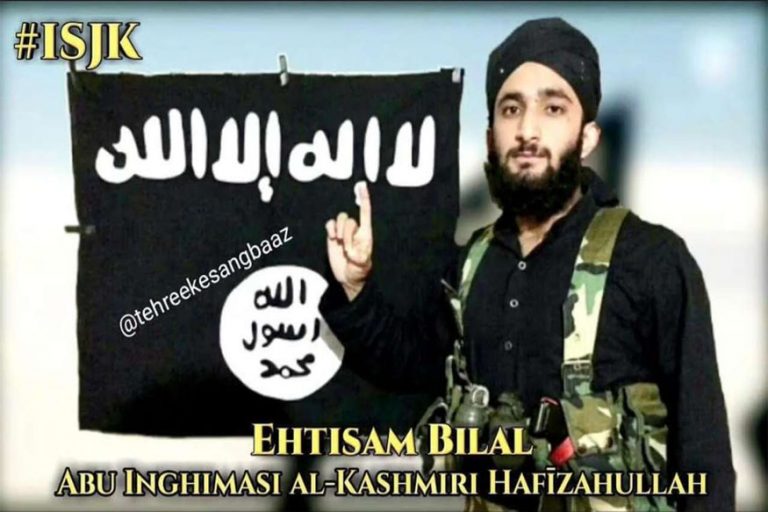
A 19-year-old Kashmiri student Ehtisham Bilal, pursuing engineering at Uttar Pradesh’s Sharda University, who had disappeared from the campus last month after a scuffle with a group of students, has reportedly joined the terror group Islamic State (IS).

According to the reports, a picture of Ehtisham Bilal carrying a gun with an ISIS flag in the background has surfaced on social media, causing concerns that he has joined the Islamic terrorist outfit. In a purported audio message that has gone viral on social media, the B Tech student identified as Ehtisham Bilal pledged his allegiance to the ‘Islamic State’ group led by Abu Bakr Al-Baghdadi.

“It is a great blessing for me that I have joined Jundul Khilafah led by Abu Bakr Al-Baghdadi. I have taken the pledge that I will not rest till Islamic rule is established in Kashmir,” Ehtisham reportedly said in the audio clip.

Ehtisham, a resident of Khanyar in downtown Srinagar was allegedly assaulted by some unknown students at the university campus on October 4 following which he has left the campus. The parents of Ehtisham claimed that he was in touch till October 28, the day he left the campus.

His father, Bilal Ahmad Sofi and mother have now released a video urging his son to return back. His mother appealed to him to return home and requested “any group” which may have “kept Ehtisham” to release him. The family of the Ehtisham is reportedly disturbed after hearing about the news of his son joining IS. Appealing him to return home, his father Bilal Ahmad, said that Islam doesn’t allow anyone to disobey one’s parents.

However, the police said that they are yet to find the clip and find its authenticity to say whether Ehtisham has joined ISIS. “We are verifying the authenticity of the audio clip and the photograph,” Munir Khan, additional DGP, Jammu and Kashmir Police, said.

“The security personnel had found his mobile phone working till Sunday after he boarded a flight to Srinagar from Delhi. The family of Ehtisham also lodged an FIR with Knowledge Park police station in Noida,” the police officer said.

We had earlier reported regarding a Muslim youth named Ashfaque Majeed who had allegedly joined the IS after he was brainwashed by Zakir Naik’s Islamic Research Foundation’s manager Arshi Qureshi. Ashfaque Majeed was alleged by the police to have fled the country along with his wife, one-year-old toddler daughter and other youngsters in 2016 to join the ISIS Terror ranks.

Aam Aadmi Party tries to pass off Erasmus Bridge in Rotterdam as the ‘Signature Bridge’, Delhi

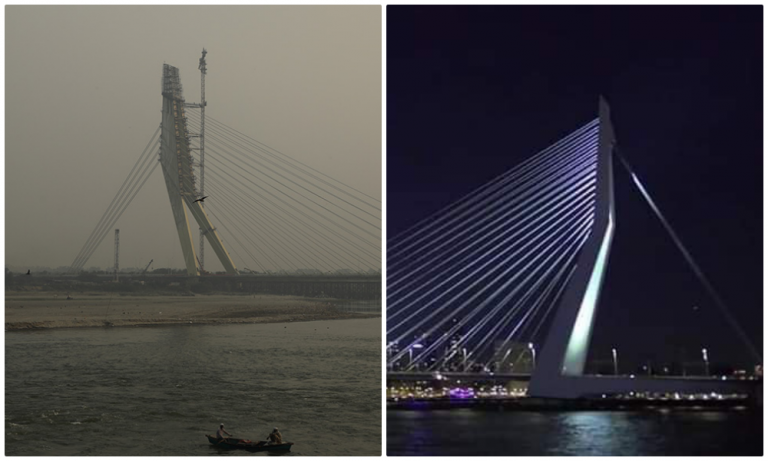
Maybe it is the toxic air pollution which makes it difficult to get clear pictures, but Aam Aadmi Party on Saturday tried to pass off an image of the illuminated Erasmus Bridge in Rotterdam as the yet-to-be inaugurated Signature Bridge in Delhi.

Aam Aadmi Party on Saturday tweeted the images of an illuminated bridge claiming it to be the Signature Bridge which will be inaugurated by Delhi Chief Minister Arvind Kejriwal and Deputy Chief Minister Manish Sisodia.


However, many Twitter users pointed out that the first image posted by Aam Aadmi Party is not of the Signature Bridge, but of Erasmus Bridge, Rotterdam.


Picture of ‘Signature Bridge’ posted by Aam Aadmi Party

The image appears to be taken from a video of Erasmus Bridge uploaded on YouTube in April 2017.

Video of Erasmus Bridge uploaded in April 2017


‘Forced to marry for political benefit of others,’ says Tej Pratap Yadav after filing for divorce

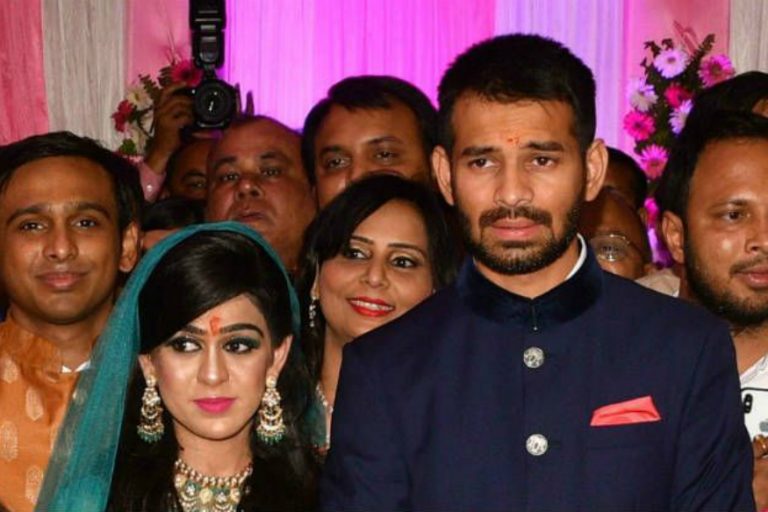
Fodder scam convict and RJD leader Lalu Yadav‘s elder son Tej Pratap Yadav, who recently filed for divorce from his wife of six months, Aishwarya Rai, has reportedly claimed that he was made a scapegoat for the political benefits of his family members. Rai is the daughter of a former minister, Chandrika Rai and granddaughter of former BJP chief minister Daroga Rai.

“I was never ready for the wedding. I kept pleading my parents and also discussed my feelings with my brother Tejashwi and sisters but no one took me seriously,” said Yadav before leaving for Ranchi to meet his father who is serving a jail term there. Yadav, who has not even passed his 12th board exams, has called his marriage to Rai, a Miranda House, Delhi University graduate and an MBA, a ‘mismatch’.

After meeting his father in RIMS, where Lalu Yadav is undergoing treatment for his ailment as he serves his jail sentence, Tej Pratap said that he is determined to go ahead with the divorce proceedings. Lalu Yadav, reportedly asked Tej Pratap to wait for him to come out to discuss the matter.

Tej Pratap had married Aishwarya in May 2018. As per reports, Tej Pratap is seeking divorce under the sections 13 (1) (1A) that deals with cruelty by the spouse. His petition is reportedly scheduled for a hearing in Patna civil court on November 29. Reports claim that the divorce proceedings might not be smooth as the Hindu Marriage Act does not usually grant a divorce within a year of marriage.

Reports of conflicts and trouble within the Yadav family have been around since long. Earlier, there were reports of a possible rivalry between Tej Pratap and his younger brother Tejaswi, who was the deputy CM of Bihar in the RJD-JDU alliance government. Tej Pratap is also an MLA and was the health minister when RJD held power.

The Yadav family is also facing probe from central agencies like ED and CBI in several scams. The Income Tax department has also seized many of the benami properties belonging to Lalu’s family.

It is notable here that Tej Pratap has always managed to be in the news for his behaviour and activities. On occasions, he had dressed up as Krishna or Lord Shiva. He had also accused Bihar CM Nitish Kumar of unleashing ‘ghosts’ to haunt the Yadav family.

PepsiCo to move 16 containers along National Waterways-1 from Kolkata to Varanasi on inland vessel

For the first time in India’s history, a container vessel has been used for logistics transportation on the National Waterways-1 along the River Ganga. National Waterways-1, an inland waterway from Haldia to Allahabad has been developed to boost India’s interstate cargo transportation.

According to the reports, a container cargo belonging to PepsiCo (India) is being transported from Kolkata to Varanasi. The vessel containing the cargo was flagged off by Union Shipping Secretary Gopal Krishna along with Chairman of IWAI, Pravir Pandey.

Gopal Krishna said that the development of National Waterways-1 will enable easier and efficient cargo movement to the east and northeastern states of the country. Gopal Krishna further added that development of multi-modal hubs within the time duration of three years will lead to a considerable increase in the volume of cargo movement through waterways and said that it will also lead to the development of cruise tourism in the country by next year.

The container vessel named MV Rabindranath Tagore is carrying about 16 containers, which is equal to 16 truckloads of food and snacks on Indian roads, will be transported through the Ganga river. The container vessel will take another 9 to 10 days to reach Varanasi and will make its return journey with fertilizers from IFFCO that will be procured from its Phulpur plant, situated near Allahabad.

The Union government has officially notified 111 waterways in the country for the development of Inland water transportation as per The National Waterways Act, 2016. The Union government had initially recognised 5 inland waterways and had declared it as part of the National Waterways project. Later in 2016, the Centre decided to further develop additional 106 inland waterways across the country.

The central government is developing the National Waterways-I (River Ganga) under Jal Marg Vikas Project form Haldia to Varanasi, covering a distance of 1,620km at a cost of around Rs 5,369 crore, with the financial and technical assistance from the World Bank. This project would allow commercial navigation of container vessels with a capacity of 1,500 to 2,000 DWT.

An 891 km National Waterways-2 has been planned along Brahmaputra River from Sadiya to Dhubri. The National Waterways-3 (205km) is being developed on Kollam-Kozhikode stretch of West Coast Canal and Champakara canal and Udyogmandal canal in the state of Kerala.

Kakinada-Puducherry stretch of Canals and the Kaluvelly Tank, Bhadrachalam-Rajahmundry stretch of river Godavari and Wazirabad-Vijayawada stretch of river Krishna (1078 km) has been designated as National Waterway-4. Talcher-Dhamra stretch of Rivers, Geonkhali-Charbatia stretch of East Coast Canal, Charbatia-Dhamra stretch of Matai river and Mahanadi Delta Rivers (588 Km) declared as National Waterway in 2008 in the states of West Bengal and Orissa.

Once upon a time the tyrannical Aurangzeb was vanquished and the Kesari Dhwaj flew high

The death of Sambhaji marked the beginning of the next chapter of the war between the Marathas and the Mughals. His half-brother, Rajaram, assumed the throne of the Marathas empire following his capture and death at the hands of Aurangzeb. Sambhaji’s death had thrown the Maratha regime into disarray but now, there was a newfound resolve to prevail over the forces of Adharma.

It wasn’t just a battle for territorial sovereignty anymore, it never was, to be honest, but now more than ever, the gravity of the situation dawned upon the Marathas. It was a war for the victory of Dharma over Adharma, it was a war for the victory of honour over treachery, it was a war for the soul of the very nation over those who were consumed by fanaticism.

The strategic Maratha response every time they suffered a crushing blow was retaliating with an attack so audacious, it would appear they were not entirely in their right minds to conceive of such a plan had not been so tremendously successful. Shivaji Maharaj had displayed such traits when he attacked the very palace Shaista Khan was residing in and forced him to flee without a thumb in his hand. And again, when Aurangzeb was revelling in his execution of Sambhaji, the Marathas under the command of Santaji Ghorpade launched an attack that would send the Mughal forces trembling in their very hearts. The attack was not merely on Mughal forces but at Aurangzeb himself. It was sheer luck that saved the Mughal emperor from being slaughtered at the hands of the Marathas.

During the attack, the brave Marathas managed to sack the very tent in which Aurangzeb slept! Only because he was not present there at the time did he evade certain death. His men were not so lucky. Many from his private force and bodyguards were slaughtered that night. And although Aurangzeb had survived, the message could not have been clearer: Sambhaji may have been executed but the fire that burnt in his belly was very alive and cackling in the hearts of the Marathas. He may have abandoned his worldly abode but his men would carry forward the fight on his behalf. If Aurangzeb believed he would have it easy after the death of Sambhaji, he was wrong. His real troubles had only begun.

Things didn’t work out too well for the Marathas in the immediate future. Raigadh had been captured by the Mughals and Panhala had fallen as well but not before inflicting heavy losses on the Mughal army. The Marathas were forced to shift their capital from Vishalgadh to Gingee. By late 1691, Aurangzeb had managed to secure four significant forts in the Sahyadris. Therefore, the Marathas again improvised and decided to engage Mughals in multiple fronts to keep them occupied. Thus, the war again turned into a battle of hit quickly and retreat even faster for maximum impact with minimum casualties.

The reason the Marathas were never daunted by the prospect of losing forts is that the purpose of the forts was to keep Mughal forces engaged for long periods of time while allowing others the opportunity to attack the supply lines and inflict considerable damage. Thus, it turned out more often than not that the cost of securing a fort far outweighed the gains. Additionally, the locations of some of these forts were such that they became uninhabitable during particular seasons. Therefore, the Marathas would continue occupying these forts while the Mughals laid siege and desert them only when they were sure that their enemies wouldn’t gain much even if they managed to acquire them at that point.

All of this was demonstrated extravagantly when the Mughals laid siege to Gingee. The fort had been under siege for seven years, keeping a significant chunk of their forces occupied. In the end, Rajaram had managed to escape to Vishalgadh. However, the Mughals had incurred tremendous losses during the siege which had caused a significant strain in the Mughal purses. All of this was difficult for Aurangzeb to swallow. The Marathas had suffered the deaths of two Kings, incurred severe losses in terms of territory and yet, they were on the offensive on several fronts, inflicting severe damage to the Mughal army and fast depleting the royal treasury. Aurangzeb realized, maybe for the first time since the conflict began, that this was not merely just another war that could be negotiated with. It was an existential threat that the Mughals were currently facing and there was no certainty that they would come out on top.

The Marathas, meanwhile, continued to consolidate their victories. After a brief period of infighting which could have had severe consequences and saw Dhanaji attacking and killing Santaji, the Marathas regained their senses and mounted a new counter-offensive under Dhanaji. However, in 1700, the Marathas suffered another tragic demise, the death of Rajaram. And thus, came the occasion when Queen Tarabai assumed the charge of the Maratha Army.

The writing was on the wall for many years but the religious fanaticism of Aurangzeb blinded him towards an obvious fact. Years had passed and yet there was nothing to indicate that the defeat of the Marathas was imminent. He was urged by his counsellors to withdraw but his ego prevented him from treading on a wiser path. He had spent more than two decades in the war against the Marathas and what did he have to show for it? A mere few forts, that was all. On the other hand, the royal treasure had been bled dry and it appeared almost certain that the sun had set on the Mughal empire in India.

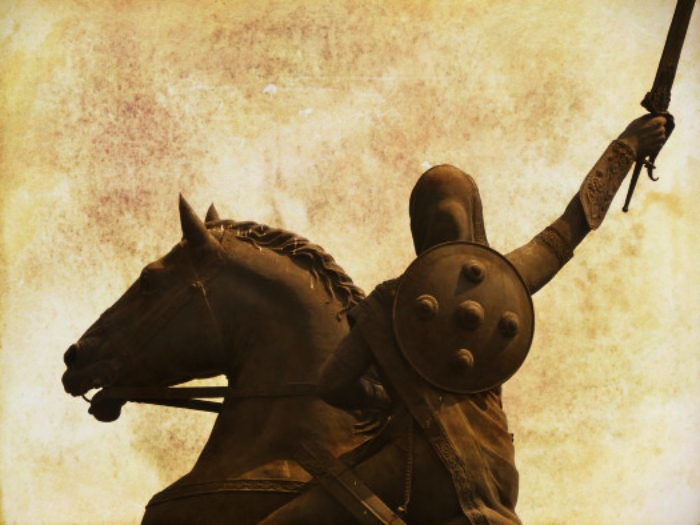
The final Maratha counter-offensive began sometime around 1705. One after the other, Mughal provinces fell and the centuries-old empire was crumbling like a house of cards as there was no money in the royal treasure to fund armies. At one battle, Dabhade with his 8000 men defeated 14,000 of the Mughal army which allowed the Marathas to tighten the Mughal supply chains. Soon after, Aurangzeb realized he had to retreat to ensure his own safety. But on the way, Dhanaji descended upon him with the Kesari Dhwaj flying high and rampaged through the rearguard of his imperial army. Again, Aurangzeb luckily managed to reach Burhanpur, his intended destination.

The Mughal empire had crumbled in front of his very eyes and Aurangzeb’s obsession with teaching Pagans a lesson they would never forget only led to his ruin. The Hindus had taught the Islamic tyrants a lesson they would do well not to forget.

There are times when Dharma is at its lowest ebb and the wicked might revel under the delusion that it would last forever, but in the end, Karma comes for us all and we have to reap what we sow. Aurangzeb killed Sambhaji and many others in the cruellest manner and there he was towards the end of his days, alone, far away from home, a pauper king who had destroyed his own empire with his single-minded obsession. And the people he had sought to destroy with all his might had conquered him after all.

The Kesari Dhwaj was flying high across the skies of Bharata and Aurangzeb ultimately passed away in March 1707, knowing fully well that the Maratha Empire that had vanquished him had risen to the very top right under his nose and there was nothing he could do to stop them.

(This is the third and final article in the series. You can read Part 1 and Part 2 here)

In a first, women might be considered in non-officer ranks by the Indian Navy

0

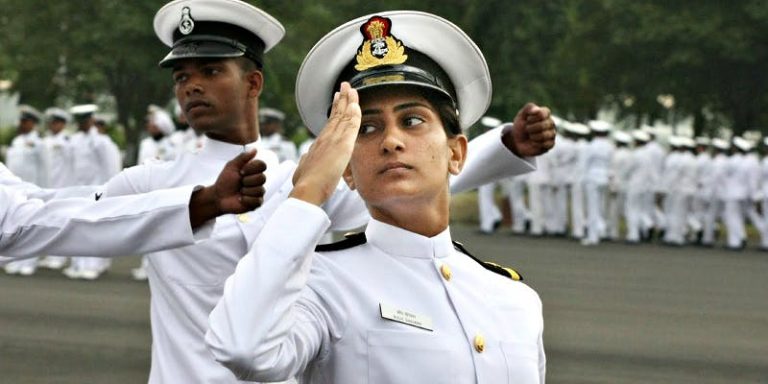
With the enrollment of women in non-officer cadre being one of the top agenda’s of the three-day Naval Commanders’ conference that concluded Friday, Navy’s Chief Admiral, Sunil Lanba confirmed that women may be able to join the Indian Navy as sailors in the future.

While addressing the Naval Commanders on Friday, Defence Minister Nirmala Sitharaman asked the top-brass of the Indian Navy to give more impetus to enrollment of women in the Navy.

The deployment of women on warships is also being looked into as per reports.

The Navy until now, has 639 women officers (including 148 doctors). The only combat-related role they have is as ‘observors’ on the maritime reconnaissance aircraft the Boeing P8-I, the IL-38 and the Dornier. Women officers are also in logistics, law, education and naval constructors, etc.

The navy is not the only service exploring the possibility of inducting women in the non-officer cadre. The army is working on a plan to recruit 800 women in the military police.

So far, the armed forces do not have women in non-officer ranks. However, in March this year, the Army announced that it will start recruiting women in other ranks in the Corps of Military Police.

The Indian Air Force is yet to consider recruiting women below the officer rank, although it was the first service to lift a combat ban on women in October 2015 to allow them to fly fighter planes. Six women have already been commissioned as fighter pilots.

Wing Commander Anupama Joshi (retd), from the first batch of women officers, commissioned into the IAF in the early 1990s pleased with this news said, “Allowing women to join the navy as sailors will be fantastic. If women have been around in para-military forces for years, what stops the armed forces from inducting them in the non-officer cadre. The IAF should also move in this direction now. The armed forces are the safest place for women to work,” she added.

Gradually but unwaveringly things are changing for the women of independent India. In a first, a small yet very significant change had happened inside the premises of the Red Fort, as India celebrated its 71st Independence. It was the first time in independent India that an ‘all female’ SWAT team was part of the security apparatus protecting the venue.

Similarly, in a first of its kind expedition by Indian Navy, Navika Sagar Parikrama -an all-women crew was flagged off by the country’s Defence minister Nirmala Sitharaman from Goa On September 10, 2017. The brave women completed this historic journey in eight months by sailing around the world on the Indian Naval Sailing Vehicle (INSV) Tarini.

Reportedly, this was the first time that a woman military crew circumnavigated the globe without passing any canals or straits. Recognising their commendable determination and strength, the government of India awarded Nao Sena medals to the crew members on the eve of the Independence Day.

CJI ‘shocked’ as centre clears the names of 4 judges in 48 hrs for elevation to SC: Reports

0

The central government, acting in surprising speed, has reportedly cleared the names of 4 judges recommended by the collegium headed by CJI Gogoi for elevation to the Supreme Court within 48 hours.

The Supreme Court had reportedly recommended the names of the four judges to the Centre on Oct 30 and the judges took the oath on Friday morning. The Law Ministry notified their appointments on Thursday night and the four took oath as Supreme Court judges on Friday morning.”We sent the recommendations at about 11 o’clock on Wednesday and on Wednesday evening, when I was informed that the medical (test of the judges to be elevated) has been done, I myself was very shocked. I couldn’t believe it. I said what you are saying. I am as much in awe as you are,” the CJI told the journalists covering the apex court in an informal chat.

The names of the four judges are justices Hemant Gupta, Ajay Rastogi, M R Shah and R Subhash Reddy.

Justice Hemant Gupta and justice Rastogi are the present chief justices of the Madhya Pradesh and Tripura HCs respectively. Justice Shah was the chief justice of Patna HC while Justice Reddy was the chief justice in Gujarat HC.

The CJI also made an important announcement that the apex court would provide translated copies of its judgments to litigants in their mother tongue if they are unable to understand English. “To start with, we may do it in Hindi,” the CJI said on Thursday while inaugurating the Centre for Research and Planning, an “in-house think tank”. He stressed on the need for providing judgments in vernacular languages but rued manpower crunch and other resources in implementing the idea.”At this moment it is very difficult to say whether it will be translated into other languages as well. We have a gross deficiency of resources,” he said.

The centres’ nod to the elevation of four judges within 48 hours is in contrast to an earlier tussle between the collegium and centre for the elevation of Justice KM Joseph to the apex court.

1984 anti-Sikh riots: Shiromani Akali Dal holds protest march to seek justice for victims

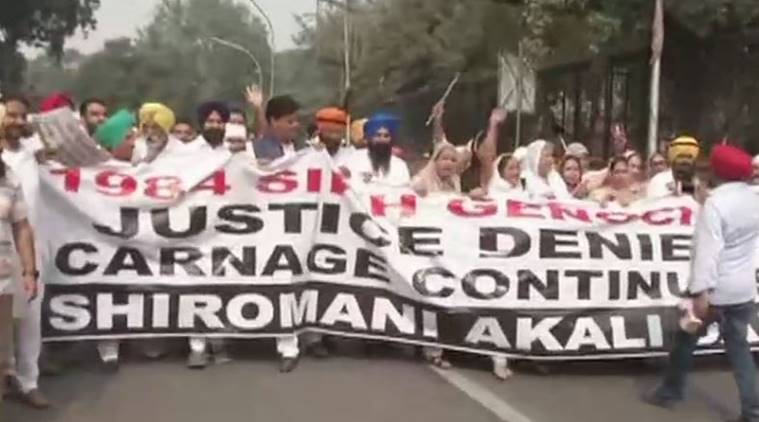
Shiromani Akali Dal took out a protest march in New Delhi on Saturday to seek justice for families of those massacred in 1984 anti-Sikh riots. The march led by party president Sukhbir Singh Badal and Union Minister Harsimrat Kaur Badal started from Gurudwara Patparganj and ended outside Parliament Street police station.

Protestors demanding justice for the victims raised slogans against the Congress party and its leaders. They also burnt effigies during their protest in Delhi.

The protestors surrounded former Congress President, Sonia Gandhi’s house seeking justice for thousands of innocent Sikhs who were mercilessly massacred and for innumerable women who were brutally raped during the riots.

Protestors claimed that Congress has denied their community any form of justice and have always shielded their own leaders, namely Sajjan Kumar and Jagdish Tytler who were allegedly involved in the 1984 anti-Sikh-riots.

MLA Sirsa alleged that though Rahul Gandhi for all these years has been defending his party, his party leaders are the ones who had masterminded the genocide.

The 1984 anti-Sikh-riots, also known as the 1984 Sikh Massacre, was a series of organised pogroms against Sikhs in India by anti-Sikh mobs in the aftermath of former Prime Minister Indira Gandhi’s assassination by her Sikh bodyguards. Official Indian government reports numbered about 2,800 killed across India, including 2,100 in Delhi alone.

Expressing her agony over the injustice, Union Minister Harsimrat Kaur Badal called the 1984 riots a blot on India. “Our community has been seeking justice for 34 years now. Thousands of Sikhs were massacred, several women were raped and several people lost their homes. Such atrocity is a blot in the history of India. No one received justice. Why is judiciary not taking suo-motu action?” she was quoted as saying by ANI.

According to ANI, a scuffle between the protesters and the police broke out during the march. The Delhi Police later detained the protesters after they tried to break the cordon.

As per reports Union minister Harsimrat Kaur Badal and Shiromani Akali Dal president Sukhbir Singh Badal were also detained by police as the protest advanced.

A suspicious drone was also confiscated by the police after it was seen hovering over the SAD leaders while they were addressing the protesters on the road. The person, who was operating the drone, was also detained by the police.

A similar protest was also held in Chandigarh on November 1, where protestors remembered the innocent victims, mainly Sikhs, who were brutishly butchered and sought justice for them and their families.

Mizoram: EC removes IAS officer, alleges interference by state’s Congress government in poll process

According to reports, the Election Commission on Friday directed the Mizoram government to remove a principal secretary-level officer, Lalnunmawia Chuaungo, on the charges of meddling with the election process.

Chuaungo, a 1987-batch Gujarat-cadre IAS officer, has been serving in Mizoram on an inter-cadre deputation from Gujarat, approved by the Ministry of Home Affairs.

The order came after reports appeared in a section of the media that state Chief Electoral Officer SB Shashank had complained to the EC that Chuaungo was interfering with the election process. The EC also directed that he should be relieved of his current responsibilities with immediate effect and not be assigned any work related to the state until the elections are over.

“The Election Commission is satisfied that the continuance of Mr Lalnunmawia Chuaungo as Principal Secretary (Home), in State Government of Mizoram will have the adverse impact on the conduct of smooth, free and fair election process in Mizoram,” the EC order said.

CEO Shashank had highlighted the “active role” played by Chuaungo, heading the Home and Finance departments, in abetting the government’s intrusion in electoral roll revision and deployment of central armed police forces. He had warned that Chuaungo’s direct or indirect interference is likely to increase as elections reach closer.

Shashank had alleged insensitivity on part of the state government regarding voting rights of Bru refugees living in Tripura. He cited interference of the Department of Home Affairs in the electoral revision process by asking the District Election Officers not to consider the identification slips for any purpose other than repatriation of refugees. According to him, the Mizoram government did not seem keen to have any new Bru voters enrolled.

Shortly after the removal of Chuaungo, an umbrella organisation of major civil societies and student bodies of the state demanded the removal of Mizoram Chief Electoral Officer (CEO) S B Shashank, claiming that he has lost the trust of the people. The NGO Coordination Committee asked S B Shashank to leave the state by Monday evening.

It is notable here that thousands of Bru community members have been living in Tripura in refugee camps since 1997. The election commission of India had arranged for the Bru to vote in their camps in 2013 and 2014 to which the Congress government in the state had opposed. This time too, the state Congress government has stated that they will not allow the Bru to vote. The election commission has been considering opening poll booths in a border town close to the refugee camps in Tripura where the Bru people can vote.

Assembly elections will be held on the 40 seats of Mizoram on November 28 and the results will be out on December 11.