Home Blog Page 6915

Once upon a time, there was the great Maratha Sambhaji, who continued to haunt Aurangzeb even in death

The previous chapter in our story ended with the death of Chhatrapati Shivaji Maharaj. His death was seen by the Mughals as a great opportunity to demolish the Maratha confederacy for good. And why wouldn’t they like their chances? The Mughals had an army which numbered at half a million, more than three times the Maratha numbers. They had more artillery, more elephants, more horses and more importantly, the royal treasury possessed wealth far more than what the Marathas could cope with. To turn the tides further in their favour, their enemy no. 1 was gone, a man who had thwarted them at every step in his life.

If the rise of a small-time Mansabdar’s son under the all-pervasive Mughal empire to the stature of a King in charge of Hindu Rashtra appears extraordinary to you, what happened after the death of Shivaji will leave you further disbelief. Through meticulous planning and sheer talent, Shivaji had firmly established the Marathas as a strong power in the Deccan. He constructed a series of forts for defence which would prove extremely crucial in the wars that were to come.

After a brief spell of a power struggle in the royal family, Sambhaji assumed the throne as Shivaji’s successor. For all his ability, Sambhaji did have his problems with his father leading Shivaji to confine him to Panhala twice. However, he did demonstrate that he had inherited the same ingenuity that his father possessed in such large measure when he escaped from his first confinement and then returned after a year, unrepentant. And again, he was promptly confined to Panhala. Nevertheless, he was Shivaji’s eldest and the rightful heir to the throne and as it turned out, the crown did kill the boy and a man was born.

1681 was the year when war finally began between the Marathas and the Mughals in its true sense. It became obvious that the vast lands under his control was not enough to satiate Aurangzeb’s lust for power and the ambition to unfurl the Kesari Dhwaj across the lengths and breadths of Bharata meant that the Marathas could not and would not back away from the war.

That year, Sambhaji attacked Janjira but without much success. During the same time, a Mughal general, Hussein Ali Khan, attacked Northern Konkan. However, Sambhaji managed to push him back to Ahmednagar. It was now 1682 and monsoons had begun forcing both sides to halt their military operations. However, Aurangzeb was conspiring to secure a deal with the Portuguese which would have allowed the Mughals a supply route to Deccan via the sea. Of course, the Marathas could not let that happen and thus attacked the Portuguese and penetrated deep into their territory. However, the Portuguese were able to secure their headquarters.

The Marathas, for an overwhelming majority of the War, were terribly ill-equipped when compared to the Mughals. Therefore, they could not afford a head-on battle. They would be obliterated. And, as the situation with the Portuguese demonstrated, they were surrounded by enemies from all sides.

What they did have working in their favour was their superior knowledge of the territory they ruled and were acutely aware of the unique features of the terrain which they could exploit to maximize their gains. Thus, it turned out to be a war of attrition and under those circumstances, a war of attrition was the only one they could win.

Aurangzeb had a good beginning to the war. Using a pincer move, he attempted to surround the Marathas from the North and the South. Shah Alam, Aurangzeb’s son who commanded one of the two divisions entered Goa and marched North via Konkan. However, soon enough, the Marathas increased their pace of attacks on him, attacking his supply chains reducing his forces to starvation.

Ultimately, he had to be rescued and brought back to Ahmednagar. Thus, Aurangzeb’s first pincer move had failed miserably. In 1684, Mughal invasions suffered a similar fate. Instead of clashing with the Mughals directly, the Marathas resorted to harassing their forces with sharp swift attacks that rendered them incapable of carrying forward their march.

Thus, a year later, Aurangzeb was forced to rethink his strategy. Instead of further attacks on the Marathas directly, he attempted to consolidate Mughal power in the south by conquering Bijapur and Golkonda. The rulers of those empires were Shia Muslims and being the fanatic Sunni that he was, Aurangzeb did not hesitate to sever his treaty with them. However, the Marathas saw an opportunity to take the offensive to Mughals in the North Coast while the latter was busy in their expeditions in the South.

They suffered minimum damage but inflicted maximum destruction. It became the dominant theme in the battles to come. The Marathas were quick and sharp in their attacks while the Mughals, vast as their resources were, were often caught unaware until the very last minute. In many ways, the Marathas had successfully implemented a very cunning strategy, using the resources of the Mughals themselves to wage war against them.

Bijapur and Golkonda, however, soon fell to Mughals and their rulers were captured and imprisoned. With the Shia empires out of his way, he could again shift his focus to his primary target: The Marathas.

The next couple of years Aurangzeb was unable to make any major dent on his Hindu foes as the latter continued to strengthen their position. However, in 1687, at the battle of Wai, the Mughals succeeded in inflicting a severe blow to Maratha aspirations. The key Maratha commander Hambirao Mohite fell in battle and troops began deserting the Maratha forces. The real tragedy, nevertheless, befell the Hindu empire in 1688 when Sambhaji was captured by Mughal forces at Sanghameshwar. The events that followed would perhaps definitively seal the fate of the Mughal empire in India and of Aurangzeb himself.

There has been a certain code of conduct that honourable men have tried to adhere to during war across the ages. These codes are difficult to adhere, especially since you have to apply them while dealing with a sworn enemy. But then, having the resolve to adhere to them is what honour is all about. And it’s also a fact that invariably, it has been monotheistic rulers who have demonstrated time and again that their religious zeal often prevents them from honouring such dignified traditions. Aurangzeb was no different. His treatment of Sambhaji would resonate across the ages and would serve as a testament to the grave peril our forefathers suffered under and the great threats they braved in their battle to restore Dharma in the ancient land of our Gods.

Following Sambhaji’s capture, which was felicitated by treacherous men in his own ranks, he was presented in front of Aurangzeb who presented him with the option to convert. Accounts differ as to what exactly transpired but it’s well accepted that Sambhaji refused to convert which led to the brutal treatment he was subjected to.

In addition to conversion, it is said, he was asked to surrender all his forts and treasures as well.

Following such failed attempts, Aurangzeb had him paraded on a donkey wearing the clothes of a clown. His eyes were plucked and so was his tongue. The nails on his fingers were removed and so was his skin. Sambhaji was made to rot in prison under such circumstances and his torture was prolonged over a fortnight. He was finally killed in March 1689 by having his body torn apart with metal “tiger claws” and beheading him with an axe at Tulapur.

In hindsight, Aurangzeb had sealed his fate with this act of exceptional barbarity. There were many, previously, who were averse to siding with the Marathas openly due to their personal dislike for Sambhaji. However, the horrid cruelty that the Maratha King was subjected to inspired everyone to rally underneath the banner of the Kesari and swear a sacred vow that they would not rest until the last vestiges of the Mughal empire were uprooted from this sacred land of ours.

Those not of a religious disposition would not lay many stores in sacred vows but for those who are sufficiently aware know that the history of humanity has been defined through the ages by sacred vows sworn by great men to vanquish their foes. Thus began a new chapter in the war between the Marathas and Mughals. And this time at the helm was Rajaram who assumed the throne that his half-brother had vacated.

(This is the second article in a series of three. You can read Part 1 and Part 3 here)
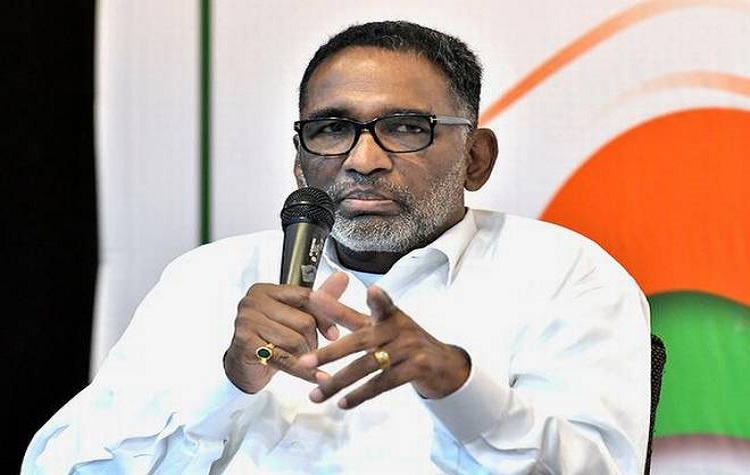
Justice (retd) Chelameswar explains whether it is possible to bring a law to build Ram Mandir at Ayodhya

Justice Chelameswar, former Supreme Court judge, speaking at an interactive session hosted by the All India Professionals Congress, an organisation affiliated to the Congress party, reportedly said that it is possible for the government to bring a law to construct the Ram Temple in Ayodhya, even when the dispute is before the Supreme Court.

Justice Chelameswar was among the four senior judges of Supreme Court who held the unprecedented press conference to question the style of functioning of the former CJI Deepak Mishra. CPI MP D Raja’s conspicuous visit at Justice Chelmeswar’s house had further triggered a political storm. Responding to a question during the interactive session,  Justice (Retired) Chelameswar said it could happen. “Legally if it can happen (or not) is one aspect. Whether it will happen (or not) is another. I’m aware of instances that happened in the past where decisions of the Supreme Court were scuttled by the legislative process,” he said.

He cited the example of the Karnataka Vidhan Sabha which passed a law to overturn the SC order on the Cauvery water dispute and another instance of an inter-state water dispute between Rajasthan, Punjab and Haryana. “The nation should have opened up to these things much earlier. This (a law on Ram temple) is possible as we did not stop it then,” he added.

His comments came at a time when the clamour for Ram Mandir is rising day by day. The Rashtriya Swayamsevak Sangh had earlier on Friday said that Hindus were feeling “insulted” by the Supreme Court’s declaration that the Ayodhya issue is not a priority and insisted that an ordinance would be needed if all options run out. The Vishwa Hindu Parishad has too set the deadline of 31 January for the government to bring a law, it has stated that unless the central government brings a law, a Dharma Sansad of Hindu spiritual leaders will decide the future course of action on the issue in the Ardh Kumbh.

Perception battle: It’s time India promoted avant-garde to thwart ISI’s nefarious designs

“A lie when repeated a thousand times becomes the truth”– Pakistani spy agency, ISI, uses this aphorism as its strategy to create illusions of truth, with which it plans to subvert India. With Lok Sabha elections-2019 on the horizon, is India ready to face the ten-headed monster created by the cohesion of internal and external enemies?

The perception war is coercive in nature, not a bullet is fired to bring down the enemy. ISI’s primary aim is to gain the upper hand by discrediting India, creating false images and perceptions, and to leverage public opinion in Pakistan army’s favour. Our western neighbour, Pakistan’s, economy might be on crutches, but that doesn’t prevent its defence budget from surging by 20%; in fact, it’s alleged that ISI has been allotted Rs 4.5 billion for its “special assignment” in India.

Two days ago, Ajit Doval, the national security advisor of India, speaking on the occasion of Sardar Patel memorial lecture, warned the nation that false narratives are perilous for the smooth functioning of a democracy.  He was hinting at how Indian populace is being misguided by few, who purvey disinformation, for their own political and personal gains. These are people who are part of the hamam, which is funded by ISI.

Hamam is an organized crime syndicate/mafia that runs a parallel government, a law unto themselves; it has dropped its roots in every corner of the country. According to the Vohra committee (1993), this syndicate has developed links with, and are being protected by Government functionaries and political personalities.

Creating the perceptions

One, to posit India as a country marred by internal struggle, and on the verge of dissolving like USSR. It is for this reason, Pakistan continues with its unbridled enthusiasm to use fake stamps and fake pictures of pellet gun victims, on the floor of UN general assembly, to accuse India of human rights violation. While Pakistan army’s media wing, ISPR, uses flaming tinders of rumours on social media to ignite a fire in India.

A few weeks back, a picture doing rounds over the internet, of Indian army soldiers dragging a Pakistani terrorist’s dead body, earned the army, ire of many Indians, who were deceived into believing it was an injured Kashmiri.

Two, to gain popularity back home in Pakistan, and to create an image of itself as an agency omnipresent on its enemy’s soil. Many pawns of ISI have been downed in India, yet ISI uses its failed attempts in its favour to mislead Pakistani populace, surrounded by cobwebs of ignorance, into believing that Pakistan Army has an upper hand over Indian army.

The truth

Due to the paucity of conventional weapons in its store to win a war against India, Pakistan army depends on ISI to execute its sinister plan, to carry out covert operations within India, to cause communal disharmony, and to trap vulnerable officials and civilians, to leak information regarding Indian defence establishment’s capabilities. ISI is Pakistan army’s most effective weapon against India.

It is the sterling work by Indian agencies like ATS and military intelligence units, that has flayed ISI’s operations. Their onerous efforts have led to arrests of many ISI moles within Indian govt establishments and also of civilians, who were on the enemy payroll.

The most recent ISI operations which were rendered ineffective by Indian agencies are:

Operation netting and fishing: This operation was intended at targeting Indian officials, and to keep a tab over the functioning of Indian defence. ISI on its hitlist has some high profile Indian officials like– Uttar Pradesh IG-ATS, Asim Arun, and soft targets like– the officials working on uncovering ISI network, albeit having less or no personal security around them.

Operation Express: This was a clandestine operation carried to resuscitate Khalistani movement in Punjab, and also aimed at causing communal disharmony between Sikhs and Hindus. Pro-Khalistan movement, funded by ISI, was carried out in various parts of UK, Canada and US.

Operation Krishna India: Terrorist organizations, funded by ISI, were tasked to carry out spectacular attacks guised as sadhus, in the states of MP and UP. RSS and BJP leaders have always been on ISI’s crosshair, and operations such as this would have added fuel to fire in a Hindu majority country, and helped to internationalize the pseudo-concept of saffron terror.

The cohesion of Internal and external enemy: ISI-Naxal-Kashmiri separatist alliance

It’s no secret that Naxalism, a movement which deviated from its path immediately after its inception, has now gravitated towards ISI. A symbiotic relationship between the two has fed and fattened the fledgeling Naxalism, into a venomous snake which has produced snakelets, who have now found their way into the Indian metropolises. And thus urban naxals are born.

Since almost a decade now, ISI has been wooing naxals to make inroads into Indian security establishments; they have cunningly used Kashmiri separatists on their payroll to assist naxals. In 2007, this link was reified when it was found that naxals had gained supporters in Jammu University and that separatists leaders like Masarat Alam had been using overground-Naxal workers to prepare and distribute anti-India pamphlets to the Kashmiri students.

Another incident that brought to light ISI- Naxal dalliance was the Dantewada massacre of 2010, in which 75 CRPF jawans were killed. The kid-glove treatment naxals received from the Indian government finally stopped after this incident.

Since then, Naxals have collaborated many times with ISI funded terrorist organizations including Dawood Ibrahim’s gang to carry out its operations in different parts of India; in fact it was found that SIMI cadre was ordered to move to Naxal inflicted areas, to facilitate the Naxal movement whilst overground sympathizers of red ultras worked in tandem with ISI to supply arms and ammunition to Naxals. The connection has only deepened with time.

Now ISI uses Urban Naxals on social media as rabble-rousers, and to purvey fake news. Many of the posts and tweets about the Indian army and Indian government, which might appear innocuous on the surface, are but an attempt to create false narratives. Indian thespian community, which has on many occasions been found a hand in glove with ISI, in its own way has led some of the smear campaigns against the Indian government.

Countering the perception war

Recent moves by the Modi government does reflect its alacrity in implementing reforms as far the nation’s security is concerned. GoI’s intention at running National security council secretariat (NSCS) full throttle is worth praising but it’s a well-known fact that the Intelligence Bureau and R&AW, despite the presence of in-house talents, lack resources and expertise, ergo it necessitates inclusion of talents from other operational forces like Military intel units and ATS, into NSCS.

In this epoch of information technology, an actual war may not be a possibility but a non-lethal war is waged on social media incessantly. This, by no means, should be ignored as insignificant, for it does have the capability of splitting and slicing the Indian pie into several pieces. It is under such circumstances that India should consider reconstituting its Information warfare brigade. 

Many countries like America, Russia, China et cetera have prepared themselves to counter the perception war by creating Special Forces of social media warriors. In fact, the British army has dedicated its 77th Brigade, based in Hermitage, Berkshire, that consists of 1500 personnel, to control the narrative of hybrid warfare.

Its about time India promoted avant-garde to prevent its citizens from being exploited on social media, by the enemy spy agencies. Any laggard attitude in this respect will come at the cost of deleterious effects on Indian democracy.

(This article was published originally here) 

Bombay high court refuses to put a stay on construction of Shivaji Smarak

0

A division bench of the Bombay High court led by Chief Justice Naresh Patil and Justice Girish Kulkarni refused to grant a stay on the ongoing construction of the proposed mid-sea, Chhatrapati Shivaji Maharaj Memorial. As per reports, the decision came after an NGO, Conservation Action Trust and some local fishermen, filed a plea, seeking to stay the construction.

The primary reasons cited to stall the construction, was first that a public hearing as mandated before giving a go-ahead for the construction was not conducted. The NGO claimed that the ministry of environment and forest (MoEF), in 2015, changed the coastal regulatory zone rules to allow construction of monuments and memorials in CRZ-IV areas.

Secondly, the fishermen claimed that due to the ongoing work and subsequent construction of the Shivaji Statute, fishing should not be stopped in designated zones.

The State and Union Government opposed both these petitions arguing that all necessary permits were duly obtained from the concerned authorities.

Refusing to accept the contention, a division bench of chief justice Naresh Patil and justice Girish Kulkarni said under the CRZ rules and provisions of the Environment Protection Act, 1986, the Centre has the authority to grant exemption from public hearings and there was nothing wrong in incorporating the exemption clause in the 2015 notification.

“We may observe that the decision to have a project of this nature is a policy decision taken by the state. We are sure that the state government has given appropriate consideration on all the financial issues before taking a policy decision to undertake the project in question,” the court said in its order.

“From the government’s affidavit, it is clear that proper financial provision has been made and normal expenditure, which would be incurred by the state government on other necessary requirements, are not affected”, the order said.

“Also, the state government contemplates a scheme which would be worked out to recoup the cost of the project which may include fees which would be charged from the visitors,” the court said.

Maharashtra state government had argued that a public hearing was not required for the memorial as no human inhabitation was to be affected and no persons were needed to be rehabilitated and resettled. The court accepted the argument.

For the fishermen’s objection, the bench said “The Navy had in its report only expressed caution and it does not alter the Environment clearances granted for the project. We are thus, not impressed with the submissions as urged on behalf of the petitioner that there is some illegality and this can be a ground for a stay of the on-­going project.”

Maharashtra government along with Larsen and Toubro (L&T) Company, started the construction of the 212 meters high, Chhatrapati Shivaji Maharaj memorial, to be built in a 15-acre area in the Arabian Sea on October 24.

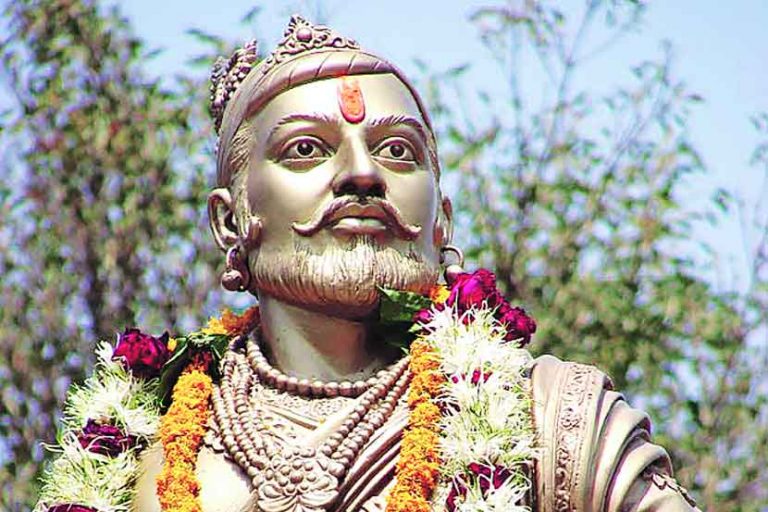
As per the plan, the Chhatrapati Shivaji Maharaj Memorial will have a temple, a museum, a hospital, a replica of the entrance of the fort of Raigad, a theatre to hold shows depicting the life and times of Chhatrapati Shivaji Maharaj’s rule. Famous sculptor Ram Sutar, the man who is also behind the making of the world’s tallest statue, the ‘Statue of Unity‘ inaugurated by PM Modi recently, has also designed the statue of Chhatrapati Shivaji Maharaj.

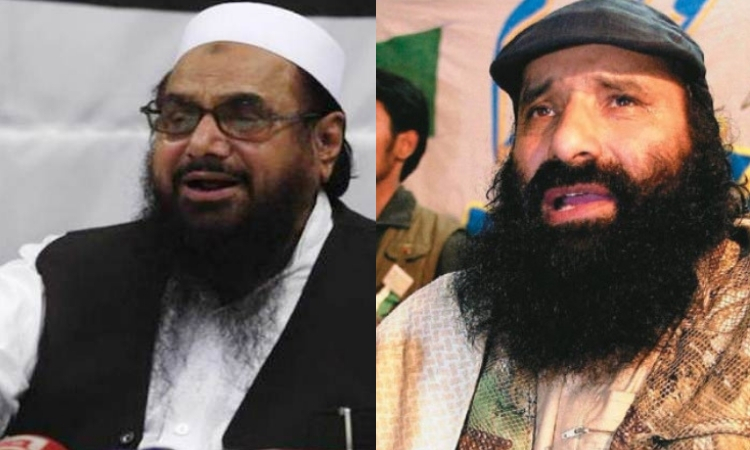
NIA court issues non-bailable warrants against Hafiz Saeed and Syed Salahuddin

0

A special NIA court issued non-bailable warrants against Pakistan-based Lashkar-e-Taiba (LeT) founder, Hafiz Saeed and Hizbul Mujahideen chief Syed Salahuddin for their involvement in terror funding activities.

As per reports, NIA spokesperson has stated, “The National Investigative Agency (NIA) approached the special NIA court for issuing non-bailable warrants against Hafiz Saeed and Syed Salahuddin for their active involvement in terror funding for creating unrest in the Kashmir valley and other parts of India.”

The move came after the NIA approached the court seeking issuance of non-bailable warrants against Saeed, also the founder of Jamat-ul Dawa, and Salahuddin alias Yusuf Shah, a resident of Budgam district in Jammu and Kashmir who presently stays in Islamabad.

“The two are accused of mobilising Pakistan-trained terrorists and pushing them into India from Pakistan in connivance with secessionist and separatist leaders for waging war against India with the nefarious design of seceding Jammu and Kashmir,” the NIA official reportedly said.

The anti-terror agency had on January 18, filed 1279 pages charge sheet against 12 persons including Saeed, Salahuddin, seven Kashmiri separatist leaders and others in the case of alleged terror funding in the Kashmir Valley. The case was registered on May 30, 2017, and the first arrests were made on July 24 last year.

The separatist leaders arrested in the case on July 24, 2017, were Aftab Hilali Shah alias Shahid-ul-Islam, Ayaz Akbar Khandey, Farooq Ahmad Dar alias Bitta Karate, Nayeem Khan, Altaf Ahmad Shah, Raja Mehrajuddin Kalwal and Bashir Ahmad Bhat alias Peer Saifullah.

Kashmiri businessman Zahoor Ahmad Shah Watali was also arrested in the case on August 17, 2017, and was on September 12 granted bail by the Delhi High Court.

While investigating, the NIA teams conducted searches at over 60 locations spread across Jammu and Kashmir, Haryana and Delhi and seized over 950 documents and over 600 electronic devices. It also said that over 300 witnesses were examined during the probe.

We had earlier reported how due to the lackadaisical attitude of the present Pakistan Tehereek-i-Insaf (PTI) government led by Imran Khan, who is known to have a soft corner for terrorists, the Mumbai terror attack mastermind Hafiz Saeed’s outfits JuD and FIF were no longer on the list of banned outfits in Pakistan.

It was further reported how the United States had slammed Pakistan for effectively lifting the ban on Hafiz Saeed led Jamat-ul-Dawa and Falah-i-Insaniyat Foundation (FIF), which is against Pakistan’s commitment to the Financial Action Task Force (FATF) and also against its commitments to fight terrorism under the UN Security Council resolution.

Once upon a time, atop the thorns of Aurangzeb’s tyranny, rose Hindavi Swaraj

The 3rd of November, the day when Aurangzeb was born, is the most opportune moment to tell a story. It’s the story of a boy who dreamt of a Hindu nation free from the clutches of Islamic tyranny, it’s the story of brave sons who sacrificed their lives carrying forward their legendary father’s cherished legacy. It’s the story of a Queen under whose reign a centuries-old Islamic empire was brought to its knees. It’s a story of undaunted valour, of undying loyalty and above all, it’s a story of upholding Dharma in the face of certain death.

Our story begins on a fortuitous night in 1630 when the Gods smiled upon the Hindu civilization on the decline. A blessed baby boy was born to an honourable Maratha General who served under the Deccan Sultanates on the hill-fort of Shivneri. The boy grew up in the image of his father, strong and virtuous and sturdy.

As the years went by, it became obvious that the young teenager would not be satisfied being a reputed general serving under an Islamic emperor. It was the year 1645 when Shivaji made his first move. With his unique ability as a commander of his forces, he managed to acquire the Torna fort. Soon after, the Maratha Firangoji Narsala, who held the Chakan fort, professed his loyalty to the young Shivaji. The fort of Kondana was acquired as well with acute diplomatic skills employed by the young Maratha who appeared destined for great things. Thus was set in motion a series of events which would go on to definitively end the reign of the Mughals in India.

There were many historic episodes during the life of Shivaji the Warrior and great were his achievments. But none more so, perhaps, than his slaughter of the Adilshahi veteran general Afzal Khan. The Adilshahi, who were ostensibly displeased with the manner in which Shivaji had made a name for himself by acquiring one fort after the other, dispatched the fearsome general Khan to reign in the meddlesome Maratha King. In his pursuit of Shivaji, Khan demonstrated the iconoclasm that’s so intrinsic to followers of monotheistic faiths that he destroyed the Tulja Bhavani Temple, sacred to Shivaji’s family and the Vithoba Temple at Pandharpur, another pilgrimage site of note for Hindus.

At one point during the confrontation, the Maratha warrior was forced to retreat to Pratapgarh where he was urged to surrender by many of his comrades. Instead, what transpired would send shock-waves throughout all the regions of the Indian subcontinent under Islamic dominion.

Forced into a stalemate, a suggestion was made for a private meeting outside between the two leaders for parley. Expecting some form of treachery from the Adilshahi general but concluding that the private meeting could be the only solution to the stalemate, Shivaji had prepared a contingency plan for the situation. Thus, when the leaders met in a hut at the foothills of the Pratapgarh fort, Shivaji was well aware that only one of them would leave the tent alive.

Perhaps it was fated to happen, perhaps it was mere coincidence or it could very well be that the Gods themselves descended from the heavens to inspire the actions of their favoured son. And so it happened that during the course of the meeting, a violent clash ensued between the two and by divine intervention or merely through the merit of his meticulous planning, Shivaji struck down the towering Khan.

In the battle that commenced soon after, the Maratha army completely routed the Bijapur Sultanate’s forces. 3000 soldiers of Bijapur were slaughtered on the battlefield on that fateful day, two sons of Afzal Khan were taken captive as well. And from there on, the Maratha King went from strength to strength, unleashing the wrath of the very Gods themselves upon those who stood against his dream of Hindavi Swarajya.

The next great episode of Shivaji’s war for Hindavi Swarajya came in 1660 when he was trapped under siege at the Panhala fort by the Adilshahi forces, enraged by the series of defeats the Maratha had served them on a platter. Adding to his problems, the Mughals had set aside their differences with the Adilshahis and had decided to align with them on this particular occasion to snuff out the audacious Shivaji.

Ingenuous as ever, the Maratha King managed to flummox his adversaries when they were at their most vulnerable and set out in an attempt to reach his intended destination, Vishalgadh where a Mughal garrison was already stationed with a force of merely 600 men. Shivaji did, of course, succeed in reaching Vishalgarh but the glory of the moment was owed to other men, Shivaji’s second-in-command of that contingent, Baji Prabhu and the brave 300.

There are certain moments, it is said when mere mortals defy the three old ladies of Fate themselves and lay claim to the elixir of immortality. Those are the moments when the Gods themselves are inspired to infuse their own strength in the arms of their devotees and the mere mortals with the Gods on their sides perform such acts of valour that their names are etched across the sands of time for eternity. The Battle of Pavan Khind was one such occasion. It became clear after Shivaji made his escape in the dark of the night that it was impossible to defeat the Adilshahi forces on their trail and the Mughal forces simultaneously.

The inevitability of it prompted Baji Prabhu to offer to stay back with half the contingent to fight the Adilshahi forces with the prospect of certain death awaiting them while the rest marched to the safety of Vishalgadh. The strategic location of Pavan Khind (Horse Pass) was chosen as the spot where the brave 300 would make their final stand. And so it transpired that 300 brave Marathas fought against hundreds and thousands of Adilshahi men and every man battled till the last ounce of strength in their muscles had forsaken them to ensure that the King that they had sworn their loyalty to made his ground to safety.

It is said, Baji Prabhu fought like a man possessed by the very spirit of the Gods. Every time he was struck by the weapon of an enemy, he fought stronger than before and his sword put down one man after the other with the enemy retreating in his wake. It was only when the cannon that signalled Shivaji’s safe passed passage was heard that Baji Prabhu finally succumbed to the mortal wounds that he had suffered during the course of battle.

Thrice, it is said, Baji Prabhu was struck fatally by Adilshahi’s men on that sacred night and thrice did he rise like a phoenix from its ashes to serve the cause of Dharma. And only when was his purpose served did he abandon his mortal body to attain Moksha for the piety of his actions. Only a handful of the brave 300 are believed to have survived the Battle of Pavan Khind but more than a thousand Adilshahi men perished when the brave Marathas unleashed the wrath of the Gods fighting under the banner of the Kesari Dhwaj.

Shivaji’s next great feat came in April 1663 after Aurangzeb had sent his maternal uncle Shaista Khan to defeat him working in conjunction with the Adilshahi forces. Equipped with a much more well-provisioned army, Khan succeeded in making several in-roads into the Maratha territory. He had even managed to seize Pune and establish his residence at Shivaji’s place, Lal Mahal.

Again, when defeat seemed imminent and hope was lost, Shivaji had to resort to his ingenuity again to get out of a tricky situation. In what can only be dubbed as a Shivaji-esque raid, he launched an attack on the very palace Khan was residing in. A band of 200 Marathas had managed to infiltrate Pune and under the cover of night, slaughtered the palace guards and breached the walls.

The palace witnessed a lot of bloodshed that night and the Mughals suffered great losses. One of Khan’s son was killed and so were many of his wives. The Mughal, himself, did manage to escape but not before his thumb by the valorous Shivaji. The Maratha then retaliated against the previous attacks of Khan by attacking the port city of Surat, a wealthy Mughal trading centre.

Shivaji’s next great flash-point with the Mughals came in 1666 when he was invited to Agra by Aurangzeb. Previously, the Maratha was forced to sign a treaty with the Mughals which would require him to assist the latter in its military conquests. It is said that when Shivaji was called to Agra, Aurangzeb wanted to send him to Afghanistan to help consolidate the Mughal empire’s northwestern frontier. However, during that fateful meeting, Shivaji was insulted by the Mughal by having him stand behind the Mabsabdars, much lower in rank than him. Shivaji, rightly took offence and stomped out of the Court, and was promptly put in house arrest by Aurangzeb. But, as fate would have it, Shivaji again managed to escape under extraordinary circumstances, by hiding himself in sweet baskets that were meant for religious figures in the city.

An uneasy peace was maintained with Mughals until 1670. But as any wise warrior knows, peace is merely a euphemism for preparations for war. Thus, consolidating his gains without giving any inkling to the Mughals regarding his plans, Shivaji waited for the opportune moment to strike again. In 1670, he launched an offensive against the Mughals while Aurangzeb’s army was busy in Afghanistan and recovered almost all territory that was surrendered to them previously in a matter of mere four months. That year, Surat was again sacked by the brave Maratha and the Englishmen also suffered his wrath for their treacherous ways.

Shivaji had accomplished all of this and more and yet, he wasn’t crowned a King yet, officially. So, technically, he was yet a Mughal zamindar. But, it was all mere technicality. For we know, not everyone who wears the crown is worthy of the title and if you are a true King, you don’t need a crown on your head to justify your authority. And so it was only in 1674, almost three decades after he had ably demonstrated his capabilities as a King was he officially crowned King of the Marathas in a lavish ceremony at Raigad. And thus, after one of the darkest period in Hindu history when the ebb of Dharma was at its lowest, there was once more a strong Hindu sovereign in a region dominated by Muslims for so long.

The Hindavi Swarajya that Shivaji had dreamt of had indeed materialized, much to the dismay of the Islamic tyrants. And at the helm of it was a King who had made it a habit of embarrassing them.

Chhatrapati Shivaji Maharaj laid the foundation of Hindavi Swarajya but the destruction of the Mughal empire was not fated to be through his hands. In 1680, after sowing the seeds of the Maratha empire, Shivaji the Valiant passed away in unfortunate circumstances. With Mughals sensing the opportunity for an easy victory after his death, it would fall to his eldest son Sambhaji to carry forward the legacy of his father.

Sambhaji fought bravely, against all odds and registered mighty victories and like the birds who dare to fly too high, his end came suddenly and terribly. But that is a story for another time.

(This is part 1 of a 3 part series. You can read Part 2 and Part 3 here)

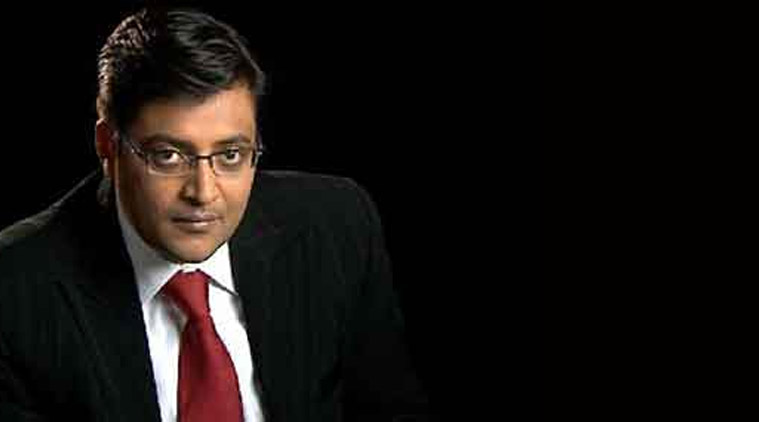
Congress spokesperson Sanjay Jha threatens Arnab Goswami after his appointment to Nehru Museum

Arnab Goswami has been a constant thorn for many a secular, liberal, dynasty admirers. For years, he has been screaming his way into their comfort zones of blissful sanctimony. As if the humiliating interview of Rahul Gandhi back in 2014 was not enough, the man has been rather hell-bent on dragging skeletons out of the Congress closets and has been questioning their eminent eliteness every evening with his insufferable ‘The nation wants to know’.

Now, like salt rubbing on their already painful wounds, the central government has appointed Goswami as a member of the coveted Nehru Memorial Museum and Library society, the powerful body which controls the Teen Murti Estate. JMML is now tasked with making a memorial for all the prime ministers of India, not just Nehru. Goswami is to replace Pratap Bhanu Mehta.

The outrage was bound to come. An interesting thing about the outrages was how brazenly can the critics of Arnab hail his appointment as a reward for his alleged ‘RSS sponsorship’ without admitting willfully that the people who were replaced were there because of a certain political favouritism. Well it seems, the cabal has the impunity to do it and defend it too. Because in the ‘idea of India’, some appointments are secular while some are communal.

The most remarkable outrage has come from Congress spokesperson Sanjay Jha, who has seemingly dismissed all subtlety and has shared a statement that is basically the Twitter way of saying ‘Dekh Lenge Tereko‘.

Arnab Goswami should be proud. He has just been added to the distinguished list of goals that Congress wants to accomplish if they come to power in 2019. Judging by the seriousness of Jha’s words, sacking Arnab should feature right on the top of the list, amongst establishing mobile factories in Bhopal/Chitrakoot/Jhunjhunu.

Carrying forward the legacy of ‘press freedom’ and glorifying ‘dissent in a democracy’ like Indira Gandhi did in her days, Jha has indeed spoken like a true Congressi.

There were others who criticised Arnab’s appointment, though none of them matched Sanjay Jha in terms of viciousness.

Swati Chaturvedi via Twitter
Mitali Saran via Twitter
Sanjay Hegde via Twitter

Arnab Goswami should be worried. With the kind of confidence Jha has about come back to power in 2019, he might as well be sacked from the channel he owns and he most certainly, will be sacked from his appointment to the Nehru Museum. One wonders if this outrage is about Arnab Goswami, the fact that Goswami refuses to toe the Congress line or that they believe Goswami would support turning the Nehru Museum into a place that showcases all past Prime Ministers of the Country and not just the liberal favourite Nehru.

Ram Mandir discussion: Over 3000 Hindu saints from 125 communities of Hindu religion come together in Delhi

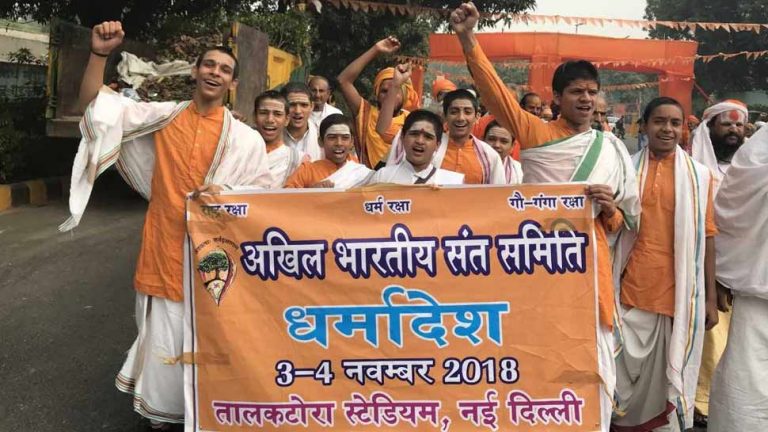
The demand for the Ram Mandir at Ayodhya has been steadily growing as several Hindu groups have come out on streets against the Supreme Court’s decision to postpone the hearing of Ram Mandir case and also to plan the future course of action regarding building the Ram Mandir at Ayodhya.

According to the reports, more than 3000 Hindu saints from all the 125 communities of the Hindu religion have come together in Delhi to discuss the crucial issue of building Ram Temple in Ayodhya. The mega meeting to be held on November 3-4 at Delhi’s Talkatora stadium has been organised after the Supreme Court decided to postpone the hearing to next year. The two-day meeting, which is being called ‘dharmadesh’ is being held to plan the next step to be taken in the Ram Mandir case.

Reportedly, this is the largest gathering of saints to discuss the Ram Mandir issue ahead of Kumbhmela in Prayagraj. Swami Jitendra Saraswati, General Secretary of Akhil Bhartiya Sant Samiti earlier said, “The Supreme Court has upset the saints after this no one can predict what decision they take and said that some big decision will surely be taken in the meeting”.

“Saints from all 125 communities of Hindu religion are taking part in this meeting. This is the first time all the 125 communities of Hindu religion are meeting together after the 1990 movement. All saints who are affiliated with VHP have already declared that they would protest at the parliament over the Ram Mandir issue. RSS General Secretary has already cleared that court has hurt the sentiments of crores if Hindus; This will give strength to the saints who are initiating a new movement in the favour of Ram Mandir” He added.

RSS General Secretary Bhaiyaji Joshi speaking to the media on the summit being held by the saints in Delhi said that the meeting of the Hindu saints has been named as “Dharmadesh”, which means obeying the religion. He said the two-day meeting will have three sessions. The Hindu saints will pay their homage to the karsevaks who was shot dead during the Ram Mandir protest in Ayodhya in the first the session. The Gau-Rakshaks who laid their life in front of the parliament in 1996 will also be paid tribute, Bhaiyaji Joshi said.

He further added, “In the second session, the missionaries who have been following different ways for conversion will put forth their points and proposal will be kept against Ponga babas in this session”. On November 4, the third session will take place in which Sri Sri Ravishankar and other prominent saints will give their viewpoint on Sabarimala and Ram Mandir issue.

Recently the Rashtriya Swayamsevak Sangh (RSS) has said that it will take up another agitation similar to the one in 1992 “if needed” in order to ensure the construction of a Ram temple in Ayodhya. RSS Chief Mohan Bhagwat at his annual Vijayadashami celebration speech had urged the Narendra Modi-led BJP government of bringing in a law to build a Ram Mandir at the disputed land in Ayodhya.

The Supreme Court on October 29th adjourned hearings in the Ayodhya dispute until January next year. The Supreme Court has also said that it will decide in January whether the case should be heard in February, March, April or after that.

Makers confirm that vests gifted by PM Modi to South Korean President were ‘Modi jackets’ and not ‘Nehru jackets’

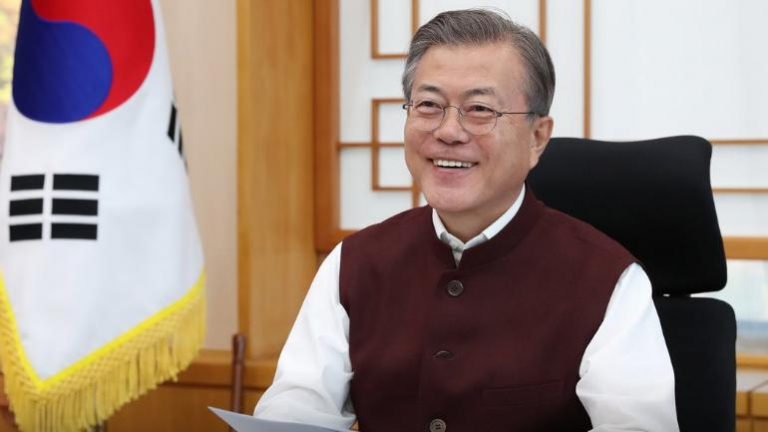
The company that manufactured the customised vests, which were gifted by Prime Minister Narendra Modi to the South Korean president, Moon Jae-in, confirmed on Friday that those are actually ‘Modi Jackets’ and not traditional Nehru jackets as claimed by some.

This confirmation has finally put an end to all the speculation and controversy which had emerged almost immediately after Moon Jae-in took to Twitter to thank Modi for the affability extended towards him.

During his official visit to India, President Moon Jae-in was particularly impressed by the vests worn by Prime Minister Narendra Modi and had complimented PM Modi for the same.

As a goodwill gesture, Modi had gifted the President of the Republic of Korea customised ‘Modi Vests’, meticulously tailored to fit him. On October 31, Moon Jae-in tweeted pictures of the sleeveless jackets, to be worn on a kurta, thanking him for his warm-hearted gesture.

Modi’s this exercise, as expected, did not go down well with a few known Modi critics. A controversy broke out on Twitter on how the jackets should be described.

The tweets sparked a debate, as some claimed that these were actually Nehru Jackets, popularised by the country’s first prime minister Jawaharlal Nehru.

Jammu and Kashmir chief minister Omar Abdullah was one of the few who took to Twitter twisting this laudable gesture attempting to devalue the entire episode.


However, Bipin Chauhan, the managing director of JadeBlue lifestyle India, which sent the vests to the South Korean president, has now confirmed that these were actually ‘Modi Jackets’.

Chauhan said he has been designing and making Modi’s clothes since 1989.

Putting an end to all the hypothesis and nit-picking Chauhan said, “Originally, these were ‘bandhgala’ (closed neck) jackets. They were worn by Nehru and even Sardar Patel. But the ones we sell are Modi Jackets. It is a bit longer and more comfortable in fit than Nehru Jackets.” The older versions were sold off in white and black shades, but Modi prefers a wider colour palette, he said.

Chauhan furthered that Modi had created a brand which has become popular since 2014. “In the past, these jackets, worn by Nehru and Sardar, were considered premium apparel for the elite. Now Modi-Ji has popularised them among the masses,” he added.

Rashtriya Sanskrit Vidyapeetha to be upgraded to a Central University, says Chancellor

0

According to reports, Rashtriya Sanskrit Vidyapeetha (RSVP), currently a deemed university under the Ministry of Human Resource and Development, is going to be upgraded to a central university.

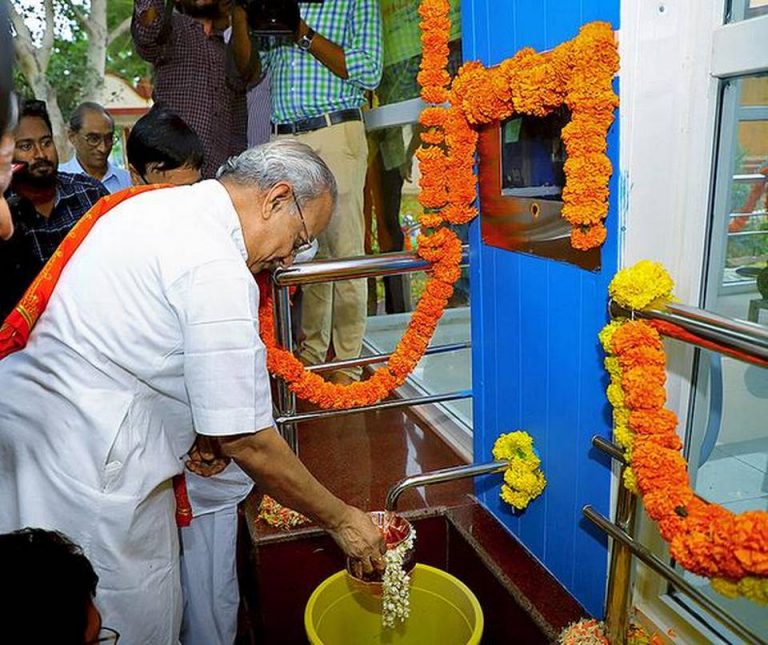
Rashtriya Sanskrit Vidyapeetha Chancellor and former Chief Election Commissioner,  N. Gopalaswami, disclosed the good news on Thursday when inaugurating ‘Sujalam’, a new RO water treatment plant installed in the Campus. He confirmed that the HRD Ministry is actively considering the proposal to upgrade the RSVP into a Central University to boost up Sanskrit studies and a positive result is expected soon to the delight of Sanskrit scholars, researchers, students and Sanskrit lovers all over the country.

“The process has started and is being considered favourably. We can expect a positive announcement in a few months. That’s all I can say now”, Gopalaswami announced. He also disclosed that Rs 1.18 crore had been sanctioned to the University for taking up the digitisation of palm leaf manuscripts to bring them into print as part of Ramanuja Millennium Year Celebrations. Priority will be given to the editing of the palm leave manuscripts which have not seen the light so far and to bring them in book form for study and research.

The Reverse Osmosis (RO) plant, which was developed with ₹14.65 lakhs with an installed capacity of 2,000 litres and a processing speed of delivering 1,000 litres per hour, will cater to the drinking water needs of the employees and the students staying inside the university campus.

The Chancellor felicitated Ultrafil representative Hanumantha Reddy for meticulously executing the project. Vice-Chancellor V. Muralidhara Sharma announced that the 1,000 litres of wastewater discharged by the plant would be used to water the gardens.