Home Blog Page 6925

India Today misrepresents facts to insinuate BJP had opposed ordinance by Congress for Ram Mandir

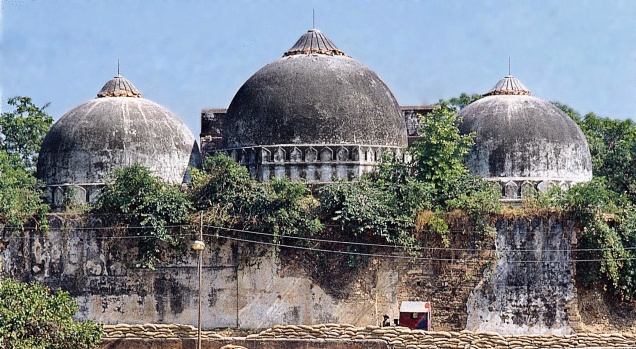
India Today published an article on Tuesday with a misleading headline which claimed that the Bharatiya Janata Party had opposed an ordinance brought by the Congress party in 1993 that sought the construction of the Ram Mandir at Ayodhya.

The headline of the article fails to mention that the ordinance was not for the construction of the Ram Mandir alone, but also for a mosque at Ayodhya. While tabling a Bill to replace the Acquisition of Certain Area at Ayodhya Ordinance in 1993, Chavan said, “As it is necessary to maintain communal harmony and the spirit of common brotherhood amongst the people of India, it was considered necessary to acquire the site of the disputed structure and suitable adjacent land for setting up a complex which could be developed in a planned manner wherein a Ram temple, a mosque, amenities for pilgrims, a library, museum and other suitable facilities can be set up.” The headline conveniently ignores the fact that the purpose of the ordinance was not a Ram Mandir but maintaining communal harmony.

The Act was opposed by both Muslims and Hindus. The Muslim Law Board called it “un-Islamic” while BJP Vice-President S.S. Bhandari called it “partisan, petty and perverse”. Under such circumstances, the insinuation made by the article in India Today that the BJP had opposed the ordinance for a Ram Mandir at Ayodhya is quite clearly a misrepresentation of facts.

The ordinance clearly sought a mosque at the disputed site or somewhere adjacent to it which is unacceptable to a large section of Hindus. The fact of the matter is the ordinance called for a Temple and a Mosque at Ayodhya for communal harmony, a proposed settlement which satisfied neither party and was opposed by both.

The eternal romance: Prashant Bhushan and PILs

In earlier reports, we have discussed the manner in which PILs have become the latest weapon in the arm of activists who seek to impose their ideology on Indian citizens with assistance from a Judiciary that is sympathetic to their worldview.

One name that inevitably comes to mind whenever PILs are being discussed is a lawyer and activist Prashant Bhushan. In this article, we shall explore the numerous PILs that the activist has either filed or represented in the Court as an advocate in pursuit of ideological victory.

In recent times, Bhushan has been associated with a host of PILs which have wide-ranging consequences on a variety of issues. Most recently, he was the advocate for a petitioner who sought a collegium-like system in the appointment of members of the Election Commission. The Supreme Court bench which heard it decided to refer the petition to a 5-judge Constitution Bench.

It might surprise Indians but it turns out even Rohingyas in the country, people who the government maintains are illegally here in the country, can file PILs in courts to prevent legal action against them. Mohammed Salimullah, a Rohingya, filed a petition in the Supreme seeking a stay on the government’s decision to deport 7 Rohingyas through advocate Prashant Bhushan. The Supreme Court, however, refused to stay the government’s decision.

Prashant Bhushan involved himself in the CBI feud that has ensued as well. The petition, filed by NGO Common Cause where Bhushan is a member of the Governing Council, sought a court-monitored SIT investigation into the alleged malpractices within the CBI. It is also pertinent to mention that a petition was filed by the same NGO against the appointment of R.K. Asthana as the Special Director of the CBI.

The NGO Common Cause, through Bhushan, had also filed an interim application in the Courts accusing Prime Minister Modi of taking bribes. The Court had dismissed the application stating that the documents which were presented in the court as evidence were inadmissible as they were neither credible nor reliable. Bhushan later insinuated that the Court was scared of big corporates.

On another occasion, Prashant Bhushan had appeared for Admiral Ramdas who had reportedly filed a PIL against the appointment of IPS officer Sharad Kumar as the Vigilance Commissioner in the Central Vigilance Commission (CVC). The Court while dismissing the petition chose to remind the litigants that PILs are for the poor.

In 2016, Adv. Prashant Bhushan had appeared in the Supreme Court on behalf of Common Cause and S.P. Udaykumar, an anti-nuclear activist who was charged with sedition for his involvement with the protests against the Koodankulam Nuclear Project. The petitioners had alleged that the sedition laws were being misused to routinely persecute students, journalists and intellectuals.

The advocate also steers an organization called the Center for Public Interest Litigation (CPIL). The Supreme Court in 2016 was quite flummoxed with the fact that filing PILs was the sole activity of an NGO. The bench headed by then Chief Justice T.S. Thakur said, “Prashant Bhushan, you have an image of a crusader. But can you become the centre for public interest litigation? Can the system be taken for a ride in such a manner? We cannot allow this.”

While dismissing a host of PILs seeking a probe into the death of Judge Loya, the Supreme Court slammed Prashant Bhushan and his NGO CPIL saying “attempts were made to misrepresent and mislead the court by manufacturing evidence to cast a doubt on the circumstances leading to the death of judge Loya”.

The conduct of Prashant Bhushan also led the Supreme Court to express grave concern over the rising misuse of PILs in its Judge Loya verdict. “The misuse of public interest litigation is a serious matter of concern for the judicial process. It is a travesty of justice for the resources of the legal system to be consumed by an avalanche of misdirected petitions purportedly filed in the public interest which, upon due scrutiny, are found to promote a personal, business or political agenda.”

It is reported that Bhushan has argued over 300 PILs in the Courts. While he has seen a significant amount of success with his judicial activism in matters such as the 2G scam and Radia Tapes, it appears that he has tasted only bitter defeat of late.


Chhattisgarh: Two security personnel and a Doordarshan cameraman killed in a Naxal attack

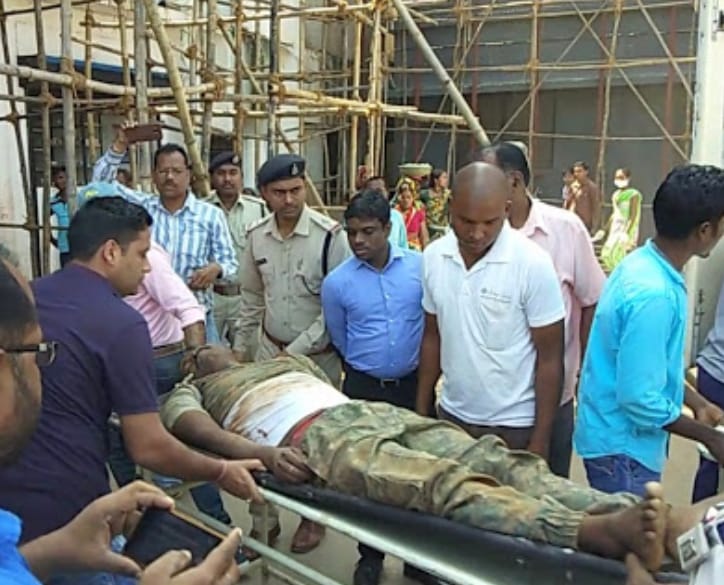
A CRPF patrolling party and a TV crew of public service broadcaster Doordarshan came under the attack by the Naxalites in the Aranpur area of Dantewada district this morning. Two CRPF personnel and a cameraman were martyred by the Naxals. The attack comes two days after the Naxals assaulted BJP leader Nandan Mudami and grievously injured him in the Palnar district of Dantewada.

The police has said that an SIT is being formed to look into the matter. “The police and administration is taking the matter seriously. An SIT is being formed for further investigation. We will probe this incident from all angles,” said SP Chatra, Akhilesh Variar. He added that this is a sensitive case and the police is dealing with it sensitively with the highest level of monitoring and supervision

As per the reports, a team of Doordarshan news channel had gone to Dantewada to record a documentary film in the Naxal-affected area where elections are due to be held for the first time when the Maoists ambushed and attacked them. The slain Doordarshan cameraman is identified as Achyuta Nanda Sahu.

The police chief of Dantewada, DIG P Sudarraj, said that the Naxals ambushed a patrolling party near Aranpur in which two personnel were martyred and a DD cameraman got injured who later succumbed to his injuries. He added that the incident had exposed the “true face of the Naxals.”


It is being assumed that the ambush was planned to attack the CRPF personnel, however, the media crew which was present at the spot, also came under attack.

This is the third attack by the Naxals in last 4 days. On Saturday last week, the Naxals had ambushed a bullet-proof bunker vehicle (BPV) killing 4 CRPF personnel and severely injuring 2 of them.

As the election dates in Chhatisgarh is approaching, the Naxals have evidently upped the ante in carrying out nefarious activities to disrupt the law and order in the state. Last month, they had installed posters in Bastar and Kanker region threatening people with dire consequences if they went out to vote.

Chhattisgarh goes to polls in two phases. In the first phase, Naxal affected districts namely Bastar, Kanker Sukma, Bijapur, Dantewada, Narayanpur, Kondagaon, and Rajnandgaonareas will go to polls to be held on November 12 and the remaining 72 constituencies will go to polls on November 20.

Mizoram: Church body expels former pastor for becoming BJP candidate, pastor says it exposes double standard

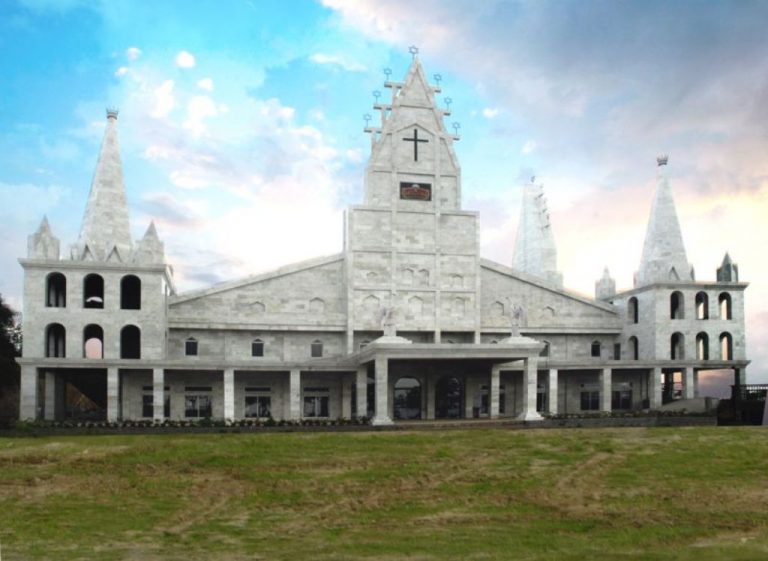
In the poll-bound State of Mizoram, Rev L R Colney, a former pastor and BJP candidate, has been expelled by the Mission for Christ (MFC), a well-known parachurch in Mizoram, as reported by United News of India.

Rev Colney was an executive member of the body and a full-time missionary. In the first list of candidates released by the BJP for Mizoram, out of total 13 candidates 2 are former pastors, Rev Colney being one of them.

Another executive member of Mission for Christ is a candidate of the Mizo National Front (MNF). Rev Colney had accused the MFC of double standards and said, “this is surprising decision and reflects double standards as the MFC has not taken any decision against the MNF candidate R Lalthangliana, who is also an executive member of MFC”. Rev Colney who is contesting from the Azwal East I assembly segment expressing his seriousness for the election said, “I am very much serious about the election. This expulsion seems only a part of the politics. I  am confident of winning and we, the BJP will do extremely well in the Nov 28 polls”.

The other BJP candidate Rev Lalruata is a member of the United Pentecostal Mission, and he has the support of his colleagues. He is contesting from the Lunglei east seat against sitting Congress legislator Lalhimpuia and the MNF nominee Lawmawma Tochhawng. Responding to the expulsion of Rev Colney he said, “I am unfazed by what happened with our friend Rev Colney. In my case, there is no problem”.

Rev Colney who feels that BJP coming into political reckoning in predominantly Christian stronghold Mizoram would be like  ‘heavenly blessings’ for the development of the northeastern state, said that he does not mind the action against him and asserted that his decision to serve the people will continue. “I am the founder member of Restoration India Mission (RIM) and we are working in various parts of India including Odisha, West Bengal and parts of Chhattisgarh”, he added. Rev Colney feels that it would be erroneous to describe BJP as anti-Christian. He pointed out that anti-conversion laws were passed in a number of States when Congress was in power at the Centre.

Meanwhile, the Mission for Christ trying to defend their action of expulsing Rev Colney but taking no action against the MNF candidate R Lalthangliana, in its statement said,”We were shocked by the fact that our executive member and a missionary Rev Dr L R Colney was one of the selected candidates of the BJP”.

MFC president Rev Lalchungnunga explained, “there is no politics. Colney is like my son but our supporters have not understood him. Moreover, he is a full-time missionary and cannot take part in politics”.

The Rev Lalchungnunga further justified that MNF candidate Lalthangliana is only an executive member while Rev Colney is a full-time missionary.

Shivraj Singh Chouhan’s son Kartikey sues Congress President Rahul Gandhi

Madhya Pradesh Chief Minister Shivraj Singh Chouhan’s son Kartikey Singh Chouhan has reportedly sued Congress President Rahul Gandhi for alleging that though Kartikey’s name has appeared in Panama Paper leaks, no action has been taken against him.

Advocate Shirish Srivastav appeared on behalf of Kartikey Singh Chouhan for the defamation case filed by Chouhan. Kartikey will give his statement and the lawyers have submitted news clipping and videos from news channels as evidence.

Kartikey’s case comes hours after Madhya Pradesh Chief Minister Shivraj Singh Chouhan had threatened a strong legal action including defamation case against Rahul Gandhi.

Rahul Gandhi while speaking at an election rally at Jhabua, Madhya Pradesh had targeted Shivraj Singh Chouhan saying that “rampant corruption” had been taken place in the state during Chauhan’s rule. He also claimed that the name of Chauhan’s son Kartikey Chauhan had figured in the Panama Papers but no action was taken against him.

“Udhar Chowkidar, Idhar Mamaji. Mamaji ke jo bete hai, Panama Papers me unka naam nikalta hai. (There is Chowkidar on one side and ‘mamaji’ on the other. The name of the son of ‘mamaji’ figured in Panama Papers),” Gandhi said.

Referring to Chouhan’s son Kartikey, Rahul Gandhi had said, “The name of former Pakistan PM Nawaz Sharif appears in Panama Papers. In a country like Pakistan, he is jailed. Here, the name of the son of a CM figures in Panama Papers but no action is taken.”

Following this, Rahul Gandhi had brazened out his allegations by saying that he got ‘confused’ and wrongly named Kartikey in Panama Paper Leaks while in reality, Shivraj Singh Chouhan is ‘involved in Vyapam and e-tender scams’.

Madhya Pradesh is one of the five states to go to polls in the upcoming weeks along with Mizoram, Telangana, Chhattisgarh and Rajasthan. The elections to the Madhya Pradesh legislative assembly will be held on November 28 and the results will be announced on December 11, 2018. The BJP and Congress are fighting neck to neck in these states and victory in these elections will be a big boost to both BJP and Congress ahead of the general elections.

SC modifies Diwali order: States to decide 2 hour slot for firecrackers, green firecrackers only for NCR

Today the Supreme Court of India partially modified its 23 October order putting strict restrictions on the use of firecrackers during Diwali. The Court had said that fireworks can be done only for two hours between 8 PM and 10 PM, and only low polluting ‘Green Firecrackers’ can be used. The apex court had also banned the production and sale of existing non-green firecrackers.

Following this order, the government of Tamil Nadu had approached the supreme court, saying that people in the state do fireworks in the morning during Diwali and requested the court to allow bursting of firecrackers from 4.30 AM to 6.30 AM. The Tamil Nadu government argued in the petition that the people of the state will be “deprived” of their rights of celebrating the festival by bursting crackers if the order is not modified.


Responding to this plea, the court has now allowed state governments to fix the time when to burst firecrackers but said that total time to do so can’t exceed two hours. The court also suggested that Southern states can allow 1 hour in the morning and 1 hour in the afternoon for firecrackers, where there is a tradition of bursting firecrackers in the morning.

In another signification modification, the court said that low polluting green firecrackers order is meant only for Delhi-NCR, people in other states can use normal firecrackers.


In may be noted that this provision was actually included in the October 23 order itself, which most people had missed. Section 42 (viii) of the order stated:

Even those crackers which have already been produced and they do not fulfill the conditions mentioned in Suggestion Nos. II and III above will not be allowed to be sold in Delhi and NCR.

It clearly stated that the ‘polluting’ firecrackers that already have been produced can’t be sold only in Delhi NCR, there was no ban on selling those firecrackers in other states. Perhaps the court was aware that manufacturers have already produced firecrackers worth crores for this year, and green firecrackers can’t be produced for the entire nation in such a short span, and that’s why the existing firecrackers are allowed to be used in rest of the country, at least for this year.

Media blackout of Pashtun long march: The Inhuman side of Pakistani State stands exposed

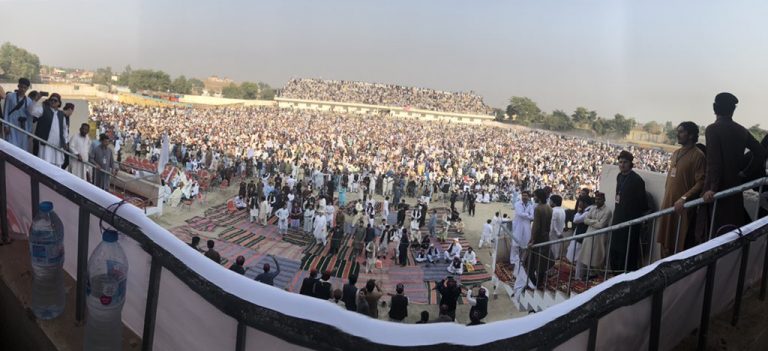
The ethnic Pashtun community of Pakistan is taking a long march to Bannu, a district in Khyber Pakhtunkhwa province located in the north-western region of Pakistan but chances are that you have hardly heard of it. Thanks to a media blackout being enforced by the Pakistani security establishment that none of the media organizations has dared to report it. The only source of information about this peaceful protest by the Pashtun community is social media.


The terror of the security establishment especially the ISI runs deep in the country’s media community. As a result, most of the journalists have kept away from retweeting, liking or sharing the updates from the long march on even their personal accounts.

The rally is being spearheaded by Pashtun Tahafuz Movement which rose in prominence in January 2018 when an aspiring model was murdered in a fake encounter in Karachi. It was the first time when tribal Pashtuns and the urban Pashtun youth converged to seek justice for a series of human rights violations by the Pakistani military.

The first edition of the Pashtun Long March took place in February in country’s capital Islamabad which was widely covered by international media. In fact, a number of members of major Pakistani political parties came forward to support the demands of the Pashtun people. However, this edition of the Long March is absent from the media’s radar signalling the even tighter grasp of security establishment over independent institutions.

The grievances of the Pashtun community include a list of human rights concerns regarding missing youth who are often picked up as alleged terrorists. They have also demanded the removal of landmines from Federally Administered Tribal Areas that have killed many. Pashtuns have continued to remain one of the most suppressed ethnic communities in the country with even Baloch and Hazaras, the other persecuted people joining them in protests during the first long march, putting the security establishment including the ISI in an uncomfortable spot.

They continue to demand effective delivery of human rights and development by the Pakistani state but nothing concrete has been executed as yet. Recently, FATA was merged with Khyber Pakhtunkhwa as a cosmetic measure to address the long-standing demands but according to experts, this is nothing but superimposition of a heavy administrative structure with zero change on the ground. Meanwhile, persecution of Pashtun activists remains a normal event in the everyday life of the Pakistani state. A woman activist Gulalai Ismail was arrested earlier this month while returning from London at the Islamabad Airport. She was released on interim bail but her name continues to figure on the Exit Control List (ECL) where her passport has been confiscated as well.

The continuous attempts by Pashtuns to highlight their problems to the world at large are a worrying sign for the security establishment. As the economy of the country is dwindling with little respite from international agencies, the backlash from the ethnic communities such as Pashtun, Baloch and Hazaras can become serious troubles for the military-dominated state.

Till now Pakistani state has successfully pinned blame any such outrages on foreign forces by calling it a conspiracy by ‘India’. But the scale at which these protests are now being organized, it is time that the demands are genuinely addressed else it will attract even greater international oversight. As of the Pakistani civil society, if they don’t abandon their ostrich in the sand attitude towards excesses of the military, history won’t be very kind to them.

Muzaffarpur shelter home case: Ex-minister Manju Verma’s absconding husband surrenders in court

0

Chandrashekhar Verma, the absconding husband of former Bihar social welfare minister Manju Verma who had stepped down following allegations against her husband having links with Brajesh Thakur, the prime accused in the Muzaffarpur shelter home sex abuse case, surrendered before a court here Monday.

Verma surrendered before the Manjhaul sub-divisional court in Begusarai district where Judicial Magistrate Yogesh Kumar Mishra remanded him in judicial custody till November 6.

Accused of having links with main accused Brajesh Thakur, Verma also faces a case under the Arms Act in connection with the recovery of a huge cache of ammunition from his residence in Begusarai district during a Central Bureau of Investigation (CBI) raid.

A case was registered against Verma a few weeks after his wife’s resignation and he was declared an absconder with notices for surrender pasted on his house by the police.

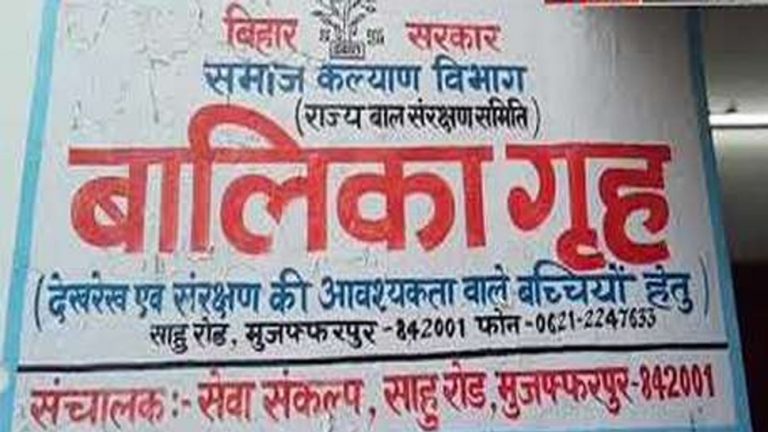
Over thirty girls were allegedly raped and sexually abused at a shelter home named Balika Grih in Muzaffarpur, run by Brajesh Thakur, the chief of a state-funded NGO called Seva Sankalp Evam Vikash Samiti. It is worth mentioning here that Brajesh Kumar had, amidst the ongoing Muzaffarpur shelter home controversy, stricken a row after he disclosed that he was set to contest elections from the Muzaffarpur constituency as a Congress candidate.

The shocking incident of Muzaffarpur shelter home came to light in June this year when the Tata Institute of Social Sciences (TISS) submitted a report, based on conversations with several girls at the home.

The shelter home was housing the girls between the ages of 7 to 17 and most of the girls were suffering from speech-impairment. It was reported that they were given sedatives in the dinner and raped during the night and the inmates were brutally beaten regularly by the shelter home staff, including women and compelled the girls to have sex with the visitors.

An FIR was lodged against 11 people, including Thakur, on May 31. The probe was later taken over by the Central Bureau of Investigation (CBI). It also revealed that Verma had allegedly spoken to Thakur several times between January and June this year.

The Supreme Court, while going through a status report of the CBI in the Muzaffarpur shelter home scandal last week, had expressed strong displeasure as no action was taken against Verma and had also maintained that Brijesh Thakur who was an influential person and was thereby obstructing the probe. It further directed the agency to shift him outside Bihar in order to execute a smooth probe.

Seventeen people, including Thakur, have been arrested so far in the case and the agency is on a lookout for five more.

Jio and others ban porn websites after court order, but websites find a loophole

Reliance Jio had recently banned hundreds of pornographic websites from its network, including the ones like Pornhub and Xvideos after the Department of Telecom issued a directive asking the internet service providers to block around 800 porn websites.

This move comes after the Uttarakhand High Court had in September asked the centre to cancel the licenses of websites that offer obscene content. A division bench of the HC had cited an earlier notification and asked the central government to issue strict orders to internet service license holders to ‘punctually’ obey the orders to block transmission of pornographic and obscene content.

However, the difficulty in the implementation of an ill-thought-out plan resulted in PornHub, a popular adult content website circumventing the government order to service providers with ease.

PornHub simply changed its domain extension — to ‘.net’ instead of ‘.com’ — specifically for the Indian internet users.

The adult content website tweeted their changed domain extension and said that in response to PornHub getting censored and blocked in India, their fans can fully access their website on the new extension.


The futility of this exercise of forwarding a list of to-be-banned adult content websites to service providers is evident from the fact that all the adult content website had to do was to change its domain extension in order to circumvent the government direct and the High Court order.

One of the main reasons why Indian courts and perhaps even the government is unable to crack down on adult content is because inherently, such institutions don’t understand the nature of the internet and that controlling anything on the web, even if it seems unreasonable to many, is a near impossibility.

Muzaffarnagar: Delhi Imam sends divorce notice to wife after his brother rapes her

0

In a horrific incident, the wife of an Imam of a Delhi-based mosque was allegedly raped by her brother-in-law at Dhandeda village situated in Muzaffarnagar district of Uttar Pradesh village. Shockingly, the Imam has now sent a divorce notice to the rape victim, the police officials said.

The incident has reportedly occurred when the brother of the Muslim cleric allegedly raped the woman and also physically attacked her after the woman refused and resisted the rape attempt at her residence. Station House Officer Jitender Kumar said that the husband of the woman was not present at the residence when the incident occurred.

The police officials said that the rape victim has been sent to the medical examination and an FIR has been registered against the accused following a complaint by the victim’s brother. The rape accused is identified as Mainuddin, said the SHO Kumar.

SHO Kumar speaking to the media said that the woman has now received a divorce notice from the Imam after her brother allegedly committed the crime against his wife. The couple had reportedly gotten married last year only.

Recently, a woman in Madhya Pradesh was given triple talaq by her husband because he thought she was fat. The central government had brought in an ordinance against Triple talaq in September making it a punishable offense. Despite of strict laws sexual crimes against women seem to be rampant. Recently in UP, a woman was raped by her father-in-law under the garb of Nikah-halala after her husband gave her triple talaq.