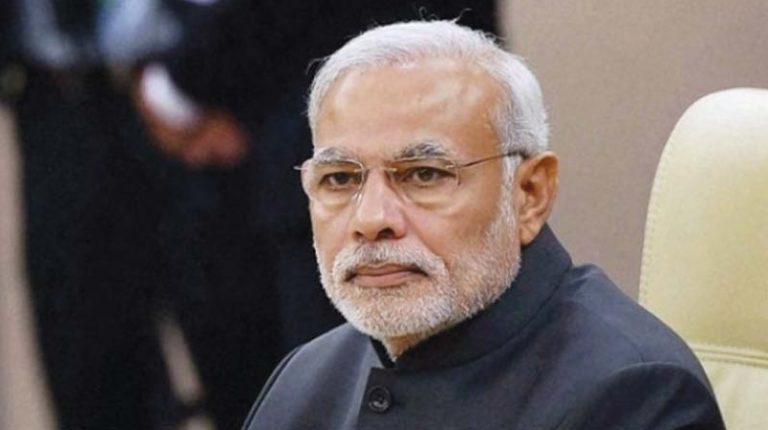
The Prime Minister Narendra Modi has been conferred with prestigious Seoul Peace Prize 2018 for his contribution towards improving international cooperation, raising global economic growth, accelerating the Human Development of the people of India. The Committee has also recognised Narendra Modi’s dedication to further the development of democracy and economic growth through anti-corruption and social integration efforts, said Ministry of External Affairs (MEA) on Wednesday.
The Seoul Peace Prize Committee while awarding the 2018 prize recognized Prime Minister Modi’s contributions to the growth of the Indian and global economies, crediting ‘Modinomics’ for reducing the social and economic disparity between the rich and the poor.
The Committee has also praised PM’s initiatives to bring clean governance in the country through anti-corruption measures and demonetization. It also credited Prime Minister for his contribution towards regional and global peace through a proactive foreign policy with countries around the world under the ‘Modi Doctrine’ and the ‘Act East Policy.’
Prime Minister Modi is the fourteenth recipient of this prestigious award, which is bestowed once in two years to those individuals who have made their mark through contributions to the harmony of mankind, reconciliation between nations and to world peace.
The Seoul Peace Prize was first established in 1990 to celebrate the success of the 24th Olympic Games held in Seoul, the Republic of Korea. The Seoul Peace Prize was founded to crystallize the Korean people’s wish for peace on the Korean Peninsula and in the rest of the world.
The Seoul Peace Prize has been conferred upon various global personalities including the likes of former UN Secretary-General Kofi Annan, German Chancellor Angela Merkel and renowned international relief organizations like Doctors Without Borders.
The Award Committee has decided to bestow this honour on Prime Minister Modi after assessing over a hundred candidates proposed by over 1300 nominators from around the world. The Prize committee referred Prime Minister Modi as ‘the perfect candidate for the 2018 Seoul Peace Prize.
Prime Minister Narendra Modi has been receiving accolades from across the globe for his commitment to global peace and sustainable development. Recently, The United Nations awarded Prime Minister Narendra Modi and French President Emanuel Macron with 2018 ‘Champions of the Earth Awards’. PM Narendra Modi was bestowed with this honour for his sustainable development initiatives and “unprecedented pledge to eliminate all single-use plastic in India by 2022.”
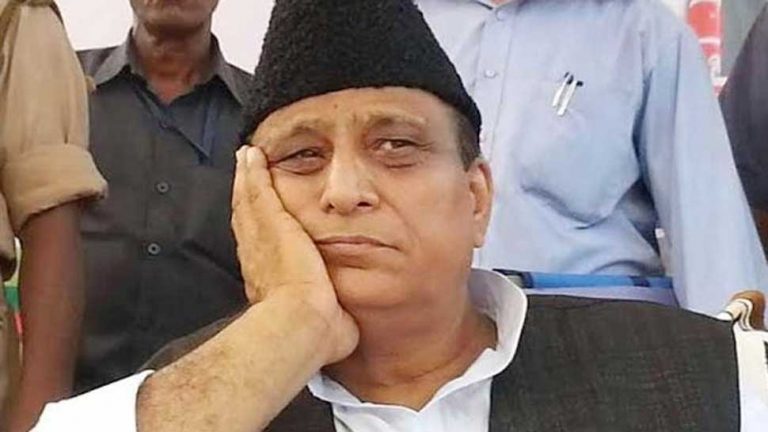
An FIR has been filed in Hazratganj Police station in Lucknow against Samajwadi Party leader Azam Khan for his 2016 remark where without naming Ambedkar, he had said, “The statue (of Ambedkar), pointing its finger into distance, seems to say that not only does it own the plot of land on which it stands, but also the one towards which it points.”
Speaking to OpIndia, Hazratganj SHO Radharaman Singh confirmed the FIR and said that it is a non-cognisable offence and the matter will be investigated. FIR has been filed by one Amar Nath Prajapati, Ambedkar Mahasabha general secretary, who found the statement objectionable. An FIR has been filed under Indian Penal Code (IPC) section 500 (defamation) and 505 (statements conducing to public mischief) against Khan.
This is not the first time Azam Khan has been in trouble. In July this year, sedition charges were filed against him for his anti-Army remarks. Earlier, Khan waded into another controversy with his statement that appeared to suggest that Indian soldiers have been indulging in rape. The SP leader, along with his son, Abdulla Azam were again in deep waters after the Uttar Pradesh police filed a case of forgery against them.
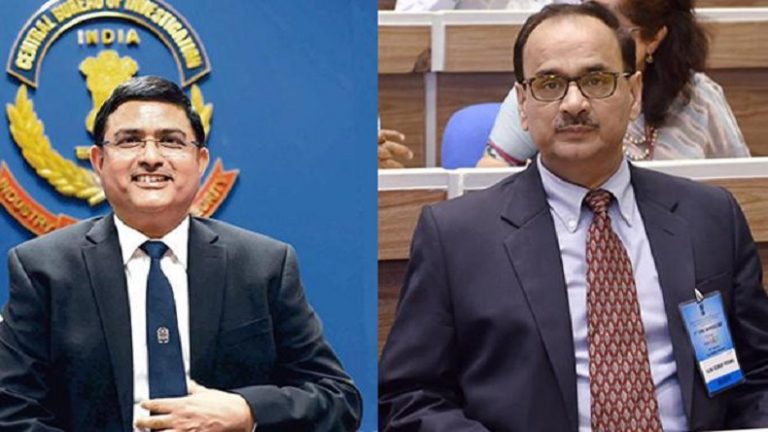
Amidst the ongoing ‘turf-war’ between the senior officials in the CBI, the Union government on Tuesday night has decided to send the current CBI director Alok Verma on leave and also appointed senior IPS officer M Nageshwar Rao, a joint director within the CBI to take over the duties and functions of CBI Director with immediate effect.
Rakesh Asthana, who has been involved in a fight with the CBI director Verma has also been asked to proceed on leave. M Nageshwar Rao will be taking charge of the CBI with immediate effect.
This decision comes soon after it was reported that Asthana and Verma had both been summoned by the Prime Minister.
“The Appointments Committee of the Cabinet has approved that during the period of the subsistence of the aforesaid interim measure, cited in reference above, Shri M Nageshwar Rao, IPS, presently working as Joint Director, CBI shall look after duties and functions of Director CBI and shall take over the duties and functions with immediate effect,” said the government notification.
Addition to the two senior officers Verma and Asthana, the government has also relieved few other CBI officers from their agency duties. Arun Sharma, joint director of policy and anti-corruption within the CBI, and Manish Sinha, a deputy inspector general-level officer has also been asked to step away from their responsibilities in the CBI.
Meanwhile, the CBI officials have conducted another raid at the CBI office in Delhi, early this morning. Reportedly, the 10th and 11th floor of the CBI building is being searched and the offices of both Verma and Asthana have also been sealed.
The government has ordered to transfer all cases being investigated by Rakesh Asthana to a joint director of the CBI and directed to put them on the fast track.
The Union government’s decision to change the top leadership of the CBI comes against the backdrop of an ugly feud between the CBI Director Alok Verma and Special Director Rakesh Asthana over the issue of an alleged bribery case involving Asthana.
The CBI had earlier filed an FIR against Rakesh Asthana, a 1984 batch IPS officer of Gujarat cadre in a corruption case alleging him of accepting around Rs 3 crore as a bribe from one Satish Sana in a case involving meat exporter Moin Qureshi.
On the other hand, Asthana had accused Alok Verma of “interfering” in his work and alleged that Verma had hatched a conspiracy to target him. Asthana also alleged that it was Verma who had accepted to the bribe from Satish Sana.
Alok Verma, a 1979 batch IPS officer from AGMUT (Arunachal, Goa, Mizoram, UTs) cadre has also accused Asthana of his involvement in corruption with regard to the Sterling Biotech case. Asthana responded writing to the Cabinet Secretary saying that Verma was interfering in his probes and had tried to stall a raid on Lalu Prasad in the IRCTC case.
However, the Delhi High Court on Tuesday directed the CBI to maintain status quo in the ongoing case against Special Director Rakesh Asthana and granted him interim protection from arrest till Monday.
On October 23, Bharatiya Janata Party launched an initiative to seek micro donations from party workers and well-wishers through the NaMo app. Under this provision, any amount between ₹5 and ₹1000 can be donated to the party. To promote the initiative, senior leaders of the party including Amit Shah, Prime Minister Narendra Modi, made donations using this facility, and tweeted the receipt which is generated after the payment is made.
Contributed to @BJP4India, via the ‘Narendra Modi Mobile App.’
I urge you all to contribute to the Party through the App and spread the message of transparency in public life. pic.twitter.com/5NwwDzC2BA
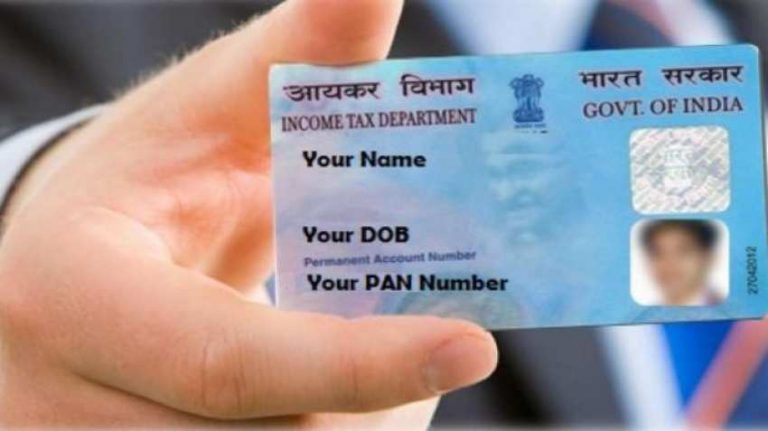
Seeing this tweet, French Security Researcher Elliot Alderson, who takes a keen interest in privacy and data security matters in India, commented that Modi forgot to blur the PAN which was visible on the receipt. Please note that Elliot Alderson is actually a Twitter alias used by Robert Baptiste, who frequently exposes flaws in the Aadhaar system.
As Robert is quite informed about the Indian financial system, it was a very strange comment from him. Because, it is not Narendra Modi’s PAN that is printed on the receipt, but it is the PAN of the BJP. The number AAABB0157F is in public domain, including documents available on Election Commission website. The same number was seen on receipts posted by numerous people who made the donation using the newly launched feature on the NaMo app.
As a BJP karyakarta myself, I have donated an amount of Rs 1,000 to the party through NM app. I appeal to all our karyakartas and well wishers to join the initiative for bringing in transparency in public life and donate using either NM app or at https://t.co/VILyxBFfdE. pic.twitter.com/J828UwsIq2
Moreover, even if Narendra Modi had ‘revealed’ his PAN by ‘mistake’, it would not be any issue, as his Permanent Account Number is also in public domain. In India, everyone who contests elections conducted by Election Commission of India, has to mention their PAN on their affidavits which is submitted to EC along with nomination papers.
2014 Affidavit of Modi submitted to EC, showing his PAN
Not just PAN, candidates have to mention several financial details on the affidavit, like bank account numbers, bank and branch detail, and balance in those accounts on a particular date. The affidavits are available on Election Commission website, and also on website Myneta, which curates the affidavits and other information about candidates. This also may come as a big surprise for Robert.
Immediately Robert posted the tweet, people started replying to him that it is the party PAN and not Modi’s PAN, which he has chosen to ignore till now.
Screenshot of a few replies
People also informed him that in PAN of individual persons, the fourth character is always ‘P’, while the PAN on the receipt is ‘B’, which stands for Body of Individuals, and the fifth character is the first character of surname of the person, or first character of name of the non-person entity. And the fifth character in this case is B, if it was Modi’s PAN, it should be M.
It is rather amusing that Robert is unaware about such simple and widely known facts about PAN (not ‘PAN number’ as he wrote, which would expand to Permanent Account Number number), and his tweet got so many retweets and likes.
Despite the Supreme Court judgment declaring the practice of Triple Talaq as illegal and unconstitutional, the evil practice is still very much prevalent. In a strange case that has come to light from Bareilly, Uttar Pradesh, a 65 year old man who was married to a young Muslim woman to perform Nikah Halala, has now refused to divorce her, as per reports.
As per information, Juhi, daughter of Akil Ahmed from Uttarakhand, was married to Mohammad Javed in 2010. The couple has two sons. Within three years of marriage, the couple started having conflicts which ultimately ended in divorce in 2013. After a few days of divorce, the husband Javed had a change of heart and he wanted to reunite with Juhi.
The Sharia custom of nikah halalarequires a divorced woman to marry another man and consummate the marriage in order to return to her first husband. Often, such temporary marriage is done with another male member of the husband’s family, including father and brothers of the husband.
In this case, the relatives of the woman arranged for her to marry a 65-year-old man from Bareilly under the condition that he would divorce her soon so that she can be reunited with her first husband, Javed. However, the elderly man has refused to divorce Juhi saying that the marriage is not consummated yet.
The woman has pleaded for justice before Farhat Naqvi, sister of Union minister Mukhtar Abbas Naqvi and President of Mera Haq Foundation. Farhat Naqvi said that when she talked to the elderly man over the phone he was very angry. He clearly said, “I will not divorce, I have been cheated. After the marriage the woman did not even come near me”. He also said, “I will go to jail, but will not talk in the matter”.
Right now, in order to find a solution to this intriguing case, Ulama-e-Karam told the woman to go to the Sharia Court. Maulana Shahabuddin Razavi says that if the woman wants to get a divorce then she has the right to do so. It can be separated by Khula procedure, under which a Muslim woman can divorce her husband, although it is not as quick as triple talaq method available for Muslim men.
One son of the couple lives with the mother and the other lives with the father. The children are worst affected by this ugly turn of events.
Lalu Prasad Yadav, who is already serving the prison term in Birsa Munda Prison in Ranchi, after conviction in fodder scam, is set to lose properties worth ₹128 crores after IT department reportedly found them violating Benami Transactions (Prohibition) Act.
Benami property refers to property acquired by a person, under another person’s name or simply by employing a fake name or a shell company.
17 properties owned by former Bihar CM Lalu Prasad Yadav and his family are under scrutiny. Properties include an under construction mall in Patna, a residential property in New Friends Colony in Delhi, and a farmhouse in Palam Vihar near Delhi’s Indira Gandhi International airport.
These properties are alleged to have been bought by Lalu Yadav’s shell companies during his stint as Railway Minister in UPA. Later, they were transferred to Lalu’s Wife Rabri Devi, his son Tejaswi Yadav, and daughters Misa Bharti, Chanda and Ragini, and also to his son-in-law Shailesh at abysmally low rates.
According to Times of India, residential property in New Friends Colony’s declared book value is Rs 5 crore, purchased in the name of AB Exports, but later the company’s shareholdings and rights were transferred to Tejashwi Yadav at mere Rs 4 lakh. And, a farmhouse in Palam Vihar of which book value was over 40 crore, purchased in name of Mishali Packers, was subsequently transferred to Misa Bharti and his husband at meagre Rs 1.40 crore.
The under-construction mall at Patna was already seized by Enforcement Directorate in June this year, and before that construction of the same was ordered to be stopped. Other than allegations of being benami property of Lalu, it was also alleged that necessary clearances for the mall were not obtained from authorities. ED is investigating Lalu Yadav and his family members in a case under the Prevention of Money Laundering Act (PMLA).
If this startling allegations hold true and are later proved, Lalu Yadav may land in prison for another seven years under the Benami Act, and will have to bear fine of 25% of market value of attached property and restriction from contesting elections for another six years.
Until the time investigation is over, attached properties can be given on lease to present inhibitors.
Union Minister Smriti Irani was caught in a controversy after she talked about the right to pray at the Sabarimala temple versus desecrating the place of worship. Irani was speaking at the event organised by the British High Commission and ORF organisation in Mumbai where she was asked her views on the Sabarimala verdict and controversy.
#WATCH Union Minister Smriti Irani says,” I have right to pray,but no right to desecrate. I am nobody to speak on SC verdict as I’m a serving cabinet minster. Would you take sanitary napkins seeped in menstrual blood into a friend’s home? No.Why take them into house of God?” pic.twitter.com/Fj1um4HGFk
Michael Safi who is the South Asia correspondent of Guardian asserted that Smriti Irani, with respect to women’s entry into Sabarimala, said that if one wouldn’t enter a friends house with a blood-soaked sanitary napkin, so why would one take one to a house of God.
Oh boy. Indian govt minister on whether menstruating women should be allowed into famous temple: “It is plain common sense. Would you take sanitary napkins soaked in menstrual blood into a friend’s home? So why would you take them into the house of God” https://t.co/4uc1IaNo9c
Safi is insinuating that Smriti’s comments were on the Sabarimala verdict pronounced by the Supreme Court which allowed entry of women of all age groups inside the shrine and that Smriti Irani was talking specifically of how menstruating women should have the right to enter temples.
However, Irani’s statements appear to have been taken out of context. When one hears Smriti Irani’s response one understands that she categorically said that as a cabinet minister she would not like to comment on the verdict. She said that the right to pray does not include the right to desecrate. She said that while one would not take a blood-soaked sanitary napkin to a friend’s place, one shouldn’t take a blood-soaked sanitary napkin to a house of God.
This statement of Irani appears to be a metaphor that while the friend has given you the right to enter her house, she has certainly not given one the right to insult her home by bringing a blood-soaked sanitary napkin into it. Similarly, while one has the right to pray since it is a fundamental right of any individual, one does not have the right to desecrate another’s faith or place of worship. The right to pray stops when it amounts to desecrating someone else’s faith. This statement of Irani could also be a reaction to the rumours making rounds that one of the activists who tried to enter the temple, was carrying blood-soaked sanitary napkin with her. The rumour was subsequently denied by the said activist.
Hence, Irani’s statement was not in reaction to the judgement, but more of how the right to pray does not include desecrating the place to prove a point.
Calling the controversy around her statement as propaganda, Irani reiterated the fact that as a practicing Hindu married to a person of Zoroastrian faith, she respects the boundaries set by the Fire Temple, where a non-Parsi like herself is not allowed while her children and husband are.
I respect that stand by the Zoroastrian community / priests and do not approach any court for a right to pray as a mother of 2 Zoroastrian children. Similarly Parsi or non Parsi menstruating women irrespective of age DO NOT go to a Fire Temple.
While recounting her personal experience, she spoke about how she is not allowed in the Parsi Fire Temple (Agiyari) which prohibits entry of non-practising Parsis. She said that her children are brought up in the Zoroastrian faith, like her husband, and she is a practising Hindu. So when her children visit the Fire Temple across the country, she either waits for them on the road or in the car. That is out of respect for the faith.
In the name of “rights”, in the Sabarimala case, the only of several “activists” seem to be to desecrate the place of worship. One must recall how one woman allegedly wanted to have sex with her boyfriend at the Sabarimala in front of Lord Ayyappa.
Sameera wants to have sex openly with her boyfriend at Sabarimala in front of Ayyappa pic.twitter.com/h5RhmG7Y4G
This while one must observe “Vratham”, a 41 days austerity period, whereby devotees must follow a lacto-vegetarian diet, follow celibacy, teetotalism, not use any profanity and control the anger.
Hence, with this attitude, the obvious question that has cropped up is whether the aim of this crusade is to claim the right to pray, or right to desecrate considering it is evident that the “activists” who wanted entry into the temple were not devotees of Lord Ayyappa, to begin with.
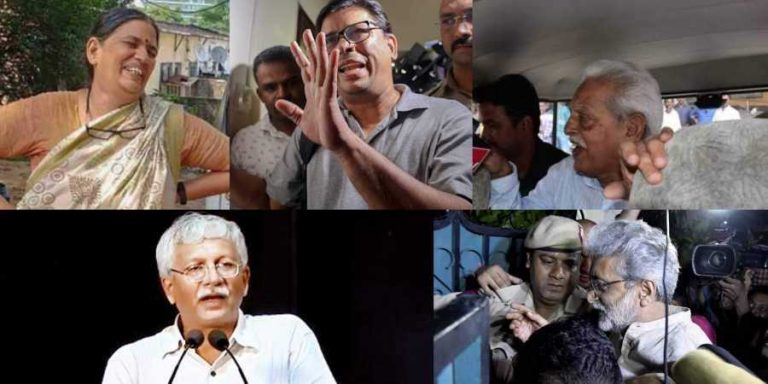
On Monday, opposing the bail application of the five accused activists in the Bhima-Koregaon case Surendra Gadling, Shoma Sen, Vernon Gonsalves, Arun Ferreira and Sudha Bharadwaj, in the Bhima Koregaon case, the prosecution submitted ‘intercepted email communications’ exchanged between top CPI (Maoist) fugitive leader Ganapathy aka Chandrasekhar and Varavara Rao as per reports.
As told by the prosecution to the court, the emails were exchanged after the five activists Shoma Sen, Surendra Gadling, Mahesh Raut, Rona Wilson and Sudhir Dhawale were arrested on June 6.
Public prosecutor Ujjwala Pawar, arguing before Sessions Judge K D Vadane opposing the bail applications of the accused persons, told the court that the email communication reveals that the top leaders in CPI (Maoist) Central Committee (CC) were concerned after the arrest of the five and Chandrashekhar alias Ganapathy, who she claimed was the general secretary of CPI (Maoist), had asked Rao how the letters were leaked.
Quoting the content of an email claimed to be written to Rao by Ganapathy on July 4, Pawar said, “The CC has received a news-clip of some communication that was leaked immediately after the arrests. The point of great concern is how exactly the letters were leaked and how the letters got in the hands of the police. We need to put efforts to understand the full scale of this breach and the methods of the intelligence agencies.”
“Please ensure the confidentiality of this communication channel and any report or message sent outside of the secured network through the microchip must be encrypted with a password,” said Pawar, quoting the mail.
Ganapathy in the mail told Rao that the committee is seeking a report from him as quoted by Pawar, “It is better to use multiple keys for the future correspondence. The CC also expects your report on the assessment of the damage caused by the police action.”
Further quoting the content of the email Pawar said that Ganapathy told Rao that after the recent arrests from Delhi and Maharashtra, CC is concerned and said that the “urban movement” is facing a lot of difficulties for last several years.”In the backdrop of all these events, the CC wants your suggestions to formulate a short and long-term action plan,” Pawar quoted.
Quoting the email conversation, Pawar said, “The five arrests have caused a lot of damage to the movement and some urgent steps are needed to boost the morale of the cadre”. Responding to defence’s claim that these seized letters are fabricated, Pawar said, “This email communication of banned outfit showing concerns about the actions proves that the seized letters are genuine”.
Pawar cited another email communication which she claimed was Rao’s reply to Ganapathy.
Pawar also referred to another email allegedly sent by Varavara Rao to Ganapathy on July 14 in which Rao had reportedly said that in coming days, he will be sending a detailed report on his assessment of the breach. He had also reportedly mentioned that he does not know how to set up multiple PGP keys but he will take the help of one of the students. (PGP or Pretty Good Privacy is an encryption programme to provide cryptographic privacy and authentication for data communication).
Pawar said that Rao also wrote in the mail that he will put rules in place for using personal mobiles and computers. Rao had expressed concerns about how the intelligence agencies managed to access a confidential file by the name of “final dispatch.pgp” containing the details of the arms to be smuggled through Nepal, Manipur and Kolkata corridors.
The hearings have continued today and the court is yet to pronounce decision over the bail pleas. It is notable here that in another round of crackdown, the Maharashtra police had arrested 6 more alleged urban Maoists, Varavara Rao, Sudha Bharadwaj, Vernon Gonsalves, Gautam Navlakha, Arun Pereira and Stan Swamy on August 28.
Power is an intoxicating drug. The pursuit of power and the acquisition of it can be deemed a worthy goal in itself for a lot many people. Our legal fraternity is no different. The judicial activism that is rampant in the corridors of our judiciary has provided an incentive to every lawyer and student of the law to seek new avenues where their warped ideological worldview could be put into practice for a few pats on the back. After all, who would not want to partake in the framing of policy if given the opportunity?
The firecracker ban on Diwali last year in the Delhi-NCR region is a special case in point. The petitioners in the case were three toddlers aged between two and four years of age. Quite obviously, the lawyers were shooting from the shoulders of children who pretty much had no clue about what was going on in a pretty deplorable instance of using children to further one’s ideological objectives. In banning firecrackers, the Supreme Court endangered the livelihoods of lakhs of people without even considering the mountain of evidence which points towards the fact that firecrackers are not the major source of pollution in the region.
The most recent instance of judicial activism that has made a prominent mark in the national consciousness is the Sabarimala verdict. It was quite evident all along that the petitioners were not devotees of Lord Ayyappa and did not hold any particular reverence in their heart for Hindu traditions or rituals. And yet, the Court deemed it fit to infringe upon the rights of devotees based on arguments made by people who clearly had no faith in the Deity under consideration.
As a consequence, the verdict of the highest court in the country received a definitive slap on the face after devotees prevailed upon the administration to bar activists from entering Sabarimala, activists whose goal all along was to turn the Temple into a battleground for their ideological war. Our Courts are providing an incentive to troublemakers to wreak havoc in our society and it’s time for some serious introspection on their part.
In any sane society, laws are a codification of its morals. Progressive activists, on the other hand, seek to circumvent the process where one seeks to convince people of the virtues of the path they endorse and build a consensus. They have turned public interest litigation (PIL) into a weapon for their ideological war.
They have identified that using PILs, with the help of their ideological comrades in the judiciary, they can frame policies and laws according to their own whimsical fantasies without actually having to convince the masses to adopt their stance. The consequence of such a worldview is the chaos we witnessed at Sabarimala. Hindus openly revolted against the court verdict. A simple question must be answered, “Was the violence at the Temple and the atrocities committed against the devotees of Lord Ayyappa for people who do not even have faith in the Deity or respect for the traditions and rituals of the Temple worth it?”
We witnessed the same ideological blindness of our legal fraternity during the ban on Jallikattu. Ultimately, it was overturned by people who are infinitely more accountable for their actions than judges: Politicians. Then there was the Dahi Handi rule which Raj Thackeray’s MNS defied openly and without any consequences. The Judiciary, under the influence of the ideologically blinded unaware of sociopolitical realities, is passing judgments which are essentially unimplementable and as a consequence, it’s credibility at the moment is perhaps even lower than the mainstream media.
The judiciary must understand that vigilantism arises as a consequence of two factors which act in combination. Firstly, when the state fails to implement its own laws and secondly when the state formulates laws which directly contradicts the existing social and moral norms of the society regarding a matter that is perceived to be the core of their existence for a significant number of people.
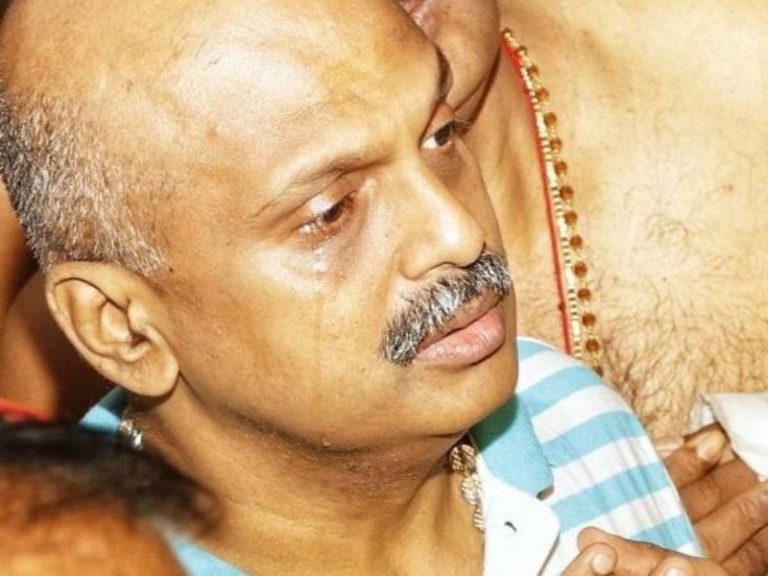
The following is perhaps the most iconic image from the Sabarimala protests.
Credit: Janam TV
The Police officer who escorted two women activists in their bid to desecrate the Temple was seen crying profusely while apologizing to the Deity for his actions. This is what judicial activists do not understand. Their desire will ultimately have to be implemented by other human beings and it’s extremely difficult to achieve your objective when society, by and large, is not on your side.
The legal system may also be an extremely convenient way for foreign institutions to meddle in the internal affairs of our country. In our earlier reports, we have mentioned how organizations that receive funding from controversial sources abroad are engaging in legal activism in our country that has far-reaching political implications.
The most disconcerting fact, however, is the extent of ideological brainwashing among certain sections of law students. I would recommend that readers watch Sadhguru’s interaction with law students at NALSAR.
[youtube https://www.youtube.com/watch?v=0OwPqDcy9U4]
The disagreement that the student has with Sadhguru is not the object of concern here, it’s the utter lack of respect and etiquette while engaging in conversation with someone who is a guest at the institution and much more accomplished than him. The questions were not asked to learn something meaningful or gain some critical insight, they were asked with the intention of gaining some pats on the back. The law student was so convinced of his moral superiority that he completely disregarded what we would call proper manner and etiquette. And what was even more concerning is the fact that he was quite eager to meddle in the affairs of Hindu Temples without really being a devotee at all.
I repeat, the legal system is serving as a platform for activists and the ideologically blinded to fashion laws according to their whims. They turned our Temples and our Traditions into a battleground for their ideological war but much before that, they had turned the judiciary into one as well.
The activists are quite obtusely trying to legislate their ideology into becoming the accepted version of morality of the common masses. Society does not function efficiently like that. If activists want to change our laws, then they should do the hard work which entails convincing people of the virtues of their beliefs. In any society that has not lost its common sense yet, laws flow downstream from morality. The activists want to slap their morality and their brand of ethics on the entire populace through the legal system without our consent and by subverting our political will. Our courts should stop providing them with assistance in their harebrained project.
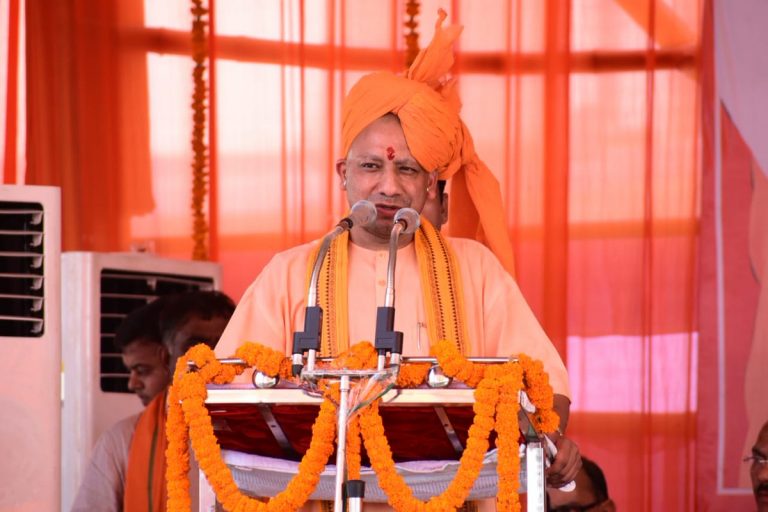
Uttar Pradesh’s Chief Minister Yogi Adityanath is among the star campaigners of the BJP to campaign for BJP in the state of Chhatisgarh. On the occasion of filing of nomination papers by the incumbent CM of Chhattisgarh Dr Raman Singh, Yogi Adityanath addressed a rally in Chhattisgarh today.
Talking to the news agency ANI, Adityanath said, “I will get an opportunity to be present during nomination filing by Chhattisgarh Chief Minister Raman Singh and to interact with party workers here. BJP will again form a government in Chhattisgarh with a huge majority.”
I will get an opportunity to be present during nomination filing by Chhattisgarh Chief Minister Raman Singh and to interact with party workers here. BJP will again form government in Chhattisgarh with huge majority: UP CM Yogi Adityanath after arriving in Raipur. pic.twitter.com/CRCaNuDItU
While speaking at the rally, Yogi Adityanath asserted that BJP rule has transformed the state which was once called as a ‘Bimaru’ state to a developed state. Citing Chhattisgarh as Lord Ram’s maternal grandmother’s home, he said his visit to the state was but obvious. In the same breath Yogi also took a dig at Rahul Gandhi, stating that whenever country faces a tragedy, Rahul runs away to his grandmother’s country, Italy.
Extolling Chhattisgarh’s PDS system, Yogi said that it has become a paragon for the entire country and even Uttar Pradesh has adopted it. Calling upon the state BJP workers, Yogi exhorted each one of them to take an oath to visit each and every booth and communicate government’s developmental work to the local people for ensuring a thumping majority for the BJP in the upcoming state polls.
Yogi Adityanath declaimed that very soon a magnificent Ram temple dedicated will be built in Ayodhya at Ram Janm Bhoomi. With the blessings of people of Chhattisgarh, Yogi asserted that CM Raman Singh will create a history by once again forming a BJP government in the state.
Chhattisgarh’s current CM Raman Singh while filing the nomination papers declared that BJP will win more than 65 seats and the state will see BJP’s rule for the fourth time.
The election campaign in the state has gained momentum after the EC announced dates for the state assembly polls. The state will have elections in two phases, November 12 and 20. Yesterday, Rahul Gandhi addressed Kisan Hunkar Rally to kick-start election campaign for Congress in the state. On Sunday, the Samajwadi Party (SP) had released the names of three candidates for the first phase and six names for the second phase of Chhattisgarh Assembly Elections 2018. While on Saturday, the Bharatiya Janata Party (BJP) too announced 77 candidates out of a total of 90 Assembly seats in Chhattisgarh.