Home Blog Page 7001

Chhattisgarh Congress chief arrested for circulating fake ‘sex CD’ of BJP minister

0

Chhattisgarh Congress chief Bhupesh Baghel has been sent to judicial custody for 14 days by a special CBI court for circulating a fake ‘sex CD’ allegedly involving a senior Chattisgarh minister.

According to the reports, a “sex CD” had become viral allegedly featuring Public Works Department Minister Rajesh Munat had rocked Chhattisgarh last year and Baghel was named one of the five accused in this matter. The CBI had filed a charge sheet against Bhaghel, journalist Vinod Verma, Kailash Murarka, Vijay Pandya, and trader Vijay Bhatia in this case.’


Even though the charges against him were bailable, Baghel pleaded to the court that he is innocent, and said this is a political attack. Further, he said, he will neither apply for a bail nor employ a lawyer and will begin a satyagraha in jail. The court then sent him to judicial custody and granted bail to journalist Vinod Verma, while removing charges of extortion against him.

The Central Bureau of Investigation took over the investigation of two cases related to the circulation of a ‘sex CD’, allegedly involving a Chhattisgarh minister, in December last year.

The CBI had arrested former journalist Vinod Verma last year and he was charged with non-bailable sections of extortion on a complaint by BJP leader Prakash Bajaj. Bajaj had alleged that he was threatened with the release of an explicit CD of his ‘aaka’ (master) unless he paid money.

Reportedly, all the accused have been booked under IPC sections 469 (forgery for purpose of harming reputation), 471 (using as genuine a forged document), 120B (criminal conspiracy) and 67A of the IT Act (whoever publishes or transmits or causes to be published or transmitted in the electronic form any material which contains sexually explicit act).

With the state assembly elections only weeks away, the arrest of Congress chief has started a political slugfest in the state. While Congress alleges that the BJP government is hounding their leader with elections in mind, Chhattisgarh CM Raman Singh has stated that it is a judicial process and the investigating agency decides when to file a charge sheet. “It is up to the CBI to decide when to summon anyone or file a charge sheet”. Singh added.

Rather than posting memes, Congress could invest in updating their MLAs about technology

0

According to a report, the Congress unit in Karnataka has alleged that BJP is using Whatsapp to do horse trading of Congress MLAs in the state. AICC general secretary and Karnataka in-charge KC Venugopal said that BJP’s Karnataka president BS Yeddyurappa is talking to Congress MLAs over Whatsapp. He said, “Yeddyurappa himself is engineering defections. He is using WhatsApp to talk to our MLAs, but he won’t be able to split us and become the chief minister again”.

According to the Congress, BJP is using Whatsapp to contact its MLAs because due to the end-to-end encryption of Whatsapp, conversations done in the app can’t be recorded. Therefore, if some Congress MLA wants to present evidence of being contacted by BJP, they would not be able to provide any proof of it.

Congress alleges that after coming to know that BJP is approaching Congress MLAs for poaching, Congress leadership advised the MLAs to record such conversations so that it can be used as evidence to ‘expose’ BJP. But apparently BJP leadership learnt about this and they started using Whatsapp in poaching operations.

This is one of the most hilarious allegations made by the Congress party in the long list of such allegations. It also shows their ignorance with regards to technology. The end-to-end encryption technology that Whatsapp uses means a third party can’t access communications made using Whatsapp, not even Whatsapp itself. This means the communication made using the app is secure from unauthorised intrusion. But it no way it prevents recording and sharing of those messages by recipients.

Let’s talk about WhatsApp phone calls. If you search the Play Store for apps that can record Whatsapp calls, you will get dozens of results. There are apps that can record video calls also. This means it is very easy to record calls made on Whatsapp. No encryption technology can prevent the recording of audio that is being played on the speaker of the phone.

End-to-end encryption means a third party can’t access the messages. But the receiver and sender of the messages can easily share the messages if they want. If it is text, image, or video message, they can just show those messages to the media. And if it is audio or video call, they can record it easily if they want to expose the horse-trading attempts made by BJP.

If some Congress MLA is saying that BJP is contacting them, but they don’t have proof as it is done using Whatsapp, probably Congress party should organise a training session to train them on how to record Whatsapp communication. They may also teach them how to take a screenshot of text messages.

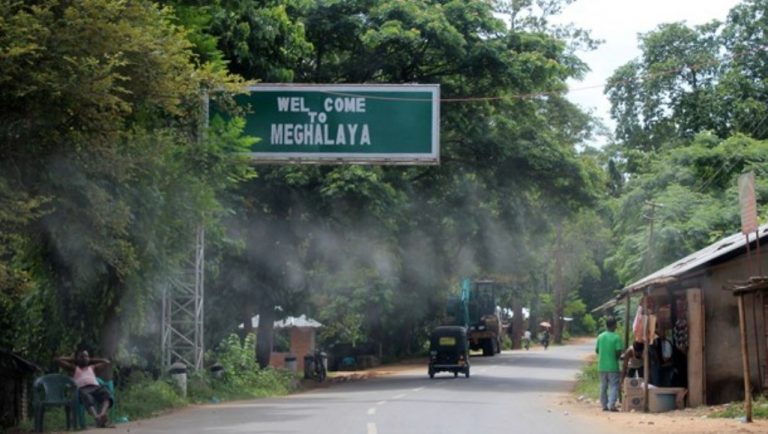
Meghalaya: Court rebukes NGO, says PIL was aimed at endangering the progress of villagers

In a harsh indictment of ‘civil society’, the Meghalaya High Court dismissed a petition filed by an NGO, Shella Action Committee (SAC), against cement major LafargeHolcim deeming it was “totally without merit” and “tainted with ill design”. The bench observed that the SAC could not produce even a single landowner who was affected after the land was transferred, sold or leased out in favour of the company.

The Court also ordered the petitioners to pay a fine of Rs. 20,000 which will be donated to those affected by the Kerala flood. The PIL had claimed that mining of limestone caused a huge loss of revenue and irreparable loss to the indigenous people residing in the area. However, the Court observed that it was filed without any substantial basis. The Court also observed that the PIL was aimed at jeopardizing the progress of the village.

The Court observed that in addition to the Rs. 171 crore the company had contributed to the State’s exchequer, the company had contributed immensely towards the welfare of the people by generating direct and indirect employment, provision of education, skill development and in numerous other ways. The bench also said that the project is a major source of revenue for the people of Nongtrai village, adjacent to Shella village.

Incidentally, it was the initiative of the very people of Nongtrai that saw the mining of limestone in the area. In 2010, the Nongtrai Village Dorbar, a traditional tribal village council, had moved the Supreme Court in support of Lafarge. “The project has not resulted in a diversion of agricultural land. No cultivation is possible in the mining area due to the rocky nature of the soil. The Shella Action Committee does not represent the native people of the area. They are not even residents of the area,” the Dorbar had said in its counter affidavit. It was also claimed that since the land belonged to the Dorbar, it was up to the Dorbar to decide whether to allow limestone mining in the area.

The Nongtrai Dorbar also claimed that the SAC, which claims to represent the villagers of Shella, has no rights over mine as it falls under their jurisdiction. Mining was allowed by the Supreme Court to resume in July 2011 after it had temporarily stayed mining in the area in an earlier ruling. The Court had observed that the company had taken the consent of the custodians of the land, the Khasi Hills Autonomous District Council and the Nongtrai Village Dorbar, before embarking on the project. The Court also observed that the mining project had brought schools, jobs, healthcare and other associated benefits to the people of the land.

Devjyot Ghoshal, writing for the Business Standard, portrays a moving account of the hopes and aspirations of the people of Nongtrai which are intricately associated with the mining project. In his article, he quotes people who have directly benefited from the project and were concerned that should mining in the area be abandoned, they will suffer as a consequence. Ghoshal ends his eloquent article with the following words, “In many ways, the invitation to Lafarge was an attempt by the village of Nongtrai to take destiny into its own hands. Incidentally, in Khasi, the local tongue, Nongtrai means ‘our own land’.”

It may be noted that Lafarge Umiam Mining Pvt. Ltd., the company that operates the mine, has won the Guru Dronacharya award for safe mining for three consecutive years.

The PIL filed by Shella Action Committee, which was pending since 2007, is a classic example of how NGOs work against the greater good of the people, which is in direct contradiction with the manner in which civil rights groups portray themselves to be the conscience keepers of society.

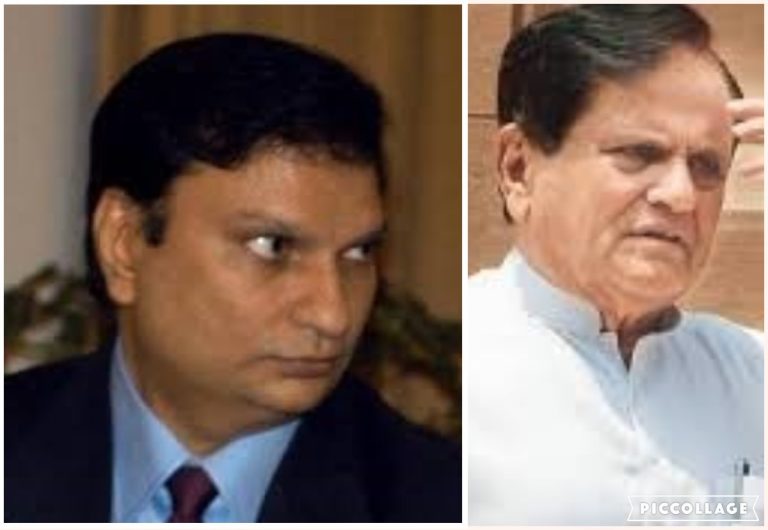
No Congress, don’t advertise a scam where your man Ahmed Patel is allegedly involved

Assam Congress’ Twitter account today morning plugged a Times of India article which talked about the Rs. 5,000 crore fraud accused Nitin Sandesara may have fled to Nigeria, which does not have an extradition treaty with India.


The tweet talked about how ‘another Gujarati, one more bank fraud, same modus operandi of fleeing from country’, insinuating that businessmen from Gujarat, prime minister Modi and BJP president Amit Shah’s home state, have an easy way out after they get accused of financial frauds. Earlier, Nirav Modi and Mehul Choksi, the duo accused of multi-crore PNB scam, also Gujaratis, have fled the country.

While it is indeed true that Sandesara is a Gujarati businessman who is accused of Rs. 5,000 crore bank fraud and having allegedly set up more than 300 shell companies in India and abroad, is now believed to have fled Dubai and reached Nigeria. However, Assam Congress forgot to add one small detail that Sandesara is a close aide of Congress leader Ahmed Patel.

Sandesara brothers first came under the radar of investigating agencies in 2011 after the income tax department searched their house in Vadodara and recovered a diary with details of payoffs to high profile politician (Congress Leader Ahmed Patel) and their relatives. Later, based on the diary entries, cases against three I-T officers at the level of commissioners and principal commissioners were registered.

As the Enforcement Directorate tightened its investigation, senior Congress leader Ahmed Patel’s association in this case resurfaced. Earlier this month, ED produced a man named Ranjit Malik, alias Jonny, before the duty magistrate of a Delhi court, who granted his custody to the agency for a day, for allegedly sending Rs 25 lakh cash to the official residence of a senior Congress leader, Ahmed Patel.

Earlier too, Sunil Yadav, employed by the Sandesara group, had alleged the involvement of senior Congress leader Ahmed Patel, his son, Faisal Patel, and his son-in-law, Irfan Siddiqui in the same, through his written statement to the directorate.

This tweet of Assam Congress not only managed to publicise a case where their own leader is accused of being involved in, but it also hurt the pride of Gujaratis as the entire community was maligned and generalised for the deeds of a few.

Indian Democracy – Dynasty to Dynamism

0

“Well doctor, what have we got – a republic or a monarchy,” asked an eager lady to Dr Benjamin Franklin as he was leaving the Philadelphia Convention which was wrought in secrecy. “A Republic – if you can keep it” replied the founding father of the oldest modern democracy in the World.

One needs hardly say that the founding fathers of Modern democracy were as concerned with the principles of preservation as with the founding itself. Even before the days of the American Constitution James Madison in the Federalist papers notes the existence of different interest groups accentuated by various sentiments and views which had come up out of necessity. Many times these special interest groups gain ascendancy without the citizens’ awareness or concurrence. The deep-rooted partisan one-upmanship which characterizes American politics today proves the apprehensions of founding fathers true.

Reference to rudimentary forms of Democracy is evident right from the most ancient text namely the Rigveda. We also find reference to the will of people upholding the Kings in their position in the Atharva Veda. Democracy as we know today has an ancient and dodgy past with everyone staking claim to its recent success while failures as usual stands orphaned. After the collapse of the Soviet Union, when Russia toyed with the idea of democracy, the philosophical victory of democracy over all other forms of government seemed final. Modern Democracy in the 21st century is, however, facing fresh challenges in the form of a non-democratic superpower who has come up to challenge this shortlived victory.

The oldest modern democracy in the world is no longer as solemn in appearance losing its sheen after the recession years and the upcoming challenge from China. Democracy in India, on the other hand, stands as the biggest role model for the times to come.

Democracy here in India had its fair share of challenges but the great survival instincts in the oldest civilization always saw it through. While our neighbours have gone through an extended period of Army Dictatorship or a tightly controlled media of the Chinese, India had proved to be an outlier in its success with democracy. Even the worst critics acknowledge that the better part of post-independent India has been peaceful at all points of time even while revolts (sometimes even violent) against the ruling establishment has not been uncommon in any region. As the world celebrates International Democracy Day, India stands as an outlier in South Asia for the rest of the world to emulate.

Indian democracy never was supposed to be a success from the western point of view. While the western point of view doesn’t take into account the deep cultural roots binding this country together, their apprehensions did prima facie seem meritorious.

According to pre-independence British thinker Strachey ‘India’ was merely a label of convenience, ‘a name which we give to a great region including a multitude of different countries’. In Strachey’s view, the differences between the countries of Europe were much smaller than those between the ‘countries’ of India. ‘Scotland is more like Spain than Bengal is like Punjab.’ In India, the diversities of race, language and religion were far greater. Unlike in Europe, these ‘countries’ were not nations; they did not have a distinct political or social identity. This, Strachey told his Cambridge audience, ‘is the first and most essential thing to learn about India – that there is not, and never was an India, or even any country of India possessing, according to any European ideas, any sort of unity, physical, political, social or religious’.

It must come as a shock to these naysayers that the piece of land which doesn’t seem to have any political or social identity is a thriving democracy today. What these naysayers forgot to include was the cultural aspect which kept this nation together even while facing contradictions inherent in a diverse country. In comparison, the European countries knit together on language basis are facing a crisis in terms of confidence in democratic processes. EU did not exactly prove to be a paragon of democracy when the decision to introduce the Euro in 1999 was taken without any popular mandate. Only Denmark and Sweden held referendums on the matter (both said no). During the darkest days of the euro crisis, the euro-elite forced Italy and Greece to replace democratically elected leaders with technocrats. The European Parliament, an unsuccessful attempt to fix Europe’s democratic deficit, is both ignored and despised. In contrast, Indian Parliamentary proceedings and important debates are telecasted and discussed widely across the nation.

In my opinion, Indian democracy too had its fair share of banes prime among it being the dynastic politics which started as back as during Independence. The one Nehru family which always thought this nation to be a family fiefdom more or less got away with its misadventures in governing this country for far too long. India has been struggling to break free from the clutches of dynastic politics which marred many democracies across the world.

The first major challenge came from the south in the late 60s on the back of language agitation which saw the dynasty losing grip over vast parts of South permanently as the party continues to languish to this day. A few years prior to this, India curiously had the distinction of having the first democratically elected Communist party. It raised several eyebrows across the world but did fend off all communist tendencies till date as communists got ingrained in the democratic process.

The Communist continued to have vast parts of India under its stranglehold via the democratic process. The democratic process continued to be undermined by the Emergency declared which saw the arrogance of the family coming out in the open in its most brute form. Indian democracy reacted and the people voted aggressively dealing a body blow to the party in the long term by creating strong regional rivals which could join along with the newly formed BJP in 1980. Indian democracy was slowly coming of age when began the phase of blatant appeasement which continues to this day.

After the Shah Bano case where minorities were sought to be appeased, the nation erupted to right the historic wrong of not having the Ram Temple at the birthplace of Lord Ram. Political alignments changed and all who indulged in this sort of appeasement bit dust as many non-Congress governments came up across the country eventually leading to the first full term government without the ruling dynasty in it. There has been no looking back since then when India finally voted a humble man with poor origins to the highest corridors of power. It is of utmost importance to politicians like us that every man is an equal citizen with equal stakes at the highest corridors of power regardless of where he is born in.

With nothing to show but a proven track record, sheer oratory brilliance and an intent to serve Mother India, Narendra Modi a man from a humble background came to power defying the powers that be. Indian democracy had won again – a big victory this time bringing the best out of democratic tradition.

It has crossed a major hurdle where dynasty has become a bad word and all parties actively seek to disassociate itself from the tag. Unfortunately, another ailment grips this democratic system as we celebrate Democracy day – The single one family dynastic rule at the national level is replaced by a host of dynastic families cropping up in all regions of the country. I think a trend of a dynasty for each region has off late gained ground right from PDP in Kashmir to DMK in South. Most of the younger members of both the houses are by-products of one or the other families. As things stand today, India despite the dynastic tradition which it finds hard to shake off is still a beacon of hope in the world.

Independent India has conducted elections which were largely free and fair and at regular intervals in line with the founding fathers. While elections alone don’t make a democracy, it helps that each citizen has a political stake in this nation and exercises his franchise at regular intervals. This, in my opinion, has been the biggest success of India even while suffering from dynastic politics.

Mature democracies like India just like nascent ones require appropriate checks and balances on the power of elected government. Indian judiciary has time and again proved to be the appropriate check right from the days of Emergency. The same however can’t be said of media which has more often played to the tunes of the ruling family. When asked to bend, they drolled dealing a body blow to their credibility which got worsened with the advent of social media where everyone can raise a voice. As democratic institutions get strengthened and accountable under the present Modi Government, the trend of dynasty staying in the limelight looks bleak as an increasingly educated population asks questions of them.

Globally, the Chinese with their supposed success story has burst the American myth of democracy as being the answer to all the ills of mankind. The founders of modern democracy such as James Madison and John Stuart Mill regarded democracy as a powerful but imperfect mechanism: something that needed to be designed carefully, in order to harness human creativity but also to check human perversity, and then kept in good working order, constantly oiled, adjusted and worked upon.

While China with its stunning growth figures in recent decades can continue mocking the Democratic traditions, it conceals a far deeper problem. The 50 richest members of China’s National People’s Congress are collectively worth 60 times as much as the 50 richest members of America’s Congress. The inequity is far too glaring for a country which prides itself on communist traditions where the bourgeois needs to be dealt with. The bourgeois clearly seems to have taken over and the working class is ruled upon. It also needs to be seen whether the Chinese model of muzzling free voices and repeated brutal violation of human rights can be sustained over the long run in the modern world. Till then, the verdict on the non-democratic one-party rule will remain open. Democracy will continue to stutter, stumble and start but will not be easily out for technology will enable democratization of power and the requirement to be on the right side of public opinion.

To conclude on a positive note, Alexis De Tocqueville once remarked that “Democracies always look weaker than they really are: they are all confusion on the surface but have lots of hidden strengths. Being able to install alternative leaders offering alternative policies makes democracies better than autocracies at finding creative solutions to problems and rising to existential challenges, though they often take a while to zigzag to the right policies.”

I am surely not letting disillusionment with the political system grip me while incessantly working towards a better and stronger India. Let’s hope that the Great Indian democracy and the deep-rooted democratic traditions ultimately lead each one of its citizens out of poverty by the next decade even while it may take a while to zigzag to the right policies.

(The author is a BJP Spokesperson, Advisor to CM of Maharashtra and Executive Director of Maharashtra Village Social Transformation Foundation (VSTF), an initiative of Govt of Maharashtra)


West Bengal : Another under-construction bridge collapses in Kakdwip, third incident in one month

The state of West Bengal led by Mamata Banerjee has yet again suffered from an infrastructure mishap after an under-construction bridge collapsed in Kakdwip area of South 24 Parganas district on Monday.

Speaking to the media, the District Magistrate of South 24 Parganas Y Ratnakara Rao said that there has been no report of any casualty. “The incident happened on Monday morning. We are waiting for further details,” the district magistrate said. He further added that a team has been rushed to the spot to look into the incident.


This is the third incident of the bridge collapse in the state in September as 50-year-old Majerhat Bridge in south Kolkata had collapsed on September 4, killing three persons and injuring 24. Similarly, on September 7, an old bridge had collapsed near Siliguri in north Bengal leaving a truck driver injured.

Mamata Banerjee after the series of collapses of bridges had said that almost 20 bridges in and around Kolkata have crossed their “expiry date” and had promised that her government would inspect and repair them immediately. The state is still probing the case where a large chunk of the Vivekananda fly-over had collapsed in Kolkata in 2016.

Petition moved in Bombay High Court against ordinance that criminalised triple talaq

Within a week of the government of India bringing an ordinance making it an offence to practise ‘Triple Talaq’, a petition has been filed in the Bombay High Court challenging the ordinance.

A petition was filed last Friday by the former municipal councillor Masood Ansari, NGO ‘Rising Voice Foundation’ and advocate Devendra Mishra. According to them, the provisions of the ordinances are “illegal, null, void, unreasonable and arbitrary”.

“The very construction of the ordinance shows that it selectively targets men from the Muslim religion. The provisions of the ordinance are violative of fundamental rights of Muslim men,” the petitioners’ lawyer, Tanveer Nizam, said.

President Ram Nath Kovind had last Wednesday signed the ordinance, according to which giving instant triple talaq has been made illegal and will attract a jail term of three years for the husband.

The petitioners have now approached the court and asked for an interim stay on those sections of the ordinance which criminalises the act of pronouncing talaq by a Muslim husband. It is reported that the division bench of the High Court will take the issue on September 28.

The Union government had introduced the bill after varied and detailed public discussion on the bill and also brought in some changes to allay the fears against the misuse of the law. The government had also included some safeguards in the bill, such as providing for bail to the accused husband and provisions to withdraw the case after a settlement.

The NDA government led by Narendra Modi decided to pass a bill after the historic judgement of the Supreme Court of India in the case of Shayara Bano vs Union of India. A five-judge bench of the court had outlawed triple talaq calling it is an ‘arbitrary’ practice.

The ruling party passed the bill in Lok Sabha but could not succeed in the upper house as it faced a stiff opposition from certain political parties. There is no political consensus on the bill, as parties like RJD, AIMIM, BJD, IUML and AIADMK were delaying the passage of the bill and the government had to pass an ordinance in this regard.

Recently, a Minister in West Bengal government who is also the state president of the Jamiat Ulema-e-Hind, Siddiqullah Chowdhury had said that the Constitution is subservient to the Quran. He had said that Quran will prevail over the Constitution if any constitutional provision or law contradicts the Quran.

The long saga of the Vatican protecting priests with history of sexual abuse

0

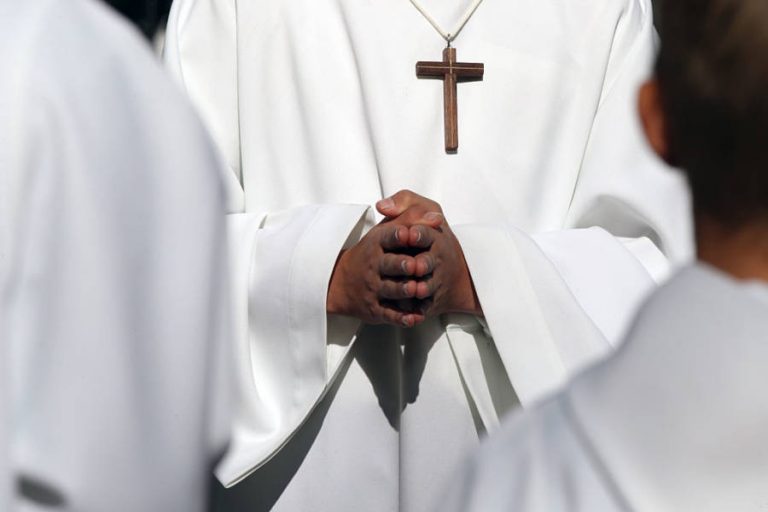
The allegations of rape against Jalandhar bishop Franco Mulakkal has added another infamous incident in the long list of sexual abuse allegations against the church. The incidents that followed the filing of the FIR highlighted another sinister truth beyond the widespread malice of sexual exploitations, rape, child abuse and harassment spread throughout the churches of India and associated institutions. That the culture of protection, defending and even rehabilitation of the priests being prevalent along with a strong mechanism of victim shaming and blatant defiance of rule of law.

When a case against Bishop Franco Mulakkal was filed in June, there was a sudden jump in attempts by the church and its associated ecosystem of shielding and defending him. Magazines published articles singing his praise, Christian organisations held press conferences revealing that they had conducted their own inquiry and found the nun guilty, not the Bishop. Powerful men gave statements vilifying the nun and questioned her character. As of yesterday, it was reported that one of the nuns who dared to stand against the Bishop and question inaction of the church authorities, had been dismissed by the Syro-Malabar church. Finally, just a day before his arrest, after 87 days of the complaint being filed, the Vatican suspended him from his duties as the Archbishop of the diocese of Jalandhar.

The culture of shielding the accused and blaming the victim, however, seems to stem from the very top. The church machinery, especially the Vatican itself, has a long history of not only protecting and shielding priests accused of sexual abuse but going out on a limb to blatantly ignore complaints of sexual abuse, even when it involves children. The sheer level of the church’s apathy for victims of abuse when its own priests are the perpetrators is matched only by its sinister dedication in shielding and even rehabilitating the accused priests.

The investigative exposé of the Catholic Church’s well-oiled machinery protecting priests who have a history of sexual abuse by the Boston Globe in 2002, which was made into an Oscar-winning movie named ‘Spotlight’ is rather well known. For years, the Catholic Church had not only protected the priests, but it had also let them continue as priests, despite knowing that children are being abused. The Globe’s investigation had revealed that the Catholic Church even had a legal machinery in place to intimidate the victims and protect the priests.

Last month, Archbishop Carlo Maria Vigano, former papal nuncio (ambassador) to the United States had levelled severe accusations against Pope Francis, claiming that the pope was aware of the sexual abuse allegations against Cardinal Theodore McCarrick and yet went ahead to promote to a position where he had the power to choose American Bishops. Even Pope Benedict, his predecessor was aware of the allegations but allegedly delayed for years before acting on it.

The Catholic Church faced another major humiliation in Chile, when hundreds of Chileans took to the streets protesting against the papal visit, claiming that he had the knowledge of allegations against Bishop Juan Barros and his involvement in long-running sexual abuse by one reverend Karadima and despite that he went ahead to appoint him as the Bishop of Osorno. Karadima was believed to be Chile’s most notorious paedophile priest. What is more surprising is that despite several cases against Karadima, the Catholic Church had thrown its might against justice system and had ensured that Karadima was never prosecuted for his crimes. Rather, the Vatican had made a token gesture of ‘sending him to a life of penance’.

The authorities in Chile had begun a massive crackdown on churches and abusive priests after several such cases where the Vatican actively indulged in shielding and letting the priests continue to serve among potential victims. The Vatican was accused of misusing its law of ‘Pontifical secrets’ which allows it to protect abusive priests while barring the authorities to prosecute them. What more, the Archbishop’s office in the Chilean capital of Santiago had even admitted that they were asked to cite the ‘pontifical secrets’ law by the Vatican itself. Very conveniently for the abusive priests, the ‘Pontifical secrets’ law even allows the church to withhold the revelations of cases of serious sexual offences, even when the victims are children.

So rampant is the mechanism of shielding and defending that there are reports that claim hundreds of cases of sexual abuse within the confines of Catholic institutions go without even being reported. In 2014, the United Nations had condemned the Vatican, stating in its report that its ‘Code of Silence’ over its own paedophile priests. The research-based report, conducted by children’s rights experts of the UN had lambasted the Vatican, stating that not only the Catholic organisation had let rampant child sexual abuse continue for decades globally, but it had also let ‘known child molesters’ being transferred from parish to parish to cover up their crimes.

Among the very recent cases that have come to light, Edward Hayes, a British citizen had recounted how he was abused and raped by a nun in his childhood and the mother superior of the institution, despite knowing about the abuse had sent another institution in Ireland and had kept tabs on the victim making sure he does not let anyone know of the scandal.

In India, the diocese of Ooty had come under the scanner for reinstating their priest Father Jeyapul, even after he was convicted by a US court and served prison time for raping a minor. Though the diocese later denied that they had reinstated the convicted priest and claimed that they had only allowed him to have accommodation, the case had attracted international condemnation after the victim, a 15-year-old at the time of her abuse, had sued the diocese. She had stated in her complaint that she felt abused and victimised all over again.

Perhaps none of the cases cited above would invoke such disgust and revulsion as that of a fake padre named Paul Henry Dean, a fugitive fraudster from Australia who not only served as a pastor in rural areas of Odisha and Andhra Pradesh for decades, he was even allowed to conduct cataract surgeries and amputations on poor, helpless people despite having no qualification. When allegations of sexual abuse rose against him, he was simply transferred to another location where he continued his abhorrent deeds. The worst part about Dean’s crime was that most of his victims were deaf, mute young boys from hopelessly poor rural areas.

The lists of incidents where the church had defiantly carried out its protection and facilitation of abusive priests while silencing the voices of victims seem to be neverending. In August this year, former Irish president Mary McAleese had alleged that the Vatican had sought a deal with the Irish government to keep their diocesan archives a secret, at the wake of several sex abuse allegations against their priests. A grand jury in Pensylvania had recently stated in its 900-page report that not only the local diocese kept reshuffling the abusive priests from one parish to another, in several cases, but the Vatican itself had also interfered to subvert the local justice system acting against the abusers and kept appointing the abusers. The report pertained to the decades-long sexual abuse of young victims by powerful clergy.

Sexual abuse is a despicable crime. What makes the abuse by church priests even more despicable is that when the perpetrator of the abuse is a man of faith and the victim a believer, it further tilts the power equation. The victim not only is left struggling physically, emotionally and socially for the rest of his/her life, the active participation of the church powers to cast the victim as the sinner and the perpetrator as the man of God adds a whole new dimension of evil to the dastardly act. The Vatican, which hails itself as the leader billions of Christians and often involved in politics and powerplays, needs to urgently end its practice of shielding and helping the priests who are nothing but a blot on humanity itself.

Is Rafale cacophony meant to deflect attention from investigation of Congress’ Pilatus aircraft deal?

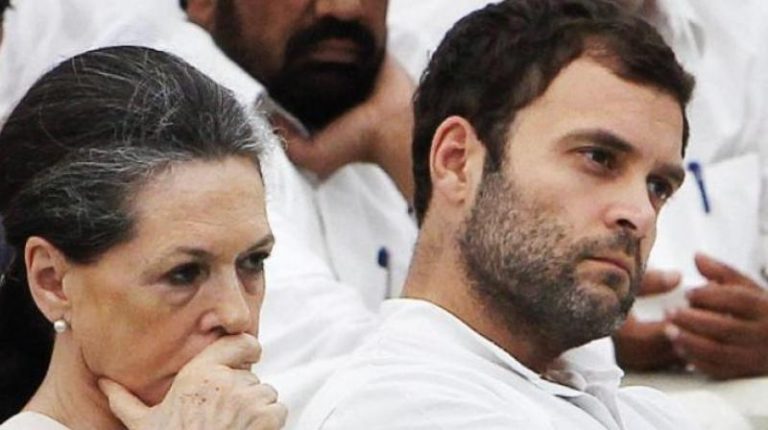
Over the past few months, the Rafale deal has transformed into a political slugfest. The wise men and women of the Congress party and their well-wishers in the media appear to have concluded that portraying the deal as a scam is essential to establish Congress President Rahul Gandhi as a serious politician.

Recently, former President of France, Hollande, added fuel to the fire by claiming that India proposed that Dassault partner with Reliance for the project. However, he later backtracked from his earlier statement and admitted that he was not aware of any such pressure on Dassault. Rahul Gandhi, however, was quick to latch on to Hollande’s allegations and tweeted that Prime Minister Modi himself had intervened to deliver billions of dollars to the Ambanis. There was only one problem with this fantastic story concocted by Rahul Gandhi. There doesn’t appear to be much truth to it. OpIndia.com has published a comprehensive fact-check of the allegations on the Reliance-Rafale controversy.

As it turns out, even during the UPA era pact, Dassault had did not want to tie up with HAL and the deal was in limbo because of this point of contention.

If one was under the impression that the allegations couldn’t get more ridiculous, then they are obviously unaware of antics of the Congress party. The Goa unit of the party has now claimed that Narendra Modi and Amit Shah were not asking for the resignation of the ailing Goa Chief Minister Manohar Parikkar because “he has crucial information on the Rafale fighter jet deal which he could use to ‘blackmail’ them”.

During the entire charade, the Congress party has scored multiple self-goals. At one point, they ‘gheraoed‘ the Prime Minister’s residence on a day when Narendra Modi wasn’t even in the country.

The Congress is perhaps convinced of a scam in the Rafale deal because its own track record of defence deals is rather dubious, so to speak. The Bofors scam, the controversy surrounding Augusta Westland is quite well known.

One such deal that is not very well known is the Pilatus trainer aircraft deal in 2012. In 2016, reports had emerged which claimed that the government had ordered a probe into the Pilatus deal and in July 2017 and it was reported that the CBI had begun an investigation into the Rs. 2900 crore Pilatus deal. The deal allegedly involved an absconding defence dealer, Sanjay Bhandari, and a preliminary enquiry was registered following the examination of an Income-Tax investigation report on Bhandari.

It is pertinent to mention here that Bhandari, purportedly has links to Robert Vadra, husband of Priyanka Gandhi, and Dassault refused to partner with Offsets India Solutions (OIS), whose promoter is Bhandari after they discovered his proximity to Vadra. Confidential documents were recovered by the Income Tax Department during raids on his offices which were part of an investigation in a tax evasion case against Bhandari and his company. Email exchanges between Vadra and Bhandari were also discovered. In January this year, Sanjay Bhandari was declared a ‘proclaimed offender’ by a Delhi court under the Official Secrets Act, due to failure to attend before the court. The defence ministry has since suspended all dealings with OIS.

The Pilatus deal has shrouded in controversy from the time it materialized. Korea Aerospace Industries, its closest rival, had strongly protested the deal claiming that Pilatus had submitted an incomplete bid and demanded its disqualification. South Korea’s defence minister personally contacted A.K. Antony, his Indian counterpart, requesting a “high-level review”. However, these objections were overruled and Pilatus was awarded the contract.

In 2015, after Finance wing of the Ministry of Defense flagged the Pilatus deal, the Indian Express reported, “…nine components, now part of an IAF proposal to pay Pilatus under the maintenance head were not calculated during the request for proposal (RFP) stage before declaring it the lowest bidder.” This is the very same issue the Koreans had raised in 2011. It should be noted that Bhandari is under CBI investigation for alleged malpractices in the selection of the Swiss aircraft, Pilatus PC-7″.

One wonders if the high decibel attack on the NDA government’s Rafale deal by the Congress Party is motivated by a need to deflect attention from the skeletons in their own closet. An investigation that was initiated in 2016. It could very well be that the allegations against Rafale have surfaced as a consequence of the NDA government ordering probes into shady arms deals made by the UPA government. Rahul Gandhi may be a ‘clown prince‘ after all but the strategy appears to be succeeding in serving a greater purpose.

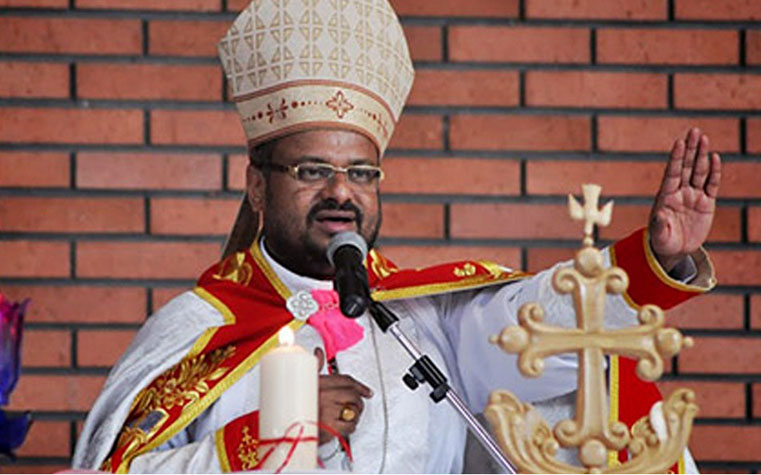
Kerala nun rape case : Accused Bishop to be in judicial custody till October 6th

0

According to the new reports, the rape accused Bishop Franco Mulakkal has been sent to judicial custody till October 6 by Pala Judicial Magistrate Court on Monday. Franco Mulakkal, Bishop of Jalandhar diocese of the Roman Catholic Church had filed a bail petition in the Kerala High Court.

The 54-year-old clergyman was arrested on September 21st finally after they found some incriminating pieces of evidence against Bishop Franco Mulakkal of the Archdiocese of Jalandhar, Punjab, for allegedly raping a nun from Kerala on multiple occasions after the initial delay.


The rape accused was produced in the court on Monday after his bail application was rejected and he was sent to police custody till 24th September. The Pala court heard his petition today and has extended his police custody till October 6th.

The Kerala Police during today’s hearing at the court also revealed its remand report on the Bishop. In the remand report, the police said before the court that Bishop Mulakkal went to the convent with the intention of sexually assaulting the victim. “On May 5, 2014, he illegally confined her in room number 20 of the guest house at around 10:48 pm and subjected the victim to unnatural sex”, the remand report added further.

The police officials also revealed that the Bishop had threatened the nun with consequences if she ever revealed about the sexual abuse.

We had earlier reported regarding the Congregation’s support to the rape accused Bishop and their reference to him as an ‘innocent soul’. Apart from this, an independent MLA from Kerala, PC George had called the nun who has accused the Bishop of the Roman Catholic Diocese of Jalandhar, Franco Mulakkal, of having raped her, is a ‘prostitute’.