Home Blog Page 7171

Old ‘Sikh’ man waking up Muslim neighbours in a viral video might not be a Sikh at all

Recently, a video went viral where it was alleged an old Sikh man was waking up his Muslim neighbours in Jammu & Kashmir for Sehri (last food in the morning after which fasting begins for the day in the month of Ramzan) by beating up a drum. This ‘feel good’ video was widely shared on social media.

In fact, Press Trust of India (PTI) did a story about the video, which was picked up by many large news outlets and the video went viral beyond Jammu and Kashmir. May claimed it as true image of ‘Kashmiriyat’.

A news article in Hindustan Times based on the PTI report
PTI fools Times Now
Times Now declared the video as proof of ‘Kashmiriyat’

While such videos and photos regularly go viral on social media, when it comes to the reporting it as news, agencies are expected to be extremely careful and are also expected to do basic fact-checking. Especially an agency like the Press Trust of India, whose copies are circulated by the big media without fact-check, and who have been found to err many times earlier.

And it appears that PTI has now helped spread a ‘fake news’. Tejinder Singh Sodhi, a journalist with Republic TV has claimed that the video was actually of a Punjabi Muslim from Pakistan and not of a Sikh man from Kashmir as claimed. He also lamented that PTI had not done its due diligence before publishing the story.


The PTI reporter did not dispute the claims by Sodhi, and admitted that his story was based on a video that was ‘shared more than 2000 times on Facebook’.

The PTI reporter, Inayat Jehangir, was reminded that it is a journalist’s job to check the veracity of a story before publishing a story, especially owing to the nature of the internet. However, he continued to justify his story saying that it was about a viral video, and not about the information claimed therein.

Rahul Pandita, another journalist and an author who writes on Kashmir widely, called out Inayat Jehangir and recalled that Jehangir was a habitual offender and had earlier filed a fake story a few months ago of a Kashmiri Pandit being cremated by his Muslim neighbours.


It is indeed shocking that a journalist would assume that it is okay to help circulate unverifiable claims just because it was already trending on social media. Unfortunate, such ‘fake news’ is not called out by many as it helps spread a narrative that is supposed to make people feel good about ‘secularism’.

Drummers going around in the morning waking up fasting Muslims during Ramzan for Sehari is a rather old tradition in Pakistan. Shortly before Fajr prayers, the drummers, also known as Seharkhwaan, walk about in the streets beating the drums and shouting and calling the people to wake up and prepare for a fast. Many of them wear turbans and one can indeed mistake them as Sikh in an unclear video. A clearer picture of such a drummer is below, who is from Pakistan.

Muslim drummers waking up people for Ramzan
Ramzan drummers in Pakistan (picture courtesy)

There has been no apology or retraction, or proof of claims in the video being genuine, from the PTI or the journalist until the time this story was published.

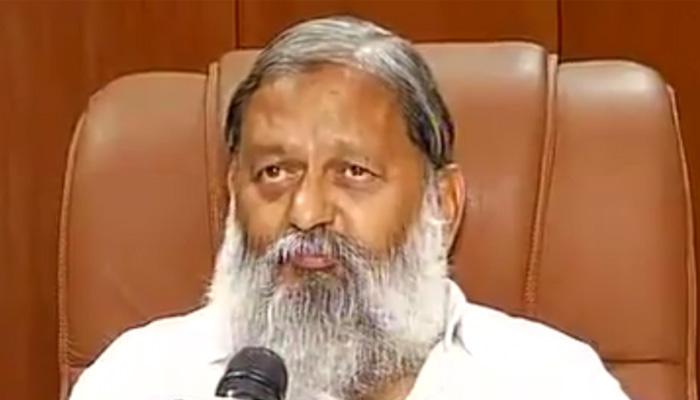
Haryana Minister Vij likens Rahul Gandhi to Nipah virus

Last month it was reported that PM Modi had lectured his partymen on the virtues of silence. He had cautioned party functionaries to keep quiet and not get carried away while making statements on “relevant issues”. He advised that such statements should be left to spokespersons. Perhaps the message did not reach Haryana.

Today, it has been reported that Haryana Cabinet Minister Anil Vij who is notorious for making controversial statements has now compared Congress President Rahul Gandhi to the deadly Nipah Virus.


ANI news too reported the same:


In the battle of social media one-up-man-ship, Vij seems to have crossed a line. Vij, though, is no stranger to controversy. In 2016 he had claimed that the CID was spying on him. He had also commented on another occasion that Modi was a better brand than Mahatma Gandhi:

It’s good that Modi’s photo replaced that of Gandhi’s in the calendar. Modi is a better brand name

He later had to withdraw this comment.

Using a deadly virus to attack a politician does not seem to be a new stunt though in Indian politics. While Kejriwal had called himself a “dengue mosquito”, an NDTV journalist had gotten very excited by the prospect of then Gujarat CM Narendra Modi being possibly infected by the Swine Flu virus:

The War against Maoists: With locals of Naxal affected areas demanding development, victory seems close

One of the most remarkable achievements of the NDA government has been the manner in which it has curtailed and gone on the offensive against the Naxals. Coupled with aggressive anti-terror operations against the armed outfits, massive infrastructure development has robbed the terror org of public sympathy across large areas.


Chief Minister of Chhattisgarh, Raman Singh, said on the 22nd of this month that Left Wing Extremists were opposed to development in Bastar, while the government wants peace and prosperity for the people in the region. He also highlighted the ventures undertaken by his government for the welfare of the people. He spoke of the school buildings which were constructed after the Maoists had destroyed them and the villages which were electrified and the health services that were upgraded.

“In last seven months, seven camps of state and central forces have been established in the core areas of Maoists in Chhattisgarh and they were working in excellent coordination,” Singh said recently. He went on to add, “The Maoist leaders who have earned money by using poor people and manipulating their innocence will be punished.” A special force, ‘Black Panther’ has also been created with the specific purpose of countering Maoists in Chhattisgarh.

Regular searches and operations have been conducted against Maoists by security forces which have yielded rich dividends for the citizens. There has been a steady decline in Naxal activities ever since the NDA came to power. The real change in the policy against Naxals appears to be the targeted initiative to curb their funding. The Enforcement Directorate has managed to attach the assets of numerous Maoist leaders under various laws.

One of the critical aspects of the fight against Naxals was to ensure the declining of support for the terrorists by the masses. It appears that decisive action against the terrorists combined with massive infrastructure development by the government, the war on Naxalism is finally on its last legs.

NCERT to introduce ancient value systems in textbooks from Class VI to Class X, reports Indian Express

The National Council of Educational Research and Training (NCERT) has decided to include the values and knowledge systems of ancient India into their textbooks. A report by Indian Express states that, NCERT textbooks will now have additional information on Ayurveda, Upanishads, Smritis, Yoga and other scientific achievements of ancient India in areas such as Astronomy, Metallurgy, Chemistry and Indian Philosophy.

The history textbooks of Class 6 will now include a chapter on Yoga as well as chapters on six schools of Indian Philosophy, Vaishesika, Nyaya, Samkhya, Yoga, Purva Mimansa and Vedanta or Uttara Mimansa. In the geography book, NCERT has added more information about Aryabhatta which includes his work on the earth’s diameter, solar and lunar eclipses.

The class 6 science book has defined Yoga as “an invaluable gift of the ancient Indian tradition”, while the class 10 science textbook has information about Atharva Veda to demonstrate how sustainable living has always been an integral part of India’s tradition and culture.

The science textbook of class 8 states “In ancient India, our ancestors performed methodical observations of the sky. Their knowledge of astronomy was highly advanced for their time. Passage of the Sun, stars, moon and planets in the sky helped them to devise calendars and almanacs”. Class 8 science textbook, NCERT has now included a chapter on what ancient Indian mythology says about the constellation Ursa Major, also known as Saptarshi. It states, “According to ancient mythology the seven sages who form the Saptarshi, preserve the eternal knowledge of Vedas and explain it to people in every new age.”

Union Minister Prakash Javadekar had mentioned that NCERT will work on giving students a better understanding of Bharat and its “glorious past”. “We will replicate such courses with NCERT because we think our true identity begins with the identity of our nation. Without knowing it, we will not be able to decipher the truth about the world. We are open to discussions about the value of our past,” Javadekar had then said.

These changes are part of a process of reviewing textbooks by NCERT, which includes the addition of new information, correction and data updation of existing curricula.  NCERT has made around 1334 changes in its 182 textbooks. Of these, the science books have seen major corrections in 573, followed by social sciences and Sanskrit wit 316 and 163 changes respectively. These comprehensive reviews of the textbooks are made to the textbooks as per the public feedback received by the council.

Earlier, in a boost to the research on ancient Indian knowledge systems, IIT-Kharagpur had decided to link ancient science and technology to modern sciences. The new course intends to create an enabling environment to know about the contributions of ancient Indian scientists and show its relevance for modern times.

Hindu Mahasabha calls for replacing Gandhi’s picture with Veer Savarkar’s on Indian currency notes

The Akhil Bharat Hindu Mahasabha (ABHM), on the occasion of freedom fighter and Hindutva icon Veer Savarkar’s 135th Birth Anniversary, prodded the Modi government to replace Gandhi’s picture with his, on the Indian currency notes, as reported by ANI.

The Hindu Mahasabha has justified this demand by asserting that Savarkar played a major role in Indian independence movement. Such a demand comes after the chief of Hindu Mahasabha – Swami Chakrapani, had sought a Bharat Ratna for Savarkar.

As per a Patrika report, this demand was made during a Hindu Mahasabha program at Faizabad in Uttar Pradesh. The event began with the Hindu group’s volunteers from the region, cleaning Savarkar’s statue on Pushparaj square. Following this, the national spokesperson of the Mahasabha Manish Pandey garlanded the statue.

While speaking at the occasion, Pandey recounted how Savarkar played a crucial role in helping India gain independence from the British, while never losing hope in hazardous conditions. He thus claimed that Savarkar’s thoughts and attitude could become a major motivation for today’s youths.

During the same speech, he expressed disappointment over post-Independence governments not giving proper respect to his deeds and ideas. He thus claimed that Savarkar should be known as the “Father of the nation” and it was highly unfortunate that he hasn’t yet been awarded the Bharat Ratna or seen his face inscribed on Indian currency notes.

As per a One India report, the Mahasabha and its national president Swami Chakrapani had been in the news recently after the latter had described the Aligarh Muslim University as a “mini-Pakistan” over the whole Jinnah portrait row.

Even though on one hand groups like the Hindu Mahasabha (which was co-founded by Savarkar himself), hold the Hindutva icon in reverence, the leftist establishment, on the other hand, holds him in deep contempt and hatred.

We had reported how this hate includes maligning Savarkar by spreading malicious lies and viciously attacking their own brethren if they dared to make statements praising him.

Big words, liberal hypocrites and silly Nehru bhakti

This is Nitin Pai, the Director of Takshashila Institution. Presumably an educated Indian of the 21st century, with no real reason to carry an inferiority complex.

Untitled.png

For the record, I have absolutely no freaking idea what ‘palimpsest’ means. However, I can use it appropriately in a sentence. Here’s how. Let me show you.

Anybody who judges Prime Ministers by their ability to use the word ‘palimpsest’ is very likely an idiot.

Now Nitin Pai’s elitism, festering along with his colonial inferiority complex, is so obvious in the tweet that we barely need to mention it separately. But, Nitin Pai is not important here. What is important is to note that there *still* exists a constituency, even among well educated and presumably well-travelled urban Indians to bow in reverence before those who use big English words.

Three observations are in order.

(1) First, what does this say about our country 70 years after independence? How much bigger is this constituency among lesser privileged people in India who make the vast majority? Is that not a frightening thought?

(2) Second, if this is the impact of Nehru’s big English words in India of 2018, can you imagine the impact it had on people in the 1950s and 60s? Does this explain the generations of historians who have venerated the Nehru-Gandhis?

(3) The third is a question I have always wanted to ask of historians, hagiographers and other intellectuals. What is it about English proficiency that it is venerated as a marker of intellectual ability? Why not proficiency in some other subject, say Math?

I know that big words is the subject of this article, but I could not bring myself to move on without showing you Nitin Pai’s next tweet.

Untitled.png


What? Scrounged around for bits of paper? Written entirely from memory? The level of gullibility in this tweet would give competition to disciples of Baba Ram Rahim.

A simple google search would reveal that the British even built Nehru and his friends a special badminton court in jail premises. How foolish would you have to be to think that he would “scrounge” around for paper …  and that he would actually find 1000 pages of paper while “scrounging” around, or that he would write 1000 pages on history from memory?

Believe it or not, I am not mocking Nehru here. I am glad the British treated him well in prison. I am mocking his gullible followers who think he was capable of superhuman feats. What is next? The great Nehru, like dear leader Kim Jong Un, learned to fly an aeroplane by scanning the manual for a few seconds?

Back to the topic of big words. If you ask me, language is about communication. Language is a living breathing thing. If my words fly over your head, then I am not speaking to you, I am talking at you. That might be ok for devotees like Nehru used to have/still has, but it is a misfit for the young, irreverent and aspiring India of the 21st century.

At the same time, language is also a marker of status and culture, a way to indicate place in society, and a way for societies to record their history. Preserving the beauty and subtlety of a language becomes a way to preserve culture.

Here is where I have noticed an obvious double standard of Indian liberals. You will notice their desire to “cheapen” Hindi (and most other Indian languages) whereas they advocate for the highest standards for the Queen’s English … and Urdu.

When it comes to English and Urdu, you will see Indian liberals discard all their interest in the “language as a means of communication,” along with all their preference for simpler words that everyone can understand. Nowhere is this more apparent than the absolute bullying that Chetan Bhagat receives from the literary community. Why? Because Bhagat’s English is peppered with Hindi words and often shows scant respect for the Queen’s grammar.

But when the same arguments for high grammar and purist choice of words are applied to say Hindi, the literary liberal performs a U-turn. The proponents of say “Shudh Hindi” are then painted as regressive, closed-minded and deserving of ridicule.

Let me give you an example from this India Today discussion on the Hindi language with the ultimate man of words: Javed Akhtar Saab.

[youtube https://www.youtube.com/watch?v=FQLbV5Yjs5Y?version=3&rel=1&fs=1&autohide=2&showsearch=0&showinfo=1&iv_load_policy=1&wmode=transparent]

Here you will see (watch from 12:50) as Javed Akhtar frowns and then bashes the poor anchor for using a simple Hindi word “ushma (ऊष्मा)” (warmth), demanding a “simpler” word in its place. According to him, any effort to use “pure” words like ‘ushma’ will choke our Indian languages to death.

If you ask me, ‘ushma’ is a fairly simple word and most Hindi speakers would know its meaning. But this is not about the word, this is about the attitude. Where are the liberals who insist on the ability to use the English word ‘palimpsest’ in a sentence? How many Indians know the meaning of ‘palimpsest’. I’ll bet many many more Indians understand ‘ushma’.

But ‘ushma’ is a Hindi word. ‘Palimpsest’ comes from the Queen’s language. That’s the big difference.

There’s author Anuja Chauhan on the panel as well, who jumps in (watch from 15:10) to explain just how terrified she is of being judged by people who speak ‘Brahmanical Hindi’. First of all, how out of touch does an English speaking liberal have to be to give a sob story about the fear of being looked down upon for poor Hindi speaking skills? Does she know how many crores of young Indians across the heartland are scared to share their ideas because they fear being mocked for their halting English?

Secondly, what’s with Hindi being called ‘Brahmanical’? Does language have a caste? How would liberals react if somebody were to say that Urdu is Islamic?

It again boils down to the double standards. Shudh Hindi (or any Indian language except Urdu) is to be bashed and despised, its vocabulary is to be shunned and it is to be vilified with religious and caste tags. But high brow words in English and Urdu are desirable status markers and don’t you dare connect Urdu to the Muslim community.

Here are some lyrics penned by Javed Akhtar for the mass market Bollywood movie Jodha Akbar:

“In Lamhon Ke Daaman Mein
Pakiza Se Rishte Hain
Koi Kalma Mohabat Ka
Dohrate Farishte Hain

Khamosh Si Hai Zameen Hairaan Sa Falak Hai
Ek Noor Hi Noor Sa Ab Aasman Talak Hai
Nagmein Hi Nagmein Hai Jagti Soti Fizaon Mein”

And to think he threw a fit over the use of the Hindi word ‘ushma’! Presumably all of us common folk use phrases like “Pakiza se rishte” in our daily lives. How many people know what ‘pakiza’ means Javed Saab? How many people use words like ‘falak’ and ‘talak’ and ‘noor’ and ‘daaman’ and ‘nagmein’ in our daily lives? How come you would use such words in a Bollywood song?

Ultimately, what makes a language or a word living or dead is whether it is used. Why makes Javed saab push a word like ‘pakiza’ into circulation but frown on the word ‘ushma’? Why the need to resurrect words such as ‘palimpsest’ or ‘farrago’?

The liberal double standard is not about making the language more open or closed. It is about creating two different castes among languages. English and Urdu are to be the high-status languages. Hindi, Bangla, Gujarati, Punjabi, Tamil, Telugu, etc are supposed to occupy the low rung. The agenda is obvious.


Opposition rejects now-a-rally-now-a-vacation Rahul Gandhi as Prime Ministerial candidate

Rahul Gandhi, who has left Karnataka on the edge and gone with his mother for her ‘annual health check-up’ abroad, has rubbed the Opposition the wrong way after he reportedly declared his prime ministerial aspirations.

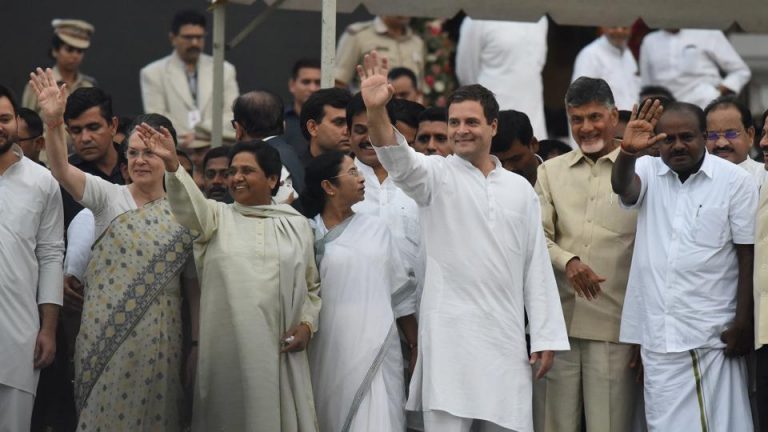
Andhra Pradesh’s Telugu Desam Party’s minister Kalava Srinivasulu, on Sunday, announced that if the party goes for pre-poll alliance then the party will not accept Congress President Rahul Gandhi as the prime ministerial candidate for the 2019 elections. Claiming that TDP has never had an equation with Congress, he said that if an alternative to join hands with Congress comes up, Rahul Gandhi will not be the prime ministerial face of a united front. Interestingly, TDP’s Chandrababu Naidu was seen sharing the stage with Congress President Rahul Gandhi during the swearing-in ceremony of Karnataka Chief Minister HD Kumaraswamy.

This comes close on heels of leaders of other regional parties rejecting Rahul Gandhi’s self-nomination as the prime ministerial candidate.

It is speculated that Bahujan Samaj Party, which has 4 seats in Rajya Sabha and zero seats in Lok Sabha, wants Mayawati as the prime ministerial candidate. That is not all! West Bengal Chief Minister Mamata Banerjee who has on quite a few occasions snubbed Congress President Rahul Gandhi, has a huge fan following on social media which believes she is fit to become the Prime Minister in 2019. In fact, she has even pitched for a federal front and has met with Opposition chief minister, K. Chandrashekhar Rao, N. Chandrababu Naidu, Arvind Kejriwal and Naveen Pattanaik. Taking a leaf from this drama, Sharad Pawar, too, has ‘warned‘ Rahul Gandhi over his remarks urging him not to make such ‘premature remarks’ before the parliamentary elections are concluded.

Whether it has anything to do with the captain of the sinking ship Rahul Gandhi sinking it further by bringing down seat tally in Karnataka from 122 in 2013 to 78 in 2018 or having lost 3 consecutive elections in 6 months of him taking over the top post in Congress, one would never know!

Former ISI chief who praised Vajpayee, barred by Pakistan army from leaving the country

Former ISI chief Muhammad Asad Durrani, who had previously heaped praises on former Prime Minister Atal Bihari Vajpayee has now been barred from leaving Pakistan, as reported by Times of India.

As per the report, the Pakistan army has also ordered an inquiry into the book titled The Spy Chronicles: RAW, ISI and the Illusion of Peace, which records conversations between Durrani and former RAW chief AS Dulat. It was this book which records Durrani’s praise of Vajpayee, and has been called into contention by the Pakistani army under the “military code of conduct”.

This praise included him wishing for Pakistan to have a prime minister like Vajpayee. In our report, we had also questioned how Pakistan would react to the claims made by Durrani, and now the answer is here.

The trouble seems to have begun for Durrani on Saturday when Asif Ghafoor, the official spokesperson of the Pakistani Army tweeted that Durrani was being summoned to the General Headquarters (Pakistan Army) on 28 May to explain the positions taken by him in the aforementioned book.

Following the questioning on Monday, Ghafoor informed that following the meeting, a detailed probe has been ordered in the matter by a formal court of inquiry. Besides this, the interior ministry has been given a directive to place Durrani’s name on the Exit Control List (ECL):


As per the TOI report, even though the views considered as controversial weren’t revealed by the army, some of the shocking claims by Durrani included the claim that erstwhile Prime Minister Yousaf Raza Gillani was completely on-board with the US on the Navy Seals operation to eliminate Osama Bin Laden in 2011.

He has also claimed that Kulbushan Jadhav case has been mishandled by Pakistan.

Sordid tale of Congress’ sanction and hateful anti-Hindu brainwashing of children by Teesta Setalvad

Republic TV in a report has claimed that they have accessed an affidavit filed by the Gujrat police on May 21, 2018, that has made sensational allegations against Teesta Setalvad and her husband Javed Anand. The affidavit reportedly states that they were misusing their positions as members of the CABE (Central Advisory Board of Education), not only in taking illegal perks for personal benefit but also using the Khoj project literature to spread religious hatred and enmity between communities.


According to the report, in the year 2010 Teesta Setalvad’s Sabrang Trust pushed a curriculum for primary school children in Gujrat and Maharashtra. NCERT rejected it calling it venomous and divisive in nature. But the then HRD ministry headed by Kapil Sibal approved it. For close to 3 years between 2010 and 2013  thousands of children were reportedly taught the ‘venomous syllabus’.

Teesta Setalvad is currently embroiled in a funds embezzlement case involving the same NGO (Sabrang Trust). She has been charged with using the NGO’s funds for her personal benefit. But the Republic report claims that a more sinister issue is at the bottom of it. Sabrang Trust allegedly carried out communal brainwashing of primary school children under the Khoj project. According to the report, the literature proposed by the Khoj project contained narratives of the Babri Masjid demolition and supposed saffronisation taking over the entire country. A former official of the NCERT has confirmed to Republic under the condition of anonymity that even though the NCERT rejected it, Kapil Sibal bypassed the decision and approved the literature for textbooks of primary schools. The Sabrang Trust was assigned the project under the schemes of the Sarva Shiksha Abhiyan.

A course module examined by Republic from the website of the Khoj project included a creative articulation exercise that asked children to describe ‘My Ideal Religion’ according to modern worldviews.

In 2016, a three-member panel set up by the Ministry of HRD comprising Supreme Court lawyer Abhijeet Bhattacharjee, the then Gujrat Central University Vice-Chancellor SK Bari and a senior official from the ministry had concluded in their report that Teesta Setalvad and her organisation had tried to ‘Mix religion with politics’ and attempted to spread religious disharmony through their curricular material which was sanctioned by the then UPA government. The then UPA government had also given a grant of Rs 1.4 crores to Setalvad’s trust which she is accused of embezzling.

The panel agreed that a prima facie case exists against her under sections 153A and 153 B for spreading religious disharmony. The panel also stated that education had never been the agenda of the Sabrang Trust in any of their documents and even questioned their eligibility for receiving the said grant and designing curriculum for children, most of whom are economically backward. The panel also opined that Setalvad was under brazen contempt of Supreme Court in her writing.

The panel stated that a sizable portion of the curricular material of the Khoj project contains explosive literature which reflects hatred and venom and that calls for the above-mentioned sections of the IPC. In their report the panel had also reportedly agreed on what the Republic TV report claims, that the Khoj project’s material was cleared by the HRD officials despite rejection by the NCERT, it included that there must have been some sort of ‘compulsion’ or suggested action against them to clear the project, hinting that the orders might have come from higher up.

It is notable here that the case against Setalvad was registered on complaints of her former aide Raees Pathan. Pathan had reportedly claimed in his complaint that Sabrang Trust’s publications spread dissatisfaction among the minorities in the country and also indulged in anti-national activities.

Setalvad is also under probe for alleged FCRA norms violations. She had earlier been booked for collecting funds meant for riot victims and diverting them for personal use, for misguiding and luring a key witness in the Best Bakery case and also for sharing objectionable pictures of Hindu Gods. She is currently fighting against arrest. Last week after a sessions court in Ahmedabad had rejected their bail plea, Teesta and her husband had moved to the Gujrat High Court. The Gujrat HC has yesterday extended their protection from arrest till June 13th.

Unmasking Sheldon Pollock’s blatant and unabashed Hinduphobia

Sheldon Pollock, the academician-cum-activist who was at the helm of supporting the likes of Kanhaiya Kumar and Umar Khalid, is back in news. He is being projected as a victim in the Indian media.

Pollock was exposed threadbare by Rajiv Malhotra in his book The Battle for Sanskrit. The book portrayed Pollock’s views that are marked by extreme Hinduphobia. Pollock met Malhotra during the writing of the book, requesting him not to write the book, and asked Malhotra if they could “work something out”, but Malhotra did not relent and did what he had to do.

Before the book was released, Pollock was considered as a great authority on Sanskrit and was awarded Padma Sri by the Congress-led UPA government. After the release of the book, a group of distinguished academicians justifiably argued for the removal of Sheldon Pollock as a mentor and general editor of Murty Classical Library. Pollock is using these steps to portray himself as a victim without vindication of his Hinduphobic positions.

In these recent interviews, the interviewers did not ask Pollock any tough question. It is understandable if the aim of these interviews is to portray Pollock as a divine blessing in the interest of conserving India’s own culture, but the questions are grossly inadequate if we want to sincerely assess Pollock’s scholarship.

There is no doubt about the fact that Pollock knows Sanskrit. He boasted about this fact and said that he is being criticised by those who are ignorant in Sanskrit. In his words: “I’m happy to talk about Sanskrit with people who actually know Sanskrit.”

However, Pollock writes about Sanskrit in English and any traditional scholar of Sanskrit would be surely embarrassed if she knows that Pollock blames the Sanskrit language and its study for the Nazi Holocaust, literally!

Why shouldn’t the interviewer have asked him the question?

Any genuine scholar of any discipline would love to promote that discipline, isn’t it?

But for Pollock who strongly opposes any revival of Sanskrit, when he was asked about teaching Sanskrit as an elective in IITs, he was circumventing the question but he never welcomed this promotion of Sanskrit learning.

An ordinary Indian would not be able to detect this much from the interview because of verbal jugglery of Pollock. His jugglery becomes understandable the moment we knew his views. His words that apparently lament lack of Indian scholarship in Sanskrit, are actually marks of his pride that as an American he controls the channels of Sanskrit scholarship in the West. Naturally, any promotion of Sanskrit would develop Indian expertise on this language to eventually dethrone him from his agenda-setting position.

While Pollock goes on with his project of demonising Hindus, he ironically accuses Hindus of demonising others. He categorically states that the idea of Rama-worship and Rama temples are only to demonise the Muslim invaders of medieval age in order to create a Hindu resistance against the invaders. Apart from dubiousness of his conclusions, he questions the Hindus’ very fundamental right to self-defence against foreign invaders through this statement. What can be a bigger sign of Hinduphobia?

How great is the scholarship of Pollock? He says, circa 260 BC as the birth of writing in India, whereas in reality extensive evidence of writing is found in Harappan sites (second or third millennium BC).

Pollock takes a moral high ground with his words “I was reluctant and said to them that nothing is sacred here except for questioning”. If questioning is so sacred to him, why doesn’t he face Malhotra in a public debate instead of calling his opponents’ behaviour as “marked by toxicity, vituperation, deceit and libel”. If Malhotra’s book is really so, he is free to file a suit in a court of law, isn’t he?

Pollock is entitled to his prejudiced views such as Hindus being guilty of Nazi Holocaust etc., but he has no right to falsely accuse Hindus of discrimination: “I’m a target because I’m an outsider who dares to speak about the inside”.

This is an absolute bunkum. Hindus forever respected outsiders who are genuinely empathetic to their culture. Sister Nivedita, an Irish woman, was respected by all one century ago. David Frawley, a fellow American of Pollock, is highly respected by Hindus as a person embodying the Vedic wisdom. I can go on and on with more and more names – Koenraad Elst, Michel Danino, Francois Gautier, Maria Wirth. Pollock is questioned only because of his hinduphobic views nothing else.

The western scholarship of other civilisations is political to the core, Edward Said observed in his book Orientalism. The same tradition lives on with Pollock and his associates. Jeffry Kripal wrote a book Kali’s Child on Ramakrishna that did a Freudian analysis of Ramakrishna to detect homoerotic strain in Ramakrishna’s life. This scholarship was criticised by noted academician S. N. Balagangadhara as very shallow and insensitive. His advisor, Wendy Doniger, too did a similar questionable analysis of Hinduism.

While one might say that these are figments of sincere efforts of scholarship with shallow methods, I will question the sincere part. The Freudian analysis of Prophet Muhammad is marked by its absence in the American Academy. Therefore, the room for sincerity is less. The rising star of this gang, Audrey Truschke, shockingly claimed that Sita called Rama “Misogynist Pig”. This author of a biography on Aurangzeb is hesitant to categorically call him a bigot or even intolerant but quick to pronounce damning adjectives on Ram.

Hinduphobia—pure and simple.