In recent days, the Yogi Adityanath led UP government has adopted a no nonsense approach towards crime in the state, and hasn’t even shied away from taking the “encounter approach”.
It has been reported that until the 31st of December, 30 notorious criminals were eliminated by the police force and over 2000 criminals were arrested including 1688 accused who carried rewards. As many as 15 encounters were conducted in the space of 48 hours in February, which led to the arrests of 24 wanted criminals and the death of a gangster.
The clampdown has also been witnessed in UP’s Kairana which witnessed a mass Hindu exodus. Here wanted criminals who used to extort Hindu businessmen are either being arrested or eliminated.
Now the Yogi government seems to have turned its attention to the “cheating mafia” in the state following which a whopping 5 lakh students have dropped out of exams in two days.
As reported, the Yogi government has clamped down on the “cheating mafia” which has infested the exam conducted by Uttar Pradesh secondary education council. Even though the exam has merely entered the third day, about 5 lakh students have opted out of it. As a result of the strictness, subjects like Hindi and Home Sciences have become troublesome for certain students.
On the first day of the examination, the state’s secondary and higher education minister Dr. Vinod Sharma made surprise checks in four districts of the state and ordered the installation of CCTV cameras in the classrooms.
Besides this, a special task force comprehensively clamped down on cheating in Allahabad which included arresting three people including a school principle, thereby sending a strong message. Also in the resultant action about 144 impostors were caught in a single day.
Issuing numbered answer sheets, the number which will be noted in a register to avoid substitution of the written scripts. This measure has been undertaken in 50 districts prone to cheating.
Security cover while answer scripts would be transported from schools to checking halls.
District magistrate, departmental officials to be held accountable in case mass cheating is caught.
Providing district school inspectors secret information via local intelligence units.
Reports claim that as a result of such measures, the cheating mafia has suffered a blow thereby boosting the state government’s efforts to ensure cheating-free exams.
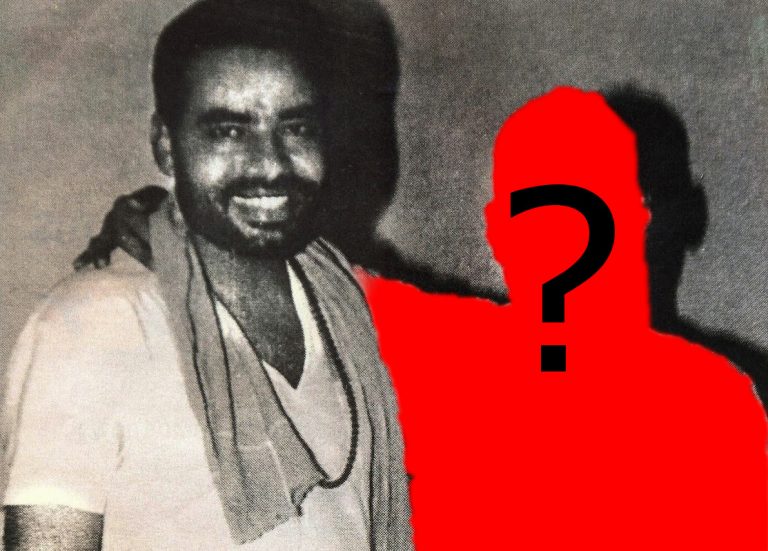
Jignesh Vadaraja is an unknown name in media and national circles. But if you happen to visit the lanes of Halol, Gujarat, the industrial hub, Vadaraja is known to all and revered by all. In spite of this, a simple google search will throw up exactly zero search results for Jignesh, such is the shroud of secrecy over this persona. We could not even find a picture of Jignesh online.
So who is this Jignesh? Jignesh is currently in the unenviable position of being a supplier to at least 4 PSUs in Gujarat, some of which are direct competitors to one another. Normally, PSUs, sign agreements with their suppliers restricting them from supplying the same products to competitors. But Jignesh bhai not only supplies to multiple PSUs, but also some private companies.
How did Jignesh bhai scale such heights of business?
It all started in Vadnagar a few decades ago. He and the current PM Narendra Modi were batch-mates for 2 years in the local middle school. They were never in the same class, but they shared a unique bond: Both were the best openers for a game of gully cricket in their mohalla. Locals who witnessed that era spoke to us saying that Jignesh and Modi opened for the same team and in the process, notching solid partnerships. Stats pulled up from Cricinfo show how Modi picked Jignesh in his team 73% of the time.
Artist’s impression
In spite of their clearly close association, Jignesh today refutes any allegations that his meteoric rise in business is due to his proximity with Modi.
He says: “Modi was my batch-mate and cricketing partner. I have also had water at his house a few times after a match. But all these were just casual interactions and have no connection with my business”.
We move to 2003 in Gujarat, when Modi had just become the Chief Minister. While Modi had reached the pinnacle of state politics, Jignesh had a small family run shop in Vadnagar itself. Just as Modi’s rise in politics started, Jignesh’s life also changed for the better. Firstly, he moved from Vadnagar to a nondescript town called Halol. Within a few years, the sleepy town of Halol would emerge as a industrial hub due to Modi’s policies and Jignesh would directly benefit from this.
Once in Halol, Jignesh set shop with a meagre capital of Rs 2,000 (adjusted for inflation to Rs 50,000). He employed just one person, who happened to be his younger brother. Miraculously, his fortunes changed within a few years as all around him, private and public enterprises began setting up industries.
Jignesh, who had acquired his shop for a very cheap price, now suddenly owned an enterprise in a commercial hub. This coincided with his childhood friend Modi’s multiple business summits promoting Gujarat as a place for industry to come and set up shop.
Once factories and offices sprouted, Jignesh’s business started flourishing. From supplying to local town-folk, Jignesh began playing in the big league now, getting orders after orders from executives of multinational companies. Soon his “fame” spread, and Modi’s chum began getting orders straight from the corporate entities themselves. Within a few years, Jignesh’s products were found in PSUs as well as Private companies, often rivals.
The terms and conditions of these orders are most intriguing. Generally PSUs pay their suppliers after a 90 to 180 days credit period. Jignesh on the other hand gets paid upfront before he hands off his wares. We asked companies for any KYC details maintained by them, but shockingly, none of them had any documents about Jignesh, although none hesitated in calling him a “regular supplier”.
It is standard practice for PSUs to buy any material only after obtaining bids, expression of interests, etc. The most competitive bidder at the least price usually wins the order. But all PSUs we spoke to, admitted candidly that Jignesh was not subjected to such due processes. In fact, they even acknowledged that some of Jignesh’s competitors had the same product at cheaper rates. When asked about this discrepancy, a PSU head honcho remarked ” Jignesh’s products are just better”. He however had no scientific tests by independent authorities to confirm that Jignesh’s products were superior, hence preferred.
Another oddity in this “verbal contract” of supply is that the rate which Jignesh charges varies regularly. Some of his main raw materials, which are under significant government control, routinely increase in price. Jignesh promptly passes on the additional cost to his customers. Consumer Affairs Minister Ram Vilas Paswan expressed his inability to control the prices of these raw materials stating that such variations in prices were “seasonal”.
Backed by such regular flow of orders from PSUs, Jignesh has managed to bag a substantial borrowing. Coincidentally, these loans from national banks, were taken by Jignesh post 2014 i.e. after Modi’s rise to the top of the food chain. The entire borrowing of Jignesh is fully unsecured, with no primary security and no collateral. How is this possible? All the loans are under a scheme by Modi’s central government. In fact, it is Modi’s pet scheme and its odd how it has directly benefited his close childhood friend’s business.
We asked Jignesh about how he managed to secure loans from Government banks, at a time when Modi is the PM, under a scheme which the PM has himself devised. Jignesh simply stated that the loan was given by the banks looking at his creditworthiness and hard-work.
Jignesh is a supplier to PSU’s and private companies. He has his corporate headquarters in Halol. He has raised many loans (unsecured) from banks. Yet, none of his financials are publicly available. An undercover reporter also noted that he may be involved in tax fraud, since his sales invoice is undated, and does not mention either his PAN or GSTIN.
As per Jignesh himself, most of his business is in cash, and yet he claims that during demonetisation he did not face much hassles since his cash balance at 8th November was a few thousand rupees, with no Rs 500 and Rs 1000 notes. Modi’s pal had it easy street during demonetisation and he did not receive a single notice from Income Tax department either.
The extent of Jignesh’s influence in the power corridors of Halol can be gauged from the next fact. Normally, suppliers line up the offices of PSU head honchos, asking for supply orders. But the big guns of PSUs themselves make a beeline at Jignesh’s premises. Many a times these executives themselves collect the orders instead of Jignesh delivering them. It is apparently “good exercise” for the bosses, hence they personally visit Jignesh.
Jignesh’s industry too has received a lot of direct publicity from PM Modi himself. In a recent interview, PM Modi spoke at length about this industry and extolled to the nation, the virtues of being in this line of business. At the time of going to press, it was unknown whether Jignesh’s business received a major boost in sales thanks to his friend’s endorsement. The only other time Modi associated with a brand, was when Reliance used his photo to promote their 4G services.
Although Modi has backed his product, research suggests that the product comes from a super set which has been known to cause health issues in people. One of the crucial raw materials in his product is a proven carcinogen. Yet Jignesh claims he has never once been visited by any regulatory authority, not in Modi’s tenure as CM nor in his tenure as PM.
Thanks to his good “fortune”, Jignesh has diversified into other businesses.
Firstly, he has begun a segment where he now produces one of the raw materials required by his main business, thus creating a vertical integration in his business. He has also begun dealing in ancillary products and has expressed desires for more horizontal integration which will increase his margins and appeal among customers.
While Jignesh Vadaraja is famous enough, if you ask for Jignesh “Patel” no one will know him. This is because Jignesh Vadaraja is actually a pseudonym of Jignesh Patel. Why does Modi’s close friend have 2 names? Why does anyone need 2 names?
Jignesh claims that he acquired the alias of Vadaraja since he was the “King of Vadas” in Halol. As mentioned above, Jignesh’s vada-pav stand in Halol has been flourishing. All the same, the amazing similarity of Jignesh’s new name and the name of a US based journalist who has been sued by Jay Amit Shah cannot be ignored.
In times when the country’s GDP is in doldrums, sale of Vada pavs at Jignesh’s stall in Halol are booming. Backed by supplies to major PSUs (some have their own canteens), Jignesh has raised major loans under the Mudra scheme, which was created by Modi. Whenever onion and tomato prices rise, he raises his selling price. He requires no tenders & no bids. He gets paid in hard cash, upfront. He does not have a GST number. Business heads personally come to eat and collect vadas at his stall. But still, Jignesh claims all this good fortune has nothing to do with his friendship with Modi.
Jignesh’s stall, where customers from minority section are literally told: ‘Tumhe uski keemat chukani padegi’ (You will pay)
– Mohini Singh left a very successful career in psephology to become an investigative journalist with a leftist rag called theliar.in. She is famous for accurately predicting the outcome of UP Assembly election
Narendra Modi has reached Tripura to campaign for the BJP-IPFT alliance in the Assembly Elections of the state to be held on 18th February. In a rally in the Sonamura town of Tripura, the Prime Minister urged the voters to shun the CPI(M) and choose the BJP to secure a bright future for the state.
Narendra Modi highlighted the Rose Valley scam and the alleged role of the CPI(M) government in it. He also spoke about the climate of fear created by the party in the state alluding to the recent deaths of journalists in the state. Narendra Modi spoke of the BJP’s vision for the state and emphasized his party’s focus on the 3 Ts for Tripura: Trade, Tourism and Training of the Youth.
Ab Manik nahi chahiye, Manik se mukti le lo, ab aapko hira chahiye. Hira ka H matlab Highway, I matlab I way(digital connectivity) ,R matlab Roadway, A matlab Airway: PM Modi in Tripura’s Sonamura pic.twitter.com/MdHQFPh4Hp
Narendra Modi is expected to address another rally in Tripura on the 14th. Chief Minister of Uttar Pradesh, Mahant Yogi Adityanath is also expected to attend rallies on the 11th and 12th. A host of other BJP bigwigs are also expected to visit the state as election fervour reaches its peak. A recent opinion poll gave the BJP-IPFT alliance the edge ahead of the elections.
A Twitter user who wished for the assassination of Prime Minister Narendra Modi when he was Gujarat’s Chief Minister, deleted her tweets after her old tweets resurfaced causing her embarrassment. Taking a jibe on the then Gujarat Chief Minister, Narendra Modi, the user named Harnidh Kaur had tweeted in April 2013 that the only similarity between Mahatma Gandhi and Modi would be if someone assassinates Modi. Kaur writes for Shekhar Gupta’s website The Print.
In the now deleted tweet, Kaur had appended ‘seriously’ as if making it clear to her readers that she was not being facetious while wanting Narendra Modi assassinated.
Many users pointed it out to Shekhar Gupta, Founder and Editor in Chief of The Print and asked him if he would like to clarify or take action against Kaur, who is published by The Print:
Earlier, too, Kaur, who identifies herself as an atheist and a Sikh, alternately depending on mood of her tweets, had deleted her tweets abusing Lord Ram, perhaps hinting that her hatred was not limited to Narendra Modi, but for the community that he belongs to:
However, Kaur is not the only columnist associated with newly launched left-leaning portals to wish death upon the Prime Minister. Like Kaur, in January last year, a Times Now journalist, Prashant Kumar, had also wished for the assassination of Modi.
Earlier, Suprateek Chatterjee, a columnist with The Quint had also tweeted death wish on Modi. That is not the only time The Quint has given a platform to people who go upon wishing death and political assassination. Vikas Malhotra, an author at The Quint, too preferred political assassination (of PM Modi) to create history. While The Quint has distanced itself from these columnists and removed their articles, no action was taken against Kumar of Times Now.
One wonders whether Gupta will take any action against his ‘murderous’ columnist.
In a major breakthrough, the UP police have successfully arrested the absconding brothers of main accused Salim in the Chandan Gupta communal murder case, on Wednesday. The brothers named Waseem Javed and Naseem Javed too are amongst the 18 accused in the matter.
Chandan was brutally killed in the communal violence which was triggered on Republic Day following a Tiranga yatra by the ABVP. While all the details of the whole incident are yet to emerge, Chandan’s father who since then has received death threats, alleged that his son was killed for refusing to chant “Pakistan Zindabad”.
The family of Chandan has since then openly challenged those opposed to the Tiranga march by unfurling a 50 feet high national flag on their terrace:
The police in this matter were quick to act and on 31st January had arrested the main accused Salim and 120 others. The two brother of his Naseem and Waseem though continued to evade arrest and have now finally been apprehended.
As per a tweet issued by the Kasganj police, it along with the special operations group team arrested the duo from near Hazara nahar on Charrah road. The police have also recovered two country-made rifles and two cartridges from them.
Besides this, the police have also managed to recover the weapon used to kill Chandan Gupta on Wednesday. Also, a country made a weapon, it was recovered based on the information provided by Salim during interrogation.
Local reports have claimed that the station in-charge Ripudman Singh received information that Naseem and Waseem were standing near the Hazari nahar bridge and were planning to flee to an unknown destination. As a result a force was rushed to the spot and the two were successfully apprehended. They were brought in front of a court in the evening and from there, were sent to the jail. The two brothers as per the report have confessed to their crime during interrogation.
During the interrogation, they have allegedly claimed that they were angered by some hooting carried out during Tiranga Rally. As a result of this, they pelted stones and fired shots at the rally.
Classified CBI (Central Bureau of Investigation) status report ‘draft’ on the 2G scam has been reportedly found by the Enforcement Directorate (ED) from the house of Congress leader P Chidambaram’s house. The status report was reportedly submitted by the investigative agency to the Supreme Court in a sealed cover to the SC double bench of Justices GS Singhvi and K Radhakrishnan on August 1, 2013 when Chidambaram was a Union Minister in the UPA-2 cabinet. Such reports from investigative agencies are not meant to be made available for anyone else except the Supreme Court.
The draft was reportedly found by the ED during the raids at Chidambaram’s Jor Bagh residence in Delhi on 13th January. According to Economic Times report, an ED official on condition of anonymity, said, he document seized was an “unsigned draft” and contained only those portions of the CBI report to the apex court that dealt with the Aircel-Maxis deal. The ED has now asked the CBI to give its opinion on the draft even as the CBI looks at investigating how the report leaked.
ED found an unsigned copy which means report was leaked from CBI. ED had brought this to knowledge of CBI. Content of the report has been verified by CBI. CBI has instituted an inquiry on how the report reached the residence of P Chidambaram: ED Sources
According to Daily Pioneer, the CBI was to place another detailed status report in a sealed cover before the Supreme Court’s 2G Bench of Justices Arun Mishra and Amitava Roy on 23rd January. On the last date of hearing on 4th January, the Judges insisted that CBI should file the status report on 23rd January. However the 23rd January hearing did not take place as one of the Judges was on leave. So, it seems like Chidambaram was privy to the report before the investigative agency put it up before the Supreme Court. The Supreme Court has shown its displeasure on the delay in Aircel-Maxis probe. As per this report, the CBI Director has ordered an internal probe on the same. Daily Pioneer says that according to their sources, the report was leaked to Chidambaram by a serving Joint Director of CBI in connivance with an IPS officer from Himachal Pradesh cadre.
The report further says,
Chidambaram acknowledged the seizure of the CBI’s draft status report and also put his signature on the receipt of seized materials handed over to him by ED investigators. But he did not satisfactorily answer how the CBI documents came to his custody, sources said.
The draft report details Chidambaram’s role in the scam and his collusion with then Telecom Minister Dayanidhi Maran in illegally executing the Aircel-Maxis deal. The report also spoke about the statements of Finance Ministry officials on the role of Chidambaram in approving the Maxis’ takeover of Aircel without sending the files to Cabinet Committee on Economic Affairs.
CBI’s internal vigilance team is checking the role of officers from Superintendent-level in the Delhi’s Anti Corruption Branch on the leakage of the draft status report. CBI’s top brass first started doubting the “existence of moles within” when it’s Look Out Circular (LOC) against Chidambaram’s son Karti was ‘leaked’ after which he approached the Madras High Court for cancellation of the circular.
The CBI is probing whether Chidambaram’s son, Karti Chidambaram, benefited from the FIPB clearance to the Aircel-Maxis deal in 2006 when his father the Union finance. Chidamabaram has repeatedly denied any impropriety and maintained the clearance followed regular procedure.
Nehru fangirl Sagarika Ghose, who masquerades as a journalist, today again went singing accolades for Nehru for allegedly being the architect of modern India.
Without Nehru: no modern India, no universal adult franchise, no IITs, IIMs, NID, ISRO, modern education, civil service, democratic institutions painstakingly nurtured, a scholar statesman who leaves today’s leaders looking like pathetic pygmy posers
Following Prime Minister Modi’s digs at Nehru-Gandhi dynasty in the Lok Sabha yesterday, Ghose came to defend her ‘rockstar’ to credit him with all things he has ‘nurtured’ in India till now. Ghose’s worship for Nehru isn’t a secret.
Jawaharlal Nehru, handsome Prince Charming of 1947, dreamer, idealist, intellectual, ROCKSTAR. #Nehrufangirl
But she has time and again credited Nehru for creating the institutes of higher education, without which, India would’ve been full of ‘gaushalas’, because everyone knows that the Indian ‘unwashed masses’ had to be ‘civilized’ by Nehru.
IITs,IIMs,NID, dams, science, HAL,NAL: the PSUs that created India’s modern middle class. Without Nehru, only gaushalas, gaumata,gurukuls
Gaushala is a creative euphemism Ghose uses for ‘Hindutva’.
Without Nehru: rampaging hindutva fundamentalism throughout India, gau shalas, manuwadi pathshalas, no widespread modern education, superstition and rituals above values, no striving for excellence, India in darkness
Her fear of anything that could remotely identify herself as a Hindu (as against disciple of Church of Nehru) is so deep-rooted that she even refers to the saffron in Indian Tricolour as “orange”.
Salute the Orange White and Green today..the bravest tricolour in the world, salams and pranams to our multicoloured Republic!
But like every other stupidity that gets called out on Twitter, this too got called out.
She got reminded how even before the IITs came up, a Hindu Mahasabha member, Pandit Madan Mohan Malaviya, had set up Banaras Hindu University, as Banaras Engineering College back in 1916.
2. It was a Hindu Mahasbhaite Pt. Madan Mohan Malaviy who started Banaras Hindu University that had one of the best centre of engineering and technology learning called Banaras Engineering College (BENCO). IITs didn’t even exist then.
Sad that you haven’t heard about D.A.V. College Managing Committee, familiarly known as DAVCMC, established 1 June 1886, it’s 800+ schools 75+ colleges and a Univ nor have you heard about Central Hindu College/ Banaras Hindi Univ established by Madan Mohan Malviyaji in 1916 !
Not just that, she even got reminded of the historical centres for education in India, which precede Nehru by centuries.
So Nalanda and other historic symbols by Nehru? Real Hinduism always lighten up the knowledge and joy, not otherwise, darkness lies in your mind. It doesn’t mean Nehru is wrong, he lead India in to progress but he did mistake too.
She was schooled that ISRO was also founded five years after Nehru died.
Without Nehru- we would have excelled in Science/education. Our agriculture would have grown many fold by now. We inherited civil services from britishers. ISRO got founded 5 Years after Nehru died. And wt ISRO/DRDO r today is bcz, Sarabhai & others worked hard. @OneTipOneHand_
While we are not sure what is wrong in having temples, Ghose’s backflip on science and technology and IITs when it comes to The Family is amusing. Back in 2002, she had referred to Dr Kalam as “Bomb Daddy”.
Back in 2002, she didn’t even hold IITs in high regard.
Sexism aside, Ghose even believed science creates an ‘orthodox and extremist mentality’.
Ghose’s conflicting views on the same topic while attacking ‘Bomb Daddy’ and ‘Rockstar’ makes a good case for what it looks like to be a propagandist in a journalist’s hide.
A couple of days ago a video emerged online where Divya Spandana, the Congress party’s social media head, as alleged by the BJP, is seen encouraging her party workers to create fake accounts on social media platforms. This created quite a flutter, with many accusing the Congress social media cell of using unethical means to increase its social footprint. The video is allegedly from a workshop organised for Congress workers in Bangalore.
Now the BJP has decided to get heavily involved in the matter, with its party leaders from Mandya, Karnataka filing a complaint in this regard with the cyber crime police, Bangalore. In the complaint filed on Wednesday, the BJP leaders alleged that a video has emerged where the AICC’s social media and communications head reiterating while answering a query that it’s not wrong to create fake accounts. The complaint has been filed by leaders named C T Manjunath, Hosahalli Shivu and Madaraja Urs.
The leaders claim that Spandana a former MP should not have given such irresponsible directions to her party workers. They also pointed out the incident about bots allegedly retweeting Rahul Gandhi’s tweets and that Spandana had issued directives to create fake accounts which they claim is unethical.
The further alleged that Spandana herself has over 50 Facebook accounts and urged the cyber police to verify her accounts and take action under the Information Technology Act. They also demanded that in the future, all Facebook, Twitter, Instagram, and Google Plus accounts should be linked to Aadhaar for eliminating fake accounts.
Even though a complaint has been filed in this regard, it raises the question whether an act of creating fake or multiple accounts are indeed considered criminal under the Indian law. As per a 2014 report, it is indeed criminal when one misuses social media accounts to harass or stalk other people online. So are fake accounts themselves enough to warrant action or whether their online behaviour is what would draw scrutiny.
A few months ago we had reported that fake profiles of girls were being used to prop up Rahul Gandhi on social media. In that case, it was observed that pics of girls already present online were being misused to create these accounts. So this also raises the question whether a suo moto action could have been taken in this regard for a possible identity theft.
Also even though the BJP and the Indian Express, Deccan Herald reports allege that Spandana had encouraged her party workers to create “Fake Accounts”, other reports claim that what she had asked was create “Multiple accounts”. Multiple accounts might mean one creating similar accounts in their own name, which is milder as compared to “Fake accounts”, and some might claim, not overtly unethical.
Indian cricket is basking under the sunshine from playing fields but the stench from its boardrooms could give a pigs’ colony a fair name.
Ask if you can the Supreme Court-appointed Committee of Administrators (CoA) of whom only two are left – Vinod Rai and Diana Eduljee, why a Rahul Dravid can’t coach an IPL franchise team while Ricky Ponting, an assistant T20 coach of Australia, is coming over as coach of the Delhi Daredevils outfit.
Or why a Ravi Shastri, the voice of IPL, must not be allowed behind a mic even though Mark Waugh, an Australian selector, is a regular in a commentators’ box during the T20 Big Bash.
A Sunil Gavaskar must shut down the players’ wing of his pioneering Professional Management Group (PMG) if he wants to commentate on IPL and could only look in envy at someone like Michael Vaughan who runs a talent management company and broadcasts on the game unhinged.
The same is true for the support staff of Indian team. Sanjay Bangar, Bharat Arun, R. Sridhar etc, who can’t be a part of IPL even though trainers and masseurs associated with other national teams are allowed to ply their trade in the T20 showpiece.
For heaven’s sake, ask the CoA how they can stop a Sunil Gavaskar from speaking to media even as they cut him in half in the name of “conflict of interest.” Or what the “conflict of interest” is when the Indian team’s masseur is massaging the soft tendons of a player during the IPL.
The CoA can’t think beyond the perceived “moonlighting” of its stable. Who are we to tell them that while the world would come over and discuss, learn, share, prepare a dossier on everything related with Indian cricket and cricketers, our very own would be twiddling their thumbs and munching popcorn in front of TVs for two months.
Who are we to tell these foggies that India has a demanding tour of England immediately after the IPL and that the final frontier of Australia beckons in its wake. That the year 2018 could be a defining make-or-break year for a young captain and his young team. Or possibly for Indian cricket for the next decade. That being out of step with technical and technological advancements in a rapidly evolving professional sport, two months could be a lifetime of opportunity lost.
And if we may ask these chumps how there is no “conflict of interest” when a COA Diana Eduljee extends a purse of Rs 15 lakhs to her sister whose achievements are laughable compared to those ignored among Indian women cricketers, as coach Purnima Rau went away alleging.
Why there is no “conflict of interest” when a Sourav Ganguly could head the Cricket Administration of Bengal (CAB) and still be a part of governing council of IPL? Ganguly was commentating during the Champions’ Trophy in England last summer and soon thereafter was interviewing his fellow commentator Virender Sehwag for Indian coach’s job!
Trust me, someone like James Sutherland, CEO of Cricket Australia, would be laughing his guts out for he had his son Will Sutherland represent Australia as a vice-captain in the recent Under-19 World Cup in New Zealand without this nonsensical “conflict of interest” hanging over his head.
The Supreme Court last January appointed CoA to implement Lodha Reforms in BCCI within six months but it’s twice the time over and the bull hasn’t stopped dancing on the shards of a china shop it destroyed in the first place.
The architect of this whimsical and convenient interpretation of “conflict of interest” was no other than anglophile fake historian Ramachandra Guha who was also a part of the CoA appointed by the Supreme Court before he quit last year. Guha, as a rule, runs contrary to the interest of Indian heritage and polity and now has left Indian cricket scarred too.
It’s this supine meekness towards “whites” still running world cricket which stops the CoAs to empathize with our very own. Barring Gavaskar, one couldn’t find any other Indian commentator during the recent Test series in South Africa whereas we bring them over by truckloads in our own domestic tourneys. Every time Indian team comes over to field before play in South Africa the giant TV screen would only unspool their dismissals and humiliations. The Wanderers’ pitch was clearly manipulated on the final day of the Test but not a word of protest has followed from the Indian board. No questions why the Newlands Test wicket wasn’t pulled up by the ICC when the match was over inside three days. One was an eyewitness to the frustration of the Indian team with the practice strips in the lead up to the Wanderers Test a fortnight ago.
The CoAs could swoon at all the zeroes of an IPL broadcast deal overrunning a piece of paper but they would be hard put to explain why its own anti-corruption unit chief accuses BCCI of having no “concern or interest” in fighting graft and corruption in Indian cricket.
You would’ve known the world’s richest cricket body’s website was down for failing to renew their domain of a few hundred rupees this week but you wouldn’t know why you couldn’t watch Indian women, World Cup finalists, thump South Africa in Kimberley by 88 runs in the first of the three ODI series on Monday. There was no live coverage on television or online; no live commentary portals or links to live streams from the match. This while a member of the COA has earned her stripe and present position for being a former Indian women cricketer.
Indian cricket presently is a rudderless ship awaiting the fate of a Titanic and it’s only a matter of time before PILs start crowding the desk of our judiciary seeking redemption.
The Indian cricket is a headless chicken at the moment. Those at the helm have exceeded their brief and tenure and no end is in sight. Going back to the old system appears impossible now. Supreme Court may have had laudable intentions but chaos presently lords over Indian cricket.
The question no longer is that Who RUNS Indian Cricket. Albeit, Who RUINS Indian Cricket. And please don’t ask prizes for guessing.
On 1st of February 2018, Finance Minister Arun Jaitley announced a flagship Health Insurance cover, under the Ayushman Bharat initiative. Immediately following this announcement, the rumour mills started, and the misinformation brigade started churning out false narratives, stories to spread confusion around this scheme.
This article, here is a small attempt to dispel some of that confusion. I have a decade-plus experience in the hospitality and the Banking, Financial services and Insurance services industry. My last job was with a tech-healthcare startup, hence I feel I can throw some light on the common misconceptions and myths.
Myth 1:
The opposition, some media houses, vested interest groups and many confused individuals have likened this scheme to their INDIVIDUAL POLICY. They contend that similar individual premium amounts to upwards of INR 10,000/- and therefore the amount allocated in the budget is minuscule to meet the costs.
Clarification:
This could not be further from the truth. In the world of Insurance, to begin with there are two types of policy cover: those that cover the Individual and those that cover the group!
Remember the insurance scheme that made you fill the extensive application form, asking myriad questions about your smoking/drinking habits, lifestyle, medical history? This was an Individual policy. They took all that information provided by you and built a picture of your health, which they then used to determine how likely where you to claim a large sum over a given year. They then packaged this cost and charged you the individual premium.
Compare this to the Health Insurance cover provided by your employer to you!
Your employer took his entire employee count and solicited a Group Insurance cover for the company as a whole. The insurer took the age, broad socio-economic details of the entire group and did a premium calculation. The employer then negotiated on the terms and premium and paid the lump sum which incidentally was way cheaper than what all the employee would have to pay for an individual policy. Why you ask? Simply because the Individual policy did not give the breather of risk diversification to the Insurance company whereas the Group Policy did. As a thumb rule the larger the group, the more diversified the risk and the lesser the premium (closer to population mean).
Further, the Government is not expected to reach the entire target population in the first year itself. Thus the outlay in the first year would be considerably lower than a regular year.
Myth 2:
Rs 5 Lakhs per family will be a huge burden on the exchequer. Compared to this the budget allocation of Rs 10,000 crore is way inadequate.
Clarification:
The Rs 5 Lakh amount is the pooled Health Insurance cover available to a family. Under this cover, a family can use a maximum of Rs 5 lakhs for hospitalization and related expenditure without spending a penny. They can use it to treat one member or multiple members over a one-year period, depending on their needs. What it eventually means is that a poor family has a Rs 5-lakh worth safety net available in case of any serious/terminal illness. In most cases, however, a much smaller amount will be used for multiple family members, for managing smaller expenditures such as tuberculosis, malaria, dengue-related hospitalization. Eventually, it might even end up being used for pregnancy-related complications, more than anything else, if the treatment is covered by the scheme.
Myth 3:
This is a robin-hood policy. The government is taking from the rich and giving it to the poor. It’s misplaced socialism!
Clarification:
To begin with, the workings of group underwriting makes the policy premium quite substantially lower. Why would the government need to inconvenience the middle class when it clearly can manage it from the given revenues?
In an article published in October 2014, The World Bank President argued that a Universal Health Coverage protects the poor, the near poor from catastrophic economic costs related to health expenditure, which impoverish over 100 million people a year!
The most vulnerable sections of society rarely have a fund available to them for medical emergencies. They are often forced to take out impromptu extreme steps like loans at exorbitant interests or even begging on the street & committing suicide! Over a period of time, such imbalances only foster discontent, resentment, high crime rates and even bigger backlash!
In our context for the first time since our independence, we have a unique situation when our tax money will be sincerely used to emancipate and improve the lives of a large section of our fellow countrymen. Are we going to be churlish about it?
Myth 4:
The next obvious question raised by sceptics is why to spend so much on healthcare and not hospitals.
Clarification:
Through the multiple post-budget interviews, the finance minister has clarified that there will be at least 24 new medical-college-hospitals built across the country. If one were to take the classic top-down approach then this healthcare scheme will eventually drive healthcare industry and lead to way more hospitals being built.
The simple fact is: Running a health insurance scheme and developing medical care in a country, are not mutually exclusive activities.
Myth 5:
Won’t private hospitals fleece the poor?
Clarification:
On the contrary, the introduction of a health insurance company is a deterrent to over-charging. Hospitals receive their payments from Health Insurance companies. The bills are thoroughly checked against overcharging. To begin with, Insurance companies, have teams who whet and em-panel credible hospitals. This empanelled hospital list is circulated to all customers. Chronic over-chargers are frequently blacklisted and rarely make the cut.
Myth 6:
The Insurance scheme will collapse after every family claims Rs 5 lakhs in the first year!
Clarification:
It’s not a reimbursement program. Money is paid by Insurance companies against bills raised on actual admittance to a hospital. There is no upfront payment for a life insurance scheme. So, unless the suggestion is that the poor love being admitted to hospitals, one doesn’t see much incentive to the family for falling sick.
In addition, over time, the expected claim and actual claims will converge and provide more accurate and possibly even lower premiums.
Myth 7:
Insurance companies will make money!
Clarification:
And Thank God for that. Let’s hope they make money and even some profit, which they will use to open more branches, employ more people. Let’s hope that this, in turn, leads to opening up of the healthcare sector, of a revolution in it. Let’s hope it adds to the government tax revenues, some of which will end up being used to increase the healthcare and build more hospitals, roads etc!
Let’s hope eventually that it will become a self-sustaining cycle of ever-better healthcare!
By
The Angry Indian (Swati)
Disclaimer: The article is based on author’s work experience, listing out the possibilities and processes. It does not claim that the government mandated scheme will be exactly similar to the points mentioned above.