Home Blog Page 7342

Tension grips locality in UP after some locals try to rename Gautam Nagar as Islam Nagar

0

Tension has gripped a locality in Uttar Pradesh’s Amroha region after as reported, a section of locals are attempting to rename the locality as Islam Nagar from its pre-Independence name of Gautam Nagar.

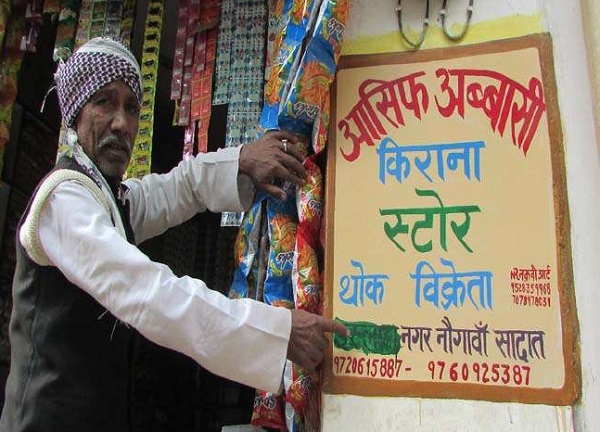
It has been alleged that some 20-25 shops in the region out of a total 50 have renamed their address to Islam Nagar Naugawaan Sadat. Besides this, some shops have even painted over the existing address of “Gautam Nagar” thereby signifying an intention to change the area name. Plus it has also been alleged that about 1,500 Dalits in the locality are living under the fear of forced religious conversions.

Amroha is considered a Muslim dominated region with the area comprising of 42% Muslims, and the total population being about 12 lakh. Out of the rest, about 21% are Dalits. The “Gautam Nagar” locality is mainly inhabited by blue-collar workers, with people making ends meet by doing odd jobs.

Such an effort to rename Gautam Nagar has been met with stiff resistance by people like Pitam (70), who recounted how he has been living in the locality since birth and all his identification papers like voter and Aadhaar cards contain the address “Gautam Nagar”. He thus lamented that he only has a choice to either leave the area or convert.

Efforts were also made to create a consensus with dissenting shopkeepers but only fuelled a sense of hostility with the latter. One resident named Murari even filed a complaint with the police in this regard.

As per a Jagran report, the police finally has taken action in this matter and have arrested 10-10 people from each community. Along with this, the police has warned of strict action against unauthorised change of address.

The report claims that this locality is bifurcated into Hindu and Muslim population, with the Hindus calling their area as Gautam Nagar and the Muslims calling it Islam Nagar. It seems that some Muslims were sold shops in the Hindu area after which they started to change the locality’s name, which resulted in communal tension. The police later took stock of the situation and blurred out the name “Islam Nagar” from the disputed shop boards.

The report also claims that the name of the locality is actually registered as Budh Bazar in government documents.

Such a dispute and an alleged threat to convert Dalits further dents the so-called “Dalit Muslim unity” narrative which has already started getting punctured in recent days.

We had reported how a Dalit youth was brutally beaten to death in UP’s Hathras by Muslim youths who had picked up a dispute with him. Besides this, it was recently reported that Dalit family living in Mewat Haryana, had alleged that it was brutally attacked by the village goons for refusing to convert to Islam.

With M-STRiPES app, India’s Tiger census goes digital to eliminate manual error

0

India’s Tiger Census is widely regarded as the World’s largest wildlife survey. Started in 2006, it had given an estimate of 1411 tigers left in the country. Widespread awareness programmes, efforts by the governments and relentless work of forest officials have helped the population of India’s national animal increase by noticeable numbers.

The 2010 Tiger census recorded 1706 tigers in the country. 2014 census data showed the population at 2226.

The 2018 tiger census has already begun. This time the Ministry of the environment and National Tiger Conservation Authority are leaving nothing to chances and human error. The 2018 census, the results of which will be finalised in 2019, will be the biggest, widest and most organised survey so far.

As compared to the 2014 census, which saw 9,700 camera traps, the 2018 census will involve around 15,000 camera traps. 400,000 square metres of forest area will be scanned, involving more than a year’s efforts of over 40,000 forest guards and independent biologists providing assistance. It involves 18 states of India. The costs for the exercise has been estimated at 10.22 crores. The northeastern states, which had not seen proper coverage in the past are to scanned vigorously this time.

Tiger census is usually done in two phases. In the first phase, forest officials collect raw data on the basis of pugmarks, pellets and sightings. The second phase involves biologists and camera traps. After that data from the two phases are correlated in a customised software and the final estimate is calculated on the basis of individual stripes.

Under the Modi government’s push for Digital India, this census will see forest officials using an indigenously developed Android App M-STRiPES (monitoring system for tigers-intensive protection and ecological status) developed by the Wildlife Institute of India, Dehradun. The use of the mobile app minimises and in most cases eliminates human error. In earlier surveys, the forest official used paper formats to record parameters and data which lead to errors and confusion.

The M-STRiPES app automatically records the track log of surveys and routes taken by forest officials in collecting the first sample. It is provided to the forest staff free and makes data recording easier and highly efficient.When biologists are involved in the phase 2 sampling, the app automatically records data on animal sightings with geotagged photographs. It increases the intensity, coverage and accuracy of sampling phenomenally higher.

Y V Jhala, a scientist from the Wildlife Institute of India has stated that the officials will be able to improve the accuracy of the exercise with this digitisation. A new area that would be covered would be Northeast. So far, in the previous three surveys, it has been poorly sampled.

There have been other large-scale wildlife surveys in the world. The New York State Energy Research and Development Authority had in 2016 carried out a vast aerial offshore survey on the coast near New York state. But the estimated area scanned was only 43,000 square kilometres.

The Royal Society For Promotion of Birds (RSPB) in the UK organises an annual wildlife survey called the Big Garden Birdwatch, which involves volunteers and photographers. But this vast event is not entirely digitalised and the area it spans is not even a fraction of the area that India’s Tiger census has to cover.

With vast resources and dedicated, trained officials working for over a year, the 2018 tiger census is expected to give accurate and detailed results of tiger population in the country. Government is hopeful that we will see a significant rise in the number of the majestic beasts roaming in our forests.

Modi govt to issue Blockchain based educational certificates to eliminate fake and tampered degrees

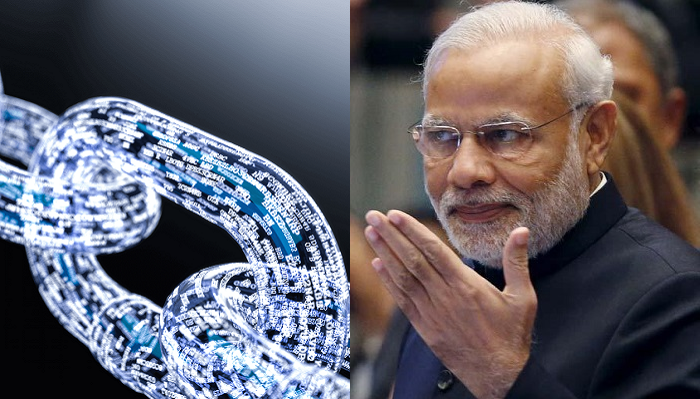
In the recently concluded budget speech, Finance minister Arun Jaitley had claimed that his government would be exploring the use of Blockchain technology. Besides this Jaitley also asserted that his government was inculcating technologies like Artificial Intelligence, machine learning, internet of things (IOT) to name a few.

Now it seems that the government is walking the talk when it comes to Blockchain, as per a report by Factor Daily. The report claims that the Modi government would be implementing a Blockchain based solution for digital certification of education degrees, starting from the batches which graduate in 2019.

Termed as “Indiachain” and being driven by NITI Aayog, this Blockchain technology will be first trialled in IIT Bombay and colleges coming under Delhi University. Once these trials are successfully completed, they would be scaled up to a full scale implementation.

Going back to the basics, Blockchain is a decentralised digitally distributed ledger which is maintained by a network of computers called nodes. So it basically is a list of data linked to each other, which, as explained in the Swarajya article can be envisioned as records linked to each other or spreadsheet containing information distributed across systems part of the Blockchain.

What makes Blockchain secure is the fact that no changes can be made to any data contained in the Blockchain, without the approval of all the parties who are part of the chain. Besides this, the data is not stored in any centralised database but is present in every participating computer.

Whenever there is an addition to the Blockchain, it is reflected in every participating computer. Such a decentralised approach means that the system has no single point of failure, and in order to corrupt or modify the data, one would have to embark on the near-impossible task of taking over the whole system.

So when it comes to education, the issuance of a Blockchain based certificate would mean that the authenticity it can be instantly verified, at the approval of the certificate holder. Besides this, the educational records cannot be tampered with, as changing an individual block requires approval from all parties who are part of the Blockchain. This would eliminate the possibility of people passing off fake or tampered certificates as real.

If all goes according to plan, the next in line to come under the Blockchain technology might be land deeds, which might potentially end forgery.

This can crucially prevent situations like a land conversion scam in Akhilesh’s UP, where some landowners allegedly forged documents and in collusion with the officials had shown the plot as residential in the sale deed. Such a forgery has also been noted in case of Robert Vadra’s supposed aides, with it being alleged that the land mafia had grabbed the land near Bikaner’s firing range through forged and fabricated documents.

This nationwide implementation of Blockchain though might not happen anytime soon as the states are yet to digitise their land records, but Andhra Pradesh has already started a pilot project to manage their land registry via Blockchain.

Eyewitnesses have said that Jagdish Tytler and Sajjan Kumar were behind killings during Sikh riots

0

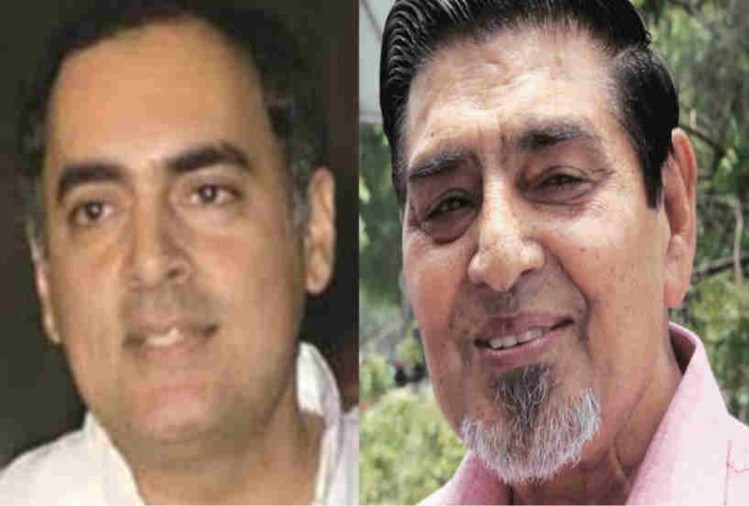
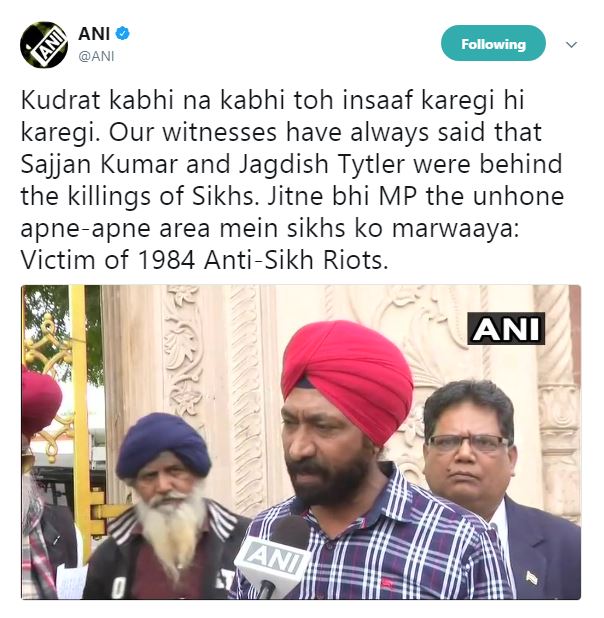
A victim of the infamous  Sikh pogrom that shook Delhi after Indira Gandhi’s assassination in 1984 has made a startling claim. He said that eyewitnesses had deposed that Jagdish Tytler and Sajjan Kumar were behind killings of Sikhs. He also claimed that Congress MPs had ensured that Sikhs in their constituencies were murdered after Mrs Gandhi’s assassination.

Rajiv Gandhi had travelled with Jagdish Tytler in an Ambassador car during the riots

One of the accused former Congress MPs, Jagdish Tytler had told CNN IBN that he had travelled with former PM Rajiv Gandhi around in Delhi during the aftermath of Indira Gandhi’s death and they had found that entire constituency of his was peaceful. However, Akali Dal and BJP had slammed Tytler and questioned if Rajiv was also involved in inciting riots according to CNN News.

The former MP was named by the Nanavati commission as one of the organisers of the riots. The accused had also refused to undergo lie detector tests.

https://www.youtube.com/watch?v=3vncEmXtTIM

In the light of accusations by victims and facts gathered in past investigations, it is becoming more important for the government and judiciary to ensure that justice is done to victims of Sikh riots.

Despite allocation of Rs. 16 crores, Kejriwal govt fails to distribute sanitary napkins in schools for 2 years

0

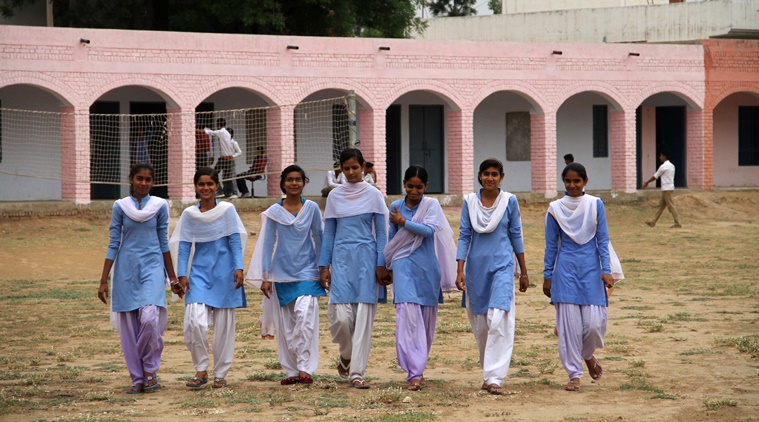
To promote menstrual hygiene amongst adolescent school girls, in 2011, Sheila Dikshit led Delhi Government started the Kishori Yojana, which provided free sanitary napkins to girls. However, since 2016, the scheme has been scrapped, despite the allocation of Rs. 16 crore.

This comes as a shock at a time when Delhi government has not only not clarified that the scheme is suspended, they are actually taking credit for promoting female menstrual hygiene through this scheme.

As per an RTI filed by NGO Matri Sudha, in the year 2015-16, Rs. 16 crore from the budget was allocated, of which Rs. 13.15 crore was spent and in 2016-17, Rs. 9.31 crore out of Rs. 16 crore allocated were expended. However, not a single rupee was spent from the Rs. 16 crore allocated in the 2017-18 budget. In November 2016, the school girls were made to sign a paper that they no longer will receive free sanitary napkins. In March 2016, when there were reports about the scheme being discontinued after the vendor pulled out, the Directorate of Education (DoE) said it had asked the company, with whom they had a contract, to find another vendor. However, since November 2016, the supplies stopped.

This has forced school girls to be sent home during their periods. Without the program, many girls in school do not get the support to buy sanitary napkins, effectively forcing the girls to miss school during menstruation.

Study claims 64% of antibiotics sold in India between 2007 and 2012 unapproved

0

According to a study published in the British Journal of Pharmacology, a huge percentage of antibiotics sold in India between 2007 and 2012 were not approved by the Central Drugs Standard Control Organization (CDSCO). Of the 118 formulations of fixed dose combinations (FDC) antibiotics sold in the country during the period, 64% were not approved by CDSCO even though supply and sale of unapproved medicines are banned in India.

“The 118 FDC formulations gave rise to over 3,300 brand-name products made by almost 500 pharmaceutical manufacturers, including multinational companies. By 2011-12, FDCs made up a third of total antibiotic sales in India, yet 34.5% of these sales (comprising 300 million Units) were unapproved formulations. Many of the FDCs combined two antimicrobials, often poorly chosen and likely to exacerbate resistance problems,” the study conducted by researchers at Queen Mary University of London and Newcastle University said.

Continued sale of unapproved antibiotics in such a huge proportion has triggered an antimicrobial resistance in India. Author of the study, Patricia McGettigan, stated, “Selling unapproved, unscrutinised antibiotics undermines measures in India to control antimicrobial resistance. Multinational companies should explain the sale of products in India that did not have the approval of their own national regulators and, in many cases, did not even have the approval of the Indian regulator.” Tedros Adhanom Ghebreyesus, Director-General of WHO, had stated earlier, “Antimicrobial resistance is a global health emergency that will seriously jeopardise progress in modern medicine.”

India has one of the highest rates of antibiotic consumption in the world. In such a scenario, selling of unapproved drugs and failure to curb their supply poses a global threat to antibiotic resistance control.

Video of Congress social media head asking partymen to create multiple accounts emerges

0

A video of the Congress party’s social media head Divya Spandana asking her partymen to create three separate accounts on social media have emerged. Though the authenticity of the video cannot be confirmed fully, it seems that the whistleblower has taken great risk to shoot the video. The video has been posted by Balaji Srinivas, Convenor of BJP Karnataka social media cell.


Translation of the conversation going on in the video

Divya: Ok, What is your questions? Fake accounts.

[unclear chatter from crowd]

Divya : So, today all of you should create three accounts. One should be in your name. Another should be in someone else’s accounts. Third one should be in Srivatsa’s (Karnataka state social media head) account.

[someone from crowd] : We are planning to create a fake account.

Divya : There is a difference. Fake accounts are bots. There are like robots or machines. It is not a human. If one person has three accounts it is not wrong

Someone from crowd : Is it wrong to have many accounts madam?

Divya: No . I have one official account on facebook. I have a page as well. You can have an account for a colleague. So there is nothing wrong. It is like being in many whatsapp groups. If all of you have a whatsapp group for every booth, information can travel from Delhi to Mandya within a minute.

We have all been told that Rahul Gandhi’s presence on social media has transformed recently. People have credited Divya Spandana for this transformation. Now, we have some sort of evidence to ascertain how genuine this ‘transformation’ could be.

India becomes the world’s fastest growing aviation market for the third successive year

0

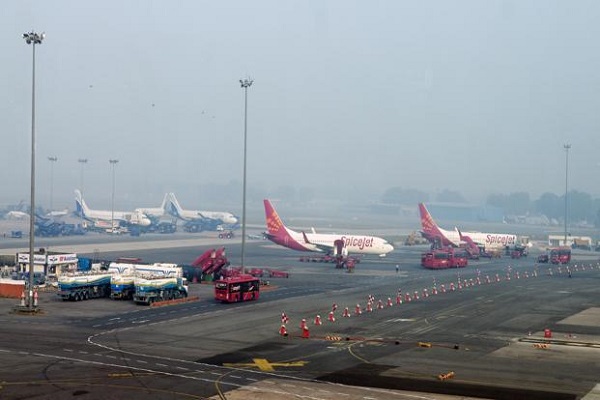
India has maintained its position as the world’s fastest growing aviation market for the third successive year by also clocking the fastest growth in 2017, among all the countries.

The International Air Transport Association (IATA), in a report claimed that the domestic air traffic in India grew at 17.5%. China in comparison came a distant second by clocking a 13.3% growth rate. India’s high growth was attributed to the economic and network expansion in the country. Ever since regulations were eased in India’s aviation market in 2014, the nation saw a spurt in passenger growth thanks to low airfare offered by airlines.

IATA is a global airlines body which represents 280 airlines or about 83% of the global air traffic. As per their own admission, they “help formulate industry policy on critical aviation issues”.

Globally too, the Revenue Passenger Kilometres (RPKs), which measure passenger volumes, grew at 7.6% in 2017 which was higher than the ten year average of 5.5%.

As per IATA the main drivers of the growth were a comparatively strong rate of economic expansion in each country, and an additional stimulus provided through additional airport pairs.

IATA though has cautioned that the full year RPK growth will be lower than 2017 due to increase in the input costs for airlines. These input costs include increased fuel and labour costs, which might make it difficult to stimulate demand via lower airfares in 2018.

NewsX – Jan Ki Baat Opinion Poll suggests Tripura is set to turn Saffron

0

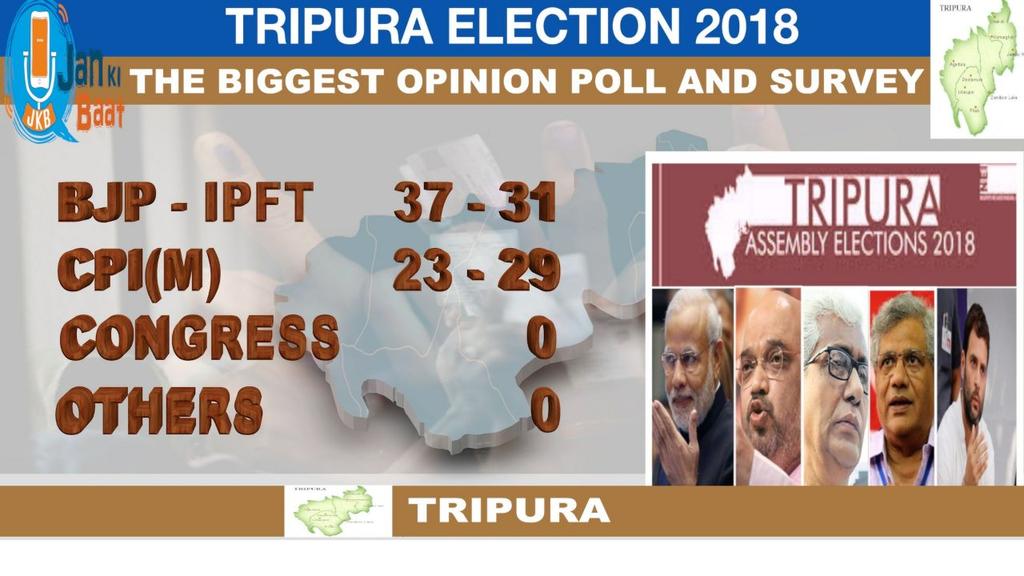
According to the News X Jan Ki Baat opinion poll, Tripura is set to turn saffron after 25 years of communist rule. According to the opinion poll, the BJP-IPFT alliance is set to win 31-37 seats of the 60 seats in the state while the CPI(M) is predicted to win 23-29 seats.

image source: @jankibaat1

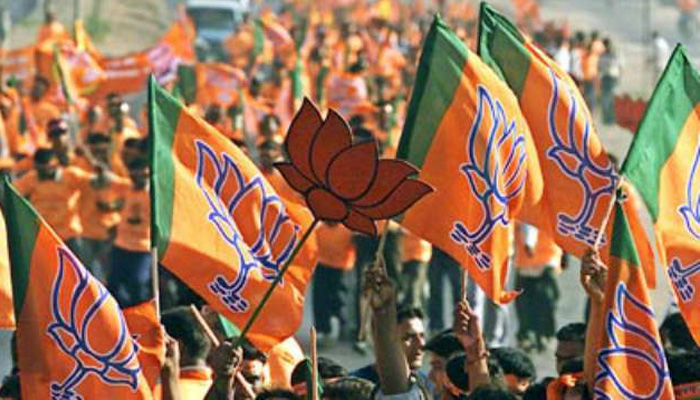
There has been a strong undercurrent in favour of the BJP and the anti-incumbency factor against the ruling CPI(M) is could well prove to be fatal for the Manik Sarkar government. The BJP has been campaigning aggressively in the state in recent times and it is extremely likely that the bastion leftist rule could fall when results are declared on the 3rd of March.

40 top BJP leaders are expected to visit the northeastern state during the run-up to the polls on 18th February. Rajnath Singh visited the state over Saturday and Sunday and Narendra Modi will address two public meetings in on the 8th of February. Party President Amit Shah is expected to campaign for the BJP-IPFT alliance for a week and Defense Minister Nirmala Sitharaman and External Affairs Minister Sushma Swaraj are also expected to campaign for the party.

However, the trump card for the BJP in Tripura might well prove to be the Chief Minister of Uttar Pradesh. There is a large percentage of Bengalis in Tripura who belong to the Nath sampradaya, the sampradaya of Yogi Adityanath himself. Yogi Adityanath is expected to meet the leaders of the Nath sampradaya in the state before addressing rallies. Narendra Modi has huge popularity in Tripura and as the Mahant of Gorakhnath Math, Yogi Adityanath is expected to receive a rousing reception.

In spite of the favorable opinion polls, BJP will not take their feet off the peddle. The situation was similar in 2013 when the fight was between the Congress and the ruling CPI(M). Rahul Gandhi addressed a rally in Agartala during the campaign of the Congress Party and detractors of the Left party expected a change in government. But when results emerged, they were overwhelmingly in favor of the ruling CPI(M). The BJP will therefore be cautious and not underestimate the CPI(M).

BJP supporters in Tripura are nevertheless very optimistic of its chances. One neutral observer remarked on the possible change in government reflecting upon the campaign frenzy of 2013, “Last time, we only heard about the change in mood of the public. This time we can see it.”

The one where some Muslims in India bat for Sharia over Indian Constitution

0

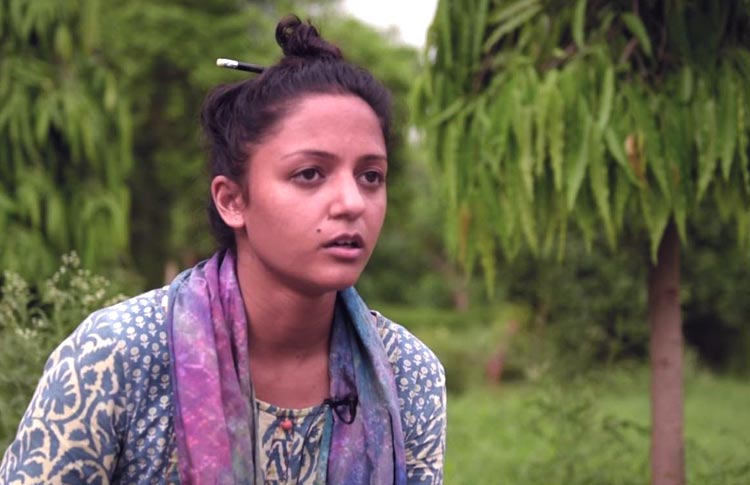
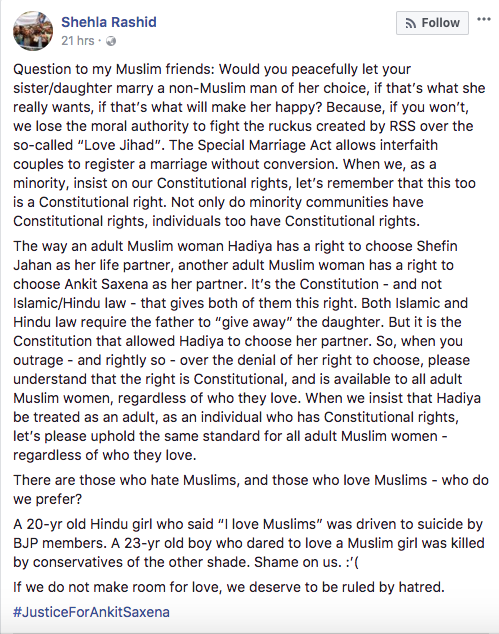
JNU freelance protestor who hangs out with riot instigators in her free time, Shehla Rashid, put up a post on Facebook yesterday asking her Muslim friends whether they would ‘peacefully’ let their sister/daughter marry a non-Muslim of their choice if that makes them happy.

She was expressing solidarity with the brutal murder of Ankit Saxena, who was killed by his Muslim girlfriend’s family who were opposed to the relationship.

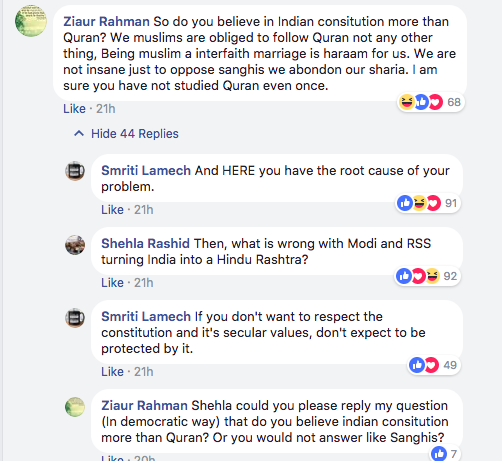
However, the Indian Muslims did not quite agree with her views. One Ziaur Rahman repeatedly asked her whether she chose Indian Constitution above the Sharia, which Rashid chose to remain silent on.

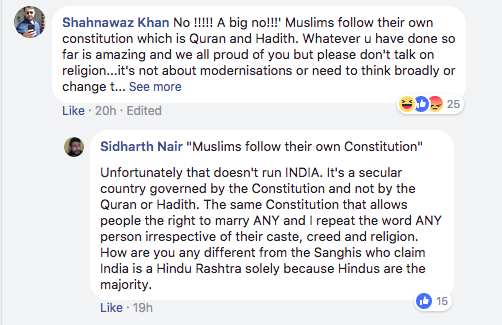
Some even claimed how Muslim should only follow the Quran, which is above any constitution.

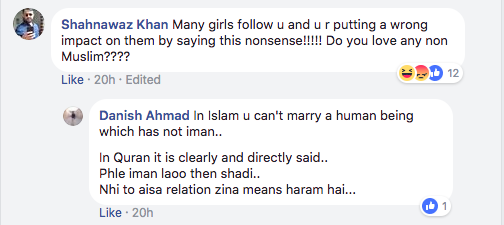
He even questioned Shehla whether she was having such thoughts because she was in love with a non-Muslim.

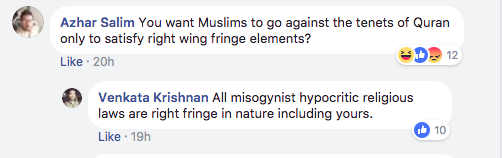
While one was upset at Shehla’s stand which tries to ‘satisfy right-wing fringe elements’

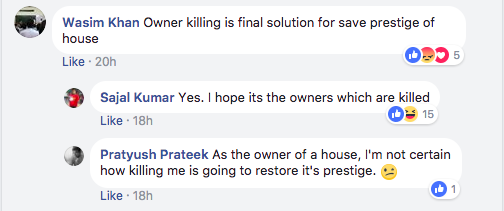
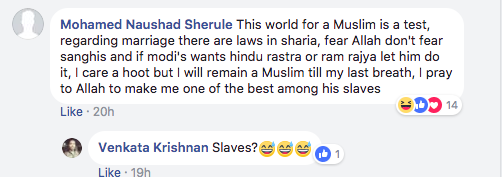
But some of the most amusing arguments were regarding ‘owner killing’ and one man’s aspiration to stay an honest Muslim (by not marrying a non-Muslim) to be Allah’s best ‘, slave’.

While Shehla didn’t respond to these comments, this blatant disrespect shown towards the law of the land and putting religious duties over the nation is disturbing, and reminds of the TV actor who had openly said that he would choose Quran over constitution of India ‘any day’.