Home Blog Page 7343

Doordarshan receives a record 38 million viewership during the Republic Day parade

0

This year’s Republic Day, by many counts was considered a “bearer of many firsts”, thanks to various positive developments which surrounded this year’s celebrations.

These included making heads of all the 10 ASEAN nations as Chief Guests for the parade on Rajpath, Maharashtra making tableaux themed around Chhatrapati Shivaji Maharaj and awarding Padma awards to the nation’s unsung heroes.

Now it seems another positive which came out of 26th January was Doordarshan’s viewership during the Republic Day parade, which this year touched a record 38 million:


As per the figures recorded by TRP measuring agency Broadcast Audience Research Council (BARC), on 26th January 38 million people viewed Doordarshan channels as opposed to 22.2 million in 2017. The total impressions from 9 AM to 12 PM also rose from 5.6 million to 7.4 million.

Besides television, people also tuned in to watch the parade online, and as per Shashi Shekhar Vempati, Prasar Bharti’s chief executive, the online viewers numbered to a total of 2.5 million.

The increase was also noted by the news channels which show the DD feed. The impressions for Hindi news channels rose from 7.9 million to 9.2 million, and for the English ones, it increased from 3.1 lakh to 6.2 lakh.

As per Supriya Sahu, Doordarshan’s Director General, the channel had upped its coverage efforts from past years which included deploying 38 cameras for the live telecast from Rashtrapati Bhavan to Red Fort. Besides this, a production control room was set up at Rajpath.

She as a result tweeted her thanks to all the viewers of the parade:


This spike in viewership might also be partly attributed to the way BARC measures its viewership, where it revised the number of “households with television sets” from 154 million to 183 million in March 2017.

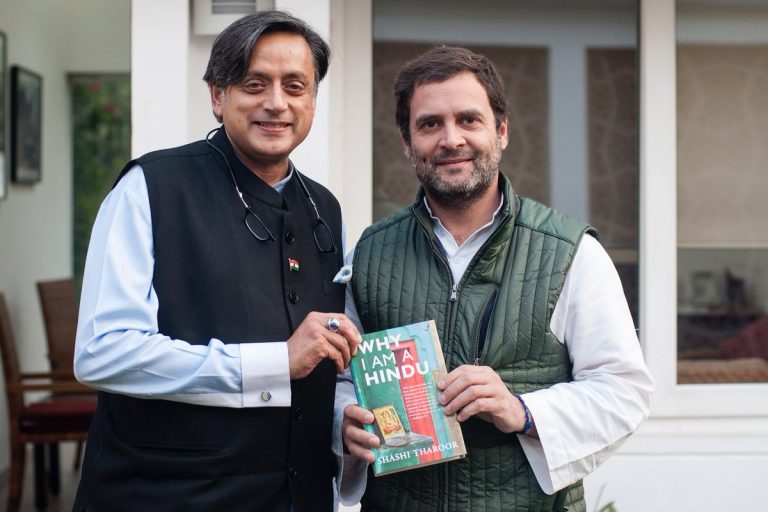
Shashi Tharoor’s understanding of Hinduism is at the same level as a beauty pageant contestant’s understanding of world peace

0

First of all, I must thank the author Sahana Singh who has summarised Shashi Tharoor’s understanding of Hinduism succinctly with a tinge of humor. The title of this article is taken from her famous tweet. In fact, this tweet inspired me to write this article.


Tharoor’s book is politically motivated

Shashi Tharoor’s  bestseller ‘Why I am a Hindu’, is a politically motivated book rather than one on that is a spiritual journey that intends to explore Hinduism. He has written a book which intends to aid the Congress’s push for ‘soft Hindutva.’ His presentation of Hindu faith is filled with cherry-picked references. His book is more inclined towards criticizing ‘Hindutva’ ideology and ‘Mob -lynching’ Hindus as he himself has said in an interview. If terror has no religion, then other crimes should not be seen from the religious angle alone. Thus, his propaganda has come under criticism from many quarters.

Tharoor doesn’t know basics of Hinduism

I was first introduced to Shashi Tharoor’s understanding of Hinduism in his book ‘The Elephant, The Tiger and The Cellphone’. In this book, he dedicates a few pages to the topic of Hinduism in his chapter titled ‘Hinduism and Hindutva: Creed and Credo’. Here he writes.

So I have had no difficulty in saying openly that I am a believing Hindu. But I am also quick to explain what that phrase means to me. I am not a ‘Hindu fundamentalist’ : I see Hinduism as uniquely a religion without fundamentals. We have an extraordinary diversity of religious practices within Hinduism, a faith with no single sacred book but many.

Let us first understand that there are diversities in all religions. Muslims are divided within themselves as Shias, Sunnis, Sufis, Ahmadis, etc. Christians are also divided between Protestants and Catholics. Buddhism is also having Hinayana, Vajrayana and Mahayana differences. Jainism has divisions between Shwetambaras and Digambaras. Thus, diversity is not a unique thing about Hinduism alone.

Next, Tharoor says that Hinduism doesn’t have any fundamentals. I totally disagree with this. The fundamental concept of Hinduism is Dharma i,e, righteousness. Ahimsa, Satya, Purushartha, etc and all other concepts are a subset of this core concept. Tharoor ignores this very basic fact. Since his foundation itself is weak, the structure he builds on it crumbles down in the eyes of an informed Hindu. This reminds me of the Malcolm X’s quote :

If you don’t stand for anything, you will fall for anything.

The Congress party and Mr. Tharoor stand for nothing. Therefore they will fall for anything. I wouldn’t say that Tharoor has the sole objective of grabbing political power, but I am sure that the sole objective of the Congress party has been exactly that. When I examine what Tharoor said in a program on NDTV, it amused me.

If Tharoor believes in ahimsa, he should have criticised those who slaughter cows. He must have criticised those who slaughtered the harmless animal in his home state and made a video out of it. But he focuses only on mob lynchers and thus, falls under the category of people who selectively criticises political opponents, and ignore crimes done by secular population. Of course, I don’t support mob lynchers. I don’t support non-vegetarianism either, because, I embrace the concept of ahimsa completely. This coherence in thought process is missing in Tharoor. My thoughts on this topic are best expressed by the philosopher J Krishnamurthi in his book “The Impossible Question”

If you yourself had to kill the animal which you eat, and saw the ugliness of it, would you eat that animal? I doubt it very much. But you do not mind the butcher killing it for you to eat; in that there is a great deal of hypocrisy.

Tharoor is obsessed with Golwalkar, Savarkar, and Hindutva.

The emphasis that one has given to certain topics can be gauged by the number of times a word is used in a written work/speech. When I search for the word ‘Hinduism’  in Tharoor’s book, Kindle gave me 444 results;  ‘Upanishad’ – 65 results; ‘Veda’ – 103 results. ‘Gita’ gives just 45 results. A search for ‘Satya’ and ‘Ahimsa’ gives 7 and 9 results respectively.

But a search for politically loaded words like ‘Hindutva’ gave 213 results;  Modi gave 46 results; Savarkar gave 52 results; RSS – 34. ‘Golwalkar’ – 65 results. ‘BJP’ gives 71 results. One can see that the emphasis on RSS and BJP is quite significant in his book. In fact, 150 pages of the book are dedicated to political propaganda. Is Tharoor’s understanding of Hinduism heavily affected by its politics? The fact that Savarkar and Golwalkar occupy more space than ‘Satya’ and ‘Ahimsa’ in his book raises important questions about his intentions.

His obsession with Savarkar and Golwalker is quite evident. His final chapter is titled ‘Taking Back Hinduism’, which sounds like an Islamist calling back his fellow men to ‘true Islam.’ The left has quoted some extremist or objectionable quotes of these two figures to push their agenda. But it is not accompanied by the vile and communal propaganda run by Muslim League and Jinnah during the run-up to partition. Their ideas of ‘Hindu Rashtra’ were born because they wanted to safeguard Hinduism and Hindus from the violent and destructive march of Islamic extremism. Thus, whatever objectionable things they have written must be seen in a historical context.

Writings of Golwalkar and Savarkar should be read in historical context

Tharoor doesn’t mention anything about Muslim League’s vile campaign for the formation of Pakistan in his book. In fact, he blames Hindu Mahasabha for the growth of Muslim League. It is a joke because, Hindu Mahasabha was not successful in elections unlike, Congress and Muslim League. How can Muslims be afraid of a party that failed politically? Muslim League managed to unite Muslims as a political force, but Hindu Mahasabha did not succeed. Also, what is wrong if Hindus decide to become a political force in modern in India?

Tharoor is a pawn in revival of ‘Soft Hindutva’ strategy 

Pick a random Hindu today and ask him about Golwalkar and Savarkar and ask them if they know who they are. They will fail to answer the question. In fact, I myself haven’t read their books in spite of being a BJP supporter. Most voters of BJP don’t support lynching or violence. Yes, we already know we are tolerant. We have corrected ourselves throughout our history. The job of liberals is to weed out bad aspects of all religions, not Hinduism alone.

So, why is Tharoor out to ‘Take Back Hinduism’ from those who have taken it away from the misguided liberals like him? The answer is clear. People are fed up with Congress party’s appeasement politics. They are losing election after election. Therefore, the party is reviving the dubious ‘soft Hindutva’ strategy of this party. For that mission, they have deputed the task to the good-looking, glib and suave Tharoor.


Wherever there is caste politics, there is Congress

0

Just when all the political drama about the Sanjay Leela Bhansali movie Padmaavat seemed to finally settle down, a new controversy has sparked. This time concerning another under-production movie, the Kangana Ranaut starrer Manikarnika. A brahmin outfit in Rajasthan has threatened that they will not allow the producers of the movie to continue shooting of the movie. Their claim is that the movie has an alleged ‘indecent portrayal’ of Rani Laxmi Bai of Jhansi.

The founder and president of the Rajasthan based Sarva Brahmin Mahasabha, Suresh Mishra has stated that he had come to know of certain objectionable scenes and a song that shows the warrior queen in an alleged love affair with an Englishman. Misra had mentioned that they have been informed that some portions of the movie have been picked up from Jaishree Misra’s historical fiction “Rani” based on Rani Laxmibai. The book was banned by then Mayawati led UP government in 2008. Misra has stated that Brahmin Mahasabha will not let the movie be shot here and will disrupt its shooting.”

Misra claims that he had sent a letter to the movie’s producer stating his concerns as Rani Laxmibai was a brahmin and wrong portrayal of her life may hurt brahmin sentiments. He also has the support of Rajput Karni Sena chief Mahipal Makrana in this regard too. He asserted that if the producers do not clarify his doubts the movie might face the same fate as Padmaavat.

The producer of Manikarnika, Kamal Jain has denied that the movie has any wrong depictions of the Queen. He had stated that they have consulted many historians and scholars before finalising the script of the movie and the movie will be a fitting tribute to the great queen.

But Sanjay Bhansali too had given similar statements. That did not stop the Karni Sena from inciting violence against the movie.

The most interesting thing about this potential political conundrum is that Mr Misra is also a secretary in the state Congress unit. We have all seen how Congress cleverly involved itself with Rajput Karni Sena to create absolute chaos and disruptions following the movie Padmaavat, where several cities saw violence and wreckage of law and order situations. When all incidents are carefully looked at in a chronological order, it comes to mind that Congress took BJP for a ride in order to score political goals, in a bus called Padmaavat, driven by Karni Sena.

What is most disturbing about this whole scenario is that this Congress and caste-based politics go hand in hand, almost always.

We have seen Congress supporting Bhim Army in Uttar Pradesh, they fanned the Bhima-Koregaon violence hailing the protests and blaming BJP for ignoring Dalits.


In case of Rohit Vemula suicide too, Congress played and played it as much they could to generate ‘Dalit Injustice’ narrative. Their support to Hardik Patel just before Gujrat polls further clarified it. Not only Hardik, Jignesh Mevani too became their darling when it came to opposing BJP. It has also tried to play the ‘Lingayat‘ card in Karnataka. A distinctive pattern emerges whenever we see any caste-based agitation in the country. Congress jumps in first, shows solidarity towards the protesters or agitators and quickly turns it into political mudslinging game to target PM Modi and BJP.

Just before Gujrat polls, Congress has declared Rahul Gandhi is a “Janeudhari Brahmin”. That followed a frenzy of Temple visits and a great show of putting tilaks and even saffron shawls around his neck.

Now that another anti-movie political game seems to be in the horizons that involve the Brahmin community, are we about to witness another Congress political stage show around a movie and a particular caste? Mr. Misra is a state Congress secretary, Is Congress going to officially support his demands? After Dalits, Rajputs, Marathas, and Patidars, are Brahmins the next vote-battery for Congress? Time will tell.

Himachal doctor’s prophylaxis to prevent Rabies which reduced treatment cost from Rs 35,000 to Rs 350 gets WHO nod

0

In a moment of pride for Himachal based doctor Omesh Bharti, the World Health Organisation (WHO) has approved a Rabies immunisation protocol which was developed by him.

As per an India Today report, the treatment developed by the 49 year old doctor, who works in a government hospital, has been designated as a new global standard by the global health body. The treatment apart from being effective, substantially reduces the treatment cost from Rs 35,000 to a mere Rs 350.

As per the earlier treatment, the patients were injected with the rabies immunoglobulin (RIG) and rabies vaccine which are extracted from horse or human blood. The Human RIG incidentally had to be administered in large quantities based on the patient’s body weight, which resulted in a cost of Rs 6000 – Rs 8000 per vial.

So Dr. Bharti, while being a health officer with the Shimla Municipal Corporation from 2013-15, developed a protocol to administer a small fraction of that RIG which did the trick. The quantity of the vaccine required to be injected came down by 90% when it was injected in the dermis (a layer of skin below the epidermis) as opposed to in the muscle.

This treatment procedure by Dr. Bharti was wholeheartedly supported by the Himachal health authorities, which also included training medical professionals to administer it.

By 2016, Dr. Bharti’s treatment had yielded over 7000 successful cases in Himachal and WHO’s Strategic Advisory Group of Experts (SAGE) too had included his protocol for discussion in its Bangkok meet. The treatment by Dr. Bharti was finally endorsed by SAGE on 15th January as a cost, dose and time-sparing treatment, along with being safe and clinically effective.

As pointed out on Twitter by scientist Anand Ranganathan, the effectiveness of Dr. Bharti’s procedure can be gauged by the fact that in 2017, there were just two rabies related deaths in Himachal (which follows Dr. Bharti’s procedure), as opposed to a whopping 20,000 in India:


These two deaths could also have been avoided as one of the deceased refused treatment and another chose to visit a private practitioner.

And just to point out, this treatment is administered in Himachal free of cost.

Incidentally this isn’t the only medical achievement Dr. Bharti has notched under his belt.

In April, 2017 it was reported that Dr. Bharti had published a paper titled, “Transporting snake bite victims to appropriate health facility within golden hour through toll free emergency”.

This paper which also impressed WHO, proposed administering of anti-snake venom (ASV) in ambulances itself, while transporting the victim to a hospital. This measure which involved ambulances carrying the ASV, was implemented in Himachal Pradesh, and was soon adopted by other states and union territories. This elegant solution saw the survival of 95% of the patients transported in these emergency ambulances, which was followed up by a two day hospitalisation.

Update: An earlier version of the headline incorrectly mentioned that Dr. Bharti had devised a new cure for Rabies. What Dr. Bharti has come up with is a new prophylaxis to prevent rabies after being bitten by an infected animal. There is no known proper cure for rabies which necessitates the preventive measures. 

Amit Shah slams Congress in his maiden speech in Rajya Sabha

BJP President Amit Shah today made his debut speech in the Rajya Sabha. He hailed the current NDA government’s successes in creating Jan Dhan accounts and improving the living standards of the people of India through electrification, digitisation and development of infrastructure.

He stated that the Narendra Modi led BJP government has created 31 crore Jan Dhan accounts and extended electricity to 16,000 out of 18,000 villages. He also applauded the government’s direct benefit transfer and ‘Khelo India’ initiatives. He spoke about his government’s commitment to the welfare of farmers and praised the central government for effective handling of Kashmir issue.

[youtube https://www.youtube.com/watch?v=lN4FiMyy724]

The BJP President slammed Congress for its failure to address the people’s problems in all the years that it remained in power. He said that he accepts unemployment is a problem in a country but Congress should remember that we are facing this problem even after decades of Congress rule.

He tore into the recent remarks of ex-finance minister P. Chidambaram where he had compared pakoda sellers to beggars. Amit Shah went ahead to add that it is better to be a pakoda seller than becoming a beggar. He said that it was the shameful mentality of Congress to mock the countless young men who are working hard to become self-employed by starting small businesses.


He also praised the GST reform and said once the initial troubles are addressed it will be immensely beneficial to the country’s economy. He attacked Rahul Gandhi’s jibe on GST as ‘Gabbar Singh Tax’ and said how can a legal economic reform be compared to a dacoit in a Bollywood film.

He went on to remark that public sentiment is expressed best by electoral mandates and it is because of the Indian people’s satisfaction with the central government that after forming the government in the centre in 2014, BJP has gone ahead to win several state assembly elections with an overwhelming majority. He added that the BJP wants to uproot 3 major problems in the democratic system of the country. Those are dynasty politics, casteism and appeasement, and PM Modi has ensured that these 3 problems are uprooted.

In an attack to the Congress party’s tradition of dynasty politics, he added that for 55 years a single family had ruled over the country and still 60% of the people did not have bank accounts. He assured that the Modi government doing its best for the upliftment of the poor and downtrodden.

Amit Shah also mocked the Congress for its ‘moral victory‘ propaganda after losing Gujrat elections. He told that even after ruling for 22 years the BJP still can come to power for another 5 years and if Congress is calling it a moral victory, he can not do anything about it. His remarks caused loud applause and laughter in the house.

Watch: Pakistani journalist decides to report from his own wedding, interviews family members

0

In a possible reaffirmation of his enthusiasm for the job, a Pakistani journalist Hanan Bukhari, decided to do a ground report from his own wedding and in the process even interviewed his family members. The journalist who hails from Razabad in Pakistan, is employed with the “City 41” channel.

The report of the wedding was carried by the “City 41” channel, where luxurious cars and sports bikes are seen as part of his “Baarat”. In the segment he himself is seen taking the mike and doing live reporting, a video of which was shared on twitter by and a Pakistani journalist Amar Guriro:


In the first part of the report, Bukhari is seen saying that today he is present at his own wedding and he, his family members are very happy at the occasion. Further he stated that his was a love marriage, about which his wife and her family too were happy about.

He started his interview by asking his father how he is feeling about his son’s wedding. After expressing happiness about a lot of things, the father then proceeded to thank the people who came here.

The reporter then turned his attention to his to-be-wife, whom he had courted for 3-4 years after which she said yes. He thus proceeded to ask what she would like to say about her wedding with him. The wife then blushed at this question, and refused to say anything apart from the fact that she was happy.

Bukhari then decided to press further and reminded her about all the sports cars and heavy bikes he had brought to the wedding, to this she thanked him for fulfilling her wish and expressed the hope that he would continue to do the same.

In the second part of the video, Bukhari decided to up the anti and proceeded to interview his mother-in-law:


She also gave the thumbs up to the wedding and expressed her delight over having him as her son. The reporter continued his exercise and went on to take sound bites from his mother, who got emotional and proceeded to swoon on him.

Leader from Bangladesh opposition party confesses to leading arson attacks against Hindus in 2017

0

Masud Rana, a local leader of the Bangladesh Nationalist Party, the main opposition party in the country, has confessed to leading attacks against the Hindu community in Rangpur’s Thakurpara over an alleged blasphemous Facebook post against Islam.

In November last year, a violent mob had attacked the minority Hindu community and set ablaze 30 homes at the village which is only 300 Kms away from Dhaka. The incident had strong parallels with the violence in West Bengal when a violent mob went on a rampage after a teenager posted an allegedly blasphemous post on the social network.

“Masud Rana made a confessional statement before Senior Judicial Magistrate Ariful Islam on Sunday evening. He said he was involved in leading the arson attacks on the Hindu homes,” SI Ali told bdnews24.com on Monday.

Hindus in India have been concerned about the recent developments in the neighbouring country and have expressed their solidarity with their persecuted coreligionists in Bangladesh. The Indian Union Minister had stated that the Bangladesh government had assured them that the victims would be adequately compensated.

However, leftist media outlets insinuated that Hindu Nationalism of the Bharatiya Janata Party inspired them to inquire about the welfare of the victims and labeled a veiled accusation of interfering with the internal affairs of an ally.

Atrocities against the Hindu community has been on the rise in Bangladesh consistent with the radicalization of the youth. Even leaders of the ruling Awami League are allegedly complicit in the persecution of Hindus with Rana Das Dupta, the general secretary of  Bangladesh Hindu, Buddhist & Christian Unity Council (BHBCUC) accusing leaders of Sheikh Hasina’s party of occupying the properties of the Hindu community and sought the Prime Minister’s intervention in the matter.

Why Chinese One Belt One Road (OBOR) is dangerous for the economic well-being of the world

One Belt One Road (OBOR) is an ambitious project conceptualized by China in 2013 ostensibly to revive and build trade routes between China and the countries in Indo-Pacific region, Central Asia and Europe. China is trying assiduously to position it as ‘be all end all’ initiative, especially for the developing nations to end their infrastructure deficit and boost their GDP. Four years down the road, is it really turning out to be so? Here is an attempt to look at OBOR from wider perspective

What is the global infrastructure investment demand and the gap?

As per World Economic Forum (WEF) estimates, the current global infrastructure investment gap is pegged at $1tn per year vis-à-vis the annual infrastructure investment demand of $3.7tn. As per The Global Infrastructure Outlook report, which is a joint report developed by the Global Infrastructure Hub with Oxford Economics, road, electricity and rail are the major sectors with the bigger investment gaps vis-à-vis the forecast. The infrastructure investment needs are leapfrogging now because of growing world population and at the same time faster rate of urbanization. Unless these investment gaps are addressed in a robust manner, United Nations Sustainable Development Goals (SDGs) would also be at the risk of not being met.

How the investments are financed now?

Both developing as well as developed economies need significant investments to maintain or raise their economic profile. US for example spends $400bn every year and yet falls short on investment needs. All over the world the investments are being funded through private as well as public route. There are variety of choices available today ranging from financing available in multiple markets, including municipal bonds, project finance loans, dedicated federal credit programs, and private equity investments to Pension Funds, Sovereign Wealth funds to multilateral or bilateral institutions such as World Bank (through their Overseas Development Assistance), Asian Development Banks, BRICS Bank, EU Bank etc. These funds are being provided through the combination of debt and equity. Many governments have set up dedicated infrastructure financing funds e.g. Indian govt for example has set up National Investment and Infrastructure Fund (NIIF) for enhancing infrastructure financing in the country. If the cumulative infra spending needs of the nations is worth say Rs 100, then all the alternate routes put together supply Rs 73 worth of funds today. This gap of 27% in demand and supply of funds is being seen as an opportunity by China to further its strategic objectives. To that aim, China is seeking to fill this gap partly by leveraging its massive foreign exchange reserves. Enter China’s One Belt One Road (OBOR) project

What is China’s funding and execution strategy for OBOR?

China has $3.2tn foreign exchange reserves held in US dollars. The money is depreciating 2-3% a year vis-à-vis US Dollar. Also, China is getting a mere 0-1% interest on the money and sometimes even made to pay the servicing cost. Effectively the money isn’t fetching great returns for the Chinese. If they take the money back to Yuan, there are severe inflationary repercussions that they will most certainly face. On positive side, IMF’s 2016 decision to include Chinese Yuan in the basket of currencies that make up the Special Drawing Right (SDR), an alternative reserve asset to the dollar, has also come in handy. Even though only about 1% of the total foreign exchange reserves are currently being held in Yuan but it certainly offers Chinese a comfortable position and a window of opportunity.

Chinese figured out in 2013 a clever means of ensuring higher returns on its foreign exchange reserves along with attaining the strategic and geo-political objectives through OBOR project. Under OBOR, China is funding strategically important projects on maritime silk route as well as one belt region. Chinese offer loans at 6% plus of LIBOR rates vis-a-vis World Bank’s standard rate of around 3%. The other conditions attached to Chinese loans are pertaining to using min 40% of Chinese equipment, 100% of China manufactured raw material such as steel, cement etc. The projects too are executed by the Chinese companies by shipping in cheap labor from China in the host nation. OBOR is envisaged to provide an answer to China’s industrial overcapacity woes especially for its steel and cement sector. In summary, this effectively means the Chinese loan money spent on building the infrastructure in the host nation ultimately goes back to China’s own infra companies, manufacturers and the Chinese workers who are brought overseas to execute the projects.

How can these investments become a noose around host nation’s neck?

Now with this kind of costly investments and “only China” kind of execution model, if the requisite volumes are not generated quickly on the completed projects, be it air traffic for airports, container traffic for sea ports etc. it would become extremely difficult for the host nation to service the debt and Chinese investment can quickly turn into a massive burden for the host nation leading to debt trap like situation.

Normally an infrastructure project benefits the local economy in very many ways. Besides bringing in investments, it helps create jobs, pump primes local ancillary and raw material industry, creates new economic and social opportunities for growth etc. All of this results in betterment of local purchasing power, propelling growth in demand for products and services. With OBOR kind of model, the investment in the form of debt would certainly come in the host nation but because of the “unique” execution model, all the related benefits which should accrue to the local economy would instead be passed back to Chinese economy. This would stem the growth of purchasing power in the local economy. Imagine a situation where the host nation gets the infrastructure built say an airport through the debt investments but since the local economy isn’t pump-primed the new jobs aren’t created, the money hasn’t been spent with the local companies, the purchasing power of the local economy doesn’t change significantly. This means the necessary volumes needed for servicing the debt for the completed infra projects doesn’t get generated easily. The host nation then gets faced with a challenge of how to repay Chinese loan when there are no revenues from the completed project? This leads to a debt trap for the host nation.

Take the case of Hambantota airport in Sri Lanka which is also known as world’s emptiest airport. Hambantota was built at the cost of $210 mn of which around $190mn came from Exim Bank of China as a loan at 8%. This massive airport in Southern Lankan district of Hambantota has the capacity of handling 1 million air travelers a day.  Four years in operation Hambantota still far away from generating enough revenues to payback the interest on Chinese debt. The airport operates only 3 flights-2 domestic and 1 international to UAE. Because of their inability to pay back, Sri Lankans govt finds itself in deep trouble and in debt trap now. Similar situation prevailed on the massive investments in Hambantota port which was recently handed over to a Chinese port management company amidst huge uproar in Sri Lanka. Similar fate awaits CPEC projects in Pakistan where economist have already raised alarms about Pakistan’s imminent default on repayments by March of 2018. The Chinese solution for this situation has been to swap the debt with an equity as also to extract huge concessions from the host nation e.g. Chinese have asked for and have been given 15000 hectors of land near Hambantota port apparently for developing other port led development projects. In case of Zimbabwe, China has agreed to cancel $40mn worth of debt and in return Harare to increase local use Yuan as a currency for foreign exchange reserve. This model is very similar to west’s economic colonialism model that they practiced earlier in Hong Kong and Macau.

How does OROB impact global economic well-being?

OBOR model of “growth” has implications for the entire global economy. Going by OBOR’s expanse (OBOR aims to cover 60 countries, 30% of world GDP & 60% of world population), a large population would be impacted by OBOR in next 2-3 decades. OBOR has a project pipeline cutting across South Asia, West Asia, Eastern Europe etc.

PM Modi speaking at WEF 2018 in Davos implicitly alluded to an alternate model of infrastructure development to Chinese OBOR, which is being promoted by India and Japan. While talking about three major challenges before humanity today, PM Modi outlined the failure of globalization due to protectionism as the third biggest challenge after environment and terrorism. Modi attributed the decline in overall global Foreign Direct Investment (FDI) to protectionism being followed by some western economies. Whilst remaining unmindful of the fact that if the overall FDI quantum reduces due to protectionism, the more number of developing nations who can’t generate enough resources internally would be compelled to seek Chinese funds. This would set many of them on the course for debt trap and faltering local economy. This will obviously have a cascading impact on the exporting nations as well as the overall consumption rates in the defaulted economies are expected to come down significantly. Thus, the 60 odd participating nations would be at risk leading to a global crisis situation where only China benefits and all the rest undergo a severe distress.

Karnataka: Congress government facilitates ‘ease of doing murder’ says PM

0

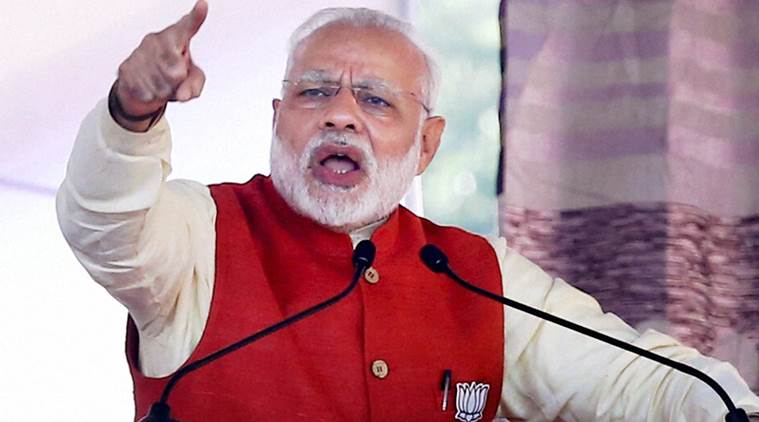
In poll-bound Karnataka, Prime Minister Modi trained his guns on Karnataka Chief Minister Siddaramaiah and said that while the world talks about ease of doing business, Congress ruled Karnataka is discussing ‘ease of doing murder’. Modi was addressing a rally in Bengaluru on Sunday. The comment was in reference to brutal political murders in Karnataka, the recent one being of BJP worker Santhosh who was stabbed to death by four assailants.

Terming it ‘crime city’, Modi said that Congress has turned Karnataka into ‘criminal raj’. Calling it a ‘dangerous trend’, Modi expressed his concerns over killings of BJP activists. He urged the voters to give a befitting reply by voting out the Congress.


Accusing Karnataka government of corruption, Modi said, the government takes away 10% out of every scheme implemented. He listed several schemes, including housing, roads and smart cities, for which the Centre had given funds to Karnataka but they were allegedly unspent.


Earlier, at a rally in Siddaramaiah’s hometown Mysuru, BJP President Amit Shah, too, had alleged that about Rs 1.3 lakh crore of the Rs 2.6 lakh crore allocated to Karnataka had been gobbled up by Congress leaders.

Blow to AAP : CBI discovers property documents worth millions related to Delhi Minister

0

The CBI has recovered property documents worth millions related to Delhi Minister Satyender Jain in raids conducted at the residences of the Registrar of the Delhi Dental Council, Dr. Rishi Raj. Spokersperson of the CBI, Abhishek Dayal, stated that three property documents related to Jain were recovered in the raids including two sale deeds of land measuring 12 Bigha 2 Bishwa and 8 Bigha 17 Bishwa at Karala village, Delhi and another of power of attorney for land measuring 14 Bighas in the same village. In addition, 41 cheque-books reflecting transactions worth crores by the Aam Aadmi Party minister and his family were also found by the CBI.

Satyender Jain has been in trouble in the past and is accused of money laundering via hawala transactions. He was issued summons by the IT department after they discovered links between firms in Delhi and Kolkata being probed for Black Money and the Delhi Minister.

Despite the accusations and the summons, self-proclaimed crusader against corruption, Arvind Kejriwal, has taken no action against his party leader. Trouble for the party is mounting rapidly after 20 of its MLAs were disqualified by the President for holding illegal offices of profit after a recommendation by the Election Commission. The CBI is likely to act against Satyender Jain based on its latest discoveries as well.

Arvind Kejriwal had issued a clean chit to the minister in 2016 itself. “I summoned Satinder this morning. Saw all papers. He innocent, being framed. If he ws guilty, we wud have thrown him out. We stand by him”, he had said then. People have raised questions as to why the Delhi Chief Minister is refusing to take any action against Jain when he had thrown out another minister from the cabinet at a press conference for charges of corruption. Kapil Mishra, the rebel AAP MLA, alleged that Kejriwal’s backing of Jain is because of his own involvement in the latter’s crimes.