Home Blog Page 7449

Mamata Banerjee blocks BJP spokie on Twitter, hilarity ensues

0

Just as twitterati were bracing themselves for the late night ’emo hour’ on Twitter, something happened which gave fodder to ‘Jokes Twitter’ till the weekend.

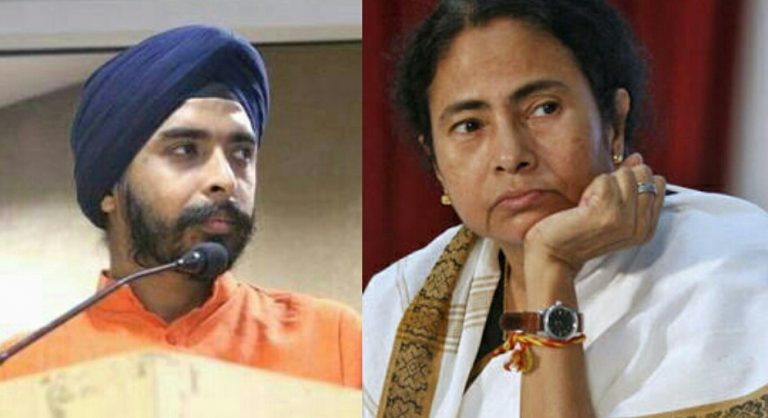
West Bengal Chief Minister, after detaining BJP spokesperson Tajinder Bagga at the Kolkata Airport last week, has now blocked him on Twitter. Bagga had gone to Kolkata to take part in the Durga Pujo and Durga idol immersion where he was detained by West Bengal Police and sent back to Delhi without letting him enter the city. While blocking by someone holding a public office is technically not against free speech, it is seen as unfair.

However, Mamata Banerjee blocking Bagga on Twitter caused hilarity and amusement among the Twitter users.


Other users who were also randomly blocked by Banerjee were quite baffled.


Some even brought in Delhi Chief Minister, Arvind Kejriwal, who has used Twitter as a platform to spread voracious lies and fake news.


Kejriwal and Mamata Banerjee had joined hands to attack Prime Minister Narendra Modi on the demonetization decision last year.

Banerjee blocked Bagga on Twitter soon after he wrote her a letter about his detainment at Kolkata Airport.


Addressing her with “Aadaab”, a gesture usually used by Muslims to greet one another, Bagga wrote how Banerjee’s anti-Hindu stand will eventually lead to her ‘political immersion’ in Bengal.

People took digs at Banerjee’s intolerance towards voice of dissent.


If there is one thing the Mamata Banerjee government excels at, it is crawling the social media and keeping a vigilant eye for all things that could possibly show her government in bad light, and then instead of weeding out the cause, just ban it or as we saw last night, block it.

Bihar man on the verge of bankruptcy because he heroically caught terrorists

On 13th September, two suspected Indian Mujahideen (IM) terrorists were arrested from Gaya district in Bihar. One of the terrorists named Tauseef Khan, was even reportedly an accused in the 2008 Ahmadabad blasts where 56 people were killed and more than 200 were injured. Another arrested was named Shane Khan but two of their accomplices managed to evade the police.

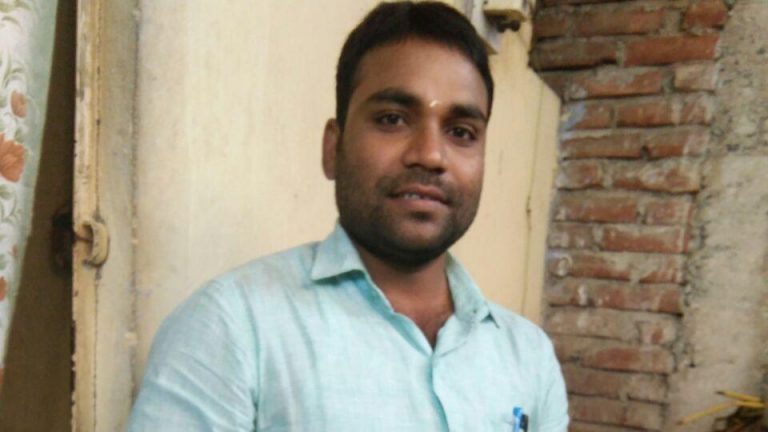
These terrorists were not caught as a result of intelligence reports, but due to the heroics of a cyber cafe owner named Anurag Basu.

According to reports, these 4 terrorists regularly visited a cyber cafe and used the system for lengthy periods. The cyber cafe owner Anurag Basu who also edits a monthly socio-political named Saf Swar, used to demand Aadhar cards as identification but the terrorists refrained from doing so.

One day, when the terrorists again refused to provide their identification, Anurag informed the police. After they left the cafe on a cycle-rickshaw, Anurag, a third degree black belt in karate, followed them and managed to catch Tauseef and Shane to hand them over to the police.

As a result, Anurag was hailed as a hero and Gaya senior superintendent of police (SSP) Garima Mallick claimed they would felicitate him.

But far from having the time of his life, Anurag is now having to scrounge for funds as his heroics have now left him broke.

As reported, his cyber cafe business has now become crippled as the customers are fearing retaliation from the terrorists. Such a fear might be compounded by the fact that the 2 other accomplices of these terrorists might still be free.

Apart from the customers, 4 of Anurag’s employees too deserted him for the same reason. His total customers have come down from about 60-80 to virtually zero and as a result, the income too has nosedived from the earlier figures of Rs 30,000-40,000 per month.

On top of it, advertisements in his magazine Saaf Swar too have dried up and he doesn’t have the required funds to either pay his contributors or print the magazine.

Due to his financial crisis he is reportedly finding his difficult to pay for his son’s school fees and the monthly rent of his house and cafe. As a result of the troubles, the pride has waned and his wife now describes the whole incident as a misadventure.

The police on the other hand, rather than helping him, is giving him further hardships. First it took away his master computer in the cyber cafe for its investigations and then even has him (Anurag) going regularly to the authorities for questioning. But even after all the hardships, patriotism and the zeal to serve his country hasn’t diminished in Anurag, who is a son of a retired armyman and the brother of a Kargil war hero.

Many people were moved by his struggles and implored public figures to somehow help or facilitate his aid:


It remains to be seen how things pan out for Anurag but such incidents unfortunately might make any good Samaritan think twice before doing a kind or heroic deed.

The Abrahamic gaze and innocent Tamil children

0

(This article has been co-authored by Yogini and Mahalaxmi)

Most Tamils will know of a movie called ‘Rosapoo Ravikkaikkari’ (The Woman in a Rose Blouse) that came out in 1979.

It is a commercial movie that brings out some subliminal messages on the politics of how women’s bodies are seen by themselves and changing attitudes to the male gaze.

To put in short, a pretty young woman is married to a simpleton in a remote mountain village where none of the women wear blouses. She insists on her besotted husband buying her a blouse, a want that is resented and objected to by the elder women of the village, especially the mother-in-law. They believe a woman who insists on a blouse for herself is being uppity and superior. Things come to a head when the older woman tears the blouse off.

The pretty woman later is infatuated with a young man from a nearby town. The movie ends with the husband finding her in a compromising position with her lover, where she has taken her blouse off! It is the same piece of clothing that he defied his mother to buy her.

The movie drives the message of a woman under the ‘modern’ influence sexualizing her own upper body, since she seeks to cover it for all but a lover’s gaze.

In the more remote villages of Tamil Nadu, it was common for older women to cover their upper bodies with only the drape of their sarees. Pre-pubescent girls frequently went in the streets and by-lanes of their villages with no upper body covering. In fact, the notion of covering up women’s bodies to protect them from men’s unwanted gaze seems to have been quite unknown in peninsular India before the 17th Century. Thinking of women’s bodies as commodities to be wrapped up from men’s vision is an idea imported with assorted Abrahamic invasions.

Most Indians do not find the choice of a saree bothersome from a male gaze perspective. However, Prof Kancha Ilaiah Shepherd, advisor to the Indian Christian Secular Party is said to have declared the saree a symbol of oppression as it left women ‘half-naked’ and exhorted them to wear jeans as a symbol of emancipation.  Of course if the women wear short tops or sphagetti strap tops on jeans will leave her as much exposed if not more seems to have lost on Ilaiah or may be he wants to have a diktat that women should wear only fully covered tops on jeans.

It is in this background and context that we have to view the media reporting around a practice in a village called Vellalur in Melur Taluk, Madurai District.

Parents pray to the Goddess Ezhai Kaatha Amman (the Mother who saved the seven children). To commemorate local  legends of 7 girl children miraculously turning to stone and then being revived. 7 girl children are dressed, garlanded, decked in jewels and housed in the temple for 15 days. During this time, these children are seen as embodiments of the Goddess herself and people pray to these children. The parents accompany these children and ensure their safety. Each year, 7 children are selected from the 60 villages that constitute the community celebrating this annual temple festival.

From reports, it appears that these are pre-pubescent children between the ages of 7 and 10. It is apparently considered inauspicious for a girl undergoing this ritual to have her periods, hence only children that have no chance of attaining puberty are selected for this ritual. After the ritual that lasts 7 days, by all evidence, these children go back to their usual lives. During this period of 15 days, the children stay in the temple and are treated as living embodiments of the Goddess herself. They travel to all the villages and bless people.

Whatever one may think of the ritual, it is a community activity, in which parents and children participate willingly and nobody seems to be harmed by it. It’s a festival in which the entire community participates. One can even see older women without blouses, as was common during earlier times.

This has been reported earlier in Tamil media as mere news and no-one thought much of it. This report in Tamil The Hindu reports it as such. These 15 days are seen as a period of fasting when villagers avoid meat, oily food, avoid cutting down trees and digging holes in the ground (presumably to avoid harming worms and insects).

However, based on an inflammatory article in the little-known website Covai Post, district authorities were petitioned by a foreign funded NGO, SOCO Trust, and have found no evidence of any wrong-doing. This has been picked up by national news outlets like NDTV for prurient reporting.

In the meantime, Covai Post has started playing the victimhood game, by alleging threatening calls and harvesting those 15 minutes of fame.

There are many videos, from Tamil media like Makkal TV and SUN TV and from general public, which show that these children are garlanded and are in the public eye. Therefore, there is not much scope of the children undergoing mental or physical stress.

Here is a tweet series from a certain Balaji, who is a native of the region and has actually been there, unlike most English Language media that wouldn’t know Melur from Meerut.

In our opinion, the root cause of such irresponsible reporting comes from the elitist mind-set of the media, where age-old practices of a villagers  are seen as naturally ‘superstitious’, ‘primitive’ and the tendency is to exoticize them. Historically most Indian women didn’t wear a blouse. Either the saree was wrapped in a fashion so as to partially cover the breast or big breasted women used cholis to get some support. The Victorian  concept of saree blouse came into vogue during the British era and was essentially fostered on the Indian woman since the British didn’t like our customs.

From the ‘modern’ perspective, the female body is seen as being susceptible to the male gaze always, and must either be covered up to protect or displayed to attract. There is nothing in between. The same people in the media would have no problems with pre-pubescent girls being topless on a beach in the West, or with the sexualized images of teenagers and tweens that TV and reality shows constantly beam, since these are approved from a Western Point of View.

Media’s Misinterpretation

The Hindu’s English edition had earlier reported the practice of dedicating girls to the Goddess Mathamma, as a practice similar to devadasi-hood, in 2003.

These two reports have been conflated, and based on an inflammatory article in the web-site Covai Post, a full-fledged media controversy has been generated.

Lurid reports have appeared in the Times of India, The New Indian Express, where the locations have been confused – between Tiruvallur District in TN to Andhra Pradesh, the ages of the girls involved have been revised upward to 14, additional activities invented such as clothes getting torn off by boys, and finally, reports of the children being forced into prostitution have been invented.

Incidentally, SOCO Trust, the NGO that picked up and publicized this issue had earlier moved court against any curbs on sale and slaughter of cattle. SOCO Trust receives funding from such organizations as Action Aid, UK and Centre for World Solidarity. The influence of a Abrahamic mind-set, which sees women’s bodies and animal bodies merely as commodities of consumerism, is quite clear. The woman’s body is for sexual consumption while the animal’s body is to be eaten as meat.

Is this mind-set not the same as that of the cleric who called exposed female bodies ‘meat’? The organisations which fund SOCO in their parent country have nudist colonies where the whole population is allowed live as per their wishes. Do these organisations encourage PILs to shut down these nudist camps?

Why  do these FCRA NGOs have issues ONLY  with Hindu rituals and customs ? Amongst Muslims women are married off at age 15, have to wear a Burkha when as young as 5 years of age and have to undergo genital mutilation without consent when they can barely understand. But we rarely see any PIL demanding any changes in Muslim codes of law and culture.

The perverse mentality of destroying indigenous cultural practices to suit Abrahamic sensibilities has to stop.

We live in times when the ‘feminist’ movement has gained momentum. Women, are talking about reclaiming their dignity and not being reduced to sexualised objects. The dichotomy reveals itself when women do it in the name “modern values” not realising that the tradition of sexualising the female form started with Abrahamic and later, British onslaught.

Traditional Hindu values treat women as a form of Shakti. It is indeed these so called ‘modern values’ that seek to reduce women to sexual objects. Perhaps then, it becomes important to understand how the wheels of time have come a full circle. Where we fight to regain lost glory, but ignorantly, attribute it to ‘fighting against tradition’. While people like Prof Kancha Ilaiah Shepherd pretend to espouse the ‘progressive thought’, what they in actuality perpetuate, is the Abrahamic value of sexualisation, not the indic tradition of liberation, freedom, emancipation and strength.

(The authors thank Singhbaboo and @zeneraalstuff for discussions and insights on rural practices of Tamil Nadu)


Indian Army via Swachh Bharat Abhiyan removes 60 tonnes of waste from the treacherous Siachen region

Swachh Bharat Abhiyan a flagship campaign launched to ensure a clean India, was launched on 2nd October, 2014. As per the government, the main motive behind starting the campaign was to ensure clean streets, roads, infrastructure in India’s city, town and rural regions.

The campaign which completed 3 years today, resulted in various reports taking stock of the achievements so far. Reports claimed that, in just 3 years a whopping 2.5 lakh villages have been declared open defecation free, that is the facility of toilets have been extended to them. Though these number may or may not be accurate considering 1.5 lakh such claims haven’t yet been verified.

The government is also planning on conferring awards to those who contributed towards the clean India initiative in urban areas. These awards would be distributed under 7 categories. Among the winners is a Delhi based Facebook group named ‘My Delhi Keep It Clean’, for promoting efforts to clean public places.

Also even the Indian Army has contributed very significantly to this whole exercise. As reported, the army spent 14 days in carrying out cleanliness drives in the its various cantonments across the country. Possibly the most significant of the cleanliness drive was the clearing of more than 60 tonnes of waste from the very treacherous Siachen Glacier.

As a result of this cleaning, the effect on this ecologically sensitive area has been very positive. What makes this cleanliness extra special is the very hazardous climate of the Siachen glacier which is one of the most remote locations in the country. As per meteorological estimates, the temperatures can dip up to −50 °C in winter, plus the high altitudes of 11,875 ft to 18,875 ft make the task no easier.

As mentioned in the report, cleanliness has been intrinsic to the culture and the traditions of the armed forces, with maintenance being done by both staff and residential families.

The army has also had a long history of ecological conservation via its Territorial Army Ecological Task Forces (ETF) which has immensely contributed towards afforestation and ecological restoration in Rajasthan, Uttrakhand and other places. It has been speculated that this movement would also be extended to the Namami Ganges project.

Yet another coordinated attempt to spread misinformation on bullet train

0

Yesterday, Aam Aadmi Party’s Arvind Jha Tweeted a July 2017 article from NDTV titled “Thailand Approves $5.5 Billion Bullet Train Project With China” casting aspersions on the Ahmedabad-Mumbai bullet train, the cost of which is pegged at about $17 billion.


The same was promptly retweeted by Delhi Chief Minister and AAP chief Arvind Kejriwal. Kejriwal, who in the past posted fake news on EVM tampering and demonetization drive and re-tweeted unsubstantiated stories of “IB report” on Punjab elections, is a champion in spreading rumours. Kejriwal had been against the bullet train project, and once he claimed, using some weird calculations, that a ticket of bullet train will cost 75,000 rupees.

Meanwhile, others piggybacked on the same and chimed in with their comments.


But let us take you to where it all started. Hate monger, anti-Modi disgraced cop Sanjiv Bhatt, had tweeted this on 27th September,


Here, Bhatt, speaks of the 300 km stretch, which AAP leader Arvind Jha took up as 3,000 km and Prashant Bhushan, who has in the past tweeted fake news and images of BHU protests, also copied and pasted the message.

This makes it look like Bhatt’s ‘joke’ went on WhatsApp, which got edited by some mischief monger and got circulated on Twitter again, by the man who handles Aam Aadmi Party’s social media and communication, Arvind Jha.

The Tweet of Jha was then picked up by Congress leader Sanjay Jha, who added his own mathematics to it.


None of them bothered to check the facts. As per this report, the construction of the said bullet train link between Bangkok to the northeastern province of Nakhon Ratchasima, a distance of more than 250km, will start later this year and is scheduled for completion in 2021. The same will run at a speed of 250 km/hour and estimated cost for the same comes to about $5.1 billion dollars.

On the other hand, Ahmedabad-Mumbai bullet train will run at a speed of 320 km/hour and total cost of building the 508 km network is estimated at $17 billion.

These are the glaring discrepancies which these people deliberately chose to ignore. Makes you wonder which WhatsApp group was activated to spread misinformation. Or perhaps that’s a sign the elections are up in BJP ruled Gujarat.


Finally, some sense and shame prevailed and at least one of the rumor mongers, Prashant Bhushan apologised for spreading lies and propaganda, but he did not delete his original tweet containing the lie:

Clashes in Kanpur after Muharram procession deliberately deviates from its assigned path

0

The mourning day of Muharram, which was observed on 1st October, seems to have resulted in various communal incidents around the country.

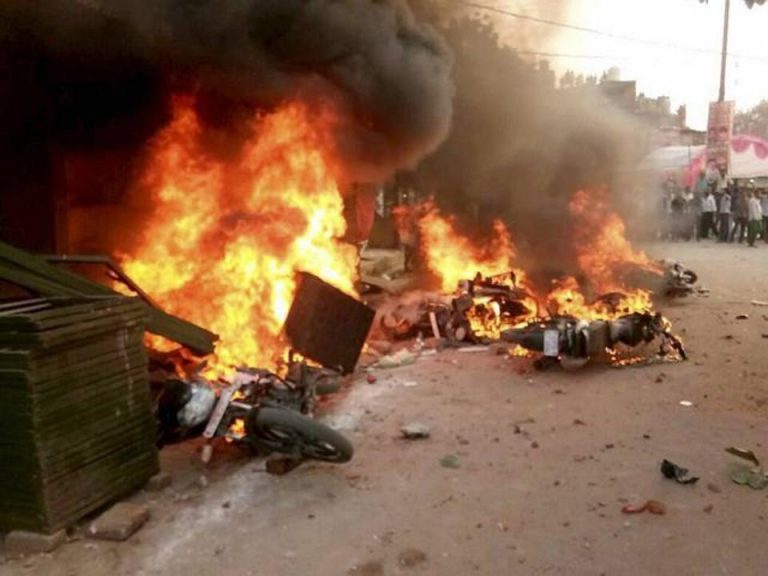
According to media reports, communal clashes happened at two places in Kanpur which resulted in injuries to 30 people including 5 policemen. Plus 10 vehicles and 4 shops were vandalised by the mobs. In one of the areas named Param Purwa, partial control was established but fights continued in Rawatpur.

The incident reportedly began in Param Purwa when a Tazia procession went on a different route that what was assigned to it. As a result it came near a Durga Puja immersion procession. The report claimed that the Tazia procession was supposed to take an u-turn at an intersection but went straight through.

As a result of this coming together of two religious processions, tempers reportedly flared on both sides and stone pelting started. Another report claimed that the police tried to stop the Tazia procession which had deviated from the route, but it as a result incensed the crowd and they confronted the cops. Soon, apart from stone pelting, the mob even indulged in arson.

The dispute in Rawatpur too reportedly started via a dispute over the route of a Tazia procession. The report claimed that some people tore down religious hoarding during the Tazia procession and as a result the confrontation took place.

Such incidents have also been reported from other cities:

  • A Bhaskar report from Sheopur in Madhya Pradesh claimed that situation became tense in the town, after Muslim youths started to chant provocative slogans during the Tazia procession. Some locals objected to the slogans which also seems to have featured pro-Pakistani rhetoric, but even after that, the chants didn’t stop.
  • In Siwan, Bihar, reports claimed that during Tazia procession some unscrupulous elements broke tube-lights affixed near a Durga puja pandal and in order to protest against it people created a road block and also indulged in arson.
  • Even Azamgarh in Uttar Pradesh witnessed communal tension. According to the report, a few youths who were taking part in a Tazia procession, entered into a village fair organised on Dusshera. As a result of that situation became tense and the two communities came face to face and indulged in heavy stone pelting.
  • Medininagar in Jharkhand too wasn’t spared. The situation had reportedly started to become tense from Saturday night in the town’s Masjid Mohalla. At about 10:30 PM on Saturday, a Durga Puja procession caused trouble, as they didn’t pay heed to police’s request to keep moving and not play DJ songs. Things kept simmering and they seem to have escalated further after on Sunday alleged Muslim groups attacked Balwant Singh and Sukan Thakur after they they were passing near the Masjid Mohalla.

Social media questions The Hindu’s claims of Elphinstone stampede victim’s molestation story

0

On 1st October, The Hindu published an article “Elphinstone stampede: Dying woman molested on bridge by bystander, video shows”. The story written by a journalist named Vedika Chaubey had a screenshot of an 8 second video she had tweeted along with her story.


The story said,

A woman victim of the stampede, seconds from breathing her last, was molested by a bystander as she lay atop a pile of victims on the foot overbridge (FOB) on Friday, a video clip shows. The woman, trapped by the bodies, reaches out weakly for help before dropping her hand and breathing her last.

The story does not contain the video, but the tweet which she posted while plugging her story had an 8 second video. This is not corroborated by any of the witnesses present at the scene, and the 8 second video accompanying her tweet is rather inconclusive. The story was then picked up and published by Firstpost, Zee News, Indiatimes and DNA amongst others with The Hindu story as the source.

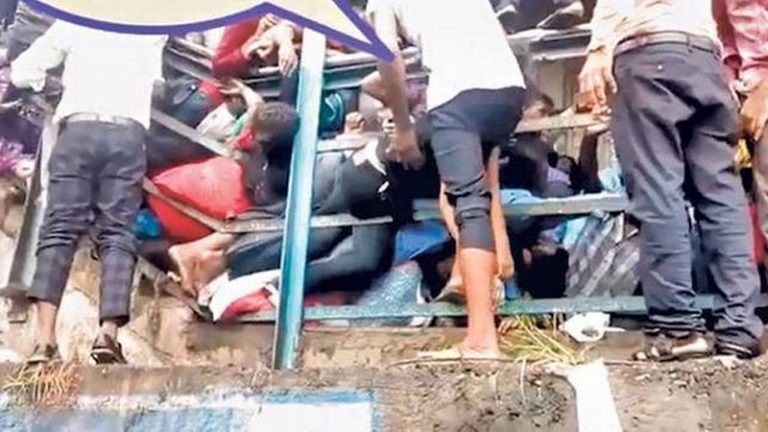
While the mainstream media was blindly trusting The Hindu, social media was sceptical. People started questioning the authenticity of the article and posted the longer version of the video where it seems as if the person accused of molestation is actually trying to help the victim of the stampede pushed against the railing.


Some users posted images of the video which further showed that the mischievously edited video posted by Chaubey showed it was more likely case of the man trying to help the woman instead of groping her.


Longer video from other angle shows that before the alleged molestation, the man accused of molesting the stampede victim was flaying his hands to try and help those stuck near the railing.

Having said that, if The Hindu has a better and longer video clip backing the assertions of Vedika, they should now share it in wake of questions raised by people.

While on one hand we are trying very hard to fight the ‘marital rape law could be misused like dowry law’ mindset people have to criminalise marital rape, incidents like these work as a deterrent to strengthen our case.


This is not the first time the author Vedika Chaubey has written mischievous article where she had claimed that an RTI filed by an activist had revealed that the Central Railway had been buying food items under its catering department for highly inflated prices. The Railway Ministry had refuted the report of the ‘catering scam’.

While we firmly believe that the perverseness of human nature is such that this kind of thing is entirely not impossible, jumping to conclusion about a crime as serious as molestation without evidence is little unfair. Little more reporting and little less sensationalising couldn’t hurt.

Did Digvijaya Singh’s second marriage break his royal family?

0

It is being argued that General Secretary of All India Congress Committe Digvijaya Singh has undertaken the six month long Narmada Yatra to avoid meeting his royal family, which is still upset over him marrying Amrita Rai, 22 years his junior.

In her gossip column, columnist Coomi Kapoor claims that Singh began his six month long Narmada Parikrama from 30th September with his new wife Amrita Rai to avoid going to his hometown Raghogarh on Dussehra, where his entire extended royal family gathers. The word is out that his son, Jaivardhan Singh, who is also an MLA from Raghogarh constituency, Madhya Pradesh, has still not reconciled with his estranged father since the latter decided to go public with his love affair with TV anchor Amrita Rai.

The Narmada Yatra will pass through 110 Assembly constituencies in Madhya Pradesh and 20 constituencies in Gujarat. While BJP ruled Gujarat goes to polls later this year, Madhya Pradesh goes to polls next year, Singh says his 3,300 KM long Narmada Yatra has nothing to do with the his own political ambitions.

Recently, Digvijaya Singh came under lot of fire for posting an offensive tweet on Prime Minister Modi. Before that, during the Rajya Sabha elections in Gujarat in August, Digvijaya Singh played the caste card to get Gujarat Congress rebel leader Shankersinh Vaghela to vote for Congress’ Ahmed Patel. However, Singh’s desperate attempt yielded no result as Shankersinh Vaghela, after casting his vote, declared that he has not voted for Ahmed Patel. He also said that though Ahmed Patel is a close friend of his, with a heavy heart he didn’t want to waste his vote by voting for him as Gujarat Congress not going to win anyway. Digvijaya Singh is also the reason Congress failed to form the government in Goa, where they had won 17 out of 40 seats.

Did his marriage to Rai come between his family and then eventually his political career?

Former colleague of Ravish Kumar exposes his hypocrisy in a stinging open letter

0

Ravish Kumar, a celebrity journalist with the Hindi news channel of the beleaguered NDTV network, had recently written an open letter to Prime Minister Narendra Modi, where he used his trademark rhetoric to further the narrative of journalists and freedom under attack ever since Modi became the Prime Minister.

Ravish had centered his letter around allegations that he had received some ‘death threats’ by such people on social media who are closely related to BJP, with some abusive users even being followed by the Prime Minister. In his letter, Ravish asked if such strong dislike for him by BJP supporter will end up taking away his job.

The letter by Ravish Kumar was used by many other left-leaning journalists and politicians as a ‘proof’ that freedom of expression and press was under attack in India. However, others criticised it for exaggerating things to push an agenda. There were also speculations if Ravish Kumar was preempting his resignation or firing from NDTV amid rumours that the television network was up for sale.

Now Ravish has met his match in another open letter, which has incidentally been written by a former NDTV colleague. The letter has been written by Sushant Sinha, a journalist currently with India News TV channel and who has earlier worked with news channels like NDTV, News24, Live India and others.

Ravish Kumar exposed
Sushant Sinha, when he was with NDTV

In his hard-hitting letter (you can read it in Hindi here), Sushant calls Ravish “unwell” and has wished “get well soon” to him. Sushant has highlighted three reasons, rather symptoms, why he believes Ravish Kumar is unwell and suffering from some diseases.

The first symptoms are of suffering from paranoia, Sushant writes in his letter.

Hitting out at paranoia of Ravish Kumar about losing his job and being ‘pushed on roads’, Sushant asks Ravish the basis of such hysterical claims. He points out that a senior and celebrity journalist like Ravish Kumar could be getting around a crore rupees as annual salary, and such a person talking about being on road showed that perhaps Ravish was paranoid and suffering from some phobia.

Sushant then writes about the real grief of job loss that apparently happened to some NDTV employees recently (presumably to control costs as NDTV is known to be struggling financially). He writes that Ravish Kumar never cared about these employees, earning hardly 20-30k rupees per month, who had the real risk of being pushed on roads due to job loss.

You can fight with the Prime Minister when you think your job is in danger, but you did not fight with the NDTV management for these poor employees – Sushant tears into selfish activism of Ravish.

He further questions the logic as to why the Prime Minister will like Ravish to lose his job, when despite their (Ravish’s and NDTV’s) relentless attacks and criticism of Narendra Modi since 2002, both Modi and the party are only growing in stature.

Sushant then tears into Ravish Kumar’s hypocrisy and NDTV’s double standards when it comes to freedom of speech. Sushant recounts that he was once threatened of being fired from his job, just because he had written in a Facebook post that why do some people don’t respect court’s judgments that have not found Narendra Modi culpable in 2002 Gujarat riots.

Not only the open letter exposes bias at NDTV where journalists are threatened to be thrown out of job for taking a pro-Modi stand, the letter claims that Ravish Kumar did not fight for Sushant’s freedom of expression. Ravish did not summon courage to fight against NDTV’s management reprimanding them that an employee’s freedom of expression should be respected.

Sushant claims, with a sting of sarcasm, that this shows yet another symptom of Ravish being suffering from another disease – schizophrenia or split-personality in this case, where at one end he fights for freedom of expression and on another end, he slavishly agrees with everything when his bosses crush the freedom of expression of a colleague.

The third disease that Sushant suspects Ravish Kumar of suffering from, is megalomania.

He recounts how once Ravish Kumar had apparently told his editor, after recording a TV show with superstar Amitabh Bachchan, that his own presence on screen should surpass that of Amitabh because people like to watch Ravish more than Amitabh.

This megalomania is responsible for Ravish going hyper and making freedom of speech related issues about himself, and Ravish’s open letter to Modi was nothing but an attempt to make it Modi vs Ravish, Sushant alludes in his letter. Sushant writes that due to this megalomania, Ravish keeps looking for marketing opportunities for himself on every occasion.

Don’t give yourself too much of importance, and things will appear normal to you – Sushant offers help to an unwell Ravish in his letter. Get well soon Ravish, he finally concludes.

This is the second time in recent times a fellow journalist has spoken out against a person trying to paint himself martyr by accusing Narendra Modi of attacking their professional lives. Earlier journalist Nikhil Wagle was exposed when he tried to insinuate that his TV show was stopped under pressure from Narendra Modi.

High fuel prices: the method in the madness

0

In March 2017, an Indian National Congress (INC) spokesperson slammed the ruling NDA government “The ordinary Indian is being ripped apart by Modiji by midnight extortion as LPG cylinders hiked by Rs … Are these ‘Achche Din?'”. In April, WB Chief Minister retorted with a similar statement. In September, when the fuel prices hit new highs, another INC spokesperson asked “Modi government is ripping the common man. Don’t they qualify better for the label of ‘economic terrorists’?”

Is there a fair point in what they are saying? One needs to ask this question and understand the facts behind the issue, as we are talking about statements of politicians. Let us be sure, they were talking about the price hike of ‘non-subsidized’ LPG cylinder, as the subsidy on LPG cylinder to the eligible beneficiaries is not withdrawn – at least not yet. The price of Petrol has remained market determined since 2010 without any subsidy and the subsidy on Diesel price was withdrawn in October 2014.

Over decades the subsidies on Petroleum products had become a major component of Indian Government’s expenditure, leading to unavailability of those much needed funds for the growth and development activities.

What lead to ballooning of the total subsidy to a high of Rs.1,64,409 crores in FY 2012-13? One needs to understand the complete background of this colossal problem that the Indian government has been nurturing over decades. Once we are there, it would be easy for anyone to fathom the unfolding story of how the current NDA government has been taming this monster.

To understand and appreciate this gargantuan problem, we need to look into the issues related to domestic LPG and other fuels (petrol, diesel and kerosene) separately and in detail.

The LPG Problem & Reforms Measures

An analysis of the LPG connections and consumptions pattern early in this decade revealed that those in the urban areas who constitute just 20% of the Indian population and in the higher income group, disproportionately received over 60% of the total amount of the LPG subsidies. Sadly, the bottom 20% who constitute the poorest segment of the population who lived in the rural areas received just 1% of this huge LPG subsidy expenditure. And many in the rural area were not benefitted at all, since over 80% of the rural households didn’t have a LPG connection at all.

In view of this and the ballooning subsidy bill on petroleum products, the Ministry of Petroleum & Natural Gas constituted an Expert Group under Shri K. Parikh in June 2013. The Expert Group recommended a set of reform measures in its report [pdf]. Despite their recommendation to reduce the number of subsidised LPG cylinders per household to 6, this cap which was initially reduced to 6 in 2012, was increased to 12 again in 2013 in view of the upcoming general elections and that too when the crude oil price was nearing a all time high.

This increase in number of subsidised cylinders and that too when the estimated average under-recovery per cylinder rose to a whopping Rs 762.70 per cylinder in January 2014 (up from Rs 542.71 in Dec 2013) was termed as a grave mistake as it resulted in the monthly subsidy bill hitting the roof. This was further aggravated due to effects of depreciation of Indian Rupee and persistently strong average cost of Indian crude oil basket. The huge under-recovery in petroleum products by the OMCs year-on-year, lead to the total debt rising to Rs 4.13 lakh crores, which was unsustainable.

With a potentially explosive Fiscal situation, the NDA government lost no time in implementing the recommendations of the Expert Group with all sincerity and vigour, once they took charge.

  • Honourable Prime Minister Narendra Modi, in March 2015, appealed to the citizens to give up subsidy voluntarily with a “Give It Up” campaign so that subsidized connections can be given to the poor. Over 1 Crore had given up voluntarily till April 2016.
  • In May 2016, the PM also announced the Pradhan Mantri Ujjwala Yojana (PMUY) through which Rs.1600 subsidy will be given to each poor household to avail an LPG connection. :
    • Over 2.5 crore connections were given till July 2017 to the poor households, against a target of 5 crore in 3 years, making this scheme a roaring success. This raised the national LPG coverage to 70%.
    • The LPG consumption registered a robust increase to 19 MT by December 2016 from 15.6 MT in March 2013.
  • Direct Benefit Transfer (DBT) to a Aadhar linked bank account was made mandatory to receive the LPG subsidy, and the final deadline was October 31, 2016. This step eliminated leakage of this benefit by stopping illegal diversions.
  • By applying a Rs.10 lakh income ceiling and further scrutiny of irregular and duplicate connections among existing ones, a total of 3.34 crore spurious connections were eliminated.
  • The price of subsidized LPG cylinder was allowed to be increased gradually by Rs.2 every month, instead of every 6 months. The price of non-subsidised cylinder was made market determined and hence came down from a high of Rs. 1,234 in January 2014 to Rs. 607 on September 2017 (for Chennai).
  • The above approach narrowed down the price gap between subsidized and non-subsidized cylinders to just Rs. 132, thereby reducing the overall subsidy burden. Simultaneously, this has rewarded those who opted to give up subsidy.
  • Above everything else, importantly, the under recoveries on LPG alone – meaning the hit that the Oil Marketing Companies (OMC) had to take up due to administered pricing – has reduced from a high of Rs.46,458 crores in 2013-14 to Rs. 36,580 crores in 2014-15 and further to just Rs. 18 crores in 2015-16. IT WAS NIL in 2016-17 !!
  • The total subsidy on LPG – i.e the budget provisions plus under recoveries – reduced to Rs.20,023 crores in 2016-17 from a high of Rs.53,596 crores in 2013-14. The whole of this amount is supported by the budget. Chances are, this will be much lower in the years to come, but may not go away completely any time soon.

The Case of High Fuel Prices

The international crude prices crashed in 2015-16 after remaining well above $80 between 2009-14. So also, the Indian basket of crude oil prices remained high and hit an 11-year low of $37.34 a barrel in 2016 and remained at around 1/3rd of the all time high. The NDA government grabbed this golden opportunity for covering the fiscal deficit and improving the health of the government finances rather than to give short-term benefits to the Indian consumers.

The excise duty on Petrol and Diesel was increased from Rs.9.48 and Rs.3.56 in April 2004 to Rs.21.48 and Rs.17.33 in March 2016, respectively. This roughly works out to 44% and 55% of the retail cost of a litre of Petrol and Diesel, respectively. Due to this increase in excise rates, the GoI’s revenue through levy of excise duty on petrol and diesel has more than tripled in the three year period between 2013-14 and 2016-17 from Rs.77,982 crores to Rs.242,691 crores.

Also, the reduced base price of the fuel meant lower revenue to the states. Hence several states resorted to steep hikes in the VAT. In 2014 only 10 states had a VAT of more than 20% on diesel, but by August 2017, this has increased to 15. In 2014, Chhattisgarh had the highest VAT of 25% but by March 2017, it was Andhra Pradesh that had the highest rate of 31.06%.

In 2014 only 17 states had a VAT of more than 25% petrol, but by August 2017, this has increased to 26. In 2014, Punjab had the highest VAT of 33.06% but by March 2017, it was Maharashtra that had the highest rate of 48.98%.

The revenues from petroleum products shot up due to the impact of the above measures as shown clearly in the graph above.

But those who lament that the petrol and diesel prices are very high in India compared to the neighbouring countries and that the taxes are higher than even the developed countries, would understand that they were looking at a biased picture once they see the holistic comparison presented below. The prices of fuels in Delhi are taken for comparison.

One cannot but notice that while in some of the neighbouring countries the petrol and diesel prices are lower, that is more than compensated for high LPG and Kerosene prices.

Objectives fulfilled

It is clear that the GoI orchestrated a high excise duty mop up but is it justified in doing so? Absolutely, Yes. This determinate action by the present government can be appreciated, if one understands what good this has done to the Indian Economy, by reading the facts presented here.

  • SUBSIDY : The total budget and non-budget subsidy support for the petroleum products including Petrol, Diesel, Domestic LPG and Kerosene that was Rs.41,605 crores in FY 2005-06, went up and touched an unsustainable high level of Rs.1,64,409 crores in FY 2012-13. Within three years hence, it fell to Rs.27,618 crores in FY 2016-17. This couldn’t have been possible without the aggressive and innovative measures towards reducing subsidies on Domestic LPG, Kerosene and Diesel.
  • FISCAL DEFICIT : The health of India’s budget under the current government improved considerably by scoring deficit of 3.5% of the GDP in FY2016-17, from a historical low of 6.5% in 2009-10. For FY 2017-18 it is estimated at 3.2% with a possibility of gliding towards 2.5% by 2022, should other factors converge favourably. The additional revenue from taxes on petrol and diesel has aided in achieving this.

  • INFLATION : Usually a hike in the price of fuel in the hands of the consumers should stoke fears of inflation. On the contrary, government has managed to bring down the CPI (inflation) from a high of 10.91% in 2013 to an average of 1.90% by July 2017, without any reason to fear a major spurt from here on unless a global event results in crude oil price to shoot up.
  • CONSUMPTION : The PPAC data of petroleum products shows that the consumption of petrol and diesel has grown 5.3% on the average during the three year period from 2014-2017, despite at a slower rate in the 4 months after the announcement of Demonetisation. This clearly indicates that the consumers are not too much worried about the additional burden due to the increase in the price of these fuels. Further, a lack of any major and sustained protests or general strike against the higher fuel prices during the last 3 years reinforce the belief that the Indian public trust and support the initiatives of the GoI.

  • CAPACITY : An increase in consumption of petroleum products necessitates an augmentation of refining capacity. The commissioning of the IOL’s refinery in Pradip, Odissha, has increased the country’s total refining capacity by 15 MMT or 7%, making India the second largest in Asia after China. This refinery, missed several deadlines due to various reasons, was dedicated to the nation in February 2016 by the Hon. Prime Minister.
  • FOREX : In September 2017, India’s Forex reserve has topped USD 400 Billion for the first time. This would give RBI enormous strength in tackling currency fluctuations should any unexpected global events rattle the global markets.
  • Health of OMCs : With the elimination of under-recovery from 2015-16, the Oil Marketing Companies have become profitable. But the over Rs.900,000 crores worth of Oil Bonds with a high interest rate of around 8% issued over the last 9-10 years in lieu of the under recovery, are a huge burden that need to be tackled by the current government.

To summarize, the taming of the LPG subsidiary monster is nothing short of a wonder that demonstrates the systematic and goal-oriented approach of the current government. This success will leave much elbow room for the government going forward to look at the growth and development aspects, leaving the subsidy problem behind.

Petroleum Products under GST

Now if one asks when and how will the prices come down, the answer is ‘a bit difficult to predict’.

In December 2016, the Chief Economic Advisor Dr.Arvind Subramaniam announced that though constitutionally the petroleum products are within the ambit of GST, it will be kept out of GST dispensation for sometime after GST goes live. This was the decision of the GST Council as the State Finance Ministers who are part of the council found it necessary to protect the revenues of their states as a substantial part of their revenues were from the petroleum products including petrol and diesel. This apprehension sounded reasonable considering this : though GST is a major reform that is expected to result in better tax compliance and an increase in tax revenues for both the center and the states, the uncertainty in that cannot be discounted.

Recently in September 2017, when questioned about the high taxes on petrol and diesel, the Union Minister for Petroleum and Natural Gas, Mr.Dharmendra Pradhan expressed hope that they would be brought under GST soon. This statement, when read with the fact that Excise Duty for petrol and diesel has not been increased since nearly 18 months after March 2016, helps in deducing that the GoI has already achieved its short term objectives and hence ready to bring the petroleum products under GST ambit at the earliest. But that decision clearly rests with the council. Hence the central government cannot be blamed for the prolonged high prices for these fuels at the hands of the consumers.

The call for a reduction in the fuel prices is quite reasonable as it pinches the purses of the common man resulting in lower savings. It appears that reasonable GST tax revenue realization in the first 4-5 months after the GST went live will convince the states to agree for bringing the petroleum products under GST. How about from January 2018 ?

Preparations for the next decade

The present Indian Government has not stopped with the above achievements that might help in making the economy better in the short term but has spelt out its policies that it wants to promote to protect its economy from potential future shocks from crude oil. The crude price has remained low and favourable to India since mid 2014 but may not remain so forever.

  1. In 2016, the Hon. Prime Minister has set a goal to the Ministry for Petroleum and Natural Gas for reducing Crude oil imports by 10% by 2022.
  2. The Union Minister for Road Transport and Highways (MORTH) has recently reinforced this by calling manufacturers to reduce the growth of cars, particularly diesel cars, and replace them by those running on a more sustainable fuel like electricity or ethanol.
  3. Also MORTH has charted out a plan for promoting electric propulsion for public transportation. This, when implemented in a sustainable and time-bound manner, should contribute reducing fossil fuel consumption.
  4. Extension of the metro rail services in the cities where they are already operating and faster completion in over a dozen cities where they are under construction or planned should motivate the public to abandon their personal vehicles and switch over to Metro services.

These lofty goals, if properly planned and achieved, will server as firm steps in India’s endeavour towards achieving energy security.

References :