Home Blog Page 7457

Why Scroll’s article on Vivekananda is a textbook case of Hinduphobia

0

An intriguing quote

Consider this striking quote by Gaurav from several years ago: “In secularism Hindu is the Untermensch.”

I won’t ask you yet to believe this strong statement, the necessary justification being beyond the scope of the present post, and perhaps beyond the present writer. For now, I have a considerably more modest aim of illustrating how this claim is served by several of the points made by Girish Shahane’s Scroll essay `crediting’ Swami Vivekananda of laying the foundation of India’s “politics of sectarianism”.

1. The subtly Hindu-blaming headline

The bit in the headline, “laid the foundation for India’s politics of sectarianism” (italics mine), unambiguously implies that India’s sectarian politics was unilaterally started by Hindu fundamentalism, after the Swami’s life time. We have enough instances of centuries of Hindu-Muslim strife to contest the chronology and the “Hindus as initiators” assumption here, for instance, with the great Al-Biruni writing: “Mahmud utterly ruined the prosperity of the country, and performed there wonderful exploits, by which the Hindu’s became like atoms of dust scattered in all directions, and like a tale of old in the mouth of the people. Their scattered remains cherish, of course, the most inveterate aversion towards all Muslims.”

The headline is thus already quite telling, irrespective of whether it was chosen by the Scroll staff or Mr. Shahane.

2. Any criticism of a bunch of Muslims should be counterbalanced with positives of Islam

Mr. Shahane writes, quoting from a letter of the Swami:

In Vivekananda’s view, “the Hindu nation” or “the Hindu race” suffered, “a thousand years of slavery and degradation”, “at the feet of foreign conquerors”, “savages from Central Asia”. The idea … ignores developments in architecture, mathematics, the arts and music in those centuries, not to mention the Bhakti movement that swept East and North India, and the many contributions Muslims made to the nation’s cultural wealth. BJP leaders harp constantly on the thousands years of slavery theme, and I wasn’t surprised it featured in Modi’s tribute.

What chance is there for a tolerant polity to emerge from such a relentlessly negative account of the encounter between Islam and religions of Indian origin?

Let me list a bunch of problems here:

(i) The Swami is not making any comment on the common Muslim of his time, nor any on the common Muslim of the medieval period. In that letter, he is only making references to marauding armies from Central Asia, without even mentioning the word Islam. And his focus is not on how cruel the armies were, but on how the “mass of Brahmin and Kshatriya tyranny has recoiled upon their own heads with compound interest” as a sort of karmic retribution against casteism – something one would expect to warm left-liberal hearts. One could separately ask if this attribution of foreign-attacks to karma is offensive to Hindus.

(ii) Notice the suggestion that any criticism of a specific, small, non-representative set of Muslims should be counterbalanced with mention of contributions to “architecture, mathematics, the arts and music” (the mathematics part of the claim is not clear to me, but let’s ignore this). It takes an unbelievable amount of elitist (some would use the term “Brahminical”) snobbery in equating the value of the lives of large numbers of common people with “high culture”.

(iii) For a moment let us locate Mr. Shahane’s article in the larger context of Indian historical narrative. À propos point (ii), these are people who go on and on about various Hindu excesses without any mention of Hindu contributions. And while doing so they criticize not merely specific members of a faith as the Swami did, but the religion of Hinduism as a whole. In fact, if anything, Hindu contributions have been cleverly coopted by a diabolical artifice of categorization: “Indo-Islamic contributions”, so that any explicit credit goes to India or Islam and not to Hinduism, ensuring that Hinduism per se is left with caste, sati etc. Thus, we arrive at the following table of left-liberal interpretative convention in indology:

Religion Hinduism Islam
Postive feature Deny credit, if no Buddhist connection categorize it as Indian or Indo-Islamic Give credit, and use it to “counterbalance” negatives
Negative feature Specifically blame religion, no counter-balancing Do moral equivalence and counter-balancing with positives

Indeed, if you think of a group of people as untermensch, you would accordingly tweak credit or blame assignment heuristics in favor of strengthening systemic inequity targeting your object of hatred, which is exactly what you see in Mr.Shahane’s and many other left-liberals’ writing.

(iv) Another letter from Swami Vivekananda. Now let me quote from the Swami’s letter to the then Diwan of Junagadh: “Why amongst the poor of India so many are Mohammedans? It is nonsense to say, they were converted by the sword. It was to gain their liberty from the . . . zemindars and from the . . . priest, and as a consequence you find in Bengal there are more Mohammedans than Hindus amongst the cultivators, because there were so many zemindars there.”

But for Mr. Shahane, this wouldn’t suffice – he is unhappy that a different, equally private, letter to a Maharaja blames a specific collection of long dead Muslims without compensatory encomium of Islam, though the Swami’s mild assertions are supported by a whole host of Hindu and Muslim historical sources, including the great Al-Biruni as quoted above. Allow some time for this to sink in, and you realize that the authoritarian fascist left-liberal/left-“libertarian” brooks nothing short of complete, humiliated, capitulation.

3. Equality for me but not for thee

Accepting that all religions can lead to the truth does not earn the Swami any partial credit from Mr. Shahane:

As for the truth of all religions, Vivekananda replaced the old distinction [with]… a hierarchy of superiority and inferiority. Just as societies could not be deemed true or false but could be labelled undeveloped or developed, Vivekananda’s hierarchy placed Advaita Vedanta at the peak. In his scheme, all belief systems were equal, but some were more equal than others.

Here I have to agree with him partially: Swami Vivekananda did likely believe that not all religions were equal, which is entirely consistent with the belief that all religions can lead you to the truth (as in, everyone takes you there, some offer you a more diverse package etc.).

But Mr. Shahane’s malice shows in using this to negate claims on tolerance, and in the implicit suggestion of its relevance to his central claim on sectarianism and bigotry. Let us examine why:

(i) It is considered entirely fine for a Christian or a Muslim to believe or preach that their faith alone is true and that the rest lead to hell. Hindutvavadis who use this as an evidence towards “semitic intolerance” are ignored or countered, under the tacit convention that these believers should be left alone unless they get physical. Classical liberalism, where my nose begins etc.

(ii) Do left-liberals themselves believe that Hinduism is only as bad as other religions? They, in particular Mr. Shahane, by countering claims on Hindu tolerance, say that Hinduism is every bit as intolerant and violent as other religions, but caste is universally treated as a problem uniquely or predominantly a feature of Hinduism. Thus their work effectively characterizes Hinduism as inferior to other religions. The only instances where an Indian school/college level text book singles out a specific religion and criticizes it is while talking of caste. There are many other ways in which left-liberals believe Hinduism to be inferior: by portraying Hindus as more superstitious than members of other religions (e.g., as in the Dabholkar law and the narrative surrounding it), characterizing Hindu festivals alone as causing pollution, public nuisance and animal cruelty, and so on.

Thus, the left-liberals as a group objectively treat Hinduism as an inferior religion (while taking care to not explicitly state this sentence as such, in the interest of providing themselves cover), and yet analogous-yet-much-milder Hindu beliefs in the superiority of Hindusm in certain respects are not merely combated in their own terms: Rather they are stigmatized on meta-considerations that the left-liberals themselves do not respect in other contexts. The far milder views of the Swami, milder than the scripturally sanctioned and wildly held beliefs in other traditions, are branded as no less than laying the foundation for sectarianism in the country.

“Some are more equal than others”, indeed.

4. License to exaggerate for me, but not for thee

Mr. Shahane:

Vivekananda claimed that Hinduism was the originary faith; that it was uniquely tolerant; that it led to a nation that was uniquely committed to peace; and that it was congruent with science. These are all demonstrably false claims.

The Swami’s strong rhetoric on caste should show that his claim on the tolerance of Hinduism was to be understood in a strictly relative sense. This is not a “demonstrably false claim”, but quite a legitimate point of view, as one sees from reading Koenraad Elst, or by adapting to our context ideas written by Nassim Nicholas Taleb on paganism and polytheism.

To the modern ear adapted to a more austere literary aesthetic, the Swami’s ornate statements can appear to contain several exaggerations. But let us consider some of Mr. Shahane’s own exaggerations from the article: “Everywhere he went, whether to Madras or London, he spent time in photo studios, posing in a variety of stances and costumes. Every change of headgear and hairstyle, from turban to high cap, from long hair with a centre part to the close crop of a mendicant, was recorded by the camera.”.

Their exaggerations differ in a crucial way: the Swami’s exaggeration can very well be attributed to the flow of his flowery style (he followed literary and oratory conventions that were popular at the time – just read a few Sherlock Holmes stories to see this point), while Shahane’s exaggeration is a deliberate and calculated one in the interest of optimizing manipulation, i.e., creating a “reality distortion field”, to borrow his own language.

The claims on “originary faith” and “congruence with science” are subtler ones, that will take us too far afield to counter. Suffice it, for now, to say that one should guard against being uncharitably literalist while interpreting the Swami, and that, within the context of the World Parliament of Religions, it is a legitimate assumption that the speaker talks from the perspective of a believer, and not from the perspective of a historian. Again, keep in mind how you would judge a Muslim preacher who makes analogous claims in religious space such as the World Parliament of Religions.

5. A case-study in left-liberal psychological manipulation, courtesy Mr. Shahane

Mr. Shahane makes a “By choli ke peechey I really meant dil”-type argument (analogy courtesy greatbong):

“I have not pointed to Vivekananda’s fondness for his portraits in order to denigrate him. His physical appearance, like Modi’s, was far more impressive than that of Gandhi, so a little vanity is understandable. Few who read Vivekananda’s compelling Collected Works can fail to be fascinated by his mind and personality.”

Two points on this count:

(i) If his intention weren’t to denigrate, what he considers a relatively harmless vanity would not be deemed relevant to be mentioned in his article, let alone be worthy of so much space in it. The reason Mr. Shahane wants to include this is quite obvious: bring in a parallel with Mr. Modi, while not extending this parallel to Hindutva in order to maintain plausible deniability, and yet leave a subconscious association between the two among his Modi-hater readers who may have a more neutral view of the Swami (in contrast any Modi-lover reader would miss this chicanery).

(ii) Let me alert you to another literary artifice here. Mr. Shahane praises the Swami for writing well, and calls his life “fascinating”. These are not moral virtues, so the Swami doesn’t stand to really “gain points”, so to speak: yet, the praise is calculated to give Mr. Shahane greater acceptability among those who are relatively less unfavorably disposed towards the Swami. Thus, without having to make any real compromise, it enhances his elbow-room to cast more aspersions on the Swami later. Be careful to prevent your sympathies from being led astray by such tricks.

6. A few epistemic precautions that are necessary while reading left-liberals.

Let me put the above observations into a more general context in the form of pitfalls to be wary of while reading left-liberals in general:

(i) Make sure to not limit yourself to following just the textual meaning of their writing: they are experts in plausible deniability, their core competency is in subconsciously impressing their ideas on the reader without having to take any responsibility for the frequently elitist bigotry that lurks behind their superficial lip-services to egalitarianism. Always look for the subtext, and not merely the text, of their writing.

(ii) Do not look at a point made by them in isolation. In fact, a lot of the left-liberal criticism of Hinduism is legitimate when viewed in isolation: these are criticisms many Hindutva-vadis themselves make. Thus, Mr. Shahane’s own criticisms of Hindu fundamentalism would have been more, even if not entirely, understandable, had he not insisted that the Swami counterbalance his criticism of specific Muslims (that too in the course of his criticism of Brahmin-Kshatriya tyranny) with odes to Muslim cultural contributions.

To put it another way, there are two ways for a non-religion-sympathizer to treat a religion:

Approach A: Be relentlessly critical, use language and parallels geared towards shaming the followers out of the religion , and repeatedly emphasize everyone’s freedom to do the same. Example: Nilanjana Roy blaming our epics while writing about Nirbhaya rape; and

Approach B: Be extraordinarily sensitive, urge the same of others, try to highlight the positives of the religion and use it to tone down criticism, resort to some so called “whataboutery” etc. Example: many of the points made by Martha Nussbaum while writing against Burqa bans – see this rejoinder.

To some extent, most of us view both Approach A and Approach B as legitimate. So a given point made by a left-liberal on Hinduism/Islam would appear legitimate in isolation, as it would involve an application of either of these legitimate approaches. The real problem, namely, that left-liberals reserve Approach A exclusively for Hinduism, and use only Approach B for Islam, will escape us if we engage their points in isolation – too many Hindus fall for this trap. We should perhaps feel thankful to Mr. Shahane that he used Approach A for Hinduism and Approach B for Islam in the very same article, making our job of seeing through his bigotry easier.

As many left-liberals themselves like to say, inequality is a subtle phenomenon. Forms of discrimination against women or dalits that look so obvious today escaped the attention of many of the very smartest people a century ago. The only way to identify entrenched inequality is to actively look for it, constantly seeking out and studying comparisons.

(iii) Watch our for “reality distortion field” tricks like the ones mentioned in point 5 – the price of freedom from being carried away by seductive prose is eternal psychoanalysis, especially while reading skilled writers like Mr. Shahane.

7. Plausible practical implication of such “heuristic engineering” narrative for the value of Hindu lives.

It is an unfortunate reality that there is Hindu-Muslim strife in the country that takes too many valuable lives on either side (the numbers may not look lopsided unless you restrict your attention to the major riots that the liberals cherry-pick, as numerical superiority plays a more decisive role in major riots). Crucial to harmony is equally valuing the loss of life on either side. Entrenched inequality in this regard can irreversibly damage the societal fabric.

However, let us step back and look at how we budget our limited attention across a welter of complicated issues. The complication and non-quantifiability are serious enough problems that we cannot apportion our focus across issues in any scientific manner. Moreover, even if perfect fairness were possible in this regard, we would probably be spreading ourselves too thin, unable to do justice to any one issue.

Rather, we all fall back on heuristics and anecdotes to take our picks and focus efforts on those selected ones in the hope of setting healthy moral precedents, while periodically sanitizing our stock of heuristics and anecdotes to make them as representative as possible.

Unfortunately, rather than trying to sanitize the collection of heuristics and anecdotes, the focus of left-liberals has been to engineer a narrow class of heuristics among the populace. Namely, those along the lines of “the issue matters if and only if it concerns one of our designated victim classes”. Well meaning unsuspecting gentlefolk with a fascination for good prose, such as much of the South Bombay elite, subconsciously internalize such heuristics, because the carrots of social validation dangled by their left-liberal peers are dispensed in accordance with the very same heuristics.

Aside/example for the heuristic nature of thought process: An example that highlights the heuristic-based nature of our thought process is that the gay marriage debate in the US was phrased in terms of “the right of gays to marry”, as opposed to “income tax parity/visitation rights for gays”. The former description is less accurate (it is not like any one emotionally cares for the government to recognize their marriage), but does a better job of locking onto and resonating with existing heuristics.

The long term casualty of such liberal heuristic engineering, and conventions of anecdote selection and amplification, I fear, is the value of Hindu life. No left-liberal explicitly calls for undercounting the value of Hindu life, and many if not most of them do not consciously hold it as an ideal either. Nevertheless, the heuristics that they unwittingly assimilate trains them into coming up with reactions dependent or contingent on the identity of the victims: with visceral course-over-correction enthusiasm to the injustices towards Muslims, and with silence or “urge for calm/resisting stereotypes” to the injustices against Hindus.

Examples from recent news items about the worrisome correlation between religion/political ideology of victims and news coverage, such as the Kamlesh Tiwari/Basirhat silence vs Gaurakshak exaggeration, abound; let me not go into this as I presume that most people who read this article are likely to be aware of what I am talking about. Do read, if you haven’t already, this tour de force by Anand Ranganathan on how selective usages of a very powerful word, whataboutery, act as a powerful shield for certain conveniently handpicked strands of hypocrisy. This is a great example of left-liberal heuristic engineering.

If these fears sound exaggerated, please remember that the UPA government had tried to bring in a communal violence bill that sought to deny equal treatment to Hindu victims of communal violence. So the concerns about the possible material impact of left-liberal narrative are far from merely theoretical.

And this my dear friends, I hope you will realize some day, is how to convert a whole chunk of the population into untermensch in a democratic manner. Using persuasion, as Scott Adams would say.

2002 riots case against Maya Kodnani takes a new turn with video evidence and Amit Shah’s testimony

0

BJP President Amit Shah today recorded his statement in sessions court in Ahmedabad as a witness for Maya Kodnani, who is a former state minister accused of leading rioting mobs in 2002 Naroda Gam case. Shah told the court that Kodnani was inside the state assembly at 8:30 am on 28th February, as against in Naroda as she is accused of. Incidentally, a television footage available corroborates this claim:


The BJP President further said that when he was at the Sola Civil Hospital, where the bodies of the Godhra carnage victims was kept, he met Kodnani there. Both had visited the hospital right after the special assembly session held to pay respects to the karsevaks who had died in the carnage.


In 2012, Kodnani was accused and convicted of murder, attempted murder and conspiracy in 2002 riots. While pronouncing the judgement, Judge Jyotsna Yagnik had named Kodnani “a kingpin of riots”. Judge Yagnik had also accused Kodnani of leading the mob and incite them to violence.

Shah’s statement, however, stands as a testimony that perhaps Kodnani was indeed a victim of politics. There have been glaring loopholes in her conviction by Judge Yagnik. Despite video footage of her presence at Gujarat Assembly between 8:30 am to 8:40 am, witnesses for the prosecution had claimed Kodnani was leading a mob in Naroda at 8:30 am as well. As per another witness, Kodnani was distributing swords and other weapons, though at a later time that day.

Interestingly, all these witnesses have named Kodnani for the first time in 2008, six years after the riots took place. Some of the witnesses are also allegedly close to Teesta Setalvad, who has been accused of illegal exhumation of victim bodies and embezzling funds of trust created for helping the riot victims.

Hafiz Saeed’s proxy bags the third position in Pakistan by-election

0

Alarm bells should already start ringing in Washington and New Delhi after the current NA 120 results in Lahore. Following the decision given by Supreme Court of Pakistan to disqualify Prime Minister Nawaz Sharif from public office, a by-election was triggered in National Assembly – 120 constituency.

This much hyped election was won by Kulsoom Nawaz, the wife Nawaz Sharif. Kulsoom, the Pakistani Muslim League (N) candidate defeated Dr Yasmin Rasheed of Pakistan Tahreek-e-Insaaf party of Imran Khan by 14,646 votes.

But this shouldn’t be the main story of the election. All should be concerned that Yaqoob Sheikh, an independent candidate has bagged the third position in a most unprecedented move.

Though independent, Yaqoob had the backing of Milli Muslim League (MML), a political party set up by terror organisation Jamat-ud-dawa’s (JuD) leader Hafiz Saeed who is considered the mastermind of the 2008 Mumbai Terror attack.

The party was formally announced just this August and has not yet been recognised by Pakistan Election Commission. This as a result compelled Sheikh to run independently, backed by the party.

Sheikh himself is no stranger to controversy as he was named a specially designated global terrorist by the US in 2012 for his alleged role in leading fundraising and operations for the Lashkar-e-Taiba (LeT).

His election campaign banners even featured images of Hafiz Saeed which directly points towards him trying to gain political mileage via the JuD chief. The results were shocking. Sheikh bagged the third position in the race with about 5822 votes and even surpassed the Pakistan People’s Party (PPP) candidate Faisal Mir. All this despite the fact that he did not get enough time for campaigning.

It might be safe to presume that this is the beginning of ‘mainstreaming’ of terror outfits into political parties as part of new policy by Pakistani establishment. Ever since Donald Trump warned that there will be ‘no tolerance’ for safe terror heavens, followed by BRICS declaration of naming Pakistan based terror groups to be curbed upon, Islamabad is under tremendous pressure to put a stop to these terror outfits.

Indications are that both Islamabad and Rawalpindi have formulated a ‘rehabilitation’ plan which would involve filtering the less extremists out of extreme extremists, labelling them as ‘moderates’ and bringing them into politics. It’s a repackaging of ‘Good Taliban, bad Taliban’ theory and this time its more formal.

It is undoubtedly a lose-lose situation. If Pakistani people garland these terrorists with political success, they might be encouraged to turn more right wing, more radical and possibly become a newer version of Taliban. Remember Afghanistan in 70s vs 90s?

If they get moderate success, they would choke the political system of Pakistan by promoting more radicalisation, and would force other political parties to take an ultra-right shift. In case they lose badly, they might use their terror methods to win seats.

Imagine a candidate who defeats them only to get shot dead, after any illogical allegation of blasphemy. In any case, there is no guarantee that they would not continue their activities against India and chances are that their support for terrorism would be more strengthened once they are part of establishment. Not withstanding the fact that the current establishment is already covertly supportive of terrorism, but their direct presence would worsen the situation.

This is a very dangerous sign not just for US and India but also the whole world. US expects to wind-up its war in Afghanistan, which would be seriously threatened by Pakistani terror outfits entering politics and destabilising the region as terrorists in power may be calling shots. These highly fanatic people, who have no regard for human life, could impose terror on minorities across their state. Ethnic cleansing against Shias and Ahmadis may increase.

India needs to be more vigilant, as these terrorists are right across the door and now camouflaging as politicians. It may be considered too hypothetical but chances of a Pakistani suicide bomber posing as a politician and carrying terrorist activity in our country on an official visit cannot be ruled out. A fanatic Talibani disguised as politician holding nuclear buttons is equally if not more dangerous than Kim Jong Un holding it.

We cannot let Pakistan escape from its responsibility to eradicate these terror outfits once and for all. It cannot continue to treat them as assets and pretend to be fighting them at the same time. Pakistan cannot claim victim-hood on terrorism simply because it has let it grow in their backyard, that too for its own personal agenda. The world must nip this Pakistani coined ‘rehabilitation’ in the bud before its too late.

Gujarat temples donated funds for the Sardar Sarovar Dam when World Bank refused them: PM Modi

0

On Sunday Prime Minister Narendra Modi inaugurated the much publicised 138-metre Sardar Sarovar Dam on the Narmada river at Dabhoi, Gujarat. It was a landmark of sorts considering the amount of delays the project had experienced owing to protests by various activists. This increase in height from 121.92 metre to 138.68 metre has quadrupled the dam’s storage capacity led  to 4.73 million acre feet.

The foundation stone of the project was laid back in back in 1961. Ever since then it has been marred by protests by activists like Narmada Bachao Aandolan founder Medha Patkar, who have claimed that the dam’s water might displace about 40,000 families as their homes would be submerged. They have claimed that the rehabilitation process of these families is still not complete and that the water supply in the dam be stopped until its done.

PM Modi on the other hand stated in his speech that a massive misinformation campaign had been launched against the project. He claimed that he had a list of people who came in the way of the project but asserted that the government was always determined to continue the project.

He also claimed that when the World Bank (which had earlier agreed to fund the project), refused to give loan citing environmental concerns, the temples of Gujarat organised funds for the dam. He also claimed that no other project in the world had so many hurdles.

This is considered a flagship project by many as its implementation is expected to provide water, power and irrigation facilities to millions of people in Gujarat, Rajasthan, Madhya Pradesh and Maharashtra.

According to a press release from the PMO’s office, the project has helped transport waters to the water-deficient areas of Saurashtra, North Gujarat and Kutch via an elaborate canal and pipeline network. This project is now expected to benefit 10 lakh farmers for irrigation purposes and help supply drinking water to 4 crore people in both towns and villages.

Calcutta High Court raps Mamata govt for fixing Durga idol immersion timings

0

The Calcutta High Court has pulled up Mamata Banerjee led West Bengal government over their decision to fix Durga idol immersion time which coincided with the Taazia procession during Muharram. The Calcutta High Court drew parallels between West Bengal Police and Maharashtra Police in terms of handling festivals of different communities falling on the same day, which didn’t go down quite well with Chief Minister Mamata Banerjee.

As per matters of the case, citing law and order issues, Mamata Banerjee government had earlier announced that no Durga idol immersion could take place after 6 pm on 30th September till 1st October due to Muharram procession.


This announcement hadn’t gone too well with people who accused her of minority appeasement. Following the announcement, a PIL was filed in the Calcutta High Court which claimed that the announcement had hurt the religious sentiments of the majority community.

During the hearing, the judges asked how many Muharram procession requests were granted during the said period. Turns out only two organisers had sought permission for the Taazia procession during Muharram. The Court found it surprising that only for two processions, the government had stalled the entire Durga Puja immersion ceremony.

This is not the first time the Calcutta High Court has pulled up Mamata Banerjee government. Earlier too, Calcutta High Court had pulled up West Bengal Government for setting time limit for Durga idol immersion as “arbitrary” and “clever endeavour” by the state to “appease the minority”.

Dear Sir Arjan Singh, I am ashamed

0

My personal sense of shame set in a few months ago when I started researching for a writing project. And last night, that sense of personal shame transformed into a sense of collective chagrin when, after the passing of Marshal of the Indian Air Force, Sri Arjan Singh, the countrymen he fought for, and the politicians he fought under, couldn’t even get his rank right.

The first and only Marshal of the Indian Air Force, the first and only 5 star rank officer with the Indian Air Force, got demoted to a 3 star ‘Air Marshal’ rank or a 4 star ‘Air Chief Marshal’ rank, in people’s thoughts and prayers not owing to malice but to ignorance.

I was reminded of all the times I had to call up a friend from the Army and ask him about military details, I knew none of. Of ranks and even the hierarchy of officers. Some of the questions I asked seem dotty in hindsight. In the event of a terrorist attack on an army camp (I later found out that by ‘army camp’, in the context, I meant COB; Company Operational Base), how would the army respond? Would it be the Company Commander (I was fuzzy on the rank of a Coy Cdr, I was also unaware they were abbreviated as Coy Cdr), or the Commanding Officer (Again, fuzzy on the rank). I had no idea that every company would have a QRT, Quick Reaction Team, to respond to such situations. I had a look of utter confusion on my face when the ‘unified command structure’ was mentioned. I was left amazed when I read the Joint Doctrine of the Indian Armed Forces or even our Doctrine for Sub Conventional operations.

While I was fed information at a dizzying speed that left me breathless, every moment I paused, I wondered if my love for the armed forces was superficial and unthoughtful.

Imagine staring into the barrel of the enemy’s gun or drowning in nature’s wrath, being protected, over and over and over again, by the very people you know nothing of?

Yes. I did feel like a fraud. Not because my love for my protectors was diminished. But because in my 30 years of existence, I hadn’t bothered finding out much about them.

I wonder then, are we one of the most militarily illiterate bunch? While average citizens being unaware, though tragic, is still understandable, what ails the political class, that too the top leadership in some cases? Why is it that we live in times where the political class, from the midst of whom the supreme commander or the defence minister might be chosen, shouldn’t get basic details right?

Does this culture stem from the earlier political days when leaders thought the armed forces weren’t required at all? Were the armed forces increasingly opaque in order to protect itself from maliciously being used as political tools?

Whether it was the betrayal of General Thimayya, or the fact that none of our top politicians bothered to attend Field Marshal Maneshaw’s funeral, or yesterday, when politicians get the rank of the first and only Marshal of IAF wrong, what is it that makes them so nonchalant?

Is it because the citizenry doesn’t demand higher standards? Or is it because we as a country have learnt to take our men and their service for granted? With statements like “they’re paid to do their job” flying around, with politicians asking the army for proof of operations, with questions being raised on the most professional army as to how they function in an area diseased with insurgency and terrorism, I shouldn’t be surprised that this is the culture of doubt and degradation that we seem to follow.

But as a citizen who is eternally grateful, I am. I am surprised, and I am ashamed.

Ashamed at our collective ignorance. Ashamed that for decades, while the politicians fiddled with the sanctity of the forces, we stood mute. Ashamed that we don’t demand higher standards from our political class. Ashamed that we don’t care enough.

An officer of the Indian Army vows to protect the country. To go wherever he is ordered to go, by land, sea or air. He vows to obey commands, even to the peril of his life. He earns his rank with blood, sweat and tears. And that phrase, blood, sweat and tears, is quite literal with the soldiers who protect. It’s not a punchline that we might use during conversations drowned by the clanking of champagne glasses.

My research for the writing project so far has given me the honour and the privilege to interact with some veterans who changed my perception not only towards what “Going beyond the call of duty” means, but also towards my own life.

Not too long ago, I spoke to a 1971 war veteran whom I wished to interview. That interview couldn’t really happen because he was headed for a surgery on the same leg that he had lost during the war. A leg he had severed with his own khukri, while at war on the eastern front. 46 years later, he struggles with the same wound. Proud of the institution he belongs to. Proud of the country he served. Proud of the countrymen he protected. When it is said that our soldiers earn their ranks, it is meant in quite the literal sense of the word.

Marshal of the Indian Air Force, Sri Arjan Singh started his illustrious career of service in 1938 as a flight cadet. He served in the Forces right from the World War II to the 1944 Arakan Campaign, to the 1965 India Pakistan war. It took him 32 years of active service and another 32 years of retirement, to be honoured with the rank of Marshal of Indian Air Force.

It took the expertise, confidence and resilience of a soldier to say “In an hour..” when asked how long it would take for him to strike the Pakistani forces in 1965. It took discipline. Love. Courage. Grit. Determination. And an unwavering sense of patriotism and duty, for Sri Arjan Singh to be conferred with the title.

The first and the only 5 star officer of the Indian Air Force earned his rank. He deserves to be remembered as such.

After Digvijaya Singh, Congress leader Manish Tewari tweets abusive words

0

Days after Congress leader Digvijaya Singh got called out for posting abusive words against the Prime Minister, Congress leader Manish Tiwari, too, tweeted an abusive tweet on similar lines:


Twitter users reacted to the same and called out the former Information and Broadcasting Minister for crossing the lines of decent behaviour as a public figure.


Seems like the frustration of being out of power is getting to them.


Twitterati also took digs at the ‘PM follows abusive trolls’ debate.


It also opened up floodgates to jokes.


Earlier this week, Manish Tewari had spread lies about a Christian priest rescued from the captivity of ISIS, and had made personal attacks on External Affairs Minister Sushma Swaraj. Predictably, the bulk of mainstream Indian media has not found anything wrong with Tewari’s Twitter antics.

Inside the mind of liberals: the logic that works to create a false narrative

0

Fair is foul & foul is fair
Hover through the fog & filthy air…

Perhaps the greatest tragedy lies in the fact that ‘liberals’ of this era don’t behave like a liberal. Liberal and progressive ideology is like a religion built on a foundation of false narratives.

For the so-called ‘liberals’, demeaning & ambushing the Right seems fair at every opportune time even if it means taking help of foul means. For them, every fair achievement which involves the Right makes them nauseous and a systematic attack is launched to create a spiteful atmosphere.

They play by their own set of rules which even supersedes the constitution. They even finish off a murder investigation within minutes in few tweets. They have a their own guidelines to decide which festivals are communal (to condemn) and which are liberal (to celebrate).

The so-called torchbearers of democracy believe in democracy only when a judgement is pronounced in their favour, otherwise, they quickly brand India as ‘Hindu Pakistan’. One can see their thought process is so clouded that even when they accuse the Right of bigotry, they themselves are driven by hate. This hate is not only for the right wing, but to our cultural identity.

Do not mistake their behaviour for just another ‘Modi bashing’ thing. Modi or no Modi, these ‘liberal’ fascists will continue to attack, degrade and erode our culture. Mocking our tradition is so deeply rooted in their DNA that it acts as oxygen to them. Let me explain how:

1. Different set of rules & different reactions on crimes :-

Rather than following the Indian Penal Code, the pseudo liberals have their own “Liberal Hypocrisy Penal Code”. Yes, I am talking about the recent Gauri Lankesh Murder case. The cocktail circuit gang took hours, if not minutes, to solve the case and blame it on the right wing and the RSS. Congress led Siddaramiah government was immediately given clean chit. Let me explain though a flowchart how their calculation works.

‘Hindu Terror’ as a narrative is being built by them even before police could conduct investigation. Even when her brother said it could be a possible Naxal attack, the ‘liberal’ armchair investigators had already solved the case and blamed it on the RSS.

Another baffling aspect is that their reactions and outbursts depend on the the victim’s ideology, class and social strata to which they belong. Just because Gauri Lankesh was a vocal critic of the right wing, the verdict was already out. Within days following her murder, another journalist, Pankaj Misra, was shot at in Bihar. However, there was no furore over it. Neither did anyone conclude their investigation to start the blame game. No placards, no protests. Was it because he did not belong to the elite, English speaking Lutyens’ cabal?

2 . Whataboutery when it comes to religious reforms to undermine Hindu culture:

The historic judgement of Supreme Court which banned instant triple talaq finally bought some solace and gave a sense of relief to Muslim women, even though Nikah-Halala still continues to be in practice. While the judiciary is independent, Modi government’s stand on triple talaq has been very clear. This irked the so-called liberals. The feminist inside them was overshadowed by the Hinduphobic demon. Instead of celebrating this great verdict they resorted to creating a false narrative on Hindu inheritance law.

3. Believing in Judiciary on selective cases otherwise ridiculing it & resorting to name calling if by chance any decision goes against their ‘secular democracy’:

 
The Supreme Court of India delivered a landmark judgement on privacy terming it as a fundametal right with reasonable restriction. They hailed the judgement as they felt their right to privacy was restored which the govt was trying to infringe. However, few weeks earlier, when an SC bench ordered a probe on the ‘love jihad’ case in Kerala and asked the NIA to probe, the same bunch was quick to mock the judges and even term them as Islamaphobes. Suddenly the judiciary was crumbling and working in tandem to malign the Muslim community. They will celebrate the freedom of nine Muslim men accused in Malegaon blast case and cry foul when the court grants bail to Colonel Purohit and accuse the same judiciary of ‘saffron influence’.

4. Willing to Sacrifice the safety/security of the nation state for the sake of Refugees – The issue of Rohingyas : 

False narratives are also created and disseminated to make heroes out of villains and make victims out of the agressive barbaric group to make them appear as some holy messiah descending from heaven. Their love for Rohingyas runs so deep that they are willing to let India bleed by thousand cuts. Some want the gates to be opened for lakhs of Rohingyas to come in without weighing in the security threat it possess. They are willing to vilify the Indian government for taking a firm stand on terrorism. But they are ready to forget the fact that a group, hostile even for the peaceful Buddhists can create havoc if permitted inside India. Kashmiri terrorist organisations have already declared their support for Rohingyas and in turn luring them to fight for establishing caliphate in India. The so-called liberals are ready to skip the fact that Rohingya terrorists have already massacared forces & civililans in Rakhine. They are ready to overlook the fact that they are just an extension of Mujhahideen separatist movement in Myanmar (1947-1960). The founder of Rohingya Liberation Party (RLP) was a former Mujahid leader Zafar Kawal. But for our liberals these facts hardly matters. NGO wallas & activists are willing to slam their own country for these rogues. They are the same ones who carefully ignored the innocent Balochis & said they should be left at their own fate. It is not the Right which discriminates on the basis of religion, but the ‘liberals’. The Right just wants security of the country & that supercedes all, but for the Left leaning ‘liberals’, establishing the stamp of ‘flawed secularism’ supercedes all. They hero worship butchers of Pandits & cry foul when government agencies track their illegal funding and are trying to help these Rohingyas on a so-called humanitarian ground.

5. Religious intolerance towards Hindu festivals:

This is becoming increasingly prominent and predominant liberal discourse. This is the last & final assault on our cultural identity. From insulting Lord Ganesh & mocking pilgrim yatras, from trying to create a low self esteem in the minds of Hindus regarding Holi & Diwali to advocating bans on Hindu festival, these alleged secular liberals are leaving no stone unturned. In one of my previous articles ‘Ma Durga needs us‘, I had predicted that this time also Mamata Banerjee will issue her jihadi dictat & hinder immersion on Vijay Dashami due to Muharram. And I was proven right. But what bothers me is the stoic silence of the advocates of religious harmony. Not only have they not come out in open to condemn it, one could feel their sense of glee amongst the elites for tormenting us.

Pseudo liberals are winning the culture wars and are defining the acceptable discourse on everything related to social issues. When you are the dominant ideology, you don’t need to justify your dogma. You just mock and deride anyone who opposes you. Time has come to stamp the cultural & social authority & corner the left liberal ideology. Their echo chamber needs to be crushed down without any mercy because they won’t show any mercy in destroying our nation, degrading our culture & mocking our religion.

TMC Minister caught abusing and threatening a bank official

0

Rabindra Nath Ghosh the Minister in charge of North Bengal development department, has been recorded threatening and abusing a Union Bank bank official. The bank located in the Cooch Bihar District of West Bengal was paid a visit by the minister on Friday afternoon.

According to reports, the minister was passing by the area when he found a crowd congregated outside the bank. After enquiring about the same, he was told by angry customers that the bank had not been serving them properly from the last 10 days due to an alleged link failure.

He as a result seems to have outright decided to confront the bank officials. A video of this altercation was put out by ANI:


He reportedly entered the bank while screaming on top of his voice. He later called senior bank officials and also threatened to have them fired. In the video he seems to have been told that the head office was responsible for rectifying the problem. Then when the official asked him not to shout, the minister became further incensed and threatened to slap him.

Later he is also heard abusing the official. The minister also threatened to throw the official out while reminding him about all the bank customers whose work wasn’t being done due to the technical failure.

Later when asked, the Minister reportedly claimed that he had no regrets over this incident as he had just taken a stand for the hundreds of people who were inconvenienced by the bank. The minister also appears to have raked up a controversy in the past when he had been caught on camera slapping his own party worker.

TMC ministers and its workers have routinely being involved in indulging in similar activities. Here are a few such instances:

  • TMC MP Kalyan Banerjee at a protest outside RBI’s Kolkata branch in January had openly degraded PM Modi by calling him a “son of a rat”. He later while speaking to reporters had decided to brazen it out by stating that he was not ashamed of using such words against the Prime Minister.
  • A TMC MLA Arjun singh was caught on camera charging towards BJP supporters who were protesting against him. He while doing so was also hurling filthy abuses and it was with some effort that the police managed to restrain him.
  • The TMC people have also had problems with banks in the past. A mob led by a TMC panchayat samity leader had stormed into a UCO bank branch in Howrah. They then locked it up after throwing out the staff and customers. The point of protest was reportedly that the bank had not released funds of self-help groups.
  • A TMC MLA named Wilson Chapramari had in 2015 threatened to set the District Magistrate of Alipurduar and other senior officials on fire if they didn’t obey his orders with respect to eviction of hawkers from an encroached area.
  • Even BJP leader Roopa Ganguly was attacked and abused by alleged TMC workers. This attack took place at a public meeting in Kolkata’s posh Alipore area which was merely 500 metres away from CM Mamata Banerjee’s home.

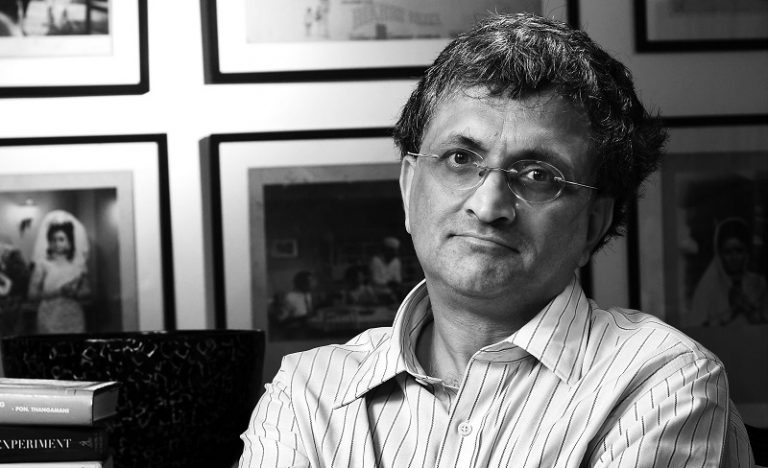
The left exposes its own hypocrisy by opposing BJP’s legal notice to Ram Guha

0

In an editorial titled “Bid To Silence”, The Times of India, alleged that the defamation case filed by the BJP against Ramachandra Guha will defame India’s image of a free press society. Not just the Times of India, but many other journalists and columnists too have openly opposed the legal notice.

This was anyway expected from certain quarters of the media as the move challenged the very style of “Shoot & Scoot” reporting on which they thrive and survive. After examining the contents of the TOI editorial, a few things become absolutely clear:

One – While batting for the free speech, the writer conveniently forgets that free speech is an all pervasive right guaranteed by the Constitution and that it does not provide any special privilege to those who behold a contrarian view to the Hindu Nationalist ideology. The self-proclaimed elite of the left thinks otherwise and there precisely lies the problem.

The left is perhaps caught in an uncomfortable position where, what they are seeking to object (the defamation case), is no different in nature from what they are seeking to assert, i.e. one’s freedom to express. The right to legal recourse, this elite believes, is reserved only to the brethren of their own class and castigates anyone who claims to have the same. It is simply ironic that the same left positions itself as a guardian of equality, but presents ridiculous standards while practising it.

The public too is waking up to see the contours of the left’s brazen hypocrisy. Take for instance the defamation case filed by the left’s demigod Shashi Tharoor against Arnab Goswami or even the string of notices served by the Times Group against the same man. Tharoor dragged Arnab to the courts just because he “linked” Sunanda’s Murder with him. But what the Guha supporters refuse to see is that Guha went one step ahead and declared that murderers of three rationalists were from Sangh Parivar.

Coming back to the Times Group and legal notices, they did not even spare a 22-year old law student Aparajita Lath for a simple blog post. It alleged that the blog had caused “an irreparable injury and loss of reputation” to the group.

In another example, the left has maintained an impeccable silence on the defamation case and the non-bailable warrant issued in a case filed by a ‘journalist’ against Madhu Kishwar. Thus, to selectively profess equality reveals a deeply rooted belief of the left – that anyone who disagrees with their ideology, has to be treated as a second class citizen and must not claim any right to constitutional remedy.

Two – Selective reading of Guha’s remarks. As pointed out by the author, our public discourse is a chaotic melee of polemical arguments and personal attacks. But none of it directly implicates someone of a wrong doing as blatantly and explicitly done by Guha. Although he doesn’t pin the blame of Gauri Lankesh’s  Murder on Sangh Pariwar and the BJP, he only suggests the likelihood of murderers coming from the same Sangh Pariwar from which the murderers of Kalburgi, Dhabolkar and Pansare “came” (no ‘likelihood’ here, he makes an assertion).

Guha does not have an iota of hesistance in directly implicating the Sangh Pariwar in the murders of Kalburgi, Dhabolkar and Pansare, the cases in which the agencies are yet to file a charge sheet. Being a Historian, if one starts asserting his own fancies, does it not raise fundamental questions on the authenticity of his research and viability of his ‘international’ repute?

Three – If the damage to India’s international image of a free press society was really the concern, why was the same media silent when journalists Rajdev Ranjan of Bihar or Devendra Chaturvedi of UP were murdered. Another journalist Jagendra Singh based out of Shahjahanpur, was burnt to death in his own home. His dying declaration held then SP minister Rammurti Singh Verma responsible as he had exposed Verma’s alleged illegal mining activities.

Where were the #IAmRajdev, #IAmDevendra or #IAmJagendra protests then. If at all India’s image has taken a hit, it is only because of media’s unmistakable double standards and the disproportionate outrage that only Gauri’s murder saw. What concerns the left is not free speech, but its perennial agenda to malign the right and divert attention from its emerging fault lines ( It is timely to remind ourselves of Gauri’s last tweet – “Why some of us fight between ourselves…” ).

The real concern of the elite left is that their narrative is now being examined and challenged. It is worried that its authority is now being questioned. It’s clear, therefore, that India’s image is not their real concern but that of staying relevant in an increasingly informed and aware society is.

In a civil society, the battles must be between ideas, the arguments must be based on facts and the debates must end at disagreements. Instead, weighed down by their deep prejudices, this elite left has made it a habit to stand up for principles circumstantially, to conclude before the turn of events and pass judgements with a clarity that even an eye-witness to a crime would lack.

With the BJYM Karnataka, the so called right-wing has fortunately started to foil the attempts of the elite left to coerce the public into believing that free speech is a right only of a select few. The defamation case, therefore, is not a bid to silence anyone, but to make it loud and clear that baseless implications will not be tolerated and that the left must learn the right lesson.