Home Blog Page 778

Yet another suicide by a student in Kota: Mathura student preparing for medical entrance exam found hanging from the ceiling

0

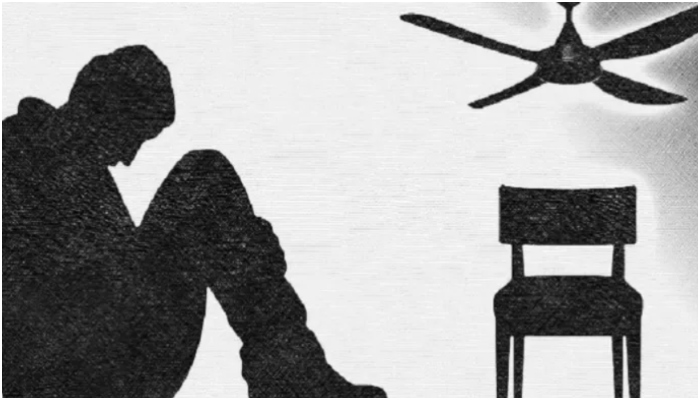
A student who was preparing for medical entrance exam, was found hanging inside his rented apartment in Rajasthan’s Kota, police said on Thursday.

According to officials, the deceased has been identified as Parshuram, a resident of Uttar Pradesh’s Mathura. He had come to Kota a week ago to prepare for the medical entrance exam.

On Wednesday night, the student was found hanging from the ceiling by the owner of his rented accommodation.

Jawahar Lal, an ASI with Jawahar Nagar Police, said, “Prima facie, it appears that the student died by suicide. The body has been sent for post mortem examination and we are further looking into the incident to ascertain the exact reason behind him taking the extreme step of ending his life.”

“The deceased’s father has made serious allegations against the coaching institute. We are further looking into it” he added.

More details are awaited.

(This news report is published from a syndicated feed. Except for the headline, the content has not been written or edited by OpIndia staff)

India and Singapore sign MoU to cooperate in development of the semiconductor ecosystem during PM Modi’s visit

India and Singapore agreed to cooperate in the development of the semiconductor ecosystem, the Ministry of Trade and Industry of Singapore said in a release on Thursday.

Both countries signed a Memorandum of Understanding (MoU) for cooperation in the sector. The MOU was exchanged in the presence of India’s Prime Minister Narendra Modi and Prime Minister Lawrence Wong during Prime Minister Modi’s Official Visit to Singapore.

The MoU aims to support India’s growing semiconductor industry while facilitating Singapore’s ecosystem of semiconductor companies and related supply chains to participate in the fast-growing Indian market, the statement added.

Under the MOU, Singapore and India will leverage complementary strengths in their semiconductor ecosystems and tap into opportunities to build resilience in their semiconductor supply chains. This will include government policy exchanges on ecosystem development, supply chain resilience, and workforce development.

The Ministry of Trade and Industry (MTI) and India’s Ministry of Electronics and Information Technology (MeitY) will establish a Policy Dialogue to facilitate discussions, oversee the implementation of the areas of collaboration, and exchange best practices.

A parallel business-to-business Cooperation Forum will be established and led by Enterprise Singapore and the India Semiconductor Mission (ISM) to encourage and catalyze more private-sector partnerships between both countries.

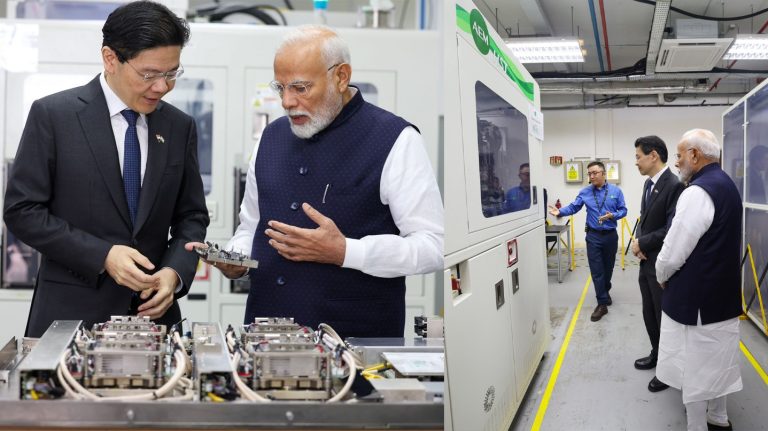
PM Modi, who is on a two-day visit to Singapore, visited the semiconductor facility of AEM Holdings Ltd. Singapore’s PM Lawrence Wong accompanied PM Modi during his visit to the semiconductor facility.

The visit comprised a sharing led by the Singapore Semiconductor Industry Association (SSIA) on the development of Singapore’s semiconductor industry opportunities for mutual collaboration between Singapore and India partners, and a tour of AEM’s facilities.

Prime Minister Modi also engaged with ecosystem players and institutions such as APP Systems, Century Water, Ecsal Technologies, NexGen Wafer Systems, PEP Innovation, and Temasek Polytechnic.

Deputy Prime Minister and Minister for Trade and Industry Gan Kim Yong said, “This MOU signals India’s and Singapore’s commitment to work together in the field of semiconductors to address the demand from industries around the world. This will also strengthen semiconductor supply chain resilience and create new markets and opportunities for businesses in our countries.”


(This news report is published from a syndicated feed. Except for the headline, the content has not been written or edited by OpIndia staff)

‘Caste-based library access rules’: Viral post about library rules against general students opens a flood of personal experiences, raises question on equity vs exclusion

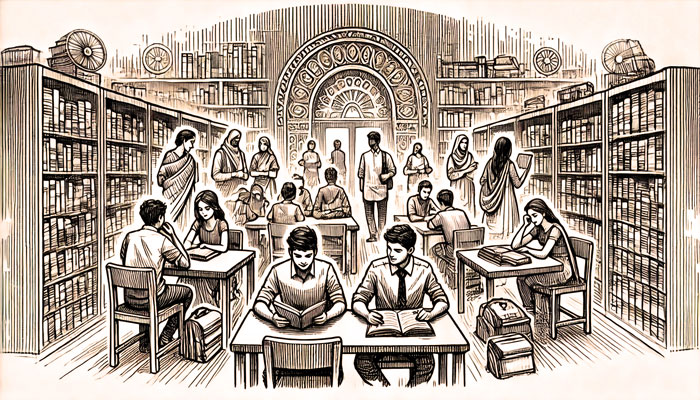
On 4th September, X (Twitter) user Anuradha Tiwari sparked a discussion on social media about caste-based policies in educational institutions, with a particular focus on access to library books. In her post, she shared a notice from the National Institute of Technology (NIT), Hamirpur, dated 1st August 2024, which outlined a schedule for accessing the book bank in the library.

According to the notice, students were prioritised by caste and income categories. For example, one day was reserved solely for SC/ST students, while another was split into two parts: the first half for General Category students with a family income of less than Rs 1 lakh, and the second half for those with a family income exceeding Rs 5 lakh. The third day was open to all students.

Tiwari in her post said, “There’s #Reservation even in NITs’ college libraries. They claim that Brahmins kept knowledge to themselves for centuries. So now, they’ll deny Brahmins and General Category even access to books? This isn’t social justice; it’s pure revenge. Brahmins & GCs are the new Dalits.” The post went viral on social media, prompting many users to share their personal experiences with similar rules in their colleges or universities.

The intention behind such rules might be to support marginalised groups, but it has raised questions about whether it inadvertently sidelines other students, especially those from general categories, by limiting their access to essential academic resources. There has been discussion on social media about whether this is confined to affirmative action or if it has crossed into the territory of exclusion for some groups. In an attempt to address historical disparities, is it right to restrict students’ access to library materials, potentially compromising their futures?

A surge of personal stories: shared experiences of exclusion

Following Tiwari’s post on social media, a flood of personal stories surfaced, where several users recounted feelings of marginalisation within their own academic environments. These students or ex-students were not from “marginalised” communities but faced disparities in policies due to their so-called upper caste status. Access to critical study material, which is often only available in institutes’ libraries and not even to middle or upper-middle-class families, is crucial. However, with such policies in place, can one be certain that access to these resources will be free of disparities and restrictions?

X user WillmooreK_OK pointed out that such policies are not new. He recalled that when he was at IIT Kharagpur over 20 years ago, SC/ST students were allowed more books, with reserved sections for them, and they could borrow books from libraries for longer periods.

X user OnlyNakedTruth wrote a long post about it. He said that when he was at NIT Trichy, there was a Book Bank where SC/ST students had the right to pick books for the first three days. Only after that, the book bank would open to General Category students on the basis of merit. He mentioned there were two copies of Oppenheimer’s Signals and Systems in the library, and as the class topper, he wanted one of them.

However, both copies were taken by his classmates from the SC/ST quota. He said, “But both copies were picked up by my classmates from SC/ST quota who refused to even use them and just let the books keep collecting dust in their rooms for the entire semester. That day I felt terribly cheated. Now I don’t feel the same rage. But the reservations are being cornered among SC/ST by those who don’t need any reservation while the actual needy ones are being shut away.”

For context, the current price of the said book is around USD 84 or Rs 4,899 (for hardcover) and Rs 1,799 (for paperback). It is not feasible for everyone to buy the book, making institute libraries the only source of such expensive books for students. In many cases, several books are not even available in India, and the institutes import them for their libraries. Such policies make it nearly impossible for deserving students, irrespective of their caste, to access these books.

Another X user, a_srinidhi, wrote, “It existed in my college as well. We could borrow like 3 books and they could borrow 5-6 books. There was SC-ST library, others can’t access those books. Even in my school, fees were lesser for them when compared to General students.”

X user Jayaraj Alavelli wrote, “IITM alumnus here. It happens in IITs too. Sometimes, we didn’t get some books as all the copies of the books have been issued already!! Friends used to share books for the entire semester!!”

The way forward: balancing support with equity

There is a need to find a balance between affirmative support and equitable access for all. As many users mentioned, this policy has existed for decades, seemingly introduced to redress “historical disadvantages.” But such policies should have been removed or at least modified over time, considering changing perceptions. There is a growing call for more inclusive measures that do not segregate students into separate access categories but instead address the core issue of resource availability.

To move forward, institutions and policymakers should consider reforms that uphold the principles of inclusivity and fairness. It is their responsibility to ensure that library collections are sufficiently stocked, borrowing hours are extended, and access rules are equitable so that all students can access the books. Universities could even seek grants and donations from business houses to stockpile books, ensuring equal opportunities for everyone. In this digital age, institutions should also procure digital copies of the books which could be made available to all the students without any restriction.

Everyone deserves the best possible education. It is understandable that reservation is still required in India for various reasons, including political ones. However, policymakers and universities need to develop a better system where there is no room for discrimination of any kind among students.


If you don’t like India, don’t work here, we will ask government to block Wikipedia: Delhi High Court issues contempt order in ANI case against Wikipedia

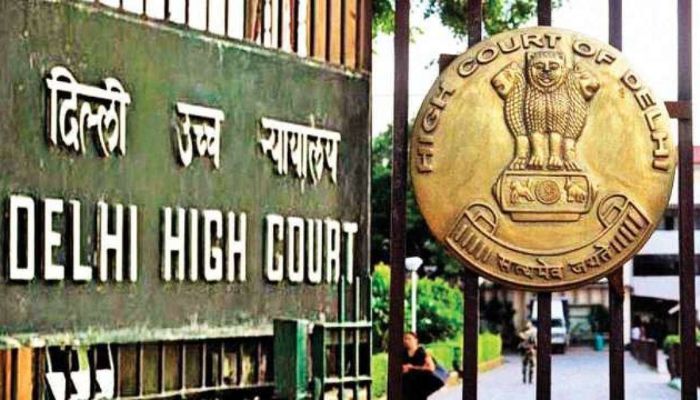
On Thursday, 5th September, the Delhi High Court sent a notice in response to a contempt petition brought by ANI Media Private Limited. The petition asserted that Wikipedia had failed to comply with a court order seeking information about the individuals who had altered the media entity’s Wikipedia page. Wikipedia’s attorney claimed that because the organization was not based in India, it took longer for them to appear in court. However, Justice Navin Chawla strongly objected to this argument.

If the platform did not abide by the court’s orders, he warned he will ask the government to ban it in addition to imposing contempt. “I will impose contempt. It is not a question of Defendant No. 1 (Wikipedia) not being an entity in India. We will close your business transactions here. We will ask the government to block Wikipedia. Earlier also you people have taken this argument. If you don’t like India, please don’t work in India,” the court came down heavily on Wikipedia.

During the next hearing on 25th October, the Court mandated that an authorised Wikipedia representative appear in person. Wikipedia is being sued by ANI for slander. According to the news organisation, Wikipedia permitted defamatory alterations on its page that labelled ANI the current government’s “propaganda tool.” Wikipedia was previously summoned by the high court to provide details regarding the three individuals who altered the ANI Wikipedia page.

Wikipedia appeared before the court on 20th August in response to the summons. ANI emphasised that Wikipedia failed to refute the fact that the three parties named as defendants in the defamation lawsuit were not its administrators. The court ordered Wikipedia to provide ANI with the subscriber data of the three people who had access to it within two weeks of receiving the aforementioned request. ANI contended that the injunction had not been followed in a contempt application that it filed with the high court on 5th September.

ANI has attempted to prevent Wikipedia from posting anything that was purportedly derogatory on the news agency’s page on the platform. It has also asked for the content to be taken down. ANI has also demanded damages from Wikipedia to the amount of Rs. 2 crores. According to its Wikipedia entry, ANI “has been criticized for misreporting events and serving as a propaganda tool for the incumbent central government by distributing materials from a vast network of fake news websites.”

ANI stated in its lawsuit against the Wikimedia Foundation (parent company of Wikipedia) and its officials that the latter has purposefully discredited the news agency’s goodwill and tarnished its reputation by publishing stuff that is blatantly false and defamatory. Wikimedia officials, according to ANI, have taken a proactive role in deleting the edits to reverse the content. “Thus, the conduct of Defendant No. 1 has resulted in a loss of its safe-harbour protection under section 79(1) of the Act, and made it liable for hosting and publishing defamatory content,” the suit pointed out.

The lawyer for Wikipedia informed the court that as the website is not based in India, they had to provide specific documents in relation to the court’s decision, and their appearance before the court took longer than expected. However, the court expressed that the claim had been put forth by Wikipedia previously and was already dismissed. It issued a caution and warned to hold the platform in contempt of court.

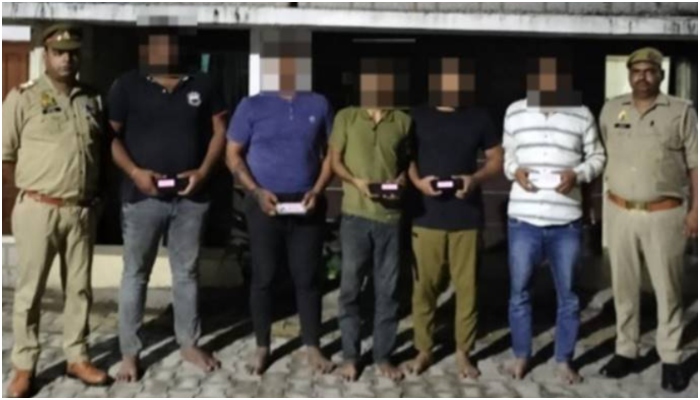
UP Police busts honey trapping gang in Meerut, arrests Asif, Firoz, Faheem and 4 others for using fake names and trapping innocents for money

0

On Wednesday, 4th September, yet another gang involved in honey trapping was arrested by the Meerut Police in Uttar Pradesh. The gang consisted of 7 members including 2 women who trapped innocent men using fake Hindu identities. The arrested individuals have been identified as Asif Sayed, Aniket, Deepak, Firoz, Faheem, Ruhina (Simran), and Summaiyaa (Shalu). As per a report by Dainik Bhasker, the accused individuals trapped Hindu men and threatened them for money.

The police have filed a case against the seven at the Partapur Police Station and arrested them during the police check. The police check was happening on Putha Road in the Meerut region when the accused persons were trying to escape from the area on bikes and cars. The police identified the accused and executed immediate arrest.

The accused persons are all residents of Delhi. The incident came to light only after a fake rape case was filed at Partapur Police Station by one of the women accused. A week ago, one of the women of the gang named Summaiya used a fake name Shalu Sharma, and called the victim from the Partapur area to trap him in an affair. The woman who identified herself as a Hindu then insisted the victim meet in a hotel in the Rithani area. The duo as per the reports then developed sexual relations.

After this, the other members of the gang encircled the victim as he stepped out of the hotel and took him hostage in a Swift car. The accused persons then demanded Rs 50 lakh from the victim and threatened him saying that they would file a rape case against him if no money was provided. The victim then agreed to pay Rs 10 lakh after which he was asked to get the money from home. However, the victim failed to return.

The accused persons then reached the Partapur police station and complained that ‘Shalu’ had been raped by a man from Partapur. The accused woman ‘Shalu’, mentioned in the complaint that she was called by the man after which she was raped. The gang was exposed only after one of the police officers named Mohit Saxena expressed suspicion over the complaint.

The police began the investigation and went to the hotel in Rithani where the duo had met. Meanwhile, the other two members of the gang who had pretended to be the brother and sister-in-law of ‘Shalu’ fled from the Police station. The Police immediately arrested them from the highway.

After this, the victim man from Partapur was called and interrogated. He revealed that he was kidnapped by the gang and asked to provide Rs 50 lakh. He also mentioned that the gang members had threatened him with filing a fake rape case if the money was not provided.

The Police then investigated the case and found out that the woman who had complained about rape was using a fake identity and that her real name was not Shalu but Summaiya. The police also then identified other individuals involved as Asif, Ruhina, Firoz, Faheem, etc. The police stated that the accused were using fake identities to trap innocent men. They also found out that the accused had pressured two men Aniket and Deepak to create chaos at the Police Station while filing a fake rape case. The duo were also arrested.

The police during the investigation discovered that the accused individuals used fake Aadhar cards to develop trust with the potential victim men. As per the police, the women in the gang made consensual sex relations with the victim and then threatened them for money. The accused had trapped several innocent men in the same manner and the mastermind of all this is believed to be Firoz.

The police also opine that there are many other individuals who are involved in this but are absconding at present. “All the members of the gang will soon be arrested. As of now seven have been arrested. Fake Aadhar cards, cars, bikes and mobile phones used by them to trap victims have been recovered. Probe underway,” the Police confirmed.

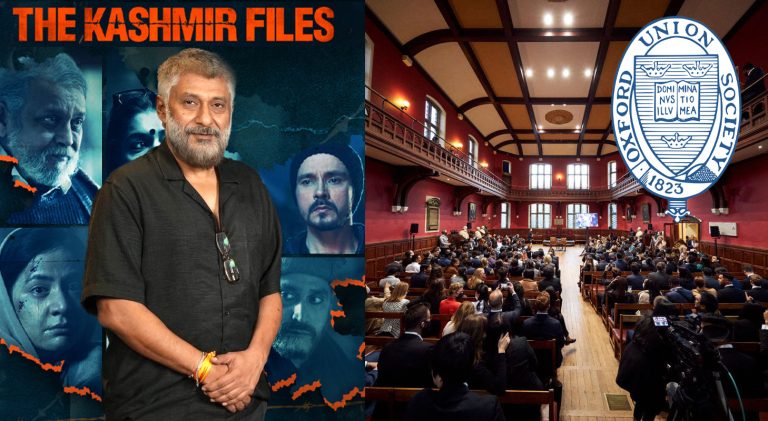
The Kashmir Files director Vivek Agnihotri declines invitation of Oxford Union that wanted to debate why Kashmir should be an independent country

On Thursday, September 5, the Kashmir Files director Vivek Ranjan Agnihotri informed that he has declined the invitation of the Oxford Union Society who wanted to allegedly debate on Kashmir using an anti-India stance. In an X post, Agnihotri said, “I was invited by the prestigious Oxford Union to debate on Kashmir. I found the theme offensive, anti-India, and anti-Kashmir. On principle, I have declined the offer. PFA my decline letter.”

The Oxford Union had organized a debate advocating the formation of an independent state of Kashmir. Agnihotri stated that organizing such a debate was a direct challenge to India’s sovereignty. “I find it not just obnoxious but offensive- not just to 1.4 billion Indians but also as a humiliation of hundreds of thousands of displaced Indigenous Hindu victims of the Kashmir genocide of 1990. Framing it as a debate feels like turning a tragedy into a parlor game where the stakes are human lives and the cost is in the blood, not just ink,” Agnihotri stated in the letter to Oxford Union.

“As long as Kashmiri Hindus remain displaced from their homeland unable to return due to threats of Islamic terrorists, there cannot be any debate on Kashmir’s sovereignty,” the director said in a letter to the Oxford Union Society.

The Society in its invitation letter stated that it believed in an independent state of Kashmir. It also called ‘The Kashmir Files’ a controversial film.

The Oxford Union Society invited Vivek Agnihotri to talk on the debate titled “This House Believes in an independent state of Kashmir”. It further stated, “As the director of the controversial but necessary Kashmir Files, you are one of the most well-equipped individuals to talk on this challenging topic in today’s highly pressing climate.”

The letter stated that the debates will take place during the union’s Michaelmas Term on the dates 24th October, 31st October, 7th November, 14th November, 21st November, 28th November and 5th December. They asked Agnihotri to inform which dates would be convenient for him. However, the film director has refused to attend the event, objecting to the topic of the debate.

It is crucial to note that this is the same Society that had canceled Agnihotri’s Humanity Tour event at Oxford University in the year 2022. Agnihotri then had stated that the then-elected President of the Oxford Union Society was a Pakistani and that he favored the anti-India stance. “They have canceled me. In reality, they canceled Hindu Genocide & Hindu students who are a minority at Oxford Univ. The president-elect is a Pakistani. Please share & support me in this most difficult fight,” the director had posted on X.

Agnihotri said his event at Oxford was canceled at the last minute. He said, “I was supposed to speak at Oxford University because Oxford Union invited me a long time ago. It was all confirmed via emails, but just a few hours before that, they said sorry we made a mistake. There was a double booking, and therefore we cannot host you, without even asking me, they postponed the date to when no student would be there, and there would be no point doing an event.”

The Kashmir Files

Vivek Agnihotri’s The Kashmir Files is based on the exodus of the Kashmiri Pandits from the valley in the 1990s. The film has been a major success at the box office. Several states have made it tax-free. From Prime Minister Narendra Modi to Home Minister Amit Shah and UP, CM Yogi Adityanath has praised the film.

Though the film has been received with open hearts by the majority of the viewers, a section of society, especially the liberals and Islamists, have opposed the film, claiming it hurts the sentiments of the minority. A full-fledged agenda to discredit the film has been running since before the launch of the film in the theatres. However, the film received a massive response in the theatres worldwide.

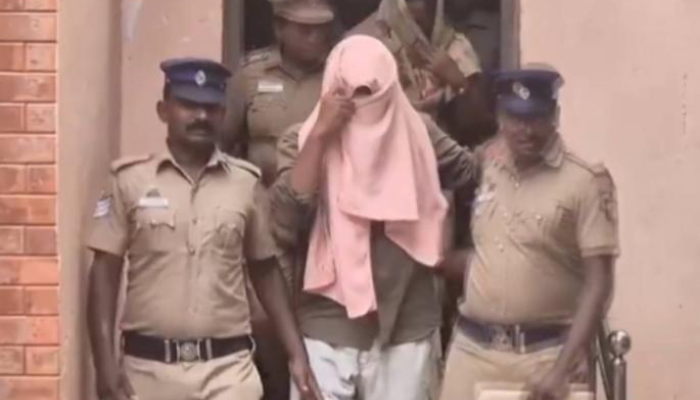
Tamil Nadu: Dr S Samson Daniel arrested under POCSO Act for sexually assaulting minors at school hostel over several months

0

A government doctor S Samson Daniel has been taken into custody on charges of molesting minors over a period of several months in a primary school dormitory in the Tiruchirappalli district of Tamil Nadu. The hostel is affiliated with a government-aided school. The 31-year-old accused from Palakkarai was apprehended under the Protection of Children from Sexual Offences (POCSO) Act on 5th September. He served as a physician at the Primary Health Centre (PHC) at Anbil near Lalgudi. His mother, S Grace Sagayarani (54), a school’s headmistress, was also arrested for aiding in the cover-up of the crimes. They have been sent to a three-day judicial custody by a women’s court.

The perpetrator used his visits to the hostel for consultations to sexually abuse the children, as reported by the police. The charges were made public following a panic call to the Child Helpline. Afterwards, the District Child Protection Officer, District Social Welfare Officer, together with other officials visited the students on 2nd August and learned about the crime. A complaint was then made at the Fort All Women Police Station which conducted a probe and nabbed him. 42 young girls and boys staying at the hostel were questioned by the team.

According to authorities, the kid unveiled that during the previous few months, the doctor had been inappropriately touching them under the garb of health check-ups, which amounted to sexual assault. “During the checkups, he allegedly misbehaved with the girls aged between 5 and 10, and touched them inappropriately. The incident came to light when one of the parents informed the child helpline ‘1098’ about it,” highlighted the police.

According to media reports, a senior official revealed, “Samson, who began his government service in 2021 after completing his medical degree from Puducherry in 2017, had been stationed in Thoothukudi before his transfer to Tiruchirappalli. Samson’s mother is the principal of a government-aided primary school. It was at this school, where students from class 1 to 5 reside in the hostel, that Samson allegedly abused his position to visit and harass the students under the guise of providing medical care.”

On 4th September he tried to physically assault and verbally abuse the media while he was being brought to the hospital for a medical examination before his court appearance. He was restrained by the police after they stepped in and then took him to the hospital.

Fort All Women Police Station mentioned that the offender had no criminal record. The doctor exploited his position of power to commit the crimes by frequently visiting the dormitory because his mother was the headmistress of the school. The school receives funding from the government but is administered privately.

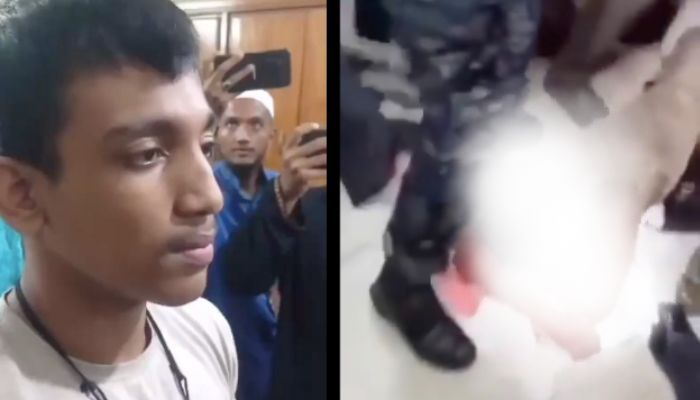
Bangladeshi media reports about Hindu boy being killed over ‘blasphemy’ allegations by Muslim mob, deletes report after video goes viral showing Army, police presence during crime

In Bangladesh’s Khulna, a Hindu boy named Utsab Mandal has been reportedly lynched by a violent Muslim mob over allegations that he ‘insulted’ Prophet Muhammad on social media. The incident unfolded on 4th September, in the second phase of Sonadanga residential area of ​​the city, as per reports.

As per local media reports, Khulna Metropolitan Police Deputy Commissioner (South) Md. Tajul Islam has confirmed the mob lynching of the 18-year-old Hindu youth. In viral videos, a badly injured, brutalised person dead or alive, is seen lying face down while Army personnel parade around. Some person in the background yells, “Hindu… Nastik (atheist)”.

According to reports, students at Khulna’s Azam Khan Government Commerce College had allegedly shared some posts on Prophet Muhammad on Facebook. In the evening, several students took the Hindu boy to the office of Khulna Metropolitan Deputy Commissioner (South) Tajul Islam. The Muslim mob gheraoed the office of the Deputy Commissioner of Police (South) in the Sonadanga residential area for around 3 hours. The mob demanded punishment for the Hindu boy over alleged ‘blasphemy’.

Reports say that to avert any unexpected incidents, an Army and Navy team arrived at the scene and took control of the situation. Later, when he was escorted to the police station, he was brutally thrashed by the fanatic Muslim mob leading to his death. The brutal lynching occurred despite police presence.

The viral videos of the incident show that the angry mob was agitating while Army and police personnel were present. Considering the viral videos and the initial reports by the Bangladeshi media, it is apparent that the brutal mob lynching happened while the Bangladeshi military personnel and police officials watched.

‘They insulted my Dharma’: Viral video shows Hindu boy saying before police

In the viral videos now being shared all over social media, the Hindu boy, reportedly named Utsab Mandal, is seen surrounded by a large mob of Muslims, with police officials sitting in chairs, in what looks like a police station. One person, not visible in the video asks the boy why he did what he did. To which the boy answers, “I went to watch the match. There I heard some men insulting my Dharma. Hearing that, I lost my temper.”

Another person tells the police officials, “I am requesting you on behalf of all my Muslim brothers. Just give us 10 minutes. We will make him wear a garland of shoes, write ‘Nastik’ (atheist) on him and take him around the place.” To this, the security personnel present are seen laughing.

Meanwhile, the army officials said that they had assured the Muslim mob that maximum punishment will be given to the Hindu boy. However, the agitated mob still thrashed him to death.

Bangladeshi portals delete all reports about the incident

In a curious development, the Bangladeshi media portals that had reported about the brutal mob lynching of the Hindu boy in the presence of military and police personnel seem to have deleted their reports. Portals including Dhakapost, Skhobor, and Samakal that had reports about the Khulna mob lynching incident seem to have deleted their reports. The links of the respective reports now open on a window saying ‘Error 404: not found”.

It is not clear why the Bangladeshi media portals have deleted the reports about the incident. The viral videos indicate a serious incident of mob violence in the presence of police and military, but the media reports describing the incident, which were accessible as recently as the morning of September 5, are now not available.

There can be multiple reasons behind this. The newly elected Yunus government in Bangladesh has been trying desperately to deny and whitewash the relentless cases of violence and atrocities targeted against the Hindu minorities of the country, to protect its own ‘secular, liberal’ image.

There have been reports of investigations and shutting down of Bangladeshi media portals that did not toe the lines of the new government. While the ‘popular’ narrative in Bangladesh was that the said media portals were supportive of the previous government led by Sheikh Hasina, or propagated ‘misleading’ information during the weeks of protests that led to the Hasina government’s ouster, there have been concerns downplaying or whitewashing the open violence against Hindu minorities.

The new Bangladesh government has also been indulgent and indirectly supportive of radical Islamic elements. One of the first actions taken after the Yunus government came to power was to lift the ban on Jamaat-e-Islami and  Islami Chhatra Shibir, the organisations that were banned under Sheikh Hasina for their violent activities.

Earlier on August 19, the High Court had imposed a suspension on Somoy TV, accusing it of airing ‘pro-Sheikh Hasina’ views. Somoy TV was also highlighting the atrocities against minorities.

Recently, the body of a woman journalist named Sarah Rahanuma was found in the Hathirjhil lake in Dhaka. Her name is now added to a considerably large list of people who have been murdered during or after the violent protests that toppled the Hasina government. A number of incidents have been reported where Hindu employees have been sacked from their jobs and Hindu leaders have been brutally beaten or murdered in Bangladesh in the aftermath of the fall of the Awami League government. Meanwhile, the global ‘Left-Liberal’ media has been carrying out relentless attempts to deny or whitewash the incidents of targeted violence against minority Hindus, desperately trying to paint them as ‘political issues’.

Later, in another fresh report. Bangladeshi media Samakal reported that though the police in Khulna had earlier said that the Hindu boy had died after getting beaten by the mob, the same police has now said that the boy is alive and under treatment.

A previous version of this article reported about the lynching of the Hindu boy as reported by media portals in Bangladesh. However, after recent developments and the sudden disappearance of the reports about the incident from Bangladeshi media sites, the article has been updated.

2000 angry tribals attack Muslim establishments in revenge for sexual assault of tribal woman in Telangana, BJP condemns Congress govt for dismissing incident as ‘accident’

0

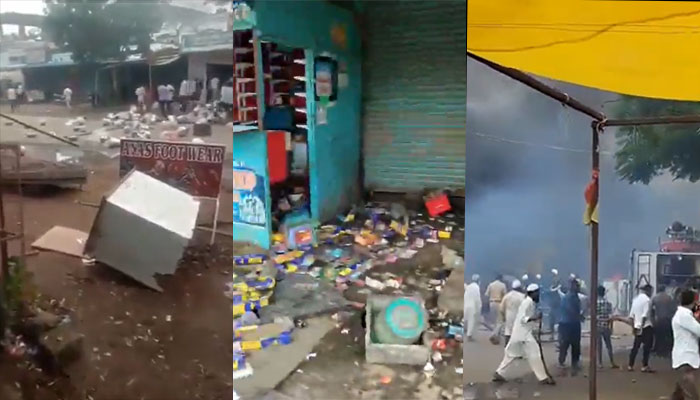
On 4th September, a group of 2,000 angry tribals launched an attack on the houses, shops, and establishments of Muslims in revenge for the alleged rape of a tribal woman by a Muslim auto driver identified as Sheikh Makhdhoom. Videos have emerged showing the tribals taking to the streets, attacking Muslim-owned shops and houses; vandalising a mosque.

The official spokesperson of the Bharatiya Janata Party (BJP), Tulla Veerender Goud, shared videos of the aftermath of the attack. He wrote on X, “Jainoor in Asifabad district is witnessing unrest after an auto driver allegedly raped a tribal woman. Under Congress rule, the brutal assault on a tribal woman and the violence that followed highlight the collapse of law and order. Congress has repeatedly failed to protect our tribals, and their incompetence is allowing such heinous crimes to happen.”

BJP State Vice President of Andhra Pradesh, Vishnu Vardhan Reddy, condemned the assault on the tribal woman. He accused the state police under the Congress government of dismissing the attack as an accident and wrote, “A horrific crime in Jainoor, Asifabad, Telangana: a tribal woman was brutally assaulted and sexually violated by Sheik Makdoom, an auto driver. Instead of seeking justice for the victim, the police, under the #CONgress Government, are disgracefully dismissing this brutal attack as an “accident.” This shameful attempt to cover up such a heinous crime is a stark reminder of how Congress fails to protect the most vulnerable in society!”

BJP’s social media in-charge for Telangana, Sumiran Komarraju also accused police of attempting to throw the matter under the rug by claiming it was an “accident”. He wrote, “A tribal woman in Jainoor, Asifabad, Telangana suffered a horrific sexual assault at the hands of Sheik Makdoom, an auto driver. She was not only violated but later also brutally assaulted. Shockingly, the police, under the #CONgress Government, are shamefully dismissing this heinous crime as an “accident,” trying to cover up the horror and deny justice to the victim!”

Journalist Rahul Shivshankar explained why tribals attacked Muslim establishments in a post on X. He wrote, “Tensions have flared in Jainoor town of Asifabad district in Telangana after a tribal woman was battered following an alleged attempt to sexually assault her. Protests erupted, leading to the destruction of Muslim-owned shops and vehicles and the vandalisation of a mosque. An auto driver, Sheikh Makhdoom, is the prime suspect. The incident dates back to August 31. There have been a series of attacks on tribal women over the last few months in Telangana. But you wouldn’t know it from the silence in the mainstream media. Neither of course has anyone senior from the Congress or its ecosystem spoken or visited.”

Journalist Abhijit Majumder pointed out that the tribals attacked Muslim-owned establishments in retaliation for the sexual assault and attempted murder of a Tribal woman but the majority of the Muslim handles on social media are “hiding” the information about the assault and playing the victim over the attack on Muslim establishments.

Following the attack by tribals, Muslims were also seen on roads attempting to save their establishments.

Meanwhile, an internet ban is being enforced in the affected areas as a precautionary measure to prevent the spread of rumours and misinformation. A flag march is taking place, accompanied by the announcement of prohibitory orders in the area. Pickets have been established to instil confidence among residents.

The incident

The incident occurred on 31st August when Makhdhoom allegedly attempted to rape a 45-year-old woman from the ST Gond community in Devuguda village. The attack unfolded in Jainoor town, located in the Asifabad district of Telangana.

A case was filed on 1st September based on the complaint lodged by the victim’s younger brother at Sirpur U Police Station under the SC/ST Act, and the accused was arrested on 3rd September. However, communal tension escalated on 4th September when around 5,000 people gathered in Jainoor as part of a bandh called by various Tribal organisations protesting against the heinous crime committed by Makhdhoom.

Residents turn off lights, Swiggy, Zomato partners take out protest rally: Kolkata unites to demand justice for RG Kar victim and protest against Mamata govt

The RG Kar rape and murder case has indeed sent shockwaves through Kolkata. The tragic death of the trainee doctor, who was brutally raped and murdered inside a seminar hall of RG Kar Medical College and Hospital on August 9, has deeply shaken the city’s conscience. Allegations of a botched investigation and cover-ups by the Kolkata Police and the Trinamool Congress government, led by Mamata Banerjee, have only intensified the public’s anger and mistrust in the authorities.

The mishandling of such a sensitive and horrifying case has fueled widespread outrage, with many citizens feeling that justice is being denied or delayed. The people of Kolkata, known for their strong sense of political and social consciousness, have united in seeking accountability and justice for the trainee doctor who was brutally raped and murdered inside a seminar hall of Kolkata’s RG Kar Medical College and Hospital on August 9.

The brutal crime and the subsequent mishandling of the investigation have driven a large portion of the city’s residents to the streets, united in their demand for justice for the young doctor.

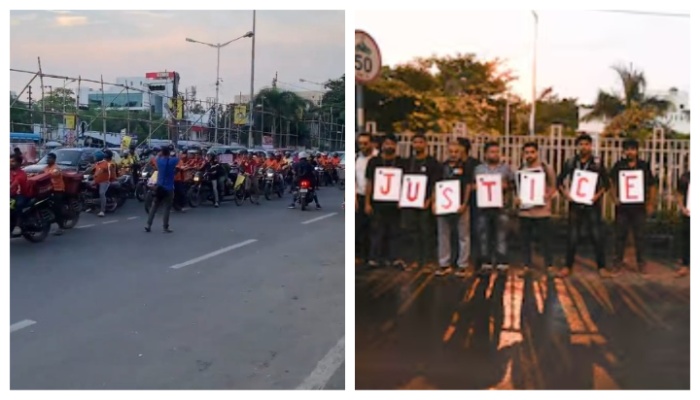
Today (September 5, Thursday), delivery partners of popular food aggregators like Swiggy, Zomato, Blinkit, and Zepto organized a massive rally in Kolkata in solidarity and demand for justice for the victim of the RG Kar Hospital rape and murder case. This rally highlights how deeply the incident has impacted Kolkata’s collective conscience, cutting across social and professional boundaries.

On Wednesday, September 4, Kolkata residents staged a powerful symbolic protest by turning off their lights between 9:00 and 10:00 pm to express their deep disappointment over the lack of progress in the investigation of the RG Kar Hospital rape-murder case. This act of solidarity sent a strong message to the authorities, reflecting the growing frustration among citizens who feel that justice is being delayed or obstructed.

The symbolic blackout is a reflection of the city’s grief and anger, with residents uniting in a silent protest to demand justice for the young doctor.

The call for this lights-out night-time protest by doctors, named ‘Let there be light, let there be justice’, came hours before the Supreme Court was scheduled to hear the case on Thursday. However, the hearing has now been postponed.

“Three weeks have passed, still no progress in the investigation… Let’s come out on the streets with light, join hands in our call for justice, and create a human chain,” a protesting junior doctor was quoted as saying. 

Civil society groups throughout the state organized demonstrations in various locations in and around Kolkata on Wednesday night, resulting in a statewide surge of nighttime protests reminiscent of the ‘Reclaim the Night’ movement that captivated the state on midnight of August 14.

Several lawyers formed human chains outside Calcutta High Court and Bankshall Court, advocating for justice for the victim. Following this, Bankshall Court lawyers participated in a rally for the doctor.

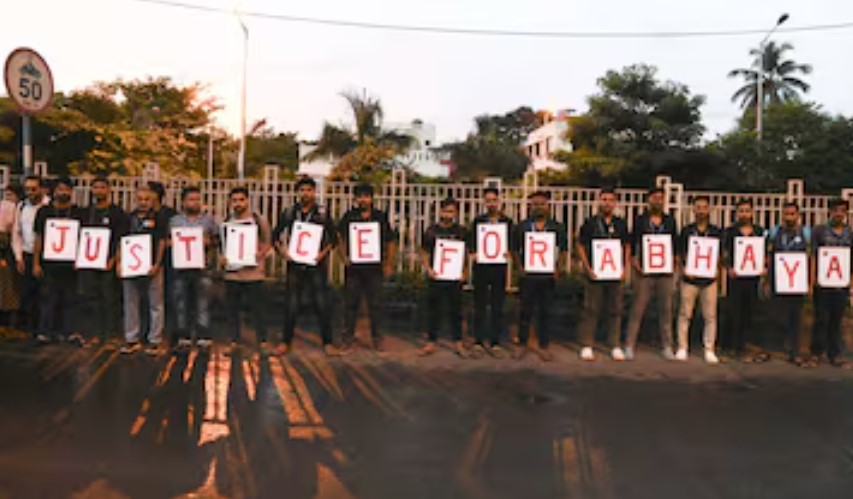
Similarly, on Tuesday, September 3, thousands of protesters, including doctors and paramedics from private hospitals, formed a 13-kilometre human chain along the Eastern Metropolitan Bypass. The human chain stretched from Ultadanga to Patuli, linking the northern and southern parts of the city.

The demonstration, which took place for an hour starting at 5 p.m., was organized in a way that did not disrupt traffic, as protesters made sure to avoid blocking crossings. Participants, waved the tricolour and carried placards with messages like “How long must we wait for justice?”, “Hang the rapists,” and “Justice for our sister,” were joined by individuals from diverse backgrounds, including commuters and local residents.

Kolkata residents form human chain to protest against the RG Kar rape-murder case (Image source: CNBCTV18)

These symbolic protests reflect the city’s grief and anger, as residents come together to demand justice for the young doctor who was raped and murdered at the state-run hospital. Such coordinated actions indicate a growing loss of faith in the government’s ability to handle serious issues, particularly the failure to conduct a transparent and thorough investigation into this horrific crime. The protests also highlight the determination of Kolkata’s citizens to hold the authorities accountable as they persist in seeking answers and justice for the victim.