The body of a female journalist was found in Hatirjheel Lake in the early hours of 28th August in Dhaka, the capital of Bangladesh. She was identified as 32-year-old Sarah Rahanum a newsroom editor at Bengali language Gazi Television (GTV) and lived in Kallyanpur. She had spent three years as an employee of the media company. The report was verified by Inspector Bachchu Mia, who oversees the police outpost at Dhaka Medical College Hospital (DMCH) and informed, “The incident has been reported to Hatirjheel police station.”
The body was seen floating in the lake, according to Mohammad Sagar, one of the pedestrians who carried it to the hospital. “I saw the woman floating in Hatirjheel Lake. Later, she was brought to DMCH, where doctors declared her dead.” According to her family members, she was murdered.
“It was nice having a friend like you. God bless you always. Hope, you’ll fulfil all your dreams soon. I know we had lots of planning together. Sorry, can’t fulfil our plans. May god bless you in every aspect of your life,” she wrote on her Facebook status on the night of 27th August and tagged a person named Fahim Faysal. “It is better to die than to live a life akin to death,” she declared in an earlier post. The body was kept at the DMCH morgue, per Inspector Bachchu Mia. According to the police, an inquiry will be undertaken to ascertain the reason behind her death.
Sayed Shubhra, Rahnuma’s spouse, claimed that they got married seven years ago following a romantic relationship but kept their families in the dark. There were no arguments between them. However, she had been longing to go her own way for a while. They intended to conclude their divorce at the registrar’s office, but the current situation of the nation prevented them from doing so. He was informed around 3 am that she had jumped into the waters of Hatirjheel Lake.
The deceased was the daughter of Noakhali Press Club President Bakhtiar Shikder. Rahanuma reportedly left her Segunbagicha office at 9:00 pm on 27th August and was found dead a few hours later. Her corpse was observed by locals floating beneath Hatirjheel’s first bridge at around 12:30 in the morning. She was pronounced dead at Dhaka Medical College Hospital at around 2:00 am after a group of people collected her body and brought her there.
Meanwhile, Sajeeb Wazed, the son of the ousted prime minister Sheikh Hasina Wazeb who lives in the United States, called the incident “another brutal attack” on the freedom of expression in the country in a post he shared on X (formerly Twitter).
Rahmuna Sara Gazi TV newsroom editor was found dead. Her body was recovered from Hatirjheel Lake in the Dhaka city. This is another brutal attack on freedom of expression in Bangladesh. Gazi TV is a secular news channel owned by Golam Dastagir Gazi who was arrested a recently.
“Gazi TV is a secular news channel owned by Golam Dastagir Gazi who was arrested recently,” added Sajeeb Wazed. Bangladesh has been facing a severe political and economic crisis following the student protests as brutal violence, especially against the minority Hindu community grabbed international headlines.
From passing off anti-Hindu pogroms in Bangladesh as “political revenge” and blaming India’s ‘Hindu nationalist government for the same to now blaming India for the devastating floods in Bangladesh, the Western media has been perpetually peddling false narratives against India in its reportage. On the 27th of August, the German public broadcaster DW News published a report on the Bangladesh floods which included a conversation with Farhana Sultana, a Bangladeshi professor at Syracuse University in New York.
Speaking to Deutsche Welle, Farhana Sultana blamed a “dam breach” in India alleging that due to this, a “lot of floodwater came in without any warning” which impacted thousands of people overnight in eastern Bangladesh. She further claimed that more riverine water entered Bangladesh as India opened more dams and barrages upstream. Although Sultana also mentioned heavy monsoon rains as a reason for the floods in Bangladesh, her main focus remained on somehow blaming India for causing artificial floods in Bangladesh as some sort of revenge for ousting Sheikh Hasina.
While DW, notorious for its anti-India bias, not confronting Farhana Sultana over her baseless allegations against India would have not been surprising, however, in this case, it is, since DW’s own report establishes that India did not cause artificial flooding in the neighbouring country.
In its fact-check report, Deutsche Welle (DW) debunked many social media posts, mostly by India-hating Bangladeshis that sharing visuals of water being released from Srisailam Dam in Telangana with the false claim that it was from Dumbur Dam causing flooding in downstream Bangladesh.
Notably, India has twice debunked the allegation that flash floods occurred in Bangladesh because India opened the dam in Tripura. The Indian government clarified that the gates were not opened as claimed by anti-India elements and foreign media, but the automatic release of water due to heavy rainfall was observed. DW News factchecked many such misleading videos posted on social media falsely blaming India for the flooding in Bangladesh. However, on one hand, DW News debunked false such claims, on the other, it platformed a person notorious for her anti-India opinions allowing her to make unsubstantiated claims distorting public opinion about the floods in Bangladesh and needlessly villainising India.
Farhana Sultana also heaped praises on the Mohammed Yunus-led interim government in Bangladesh for handling the crisis caused by the floods. Interestingly, Mohammad Nahid Islam, Bangladesh’s Information and Broadcasting Affairs adviser had also resorted to playing the blame game to cover up the failure of Bangladesh’s early warning systems and claimed that India opened a dam without issuing any prior warning leaving no scope for Bangladesh to prepare.
Indian government refuted false allegations against India over Bangladesh floods
On 22nd August, the Indian government issued an official statement clarifying that floods in Bangladesh have nothing to do with the opening of the Dumbur dam upstream of the Gumti River in Tripura. India rejected the allegations and described reports linking India with it as “factually incorrect”.
“We would like to point out that the catchment areas of Gumti River that flows through India and Bangladesh have witnessed heaviest rains of this year over the last few days. The flood in Bangladesh is primarily due to waters from these large catchments downstream of the dam. The Dumbur dam is located quite far from the border – over 120 Km upstream of Bangladesh. It is a low height (about 30m) dam that generates power that feeds into a grid and from which Bangladesh also draws 40MW power from Tripura. Along the about 120 Km river course we have three water level observation sites at Amarpur, Sonamura and Sonamura 2. Heavy rainfall has been continuing since 21 August in the whole of Tripura and adjoining districts of Bangladesh. In the event of heavy inflow, automatic releases have been observed,” the Indian Ministry of External Affairs said.
The MEA further informed that they were on time to time sending relevant data with Bangladesh. “Amarpur station is in part of a bilateral protocol under which we are transmitting realtime flood data to Bangladesh. Data showing rising trend has been supplied to Bangladesh upto 1500 hrs on 21 August 2024. At 1800 hrs, due to flooding, there was power outage leading to problems of communication. Still, we have tried to maintain communication through other means created for urgent transmission of data,” the MEA said.
CNN peddled the anti-India narrative to villainise India
Earlier in the day, OpIndia reported how CNN tried to pass off the blame for the Bangladesh floods on India giving legitimacy to the sinister anti-India narrative being peddled by a significant section of Bangladeshis. CNN brazened it out suggesting that India should “apologise” to Bangladesh for inundating its neighbour.
“Bangladesh has the best early warning systems, but there was no warning in this case”, because of which the Bangladeshis are blaming their neighbour for the flooding. She went further to suggest that India should issue an apology to Bangladesh saying, “India denies this…There has been no apology from India..”, the CNN reporter said.
Farhana Sultana: Professor of geography or professor of peddling anti-India lies?
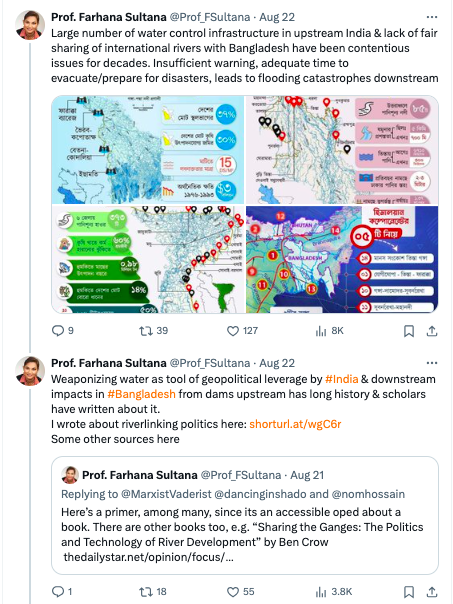
It is pertinent to mention that Farhana Sultana has been peddling anti-India propaganda regarding the floods in Bangladesh. In a long thread posted on X, loaded with disinformation and sheer disdain for India, Farhana Sultana accused India of using “water as a weapon” against India for many years. On one hand, Sultana accused India of using water as a weapon against India on the other, she accused India of backing Sheikh Hasina who ruled Bangladesh for 15 long years.
She lauded a post by Sultan Mohammed Zakaria, which contained misleading videos of Indian dams to claim that India released water from the Dumbur Dam causing floods in Bangladesh. Interestingly, this very post, which Sultana called a “spot-on analysis” was debunked by DW News.
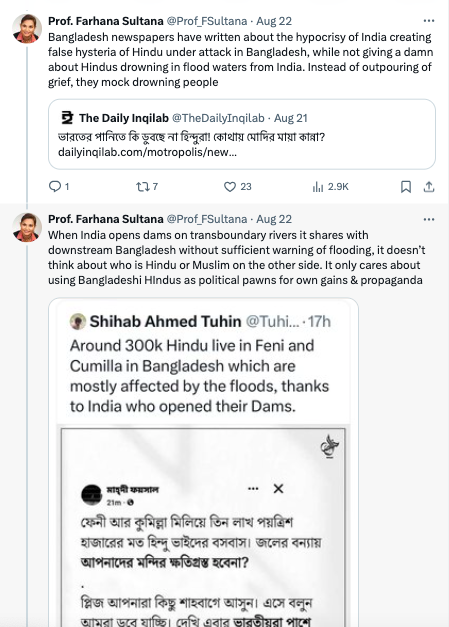
Alongside hatred for India, Sultana harbours disdain for Hindus as well, as evident from her whitewashing of the Islamist crimes against Hindus in Bangladesh. While there have been more than 250 attacks on Hindus, their houses and temples, Farhana Sultana accused India of creating “false hysteria” of Hindus under attack in Bangladesh.
Just a few days back, as Hindus were being singled out, attacked, raped and looted in Bangladesh, Sultana accused Indians, ‘Hindutva fundamentalists’ and “MAGA” supporters of spreading lies about the anti-Hindu violence unleashed by Islamists.
Meet Farhana Sultana, Prof of Geography, Syracuse University. As a Bangladeshi Muslim she is white washing Islamist crimes against Hindus in BD. She calls Hindus "troll farms" and says Hindus are spreading disinformation and propaganda abt BD along with MAGA and Zionists. pic.twitter.com/dOPo2bSdwH
— Stop Hindu Hate Advocacy Network (SHHAN) (@HinduHate) August 20, 2024
Moreover, Syracuse University, wherein Farhana Sultana works as a professor of geography and environment had back in 2021 supported the sinister “Dismantling Global Hindutva”.
It is not surprising that DW News gave a platform to Sultana to further her anti-India narrative since the German public broadcaster itself was recently involved in downplaying the Islamist onslaught on Hindus in Bangladesh. OpIndia had reported how DW News recently published a video, whitewashing attacks on the Hindu community in the Islamic Republic by violent Muslim mobs and accused Indians of fuelling disinformation on social media.
On Wednesday (28th August), Assam CM Himanta Biswa Sarma leveled ‘spying charges’ against Jharkhand CM Hemant Soren. He accused the JMM leader of putting his cabinet colleague and former CM Champai Soren under “surveillance”. CM Sarma said that it is “unprecedented” in the history of Independent India that a government kept a Former CM who is also a sitting Cabinet Minister under surveillance and was tracking his movement.
The Assam Chief Minister added that he also suspects that Champai Soren’s phone was also tapped and there was possibly a scheme to ‘honey trap’ him.
श्री चंपई सोरेन जी अभी भी झारखंड राज्य के मंत्री हैं। आप सुन के हैरान होंगे कि JMM-Cong के लोग संविधान बचाने की बात करते हैं लेकिन चंपई जी जैसे एक वरिष्ठ आदिवासी नेता पर snooping करने के लिए एक बड़ा षड्यंत्र भी रचते हैं। झारखंड पुलिस के कुछ आला अधिकारी पकड़े गये हैं। pic.twitter.com/AAn63Bzwb8
Notably, CM Sarma addressed a press conference on Wednesday where he levelled serious charges of espionage against the JMM-Congress government in Jharkhand. He said that yesterday, two Jharkhand Special Branch officers were detained and they were handed over to the Delhi Police for spying on Champai Soren during his Delhi trip.
Following this development, they came to know that the Jharkhand government was tracking Champai Soren’s movement and kept him under surveillance for five months.
It is pertinent to note that Champai Soren is an estranged JMM leader who previously served as the state CM. Currently, he is a sitting cabinet Minister in the Hemant Soren government but will join the BJP on 30th August. Assam CM Sarma is BJP’s co-in-charge for poll-bound Jharkhand.
During the press conference, CM Sarma also informed that Champai Soren has filed an FIR against the JMM-Congress government under ‘spying charges’. As per reports, the Former Jharkhand CM has filed an FIR in Delhi accusing his current colleagues of putting him under surveillance and tracking his movements.
According to the Assam CM, Jharkhand Special Branch (SB) officers trailed Champai Soren during his Delhi trips. But yesterday, the official staff of Champai Soren apprehended them inside the hotel premises and handed them over to the Delhi Police.
Sarma added that the two were taking photographs of Soren’s hotel room in the national capital.
He further stated that the sub-inspectors told their interrogators that they flew to Delhi on the same flight that Soren boarded from Kolkata and stayed in a room close to that of the Jharkhand leader at the hotel in the national capital.
He added that the two initially said that they were journalists, but the Delhi Police found out that they are Sub-inspectors in the Jharkhand Police.
Sarma stated that the detained Jharkhand Police officials admitted that they were working at the behest of a “senior person” holding a “constitutional post” in their state. He said that they mentioned the name of the ADGP Special branch, IG Prabhat Kumar stating that he entrusted them with this duty.
The BJP leader added that he has the names and pictures of both officers. He, however, stressed that he don’t want to reveal their identity as they may be working in other operations like Naxal or others. He added that it wouldn’t be right to expose their cover.
Phone Tapping and possible Honey trap angle: Assam CM suspect there was a conspiracy to frame Champai Soren
The Assam Chief Minister said that when the duo were staying in the hotel, a woman was also spotted with them. He said that he suspected that there was a scheme to (honey) trap Champai Soren. He added that it is a serious issue as the two Jharkhand officers also admitted to the presence of a woman there.
He said, “I suspect even his phone may have been tapped.”
Slamming the JMM-Cong government, Sarma said that they constantly talk about saving the Constitution but indulge in such things. He asked does the Indian Constitution permits to assault on someone’s privacy. Is Champai Soren a naxal or extremist? Such espionage can’t take place in any civilized country, the Assam Chief Minister added. Subsequently, he demanded a thorough inquiry into this incident.
Slamming I.N.D.I. alliance parties, CM Sarma said, “You can understand the Politics of Congress and JMM parties, they don’t spare their esteemed colleague and those people tell us that they are protecting the constitution.”
He asserted, “This is not a security lapse, this is serious espionage, a government has kept their own minister under surveillance. It is a matter of surveillance”, adding that the veteran JMM leader was under surveillance for the last 5 months even when he had no association with the BJP.
Meanwhile, he said that both the Jharkhand officials are currently in the custody of Delhi Police. As per Assam CM, the duo has not been arrested as they are on-duty officers and further action will be taken by the Delhi Police as per the law and the findings of the investigation.
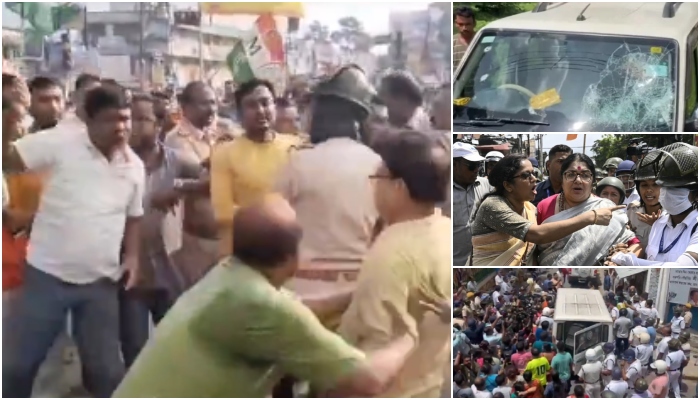
On Wednesday, 28th August, the BJP leaders in the state of West Bengal called for a 12-hour strike a day after the Kolkata Police targeted the peaceful protestors and used water canons, tear gas shells, and resorted to lathi charges. The peaceful demonstrators at the Howrah Bridge area close to Santragachhi Railway station on the Kona Expressway were demanding the removal of CM Mamata Banerjee from her position given her failure to take action against the culprits in the Kolkata rape and murder case.
As per the reports, the Bangla Bandh has been called from 6 am to 6 pm as another protest against the police personnel who attacked the protesting individuals approaching the state secretariat ‘Nabbana’ yesterday. As per the reports, the police action injured several students. Meanwhile the enraged demonstrators also at Santragachhi reportedly clashed with the police. Police claimed on Tuesday, 27th August that they began lathi charges and tear gas canons only after agitators breached barricades in several areas and allegedly attacked security personnel. Chaos is said to have developed when the student organization ‘Paschim Banga Chhatra Samaj’ and the dissident State government employees’ platform ‘Sangrami Joutha Mancha’ launched their ‘Nabanna Abhijan’ rally from various locations.
Suvendu Adhikari, the Leader of the Opposition in the West Bengal Assembly, asserted that police used “brutal repression” against peaceful protesters and warned to halt West Bengal if the “brutalities” by the State administration continued. “Police are using water cannons on peaceful protestors in Santragachi, bursting tear gas shells on students at Howrah Bridge, and lathi charging them on College Street. Please put an end to these brutalities immediately,” the senior BJP leader told reporters. Adhikari went on to say, “If the police repression is not stopped immediately, We (BJP) will stall West Bengal tomorrow.”
Accordingly, the BJP launched a 12-hour strike today. Notably, amid the ‘Bangla Bandh’ strike, several BJP leaders or persons associated with the party are facing attack at the hands of the TMC goons. In an early update, BJP leaders took to X to share the visuals of the bullet-riddled windshield of BJP’s Priyangu Pandey’s car, alleging that an assassination attempt was carried out by members of the state’s ruling Trinamool Congress dispensation against their party’s prominent leader amid the strike.
BJP leader Arjun Singh shared a video of the attack and asserted that the attack took place in the presence of a senior Bengal police officer. “This morning, criminals backed by TMC leaders hurled bombs and fired bullets on the SUV targeting BJP worker Priyangu Pandey while he was on the way to my office for a party program. Fortunately, Priyangu has received no injury but his driver Ravi Verma, and another party worker Ravi Singh have received bullet injuries. Ravi Singh is critical and has been referred to a hospital in Kolkata. This attack was done in a planned manner with a nexus of criminals and Police,” Singh alleged.
This morning, criminals backed by @AITCofficial leaders hurled bombs and fired bullets on the SUV targeting @BJP4Bengal worker Priyangu Pandey while he was on the way to my office for a party program. Fortunately, Priyangu has received no injury but his driver Ravi Verma and… pic.twitter.com/DtmOa8cpiF
Arjun Singh also confirmed to the media that seven bullets were fired at the vehicle in an alleged assassination bid. He also said that the attack was carried out in the presence of the ACP. Leader of the Opposition in Bengal, Suvendu Adhikari also shared the video and said that the “toxic cocktail of Police & TMC Goons won’t be able to scare BJP.”
Meanwhile, the police recovered empty bomb shells from near the spot where BJP leader Priyangu Pandey was attacked in Bhatpara of North 24 Parganas. In another development, BJP leader Locket Chatterjee was detained by police while participating in a protest at Kolkata’s Bata Chowk. The protest was organized following the BJP’s call for a 12-hour ‘Bharat Bandh.’
Chatterjee commented on the detention, stating, “Nothing will change; the more they detain, the more people will join the protest. This reflects public anger. The police can detain people but cannot stifle the idea behind the protest.”
#WATCH | West Bengal | BJP leader Locket Chatterjee says, "Nothing will happen, the more they detain, the more people will join the protest. This is the anger of people and they are on the road. Police can detain people but not to the idea." https://t.co/eO7pqFsmx4pic.twitter.com/8OBnhncWJq
Police have also detained BJP Councillor Sajal Ghosh from his residence. He was peacefully appealing to all to support the Bangla Bandh. The video of the leader’s detention is making rounds on social media.
Police have detained BJP Councillor Sajal Ghosh from his residence. He was peacefully appealing to all to support the Bangla Bandh. pic.twitter.com/Sg7oQiLp6p
The Police are also said to have lathi-charged the fired tear gas shells on peaceful demonstrators at Reyapara; Nandigram Block II. Several people who supported the Bandh provoked the Mamata Banerjee-led administration to resort to lathi charges as alleged by BJP leader Suvendu Adhikari. Adhikari shared the video of the incident on X and warned, “Mamata Banerjee remember this, the more you apply force the more BJP will be on course, demanding #JusticeForRGKar and your resignation.”
Mamata Police brutality lathi charged and fired tear gas shells on peaceful demonstrators at Reyapara; Nandigram Block II. The local people supported the Bandh which infuriated the Mamata Police. I went to meet the injured at the Reyapara Hospital and enquired about their well… pic.twitter.com/hmwMCY4Sqn
He shared this as he walked with BJP Karyakartas at Nandigram in support of the state-wide Bandh. He stated that the “Bandh called by BJP is to protest against the state-sponsored efforts to derail the RG Kar investigation & protect the perpetrators of the heinous crime and the incessant lathi charge and use of brute force, tear gas & water canons on the agitators who were marching peacefully yesterday during the Nabanna Abhiyan of the Paschim Banga Chhatra Samaj.”
Walked alongside @BJP4Bengal Karyakartas at Nandigram in support of the state wide Bandh called by BJP to protest against the state sponsored efforts to derail the RG Kar investigation & protect the perpetrators of the heinous crime and the incessant lathi charge and use of brute… pic.twitter.com/h1QQcRcEJV
Another video regarding the Bandh was shared on social media by one of the local journalists. He stated that the BJP leaders were beaten by miscreants for imposing a state-wide bandh and indicated that the protestors didn’t deserve the assault. “Bandh culture has gone from #Bengal. Here people are beating @BJP4Bengal workers for imposing Bangla Bandh and creating problems for common people,” Spandan Gain posted on X.
The miscreants in the video could be seen assaulting the BJP workers holding the party flag high. The BJP workers could be seen beaten for allegedly protesting against the police action on Tuesday, 27th August.
It is important to note that ‘Bangla Bandh’, the strike called by the BJP has received mass support from all over the state with people keeping their businesses closed and demanding the removal of Mamata Banerjee for her failure to give justice to the horrific Kolkata rape-murder case.
Bird eye of Kolkata's Chittaranjan Avenue. One of the busiest roads for daily office commute. BJP's Bangla Bandh has received a very large support today from all quaters. pic.twitter.com/teM0oLcxy3
As a part of the Bandh, the BJP leaders have shut down Howrah Maidan Metro Station, Konnagar Station and Bongaon Station. All shops are closed in proximity. BJP Leader Koustav Bagchi has also blocked the Barrackpore rail Station demanding the removal of the Mamata administration. The video of the leader raising slogans against the TMC govt is making rounds on social media.
Barrackpore Station Rail Blockade in presence of BJP Leader Koustav Bagchi in support of the 12-Hour Bangla Bandh pic.twitter.com/cSmOgiUqi6
The bandh, which began at 6 am, has further seen deserted streets in Kolkata, Siliguri, and Medinipur, with shops and marketplaces remaining closed. Reportedly, clashes are believed to have happened in the Maldah region of the state between the BJP workers and the TMC goons in the presence of the police.
The BJP leaders have called for the strike after the police personnel attacked the protesting individuals yesterday at the state secretariat ‘Nabbana’. As per the reports, the police action injured several students. Meanwhile the enraged demonstrators also at Santragachhi reportedly clashed with the police. The student organization ‘Paschim Banga Chhatra Samaj’ and the dissident State government employees’ platform ‘Sangrami Joutha Mancha’ launched their ‘Nabanna Abhijan’ rally from various locations demanding the removal of Mamata Banerjee from the CM post given her failure to provide justice to the 31-year-old doctor who was brutally raped and murdered in Kolkata’s RG Kar Medical College on 9th August.
RG Kar Medical College Rape and Murder Case
On 9th August, a semi-nude, brutalized body of a female PG trainee doctor was found inside the seminar hall of RG Kar Medical College and Hospital in Kolkata. It is a government-run hospital. The gruesome murder of a PG doctor at her own workplace soon became a nationwide issue, especially with the people reacting strongly to the Bengal govt, and the hospital’s initial attempts to cover up the case. The victim’s family narrated that they were initially told their daughter had committed suicide.
The doctor had dinner with four of her coworkers at 2:30 am that night after seeing Neeraj Chopra’s javelin throw event during the Paris Olympics. Afterward, she went to the seminar hall to relax. The main accused in the case, Sanjay Roy, had access to every department as he worked at the RG Kar Medical College and Hospital police outpost. He was not affiliated with the institution but often went there. CCTV evidence shows him entering the premises where the doctor was discovered, which led to his arrest on 10th August. He returned home after committing the horrifying act and slept in late. Roy also cleaned the outfit he wore to remove any evidence. The police recovered his bloodstained shoes during a search.
The Doctor was brutally tortured before she was suffocated to death, according to the post-mortem report. The four-page report stated that she had been strangled and that “perverted sexuality” and “genital torture” had resulted in serious wounds in her private parts.
According to sources, the Doctor’s head was slammed against a wall or the floor resulting in severe injuries, and her mouth and nose were squeezed shut to stop the victim from shouting. The accused had reportedly beaten her up as she attempted to defend herself and resist. He then raped and killed her. According to the autopsy, the girl’s hands and face had cuts on them. Shards of glass from her spectacles broke and got into her eyes following an intense blow. The initial postmortem report ruled out suicide and stated that the trainee doctor had been sexually assaulted before being murdered.
The Bandh organized by BJP continues statewide today till 6 pm.
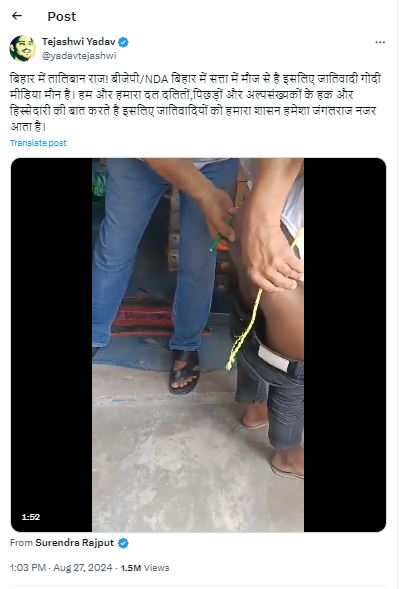
On Monday (26th August), a video that was said to be recorded somewhere in Bihar’s Araria district started doing rounds on social media. In the viral video, some miscreants could be seen assaulting a man after tying his hands behind his back and stripping his pants. Later, they start pouring and stuffing red chilli power into his rectum while paying no heed to his mercy appeal.
The viral video triggered an outrage on social media. Sharing the video, RJD leader Tejashwi Yadav and others alleged ‘Taliban Raj in Bihar’ and ‘oppression of minorities’ in the state. However, the Police arrested the main accused in this case who has been identified as Mohammad Sifat, debunking the oppression of minorities angle. Additionally, efforts are underway to identify and arrest the other accused seen in the video.
According to reports, it was found that the said video was from Islamnagar under the Araria police station area. Some people caught a 30-year-old youth on suspicion of motorbike theft. After assaulting him, they tied his hands behind his back with a rope. After this, they poured red chilli powder into his anus while the youth kept screaming and begging for mercy. After the miscreants stuffed red chilli powder in his anus, the victim was made to wear his pants.
In the viral video, some people can be heard asking to hand him over to the Police. But, it made no difference to the accused. One of the accused said, “If we hand him over to the Police, they will spare him.”
RJD leader Tejashwi Yadav shared the video and alleged that Taliban rule is underway in Bihar. He wrote, “Taliban rule in Bihar! BJP/NDA is happily in power in Bihar, hence the casteist media is silent. We and our party talk about the rights and share of Dalits, backward and minorities, hence the casteists always see our rule as jungle raj.”
The Police took cognizance of the video as it started doing rounds on social media. Based on the video footage, they registered an FIR at Araria police station against the accused under sections 109 and 117 (4) of the Bharatiya Nyay Sanhita (BNS). Subsequently, they arrested the main accused Mohammad Sifat on Tuesday (27th August). The arrested accused is a resident of Araria.
Yesterday, information was received about a video of an inhuman act related to the Araria district going viral on social media. In the said video, a young man was being tied with a rope by some people on the charge of theft and an inhuman act of putting some substance like chilli… pic.twitter.com/pwAoosPeMI
Sharing the details of Sifat’s arrest, BJP leader Hari Manjhi took a dig at Tejashwi Yadav stating that now RJD-Congress people will be left speechless because the accused is a Muslim. Slamming the I.N.D.I. Alliance parties, he added, “The truth is that RJD and Congress encourage such goons in the name of Muslim appeasement.”
आरोपी का नाम मोहम्मद सिफत है जिसे बिहार पुलिस ने पकड़ लिया है। अब आरजेडी-कांग्रेस के लोगो का मुँह में दही जम जाएगा। क्योंकि आरोपी मुस्लिम है। सच्चाई ये आरजेडी-कांग्रेस मुस्लिम तुष्टिकरण के नाम पर ऐसे गुंडों को खूब बढ़ावा देती है। अब आरोपी मुस्लिम निकल गया तो RJD -Congress अब इस… https://t.co/89CWRJLpdQ
After nabbing Mohammad Sifat, the Police are making efforts to identify and arrest other accused seen in the video. According to reports, the man who was subjected to the inhuman act in the video is a resident of the Simraha police station area, Araria. It is said that several cases of theft have been registered against him.
In the recent incident, he was subjected to the inhuman act after he was accused of attempting to steal a bike. The police kept him at the Police station for about half an hour but released him afterward as they received no written complaint against him.
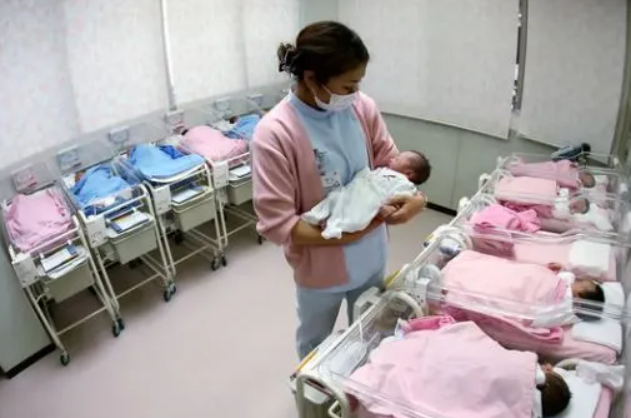
Several countries in this world like India, China, the United States, Indonesia, etc are battling with the problem of over-population, framing schemes to control the birth rate in proportion to resources available. However, a few countries in contrast who host lower populations see fewer people as a national problem, encouraging the males and females within to get married and have kids. In one similar instance, South Korea has come up with an idea to sponsor dating, marriage, and stay of couples who meet for the first time with the help of the government.
As per the government, people setting out on blind or regular dates can now continue doing so with government assistance. They can get serious and marry in public museums or parks and pay only KRW 10,000 in monthly rent for their new home after marriage. The city of Busan has also come up with the idea of gifting $64,000 to couples who decide to marry and have children.
Image- Korea.net
A 2023 census revealed that Korea’s overall population other than foreign nationals was 49.84 million, down 101,000 (0.2%) from the year 2022. As per the local reports, the same has been declining year after year since 2021. 2023’s total birthrate of 0.72 set a new record since it was lower than 0.78 in 2022. Also, only 194,000 marriages happened last year, a 40% decline from ten years ago.
A new concern has been observed by the Korean government: a rising number of youngsters are abandoning dating and marriage, resulting in a demographic collapse. The concurrent low birthrate has long been a societal issue, with the president even referring to it as a national disaster.
As a result of this, the government has undertaken steps to address the situation, such as establishing a ministry to oversee population management and planning. Local governments and private organizations have also initiated efforts. They have to date organized meetings between unmarried men and women and devised various plans and techniques to increase the population.
Couples allowed to stay in Jeol to find partners
Surprisingly, even the Buddhist community has joined in. On August 9th, a man from Dangjin, Chungcheongnam-do Province, and a woman from Seoul’s Gwangak-gu District first crossed paths and fell in love as part of the Korean Buddhist Foundation for Social Welfare’s “I am Jeolo” program. As per the local reports, Jeol means “temple” in Korean, and the program is believed to have been named after the dating reality show “I Am Solo.”
The program incorporates a temple stay with blind dates. It provides opportunities to meet single men and women in their twenties and thirties. Further, the participants are allowed to stay at a temple for one night and two days, participating in various programs to get to know one another and possibly find a companion.
Image- The New Zealand Herald
The event has been happening for years now and this year’s fifth edition was held on August 9-10 in which more than 1500 people participated. Six of the final ten couples ended up being in romantic relationships. On August 11th, during an event commemorating World Population Day, “I am Jeolo” got a presidential award for its efforts to address the low birthrate of the country.
Notably, the city of Busan also aggressively promotes romantic partnerships among young people. This October, the Saha-gu District will hold a “Day of Unmarried Foreign and Local Men and Women’s Meeting”. It will evaluate applications, select participants, and set up blind dates between them.
The government has also planned KRW 500,000 for newlywed couples and KRW 1 million if they hold family gatherings to discuss marriage. In addition, if a couple marries, the government will pay them KRW 20 million in celebrations. Then, if they discover a house on rent, they will receive KRW 30 million as a deposit amount. Also, they may receive a monthly supplement of KRW 800,000 for up to five years.
Local governments extending monetary aid
This is in Busan. However, similar facilities are slated to be provided by Seoul, a city in South Korea. The Seoul Metropolitan Government has opened 28 public facilities as wedding halls, as those run by the private sector are expensive. Wedding halls at 22 locations, including the square at the Seoul Museum of History, the Sejong Center for the Performing Arts, Maru Park of the Seoul Water Recycling Corporation, the Seoul Water Recycling Park, and Magok Square, are free for use. Six are indoors, while the rest are outdoors, which is generally preferred by newlyweds. Couples marrying here can receive up to KRW 1 million to spend on their wedding.
A couple wearing traditional “hanbok” outfits taking a selfie at the Gyeongbok Palace, in Seoul (South China Morning Post)
Several local governments are also establishing various schemes to offer homes, lessening the societal and financial burden that couples undergo. Starting next year, Incheon City will furnish residences to 1,000 newlywed couples at a monthly rent of KRW 30,000 for six years. Newly married couples who have married within the last seven years, as well as soon-to-be-married couples, will be eligible for accommodation.
Hwasun-gun, the county of Jeollanam-do Province offers out residences for KRW 10,000 per month to married couples. The county pays a deposit for the apartments and is renting them to newlyweds and young adults. Jeollanam-do Province also plans on offering 1,000 houses for the same monthly rent in areas with decreasing populations, including Goheung-gun, Boseong-gun, Jindo-gun, and Shinan-gun counties.
Lowering the Total Fertility Rate in South Korea
It is important to note that, the global Total Fertility Rate (TFR) has fallen from around 5 in 1950 to 2.2 in 2021. As of 2021, 110 countries and territories (54%) had rates below the population replacement level of 2.1 children per woman. It was reported in May this year that while the decline in Total Fertility Rate (TFR) has become a pervasive global issue, the challenges are particularly pronounced for South Korea, which has the world’s lowest TFR. Since 2018, South Korea has been the only member of the Organisation for Economic Co-Operation and Development (OECD) with a TFR below 1. According to reports, its population in 2023 declined for the fourth straight year.
According to preliminary data from Statistics Korea, a government-affiliated body, the average number of children a South Korean woman has during her lifetime (TFR) in 2023 registered an alarming drop. It fell from 0.78 in 2022 to 0.72 in 2023. It has earlier projected that its fertility rate will likely fall further to 0.68 in 2024. According to the Institute for Health Metrics and Evaluation at the University of Washington in Seattle, if the low fertility rate persists, the population of Asia’s fifth-biggest economy is projected to almost halve to 26.8 million by 2100.
Image Source – The New York Times
Additionally, South Korean women give birth for the first time at an average age of 33.6 which is the highest among OECD members.
It is alarming that the country’s fertility rate continues to shrink and script record low every year despite comprehensive measures undertaken by the government and spending billions to increase its population. The country is facing what is being described as a threat of “national extinction”.
South Korea has spent over $270 billion on programs to encourage people to have more children, with no success
Since 2006, the Korean government has invested more than 360 trillion won ($270bn) in programs to urge Korean couples to have more children. For this, they have given a slew of incentives including cash subsidies, babysitting services, and support for infertility treatment. Conservative President Yoon Suk Yeol’s administration has made reversing the falling birthrate a “national priority”. In December, his government promised to come up with “extraordinary measures” to tackle the situation.
Since 2006, South Korea's government has spent $270bn, or just over 1% of GDP a year, on babymaking incentives. Here's the dismal result: pic.twitter.com/w9qIbubGA6
— James Pethokoukis ⏩️⤴️ (@JimPethokoukis) May 22, 2024
However, financial and other allurements have failed to convince Korean couples to have babies or bigger families. It’s important to note that sustained low fertility rates often indicate a rapidly aging population, leading to economic challenges. With fewer people of working age, boosting the economy becomes difficult, and a significant portion of the budget is redirected towards increasing healthcare and social security costs for the elderly.
According to the BBC, Korean couples with children receive free taxi services, and married couples are exempt from hospital bills and IVF treatment costs. With South Korea’s fertility rates plummeting, the city of Seongnam, the fourth-largest in the country, has resorted to organizing ‘mass blind dates’ in hopes of reversing the declining birth rates. Prospective parents are being enticed with various incentives, including cash rewards and housing subsidies.
Why does South Korea need to solve the problem of demographic drift in the coming times?
The decreased or rapidly decreasing population of the country eventually in the coming years can lead to a reduced labour force, which negatively could impact economic productivity. As widely known, an increasing population is frequently associated with a greater consumer base, which increases demand for goods and services. On the other hand, a diminishing population results in less consumer expenditure, impacting the economic growth of a nation. A lower population in South Korea might contribute to a poorer tax base, which further might negatively impact on funding of public services and infrastructure. The government might find it difficult to sustain essential services without increasing taxes or cutting benefits.
South Korea notably has one of the world’s fastest-aging populations. A higher proportion of the old compared to the young might result in an imbalance, with fewer young individuals ready and prepared to care for the elderly, both economically and socially. This demographic shift holds the potential to disrupt intergenerational relationships and place an additional load on the younger generation in the future if the problem remains unsolved.
The country’s population growth can boost its global influence, both economically and culturally as a larger population frequently correlates to a more powerful voice in international affairs and a greater ability to advocate its cultural and political values globally. Ultimately, expanding South Korea’s population is viewed as critical to preserving economic stability, sustaining long-term social welfare systems, balancing demographics, promoting innovation, maintaining national security, and increasing worldwide influence. Addressing population decline through measures that promote greater birth rates, support families, and attract immigrants is critical to the country’s long-term prosperity.
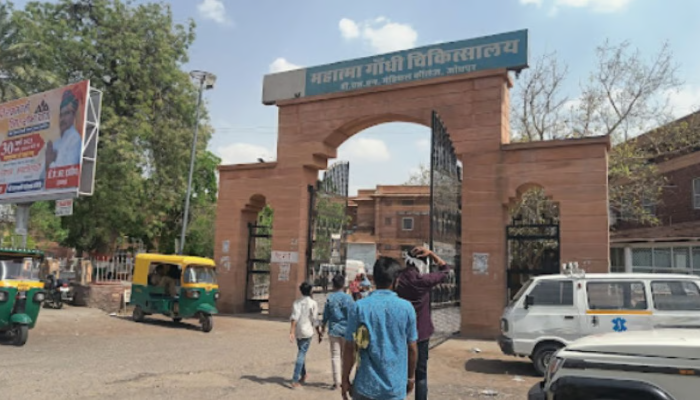
On 27th August, two contract workers at government-run Mahatma Gandhi (MG) Hospital in Jodhpur were taken into custody for raping a 15-year-old girl on the night of 25th August. She had gone to the hospital that same evening following a fight with her mother, according to information provided by the police. Police found her near the hospital canteen on the campus on 26th August after getting information and notified her family members.
The accused had spotted the lone girl at the institution and struck up a conversation with her. Afterwards, they led her astray and took her close to an isolated region behind the hospital’s biomedical waste dumpyard, where they sexually assaulted her. The girl’s family, meanwhile, conducted a thorough search for her. On 26th August, the family filed a report at the Soorasagar police station after they were unable to find her. The youngster reported the event to the authorities after being brought to the police station. The cops then returned to the hospital and looked through CCTV footage captured inside and outside the building. They were able to identify the perpetrators as hospital sanitary staff members who were employed on a contract basis.
On 27th August, the girl was sent by the police for a medical evaluation, during which the rape was verified and a statement was recorded. According to Deputy Commissioner of Police (west) Rajarshi Raj Verma, her father filed a missing person’s report at the Soorsagar police station on 25th August night and stated that his daughter had been manipulated by an unknown individual. The official mentioned, “While we had been searching for the girl, we received information that she was present in the canteen of MG Hospital. Police rushed to the spot and took her to the police station.”
He conveyed that she told authorities she fled home on the 25th of August evening after being scolded by her mother. Two hours later the minor revealed that she was sexually violated by two people in a private area on the hospital premises on the same night. “On this information, a team rushed to the hospital for spot verification and identification of the accused. We scanned CCTV grabs and found the two accused, who were identified by the girl,” he noted.
It was discovered that both of the culprits were contract sanitary employees of the hospital following their identification and information from the hospital administration. According to the police, they enticed her with food, brought her to a secluded area on the hospital grounds close to the inmates’ cells and gang-raped her there. “The victim’s statement will be recorded before a magistrate, after which an identification parade will be conducted to confirm the suspects. Based on the results of this process, the suspects will be formally arrested,” informed the DCP. A forensic team also visited the hospital premises to collect evidence from the scene.
A case of gang rape has been launched under the Bharatiya Nyaya Sanhita (BNS) and pertinent provisions of the Protection of Children from Sexual Offences (POCSO) Act. The Mahatma Gandhi Hospital’s superintendent, Dr Fateh Singh Bhati, claimed that hospital personnel had been instructed to examine the lighting in the vicinity of the incident. “Measures are being taken to enhance security, including installing additional lights.” He added that none of the two accused was now employed or on contract at their hospital. However, one of them might have had a contract job there in the past.
Three similar rape cases in 24 hours jolt Jodhpur
On 27th August, a one and half-year-old child was reportedly gang raped by her two neighbours in the Boranada police station area in Jodhpur. The incident was reported to the police by a youth on the same night with the help of the child helpline. The cops then talked to the victim’s family and nabbed the accused after which they were interrogated. In another incident, an underage girl was sexually assaulted in the Mahamandir area of Jodhpur city.
Her family members lodged a police complaint and informed that she had gone to attend the Janmashtami celebrations on the night of 26th August when a youth raped her. Afterwards, she returned home and narrated the ordeal to her family following which they approached the authorities and submitted a complaint. On the other hand, a girl in Jodhpur’s Vivek Vihar police station area also accused a young guy of rape. They were in a live-in relationship and shared a home, however, she charged that he took advantage of the situation and sexually exploited her.
On 26th August, the Tata Group informed the State Planning Department of Uttarakhand that they plan to recruit 4,000 women technicians from the state for employment at their components manufacturing and assembly units in Karnataka and Tamil Nadu. The letter to the Planning Department was written by Ranjan Bandopadhyay, Chief Human Resource Officer of the Tata Group.
The recruitment drive will be facilitated by Tata Electronics Pvt Ltd under the National Apprenticeship Training Scheme (NATS) under the Union Education Ministry and the National Apprenticeship Promotion Scheme (NAPS) under the Union Skill Development and Entrepreneurship Ministry. This initiative coincides with efforts by the Chief Minister of Uttarakhand, Pushkar Singh Dhami, to enhance employment opportunities for the youth of the state.
The women technicians will be deployed at the Hosur facility in Tamil Nadu and the Kolar facility in Karnataka. The minimum eligibility for recruitment under NAPS is Class 10 or 12, while for NATS, the minimum eligibility is Class 10, Class 12, or ITI diploma. Tests will be conducted to select the candidates, who will then serve as shop floor technicians and operate sophisticated automated machinery in precision electronics assembly under supervision.
The company stated, “The candidates will be deputed as shop floor technicians in precision electronics assembly. Their role will involve operating highly sophisticated and automated machines under supervision.”
The technicians will be employed as per the provisions of the Apprenticeship Act of 1961. Appointment letters will be issued according to the qualifications under the NATS and NAPS schemes. Additionally, the Tata Group will provide benefits such as accommodation, food, and transportation to the selected candidates, in addition to fixed salaries.
The Hosur plant built by Tata Electronics is set to start manufacturing iPhones later this year. The plant will employ 50,000 workers in the next two years, mostly women. On the other hand, Tata Electronics has acquired the iPhone manufacturing plant in Kolar from Wistron India. While the existing workforce at the plant will continue, the new owner is adding additional workers to the plant.
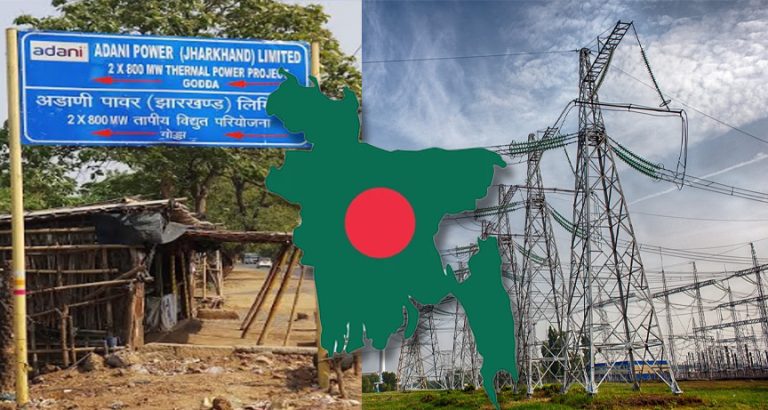
As political uncertainty continues in Bangladesh after the fall of the Sheikh Hasina government, the country is in debt to five Indian power companies for more than $1 billion which provide electricity to it, reported The Economic Times. The majority of these debts are owed to Adani Power, whose Jharkhand plant delivers electricity to the neighbouring nation. The crisis-ridden nation owes Adani Power close to $800 million, per informed industry executives. The company delivers electricity from its 1.6 GW coal-fired plant located in Godda, Jharkhand, over a dedicated transmission corridor.
Bangladesh Bank’s newly-appointed Governor Ahsan H. Mansur told Bloomberg News in an interview that the country owes $800 million to Adani Power. “If we don’t pay them, they will stop providing electricity,” he said. Adani Power is in talks with Bangladesh’s interim government to sort out this issue, as per reports.
Power Grid Corporation of India, NTPC, PTC India, and SEIL Energy India are among the other businesses owed by the Bangladesh govt for electricity costs. As of 30th June, the country owed over $150 million to SEIL Energy and approximately $80 million to NTPC which delivers about 740 MW from three of its units. SEIL Energy’s power purchase agreement with Bangladesh is for 250 MW. As of the end of March, PTC India owed roughly $84.5 million. The corporation stated that it has $46 million remaining as of 25th August and $79 million is currently due.
Power Grid Corporation of India owed $20 million to Bangladesh. As of 25th August, PTC has received $46 million of the total amount of $84.5 million owed by the nation. PTC India (formerly Power Trading Corporation of India Limited) has been supplying 250 MW of electricity from West Bengal State Electricity Distribution Co. to the Bangladesh Power Development Board since 2013. According to the executives, the companies have continued to deliver power to Bangladesh in spite of the unpaid bills, demonstrating the close affinity between the two countries. They did, however, issue a warning that since the businesses are answerable to their stakeholders, this arrangement cannot last forever.
A government official highlighted, “Some companies have had issues related to payment, with some of it related to coal purchase as well.” An Adani Power representative recognized the problem but would not discuss the outstanding amounts. “We need a solution soon, or else we will find it difficult to continue the supply of power, especially when lenders, suppliers of coal, spares, other commodities, and plant operation-related services need upfront payment,” conveyed an executive of the aforementioned companies.
Imported coal is used at Jharkhand’s Godda plant, which went into full operation in July 2023. When the plant was first put into service, the operator asserted that Bangladesh would benefit from the electricity it produced, as it would save money by eliminating the need for expensive liquid fuel power. Adani has reportedly kept up its power supply in accordance with the Bangladesh Power Development Board’s schedule.
It is important to note that the power companies can divert the electricity meant for export to the local grid, as per a recent amendment by the union govt. Earlier this month, the Ministry of Power announced notable amendments to the Guidelines for Import/Export (Cross Border) of Electricity, 2018. One of the most notable aspects of the amendments includes the provisions to connect dedicated export transmission lines, so that power meant for export can be diverted to Indian grids, in case the buying country fails to schedule power or default on payment obligations under the Power Purchase Agreement (PPA).
Notably, the nation saw widespread protests, severe political unrest and targeted attacks on minorities especially Hindus as former Prime Minister Sheikh Hasina’s previous administration collapsed. Nobel laureate Muhammad Yunus is currently in charge of the nation and working to stabilize the economy.
Farhatullah Ghori, a Pakistan-based Islamic terrorist, has posted a video on Telegram encouraging his supporters to carry out large-scale train derailments in Delhi, Mumbai, and other Indian cities. Inciting the Jihadis to interrupt the railway lines and their transportation system, Ghori said that it would cause havoc in India. The terror recruiter on the intelligence establishment’s most wanted list stated, “The government is targeting our properties through ED and NIA, but we will remain steadfast and usurp power sooner or later.”
Notably, Farahtullah Ghori’s train derailment remarks in his speech have alarmed the Indian authorities. Reports say that they are currently reviewing train derailment incidents that transpired in the recent past. It is pertinent to recall that on the 23rd and 24th of August, cement blocks were laid in the same location to derail a Vande Bharat train. In a similar incident on 23rd August, the Farrukhabad Express running between Kasganj and Farrukhabad narrowly averted a major accident after coming in contact with a wooden log placed on the railway track.
In the three-minute video posted three weeks ago, Ghori urged the mujahideen to launch an “ishtishadi jung” or “fidayeen war” against Hindu leaders and police.
“Experiment with different tactics to ascertain what works… where they are most vulnerable,” he told them. Intelligence officers confirmed that the video had circulated for 1-2 weeks.
Notably, the Farhatullah Ghori who was designated a terrorist in 2020 has been involved in several terror attacks in India. Ghori was the mastermind of the 2001 Akshardham Temple attack which left 30 dead and 80 injured, the 2004 suicide attack on the Task Force office in Hyderabad and the 2023 Rameshwaram Café blast case. Terrorist Farhatullah Ghori is originally from Hyderabad, India. Intelligence officials opine that Pakistan’s ISI may have deliberately unveiled Ghori to incite terror attacks and communal unrest in India, while shrewdly evading responsibility by claiming that Ghori is an Indian fugitive alongside dismissing his presence in Pakistan.
Ghori has also been leading the online recruitment of Jihadis. Last year, the Delhi Police arrested 3 most-wanted terrorists from Delhi and Uttar Pradesh. It was found that Farhatullah Ghori was their handler.
A few months back, Delhi Police mentioned Farhatullah Ghori’s name when several terrorists from the Pune-ISIS module were arrested. The authorities had said that the ISI was operating sleeper cells in India and recruiting youths to carry out terror attacks.
Instances of train sabotages on the rise in India
Nevertheless, the Pakistani terrorist’s clarion call to his fellow jihadis across the border should ring alarm bells for the Indian intelligence agencies, especially in the wake of multiple train sabotages that have struck the railways after the Lok Sabha 2024 elections. On the night of 17th August, the engine of the Sabarmati Express train derailed near Govindpuri station in Kanpur. Soon after, Railway Minister Ashwini Vaishnaw informed that the derailment took place because of an object placed on the railway track. It was later revealed by the investigative authorities that a broken piece of railway track was kept on the train line to cause an accident.
On Thursday, 22nd August, the Aligarh Railway Police charged one Afsan for deliberately placing an alloy wheel on the railway track to derail a moving train. The incident happened on Tuesday, 20th August when the accused made a deliberate attempt to recreate the Kanpur rail accident that happened on August 17th.
Recently, an investigation was launched into a suspected act of sabotage after the engine of the Nainpur Jabalpur train collided with an extraneous iron rod placed on the track near Kachhpura station.
Similar incidents have been reported in the recent past. In October last year, it was reported that multiple large rocks had been placed on the tracks on purpose and a major tragedy was averted by vigilant railway crew. On 2nd October, the driver of the Vande Bharat Express travelling from Udaipur to Jaipur avoided a catastrophic event by pressing the emergency brake to thwart an attempted derailing plot. The Vande Bharat Express crew found that there were stones and fish plates left on the railway track.
In February 2022, it was reported that a deliberate attempt to derail a train on the route of Ahmedabad-Bhavnagar track was averted saving the lives of the locomotive pilot and a guard. The incident came to light when an alert railway employee informed the rail officials that a large number of clips that fasten the rail tracks had been separated from the concrete sleepers.
In November 2022, an explosion took place at a bridge on the Udaipur-Ahmedabad railway line as an attempt was made to blow up a railway bridge. Following the explosion, the railway track was left with multiple cracks, and gunpowder was later found on the spot.