The 70th National Film Awards were announced on Friday, honouring the best films of 2022 along with outstanding actors and crew from across India.
Ahead of the announcement, Rahul Rawail, Chairperson of the Feature Film Jury, Nila Madhab Panda, Chairperson of the Non-Feature Film Jury, and Gangadhar Mudalair, Chairperson of the Best Writing on Cinema Jury, along with the respective jury members presented the list of award winners of the 70th National Film Awards for the year 2022 to the Union Minister of Railways, Information and Broadcasting and Electronics and Information Technology Ashwini Vaishnaw today. Minister of State for Information and Broadcasting, Dr. L. Murugan, Secretary,Ministry of Information and Broadcasting, Sh. Sanjay Jaju and Joint Secretary (Films), Ms. Vrunda Desai were also present at the occasion.
Among the highlights, Rishab Shetty, Nithya Menen and Manasi Parekh received Best Actor awards for their roles in Kantaram, Thiruchitrambalam and Kutch Express respectively. Best feature film award has been given to Aattam (The Play) directed by Anand Ekarshi and the award for Best Non-Feature Film has been bagged by Ayena (Mirror) directed by Siddhant Sarin.
The award for Best Book on Cinema has been given to Kishore Kumar: The Ultimate Biography authored by Anirudha Bhattacharjee & Parthiv Dhar.
Kantara won the Award for Best Popular Film Providing Wholesome Entertainment.
Rishab Shetty has been awarded the Best Actor in Leading Role for his performance in the Kannada movie Kantara whereas Nithya Menen bagged the award for Best Actress in a Leading Role for Tamil movie Thiruchitrambalam. Manasi Parekh also won the award for Best Actress in a Leading Role for Gujarati movie Kutch Express.
Pavan Raj Malhotra won the award for Best Supporting Actor while Neena Gupta won the Best Supporting Actress Award in the Feature Films category.
Directed by Ayan Mukerji with its VFX Supervisors Jaykar Arudra, Viral Thakkar, and Neelesh Gore, Brahmastra-Part 1: Shiva bagged the award for Best Film in AVGC (Animation, Visual Effects Gaming & Comic).
Arijit Singh has been named the best playback singer for the song ‘Kesariya’ in the movie Brahmastra-Part 1: Shiva. Bombay Jayashri won the best female playback singer for the song Chaayum Veyil in Malayalam movie Saudi Vellakka CC.225/2009.
Manoj Bajpayee’s Gulmohar received a special mention.
Here’s a look at the full list of winners in the Feature Films and Non-Feature Films categories.
THE KEY AWARDS —
Best Film: Aattam (Malayalam)
Best Debut Film: Fouja (Haryanvi)
Best Film providing wholesome entertainment: Kantara (Kannada)
Best Feature Film promoting national, social, and environmental values: Kutch Express (Gujarati)
Best Film in AVGC: Brahmastra Part 1 (Hindi)
Best Director: Sooraj Barjatya – Uunchai (Hindi)
Best Actor in Leading Role: Nithya Menen – Thiruchitrambalam (Tamil), Manasi Parekh – Kutch Express (Gujarati), Rishab Shetty – Kantara (Kannada)
Best Actor in Supporting Role: Neena Gupta – Uunchai (Hindi), Pavan Raj Malhotra – Fouja (Gujarati)
Best Child Artiste: Sreepath – Malikappuram (Malayalam)
CREW AWARDS —
Best Action Direction: Anbariv – KGF Chapter 2 (Kannada)
Best Choreography: Jani Master, Sathish Krishnan – Thiruchitrambalam (Megham Karukatha) (Tamil)
Best Lyrics: Naushad Sadar Khan – Fouja (Salaami) (Gujarati)
Best Music Direction: Pritham (songs) – Brahmastra Part 1 (Hindi), AR Rahman (background music) – Ponniyin Selvan Part 1 (Tamil)
Best Makeup: Somnath Kundu – Aparajito (Bengali)
Best Costume Design: Niki Joshi – Kutch Express (Gujarati)
Best Production Design: Ananda Addhya – Aparajito (Bengali)
Best Editing: Mahesh Bhuvanend – Aattam (Malayalam)
Best Sound Design: Anand Krishnamoorthi – Ponniyin Selvan Part 1 (Tamil)
Best Screenplay: Anand Ekarshi (screenplay writer) – Aattam (Malayalam), Arpita Mukherjee and Rahul V Chittella (dialogues) – Gulmohar (Hindi)
Best Cinematography: Ravi Varman – Ponniyin Selvan Part 1 (Tamil)
Best Playback Singer: Bombay Jayshree – Saudi Vellakka CC 225/2009 (Chaayum Veyil) (Malayalam), Arijit Singh – Brahmastra Part 1 (Kesariya) (Hindi)
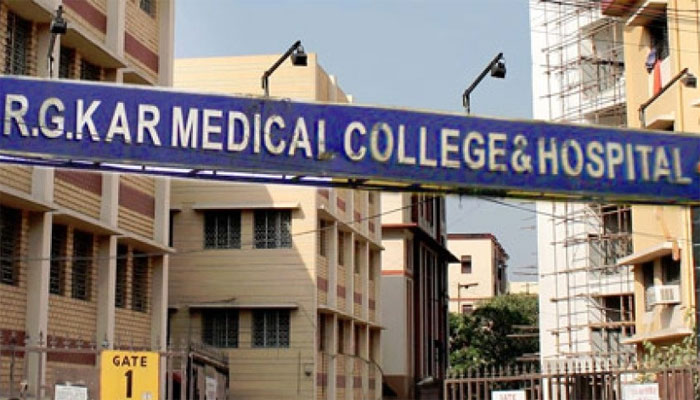
As many as twenty-five people have been reportedly arrested for an attack on Kolkata’s RG Medical College and Hospital on the night of 14th August following the brutal rape and murder of a 31-year-old trainee doctor. While the police claim that protestors against the incident went violent and attacked the hospital, it has been widely alleged that the mob wanted to destroy evidence of the crime by vandalising the crime scene. Now, a video from the incident seems to have confirmed the allegation.
A video of the incident has been published by ABP Ananda, in which the violent mob that targeted the medical institution can be seen creating a ruckus while someone is heard directing the goons to go to the seminar room where the heinous crime was committed. The person can be heard saying in Bengali, “Let’s go to the s eminar room,” as others continue to wreak havoc on the premises. It seems to suggest that they wanted to vandalise the seminar room to destroy evidence of the crime.
On the other hand, the authorities have claimed that the investigation is underway and they need time to unravel the entire truth. But today the Calcutta High Court transferred the case of the attack also to the CBI.
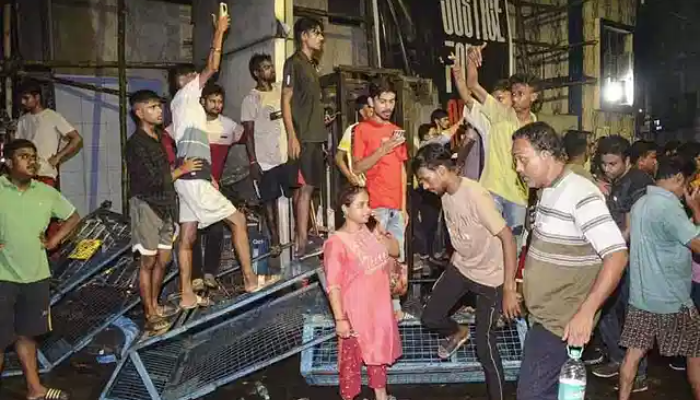
The malicious crowd descended upon the hospital like a swarm of flies and vandalised the place, burnt police vehicles and assaulted the doctors as the cops took refuge inside the bathrooms and requested help from the nurses. At least eighteen departments including the emergency room, intensive care unit, and high-dependency unit as well as the storage room, male wards, washrooms and even CCTV cameras were broken. As per police, there were around 7000 people in the crowd, and therefore the police were greatly outnumbered.
Notably, Senior advocate Bikash Ranjan Bhattacharya informed the Calcutta High Court today during the hearing on the incident that the hooligans wanted to vandalise the crime scene, but they reached the wrong floor due to confusion over the floor number. The seminar room is located on the third floor of the building, and the third floor is called 4th Story (4th Tala) in Bengali. Therefore, they went to the third storey of the building, which is actually the second floor, and vandalised rooms on that floor.
Therefore, the mob attacked the wrong floor while they targeted the seminar room, the lawyer said, adding that this proves that the attack was prearranged to destroy the crime scene and remove any evidence. During the hearing, Chief Minister Mamata Banerjee’s government and police were slammed by the court for its abject failure to protect the doctors from the mob.
The state claimed that although police attempted to disperse the crowd, they were unable to prevent the attack as assailants were about 7,000 in number and multiple police officers suffered injuries as a result. When the police and others couldn’t even defend themselves, the court retorted, asking how they would protect the doctors. The court even threatened to close the hospital and move the patients to another facility since it was not satisfied with the administration’s reply. “Normally the police always has an intelligence wing. Similar things happened on Hanuman Jayanti. If 7000 people are to gather, it is hard to believe the state police did not know,” the court pointed out.
“You pass 144 Code of Criminal Procedure (CrPC) orders for any reason and when so much commotion is going on, you should have cordoned the area,” the court stated to which state counsel alleged that the mob had unexpectedly gathered at night. The court then chastised the government and highlighted, “This is an absolute failure of state machinery.”
Udaipur was in the grips of communal tensions on Friday, August 16, following a knife attack against a Hindu student by a student allegedly belonging to the Muslim community.
The altercation between two students led to Hindu organisations closing markets in various parts of the city.
The attack took place around 10:30 AM in the Surajpol police station area, where one student injured another with a knife before fleeing the scene.
The injured student was quickly taken to Maharana Bhupal (MB) Hospital by teachers, where he is now receiving treatment in the ICU. Outraged by the incident, people have forced the closure of shops in the Chetak Circle, Hathipole, Ashwini Market, Bapu Bazaar, and Ghantaghar areas. Police have been deployed as a precautionary measure.
District Education Officer Lokesh Bharti mentioned that both minors, around 15 years old, are classmates at the Government Senior Secondary School, Bhatiyani Chohatta.
The exact cause of the dispute between the two students remains unclear, but they clashed outside the school during lunchtime. One of the students stabbed the other two to three times in the thigh. As the injured student began screaming, teachers hurried to the scene.
The child’s parents were notified and rushed to MB Hospital, accompanied by a large number of residents. Police forces have been stationed at the hospital to ensure order is maintained.
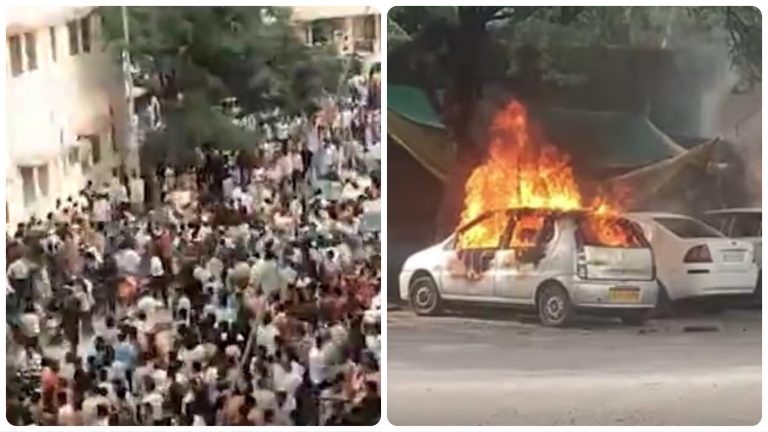
Residents took to the streets after the incident, vandalising property, setting a garage on fire, and overturning several vehicles in the Sardarpura area. In response to the unrest, Udaipur Collector and District Magistrate Arvind Poswal imposed Section 144 in the city, instructing officials to enforce the order rigorously.
Kanhaiya Lal murder roils Udaipur
The knife attack, for many, brought back the memories of the horrifying incident witnessed two years ago, when two Islamists, egged on by the Sar Tan Se Juda protests sparked in the wake of Alt News cofounder Mohammed Zubair’s dog whistling against Nupur Sharma, brutally killed a Hindu tailor for supporting the beleaguered former BJP spokesperson.
On 28th June 2022, two Islamists, Mohammed Riyaz Attari and Gaus Mohammed, killed Hindu tailor Kanhaiya Lal and circulated the video of the crime online to send a message to supporters of Nupur Sharma. The murder was allegedly motivated by a social media post by Kanhaiya Lal in support of former BJP spokesperson Nupur Sharma. Following the post, he received threats and got calls for his arrest.
On 15th June 2022, Lal reportedly filed a complaint with the local police seeking protection. However, the police did not take any concrete action, and he was left vulnerable. Kanhaiya Lal kept the shop shut for a few days after receiving threats. Eventually, he had to open the shop, which led to the attack. The two Islamists were arrested soon after the murder and charged with premeditated murder and criminal conspiracy. Their trial is currently ongoing.
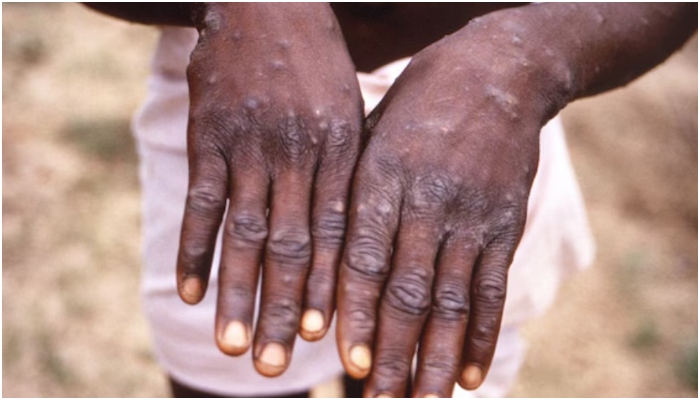
On Friday, 16th August, at least three patients were diagnosed with the monkeypox virus in Khyber Pakhtunkhwa in Pakistan, as confirmed to the local news channels by health officials. The health agency in Khyber Pakhtunkhwa revealed that all patients who arrived from an Arab nation were infected with the virus.
According to the local reports, Pakistan has previously experienced occurrences of Mponkeypox, and it is unclear what kind of variant was identified in the victims at present. The authorities confirmed that the first man who was diagnosed with the pox belonged to the city of Dir and is currently residing in Mardan. He had recently arrived from Saudi Arabia on August 3rd after which he fell ill resulting in the diagnosis of monkeypox.
Earlier, airport security was increased across Pakistan after the government confirmed its first case of monkeypox in Peshawar. Meanwhile, the Border Health Services (BHS) and provincial authorities have been placed on heightened alert following the discovery of the case in the country’s northwestern province.
Authorities have directed that isolation wards be established in selected hospitals, antiviral drugs be stockpiled, and personal protective equipment (PPE) be made available to healthcare personnel, as well as all healthcare facilities and points of entry.
More samples have been taken from people who have had frequent contact with the patients after the detection. To stop more cases from invading the nation, the Health Ministry has also ordered increased monitoring at all points of entry.
This case represents the inaugural occurrence of the disease in 2024 and the eleventh case in Pakistan over the last two years. A patient who had both HIV and Monkeypox died at the Pakistan Institute of Medical Sciences (PIMS) in Islamabad last year.
Ten cases of proven monkeypox in Pakistan during the previous year were all connected to visitors from the Middle East and other areas. While up to 10% of cases of clade I monkeypox have resulted in deaths, more recent outbreaks have had lower death rates, according to the US Centers for Disease Control and Prevention (CDC). Clade II has a mortality rate of less than 0.2%.
Pregnant women, those with weak immune systems, and babies are among those most vulnerable to more serious illnesses caused by monkeypox. The initial symptoms of this disease are usually similar to those of the flu and include fever, chills, fatigue, headache, and weakness in the muscles. A painful or itchy rash with elevated lesions that scabs over and goes away over several weeks is frequently what follows.
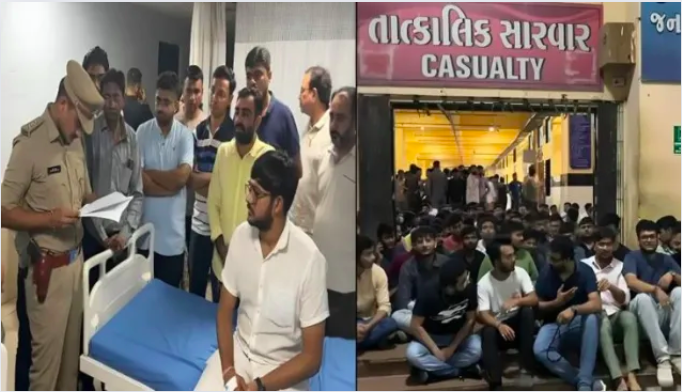
In Gujarat’s Junagadh, the family of a patient named Yunus attacked the doctors at Junagadh Civil Hospital alleging negligence. In the attack, two doctors and a staff sustained injuries. This incident triggered protests with the Civil Hospital’s medicos going on a strike. The police acted promptly and arrived at the spot. They assured the protesting medicos of appropriate legal action and filed an FIR against 8 people. So far 5 people have been arrested in this case.
According to the information received, Yunus Hussain Khatri was admitted to Junagadh Civil Hospital on the night of August 15-16 due to chest pain. Doctors gave the patient all the necessary treatment in emergency. The patient was then placed on a ventilator in the ICU for further treatment, however, he eventually died. The family of the deceased Yunus attacked the doctors, blaming them for negligence. In the attack, nursing staff, including the doctor, sustained serious injuries. Civil hospital staff also went on strike in response to the attack.
As the Junagadh Police swung into action and arrested five of the eight accused after registering a case against them, the protesting medicos called off their strike within hours. While the police assured that the rest of the accused would be arrested, the doctors and nursing staff returned to their respective duties.
Speaking to OpIndia, DySP Hitesh Dhandhalya said that the doctor and nursing staff on duty at the civil hospital were attacked at night. A relative of a family came here for treatment, however, he died later. Subsequently, the family of the deceased patient Yunus attacked the doctor and nursing staff. A complaint has been registered against the accused in the A Division Police Station and immediate action has been taken against the attackers
The brutal rape case of the 31-year-old trainee doctor in Kolkata has shaken the entire country with everybody demanding justice for the incident. While the CBI has taken over the case, several politicians, journalists, celebrities, and every conscious citizen have condemned the incident and have raised their voices against the heinous crime, demanding immediate arrest of the accused involved.
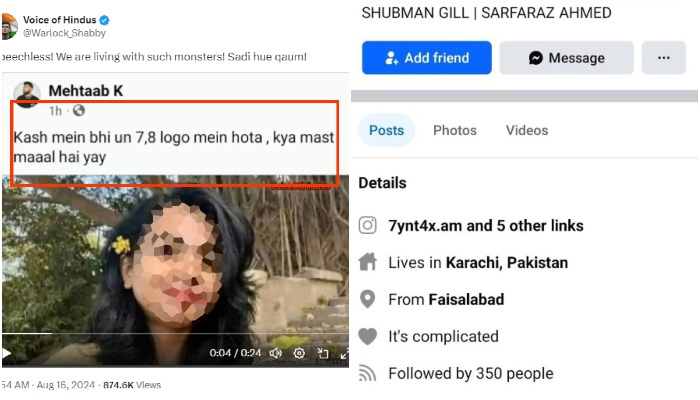
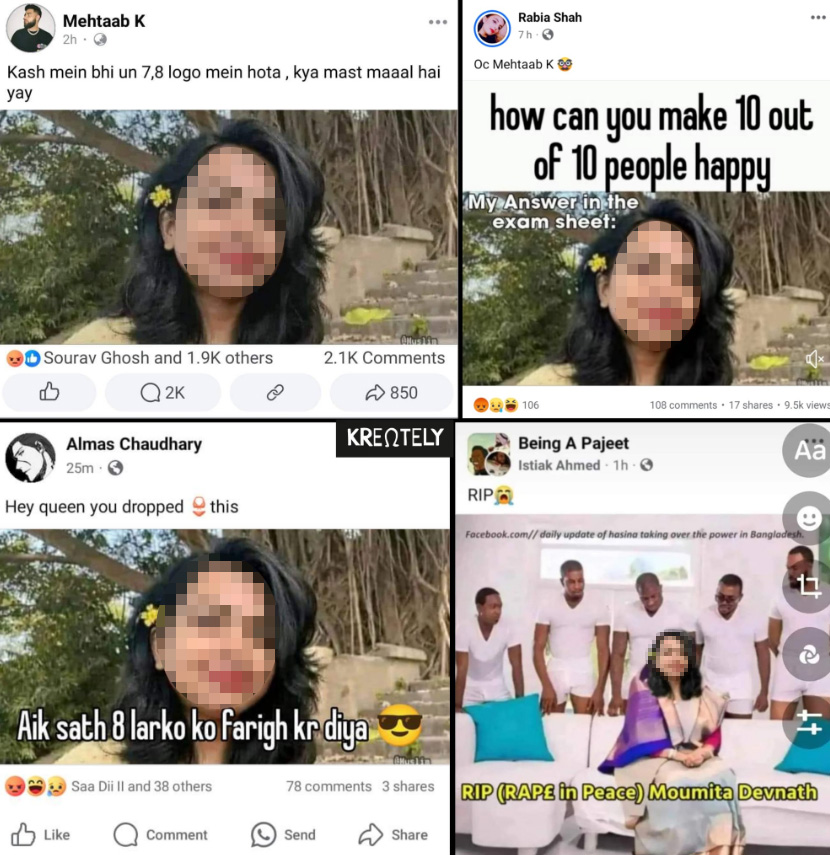
Meanwhile, several others who don’t deserve to be called humans are busy mocking the victim and the crime, further justifying it by glorifying the accused persons involved. One of the persons identified as Mehtaab who is believed to be belonging to Karachi, Pakistan glorified the accused persons and demeaned the victim woman on social media. He indicated that he should also have been part of the group of the accused who brutally raped the doctor during her night duty at RG Kar Medical College in Kolkata.
Several others on Facebook including Rabia Shah, Almas Chaudhury, and Istiak Ahmed mocked the brutal rape incident by blatantly saying that the victim’s doctor managed to ‘satisfy’ 8-10 people at a time. They further blatantly mocked the woman under the guise of paying tributes to her saying ‘Rape in Peace’ instead of ‘Rest in Peace’.
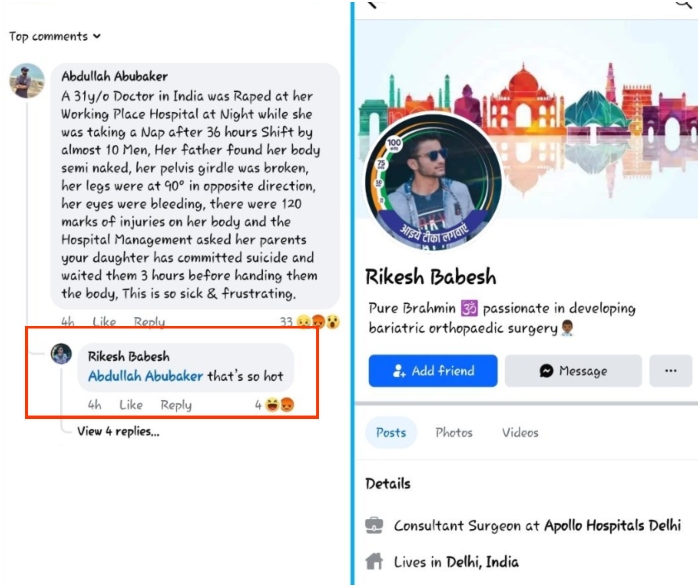
Another in the name of Rakesh Babesh claiming to be a Brahmin from Delhi termed the incident as ‘hot’. In response to the comment that described the barbarity that the lady doctor had to face on the cruel night of 9th August at the hands of 8-10 men who brutally raped and killed her while on duty, Babesh said, “That’s so hot.” Unsurprisingly, the response attracted laughter reactions from many other users.
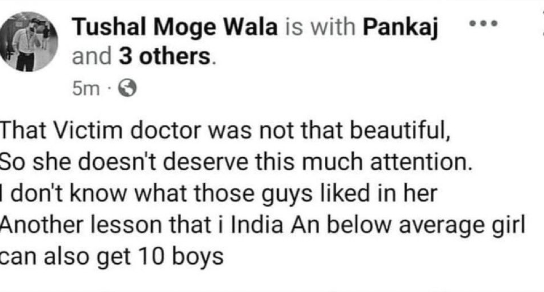
In the midst of this, some of the users also body-shamed the woman saying that she didn’t deserve this kind of attention. Calling the woman less beautiful, a user identified as Tushal Moge Wala questioned what must have the rapists seen in the woman. “That victim doctor was not that beautiful, so she didn’t deserve this much attention. I don’t know what those people liked about her. Another incident showing that in India a below-average girl can also attract 10 boys,” the derogatory comment read. (None of these comments could be independently verified. The same though are making rounds on social media).
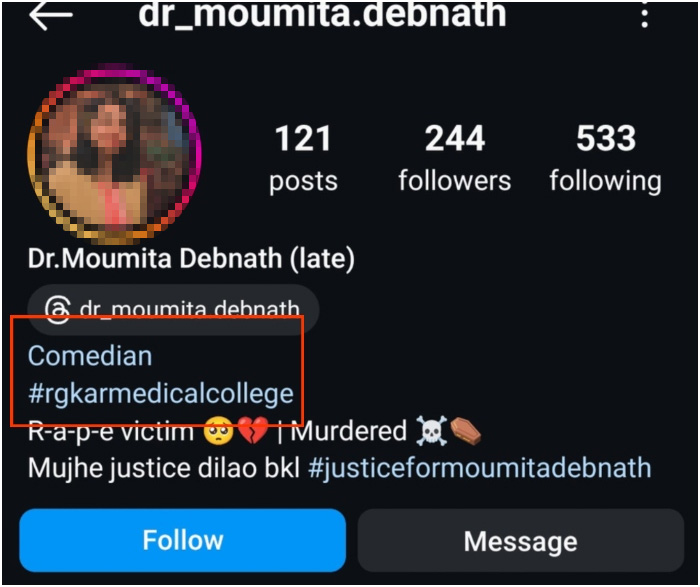
The incidences and the social media posts boiling blood don’t stop here. Some of the uncivilized people are found to have created fake Instagram accounts in the name of the rape victim calling her a ‘comedian’. One such account discovered by OpIndia demands justice for the incident of rape while calling the victim a ‘comedian’. The same has now been deleted.
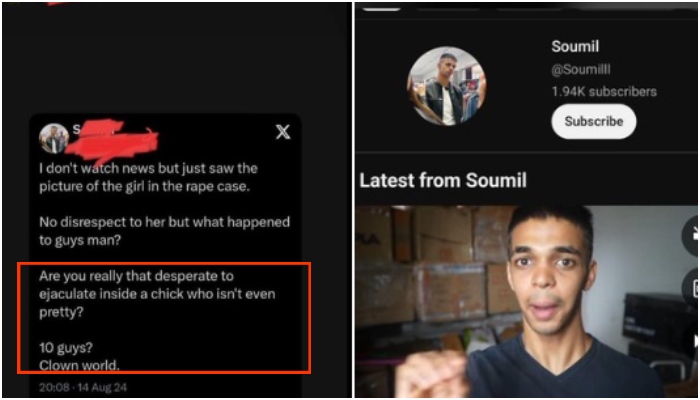
One, in the name of Soumill, passes a derogatory comment, again body-shaming the doctor victim. “No disrespect to her but what happened to guys man? Are yo really that desperate to ejaculate inside a woman who is not even pretty? 10 guys. Clown world,” he commented.
The Kolkata Police meanwhile providing the update in the case revealed on August 16th that 25 persons were arrested in the RG Kar hospital vandalism case, while 4 more were identified with the help of social media users. The vandalism happened on 14th August at midnight when the TMC goons as alleged by the BJP barged into the hospital and tried to destroy the evidence in the case after the CBI took over the investigation.
Update: As of now, we have made 25 arrests in relation to the vandalism at R.G. Kar Hospital on Wednesday night. Four more suspects were identified by netizens from our social media posts. The search for the remaining suspects is ongoing. Thank you once again for your support. pic.twitter.com/AlaIU23KOV
It was also alleged by the opposition parties that the Kolkata Police and the state were trying to cover up the case by terming it a ‘suicide’ initially. The parents of the girl were also told by the hospital administration in the beginning that the girl had committed suicide. However, later it was found that she had been brutally raped and murdered by around 10 accused persons, none of whom have yet been arrested.
What exactly happened to the girl on 9th August?
On 9th August, a semi-nude body of a female PG trainee doctor was found inside the seminar hall of RG Kar Medical College and Hospital in Kolkata. It is a government-run hospital. Following the discovery, her father had said that she was raped and killed inside the hospital, and efforts were underway to “conceal the truth.”
The doctor had dinner with four of her coworkers at 2:30 am that night after seeing Neeraj Chopra’s javelin throw event during the Paris Olympics. Afterwards, she went to the seminar hall to relax. The main accused in the case, Sanjay Roy, had access to every department as he worked at the RG Kar Medical College and Hospital police outpost. He was not affiliated with the institution but often went there. CCTV evidence shows him entering the premises where the doctor was discovered, that led to his arrest on 10th August. He returned home after committing the horrifying act and slept in late. Roy also cleaned the outfit he wore to remove any evidence. The police recovered his bloodstained shoes during a search.
The Doctor was brutally tortured before she was suffocated to death, according to the post-mortem report. The four-page report stated that she had been strangled and that “perverted sexuality” and “genital torture” had resulted in serious wounds in her private parts.
The Doctor’s thyroid cartilage was also shattered. A source stated that the rape and murder occurred on 9th August most likely between 3 and 5 am. Her lips, fingers, left leg, and abdomen were all covered with injuries.
According to sources, the Doctor’s head was slammed against a wall or the floor resulting in severe injuries and her mouth and nose were squeezed shut to stop the victim from shouting. The accused had reportedly beaten her up as she attempted to defend herself and resist. He then raped and killed her. According to the autopsy, the girl’s hands and face had cuts on them. Shards of glass from her spectacles broke and got into her eyes following an intense blow. The initial postmortem report ruled out suicide and stated that the trainee doctor had been sexually assaulted before being murdered.
Conclusion
Incidents like this have the potential to infuriate civilized people, who eventually take to the streets to demand justice for women. They speak out against such horrible atrocities, calling into doubt the country’s stated safe atmosphere for women. According to statistics, India witnessed 90 rapes every day until 2022, and the number has subsequently increased as of 2024. In 2012, a 22-year-old physiotherapy intern was brutally gang-raped and murdered on a Delhi bus, prompting lawmakers to stiffen laws against sexual violence. But things don’t seem to have changed a lot as women in India continue to feel unsafe at workplaces, while walking on the streets, at places of worship, and even sometimes at their homes.
As per the NCB’s data, conviction rates for rape altered between 27% and 28% from 2018 to 2022. Unfortunately, this is the second lowest rate out of five violent crimes, including murder, kidnapping, rioting, and causing grievous harm. Since 2013, a number of high-profile cases have brought attention to the issue that occurs on a daily basis in some or other parts of the country. In 2018, a 26-year-old man from central India was executed three weeks after being arrested on charges of raping and murdering a baby girl.
Four accused were shot dead by police in 2019 after they raped and killed a 27-year-old veterinarian near Hyderabad. The men had been in police custody, and officers stated they were shot dead near the crime site while attempting to steal the weapons of the following police officers. The 2020 gang-rape of a 19-year-old girl in northern India’s Hathras region, followed by her death weeks later in a hospital, sparked widespread outrage. Numerous such instances can be shared revealing the society’s mentality and atrocities against women. But the point behind all this is just to condemn violence against women and seek justice for them heavily. Apart from people who commit such crimes, all those who justify rapes, see women as objects, and mock victim women are also equally liable for grievous punishment. The country that is given the respect as that of a ‘mother’, ‘Bharat Mata,’ must ensure that the women who live within its borders feel safe, free, and independent.
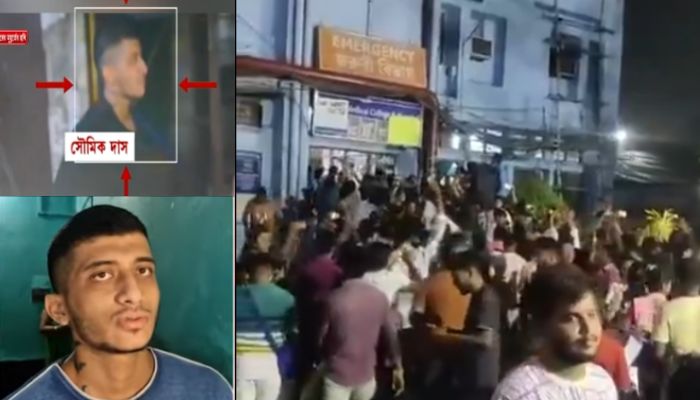
A day after a frenzied mob vandalised the RG Kar Medical College and Hospital in Kolkata, one of the attackers turned out to be a close confidante of Trinamool Congress councillor Sukanta Sen Sharma
The accused named Soumik Sen is a gym trainer by occupation. While speaking to TV9 Bangla, Sen said that he attacked the healthcare facility without any provocation.
He claimed to have gone to a public meeting and found a mob gathering outside the hospital. On seeing that, Sen joined hands with the attackers and carried out vandalism at the RG Kar Medical College and Hospital.
“I had gone to a protest rally. Later, I also engaged in vandalism along with others. I have committed a mistake,” he was heard saying.
Sen said that his acquaintances, whom he regularly met at the gym, were part of the mob. In videos that went viral on social media, he was seen breaking the furniture at the emergency ward of the RG Kar Medical College and Hospital with a rod.
In his defence, he claimed to have gotten emotionally carried away after seeing other vandals in action. Sen is a resident of Sinthi suburb of Kolkata. He surrendered before the police on Friday (16th August).
Mob attack on RG Kar Medical College and Hospital
On Thursday (15th August) night, a mob of 50-odd men laid siege at the R G Kar Medical College and Hospital in Kolkata. The goons carried out attacks against the protesting doctors demanding justice for the rape and murder of a female trainee doctor.
In videos that have now surfaced on social media, the mob was seen vandalising the hospital premises, damaging police vehicles and physically attacking doctors present there. The attackers were also involved in stone pelting.
According to reports, the mob entered were standing outside the hospital and then suddenly barged into the premises. They broke into the emergency ward of the hospital and destroyed the furniture and medicine stocks.
According to the protesting doctors, the mayhem unleashed by the goons lasted for about an hour. In the meantime, Kolkata Police Commissioner Vineet Goyal has accused online media outlets and social media accounts of instigating the unprovoked attack by the mob.
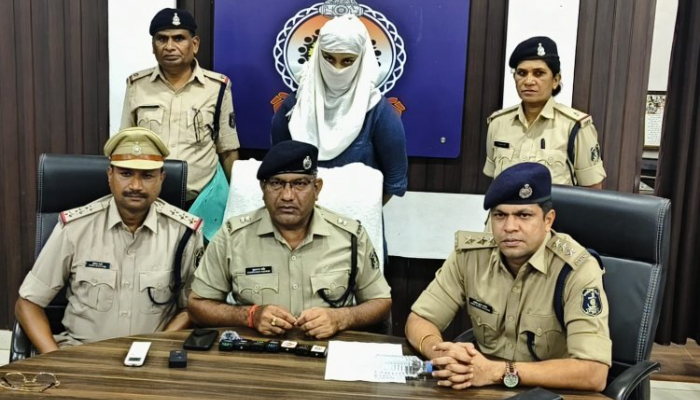
Two girls took the life of their old maternal grandmother and then committed robbery to steal her money in Bhilai, Chhattisgarh. The authorities have arrested the accused from Maharashtra’s Nagpur and also recovered the looted items. Atinder Shahni, a resident of Kuber Apartment in Purai which falls under the jurisdiction of Utai Police Station was murdered by unidentified individuals who then took her possessions. Her rotting corpse was discovered by the cops who broke the door and entered the place after which a case was filed and an investigation commenced.
Meanwhile, the police learned that her daughter lives in Nagpur and her granddaughters had demanded money from the victim. They even threatened to kill the elderly female if she did not comply. The cops then left for Nagpur and were misled by the accused initially but confessed to the crime after the former subjected them to strict interrogation. The culprits unveiled that the two girls reached Durg station from Nagpur via Chhattisgarh Express on 24th July. They then arrived at Atinder Shahni’s house in an auto and knocked at the door. The deceased opened it and her elder granddaughter used her hand to shut her mouth with the help of her minor sister.
They tied the woman’s hands and feet with their dupatta, pressed a pillow to her mouth, hit her on the head with a steel water bottle and killed her. Afterwards, they snatched the jewellery from her body along with cash, mobile and documents which were kept in the almirah. The duo then fled on their grandmother’s scooter to Rajnandgaon where they put the two-wheeler on a bus and reached Nagpur. They parked the vehicle near the railway tracks and returned home. Patan SDPO (Sub Divisional Police Officer) stated that an investigation was conducted after launching a case and both perpetrators were taken into custody.
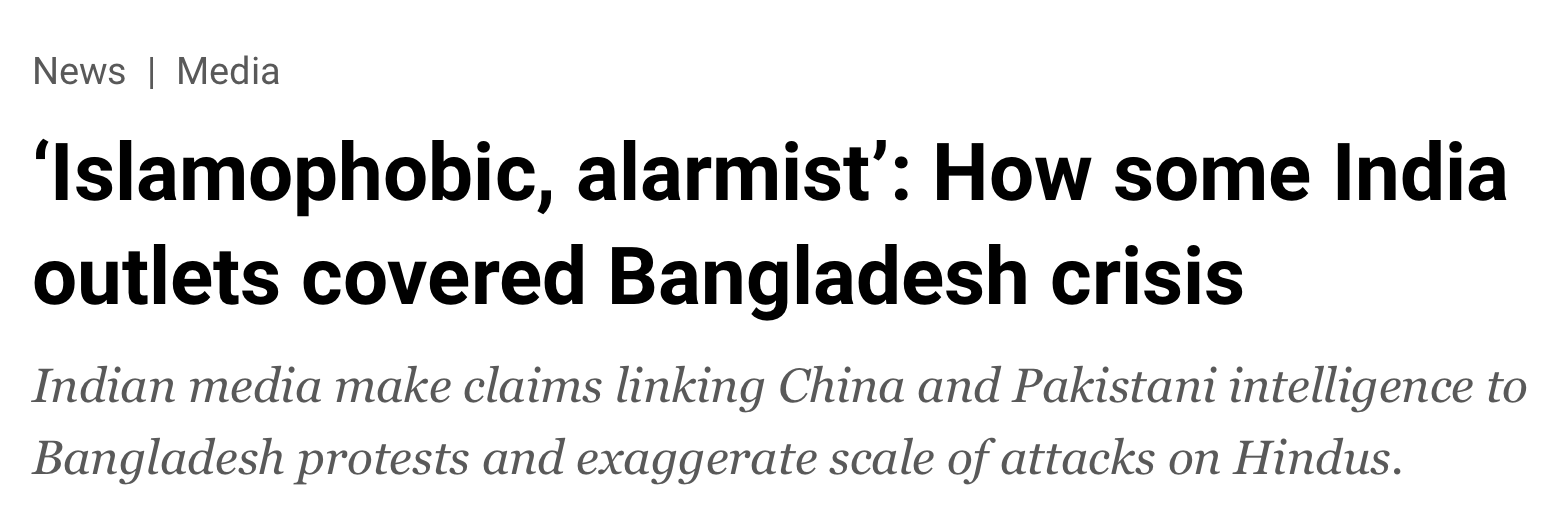
Within hours of Sheikh Hasina’s deposition by a student-led mass uprising, Al Jazeera was busy reporting that Indian citizens were spreading racist, Islamophobic fake news on social media.
Al Jazeera coverage of the Bangladesh ant-Hindu violence
Despite their headlines, it isn’t clear that Al Jazeera actually found any racists among India’s 1.4bn citizens. Their reportage dwelt instead on hearsay and a few examples of erroneous posts circulated on Facebook. They also failed to mention the very real specter of the 1971 Hindu genocide, today’s incitement for the formation of a Muslim super-state stretching from Jharkhand to the Chinese border and Arunachal Pradesh, and very credible polls that suggest Bangladesh now favors driving non-Muslims from Bangladesh. Say what you want about its bias and obtuseness, Qatar’s global news network has good reason to cover this crisis with cheap allegations of Hindu racism.
Al Jazeera’s breathtakingly narrow scope for interpretation of major civic events abroad reflects the paucity of Qatar’s civil society at home. A one-party Emirate of 350,000 citizens, served by indentured workers (largely Hindu Indians), and governed by a Wahabi regime of Islamic law, Qatar bans any religious iconography in public, has named its infrastructure after Islamic warlords and prophets and comprehends political nuance in flat terms of ‘revealed truth’ and ‘haram’. The tiny emirate has a long list of infractions to defend, particularly in the field of upholding the freedoms of ethnic minorities, particularly Hindu ethnic minorities.
But for the 430m viewers who tune in to Qatar’s state PR machine worldwide, the attempt to rebrand Bangladesh’s uprising of Islamic fundamentalism in terms of civic protest is nothing new. Islamic coups typically benefit from an allegiance to naive secular visionaries at the outset. It is easier to attack the visionaries’ opponents than to address the obvious floors in the vision, which inevitably leads to the accusation of Islamophobia and finally to general sympathy with the Islamic struggle. Al Jazeera follows the same formula in stirring up anti-semitic hatred and race riots in the USA and will join any secular cause – even those strictly banned in Islamic law such as Gay Pride – to attack those who stand against political Islam.
Using global events as vehicles for securing influence, Qatar’s bid to mediate for superpowers is no secret and is written into its state constitution. Their position as a wealthy ally of America and Europe depends upon stirring up fractious regimes against the West and then acting as a broker of goodwill under the glare of their PR machine.
Amazingly, this tiny emirate has now turned itself into a de facto embassy for Al Qaeda, the Taliban, the Muslim Brotherhood, and Hamas. It also gained a foothold in Europe during the breakup of Yugoslavia, where Al Jazeera’s channel in tiny Bosnia rose to become second only to its global English network.
Given Qatar’s disruptive bid to divide and mediate, it is very alarming that Al Jazeera now wishes to act as a global arbiter in Bangladesh. However, if they persist in their line that Bangladesh is lifting themselves to a new height among the free nations of the world, Al Jazeera will undoubtedly have bitten off more than they can chew.
The truth is that the interim government in Dhaka has already set about renaming Bangladesh’s infrastructure after Islamic prophets, and there is a constant onslaught against Hindu religious symbols and structures like Temples. Hefazat-e-Islami extremists and their Jamaat-e-Islami allies are known to all worthwhile journalists for their unjust treatment of the Hindu minority and the Islamic firebrand Dr Khalid Hossain has specifically attacked the Bangladesh’s ties to India. If Al Jazeera wishes to complain that Hindus have overestimated their exposure to this coup, then India will certainly not bestow upon them the laurels of oppression and press censorship.
In summary, the message projected at the West is that the protests were wildly successful: a Prime Minister was deposed, statues of the founding fathers were toppled in the capital, and state nepotism was afforded to the descendants of the genocidal war (without splitting hairs, of course, about whether these were the perpetrators or the inflicted), were slashed from one third to a meager 5%.
Bangladesh’s true progress – unlike that of Qatar’s Iranian and Afghan allies – will now unfold under the scrutiny and running commentary of the world’s largest democracy – India. Al Jazeera’s narrative will die, for once, where it should: In the limelight.
Qatar must consider whether they can afford for this to happen to their chuntering media network. Backing the wrong horse in Bangladesh certainly seems like an extremely high price to pay for a state whose fragile hegemony depends on using that same network to blindside Western democracies.
Stefan Tompson is the founder of Visegrad24, a Warsaw-based social media news company. He has covered conflicts in East Europe, Africa, and the Middle East.
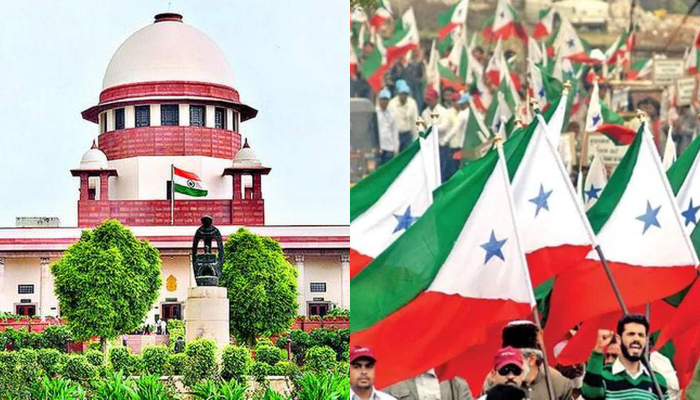
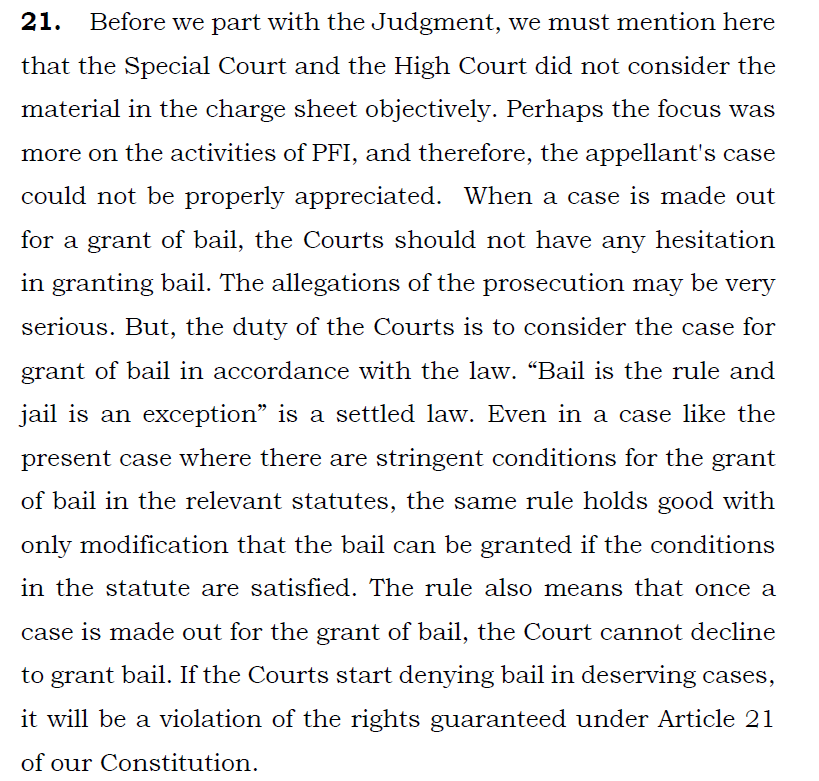
Jalaluddin Khan arrested under the Unlawful Activities (Prevention) Act (UAPA) was granted bail by the Supreme Court on 13th August. It claimed that the legal principle “bail is the rule, jail is an exception” applies even to offences under special statutes and it would be a breach of the fundamental rights to deny bail in deserving circumstances. Notably, Jalaluddin Khan was booked under the UAPA and other sections of the Indian Penal Code which has now been replaced by Bharatiya Nyaya Sanhita (BNS) after he rented out the top floor of his house to the outlawed Islamist outfit Popular Front of India (PFI).
A bench of Abhay S Oka and Augustine George Masih pronounced the order while pointing out the significance of evaluating bail requests in compliance with the law, even in cases involving grave accusations. “Allegations of the prosecution may be very serious, but it is the court’s duty to consider the case for bail in accordance with the law. Bail is the rule and jail is the exception that applies even to special statutes. If courts start denying bail in deserving cases, it will be a violation of rights guaranteed under Article 21,” the court conveyed as it didn’t regard PFI as a terrorist organisation.
The National Investigation Agency (NIA) earlier stated that the investigation revealed the formation of a criminal conspiracy to carry out violent and terror acts which would foster fear and jeopardize the country’s integrity and unity. The accused set up rented accommodation in Ahmad Palace, Phulwarisharif (Patna), as part of this scheme and the spaces were used for criminal conspiracy meetings and training people on how to commit violent crimes.
The accused reportedly intended to cause disruptions during Prime Minister Narendra Modi’s anticipated visit in 2022, according to information provided to the Bihar Police. On 11th July 2022, the Phulwarisharif Police raided the residence of Jalaluddin Khan who is a retired police constable in response to a tip-off and arrested him the next day.
Shocking details in the chargesheet
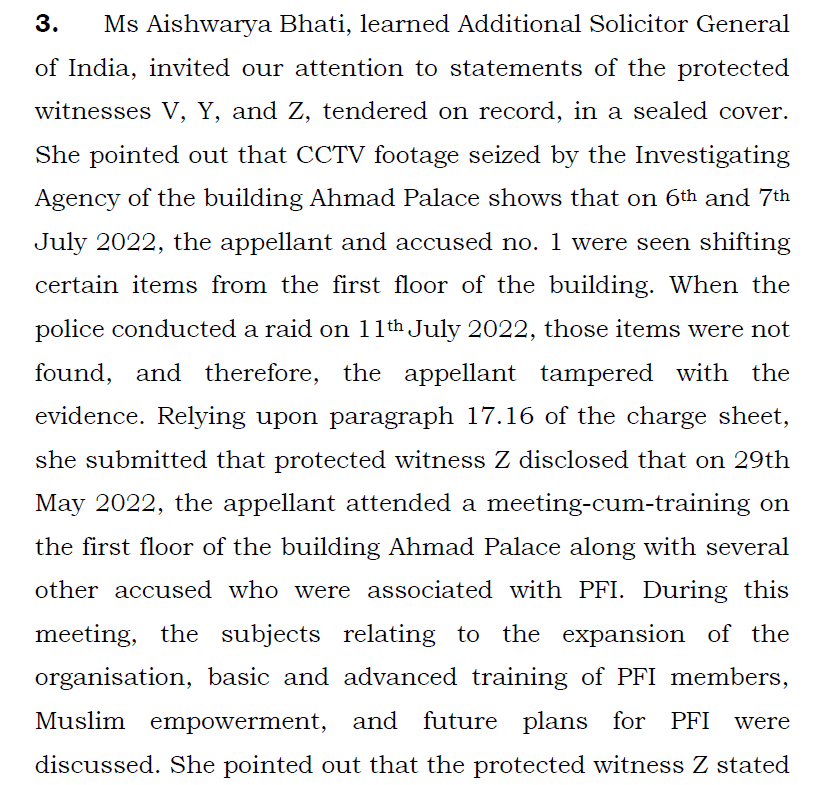
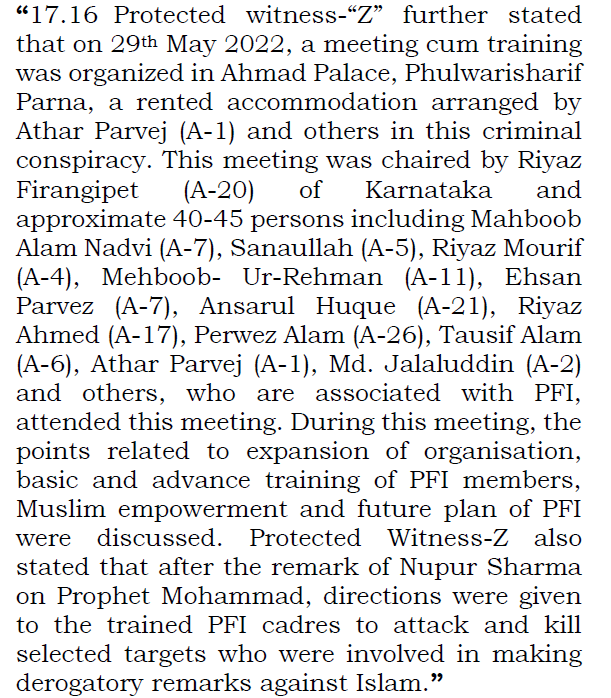
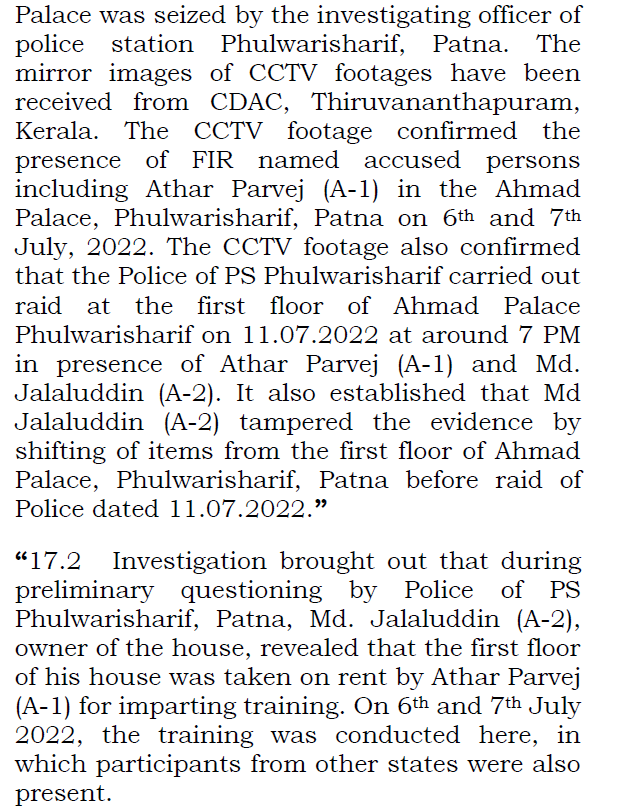
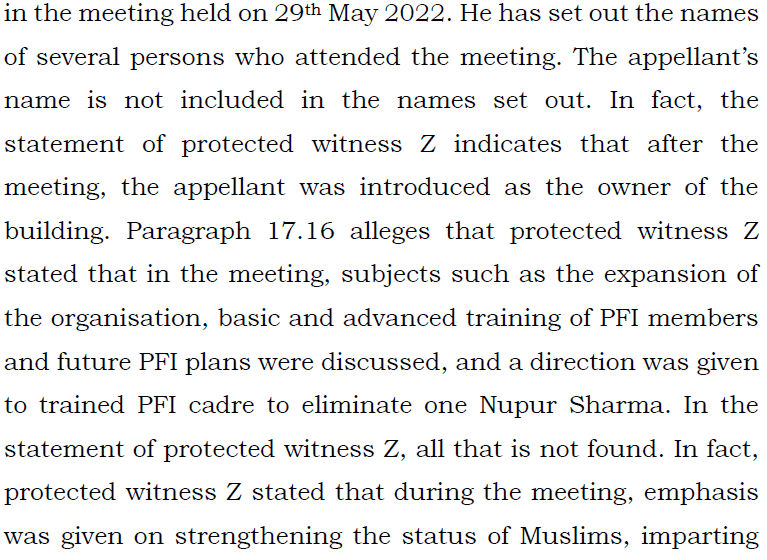
Meanwhile, the statements of the protected witnesses were brought to the bench’s attention by Aishwarya Bhati, Additional Solicitor General of India. She also referred to the CCTV footage that the Investigating Agency had taken from the Ahmad Palace building, which indicated that Khan and another accused person were seen removing certain items from the building’s first floor on 6th and 7th June 2022. Khan tampered with the evidence since the objects were found missing during the police raid carried out on 11th July 2022. She based her submission on the charge sheet, which stated that a protected witness revealed that Khan and many other accused connected to PFI attended a meeting and training session on 29th May 2022, on the first floor of the Ahmad Palace building to discuss the group’s growth, basic as well as advanced training of PFI members, Muslim empowerment and PFI’s future plans.
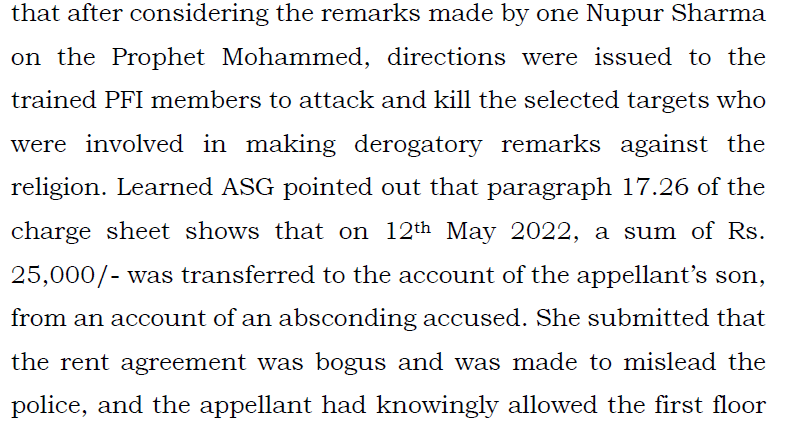
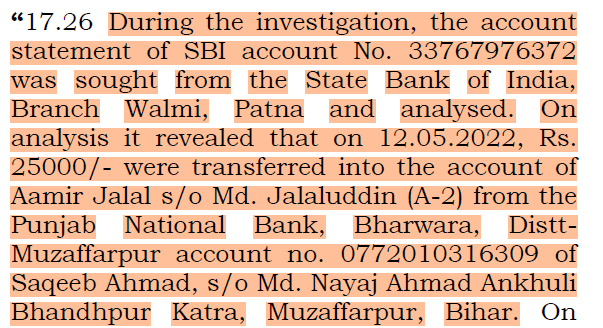
She quoted a statement from a protected witness that trained PFI members were given orders to attack and murder was given to the trained PFI members to attack and murder the designated targets who were engaged in making comments against Islam following former Bharatiya Janata Party (BJP) spokesperson Nupur Sharma’s remarks on Prophet Muhammad. A total of Rs. 25,000 was moved from an absconding accused to the account of Amir Jalal Khan, his elder son. She mentioned that Khan had intentionally permitted the first floor to be occupied by the PFI for its operations and the rent agreement was fabricated to deceive the police.
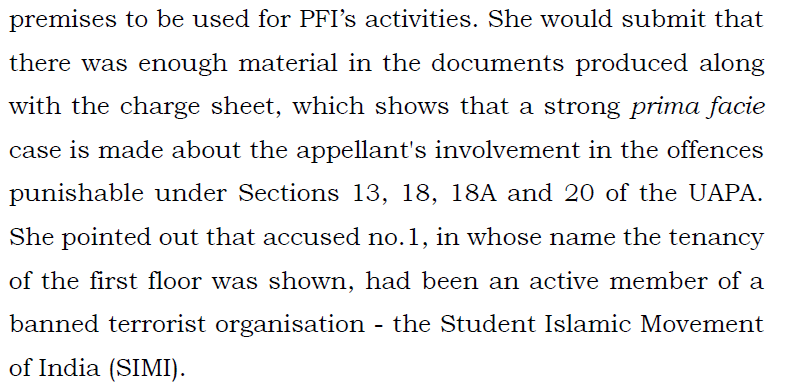
She argued that the charge sheet and the supporting documentation contained sufficient evidence to establish a strong prima facie case regarding his involvement in the offences covered by Sections 13, 18, 18A, and 20 of the UAPA. She drew attention to the fact that the accused, under whose name the first-floor lease was displayed, had actively participated in the Student Islamic Movement of India (SIMI), another outlawed terrorist organization.
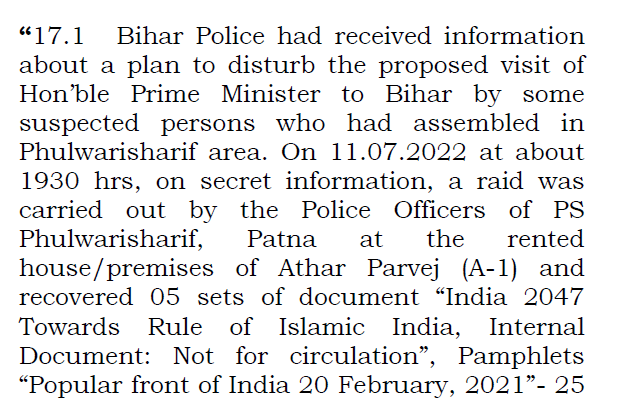
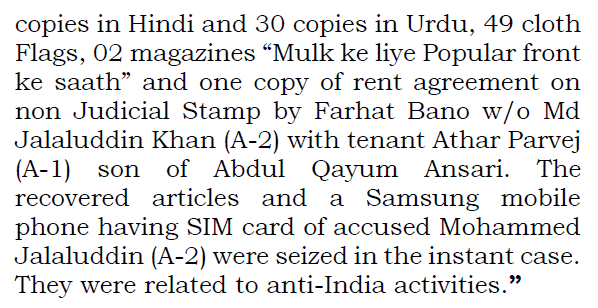
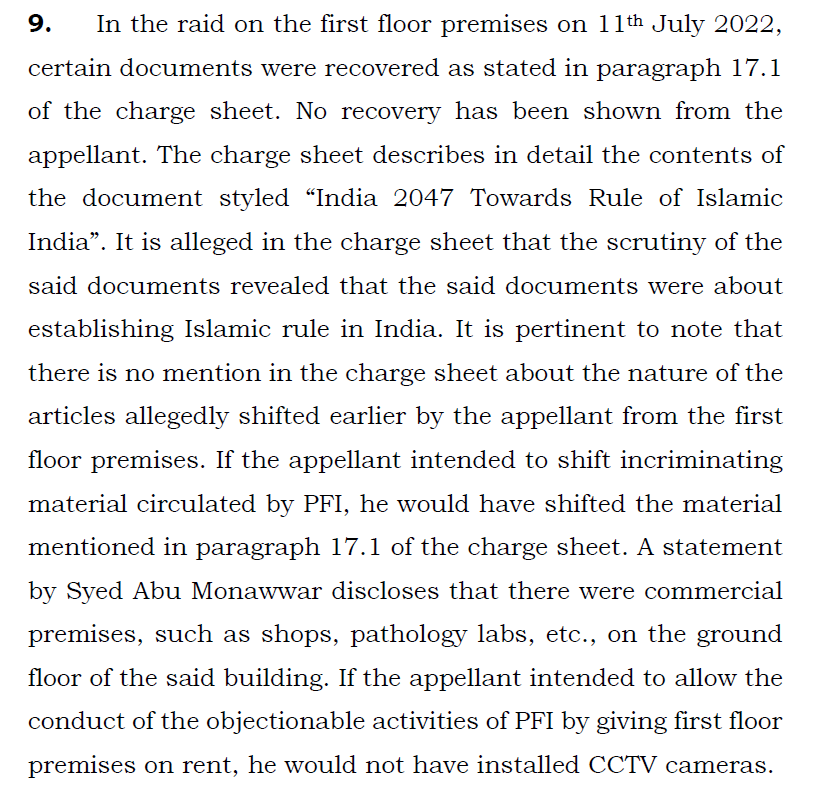
However, the court stated that the building was in the name of Khan’s wife. Information concerning a plot by certain suspected individuals who had gathered in the Phulwarisharif area to obstruct PM Modi’s planned visit to Bihar was reported to the Bihar Police after which a raid was conducted based on this secret information. The authorities retrieved five sets of documents titled “India 2047 Towards Rule of Islamic India, Internal Document: Not for circulation,” pamphlets titled “Popular front of India 20 February 2021” (of which twenty-five were in Hindi and thirty in Urdu), 49 cloth flags, two magazines titled “Mulk ke liye Popular front ke saath (With PFI, for the sake of India)” and one copy of a rent agreement on non-judicial stamp. Seized items also included the recovered articles and a Samsung phone that had the accused Mohammed Jalaluddin’s SIM card (A-2). They were associated with anti-Indian operations.
A protected witness confirmed that a meeting cum training was organized in Ahmad Palace, Phulwarisharif on 29th May 2022 to discuss the aforementioned plans of PFI’s expansion and its targetted killings. A gathering of about forty to forty-five people, including accused Mahboob Alam Nadvi, accused Sanaullah, accused Riyaz Mourif, accused Mehboob-Ur-Rehman, accused Ehsan Parvez, accused Ansarul Huque, accused Riyaz Ahmed, accused Perwez Alam, accused Tausif Alam, accused Athar Parvej, accused Jalaluddin Khan, and others connected to PFI, was presided over by accused Riyaz Firangipet of Karnataka.
The CCTV footage verified that on 6th and 7th July 2022, at the Ahmad Palace in Phulwarisharif, which was attended by the accused (from multiple states) named in the First Information Report (FIR) including Athar Parvej. The CCTV footage additionally corroborated that on 11th July 2022, at approximately 7 pm, the Police of PS Phulwarisharif conducted a raid on the first floor of Ahmad Palace with Athar Parvej and Jalaluddin Khan present there. Additionally, it also proved that before the search, Khan tampered with the evidence by moving objects from the first floor of Ahmad Palace. After investigation, it was also determined that Rs 25,000 had been deposited into the account of Khan’s son
The contents of the document titled “India 2047 Towards Rule of Islamic India” are thoroughly explained in the charge sheet which highlighted that after the aforementioned texts were examined closely, it became clear that their purpose was to impose Islamic law in India. However, the court countered that the charge sheet does not refer to the type of items that Khan previously moved from the first-floor premises and declared that he would have moved the items listed in the charge sheet if he had wanted to change the incriminating materials that PFI had distributed while mentioning that the floor was home to commercial premises. The bench added, “If the appellant intended to allow the conduct of the objectionable activities of PFI by giving first-floor premises on rent, he would not have installed CCTV cameras.”
Court demands explanation from NIA
The apex court also considered the testimony of the prosecution witness, asserting that the witness failed to explicitly indicate that Khan attended the meeting on 29th May 2022. The names of several attendees have been listed by him which does not contain Khan’s name who was identified as the building’s owner after the meeting. The court declared that the protected witness had in fact testified that the discussion focused on elevating the position of Muslims, providing them with both basic and advanced training, and elevating their standing in terms of administration, politics, and education along with Muslim empowerment.
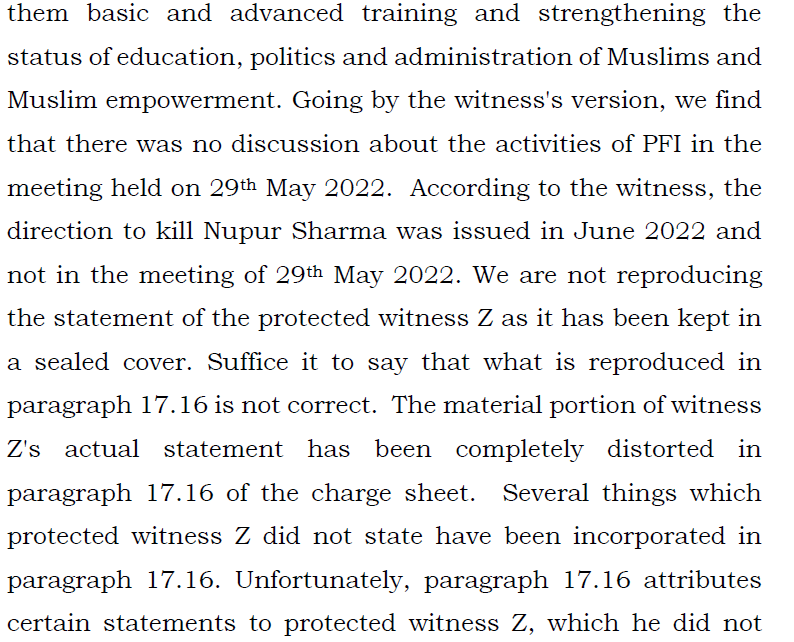
“Going by the witness’s version, we find that there was no discussion about the activities of PFI in the meeting held on 29th May 2022,” the bench expressed. The court contended that the charge sheet contained a significant distortion of the genuine statement of the witness and multiple statements that the protected witness did not utter have been included. This court then demanded an explanation from the National Investigation Agency (NIA) and announced that the investigative apparatus must be impartial.
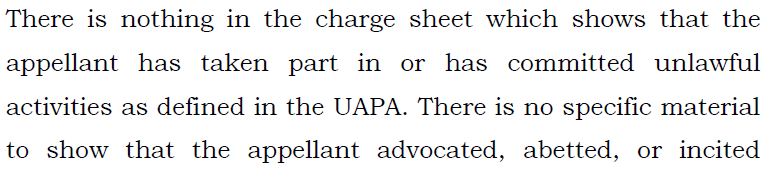
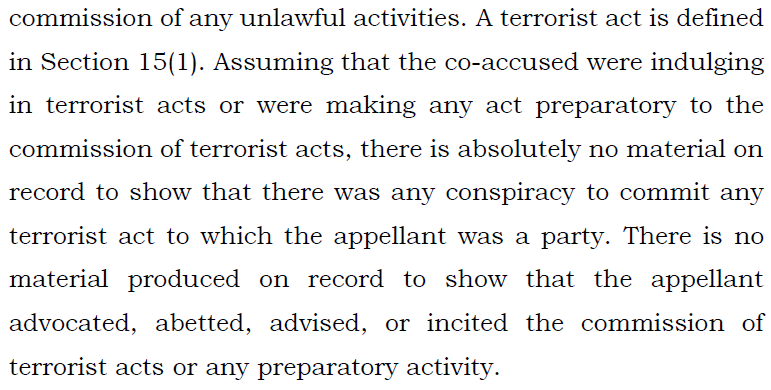
Subsequently, many earlier rulings were examined and debated to determine the conditions under which bail may or may not be granted under such strict provisions, particularly the UAPA. However, the Supreme Court eventually ruled in favour of Khan. It stated that nothing in the charge sheet indicated that he indulged in or completed any illegal activity as defined under the UAPA and proclaimed that there isn’t any concrete evidence to suggest he encouraged, assisted, or facilitated the performance of any unlawful actions. “Assuming that the co-accused were indulging in terrorist acts or were making any act preparatory to the commission of terrorist acts, there is absolutely no material on record to show that there was any conspiracy to commit any terrorist act to which the appellant was a party. There is no material produced on record to show that the appellant advocated, abetted, advised, or incited the commission of terrorist acts or any preparatory activity,” the court observed.
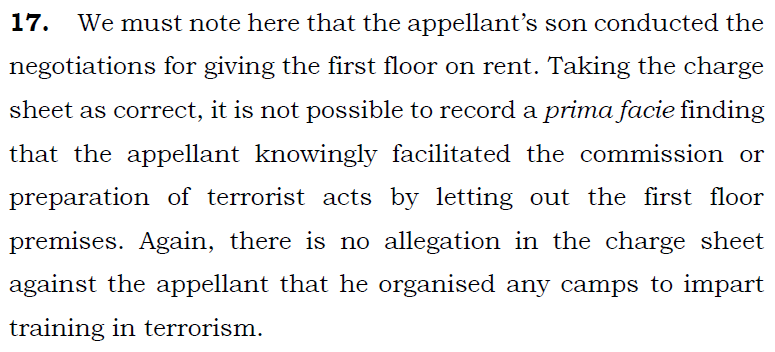
The negotiations to rent out the first floor were handled by Khan’s son, according to the court which pointed out that if the charge sheet is accurate, then it is impossible to establish, even based on a preliminary inquiry, that Khan intentionally enabled the commission or planning of terrorist actions by renting out the first floor of the building. The charge sheet against him made no mention of any camps he established to provide terrorist training.
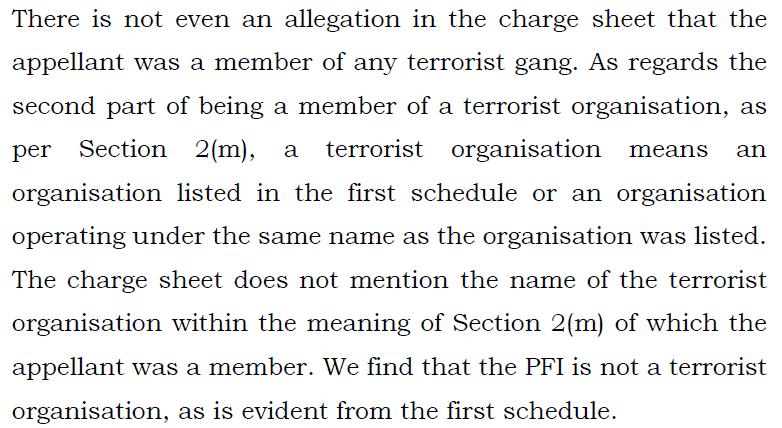
The court noted that the charge sheet made no mention of Khan’s membership in any terrorist organization. “As regards the second part of being a member of a terrorist organisation, as per Section 2(m), a terrorist organisation means an organisation listed in the first schedule or an organisation operating under the same name as the organisation was listed. The charge sheet does not mention the name of the terrorist organisation within the meaning of Section 2(m) of which the appellant was a member,” it stated while clarifying that PFI is not a terrorist group.
Supreme Court announces the verdict
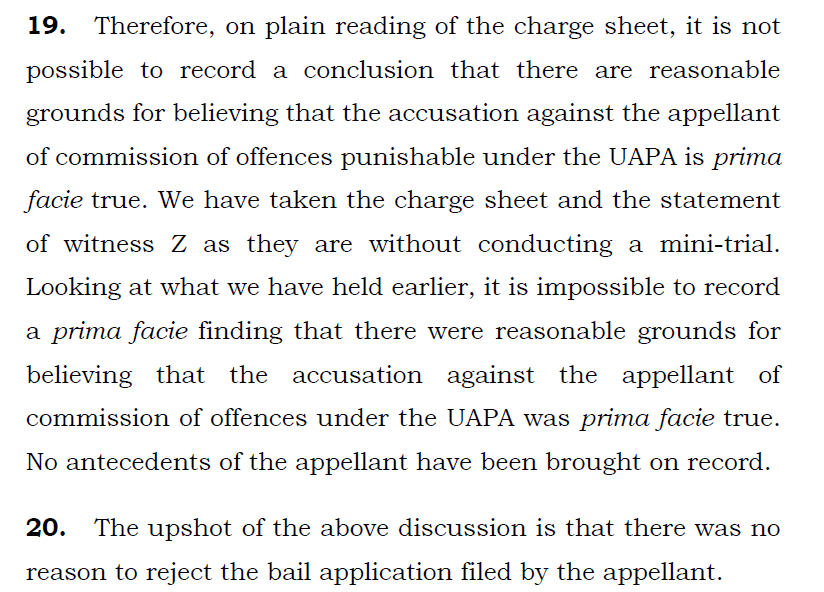
The Supreme Court ruled that, in light of the development, it is not conceivable to conclude from a plain reading of the charge sheet that there are reasonable reasons to suspect that Khan committed crimes that are punishable by the UAPA. The court declared, “We have taken the charge sheet and the statement of witness Z as they are without conducting a mini-trial. Looking at what we have held earlier, it is impossible to record a prima facie finding that there were reasonable grounds for believing that the accusation against the appellant of commission of offences under the UAPA was prima facie true. No antecedents of the appellant have been brought on record.” The court then concluded, “The upshot of the above discussion is that there was no reason to reject the bail application filed by the appellant.”
The Supreme Court communicated that the evidence in the charge sheet had not been sufficiently taken into account by the special court and high court. “Perhaps the focus was more on the activities of PFI, and therefore, the appellant’s case could not be properly appreciated. When a case is made out for a grant of bail, the courts should not have any hesitation in granting bail. The allegations of the prosecution may be very serious.” It termed “Bail is the rule and jail is an exception” as “a settled law” and added, “Even in a case like the present case where there are stringent conditions for the grant of bail in the relevant statutes, the same rule holds good with only modification that the bail can be granted if the conditions in the statute are satisfied. The rule also means that once a case is made out for the grant of bail, the court cannot decline to grant bail.”
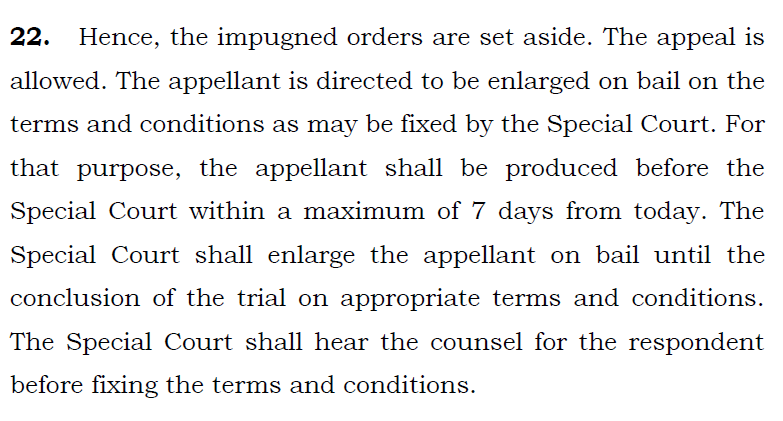
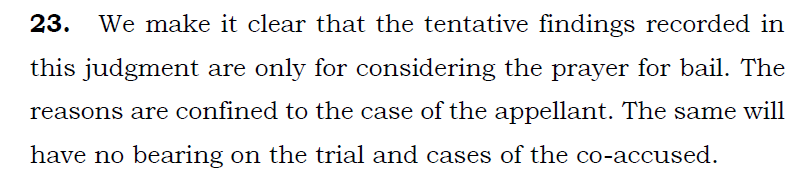
The court pronounced, “Hence, the impugned orders are set aside. The appeal is allowed. The appellant is directed to be enlarged on bail on the terms and conditions as may be fixed by the special court,” and further ordered that Khan should appear before the special judge no later than seven days after the judgement was produced and will receive bail from the special court, subject to suitable terms and conditions, until the trial’s conclusion. The respondent’s attorney must be heard by the special court before the terms and conditions are decided. The court also explained that the judgment’s provisional conclusions are solely intended to be taken into account when evaluating the bail request. “The reasons are confined to the case of the appellant. The same will have no bearing on the trial and cases of the co-accused,” it highlighted.
Jalaluddin Khan was booked under sections 121, 121A and 122 of the Indian Penal Code and sections 13, 18, 18A and 20 of the Unlawful Activities (Prevention) Act. A charge sheet was filed on 7th January of last year. He made an application for bail under the UAPA before the special court but was denied. As a result, he and the other accused petitioned the High Court for bail. However, his plea was again rejected by the impugned judgment while his co-accused obtained bail.