Home Blog Page 1142

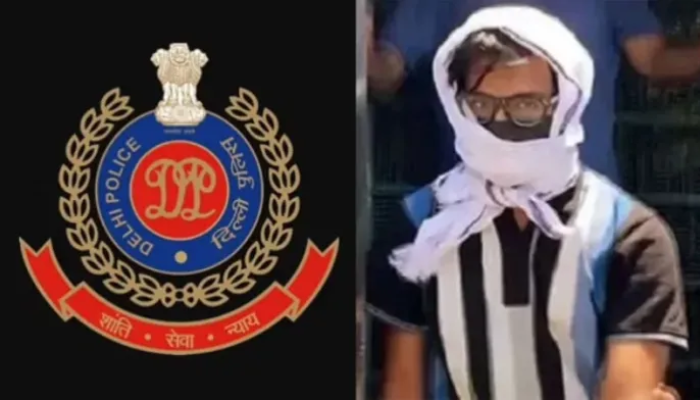
‘Does not cause fear or alarm to public’: Delhi Police gives clean chit to X user who called Alt News co-founder Md Zubair a ‘Jihadi’

The Delhi Police has informed the Delhi High Court that no case has been filed against the person who called Alt News co-founder and ‘fact-checker’ Mohammed Zubair a “Jihadi” in a tweet in 2020. The post in question was made by Jagdish Singh, who filed a complaint against Zubair, accusing him of cybersexual harassment of his granddaughter.

The Delhi Police has stated that nothing incriminating has emerged for further action against Singh, who commented “Once a jihad is always jihadi” on Zubair’s tweet on the 18th of April 2020.

The court had asked Delhi Police in May last year to inform about action taken against Jagdish Singh, for his “evidently offensive tweet”, which may “amount to hate speech”.

The status report of Zubair’s plea against the FIR under the POCSO Act has been filed, and he has already been cleared of all charges.

The Police said: “Thus, the captioned tweet by the complainant Mr. Jagdish Singh made on 18.04.2020 does not cause fear or alarm to the public or any section of the public whereby any person may be induced to commit an offence against any state or against public tranquillity.”

The status report further stated: “That in view of above, no case has been registered in relation to the captioned tweet against the complainant i.e. Mr Jagdish Singh.” The Delhi Police responded after being pulled up by the court last year for no action taken against that person. The complaint relates to a tweet posted by Zubair, showing the profile photo of a user and asking if it was appropriate for him to use abusive language in replies while using a profile picture of his granddaughter.

“Hello XXX. Does your cute granddaughter know about your part time job of abusing people on social media? I suggest you to change your profile pic,” Zubair had posted.

The FIR filed in Delhi accused Zubair of violating the POCSO Act, Section 509B of the IPC, and Sections 67 and 67A of the Information Technology Act. The Delhi Police had previously told the court that there was no criminality in Zubair’s tweet. In May of last year, the police stated that no cognizable offence was brought against Zubair.

The National Commission for Protection of Child Rights (NCPCR) had previously argued before the high court that the city police’s declaration that no cognisable offence had been established against Zubair was “incorrect” and that the agency’s position reflected the authorities’ casual attitude.

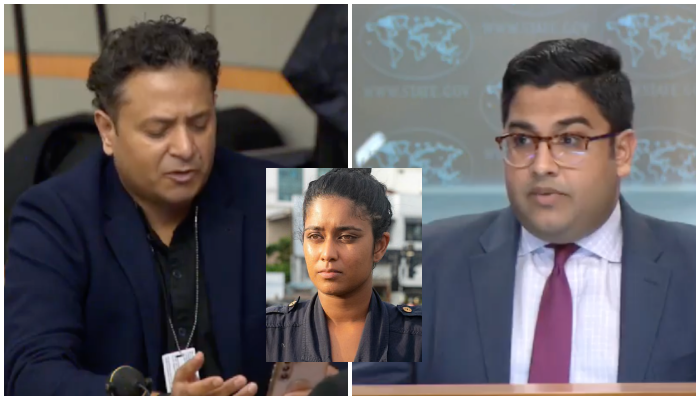
‘India determines its own visa policy, we are not going to opine on it’: US State Dept rejects Pakistani journalist’s question on Avani Dias

The US on Thursday (local time) rebuked a Pakistani reporter’s questions on allegations of an Australian journalist’s claims not being allowed to cover Indian general elections and said that the country determines which non-citizens it allows to enter, either as short-term travelers or international journalists.

Responding to a question by a Pakistani reporter on allegations of denial of visa renewal to Australian journalist, Avani Dias, US State Department Principal Deputy Spokesperson Vedant Patel said, “The Government of India can speak to its own visa policy. That’s not something I’m going to opine on from here.”

Patel further emphasised the role of the free press in the fabric of democracy.

“Broadly, we have been clear with countries around the world about the integral role that a free press plays in the fabric of democracy. That’s why we come up here and take questions regularly. But I will let the officials in India speak,” he said.

Avani Dias, an Australian journalist claimed that she was not allowed to cover the 2024 Lok Sabha polls and was compelled to leave the country. However, later government sources revealed that her claims are “not correct, misleading and mischievous.”

However, sources said that Avani Dias, South Asia Correspondent of Australian Broadcasting Corporation (ABC) was also found to have violated visa rules while undertaking her professional pursuits while “undertaking her professional pursuits.”

Meanwhile, at her request, Dias was assured that her visa would be extended for the coverage of the general elections.

Moreover, the sources emphasised that Avani’s claims about not being permitted to cover elections are also factually incorrect, adding that covering election activities outside of booths is permitted to all visa-holder journalists.

A report in Australia Today had indicated that Avani Dias departed from India because she had other personal commitments and not because of her visa issues.

A number of Indian journalists had criticized the false claims made by Dias, and a group of foreign correspondents came together to ‘support’ her, saying that the foreign correspondents had ignored the basic duty of journalism and have indulged in elitism and activism.

During the press briefing, Patel also denied making any remark on the internal investigation report by the Indian Government on the alleged assassination plot of Khalistani terrorist Gurpatwant Singh Pannun.

He said, “I’m not aware of the report that you’re referencing. This is ultimately a Department of Justice matter and I will defer to them and let them speak to this.”

Yesterday, the Indian government in its response to the US State Department report stated that it is deeply biased and should not be given any importance.

(With inputs from ANI)

2024 Lok Sabha elections: Polling for second phase begins in 88 constituencies, over 15 crore people to exercise their right to vote

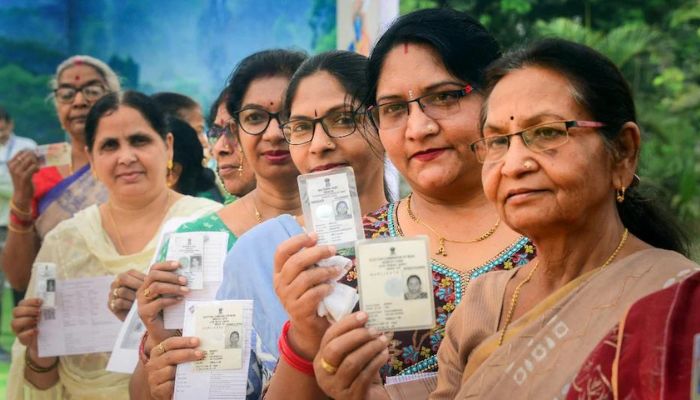
Voting for the second phase of the Lok Sabha elections 2024 began at 7:00 am on Friday across 88 Parliamentary Constituencies spread over 12 States and Union Territories.

89 general observers, 53 police Observers and 109 expenditure observers have been deployed in the regions. IMD has forecast normal weather for phase two Lok Sabha polls.

The polling time has been extended till 6 PM in many polling stations in Banka, Madhepura, Khagaria and Munger constituencies in Bihar to facilitate voters in hot weather conditions.

For convenience for voters, meticulous arrangements have been made by the Election Commission at all polling stations including facilities, to deal with hot weather conditions.

It may be recalled that polling for 29-Betul PC in Madhya Pradesh was rescheduled in the third phase due to the death of a candidate from the Bahujan Samaj Party. The polling for 102 seats in phase one was completed on April 19.

Chief Election Commissioner Rajiv Kumar has said that adequate arrangements have been made for smooth polling in the second phase of Lok Sabha polls and urged voters to participate in the festival of democracy in maximum numbers.

Over 16 lakh Polling officials will welcome over 15.88 crore voters across 1.67 lakh polling stations in the second phase. 34.8 lakh first-time voters are registered to cast their votes. Additionally, there are 3.28 crore young voters in the age group 20-29 years.

1202 candidates (Males – 1098; Females-102; third gender – 02) are in the fray. Three Helicopters, four Special trains and nearly 80,000 vehicles have been deployed to ferry polling and security personnel.

Webcasting will be done in more than 50 per cent of the polling stations along with deployment of micro-observers in all polling stations. Webcasting is being done in over 1 lakh polling stations.

A total of 4553 Flying Squads, 5731 Static Surveillance Teams, 1462 Video Surveillance Teams and 844 Video Viewing Teams are keeping surveillance round the clock to strictly and swiftly deal with any form of inducement of voters.

Around 4195 Model polling stations are set up across the 88 PCs with local themes. More than 4100 Polling stations are being completely managed by women including security staff and at over 640 Polling stations by Persons with Disabilities (PwDs).

Polling stations in all States/UTs except Bihar and Kerala have less than 1000 average electors per polling station. Bihar has 1008 and in Kerala, it is 1102 electors per polling station.

Prime Minister Narendra Modi is seeking his third consecutive term, while the opposition bloc-INDIA- a coalition of opposing parties formed to take on the BJP in the general elections, is eyeing ousting him from power.

The 2024 elections are taking place at a time when opposition leaders, including Delhi Chief Minister Arvind Kejriwal, have been arrested on charges of corruption in the liquor policy case.

(This news report is published from a syndicated feed. Except for the headline, the content has not been written or edited by OpIndia staff)

Horlicks not a ‘health drink’ anymore, rebranded as ‘functional nutritional drink’: Know what happened and what it means

0

The term “functional nutritional drinks” (FND) has replaced “health food drinks” in Hindustan Unilever Limited’s (HUL) product category. The “health drink” label of Horlicks was dropped after the Union Ministry of Commerce and Industry asked that e-commerce platforms remove drinks and beverages from their lists of “health drinks.” The corporation which owns several brands like Boost and Horlicks changed its “health food drinks” category to “functional nutritional drinks” and rebranded its “health drinks” category.

At a press conference on 24th April, Hindustan Unilever’s Chief Financial Officer Ritesh Tiwari announced that the category is now more accurately and transparently described by the FND label. He drew attention to the unctional nutritional drink market’s underpenetration, which suggests enormous development potential.

Following consumer concerns regarding the excessive sugar content of beverages such as Horlicks and Bournvita, several modifications were implemented. The Food Safety and Standards Authority of India (FSSAI) was the subject of an investigation that was subsequently launched by the National Commission for Protection of Child Rights (NCPCR). The investigation ultimately resulted in an order from the centre to the online retailers.

The instructions issued by the ministry came after the FSSAI, on 2nd April, asked all e-commerce companies to ensure appropriate categorisation of food products sold on their websites. The FSSAI’s reaction followed observations of food items licensed as ‘proprietary food’, such as Dairy-based Beverage Mix, Cereal-based Beverage Mix, and Malt Based Beverage, being marketed on e-commerce platforms under misleading categories like ‘health drink’ or ‘energy drink’.

Asking e-commerce websites not to put dairy, cereal or malt-based beverages under the Health Drink or Energy Drink category, the FSSAI said that the term ‘Health Drink’ has not been defined in the food laws of India. On the other hand, the term ‘Energy Drinks’ is allowed to be used only for the products licensed under the Food Category System (FCS) and the carbonated and non-carbonated water-based flavoured drinks. It is not allowed to be used for dairy, cereal or malt-based beverages, which include the present ‘health drinks’ like Horlicks and Bournvita.

The ministry cited a finding by the child rights body National Commission for Protection of Child Rights that there is no beverage category called Health Drink under the rules. The statement by the ministry said, “National Commission for Protection of Child Rights, a statutory body constituted under section (3) of the Commission for Protection of Child Rights (CPCR) Act, 2005 after its inquiry under Section 14 of CPCR Act, 2005, concluded that there is no “Health Drink defined under FSS Act 2006, Rules and regulations as submitted by FSSAl and Mondelez India Food Pvt Ltd.”

Functional Nutritional Drinks

Drinks with additives that provide certain physiological or health benefits in addition to taste and hydration are known as functional nutritional drinks. These beverages can support the needs of individuals with protein and micronutrient deficiencies. They provide extra health benefits because they include specific components derived from bacteria, plants, animals, and marine sources. These are beverages containing vitamins, minerals, botanicals, herbs, amino acids, or other bioactive substances that address different parts of a person’s health.

HUL states that the ‘functional nutritional drinks’ category meets the demands of the population regarding micronutrient deficiencies and protein lack. The Institute for Integrative Nutrition defines functional nutrition as an all-encompassing approach to eating. It considers lifestyle factors that may influence an individual’s dietary choices.

The Food Safety and Standards Act of 2006 lacks a precise definition for “health drinks” which is the reason for the regulatory attention centred on this category. It is ambiguous what constitutes a “health drink” or an “energy drink,” hence the Food Safety and Standards Authority of India (FSSAI) has ordered online retailers to stop classifying dairy, cereal or malt-based beverages as such. The purpose of this action is to put an end to deceptive advertising and customer confusion. These actions come after complaints were made regarding excessive sugar content in drinks as revealed by the investigation of Bournvita, which is owned by Mondalez India, a few days ago.

The high sugar content of drinks like Bournvita and Horlicks sparked concerns, which led to the changes. This occurred when Food Pharmer, a social media influencer, brought attention to Cadbury’s Bournvita, a popular malted drink in the nation that is similar to Horlicks, due to its high sugar content. Afterwards, the Food Safety and Standards Authority of India (FSSAI) received an inquiry from the National Commission for Protection of Child Rights (NCPCR), leading to the Center’s directive to e-commerce companies.

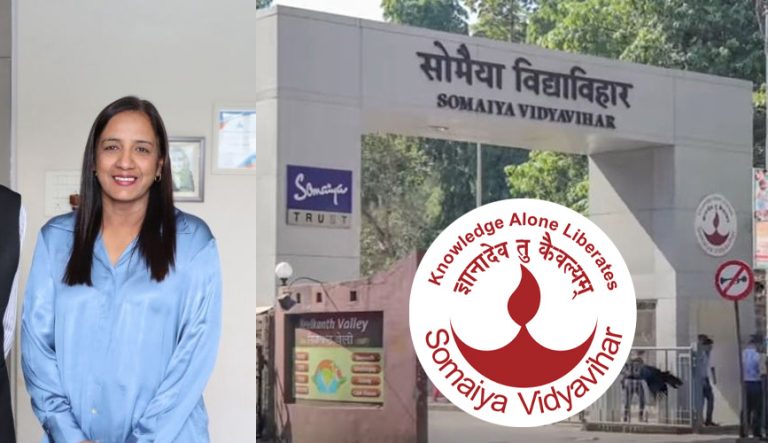
Somaiya Trust takes note of OpIndia report on Islamist views of Somaiya School principal Parveen Shaikh: Details

The prestigious Somaiya Trust has acknowledged the information provided by OpIndia against Parveen Shaikh, the principal of the reputable private school The Somaiya School located in the Vidyaviyar neighbourhood of Mumbai. She has been using social media to voice her extreme opinions, which include her consistent abuse of Prime Minister Narendra Modi and unflinching support for the Palestinian terrorist group Hamas.

The trust said it was unaware of the views expressed by Parveen Shaikh which were brought to their notice by the OpIndia article. The trust also said that they don’t agree with the views of the school principal, adding that it is concerning and they are looking into the matter.

The trust on 25th April commented on the article and assured, “We were unaware of the sentiments expressed until it was brought to our notice today. We do not agree with such sentiments. It is certainly concerning. We are looking into the matter.”

In the tweet, the trust tagged Samir Somaiya, the president of the Somaiya Vidyavihar Education Trust, who is also the Chancellor of Somaiya Vidyavihar University, apart from holding some other positions in the ventures run by the trust.

Notably, Somaiya Vidyavihar Education Trust runs the Somaiya School in Vidyaviyar, where Parveen Shaikh is the principal, apart from several other schools. The trust also runs the Somaiya Vidyavihar University, colleges and several other ventures. Somaiya Vidyavihar Education Trust was founded by Padmabhushan awardee Karamshibhai Jethabhai Somaiya in September 1959.

The OpIndia report was published on 24th April which tracked the Islamist views of the principal and her leaning towards anti-Indian elements on social media. She frequently likes Hamas pronouncements endorsing their ‘resistance’ against Israel along with those supporting its senior leadership such as terrorist Ismail Haniyeh. She strikes as an ardent advocate of Hamas who rationalizes all the atrocities it commits as ‘resistance’ or ‘retaliation.’

Parveen Shaikh has an extensive record of “liking” tweets that echo her beliefs. She likewise backs radicals such as Muslim preacher Zakir Naik and Umar Khalid, the mastermind behind the anti-Hindu riots in Delhi. She also likes tweets that hold Hindus accountable for attacks on their sacred procession by fundamentalists. She enjoys dehumanizing Hindus by portraying them as beggars in front of Arab countries and supports anti-Ram Mandir sentiments.

OpIndia discovered a nasty tweet from Parveen Shaikh in which she stated that Prime Minister Narendra Modi is a “dog” who is ready to fetch a ball at the instruction of Chinese Premier Xi Jinping. She even engaged in internet propaganda against him making her dislike of him abundantly clear. She also voiced similar sentiments against Yogi Adityanath, the chief minister of Uttar Pradesh and referred to the two Bharatiya Janata Party leaders as ‘evil.’

Parveen Shaikh was seen alleging that Kerala Governor Arif Mohammed Khan “sold his soul to the devil” in a tweet because he had requested that the Indian government reject any attempts by outsiders to meddle in domestic matters. She appears to have approved of a number of other concerning tweets with her likes. Not only does she seem to be pro-Hamas, but she has also shown support for Indian Islamists. Her employer’s response has now looked to be a sign of hope and promise that justice will be served.

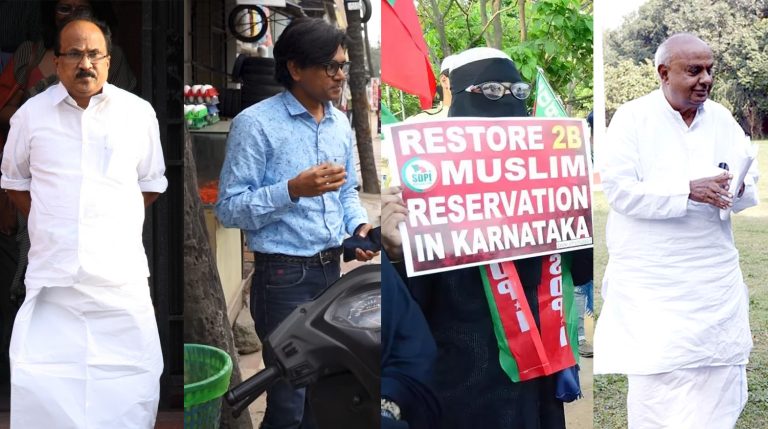
Congress notified reservations for all Muslims in Karnataka under OBC quota, document shows, but AltNews’ Zubair tries to shift blame on JD-S to save the party ahead of polls

On Wednesday (24th April), the National Commission for Backward Classes (NCBC) criticized the Congress-led Karnataka government’s decision to classify the Muslim community as a backward caste for reservation purposes, claiming that it undermines the ‘principle of social justice’. The commission said socially and educationally backward castes or communities cannot be treated at par with an entire religion.

According to the national commission, the move by the Siddaramaiah-led administration undermined the rights of other Backward Classes. Also, in an election rally in Rajasthan’s Tonk on Tuesday (23rd April), Prime Minister Modi said that the Congress party in the state had tried to extend reservation to Muslims out of the Dalit quota. The PM also accused the party of hatching a deep conspiracy to snatch people’s wealth and distribute it among the minorities.

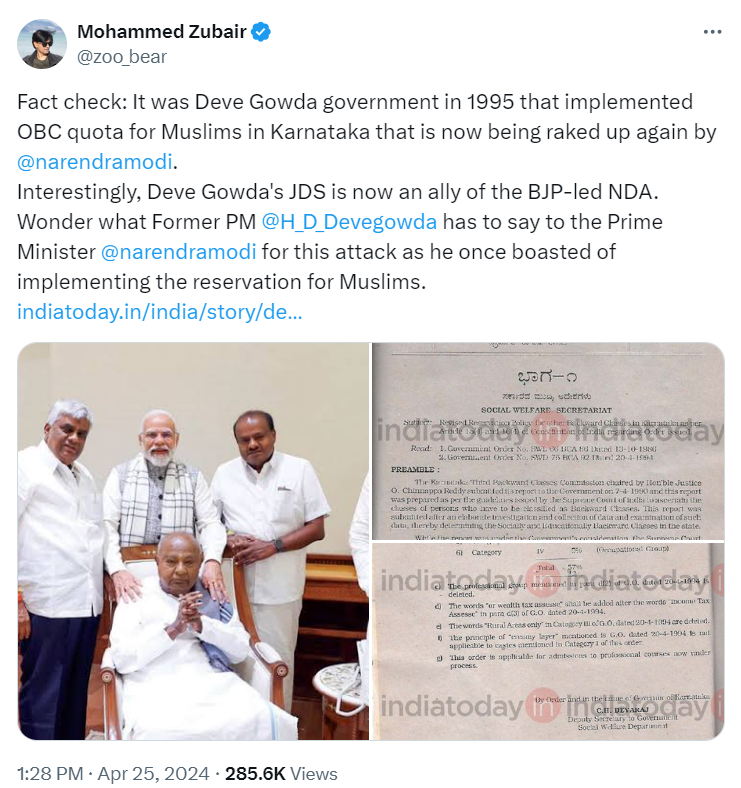
Amid this, the Alt News Co-founder Mohammed Zubair who has a history of spreading misinformation posted a social media statement blaming the Janata Dal (Secular) and the BJP for implementing the OBC quota for Muslims in Karnataka in the first place.

“It was the Deve Gowda government in 1995 that implemented the OBC quota for Muslims in Karnataka, the issue which is being raked up by PM Modi. Interestingly, Deve Gowda’s JDS is now an ally of the BJP-led NDA,” he said in a post.

Zubair, as usual, tried to blame the Deve Gowda government for implementing the Muslims reservation in the state but forgot to mention the fact that it was introduced first by the Congress govt led by Veerappa Moily who was Chief Minister of Karnataka till December 1994. In January 2024, Moily himself confessed that he was the state CM when the Muslims got the reservations.

According to Moily, Muslims were granted 6% reservation under OBC Category 2B in July 1994, based on the Reddy Commission’s recommendations. Moily stated that when the Supreme Court set a 50% reserve cap, an order was issued in September 1994 that granted Muslims a 4% quota.

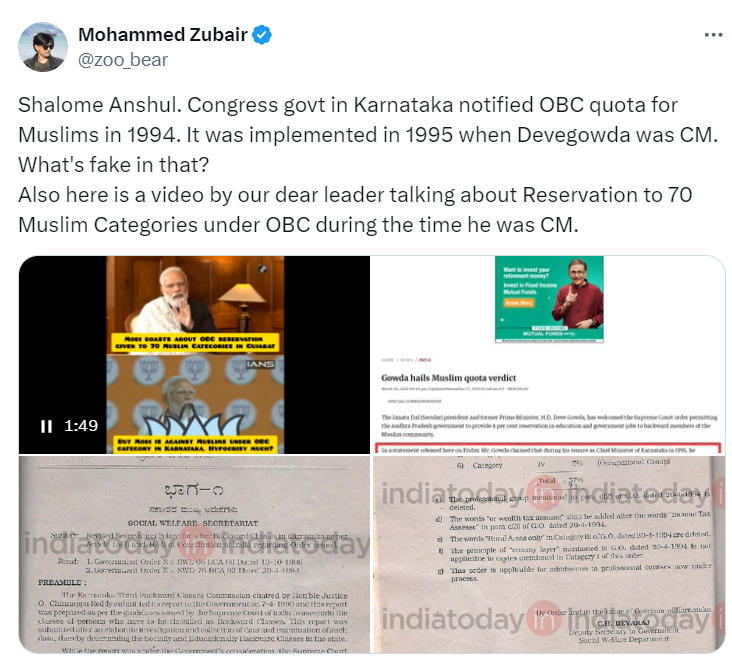
However, Zubair later agreed to the fact further posting that it was Congress who introduced the reservation but the same was implemented by the Deve Gowda government after he came to power in the year 1994.

Here’s what we all need to know about the Muslim reservation in Karnataka

The saga began in the year 1995 when Congress leader Veerappa Moily was the Chief Minister of the state. The decision to give reservations to the Muslims was based on the recommendations issued by the O Chinnappa Reddy Commission. The commission suggested grouping Muslims in Category 2 under the OBC list.

Following this, the Veerappa Moily-led Congress administration established a 6% reservation in Category 2B, known as “More Backward,” for Muslims, Buddhists, and Scheduled Caste converts to Christianity by orders dated the 20th of April and the 25th of April 1994.

Muslims were allocated 4% of the quota, while Buddhists and SCs who converted to Christianity received 2%. The reservation was intended to go into effect on 24th October 1994. However, the reservation was challenged before the Supreme Court. On 9th September 1994, an interim ruling was issued requiring the Karnataka government to limit total reservations to 50%, including Scheduled Castes, Scheduled Tribes, and OBCs.

In the meanwhile, the Congress government led by Veerappa Moily then experienced a political crisis and the govt fell on 11th December 1994, before enforcing the directive.

HD Deve Gowda then became the Chief Minister on 11th December 1994 and on 14th February 1995, he executed the previous government’s quota order with revisions based on the Supreme Court’s interim ruling. SCs who converted to Christianity and Buddhism, previously categorized as 2B, were reclassified as 1 and 2A, respectively, in the same sequence. The 2B quota protected 4% of seats in educational institutions and state government jobs for Muslims.

01 GO-No-SWD-150-BCA-94-Dat… by itgd ed

In the year 2023, when the BJP government was in power, it scrapped the 4% reservation given to the Muslims in the year 1994 and instead increased the existing quota of Vokkaligas and Lingayats by 2% each. The religious minorities were then brought under the category of Economic Weaker Section (EWS) and allotted a 10% quota to the religious minorities without any condition.

Gowda appeased the Muslims while the BJP made efforts to abolish the unconstitutional quota

Gowda in an attempt to appease the Muslims back then implemented the quota introduced by the Congress but that does not allow him to take the entire ‘credit’ as claimed by Moily. Both, the Congress and the JD(S) intend to restore Muslim reservations in the state of Karnataka while BJP has been the only one to abolish the same. During the recent state elections, Congress promised that it would get back the reservation for Muslims once it came back to power. Similarly, Gowda in the year 2023 had said that though he maintains good relations with PM Modi, he would restore the reservation for Muslims once JD(S) comes back to power.

Given this, it cannot be denied that Gowda in an attempt to appease the Muslim community granted the 4% reservation for Muslims in the state that stayed the same unit the year 2023.

The state also proposed the abolition of the 4% quota for Muslims in the Supreme Court saying that it was unconstitutional to provide reservation to any community on the basis of the religion. The lawyer representing the state also argued that a section of Muslims were already getting reservations under the Other Backward Class (OBC) category. The apex court then had said that there would be no stay on scrapping the reservation quota for Muslims though the foundation of the state’s decision-making process was ‘shaky and flawed’.

How Muslims got categorized under the category of OBCs?

Going back to the 20th century, a ‘Non-Brahmin’ movement had begun to emerge in the princely kingdom of Mysore. In 1916, different representatives, primarily from the Vokkaliga and Lingayat clans, addressed the then-Maharaja of Mysore, Sri Nalwadi Krishnaraja Wadiyar IV. In 1918, the Maharaja formed a commission chaired by Justice Miller, Chief Judge of the Chief Court of Mysore, to discuss how to expand non-Brahmin representation in Mysore state services. In 1921, based on the committee’s recommendations, the Maharaja of Mysore implemented a reservation policy in favor of various non-Brahmin Hindu communities, notably the prominent Vokkaligas and Lingayats, as well as Muslims.

However, it is worth noting that the committee’s recommendations could only be implemented after Bharat Ratna M Visvesvaraya (Sir MV), Mysore’s visionary Dewan, resigned from office. Sir MV was a firm believer in meritocracy and supported the establishment of schools and other methods to uplift the backward classes rather than reservations. Sir MV, for his part, believed that the Maharaja was trying to appease the non-Brahmin leaders. As a result of this Non-Brahmin agitation, the Muslims of the former Mysore state, now known as the ‘Old Mysore Region’ in Karnataka, were granted reservations.

Following the establishment of the Constitution, the reservation regime that existed in Old Mysore was discontinued. Muslims were awarded reservation in the state of Mysore in Independent India for the first time in 1962, on the proposal of the R. Nagana Gowda Commission. This was accomplished through an executive decree that added some castes among Muslims to the Other Backward Classes (OBC) list. This was followed by many rounds of litigation in both the High Court of Karnataka and the Supreme Court, intermingled with reports from three commissions: the Havanur Commission, the Vekataswamy Commission, and the O Chinappa Reddy Commission.

Meanwhile, due to the linguistic rearrangement of states, the larger state of Karnataka was established in 1971. While the litigation was inconclusive, the board of commissioners recommended Muslim reservations. Muslims were classified as category II (B) of restricted communities in 1994, with a 6% quota. Following the Supreme Court’s verdict in the Mandal Commission case, all OBC quotas were reduced to a total of 27%. Thus, the Muslim quota was reduced to 4% in 1995, a figure that remained unchanged since then until the year 2023. 

Muslim quota and its categorization

The Karnataka government had established several categories to provide reservation privileges among the Other Backward Classes. The categories were I, II(A), II(B), III(A), and III(B). Each of these categories included a number of castes and received a share of the reservation benefits. The government updates the list of castes covered in each category from time to time. Until 2023, category II (B) consisted solely of Muslims and received 4% of the total 32% reservation allowed to Other Backward Classes in Karnataka.

However, the BJP in 2023 declared that Category II (B) would be eliminated and two new categories, i.e. II(C), II(D) would be added instead. The 4% quota previously available to II (B) was then distributed among the newly designated II(C) and II(D) categories. II(C) now includes several Vokkaliga castes and has 6% reservation (2% from the abolished II(B) and 4% otherwise) and II (D) includes diverse castes within the Lingayat fold and receives 7% of overall reservation (2% from the abolished II(B) and 5% otherwise). 

In essence, the quota previously allocated to Muslims was divided between the Vokkaliga and Lingayat caste groups. However, though no stay was issued by the Supreme Court over the scrapping of the 4% reservation to the Muslims, it is difficult to explain whether this was implemented on the ground or not as Congress took over the reigns immediately after Bommai scrapped the quota in 2023. Also, the matter was stayed by the SC before it stood pending before the Constitution bench in the year 2023

Is it right to restore the 4% quota to Muslims in Karnataka?

After court cases challenged reservation to non-SC or ST categories, amendments were made to the Constitution, including Articles 15 and 16. Article 15 prohibited discrimination based on religion, race, caste, sex, or place of birth. However, clause (4) was added to it which allowed special provisions for socially and educationally backward classes, including Scheduled Castes and Scheduled Tribes.

As a result, a community desiring reservation but not falling under the Scheduled Caste or Scheduled Tribe categories became known to be a “Socially and Educationally Backward Class”. Notably, the Indian Government, State Governments, and Judiciary have long argued that certain castes, including Muslims and Christians, constitute a Socially and Educationally Backward Class. This position was echoed by the Mandal Commission, leading to many non-Hindu groups being granted reservations.

The National Commission for Backward Classes also earlier suggested that Muslim communities are not socially homogenous, with many groups enjoying high social status, contradicting claims of socially and educationally backward castes within the Muslim community. At present, it has decided to summon Karnataka CM over the Muslim OBC quota.

Thus, the inescapable conclusion from these considerations is that reservation in favor of Muslims en masse violates the right to equality guaranteed by Articles 14, 15, and 16 of the Constitution.

Furthermore, the Karnataka Scheduled Castes, Scheduled Tribes, and Other Backward Classes (Reservation of Appointments, etc.) Act of 1990 defines “Other Backward Class” as “the communities, castes, and tribes notified by the State Government from time to time under Articles 15(4) and 16(4) of the Constitution.” This makes it abundantly evident that the idea of a 4% quota for Muslims in general violates not just the Indian Constitution, but also Karnataka State legislation.

Conclusion

The Congress government clearly needs to take into consideration the state legislature and the Indian Constitution before making any efforts to restore the 4% reservation to the Muslims. The Congress continues to accuse the BJP and Prime Minister of violating India’s constitution. However, what it is doing in the state of Karnataka is not just a violation, but it is also harming the rights of the actual members who are economically and socially disadvantaged and who require this reservation more than what the Muslims have been receiving for the previous ten years. Some sections of the Muslim community however continue to get benefits under the reservation allotted to OBCs. Congress should consider whether others with high social positions should be classified as OBC solely for reservation purposes.


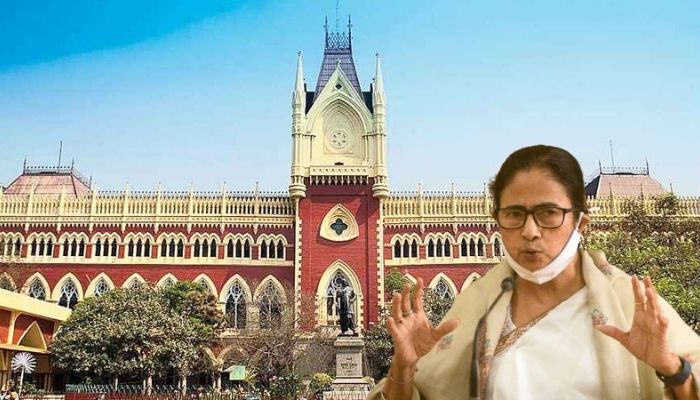
Lawyers seek contempt of court proceedings against West Bengal CM Mamata Banerjee for saying that Calcutta High Court is purchased, judges are biased

0

On 25th April, a group of attorneys sought the Calcutta High Court to consider the statements made by All India Trinamool Congress chief and West Bengal Chief Minister Mamata Banerjee against the High Court on a suo motu basis. According to reports, she charged that the high court had been “sold out.” The statements were uttered following the judgement in the jobs for cash scandal which resulted in the appointment of about 24,000 teachers being quashed.

Bikash Ranjan Bhattacharya, a senior advocate and leader of the Communist Party of India (Marxist) urged Chief Justice TS Sivagnanam and Justice Hiranmay Bhattacharya’s bench to take tough action against the Chief Minister for her “contemptuous” remarks. He requested, “This is criminal contempt, I am submitting the newspaper reports. I am praying suo motu cognisance to be taken. Unless the court becomes strict on this, if I have to file (a criminal contempt) petition, I will have to go through the Advocate General’s permission which will not be granted at any point in time.”

The petition mentioned, “I can file an affidavit showing that these are the statements, but kindly take cognisance of this. Otherwise, every court is laughing at us, what is going on? ‘High Court has been purchased’ (it is said). We do cases before the Hon’ble Court after toiling midnight oil. Now somebody is accusing that judges of the High Court and the entire High Court have been sold.”

The top lawyer stressed that the Chief Minister has consistently delivered remarks of a similar nature to denigrate the court in the public’s eyes. “We will keep translations of the headings. Now (it is reported that) ‘High Court has been sold out.’ That is the statement of the Hon’ble Chief Minister – not on one day, but persistently after the judgment delivered by this court. Persistent attempt! Just to make the High Court ridiculed in the eyes of the common man. I will file an affidavit. There are English newspaper reports. Kindly take cognisance.”

In the meanwhile, the Court inquired as to whether a petition might be submitted to get a record of the case. The counsel promised to include an affidavit with the reports on the statements made by the Chief Minister. He added that he would take the appropriate action by 2:00 pm. Two additional attorneys attempted to file petitions in the matter. Additionally, a lawyer filed a submission asking the High Court to take the Chief Minister’s detrimental and slanderous words into account.

The Court allowed petitions to be filed and also noted media reports that Bikash Ranjan Bhattacharya had presented on the Chief Minister’s controversial pronouncements when the case was taken up in the afternoon. The Court then advised that before any further action is taken, all case-related documents will be presented to the Chief Justice for administrative review.

What Mamata Banerjee had alleged

The Calcutta High Court’s order cancelling all appointments made through a 2016 teacher recruitment test was deemed “illegal” by Mamata Banerjee on 22nd April. She also stated that her government would appeal the decision. During an electoral rally in Raiganj, North Bengal, she further argued that leaders of the Bharatiya Janata Party were influencing a section of the judiciary and judgments.

“The court verdict cancelling all recruitments is illegal. We stand by those who lost their jobs. We will ensure you get justice, and challenge the order in a higher court,” she voiced. The TMC head later gave an assurance to individuals impacted by the Calcutta High Court verdict that they would take the case to the Supreme Court in search of “justice” while speaking at a Bhatar election rally for party candidate and former cricket player Kirti Azad.

She claimed, “I will not name any judge, but I am talking about the verdict. If you had pointed out the mistakes and directed us to correct them, we could have easily done that. Anybody can make a mistake, I do not look after everything. The education department is a separate one. There are different departments like the SSC, the primary board and the College commission.”

“It is shocking that, at the level of the cabinet of the State Government, the decision is taken to protect employment obtained fraudulently in a selection process conducted by SSC for state-funded schools, knowing fully well that, such appointments were obtained beyond the panel and after expiry of the panel,” the high court had expressed while reading the judgement. Furthermore, the court ordered the Central Bureau of Investigation to conduct more inquiries into the “persons involved, in the state government approving the creation of supernumerary posts to accommodate illegal appointments” and to conduct prison interrogations if necessary.

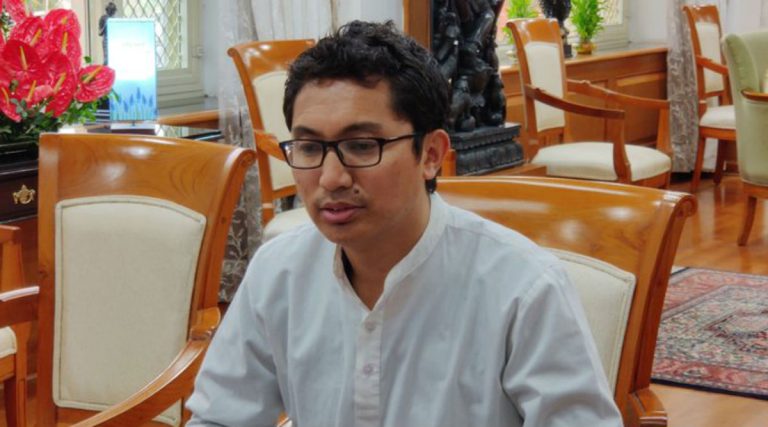
Congress leaders and others spread fake news that Jamyang Tsering Namgyal regrets joining BJP after he was denied ticket, the Ladakh MP says he is loyal BJP Karyakarta

A day after BJP denied ticket to Ladakh MP Jamyang Tsering Namgyal for the Lok Sabha elections, fake news is being spread claiming that he regrated his decision to join the BJP. Namgyal has said that he never said that and strongly condemned the false statements.

Teena Karamveer, Congress communication coordinator of Rajasthan and a spokesperson of the party tweeted the fake quote in Hindi saying, “Joining BJP and supporting Modi was my worst decision, I was not aware of his strategy, people of Ladakh please forgive me.”

The same Hindi quote was tweeted by several other social media users. Jamyang Tsering Namgyal responded to one such tweet and clarified that this is a fake quote attributed to him and he never made this statement. He also clarified that despite being denied a ticket this time, he remains a loyal member of BJP.

Namgyal said, “I want to clarify that I never said these words. I strongly condemn those spreading false statements by misusing my name. As a loyal BJP Karyakarta, I’ve always admired our most dynamic leader Sh. Narendra Modi Ji and all our leadership.”

This comes amid reports that Namgyal was upset over the parties decision to nominate Tashi Gyalson instead of him from Ladakh Lok Sabha constituency. Talking to reporters, Namgyal had earlier said that his supporters were not happy with the decision, and he will deliberate on the issue with his supporters before taking a call on his future action.

“My supporters have assembled spontaneously in Leh today. They are not happy with the nomination. With such a reaction, the big question remains if the party can retain the seat,” he had said. Hinting at taking some action on the issue, he had added, “I will sit with my supporters and a final decision will be taken. I will consider the sentiments of my supporters and take a collective decision for the interests of Ladakh. People are not ready to accept the nomination.”

However, Jamyang Tsering Namgyal has ended speculations of any dissent now with his tweet.

It is being speculated that BJP dropped him in favour of Tashi Gyalson, the chief executive councilor of the Ladakh Autonomous Hill Development Council, to calm the tension in Ladakh over the demands for statehood and inclusion in the Sixth Schedule. Reportedly, BJP is facing strong resentment among people over these demands.

Voting in Ladakh will took place on 20 May. Congress is yet to announce its candidate for the constituency.

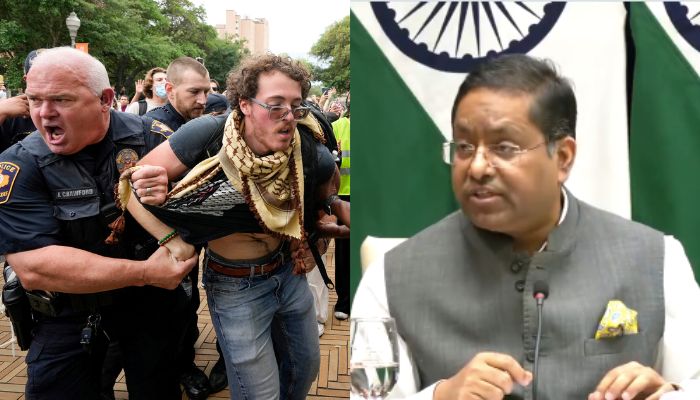
“We are judged by what we do at home, not what we say abroad”: MEA on police crackdown on pro-Palestine protests in American universities

On Thursday (25th April), the Ministry of External Affairs reacted to the ongoing police crackdown on pro-Palestine protests in various universities in the United States. It said that democracies should have a balance of freedom of expression, a sense of responsibility and public safety and order.

Addressing a media briefing today, EAM spokesperson Randhir Jaiswal said that democracies should, in particular, display this understanding for other democracies since “we are all judged by what we do at home and not what we say abroad.”

“We have seen reports on the matter and have been following related events. In every democracy, there has to be the right balance between freedom of expression, a sense of responsibility and public safety and order. Democracies in particular should display this understanding in regard to other fellow democracies. After all, we are all judged by what we do at home and not what we say abroad,” the EAM spokesperson said.

This comes amidst reports of mass arrests in the US after a pro-Palestine protest which started at Columbia University on 17th April and then extended to New York University, Yale University, the University of Illinois, and the University of California, Berkeley, and the University of Southern California among others. The pro-Palestine protestors have set up ‘Liberated Encampment Zones’ inside these universities.

As OpIndia reported today, the police on Wednesday started arresting the anti-Israel protestors from the University of South California. Meanwhile, dozens of protestors were taken into custody violently from Texas University. Police were seen in riot gear, holding batons, and surrounded a group of protestors before arresting them one by one.

Over 40 to 48 protestors were arrested on Monday at an encampment at Yale University, while 133 protestors were taken into custody at New York University this week. On Tuesday, around 9 pro-Palestine protestors were arrested from the University of Minnesota. 

In addition to pro-Palestine protests in the US and subsequent arrests, MEA Randhir Jaiswal also reacted to the recently published US State Department’s controversial report titled: Country Reports on Human Rights Practices. The summary of the report talked about the violence in Manipur between 3rd May and 15th November. The report was rife with whitewashing of the likes of Umar Khalid, Atiq Ahmed, Siddique Kappan, Khalistani terrorist Hardeep Singh Nijjar among others.

Reacting to a question regarding the said report, the MEA spokesperson said that the report is “deeply biased” and advised the media not to attach any value to it since it reflects the poor understanding of India.

“This report is deeply biased and reflects a poor understanding of India. We attach no value to it and urge you to do the same,” Jaiswal said.

Ministerial Round Table Conference at World Energy Congress discusses pathways to manage the evolving trilemma of energy security, access and sustainability

A Ministerial Round Table Conference was held on 24th April, 2024, at the ongoing 26th edition of World Energy Congress in Rotterdam, Netherlands. The Round Table Conference discussed how the COP28 UN Climate Change Conference in Dubai was a game changer. The Ministerial Round Table also discussed energy innovation and collaboration, and implications in managing the evolving energy trilemma trade-offs.

The Round Table, held on day three of the World Energy Congress, was attended by Deputy Prime Minister and Minister for Climate and Energy Policy of the Netherlands, H.E. Rob Jetten; Secretary, Ministry of Power, Government of India, Pankaj Agarwal, and senior representatives of different countries and organizations.

During the conference, the Union Power Secretary highlighted India’s pivotal role in COP28 (28th Convention on Climate Change), emphasizing its significance as a policy catalyst in global energy transition. He pointed out that the G20 New Delhi Leaders’ Declaration is a testimony of India’s efforts for building convergence towards the COP28 renewable energy and energy efficiency commitments of doubling the global rate of energy efficiency improvements every year and of tripling the global renewable capacity by 2030.

The Secretary said that India’s Mission LiFE (Lifestyle for Environment) has been lauded for advocating sustainable lifestyles, echoing global consensus at COP27 and G20 forums. He spoke also about COP28’s recognition of transitioning towards carbon neutrality, with emphasis on Carbon Capture, Utilization and Storage (CCUS) and green hydrogen.

Power Secretary Pankaj Agarwal brought out the complexity of managing energy transitions, stressing inclusive approaches. He spoke of the role of technology deployment and cooperation, with tools such as the Revamped India Energy Security Scenarios (IESS) 2047 dashboard aiding informed decision-making. The Secretary said that balancing energy security, access, and sustainability remains crucial, with initiatives like the PM-KUSUM Scheme and solar rooftop programs promoting environmental sustainability and job creation. The Indian Carbon Market will further advance sustainability efforts, he added.

The Secretary also told the Conference participants that developing countries require support in accessing financing and clean technologies, to help them navigate the energy trilemma effectively.

The 26th World Energy Congress

The 26th World Energy Congress is expected to be a critical turning point for leadership on clean and inclusive energy transitions worldwide. Themed ‘Redesigning Energy for People and Planet’, the four-day gathering marks the World Energy Council’s centenary in world energy. According to the Council, the Congress seeks to explore the role of connected energy societies in driving forward global energy transitions in a world context which is less predictable, more turbulent and faster-shifting.

World Energy Council India

World Energy Council India is a country member of World Energy Council (WEC), a global body established in 1923, with the aim of promoting sustainable supply and use of energy. WEC India is one of the earliest country members of World Energy Council, having joined the Council in 1924. WEC India functions under the patronage of Ministry of Power, Government of India and with the support of the Ministries of Coal, New & Renewable Energy, Petroleum & Natural Gas and External Affairs.