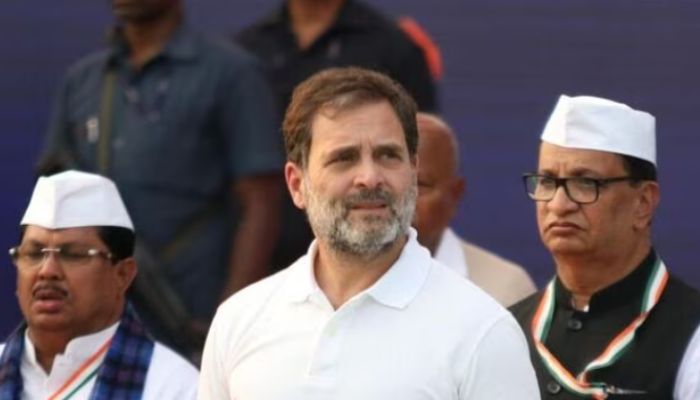
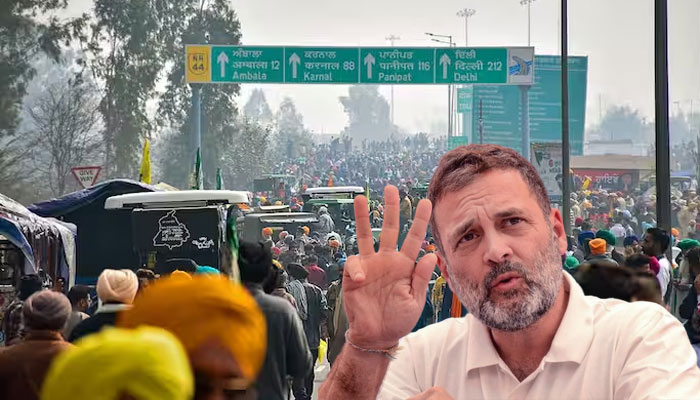
The second phase of Rahul Gandhi’s ‘Bharat Jodo Nyay Yatra’ in Jharkhand, set to commence on Wednesday (14th February), has been abruptly cancelled. This decision came as the senior Congress leader, Rahul Gandhi, rushed to Delhi to participate in a farmers’ agitation in the national capital, according to party officials.
The decision to join the farmers’ protest in Delhi comes amidst ongoing agitation from Punjab farmers, planning to march to the national capital to press for various demands, including a law on minimum support prices for crops and loan waivers.
Scheduled interactions with MGNREGA workers in Ranka, Garhwa district, will now be conducted by senior Congress leader Jairam Ramesh and other party members, as per reports. Rahul Gandhi, who was slated to re-enter Jharkhand from Chhattisgarh for the yatra’s second phase, redirected his plans to join the farmers’ protest.
Congress spokesperson Sonal Shanti confirmed the cancellation of all yatra programs in Jharkhand, stating that it is unlikely to resume from the state. Instead, AICC general secretary Jairam Ramesh, along with other senior Congress leaders, will participate in the scheduled interactions with MGNREGA workers in Ranka.
Rajesh Thakur, Jharkhand Congress president, earlier stated that Gandhi had to depart for Delhi for a “special purpose,” referring to his participation in the farmers’ agitation. The first leg of Gandhi’s yatra in Jharkhand occurred in the first week of February, entering the state from West Bengal on 2nd February and exiting to Odisha on 6th February.
Gandhi was initially scheduled to stay in Jharkhand for two days. The ‘Bharat Jodo Nyay Yatra,’ launched in Manipur on 14th January, aims to cover 6713 kilometres in 67 days, traversing 110 districts across 15 states, and culminating in Mumbai on 20th March.
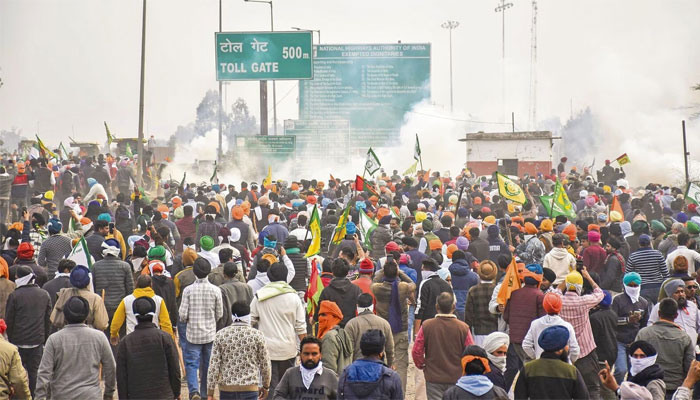
On 13th February, farmers from Punjab, Haryana and other states marched towards Delhi, aiming to get their demands fulfilled by the Government of India. Around 200 farmer unions are participating in the protests.
While police and rapid action forces attempted to stop them from entering the national capital, there were visuals confirming the farmer protests of 2024 had already been infiltrated by pro-Khalistani elements.
Apart from drafting a law on MSP, the protesting farmers have been demanding that India should quit the World Trade Organisation (WTO), halt trade agreements with other nations, and a monthly pension of Rs 10000 to farmers who attain the age of 60 years among others. Now, Rahul Gandhi is joining these protestors.
On the 13th of February, Congress leader Rahul Gandhi promised to enact a Minimum Support Price (MSP) guarantee law if his party comes to power in the coming Lok Sabha Elections.
While addressing a gathering in Chhattisgarh’s Ambikapur, Rahul Gandhi said, “BJP government gave Bharat Ratna to M.S. Swaminathan. But the cause to which Swaminathan devoted his life, his recommendations on MSP, they are not ready to do. Swaminathan report clearly said that farmers should get MSP as a legal right. But the BJP is not doing this. If the INDIA alliance forms the government we will give MSP’s legal guarantee.”
UPA Govt in 2010 had rejected Swaminathan Commission report recommending MSP at 50% more than cost of production, claiming the move will distort markets
Taking to X, Rahul Gandhi wrote, “Farmer brothers, today is a historic day! Congress has decided to give a legal guarantee of MSP to every farmer on crops as per the Swaminathan Commission. This step will change the lives of 15 crore farmer families by ensuring their prosperity. This is the first guarantee of Congress on the path of justice.”
किसान भाइयों आज ऐतिहासिक दिन है!
कांग्रेस ने हर किसान को फसल पर स्वामीनाथन कमीशन के अनुसार MSP की कानूनी गारंटी देने का फैसला लिया है।
यह कदम 15 करोड़ किसान परिवारों की समृद्धि सुनिश्चित कर उनका जीवन बदल देगा।
While the Congress party is now promising to legalise MSP if voted to power, back in 2010 his own party’s government led by the then Prime Minister Dr Manmohan Singh had rejected the Swaminathan Commission’s C2+50 per cent formula recommendation citing “counter-productivity”.
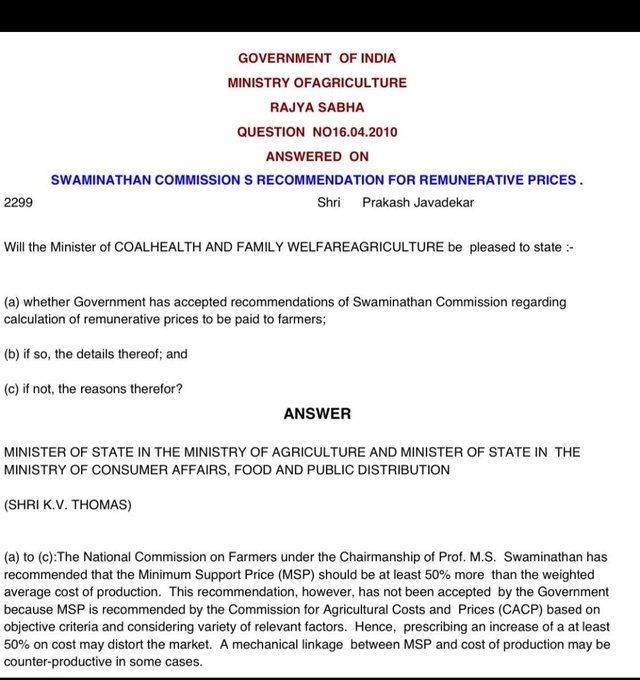
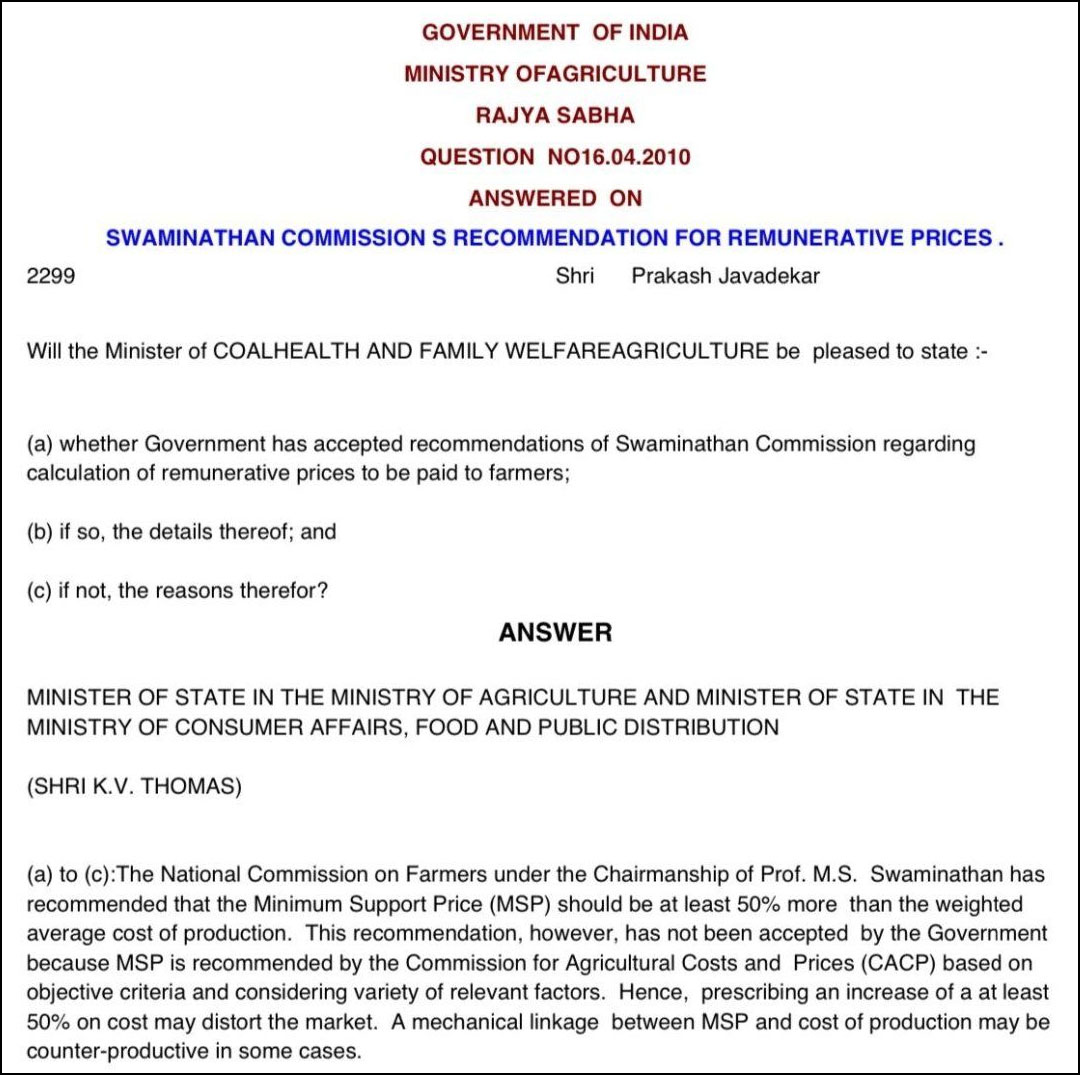
Back in 2010, KV Thomas, the Minister of State for Agriculture, informed the Rajya Sabha that the then-Manmohan Singh-led government did not accept the MSP recommendation, which was made by the Commission for Agricultural Costs and Prices (CACP) based on objective criteria and taking into account a variety of relevant factors.
“Hence, prescribing an increase of at least 50% on cost may distort the market. A mechanical linkage between MSP and cost of production may be counter-productive in some cases,” Minister Thomas had replied.
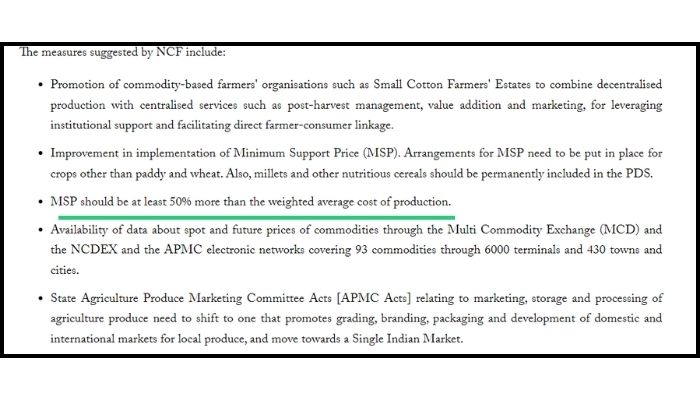
Notably, the Swaminathan Committee’s National Commission on Farmers had recommended that the MSP be at least 50% higher than the weighted average cost of production. This was referred to as the C2+50% formula, which included the capital input cost and land rent to provide farmers with 50% of the returns.
Excerpt from Swaminathan Committee report (Source: prsindia.org)
It is pertinent to note that although the Swaminathan Committee recommended that the MSP be at least 50% higher than the weighted average cost of production, it did not essentially make a case for the legalisation of MSP. The commission never asked for MSP to be made a legal right, contrary to what the Congress is trying to portray.
Notably, the National Commission on Farmers (NCF) was established on 18th November 2004, under the leadership of Professor M.S. Swaminathan. The terms of reference reflected the priorities outlined in the Common Minimum Programme. The NCF presented four reports in December 2004, August 2005, December 2005, and April 2006, respectively. The fifth and final report was submitted on 4th October 2006. The studies include proposals for achieving the “faster and more inclusive growth” goal outlined in the Approach to the 11th Five-Year Plan.
Before attacking the Modi government, Rahul Gandhi should question his own party as to why the UPA government did not implement the Swaminathan Committee’s recommendation with regard to MSP if the party actually cared for the farmers. The Congress party’s bold promise to make MSP a legal right comes when the farmers are protesting to press their demand for drafting a law on MSP.
The timing of the party’s sudden flip raises the question if Congress genuinely intends to support farmers or is just eyeing an opportunity to garner votes since the INDI Alliance is in a deplorable state and is miserably failing to put forth any strong fight before the Modi-led government.
Rahul Gandhi’s opportunism might prove destructive for not just the agriculture sector but also pose a threat to the country’s economic stability and growth.
A history of Congress’ duplicities and betrayals
Interestingly, this is not the first time that Congress has exposed its own duplicity. Back in 2019, the Congress party had in its Lok Sabha election manifesto promised to repeal the Agricultural Produce Market Committee. “Congress will repeal the Agricultural Produce Market Committees Act and make trade in agricultural produce — including exports and inter-state trade — free from all restrictions,” the party’s 2019 election manifesto stated.
However, when the Modi government introduced similar reforms in the year 2020, the Congress party vehemently opposed the government, clearly just for the sake of opposing. The Congress party back then called the three farm laws as ‘black laws’.
Interestingly, former Prime Minister Dr Manmohan Singh had also urged states to amend the APMC Act, giving farmers greater freedom in 2009 and 2012. But when the Modi government gave farmers the option to trade freely outside of APMCs, the same Congress took a hypocritical stand.
In 2020, a noticeable lack of uniformity was observed in then-Congress-ruled states such as Punjab, Chhattisgarh, and Rajasthan regarding legally guaranteed MSP for floor pricing. While these states passed farm bills to sidestep the now-repealed central farm regulations, there was no consistency in guaranteeing MSP. While the Punjab government’s bill guaranteed MSP only for wheat and paddy, Rajasthan’s bill mentioned MSP guarantees only for contract farming, and the Chhattisgarh bill was hazy on MSP assurances and dealt with concerns subjectively. In its entirety, none of these bills adequately addressed the protesting farmers’ demands for a legally enforced MSP, despite the Congress leadership’s claims of full support for farmers.
Congress playing South India-North India divide and ‘support for Punjab farmers’ at the same time
Irony starved to death when Congress leader and Karnataka deputy Chief Minister DK Shivakumar came forward to support the ‘Annadaatas’ over bringing MSP law. Taking to X on 12th February, Shivakumar wrote, “Union Govt promised to implement MSP law in 2021, and now we are in 2024 and still the govt has not fulfilled its promise to our farmers. More than 700 farmers lost their lives during the last protest, but our govt continues to play with their sentiments & their future with unfulfilled promises. Now, by constructing barricades it wants to stop the farmers from protesting for their rights. Look at the injustice of it all! Our farmers have every right & reason to protest against these injustices and we stand with them in this fight!”
Union Govt promised to implement MSP law in 2021, and now we are in 2024 and still the govt has not fulfilled its promise to our farmers.
More than 700 farmers lost their lives during the last protest, but our govt continues to play with their sentiments & their future with…
While the Congress party is now suddenly worried about Punjab farmers, its leaders like DK Suresh were crying hoarse over “why South India tax money would fund North India development. The Karnataka Congress leader went as far as expressing his disdain for North India as he ended by saying that in the future, “South Indian states may demand a separate country for themselves and become a separate nation.”
How MSP is calculated?
The Central Government determines the minimum support price (MSP) using a formula that considers production costs and sets the price at one-and-a-half times these expenses. This approach takes into account both explicit costs (A2), which include expenses for goods such as seeds, fertiliser, pesticides, fuel, irrigation, hired labour, and leased-in land and the estimated value of unpaid labour done by family members (FL). Notably, the government determines MSP for 22 mandated crops based on recommendations from the Commission for Agricultural Costs and Prices (CACP), as well as the views of state governments and concerned Central Ministries/Departments.
Farmers protest and their demands
On Tuesday (13th February), a large number of farmers marched towards the national capital. In addition to drafting a law on MSP, the protesting farmers undertaking the ‘Delhi Chalo’ march have been demanding that India should quit the World Trade Organisation (WTO), halt trade agreements with other nations, and a monthly pension of Rs 10,000 to farmers who attain the age of 60 years among others. The protest has been called by Sanyukt Kisan Morcha and Punjab Kisan Mazdoor Sangharsh Committee, led by farmer union leaders Jagjeet Singh Dallewal and Sarwan Singh Pandher.
Notably, the MSP has increased substantially since the Modi government took power in 2014. In response to OpIndia’s RTI, the Government of India stated that the MSP for wheat per quintal has increased from Rs 1,350 in 2013-14 to Rs 2,015 in 2022-23. As reported earlier, the minimum support price for wheat increased from Rs 1,350 per quintal in 2013-14 to Rs 2,105 in 2022-23. The Modi government’s measures have ensured an increased income for the farmers over the years.
On 6th February, Arjun Munda, the Union Minister of Agriculture and Farmers’ Welfare informed the Lok Sabha that procurement of foodgrains has increased from 761.40 lakh metric tonnes in 2014-15 to 1062.69 lakh metric tonnes in 2022-23, benefitting more than 1.6 crore farmers. The expenditure incurred (at MSP values) on procurement of foodgrains increased from 1.06 lakh crores to 2.28 lakh crores, during the same period.
Bringing a law legalising MSP would involve a tremendous fiscal burden on the government exchequer, there would be a risk of undervaluation of crops with low yields, an increase in food inflation, market distortionary and economically unsustainable practices, and India would face opposition in the WTO as well as trade disputes with importing countries.
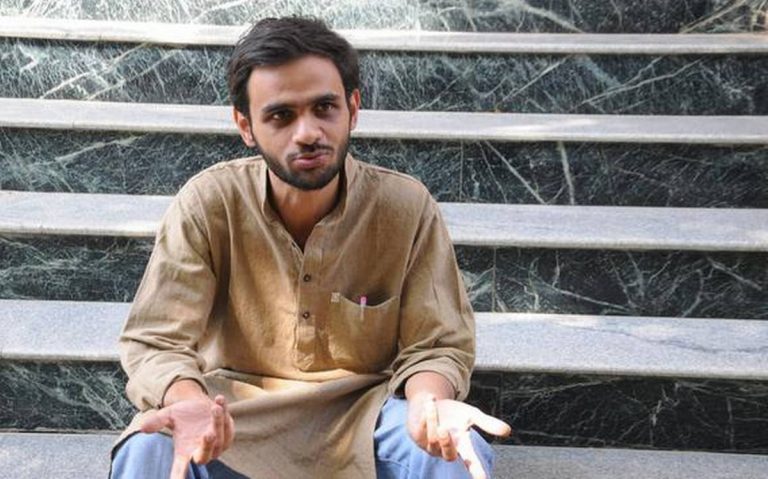
Former Jawaharlal Nehru University (JNU) student Umar Khalid withdrew his bail plea before the Supreme Court in the Delhi anti-Hindu riots in February 2020 on Wednesday.
A bench of Justices Bela M Trivedi and Pankaj Mithal allowed him to withdraw the bail plea.
Senior advocate Kapil Sibal, appearing for Khalid, told the bench that the petition is being withdrawn in view of a “change in circumstances” and to seek bail afresh before the trial court.
Sibal said, “Bail matter, we wish to withdraw. There has been a change in circumstances; we will try our luck in the trial court.”
Khalid has been in custody in a UAPA case in the anti-Hindu Delhi riots in February 2020.
Khalid had approached the top court challenging an October 2022 Delhi High Court verdict that had denied bail to him.
Khalid, arrested by Delhi Police in September 2020, had sought bail in the High Court on the grounds that he neither had any “criminal role” in the violence in the city’s north-east area nor any “conspiratorial connection” with any other accused in the case. The Delhi police had opposed Khalid’s bail plea.
He had approached the High Court, challenging the dismissal of his bail application by the trial court in March 2022.
He was charged with criminal conspiracy, rioting, and unlawful assembly, as well as several sections of the Unlawful Activities (Prevention) Act (UAPA).
Besides Khalid, Sharjeel Imam, activist Khalid Saifi, JNU students Natasha Narwal and Devangana Kalita, Jamia Coordination Committee members Safoora Zargar, former AAP councillor Tahir Hussain and several others were booked under the stringent law in the case.
The violence that erupted during the protests against CAA and NRC left 53 people dead and over 700 injured. (ANI)
A sessions court in Mumbai has ruled that a man caring for his mother can’t be considered as domestic violence against his wife. The court made this observation while dismissing a complaint filed by a woman against her husband and in-laws. The court pronounced that a man providing time and money to his mother cannot be classified as domestic violence. The charges against the respondents are insufficient and opaque and there is no evidence that the accused subjected the applicant woman to domestic abuse, per a ruling delivered on 13th February by Additional Sessions Judge Ashish Ayachit of the Dindoshi court.
The woman, an assistant in the state secretariat known as “Mantralaya” had filed a case under the Protection of Women from Domestic Violence Act with a magistrate court, seeking an order for compensation, financial relief and protection. She claimed that her spouse had tricked her into marrying him by hiding his mother’s mental instability. The complainant further alleged that she had arguments with her husband and mother-in-law who objected to her work as well as harrassed her.
According to the woman, her husband spent September 1993 through December 2004 working overseas. He used to visit his mother in India whenever he visited India on leave and would send her Rs 10,000 annually. The woman added that he also paid for his mother’s eye surgery. She also claimed being harassed by the other members of her in-laws’ family.
On the other hand, the man refuted every accusation. He asserted that his wife resorted to making up accusations against him and never acknowledged him as her spouse. He mentioned he had petitioned a family court for a divorce as a result of her torment. Furthermore, he maintained that his wife had secretly taken out Rs 21.68 lakh from his NRE (non-resident external) account and used it to buy an apartment. The woman was granted Rs 3,000 per month in interim maintenance by the trial court (magistrate) while the appeal was pending.
After hearing all the arguments, the magistrate court rejected the lady’s petition and withdrew the temporary orders and reliefs that had been accorded to her while the case was pending after recording her testimony and that of other witnesses. The woman then went before the sessions court to file a criminal appeal. The sessions court concluded after reviewing the information that the accusations made against her in-laws are “vague and ambiguous” and that there is insufficient evidence to support the claims that they assaulted the woman.
The court highlighted, “It is a matter of record that the applicant is an ‘assistant’ working in Mantralaya and getting a salary. It is revealed from the entire evidence that her grievance is that, the respondent, her husband, is giving time and money to his mother, which cannot be considered as domestic violence. Careful reading of the entire evidence of the applicant and respondent number 1(husband), I am of the opinion that the applicant has miserably failed to prove that she was subjected to domestic violence.”
The woman’s spouse served her with a notice of intent to file for divorce, the court explained, and only then were the proceedings initiated. It remarked that she was not eligible for any kind of redress based on the Protection of Women from Domestic Violence Act. The court pointed out that it could not accept the contention that because the woman’s daughter is single, the former should be granted support.
The judge stated, “I do not think that the applicant is entitled to recover maintenance for major daughter,” emphasizing that the daughter is an adult and she has an independent remedy available under the law. The judge added that the court does not need to get involved in the contested trial court’s decision.
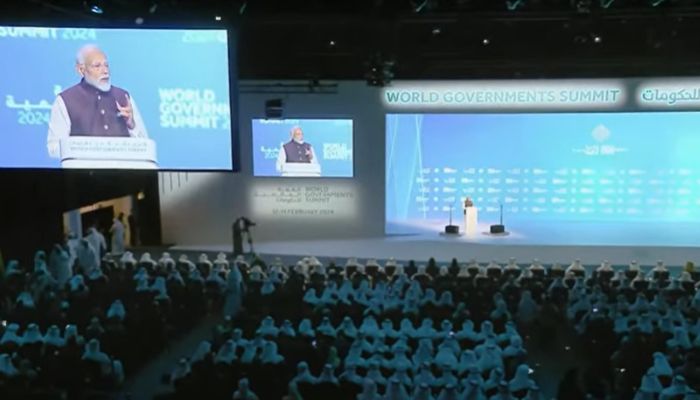
Prime Minister Narendra Modi on Wednesday (14th February) addressed the World Governments Summit in Dubai on day 2 of his visit to the United Arab Emirates (UAE).
While listing the challenges faced by nations in the new world order, Prime Minister Modi said that technology has proven to be a “key disruptor” both negatively and positively.
In this context, he said that terrorism has been changing forms and posing a new challenge to humanity.
“With every new day, terrorism is changing its form and posing a new challenge to humanity,” PM Modi said. He said that there are domestic concerns on one hand and on the other hand, international systems appear scattered.
“Between all this, every government is facing a very big challenge of defending its relevance,” he said.
The Prime Minister underlined that even as governments around the world have witnessed a decline in their perception amongst the people, India has seen an upward trend in this regard.
“Trust on governments worldwide declined after Covid. But we (BJP government) experienced the complete opposite in India,” he said adding that the confidence of Indians in their government has only strengthened.
Prime Minister Modi presented his ‘Minimum Government, Maximum Governance’ model and said that there should be no scarcity nor excess of government in the life of people.
“People have complete trust on our intent and committment. How did this happen? Because we prioritised the social sentiment, we are sensitive towards the needs and dreams of the people,” he said.
PM Modi highlighted his governance model based on the ‘top down and bottom up’ and ‘whole of society’ approach.
PM emphasized on his government’s people-driven approach to ensure people’s participation. He said, “People of the country should take charge of running the nation,” as he explained his governance model in detail.
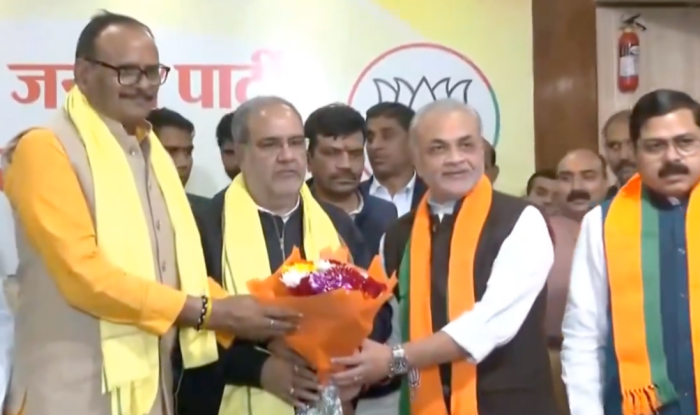
Vibhakar Shastri, the grandson of former Prime Minister Lal Bahadur Shastri joined the Bharatiya Janata Party (BJP) on Wednesday in the presence of Uttar Pradesh Deputy CM Brajesh Pathak.
Shastri resigned from the Congress party’s primary membership ahead of Lok Sabha polls earlier in the day.
After joining the saffron party, Vibhakar thanked Prime Minister Narendra Modi, UP CM Yogi Adityanath and other leaders of the party for providing him a chance to connect with Lal Bahadur Shastri’s vision of ‘Jai Jawan, Jai Kisan’.
“I think under the leadership of PM Narendra Modi, I will be able to serve the country by further strengthening Lal Bahadur Shastri’s vision of ‘Jai Jawan, Jai Kisan’,” he said.
“We also want that under the leadership of PM Modi, we become a developed nation, and the largest economy of the world,” he added.
Earlier, Shastri informed about leaving the grand old party through a post on the social media platform, X.
“Hon’ble Congress President Shri @kharge ji! Respected Sir, I hereby tender my resignation from the primary membership of the Indian National Congress (@INCIndia). Regards Vibhakar Shastri,” he posted.
Vibhakar Shastri had fought and lost from the Fatehpur constituency in Uttar Pradesh during the 2009 Lok Sabha elections on a Congress ticket.
Earlier, former Congress leader Ashok Chavan resigned from the grand old party on Monday and joined the Bharatiya Janata Party on Tuesday, asserting to work for the “constructive development of Maharashtra”.
Calling it a “new beginning” in his political career, Ashok Chavan said, “Today it’s a new beginning of my political career. I am formally joining the BJP in their office today. I am hopeful that we will work for the constructive development of Maharashtra.”
Chavan was the third big name to desert the Congress ship in Maharashtra. First to go was former South Mumbai MP Milind Deora, followed by former MLA Baba Siddique.
On 13th February, Congress leader Rahul Gandhi announced that if his party comes to power, they will bring the MSP Guarantee Law and implement the Swaminathan Commission’s recommendations. Calling it a historic announcement, Gandhi posed as “well-wisher of the farmers”. Interestingly, his party had rejected the Commission’s recommendations on Minimum Selling Price (MSP) in 2007.
किसान भाइयों आज ऐतिहासिक दिन है!
कांग्रेस ने हर किसान को फसल पर स्वामीनाथन कमीशन के अनुसार MSP की कानूनी गारंटी देने का फैसला लिया है।
यह कदम 15 करोड़ किसान परिवारों की समृद्धि सुनिश्चित कर उनका जीवन बदल देगा।
OpIndia accessed Sansad documents from both Lok Sabha and Rajya Sabha, where the Congress government was asked about the possibilities of implementing recommendations of the Swaminathan Commission.
In Rajya Sabha, Bharatiya Janata Party (BJP) leader Prakash Javadekar, in 2010 (unstarred question 2299), asked the Minister of Agriculture if the government had accepted the recommendations of the Swaminathan Commission regarding the calculation of MSP to be paid to farmers. Replying to him, then-Minister of State in the Ministry of Agriculture, KV Thomas, said that the Swaminathan Commission had recommended that the MSP be at least 50 per cent more than the weighted average cost of production. “This recommendation, however, has not been accepted by the government because MSP is recommended by the Commission for Agricultural Costs and Prices (CACP) based on objective criteria and considering a variety of relevant factors. Hence, prescribing an increase of at least 50% cost may distort the market. A mechanical linkage between MSP and cost of production may be counterproductive in some cases,” he said.
Source: Sansad
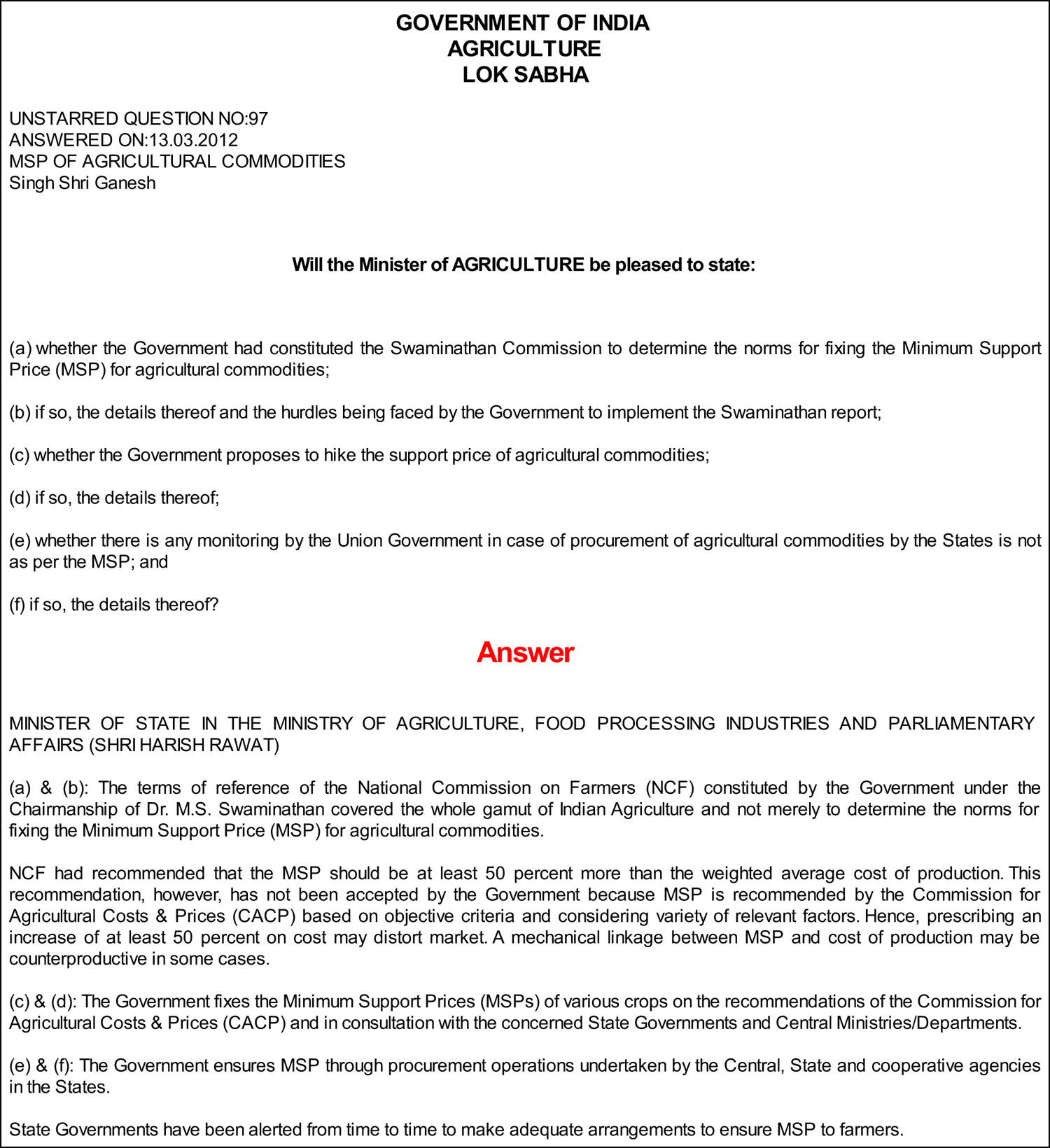
In Lok Sabha, similar questions were asked by Ganesh Singh (unstarred question 97 dated 13th March 2012), Shruti Choudhary (unstarred question 1400 dated 21st August 2012), Pummasi Ram and Ram Singh Kaswan (unstarred question 2918 dated 11th December 2012), and Amarnath Pradhan and Kameshwar Baitha (unstarred question 2340 dated 12th March 2013). In all the cases, the Congress-led UPA government gave the same answer.
Source: Sansad
Recommendation of Swaminathan Commission and how the Modi government handled MSP
On 18th November 2004, the government of India formed the National Commission on Farmers, chaired by MS Swaminathan. The aim was to develop a sustainability system in farming and make it more profitable. The commission submitted five reports between December 2004 and October 2006. One of the recommendations of the MSP should be at least 50 per cent more than the weighted average cost of production. This recommendation was not incorporated in the National Policy for Farmers 2007.
Though Prime Minister Narendra Modi-led Government of India continued to hold the previous government’s stand that implementing the recommendation would disrupt the market, it substantially increased the MSP of the crops over the years.
In a reply to RTI filed by OpIndia, it was revealed that the Government of India increased the MSP of wheat per quintal from Rs 1,350 in 2013-14 to Rs 2,015 in 2022-23. Similarly, in the case of wheat, MSP jumped from Rs 1,350 per quintal in 2013-14 to Rs 2,105 per quintal in 2022-23. Modi-led government ensured a significant increase in farmers’ income without causing any disruptive effect on the market.
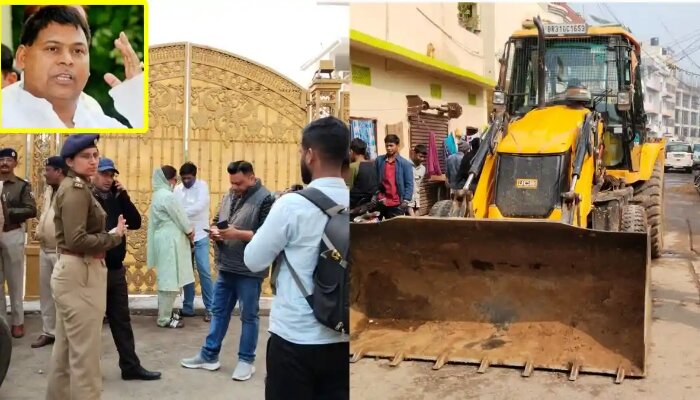
Former member of parliament and brother-in-law of Rashtriya Janata Dal chief Lalu Prasad Yadav, Subhash Yadav eventually turned himself in, at the MP-MLA Patna court on 13th February. The development transpired soon after an earth mover machine arrived at his residence situated in Kautilya Nagar’s MLA Colony to take down the building. The matter pertains to Bihta police station. A notice of attachment order was issued against him on 30th January.
The official notification was posted by Bihta Circle Inspector Kamleshwar Prasad Singh along with his team and the police of the airport station. Assistant Superintendent of Police (ASP) West Diksha who reached the location noted that the court had ordered an attachment seizure concerning the case of land fraud and racketeering but since Subhash Yadav immediately surrendered after receiving the news of bulldozer action, the procedure couldn’t move forward.
She proclaimed, “A case against Subhash Yadav for cheating and extortion has been registered in Bihta police station. He was on the run for a long time. We served notice to him on January 30 and initiated the process of property attachment under the supervision of duty magistrate on Tuesday but the alleged person surrendered in the court.”
The issue is related to Bhim Verma, a resident of Neura’s Bela village and his seven katha land. On 27 February 2021, he registered a case against Subhash Yadav and seven others over land grab, cheating and extortion. Subhash Yadav’s wife Renu Devi, son and former sarpanch of Bela are also accused in the complaint.
Bhim Verma revealed his suffering on 18th April 2022 at the ‘Janata Durbar’ of Chief Minister Nitish Kumar. He had accused the Yadav family of occupying his land illegally. He charged that he sold the land to Subhash Yadav and the land registry had been finalized in Rs 96 lakh. The complainant further stated that initially Rs 60.50 lakh was provided but the politician refused to give the remaining amount. Furthermore, the money was also snatched after he was later physically attacked. He mentioned that Subhash Yadav resorted to threats and harassed his family as well as assaulted them.
Notably, Sadhu Yadav who had been a Lok Sabha MP and MLA is the older brother-in-law of Lalu Prasad Yadav while Subhash Yadav is the younger one. He served as a Rajya Sabha MP and Legislative Councillor. These two possessed significant influence and power when Lalu Prasad Yadav’s wife Rabri Devi was the chief minister of Bihar. Both were viewed as Bihar’s mafia during the Lalu-Rabri era in the 1990s and early 2000s.
Interestingly, Rashtriya Janata Dal is now in opposition after Bihar Chief Minister Nitish Kumar’s Janata Dal (United) ended the coalition and joined the Bharatiya Janata Party to form a fresh government in the state. It is believed to be a result of Bihar’s recent government transition. Samrat Chaudhary, the president of the Bharatiya Janata Party state unit and the new deputy chief minister had promised not to spare anyone and open each and everyone’s file during his address on the trust motion, a day earlier.
Janata Dal (United)’s MLA Sudhanshu Shekhar filed an FIR in Patna on Wednesday, claiming that he was offered Rs 5 crores by the party’s colleague for switching over to the RJD-led ‘Mahagathbandhan’ ahead of the trust vote.
“I hold deep reverence towards my leader. They are almost like God to me. and I won’t tolerate anyone pointing fingers at them, but it’s our own members of the party who were making accusations. So I filed an FIR for a thorough investigation,” MLA Sudhanshu Shekhar said.
When questioned about JDU MLA Sanjeev Kumar’s statement, he said, “I have provided all the details in the FIR copy. I am not doing all this under any pressure. I have experienced a significant incident, and this incident is indeed true. I received a substantial offer. I was offered Rs 5 crores and a minister’s post in the cabinet for switching over to the RJD-led ‘Mahagathbandhan.”
“I received a call via the Internet informing me that they wished to meet. Despite persistent calls causing distress, I did not grant them the opportunity,” he added.
Earlier, JDU MLA Sanjeev Kumar said, “I am sure CM Nitish Kumar is not aware of this. Some leaders are there in our party who pressured the MLA (Sudhanshu Shekhar) and forced him to file an FIR.”
Regarding the situation with MLA Bima Bharti, MLA Sudhanshu Shekhar said, “Anyone guilty will be caught by the law. Even I have filed an FIR and the law is investigating. Action will be taken against anyone found guilty, even if they are members of our party.”
Meanwhile, Janata Dal (United) MLA Bima Bharti has alleged that her son and husband were arrested by the police in connection with an Arms Act case, as officers were under pressure from the top officials in the state government.
While talking to the media on Wednesday, MLA Bima Bharti expressed claimed that the party higher-ups had lost trust in their own MLAs.
A total of nine people, including Bima Bharti’s husband, Awadhesh Mandal, and their son, were arrested by the police in connection with an Arms Act case.
Bima Bharti is an MLA from the Rupauli assembly seat of Bihar.
(This news report is published from a syndicated feed. Except for the headline, the content has not been written or edited by OpIndia staff)
On the 13th, Congress leader Rahul Gandhi promised to enact a Minimum Support Price (MSP) guarantee law if his party comes to power in the 2024 Lok Sabha Elections. For some, it may sound like an appealing strategy, especially to the farming community, which has been marching towards Delhi demanding the same. However, delving deeper into the economic realities reveals the sheer impracticality of such a proposal. It is easy for political leaders to make tall promises before elections, especially to those who belong to a party or an alliance that has already accepted defeat. But promises have to be made only when they can be fulfilled. In the case of the MSP Guarantee Law, it is practically impossible.
किसान भाइयों आज ऐतिहासिक दिन है!
कांग्रेस ने हर किसान को फसल पर स्वामीनाथन कमीशन के अनुसार MSP की कानूनी गारंटी देने का फैसला लिया है।
यह कदम 15 करोड़ किसान परिवारों की समृद्धि सुनिश्चित कर उनका जीवन बदल देगा।
Let us break down the numbers to understand why it is not feasible for any government, whether it be the current BJP-led government of India or in case any other party that rules the Centre. India’s agriculture sector makes a significant contribution to the GDP. The total agricultural produce value stands at around Rs 40 lakh crores as per FY20. This includes everything, including farming, dairy, horticulture, livestock, etc. The farming output is around Rs 10 lakh crores.
Of this, only Rs 2.5 lakh crores is procured as MSP covering 24 crops. It represents only 6.25 per cent of the country’s total agricultural output or 25 per cent of the total farming output. If we enact a universal MSP law, that would inflate this figure exponentially. In short, the government of India will be required to fetch out at least Rs 10 lakh crores annually just to fulfil the promise of MSP. It is not a small amount, considering India has set aside a budget of Rs 11 lakh crores for infrastructure in the recent interim budget.
Those who demand and propose MSP guarantee law fail to address one fundamental question: where will this exorbitant amount of money come from? The implications of such spending will be dire and potentially lead to a significant drop in the government’s spending in crucial sectors, including defence. Furthermore, it will increase the taxation burden on the common citizen, which is already under much pressure.
Moreover, this notion of MSP is economically unfeasible and backed by politicians with vested interests. The promise made by Rahul Gandhi is pure opportunism, especially considering the timing as Lok Sabha elections are just months away. This promise can only be a manipulation tactic to change public sentiments and nothing else.
The repercussions of blind commitments are not limited to just the agriculture sector. It will threaten the economic stability and risk the country’s growth. It has to be noted that the political dimensions of the farmer protests cannot be ignored. Congress party has shown that it is directly involved in these protests, operating from the shadows. The promise of MSP may give momentary gain, but it will sacrifice long-term economic stability.
Investigative journalist Vijay Patel recently published a thread and a video explaining how farmer union leaders were in contact ahead of the farmer protests and proudly discussed “coming days” in social media posts that they discussed with Congress Party leaders. For example, in a social media post, Ramandeep Singh Mann wrote that he met Deependra Hooda and had a “meaningful conversation about the coming days”. Other names appeared on the list, including a Congress leader, Guramneet Mangat, who became a professional farmer protester.
Exclusive and explosive:
Congress is behind this #farmerprotests2024 and they want regime change protests which can lead to civil war.
Adding fuel to the fire, the Aam Aadmi Party has shown zero interest in controlling the protesters and gave a freeway in Punjab to those who were marching towards Delhi. AAP categorically told Punjab and Haryana High Court that will not stop anyone from marching towards Delhi, of course adding “while maintaining law and order”. Furthermore, the AAP-led Delhi government refused to turn a stadium into an open jail, which was requested by Central government, claiming the demands of the farmers were genuine.
Punjab govt counsel: The issue is they are proceeding for protest, not collecting in Punjab. There is no sealing in Punjab. If they want to proceed for peaceful protest… we are allowing it and apt arrangements are made for crowd control, etc.#FarmersProtest2024
In the farmer protests 1.0, AAP played a significant role in fueling the protests. Delhi government under AAP provided amenities, including water supply and free WiFi, at protest sites and openly instigated farmers against the central government. All is being done just to earn some brownie points. Not to forget, the Punjab government itself lathi-charged protesting farmers in their state and ignored their plea a few months back. However, when the attack is on the central government, they pose as if they are the messiah of farmers.
It is essential to note that MSP has significantly increased since the Modi government came to power in 2014. In a reply to OpIndia’s RTI, the Government of India informed that the MSP of wheat per quintal was increased from Rs 1,350 in 2013-14 to Rs 2,015 in 2022-23. Similarly, in the case of wheat, MSP jumped from Rs 1,350 per quintal in 2013-14 to Rs 2,105 per quintal in 2022-23. Modi-led government ensured a significant increase in farmers’ income, but the protesting farmers themselves have ignored this fact.
In essence, the promise of an MSP guarantee law is just a mirage. It is a political illusion disguised as farmer welfare. The short-sightedness of the political parties in the opposition is aimed only at political gains, and they are not bothered about economic prudence and national interest. It is essential for the policymakers not to succumb to the populist rhetoric and adopt a holistic approach that addresses the root cause of the distress faced by the farmers while ensuring the national fiscal health is on the right track. Anything less will be an economic suicide and betrayal of the electorate’s trust.