Home Blog Page 1354

Hindus in Haldwani display remarkable valour: Men chanting ‘Jai Shri Ram’ saved policemen from rioters, women used scarves to bandage injured

In Haldwani, Uttarakhand, there was a fierce attack on the police administration that went to remove illegal occupation on Thursday (8th February). In this attack in the Banbhulpura area, apart from stone pelting, swords were brandished and bullets were also fired. Abdul Malik is said to be the mastermind of the violence by Islamist mobs that affected thousands of civilians, hundreds of policemen and dozens of journalists. So far, the police have arrested 36 rioters and a hunt is on for the rest.

In such circumstances, some individuals risked their lives to not only thwart further harm by rioters but also to safeguard the lives of police officers. The OpIndia team reached the Hindu-dominated Gandhinagar area of Haldwani where the violent mob could not enter the city further due to the resistance of the people.

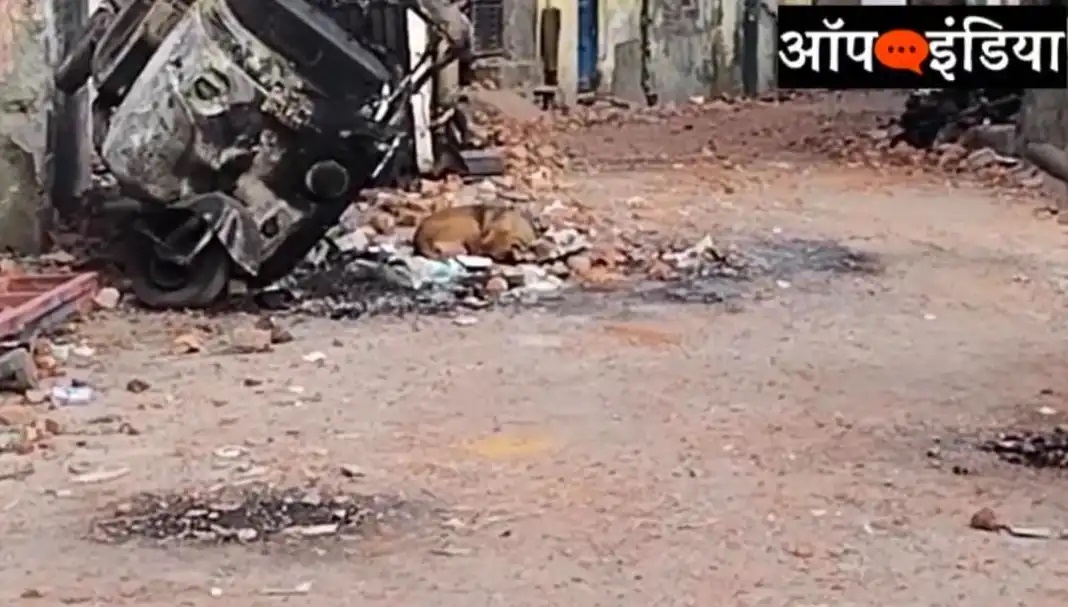
When we reached Gandhinagar, we found paramilitary personnel deployed there along with the Uttarakhand Police. No one was allowed to crowd the streets. Police sirens echoed incessantly. Residents remained confined to their homes as evidence of stone pelting littered the streets. Remnants of bricks and stones strewn across drains bore witness to the ferociousness of the mob’s actions on 8th February. The police stopped us from crossing Gandhinagar and entering the Vanbhulpura area.

There we met people who risked their own lives to save the city.

The street of Gandhinagar from which the rioters could not move ahead. Image Source: OpIndia Hindi

Hindus gave first aid to policemen

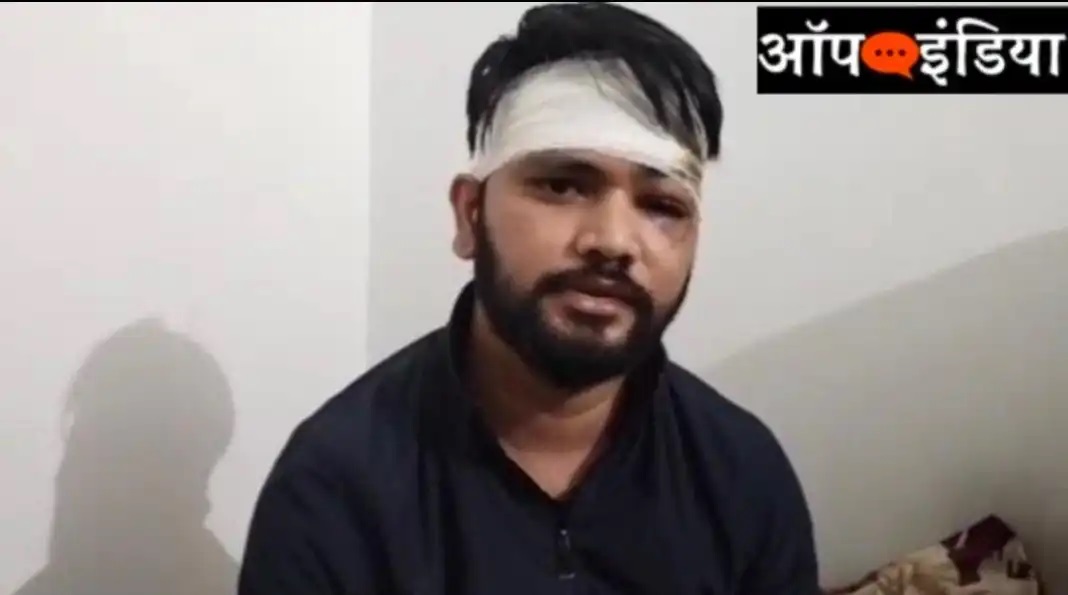
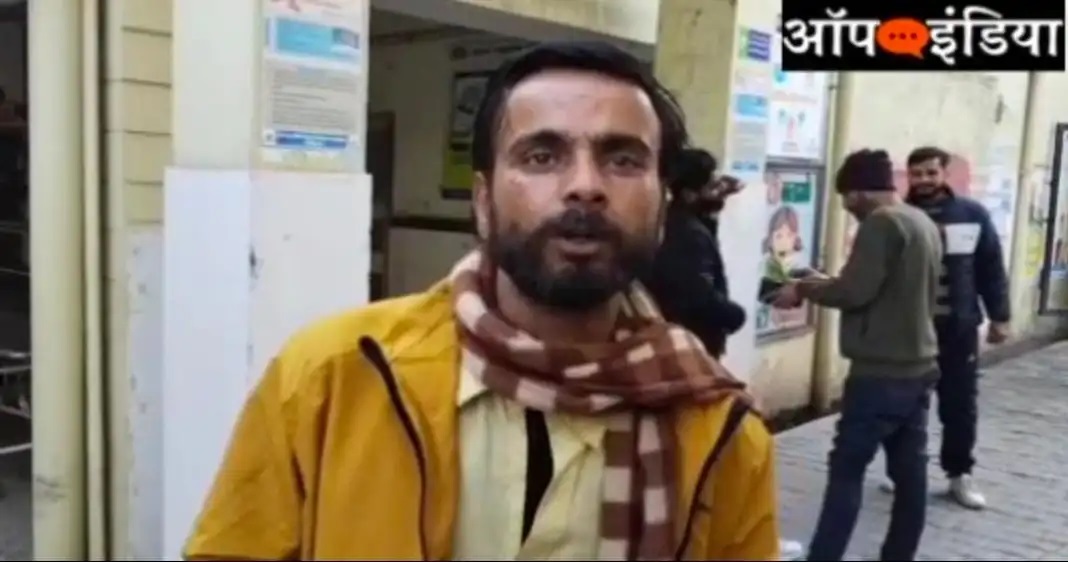
We saw Manish Sonkar, sitting in front of his house in Gandhinagar. Manish’s head was bandaged. He told us that on the day of the incident, policemen and municipal staff came running to his lane. A crowd of thousands was chasing them. Manish opened the doors of his house and took all the policemen and municipal staff inside. Then Manish’s family bandaged those policemen. They were given some food and tea.

Many women staff told Manish’s family, “They will kill us. Save us. They even tried to tear our clothes.” Almost all the policemen had deep wounds from where blood was oozing.

Injured Manish Sonkar. Image Source: OpIndia Hindi

Manish claimed that the violent mob was armed with stones, petrol bombs and swords. Women and children were positioned in the front rows of the mob. They also attacked from the roofs. When Manish felt that the attacking mob would enter his locality and kill the policemen and others, he went ahead with his colleagues.

This resistance of the Hindus of the locality not only stopped the attacking crowd but also retreated after a while. Later, when the backup force arrived, the injured soldiers were taken to safer places. Manish himself fell unconscious after being hit by a stone while resisting.

23-year-old Hrithik also fought against rioters

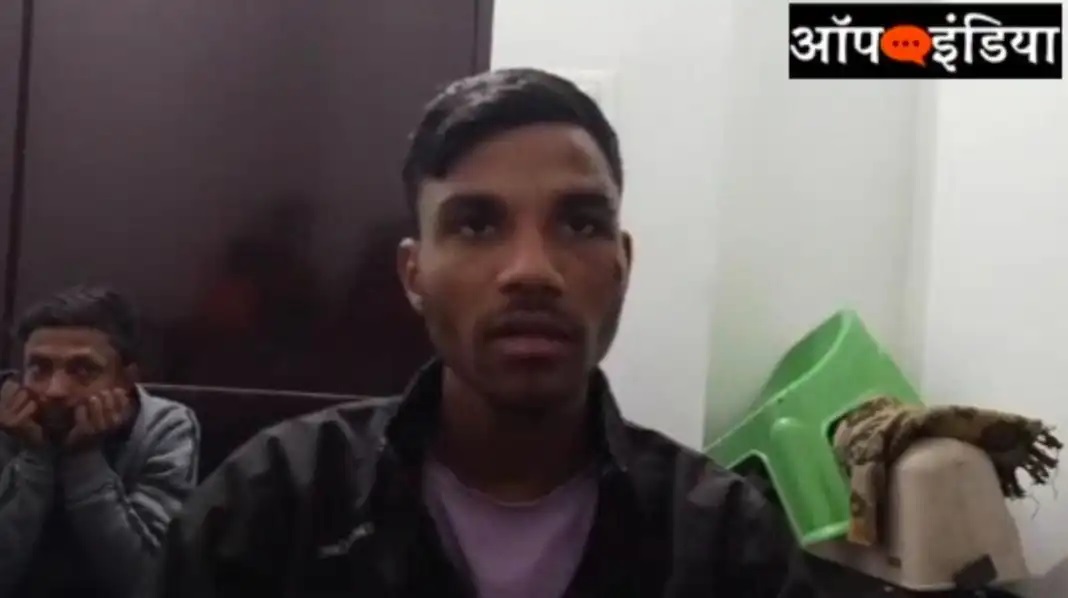
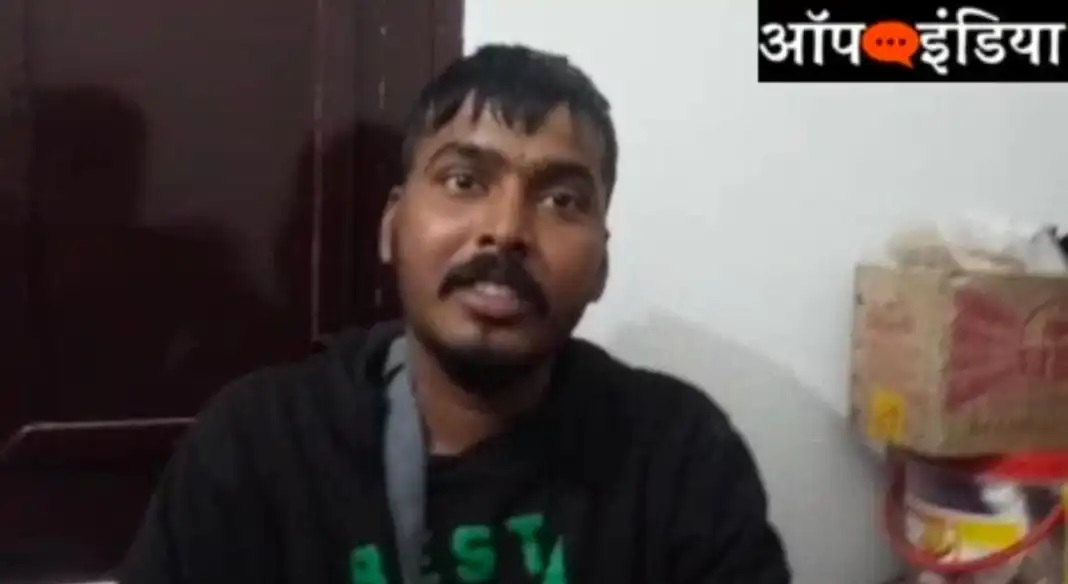
After Manish, we met 23-year-old Hrithik in Gandhinagar. Hrithik said that when the attackers were throwing stones at his locality and the police, then how could he watch silently? Hrithik identified that most of the attackers in that mob were locals who used to drive vehicles etc. The mob also included children, old people and women. These attackers used to visit local Hindus as friends in normal times. Hrithik claimed that the police could not save themselves with sticks because the attackers had prepared for it many months ago. Hrithik received stone injuries on his face and hands.

Injured Hrithik Kumar. Image Source: OpIndia Hindi

‘We can do anything for our soldiers’

We met Aryan in another lane in Gandhinagar. Aryan’s hand was broken. He told us that this type of violent mob chanting ‘Allah hu Akbar’ is often seen in films. A policewoman who had found shelter in Aryan’s house had cried and told him that even her ring was snatched in the violence. When another woman working in the police department could not escape, she hid in a drain and left only after the backup force arrived. Stones laid on the railway line were already collected for the attack. The attackers conspired and cut the wires of the lights to ensure the darkness.

Aryan Sonkar. Image Source: OpIndia Hindi

Aryan further told us that when the policemen were fleeing after saving their lives, the attackers had set their old vehicles on fire on the way back. It is claimed that not a single elderly person in the entire crowd was seen stopping any rioter from committing the act harming the social fabric. Many of the attackers wore burqas to hide themselves. We asked Aryan how he felt as he was wounded in defence of the policemen. He said, “We cannot see this happening to our soldiers. I can’t stand anything like that. We can do anything for our soldiers.”

Hindus chanted ‘Jai Shri Ram’ while facing the rioters and saving the police

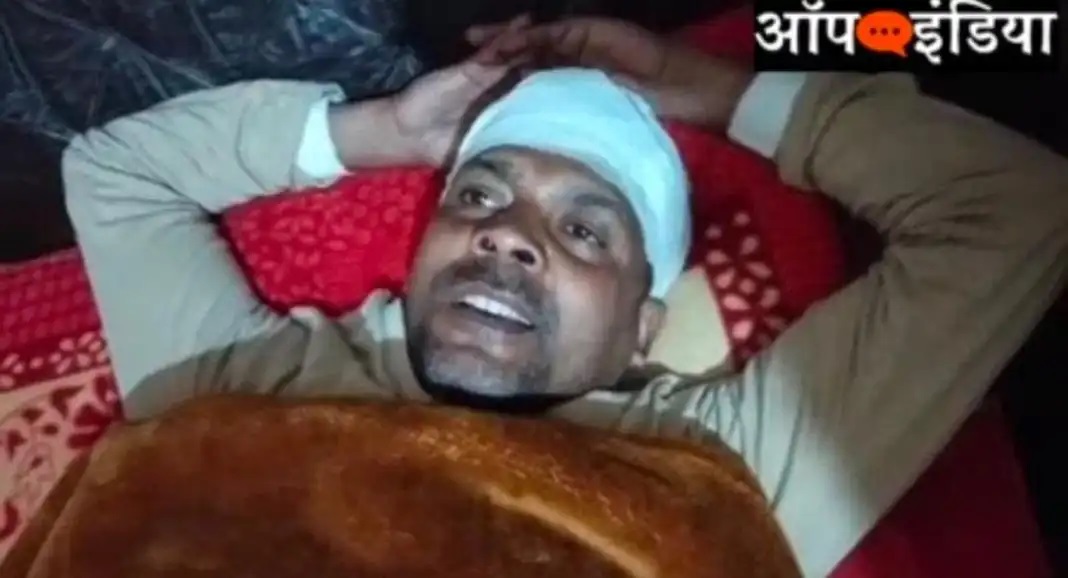
Amardeep Sonkar, who lives in ward number 27 of Gandhinagar received a head injury. He was lying on the bed and his two daughters were sitting near him. After getting the medicine, Amardeep spoke to us in a faltering voice. Amardeep identified a few from the crowd and gave us a few names, including Alibaba, Javed, Kaleem and Azeem.

Amardeep, along with his colleagues, stopped the violent mob that wanted to kill the police personnel. While facing the mob in defence of the police, Amardeep and his colleagues raised the slogan ‘Jai Shri Ram’. Amardeep is being treated at government expense. He claimed that if the Hindus of Gandhinagar had not stepped forward and stopped the violent mob, perhaps the entire city would have been burnt.

Injured Amardeep Sonkar. Image Source: OpIndia Hindi

Amardeep’s wife was engaged in the treatment of policemen with injured husband

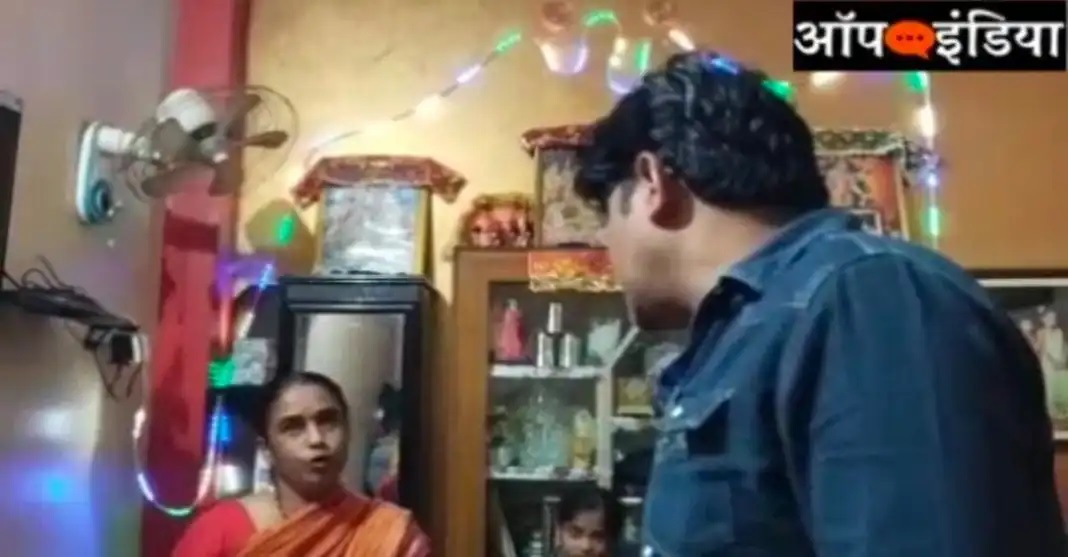
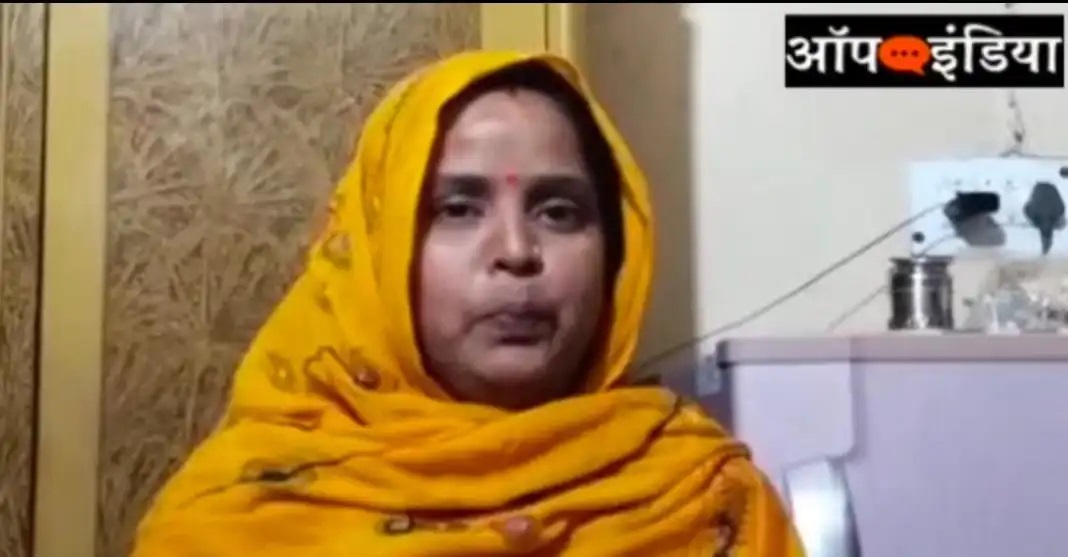
OpIndia also interviewed Amardeep’s wife, who recounted that on the day of the incident, their home was filled with injured male and female police officers. The scene was chaotic, with nearly everyone bearing injuries and bleeding from various wounds. Amardeep sustained injuries and was brought home by his colleagues. His wife provided medical treatment and care not only to him but also to the other injured policemen. She feels relieved that all the policemen are now safe.

OpIndia interacted with Amardeep Sonkar’s wife. Image Source: OpIndia Hindi

Hindu women bandaged injured police with their scarf

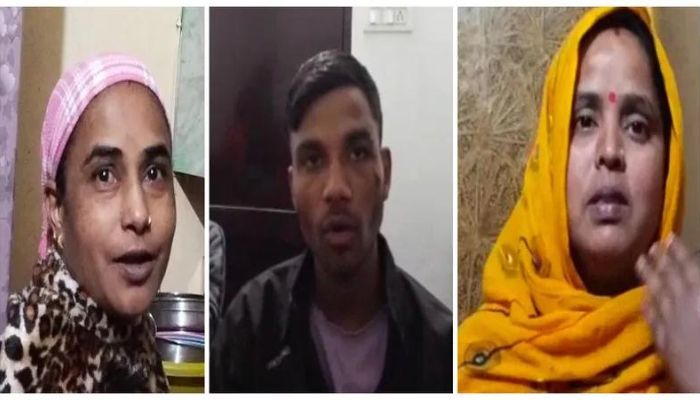
We met Pooja Sonkar in Gandhinagar. She said that on 8th February her entire locality was full of policemen seeking shelter. Everyone had opened their doors. Hearing the news of the attack, while all the men of the locality went together to stop the rioters, the women started treating the injured policemen.

Observing blood flowing from the wounds of some injured policemen, Pooja used her scarf to make a bandage for the policemen. Simultaneously, numerous other women also utilised their shawls and similar items to assist in treating the wounds of the injured officers.

Puja Sonkar. Image Source: OpIndia Hindi

Shubham’s brother and uncle were both injured

We met Shubham Gupta, a resident of Gandhinagar, getting his family treated in the hospital. Both his uncle and brother were injured while rescuing the injured policemen from the rioters, he said. Shubham’s brother had to get 16 stitches due to being hit by stones. He said the attackers were carrying sharp weapons used to cut buffalos. Attack by the rioters using such weapons caused serious injuries to policemen. He also saw that a person with a Maulana-like appearance had poured petrol under the police vehicle and set it on fire.

The police were also a little reluctant to take action as the violent mob kept women at the front. Shubham also said that even though some external elements were involved in the violence, most of them were seen as residents of Banbhulpura.

Witness Shubham Gupta. Image Source: OpIndia Hindi

Bhagat Singh’s fans and pictures of gods everywhere in homes

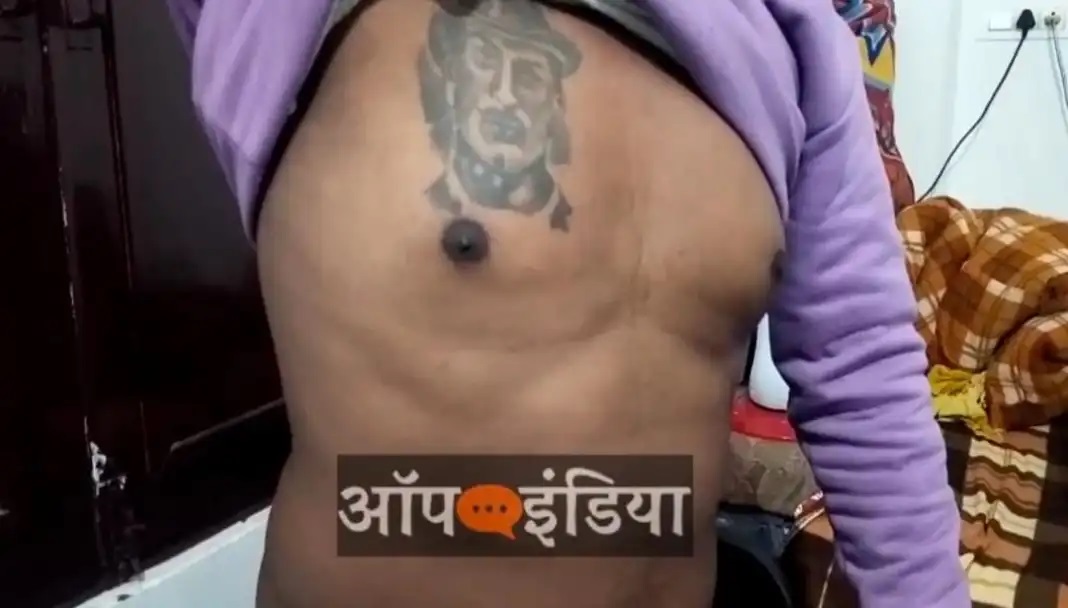
Among all the young Hindus who fought the rioters, some were hesitant to come out openly. One of them described himself as a fan of revolutionary Bhagat Singh. He also showed a tattoo with Sardar Bhagat Singh printed on it. While talking off the camera, this fan of Sardar Bhagat Singh told us that he can also sacrifice his life for the soldiers of the country. He further told that he would have been happy if he had lost his life while saving the lives of the policemen on 8th February.

Bhagat Singh’s fan. Image Source: OpIndia Hindi

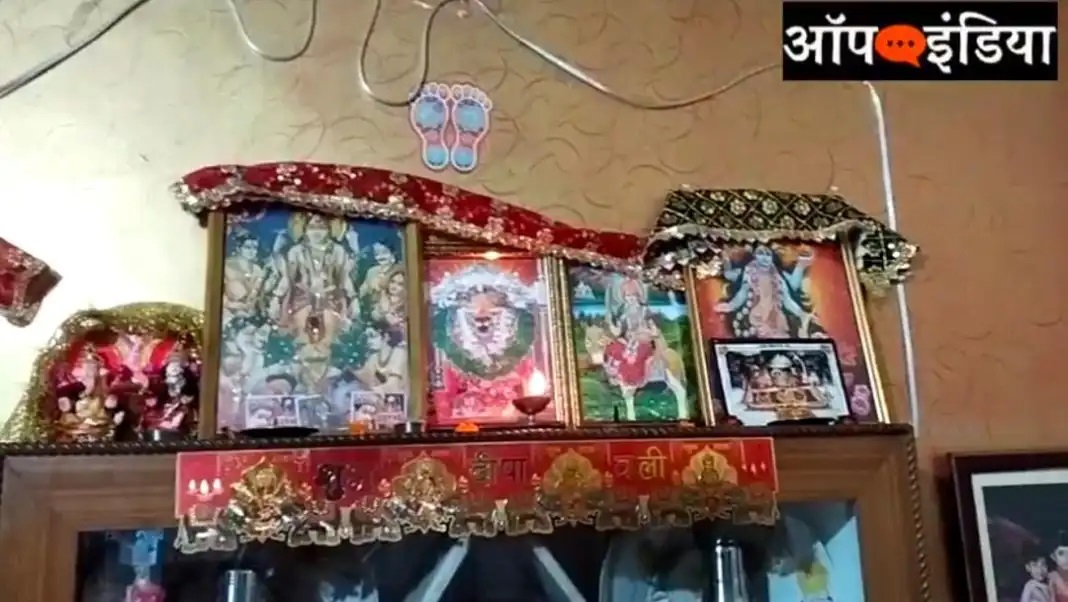
Most of the people who fought the violent mob in Gandhinagar are from the Dalit community. In their homes, pictures of Hindu gods and goddesses are placed in every room. Most of the people also tied Kalawa in their hands and wore Rudraksha in their necks. Most of them identified themselves as devotees of Bajrang Bali.

Houses of Hindus in Haldwani who resisted violence. Image Source: OpIndia Hindi

Most of the Hindus who were injured while fighting the attackers are being treated at different places. As the administration is unaware of them, many of the injured people are getting treatment at their own expense. However, there is a sense of satisfaction on everyone’s face that he not only saved the city from the rioters but also helped the policemen. The OpIndia team heard not only the general public but also the policemen themselves saying that the people of Gandhinagar showed amazing bravery.

Another video of Mufti Salman Azhari goes viral where he instigates Muslims, says ‘one day everyone will follow Islam’, and Hindus will ‘pay’ for Ram Mandir, Ayodhya

0

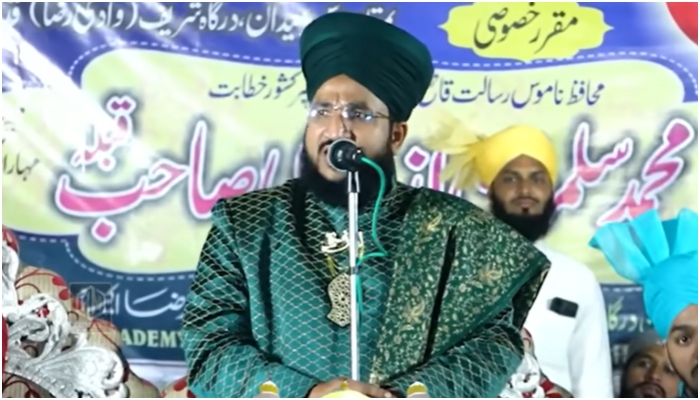
A video of Mufti Salman Azhari, who was recently arrested by Gujarat Police for his inflammatory remarks, has been making rounds on social media. In the video, Azhari can be seen instigating the youths against Hindus and the Ram Mandir in Ayodhya. “It was a Masjid and it will always remain a Masjid for us. We are facing the heat today, but one day they (Hindus) will face the heat of their decision,” Azhari indicated.

“A day will come when people will solely follow Islam and no other religion. We are struggling. Increase our power to such a level that no one will ever be able to trouble us. Aaj kutto ka waqt hai kal hamara ayega (Now these dogs are celebrating, tomorrow we will celebrate,” he could be heard saying in the video. The detained is said to have delivered a speech in Maharashtra’s Jalna district days before the inauguration of the Ram Mandir in Ayodhya.

Azhari could also be comparing the Hindu community to dogs and said that the inauguration of Ram Mandir meant nothing for the Muslim community. “It was a Masjid and it will always be a Masjid for us. A day will come when all will worship Allah,” he reiterated.

Mufti Salman Azhari has a history of delivering inflammatory speeches and instigating Muslim youths against Hinduism. Recently, he also gave a speech in Jamsar, Bikaner, Rajasthan, where he asked the Sunni Muslim youths to sacrifice their lives for Islam.

The speech by Azhari was delivered on 1st February at Mola Ali Conference in Rajasthan. The video of the said incident was also posted on social media after Azhari was arrested by the Gujarat Police.

Also, in June 2022, during Kanhaiyalal’s and Umesh Kolhe’s brutal murders, Mufti Salman Azhari had instigated and dog whistled Muslims across India to commit Jihad and execute suicide attacks.

Recently on 12th February, controversial Islamic cleric Mufti Salman Azhari was arrested and he is now facing legal action in Gujarat for making provocative remarks. Modasa police arrested him within 24 hours of the Bhachau Court of Kutch granting him bail. A case was filed against Azhari at Modasa Town Police Station, and action was subsequently taken by the police. The court granted five days remand after Mufti Azhari was produced in the court.

Right after Mufti Salman Azhari was granted bail in Kutch, Modasa police intervened and took him into custody from Kutch police. Azhari was taken into custody by Aravalli police and brought before a court asking for a 10-day remand. However, the court ordered a 5-day remand after hearing both sides’ arguments.

He was earlier arrested by Gujarat Police on 4th February for his inflammatory speech in Junagadh on 31st January. On January 31, accused Mufti Salman Azhari gave a venomous speech during a program attended by a large number of Muslims on the grounds of Narayan Vidya Mandir near the Junagadh court.

In the video, Azhari was heard saying, “Abhi to karbala ka akhiri maidan baqi hai…Kuch der ki khamoshi hai, fir shore ayega… Aaj kutton ka wakt hai, kal hamara daur ayega.” (The final battle of Karbala is yet to come… a moment of silence, then there will be noise again. Today is the time of the dogs, tomorrow will be our time).” After saying this, he chanted, “Labbek Ya Rasulullah” and the crowd repeated after him.

Haldwani violence: Who is Nainital DM Vandana Singh who exposed the mob’s plot to kill and didn’t submit to media’s pressure tactics? Details

The administration in Haldwani has cracked the whip on vandals who indulged in arson in the Banbhoolpura area on 8th February injuring more than 300 police personnel.

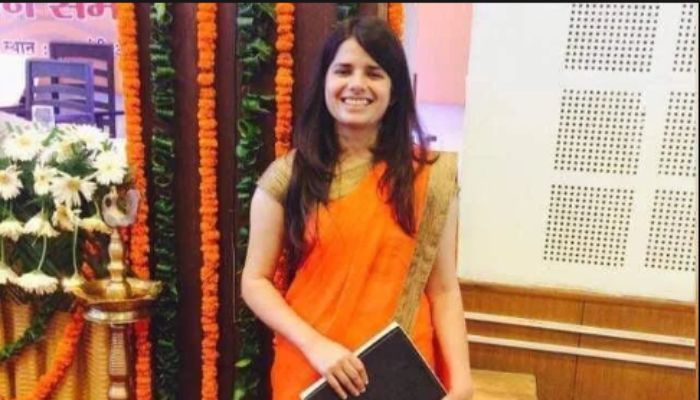
At the centre of the action is Nainital District Magistrate (DM) Vandana Singh. In a bold press briefing on the Haldwani violence, Singh minced no words when she called out the rioters and their conspiracy.

Nainital DM Vandana Singh has made headlines with her no-nonsense attitude towards the rioters, which was reflected during her press briefing on Haldwani violence.

Notably, Singh quelled all doubts and rumours about the violence that suggested that the violence was communal in nature. She did so with utter calmness and focus ensuring that no scope was left for misleading interpretations.

She unhesitatingly stated that the mob aimed to threaten the state machinery and the law and order situation in the city in a bid to show that they were above the law. “They were dealt with accordingly,” she said.

Here’s how Nainital DM Vandana Singh responded when she was heckled by the media

Immediately after the briefing, the DM took questions from the media. A media person asking the first question stressed and insisted that the violence was the failure of the state.

A second question was followed by another media person asking what necessitated the demolition on 8th February knowing very well that UCC had been passed in the state and that it was already a sensitive matter and it was known that such a reaction could have come.

To this, Singh, undeterred, replied saying, “You ask yourself this quesion once. There is an area in Haldwani city in Uttarakhand which is a state in India where the administration has to do an enforcement activity, not a war, they don’t have to fight a battle there. If to implement an enforcement activity, an administration has to do war-like preparation, then does that not tell whether that area respects and abides by the law or not?”

At this point, the media began to heckle the DM. This time, the media began insisting that the violence was a result of the failure of state machinery instead of asking a question.

“You are saying that you were monitoring since 3-4 days through drones, so this is your failure then,” a media person asked rather aggressively.

Singh pushed back against the pressure and said that it was not the state’s failure. Another media person immediately followed continuing the heckling as he asked, “Such a big incident happens and you are not accepting failure.”

This was followed by a din of questions with another media person pressuring Singh asking repeatedly whether or not this was an intelligence failure.

The DM again said, “This is not an intelligence failure at all. All preparations were in place. This was a demolition drive and not a preparation for riots. Complete preparation was done for the demolition drive and resources were kept ready accordingly which is why we could control the violence despite such severity of the situation. That we could control this within 2-2.5 hours despite such a violation of law and order and prevented it from reaching the main city area of Haldwani then it is rather a success of preparation,” she said putting to rest all pressure tactics.

She further added that had there been no preparation then the administration and the forces would have lost to the mob itself. “Instead we controlled the mob. We retaliated to the second attack too where petrol bombs were used and to the third attack too,” she said.

The DM said that had there been no preparation then the very first attack of stone pelting itself would have deterred the forces from containing the violence.

When asked why wasn’t it taken into account that forces from outside the city and state could also have come into play, Singh said it was indeed taken into account.

“Not a single person in the outer perimeter suffered even a scratch. Not a single outsider entered. This would have been deemed a failure only if a large mob from the outer area would have entered Haldwani. This did not happen because we controlled it because we were prepared,” she said.

Who is Vandana Singh?

Vandana Singh is currently the District Magistrate (DM) of Nainital. She is a 2012-batch IAS officer of the Uttarakhand cadre.

Singh, who hails from Haryana’s Nasrullagarh village, secured AIR 8th in UPSC in 2012 in her very first attempt at the age of 24. But Singh’s path to this victory was not an easy one.

Initially, Singh was denied education because she was a woman. Moreover, there was no school in her village. As per reports, while her brothers studied abroad, Singh had to ask for her right to education.

She went on to pursue Sanskrit honors from Kanya Gurukul Bhiwani and LLB from BR Ambedkar University, Agra. Some reports claim that she pursued distance education due to a lack of support for college.

Soon after she became an IAS officer, Singh was appointed as the chief development officer (CDO) of Pithorgarh, Uttarakhand. She was the first woman CDO of the district.

Vandana Singh also served as the brand ambassador of the “Beti Bachao, Beti Padhao” campaign between 2017 and 2020. In 2020, she was appointed as the DM of Rudraprayag and DM of Almora in 2021.

She has been serving as the DM of Nainital since 17th May, 2023.

Here are the details revealed by DM Vandana Singh revealed about the Haldwani violence

The DM categorically said that the violence was pre-planned and that the mob wanted to burn the police alive.

“No one provoked them (the mob), no one tried to harm them, no one tried to hurt them. Despite that, an unprovoked attack was attempted on the police personnel inside the police station. They were not let out. They (the mob) tried to burn them (the cops) alive,” the District Magistrate said.

The DM showed precise footage of the violence with specific timings and also videos from days before the demolition to make the case that how the violence was indeed planned and was unprovoked, meaning an attack which was not provoked by anyone, let alone state parties.

Singh said that the attack was perpetrated by the mob in three stages. The first attack was with stones targeted at the team of the municipal corporation and the police.

Seeing that the forces did not budge with stone pelting, the mob then launched a second attack with petrol bombs and hurled them inside the police station. At this point, vehicles were set ablaze and property was being damaged. But the police personnel still did not withdraw.

Seeing this a third mob, the DM said, gheraoed the police station. Magistrate, police personnel, officers, some state machinery and teams among others were present inside the police station.

“Those who were inside the police station were not allowed to come out. Stones were first pelted on them, then petrol bombs were hurled and vehicles stationed outside were set on fire. The smoke from the fire filled the police station and it got suffocating inside,” Singh said.

On 8th February, an Islamist mob assembled at the site of an illegal property which was due to be demolished the same day. The locals in the area had converted the illegal property into a madrassa. The civic body team and police personnel who had arrived for demolition were attacked shortly after the structure was demolished. Heaps of large stones were showered on the forces, petrol bombs were hurled and gun shots were also fired.

Meet Manoj Singh Duhan: Pro-Khalistan separatist leader Amritpal Singh’s aide who runs Hinduphobic propaganda to convert Hindu farmers to Sikhism

The second wave of farmer protests has started in the country. Thousands of farmers led by around 200 farmer unions are marching towards Delhi from states including Punjab, Haryana, Uttar Pradesh and others. While they want the central government to fulfil their demands, including bringing law on MSP and others, some people have joined the protests for vested interests. One such person is Manoj Singh Duhan, an aide of pro-Khalistani preacher Amritpal Singh.

In a recent video, Duhan urged members of the Jat community to announce that if the government refuses to agree to the demands of the farmers, they should leave Hinduism and join Sikhism. Duhan said the Bharatiya Janata Party-led Government of India runs on a “Hindutva” agenda, and if such an announcement is made, it will be catastrophic for the government’s existence. He further targeted Prime Minister Narendra Modi for going to Ayodhya for Ram Mandir Pran Pratishtha.

Duhan has a history of running anti-Hindu propaganda on social media. He uses ongoing protests, etc., to target Hindus and their rituals. Furthermore, he regularly runs campaigns asking people to join Sikhism. There are several posts on his social media accounts where he has asked to call a number if anyone wants to join Sikhism.

Source: Facebook

Though his X account has been withheld in India, screenshots of his posts are making rounds on social media. In one of the posts, he was seen with Amritpal Singh with the caption “Memories”. In another post, he mocked Bhagwan Hanuman.

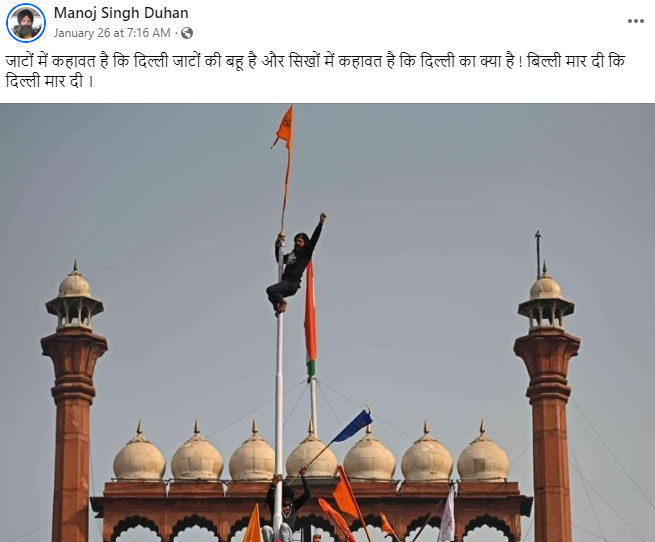
Duhan was one of the protesters who hoisted alien flags on Red Fort on 26th January 2021. He proudly shares a photograph of himself doing so on his social media account.

Source: Facebook

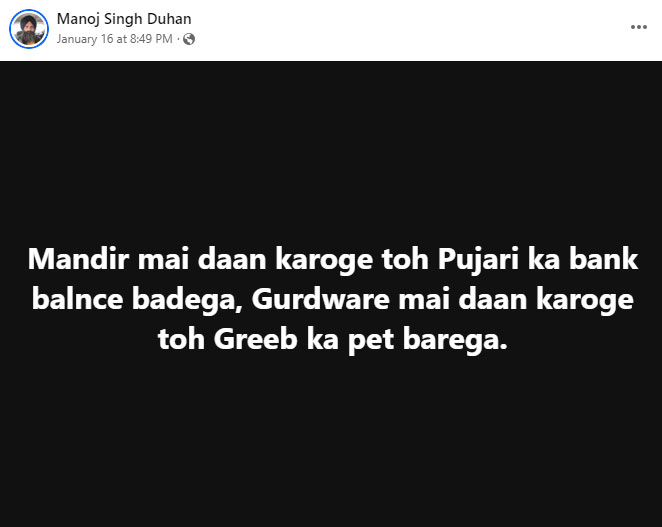
In another post, he targeted Hindu temples and wrote, “If you donate in a temple, it will increase the bank balance of the Pujari, but if you donate in a Gurdwara, it will fill the stomach of the poor.” Duhan conveniently ignored the fact that Hindu temples are one of the most significant religious contributors in terms of taxes. Thousands of temples, like Gurdwaras, run community kitchens to feed the devotees. The only difference is Hindus do not go out and “demand respect” just because temples are giving free food. There is a saying, “Daan aise karo ki bayein haath ko pata na chale ki daayein haath ne daan kiya hai,” which means that when you donate something or feed someone, there is no need to tell everyone about it.

Source: Facebook

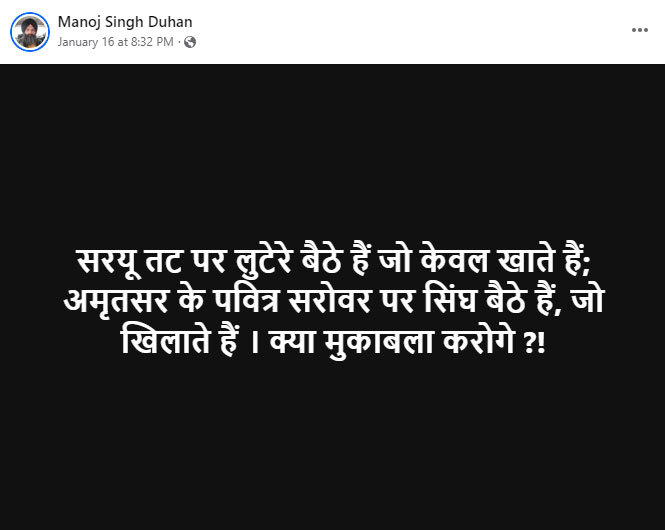
In another post, he again targeted Hindus and said, “Those who are sitting at Saryu bank are looters who only eat, and those who are sitting on the bank of a holy pond in Amritsar are Singh who only feeds. There is no competition.”

Source: Facebook

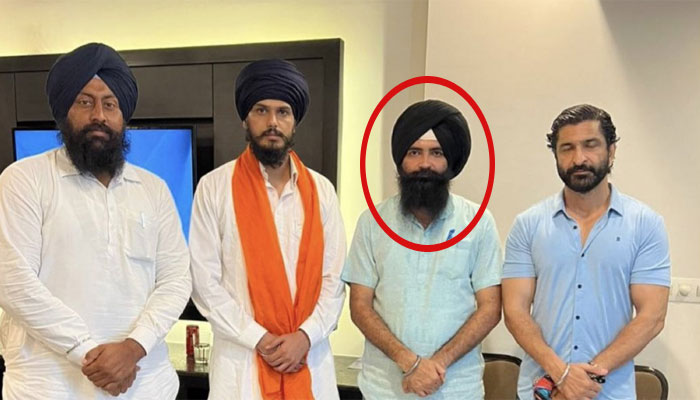
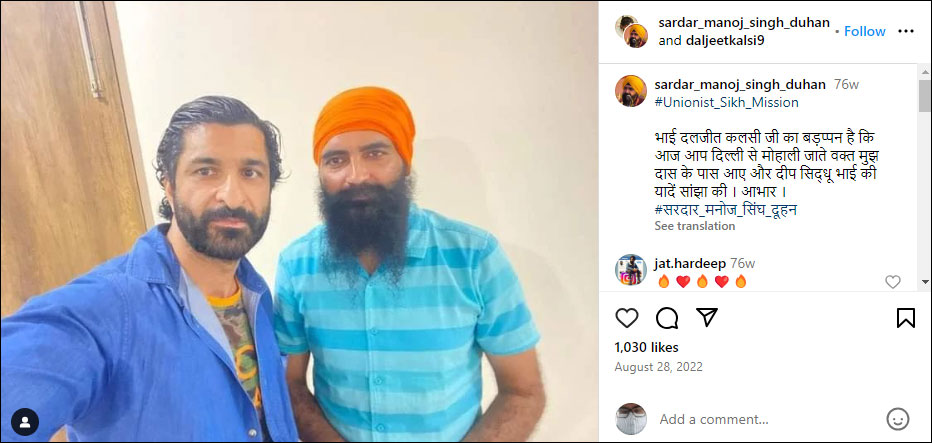
On Instagram, he shared photos with Daljeet Kalsi, an aide of Deep Sidhu, who had talked about the creation of Khalistan on Clubhouse. Kalsi played a key role in establishing Amritpal Singh as Waris Punjab De chief.

Source: Instagram

Manoj Singh Duhan used to be a Hindu Jat but converted to Sikhism.

ED issues sixth summons to Arvind Kejriwal in excise policy scam case after he skipped 5 summons, asks to appear on 19 February

0

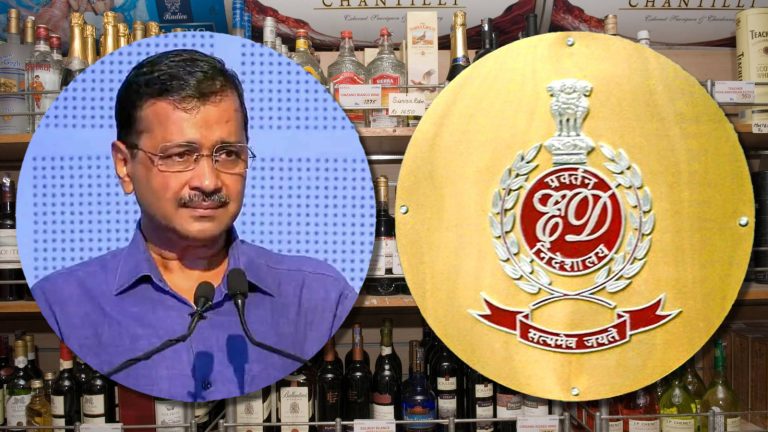
The Enforcement Directorate (ED) has issued a sixth summons to Delhi Chief Minister Arvind Kejriwal in a money laundering probe related to irregularities in the Delhi Excise Policy 2021-22 case asking him to join the investigation on February 19.

The fresh summons to the Delhi Chief Minister were issued after he skipped the fifth summons on February 2.

Kejriwal has so far skipped five previous summons issued by the ED on February 2, January 18, January 3, November 2 and December 22, calling them “illegal and politically motivated”.

The ED wants to record Kejriwal’s statement in the case on issues like the formulation of policy, meetings held before it was finalised, and allegations of bribery.

While skipping the fifth summons issued by the ED, Kejriwal termed it “illegal”, saying he was ready to cooperate but the agency’s intention was to arrest him and stop him from election campaigning.

“All five notices sent to me (by the ED) are illegal and invalid in the eyes of the law. Whenever such general, non-specific notices were sent by the ED in the past, they were quashed and declared invalid by courts. These notices are being sent as part of a political conspiracy,” Kejriwal said after skipping the fifth notice.

A day after Kejriwal skipped the fifth summons issued by the Enforcement Directorate, the agency on February 3 approached a Delhi Court against him for “non-compliance with the summons”.

The case against the Aam Aadmi Party supremo is based on a First Information Report (FIR) alleging multiple irregularities in the formation and implementation of the Delhi excise policy (2021-22) by the Central Bureau of Investigation. The policy was withdrawn after allegations of corruption.

In its sixth charge sheet filed in the case on December 2, 2023, naming AAP leader Sanjay Singh and his aide Sarvesh Mishra, the ED has claimed that the AAP used kickbacks worth Rs 45 crore generated via the policy as part of its assembly elections campaign in Goa in 2022.

On Kejriwal’s role, one of the six charge sheets filed in January 2023 states that Kejriwal told businessman Sameer Mahendru that former AAP communications in-charge Vijay Nair “is his boy” and that he should trust him.

The excise policy was aimed to revitalise the city’s flagging liquor business and replace a sales-volume-based regime with a license fee for traders. It promised swankier stores and a better buying experience. The policy introduced discounts and offers on the purchase of liquor for the first time in Delhi.

Lieutenant Governor Vinai Kumar Saxena’s move to order a probe into alleged irregularities in the regime prompted the scrapping of the policy. The AAP has accused Saxena’s predecessor, Anil Baijal, of sabotaging the move with a few last-minute changes that resulted in lower-than-expected revenues.

Two senior AAP leaders — Manish Sisodia and Sanjay Singh — are already under judicial custody in the case. Sisodia, who was the then Delhi Deputy Chief Minister, was arrested by the CBI on February 26 following several rounds of questioning and on October 5, the ED arrested Singh, who is a Rajya Sabha member.


(This news report is published from a syndicated feed. Except for the headline, the content has not been written or edited by OpIndia staff)

Sandeshkhali protests: Local woman says police asking for proof of rape, NCW chief says police filed case against relatives of victims instead of TMC’s Shiekh Shahjahan

0

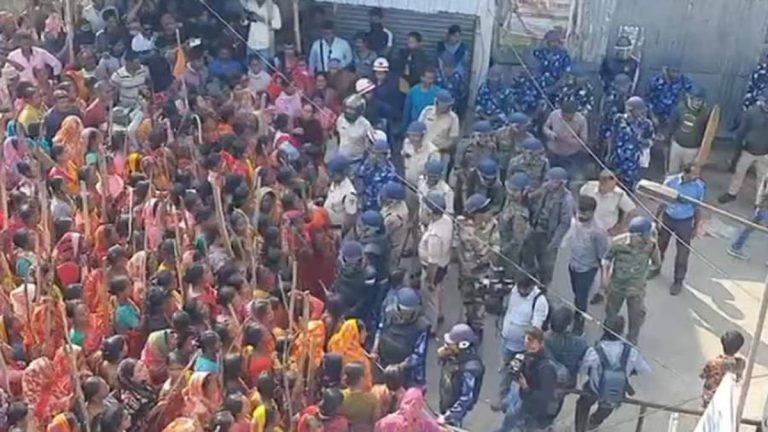
For last one week, women in several areas in Sandeshkhali of North 24 Parganas district in West Bengal have been protesting, demanding the arrest of TMC leader Sheikh Shahjahan and others, narrating how the women in the area have been sexually exploited for a long time. The protests led to violence in the area, after which heavy police force have been deployed in the area.

Several women from Sandeshkhali have come forward to narrate how the women in the area are being raped by Sheikh Shahjahan, the mastermind behind the attack on ED team, and other TMC workers and their aides. As per them, TMC workers regularly visit the area and pick out ‘beautiful women’ to exploit them. Some women said that they were taken to the party office in the night, and were released only after the men in the gang were ‘fully satisfied’.

Moreover, the locals are also forced to free labour and their lands are grabbed by the TMC men, as per the allegations. The TMC leaders also looted money meant for the villagers under various central schemes including MGNREGS. The tolerance of the people towards these exploitations finally reached the limit and a massive protest erupted on 8 February. Since then, protests have been taking place regularly, which have led to violence in some places.

While the West Bengal police are trying hard to stop the protests, they are accused of shielding the accused TMC leaders, instead of taking action. Reportedly, during the protests, police accompanied the Trinamool Congress workers and harassed the protesting women. Now, more attempts of the West Bengal police to burry the entire episode have emerged.

It has emerged that instead of taking action against the accused, police have filed cases against relatives of victims for making complaints. This was revealed by Rekha Sharma, the chairperson of National Commission for Women. The tweeted, “According to my team who has visited Sandeshkali, police has filed complaints against the relatives of women victims instead of filing their complaints. Villagers are been terrified equally by goons and by the police.”

The NCW chief further added, ‘This is the way Mamta didi treats women in West Bengal.’ An NCW team headed by Delina Khongdup is in West Bengal to do the inquiry on Sandeshkhali violence.

On other hand, a woman from the area have revealed how police are trying to avoid registering rape cases against the TMC men by asking for medical evidence. Talking to ANI, one woman from the area said that the police are asking for medical reports as evidence to file rape cases against TMC men. The woman said that while she is not a victim, she knowns several women in the village who were raped. Talking about how the victim women can’t provide medical report now, the woman said that the rapes took place over the last several months, and all the victims are married, therefore it is not possible to medically prove the rapes.

“Did the criminals handed over medical records after committing the rape?” she asked. The woman said that the police officer who asked medical records is Papiya Sultana. She demanded that central forces should be deployed in the area for their protection, as they are not safe under West Bengal police.

In the meanwhile, while BJP has been protesting demanding action against the accuse TMC leaders, they are facing police brutalities. Several BJP leaders have been injured in police action, including West Bengal BJP president Sukanta Majumdar.

As per BJP IT cell chief Amit Malviya, Majumdar’s team was assaulted, and he suffered injuries in lathi charge by police and fell unconscious. He was first admitted at a local hospital in Basirhat, and then shifted to Apollo Hospital in Kolkata.

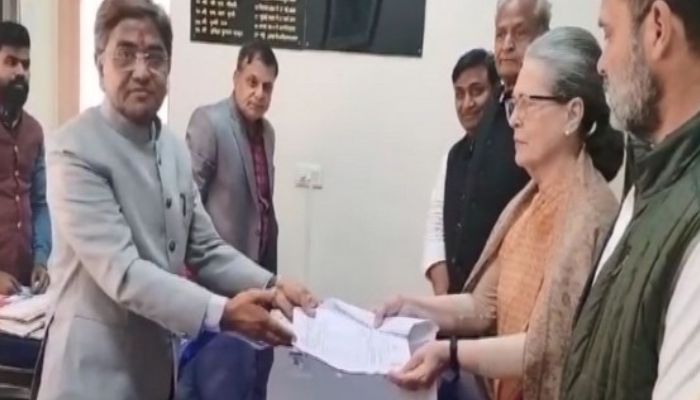
Sonia Gandhi files RS nomination from Rajasthan after Rahul fled from Amethi in 2019: Has Congress already accepted another defeat?

With no hopes of retaining the Rae Bareli Lok Sabha seat in the upcoming 2024 general elections, Congress supremo Sonia Gandhi fled to Rajasthan to file a nomination for the Rajya Sabha seat from the state her party recently lost. This step came in sharp similarity with her son Rahul Gandhi’s escape from the Amethi battlefield in 2019. Rahul Gandhi – sensing an inevitable defeat in Amethi – had contested the last Lok Sabha elections with Muslim-majority Wayanad in Kerala as his second constituency.

This time, the Lok Sabha elections have a backdrop of the NDA government’s impeccable performance and a vibe of pro-Modi enthusiasm in the country after the Ram Mandir consecration. As a result, Sonia Gandhi is fetching grounds to retain her membership in the parliament through the Rajya Sabha instead of facing an election.

Rae Bareli – the fortress of Gandhi family – is not a safe seat for Congress anymore.

Before discussing the speculations and probable reasons for the Congress queen leaving her family fortress, let’s delve into her Lok Sabha performance in the past elections. In the 2014 general elections, she won from Rae Bareli against Ajay Agarwal of the Bharatiya Janata Party. Sonia Gandhi bagged 526434 votes which was 52.43% of the total votes cast. Ajay Agarwal got 173721 votes which was 42.45% votes.

In 2019, Sonia Gandhi received 534918 votes (57.20%) when she defeated Dinesh Pratap Singh of the Bharatiya Janata Party who got 367740 votes (39.34%). What is worrying Sonia Gandhi is not the vote percentage. It is a sheer rise in the actual number of votes cast in favour of the Bharatiya Janata Party. The winning margin of Sonia Gandhi reduced from 352713 in 2014 to 167178 in 2019.

Rahul Gandhi had to run away to Kerala from Uttar Pradesh

A similar situation was seen in Amethi with Rahul Gandhi. In 2009, Rahul Gandhi secured 464195 votes which was 71.8% of the total votes cast. He defeated Ashish Shukla of the Bahujan Samaj Party who got 93997 votes which is 14.5%. BJP candidate Pradeep Kumar Singh received 37570 votes which was 5.8% of the total votes. Rahul Gandhi’s winning margin was 370198.

In the 2014 elections, stats showed a sharp decline in the vote share of Rahul Gandhi. In 2014, BJP leader Smriti Irani fought against him from Amethi. She received 300748 votes (34.38%) while Rahul Gandhi received 408651 votes (46.71%). His winning margin came down to 107903 votes. This was an alarming signal for the Congress party to rethink the ways to send the scion to Lok Sabha again in 2019.

Why Wayanad?

In 2019, the grand old party resorted to its appeasement policies and chose the Muslim-dominated Wayanad constituency in Kerala as the second seat to fight for Rahul Gandhi. This was done to ensure his membership in Lok Sabha in case he lost Amethi – one of the traditional seat of the Gandhi family.

In 2019, Smriti Irani defeated Rahul Gandhi from Amethi. She received 467598 (49.78%) votes and Rahul Gandhi got 412668 (44.55%). These numbers are self-explanatory to reveal how Rahul Gandhi was afraid of losing this election and chose to go to Wayanad instead of defending his family’s traditional seat.

Is Congress planning to (re)launch Priyanka Vadra from Rae Bareli?

It is being speculated that Sonia Gandhi is vacating the Rae Bareli seat because her daughter Priyanka Vadra can be the potential Congress candidate from the ‘family bastion’. A section of Congress of workers still believes that the Gandhi princess, having a nose similar to that of her grandmother Indira Gandhi and a husband entangled in multiple frauds and land grabbing cases will win from Rae Bareli to further the family tradition from Rae Bareli which has historically been ‘in the family’. But this is far from reality.

Priyanka Vadra has been the General Secretary of the party for a long time. She was given the charge of campaigning in the Rae Bareli and Amethi constituencies in the 2014 general elections. Interestingly, the Congress party could win on the very two seats out of 80 seats in Uttar Pradesh at that time. BJP-led NDA won 73 seats and the Samajwadi Party won 5 seats – all shared among the Yadav family. Opposition in Uttar Pradesh was reduced to 7 seats only revealing the true face of the dynastic parties.

A brief report card of Priyanka Vadra

Priyanka Vadra has, over the years, taken various responsibilities in the party organisation in various elections. Congress fought the 2022 assembly elections of Uttar Pradesh under what they call the ‘charismatic’ leadership of Priyanka Vadra. She gave the slogan – ‘Ladki Hoon, Lad Sakti Hoon’. This slogan means ‘I am a girl, I can fight’. In the results of those elections, it was revealed that she could not give any significant fight to the good governance model proposed and executed by Yogi Adityanath.

In 2019, Priyanka Vadra was heading the Congress campaign in Uttar Pradesh for the 2019 Lok Sabha elections as a general secretary for the Congress party. The 17th Lok Sabha elections saw a decisive victory for the Narendra Modi-led NDA alliance, winning 354 seats, with BJP alone victorious on 303 seats. The extent of Modi’s dominance was evident while analysing the figures pouring in from the Election Commission for the country’s most populous state, Uttar Pradesh. In the state, Congress fielded 67 candidates and lost security deposit in 63 of them.

Priyanka Vadra helped Congress lose deposits in Uttar Pradesh

According to the Election Commission set rules and norms, if a candidate fails to get 1/6th of votes (16.67%) of votes polled in a constituency, such a candidate stands to lose the security deposit. Based on this rule, only four Congress candidates in UP got their security deposits back, the deposit for the remaining 63 was lost. The 4 seats where Congress managed to save deposits were Amethi, Rae Bareli, Saharanpur and Kanpur. Sonia Gandhi won from Rae Bareli, the only seat that Congress won in Uttar Pradesh, where the SP-BSP alliance did not field a candidate. Smriti Irani pulled off a splendid victory against Congress president Rahul Gandhi in Amethi.

So the report card of Priyanka Vadra says that let alone retaining Rae Bareli by winning it in the 2024 general elections, she is unfit to contest the seat in the first place. This is because the historic loss of Congress in Amethi and the significant rise in the number of votes in favour of the BJP in Rae Bareli constituency has manifested only under the ‘charismatic’ leadership of Priyanka Vadra.

Is Sonia Gandhi afraid of losing Rae Bareli just like her son lost Amethi?

Seemingly the reason behind Sonia Gandhi’s escape to Rajasthan is that Congress is afraid of another historic loss in the upcoming elections – this time in Rae Bareli. Notably, Smriti Irani’s victory in Amethi did not come just like that. She spent much time working in Amethi after losing the seat in 2014. After winning in 2019, she promised that the BJP would sweep the adjacent Rae Bareli as well.

With the penetration of various schemes of the central and the state government to the remote interiors of these two constituencies, the electoral turnout and the mindset of the voters have experienced a paradigm shift in the last few years. This shift is potent enough to shake the Congress supremo to the core. It is the fear of an insulting loss ahead in May 2024 that she opted to get a Rajya Sabha seat and ran away to Rajasthan – a state Congress recently lost to the BJP after multiple cases of rape atrocities on women.

The BJP has already started calling it an act of surrender.

Uttar Pradesh is already leading the prevalent Ram vibe in the country after the consecration of the Ram Mandir in Ayodhya which is not far away from the Gandhi family strongholds. Diminishing winning leads in Rae Bareli implies that even if Priyanka Vadra contests this seat, she is likely to lose it. Even if she wins, the margin can be as meagre as it can be. In case of her loss, the party may resort to citing electoral beginnings for her in ‘tough’ times. But if Sonia Gandhi loses the Lok Sabha election, it will be a yet greater embarrassment.

With top leader Sonia Gandhi opting not to face the supreme test of mass appeal the Congress party may further see a lower tally in Lok Sabha than what it has now. It sends a message that the party president lacks the courage to face the Hindutva wave in the country. Sonia Gandhi’s Rajya Sabha entry from Rajasthan therefore brings nothing to the table for Congress except saving a Luteyns’ bungalow at 10, Janpath Road in New Delhi.

How Supreme Court contradicted its own judgement by not canceling bail granted to Devangana Kalita, Natasha Narwal accused in Delhi anti-Hindu riots

In February 2020, the National Capital of India was rocked by widespread violence directed specifically against Hindus. Amidst chants of Allahu Akbar, Hindus were mercilessly slaughtered by a Muslim mob – the first murder being that of constable Ratan Lal. Thereafter, there were several Hindus who were slaughtered merely for being Hindus during the Delhi anti-Hindu Riots. Ankit Sharma was murdered, with his body dumped in the drain, by AAP councilor Tahir Hussain and his men. Tahir Hussain later mentioned in his disclosure statement that the aim was to “teach Kafirs a lesson”.

In September 2020, the Delhi police filed a chargesheet – 59/2020, which detailed the conspiracy that was hatched to burn Delhi and target Hindus. The charge sheet was an elaborate document spanning thousands of pages, with pictures, CDR records, witness statements, disclosure statements, and undeniable evidence. Regardless, the narrative that the Islamists and Leftists propagated was that the Delhi Riots were one directed against the Muslims – an “anti-Muslim pogrom”.

While the judiciary heard the cases about the Delhi anti-Hindu riots, some troubling judgements started coming to the fore. For example, the first conviction in the Delhi Riots was of a Hindu called Dinesh Yadav. Dinesh Yadav was convicted and handed a sentence of 5 years. In his case, there was no evidence of violence against Yadav. Applying Section 149, the court essentially said that since Yadav was in the vicinity of a mob, and because he is Hindu and the mob was Hindu too, he must have had the same intention and participated in the violence. Essentially, he was convicted simply because he was Hindu. In the raids during the investigation, there was no weapon, and no evidence found against Yadav. As unjust as Yadav’s conviction was, the lack of justice was evidenced by the fact that Muslim accused were given bail and even acquitted using a different interpretation of Section 149.

Just as Dinesh Yadav was convicted, almost simultaneously, those who were accused of murdering Dilbar Negi were awarded bail. The Delhi High Court granted bail to six persons named Mohd Tahir, Shahrukh, Mohd Faizal, Mohd Shoaib, Rashid, and Parvez in the Gokulpuri murder case related to the Delhi Riots of February 2020. The bail was granted by Justice Subramonium Prasad. The six were accused of vandalism and setting Anil Sweet Corner on fire “resulting in the death of 22-year-old Dilbar Negi”. In giving bail to these Muslim rioters, the court, in its wisdom, took exception to Section 149 being applied to every individual who was a part of the illegal assembly. 

The court said, “…clear finding needs to be given by the Court regarding the nature of unlawful common object. Furthermore, if any such finding is absent or if there is no overt act on behalf of the accused, the mere fact that the accused was present or armed would not be sufficient to prove a common object”. The court had further said, “We feel it highly unsafe to apply Section 149 IPC and make every one of them constructively liable. But so far as the above nine accused are concerned the prosecution version is consistent namely that they were armed with lethal weapons like swords and axes and attacked the deceased and others. This strong circumstance against them establishes their presence as well as their membership of the unlawful assembly. The learned counsel appearing for the State vehemently contended that the fact that the Muslims as a body came to the scene of occurrence would show that they were members of an unlawful assembly with the common object of committing various offenses including that of murder. Therefore all of them should be made constructively liable. But when there is a general allegation against a large number of persons the Court naturally hesitates to convict all of them on such vague evidence. Therefore we have to find some reasonable circumstance which lends assurance…” 

Essentially, the same Section 149 was interpreted in two different ways – one to convict Dinesh Yadav and one to give bail to the Muslim accused.

This is not the only instance of judicial double standards. There have been several instances when the court seems to have contradicted its judgements and the precedents set in the past. One such case is the bail granted to Devangana Kalita by the High Court and then upheld by the Supreme Court.

Delhi High Court granting bail to Devangana Kalita and Natasha Narwal – an example of judicial overreach

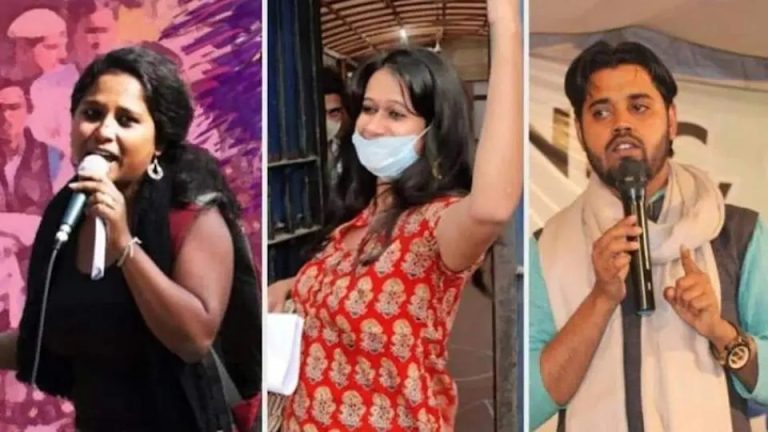
In June 2021, the Delhi High Court granted bail to Devangana Kalita of Pinjda Tod, Natasha Narwal of Pinjda Tod, and Asif Iqbal Tanha of SIO (Student Islamic Organisation). The three are accused in the larger conspiracy case of Delhi anti-Hindu riots. The Delhi Police had arrested the three far-left ‘activists’ in the case, and a case was registered under the Unlawful Activities (Prevention) Act for their role in the anti-Hindu riots that were unleashed on the streets of Delhi in February 2020.

While granting bail in 2021, the Delhi High Court exceeded its brief and made observations regarding the application of UAPA against the accused and the definition of terrorism itself.

“While the presence of the appellant for purposes of trial must be secured, there is no material or basis to suspect; nor is there any reasonable apprehension that the appellant will tamper with evidence or intimidate witnesses. As very pithily put by the Hon’ble Supreme Court in P. Chidambaram (supra) the gravity of the offense alleged would beget the length of sentence, as may be awarded upon conclusion of trial; but an assertion as to the gravity of the offense cannot thwart the grant of bail,” the court said while granting bail to Tanha. The bail orders for Narwal and Kalita too made similar observations.

The bail orders also questioned the veracity of the charges, an exercise which the court is not supposed to conduct at the stage of hearing bail.

“We are not persuaded to think that prima-facie the accusations made against Natasha Narwal make out any offense under sections 15, 17, and 18 of the UAPA; and therefore the stringent conditionalities contained in section 43D(5) of the UAPA would not apply,” the bail order in Narwal’s case says. “A closer reading of the allegations made against Natasha Narwal shows that no specific, particularised or definite act is attributed to her, apart from the admitted fact that she engaged herself in organizing anti-CAA and anti-NRC protests.”

While granting bail to the accused, the High Court had also observed, “We are constrained to express, that it seems, that in its anxiety to suppress dissent, in the mind of the State, the line between the constitutionally guaranteed right to protest and terrorist activity seems to be getting somewhat blurred. If this mindset gains traction, it would be a sad day for democracy“.

It is at this stage itself that it becomes important to point out the wide difference between the bail order passed in 2021 and the observations of the sessions court only a few months before this order.

In January 2021, Additional Sessions Judge Amitabh Rawat said the allegations against Devangana Kalita prima facie seem to be true. The rejection of Devangana’s bail had come just a day after the Delhi court had rejected the bail plea of another accomplice Natasha Narwal. While rejecting the bail, the court had noted that intentionally blocking roads leading to disruption of essential services, attack on police personnel, and eventually culminating in riots falls within the scope of the terrorist act under the Unlawful Activities Prevention Act (UAPA). 

Firstly, with the same set of facts, one is pressed to understand how two courts in their infinite wisdom came up with two completely different interpretations of the law.

Special Leave Petition challenging HC bail order filed by the Delhi Police

After the High Court’s order granting bail and the observations the bench made in so far as the application of UAPA is concerned, the Delhi Police filed a Special Leave Petition in 24 hours. A Special Leave Petition is one filed against any judgement or decree or order of any High Court /tribunal in the territory of India. The procedure for filing a Special Leave Petition is set out in order XVI of the Supreme Court Rules 1966. According to the rules set forth, an SLP has to be filed within 90 days of the date of the order/decree passed by the High Court.

In this case, the Delhi Police filed the SLP against the High Court order granting bail to the Pinjra Tod accused and the observations it made thereof, within 24 hours of the order.

In the SLP, Delhi police say that the court has conducted a “mini-trial” in the case while granting bail to the accused and has “recorded perverse finding which is contrary to the record and the arguments made during the hearing of the case to arrive at a finding that case under Sections 15,17 and 18 of UAPA was prima facie not made out against the respondent”. 

The SLP further says that the High Court has assumed that this case is one of a simple protest, however, that is not in tune with the evidence on record. Saying that the court has applied “irrelevant considerations” while granting bail to the accused, the SLP says, “Hon’ble High Court completely lost sight of the evidence and statements which were produced before it and had arrived at the impugned judgement discarding the evidence which made out a sinister plot of mass-scale riots being hatched by the respondent along with other co-conspirators”.

In its SLP, the Delhi police said that this observation was beyond the purview of the bail petition and was ‘perverse and misdirected’ in nature. The Delhi Police says, “There was a cause and evidence of terrorist activity against the respondent; there was corroborative evidence, however, while applying the legislative mandate the Hon’ble High Court misdirected itself and gave ex-facie perverse findings to arrive a conclusion that no case of UAPA was made out”. 

In its scathing submission, the Delhi police say that the judicial scrutiny while granting bail to the accused was not to evaluate the evidence on the record but to “somehow establish” that the government was trying to suppress “dissent”. Delhi police say, “This in the respectful submission of the petitioner is without any foundation and appears to be based more on the social media narrative than the evidence gathered and elaborated in the chargesheet“. 

The Delhi police also countered vehemently the observation made by the High Court regarding the application of UAPA. The court had said “In our opinion, the intent and purport of the Parliament in enacting the UAPA, and more specifically in amending it in 2004 and 2008 to bring terrorist activity within its scope, was, and could only have had been, to deal with matters of profound impact on the ‘Defence of India’, nothing more and nothing less…It was neither the intent nor purport of enacting UAPA that other offenses of the usual and ordinary kind, however grave, egregious, or heinous in their nature and extent, should also be covered by UAPA since such conventional matters would have fallen within Entry 1 of List-II (State List) and/or Entry 1 of List-III (Concurrent List) of the Seventh Schedule to our Constitution. To lean in favour of the constitutionality of the provisions of sections 15, 17, and 18 of the UAPA, as we must, it must be taken that the Parliament acted within the realm of its legislative competence and that UAPA came to be enacted and amended in 2004 and 2008 to address issues relating to the ‘Defence of India‘”. 

Delhi police said that the above consideration is ‘irrelevant’ to grant bail to the accused in Delhi Riots and the above reasoning would also hamper investigations being carried out by other organizations including NIA.

The Supreme Court hearing and final dismissal of SLP by Delhi Police in Delhi anti-Hindu Riots case

On the 18th of June 2021, the Supreme Court issued a notice in the SLP and issued interim orders that the High Court observations while granting bail to the accused cannot be considered a precedence and should not be considered in the course of the trial. The court essentially said that the observations cannot be cited by other accused to demand bail as well. Appearing for the Delhi police, Solicitor General(SG) Tushar Mehta submitted that the entire UAPA had been turned on its head along with the Constitution by the high court, which, according to Mehta, had virtually acquitted the accused persons. Supreme Court observed the court found it troubling that the high court had, in a bail application, commented on the law that too when the validity of the UAPA was not under challenge.

Finally, on the 2nd of May, the Supreme Court dismissed the Special Leave Petition filed by the Delhi Police and upheld the bail granted to the three accused, reiterating that the observations by the High Court would not be considered precedence.

The Supreme Court in its order said, “The impugned order is an extremely elaborate order of bail interpreting various provisions of the UAPA Act. In our view, the only issue that is required to be examined in such matters is whether, in the factual scenario, an accused is entitled to bail or not. It is this argument that persuaded us while issuing notice on 18.06.2021 to observe that the impugned judgement cannot be treated as a precedent and may not be relied upon by any of the parties in any other proceedings. The idea was to protect the State against the use of the judgement on the enunciation of law qua interpretation of the provisions of the UAPA Act in a bail matter. The respondents have been on bail now for almost two years. We see no purpose in keeping these matters alive“.

The operative part of the Supreme Court order in the Delhi Riots case that we need to focus on for this article is the following:

“The respondents have been on bail now for almost two years. We see no purpose in keeping these matters alive“.

The Kumer Singh judgement and what the Supreme Court had said about cancellation of bail after 2 years

In the Kumer Singh case in 2021, the Supreme Court addressed this very question of upholding bail merely because the accused had been out on bail for 2 years.

The Supreme Court had said, “Now so far as the submission on behalf of the accused that the accused are released on bail in the year 2019 and by now more than approximately 2 years have passed after they were released on bail and there are no allegations of misuse of liberty and/or having committed any breach of the conditions of the grant of bail and therefore this court may not set aside the order passed by the High Court is concerned, the aforesaid cannot be accepted”.

The following are the reasons cited by the court:

  1. No delay in filing of appeal against the bail granted by the High Court. The petition against the High Court bail order was filed within 2 months. The time limit for filing of SLP is 90 days.
  2. The SC in this case cites two previous SC orders – The case of Mahipal (Supra) and the case of Ramesh Bhavan (Supra). Citing these cases, SC says that the application for cancellation of bail stands on a different footing than challenging the order passed by the High Court/Appellate Court releasing the accused on bail.
  3. Citing precedence, the court says that in the Mahipal case, which cited the Neeru Yadav case, the court held that there are two kinds of bail cancellation cases. One is of the nature when the accused has contravened the conditions of the bail. But the other kind is where the order granting bail itself was unjustified, illegal, and perverse, the higher court can cancel the bail even if the accused has not violated the conditions of the bail.
  4. Citing the Mahipal Singh case, the court said, “Where a court considering an application for bail fails to consider relevant factors, an appellate court may justifiably set aside the order granting bail. An appellate court is thus required to consider whether the order granting bail suffers from a non-application of mind or is not borne out from a prima facie view of the evidence on record.”
  5. The Supreme Court in the Kumer Singh case further said that “The aforesaid principle of law has also been reiterated by this court in the recent decision in Parvez Noordin Lokhandwalla vs. the State of Maharashtra10”.
  6. In this case, the order of the SC said, “Impugned orders passed by the High Court granting bail to the respondents – accused do not pass the test laid down by this Court on grant of bail and exercising of powers of the appellate court laid down in various decisions through Mahipal (Supra), Neeru Yadav (Supra); Gulabrao Baburao Deokar (Supra) referred to hereinabove. Therefore, the impugned orders passed by the High Court deserve to be quashed and set aside”.
  7. In the Kumer Singh case, the Supreme Court thus ordered all the accused to surrender forthwith.

How the Supreme Court contradicted itself while upholding the bail of Devangana Kalita, Natasha Narwal, and Asif Iqbal Tanha, accused in Delhi anti-Hindu Riots

In the Kumer Singh case, the first observation of the Supreme Court was that there was no delay in filing the Special Leave Petition against the High Court order granting bail and that it was filed within 2 months (when the time limit is 90 days). In the case of Devangana, Natasha, and Asif, the Delhi Police filed the SLP within a day.

The second observation, and the most important perhaps, was that even if the accused has not violated conditions of bail, simply because it has been two years since the grant of a bail which was perverse and bad-in-law, to begin with, was granted, does not preclude the higher court (Supreme Court) from canceling the bail granted. In the Kumer Singh case, the Supreme Court ordered the accused to surrender forthwith even though they had been out on bail for 2 years and had not violated the conditions of the bail granted. The Supreme Court did so because it deemed the grant of bail perverse and bad in law.

In the case of Devangana Kalita, Natasha Narwal, and Asif Iqbal Tanha, the Supreme Court specifically said, “The respondents have been on bail now for almost two years. We see no purpose in keeping these matters alive“. This, was after the Supreme Court had explicitly stated that the High Court exceeded its brief in commenting on the merits of the case and the validity of the provisions of law. If the High Court had indeed exceeded its brief, then it would be par for the course for the Supreme Court to either cancel the bail and grant the SLP filed by the Delhi Police or throw the case back to the High Court asking them to hear the cause on the merits of the bail granted. However, the Supreme Court seems to have an exception in dismissing the SLP filed by the Delhi Police merely because the accused have been out on bail for the past 2 years and have supposedly not violated the terms of the bail granted.

It is pertinent to mention here that proving that the High Court order granting bail to the three accused was bad in law, is the fact that the High Court upheld the applicability of UAPA in the case of Umar Khalid. This is further proven by the fact that Umar Khalid’s counsel Kapil Sibal on 14th February withdrew the bail application from the Supreme Court, after seeking numerous adjournments.

The Court is allowed to be discretionary, however, when the judicial process becomes whimsical and the Supreme Court is found contradicting its own judgements, especially in a sensitive case like the Delhi Riots, one is pressed to ask which judgement, in the judiciary’s infinite wisdom, should be considered precedence going forward.


India Today journalist, who said ‘don’t show’ to cameraman recording stone pelting by ‘farmers’, admits protesters pelted stones after getting injured

0

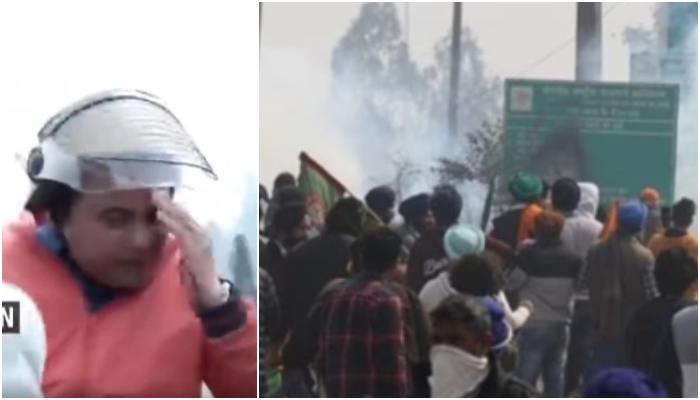
On Wednesday (14th February), a video report from the Indian Today news channel was making rounds on social media in which one of its journalists could be seen trying to shield the protesting farmers who pelted stones at the state police at the Shambhu border in Haryana.

Journalist Satendra Chauhan could be seen directing the cameraman to avoid showing one of the protesters pelting stones at the Haryana Police. “Don’t show that,” he could be heard saying as the cameraperson widened the angle to show some of the agitated protesters pelting stones.

The video of the said incident was posted by several social media influencers and media commentators who alleged that India Today was trying to safeguard the protesters as they pelted stones. “The camera showed protesters pelting stones at police. The reporter asks the cameraman not to show that. Why shouldn’t that be shown?” questioned one of the netizens.

“Why your reporter is forcing the cameraman not to show the Stone pelters? Is he there for propaganda or reporting?” asked another X user.

Meanwhile, Political Kida, one of the X users, alleged that India Today only aimed to portray the government as wrong while defending the stone pelters.

“Cameraman captures protesters throwing stones at the police. India Today’s journalist Satyendra Chauhan tells him not to show that. But if police respond with tear gas, the media will label the govt as Anti-Farmer and Fascist!” commented another X user.

The video has been widely shared on social media platforms criticizing India Today for allegedly spreading partial information in favour of the protesting farmers. However, later India Today officially shared another video coverage by Satendra Chauhan in which the latter could be seen reporting and confessing that the protesting agitated farmers pelted stones at the Police.

“The farmers did not intend to stop. They were continuously pelting stones at the police resulting in police action. The Haryana Police then fired tear gas shells and attempted to disperse the crowd,” Chauhan could be heard saying.

Interestingly, Chauhan is said to have reported about the stone pelting after he got injured during the attack. Chauhan, who also is associated with Aaj Tak was injured during the farmer’s protest at the Shambhu border in Ambala, Haryana. He was immediately taken to Ambala city’s civil hospital where he is undergoing treatment.

However, the reporter reported from the hospital that the farmers pelted stones at the police which triggered the police to take severe action against the protesters. “The situation at the Shambhu border was quite tense. The tensions escalated further after the farmers began pelting stones at the police. Later the police also resorted to firing tear gas shells at the farmers,” Chauhan reported from the hospital bed.

The protests at the Shambhu border and nearby areas are underway. On Wednesday (14th February), protesting farmers from various organizations began marching towards the national capital. The Delhi Police posted at the borders are currently protecting the borders and maintaining law and order in response to the farmers’ ‘Delhi chalo’ demands. A vast deployment of police and paramilitary forces, as well as multi-layered barricades, are in place to secure the national capital borders at Singhu, Tikri, and Ghazipur.

Central Delhi has been heavily secured, with anti-riot soldiers placed strategically and metal and concrete blocks limiting access to numerous critical roadways.

On Tuesday, the Delhi Metro restricted passenger admission and exit at nine stations by closing some gates for many hours in anticipation of the farmers’ march to the national capital.

Following failed negotiations with the government, police used tear gas to prevent hundreds of farmers demanding minimum crop prices from marching on the capital, Delhi. Thick clouds of tear gas were used to disperse protesters at the Shambhu border near Ambala, around 200 kilometres north of the capital. Additionally, authorities used drones to drop tear gas canisters from the air.

While the police are not actively hindering farmers’ passage from the state to Delhi, Punjab has declared a state of high alert, with roughly 70% of the state police force told to remain on duty in the field.

The farmers are organizing a large-scale protest to force the Centre to acknowledge their list of demands. The farm organizations are pushing for legislation to establish a minimum support price (MSP), a criterion they agreed to in 2021 when they agreed to terminate their protest against the now-repealed agricultural laws.

Farmers are also advocating for the implementation of the Swaminathan Commission’s recommendations, pensions for farmers and agricultural workers, and farm debt relief. According to the farmers, the Centre should secure “justice” for the victims of the Lakhimpur Kheri violence.

Subramanian Swamy threatens legal action against BJP for not holding party elections, claims extension of president Nadda’s term violates his fundamental rights

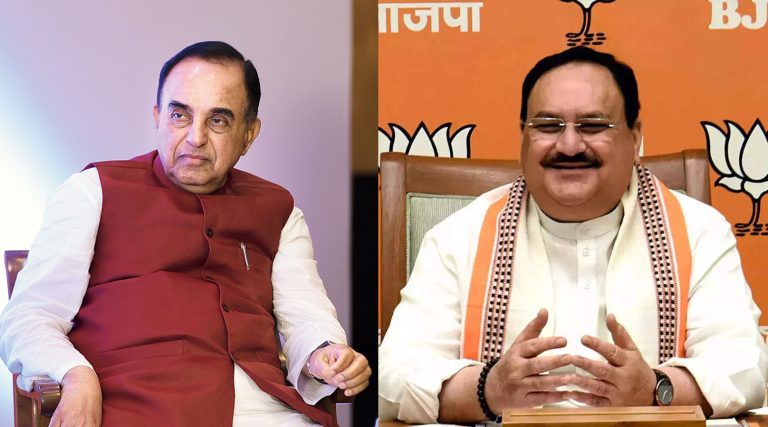
Disgruntled BJP leader Subramanian Swamy, who is more known for spreading fake news against his own party these days, has threatened to take legal action against the party over the extension of the party president’s term. The former Rajya Sabha MP on 14th February shared a letter written to BJP President Jagat Prakash Nadda, opposing the party’s decision to extend Nadda’s term and not hold elections.

Swamy informed Nadda that he wrote to the Election Commission of India alleging that not holding party elections in BJP violates statutory and constitutional provisions. It is notable that JP Nadda was elected the president of BJP in January 2020, and his term ended in January 2023, as the BJP constitution states that the term of the president is 3 years.

During the BJP’s national executive meeting days before the expiry of his term in January last year, the party decided to delay the internal elections and extend the party president’s term to June 2024. BJP didn’t want to make any change in the party ahead of the general elections and therefore decided to fight the polls under the leadership of JP Nadda.

However, now rebel BJP leader Subramanian Swamy has objected to this decision. He has written a letter to JP Nadda, opposing the extension of Nadda’s term as BJP president. According to Swamy, the extension of the party president’s term violates the provisions of the Constitution, The Representation of the People Act, 1951, the party’s constitution and his fundamental rights.

Saying that he has already filed a complaint with the EC, he wrote, “I am enclosing herewith my letter apprising the Election Commission (dated November 13, 2023) about the lack of internal party elections in BJP as violative of statutory and constitutional provisions, as provided in the Constitution and The Representation of the People Act, 1951.”

Arguing that the decision also violates the BJP constitution, he wrote, “Even the term-extension of the BJP President is currently in contravention to the Article XXI of the Party Constitution, which stipulates for the term’s length to be only 3 years, extendable through fresh party elections.”

Subramanian Swamy claimed that this violates his fundamental rights, and therefore he may take the matter to Delhi High Court, adding that the matter is already with the Election Commission. Swamy said that the letter is a notice informing that he is taking legal action after a month from the date of the letter.

“Since the matter is before the Election Commission and may be filed in the Delhi High Court as violative of my fundamental rights, I hereby give you notice that I intend taking legal action for necessary reliefs, after a month from today’s date,” Swamy wrote. This means he indents to approach the Delhi High Court on or after 6 March 2024.

At the end Subramanian Swamy added that he is available to apprise “the ramification of the failure to hold legitimate party elections to elect office bearers and committees.” He also sent a copy of the letter to the Chief Election Commissioner.