Home Blog Page 1415

Odisha Congress distributes ‘wedding cards’ for BJD-BJP marriage, claims the 2 rivals are having ‘love affair’

As general elections and state assembly elections approach in Odisha, the political scene is slowly heating up. The Congress, which has been largely left irrelevant in state politics, has found a new campaign method by claiming that the BJP and BJD are not in a political rivalry but are in a ‘secret coalition’ in the state.

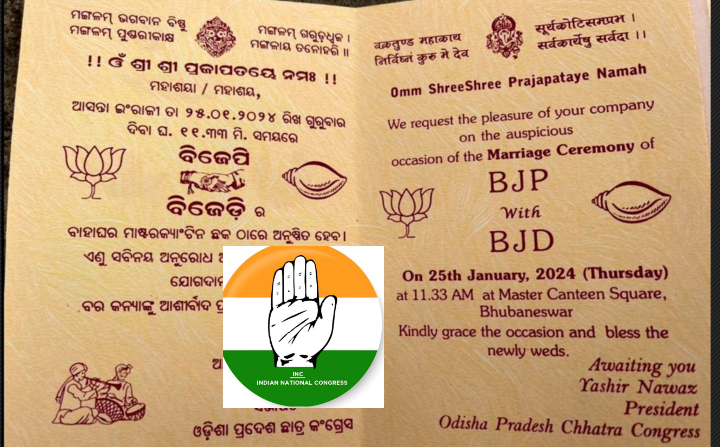
In a protest organised by Odisha Pradesh Chhatra Congress, president Yashir Nawaz has invited everyone for the ‘wedding ceremony’ of BJD and BJP.

The Chhatra Congress has distributed traditional wedding cards announcing the ‘wedding ceremony’ of BJD and BJP, and has invited everyone to attend it and bless the bride and groom.

The ‘wedding ceremony’ has been organised at the Master Canteen square, Bhubaneswar.

Recently Odisha Congress in charge Dr Ajay Kumar welcomed former state minister Balabhadra Majhi and his supporters into the Congress Party. Majhi, a former BJD leader, joined the Congress in presence of PCC chief Sharat Patnaik, former minister Bhakta Das and other party leaders in Bhawanipatna.

It is notable here that since CM Naveen Patnaik maintains a non-confrontational stance with the central government and BJD usually supports the BJP in key central decisions in the parliament, the Congress has long been claiming that the 2 parties are not rivals and have been maintaining a ‘secret coalition’. The BJP is the largest opposition party in Odisha where the BJD has been enjoying a brute majority since the last 4 assembly elections.

Canada achieves new heights of India hate, initiates investigation into alleged meddling in general elections

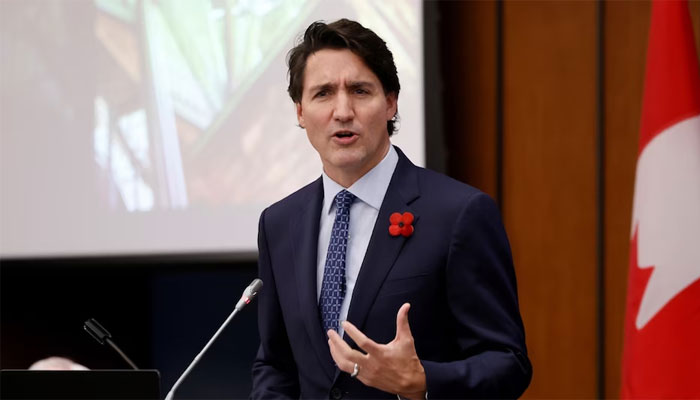
On 24th January (local time), Canada’s federal commission of inquiry into foreign interference announced that it plans to examine India’s meddling in the country’s last two general elections. Initially, the commission was inquiring about the role of China and Russia in meddling with the federal elections. However, it has expanded its scope to include India in the inquiry.

In a statement released by the commission, it expressed interest in assessing possible interference by India in the past two elections held in Canada in 2019 and 2021. The commission has asked the federal government to provide documentation on the allegations against India. Notably, Canada has a history of meddling in India’s affairs for decades. Furthermore, due to political desires, Canadian leaders have unnecessarily targeted India in matters such as the murder of Khalistani terrorist Hardeep Singh Nijjar. Canada may be attempting to initiate an investigation against India to balance the scales.

The commission’s initial hearings will start on 29th January to delve into the challenges and limitations of disclosing classified national security and intelligence information to the public. In May 2024, an interim report from the commission will be published to offer an early glimpse into the findings. The final report is expected to be published by the end of 2024.

Notably, current PM Justin Trudeau has been the winner in the last 2 elections held in Canada.

Canada’s meddling in India’s affairs

Canada has a long history of meddling with India’s affairs. When farmer protests were ongoing in India against the now-repealed three agricultural laws, Canada sided with anti-India elements that were using the protests to defame India on an international platform. Pro-Khalistani leaders of Canada, such as Jagmeet Singh, openly poked nose into India’s internal matters.

Canada-based businessman Mo Dhaliwal openly ran toolkits against India under the banner of the Poetic Justice Foundation. Controversial climate change activist Greta Thunberg shared one of its toolkits, leaking the anti-India plans. Several “activists” from India were involved in the campaigns run by Mo Dhaliwal. Canadian government failed to take any action against such anti-India elements.

Furthermore, Canada is a well-known haven for criminals, terrorists and anti-social elements. Several gangsters and terrorists who fled India and are now living in Canada and are indulging in anti-India activities. India has requested extradition of such criminals, but Canada has failed to oblige.

In June 2023, Khalistani terrorist Hardeep Singh Nijjar was killed in a possible gang war in Canada. In September, Canadian Prime Minister Justin Trudeau accused India of being involved in the murder. To this date, Canada has failed to provide any concrete evidence that points towards India’s involvement in the murder.

Canada’s history of Indian hate has achieved a new milestone by initiating an investigation against India, accusing the biggest democracy in the world of meddling in its general elections, not once but twice.

French President Emmanuel Macron, chief guest for 75th Republic Day, coming to Jaipur to kick-start his state visit to India: Details

0

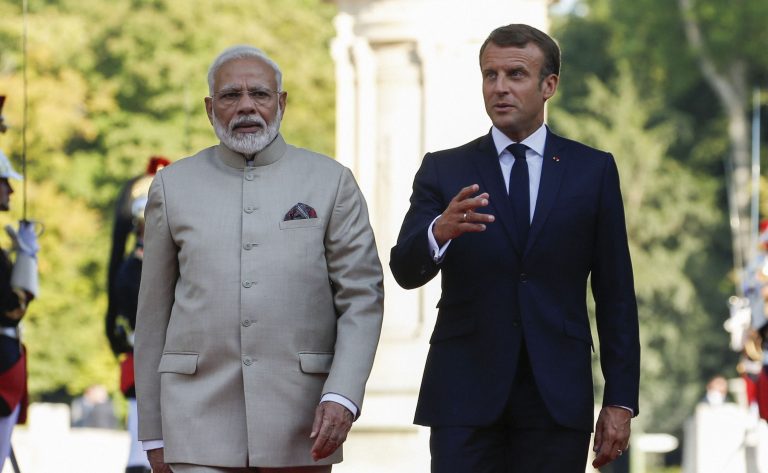
French President Emmanuel Macron has arrived in India as the distinguished Chief Guest for the 75th Republic Day celebrations. Macron’s visit marks the completion of the 25th-anniversary celebrations of the strategic partnership between India and France, fostering cooperation in defence, security, clean energy, trade, and technology.

Jaipur Sojourn: A Cultural Extravaganza

President Emmanuel Macron’s state visit to India is set to commence with a fascinating exploration of Jaipur’s cultural heritage starting with a cultural event at Amber Fort. The French leader will then be accompanied by Prime Minister Narendra Modi, to explore the World Heritage Site Jantar Mantar, acknowledging its historical significance for the French. This observatory, built by Sawai Jai Singh, had French astronomers engaged in collaborative efforts with Indian counterparts in the 18th century.

In 1734, two French Jesuit astronomers from Chandernagore, under French control, were invited to the court of Sawai Jai Singh, the visionary ruler of Jaipur. Macron’s visit to this celestial tapestry serves as a symbolic nod to the historical collaboration between the two nations.

Royal Roadshow and Delightful Detours

A joint roadshow with PM Modi will take Macron from Jantar Mantar to Sanganeri Gate, with stops at iconic landmarks such as Hawa Mahal and Albert Hall Museum. The day will conclude with a private dinner hosted by PM Modi at Rambagh Palace, setting the stage for Macron’s participation in the Republic Day parade in Delhi. Following their tour, the two leaders will hold in-depth bilateral talks.

Emanuel Macron is the chief guest for the Republic Day celebrations

Macron’s presence as the Chief Guest at the Republic Day parade at Kartavya Path in Delhi underlines the close ties between the two nations. The French President is set to visit the French Embassy, partake in the ‘At Home’ function at Rashtrapati Bhavan, and attend an official banquet dinner. Notably, Macron has previously been in India on a state visit in March 2018 and an official visit in September 2023 for the Delhi G20 Summit. Moreover, he has welcomed PM Modi to France on four occasions.

On 26th January, President Macron will attend the Republic Day parade as the chief guest. A French armed forces contingent will participate in the Republic Day parade and flypast alongside Indian troops and aviators. An official statement said, “He will attend the At Home reception at Rashtrapati Bhavan and, later, the State Banquet, at the invitation of the Hon’ble President of India, H.E. Smt Droupadi Murmu.”

Macron follows in the footsteps of his predecessors who remained present as chief guests of India’s Republic Day celebrations. François Hollande in 2016, Nicolas Sarkozy in 2008, Jacques Chirac in 1998, Valery Giscard d’Estaing in 1980, and Prime Minister Jacques Chirac in 1976, have all strengthened the bonds between India and France on this significant occasion.

Accompanying President Macron is a high-profile delegation including ministers such as Stephane Sejourne (Europe and Foreign Affairs), Sebastien Lecornu (Armed Forces), and Rachida Dati (Culture) as well as CEOs, cultural personalities, and ESA astronaut Thomas Pesquet. The visit underscores the commitment to deepen cooperation in various sectors.

25 Years of Indo-French Strategic Partnership

France and India are poised to reinforce their strategic partnership, ushering in a new era of collaboration encapsulated in the “Horizon 2047 Roadmap.” Commencing 25 years after the launch of this strategic alliance, the leaders of both nations, during discussions in Paris on 14th July, charted a course for the next quarter-century. This renewal aims to bolster trust-based cooperation, particularly evident in the defence sector, where joint efforts include advancements in platforms and technologies.

Why this visit by Emanuel Macron is important

President Emmanuel Macron’s visit to India is a pivotal moment to actualise the shared aspirations outlined in the Horizon 2047 Roadmap. The three pillars of this strategic framework — strengthening strategic autonomy, fostering international peace and security, and cultivating partnerships for the planet — will be the focal points of discussions between President Macron and Prime Minister Modi. This diplomatic exchange not only underscores their joint commitment to the Indo-Pacific region but also solidifies a remarkable 60-year cooperation in space exploration, climate monitoring, and maritime surveillance.

A particular emphasis on initiatives promoting student mobility aligns with President Macron’s goal of welcoming 30,000 Indian students to France by 2030. Furthermore, the visit will fuel business ties and cross-investments, supported by France’s “Make It Iconic” nation-branding campaign, signifying India as a strategic priority. The significance of this visit extends beyond diplomatic conversations, embodying a commitment to fostering enduring connections between the peoples of France and India.

‘It will hurt Maldives in the long term’: Opposition parties issue joint statement slamming Muizzu govt’s ‘anti-India’ policy

0

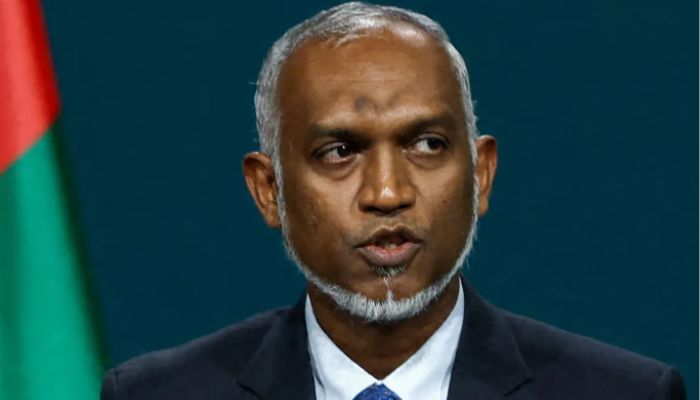
Amid strain in India ties over President Mohammad Muizzu asking New Delhi to withdraw its troops from the Maldivian waters and the disparaging remarks by junior ministers and government officials of Maldives against Prime Minister Narendra Modi, two opposition parties in the Maldives have come out against the current regime over its ‘stark’ anti-India pivot.

The Maldivian Democratic Party (MDP) and The Democrats jointly issued a joint press statement, labelling the shift in foreign policy as ‘extremely detrimental’ to the country’s long-term development. The statement served to reassert and affirm the Opposition’s belief that “alienating any development partner, and especially the country’s most long-standing ally will be extremely detrimental to the long-term development of the country”.

The Opposition further underscored that “stability and security in the Indian Ocean is vital to the stability and security of the Maldives.”

Both the MDP and The Democrats emphasised the critical need for consecutive governments to maintain the ability “to work with all development partners for the benefit of the people of the Maldives, as the Maldives has traditionally done”.

They expressed the view that a departure from the historical collaboration with India could potentially jeopardise the country’s stability and progress.

A recent Reuters report stated that a Chinese research vessel was heading to the Maldives. Opposition parties in Maldives call out Muizzu govt’s ‘anti-India’ pivot, calls it potential ‘detriment’ to long-term development significant, coming close on the heels of Maldivian President Muizzu’s recent state visit to China, during which the two leaders aimed at strengthening ties.

Responding to the report, the Maldives Ministry of Foreign Affairs stated that the island country has always been a welcoming destination for vessels of ‘friendly nations’ and continues to host both civilian and military vessels making port calls for peaceful purposes.

The development, however, has raised concerns in New Delhi, as India has previously viewed the presence of such vessels near its shores, including in Sri Lanka in 2022, as problematic, Reuters added in its report.

India and the Maldives on January 14 “agreed to fast-track the withdrawal of Indian military personnel from the island nation, according to the Maldives’ Ministry of Foreign Affairs. The removal of Indian troops in the Maldives was the main campaign plank of Muizzu’s party during the Presidential elections. Currently, there are around 70 Indian troops, along with Dornier 228 maritime patrol aircraft and two HAL Dhruv helicopters, stationed in the archipelago. On the second day of assuming office, Muizzu officially requested the Indian government to withdraw its military personnel from the Maldives.

Apart from the call for the withdrawal of Indian military personnel, a massive row erupted after a Maldivian deputy minister, along with other cabinet members and government officials, made disparaging and unsavoury references to Primer Minister Narendra Modi’s recent Lakshadweep visit and call for the development of the Indian archipelago as a global retreat for beach tourism. The Maldives government, however, distanced itself from the remarks.

Pro-Chinese Maldivian President worsening relations with India

It is pertinent to note that Progressive Party of Maldives (PPM) leader Mohamed Muizzu won the presidential election in October last year after running a vicious “India Out” campaign. The Maldivian President is also known for his pro-China stance. Just days after the diplomatic row erupted between India and Maldives, Muizzu, while on a state visit to China, urged the country to send more tourists to the island nation.

Amid diplomatic tension with India, a 14-year-old Maldivian boy died on 20th January after President Mohammed Muizzu’s government reportedly refused to allow a Dornier aircraft provided by India to airlift him.

On 14th January, reiterating his demand that India withdraw its troops from Maldives, the Maldives’ President Mohamed Muizzu asked India to withdraw its military deployment from the archipelago nation by 15th March. 

Additionally, Maldives President Mohamed Muizzu on 9th January urged China to send more tourists to the archipelago. His remark came amid reports that a large number of Indians had cancelled their trips to Maldives in the wake of their Ministers’ unwarranted and deplorable comments on India, Indians, and PM Modi.  

Notably, it all started on 4th January after PM Narendra Modi shared some pictures of his visit to Lakshadweep. He exhorted people to explore the scenic islands in what could be seen as a push to his ‘vocal for local’ slogan, and an effort to give a boost to tourism on the archipelago.

Following his visit to Lakshadweep, a large demand erupted among Indians to explore the Indian Islands and boost our tourism sector before visiting beaches or tourism sites in other countries. However, jittery Maldivian politicians interjected and reacted by making racial commentary on Indians. 

It is important to note that neither the Indian PM mentioned any country nor it was targeted toward any nation, yet some Maldivians feared a potential hit to their tourism economy. 

Mariyam Shiuna, Deputy Minister of Youth Empowerment, Information, and Arts, made insulting remarks against PM Modi, referring to him as a ‘clown’ and a ‘puppet of Israel’ after he posted pictures from his visit to Lakshadweep Islands. She later deleted the tweet and was among one of the three Ministers who were suspended by the Maldivian government for making disparaging remarks on India. 

On 5th January, Zahid Rameez, a Council member of the ruling Progressive Party of Maldives (PPM) also took to the microblogging site X to mock Indians.

On 8th January, The Democrats leader in the Maldivian Parliament, Ali Azim called for the sacking of the archipelago’s President Mohamed Muizzu. Azim called for steps to remove the Maldivian President from office including initiation of a vote of no confidence against him. 

Following the controversy, Maldives opposition had publicly condemned the commentary made by the members of the ruling party and its Ministers noting that India was “rightfully angry” over the uncalled racial remarks. 

Senior Maldivian politicians including former President Ibrahim Solih and ex-Foreign Minister Abdullah Shahid had condemned the use of “hateful language” and “reprehensible” remarks against India

 In response to Maldivian users’ and politicians’ uncalled-for racial commentary, trends like #BoycottMaldives, and cancellation of trips to Maldives are picking steam in India. Moreover, the Indian online travel company, Ease My Trip, also suspended all flight bookings to Maldives amidst the controversy. Consequently, the Maldives Association of Travel Agents and Tour Operators (MATATO) wrote to Ease My Trip CEO Nishant Pitti seeking his assistance in fostering positive relations between the two countries.

(With inputs from ANI)

In Congress-ruled Telangana, cop pulls female ABVP student by the hair on the road, BJP demands strict action

0

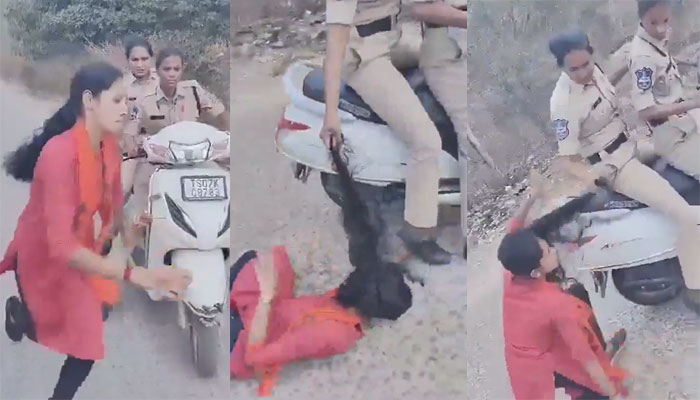
On 24th January, a video of two female cops dragging a female student associated with Akhil Bharatiya Vidyarthi Parishad (ABVP) by pulling her hair went viral on social media. The incident took place during a protest in Rajendra Nagar Mandal of district RangaReddy in Telangana.

Students of Professor Jayashankar Telangana State Agricultural University (PJTSAU) have been protesting against the state government’s decision to allocate 100 acres of university land for the construction of the new High Court Complex. ABVP had called for a protest in support of the students on Wednesday, January 24. Local police took 20 protesters under preventive custody to curb the protests.

Reports suggest that during the protest, two female cops, riding a scooter, chased down a female activist of ABVP. During the chase, the pillion-riding cop got hold of the student activist’s hair, after which the student fell on the road.

Opposition leaders have demanded strict action against the female cop. Bharatiya Janata Party’s (BJP) state president, G Krishan Reddy, wrote on X, “Strongly condemn the inhumane actions perpetrated by negligent police officials. This incident in Hyderabad reflects the Congress’ autocratic rule and is highly condemnable. Urgent and decisive measures must be taken against those responsible for this objectionable behaviour towards the protesting student leaders.”

Bharat Rashtra Samithi (BRS) leader Kavitha Kalvakuntla said, “The recent incident involving Telangana police is deeply concerning and unacceptable. Dragging a peaceful student protester and unleashing abrasive behaviour on the protestor raises serious questions about the need for such aggressive tactics by the police. This arrogant behaviour demands an unconditional apology from the Telangana Police. Urging the Human Rights Commission to take swift, strict action against those involved. This behaviour cannot become a norm and must be condemned by all alike.”

BJP State Vice President Vishnu Vardhan Reddy said, “A female ABVP worker who was protesting against Telangana’s Congress government is dragged by the hair by police. Is this your Mohabbat ki dukan, Mr Rahul Gandhi? I demand strict action against the culprits & request the Ministry of WCD to interfere.”

Rajendra Nagar Police Inspector said in a statement that the female cop “accidentally” held a protester by her hair when she was trying to run towards the road where the protest was happening. He said, “Today, a protest was held at PJTSAU where ABVP members also participated. We had taken around 20 protesters under preventive custody. Some protesters were running towards the road during which an incident happened where a woman constable by mistake held a protester by her hair, following which she fell (on the ground)”.

He further added that both a female cop and student activist associated with ABVP reached the police station, where the cop admitted her mistake. “They both reached the police station, where the female cop stated that it was by mistake, and the girl accepted that it was not personal. The girl filed no complaint,” he said.

Karnataka issues notification to cover 13,000 state govt employees under Old Pension Scheme

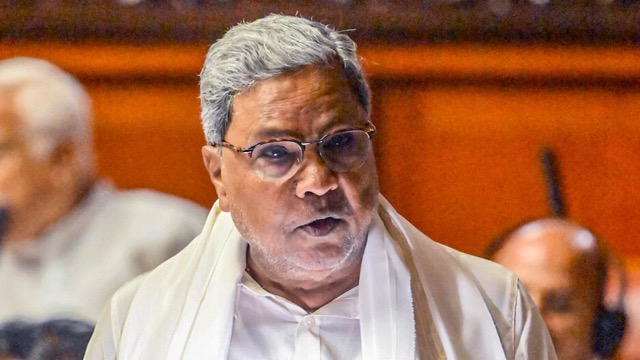
 The Karnataka government has issued a notification to cover about 13,000 state government employees, recruited after 2006, under the Old Pension Scheme.

Taking to X, Chief Minister Siddaramaiah said that he had promised to fulfil this demand to the government employees when they were on a strike against the new pension scheme.

“An order has been issued to cover the old pension scheme to about 13,000 government employees of the state government recruited after 2006. Even before the election, I visited the place when the National Pension System (NPS) employees were on strike and promised to fulfil the demand after we came to power,” he posted on X on Wednesday.

“I hope this decision has given comfort to all the families of 13,000 NPS employees,” he added.

Under the old pension scheme, a government employee is entitled to a monthly pension after retirement. The monthly pension is typically half of the last drawn salary of the person.

Under the new pension scheme, employees contribute a portion of their salaries to the pension fund. Based on that, they are entitled to a one-time lump sum amount on superannuation.

The old pension scheme was discontinued in December 2003, and the new pension scheme came into effect on April 1, 2004. 

(This news report is published from a syndicated feed. Except for the headline, the content has not been written or edited by OpIndia staff)

‘It is over, I have reached age limit’: Six-time world champion and Olympic medalist Mary Kom announces her retirement

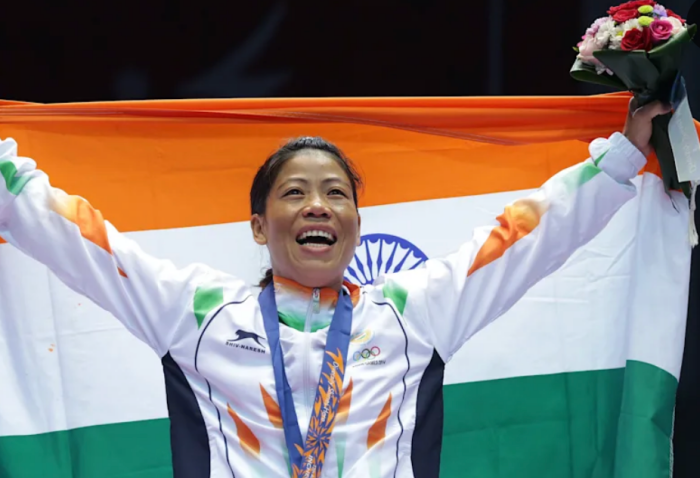
Six-time World Champion and 2012 Olympic medallist Mangte Chungneijang Mary Kom on Wednesday announced her retirement from boxing.

Mary Kom hung her boxing gloves as the International Boxing Association’s (IBA) rules allow male and female boxers to fight in elite-level competition only till the age of 40.

During an event, Mary, 41, admitted that she still has the hunger to compete at the elite level, but she has to bring curtains down on her career because of the age limit.

“I have the hunger still but unfortunately because of the age limit it is over I cannot compete in any competition. I want to play more but I am being forced to quit (due to the age limit). I have to retire. I have achieved everything in my life,” Mary said during an event.

Mary is the first female boxer in boxing history to have captured six world titles. The five-time Asian champion was the first female boxer from India to take home a gold medal at the 2014 Asian Games.

The experienced pugilist won a bronze medal in the London 2012 Olympic Games leaving any record or title untouched from her reach. She introduced herself to the world at the age of 18 in the inaugural world meet in Scranton, Pennsylvania.

With her near-flawless boxing style, she impressed everyone and made it to the final of the 48kg category. She fell short in the final but left a mark of the success that she was going to achieve in the future.

In the coming years, she went on to become the first Indian to win a gold medal at the AIBA Women’s World Boxing Championships. She went on to clinch the World Championships titles in 2005, 2006, 2008 and the 2010 editions. After winning the 2008 title, Mary went on a break after giving birth to her twins.

After winning the 2012 Olympic medal, Mary once again went on a break after giving birth to her third child. She marked her return but sealed her place at the summit in the 2018 World Championships which was held in Delhi.

She dominated with a 5-0 win over Ukraine’s Hanna Okhota for her sixth world title. A year later, she went on to clinch her eighth world medal, the most by any male or female boxer. 

(This news report is published from a syndicated feed. Except for the headline, the content has not been written or edited by OpIndia staff)

History of Bihar- Lalu Prasad Yadav used to call Jan Nayak ‘Kapti Thakur’, projects Kaproori Thakur as ‘Guru’ after Bharat Ratna

On 23rd January, the President of India, on the recommendations of the Modi government, conferred Bharat Ratna on the late former Chief Minister of Bihar, Karpoori Thakur. Over the years, he had earned the moniker ‘Jananayak’ for his fight for social justice. Thakur was the head of the first non-Congress government in Bihar. 

On the 100th birth anniversary of the late socialist leader, PM Modi penned his thoughts to pay tribute to ‘Jan Nayak’ Karpoori Thakur. In the commemorative article, PM Modi wrote, “I never had the opportunity to meet Karpoori Ji but, I heard a lot about him from Kailashpati Mishra Ji, who worked closely with him.” 

Notably, Mishra had served as the Finance Minister of Bihar and later also became the Governor of Gujarat and Rajasthan. 

Discussing Karpoori Thakur’s simple lifestyle and humble nature, PM Narendra Modi shared a few anecdotes that highlight the simplicity of the socialist leader.

PM Modi recalled how Karpoori Thakur preferred to spend his own money on any personal matter including his daughter’s wedding rather than drawing even a single penny from the government’s coffers. 

Describing another incident to highlight Thakur’s simplicity, PM Modi wrote, “During his tenure as Chief Minister of Bihar, a decision was taken to build a colony for political leaders but he himself did not take any land or money for the same. When he passed away in 1988, several leaders went to his village to pay tributes. When they saw the condition of his house, they were moved to tears- how can someone so towering have a house so simple!” 

PM Modi added that Karpoori Thakur was a proponent of education in local languages so that people from villages and small towns could also get a good quality education.

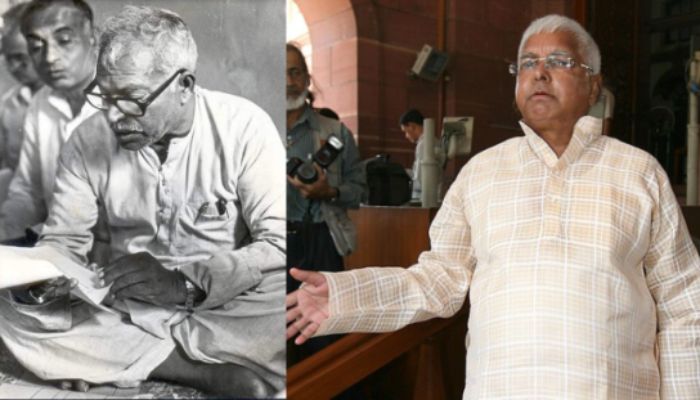
Meanwhile, when the decision to confer Bharat Ratna posthumously on Karpoori Thakur was announced, a race began with opportunistic leaders of Bihar trying to steal the credit for it. RJD chief Lalu Prasad Yadav, who is part of the coalition government of Bihar, was at the forefront of this. Lalu Yadav, who had vehemently opposed Karpoori Thakur throughout his life, projected himself as the one fighting for Thakur. We will unmask the face of Lalu Yadav who pushed Bihar into ‘Jungle Raj’, but before that let us know who Karpoori Thakur was.

Karpoori Thakur – the recipient of ‘Bharat Ratna’

The date of birth of Karpoori Thakur is a matter of some uncertainty, but it is generally believed that he was born on 24th January 1924 in Pitaunjia, Samastipur district. He was the son of Gokul Thakur and Ramdulari Devi. His native village is now known as ‘Karpoori Gram’. He hailed from a ‘Nai’ family which falls under backward community. 

Thakur pursued his higher education at CM College in Darbhanga, but could not complete it as in 1942, he actively participated in Mahatma Gandhi’s ‘Quit India’ movement and played a role in India’s struggle for independence.

About Karpoori Thakur’s family, his grandfather’s name was Pyare Thakur. Karpoori Thakur had 2 brothers and 6 sisters. The name of one of his brothers was – Ramswarath Thakur. His sisters were Galho, Siya, Rajo, Sita, Parvati and Shail. In the name of property, there was a thatched house and 3 acres of agricultural field. In 1938, he established ‘Navyuvak Sangh’ in his native village. He passed matriculation in 1940. Before independence, he was a member of JP-Lohia’s ‘Congress Socialist Party’.

Mahatma Gandhi and Subhash Chandra Bose had a major influence on him. Thakur started his political life as a disciple of the prominent socialist leader Ram Manohar Lohia. From 1952 until his death, Thakur was consistently elected to either the Legislative Assembly or the Lok Sabha. As the Education Minister of Bihar, he removed the mandatory status of English in the matriculation exam. This provided an opportunity for many poor students who were lagging behind due to their lack of proficiency in English.

Karpoori Thakur was a supporter of the Panchayati Raj system. When he became the Chief Minister in 1971 and again in 1978, he conducted Panchayat elections in Bihar. After that, for two decades, there were no Panchayat elections in the state. 

Thakur implemented reservations within reservations, providing 8% reservation for the backward classes and 12% for the extremely backward classes. He also included a provision for 3% reservation for economically weaker sections of upper castes and women as well.

In 1952, Karpoori Thakur won his first legislative assembly election from Tajpur. In 1957, he defeated the Congress candidate as a Praja Socialist Party nominee from the same constituency. In the 1950s, he toured several countries in Western Asia and Europe. He won again from the same constituency in 1962. In 1967, he won on the ticket of the ‘Samyukta Socialist Party.’ In 1967, when the government was formed under the leadership of Mahamaya Prasad, Karpoori Thakur became the Deputy Chief Minister. He was assigned important departments like Education and Finance.

In 1969, midterm elections were held in Bihar, and Karpoori Thakur once again won from Tajpur. Before becoming the Chief Minister of Bihar on 22nd December 1970, he went on a 28-day hunger strike in Jamshedpur for the laborers. The demands of the Tata Factory workers were accepted, after which the workers considered Karpoori Thakur as their leader. He also went on a hunger strike for the workers of the Gomia Explosive Factory. In 1972, he again registered a victory from Tajpur. However, by then, the student movement under the leadership of Jayaprakash Narayan had intensified, and following the resignations of opposition leaders, he also resigned as a legislator in May 1974.

Then the Emergency was imposed. During the authoritarian rule of Indira Gandhi, Thakur initiated many anti-Emergency activities, mainly coordinating them from Nepal. In the 1977 Lok Sabha elections, Karpoori Thakur secured a significant victory from Samastipur on the ticket of the Janata Party. In June 1977, he once again became the Chief Minister of Bihar. He defeated Congress’s Ramjayapal Singh Yadav from Phulparas in Madhubani, securing a legislative seat because it is mandatory for the CM to become an MLA within 6 months. When the Tajpur area was divided in 1980, he contested from Samastipur and won.

He became the opposition leader when the Congress government was formed in Bihar. After differences with Chaudhary Charan Singh, Karpoori Thakur formed the Lok Dal (K). In the 1985 parliamentary elections, Karpoori Thakur faced defeat amid the sympathy wave following Indira Gandhi’s demise. However, despite this being his first electoral loss, he achieved a significant victory just two months later in the assembly elections from Sonbarsa in Sitamarhi. While the merger of Lok Dal and Janata Party did not happen, in that election, Karpoori Thakur won 47 seats, making his Lok Dal the largest opposition party.

Lalu Yadav had called Karpoori Thakur a ‘Kapti’

Now, let’s talk about Lalu Yadav. During the Emergency, the student movement led by Jayaprakash Narayan also made Lalu Yadav a significant leader. Born in Fulwariya, Gopalganj, Lalu Yadav was adept at drama from his childhood and used to perform in small programs in the village. Even though he is now 75 years old, the playful drama of sitting on a buffalo from childhood is still a game he enjoys, albeit in a different form. Now, he is taking credit for the ‘Bharat Ratna’ award bestowed on Karpoori Thakur.

After the announcement of Bharat Ratna, Lalu Yadav tweeted, “My political and ideological guru Karpoori Thakur ji should have received Bharat Ratna long ago. We raised this voice from the House to the streets, but  the central government woke up when the current Bihar government, in the present context of social concerns, conducted a caste-based census and increased the scope of reservation for the benefit of the Bahujans. The fear is real, politics will have to focus on the concerns of Dalit Bahujan.” Lalu Yadav not only labeled the Modi government ‘scared’, but also declared Karpoori Thakur as his ‘Guru’.

Can a person call his Guru a ‘Kapti’? In Hindi, Kapti is used as an insult for someone who does ‘Kapat’ (deceit) or one who is cunning. 

Lalu Yadav, who is now presenting Karpoori Thakur as his guru and is accusing the Modi government of giving respect to him ‘out of fear’, had once referred to Karpoori Thakur as ‘Kapati’. Sankarshan Thakur explicitly mentions this in his book ‘The Brothers Bihari,’ and it also finds mention in Arun Sinha’s book ‘Nitish Kumar and Ubharta Bihar.’ Yadav took advantage of Karpoori Thakur’s demise in February 1988 to elevate himself as one of the biggest opposition leaders in Bihar.

Even though Lalu Yadav was a student leader and had also gone to jail during the Emergency, the credit for bringing him into mainstream politics goes to Karpoori Thakur. In 1977, it was Karpoori Thakur because of whom 29-year-old Lalu Yadav got a Lok Sabha candidacy from Chapra on ‘Bharatiya Lok Dal’. Lalu Yadav got 85% votes in this election and the victory margin was 77%. After this, Karpoori Thakur also got him the assembly election ticket from the party.

In spite of the significant victory of the Congress in 1980, Karpoori Thakur kept socialist politics alive in Bihar. He encouraged many youths during that era. Even though Lalu Yadav declared himself as Karpoori Thakur’s successor after his demise, Karpoori Thakur himself never wanted this. Journalist Sankarshan Thakur writes in his book that Karpoori Thakur often referred to Lalu as ‘Lampat’ (vagabond). The same book also mentions how Lalu Yadav used to privately call Karpoori Thakur ‘Kapti’.

Lohiawadi Lakshmi Sahu, who was the lifelong private secretary of Karpoori Thakur, narrated an incident. At that time, Karpoori Thakur was an opposition leader and was quite unwell. He was resting at home. However, a crucial discussion on a matter in the assembly came up, and he had to attend. He asked Shivanandan Paswan to arrange for a vehicle. During that time, Lalu Yadav used a second-hand Willys Jeep, which he used to drive himself.

The story goes that when Shivanandan Paswan asked Lalu Yadav to bring Karpoori Thakur from his home to the assembly, Lalu Yadav said, “There is no oil in my car. Why don’t you ask Karpoori Ji to buy a car? He is such a big leader!” Lakshmi Sahu mentions that after becoming the Chief Minister, Lalu Yadav had stopped mentioning Karpoori Thakur’s name because he felt that if he did, he would always remain in Karpoori Thakur’s shadow. He also did not fulfill his promise to build a memorial in memory of Karpoori Thakur.

Lalu Yadav only built a wall outside the house on Deshratna Marg where Karpoori Thakur died, nothing else. He always kept postponing the demand for the construction of the Karpoori Thakur Memorial. During those days, Lalu Yadav used to be close to VP Singh and Devi Lal, and perhaps, that’s why he saw no benefit in staying close to the ailing Karpoori Thakur in Patna or helping him. Ultimately, with the blessings of these two leaders, Lalu Yadav assumed the post of Karpoori Thakur in March 1989, the year following Karpoori Thakur’s demise. He became the leader of the opposition in the Bihar Legislative Assembly.

Arun Sinha writes in his book that Lalu Yadav disliked the fact that Karpoori Thakur wanted to give a share to all castes of the backward society and that he did not openly disclose his plans with others. Lalu then started calling Karpoori Thakur ‘Kapti Thakur’. 

At the same time, another young leader, Nitish Kumar, convinced non-Yadav legislators to support Lalu Yadav, and Lalu Yadav became the leader of the opposition. Today, the opportunistic Lalu Yadav is declaring himself a disciple of Karpoori Thakur.

What did opportunist Lalu Yadav do for ‘Samajwad

While Lalu Yadav’s supporters may present him as a proponent of ‘social justice’ and socialism, counting him in the lineage of Ram Manohar Lohia and Karpoori Thakur, what has Lalu Yadav done beyond chanting slogans like ‘Bhurabal Saaf Karo‘ (for the cleansing of certain castes) and discussing caste-based census to divide Hindus? 

Notably, Bhurabal (Bhu-Ra-Ba-La) was an acronym for Bhumihar-Rajput-Brahmin-Lala (Kayastha) used by the RJD to incite other castes to rally behind its banner.  

In the pursuit of taking credit, the way Lalu is acting, it embodies the proverb ‘Jiyati Na Dihin Kaura, Mare Dolavay Chauran‘ (one who lives without dignity is as good as dead).

Opportunist Lalu Yadav used to say that Nitish Kumar has teeth in his stomach (pet me dant) and today, his party is a part of Nitish Kumar’s government. Reason? The reason is that Lalu Yadav’s son Tejashwi is the Deputy Chief Minister in this government, and his other son Tej Pratap is also a minister. 

Meanwhile, amid the credit race in Bihar, CM Nitish Kumar also got involved to appropriate credit for the Bharat Ratna awarded to Karpoori Thakur terming it as his long-standing demand. Some are claiming that the decision was made for electoral gains, while others are boasting about bringing down the Modi government.

Now, it remains to be seen how Karpoori Thakur’s name becomes relevant again in Bihar in the Lok Sabha elections of 2024 and the Assembly elections of 2025, 36-37 years after his demise. Lalu-Nitish will showcase this as a mark of respect to their ‘Guru’ and talk about bringing down the Modi government, while the BJP will talk about honouring a proponent of socialism. However, Bihar’s politics is different from traditional politics and politics in other parts of the country; one cannot predict what might happen here. 

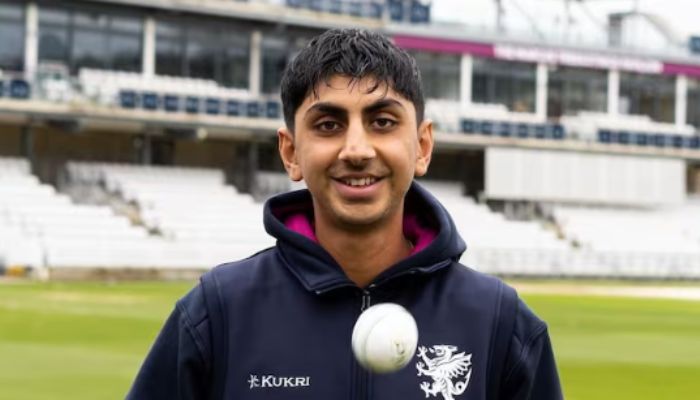
England cricketer Shoaib Bashir finally granted Indian Visa, read why he needed to submit additional documents and how British press wrongly criticised India

On 24th January (Wednesday), the English Cricket Board confirmed that England’s rookie spinner Shoaib Bashir was finally granted an Indian Visa, putting to rest the controversy over Visa issuance to the English cricketer of Pakistani descent. Taking to X, the Cricket board added that Bashir will be traveling to India this weekend. 

As per reports, Bashir travelled back to London from UAE on Wednesday to get his visa issue cleared. However, on account of the delay, the 20-year-old cricketer will miss out on the first test against India which starts on 25th January in Hyderabad. 

Bashmir who is yet to make his International debut, plays for Somerset in the English county. He was born in Surrey and brought up in England but his parents are of Pakistani heritage which became a reason for the delay in his Visa issuance. 

It is important to note that another England player with Pakistani roots, Leg-spinner Rehan Ahmed is also in the squad. However, he was allowed in as he possessed the required documentation after serving as one of the standbys for the World Cup held in India in October-November.

English media accused India of ‘racial’ discrimination, questioned India’s credential to host major events like Olympics

The controversy erupted when Bashir had to fly back to England from UAE because of a prolonged delay in the issuance of an Indian visa. Apart from him, the entire English squad was granted a Visa on time. Notably, England had a training camp in UAE before the Indian tour during which the visiting side will face off against Men in Blue in a 5 test match series.    

On account of the delay, English media and its cricketers went into a frenzy with some of them even questioning India’s credentials for hosting major events like the Olympics if it couldn’t issue a Visa to a cricketer on time. Some of the British media and social media users advised their side to not resume cricket unless India granted Visa to Bashir. 

Martin Samuel in The Times wrote, “India’s name is relentlessly advanced as welcoming hosts — of future Olympics, maybe even a football World Cup. How so, when there is the appearance of discrimination at work in the offices of government?”

The Telegraph even went ahead to call the delay a “shameless stunt”. It tweeted, “England should refuse to play in first Test after India’s shameless Shoaib Bashir stunt.”

Cricket writer and Commentator for BBC Sports, Kit Harris went on a tirade against India. In a series of tweets, he accused India of following a “racially” discriminatory policy. He even gave a political angle to the delay blaming the ruling party BJP for a show of “power”. 

When the issue got resolved, in a mocking tone he tweeted, “Glad it’s been conclusively established that Somerset’s 20-year-old off-spinner poses no risk to the population of India.” 

Speaking about the delay, England team’s captain Ben Stokes called the turn of events “frustrating“. 

Stokes expressed disappointment. He, however, clarified on his earlier stance where he was of the opinion that the England team should not enter India till Bashir was also granted an Indian Visa. 

In the pre-match press conference ahead of the first Test, Stokes said, “When I first found the news out in Abu Dhabi, I did say we shouldn’t fly until Bash gets his visa. But that was a little bit tongue-in-cheek. I know it’s a way bigger thing than doing that. That was probably just emotions around the whole thing. I’m pretty devastated that Bash has had to go through this.”

Reacting to the development, Rohit Sharma, in the pre-match press conference, while empathising with the young spinner said, “I feel for Shoaib Bashir – Unfortunately, I don’t sit in the Visa office to give you more details, but I hope he gets it quickly & enjoys our country.” 

Meanwhile, Former Indian Cricketing legend Venkatesh Prasad slammed the English Cricket Board for the delay and called out the “old English way” of crying foul. He asserted that ECB was at fault for the delay as it should have followed the basic procedure which is well established, as explained later in the article. 

Ventakesh Prasad tweeted, “His (Bashir) visa needed to be stamped in the UK. The ECB sent Shoaib Bashir to the UAE, thinking it would be stamped in a third country.

Not following basic procedures, assuming things and then crying foul is an old English way. If anyone, it is the ECB at fault.” 

When the controversy escalated, UK PM Rishi Sunak’s office got involved. One of his spokespersons said that the government expects British citizens to be treated fairly by India’s visa processes. The spokesperson also added that they had raised issues of this kind with the Indian High Commission as in the past as well British citizens of Pakistani heritage had faced similar delays. 

“I can’t speak to the specifics of this case. But more broadly we have previously raised issues of this kind with the High Commission. We have been clear that we expect India to treat British citizens fairly at all times in its visa processes. We have previously raised the issues British citizens with Pakistani heritage have experienced. We’ve raised the issues about their experience of applying for visas with the Indian High Commissioner in London,” the spokesperson said, as quoted by the BBC.

As per reports, along with his other English teammates, Bashir’s Visa application was made in December when the touring squad was announced. However, only Bashir’s visa was delayed and he had to head back to England to get his Visa stamped while his teammates headed to India. 

The well-established rules for Visa issuance explained

Shoaib Bashir faced a delay in his visa issuance because of his Pakistani origin, as the regulations differ for individuals with such backgrounds. While foreign nationals can freely apply for Indian visas across different categories, the criteria vary for Pakistani citizens or those of Pakistani origin. Similar distinctions exist in visa rules for Bangladeshi citizens differentiating them from the general regulations applicable to the rest of the world. The regulations for Visa issuance are set by the Foreigners Division of the Ministry of Home Affairs (MHA).

People of Pakistani origin who apply for Indian visa fall into two categories: those with dual citizenship (possessing both a Pakistani passport and another country’s passport) and those without a Pakistani passport but with ancestral ties to Pakistan. The Indian government defines individuals of Pakistani origin as those from foreign nations who are married to Pakistani nationals or have parents or grandparents who previously held Pakistani passports. The Ministry of Home Affairs (MHA) also mandates that individuals who held Pakistani citizenship in the past must declare it when applying for a visa to India.

In this scenario, the applicants must furnish documentary proof, including certified copies of their renunciation of Pakistani citizenship. If the applicant possesses dual citizenship, it is obligatory for them to seek an Indian visa using their Pakistani passport. Furthermore, if an applicant was born outside Pakistan but has ancestral ties (parents or grandparents being Pakistani citizens), they must provide a certificate of “naturalization as foreign citizens.”

An official explained, “In the case of Bashir, although he was born in the UK, his parents hail from Pakistan. So, according to the rules since he was born outside of Pakistan, he was required to submit a birth certificate from the local authority of the UK as a document for visa processing.” 

The heightened scrutiny of individuals with Pakistani origins has led to an extended duration for the clearance and issuance of Indian visas.

Citing reasons for the delay, several Indian X users also criticised English supporters and media for crying foul over the episode when it was their fault of not following the well-established procedure.

Previous instances involving Pakistani players or players of Pakistani origin

It is important to note that Bashir’s case is not the first time that Pakistani players or those of Pakistani heritage representing other teams faced delays in getting Indian visas.

The Pakistan team secured their visas for the World Cup journey to India at the last minute, despite submitting their applications well in advance. Consequently, they had to call off their pre-tournament camp in the UAE. Journalists from the neighbouring country encountered similar issues, and the presence of Pakistani fans was nearly non-existent.

English players Moeen Ali and Saqib Mahmood also experienced delays in visa processing on previous occasions. Moeen encountered this situation when he was slated to participate in the 2022 Indian Premier League for the Chennai Super Kings, while Mahmood faced a similar issue during his selection for an England Lions Tour in 2019.

Australian cricketer Usman Khawaja, who also has Pakistani roots, encountered a delay in obtaining his visa before the Test series in India a year ago.

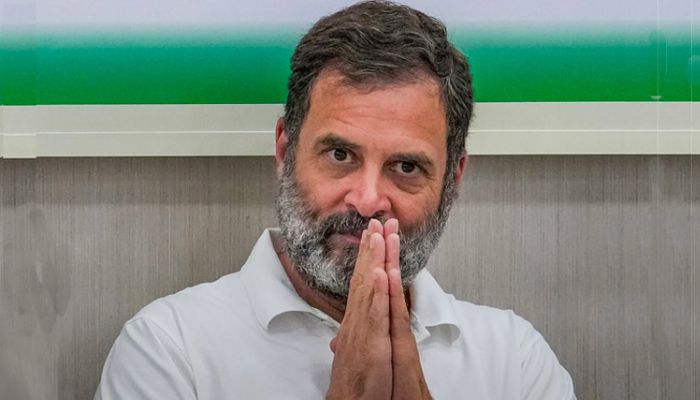
Delhi HC dismisses plea against Rahul Gandhi for revealing identity of minor rape victim, but it’s not a clean chit even after deleting tweet as FIR was registered

On 24th January (Wednesday), the Delhi High Court dismissed a petition that sought registration of an FIR against Congress leader Rahul Gandhi for revealing the identity of an alleged rape victim in 2021. The court rejected the plea after taking note of the submissions made by the Congress leader, the city police and social media platform X. 

The bench of Acting Chief Justice Manmohan and Justice Manmeet PS Arora were hearing a 2021 petition by social activist Makarand Suresh Mhadlekar. He had sought an FIR against Gandhi in his case. 

Taking into account the arguments presented by the parties, the high court observed that the requests in the petition had been already addressed and resolved, thereby disposing of the plea. There were three requests made in the plea, action by NCPCR, deletion of the tweet, and and FIR by the police. Now it has been confirmed that all three have already been done. NCPCR had lodged a complaint against Rahul Gandhi, after which the Delhi Police registered an FIR in September 2021, which was confirmed by the police in the court.

Meanwhile defending Congress leader Rahul Gandhi, his counsel informed the bench that Gandhi has taken down the tweet which revealed the identity of a minor Dalit girl who was allegedly raped and murdered. Following his counsel’s assertion, the advocate representing social media platform X (formerly known as Twitter) confirmed before the court that Gandhi deleted the tweet himself. Earlier the tweet was withheld in India by the platform.

Thus, all the pleas made in the petition have been fulfilled, making the petition infructuous. Therefore, the court dismissed the petition. However, the deletion of the post doesn’t secure relief for the Congress leader as the case for revealing the identity of the alleged rape victim still stands and the call for his arrest has been gaining steam. 

The dismissal of the plea has not brought any relief for the Congress leader as the actions sought in the plea had already been taken, that is, an FIR had already been lodged in 2021 against the Congress leader. The police investigation following the FIR is still on, and it does not stop just because Rahul Gandhi deleted the tweet.

Although the tweet has been deleted, the fact remains that Rahul Gandhi had revealed the identity of a minor rape victim, which is an offence. Notably, disclosing the identity of a rape victim is an offence under Section 228A of the Indian Penal Code. It is punishable with imprisonment up to two years and a fine. Moreover, the fact that the Congress MP agreed to delete the tweet can be considered a confession of guilt.

Regarding the development, NCPCR chief Priyank Kanungo elaborated on the details of the case and noted that they had asked Delhi police to file an FIR in the case way back in 2021. He also expressed hope that Delhi Police will soon arrest the accused in the case, Rahul Gandhi, for revealing the identity of parents of an alleged rape victim.

Speaking with ANI, Kanungo said, “There was an incident of rape and murder of a minor in 2021. At that time, to sensationalise it, Rahul Gandhi had shot a video with the girl’s parents and had posted it on social media account. By doing so he violated the provisions of the POCSO Act and Juvenile Justice Act. We had asked Delhi Police to register an FIR against him. Today, during the hearing of a petition in this case, Delhi Police told the court that they filed an FIR against Rahul Gandhi in September 2021. We hope that Delhi Police will arrest the accused soon …”

Furthermore, the Delhi High Court had earlier asked Delhi Police to submit its status report within 10 days about this case. 

The case pertains to a social media post uploaded in August 2021. Back then, Congress leader Rahul Gandhi met the family of the minor girl who was allegedly raped, murdered, and cremated without her parents’ consent in Delhi’s Old Nangal crematorium. After meeting with the family, he assured his support to the family. Rahul Gandhi also tweeted about his meeting and shared a picture of him with the victim’s parents on Twitter. As the identification of the parents could lead to the identification of the alleged rape victim it is barred to share such details to avoid stigmatisation of the victim. 

Click here, to read why the Delhi Police’s bizarre argument earlier in the trial proceeding drew criticism.