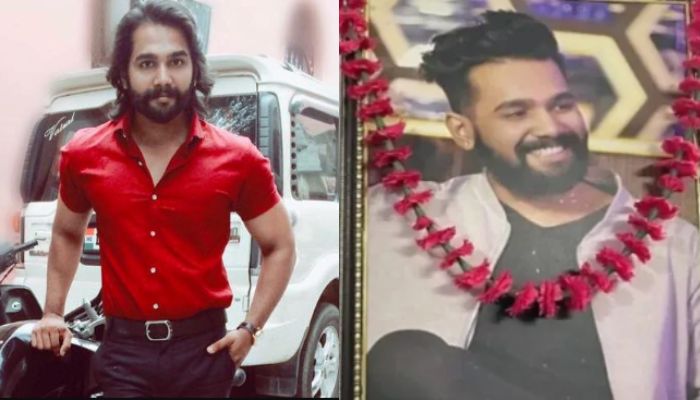
On 15th January (Monday), the Tis Hazari court in Delhi adjourned the hearing of arguments on sentencing against three convicted killers of photographer Ankit Saxena in 2018 over an interfaith relationship. The court granted 15 days for both parties to file their affidavits. The next hearing in the case will take place on 31st January.
On 23rd December, Additional Sessions Judge Sunil Kumar Sharma convicted his Muslim girlfriend Shehzadi’s parents Akbar Ali and Shahnaj Begum, and maternal uncle Mohammad Salim in Ankit’s murder case that roiled West Delhi’s Raghubir Nagar area in February 2018.
In its verdict, the court had said that Delhi Police was successful in proving that the reason behind the murder of 23-year-old Ankit Saxena, a photographer by profession, was his love affair with a girl who belonged to the Muslim community. The girl’s family was vehemently opposed to the inter-faith relationship.
Court hearing
Now, as per reports, during today’s hearing, the convicted killer raised questions on media coverage in this case. Additionally, they also demanded a blanket ban on media covering the case.
According to the information, the court had directed both sides to file their affidavit on 6th January 2024. During today’s hearing, a lawyer representing convict Mohammad Salim submitted an affidavit before the court but it was not certified by the Jail Superintendent.
Similarly, the lawyer of another accused Akbar Ali also stated that he wanted to add some additional details in his client’s affidavit and needed time for the same. Additionally, the lawyer objected to media coverage stating that reporting is being done daily.
The lawyer claimed that because of the daily media reporting on the case, the rights of the culprits will be hampered. He urged the court to issue guidelines to ban media reporting.
The Special Public Prosecutor opposed the argument and said that the case was over. The decision is reserved. The decision of a court is like a public document. The media should report this matter. The court has directed the lawyer to file a separate application in this regard.
The Delhi Police was represented by Special public prosecutors Vishal Gosain and Rebecca Mammen John.
Ankit’s mother shares her ordeal
Recently, an Aaj Tak reporter reached Ankit Saxena’s residence in Raghubir Nagar. According to the article, a large image of a smiling Ankit greeted her while ascending the narrow staircase to the drawing room. A photograph of his father who died during the Covid period was placed next to it. A CTV screen was installed nearby. Ankit’s relative stated, “She lives alone. The issue is complicated. There is a minority settlement nearby. Everyone knows her. We insisted on putting the CCTV. She also has her neighbours. We will handle if any mishap happens.”
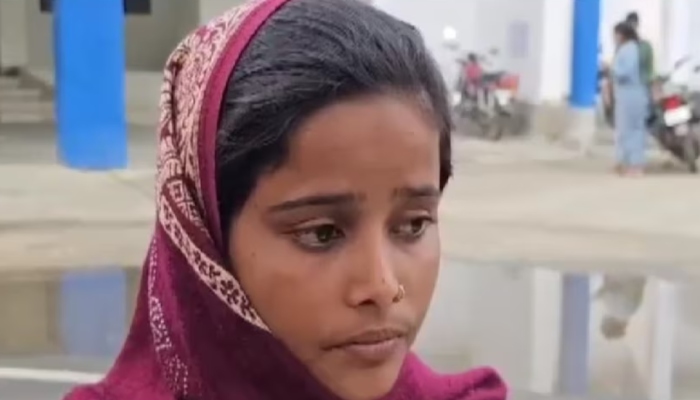
Ankit’s mother divulged that she was unaware of her son’s relationship with Shahzadi. She added that Shahzadi had spoken in court on behalf of her family to protect them. Kamlesh’s lawyer Vishal Gusai also confirmed that Shahzadi testified in favour of her family members but eyewitnesses standing on the road conveyed the truth.
Click here to read the details of the grisly murder case of Ankit Saxena.
Notably, the Delhi Police presented the facts in court in a sequential fashion and the court was provided with full disclosure of the murder’s plot. The charge sheet submitted in the case by the authorities made it evident that the murder was planned out. It was also discovered that the girl’s love for the Hindu boy was the reason her family treated her with strictness. Shahzadi’s father used to work as a butcher and the weapon utilised to execute the horrifying crime was also recovered.
Unreal scenes were witnessed at Mumbai airport today after passengers sat on the tarmac near a plane and had their dinner after facing a delay of over 12 hours. A video of the incident has been doing the rounds on social media.
Incidentally, the video came hours after a clip of a cabin crew being assaulted by a passenger over the delay in take-off had gone viral on the internet.
This is a clear cut failure of the airlines. Can’t provide accommodation or food in a respectful manner. What are v paying high prices for? Passengers having dinner after scheduled flight delay of 14 hours that too at a runway. @aajtak@ANI@AmanChopra_@ZeeNews@sudhirchaudharypic.twitter.com/ni78ipDNjU
The footage depicted passengers seated on the airport apron, having their meals with an IndiGo aircraft visible in the background. According to the individual who posted the video, these passengers were originally scheduled for a Goa-Delhi flight that faced a 12-hour delay. Eventually, the flight was purportedly redirected to Mumbai.
The scheduled departure time for the flight from either Goa or Delhi on January 14 (Sunday) was approximately 9:15 am. However, it ended up taking off in the evening and touched down in Mumbai at 5:12 am on January 15 (Monday).
“We regret this discomfort and assure you that it is never our intent to disrupt the travel plans of our flyers. However, at times, due to certain operational reasons, such delays are beyond the control of the airline. We look forward to your kind understanding,” the airline said.
Earlier today, another video of a passenger assaulting a cabin crew of an IndiGo flight had gone viral on X, formerly known as Twitter. In the video, a passenger wearing a yellow hoodie ran from the aisle in the middle of the announcement that the pilot was making and slapped him. The agitated passenger said, “Either fly the plane or open the gates,” hinting that the passengers were made to sit in the plane for a long time. While a co-passenger apologised profusely for the behaviour of the person in the yellow hoodie, one of the air hostesses broke down and said, “You cannot do this”, repeatedly.
IndiGo is facing intense backlash over delays of several flights across the country, primarily on account of inclement weather conditions due to prevailing fog. A total of 10 flights were diverted, and 100 were delayed. Some of the flights were reportedly cancelled as well.
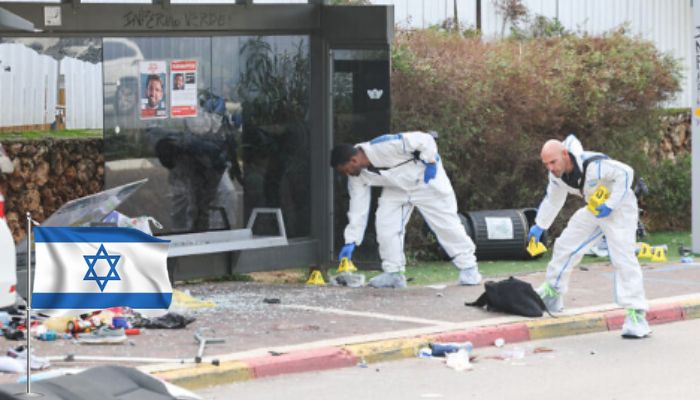
A few Palestinian men from the occupied West Bank carried out a car-ramming and terror attack in which one woman lost her life and 17 others suffered injuries, as per Israeli media citing Police.
? Reports of a terrorist attack in the city of Raanana in central Israel.
One woman was murdered and 17 others injured, including teens and children.
According to Times of Israel, the police Central District Commander Avi Bitton said the Ra’anana terror attacks were carried out by two Palestinians from the Hebron area, who had been working illegally in the city’s industrial zone recently.
The official added that both the accused have been arrested and are being questioned. “This was a very grave terror attack,” Bitton added.
According to Bitton, the terrorists took control of two cars and carried out attacks at three locations in the city. He said that the first was apprehended very quickly and the second a few minutes later. The police are not ruling out other suspects and are continuing to search the wider area, Times of Israel added. The national police commissioner Kobi Shabtai said that the two suspects are relatives.
As per the report, the Police and the Shin Bet security agency are jointly investigating the apparent terror attack. Following the attack, the Israeli police forensics personnel reached the spot and gathered forensic evidence and carried out the investigation into the case.
Regarding the victims of the terror attack, Meir Hospital stated that a critically wounded woman brought to the medical center from the attack succumbed to her wounds. The woman seemingly in her 70s has not been identified so far. As per reports, the woman had stab wounds as well.
At least 17 others were wounded in the attack in the central city, including several in serious condition. Seven children and teens are being treated at Schneider Hospital after the attack.
Six persons were arrested on Sunday (14th January) in connection with an alleged plot to disrupt the London Stock Exchange (LSE) when it opened for trading on Monday, according to London’s Metropolitan Police.
Detectives initiated an inquiry after the Daily Express tabloid sent information to the Metropolitan Police on Friday. Arrests were made in London, Liverpool, and Brighton on Sunday.
According to a police statement, activists from the Palestine Action Organization planned to target the exchange on Monday morning, causing damage and preventing it from “opening for trading.”
The LSE has not had a physical trading floor since 1986, with all stock trading conducted electronically. On Monday, the UK markets were operating normally.
Palestine Action is a British-based activist group that seeks to disrupt the operations of weapons manufacturers who supply the Israeli government.
In a post on X on Sunday, the group said that the LSE raised “billions of pounds for the apartheid state of Israel” and “actively” boasted about its backing for Israeli enterprises.
According to a post on X from Palestine Action, five of the six arrested activists have been released, while one has been charged with an offense and is scheduled to appear in court soon.
Metropolitan Police Detective Superintendent Sian Thomas stated, “These are significant arrests. We believe this group was prepared to carry out a disruptive and harmful prank, which might have had major consequences if carried out successfully.”
“I’m grateful to the Express for their willingness to provide the information gleaned from their own investigation. It was instrumental in helping us intervene successfully. Having only been provided with the material on Friday afternoon, we had limited time to act,” he added.
Hours after renowned Cricketer Sachin Tendulkar flagged his deep fake video, the Union Ministry of Information and Technology has swung into action. Taking to X, Union Minister Rajeev Chandrasekhar assured that the Ministry will shortly notify strict rules under IT acts making it mandatory for platforms to comply with the rules to curb misuse of Artificial Intelligence (AI) and tackle deep fakes.
In his post, the Minister thanked Sachin Tendulkar for flagging his deep fake video and bringing the issue to light. Chandrasekar reiterated the risk posed by Deep Fakes and misinformation by AI asserting that they are a threat to the safety and trust of Indian users.
The tweet read, “Thank you Sachin Tendulkar for this tweet. Deep fakes and misinformation powered by AI are a threat to Safety and Trust of Indian users and represents harm & legal violation that platforms hv to prevent and take down. Recent Advisory by Meity Ministry requires platforms to comply with this 100%. We will be shortly notifying tighter rules under IT Act to ensure compliance by platforms.”
Thank you @sachin_rt for this tweet #DeepFakes and misinformation powered by #AI are a threat to Safety&Trust of Indian users and represents harm & legal violation that platforms hv to prevent and take down.
Notably, Bharat Ratna and Cricket legend Sachin Tendulkar became the latest victim of the malicious creation and dissemination of deep fake content. Earlier in the day on 15th January, the master blaster took to X to address the disturbing misuse of technology, urging vigilance and swift action against the spread of misinformation as he shared a deep fake video where he can be seen advertising for a gaming app and even advocating for its ability to help people earn money.
Raising concerns over the problems posed by the insidious use of AI tools for image and video editing, Tendulkar wrote, “These videos are fake. It is disturbing to see rampant misuse of technology. Request everyone to report videos, ads & apps like these in large numbers. Social Media platforms need to be alert and responsive to complaints. Swift action from their end is crucial to stopping the spread of misinformation and deepfakes.”
These videos are fake. It is disturbing to see rampant misuse of technology. Request everyone to report videos, ads & apps like these in large numbers.
Social Media platforms need to be alert and responsive to complaints. Swift action from their end is crucial to stopping the… pic.twitter.com/4MwXthxSOM
The deep fake video shared by the cricket icon, featured him endorsing a gaming app called the Skyward Aviator Quest. Not only does Tendulkar appear to be endorsing the app in the video, but he was also heard claiming that his daughter Sara is using the app these days and also earning a lot of money through it.
It’s obvious from the video that it was heavily edited to not only look, but also sound like the cricket player.
Notably, Tendulkar’s case is not an isolated incident. In recent times, the malicious creation and dissemination of dee pfake content, often including pornographic material, has become a potent weapon for blackmail and character defamation. Several celebrities like actors Katrina Kaif, Alia Bhatt, and Priyanka Chopra have recently fallen prey to this deep fake menace. The severity of the issue first came to the fore after actress Rashmika Mandana highlighted how she fell victim to this targeted abuse.
In November last year, the former India cricketer’s daughter Sara Tendulkar also fell victim to deep fake technology when her morphed picture with rumoured boyfriend Shubman Gill went viral on social media during the ICC World Cup 2023 in November.
The original picture had Sara hugging her brother Arjun Tendulkar but his face was replaced with Gill’s by the person who morphed the picture and posted it online.
What are deep fakes
Deep fakes, a blend of “deep learning” and “fake,” represent a concerning and rapidly evolving aspect of artificial intelligence manipulation. These sophisticated forgeries use digital software, machine learning, and face-swapping technologies to generate artificial videos that look strikingly similar to original videos of a person or an event. These videos can depict events, statements or actions that have never happened.
On 7th November, the Ministry of Electronics and Information Technology of India (MeitY) issued an advisory to the social media companies. The ministry reaffirmed the existing guidelines. There are three main laws and guidelines that are in place for such fake videos. The first is Section 66D of the Information Technology Act, 2000 and the second is Rule 3(1)(b)(vii) of IT Intermediary Rules 2021, and the third is Rule 3(2)(b) of the IT Intermediary Rules 2021.
The Centre also said that the creation and circulation of deep fakes carry a strong penalty – Rs 1 lakh in fine and three years in jail.
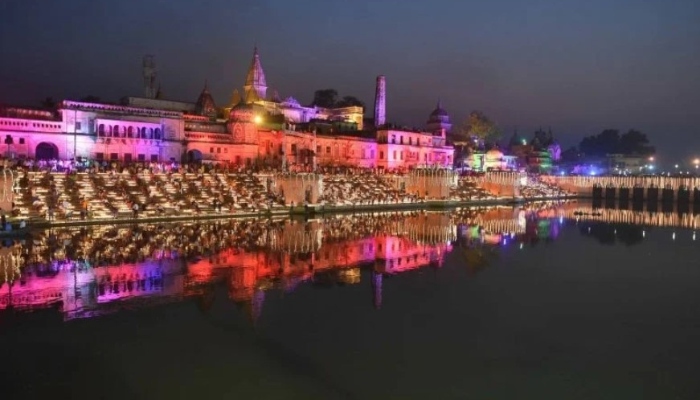
Owing to the extensive redevelopment projects being carried out in Ayodhya alongside the constrcution of the historic Ram Mandir, the holy town is rapidly emerging as a magnet for domestic as well as global investors. Investors from a variety of sectors are eyeing investments in the holy city and as spiritual tourism is expected to soar in the holy city following the Ram Mandir’s grand inauguration, several investors from the hospitality sector are making large investments in the temple town of Ayodhya. Several well-known hotel chains are opening branches in Ayodhya.
Uttar Pradesh Chief Minister Yogi Adityanath, while speaking at an event organised by a local media outlet, confirmed that a proposal to build a seven-star hotel serving only vegetarian food had been received.
“We have received 25 proposals to set up hotels in Ayodhya….one of the proposals is to build a pure vegetarian seven-star hotel,” he added.
Additionally, a number of five-star hotels will be built along the Sarayu River’s banks. Up to 110 small and large hoteliers are purchasing land in Ayodhya to set up their businesses there. According to reports, as many as 50 major hotel construction projects are currently underway in the city.
Notably, Indian Hotels Company Limited (IHCL), Marriott International, Sarovar Hotels & Resorts, and Wyndham Hotels & Resorts have already signed deals to build hotels in Ayodhya. These hotels are expected to be operational by 2024.
Besides investors from the hospitality sector lining up to invest in the holy city, Ayodhya has emerged as a major destination for real-estate investors. In this line, Mumbai-based real estate company The House of Abhinandan Lodha has invested nearly Rs 300 crore in acquiring a 25-acre land parcel in Ayodhya and has laid out a plan to launch a plotted development project in January 2024.
The project is situated approximately 12 to 15 minutes from the Shri Ram Temple. According to Samujjwal Ghosh, Chief Executive Officer (CEO), HOABL, the company expects to invest roughly 1200 crore over three to four years that is by December 2026.
According to latest news, Bollywood megastar Amitabh Bachchan has invested in this ambitious upcoming project, The Sarayu, which is being developed by Mumbai-based real estate company The House of Abhinandan Lodha.
According to reports, (HoABL) who is building the seven star enclave has refused to comment on the size and value of the deal citing client confidentiality, however, the real estate industry sources said the plot where Bachchan intends to build a home measured around 10,000 square feet and was valued at Rs 14.5 crores.
Makar Sankranti is a prominent Hindu festival. It celebrates the Sun’s transition into the zodiac sign of Capricorn or Makar Rashi, which signifies the end of the winter solstice. From this day, the days start to get longer, and it is also the beginning of the harvest season. Hindus thank the Surya Bhagwan on this day for His boundless blessings that make life possible on the earth. The celebrations include holy dips in the rivers, bonfires, feasts and flying kites. Different names and variations across India celebrate the festival.
The changing date of Makar Sankranti
According to the Solar Calendar, the exact date varies slightly each year. Traditionally, it falls on 14th January and sometimes shifts to 15th January. This variation is due to the solar cycle and the Earth’s axial precession. One Earth year is about 365.24 days long. The solar cycle is set by the sidereal time when the Sun enters Capricorn.
To adjust for this difference, leap years are added to the calendar, causing Makar Sankranti to fall on 15h January during those years. Furthermore, the time difference between two consecutive instances of Makar Sankranti is almost the same as a year. It leads to gradual shifts in the data over time. The precession of equinoxes, where the tropical zodiac shifts about one degree every 72 years, also contributes to these changes.
As a result, the festival will increasingly fall on 15th January in the 21st century. In the 20th century, it used to fall on the 14th of January and on the 13th of January in the 19th century. Furthermore, from 2102, it will increasingly fall on 16th January.
Festivals that fall a day before Makar Sankranti
Every year, festivities happen across the country with different names and variations a day before Makar Sankranti. In Punjab, people celebrate Lohri, which marks the end of winter. The festival is celebrated by burning bonfires and offering food items to the fire like gajak, peanuts and more. Dance and music are part of the celebrations.
In Assam, people celebrate Bihu, a harvest festival featuring traditional feasts and bonfires. In Tamil Nadu, people celebrate Pongal, which is marked by cooking Pongal dishes, puja and other festivities.
Rituals and traditions
Some of the most common rituals and traditions followed on Makar Sankranti include holy dips in sacred rivers like Ganga, Yamuna, Godavari or Krishna. It is believed that such dips absolve past sins. Hindus also worship the Sun God on this day, offering him flowers, river water, betel leaves and Prasad. There is a Haldi Kumkum ceremony, a ritual among married women that symbolises the activation of positive energies. One of the most common practices on this day is charity. Apart from food items, clothes, etc., people traditionally distribute jaggery and sesame seeds, and it is believed that charity brings back blessings a hundredfold.
Astrological and astronomical aspects
Astrologically, Makar Sankranti’s significance is connected to the Hindu God Surya. The festival is dedicated to Bhagwan Surya and holds importance for purification rituals and spiritual journeys. The astronomical basis lies in the Sun’s ecliptic longitude reaching 270°, measured from a fixed starting point opposing the star Spica. It is a sidereal measure that differs from the tropical measure used for calculating Uttarayana, another significant period in Hinduism. The precession of the equinoxes causes the tropical zodiac to shift gradually. It affects the dates of equinoxes and solstices and festivals like Makar Sankranti.
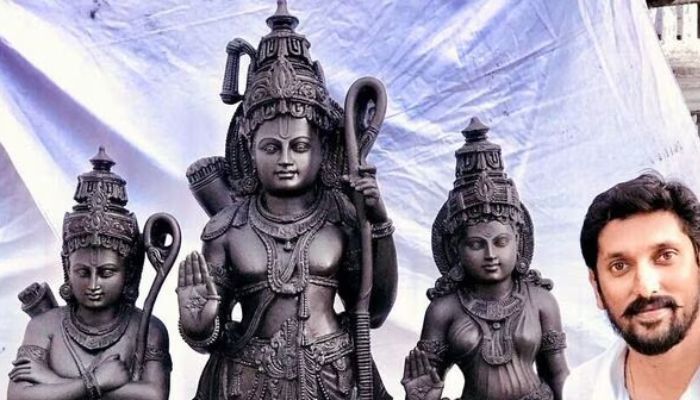
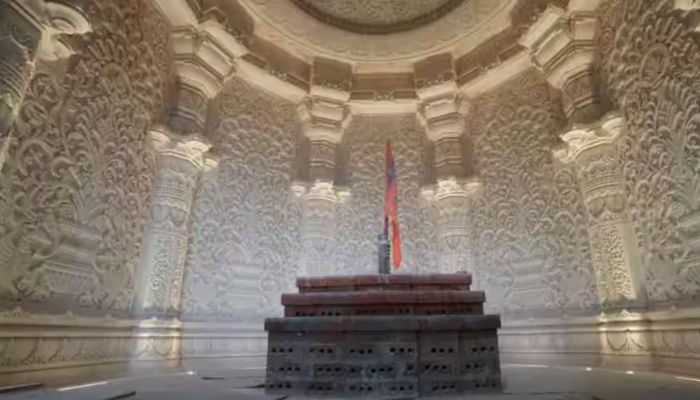
On 15th January (Monday), the Shri Ram Janmabhoomi Teerth Kshetra confirmed that the Murti sculpted by Karnataka-based renowned sculptor Arun Yogiraj has been selected as Shri Vigraha of Bhagwan Shri Ramlalla Sarkar. The idol has been carved out of Krishna Shila. It will be placed in the ‘Garbha Griha’ on 18th January while the consecration ceremony will take place on 22nd January at 12:20 PM, Trust General Secretary Champat Rai said.
Taking to X, the Trust stated, “The Murti sculpted on Krishna Shila, by renowned sculptor Shri Arun Yogiraj, has been selected as Shri Vigraha of Bhagwan Shri Ramlalla Sarkar.” However, the pictures of the idols have not been revealed so far. The idol will be of Five-year-old Ram Lalla and weigh around 150-200 kgs.
कर्नाटक के प्रसिद्ध मूर्तिकार श्री अरुण योगीराज द्वारा कृष्णशिला पर निर्मित मूर्ति का चयन भगवान श्री रामलला सरकार के श्री विग्रह के रूप में प्रतिष्ठित होने हेतु किया गया है।
The Murti sculpted on Krishna Shila, by renowned sculptor Shri Arun Yogiraj, has been selected as Shri…
— Shri Ram Janmbhoomi Teerth Kshetra (@ShriRamTeerth) January 15, 2024
Arun Yogiraj from Mysore has used ‘Krishna Shila’ (black stone) from Karnataka to carve the Ram Lalla idol. Reportedly, Lord Ram has been depicted in the Bal Swaroop (five-year-old child).
The Ram Lalla idols had been carved based on the sketch of internationally acclaimed artist Vasudeo Kamath. He hails from Karnataka’s Karkala town and his paintings from the Ramayana series are acclaimed worldwide.
Krishna Shila is found in the vicinity of Karkala, a small town in Karnataka, approximately 60 kilometers away from Mangalore. According to the officials, the most attractive and durable sculptures are made with Krishna Shila as it is one of the finest stones used for sculpting. A trust official said, “The stone, weighing 10 tonnes, 6 feet wide, 4 feet thick, and almost one foot long, was specially brought from Nellikaru village in Karkala, almost a month ago.”
Two other idols were also sculpted for the grand consecration ceremony and now they will be placed in the temple at separate locations. Click here, to read about the MBA-turned sculptor Arun Yogiraj who is credited for sculpting the choosen Ram Lalla idol as well as many renowned idols in the past.
The timings and details of the rituals
Addressing a press conference, Champat Rai said that the muhurat (auspicious timing) was decided by Ganeshwar Shastri Dravid of Varanasi.
The Trust Chairman said, “The religious rituals will begin from Jan 16 and will continue till Jan 21. On Jan 22, ‘Pran Pratishtha’ ceremony will take place. The idol for which ‘Pran Pratishtha’ will be done is expected to be around 150-200kgs. On 18th January, the idol will be placed at its position in the ‘Garbh Griha’ of the temple.”
He further said that the formal procedures of pre-Praan Pratishtha sacraments will start on January 16 and continue till January 21. General Secretary of Shri Ram Janmabhoomi Teerth Kshetra Trust said that the Pran Prathishtha’ is expected to conclude by 1 pm on January 22. “On Jan 20 and 21 darshan will remain closed to public,” he added.
“There are Seven Adhivaasas in Pran Pratishtha ceremony and a minimum of three Adhivasas are in practice. There will be 121 Acharyas conducting the rituals. Ganeshwar Shastri Dravid will be overseeing, coordinating, anchoring and directing all the proceedings of the ritual and the principal Acharya will be Luckshmikant Dixit of Kashi,” he added.
Rai said that all acharyas of all schools of Bharatiya spiritualism, religion, a system of worship, tradition, Sants of more than 150 traditions, Mahamandaleshwars, Mandaleshwars, Shrimahants, Mahants, Nagas, as well as leading figures of more than 50 Adivasi, Girivasi, Tatavasi, Dwipavasi tribal traditions, will remain present to witness the Pran-Pratishtha ceremony.
In the Kodarma region of Jharkhand, the police have filed an FIR against an individual named Suleman for allegedly murdering a Hindu man identified as Ghanashyam Das. The accused Suleman is said to have murdered the victim for marrying his niece, Sultana. The FIR in the case was registered on 14th December but it is reported that to date, the police have taken no action in the case.
According to the report by Aaj Tak, Sultana and victim Das were in love. The woman married the latter 3 years after the death of her earlier husband. Sultana was worried about the future of her two kids so she decided to marry Das after falling in love with him.
While the family of the woman had no problem with her second marriage to a Hindu, her maternal uncle, Suleman, had warned her regarding the marriage. He had threatened that he would do something unfavourable to stop the marriage. While the two married without any incident, the accused murdered Das 10 months after he tied the knot with Sultana.
Suleman is said to have spiked drinks offered to Das with poison, after which he immediately passed away. The accused believed that the woman had sinned by marrying a man belonging to the Hindu religion.
The woman has appealed to the police to take strict action against the accused. She said that she expects justice to be delivered to her second husband who was brutally murdered by the accused. The murder is said to be executed on 13th December, and the police filed an FIR in the case on 14th December.
Further investigations into the case are underway.
The news got picked up by various mainstream media giving the impression that all four Shankaracharyas are against the Pran Pratishtha, which is not the case.
The Congress claimed that all four Shankaracharyas – Shankaracharya Swami Shri Avimukteshwarananda Saraswati of Badrikashram Jyotirmath in Uttarakhand, Shankaracharya Swami Shri Nischalananda Saraswati of Purvaamnaya Govardhanmath in Puri, Shankaracharya Swami Shri Bharati Teerth Ji of Sringeri Mutt and Shankaracharya Shri Swami Sadanand Saraswati of Paschimannaya Dwarka Shardapeeth – are opposed to the way the ceremony is being held, and they will not attend the same.
While the Shankaracharyas of Jyotirmath and Puri have indeed said that they will not attend the event, no such announcements were made by Dwarka and Sringeri , but their names were also added in the claims.
Therefore the Dwarka and Sringeri Maths issued statements refuting such claims, and they urged the devotees to celebrate the inauguration of the Ram Mandir in Ayodhya.
Why are Shankaracharyas of Jyotirmath and Puri opposing the ceremony?
Shankaracharya Swami Shri Avimukteshwarananda Saraswati of Jyotirmath has expressed objection to the Pran Pratishtha on the grounds that the consecration cannot be done until the temple structure is complete as per Hindu scriptures.
Shankaracharya Swami Nischalanand Saraswati Maharaj of Puri has not opposed the event but only said that His decision is rooted in the deviation from the established traditions during the consecration of the Ram Lalla idol.
“The Shankaracharyas uphold their own dignity. This is not about ego. Are we expected to merely sit outside and applaud when the Prime Minister installs the idol of Ram Lalla? The presence of a ‘secular’ government does not imply the obliteration of tradition,” He said.
Some reports also claim that both Shankaracharyas have said that the ceremony is a political one while their statements on record state that their reservation is limited to rituals and traditions.
So is Pran Pratishtha happening as per Shastras or not?
While the subject is being widely debated just 6 days ahead of the Divine ceremony, many experts well-versed with the subject have supported the Pran Pratishtha.
Renowned Hindu astrologist Shri Ganeshwar Shastri Dravid Ji, who has himself identified and scheduled the auspicious time for the Pran Pratistha on 22nd January, had reportedly issued a response to a question in this regard.
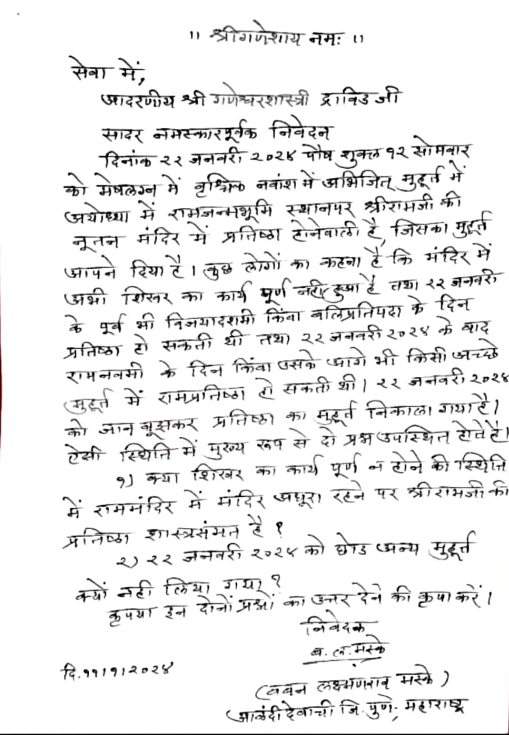
Question by Pune-based Baban Lakshmanrao Maske to renowned astrologer Shri Ganeshwar Shastri Dravid Ji
Replying to a query of a Baban Lakshmanrao Maske of Alandi Devachi town in Pune whether Pran Pratishtha can be done without the completion of the shikara (pinnacle), Shri Ganeshwar Shastri Dravid Ji wrote:
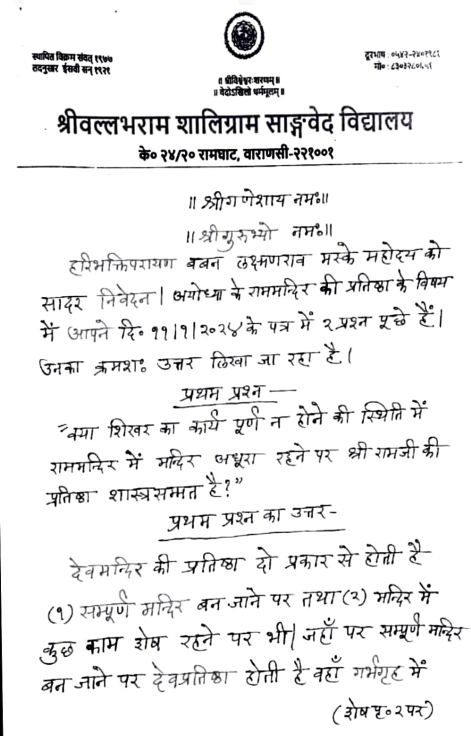
Response by astrologer Shri Ganeshwar Shastri Dravid Ji
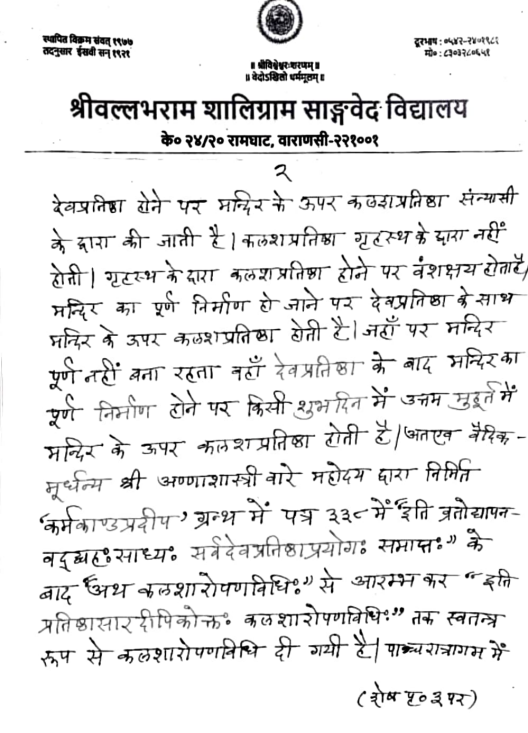
“The pratishtha of the temple of the deity is done in two ways; one, on the completion of the temple and two, on the part completion of the temple. When the Dev (Pran) Pratishtha is done upon the full completion of the temple, then a sanyasi (ascetic) is required to place the Kalash atop the temple. The Kalash Pratishtha is not done by a non-ascetic or a person with family life because, if done so, then the concerned person’s lineage would not be carried forward and will die with him. Once the Mandir is complete, Kalash pratishtha is done along with Dev (Pran) Pratishtha. When the Mandir is not complete, Dev Pratishtha is done there followed by Kalash Pratishtha on the completion of the Mandir as per auspicious time.”
Response by astrologer Shri Ganeshwar Shastri Dravid Ji
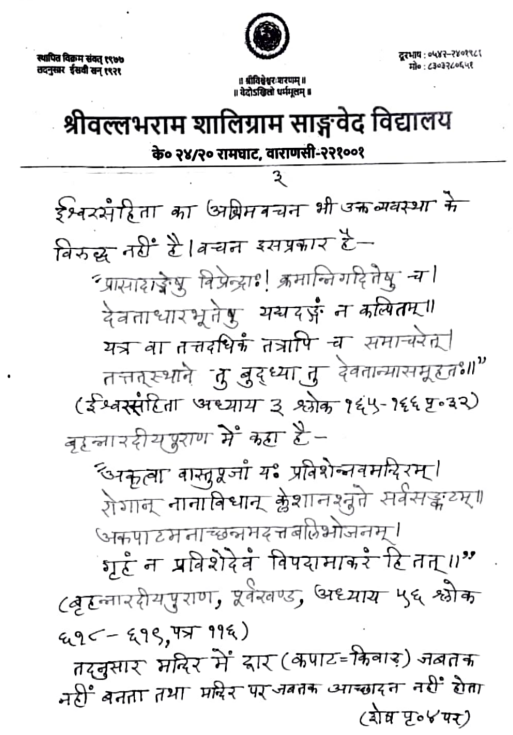
The esteemed astrologer goes on to state citations from a number of Hindu scriptures that approve the Pran Pratishtha so far as certain conditions are met. He further states in his reply:
Response by astrologer Shri Ganeshwar Shastri Dravid Ji
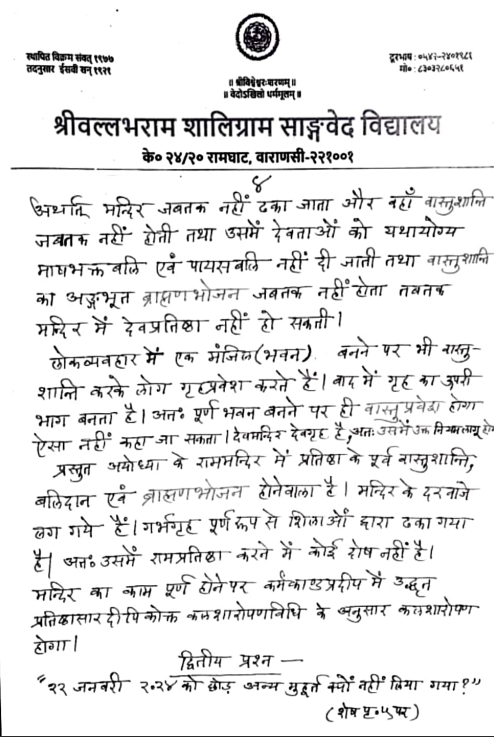
“Accordingly, until and unless the doors of the temple are not built, the temple is not covered, vastu shaanti is not done, Masha Bali and Payasa Bali is not performed and Brahman Bhojan is not performed, Pran Pratishtha cannot happen. As per social requirements, Griha Pravesh is also done when at least one floor of the structure is complete and vastu shaanti is performed. After this, the topmost part of the structure is built. Meaning that it is not necessary that vastu pravesh can be done only when the entire structure is complete. Dev Mandir (temple of the deity) is Dev Griha (home of the deity) meaning the rules of consecration and inaugurating a house will be applied to the temple. Before Pran Pratishtha, vastu shanti, balidaan and Brahman Bhojan will be performed in the Ram Mandir. The doors of the temple have been attached. Which is why there is nothing wrong in performing the consecration. Once the temple is entirely constructed, the Kalash Pratishtha will be performed as per scriptures.”
Response by astrologer Shri Ganeshwar Shastri Dravid Ji
Sanskrit scholar and author Nityānanda Miśra has also supported the evidence cited by Shri Ganeshwar Shastri Dravid and has also cited other scriptures that allow the Pran Pratishtha before the completion of the temple structure.
Citing 161st shloka from chapter 33 titled ‘Linga Lakshanam” from the Hindu book on vastushastra, Mayamatam, Miśra states that if the size of the Shiva Linga idol is large then it should be consecrated where it is dwelling.
He cites that if the temple is half-built then a middle-sized Shiva Linga idol should be placed and when the temple structure is complete then small Shiva Linga should be consecrated by a qualified individual.
“So this is based on applicability. When the Shiva Linga idol will be too big then its consecration cannot be done after the temple structure is complete because how will it be taken through the doors? So its consecration would have to be done before the temple structure is complete,” the author said.
He concluded adding that the discussion on the Pran Pratishtha should be on the grounds of what the scriptures say and the discussion should not end by merely saying that the consecration is against the rituals and scriptures.
Another counter to the reservation that Pran Pratishtha cannot be done until the Ram Mandir construction is complete was delivered by Amit Tripathi, author of the renowned “Shiva Trilogy”.
He stated that in ancient times, temple construction often spanned centuries, emphasizing that the Garbhagriha (sanctum sanctorum) is done then an idol is placed and ‘Pran Pratishtha’ can happen.
Responding to a question over Congress allegations that the Pran Pratishtha is being done in an incomplete temple and the word used by the Congress is ‘Paap’, Amish Tripathi pointed out three major pooja ceremonies that happen.
“I don’t want to comment on politics. But in my understanding, my grandfather was a Pandit in Varanasi, he used to do Pran pratishtha poojas and he was a teacher too at Banaras Hindu University. What I learned from my grandfather was that at the beginning of the construction itself, a major ceremony that happens is to mark out the Garbhagriha (sanctum sanctorum). That’s the first major Pooja and the second is that when the Garbhagriha is complete, then the idol is placed in there and once that is done, ‘Pran Pratishtha’ can happen,” he said.
He emphasized that ancient temples, such as the Kailasa Mahadev temple, often took decades or even more than a century to build. In these cases, the architects knew they wouldn’t be alive to see the completion.
“There are no ancient temples in Northern India as they all were destroyed but you can find them in the South. It’s not about just one temple, it’s about multiple temples in the complex. So the third ceremony is when the entire temple complex gets completed and the main temple spires also get completed, one can perform the ‘Purna Kalasha’ at the top. I am assuming that the Garbhagriha (sanctum sanctorum) is complete. From my understanding, I think Pran Pratishtha can happen,” he added.
Pankaj Saxena, co-founder and Director of Culture Research for Brhat shared extensive information on X, formerly Twitter, in this context. He writes that it is a misconception that Pran Pratishtha of Shri Ram in Ram Mandir cannot be done before the temple is complete.
2. Firstly, the core essence of temple building that one gets from studying any Agama is that the temple is built around the deity, not the other way around. The kṣetra radiates from the brahmasthana which is decided upon the vastupurusha sthapana.
— Pankaj Saxena | पंकज सक्सेना (@PankajSaxena84) January 13, 2024
He says that Hindu scriptures state that the temple is built around the deity and not the other way around. “The kṣetra (area) radiates from the brahmasthana (spot where Deity is placed) which is decided upon the vastupurusha sthapana (installation of the complex).”
He further writes, “Secondly, as the great temple expert, iconographist and Puranic scholar @artist_rama said, prana pratishtha can be done anytime after the garbha-griha is ready. Completion of the entire superstructure is not necessary.”
Saxena states that no Hindu scripture prohibits the Pran Pratishtha before the entire temple is complete. He cited examples given by other X users to say that several Hindu temples in India in the past have been consecrated before the entire structure was complete.
According to Hindu temple architecture expert Ramakrishna Kongalla, it is easier to place the Kalasha (Holy pitcher) atop the topmost roof of the temple if the vigraha (statue) is already placed. Ramakrishna Kongalla is the Assistant Professor in Tourism at the Indian Institute of Tourism and Travel Management, Gwalior.
Saxena listed the names of such Hindu temples which had Pran Pratishtha before the structure was complete. These included Matangeshvara temple in Khajuraho where the Shiva Lingam is much bigger than the temple gates and thus the vigraha was consecrated first and the temple was built around it.
Similarly, in the Bhaskaresvhara temple in Bhubaneswar, the vigraha was consecrated first and temple built around it. The Shri Ulgalanda Perumala temple dedicated to the Trivikrama svaroopa of the deity first had the vigraha consecrated and temple built around it after.
“Rock cut temples are also a testimony to that. Most of the rock cut temples are excavated top down. In that case that part of the temple is built first which is higher, so jagati and adhisthana of the temple emerge later, far after the vigraha emerges and is consecrated,” Pankaj Saxena wrote.
He points out that several such temples built by the Hoysala and Chalukya dynasties have incomplete shikhara to this day but they are active and fully functional temples.