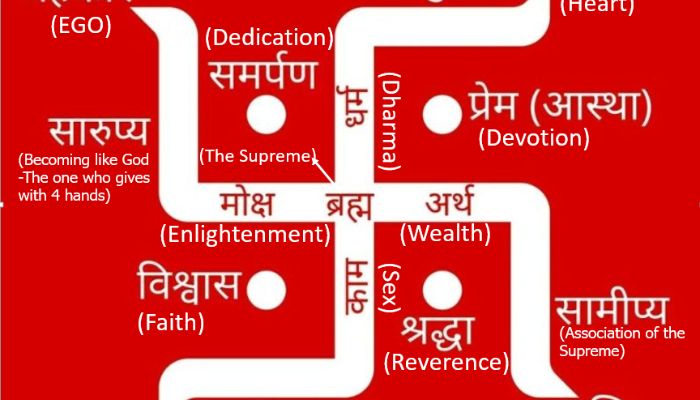
Hindu groups in Canada have taken it upon themselves to counter misinformation against the Swastika amid the ongoing Israel-Hamas war. A rise in anti-semitism has been symbolised by the growing display of the Nazi symbol, the Hakenkreuz, meaning the tilted cross, which the West conveniently calls as Swastika, thereby demonising the Hindu symbol and safeguarding the original hateful Hakenkreuz.
On 5th November, Canadian Prime Minister Justin Trudeau called out a display of the Nazi Hakenkreuz during a pro-Palestinian rally in Ottawa, however, he called the symbol a Swastika, which is originally a Hindu symbol.
Hindu netizens slammed Trudeau and now, Canadian Hindus have launched a campaign to reclaim the Swastika. Under the ‘Reclaim Swastika’ campaign, Canadian Hindus are explaining the difference between the Nazi Hakenkreuz and the Hindu Swastika.
The Canadian Organisation for Hindu Heritage Education (COHHE) took to X, formerly Twitter, to announce the campaign. “Our #ReclaimSacredSwastika campaign needs your support to get the message to all police forces and politicians across Canada to decriminalize our Sacred Swastika.”
Our #ReclaimSacredSwastika campaign needs your support to get the message to all police forces and politicians across Canada to decriminalize our Sacred Swastika. We ask all Hindus, Buddhists, Jains and our allies TO REPLY WITH A POST OF A PHOTO OF THE SACRED SWASTIKA inside… pic.twitter.com/Mt9lwmveKC
The group has also reached out to Buddhists, Jains and all allies to post images of the Swastika inside and outside their homes, temples, stores and elsewhere for awareness.
“We are looking for 1008 photos. Will you please help? Let’s all work together to educate everyone about the sacred Swastika and have it delinked from the Nazi Hate Symbol,” COHHE stated on X.
On 15th November, COHHE wrote a letter to the Toronto Police and Mayor Olivia Chow requesting them to call the Nazi hate symbol Hakenkreuz or Hooked cross and not Swastika, a Hindu symbol described by a Hindu word.
“Call For Action! Reclaim Swastika. @TorontoPolice website declares the swastika as a hate symbol and its public display a hate-motivated crime. https://tps.ca/hate-motivated-crime/ COHHE has written a letter to them and the @MayorOliviaChow requesting them to call the Nazi hate symbol Hakenkruez or Hooked Cross and not as a swastika which is a sacred symbol and word for Hindus, Jains, Buddhists, among others. We invite individuals and organizations to co-sign this letter so @TorontoPolice, police services across Canada, and all politicians can be educated to delink the Swastika from the Nazi hate symbol,” the group wrote.
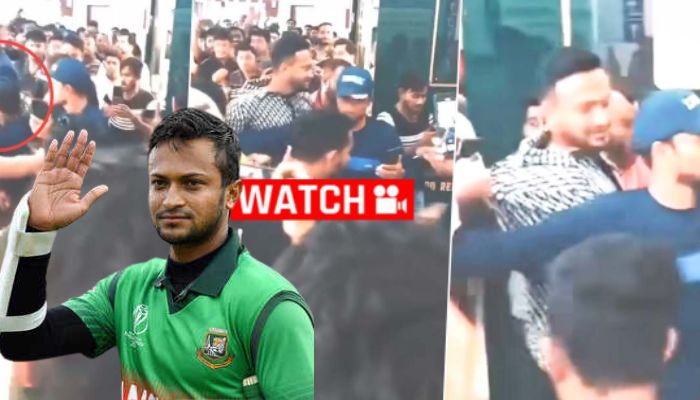
In the wake of Bangladesh’s poor performance in the World Cup 2023, a video of Shakib Al Hasan being pulled, and thrashed by a mob is going viral on the internet. It is being claimed that the Bangladeshi Captain Shakib was mobbed by angry Bangladeshi fans on his return to the country. The viral video was also shared by some media portals claiming that the Bangladeshi skipper was ‘brutally beaten’/ ‘assaulted’ after the team’s World Cup debacle.
Kalesh b/w Bangladeshi Fans and Shakib al hasan, when he returned to Bangladesh after poor World Cup campaign pic.twitter.com/C7DQK93gAk
Journalist Anil Tiwari who writes for Qatari mouthpiece Aljazeera, as per his Twitter bio, tweeted, “Bangladeshi fans assaulted their captain Shakib Al Hasan. Just yesterday, they were celebrating India’s defeat. Utterly disgraceful behaviour.”
Bangladeshi fans assaulted their captain Shakib Al Hasan. Just yesterday, they were celebrating India's defeat. Utterly disgraceful behavior. #CricketWorldCup#Cricket#Bangladesh
Here are some headlines from media portals making those claims alongside sharing the viral video.
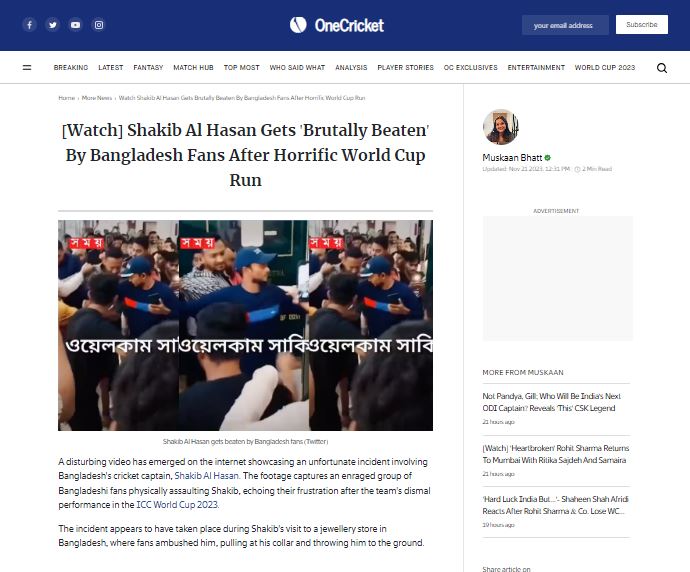
A Cricket portal named OneCricket headlined (Archive) “[Watch] Shakib Al Hasan Gets ‘Brutally Beaten’ By Bangladesh Fans After Horrific World Cup Run”
(Screenshot of the article making those claims)
Notably, Bangladesh performed badly and finished in the eighth spot in the recently concluded World Cup, falling way below the fans’ expectations. The Shakib Al Hasan-led side only managed to win 2 games and the skipper himself had an unforgettable outing. He had to bench himself in some games due to injury concerns.
However, the claims being made on the basis of the viral videos are fake. The video doing rounds on the internet is an old video. The said incident involving Shakib Al Hasan captured in the video took place in March this year, that is the video is 8 months old. It is not linked with Bangladesh’s poor performance at the World Cup or Shakib’s below-per-performance. Additionally, the Bangladeshi skipper was not assaulted or mobbed on his return to the country after the team’s World Cup debacle, as claimed on the internet.
The incident took place in Dubai on 16th March when Shakib Al Hasan went for a commercial event at a Jewelry store.
After his series against England in March this year, Shakib flew to Dubai to inaugurate a gold jewelry shop that was owned by Arav Khan. Khan is a Bangladeshi fugitive and wanted in the murder case of a police official.
At the time of the incident, Shakib was surrounded by fans who went out of control and he tried to rush out. However, in the chaos, he almost fell over while fans kept pulling his collar to stop him and take selfies with him. As seen from the video and confirmed by media reports of that time, he had no security around him to keep fans in check.
Regarding the Dubai incident involving Shakib, the Additional commissioner (detective) of Dhaka Metropolitan Police (DMP) told the media that the man (Robiul Islam) who uploaded the video is from Bangladesh. The Police official added that Islam had murdered a police officer and had taken an Indian passport. He noted that the accused then went on to live in Dubai and despite knowing his criminal past Shakib went to his event.
It is important to note here that Arav Khan’s original name is Robiul Islam. He hails from Kotalipara in Gopalganj and fled the country after charges of murder.
The officer added that as part of the investigation, the Bangladeshi Cricket team’s captain might also be quizzed.
Sharing reports and details of the original incident, several Twitter users called out the fake claims being made about Shakib Al Hasan. The users slammed individuals and media outlets for peddling these false claims, particularly those who connected the recent setback for Bangladesh with an older video depicting fans pulling his shirt, falsely portraying it as a case of him being manhandled or assaulted while attempting to take a selfie.
This footage from Dubai in purposes of business and the audio was taken from a tv Drama
I hope you recover from the hated of your own bitrthland. Fake voice alert This is a 8 months old video from dubai.where he went for promotion and fans wanted to take it photo with him.Crowd went out of control.Such a disgusting thing that it is morphed by a Bangladeshi Kohli fan pic.twitter.com/89qzTQvfsf
Some users accused that the fake claims were peddled by Kohli fans in Bangladesh. A Twitter user wrote, “I hope you recover from the hated of your own birthland. Fake voice alert. This is an 8-month-old video from Dubai where he went for promotion and fans wanted to take it photo with him. Crowd went out of control. Such a disgusting thing that it is morphed by a Bangladeshi Kohli fan.”
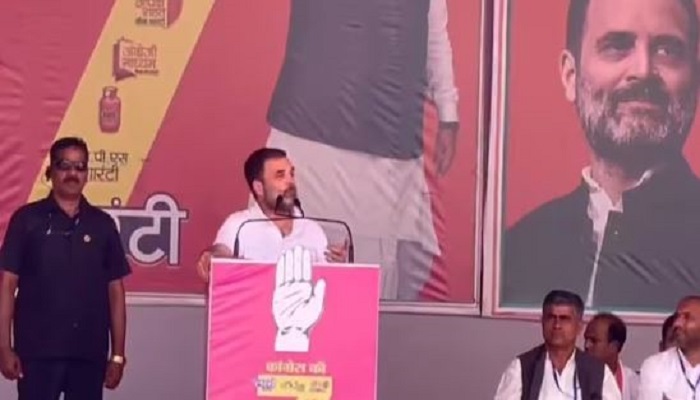
On 21st November (Tuesday), Congress leader Rahul Gandhi, in a bizarre argument, blamed Prime Minister Narendra Modi for India’s defeat in the ODI Cricket World Cup Final. The Wayanad MP argued that the unbeaten Indian Cricket team would have went on to win the world cup but Prime Minister Narendra Modi, whom he referred to as ‘Panauti’ (bad omen/unlucky charm), made them lose the match.
The Congress prince made this remark while addressing an election rally in Rajasthan’s Jalore. Rahul Gandhi said, “Modi comes on TV and says ‘Hindu- Muslim’ and sometimes goes to a cricket match. It is a different matter that the match was lost. Panauti.”
Targeting PM Modi, Rahul Gandhi added, “Achhe bhale hamare ladke waha pe World Cup jeet jaate, par panauti harwa diya (our boys were almost winning the World Cup, but the ‘bad omen’ made them lose).”
Taking to its official X (formerly Twitter) handle, the Congress party also shared the clip with the caption in Hindi, “Panauti (with a wink emoji)”.
It is important to note that PM Narendra Modi was accompanied by Australian Deputy Prime Minister Richard Marles, which was a scheduled event as part of India’s reformed ‘Cricket Diplomacy’ rather than a personal outing of the Indian Prime Minister. Additionally, by the time, both leaders made entry into the stadium to watch the 19th November Cricket World Cup final, Australian batters had heavily titled the match in their favour.
However, according to the Congress leader Rahul Gandhi, PM Modi’s entry at the Narendra Modi stadium in Ahmedabad turned the match on its head otherwise Indian bowlers would have bundled out remaining seven Australian batters for less than 70 odd runs.
Following his remark, BJP leader and former Union Minister, Ravi Shankar Prasad slammed Rahul Gandhi for his ‘Panauti’ remark. He said, “Rahul Gandhi chose the wrong words. What has happened to him?”
Prasad reminded Rahul Gandhi that earlier his mother Sonia Gandhi called PM Modi ‘maut ka saudagar’ at a poll rally in Gujarat and suffered political consequences for it. The BJP leader added, “Your party has not been able to win in Gujarat after your mother’s remarks. You should learn from the past.”
Cricketers lauded PM Modi for motivating Indian players
Meanwhile, yesterday (20th November), Indian Cricketers Ravindra Jadeja and Mohammad Shami shared pictures with Prime Minister Narendra Modi noting that his visit to the dressing room was ‘special’ and ‘motivating’. In the visuals, PM Modi was seen hugging pacer Mohammed Shami.
#WATCH | Prime Minister Narendra Modi met Team India in their dressing room after the ICC World Cup Finals at Narendra Modi Stadium in Ahmedabad, Gujarat on 19th November.
The PM spoke to the players and encouraged them for their performance throughout the tournament.
Earlier in the day (21st November), ANI shared a video revealing PM Modi’s conversation with the Indian players when he went to console them following the upset for the host side. During the interaction, PM Modi personally Invited them to meet him in Delhi and asked Indian players to keep their spirits high. He said, “You reached here after winning 10 matches. These things happen.”
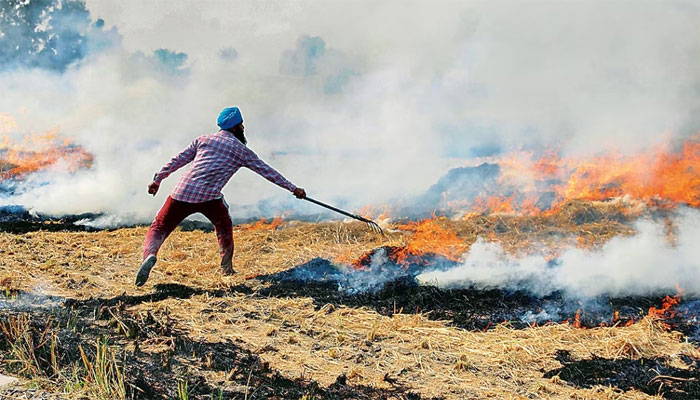
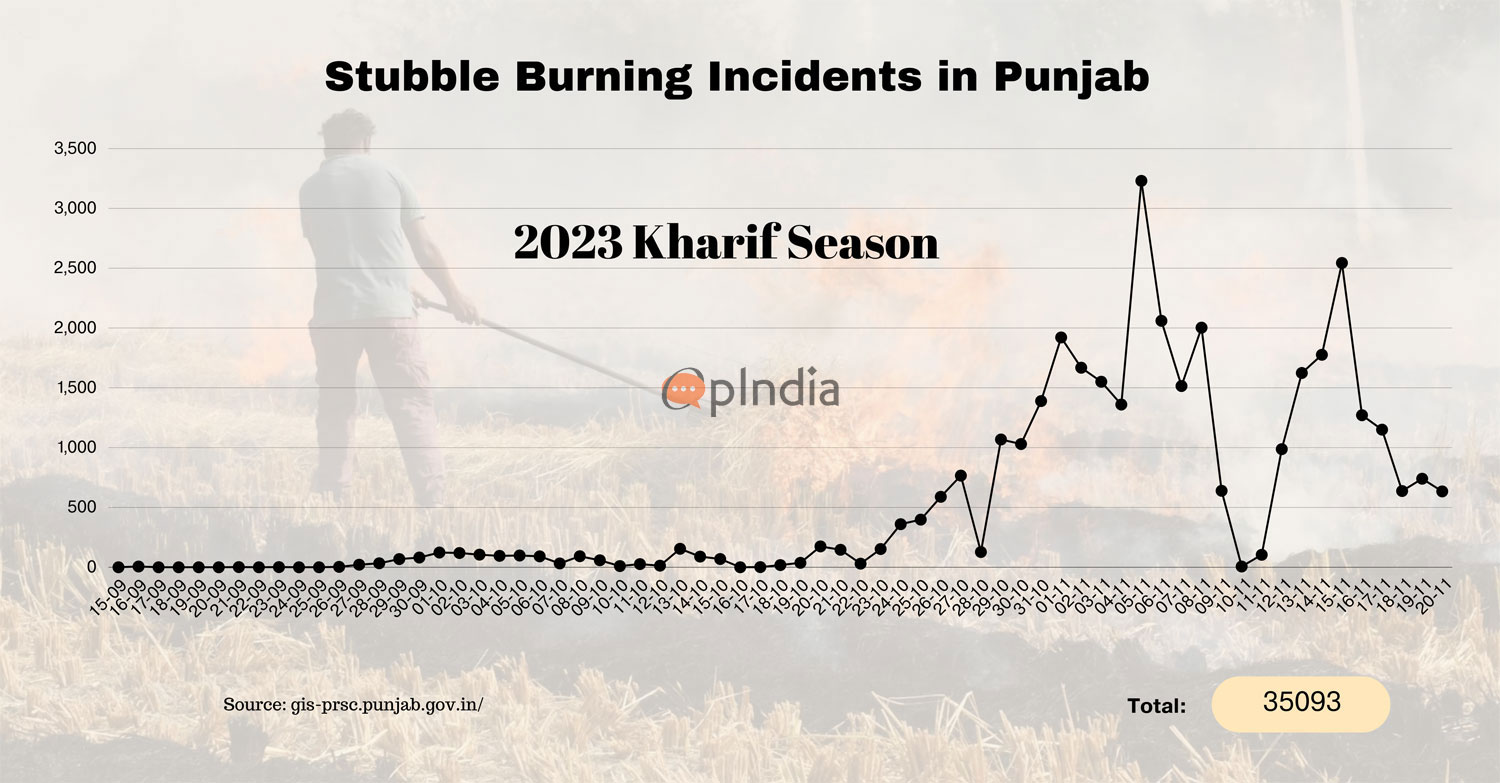
Despite tall promises by Punjab’s Chief Minister Bhagwant Mann of putting an end to stubble burning in Punjab, the farm fires in the state rose to 35,000+ in the recent Kharif season. In November 2022, CM Bhagwant Mann and Aam Aadmi Party chief Arvind Kejriwal held a press conference that promised to end stubble burning by 2023. However, things did not go as per their promises and the so-called plans.
Source: gis-prsc.punjab.gov.in
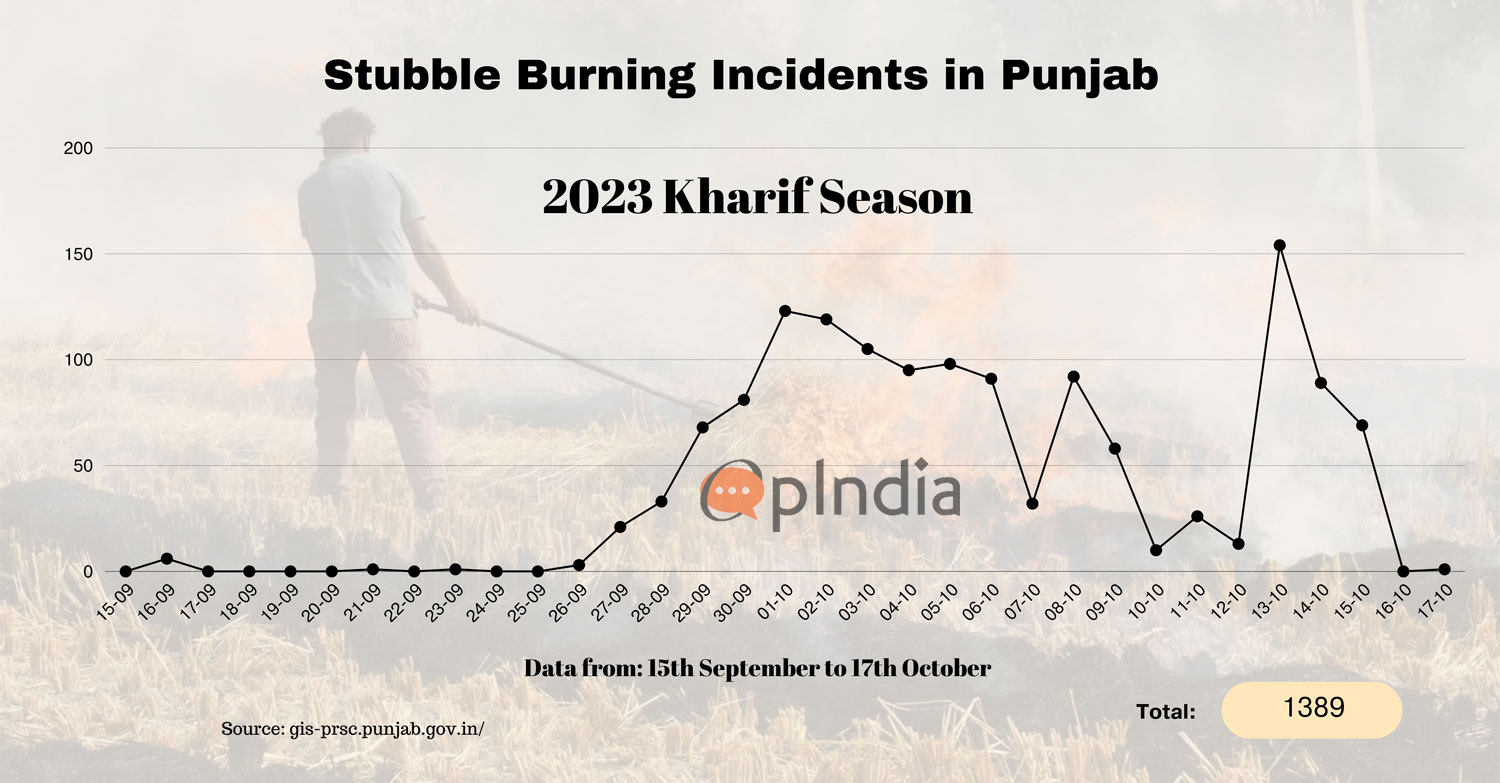
Stubble burning usually starts around 15th September and continues till the third week of November, which is the time for sowing wheat for the Rabi season. This year, stubble-burning incidents were minimal for the first thirty days as Punjab reported only 1,389 incidents between 15th September and 17th October.
Source: gis-prsc.punjab.gov.in
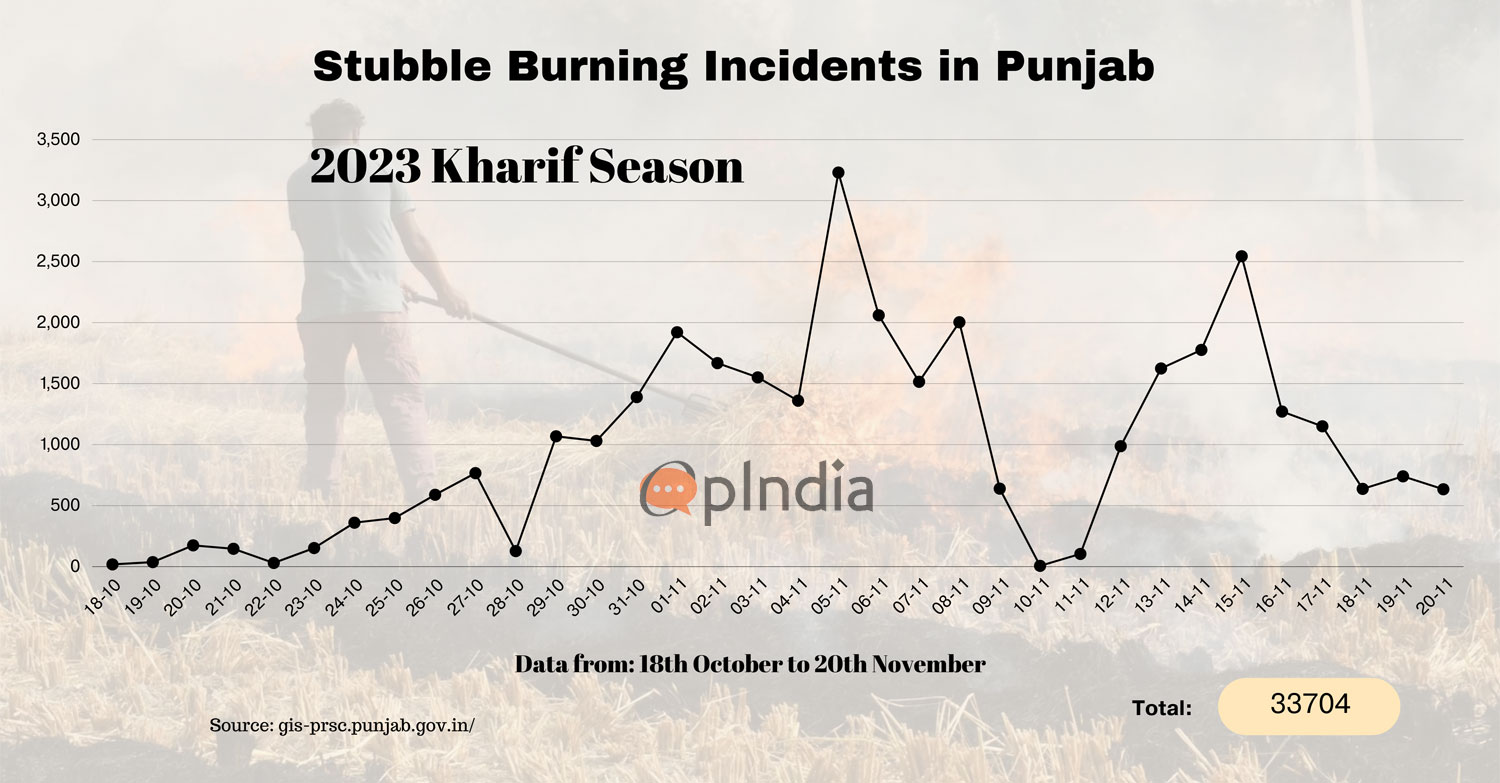
However, things went south quickly in the following 30 days. From 18th October, there was a rise in the incidents. By 27th October, it was clear that stubble burning was going to be a significant issue for this year as well, and on that day, Punjab reported 766 incidents in a single day.
The situation kept getting worse, and on 29th October, the incidents crossed the 1,000 mark, with 1,068 stubble-burning incidents in a single day. On 5th November, the highest number of such incidents in a single day was reported at 3,230. It continued to remain between 1,500 and 2,000 for the next three days.
Source: gis-prsc.punjab.gov.in
From 8th November to 10th November, the Supreme Court of India slammed the Punjab government for its inability to curb farm fires and ordered the state machinery to stop stubble burning. On 10th November, there were only six reported incidents; on 11th November, there were only 104 incidents reported by the state.
However, on the day of Diwali, i.e. 12th November, the state reported a severe spike, and 984 incidents took place. For the next few days, the incidents stayed above the 1,000 mark and peaked with 2,544 incidents on 15th November. The number of incidents came down between 18th November and 20th November, with 637 and 634 incidents reported on these two days. Still, it is not because of the actions that the government took but because wheat sowing is almost complete in the state. Ideally, Wheat sowing should be done by 15th November to get a good yield.
Meanwhile, AAP leaders pointed fingers at Hindus and Diwali for rising pollution in the national capital. However, data showed that after Diwali, Delhi’s AQI was far better compared to peak stubble-burning days. They also blamed Haryana and UP for the pollution while giving Punjab a clean chit. Interestingly, reports suggest that during the Kharif season, only 2,085 stubble-burning incidents were reported in Haryana and 2,649 were reported in Uttar Pradesh.
With 35,000+ stubble-burning incidents in Punjab, there is a stark difference compared to the two states bordering Delhi. It is unclear on what basis AAP leaders claimed Haryana and UP were responsible for the pollution and not Punjab.
Interestingly, Delhi minister Atishi blamed UP for polluting the Yamuna River as well in a recent statement despite the fact that Yamuna water flows from Delhi to UP and not from UP to Delhi.
Supreme court rapped Punjab government over stubble burning, asked to learn from Haryana
On 21st November, the Supreme Court of India criticised the Aam Aadmi Party (AAP)-led Punjab government for handling stubble burning. Notably, the court has categorically stated that stubble burning is one of the significant contributors to air pollution in Delhi-NCR. However, the court also observed that farmers are being “unfairly” portrayed as villains in the situation. The apex court emphasised the need to listen to their concerns.
SC: The Committee will look at the solutions.
Sr Adv Vikas Singh: Action needs to be taken against …
Justice Dhulia: Because farmer is being made villain, and not being heard. He must be having some reason for doing this. But whom can we issue notice to?#SupremeCourt…
During the hearing, it was highlighted that despite 8,481 meetings with farmers and farmer union leaders, the efforts to curb stubble burning did not yield significant results. The court was informed that legal action was being taken against those who indulged in stubble burning, and 984 FIRs were registered in related matters. Furthermore, the state imposed fines worth Rs 2 crores on farmers, some of which have already been recovered.
The bench comprising of Justice SK Kaul and S Dhulia questioned the Punjab government why the process of crop residue disposal could not be made entirely free. The court suggested Punjab should learn from Haryana as the state provides financial incentives to the farmers for not burning stubble.
The court pointed out the issue of depleting water table and arid land in Punjab. Furthermore, it urged farmers to understand the consequences of growing paddy. The apex court advised the state of Punjab to explore alternatives and encouraged the Bhagwant Mann-led government to learn from the Manohar Lal Khattar-led Haryana government for sustainable practices around farming and stubble. The Attorney General of Punjab was asked to find ways to discourage paddy cultivation and promote other crops in the state.
Farmer unions protested against FIRs
On 20th November, 18 farmer unions protested over legal actions taken by the Punjab government against farmers in cases related to stubble burning. They protested at deputy commissioner offices across 34 locations. Fifteen Samyukt Kisan Morcha-affiliated unions and 18 other farmer unions participated in the protests. They demanded the withdrawal of FIRs, fines and other punitive measures taken by the state government. Union convener Sarwan Singh Pandher expressed his concerns over FIRs, environmental compensation, and red entries in land records of the farmers and land owners where stubble was burnt.
The four-hour symbolic protest led by farmer unions was meant to criticise the authorities for alleged inaction towards industries causing pollution. At some locations in Ludhiana, farmers also clashed with the police. On the other hand, in Mohali, farmers burnt stubble outside the DC office. The union leaders called for introspection on post-Diwali air quality and challenged the tendency to blame farmers. They further vowed to reveal the next course of action soon, highlighting broader discontent and demanded a sustainable solution in the agriculture sector.
Notably, the FIRs and fines imposed on farmers for stubble burning were revoked in previous years after farmers protested over it.
OpIndia’s detailed coverage of stubble burning can be checked here.
Trouble is mounting for edtech major Byju’s. Reports claim that the Enforcement Directorate (ED) has issued a notice to the firm asking it to pay Rs 9,000 crore for allegedly violating foreign funding laws.
Byju’s has denied receiving any such communication from the central agency. Taking to X, the company wrote, “Byju’s unequivocally denies media reports that insinuate Byju’s of any FEMA violation. The company has not received any such communication from authorities.”
The development comes a day after the company failed to meet the deadline to clear the dues of the employees who were laid off. According to Moneycontrol, Byju’s had shifted the date of payment from September to November. The employees were reportedly promised their dues by 17th November.
The financial allegations come following ED raids at three premises in Bengaluru in a case linked to Byju’s founder and CEO Byju Raveendaran and his company ‘Think & Learn Private Limited’ under the FEMA provisions in May.
Byju’s reportedly received foreign direct investment (FDI) amounting to about Rs 28,000 crore between 2011 and 2023. The edtech major reportedly remitted around Rs 9,754 crore to foreign jurisdictions during the same time in the name of overseas direct investment.
According to the ED, Think and Learn Pvt Ltd, which runs the ed-tech platform BYJUs, had spent around Rs 944 crore in the name of advertising and marketing expenses.
At the same time, the company did not prepare its financial statements from the financial year 2020-21 and did not audit the accounts. Therefore, it is being investigated.
The ED raids came following complaints made by private individuals. Many summonses were issued in Raveendran’s name, but he avoided ED and never appeared.
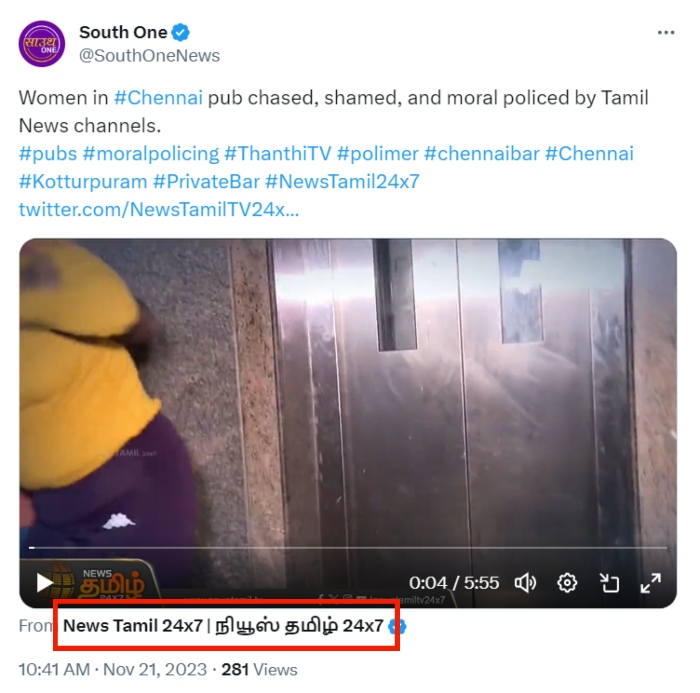
On Monday (20th November), some of the local media channels in the state of Tamil Nadu crossed their limits and targeted young women for personal revenge. Local media channels like Thanthi TV, Polimer News, NewsTamil 24×7 and others chased young women, harassed them, and shot their derogatory videos after a group of 5 men levelled scandalous allegations against the pub in Chennai for denying entry to them.
The incident happened on Sunday (19th November) at around 11:30 pm. The saga began when a group of 5 men in an inebriated state insisted on entry into the Big Bull bar in Chennai at 11:20 pm. The bouncers on duty and the pub management refused entry to the men stating that the pub had a mandated dress code that required men to wear shoes. Later, the bouncers also informed the men that the guests at the pub were about to leave and were being served their last orders before 11:30 pm.
The men, however, created a ruckus at the entry gate and re-insisted entry into the pub. On refusal, they sat on the pub gate and threatened that they would beat up any customer who exited. This led to a minor argument between the men and the bouncers. One of the 5 inebriated men meanwhile informed his friend who works at some local news channel.
One of the pub employees while talking exclusively to The News Minute stated that the 5 men waited for long at the gate. ” Later, a media person arrived at the pub. He asked what the ruckus was about and tried to enter,” he said.
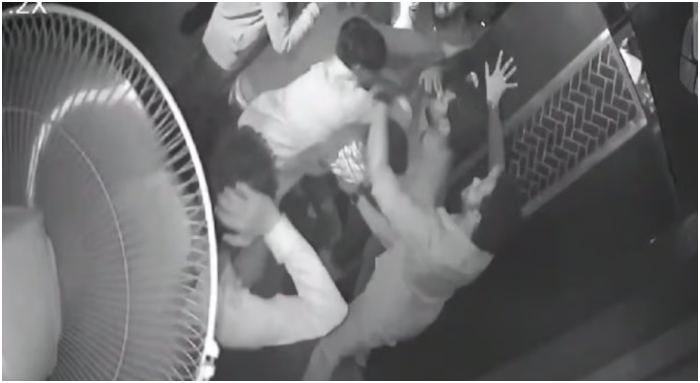
Later, six other men joined the media person and they all tried to barge in the pub. The event was recorded in the CCTV footage in which the bouncers could be seen stopping the men from entering the pub forcefully. One of the men from the group was identified as a reporter for News Tamil 24*7.
CCTV footage (The News Minute)
By midnight, more media persons from other local media channels arrived at the spot and inquired about the incident. The camerapersons then began chasing women guests who were at the bar at that time.
Many people were shocked and outraged by Thanthi TV, Polimer News, and News 24×7’s coverage. The shots repeatedly focused on the women’s clothing, with the cameras purposefully taking close shots of their bodies. Despite the women’s clear discomfort, the camerapersons could be seen hounding them, the majority of whom covered their faces with a scarf or dupatta. The camera repeatedly attempted to get close-up shots of the women’s faces.
The headlines flashed by the local media channels including Thanthi TV also targeted women as they screamed, “All-night alcohol party busted by police; half-dressed women ran out during the incident.”
In one video, a woman is seen urging a cameraman to stop filming her and threatening to sue him. To which the cameraman responds angrily, “Go ahead, Get lost.” Thanthi TV edited their post on X as public outrage grew on social media but failed to make it less offensive. “Here’s what the ladies did at night, and how the police arrived at the scene quietly,” the headlines read.
The coverage attempted to portray women wearing whatever they wanted at a pub as an ‘immoral’ activity that had to be stopped by police. The other local media channels also showed women in the wrong picture. However, later the police who arrived at the spot took cognizance of the event and termed the matter to be an event of revenge.
It came to the fore later that the 5 men who weren’t allowed entry into the pub wanted to settle the accounts with the pub management and so used the media to defame the pub and target the women. The media personnel meanwhile informed the police that the pub was operating beyond permissible hours which is 11:30 pm in the city of Chennai.
Notably, the police were called by the pub management seeking protection as they saw some of the media persons barging into the pub forcefully at around 11:30 pm. The Police reached the spot and tried to look into the case. “The entire issue looked like some sort of revenge,” one of the officers was quoted as saying. As per the reports, no FIR has been filed in the case and the pub management has been asked to give an undertaking saying that all the rules regarding the pub operations will be followed.
Notably, the local TV networks have come under fire for attempting to film female customers at the bar under duress and for making “misogynistic” comments about the clothes they were wearing.
no morals worst journalism. its the organisers fault for exceeding the time limit, why are you chasing people who are trying to cover their faces and go away? why couldn't you show the organizer or the name of the place?
According to an official, they have brought the issue to the attention of the city police commissioner as they cannot allow ‘media power’ to be abused for personal gain.
The police claim they have not received a complaint from any of the women who claim media personnel harassed them, but they will take action if one is filed. They also confirmed that no pub manager was arrested, as reported by some media outlets.
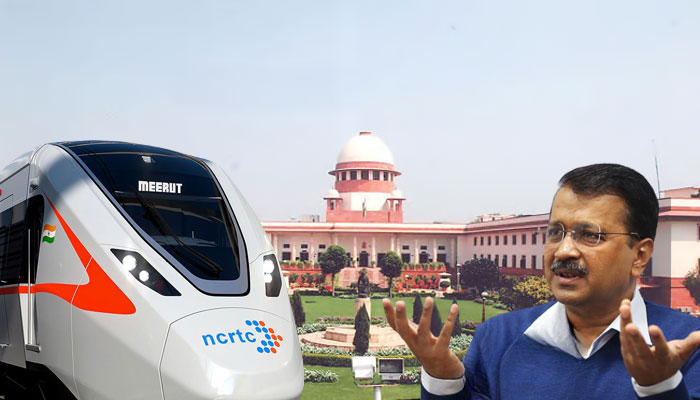
On 21st November, the Supreme Court of India expressed its dissatisfaction with the Aam Aadmi Party (AAP)-led Delhi Government as it failed to allocate funds for the Regional Rapid Transport System (RRTS) projects in the Alwar and Panipat corridors. Notably, in July this year, the Arvind Kejriwal-led Delhi Government had committed to the apex court that the funds would be transferred as ordered.
A bench of Justice Sanjay Kishan Kaul and Justice Sudhanshu Dhulia directed the government to redirect the funds it has designated for advertising to the RRTS projects. However, the implementation of the orders will come into effect only if the AAP government fails to fulfil the earlier commitment in the next week.
The court said, “The advertising funds for the last three years had been requested, totalling ₹1,100 crores for the past three years and ₹550 crores for this year. We were inclined to transfer those funds. However, on the last occasion, Dr Singhvi assured me that the funds would be made available. Consequently, we are compelled to direct that the funds allocated for advertising be redirected to this project. At the request of the Delhi government counsel, we are temporarily staying this order for one week. If the funds are not transferred, the order will take effect.”
Order: The advertising funds for the last 3 years had been called for. It was 1100 crore for the last 3 years and 550 crores for this year.
We would have been inclined to transfer those funds. however on last date, Dr Singhvi had assured that the funds would be made available.…
The action taken by the Supreme Court was part of a broader case addressing the declining air quality in Delhi and stubble burning in neighbouring states, especially in Punjab. In its orders on Tuesday, the court specifically addressed the delays in the implementation of RRTS projects. The apex court pointed out that the RRTS projects have been recognised as a more environmentally friendly transportation option. Before issuing the orders, the apex court cautioned the AAP-led Delhi government that it would freeze and divert the advertising budget if the government failed to allocate funds for the project.
The court further emphasised that after one week, it would re-evaluate the situation and the process of transferring the funds. The court criticised the state government for a lack of proactive measures. The bench said, “If this is the only way that states will cooperate, then we have to take this step. You didn’t even seek an extension. You cannot take the court for granted.” Notably, on 24th July, the Supreme Court had warned the Delhi government about delayed contribution to the Delhi-Meerut RRTS project.
The Delhi-Meerut RRTS project is one of the three rapid rail corridors planned under Phase One of the RapidX project. The project has already been inaugurated by Prime Minister Narendra Modi and has been functioning since 20th October. Named Namo Bharat Train, the 82-kilometre-long Delhi-Ghaziabad-Meerut stretch was developed at a cost of over Rs 30,000 crores. The Prime Minister flagged off the first RAPIDX train from Sahibabad station in Uttar Pradesh. The Prime Minister laid the foundation stone for the Delhi-Ghaziabad-Meerut corridor on 8th March 2019.
RRTS explained
RAPIDX, or Regional Rapid Transit System, is India’s first semi-high-speed regional rail service. The entire Rs 32,724-crore corridor in Uttar Pradesh, covering Delhi, Ghaziabad, and Meerut, is projected to be finished by June 2025.
As per the reports, the National Capital Region Transport Corporation (NCRTC), a joint venture between the Centre and the governments of Delhi, Haryana, Rajasthan, and Uttar Pradesh, is in charge of the RRTS project. The airconditioned RAPIDX trains, billed as India’s fastest inter-state transit system, will travel at a top speed of 160 kilometers per hour.
The RAPIDX trains’ average speed of 100 KMPH distinguishes them from Metro and Indian Railways trains. These RRTS trains have been given the name ‘Namo Bharat’. To know more about the RapidX trains, check our previous report here.
Vaccines administered for COVID-19 did not increase the risk of sudden death among young adults in India but it was the post-Covid hospitalisation, family history of sudden death, and certain lifestyle behaviours that are likely the underlying causes, according to a peer-reviewed ICMR study.
The study by the Indian Council of Medical Research(ICMR) was conducted through the participation of 47 tertiary care hospitals across India. Cases were healthy individuals aged 18-45 years without any known co-morbidity, who suddenly died of unexplained causes during October 2021-March 2023.
Interviews were recorded to collect data on COVID-19 vaccination, infection and post-COVID-19 conditions, family history of sudden death, smoking, recreational drug use, alcohol frequency and binge drinking and vigorous-intensity physical activity two days before death.
“Lifestyle factors such as current smoking status, alcohol use frequency, recent binge drinking, recreational drug/substance use and vigorous-intensity activity were positively associated with unexplained sudden death,” the study noted.
“As compared to never users, the more the frequency of alcohol use, the higher was the odds for unexplained sudden death.” The study was done in view of some anecdotal reports of sudden unexplained deaths in India’s, apparently healthy young adults during the once-in-a-century pandemic.
“…past COVID-19 hospitalization, family history of sudden death, binge drinking 48 hours before death/interview, use of recreational drug/substance and performing vigorous-intensity physical activity 48 hours before death/interview were positively associated,” the study document read.
“Two (vaccine) doses lowered the odds of unexplained sudden death, whereas a single dose did not.”
Covid-19 vaccination, it added, by and large, has been documented to prevent all-cause mortality across age groups and settings. The primary purpose of vaccination is to prevent Covid-19-associated severity. Studies have documented adverse events, predominantly thromboembolic events, following Covid-19 vaccination, it noted.
At a macro level globally, the coronavirus pandemic resulted in excess mortality among certain groups of people and studies have documented them.
In India, there have been several anecdotal reports about sudden unexplained deaths among apparently healthy adults, purportedly linked to Covid-19 or Covid-19 vaccination.
The pathways through which Covid-19 may cause sudden deaths are currently not well-understood, the ICMR study noted. In the Indian context, the reports of sudden death among young adults have not been investigated in detail.
However, the study contended that severe acute respiratory syndrome coronavirus 2 (SARS-CoV-2) infection increases the risk of heart disease and stroke.
“Although there is some evidence for the increased risk of death among COVID-19-recovered individuals and among those with breakthrough infections, the evidence for sudden deaths among such individuals is scarce,” the study noted.
(This news report is published from a syndicated feed. Except for the headline, the content has not been written or edited by OpIndia staff)
“The World Cup Trophy would be retrieved from the Australian side as ICC officials have announced that the decider for the quadrennial tournament will be played in best of a three-match format. Additionally, the 19th November upset for the host side makes the scoreline 1-0 in favour of Australia. As the ICC ruling states in the condition of the host side losing the Final knockout game the format of the tournament will undergo changes. This will be done to ensure that the side defeating the host team is truly worthy of the prize.” Apparently, these are the claims being made in messages doing the rounds on WhatsApp.
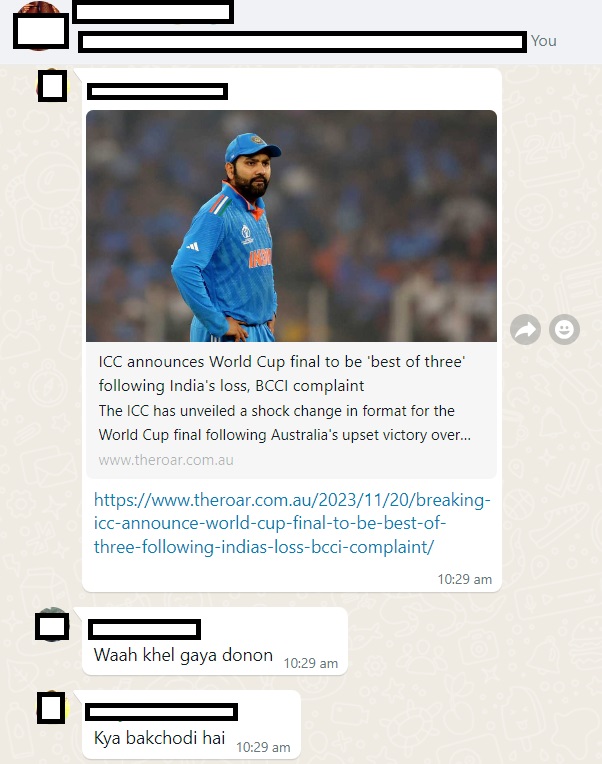
However, a simple reading of these claims reveals that their origin lies in a satirical article that is also being circulated on social media platforms. Here is an example of WhatsApp forwards with the same claims doing rounds.
(WhatsApp forwards claiming that the World Cup format has been changed to Best of the three-match format)
The link to the article attached with some of these WhatsApp forwards is that of a satirical article titled “ICC announces World Cup final to be ‘best of three’ following India’s loss, BCCI complaint”. However, the article itself explicitly mentions that it is just a ‘Satire’ right above the article headline.
The satirical article states, “Under the rules, a tournament host losing the final – in this case, India – would have the right to try again in two further follow-up finals, with the trophy to be awarded to the victors of the best-of-three series.”
The article further notes how India would still enjoy this advantage in the next World Cup being hosted in three Cricketing nations. It claims, “This rule will remain in place for the 2027 World Cup in South Africa, Zimbabwe, and Namibia; however, due to there being three teams sharing hosting rights all with a chance of participating in the tournament, the laws state the right of a three-match finals series will be awarded to the host of the previous World Cup, which in this case would be India as well.”
Again, it’s crucial to note that these assertions are rooted in satire, aiming to provide comic relief rather than factual accuracy. However, it has to be elucidated before insane accusations start hurling from across the border, keeping in mind the recent history.
Interestingly, in the wake of India’s remarkable performance in the recent World Cup, the Pakistani cricketing community and the English media showcased a rather infamous penchant for embracing conspiracy theories, even treating WhatsApp forwards as credible evidence. According to their narrative, these so-called “evidence” unveils a covert collusion between the ICC and BCCI.
Evidently, the English media outlet ‘The Daily Mail’ on 14th November published an EXCLUSIVE report which was based on a ‘WhatsApp forward’. Based on some Whatsapp Forward, the English media accused BCCI of changing the pitch for the semifinal without the permission of the International Cricket Council (ICC), and individuals like senior ‘journalist’ Sagarika Ghose and the Pakistani cricketing fraternity went on to amplify the rumour by sharing the unsubstantiated claim without bothering to verify it.
Strikingly, the satirical article seems to be an inherent attempt to take a dig at these Pakistani and English Cricketing analysts who manifest the English adage ‘A bad workman blames his tools’.
Days after resorting to minority appeasement politics in Telangana, the Congress party is eyeing to woo the Muslim community in the State of Rajasthan.
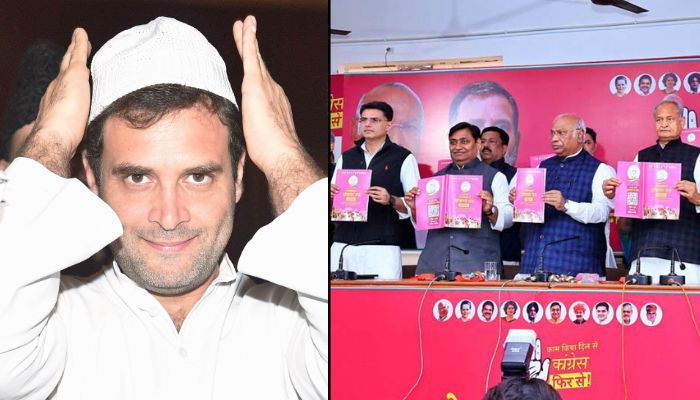
On Tuesday (21st November), the grand-old party released its manifesto for the upcoming elections in Rajasthan and vowed to offer reservations to the Muslim community in proportion to their population.
Under the section of ‘Minority Welfare’, the manifesto read, “After caste census, we will undertake to provide reservation as per their population.”
The development comes just four days ahead of the polling in the State of Rajasthan. Congress President Mallikarjun Kharge has vowed to undertake a caste census after coming to power in the State.
Congress is facing a wave of anti-incumbency in Rajasthan. The Ashok Gehlot-led-government is hoping to lure the Muslim community by promising ‘reservation’ ahead of polls.
Appeasement politics in Telangana
In Telangana, the Congress promised to provide ₹10,000 in financial assistance to 10th pass students, ₹15000 to 12th pass students, ₹25000 for graduates, ₹1 lakh for postgraduates and ₹5 lakhs for MPhil and PhD holders exclusively belonging to the minority community.
The party declared, “Monthly honorarium of Rs.10,000 12,000 for priests from all religions including Imams, Muezzins, Khadims, Pastors and Granthis”.
The Congress announced that all land and property records of the Wagt Board would be digitised. It has assured to reclaim ‘encroached properties’ and allot land exclusively for Christian and Muslim graveyards.
Under the pretext of ‘inclusivity’, the Congress party has promised to provide a house site and ₹5 lakhs for construction for minority families who do not own houses. Besides, it promised cash support of ₹1,00,000 for newly married couples belonging to Muslim, Christian, and Sikh Faiths.
In order to woo Muslim voters, the party said, “Revitalise SETWIN and skill development training: transform Quil Qutub Shah Urban Development authority (QQSUDA) to develop infrastructure in the Old City.”