Home Blog Page 1649

Adani Group aspires to challenge China’s maritime dominance, while Congress party attacks the Indian company after signing MoU with the Chinese

On 8th November (Wednesday), the U.S. International Development Finance Corporation (DFC) announced its commitment to provide $553 million in financing for a port terminal in Sri Lanka’s capital Colombo, which is partly owned by the Indian conglomerate Adani group. Notably, this is the biggest investment announcement by the American government’s financial arm, DFC in Asia. 

The move comes as a strategic counter by two Quad partners India and the US against the Chinese expansionist designs of encirclement of India and not letting it gain hegemonic control in the Indian Ocean region.

Additionally, the development thwarts attempts by non-state actors and vested interest groups like short-selling firm Hindenburg and ilk that have been engaging in smear campaigns against Indian Infrastructure behemoth Adani group. While the conglomerate on its own has recuperated from the canards and hitjob, it has indirectly received another stamp of authority, this time from the American government’s financial arm, DFC. 

The development underscores that international investment firms and institutions, conducting thorough due diligence before making investments, have discerned the groundless nature of the accusations. Despite this, they have chosen to proceed with substantial investments in the Adani group. This strategic investment by DFC is indicative of how the Indian conglomerate Adani group has been acting as a bulwark against Chinese deep pockets gobbling smaller nations one after the other. 

Interestingly, India’s Adani group has been developing projects mirroring the Chinese ports that could in isolation undermine India’s interest in these geo-strategic locations in our vicinity or the Mediterranean. Here are some of the key investments of the Adani group that pose a strategic counter to China’s BRI and also to the ‘string of pearl’ strategy.

Adani counters China’s presence in Sri Lankan waters

China gained control over a terminal in Sri Lanka’s Colombo port through its notorious debt trap strategy, posing a serious risk to India. However, in 2021, Adani forged a deal with the state-owned Sri Lanka Ports Authority. The deal was to develop and run the strategic Colombo Port’s Western Container Terminal. The Build-Operate-Transfer deal, amounting to $700 million, marked the largest-ever foreign investment in the port sector of the island nation. Since then, the Adani group has been developing a terminal at Colombo port and squared off China’s advantage in the region. 

Strikingly, the move wrestled back India’s influence in the Island nation especially after the Lankan government had pivoted to Beijing as the latter splurged the Island nation with its debt-fueled projects. Establishing a strategic presence in Colombo’s emerging port holds significant importance for India, especially in light of China’s development of the adjoining Colombo Port City—an ambitious financial hub resembling Dubai—and its operation of the Colombo International Container Terminals Ltd. This is because unchecked Chinese projects could have undermined India’s influence in Indian backwaters. 

Moreover, the port battle in Sri Lanka holds significance as the island nation lies on key global shipping lanes and China’s move was seen as a part of its encirclement strategy. 

Subsequently, Adani also replaced China in solar projects. It unfolded after Sri Lanka cancelled Chinese solar projects on islands in the Palk Strait, located between India and Sri Lanka, reportedly citing security apprehensions raised by New Delhi. 

By early 2022, Adani had entered into a Memoranda of Understanding (MoU) to develop 500 megawatts of renewable energy projects in Pooneryn and Mannar, northern districts in proximity to India.

Katharine Adeney is a professor and expert on South Asian politics at the University of Nottingham. Speaking to Bloomberg last year, she said, India “is worried about Chinese access to the Indian Ocean, and being encircled by Chinese friendly regimes in Pakistan, Sri Lanka and Bangladesh.” She added that Adani’s supplanting of China’s solar power projects represented “a strategic move and one that we are likely to see more of.” 

Samantha Custer is the director of policy analysis at AidData, a research unit at William & Mary University in Virginia. Speaking to Bloomberg last year, she said that India likely has a vested interest in having one of its own companies build a port terminal close to China’s own port project. However, she noted that Indian companies are often disadvantaged due to Beijing tying project finance to implementation by state-subsidized Chinese firms. 

Adani port at Haifa coupled with IMEEC would overshadow China’s nefarious play in the Middle East

To bolster its BRI project, China bagged a port in Haifa in 2021. Since then, China’s Shanghai International Port Group has operated a port at Haifa. With this, China gained increased access to European markets as Haifa is a major trade hub on the Mediterranean. Notably, Haifa is one of the main seaports in Israel with virtually the entire trade moving in and out of the country by sea. 

Further, it is well-documented that China deploys tactics of industrial espionage and sneaking military presence in its ports. However, the Chinese move was matched soon after as Adani also bought another port close to China’s project taking away its leverage of being a sole player and dominating the region. In collaboration with a local company, Adani oversees the Haifa Port in northern Israel, following its acquisition for $1.03 billion completed in January of this year.

India’s presence mirroring China at every step checks the nefarious designs of the communist regime. It also boosts India’s trade ambitions of enhanced connectivity with the Middle East and Europe along with posing a counter to the BRI as the IMEEC is seen as a slingshot to China’s BRI.

It is important to note that Haifa is now integral to the India-Middle East-Europe Economic Corridor (IMEEC), announced during India’s G20 Presidency. IMEEC includes two corridors: one connecting India to the Arabian Gulf and the other linking the Gulf to Europe. It features a railway for efficient cross-border transit, enhancing trade among India, the UAE, Saudi Arabia, Jordan, Israel, and Europe. Although it has faced serious challenges in the wake of the Israel-Hamas war, the Haifa port will only serve India’s enhanced trade ambitions in the long run. 

Meanwhile, on the domestic front, Adani’s recently established port in Kerala at Vizhinjam is set to enhance India’s competitiveness against China in trade and manufacturing. Situated near the southernmost tip of the country, the Vizhinjam transshipment container port, a pioneering initiative in India, positions the country to increase its share in the global maritime trade, challenging China’s dominant position.

Adani group’s open admission of aggressively locking horns with the dragon

Last year in September, the Chairman of Adani Group, Gautam Adani emphasised that the group would utilise opportunities created because of the decline of China’s project to spread a global footprint. Referring to China’s tumultuous BRI project, he said, “I anticipate that China, which was seen as the foremost champion of globalisation, will feel increasingly isolated. Increasing nationalism, supply chain risk mitigation, and technology restrictions will have an impact.” 

Prior to that in July last year, Gautam Adani told shareholders that he sought a “broader expansion” beyond India’s borders with “several” foreign governments approaching his conglomerate to develop their infrastructure.

While the Adani group is giving the Chinese regime a run for its money on every project that poses a threat to Indian interest or territorial security, inside or outside India, Gandhi scion, and Wayanad MP Rahul Gandhi has been launching a tirade against the Adani group without giving a shred of evidence to back it up. The vicious cycle of attacks has prompted several political pundits and netizens to rekindle the controversial 2008 MoU which was kept hidden from the general public for years. 

Congress’ alleged connection with China: MoU with CCP, funds to Rajiv Gandhi Foundation and more

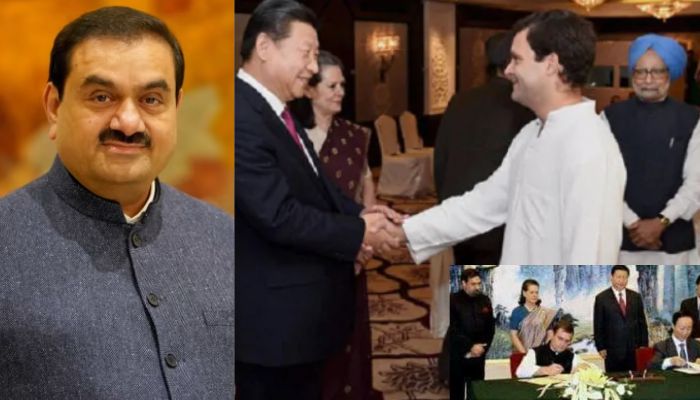
One of the main reasons for the Congress Party’s peculiar stance regarding China stems from the 7 August 2008 agreement between the Sonia Gandhi-led Congress Party and the Communist Party of China (CPC).

During UPA1 in 2008, the Congress Party and the Communist Party of China (CPC) signed an MoU in Beijing to exchange high-level information and cooperation between them. The memorandum of understanding (MoU) also provided the two parties with the “opportunity to consult each other on important bilateral, regional and international developments”.

The 2008 MoU between CCP and Congress came at a time when the Left parties in India had expressed a lack of trust in the UPA-1 government led by Congress. 

Not just the MoUs, but the close relationship between the Chinese leadership and the Congress party, especially Rahul Gandhi came to the fore a few years ago during the Doklam stand-off when Rahul Gandhi was caught secretly meeting Chinese officials.

Apart from that, back in 2020, details about the Rajiv Gandhi Foundation’s (RGF) monetary operations emerged. OpIndia had previously published detailed pieces about the Chinese government’s financial contributions of more than Rs 1 crore to RGF since 2006.
High-profile prostitution racket with primarily Asian women busted in the United States, sex buyers included officials, politicians, military officers and others

US federal prosecutors have arrested three individuals in connection with operating sophisticated high-end brothels in greater Boston and eastern Virginia. According to a press release by the Department of Justice (DoJ), commercial sex buyers allegedly included elected officials, high-tech and pharmaceutical executives, doctors, military officers, government contractors that possess security clearances, professors, attorneys, scientists and accountants, among others.

The three arrested accused have been charged with conspiracy to coerce and entice to travel to engage in illegal sexual activity. The accused have been identified as Han Lee, 41; James Lee, 68 and Junmyung Lee, 30.

Interstate prostitution network primarily targeted Asian women

As per the charges, the accused operated in an interstate prostitution network with multiple brothels in Cambridge and Watertown, Massachusettes as well as in Fairfax and Tysons, Virginia.

The DoJ stated that the accused “collectively established the infrastructure for brothels in multiple states which they used to persuade, induce and entice women – primarily Asian women – to travel to Massachusetts and Virginia to engage in prostitution”.

High-end apartment complexes rented for prostitution

The accused allegedly rented high-end apartment complexes as brother locations. The apartments were furnished and maintained regularly. The monthly rent for the brother locations were as high as $3,664.

Moreover, the accused coordinated the women’s airline travel and transportation and permitted women to stay overnight in the brothel locations so they did not have to find lodging elsewhere, therefore enticing women to participate in their prostitution network.

Modelling websites set up as a front for prostitution

The accused allegedly advertised their prostitution network primarily on two websites – bostontopten10.com and browneyesgirlsva.blog – which offered appointments with women in either greater Boston or eastern Virginia, respectively. The domain bostontopten10.com has been seized by U.S. Homeland Security Investigations.

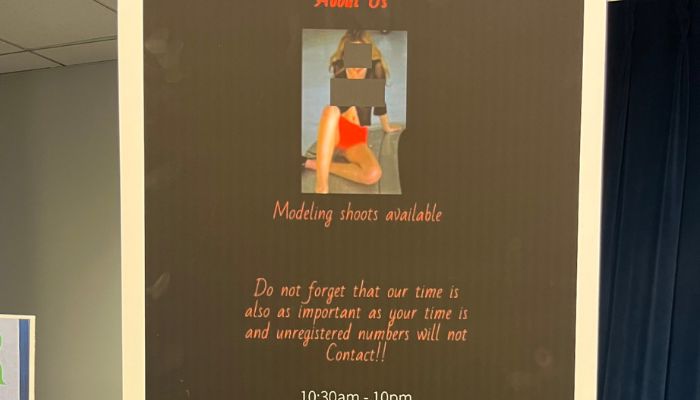
Both websites purported to advertise nude Asian models for professional photography at upscale studios as a front for prostitution offered through appointments with women listed on their websites. The websites listed the height, weight and bust size of women available for appointments and depicted nude and/or semi-nude photographs of each.

The women listed as available on the websites updated frequently, with updates to include “coming soon” or “open” to reflect an impending arrival of new women arriving in the area.

Buyers went through a “verification process”, and were sent “menu” of options by the accused

Each website described a verification process that interested sex buyers undertook to be eligible for appointment bookings – including requiring clients to complete a form providing their full names, email addresses, phone numbers, employer and reference if they had one.

The accused separately maintained local brothel phone numbers which they used to communicate with “verified customers” and schedule appointments via text message. In these text message exchanges, the defendants allegedly sent customers a “menu” of available options at the brothel, including the women and sexual services available and the hourly rate.

Additionally, the defendants allegedly texted customers directions to the brothel’s location – high-end apartments – where they engaged in commercial sex with the women.

Accused were paid in cash, proceeds of crime and source of funds concealed

The accused charged sex buyers a premium price for appointments with the women advertised on their websites, which ranged from approximately $350 to upwards of $600 per hour depending on the services and were paid in cash.

The proceeds of the prostitution network were concealed by depositing hundreds of thousands of dollars of cash proceeds into their personal bank accounts and peer-to-peer transfers. They regularly used hundreds of thousands of dollars of the cash proceeds from the prostitution business to purchase money orders (in values under an amount that would trigger reporting and identification requirements) to conceal the source of the funds.

These money orders were then used to pay for rent and utilities at brothel locations in Massachusetts and Virginia.

Chats from the racket exposed

NBC10 Boston reporter Abbey Niezgoda took to X, formerly Twitter, to share the image of a standee showing the nature of the racket. The standee shows an explicit image of a woman with the text, “Modeling shoots available. Do not forget that our time is also as important as your time is and unregistered numbers will not contact!! 10:30 am – 10 pm at upscale studio. We have some changes!! Ask for Text. 30 min, 1 hour/1rd/2rd, 1 hour 30 min. Verification form for 1st time photographers. P411 ID for Ter ID Welcome.”

Another standee shows an image of a chat from the sex service was also shared by the reporter on X. The explicit chat shows a buyer inquiring about the service. “Like 8:45? Mimi?” the alleged buyer asks.

The racket operator replies, “9pm available. Donations for Kara or Tina or Mimi or Alina. There is no discount for BB, if you get caught making direct deals with girls, we won’t accept any more appointments. Also, if you go into the GFE and upgrade to BB, Please Pay First!!. Do not share with other girls, they don’t like it!!”

Elected officials, politicians, military officials bought service

Investigators have identified a wide array of buyers including, but not limited to, elected officials, politicians, high-tech and pharmaceutical executives, doctors, military officers, government contractors that possess security clearances, professors, lawyers, scientists and accountants.

According to the US Attorney’s Office for Massachusetts, the “commercial sex ring was built on secrecy and exclusivity”. The acting U.S. Attorney for Massachusetts Joshua Levy said, “Pick a profession, they are probably represented in this case.”

The customers were reportedly identified through surveillance, phone records, customer interviews and other investigative methods. Moreover, the document noted that there could be hundreds more customers who haven’t been identified by investigators.

The website for the Boston-based racket has been seized by the government but the the website for the Virginia-based business remained active as on 8th November. Prosecutors have said that they are determined to hold accountable both, those who ran the racket and those who “fueled the demand for it”.

As Delhi witnesses rain AAP MLA Somnath Bharti thanks God for fulfilling promises that Arvind Kejriwal failed to deliver on

On Friday, November 10, New Delhi witnessed a light spell of rain. This brought some relief for residents from the hazardous pollution they had been experiencing for over a week, as the toxic haze cleared up and the air quality improved marginally. 

The Aam Aadmi Party government in Delhi, which has only engaged in finger-pointing rather than taking practical action to address the rise in pollution levels, welcomed the unanticipated bout of rain. Somnath Bharti, the party MLA, immediately took to social media to thank god for doing what the Kejriwal govt couldn’t – bring down, even if temporarily, the pollution level in the national capital.

The rains come amid the Delhi government’s ongoing discussions with the Indian Institute of Technology (IIT) to conduct artificial rains across the national capital to combat the deteriorating air quality. But this project too, just like all the other empty promises, probably looked implausible to Somnath Bharti. That’s why he appeared so thrilled when it rained last night—he knew deep down that the rain would hide the inability of his government to handle such a serious situation. He took to X to thank the ‘God sent rain’ to tackle the situation which otherwise is the responsibility of the AAP government.

“And rain starts in Delhi…..and it’s not the artificial rain which Delhi CM Sri @ArvindKejriwal Ji promised and Delhi is yet to witness but it’s God sent rain. God has always been with Arvind Ji and @AamAadmiParty. Thx God,” the AAP MLA posted on Friday, November 10.

Netizens were, however, quick to respond to the AAP MLA’s post. Mocking the AAP government led by Arvind Kejriwal, several asserted that Delhi has been functioning on God’s mercy ever since AAP took power.

“As you rightly pointed out, Bharti ji, Delhi’s residents are living under the faith of God since there is no such thing as government here,” an X user Ajay Mathur wrote.

A BJP and RSS member going by the handle @Gauravbjpdelhi1 criticized the AAP government, claiming that only God could save the people of Delhi given the pitiful state the city has been in under their rule. “Lord Ram appeared on this earth to safeguard the righteousness and annihilate the evil, by killing the demon Ravan, likewise, to destroy y’all God will send somebody,” he retorted.

“God realised that He cannot leave Delhites & NorthIndians on mercy of ‘Nakara aur Jhute’ AAP CMs of Delhi & Punjab….”, @ShalabhPB wrote. The X user slammed the Arvind Kejriwal party and said that their pot of sin is full. He also asked how long they planned to do nothing and rely on God to perform miracles.

One X user took a dig at the AAP supremo Arvind Kejriwal for his alleged involvement in the Delhi Liquor scam case and said that the same God is arranging for his arrest and that he shouldn’t hold the Modi government accountable for it when it occurs.

“Same God is making arrangements of his arrest. Don’t blame Modi ji that time,” wrote X user @Pushkar81Singh.

AAP and its drama on pollution in Delhi

The Arvind Kejriwal government has been only playing the blame game instead of taking any concrete steps to curtail the pollution issue in New Delhi. Even as AAP is the ruling dispensation in both, Punjab – where stubble burning is at its peak, and in Delhi – where AQI currently stands at 426, it has time and again been attacking the BJP-ruled Haryana government and indulging in a political war of words.

On Friday (3rd November), when Anand Vihar’s AQI at night touched 999 making it extremely hazardous, Delhi Environment Minister Gopal Rai said that BS3 petrol and BS4 diesel vehicles coming from Uttar Pradesh have been contributing to the deterioration of the air quality index in the national capital.

Similarly, on 6th November, Aam Aadmi Party’s Chief National Spokesperson Priyanka Kakkar accused Haryana of the alarmingly bad air quality in Delhi.

She further asserted that there has been a reduction in stubble burning in Punjab, and the stubble being burnt in Punjab is not affecting Delhi as it is 500 KM away. However, Haryana, which is close to Delhi, is burning stubble only 100 KM away. Accusing the Khattar government of not taking any steps to reduce pollution, she added that the Haryana government had not formulated the plan to buy 100 EV buses. Furthermore, the buses that enter Delhi from Haryana run on fuel banned in Delhi.

She also claimed that the Haryana government is not supporting the industries so that they can shift to cleaner fuel like Delhi. In a nutshell, she tried to throw BJP-ruled Haryana under the bus for the pollution in Delhi’s air.

Continuing to peddle the same rhetorics, AAP posted a graph image on November 9 to claim that stubble-burning incidents in Punjab have reduced by 55 per cent in 2022-23.

Notably, Punjab has reportedly recorded 65.6 per cent of farm fires as compared to Haryana which has recorded 5.3 per cent of farm fires. The BJP-ruled state has taken strict action against individuals responsible for farm fires.

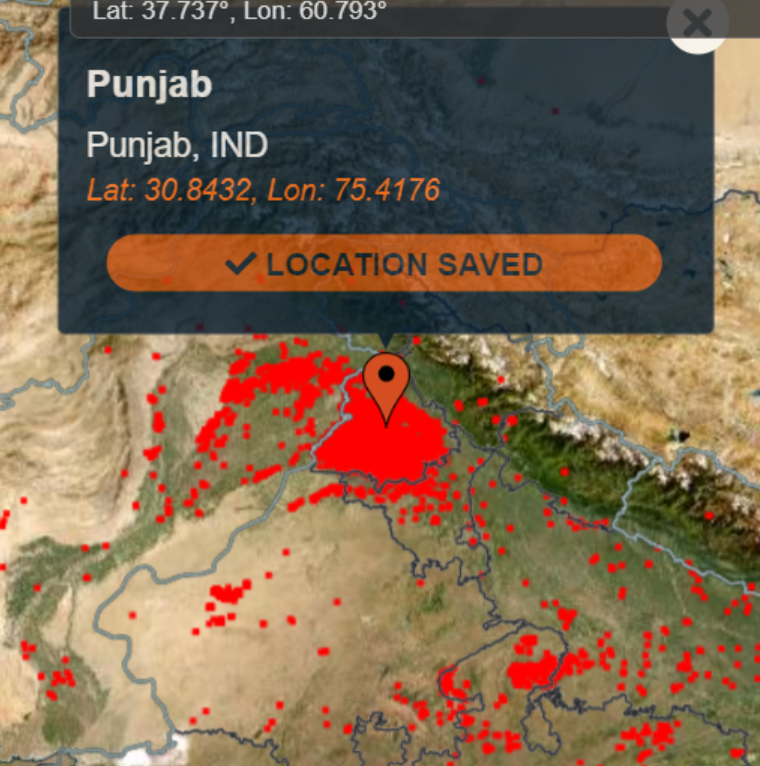
In fact, on November 9, OpIndia in its report attached the satellite imagery from NASA’s Fire Information for Resource Management System (FIRMS) showing Punjab covered in red dots signifying the severe levels of farm fires in the state whereas the same in Haryana appeared significantly lower.

Screenshot of the satellite imagery available on NASA FIRMS showing large scale farm fire in Punjab in the past 24 hours (Source: NASA FIRMS)

Yet, the Aam Aadmi Party has accused the Haryana government for the dangerous Air Quality Index (AQI) levels in Delhi and the National Capital Region (NCR). 

‘Odd-even doesn’t help, farmers in Punjab need to be more responsible’: SC on Delhi pollution issue, keeps next hearing for Nov 21

0

The Supreme Court in the hearing on Delhi pollution on Friday questioned the Odd-Even rule and ordered to stop farm fires immediately.

“As per the report from amicus curiae, advocate assisting the court on the issue, odd-even does not help; it will have a minimal impact,” said a bench headed by Justices Sanjay Kishan Kaul.

“Don’t try to not perform and then shift the burden on the court,” the Supreme Court said to the Delhi government on the government’s submission that will finalize policy on odd-even after the Supreme Court’s order.

The top court made it clear that it wants farm fires to stop. “We suggested a methodology; you do it however you want. But farm fires must be stopped. Some emergency measures are required to stop the farm fires,” the Supreme Court said.

The Supreme Court asked the Centre and Punjab government about what steps they are taking as a long-term measure to slowly phase out paddy to restore the water table in Punjab.

“We want farm fires stopped, we want air quality to get better. It’s your business how it occurs,” SC said. Meanwhile, the Court further observed that farmers are also a part of society and they have to be more responsible, and we have to be more responsive to their needs. “But people cannot be made to die,” it added.

The top court said that the farmers are very well organised in Punjab and asked the government why it doesn’t talk to their bodies and motivate them.

“The pollution level must come down, it cannot await tomorrow,” SC said. Moreover, on today’s rain in the national capital, Justice Sanjay Kishan Kaul said that the people have to pray only; sometimes wind comes and helps, and sometimes rain. “God may have heard the prayers of people and intervened; no thanks to the government,” Justice Kaul said.

The apex court was hearing air pollution issue in Delhi-NCR. The bench has now posted the matter for hearing on November 21.

Morning showers in parts of Delhi offered marginal improvement in the toxic air that people in the national capital had been battling with over the past few weeks.

The overall air quality in Delhi at 7 am today was 407, according to data by the government’s air-quality monitoring agency SAFAR. The Air Quality Index recorded at 10 am was at 361 which according to the index range falls in the ‘Very Poor’ category but showed a slight improvement from the “Severe” category.

(This news report is published from a syndicated feed. Except for the headline, the content has not been written or edited by OpIndia staff)

‘I was baptised and converted to Christianity’: Mumbai rapper Loka talks about his brush with evangelism in childhood and brainwashing underway in missionary schools

Mumbai-based emcee and songwriter Loka, born Abhinay Lok Bista, recently revealed that he was unknowingly baptised and converted to Christianity in hostels and convent schools during his childhood. The rapper made the shocking revelation in the podcast Untriggered with Aminjaz. 

Talking about his childhood days, Loka shed light on how he had been baptised and almost converted to Christianity, had it not been for his mother who came to his rescue. “I was in a Xaviers’ hostel. They had me baptised and almost converted me to Christianity. When my mother learned about these shenanigans, she came and got me out the same day,” Loka says.

When asked if he converted consciously and out of his own volition, Loka said, “No, they don’t seek permission or tell you openly that they are converting you to Christianity. It happens subtly. By the time my mother learned about it, I had already celebrated 3 Christmas and became the Rosery boy.

He then further added that evangelism is rampant in schools and hostels, where missionaries employ subtle and stealthy means to convert students to Christianity. Here is the entire podcast:-

Many consider Loka to be a prominent figure among the influential Hip-Hop artists in Mumbai. The young emcee has played a significant role in crafting impactful rap records, including the “Autobiography” EP, the collaboration “Kya Bolte Bro” with Emiway Bantai, “Mafia,” and more. In March of this year, Loka’s management released “Burey Din” during a period when the rapper was undergoing trial and being held in prison.

West Bengal govt wants CBI to stop probing corruption cases against TMC leaders because it withdrew general consent, centre says state can’t sue it over CBI cases

On Thursday, 9th November, the Central government disputed the maintainability of the West Bengal government’s petition accusing the CBI of registering FIRs and launching investigations even when the state govt has withdrawn general consent for CBI probes in the state. The Centre told the Supreme Court that the state government cannot sue the Central government as the CBI is “independent” and that it does not control the probe agency.

It is notable that as per law before CBI starts probing a case in a state, the state govt must authorise the probe. However, most state governments issue general consent to the central probe agency, eliminating the need to obtain consent for each and every state. However, some states withdraw this general consent from time to time, often for political reasons.

A bench comprising Justices BR Gavai and Aravind Kumar began hearing the case on Thursday. The Court was hearing an original suit filed by the West Bengal government under Article 131 of the Constitution on the Supreme Court’s original jurisdiction over Centre-State disputes.

The petition cited the provisions of the 1946 Delhi Special Police Establishment Act and claimed that the CBI has been conducting investigations and filing FIRs without the State government’s approval, as required by the Act. The TMC government argued that since it has withdrawn general consent given to CBI, the FIRs lodged by the CBI cannot be proceeded with.

Appearing for the Centre, Solicitor General (SG) Tushar Mehta told the Supreme Court bench that the independent existence of CBI “is in fact a product of the judgments of the apex court wherein the CBI was vested with a separate legal and functional identity.” Mehta said that the CBI cannot be a party of such suits under Article 131 adding that the petition should be dismissed.

“There is no cause of action against Union. Under the Supreme Court Rules, it is grounds for dismissal. Order 26 Rule 6. CBI is not under the Centre. No suit against it under 131 is maintainable … You cannot re-litigate by changing nomenclature and suppressing facts for favourable interim orders,” Mehta said.

Tushar Mehta additionally argued that the CBI is not a branch of the central government, but the Union of India, through the Department of Personnel and Training, is the respondent in this case. “The DoPT has nothing to do with the CBI’s registration, investigation, or prosecution of cases…If the department cannot direct the registration of a case or setting aside of the registered offence, nor direct the manner of investigation, how will the cause of action arise against it?” Mehta asked.

Senior Advocate Kapil Sibal, who represented the West Bengal government, said the suit “has nothing to do with the CBI,” which he described as “just a repository of that power.”

Moreover, the Union of India raised a preliminary objection based on the pending status of collateral procedures stemming from the same cause of action. The Solicitor General exemplified this point by reference to an ongoing special leave case against a 2021 Calcutta High Court ruling ordering a CBI investigation into accusations of post-election violence.

“Can they maintain a proceeding under Article 131 when the same cause of action is pending in collateral proceedings, a fact that has been wilfully and deliberately suppressed? The suit is fraudulent and liable to be dismissed only on that ground. Even if the facts are different but the question of law is the same…the suit is liable to be dismissed on grounds of the principle of res sub judice.”

Appearing for the West Bengal government, senior advocate Kapil Sibbal challenged the Central government’s assertions. He claimed that the Solicitor General erred in using language like ‘fraudulent’ to describe the litigation.

He went on to say that the Union government supervises the CBI and that the major relief sought was that cases not be registered without the consent of the State government. The matter will now be heard on November 23.

Congress in Telangana promises doles that specifically exclude Hindus, talks about inclusivity while doing it: Handouts to Maulvis, Granthis, promotion of Waqf and more

Ahead of the upcoming elections in Telangana, the Congress party has resorted to open and brazen minority appeasement politics in the name of ‘inclusivity.’

In a tweet on Thursday (9th November), the X (formerly Twitter) handle of Telangana Congress listed out a list of doles to be given exclusively to religious minorities (Muslims, Christians, Sikhs etc) in the State. It essentially implied that the benefits would not apply to the Hindu community.

The grand old party promised to provide ₹10,000 in financial assistance to 10th pass students, ₹15000 to 12th pass students, ₹25000 for graduates, ₹1 lakh for postgraduates and ₹5 lakhs for MPhil and PhD holders exclusively belonging to the minority community.

The party declared, “Monthly honorarium of Rs.10,000 12,000 for priests from all religions including Imams, Muezzins, Khadims, Pastors and Granthis”. This is similar to the Imam bhata given to Islamic clerics by the Mamata Banerjee government.

The Congress announced that all land and property records of the Wagt Board would be digitised. It has assured to reclaim ‘encroached properties’ and allot land exclusively for Christian and Muslim graveyards.

Prior to the 2014 Lok Sabha elections, about 123 properties in Lutyen’s Delhi were given to the Delhi Waqf Board by the Congress-led UPA government.

Job recruitments, houses exclusively for ‘minorities’

The Congress also vowed to establish ‘Telangana Sikh Minority Finance Corporation’ and fill vacancies in minority institutions. It promised to conduct special training for recruitment of ‘Urdu medium teachers.’

The grand old party promised to amend the Telangana State Minorities Commission Act of 1998 [pdf] and make it a permanent body. It will then table annual reports and make policy changes for the ‘welfare’ of minorities in the State.

Under the pretext of ‘inclusivity’, the Congress party has promised to provide a house site and ₹5 lakhs for construction for minority families who do not own houses. Besides, it promised cash support of ₹1,00,000 for newly married couples belonging to Muslim, Christian, and Sikh Faiths.

In order to woo Muslim voters, the party said, “Revitalise SETWIN and skill development training: transform Quil Qutub Shah Urban Development authority (QQSUDA) to develop infrastructure in the Old City.”

Congress party announces freebies ahead of Telangana Vidhan Sabha elections

In September this year, the Congress party announced a plethora of freebies and cash handouts to entice the voters. On September 17), Congress President Malikarjun Kharge said that the party would provide ₹12000 to farm workers annually, and ₹15000 per acre per year to tenant and landholding farmers.

Congress also claimed to provide ₹500 per quintal extra for paddy, besides the Minimum Support Price (MSP), under ‘Rythu Bharosa’ scheme. Party leader Sonia Gandhi also announced ₹2500 monthly dole for women under the ‘Mahalakshmi scheme’.

In line with its poll promises in Karnataka, the grand-old party also announced free rides for women in Telangana State Road Transport Corporation (TSRC) buses and free electricity for up to 200 units.

“2,500 per month financial assistance will be given to women in Telangana under the Mahalakshmi scheme, gas cylinders at ₹500, and free travel for women in TSRC buses across the state, to fulfill the aspirations of the people of Telangana we are announcing 6 guarantees and we are committed to fulfill each one of them,” Sonia Gandhi was hearsaying.

The Congress party also vowed to provide LPG cylinders at ₹500 and ₹5 lakh under ‘Indiraamma Indulu’ housing scheme. Earlier in July this year, Congress scion Rahul Gandhi announced that the party would provide ₹4000 monthly handouts to senior citizens under the ‘Cheyutha pension’ scheme if it is elected to power in Telangana.

Canada: 2 Jewish schools attacked in Montreal amid Israel-Hamas war, Trudeau says ‘no place for hate’

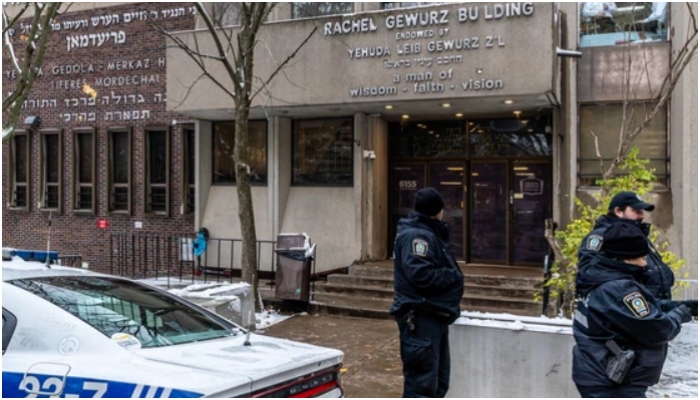
On Thursday (9th November), two Jewish facilities in Montreal, Canada were attacked by assailants days after the violent confrontation between the pro-Israel and pro-Palestinian groups at Concordia University. Two Jewish schools Yeshiva Gedolah and Talmud Torah Elementary School were attacked by assailants who opened fire at the schools in a deliberate attempt.

Canadian Prime Minister Justin Trudeau took cognizance of the event and condemned the attack. “The reports of overnight shootings at Jewish schools in Montreal are horrifying. I condemn these violent acts of antisemitism in the strongest terms possible – and I want to be clear: This hate has no place in Canada, and we must all stand united against it,” the Prime Minister tweeted.

According to the initial reports, the incident is said to have happened on Thursday (9th November). Earlier on Monday (6th November), a West Island synagogue and Jewish community center were targeted by firebombs.

Tensions have spiked since 7th October when more than 1,400 Israelis, many of them civilians, were murdered in an attack from Gaza by Hamas, which the Canadian government describes as a radical Islamist-nationalist terrorist organization.

Israel’s counteroffensive against Hamas after the brutal terrorist attack has sparked reactions and violent protests all across the Western world, where pro-Hamas and pro-Islamist groups have been blaming Israel and condemning its bombing on Gaza.

Jewish communities seek government and public help

“Schools are a place where we send our most treasured possessions — our children. No child in Montreal should see their place of learning targeted by a weapon created to kill. It’s odious and evil. Our community has 250 years of history in Quebec. We are proud, we are Quebecers, we’re not going anywhere. This attempted campaign of terror against us will not succeed,” said Eta Yudin, Quebec vice president at the Centre for Israel and Jewish Affairs.

The attack on the schools, according to Yudin, is all the more traumatic since it occurred on the anniversary of Kristallnacht, an outbreak of anti-Jewish violence in 1938 that signified the start of the Holocaust.

Meanwhile, Yair Szlak, the CEO of Federation CJA, another Jewish organization also commented on the issue and asked the government to help in the case. “If we don’t name what is wrong in society today, antisemitism will continue to fester, hate will continue to grow. We need everybody around us to say, ‘Enough is enough — we can no longer stand quietly as Jewish hate perpetuates in our streets,” he was quoted as saying by the Montreal Gazette.

Montreal Police searching for clues

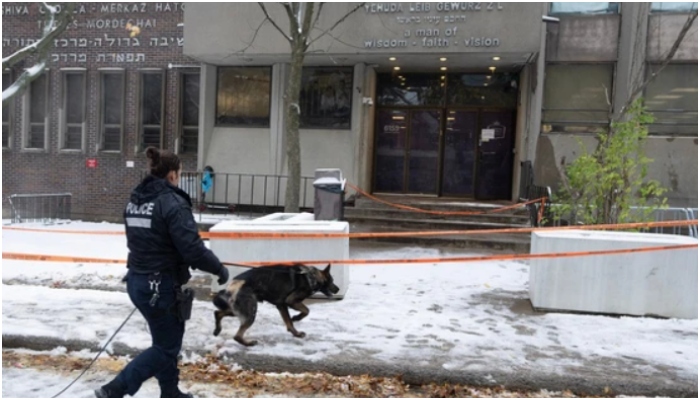
The police officers are searching for clues at the Yeshiva Gedola-Merkaz Hatorah school after shots were fired at two Jewish schools Thursday (9th November). Montreal police say two Jewish schools in the city were hit overnight by gunshots. “Nobody was inside at the time of the shootings,” the officers confirmed.

Vincent Richer, the assistant director general of the Montreal police department further stated that the police officers have decided to increase their visibility at areas of significance for the targeted communities. “I wish to remind everyone that hateful acts are unacceptable and we take them seriously. They are prohibited by the Criminal Code. Montreal police are in close contact with representatives of the Jewish and Muslim communities. Anyone feeling harassed or witnessing such acts should call 911,” the ADGP said.

Montreal Police looking for the clues

Rise of Antisemitism in US and Canada

Anti-semitism has been surging in the US and Canada since the Israel-Hamas war erupted on 7th October. OpIndia reported last month how Jewish students in several countries including the US were attacked and harassed by Hamas supporters at various universities. On 30th October, a Cornell University student was arrested for circulating horrendous anti-Jewish death threats over the campus. Before this, on 25th October, Jewish students at Cooper Union College in the United States were kept locked in the library at night by a security team as a precaution against a pro-Palestinian mob that attempted to burst through the doors.

Recently on Sunday (5th November), a 65-year-old Jewish man was killed after an anti-Israeli protestor hit him on the head with a megaphone. The incident took place at a pro-Palestine rally in the Westlake Village area in North Los Angeles city in the United States.

Also, a Jewish woman was stabbed at her residence in Lyon city in the Auvergne-Rhône-Alpes region of France. As per reports, the unidentified attacker stabbed the victim twice in the abdomen. He also drew the Nazi symbol (also called Hakenkreuz or hooked cross) on the door of the apartment. The assailant, who was wearing all black, managed to flee the crime scene.

Hate crimes up since 7th October in Ottawa, Toronto, Calgary, say Police

Earlier, on 3rd November, Ottawa Police said in a statement to CBC News that reports of hate crimes had gone up in several Canadian cities since 7th October when Hamas launched its brutal attack on Israel, including spikes of antisemitism and Islamophobia in Toronto and Montreal. 

Police in Toronto, which has the largest Jewish and Muslim populations in Canada, said hate crime reports were over twice as high for much of October compared to the same period last year. Myron Demkiw, the city’s police chief, stated there were 15 noted antisemitic hate crimes from 7th October to 25th October, compared to seven in 2022 and three in 2021.

Demkiw also stated that five Islamophobic hate crimes had been reported between 7th and 25th of October this year. There were none in 2022, and only one in 2021. Demkiw characterized what he found as “a very significant rise.”

For the same time period, Montreal police indicated 14 and 38 hate crimes against the Arab-Muslim and Jewish communities, respectively. In 2022, there were a total of 50 hate crimes targeting religion and 21 non-criminal hate “incidents” for the entire year.

In Ottawa, police recorded 29 hate-motivated instances between after 7th of October and the 23rd of October. They were unable to provide data from the previous year, but the majority of the 29 incidents “are somewhat linked to the ongoing conflict in the Gaza area,” Cailey Walker, the service’s spokesperson was quoted as saying. 

According to Matt Messenger, Calgary police hate crimes coordinator, “11 files came in after just two weeks of the attack by Hamas. Situations that cause an increase in hate crimes usually only have a short-term impact. However, according to Messenger, these hate crimes do not appear to be abating.

“It’s been spread out since 7th October whereas in previous years … we’ve seen a bulk of files come in the first couple days and kind of fade away,” he said. 

Anti-semitism and its history

Antisemitism refers to prejudice or hatred of Jews. The most extreme instance of antisemitism in history occurred during the Holocaust, which was the state-sponsored persecution and murder of European Jews by Nazi Germany and its allies between 1933 and 1945.

Pogroms, which were violent riots against Jews that were often incited by the government, were among the most prevalent examples of antisemitism throughout history. Blood libels—false rumors that Jews used the blood of Christian children for ritual purposes—were frequently used to incite pogroms.

The Nazi Party, established in 1919, gave political expression to racist theories. Propaganda against Jews played a part in the Party’s rise to prominence.

Following the Nazi party’s rise to power in 1933, anti-Jewish economic boycotts, book burnings, and legislation targeting the Jewish community were all enacted. The Nuremberg Laws of 1935 established a racial hierarchy by classifying Jews according to their “blood.”

The Nazis demolished synagogues and Jewish-owned businesses’ storefronts across Germany and Austria on the evening of 9h November 1938, in what is now known as the Kristallnacht pogrom. This incident signaled the start of a destructive period when Nazi antisemitism concentrated solely on genocide.

ED attaches three properties of Hero Group Chairman Pawan Munjal worth ₹25 crore in money laundering case

0

The Directorate of Enforcement (ED) has provisionally attached three immovable properties belonging to CMD and Chairman Hero MotoCorp, Pawan Kant Munjal. The properties are located in Delhi and are estimated to be worth Rs 24.95 crore.

In a release Friday, the central enforcement agency said it initiated an investigation on the basis of a prosecution complaint filed by the Directorate of Revenue Intelligence against Munjal and “others” for taking foreign exchange or currency out of India illegally.

The prosecution complaint alleged that foreign currency/foreign exchange equivalent to Rs 54 crore was illegally taken out of India.

The investigation claimed that Pawan Munjal got issued foreign exchange/ foreign currency in the name of other persons and thereafter utilised the same for his personal expenditure abroad.

“The foreign currency/ foreign exchange was drawn from authorised dealers by an event management company in the name of various employees and thereafter handed over to Pawan Kant Munjal’s relationship manager. The relationship manager carried such foreign currency/ foreign exchange in cash/ card secretly, for the personal expenditure of Pawan Kant Munjal during his personal/ business trips,” the ED release stated.

The modus was adopted to override the limits of USD 2.5 Lakh per annum per person under the Liberalised Remittance Scheme of RBI, it added.

The agency ED had earlier conducted search operations on August 1, 2023 with respect to P K Munjal and related entities/persons and seized valuables worth Rs 25 crore along with digital evidences and other incriminating evidences. The total value of seizure and attachment now stands at about Rs 50 crore. 


(This news report is published from a syndicated feed. Except for the headline, the content has not been written or edited by OpIndia staff)

Muslim man known to victim’s mother blackmails married woman to establish sexual relations, forces her and her 12-year-old sister to accept Islam, arrested

0

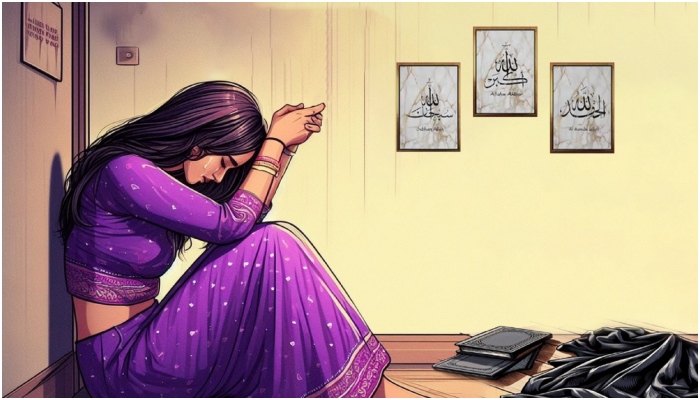
On Friday (10th November), the Madhya Pradesh Police arrested one individual identified as Rahim Khan for threatening and blackmailing a married woman and her minor sister to convert to Islam. The accused forced and blackmailed the woman to follow the Islamic rituals and divorce her husband to marry him.

According to the reports, the Police took cognizance of the event and arrested the individual based on the complaint filed by the woman. The woman stated in the complaint that the accused was known to her mother and had arrived at their home for the birthday party of her 12-year-old sister. He then deceptively transferred the photos of her mother to his phone.

The next thing he did was to put pressure on the woman to establish sexual relations with him. He uploaded the picture of the victim woman over the internet and also made derogatory comments about it. He later blackmailed the woman to establish sexual relations with him.

Rahim would force the woman to give divorce to her husband and marry him instead. He also forced the woman to follow Islamic rituals and convert her religion to Islam. On refusing, the man would say, “We are allowed to have four marriages in our community.”

Further, he wanted the woman to make her 12-year-old sister learn some Islamic rituals and practices.

He tried to convert the woman and her sister to Islam. He would also ask the minor girl to read Fateha-Sifara. ACP Kunan Mandloi commented on the matter and said that the accused has been booked under various sections of the law. The accused has been arrested and now is being interrogated by the Police.