Home Blog Page 1834

‘PoK will merge with India on its own, wait and watch’: Former Army chief and Union Minister General VK Singh in Rajasthan

0

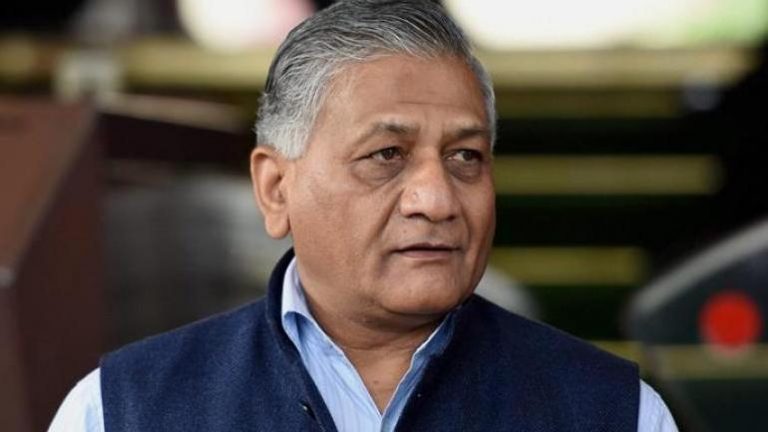
Union Minister and former Army chief General VK Singh has stated that Pakistan-occupied Kashmir (PoK) would merge with India soon “on its own”.

“PoK will merge with India on its own, wait for some time,” the Union minister for State said while responding to a query in a press conference here in Dausa regarding demands of Shia Muslims in PoK seeking opening of border crossing with India.

The minister was addressing a press conference in Dausa during a Parivartan Sankalp Yatra (PSY) program of the BJP.
The Union minister also spoke about the success of the recently concluded G20 Summit under India’s presidency. He said that that the grandeur of the summit has given India a unique identity on the world stage and the country has proved its mettle in the world.

“The G-20 meeting was unprecedented. It has never been done before nor any other country except India can organise a summit like this. Under the leadership of Prime Minister Narendra Modi, India has proved its mettle in the world. The G-20 group includes all the powerful countries of the world,” Singh said.

Further, coming down heavily on the Rajasthan Government over the law and order situation, the minister alleged that under the current Congress government, the state is troubled by the poor law and order situation.

“This was the reason why the BJP had to organise the Parivartan Sankalp Yatra to go among the people and listen to them. The people want a parivartan (change) and they are coming with us on this yatra and have made up their mind to bring about change,” he said, adding that the yatra is getting immense public support across the state.

On the question about the BJP’s chief minister’s face in the state for the upcoming assembly elections, V K Singh said that the BJP does not declare the chief minister’s face wherever elections are held, but contests elections only on the charisma of the Prime Minister.

“Everyone should assume that the party will give opportunity to such leaders who are good, useful and on whom the public has confidence,” he said.

(This news report is published from a syndicated feed. Except for the headline, the content has not been written or edited by OpIndia staff)

‘Samudrayaan’: India’s first manned deep ocean research mission readying its submersible ‘MATSYA 6000’, minister Kiren Rijiju shares glimpses

After the raging success of the moon mission Chandrayaan-3 and with the Aditya L1 en route to study the Sun, India is now preparing to launch the ‘Samudrayaan Mission’ to study the deep sea.

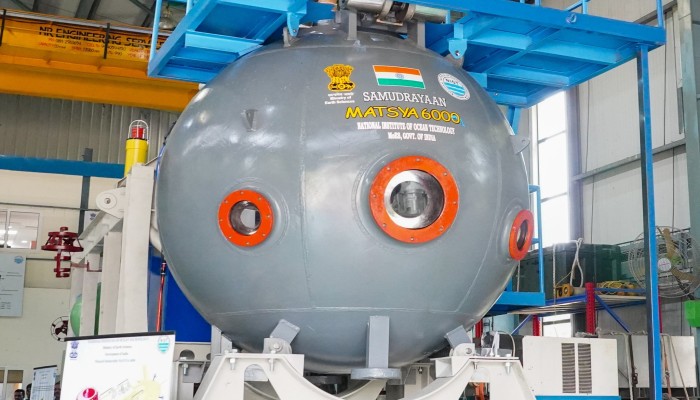
‘Samudrayaan Mission’ will be India’s first manned Deep Ocean Mission. The plan is to send three humans in 6-km ocean depth in a submersible named ‘MATSYA 6000’. ‘Matsya’ is the Sanskrit word for fish. The submersible is being developed at the National Institute of Ocean Technology in Chennai.

Union Minister of Earth Sciences Kiren Rijiju took to X, formerly Twitter, to share the updates of the work underway for the mission. He said that the mission aims to study “the deep sea resources and biodiversity assessment”.

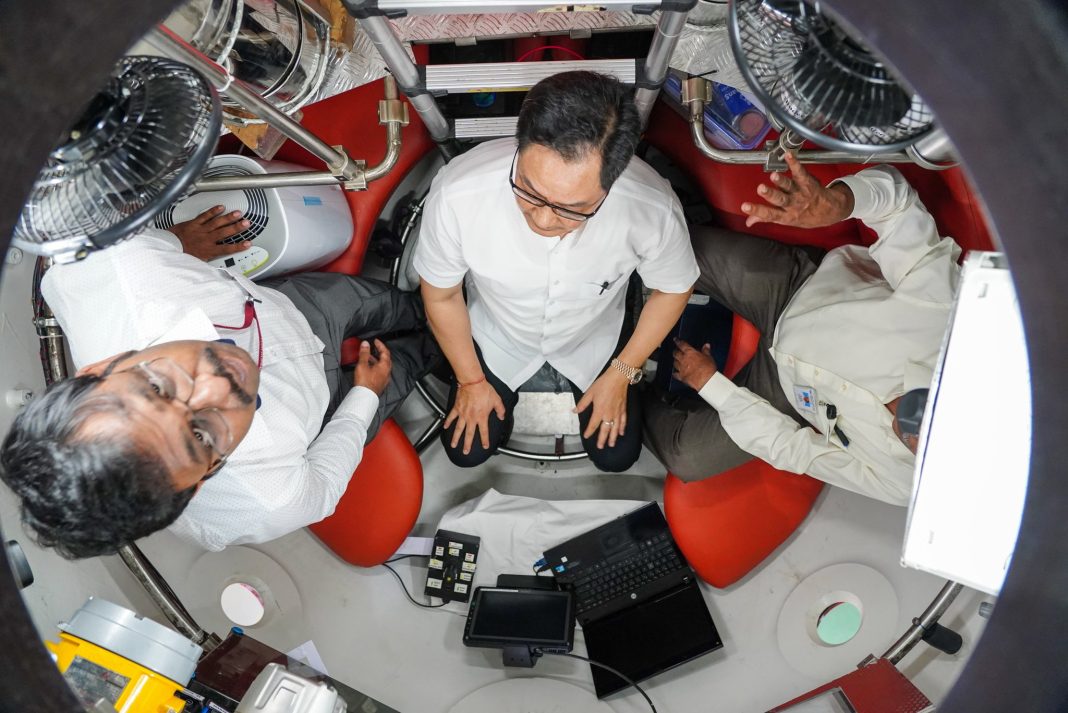
Union Minister for Earth Sciences inside the submersible ‘Matsya 6000’

“The project will not disturb the ocean ecosystem. The Deep Ocean Mission supports the ‘Blue Economy’ vision of PM @narendramodi ji, and envisages sustainable utilization of ocean resources for economic growth of the country, improve livelihoods and jobs, and preserve ocean ecosystem health,” Rijiju posted.

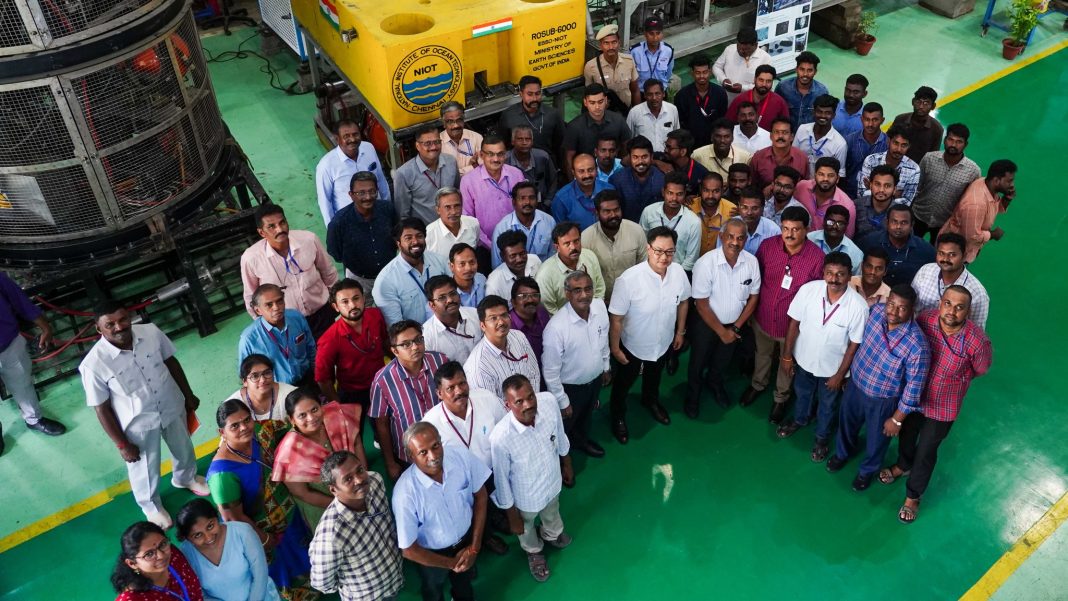
The Union Minister also met with the scientists, researchers, and engineers assigned to the mission. He said, “Our Scientists, Researchers, and Engineers are fully devoted to making the Deep Ocean Mission very successful in a sustainable manner.”

Union Minister Kiren Rijiju meets the researchers, scientists, and engineers behind the Samudrayaan Mission

Rijiju also shared a video of himself inside the vessel, with a mission expert explaining how ‘Matsya 6000’ will explore the deep ocean and how the individuals joining the deep-sea expedition will be able to sustain themselves there.

The submersible is equipped with oxygen supply, and humidity controller among others. The submersible will have a shirt-sleeve environment, meaning the team inside the submersible can be dressed in ordinary clothing.

About the ‘Samudrayaan Mission’

The ‘Samudrayaan Mission’ aims to develop a self-propelled manned submersible to carry three human beings to a water depth of 6000 meters in the ocean with a suite of scientific sensors and tools for deep ocean exploration. The mission has an endurance of 12 hours of operational period and 96 hours in case of emergency.

Venturing into the deep ocean is by no means an easy task. Beyond 200 metres, the ocean gets very dark and cold and the pressure increases.

The manned submersible will allow scientific personnel to observe and understand unexplored deep sea areas by direct interventions. Further, it will enhance the capability for deep-sea man-rated vehicle development. The projected timeline for the mission is five years from 2020-2021 to 2025-2026.

The ‘MATSYA 6000’, a Remotely Operated Vehicle (ROV), has been developed by the National Institute of Ocean Technology (NIOT), Chennai, an autonomous institute under the Earth Sciences Ministry.

Various other underwater instruments such as Autonomous Coring System (ACS), Autonomous Underwater Vehicle (AUV), and Deep Sea Mining System (DSM) for the exploration of deep-sea have also been developed.

According to the National Institute of Ocean Technology, “deep oceans have abundant mineral resources like Polymetallic nodules; cobalt-rich manganese crust, and hydrothermal deposits. Polymetallic nodules have economically valuable metals such as Copper, Cobalt, Nickel and Manganese and are viewed as potential resources for the depleting land resources and increasing demand.”

What is the Modi government’s Blue Economy policy?

A draft policy framework on India’s Blue Economy was prepared last year. The draft Blue Economy policy framework envisages the optimal utilization of all sectors of the maritime domain, (living, non-living resources, tourism, ocean energy, etc.) for sustainable development of coastal areas.

This policy document contains key recommendations on the National Accounting Framework for Blue Economy and Ocean Governance, Coastal Marine Spatial Planning and Tourism Priority, Marine Fisheries, Aquaculture and Fish Processing, Manufacturing, Emerging Industries, Trade, Technology, Services and Skill Development, Logistics, Infrastructure and Shipping, Coastal and Deep-Sea Mining and Offshore Energy and Security, Strategic Dimensions and International Engagement.

Terrorism remains one of the greatest threats to humanity: Saudi Arabia and India issue joint statement, to strengthen security cooperation

On Monday (September 11), the Kingdom of Saudi Arabia and India issued a joint statement, condemning terrorism in all its forms and vowing to strengthen global security cooperation to dismantle terrorism infrastructure and financing.

“Both sides also stressed the importance of strengthening security cooperation in the field of combating terrorism and its financing. Both sides emphasized that terrorism, in all its forms, remains one of the gravest threats to humanity,” the statement read.

It further added, “They agreed that there cannot be any justification for any act of terror for any reason whatsoever. They rejected any attempt to link terrorism to any particular race, religion or culture.”

“Both sides called on all States to reject the use of terrorism against other countries, dismantle terrorism infrastructure where it exists and bring perpetrators of terrorism to justice swiftly. Both sides stressed the need to prevent access to weapons including missiles and drones to commit terrorist acts against other countries,” India and Saudi Arabia said in the joint statement.

In the context of Afghanistan, the two nations stressed the importance of maintaining security and stability in the war-torn nation. The governments of India and Saudi Arabia also vowed to not allow Afghanistan to be used as safe haven for terrorist and extremist outfits.

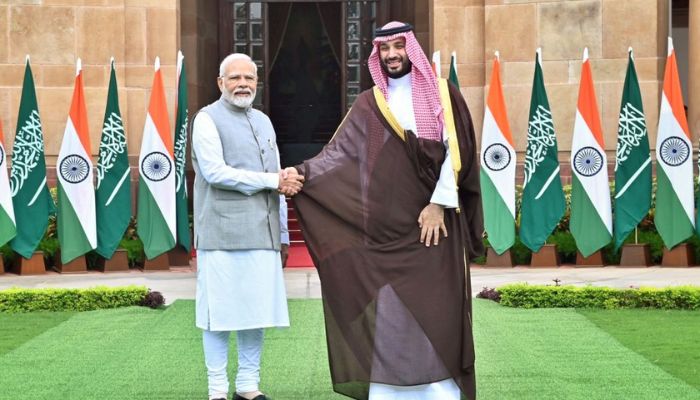
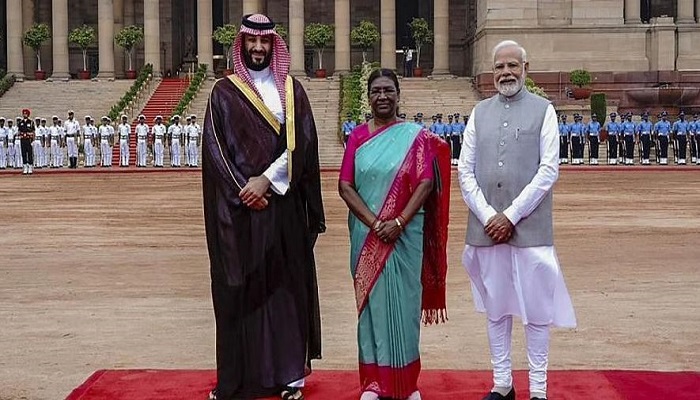
The development came during the State visit of Saudi Arabian Crown Prince Prince Mohammed bin Salman to India on Monday (September 11). PM Modi held official talks with the Crown Prince and reviewed means to deepen strategic relations between the two nations.

8 MoUs signed by Saudi Arabia and India

They also co-chaired the first meeting of the Strategic Partnership Council (SPC), which was set up in October 2019. The two leaders signed and exchanged a total of 8 Memorandum of Understanding (MoU)/ Memorandum of Cooperation (MoC).

  1. MOU in the field of Energy between the Ministry of New and Renewable Energy of India and the Ministry of Energy of Saudi Arabia
  2. MOU between CVC of India and Saudi Oversight and Anti Corruption Authority
  3. MOU between Saudi EXIM Bank and EXIM Bank of India
  4. MOU for Cooperation in the Technical Field & Establishment of the Small and Medium Enterprises Bank between SIDBI and SME Bank of Saudi Arabia
  5. MOU on Seawater Desalination between National Institute of Technology of India and Saline Water Conversion Corporation of Saudi Arabia
  6. MOC between the Ministry of Communication and IT of Saudi Arabia and MEITY of India in the field of Digitisation and Electronic Manufacturing
  7. MOC between the National Archives of India and the King Abdulaziz Foundation of Saudi Arabia in the area of archival cooperation
  8. Framework of Cooperation on Enhancing Bilateral Investment between Invest India and the Ministry of Investment of Saudi Arabia

Is Saudi Crown Prince MBS good for the world? As the oil kingdom rises as a modern global power, here is what it means for India

The Crown Prince and Prime Minister of Saudi Arabia Mohammed Bin Salman arrived in India on a three-day State visit during which he attended the G20 Summit in the national capital over the weekend. After participating in the G20 Summit, he held a bilateral meeting with Prime Minister Narendra Modi in New Delhi on Monday (11 September). 

During the bilateral meeting, the two leaders co-chaired the First Leaders’ Meeting of the Strategic Partnership Council. They discussed all aspects of bilateral relations and international issues of mutual interest. Following the bilateral meeting, Secretary (CPV & OIA) Ausaf Sayeed addressed the media regarding the issues covered in the meeting. 

The MEA official announced that during the Saudi crown prince’s state visit as many as eight agreements have been signed between the two nations. These include agreements in the field of energy; digitalisation and electronic manufacturing; agreements between India’s CVC (Chief Vigilance Commission) and Saudi’s corruption oversight committee; National Archives of two sides; Invest India and Saudi’s Minister of Investment; Axim Banks; SIDBI and Saudi’s SME bank; and agreement in the field of desalination.

MEA official Sayeed added that the two sides also agreed to expedite the India-GCC (Gulf Cooperation Council) FTA (free trade agreement) negotiations which will boast economic cooperation between both nations. Additionally, both sides agreed to strengthen cooperation in the FinTech field and explore trading in the local currencies.

He further added that India and Saudi Arabia have agreed to jointly set up a task force that will help in identifying and channelling the 100 Billion Dollar investments which the Kingdom of Saudi Arabia had promised earlier. 

The increasing trade ties between India and Saudi Arabia have strengthened the overall strategic partnership between both nations. Notably, India is Saudi Arabia’s second-largest trading partner whereas Saudi Arabia is India’s fourth-largest trading partner. 

India Middle East Europe Economic Corridor

The trade link between both nations recently received a major boost in the form of the India-Middle East-Europe Economic Corridor (IMEEC). This ambitious project of a rail-shipping corridor aims to establish India as a significant global hub for international business and commerce by linking India, the Middle East, and the EU.

The oil-kingdom is marching toward the post-fossil fuel world

Following the G20 Summit where the announcement regarding IMEEC was made, several world leaders have hailed the launch of the new economic corridor as a huge boost for the global economy.

Parallely, some experts are calling it a slingshot that has the potential to challenge and even smash the Chinese Belt and Road Initiative (BRI) project into smithereens. 

MBS and diversification of Saudi Arabia’s economy

Meanwhile, several experts view Saudi’s cooperation in this project and his state visit to India as part of a larger strategic vision of Crown Prince Mohammed Bin Salman who is on a spree to reform the Saudi Kingdom. Evidently, 38-year-old Saudi’s de-facto ruler who is popularly known by his initials MBS, has been calling the shot in the Kingdom for at least 5 years. Under the MBS regime, the kingdom has been diversifying the Saudi economy in a world where reliance on oil is diminishing. 

In a post-fossil fuel world, the oil-rich kingdom of Saudi Arabia aims not only to preserve its influence on the global stage but also to emerge as a modern global power. 

Under Vision 2030, Saudi Arabia is future-proofing its oil-based economy by emerging as an investment, sporting, and tourism hub. On the domestic front, he is drawing investment and attraction for tourism in his ambitious NEOM Project which would have a zero-carbon city called ‘The Line’ in the Northwestern region of the kingdom. 

Additionally, he has been luring world-class foreign professionals under the golden visa scheme. The scheme allows foreign investors to relocate to Saudi Arabia by making a substantial investment in the country’s economy in exchange for a residence permit. 


However, the outreach is not limited to luring investment and foreign professionals, MBS’ regime is using its fat cheque to challenge European hegemony in hosting lucrative sporting leagues like football and lured several superstars this summer including Christiano Ronaldo, Mane, Gerrard, and Benzema among others. The aim is to give a transformative ‘tourist-friendly’ image to the Kingdom of Saudi Arabia.

MBS and the Kingdom’s policy toward India

On the international stage, MBS has vocally supported India, recognizing its burgeoning economy as a lucrative market with promising returns on investment. Additionally, MBS shares a great camaraderie with the Indian PM which reflects sharply in the policies of both nations towards each other. Over the years, Saudi Arabia has been seen as a trusted Indian partner in the Middle East, and the strategic depth in ties was solidly marked when the Kingdom bestowed its highest civilian award ‘Order of Abdulaziz Al Saud’ to PM Narendra Modi. 

As part of its tilt, the Kingdom which once leaned toward Pakistan, is now partnering with India in multiple sectors from space to intelligence sharing and the Kingdom was up in arms to host the first-ever visit of an Indian high-ranking defense officer in December 2020 when the then Chief of Army Staff Gen. M.M. Naravane commenced his historic visit to Saudi Arabia. 

The 100 billion USD investment announcement in India was part of his larger plan to diversify beyond oil and investment in the future like retail, and real-estate sectors among others. Evidently, during his current state visit to India, MBS and PM Modi signed 47 Memorandum of Understanding (MoU) to bolster investment in both countries.

Saudi’s de-facto ruler MBS pushes for modernization: With focus on religious and gender-based tolerance

An old video of Saudi Crown Prince MBS is doing rounds on the internet where he is promising to reform the entire region of the Middle East and promises that he will work to make the region the ‘New Europe’ in his lifetime. 

In the video, MBS says, “I believe the Middle East will be the new Europe. In 5 years, Saudi Arabia will be a completely different country. This is the Saudi war. This is my war. I want to see the Middle East on top of the world before I die.”

However, to draw investment, the Kingdom of Saudi Arabia has to undergo a radical image transformation from a hardline Sunni Islamist nation to that of a tolerant nation that respects Human Rights and tolerates multiple faiths. 

For this, MBS has vowed that he will return Saudi Arabia on the path of moderate Islam and shed the ultraconservative image of the oil-rich kingdom.

In one interview, he said, “What happened in the last 30 years is not Saudi Arabia. What happened in the region in the last 30 years is not the Middle East. After the Iranian revolution in 1979, people wanted to copy this model in different countries, one of them being Saudi Arabia. We didn’t know how to deal with it. And the problem spread all over the world. Now is the time to get rid of it.”

On reverting to moderate Islam, MBS once said, “We are simply reverting to what we followed – a moderate Islam open to the world and all religions. 70% of the Saudis are younger than 30, honestly, we won’t waste 30 years of our life combating extremist thoughts, we will destroy them now and immediately.”

To discourage hardcore theological practices, Saudi Arabia banned abaya in the exam halls and asked female students to conform to prescribed uniforms. 

As part of his soft-Islam push, Saudi Arabia is improving its credentials on tolerance be it religious or gender-based. Evidently, in 2018, the MBS regime lifted a ban on female drivers and expanded the rights of women in the country. Subsequently, it has allowed hiring female drivers as part of new professions permitted for recruitment through an official e-platform designated for domestic labour.

A similar women-friendly push was witnessed when the Kingdom lifted the restrictions and allowed women to undergo the Hajj pilgrimage without a ‘Mehram’. 

From India alone, more than 4,000 women performed Hajj pilgrimage without a Mehram, marking a historic first.  

As part of MBS’ Vision 2030 and to improve religious tolerance in the Kingdom, the MBS regime introduced a new curriculum which includes Hindu epic Ramayana and Mahabharata. Additionally, other significant elements of Indian culture like yoga and Ayurveda have also been included in the school curriculum.

Coming out of shadows: Independent geopolitical clout

During the Presidential debates, Democratic Presidential nominee Joe Biden raked in several controversies that troubled the US relationship with the Saudi Kingdom when he assumed office in January 2020. These include the alleged involvement of Saudi Crown Prince Mohammad Bin Salman in the murder of Washington Post journalist Jamal Khashoggi and the Kingdom’s policy of arming rebels in other countries like Houthi rebels in Yemen.  

Since then, Saudi Arabia has adopted policies that reflect that it has a brain of its own rather than playing the role of junior alliance partner of the United States. The relationship worsened when the US ended its aid to Saudi-led forces in Yemen in 2021.  

As a result, Saudi Arabia refused to bow down to US pressure over the Ukraine war and didn’t play along with US demand to regulate oil supply instead it has worked alongside Russia on this issue. In the immediate aftermath of the Russia-Ukraine war, when the USA was trying its level best to isolate Russia globally, there were reports that MBS just refused to take Biden’s phone calls, ignoring requests to pump up oil supplies.

However, the biggest hit to US interest is the gradual shift from the petro-dollar as Saudi Arabia has stated that it is open to transacting in non-US Dollar currencies. Apparently, this was also a major issue that was discussed when Saudi Prime Minister MBS met with PM Modi during his state visit. 

It was in this context that during the G20 Summit in India, PM Modi ‘breaking the ice’ between MBS and Joe Biden, and the eventual announcement of the IMEEEC was seen as a significant positive development.

Even in this geopolitical power balancing, Saudi Arabia shares its larger geopolitical interests with India and it recently joined the BRICS where India is an active member of the grouping. During his current India visit, MBS has thanked PM Modi for accepting Saudi Arabia’s membership in the BRICS.

Overall, be it in the geopolitical arena, investment opportunities, or growing religious tolerance in the Kingdom of Saudi Arabia, the MBS regime could seemingly turn out a promising sign for India through which the roads of Middle Eastern power politics could be accessed better than ever. 

Former Pakistan cricketer Khalid Latif sentenced to 12 years imprisonment for offering money to kill Dutch leader Geert Wilders

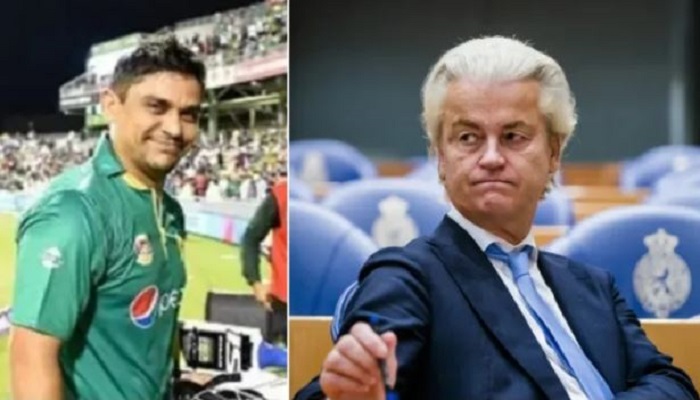
On Monday (11 September), a Dutch court sentenced a former Pakistani cricketer to 12 years in prison for urging people to murder Dutch leader Geert Wilders. The court announced the sentence in his absence as Latif lives in Pakistan and has neither attended any stage of the trial nor been detained in the Netherlands.

According to the Dutch court, the remarks made by 37-year-old Khalid Latif should be regarded as incitement to murder, sedition, and threat. The court stated that the prosecutors had proved that the Pakistani cricketer posted a video in 2018, in which he offered a 3 million rupee (around 21,000 euros at the time) reward for the murder of Greet Wilders. 

The Hague district court said, “The words used by the suspect are explicit: he promises to pay a considerable sum of money to anyone who engages in a specific act, namely the killing of Mr Wilders.” 

The court was informed about protests where Dutch flags were burned and other protestors also called for the killing of Wilders.

Regarding this, the court added, “It is very likely that someone – anywhere in the world – would feel compelled to act on this call.” 

However, the prosecutor told the court that The Netherlands and Pakistan have no treaties in place in matters of judicial cooperation or extradition. The prosecution also highlighted that earlier cooperation requests in this case didn’t receive any response from the Pakistani side. 

Notably, the video where Latif gave the call for violence and killing the Dutch leader came after Wilders announced that he had planned to hold a contest for cartoons depicting caricatures of the Prophet Mohammad. However, the competition was later cancelled. In Islam, images of the Prophet Mohammad are forbidden and are considered a form of idolatry. Additionally, most Muslims regard caricatures as highly offensive.

Meanwhile, no immediate response could be received from the former Pakistan Cricketer Khalid Latif who once captained the Pakistan side in the 2010 Asian Games. But in 2017, he received a five-year ban from cricket in 2017 over a spot-fixing scandal. 

Earlier, the prosecution demanded that Khalid Latif should be served 12 years of jail term for issuing a bounty against the Dutch leader. 

During the trial, Wilders also asserted that a conviction would send a “powerful signal to all others who issue threats: we won’t accept it.” 

He also added that he would not stop by these threats and said, “As long as I’m living and breathing, you won’t stop me. Your call to kill me and pay money for it is abject and will not silence me.”

Geert Wilders (60) is one of Europe’s most prominent leaders who has been shaping the immigration debate in the Netherlands over the past two decades, despite never being in government. 

His Freedom Party (PVV) is the third-largest in the Dutch parliament and is the main opposition party. Since 2004, he has been living under constant police protection. 

‘Godhra-like incident can take place after Ayodhya’s Ram Mandir inauguration’: Uddhav Thackeray

0

At a time when the entire country is waiting for the inauguration of the Ram Mandir in Ayodhya, Uttar Pradesh with bated breath, Shiv Sena UBT leader Uddhav Thackeray has gone on to utilize the much-awaited occasion to spread rumours and instil fear among devotees.

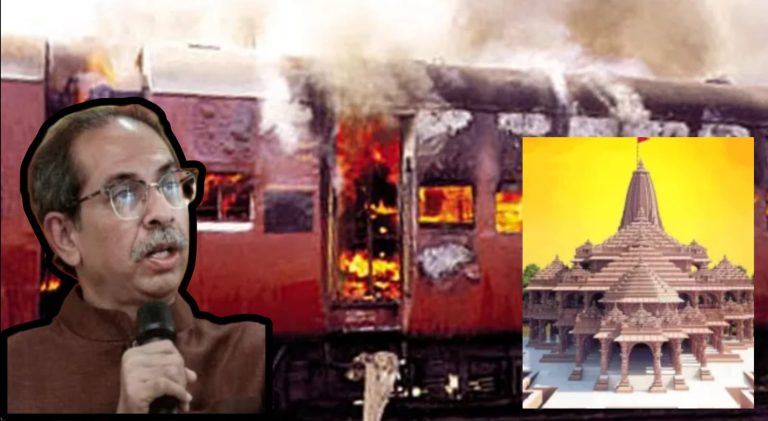
On Sunday, September 10, addressing an event in Jalgaon, the Shiv Sena (Uddhav camp) chief and former Maharashtra Chief Minister claimed that a “Godhra-like” incident could occur during the “return journey” of the large number of devotees expected to converge in Ayodhya, Uttar Pradesh, for the inauguration of the Ram Temple.

The Bhavya Ram Mandir in Ayodhya will in all probability be inaugurated in January 2024 and tens of thousands of Hindus from throughout the country are expected to attend the grand ceremony.

“It is a possibility that the government could invite a large number of people for the Ram Temple inauguration in buses and trucks, and on their return journey, an incident similar to that in Godhra may occur,” Thackeray asserted.

BJP slams Uddhav Thackeray for fear-mongering about the Ram Mandir inauguration event

Former Law Minister Ravi Shankar Prasad slammed Uddhav Thackeray for his reckless remark. He said that Balasaheb Thackeray – Mr Thackeray’s late father – may feel “… what happened to my child?” “With whose blessings he became a big leader… will he speak like this? The Ram Janmbhoomi movement which Balasaheb blessed? This alliance against PM Modi can go to any limits for votes,” he declared.

“I would like to pray to Lord Ram to give them (the I.N.D.I. Alliance) some wisdom,” he added

When pressed to comment, Union minister Anurag Thakur said some people have forgotten their party ideology for the greed of the power. “I don’t know what Balasaheb (late Shiv Sena founder and Uddhav Thackeray’s father) would have thought today and what Uddhav ji is doing today for the greed of power,” Anurag Thakur said as he was asked to comment on Uddhav’s statement.

“I don’t know what Balasaheb (late Shiv Sena founder and Mr Thackeray’s father) would have thought… what is Uddhavji doing for greed of power?” he asked, “Rahulji, Uddhavji didn’t say a word when things were said about Sanatan Dharma.”

Maharashtra Minister Girish Mahajan said that Uddhav Thackeray is trying to create a sense of fear in the minds of the people. “Uddhav Thackeray and Sanjay Raut have been giving statements on this for days. This is a baseless statement. Does he want clashes in society? He’s creating a sense of fear amongst people, senselessly. I doubt if he has to plan something similar. Police should pay attention to him,” he said.

When leftist liberals and opposition leaders like Uddhav Thackeray use the Godhra carnage to demonize the central government, they conveniently forget about the 59 innocent people who were burned alive in the train for literally no fault of theirs.

The truth about the 2002 Godhra train carnage

On 27 February 2002, the Sabarmati Express was scheduled to reach Godhra station at about 3:30 a.m. On that day, the train was running four hours late. As such, it arrived at Godhra by 7:40 a.m. Eight minutes later, a mob of 2000 Islamists set 59 Hindus, including 25 women and 15 children, in the coach S6 of the train on fire in Godhra’s predominantly Muslim area – Signal Falia.

31 Islamists were found guilty of the Godhra massacre on February 22, 2011, by the trial court (with only 11 receiving the death penalty and 20 receiving life in prison), and all 31 convictions were affirmed by the Gujarat High Court in October 2017, resulting in everyone receiving a life sentence. Prior to that, based on the testimony of witnesses and survivors, it was obvious to anybody with even a modicum of intellectual integrity that Muslims had set the train on fire.

In February 2003, an accused person made a judicial confession in which he acknowledged that Godhra was a well-planned attack and that he had personally participated in it. A judicial confession is conclusive evidence. This proves that the Godhra carnage was a preplanned attack on the innocent Karsevaks.

Uddhav Thackeray claimed riots may erupt after Ram Mandir’s inauguration

However, this is not the first time Uddhav Thackeray has resorted to using the Ram Mandir inauguration event to instil fear amongst the Hindu devotees. In August this year, the Shiv Sena (Uddhav camp) chief, who once projected himself as a Hindutva icon, had claimed that riots may erupt after Ram Mandir’s inauguration.

While claiming that the Pulwama attack was a conspiracy hatched by the BJP to win elections, Thackeray said, “Another possibility is being spoken about and all the Hindus in the country should pay close attention to it. Now it has been exposed that the attack by Pakistan was a false thing. They may also promise a house on the moon. What more can be done then? It is more dangerous. Look at the Ram Mandir being built in which they have played no role. I say no role because, they did not demolish Babri mosque, they did not give an order of building the Ram Mandir – it was given by the court, and money was given by the people and the government exchequer. But they will hold a program of inaugurating the Ram Mandir on 1st January 2024. At that time, as told by Satyapal Malik and Mahua Moitra, they will call thousands and lakhs of Hindus to Ayodhya from all over the country. They will bring them to Ayodhya by bus and train. And when after the program, these trains and buses will go back to their respective places, they will orchestrate attacks on these buses and trains while they pass from the Muslim settlements so that riots can be initiated throughout the country. This is not my opinion. It is the opinion of these two leaders. I am just telling it to you.”

Tamil Nadu creating disputes “unnecessarily”: Karnataka CM Siddaramaiah on Cauvery water row

0

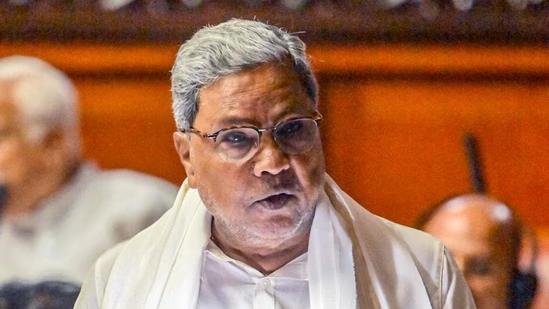
Amid the Cauvery-water sharing dispute, Karnataka Chief Minister Siddaramaiah on Monday said that the central government has not given permission for the Mekedatu Project and the Tamil Nadu people are creating disputes unnecessarily. 

In a series of tweets on X, Karnataka CM said “The BJP government at the centre has not given permission to the Mekedatu project and Tamil Nadu has no right to bring on dispute this project. 177.25 TMC water allocated to the state should be released to Tamil Nadu in normal years. It is said that in the time of hardship, the Sutra of hardship should be followed. But the people of Tamil Nadu are creating disputes unnecessarily.”

Siddaramaiah further said that Tamil Nadu BJP leaders should appeal to the Cauvery Water Management Authority to give permission to the Mekedatu project as it is under the central government. 

“The state BJP leaders should appeal to the Cauvery Water Management Authority to give permission to the Mekedatu project as it is under the government at the centre @BJP4India. The state BJP said in the all-party meeting that they will cooperate with the state government on the Cauvery issue, and outside they are doing politics on the same issue,” Siddaramaiah added.

Karnataka CM also mentioned that the PM has not replied to a meeting of all parties so BJP MPs should get the meeting fixed with the PM.

“Providing drinking water to the people of Mysore and Bangalore districts is the first priority as per the water policy. In the meantime, the interests of the farmers should be protected. Tamil Nadu has filed a case in the Supreme Court and the government will make the state’s stand clear. No one should politicize the welfare of the farmers of the state for any reason. In this matter, the Prime Minister’s time has been requested for the meeting of the all-party delegation, but no reply has been received from him, so let the state BJP MPs fix the time for the meeting with the Prime Minister,” Siddaramaiah said.

Earlier former Karnataka CM Basavaraj Bommai said that the Karnataka government needs to be firm in its stand and should stop sharing water with Tamil Nadu.

“There is hardly water in the backwaters of Cauvery. I think the govt has to be very firm, stop the water and see that they convince the Supreme Court and explain the pathetic condition of Karnataka and the excess use of water by Tamil Nadu,” Bommai said.

Earlier the Tamil Nadu government approached the Supreme Court seeking direction to Karnataka to release 24,000 cusecs of water daily per day from the reservoirs in Karnataka. Karnataka government also filed an affidavit opposing Tamil Nadu’s application saying that the application is based on an assumption that this year is the normal rainwater year.

The matter has been a controversial issue between Karnataka and Tamil Nadu for decades and they have been locked in battle over the sharing of water from the Cauvery river, which is a major source of irrigation and drinking water for millions of people in the region.

The Centre formed the Cauvery Water Disputes Tribunal (CWDT) on June 2, 1990, to adjudicate disputes between Tamil Nadu, Kerala, Karnataka and Puducherry with respect to the water-sharing capacities.

(This news report is published from a syndicated feed. Except for the headline, the content has not been written or edited by OpIndia staff)

Alt News cofounder Mohammed Zubair pulls off another Nupur Sharma saga, unleashes mob against Venkatesh Prasad’s media manager

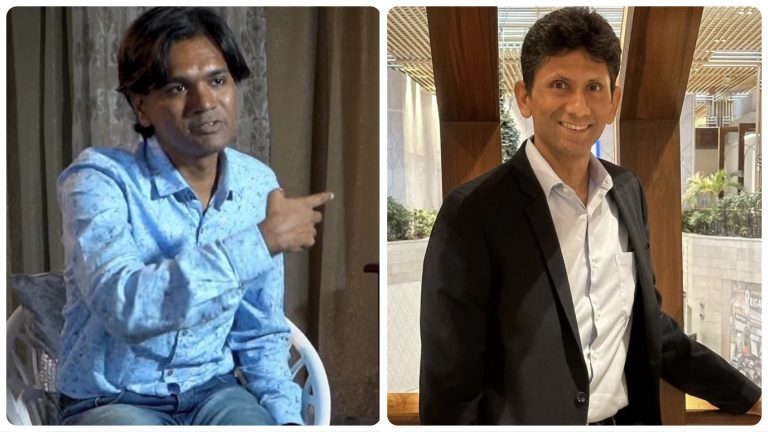
On Sunday (September 10), Alt News co-founder Mohammed Zubair unleashed his troll army on digital strategist and consultant Amritanshu Gupta for ‘managing’ the Twitter handle of ex-Indian cricketer Venkatesh Prasad.

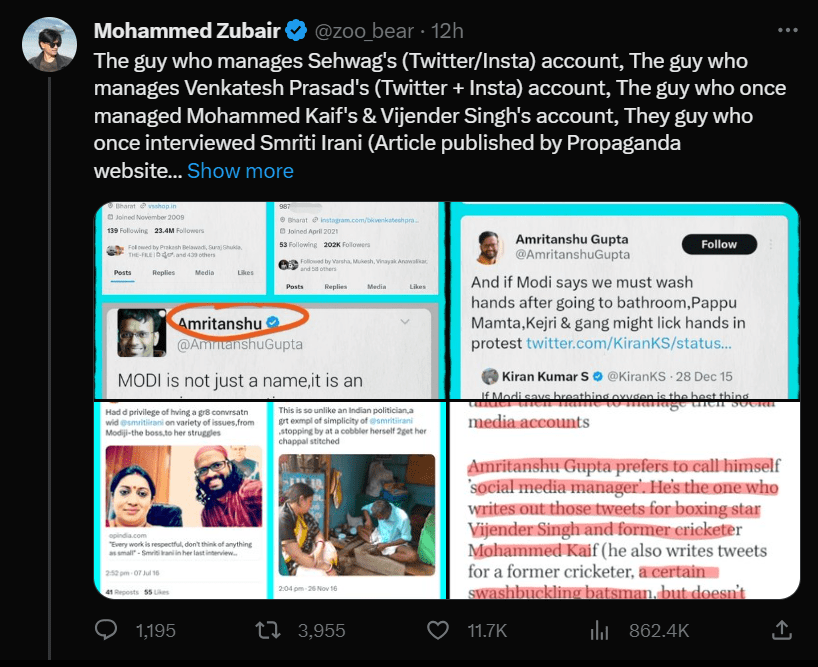
The dubious ‘fact checker’ insinuated that the tweets by Prasad, lambasting him for being a hate monger, were posted by Gupta. Zubair was miffed to learn that he admired the work of PM Modi, interviewed BJP leader Smriti Irani and did not hold Rahul Gandhi in high esteem.

While taking to X, he wrote, “The guy who had himself tweeted about contacting/DM him for ‘Twitter endorsement from Celebrities’, the guy who made fun of opposition leaders, the guy loves PM and his 56 inches.”

Screengrab of the tweet by Mohammed Zubair

He also shared a video of Gaurav Kapoor’s 2017 interview with Ashish Nehra and suggested that Amritanshu Gupta must have approached the former cricketer for paid tweets.

Zubair also shared an article from Outlook magazine and said, “Celebs hire ‘professionals’ who write under their name to manage their social media accounts.”

The Background of the Controversy

On Saturday (September 9), Mohammed Zubair targeted Venkatesh Prasad over a deleted tweet on the mismanagement of World Cup 2023 ticket sales by the BCCI. The former cricket lambasted the fake news peddler for hatemongering on social media.

“Haha…Says a serial hate-monger, who has put so many lives in danger for his agenda. You disguising as a fact-checker is like Terrorists talking about peace. Now post that you need money to survive and ask for donation for your website, no shame in living off by fooling people,” he tweeted.

Prasad was soon targeted by the close-knit and vicious ecosystem of Congress leaders, leftists and Islamists on X (formerly Twitter). The ex-cricketer held his ground and refused to bow down to the bullying by the coterie.

“There are enough instances of this guy peddling his agenda, editing videos conveniently, working selectively and biasedly against a political party to make money. He is anything but a fact-checker. One doesn’t have to be blind to not see the reality in this. Regards,” he responded to one of the supporters of Zubair.

The dubious ‘fact checker’ was also left red-faced when Venkatesh Prasad reposted the deleted tweet, which was used by him to target the Indian cricketer.

With no comeback left, Zubair found the media manager of Venkatesh Prasad i.e. Amritanshu Gupta and unleashed his troll army on the latter. This is in line with his past antics, where he had led his online lynch mob after people for virtue of their different political ideology.

Zubair and his targeting of Nupur Sharma

A classic case of his dog whistling and brazen propaganda was the Nupur Sharma controversy of May 2022.

The ex-BJP spokesperson Nupur Sharma found herself at the centre of a raging storm after Islamists, egged on by the likes of AltNews co-founder Mohammed Zubair, issued multiple threats against her and her family for expressing her views on Prophet Muhammad and Islam. 

Sharma was part of a debate panel on Times Now, discussing the finding of Shivling in the Gyanvapi complex and the subsequent mockery of the Hindu Gods and Goddesses that followed in the wake of the discovery.

Islamists had claimed that the Shivling discovered inside the wuzukhana of the Gyanvapi disputed structure was not a Shivling but a fountain. Across social media platforms, detractors had repeated ad nauseam that the Shivling found inside the Gyanvapi premises was a fountain and not an idol of a Hindu God.

In response to the contempt and scorn poured over Hindu Gods and Goddesses, BJP spokesperson Nupur Sharma asked them to refrain from insulting Hindu Gods and cited Islamic scriptures and Holy Quran for substantiating her remarks on Prophet Muhammad and Islam.

Zubair shared an incomplete video of the debate, touching off Sar Tan Se Juda protests all over the country. While Islamists went on a rampage on the streets in many cities across the country, it was essentially Mohammed Zubair who was responsible for kindling a fire that had gone on to assume uncontrollable proportions.

It was Zubair’s dog-whistling that made a mountain out of a molehill and painted a target behind the back of Nupur Sharma and anyone and everyone who came out in her support.

The ominous hounding of Nupur Sharma prompted many to extend their support to her. Kanhaiya Lal from Udaipur, Umesh Kolhe in Amravati, and many others extended their solidarity with the beleaguered leader, voicing their support for her amid the death threats from Islamists. 

And so, Lal was a marked man the moment he came out in support of Nupur Sharma. Islamists, provoked by Mohammed Zubair, dished out death threats to him for what they considered an unpardonable sin committed against Prophet.

And days later, the Hindu man was killed for something as trivial as just sharing a social media post in support of Nupur Sharma.

A similar fate befell Umesh Kolhe, a chemist living in Maharashtra’s Amravati, who was murdered by four Muslim assailants while he was returning from his pharmacy on the night of June 22, 2022. Kolhe, too, was murdered for his social media post supporting Nupur Sharma.

Opindia had reported in details cases of murders and assaults faced by the Hindu community for extending their support to the former BJP spokesperson.

This makes Mohammed Zubair guilty of ‘stochastic terrorism’, a concept defined as the public demonisation of a person or group resulting in the incitement of a violent act, which is statistically probable but whose specifics cannot be predicted.

It was Mohammed Zubair who spearheaded a campaign against Nupur Sharma, accusing her of insulting the Prophet Muhammad and letting loose an army of Islamists against her that ultimately snuffed out the life of Lal, Kolhe, and many others.

Justin Trudeau embarrasses Canada at G20: Canadian media, commentators call out their PM, how he was ‘ignored’ and ‘scolded’. Read details

0

There are doers and there are talkers, Canadian Prime Minister Justin Trudeau’s character qualifies as that of a talker reading his own eulogy. This much is clear from the global media coverage, including Canadian media, of Trudeau’s G20 participation which was a disaster in itself.

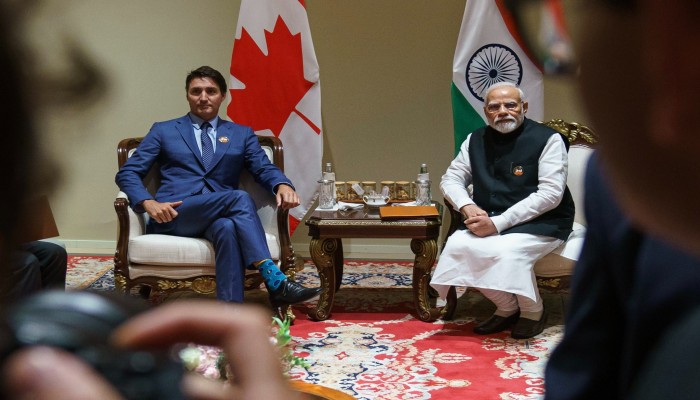
Prime Minister Narendra Modi met with his Canadian counterpart Prime Minister Justin Trudeau during a pull-aside talk on the sidelines of the G20 Summit which was taking place in Delhi, India.

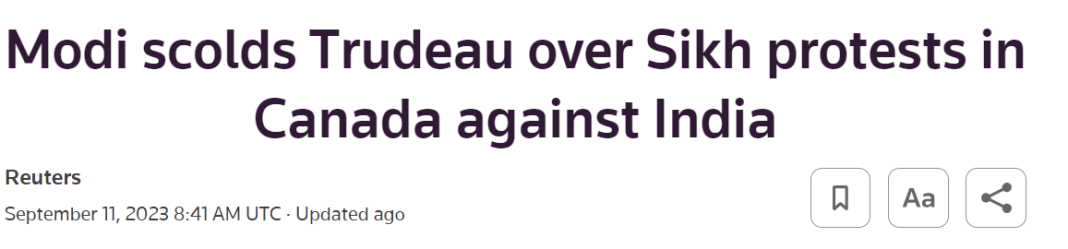
During this pull-aside meeting, the Indian PM conveyed strong concerns of India over the continuous anti-India activities by Khalistanis in Canada. PM Modi pointed out the use of Canadian soil for anti-India and Hinduphobic activities by pro-Khalistan elements.

The issue has been brought up several times in the past but the Canadian government has turned a blind eye to India’s concerns.

While the Prime Minister met all the heads of state with the G20 backdrop, the meeting with the Canadian Prime Minister did not have a G20 backdrop in the post shared by PM Modi on his official Twitter handle.

Moreover, the caption for all the meetings tweeted by the Prime Minister on X, former Twitter, read “G20 Summit” whereas it read “sidelines of G20 Summit” on the post about meeting with Trudeau.

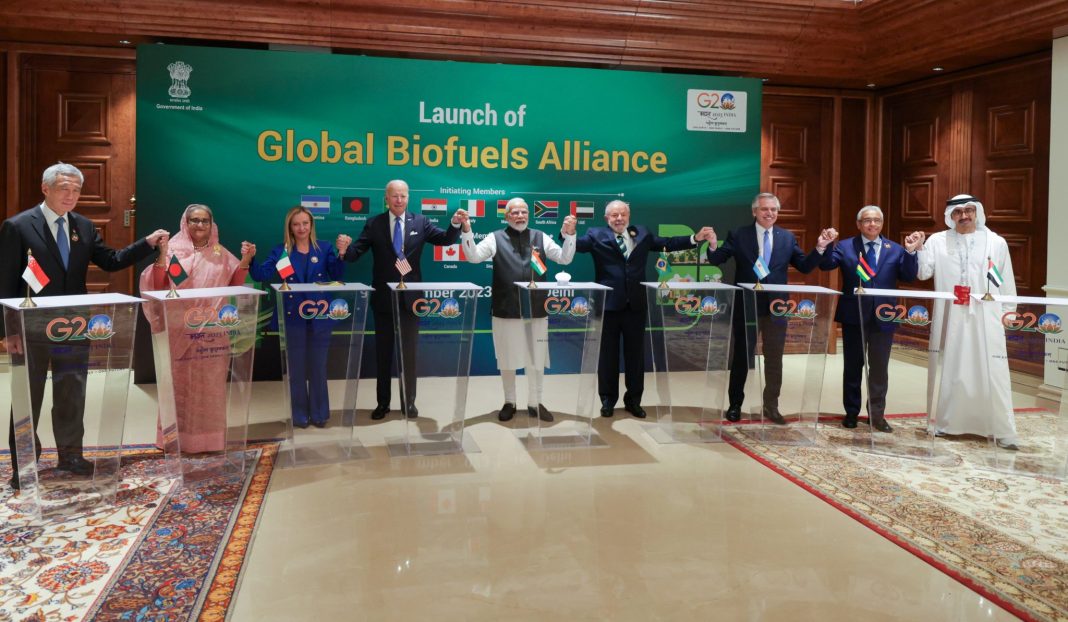
Trudeau’s requests for a bilateral meeting were denied by the Modi administration. Moreover, his absence from the Global Biofuels Alliance did not go unnoticed either even as major world powers were party to the same.

The treatment Justin Trudeau received was embarrassing for Canada. Meanwhile, Trudeau was delivering a holier-than-thou media address on day 2 of the Summit, while Khalistani terrorists were holding a so-called “referendum” in Canada.

Not only did Trudeau get snubbed by the world leaders who were being hosted and led by Prime Minister Narendra Modi, but he has also been receiving flak on his home turf. Global coverage of the G20 Summit shows Trudeau in a bad light at a time when the Liberal Party of Canada (LPC) leader is desperately attempting to keep his minority government in power.

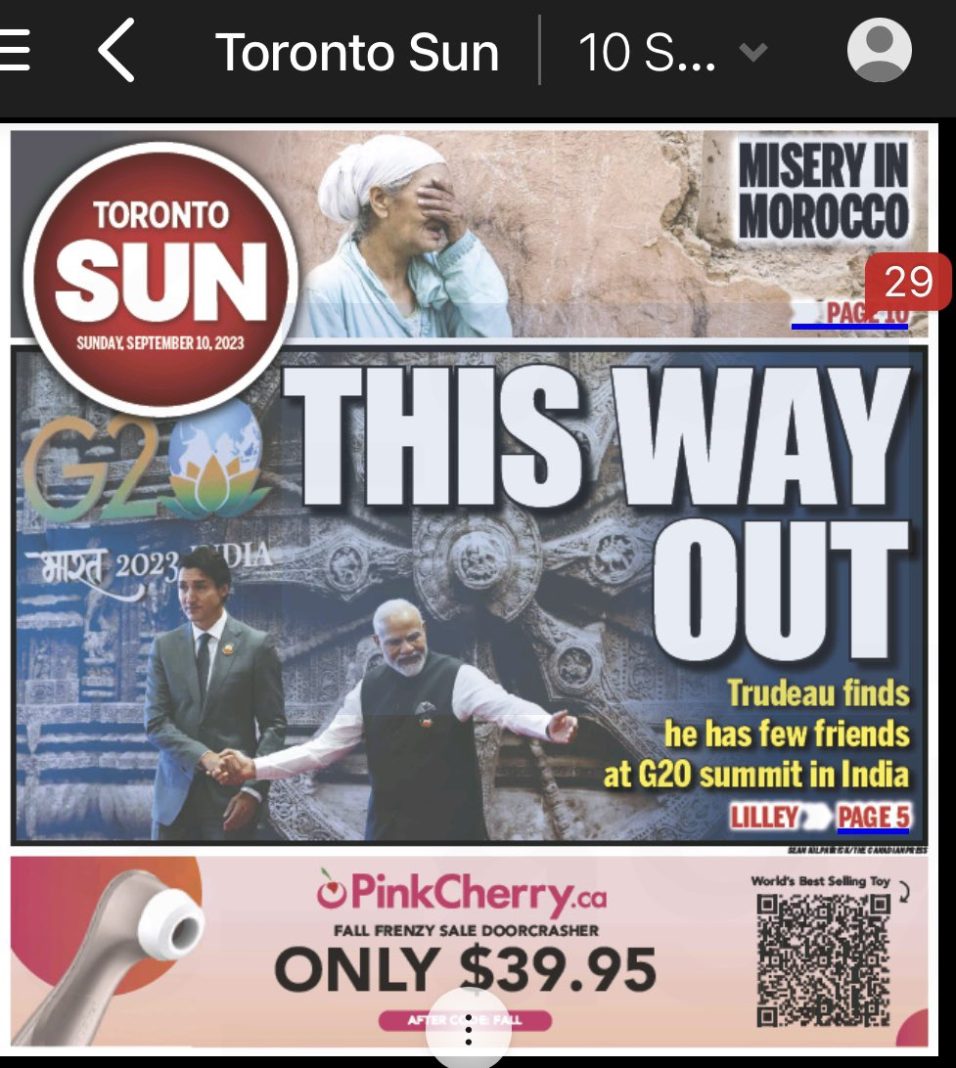
A scathing coverage of Trudeau failing to get the limelight in New Delhi has got the Twitterati talking. An image of Prime Minister Narendra Modi showing Canadian PM Justin Trudeau the way has been headlined, “This Way Out” by the Canadian daily Toronto Sun.

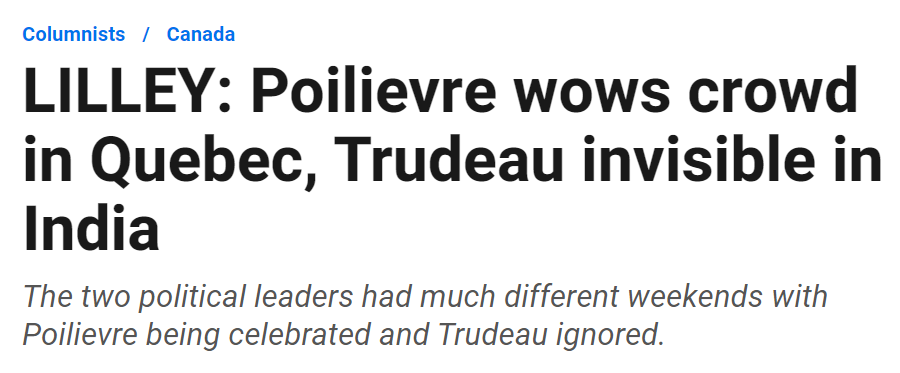
The subheader for the report reads, “Trudeau finds he has few friends at G20 Summit in India”. Another article on the Toronto Sun website talks about how Trudeau’s rival and Conservative leader Pierre Poilievre was being celebrated back at home while the LPC leader barely managed a “pull-aside” meeting with the Indian Prime Minister.

The Canadian daily blamed Trudeau for being alienated from the world leaders just like from Canadian voters. It read, “It’s understandable that relations with Beijing would be strained given the last several years but that Canada is alienated from both of the largest countries in the region with growing economies is completely on Trudeau. Like he has done with Canadian voters, Trudeau has alienated himself from many world leaders. They likely are looking forward to a change in Ottawa as much as the convention goers in Quebec City were this weekend.”

Unreasonable frustrations of the Prime Minister of Canada became apparent when he paused trade talks with India before leaving for the Summit. According to a report, he did not offer an explanation for the decision. “We know the negotiations around free trade are long and complex and I won’t say any more,” Trudeau told reporters traveling with him.

Canadian Opposition leader Pierre Poilievre on Monday (11th September) took to X to hit out at Trudeau saying that the Canadian prime minister has been “repeatedly humiliated and trampled upon by the rest of the world”.

What’s worse is a continuous decline in Trudeau’s ratings in Canada. CPC leader Poilievre is reportedly leading the opinion polls in Canada. Should the country head to the ballot today, Poilievre is reportedly likely to trump Trudeau. Meanwhile Trudeau’s Liberal party is hanging by a thread that too only with an alliance with the New Democratic Party (NDP) which has agreed to keep Trudeau in power until 2025.

Trudeau has also come under severe attack by the Canadian opposition and policymakers for his “woke agenda” on issues around gender and freedom of speech.

Speaking at the Conservative Party convention in Quebec City, retired lieutenant general in the Canadian Army Michel Maisonneuve slammed Trudeau for his “woke agenda”. “Our country has been led by a government that has been focused on virtue signaling,” Maisonneuve told the crowd in Quebec City.

A Canadian political commentator on X named Concerned Canadian said that Trudeau’s role at the G20 Summit was marginal at best. “Modi clearly chastised Trudeau for his interference. He ensured that Trudeau’s role at the G20 was marginal at best. Trudeau embarrassed Canada & denigrated our global respect & influence! Liberals how can you continue to support him??”

In another such post, the X user blamed Trudeau for embarrassing Canada on the international stage. “Trudeau again embarrassed Canada on the international stage! He & his cabinet have no comprehension of the negative impact of what they are saying to our economic partners!”

Another columnist for the Toronto Sun, Brian Lilley pointed out the awkward nature of the Canadian Prime Minister’s visit to India. “Justin Trudeau pulled his hand away from Modi in an awkward moment, then he skipped the leaders’ dinner, faced several questions on his strained relationship with India and now….His plane is stuck there. He’ll never go back again,” the political commentator posted on X.

In the videos shared of the G20 Summit, Canadian twitterati pointed out that Trudeau was nowhere to be seen. “A second video from the G20 and not one piece of footage showing Trudeau was even there. This is definitely on purpose,” said X user Ryan Gerritsen.

Moreover, Trudeau’s own X account was like a barren land despite him being part of such a global event. Besides a few shutterbug images with “trying hard” captions, nothing production resulted from the Canadian Prime Minister’s visit.

While Trudeau continues to harbour Khalistani terrorists and host anti-India referendums, these among others also seem to be attempts to divert attention from the skeletons in his closet.

Justin Trudeau carries the weight of his father’s dirty legacy with reports now emerging that former Canadian PM Pierre Trudeau spied on members of the Quebec independence movement. The then Prime Minister’s Office in the 1970s reportedly created the spy group to monitor Quebec sovereigntists and sought intel on them.

The Trudeau administration has launched a public inquiry into the suspected foreign interference in the Canadian elections in 2019 and 2021. Notably, Trudeau won by minority votes in both elections, a development that Trudeau does not seem to have digested.

The inquiry primarily included China and Russia but was expanded to include Iran and India too. This has exposed the Trudeau administration’s deceitful attitude as despite glaring evidence of Khalistani terrorism emanating from the Canadian soil, the only response the Canadian Prime Minister has given is that of “freedom of expression and freedom of peaceful protests.”

‘Expenses made towards permanent asset creation’: Govt debunks Saket Gokhale and others claiming it spent 300 per cent more on G20 than allocated funds

0

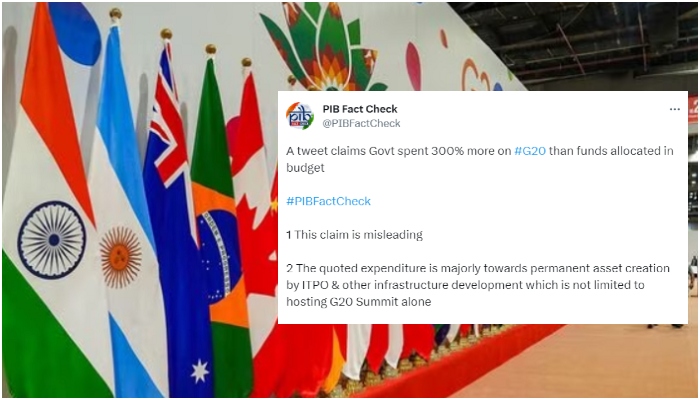
On Monday, September 11, the Press Information Bureau (PIB) took to X, formally Twitter to debunk the reports and social media accounts that claimed that the Indian government spent 300 per cent more on the G20 event than the funds that were previously allocated for the event in the budget. “This claim is misleading,” the official handle of the PIB fact check stated.

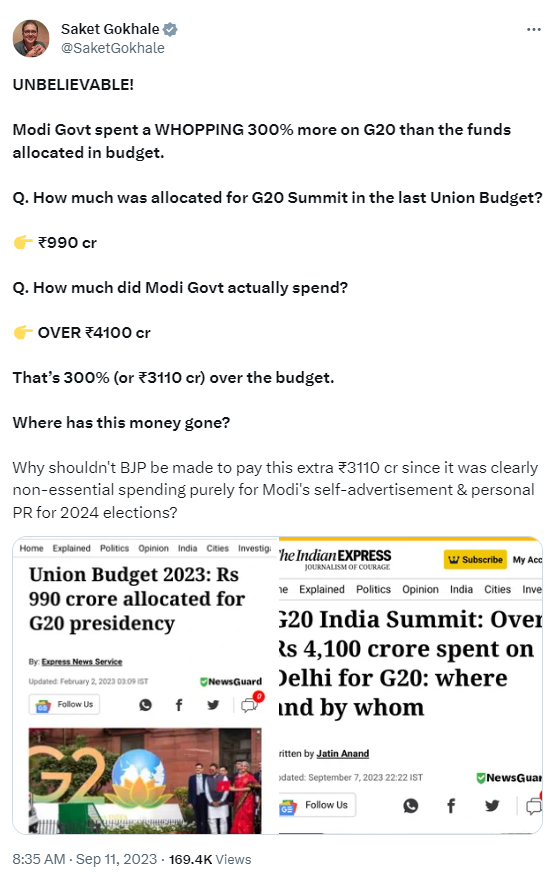
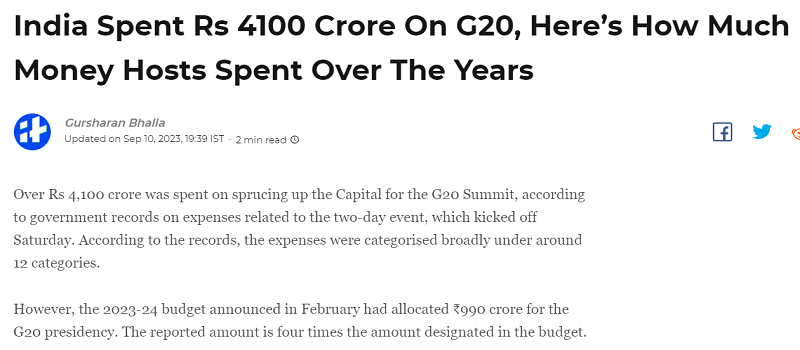
Several so-called liberals and leftists targeted the central government amid the G20 summit in Delhi claiming that the government had spent Rs 4,100 crore for the two-day event. TMC MP Saket Gokhale also said that the amount allocated in the budget for the event was Rs 990 crore and that the centre had spent Rs 4,100 for the two-day event.

Screenshot from Twitter

He also targeted the BJP and said, “Why shouldn’t BJP be made to pay this extra Rs 3110 cr since it was clearly non-essential spending purely for Modi’s self-advertisement and personal PR for 2024 elections?”

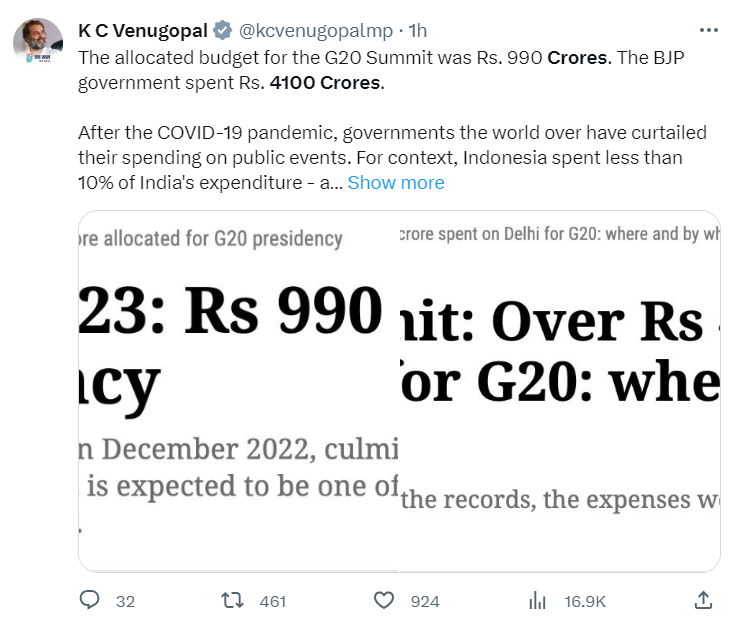
Also, Congress MP KC Venugopal criticized the government for allegedly spending a massive amount for a day event. This govt that cannot ensure cheap LPG or petrol/diesel refuses to compensate farmers who faced crop destruction does not release adequate funds for the restoration of flood-devastated Himachal Pradesh, has overshot the budget for this image-building exercise by 10x,” he said.

Screenshot from Twitter

“No number of beautification drives can hide the economic mess this government has spread across the country. We don’t need to look any further than the flooded Bharat Mandapam to know how public money has gone down the drain,” he added.

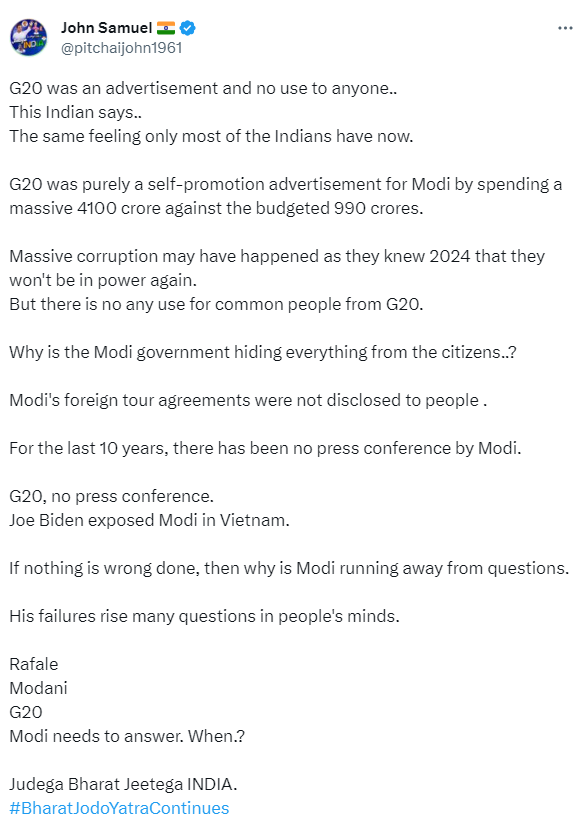
One of the Congress supporters on Twitter claimed that the BJP was just promoting itself ahead of the 2024 elections. “G20 was an advertisement and no use to anyone,” he said. He also claimed that a massive amount of public money was wasted by the government amid the G20 event.

Screenshot from Twitter

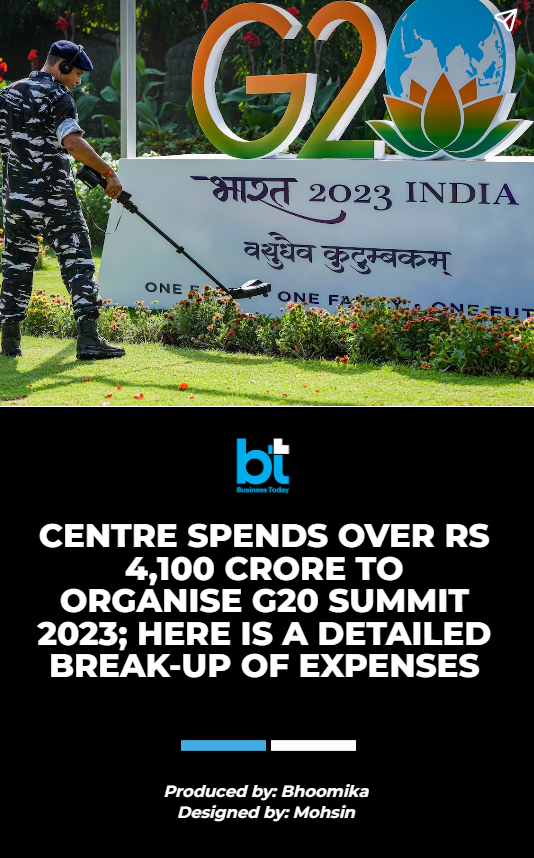
Apart from the liberals and opposition leaders, several media houses like Business Today, India Times, Deccan Herald, WION news, etc. also furthered similar information. A report by India Times said that the amount spent by the government for the G20 event in Delhi is four times the amount designated in the budget.

It also said that several countries like Indonesia, Japan, Argentina, China, etc. had spent much less than India on hosting international summits.

Report by India Times
Report by Business Today

Expense toward permanent asset creation: PIB fact checks misleading claims on G20 Summit

However, the PIB fact check called out all the reports and said that misleading information was being spread by some media houses and political leaders. “A tweet claims the government spent 300% more on G20 than funds allocated in the budget. This claim is misleading. The quoted expenditure is majorly towards permanent asset creation by ITPO & other infrastructure development which is not limited to hosting G20 Summit alone,” the PIB Fact Check said quoting TMC MP Saket Gokhale’s tweet.

Group of Twenty or G20 is a group of 20 nations including the EU which was established in 1999, to facilitate discussions and cooperation on global economic and financial issues. India holds the presidency for the year 2023- which is done in rotation. A geopolitical event of this magnitude has a far-reaching direct as well as a notional impact on India which can benefit the country in the coming several years, maybe decades.